Article

Molecular Mechanism by Which OsSUT2 Regulates Chalkiness Formation in Rice Grains
1
College of Plant Science and Technology, Hunan Biological and Electromechanical Polytechnic, Changsha 410127, China
2
State Key Laboratory of Hybrid Rice, Hunan Hybrid Rice Research Center, Changsha 410125, China
3
College of Life Sciences, Hunan Normal University, Changsha 410081, China
4
Hunan Yuanchuang Seed Industry Co., Ltd., Changsha 410323, China
*
Author to whom correspondence should be addressed.
These authors have contributed equally to this work and share first authorship.
Agronomy 2026, 16(9), 926; https://doi.org/10.3390/agronomy16090926
Submission received: 30 March 2026 / Revised: 25 April 2026 / Accepted: 29 April 2026 / Published: 2 May 2026

Abstract

Rice chalkiness is a key constraint in breeding high-quality rice, and unbalanced sucrose transport and starch metabolism are its primary causes. To clarify the molecular mechanism by which OsSUT2 regulates rice grain chalkiness formation, the rice cultivar TP309 was used as material, and ossut2 homozygous mutants were generated via CRISPR/Cas9. Systematic studies were performed using genetic complementation, phenotypic identification, cytological observation, transcriptome sequencing, and haplotype analysis. The results show that loss of OsSUT2 function significantly increased grain chalkiness, deteriorated agronomic traits, induced carbon assimilate accumulation in leaves, blocked sugar transport and starch synthesis in grains, and destroyed starch fine structure; the mutant phenotype was largely restored by functional complementation with wild-type OsSUT2. OsSUT2 was expressed in both source and sink organs, with the strongest inhibition detected in the panicles. Mutation of OsSUT2 disrupted sucrose and starch metabolic pathways. Three main haplotypes of OsSUT2 were identified in natural populations, with significant indica–japonica differentiation. OsSUT2 is confirmed as a key regulator of rice chalkiness, providing gene resources and theoretical support for rice quality improvement.

1. Introduction

Rice (Oryza sativa L.) is the primary staple food crop in China, and its yield and quality are inextricably linked to national food security [1]. With the escalation of consumer demands, rice chalkiness has emerged as a pivotal bottleneck hampering the breeding of high-quality rice cultivars in China. Chalkiness is defined as the white opaque regions in the endosperm, which are formed by the loose arrangement of starch granules and protein bodies during the grain filling stage; this structural abnormality markedly elevates the broken rice rate and impairs both the eating quality and commercial value of rice [2]. Although several genes associated with chalkiness, such as Chalk5 and WCR1, have been characterized, chalkiness is a typical quantitative trait governed by multiple genes, and numerous key components of its intricate genetic regulatory network remain to be fully elucidated.
Starch and sucrose metabolism constitutes the core pathway for the accumulation of storage substances in rice endosperm, and the transmembrane transport and allocation of sucrose are mainly mediated by monosaccharide transporters (MSTs), sucrose transporters (SUTs) and sugar efflux transporters (SWEETs) [3]. Among the five identified members of the OsSUT family in rice with well-differentiated biological functions, OsSUT2 is specifically localized to the tonoplast, where it mediates the transport of sucrose from the vacuole to the cytoplasm and is thus involved in the allocation of carbon assimilates between source and sink organs in rice plants [4,5,6,7]. Previous studies have demonstrated that OsSUT2 cooperatively regulates carbohydrate transport with GFD1 and OsSWEET4, thereby exerting an effect on grain filling. However, whether OsSUT2 is directly involved in rice chalkiness formation remains unreported [8].
In recent years, considerable progress has been made in elucidating the regulatory mechanisms underlying rice chalkiness formation. The overexpression of Chalk5 disrupts the pH homeostasis of the endomembrane system, which in turn induces abnormal structures of protein bodies and impairs the arrangement of starch granules in the endosperm, ultimately modulating chalkiness formation [9]. Different alleles of the Wx gene influence the chalkiness phenotype by regulating the amylose content [10]. WCR1, a gene encoding an F-box protein, acts as a negative regulator of rice chalkiness; it stabilizes the MT2b protein through a dual mechanism, and then inhibits the core chalkiness rate in rice by enhancing reactive oxygen species (ROS) scavenging and delaying the programmed cell death (PCD) process in the endosperm [11]. The transcription factor NF-YB1 can directly regulate the expression of OsSUT1, OsSUT3, and OsSUT4, thereby coordinately modulating grain filling and chalkiness formation [12]. In addition, functional defects of starch synthases (e.g., SSIIIa, BEIIb), debranching enzymes (e.g., ISA, PUL), and pentatricopeptide repeat (PPR) family proteins all lead to endosperm floury texture or increased chalkiness [13,14]. The research team led by Wan Jianmin recently identified OsTPS8 as a key gene associated with chalkiness, which encodes a trehalose-6-phosphate synthase. This protein interacts with OsTPS1 to reduce the trehalose-6-phosphate (Tre6P) level and then activates α-amylase to promote starch degradation, ultimately resulting in chalkiness formation. Natural variations in the promoter region of OsTPS8 can be differentially regulated by the transcription factor OsbHLH001, thereby synergistically affecting rice chalkiness and seed vigor [15]. However, the role of vacuolar membrane sucrose transporters in chalkiness regulation has not been investigated to date, and this research gap limits a comprehensive understanding of the molecular network governing rice chalkiness formation.
In our preliminary work, we generated rice OsSUT2 loss-of-function mutants ossut2-1 and ossut2-2 via the CRISPR/Cas9 genome-editing technique, both of which exhibited a chalky phenotype characterized by severe ventral chalkiness, reduced starch accumulation and decreased 1000-grain weight. In the present study, we further systematically elucidate the biological function and molecular mechanism of OsSUT2 in regulating rice chalkiness formation by integrating quality trait analysis, fine structural characterization, cytological observation, transcriptome sequencing, and haplotype analysis, aiming to provide theoretical support and genetic resources for the breeding of high-quality rice cultivars.

2. Materials and Methods

2.1. Plant Materials and Cultivation Arrangements

In this study, rice cultivar Taipei 309 (TP309) was used as the wild-type control, and the OsSUT2 gene (LOC_Os12g10840) was targeted for editing via the CRISPR/Cas9 gene-editing method to generate heritable chalky mutants ossut2 with stable genetic traits. After gene editing and preliminary screening, CRISPR-free homozygous mutant lines at the T3 generation were obtained and used for subsequent experiments. In addition, a genetic complementation vector of OsSUT2 was constructed and introduced into the obtained mutants via agrobacterium-mediated genetic transformation to obtain transgenic positive plants. All experimental materials were cultivated at the Transgenic Experimental Base in Changsha of Hunan Biological and Electromechanical Polytechnic and the Southern Breeding Base in Hainan under natural open-air field conditions. All materials were planted in the same growing season, and uniform conventional rice cultivation management was adopted, including consistent water supply, fertilizer application, and pest control measures throughout the whole growth period, to ensure consistent environmental conditions for phenotypic evaluation.

2.2. Determination of Agronomic Traits and Physicochemical Indices

At the mature stage, rice plants with consistent growth performance were selected to investigate agronomic traits, including effective tiller number, total grains per panicle, 1000-grain weight, grain length, and grain width. For each material, 10 individual plants were used as biological replicates, and three technical replicates were performed for each measurement. Data are presented as mean ± standard deviation (SD). The chalkiness rate, chalkiness degree, total starch content, protein content, amylose content, and starch extraction were determined according to our previously established method [16] and the method described by Zhu et al. [17]. At 20 days after flowering (DAF) during the grain filling stage, endosperms of wild-type TP309 and ossut2-1 mutant rice were sampled to determine the activities of soluble starch synthase (SSS), granule-bound starch synthase (GBSS), starch branching enzyme (SBE), debranching enzyme (DBE), and α-amylase (α-AL). For the assay of SSS and GBSS activities, crude enzyme extracts were prepared via ice-bath homogenization, and the enzyme activities were calculated by detecting the production of NADPH at a wavelength of 340 nm. The activity of SBE was characterized by the percentage decrease in absorbance of the starch–iodine complex at 660 nm. For DBE and α-AL, the 3,5-dinitrosalicylic acid method was adopted, and their activities were determined by measuring the production of reducing sugars at 540 nm. A control tube was set for each enzyme activity assay, and the enzyme activity units were calculated on the basis of fresh weight or protein concentration [18,19].
The contents of glucose, fructose, and sucrose in rice endosperms at the mature stage were determined by high-performance liquid chromatography (HPLC). The samples were subjected to ultrasonic extraction, followed by centrifugation and membrane filtration, and then detected using a Shimadzu LC-20AT HPLC system. For the samples at 20 DAF during the grain filling stage, the contents of the aforementioned sugars were measured using a micro biochemical method, and the content of Tre6p was determined using an ELISA kit (sinobestbio, Shanghai Youxuan Biotechnology Co., Ltd., Shanghai, China). All indices were pretreated and detected according to the corresponding methods, and their contents were subsequently calculated. All measurements were performed with three biological replicates and three technical replicates.

2.3. Cytological Observation

Mature seeds of the wild-type and mutant lines were transversely sectioned at the middle part, and the sections were subjected to glutaraldehyde fixation, gradient dehydration, critical point drying, and gold sputtering. The arrangement pattern, morphological characteristics, and intergranular spacing of starch granules in the endosperm were then observed under a scanning electron microscope (SEM). In addition, the morphological features of the isolated starch granules were also examined via SEM (Philips XL-3, Philips, Eindhoven, The Netherlands) [20].

2.4. Crystal Structure and Starch Chain-Length Distribution

The crystal structure of starch was analyzed via X-ray diffraction (XRD), and the crystallinity was calculated according to our previously established method [16]. Fourier transform infrared (FT-IR) spectroscopy was performed following the method described by the method of Ishikawa et al. [21]; the absorbance ratios of 1045/1022 cm−1 and 1022/995 cm−1 were determined to analyze the short-range order and intermolecular hydrogen bond strength of starch. The starch chain-length distribution was assayed by gel permeation chromatography–refractive index detection (GPC-RI) using a gel permeation chromatography–refractive index system. The liquid chromatography system was a U3000 (Thermo, Waltham, MA, USA) coupled with an OPTILAB T-rex refractive index detector (Wyatt Technology, Santa Barbara, CA, USA). Briefly, 5 mg of purified starch was dissolved in a boiling water bath and debranched with isoamylase at 37 °C for 3 h, followed by precipitation with anhydrous ethanol. The precipitate was then redissolved in a DMSO/LiBr solution in a water bath at 80 °C for 2 h. Separation was carried out on a series of gel exclusion chromatography columns (Ohpak SB-805 HQ/803 HQ, Shodex, Tokyo, Japan) with 0.5% LiBr-DMSO as the mobile phase, at a column temperature of 60 °C and a flow rate of 0.3 mL/min for gradient elution over 120 min. A standard curve was plotted using pullulan standards, and the chromatographic data were analyzed with ASTRA 6.1 software to obtain the characteristic starch chain-length distribution.

2.5. Vector Construction and Genetic Transformation

A genetic complementation vector of OsSUT2, pBWA(V)KS-OsSUT2, harboring the double 35S promoter (eukaryotic G418-resistant), was constructed. Following validation by restriction enzyme digestion and Sanger sequencing, the recombinant plasmid was transformed into Agrobacterium tumefaciens strain EHA105. The calli of ossut2-1 mutants were then transformed via the Agrobacterium-mediated genetic transformation method. Transgenic plants were obtained through resistance screening, callus differentiation and rooting. Genomic DNA was extracted by the CTAB method, and positive transgenic lines were identified by PCR, thus completing the functional validation of OsSUT2 by genetic complementation.

2.6. Analysis of Gene Expression Patterns

2.6.1. Tissue-Specific Expression Analysis

Roots, stems, leaves, leaf sheaths, and panicles at 20 days after flowering (DAF) were sampled from TP309, ossut2-1, ossut2-2 rice plants. Total RNA was extracted using an RNA extraction kit, and complementary DNA (cDNA) was synthesized via reverse transcription. With the rice UBIQUITIN gene as the internal reference, the relative expression level of the OsSUT2 gene was detected by reverse transcription quantitative real-time PCR (RT-qPCR). The primers used for OsSUT2 quantification were as follows: forward primer SUT2-QPCR-F1 (GAGTACCACCAACCGGCATT), targeting nucleotides 1169–1188 of the OsSUT2 coding sequence (CDS); reverse primer SUT2-QPCR-R1 (ATGCCCATTGCTAGACCTTG), targeting nucleotides 1297–1316 of the OsSUT2 CDS. Both primers are located downstream of the mutation sites in the first exon, enabling the specific and reliable detection of OsSUT2 transcript levels.
Three biological replicates were set for each sample, and the expression level was calculated using the 2−ΔΔCt method. Three independent biological replicates and three technical replicates were performed for each sample to ensure reproducibility.

2.6.2. Transcriptome Sequencing Analysis

Endosperm tissues of the wild-type and ossut2 mutant lines at 20 days after flowering were sampled, with three biological replicates set for each genotype, and each replicate was derived from an independent individual plant. Transcriptome sequencing was performed on the Illumina NovaSeq 6000 platform (Illumina Inc., San Diego, CA, USA), and the experiment was conducted by Beijing Novogene Bioinformatics Technology Co., Ltd. (Beijing, China). After filtering the raw sequencing data, the clean reads were mapped to the rice reference genome (MSU7.0). Differentially expressed genes (DEGs) were screened using the DESeq2 software (version 1.42.0) with the criteria of |log2FC| > 1 and padj < 0.05, followed by Gene Ontology (GO) and Kyoto Encyclopedia of Genes and Genomes (KEGG) functional enrichment analyses. RT-qPCR validation was performed on the key DEGs to confirm the reliability of the transcriptome sequencing results.

2.7. Haplotype Analysis

To dissect the natural genetic diversity of the OsSUT2 gene, a total of 6048 rice accessions from a natural population were retrieved from the RiceAtlas database [22] (http://60.30.67.242:18076/#/home, accessed on 25 January 2026). The coding region and flanking sequences of OsSUT2 were subjected to sequencing and analysis, and haplotype classification was performed based on the combination characteristics of single-nucleotide polymorphism (SNP) loci in the sequences. Furthermore, the distribution characteristics and indica–japonica differentiation pattern of the OsSUT2 haplotypes were analyzed by integrating the indica–japonica classification information and geographical distribution data of the rice accessions.

2.8. Statistical Analysis

The analysis of all data was performed using the SPSS 24.0 statistical software program (IBM Corporation, Armonk, NY, USA). One-way analysis of variance and Tukey’s tests were used to determine whether statistically significant differences (p < 0.05) existed among the means. Differences were considered statistically significant at p < 0.05 and highly significant at p < 0.01. Data are expressed as mean ± standard deviation (SD). Different lowercase letters indicate significant differences (p < 0.05). Asterisks indicate significant differences as follows: * p < 0.05, ** p < 0.01. Bar charts were generated using Microsoft Excel and Graphpad Prism 10.1.2. Each experiment was performed with at least three independent biological replicates. Before ANOVA, the normality and homogeneity of variances were assessed.

3. Results and Discussion

3.1. Phenotypic and Physicochemical Analysis of the Rice Chalkiness Mutant ossut2

3.1.1. Isolation and Identification of the ossut2 Mutants

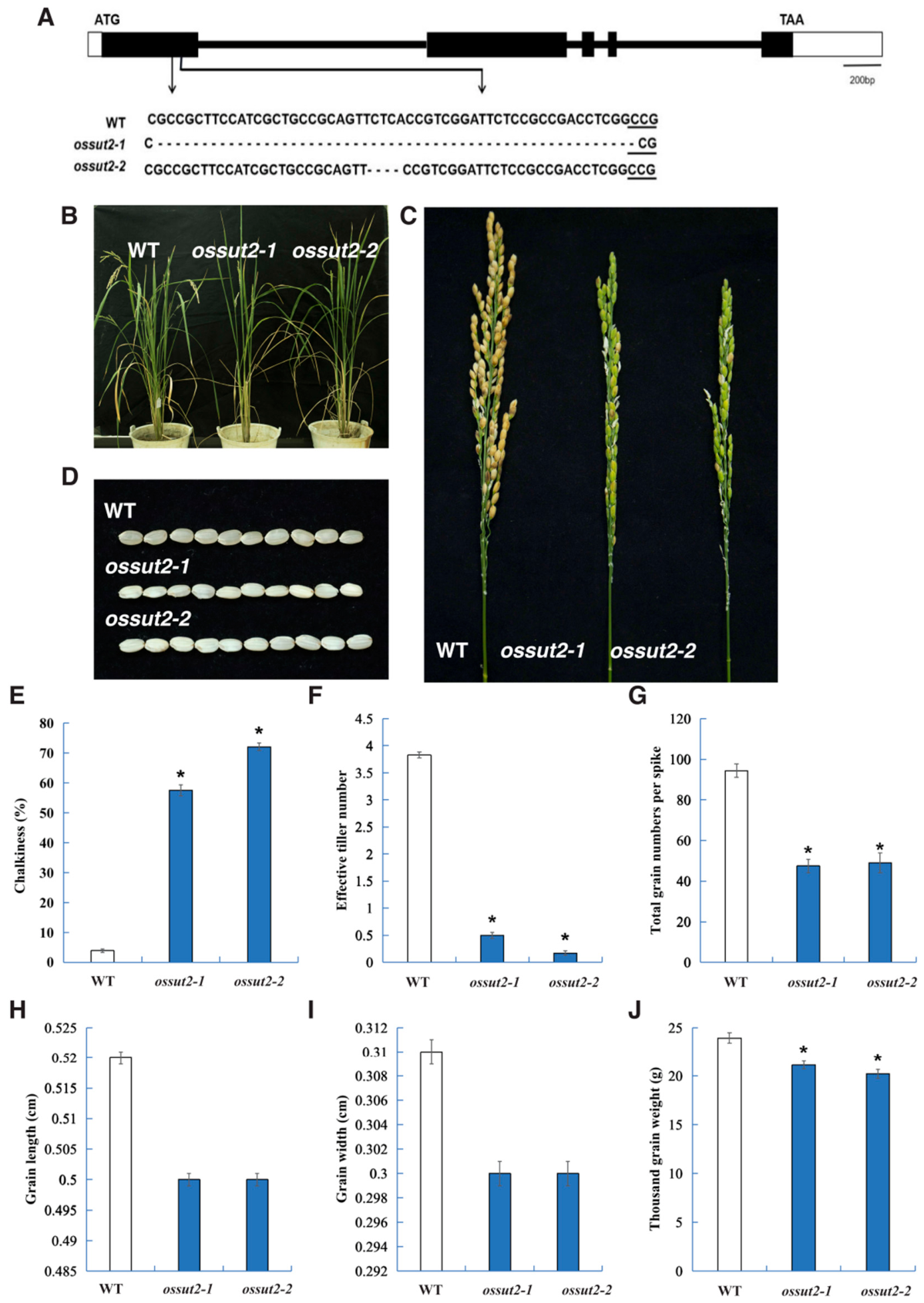
The CRISPR/Cas9 system was used to edit the OsSUT2 gene of wild-type TP309 with the selected target sequence GCTGCCGCAGTTCTCACCGT, and finally, T3 homozygous mutant lines exhibiting increased grain chalkiness were obtained. Sequencing analysis revealed two distinct mutation types in the coding region of OsSUT2: a 54 bp deletion and a 4 bp deletion. The line carrying the 54 bp deletion was designated ossut2-1, and the line with the 4 bp deletion was named ossut2-2 (Figure 1A–D).
The ossut2-1 mutant contains a 54-bp in-frame deletion, resulting in the loss of 18 amino acids within the transmembrane domain of OsSUT2, which is essential for sucrose transport. The ossut2-2 mutant carries a 4-bp frameshift deletion leading to a premature stop codon. Both mutations disrupt the functional structure of OsSUT2 and lead to complete loss of protein function.
At the maturity stage, agronomic traits were measured in the WT and mutants. Compared with WT, the chalkiness degree of ossut2-1 and ossut2-2 was increased by 14.84-fold and 18.59-fold, respectively (Figure 1E). The number of effective tillers in the WT was approximately 8-fold higher than that in ossut2-1 and ossut2-2. The grain number per panicle of the two mutants was also significantly reduced. No significant differences were observed in grain length and grain width between the mutants and WT. The average 1000-grain weight was 23.94 g in the WT, but only 21.11 g in ossut2-1 and 20.22 g in ossut2-2, indicating a significant decrease in the 1000-grain weight of the mutants (Figure 1F–J).

3.1.2. Effect of OsSUT2 on the Accumulation of Endosperm Storage Substances

Starch is the major storage substance in rice endosperm and is metabolically interconvertible with glucose, sucrose, and fructose. Using three types of soluble sugars, total starch, Tre6P, amylose, and amylopectin as core detection indicators, we systematically analyzed changes in core carbon metabolism compounds in ossut2 mutants at three developmental stages: 6-week-old leaves (source organ, vegetative stage), grains at 20 days after flowering (sink organ, key grain-filling stage), and mature endosperm (sink organ, final filling stage), clarifying the metabolic basis for this gene’s regulation of grain chalkiness.
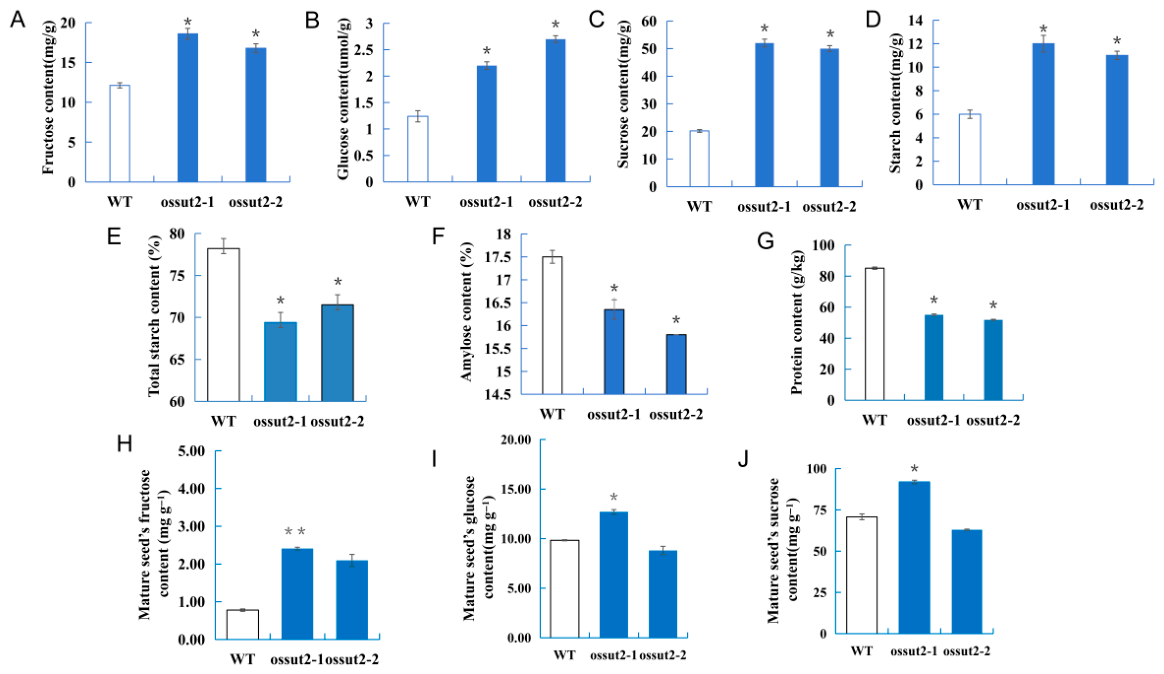
Leaves of 6-week-old ossut2-1, ossut2-2 and WT plants were collected, and the contents of sucrose, fructose, glucose, and total starch were determined. Compared with the WT, the levels of fructose, glucose, sucrose, and total starch were significantly increased by approximately 1-fold in the mutant leaves (Figure 2A–D), which were largely consistent with those reported by Eom et al. [6], suggesting that mutation of OsSUT2 caused abnormal sugar accumulation in rice leaves and disrupted sugar transport in the plant. The increased soluble sugars and total starch in the mutants resulted from blocked sugar transport from source leaves to sink grains, which impaired the conversion of fructose and glucose to sucrose and inhibited starch degradation, thereby reducing the precursors required for starch synthesis in sink grains [23].
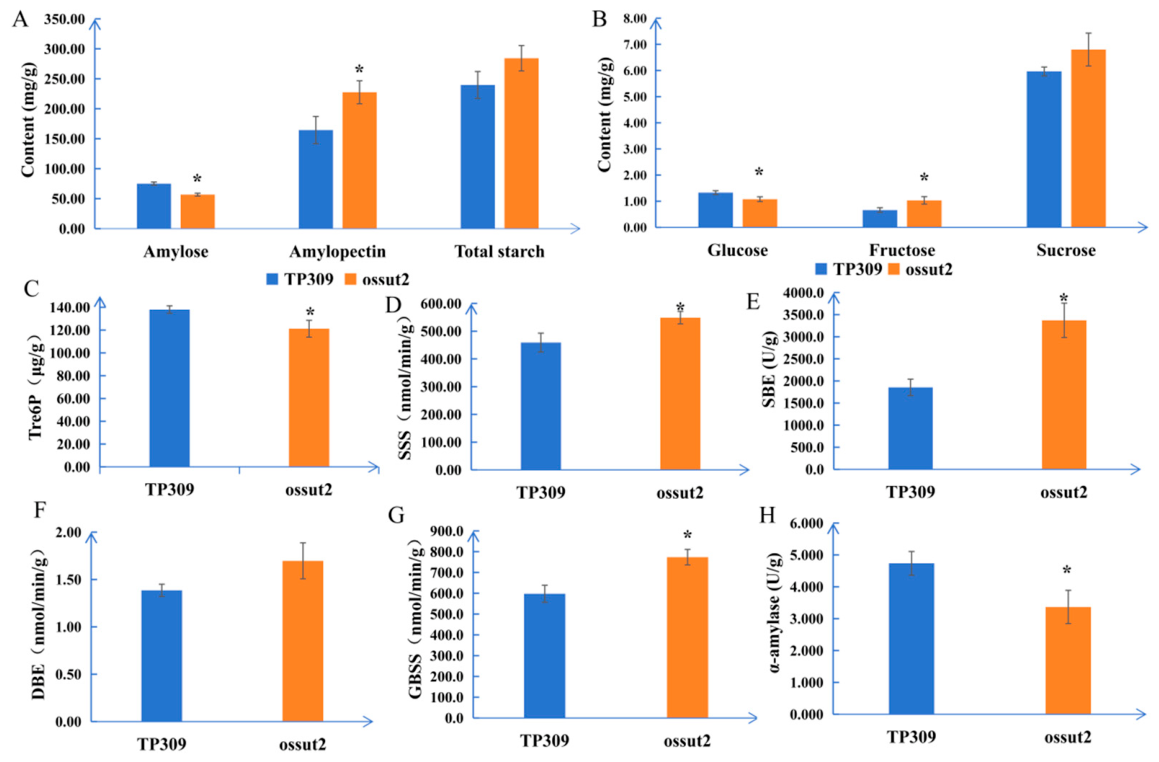
Accumulation of storage substances and activities of starch metabolic enzymes were examined in endosperm of grains at 20 days after flowering. Compared with the wild type, amylose content was significantly decreased and amylopectin content was significantly increased in the ossut2-1 mutants at 20 days after flowering, while no significant difference in total starch content was detected (Figure 3A). For sugar components, glucose and Tre6P contents were significantly decreased, fructose content significantly increased, and sucrose content unchanged obviously in the ossut2-1 mutant grains (Figure 3B,C). Analysis of enzymes involved in amylopectin synthesis showed that DBE activity exhibited no significant difference, whereas SSS and SBE activities were significantly elevated, indicating enhanced chain elongation and branching of amylopectin in the mutants. For amylose synthesis, GBSS activity was significantly increased in ossut2-1 mutant grains, but amylose content was still markedly reduced (Figure 3D–G). This apparent discrepancy between GBSS activity and amylose content likely reflects a compensatory regulatory response rather than a simple linear relationship. The elevated GBSS activity may represent a metabolic feedback mechanism attempting to counteract impaired starch synthesis. However, amylose content still decreases due to insufficient substrate supply caused by blocked sucrose transport, rather than limited enzyme activity. In addition, α-amylase activity was significantly decreased in the mutants, suggesting that starch degradation was inhibited (Figure 3H). At maturity, total starch, amylose, sucrose, glucose, fructose, and protein contents were measured in grains of the WT, ossut2-1 and ossut2-2 mutants. Total starch, amylose, and protein contents were significantly lower in the mutants than in the WT, whereas soluble sugar contents were significantly higher (Figure 2E–J), indicating that the conversion from soluble sugars to starch was blocked in mature mutant seeds.
The above results indicate that the sugar transport process was significantly inhibited in the mutant plants, with the contents of fructose, glucose, sucrose, and total starch in the source leaves being nearly double those in the WT. The core reason is that the photoassimilated sucrose in leaves could not be transported to the grains in a timely manner, which led to the blockage of sugar conversion and starch degradation and thus insufficient carbon precursors for starch synthesis in the sink organs [24]. At the key grain-filling stage, the amylose content in the endosperm of the mutants decreased significantly, while the amylopectin content increased markedly, which was associated with the increased activities of SSS and SBE, as well as abnormal accumulation of amylose despite elevated GBSS activity. Meanwhile, the contents of glucose and Tre6P decreased, fructose content increased, and the reduced activity of α-amylase hindered starch degradation. These changes kept the total starch content stable but caused an imbalance in starch components [6]. At the mature stage, the contents of total starch, amylose, and protein in the endosperm of the mutants were reduced, whereas the soluble sugar content was increased, further confirming blockage of soluble sugar-to-starch conversion and abnormal accumulation of storage substances in the endosperm [24].
Taken together, impaired sugar transport in source organs not only causes an imbalance in starch synthesis and composition in sink organs but also disrupts the orderly deposition of endosperm starch granules and the structure of amyloplasts, ultimately leading to the formation of highly chalky grains [25]. Meanwhile, disturbed sugar metabolism results in uneven nutrient distribution within the plant, reducing key agronomic traits such as tiller number and 1000-grain weight. These findings reveal the crucial role of OsSUT2 in sugar partitioning, starch quality formation, and grain yield in rice at the physiological level.

3.2. The Effect of OsSUT2 on the Fine Structure of Endosperm Starch

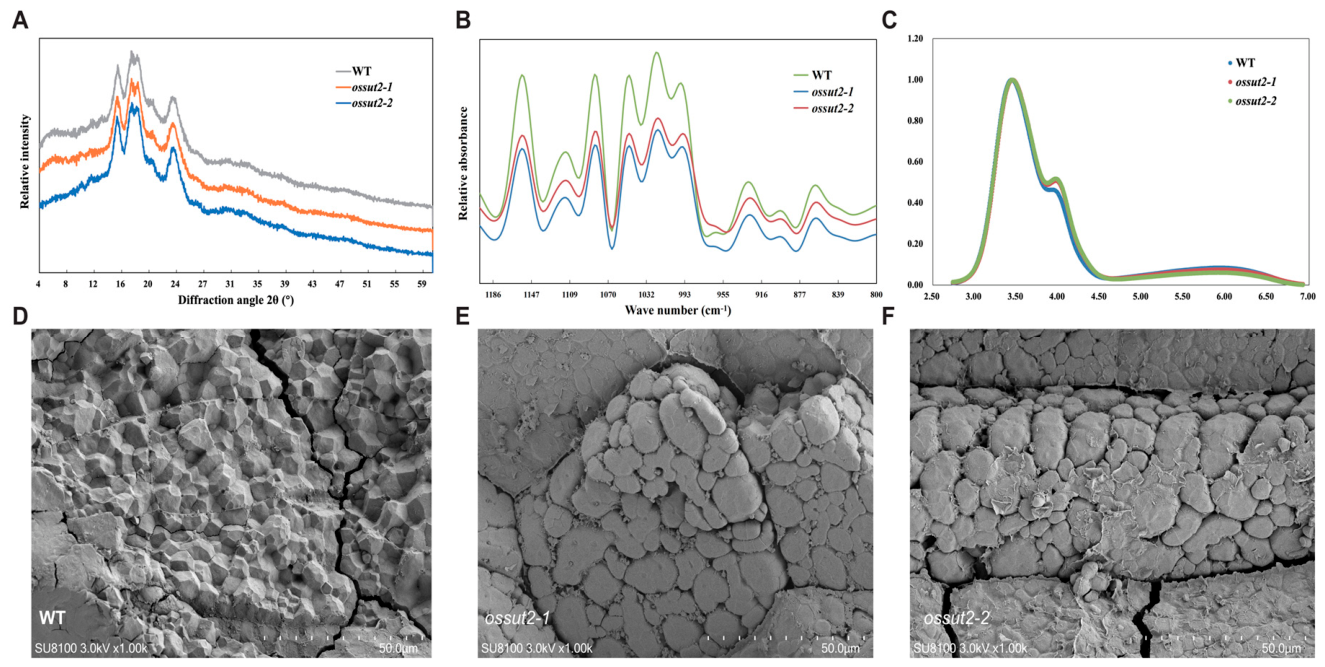
To investigate the effects of OsSUT2 on starch fine structure, the crystal structures of the mutants and the WT were analyzed via XRD (Figure 4A). Single peaks were detected at 15°2θ and 23°2θ, and double peaks at 17°2θ and 18°2θ in both mutants and the WT, all characteristic of the A-type crystal pattern. No alteration was observed in the crystal pattern of the mutants, whereas a significant reduction in crystallinity was determined in the mutants compared with the WT, with ossut2-1 exhibiting the lowest crystallinity, which indicated damage to the starch crystal structure in the mutants (Table 1). The FT-IR absorption curves were highly consistent, demonstrating that no obvious changes occurred in the basic chemical structure and short-range ordered configuration of starch between the mutants and the WT (Figure 4B). However, the 1045/1022 cm−1 absorbance ratio was significantly elevated in the mutants (Table 1), implying a relatively enhanced short-range order or molecular chain regularity of starch in the mutants. Meanwhile, the 1022/995 cm−1 ratio was markedly decreased (Table 1), which suggests a reduction in the intermolecular hydrogen bond strength of starch and a potential impact on the aggregation state of starch molecules. Analysis of starch chain-length distribution revealed no significant difference in the proportion of amylopectin short chains (AP1) between the WT and the mutants, while the proportion of the AP2 was significantly increased and the content of the AM was decreased in the mutants (Figure 4C).
Collectively, the above results indicate that loss of OsSUT2 function induced specific alterations in starch structure, characterized by reduced crystallinity and elevated short-range order. These changes were likely associated with the modified starch chain-length distribution in the mutants, namely a significant increase in the proportion of the AP2 and a decrease in the AM content. The elevated AP2 proportion facilitated the local ordered stacking of double helices, whereas the reduced AM content impaired the stability of long-range crystalline structures [26]. Previous studies have demonstrated that decreased crystallinity is generally correlated with a higher starch digestion rate, and an increased AP2 proportion can alter the gelatinization temperature and cooked rice viscosity, which collectively determine the cooking, eating, and nutritional quality of rice [27]. Therefore, OsSUT2 mediates the remodeling of endosperm starch from the level of chain-length distribution to multi-scale ordered structures through the regulation of sugar transport, thereby exerting a regulatory effect on rice quality.
To elucidate the cytological mechanism underlying chalkiness formation in the mutants, the transverse sections of endosperm from mature seeds of the WT and ossut2 mutants were observed via SEM. It was found that starch granules in the chalky regions of ossut2 mutants exhibited uneven size, irregular morphology, loose arrangement and enlarged intergranular spaces, whereas those of the WT were uniform in size, regular in morphology and densely arranged (Figure 4D–F). These results indicate that OsSUT2 mutation alters the morphology and spatial arrangement of endosperm storage substances, thereby exacerbating grain chalkiness [28].

3.3. Identification of OsSUT2 Genetic Complementation Lines and Analysis of Its Tissue-Specific Expression Pattern

3.3.1. Generation and Characterization of OsSUT2 Genetic Complementation Plants

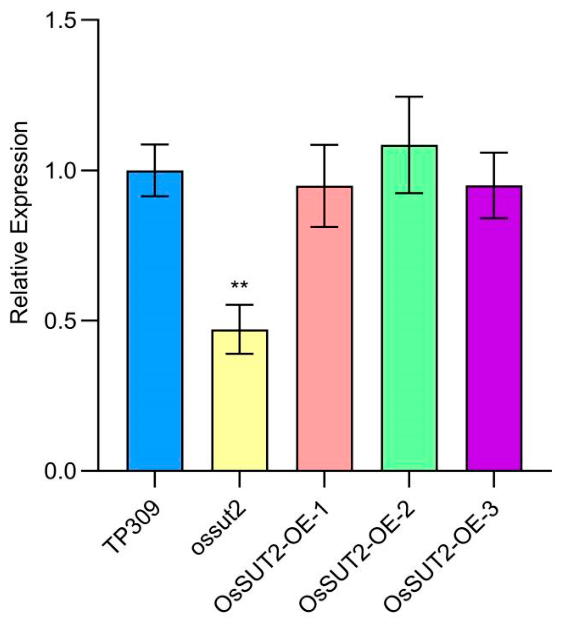
To verify the chalky phenotype associated with OsSUT2, we constructed the pBWA(V)KS-OsSUT2 genetic complementation vector and transformed it into the ossut2-1 mutant background. A total of 21 transgenic lines were obtained, among which 12 were positive transgenic plants. Three PCR-positive transgenic lines (OsSUT2-OE-1, OsSUT2-OE-2, and OsSUT2-OE-3) were selected for further analysis. Using WT and ossut2 mutant plants as controls, RT-qPCR was performed to quantify the relative expression level of OsSUT2 in grains at 20 days after flowering in OsSUT2 complementation lines. The results show that the expression level of OsSUT2 was significantly lower in the ossut2 mutant than in the wild type (p < 0.01). However, no significant difference was observed between the three complementation lines and the wild type (Figure 5). OsSUT2-OE-2 showed the highest expression level, indicating that OsSUT2 was efficiently and stably expressed and restored to wild-type levels in transgenic plants.
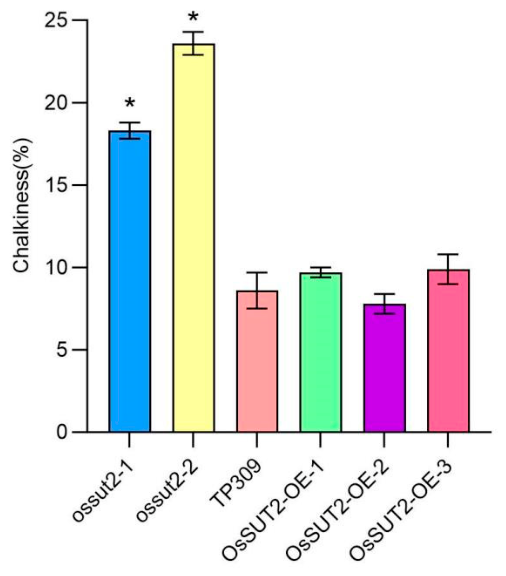
After harvesting mature seeds, chalkiness-related traits were determined using a rice appearance quality analyzer. The results show that the chalky grain rate and chalkiness degree were significantly higher in the ossut2-1 (32%, 15.9%) and ossut2-2 (38%, 23.6%) mutants than in the WT (12%, 8.6%). In contrast, these two traits were markedly decreased in the three complementation lines (chalky grain rate: 9–15%; chalkiness degree: 7.8–9.9%), with no significant difference from the WT (p > 0.05), indicating that the chalkiness-related phenotype was significantly restored and showed no significant difference from the wild type (Figure 6).

3.3.2. Analysis of the Tissue-Specific Expression of OsSUT2

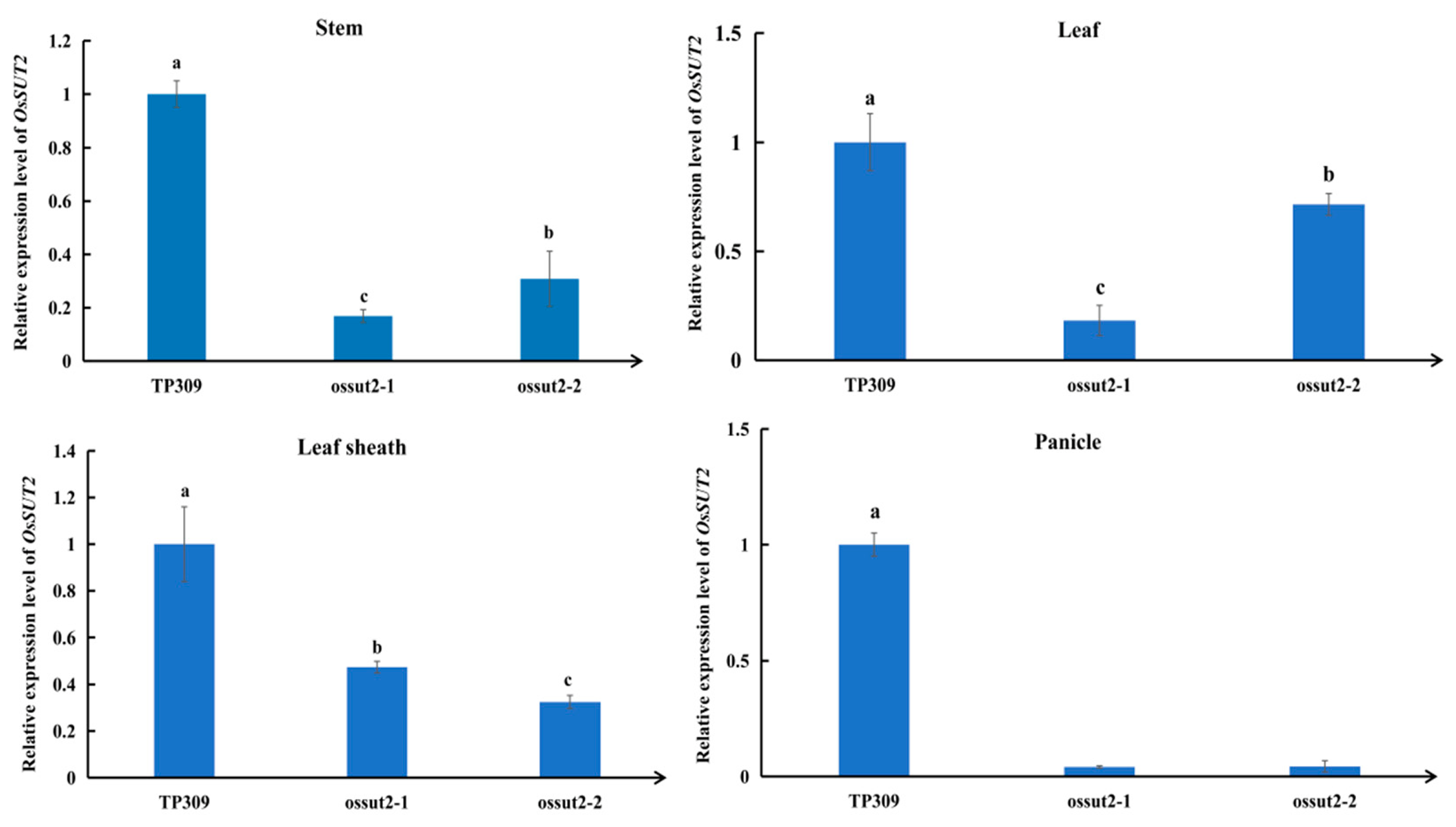
To characterize the tissue-specific expression profile of OsSUT2 in rice, qRT-PCR analysis was performed on the leaves, stems, sheaths, and panicles of wild-type TP309 and ossut2 mutant lines. The results show that compared with the WT, the expression level of OsSUT2 in all detected tissues of the ossut2 mutants was significantly reduced, and the downregulation range varied among different tissues: the most significant decrease was observed in panicles, where the expression levels of the two mutants were almost close to zero; the expression levels in leaves, stems, and leaf sheaths were also downregulated to varying degrees (Figure 7).
These results indicate that OsSUT2 was expressed in both source and sink organs of rice, and the loss of its function exerted the most significant transcriptional repression effect on panicles. This suggests that OsSUT2 may play a more critical role in grains during the grain filling stage than in leaves during the vegetative growth stage, which may explain why the mutation of this gene led to abnormal endosperm starch structure, more significant chalkiness, and worse agronomic traits.

3.4. Transcriptome Analysis of the ossut2 Mutant and WT

The KO mutant (designated as ST3) used for transcriptome sequencing corresponds to the ossut2-1 line. The two mutant alleles ossut2-1 and ossut2-2 displayed consistent phenotypic and physiological alterations; thus, ossut2-1 was selected for transcriptomic analysis.

3.4.1. Differences in Transcriptome Expression Patterns and Validation of Reproducibility

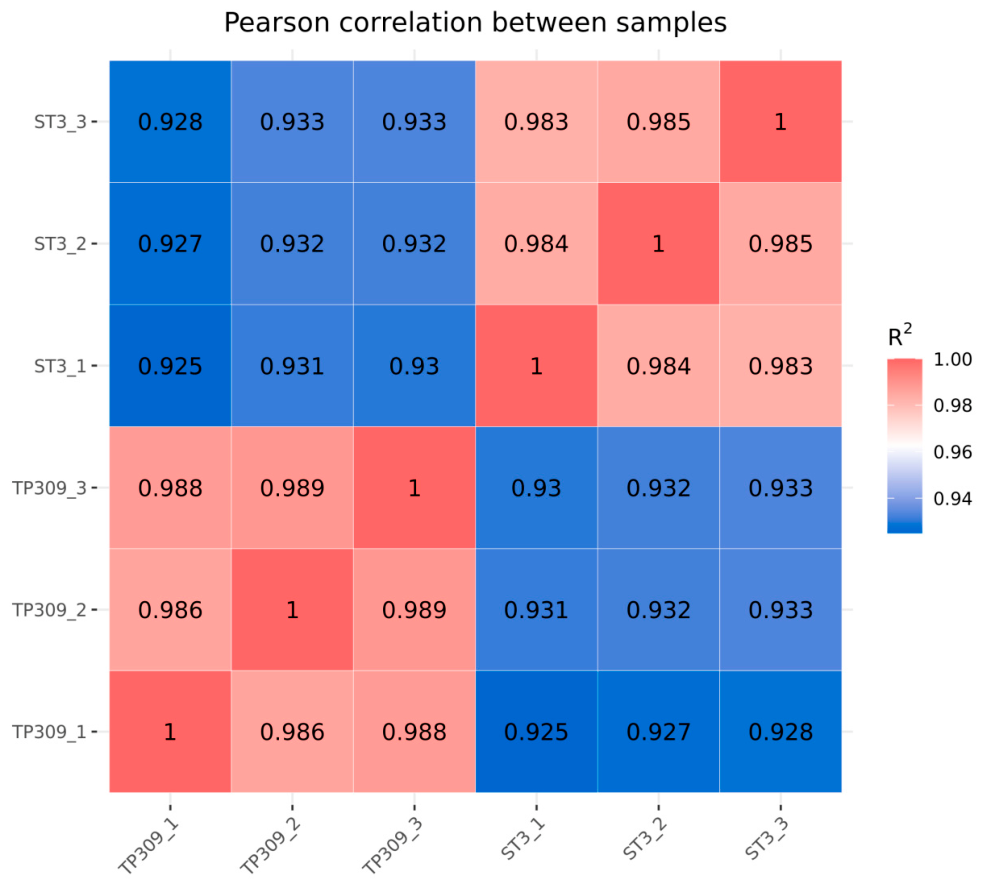
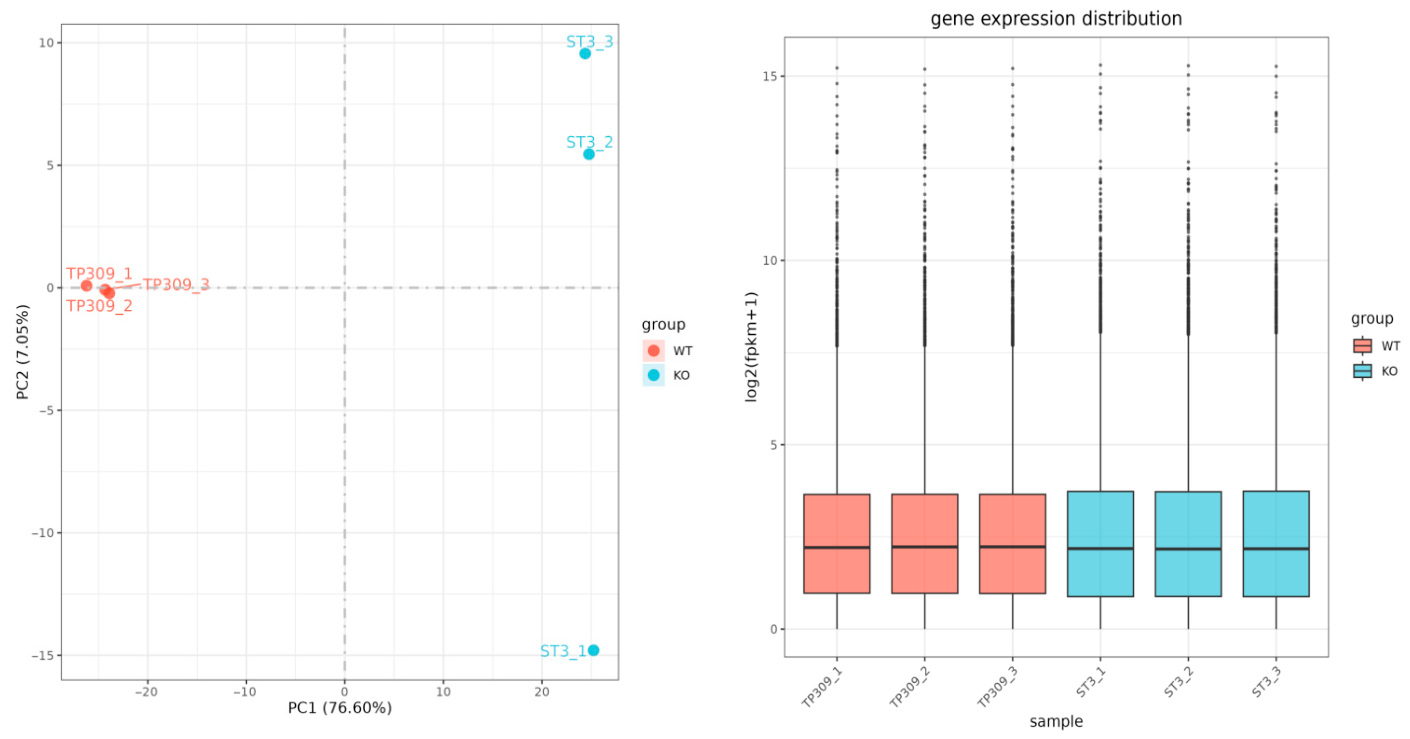
To evaluate the overall expression differences in the endosperm transcriptomes between the ossut2 mutant (KO, ST3) and the wild type (WT, TP309), transcriptome sequencing was performed on grains at 20 days after flowering, with three biological replicates per group. PCA showed that the correlation coefficients between biological replicates within each group were all greater than 0.925, which were significantly higher than those between groups, indicating good intra-group reproducibility (Figure 8). PCA revealed that the KO and WT samples were clearly separated along the first principal component (PC1, explaining 76.60% of the variation), while samples within each group were closely clustered. This suggests that the mutation of OsSUT2 led to significant changes in the overall gene expression pattern of rice endosperm, and the experimental data are highly reliable and reproducible (Figure 9). The boxplot of gene expression distribution shows that the log2(FPKM + 1) distributions of samples within and between the WT and KO groups are consistent, with a median between 2 and 3, indicating accurate quantification of sequencing data and no obvious batch effect (Figure 9).

3.4.2. Differentially Expressed Genes (DEGs)

Analysis of DEGs Between the WT and ossut2 Mutant
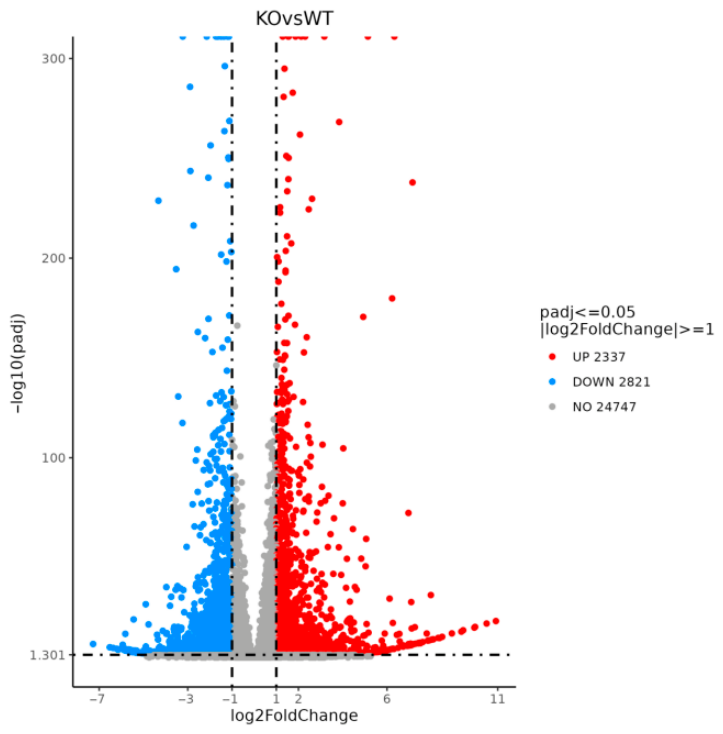
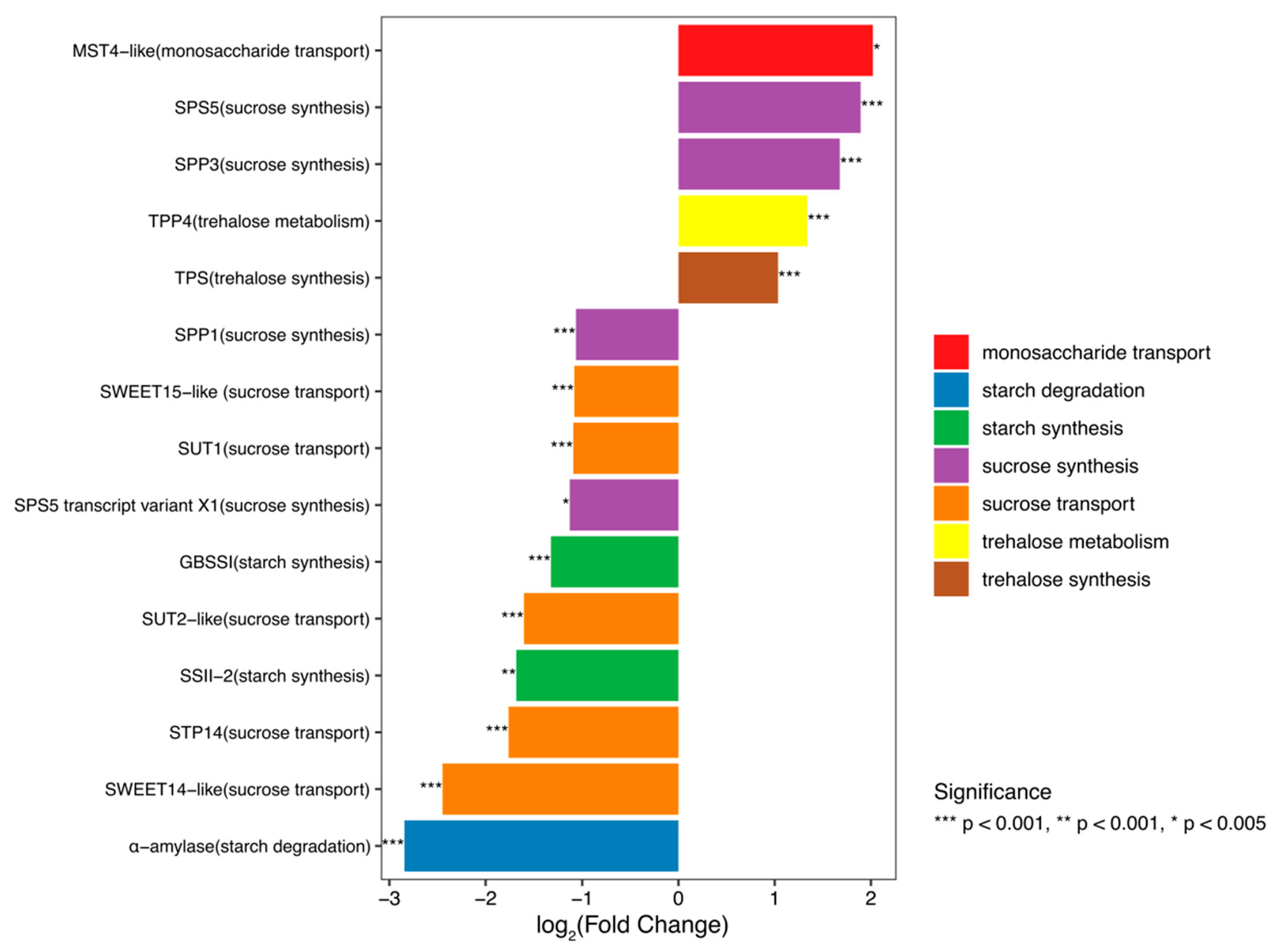
Venn diagram analysis identified 19,293 expressed genes in the WT and KO groups, of which 16,810 were co-expressed, 1477 were exclusive to the WT and 1006 to the KO. These results indicate that the OsSUT2 mutation altered the expression levels of existing genes and induced the specific expression of some genes (Figure S1). Based on volcano plots, a total of 5158 DEGs (|log2FC| > 1, padj < 0.05) were identified in the transcriptomic comparison of the endosperm between the ossut2 mutant and WT, among which 2337 were upregulated and 2821 were downregulated (Figure 10). Furthermore, focusing on key pathways, including sucrose transport, sucrose synthesis, and starch metabolism, 15 crucial differentially expressed genes were characterized (Table S1, Figure 11). Their expression patterns were highly consistent with the carbon metabolic disruption caused by the loss of OsSUT2 function, providing an important basis for dissecting the molecular mechanism underlying the chalky phenotype.
As shown in Figure 11, mutation of OsSUT2 resulted in systematic obstruction of the sucrose transport pathway in the endosperm. Key genes involved in long-distance and intercellular sucrose transport (SUT2-like, SUT1, SWEET14-like, SWEET15-like, STP14) were extremely significantly downregulated, whereas the monosaccharide transporter gene MST4-like was significantly upregulated, forming a compensatory regulation to maintain substrate supply for starch synthesis. The sucrose synthesis pathway showed a divergent pattern of “compensatory up-regulation and basal synthesis down-regulation”. Stress-responsive synthase genes SPS5 and SPP3 were extremely significantly upregulated to compensate for carbon source deficiency, while the basal synthase gene SPP1 and several SPS5 transcripts were significantly downregulated. Core enzyme genes in the starch synthesis pathway (GBSSI, SSII-2) were comprehensively significantly downregulated, directly demonstrating that starch synthesis capacity was markedly reduced due to insufficient carbon supply, providing important molecular support for chalky phenotype formation. In addition, trehalose signaling pathway genes TPS9 and TPP4 were extremely significantly upregulated in response to carbon metabolic stress, whereas α-amylase, a key enzyme for starch degradation, was extremely significantly downregulated. This reduced carbon source loss by inhibiting starch degradation, forming a compensatory strategy to maintain starch accumulation.
Taken together, differential expression of core genes in the sucrose transport–sucrose synthesis–starch metabolism pathway in the ossut2 mutant endosperm caused a systematic disruption in carbon metabolism (“impaired transport → synthetic divergence → attenuated starch synthesis → enhanced signal regulation”), providing important molecular clues for the molecular mechanism of endosperm chalkiness induced by loss of OsSUT2 function.
Heatmap of Expression Patterns for DEGs
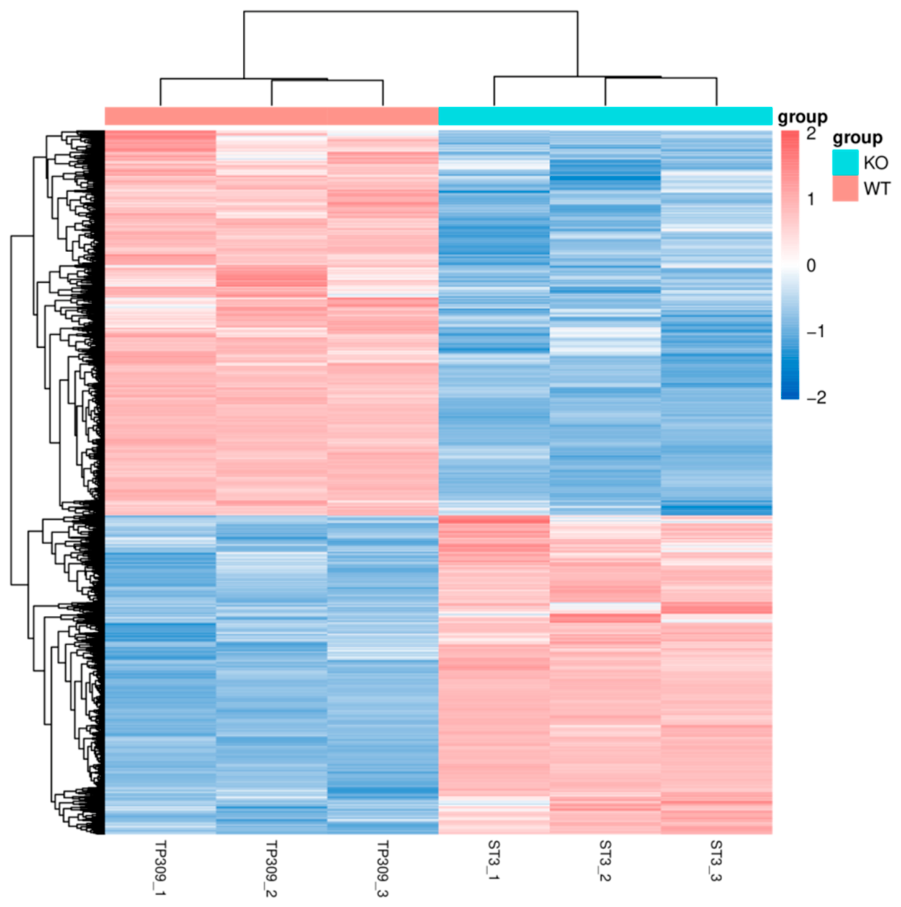
Unsupervised clustering analysis was performed on DEGs in the endosperm of ossut2 (KO) mutants and WT plants. In the heatmap (Figure 12), each row represents a DEG, and each column represents a biological replicate sample (TP309_1/2/3 for WT, ST3_1/2/3 for KO). The color gradient from blue to red indicates the change in gene expression level from low to high. The top dendrogram reveals that the WT and mutant samples were clustered into distinct groups, demonstrating significant differences between the two groups. The clustering tree divides DEGs into two major modules. The upper module contains downregulated genes (with higher expression in the WT than in the mutants), which are mainly enriched in sucrose transport and starch synthesis pathways. The lower module comprises upregulated genes (with higher expression in the mutants than in the WT), which are primarily involved in compensatory sucrose synthesis and trehalose signaling regulation. This heatmap clearly illustrates the global transcriptomic remodeling triggered by OsSUT2 mutation, laying a foundation for subsequent functional enrichment analysis and mechanistic studies.

3.4.3. GO and KEGG Enrichment Analysis

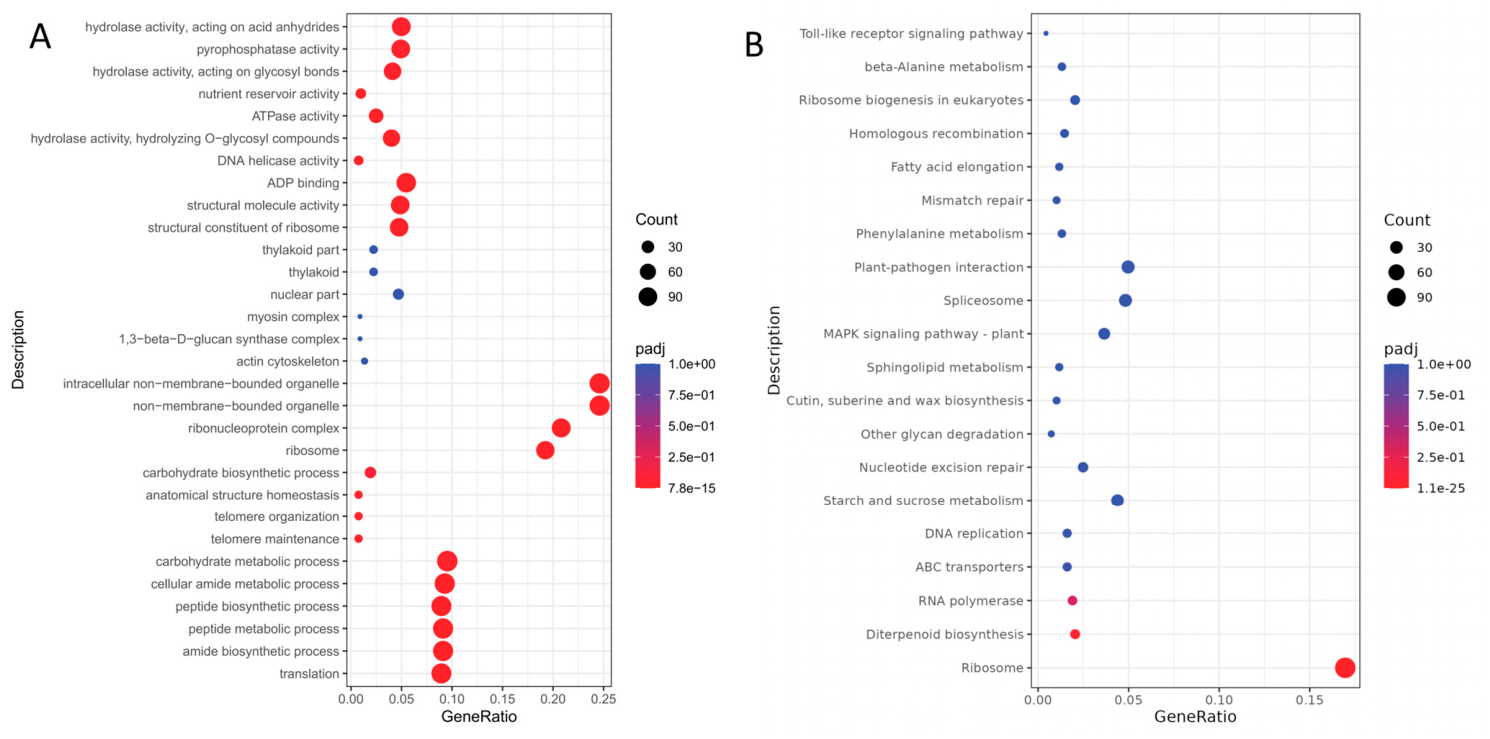
GO enrichment bubble chart analysis revealed the functional bias of DEGs between the ossut2 mutant and the WT (Figure 13A). Genes associated with carbohydrate metabolism and biosynthetic processes were significantly enriched in the mutant, which is highly consistent with the core physiological basis of chalkiness formation—abnormal starch synthesis and accumulation. Regarding molecular function, the significant enrichment of genes related to hydrolase activity acting on glycosyl bonds further confirms that the loss of sugar transporter function directly disrupted sugar homeostasis in the endosperm. Meanwhile, the protein translation pathway contained the largest number of DEGs, and terms such as intracellular membrane-bounded organelles showed relatively high enrichment levels, suggesting that mutation of OsSUT2 not only affected sugar metabolism but also indirectly regulated endosperm development by modulating the expression of genes related to protein synthesis and cell structure. Therefore, transcriptome enrichment analysis demonstrated that as a key sugar transporter, the functional deficiency of OsSUT2 led to the formation of endosperm chalkiness in rice through the coordinated regulation of multiple pathways.
KEGG pathway enrichment analysis was performed on DEGs between the ossut2 mutant and the WT (Figure 13B and Figure S2). Only the ribosome pathway was significantly enriched among all detected pathways (padj = 1.106 × 10⁻²⁵), which contains 116 DEGs and represents the most severely disrupted core pathway in the mutant. Notably, the starch and sucrose metabolism pathway, which is directly associated with endosperm chalkiness formation, was not significantly enriched (padj = 0.990). However, this pathway included 30 DEGs, among which 20 (66.7%) were downregulated, indicating an overall inhibitory tendency in the mutant. Combined with GeneRatio analysis (4.4% vs. background 3.3%), genes in this pathway were perturbed more frequently than random levels. These results further confirm that mutation of OsSUT2 directly disrupts sugar transport and metabolic homeostasis in the endosperm by repressing the starch and sucrose metabolism pathway, which represents one of the key molecular mechanisms underlying chalky phenotype formation.
Collectively, mutation of OsSUT2 triggered global remodeling of the endosperm transcriptome. This was essentially attributed to the combined effects of repression of core pathways and compensatory regulation under disrupted carbon metabolic homeostasis, representing the core molecular logic underlying chalkiness formation. Loss of function of this gene directly downregulated key genes involved in sucrose transport, suppressed the expression of core enzyme genes for starch synthesis, leading to insufficient carbon supply, and markedly reduced the starch synthesis capacity in the endosperm, which may be an important cause of chalkiness formation [24]. Meanwhile, plant cells initiated compensatory regulatory mechanisms to alleviate carbon metabolic disturbance: genes related to monosaccharide transport, stress-responsive sucrose synthases, and the trehalose signaling pathway were upregulated, whereas starch degradation genes were downregulated to reduce carbon loss. However, such compensatory regulation failed to reverse the functional defects of core pathways, ultimately resulting in imbalanced starch metabolism in the endosperm. Furthermore, OsSUT2 mutation significantly disrupted pathways associated with ribosomes and protein translation, impairing the synthesis of functional proteins and the development of subcellular structures in endosperm cells. Acting synergistically with carbon metabolic disruptions, these effects further exacerbated the phenotypic characteristics of loosely arranged and structurally damaged starch granules in the endosperm [25].
The present study confirms at the transcriptomic level that OsSUT2 is not only a critical protein mediating transmembrane transport of carbon assimilates between source and sink tissues but also a central hub regulating endosperm carbon metabolism. By coordinately modulating multiple pathways during endosperm development, these findings define the molecular regulatory mechanism of rice chalkiness formation at the level of sugar transport. In the present study, functional characterization was mainly performed through phenotypic analysis, transcriptional detection, and genetic complementation. As OsSUT2 is a membrane protein, protein-level detection is technically challenging and will be further explored in future investigations.

3.5. Haplotype Analysis of OsSUT2

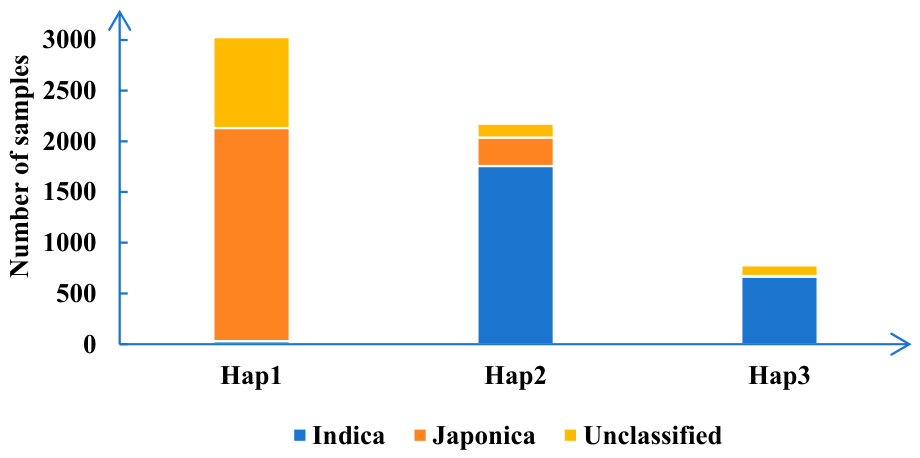
To investigate the natural genetic diversity of the OsSUT2 gene, haplotype distribution patterns in its coding region and flanking sequences were analyzed using 6048 accessions from the RiceAtlas database (http://60.30.67.242:18076/#/home) [22]. Three major haplotypes (Hap1, Hap2, and Hap3), composed of nine SNP loci, were identified, with significant indica–japonica differentiation in their distribution (Table S2, Figure 14).
Hap1 is a japonica–specific haplotype, with 3028 valid accessions, predominantly enriched in major japonica-growing regions including Northeast China, North China, and Central China japonica areas. In contrast, Hap2 and Hap3 are indica-enriched. Hap2 (2173 valid accessions) is mainly distributed in major indica-producing regions (Central China, Southwest China), with a small presence in japonica regions, while Hap3 (776 valid accessions) exhibits stronger indica specificity, with only negligible frequencies in japonica regions.
These results demonstrate that haplotype differentiation of OsSUT2 is closely associated with genetic divergence between indica and japonica subspecies, indicating adaptive selection of this gene during the evolutionary divergence of indica and japonica rice.

4. Conclusions

In this study, homozygous mutants ossut2-1 and ossut2-2 were generated from rice TP309 using the CRISPR/Cas9 technique. Combined with multiple technical approaches, including genetic complementation verification, phenotypic characterization, endosperm storage substance analysis, cytological observation, and transcriptome sequencing, the molecular mechanism by which OsSUT2 regulates rice chalkiness formation was systematically elucidated.
Loss of OsSUT2 function was found to significantly increase the chalkiness degree and deteriorate agronomic traits, such as the effective tiller number and 1000-grain weight. Massive accumulation of carbon assimilates in source organs and impairment of sugar transport and starch synthesis in sink organs were caused by the loss of this gene, leading to imbalanced source–sink transport. Loosely arranged endosperm starch granules, decreased crystallinity, and damaged fine structure were confirmed as the core cytological causes of chalkiness. OsSUT2 was expressed in both source and sink organs of rice, with the most significant suppression in the panicles. Transcriptome sequencing showed that OsSUT2 mutation triggered systematic disruptions in sucrose transport, synthesis, and starch metabolism pathways in the endosperm. These metabolic disturbances were effectively alleviated by functional complementation of OsSUT2, which reduced grain chalkiness to wild-type levels and confirmed that OsSUT2 is a key gene regulating rice chalkiness. Three major haplotypes of OsSUT2 were identified by haplotype analysis, with obvious indica–japonica differentiation, providing a natural variation basis for molecular marker development.
This study clarifies that OsSUT2 regulates chalkiness formation by mediating source–sink carbon assimilate transport and controlling starch metabolism and starch fine structure. It also provides important gene resources and a molecular marker basis for genetic improvement of rice chalkiness.

Supplementary Materials

The following supporting information can be downloaded at: https://www.mdpi.com/article/10.3390/agronomy16090926/s1, Figure S1: Venn diagram of transcriptome sequencing between wild-type (WT) and knockout (KO) mutants; Figure S2: KEGG enrichment bar chart of DEGs; Table S1: DEGs related to sugar transport and starch synthesis; Table S2: Haplotype analysis of the OsSUT2 gene.

Author Contributions

D.Y.: Conceptualization, Formal Analysis, Investigation, Visualization, Methodology, Writing—Original Draft. X.Y.: Conceptualization, Methodology, Investigation, Resources. D.L. and F.M.: Formal Analysis, Methodology, Resources. C.L., Y.L. and X.Z.: Formal Analysis, Methodology, Investigation. B.B.: Conceptualization, Funding Acquisition, Methodology, Project Administration, Supervision, Writing—Review and Editing. All authors have read and agreed to the published version of the manuscript.

Funding

This research was financially supported by the Inter-departmental Joint Fund of Hunan Provincial Natural Science Foundation (2025JJ80298), the National Natural Science Foundation of China (No. 32201884), and the scientific research project from the Department of Education of Hunan Province, China (25C1261).

Data Availability Statement

Data are contained within the article and Supplementary Materials.

Conflicts of Interest

Author Yingge Li was employed by the company Hunan Yuanchuang Seed Industry Co., Ltd. The remaining authors declare that the research was conducted in the absence of any commercial or financial relationships that could be construed as a potential conflict of interest.

References

  1. Wing, R.; Purugganan, M.; Zhang, Q. The rice genome revolution: From an ancient grain to Green Super Rice. Nat. Rev. Genet. 2018, 19, 505–517. [Google Scholar] [CrossRef] [PubMed]
  2. Zhao, D.; Zhang, C.; Li, Q.; Liu, Q. Genetic control of grain appearance quality in rice. Biotechnol. Adv. 2022, 60, 108014. [Google Scholar] [CrossRef] [PubMed]
  3. Ji, J.; Yang, L.; Fang, Z.; Zhang, Y.; Zhuang, M.; Lv, H.; Wang, Y. Plant SWEET family of sugar transporters: Structure, evolution and biological functions. Biomolecules 2022, 12, 205. [Google Scholar] [CrossRef]
  4. Aoki, N.; Hirose, T.; Scofield, G.; Whitfeld, P.; Furbank, R. The sucrose transporter gene family in rice. Plant Cell Physiol. 2003, 44, 223–232. [Google Scholar] [CrossRef]
  5. Hirose, T.; Zhang, Z.; Miyao, A.; Hirochika, H.; Ohsugi, R.; Terao, T. Disruption of a gene for rice sucrose transporter, OsSUT1, impairs pollen function but pollen maturation is unaffected. J. Exp. Bot. 2010, 6, 3639–3646. [Google Scholar] [CrossRef]
  6. Eom, J.; Cho, J.; Reinders, A.; Lee, S.; Yoo, Y.; Tuan, P.Q.; Choi, S.-B.; Bang, G.; Park, Y.-I.; Cho, M.-H.; et al. Impaired function of the tonoplast-localized sucrose transporter in rice, OsSUT2, limits the transport of vacuolar reserve sucrose and affects plant growth. Plant Physiol. 2011, 157, 109–119. [Google Scholar] [CrossRef]
  7. Li, J.; He, S.; Liu, S.; Guo, Y.; Zhang, Y.; Zhang, L.; Zhou, X.; Xu, D.; Luo, X.; Liu, H.; et al. Research progress and application strategies of sugar transport mechanisms in rice. Front. Plant Sci. 2024, 15, 1454615. [Google Scholar] [CrossRef]
  8. Sun, C.; Wang, Y.; Yang, X.; Tang, L.; Wan, C.; Liu, J.; Chen, C.; Zhang, H.; He, C.; Liu, C.; et al. MATE transporter GFD1 cooperates with sugar transporters, mediates carbohydrate partitioning, and controls grain filling duration, grain size and number in rice (Oryza sativa L.). Plant Biotechnol. J. 2023, 21, 621–634. [Google Scholar] [CrossRef]
  9. Li, Y.; Fan, C.; Xing, Y.; Yun, P.; Luo, L.; Yan, B.; Peng, B.; Xie, W.; Wang, G.; Li, X.; et al. Chalk5 encodes a vacuolar H+-translocating pyrophosphatase influencing grain chalkiness in rice. Nat. Genet. 2014, 46, 398–404. [Google Scholar] [CrossRef]
  10. Zhang, C.; Zhao, D.; Li, Q.; Gu, M.; Liu, Q. Progresses in research on cloning and functional analysis of key genes involving in rice grain quality. Sci. Agric. Sin. 2016, 49, 4267–4283. [Google Scholar]
  11. Wu, B.; Yun, P.; Zhou, H.; Xia, D.; Gu, Y.; Li, P.; Yao, J.; Zhou, Z.; Chen, J.; Liu, R.; et al. Natural variation in WHITE-CORE RATE 1 regulates redox homeostasis in rice endosperm to affect grain quality. Plant Cell 2022, 34, 1912–1932. [Google Scholar] [CrossRef]
  12. Bai, A.; Lu, X.; Li, D.; Li, J.; Liu, C. NF-YB1-regulated expression of sucrose transporters in aleurone facilitates sugar loading to rice endosperm. Cell Res. 2016, 26, 384–388. [Google Scholar] [CrossRef]
  13. Fujita, N.; Yoshida, M.; Asakura, N.; Ohdan, T.; Miyao, A.; Hirochika, H.; Nakamura, Y. Function and characterization of starch synthase I using mutants in rice. Plant Physiol. 2006, 140, 1070–1084. [Google Scholar] [CrossRef]
  14. Zhang, L.; Qi, Y.; Wu, M.; Zhao, L.; Zhao, Z.; Lei, C.; Hao, Y.; Yu, X.; Sun, Y.; Zhang, X.; et al. Mitochondrion-targeted PENTATRICOPEPTIDE REPEAT5 is required for cis-splicing of nad4 intron 3 and endosperm development in rice. Crop J. 2021, 9, 282–296. [Google Scholar] [CrossRef]
  15. Chen, X.; Ren, Y.; Dong, H.; Jiang, X.; Zheng, X.; Duan, E.; Teng, X.; Wang, Y.; Gu, C.; Chen, R.; et al. Natural variation in OsTPS8 confers differential regulation of chalkiness and seed vigor in indica and japonica rice. Nat. Genet. 2025, 58, 206–217. [Google Scholar] [CrossRef]
  16. Yao, D.; Wu, J.; Luo, Q.; Zhuang, W.; Xiao, G.; Lei, D.; Bai, B. Influence of high natural field temperature during grain filling stage on the morphological structure and physicochemical properties of rice (Oryza sativa L.) starch. Food Chem. 2020, 310, 125817. [Google Scholar] [CrossRef]
  17. Zhu, D.; Qian, Z.; Wei, H.; Guo, B.; Xu, K.; Dai, Q.; Zhang, H.; Huo, Z. The effects of field preharvest sprouting on the morphological structure and physicochemical properties of rice (Oryza sativa L.) starch. Food Chem. 2019, 278, 10–16. [Google Scholar] [CrossRef]
  18. Cho, Y.; Kang, K. Functional Analysis of Starch Metabolism in Plants. Plants 2020, 9, 1152. [Google Scholar] [CrossRef] [PubMed]
  19. Abe, N.; Asai, H.; Yago, H.; Oitome, N.; Itoh, R.; Crofts, N.; Nakamura, Y.; Fujita, N. Relationships between starch synthase I and branching enzyme isozymes determined using double mutant rice lines. BMC Plant Biol. 2014, 14, 80. [Google Scholar] [CrossRef] [PubMed]
  20. Kong, X.; Zhu, P.; Sui, Z.; Bao, J. Physicochemical properties of starches from diverse rice cultivars varying in apparent amylose content and gelatinisation temperature combinations. Food Chem. 2015, 172, 433–440. [Google Scholar] [CrossRef] [PubMed]
  21. Ishikawa, D.; Yang, J.; Fujii, T. Quantification of starch order in physically modified rice flours using small-angle X-ray scattering (SAXS) and Fourier transform infrared (FT-IR) spectroscopy. Appl. Spectrosc. 2021, 75, 1033–1042. [Google Scholar] [CrossRef]
  22. Ma, X.; Wang, H.; Yan, S.; Zhou, C.; Zhou, K.; Zhang, Q.; Li, M.; Yang, Y.; Li, D.; Song, P.; et al. Large-scale genomic and phenomic analyses of modern cultivars empower future rice breeding design. Mol. Plant 2025, 18, 651–668. [Google Scholar] [CrossRef]
  23. Macneill, G.; Mehrpouyan, S.; Minow, M.; Patterson, J.A.; Tetlow, I.J.; Eme, M. Starch as a source, starch as a sink: The bifunctional role of starch in carbon allocation. J. Exp. Bot. 2017, 68, 4433–4453. [Google Scholar] [CrossRef] [PubMed]
  24. Duan, Y.; Li, X.; Wu, Y.; Jiao, G.; Ma, L.; Dong, N.; Chen, P.; Chen, P.; Li, X.; Cao, R.; et al. Identification of Sucrose Transporter (SUT) Genes Regulating Rice Yield and Quality. Rice Sci. 2025, 32, 287–291. [Google Scholar] [CrossRef]
  25. Yu, S.; Lo, S.; Ho, T. Source–Sink Communication: Regulated by Hormone, Nutrient, and Stress Cross-Signaling. Trends Plant Sci. 2015, 20, 844–857. [Google Scholar] [CrossRef]
  26. Warren, F.; Michael, J.; Bernadine, M. Infrared spectroscopy as a tool to characterise starch ordered structure—A joint FTIR–ATR, NMR, XRD and DSC study. Carbohydr. Polym. 2016, 139, 35–42. [Google Scholar] [CrossRef] [PubMed]
  27. Nakamura, Y.; Sakurai, A.; Inaba, Y.; Kimura, K.; Iwasawa, N.; Nagamine, T. The fine Structure of Amylopectin in Endosperm from Asian Cultivated Rice can be largely Classified into two Classes. Starch-Stärke 2002, 54, 117–131. [Google Scholar] [CrossRef]
  28. Singh, N.; Sodhi, S.; Kaur, M.; Saxena, K. Physico-chemical, morphological, thermal, cooking and textural properties of chalky and translucent rice kernels. Food Chem. 2003, 82, 433–439. [Google Scholar] [CrossRef]
Figure 1. Identification of OsSUT2 mutants. (A) Schematic diagram of the OsSUT2 gene-editing target site. Note: Black regions represent the OsSUT2 gene; black boxes indicate exons, black thick lines indicate introns, and black dashed lines indicate deleted nucleotide regions. ATG and TAA represent the start and stop codons, respectively. WT, wild type; mutants are designated ossut2-1 and ossut2-2. (BD) Comparison of plant morphology, panicle morphology and grain chalkiness between the WT and mutants. (EJ) Investigation of agronomic traits in the WT and mutants. Asterisks indicate significant differences compared with the wild type (WT) at p < 0.05.
Agronomy 16 00926 g001
Figure 2. Changes in soluble sugar and total starch contents in ossut2-1 and ossut2-2 mutants. (AD) Contents of soluble sugars (fructose, glucose, sucrose) and total starch in leaves of wild-type and mutant plants at 6 weeks of age. (EG) Contents of total starch, amylose, and protein in mature grains of wild-type and mutant plants. (HJ) Contents of fructose, glucose, and sucrose in mature grains of wild-type and mutant plants. Asterisks indicate significant differences compared with the wild type (WT): * p < 0.05, ** p < 0.01.
Agronomy 16 00926 g002
Figure 3. Differences in endosperm storage substances between wild-type TP309 and ossut2-1 mutant grains at 20 days after flowering. (A) Contents of amylose, amylopectin, and total starch; (B) Contents of glucose, fructose, and sucrose; (C) Content of Tre6P (trehalose-6-phosphate); (DH) Activities of starch synthesis-related enzymes: soluble starch synthase (SSS), starch branching enzyme (SBE), debranching enzyme (DBE), granule-bound starch synthase (GBSS), and α-amylase. Asterisks indicate significant differences compared with the wild type (WT) at p < 0.05.
Agronomy 16 00926 g003
Figure 4. Fine structure of endosperm starch and transverse section characteristics of brown rice grains in the wild type and mutants. (AC) XRD patterns, FT-IR spectra, and starch chain-length distribution profiles. (DF) SEM images of transverse sections of mature grains in the wild type and mutants.
Agronomy 16 00926 g004
Figure 5. Expression analysis of OsSUT2 in wild-type, mutant, and genetic complementation lines. ** indicates a statistically significant difference compared with the wild-type control (TP309) at p < 0.01.
Agronomy 16 00926 g005
Figure 6. Chalkiness degree in wild-type, mutant, and genetic complementation lines. Asterisks indicate significant differences compared with the wild type (WT) at p < 0.05.
Agronomy 16 00926 g006
Figure 7. Expression analysis of OsSUT2 in different tissues. Different lowercase letters (a–c) indicate statistically significant differences (p < 0.05) among the three genotypes (TP309, ossut2-1, and ossut2-2) within each tissue.
Agronomy 16 00926 g007
Figure 8. Sample correlation heatmap.
Agronomy 16 00926 g008
Figure 9. PCA plot of transcriptome samples on the left, and boxplot of gene expression on the right.
Agronomy 16 00926 g009
Figure 10. Volcano plot of DEGs.
Agronomy 16 00926 g010
Figure 11. Differentially expressed genes related to sugar transport and starch synthesis pathways.
Agronomy 16 00926 g011
Figure 12. Heatmap of DEG expression patterns.
Agronomy 16 00926 g012
Figure 13. GO enrichment (A) and KEGG enrichment (B) of DEGs.
Agronomy 16 00926 g013
Figure 14. Distribution of OsSUT2 haplotypes in indica, japonica, and unclassified rice accessions.
Agronomy 16 00926 g014
Table 1. Crystallinity and FT-IR analysis results of the wild type and mutants.
SampleDegree of Crystallinity (%)Crystal Pattern1045/10221022/995
WT35.37 aA0.76 c1.26 a
ossut2-131.35 cA0.78 b1.18 b
ossut2-234.89 bA0.80 a1.15 b
Note: Different lowercase letters (a–c) within the same column indicate statistically significant differences (p < 0.05) among the three samples (WT, ossut2-1, and ossut2-2).
Disclaimer/Publisher’s Note: The statements, opinions and data contained in all publications are solely those of the individual author(s) and contributor(s) and not of MDPI and/or the editor(s). MDPI and/or the editor(s) disclaim responsibility for any injury to people or property resulting from any ideas, methods, instructions or products referred to in the content.