Article

The Physiological Mechanism of Coupled Regulation Between Water Deficit Severity and Deficit Period on Winter Wheat Yield

Institute of Farmland Irrigation, Chinese Academy of Agricultural Sciences, Xinxiang 453002, China
*
Authors to whom correspondence should be addressed.
Agronomy 2026, 16(9), 847; https://doi.org/10.3390/agronomy16090847
Submission received: 15 January 2026 / Revised: 26 March 2026 / Accepted: 18 April 2026 / Published: 22 April 2026
(This article belongs to the Special Issue Crop Management in Water-Limited Cropping Systems)

Abstract

Regulated deficit irrigation is a vital method for developing water-saving agriculture. The degree of and the period of water deficit are two key factors determining the effectiveness of regulated deficit irrigation. In this study, winter wheat was used as the experimental material, and water deficit was imposed by reducing the irrigation lower limit. Three water deficit treatments were established, with irrigation lower limits set at 65%, 55%, and 45% of field capacity, respectively. There were three stages of water deficit: the jointing stage, the heading-anthesis stage, and the ripening stage; full irrigation (with a minimum irrigation level of 75% field capacity) served as the control. The physiological and growth indicators were measured, including plant water status, osmotic regulation, antioxidant activity, leaf gas exchange and yield. The variation patterns of physiological indicators during the irrigation cycle under reduced irrigation lower limits at different growth stages were explored. The synergistic response relationships among physiological indicators were analyzed; the physiological mechanism by which the degree and stage of water deficit jointly influence winter wheat yield was elucidated. The results indicate that lowering the lower limit of irrigation reduces net photosynthesis prior to irrigation. When the lower irrigation threshold exceeds 55%, chlorophyll content remains largely unaffected. However, increased stomatal conductance following irrigation results in higher net photosynthesis under the low irrigation threshold treatment compared to the control. When the irrigation lower limit is below 55%, chlorophyll content decreases significantly, resulting in net photosynthesis remaining markedly lower than the control even after irrigation. During the jointing stage and heading-anthesis stage, plants exhibit weaker osmotic regulation and antioxidant capacity, and the chlorophyll content is greatly affected by water deficit, resulting in reduced net photosynthesis before and after irrigation, leading to a greater decrease in winter wheat yield. The results on the physiological and biochemical characters (excluding gas exchange parameters) are limited to one year. The research findings provide the theoretical reference for regulated deficit irrigation of winter wheat.

1. Introduction

The mismatch between water supply and demand poses a severe challenge to irrigation management for key grain crops such as wheat and corn. The development of water-saving irrigation is of great significance for the sustainable development of agriculture and to ensure food security. Regulated deficit irrigation (RDI) involves applying controlled water deficits at specific crop growth stages to enhance water use efficiency without significantly reducing yield [1]. Extensive research indicates that crop responses to water stress exhibit stage-specific characteristics, with distinct variations in sensitivity to water deficit across different growth stages [2,3,4,5]. Therefore, determining the appropriate deficit level and deficit period is key to maximizing the benefits of deficit irrigation. Moderate and timely water deficits do not significantly affect plant growth and yield [6,7]. Water deficit first causes osmotic stress to plants.
Osmotic stress disrupts the plants water balance, reducing cell turgor pressure and decreasing leaf stomatal conductance. Consequently, carbon dioxide uptake into leaves is impeded, leading to a reduction in net photosynthesis [8,9]. When plants undergo osmotic stress, the osmotic regulation system is activated. Plants reduce osmotic potential by synthesizing osmotic regulatory substances, thereby resisting osmotic stress [10,11]. The change in the content of osmotic adjustment substances is a crucial factor influencing the osmotic adjustment capability of plants [12]. Furthermore, the effect of osmotic stress on plant water relations is only observed under water deficit conditions and does not produce persistent effects [13,14]. Water deficit not only affects the plants water balance but may also cause oxidative damage.
Reduced stomatal conductance hinders carbon dioxide uptake, slowing the dark reaction (carbon fixation) of photosynthesis. However, the light reaction continues, leading to an excess of NADPH and energy (ATP) intended for CO2 reduction. This causes over-reduction of the electron transport chain, resulting in a significant “leakage” of electrons to oxygen and the production of superoxide anions [15,16]. If the plant possesses robust antioxidant systems, antioxidant enzymes, such as superoxide dismutase and catalase, can promptly eliminate increased reactive oxygen species, thereby preventing oxidative damage to the plant [17,18]. When antioxidant capacity is insufficient, excessive accumulation within cells may lead to the inactivation of key enzymes (such as Rubisco), membrane lipid peroxidation that disrupts the integrity of thylakoid membranes, and degradation of photosynthetic pigments, resulting in reduced photosynthesis [19,20]. Oxidative stress damage to plants typically produces lasting effects after rehydration, ultimately impacting crop yields [21,22,23].
The sensitivity of winter wheat to water deficit exhibits distinct differences across growth stages. The root system of winter wheat is mainly distributed in the soil layer of 0–60 cm, and it is also the most sensitive soil layer for irrigation management [24]. Ma et al. found that the decrease in soil water content to 51.3% field duration at the jointing stage would produce root hydraulic signals, and the net photosynthesis began to decrease significantly when the soil water content decreased to 55.2% field duration, while the soil water content that produced root hydraulic signals and net photosynthesis decreased significantly at the heading stage was 56.3% and 61.3%, respectively [25]. When the rehydration compensation effect exists, the temporary decrease in plant net photosynthetic rate at low soil moisture content may not significantly affect the yield. Therefore, 51.3% field capacity may not be the minimum irrigation lower limit to ensure winter wheat yield. The determination of the lower limit of soil water content in the main root zone also needs to be based on more physiological and biochemical responses.
Currently, research on regulated deficit irrigation for winter wheat primarily focused on the impact of regulated deficit patterns on yield and water use efficiency, while there was insufficient attention to the physiological mechanisms by which the coupling of water deficit severity and deficit stage affected winter wheat yield. Therefore, this study takes the physiological response to irrigation cycles as the entry point by setting different irrigation low limit and water deficit stages to monitor physiological and growth indicators, such as plant water status, osmotic adjustment, antioxidant capacity, leaf gas exchange, and yield. We investigate the physiological regulation patterns of plants under water deficit stress at different growth stages, analyze the synergistic response relationships among key physiological indicators, and elucidate the underlying mechanisms influencing winter wheat yield formation. This research aims to provide a scientific basis for refining the theory and practical application of deficit irrigation in winter wheat cultivation.

2. Materials and Methods

2.1. Experimental Site and Materials

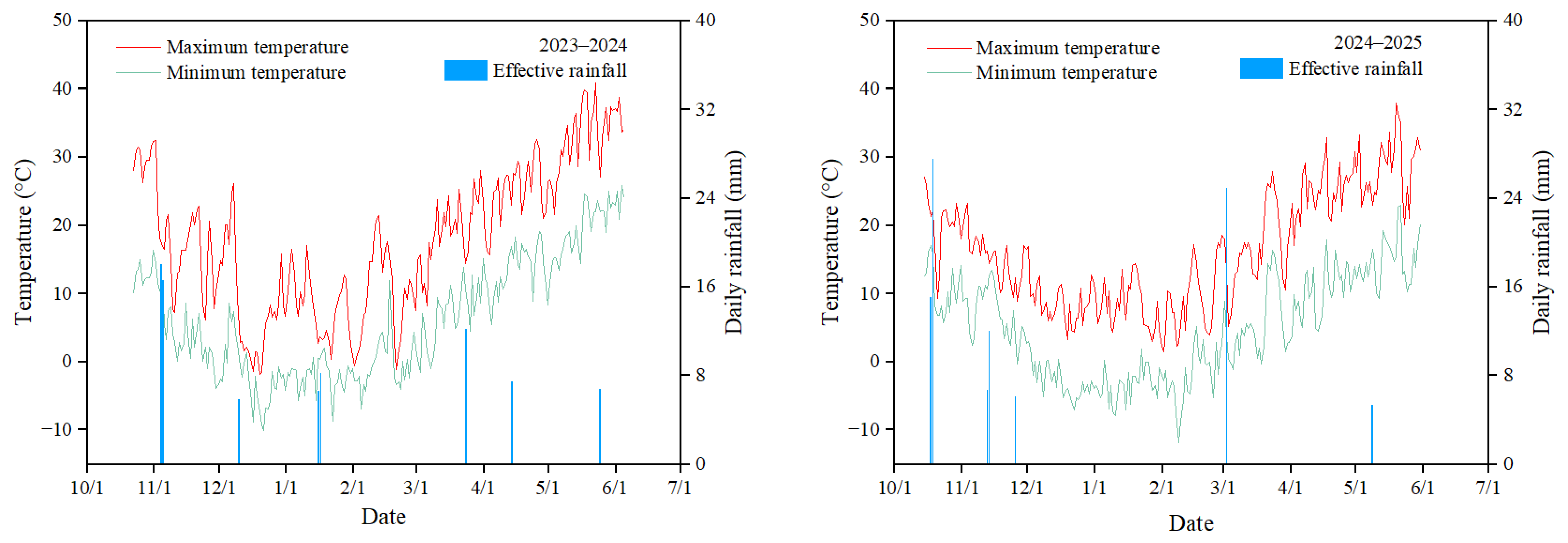
Winter wheat experiments were conducted at the Qiliying Experimental Station of the Chinese Academy of Agricultural Sciences (35°18′ N, 113°54′ E, elevation 73.2 m) from 2023 to 2025. The experimental base has a long-term average temperature of 14.1 °C, a frost-free period of 210 days, annual sunshine hours of 2398.9 h, long-term average precipitation of 589 mm, and long-term average evaporation of 2000 mm [3]. Meteorological data during the experimental period are shown in Figure 1. The soil type at the test site is sandy loam, with physical properties as shown in Table 1. All soil data were obtained from laboratory measurements. Soil textural class was determined according to the USDA soil texture classification using the USDA textural triangle. The particle-size fractions were defined as clay (<0.002 mm), silt (0.002–0.05 mm), and sand (0.05–2.0 mm). The proportion of each fraction was determined using laser diffraction (Malvern Mastersizer 3000, Malvern Panalytical, Malvern, UK) [26]. Soil volumetric water content was monitored using 5TE sensors (Meter, Inc., Whitman, WA, USA), which estimate water content based on the dielectric permittivity of the soil using the capacitance/frequency-domain technique. The sensors were installed at 10, 30, and 50 cm below the soil surface and connected to a data logger (Meter, Inc., Whitman, WA, USA) for continuous monitoring. Soil moisture data were continuously monitored from the jointing stage to harvest of winter wheat, and the data logger recorded soil data every 30 min. We downloaded data from the data logger every three days to determine whether irrigation was needed. In addition, we adjusted the frequency of data downloads from the data logger based on soil water content data. During the regreening period, irrigation should be applied when the soil moisture content at 0–40 cm depth decreases to 75% ± 2% of field capacity, with an irrigation rate of 25 mm. During the jointing stage, heading-anthesis stage, and maturity stage, irrigation should be applied when the soil moisture content at 0–60 cm reaches the specified lower limit for irrigation, with an irrigation volume of 30 mm. Other management matters were uniformly managed in accordance with local practices.

2.2. Treatments

The winter wheat variety selected for this experiment was Zhoumai 22 (Triticum aestivum L., Poaceae), which is the primary winter wheat variety cultivated in the HHHP (Huang–Huai–Hai Plain). Zhoumai22 is a commercial wheat variety with resistance to stripe rust and leaf rust [27]. The seeding rate for both growing seasons was 195 kg ha−1, with a row spacing of 20 cm. The winter wheat was sown on 23 October 2023 and 15 October 2024 and harvested on 5 June 2024 and 31 May 2025. Water deficit was induced based on irrigation thresholds. Based on a review of how different soil water contents affect the physiological responses of winter wheat [24,25], four irrigation low limits were established in this study: 75%, 65%, 55%, and 45% field capacity. Water deficit was applied during the jointing stage, heading-anthesis stage, and maturity stage. The treatment with the lower limit of irrigation during the whole growth stage of 75% field capacity was used as CK. The treatments with irrigation lower limits of 65%, 55% and 45% field capacity represented mild, moderate and severe water deficit, respectively. Irrigation information for different treatments is shown in Table 2. There were a total of 10 treatments, with 3 replicates for each treatment, arranged in 30 plots, each with a width of 12 m and a length of 15 m. Randomized block design was used in the experiment. The irrigation method was drip irrigation, with a drip head flow rate of 2.2 L h−1, a drip head spacing of 30 cm, and a capillary spacing of 60 cm. We applied basal phosphorus fertilizer (P2O5, 120 kg hm−2) and potassium fertilizer (K2O, 120 kg hm−2) prior to planting and applied nitrogen fertilizer (240 kg hm−2) at a basal–topdressing ratio of 5:5.

2.3. Measurements

It should be noted that physiological and biochemical measurements (including leaf water status, leaf osmotic adjustment substances, chlorophyll content and antioxidant activity) were conducted only during the 2024–2025 growing season.

2.3.1. Soil Physical Properties

Soil bulk density was determined using the core method. Undisturbed soil cores of 100 cm3 were collected and oven-dried at 105 °C to constant weight, and bulk density was calculated as the dry mass divided by the core volume [28]. Field capacity (FC) was determined in situ by saturating the soil and allowing free drainage for 48 h. Soil samples were then collected and oven-dried at 105 °C to determine water content [29]. Soil physical properties were measured only during the 2023–2024 growing season.

2.3.2. Leaf Gas Exchange Parameters

Photosynthesis rate (µmol m−2 s−1) and stomatal conductance (mol m−2 s−1) were determined by a portable photosynthesis system (LI-6400XT, LI-COR Corporation, Lincoln, NE, USA) [30]. We selected the second leaf from the top during the jointing stage and heading-anthesis stage and selected the flag leaf during the mature stage. Measurements were taken between 9:00 AM and 11:00 AM. Three replicates were measured for each treatment. The sampling or measurement times for the remaining physiological indicators coincided with the measurement times for gas exchange parameters. Measurements of leaf gas exchange parameters were conducted during the 2023–2024 and 2024–2025 growing seasons.

2.3.3. Leaf Water Status

The leaf water potential was measured by an SKPM 1400 pressure chamber (Skye Instruments Ltd., Llandrindod Wells, UK). The leaves used for measuring leaf water potential were rinsed with deionized water to remove surface impurities, air-dried, rapidly wrapped in aluminum foil, and immediately frozen in liquid nitrogen before storage at −80 °C [31]. The juice squeezed from the thawed frozen leaves was used to determine the osmotic potential of the leaves using a vapor pressure osmometer (Vapro5600; Wescor, Inc., Logan, UT, USA) [32]. Leaf water content (LWC) was determined gravimetrically following standard procedures [32]. Leaves located near those used for the gas exchange measurements were sampled. Fresh weight (FW) was recorded immediately after sampling using an electronic balance (0.001 g precision). The samples were then oven-dried at 80 °C to constant weight (approximately 48 h) to obtain dry weight (DW). Leaf water content was calculated as: LWC (%) = (FW − DW)/FW × 100. Measurements of leaf water status parameters were conducted during the 2024–2025 growing season.

2.3.4. Leaf Osmotic Adjustment Substances

Soluble sugar content was determined following the method of Robyt and White (1987) with minor modifications [33]. Fresh leaf samples were collected, immediately immersed in liquid nitrogen for freezing, and then stored at −80 °C until analysis. Approximately 0.5 g of fresh tissue was homogenized and extracted with 80% (v/v) ethanol at 80 °C for 30 min. The extract was centrifuged at 10,000× g rpm for 10 min, and the supernatant was collected for analysis. The absorbance was measured at 620 nm using a spectrophotometer (UV-2600i; Shimadzu, Inc., Kyoto, Japan), and soluble sugar concentration was calculated using a glucose standard curve. Proline content was determined according to El et al. (2020) [34], based on the acid-ninhydrin method originally described by Bates et al. (1973) [35]. Approximately 0.5 g of fresh tissue was homogenized in 10 mL of 3% (w/v) sulfosalicylic acid and filtered. Two milliliters of the filtrate was reacted with 2 mL of acid-ninhydrin reagent and 2 mL of glacial acetic acid in a boiling water bath for 1 h. The reaction was terminated in an ice bath, and the chromophore was extracted with 4 mL toluene. The absorbance of the toluene phase was measured at 520 nm using a spectrophotometer. The samples were selected from the upper part of the plant, which were leaves near the position of the net photosynthetic determination leaves. Measurements of leaf osmotic adjustment substances were conducted during the 2024–2025 growing season.

2.3.5. Chlorophyll Content

Chlorophyll content was determined by a spectrophotometer. The leaf samples were the same as the soluble sugar determination samples. Chlorophyll was extracted in 95% ethanol under dark conditions for 24 h, and the absorbance of the extract was measured at 645 nm and 663 nm using a spectrophotometer (UV-2600i; Shimadzu, Inc., Kyoto, Japan) [36]. Measurement of chlorophyll content was conducted during the 2024–2025 growing season.

2.3.6. Antioxidant Enzyme Activities and Lipid Peroxidation

Measurements of antioxidant enzyme activities and lipid peroxidation were conducted during the 2024–2025 growing season. Leaf samples used for antioxidant analysis were collected simultaneously with those used for soluble sugar determination. Samples were rinsed with deionized water, blotted dry, immediately frozen in liquid nitrogen, and stored at −80 °C until analysis.
Approximately 0.5 g of frozen leaf tissue was homogenized in 5 mL of ice-cold 50 mM phosphate buffer (pH 7.8) containing 1% (w/v) polyvinylpyrrolidone (PVP). The homogenate was centrifuged at 12,000× g for 20 min at 4 °C. The supernatant was collected for enzyme activity assays.
Malondialdehyde (MDA) content was determined by the thiobarbituric acid (TBA) method following Hodges et al. (1999) [37]. The reaction mixture contained 2 mL of extract and 2 mL of 0.6% TBA in 10% trichloroacetic acid (TCA). The mixture was heated at 95 °C for 30 min and quickly cooled in an ice bath. After centrifugation at 10,000× g for 10 min, absorbance was measured at 532 nm and corrected for non-specific turbidity at 600 nm using a UV–Vis spectrophotometer (UV-2600i; Shimadzu, Inc., Kyoto, Japan).
Superoxide dismutase (SOD) activity was measured according to Apel et al. (2004) using the xanthine oxidase method [38]. The reaction mixture contained phosphate buffer (pH 7.8), methionine, nitroblue tetrazolium (NBT), riboflavin, EDTA, and enzyme extract. The reaction was initiated under illumination (4000 lx) for 15 min. Absorbance was measured at 560 nm. One unit of SOD activity was defined as the amount of enzyme required to inhibit 50% of NBT photoreduction.
Peroxidase (POD) activity was determined following Gill et al. (2010) using the guaiacol method [39]. The reaction mixture contained 50 mM phosphate buffer (pH 7.0), 20 mM guaiacol, 40 mM H2O2, and enzyme extract. The increase in absorbance at 470 nm due to guaiacol oxidation was recorded for 3 min.

2.3.7. Determination of Grain Yields and Yield Structure

Grain yield and its components were determined following standard agronomic sampling procedures [40]. A representative 1 m × 1 m quadrat was harvested from the center of each plot to avoid border effects. The number of ears per unit area was recorded and expressed as ears m−2. From each plot, 30 representative ears were randomly selected to determine the number of grains per ear. After threshing and cleaning, grain number per ear was calculated as the average of the sampled ears. Thousand-grain weight was determined by counting 1000 sound grains from each plot and weighing them using an electronic balance with 0.01 g precision. Grain yield was calculated based on ear number per square meter, grain number per ear, and thousand-grain weight and expressed as kg ha−1 according to standard yield estimation methods [41].

2.4. Statistical Analysis

Statistical analysis was performed using IBM SPSS Statistics 24.0. The two-way analysis of variance (ANOVA) was employed to examine the interaction effects of water deficit severity and deficit stage on plant physiology, growth, and yield. Duncan’s test was performed to compare differences between different treatments. Pearson correlation analysis was performed between each pair of indicators using IBM SPSS Statistics 24.0. The comparison of the two regression lines was analyzed by IBM SPSS Statistics 24.0.

3. Results

3.1. Water Status of Leaves

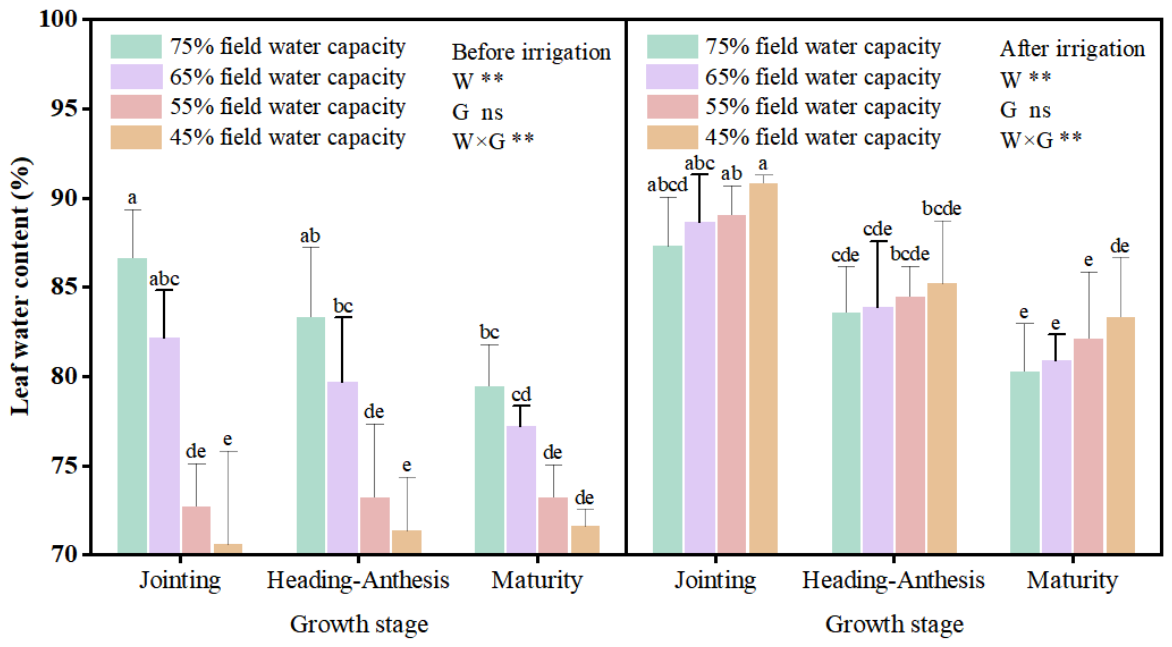
The results of leaf water content, leaf water potential and leaf osmotic potential in this section were based on measurements conducted during the 2024–2025 growing season. Within each irrigation cycle, reducing the lower irrigation limit significantly affected leaf water content both before and after irrigation. Although growth stage alone had no significant effect, a significant interaction between irrigation threshold and growth stage was observed (Figure 2). Compared with the control (75% FC), the 45% FC treatment reduced pre-irrigation leaf water content by 18.55%, 14.35%, and 9.82% at the jointing, heading-anthesis, and maturity stages, respectively. After irrigation, leaf water content under the lower threshold treatments did not differ significantly from the control, although a slight increasing tendency was observed. Moreover, the responsiveness of leaf water content to soil moisture decreased progressively with plant development.
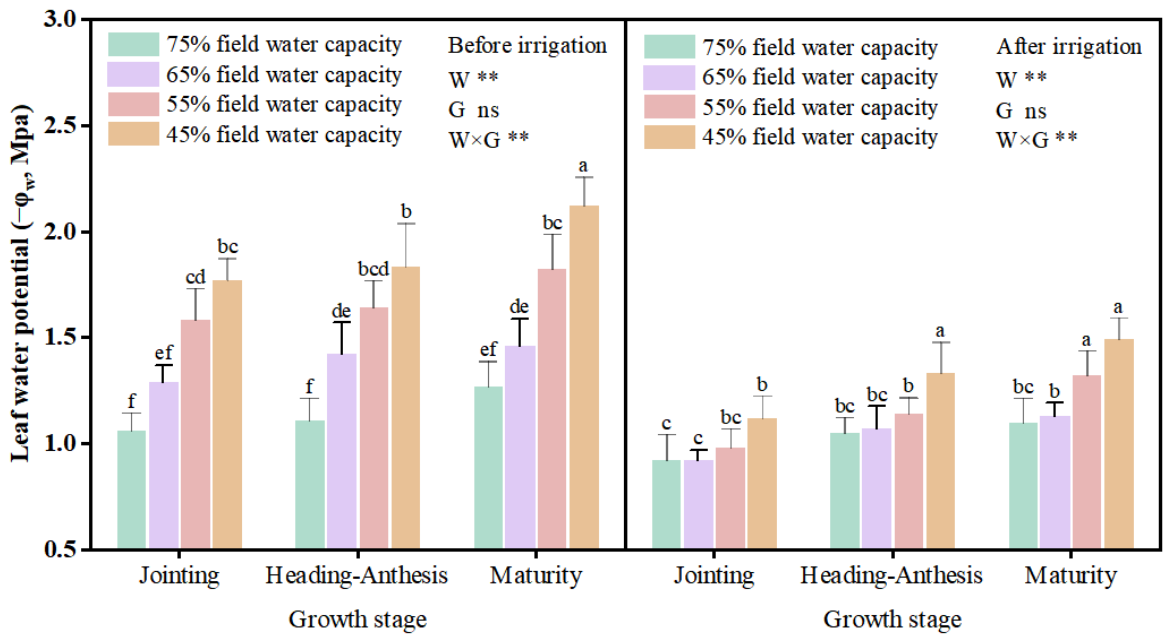
Leaf water potential before and after irrigation was significantly affected by the lower irrigation limit (Figure 3). Across treatments, before irrigation leaf water potential differed among the growth stages; however, growth stage alone had no significant effect. A significant interaction between the lower irrigation limit and growth stage was observed for before irrigation leaf water potential. The reduction in before irrigation leaf water potential under the low lower irrigation limit was similar across growth stages. Compared with the control, the treatment with a lower irrigation limit of 45% of FC reduced before irrigation leaf water potential by 66.98%, 64.86%, and 66.93% at the jointing, heading-anthesis, and maturity stages, respectively. After irrigation, leaf water potential under the 45% FC lower irrigation limit remained significantly lower compared to the control.
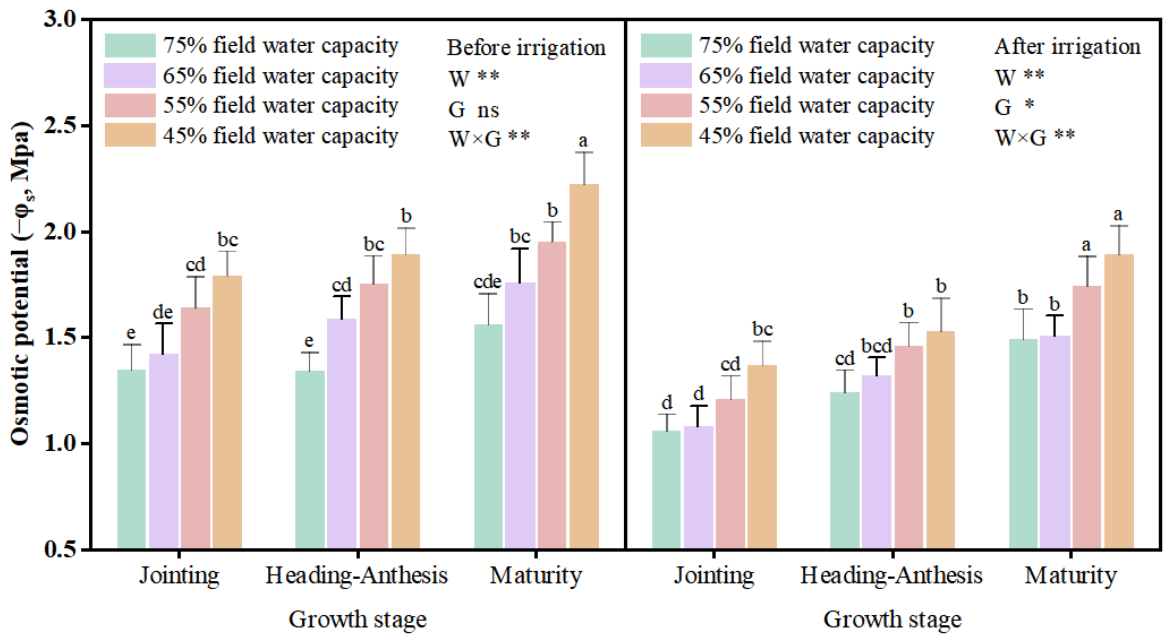
As the lower irrigation limit decreased, before irrigation leaf osmotic potential decreased progressively (Figure 4). As the growth cycle advanced, leaf osmotic potential showed a declining trend; however, growth stage alone had no significant effect on before irrigation leaf osmotic potential. A significant interaction between the lower irrigation limit and growth stage was observed for before irrigation leaf osmotic potential. At the jointing, heading-anthesis, and maturity stages, before irrigation leaf osmotic potential under the 45% FC lower irrigation limit treatment was reduced by 32.59%, 37.96%, and 42.31%, respectively, compared with the control. The effect of lowering the lower irrigation limit on leaf osmotic potential increased with crop developmental progression.

3.2. Leaf Osmotic Adjustment

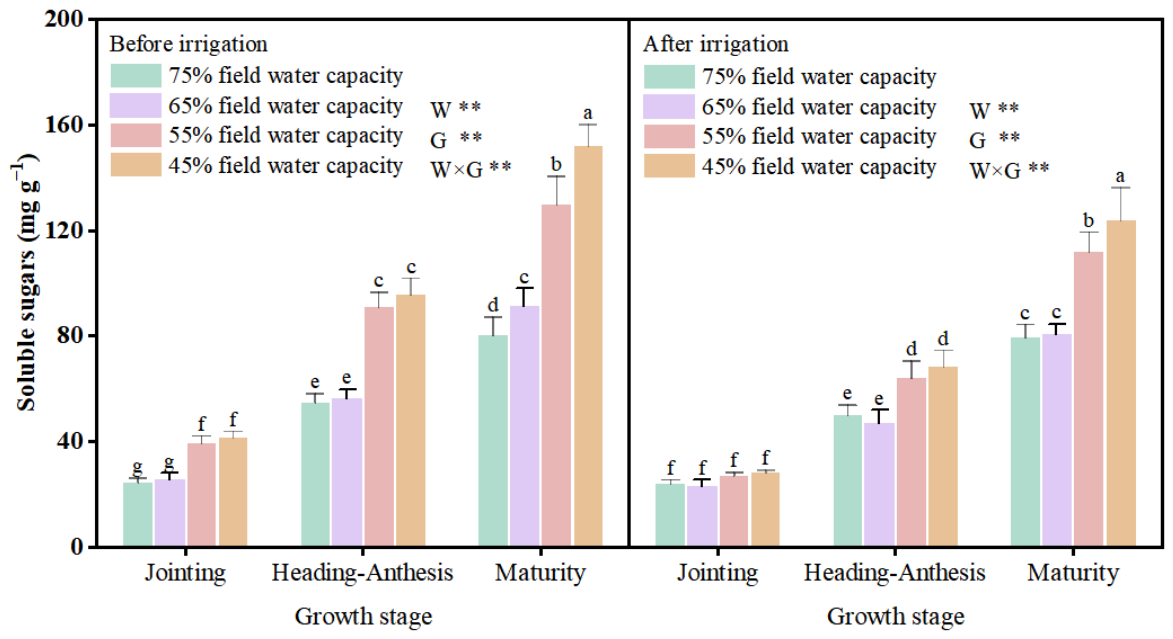
The results of soluble sugar and proline in this section were based on measurements conducted during the 2024–2025 growing season. Both the lower irrigation limit and growth stage significantly affected leaf soluble sugar content before irrigation, and a significant interaction between these factors was observed (Figure 5). Leaf soluble sugar content increased with decreasing lower irrigation limit. At the jointing stage, before irrigation leaf soluble sugar content increased significantly when the lower irrigation limit was reduced to 45% of FC; at the heading-anthesis stage, a significant increase was observed when the lower irrigation limit was reduced to 55% of FC. In contrast, before maturity, before irrigation leaf soluble sugar content decreased significantly when the lower irrigation limit was reduced to 65% of FC. The lower irrigation limit and growth stage also had significant effects on after irrigation leaf soluble sugar content, with a significant interaction between the two factors. At the jointing stage, no significant differences in after irrigation leaf soluble sugar content were observed between any of the low lower irrigation limit treatments and the control. At the heading-anthesis and maturity stages, after irrigation leaf soluble sugar content under the 55% and 45% FC lower irrigation limit treatments remained significantly higher compared to the control. When the lower irrigation limit was reduced beyond a certain level, leaf soluble sugar content remained at a relatively high level throughout the entire irrigation cycle.
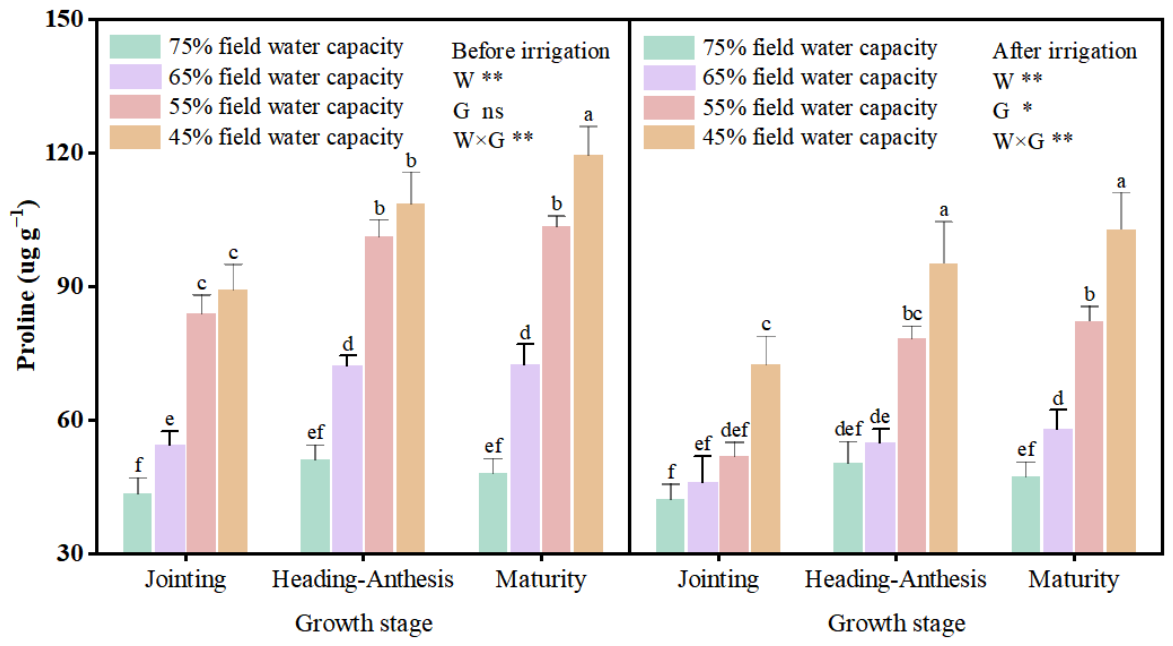
The lower irrigation limit significantly affected before irrigation leaf proline content, whereas growth stage alone had no significant effect. However, a significant interaction between the lower irrigation limit and growth stage was observed for before irrigation leaf proline content (Figure 6). At the jointing, heading-anthesis, and maturity stages, before irrigation leaf proline content was sensitive to reductions in the lower irrigation limit. When the lower irrigation limit was reduced to 65% of FC, before irrigation leaf proline content was significantly higher compared to the control at all growth stages. Under the 55% and 45% FC lower irrigation limit treatments, no significant differences in before irrigation leaf proline content were observed at the jointing and heading-anthesis stages, whereas significant differences were detected at the maturity stage. Both the lower irrigation limit and growth stage significantly affected after irrigation leaf proline content, with a significant interaction between the two factors. After irrigation, leaf proline content under all low lower irrigation limit treatments was higher compared to the control. Differences in after irrigation leaf proline content between the low lower irrigation limit treatments and the control varied markedly with growth stage. At the jointing stage, only the 45% FC lower irrigation limit treatment showed significantly higher after irrigation leaf proline content than the control. At the heading-anthesis stage, after irrigation leaf proline content under the 55% and 45% FC treatments was significantly higher compared to the control. At the maturity stage, after irrigation leaf proline content under the 65%, 55%, and 45% FC lower irrigation limit treatments was significantly higher compared to the control.

3.3. Lipid Peroxidation and Antioxidant Enzyme Activities

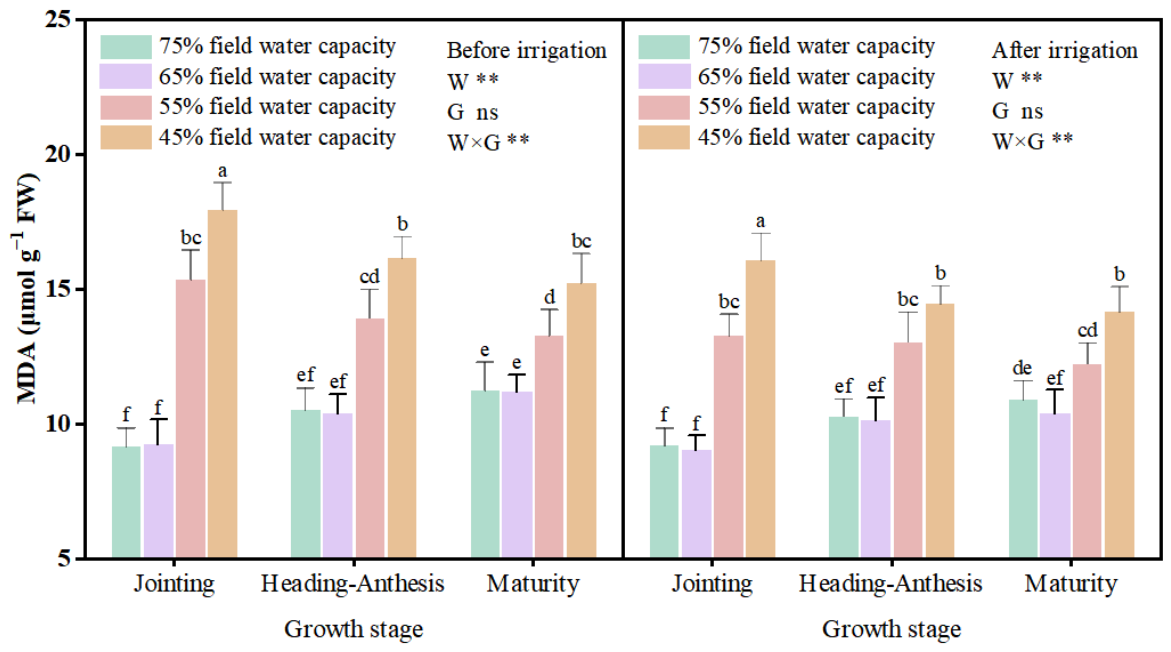
The results of leaf MDA, SOD, and POD content in this section were based on measurements conducted during the 2024–2025 growing season. The lower irrigation limit significantly affected leaf MDA content. Growth stage alone had no significant effect on before irrigation leaf MDA content; however, a significant interaction between the lower irrigation limit and growth stage was observed (Figure 7). The 65% FC treatment did not significantly alter pre-irrigation MDA content at any growth stage, whereas the 55% and 45% FC treatments significantly increased MDA accumulation. Compared with the control (75% FC), the 45% FC treatment increased before irrigation MDA content by 95.75%, 53.71%, and 35.50% at the jointing, heading-anthesis, and maturity stages, respectively. The effect of reducing the lower irrigation limit on before irrigation leaf MDA content decreased as crop development progressed. After irrigation, leaf MDA content under the 55% and 45% FC lower irrigation limit treatments remained higher compared to the control, reaching significant levels at the jointing and heading-anthesis stages.
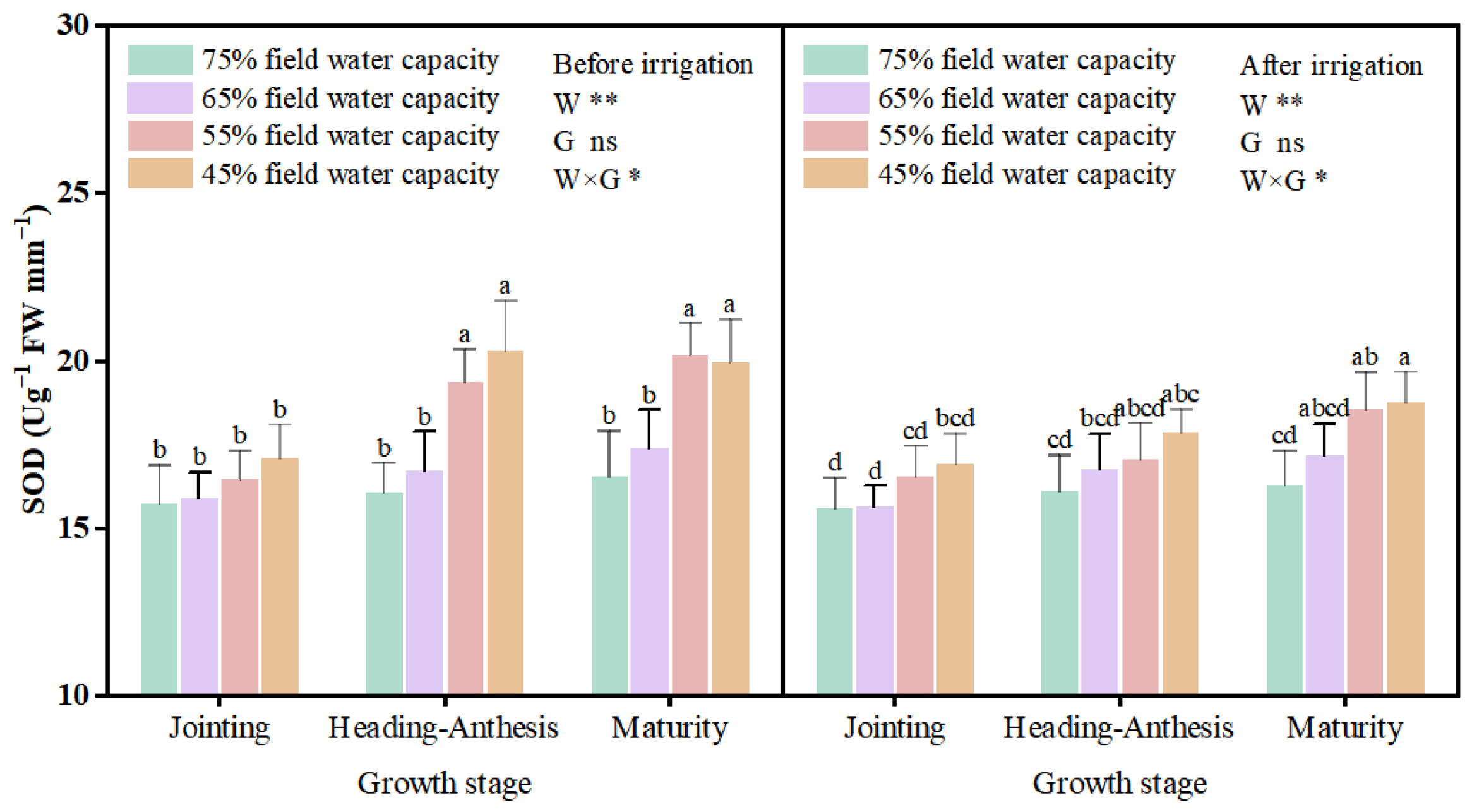
Reducing the lower irrigation limit significantly affected superoxide dismutase (SOD) activity, whereas growth stage alone had no significant effect; however, a significant interaction between the lower irrigation limit and growth stage was observed (Figure 8). At the jointing stage, reducing the lower irrigation limit decreased before irrigation leaf SOD activity, but the change was not significant. In contrast, at the heading-anthesis and maturity stages, the 55% and 45% FC treatments significantly enhanced pre-irrigation SOD activity. After irrigation, no significant differences were detected among treatments at the jointing and heading-anthesis stages. At maturity, after irrigation leaf SOD activity under the 55% and 45% FC lower irrigation limit treatments was significantly higher compared to the control and was 8.13% and 5.97% lower than the corresponding before irrigation values, respectively.
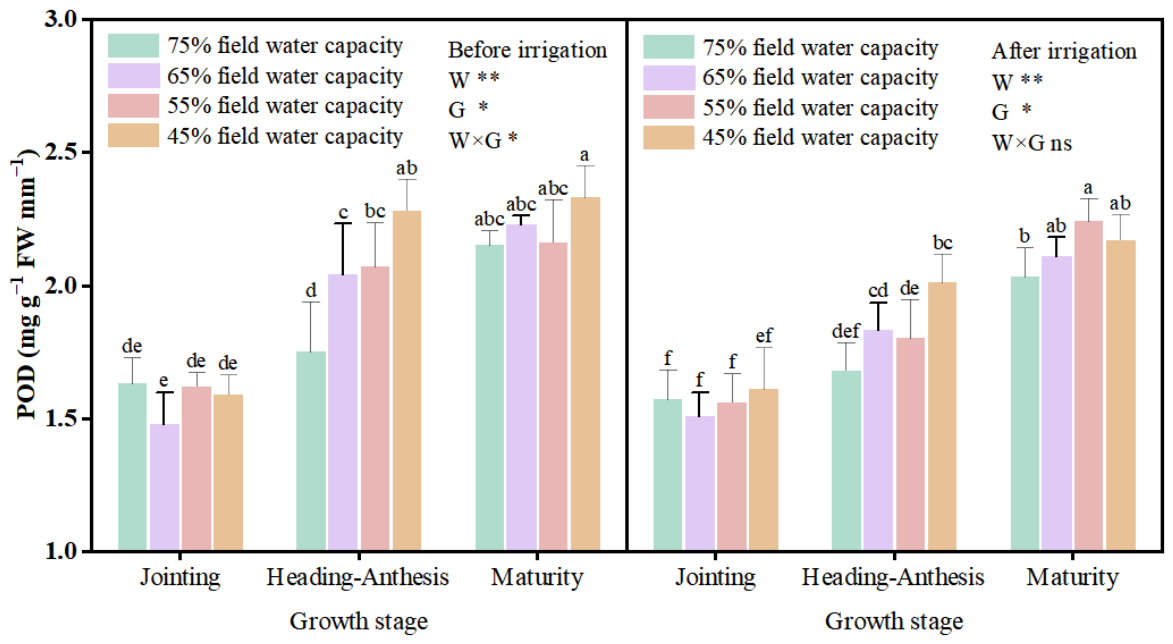
Both the irrigation lower limit and growth stage significantly affected before irrigation leaf POD activity, with a significant interaction between the two factors (Figure 9). At the jointing stage, POD activity showed limited response to irrigation treatments. POD activity increased with plant development, and at maturity, POD activity under the 75% FC treatment was 31.90% higher than at the heading stage. During heading, POD activity increased as irrigation threshold decreased, with the 65% FC treatment significantly exceeding the control. At the maturity stage, no significant differences in before irrigation leaf POD activity were observed among irrigation lower limit treatments. Both the irrigation lower limit and growth stage significantly influenced after irrigation leaf POD activity, whereas their interaction was not significant. Leaf POD activity at later growth stages was consistently higher than the leaf POD activity at earlier stages. At the heading and maturity stages, after irrigation leaf POD activity under the 45% field capacity treatment remained significantly lower compared to the control.

3.4. Chlorophyll

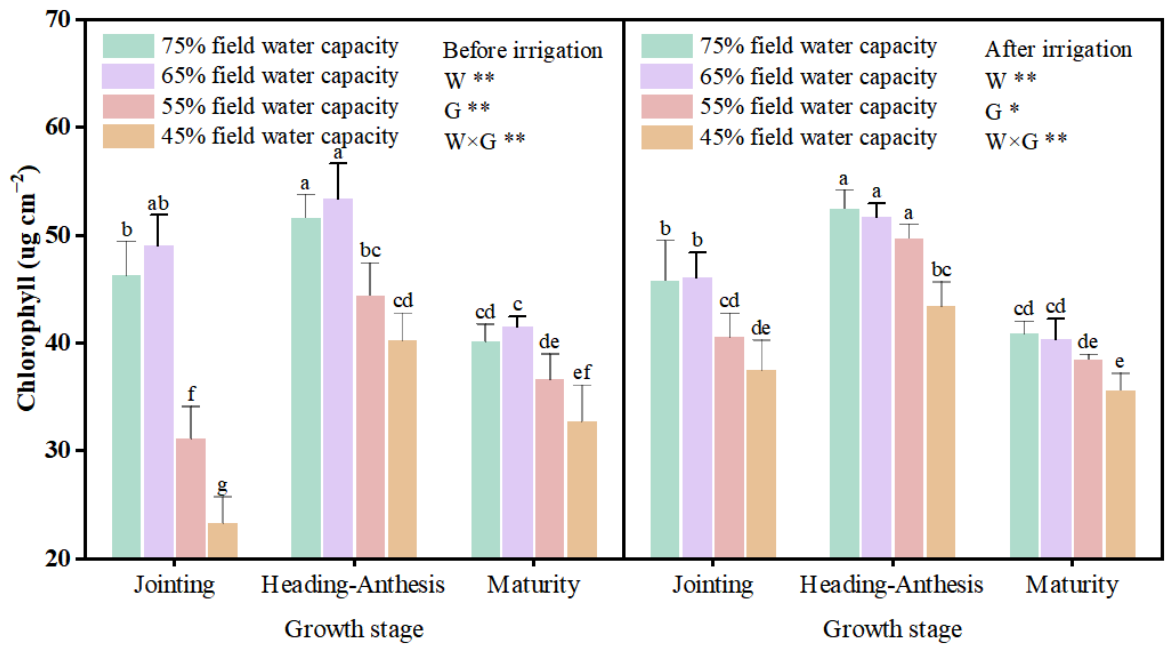
The results of leaf chlorophyll content in this section were based on measurements conducted during the 2024–2025 growing season. Both the lower irrigation limit and growth stage significantly affected leaf chlorophyll content, and a significant interaction between these factors was observed (Figure 10). When the lower irrigation limit was reduced to 65% of FC, leaf chlorophyll content did not decrease but instead showed a moderate increase. At the jointing and heading-anthesis stages, before irrigation chlorophyll content decreased significantly when the lower irrigation limit was reduced to 55% of FC. At maturity, a significant reduction in before irrigation chlorophyll content was observed only when the lower irrigation limit was reduced to 45% of FC. Compared with the control, the 45% FC lower irrigation limit reduced before irrigation chlorophyll content by 49.54%, 21.99%, and 18.39% at the jointing, heading-anthesis, and maturity stages, respectively. Before irrigation leaf chlorophyll content was less sensitive to the lower irrigation limit during the late growth stages of winter wheat. The lower irrigation limit significantly affected after irrigation chlorophyll content, whereas growth stage alone had no significant effect; however, a significant interaction between the lower irrigation limit and growth stage was observed. Under the low lower irrigation limit treatments, chlorophyll content of after irrigation was higher than chlorophyll content of before irrigation. Nevertheless, under the 45% FC lower irrigation limit treatment, after irrigation chlorophyll content remained significantly lower compared to the control.

3.5. Gas Exchange Parameters

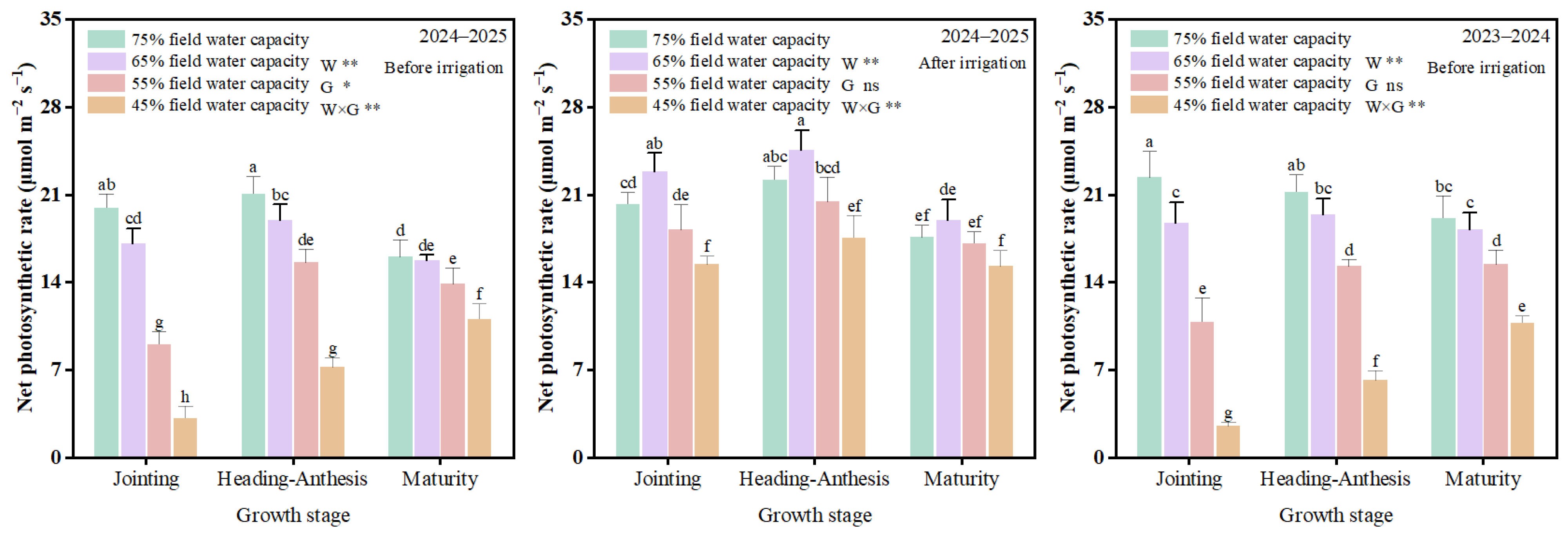
Results from the two growing seasons showed that before irrigation net photosynthetic rate (Pn) and stomatal conductance (Gs) exhibited similar response patterns. The 2024–2025 season was used as an example for further analysis. Before irrigation Pn decreased with decreasing lower irrigation limit. At the jointing and heading-anthesis stages, before irrigation Pn under the 65% FC lower irrigation limit treatment was significantly lower compared to the control, whereas at maturity, a significant reduction in before irrigation Pn was observed only when the lower irrigation limit was reduced to 55% of FC (Figure 11). Before irrigation Pn was more sensitive to reductions in the lower irrigation limit at the jointing stage. Compared with the control, the 45% FC lower irrigation limit reduced before irrigation Pn by 84.15%, 65.69%, and 30.92% at the jointing, heading-anthesis, and maturity stages, respectively. The lower irrigation limit had a significant effect on Pn, while growth stage alone had no significant effect; however, a significant interaction between the lower irrigation limit and growth stage was detected.
After irrigation, Pn was higher than the Pn before irrigation. At the jointing stage, after irrigation Pn under the 65% FC lower irrigation limit treatment was significantly higher compared to the control; no significant difference was observed between the 55% FC treatment and the control, whereas the 45% FC treatment exhibited significantly lower Pn than the control (Figure 11). At the heading-anthesis stage, after-irrigation Pn under the 65% and 55% FC treatments was higher compared to the control, but the differences were not significant, while the 45% FC treatment was significantly lower than the control. At maturity, after irrigation Pn under the 65% FC treatment was higher compared to the control but not significantly different; the 55% FC treatment showed no significant difference from the control, whereas the 45% FC treatment remained significantly lower than the control.
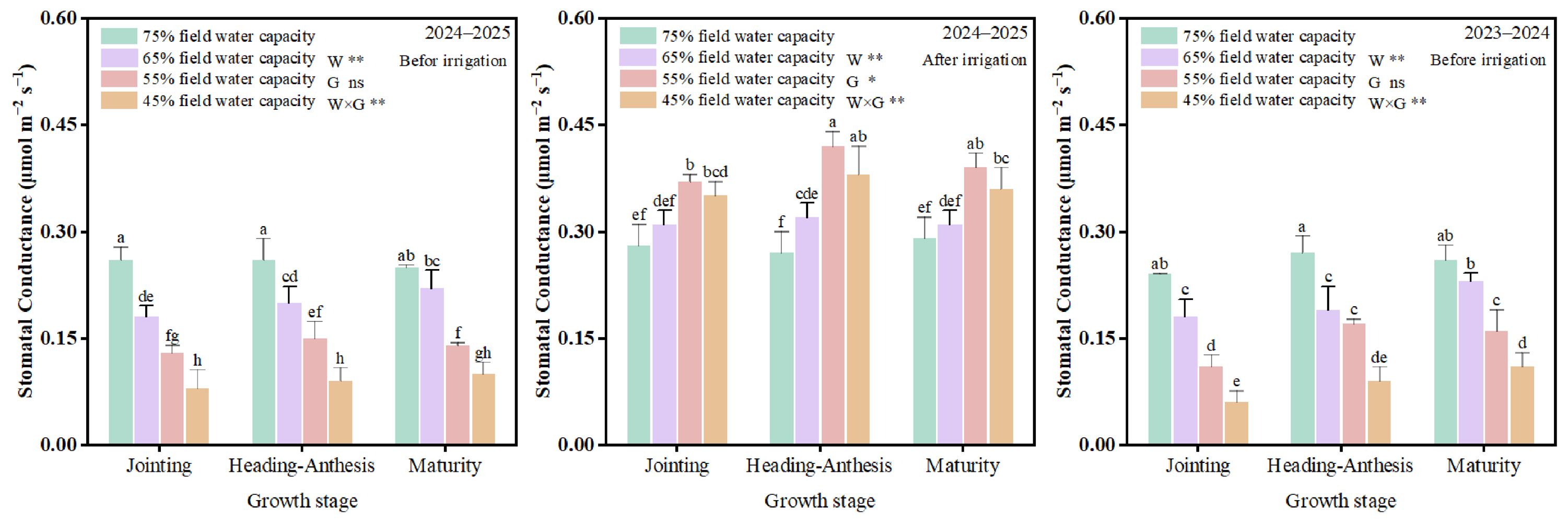
The lower irrigation limit significantly affected before irrigation leaf stomatal conductance (Gs), and a significant reduction in before irrigation Gs was observed when the lower irrigation limit was reduced to 65% of FC. Growth stage alone had no significant effect on before irrigation Gs; however, a significant interaction between the lower irrigation limit and growth stage was detected (Figure 12). The effect of lowering the lower irrigation limit on before irrigation Gs was smaller at later growth stages. Compared with the control, the 45% FC lower irrigation limit reduced before irrigation Gs by 69.23%, 65.38%, and 60.00% at the jointing, heading-anthesis, and maturity stages, respectively. After irrigation, leaf Gs under the low lower irrigation limit treatments increased markedly relative to the corresponding before irrigation values. The lower irrigation limit significantly affected after irrigation Gs, whereas growth stage alone had no significant effect; however, a significant interaction between the lower irrigation limit and growth stage was observed (Figure 12). At the jointing stage, after irrigation Gs under the 55% and 45% FC lower irrigation limit treatments was significantly higher compared to the control. At the heading-anthesis stage, after irrigation Gs under the 65%, 55%, and 45% FC lower irrigation limit treatments was significantly higher compared to the control. At maturity, after irrigation Gs under the 55% and 45% FC lower irrigation limit treatments was significantly higher compared to the control.

3.6. Grain Yield

Both the degree of reduction in the lower irrigation limit and growth stage significantly affected grain yield, with no significant interaction between the two factors (Table 3). At the jointing, heading-anthesis, and maturity stages, reducing the lower irrigation limit to 65% of FC did not result in a significant yield reduction. At the jointing and heading-anthesis stages, reducing the lower irrigation limit to 55% of FC significantly decreased yield. At maturity, a significant yield reduction was observed only when the lower irrigation limit was reduced to 45% of FC. Neither the degree of reduction in the lower irrigation limit nor growth stage had a significant effect on spike number per unit area. In contrast, kernel number per spike was significantly affected by the degree of reduction in the lower irrigation limit but was not significantly affected by growth stage; however, a significant interaction between the two factors was detected. At the jointing stage, reducing the lower irrigation limit to 55% and 45% of field capacity significantly reduced kernel number per spike. At the heading-anthesis stage, a significant reduction in kernel number per spike was observed when the lower irrigation limit was reduced to 45% of FC. At maturity, reducing the lower irrigation limit had no significant effect on kernel number per spike. The degree of reduction in the lower irrigation limit significantly affected thousand-kernel weight, whereas growth stage alone had no significant effect; however, a significant interaction between the two factors was observed.

4. Discussion

4.1. Coupled Effects of Lower Irrigation Limit and Growth Stage on Plant Physiology

The stage-dependent sensitivity of leaf water status indicators to reductions in the lower irrigation limit reflects a physiological coupling between water availability and developmental regulation. As growth progresses, leaf osmotic potential continuously declines and becomes increasingly sensitive to reductions in the lower irrigation limit, indicating a shift from water avoidance to tolerance strategies [42,43,44]. During later growth stages, enhanced osmotic adjustment capacity helps maintain cellular water balance under reduced soil moisture, thereby buffering changes in leaf water potential and stabilizing turgor-dependent physiological processes [45].
Osmotic adjustment under water deficit relies on coordinated solute accumulation. Proline responds more rapidly and persists longer than soluble sugars [46], highlighting its dominant role in osmotic regulation. Rapid proline accumulation during early and middle growth stages and sustained accumulation at maturity under low lower irrigation limits (Figure 4) suggest that proline contributes to both immediate osmoprotection and longer-term metabolic stability. Following rewatering, proline further facilitates cellular recovery and metabolic reorganization [47]. In contrast, soluble sugars mainly act as transient osmotic regulators and are redirected toward energy supply and biosynthesis after rehydration [48].
Water deficit induces oxidative stress, activating antioxidant defenses. Increased superoxide dismutase (SOD) and peroxidase (POD) activities under reduced lower irrigation limits indicate enhanced reactive oxygen species (ROS) scavenging capacity [47]. However, their non-linear responses suggest a threshold beyond which antioxidant capacity cannot further increase. In winter wheat, the stronger response of SOD relative to POD reflects its primary role in early ROS detoxification [49], while the pronounced stage dependency of antioxidant enzyme responses (Figure 8 and Figure 9) underscores developmental regulation of oxidative defense.
Gas exchange integrates water status regulation with carbon assimilation. The high sensitivity of before irrigation net photosynthetic rate and stomatal conductance to reductions in the lower irrigation limit at the jointing stage reflects conservative water-use strategies during active vegetative growth [50,51]. Reduced sensitivity at maturity suggests partial decoupling of stomatal control from photosynthetic capacity. The restricted after irrigation recovery of photosynthesis under thresholds below 55% of field capacity implies that moderate to severe water deficits affect not only transient gas exchange but also the re-establishment of photosynthetic metabolism after rehydration.
The attenuated response of chlorophyll content to reduced lower irrigation limits during late growth stages further supports enhanced physiological buffering at maturity, contributing to the higher threshold for photosynthetic decline [52]. Overall, the interaction between the degree of lower irrigation limit reduction and growth stage coordinately regulates physiological processes throughout the irrigation cycle, revealing a dynamic and stage-dependent adaptive strategy of winter wheat to water deficit.

4.2. Synergistic Responses of Physiological Traits to Reduced Lower Irrigation Limit at Different Growth Stages

Across different growth stages, the coordination among plant water status, osmotic adjustment metabolism, antioxidant defense, and gas exchange under reduced lower irrigation limits exhibits pronounced stage-dependent differences [53]. Before irrigation, net photosynthetic rate (Pn) was significantly correlated with stomatal conductance (Gs) at the jointing, heading-anthesis, and maturity stages [51]. However, Pn responded more rapidly to changes in soil water availability than Gs, indicating that photosynthetic capacity is regulated not only by stomatal behavior but also by non-stomatal factors. While stomatal conductance is primarily constrained by leaf water status indicators such as leaf water potential and osmotic potential, chlorophyll content and photosynthetic enzyme activity also play critical roles in determining Pn [54].
After irrigation, leaf water content, leaf water potential, and osmotic potential increased rapidly. Although leaf water potential and osmotic potential did not fully recover to control levels, the difference between leaf water potential and osmotic potential exceeded that of the control (Figure 2 and Figure 3). This difference effectively reflects cell turgor pressure [55], and elevated turgor facilitates stomatal opening and increases stomatal conductance [56,57]. Consistent with this mechanism, after irrigation stomatal conductance under low lower irrigation limit treatments was higher compared to the control (Figure 12). Under these treatments, although after irrigation leaf soluble sugar content did not differ significantly from the control, proline content remained higher, which likely contributed to the maintenance of relatively higher osmotic potential after irrigation.
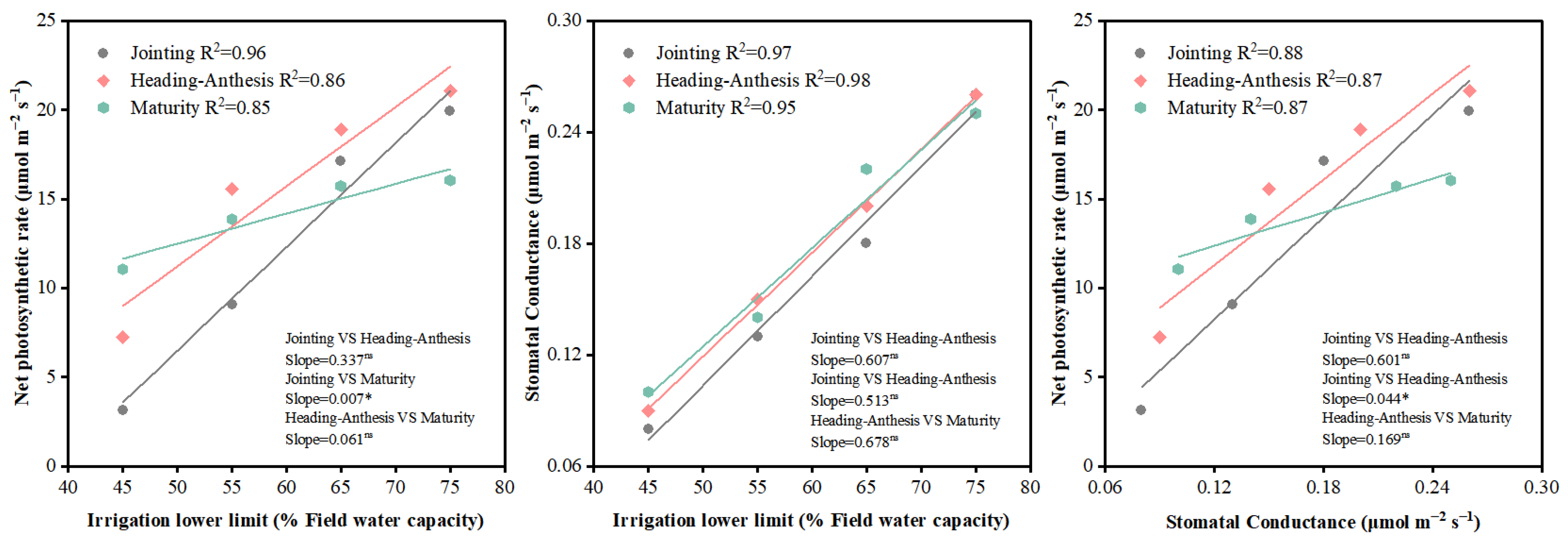
Sensitivity of net photosynthetic rate to reductions in the lower irrigation limit was lower at maturity than at the jointing and heading-anthesis stages. Regression analysis showed that the slope of the relationship between Pn and the lower irrigation limit at the jointing stage was significantly steeper than the slope of the relationship between Pn and the lower irrigation limit at maturity (Figure 13). Stomatal conductance and chlorophyll content are among the most important physiological determinants of photosynthetic capacity [58,59,60]. Similar to Pn, the regression slope between chlorophyll content and the lower irrigation limit was significantly greater at the jointing stage than at maturity, whereas no significant difference in the regression slopes between Gs and the lower irrigation limit was observed among growth stages. Furthermore, comparison of regression slopes between Pn and Gs revealed a significantly higher slope at the jointing stage than at maturity. Together, these results indicate that stage-dependent differences in the response of Pn to reductions in the lower irrigation limit are primarily driven by differential chlorophyll responses rather than stomatal regulation.
Water deficit enhances oxidative stress, which accelerates chlorophyll degradation [61]. Compared with the jointing stage, winter wheat at maturity exhibits a stronger capacity to tolerate oxidative stress. Under water deficit, increased superoxide radical production combined with insufficient antioxidant enzyme activity represents a key cause of oxidative damage [62,63]. Additionally, stomatal closure under water deficit limits CO2 supply, promoting electron leakage from the photosynthetic electron transport chain and thereby increasing reactive oxygen species (ROS) production [62]. Elevated ROS levels activate antioxidant defense systems, regulating the activities of antioxidant enzymes to mitigate oxidative damage [62,63]. Under low lower irrigation limit conditions, limited accumulation of osmotic adjustment substances and relatively weak increases in SOD and POD activities at the jointing stage likely resulted in greater chlorophyll degradation, thereby amplifying the sensitivity of photosynthesis to water deficit during early growth.

4.3. The Mechanism of Reducing the Lower Limit of Irrigation at Different Growth Stages Affecting Yield

The lower irrigation limit exerts a significant influence on yield formation, and this influence varies markedly across growth stages [64]. When water deficit occurs after the jointing stage, yield formation is primarily constrained by reductions in kernel number per spike or thousand-kernel weight (Table 3). Moderate reductions in the lower irrigation limit do not necessarily lead to significant yield loss, as kernel number and thousand-kernel weight can be maintained within a stable range. This is partly because moderate reductions in the lower irrigation limit have limited effects on before irrigation net photosynthetic rate while enhancing after irrigation photosynthetic recovery [65,66]. The rewatering effect, therefore, plays an important role in mitigating the negative impacts of reduced irrigation on yield formation. However, excessive water deficit may result in irreversible physiological damage [49,67]. During the early and middle growth stages of winter wheat, osmotic adjustment capacity and antioxidant defense are relatively weak. Under excessively low lower irrigation limits, elevated malondialdehyde (MDA) content and pronounced chlorophyll degradation indicate severe oxidative damage. As a consequence, despite higher after irrigation stomatal conductance relative to the control, photosynthetic capacity remains significantly constrained due to chlorophyll limitation. Reduced net photosynthetic rate before flowering restricts carbohydrate supply, leading to floret abortion and impaired spike development [68,69]. Accordingly, excessively low lower irrigation limits during the early and middle growth stages reduce kernel number per spike and limit grain filling, ultimately resulting in yield loss.
As winter wheat development progresses, enhanced osmotic adjustment and antioxidant capacity enable plants to tolerate lower soil water availability, thereby shifting the threshold at which irrigation reduction affects yield. However, increased osmotic regulation also entails higher metabolic costs. The synthesis of osmolytes and the upregulation of antioxidant enzyme activities require substantial energy investment, diverting assimilates away from yield formation [70]. Consequently, although severe reductions in the lower irrigation limit during late growth stages have relatively minor effects on net photosynthesis, a greater proportion of assimilated carbon is allocated to stress defense rather than grain filling, leading to reductions in thousand-kernel weight and yield. Overall, the impact of reduced lower irrigation limits on winter wheat yield is strongly growth-stage dependent. The jointing and heading-anthesis stages represent the most yield-sensitive periods, during which water deficit primarily reduces yield by suppressing photosynthesis and decreasing kernel number. In contrast, during the maturity stage, yield reduction is mainly driven by impaired thousand-kernel weight formation. These findings highlight the necessity of stage-specific irrigation management strategies, avoiding excessive water deficit during the jointing and heading-anthesis stages while ensuring adequate water supply during grain filling to support assimilate accumulation and kernel weight development.
The findings regarding physiological and biochemical characteristics (excluding gas exchange parameters) are limited to a single year; these results have to be validated in further studies and in more experimental seasons.

5. Conclusions

Reducing the irrigation lower limit played an important role in regulating leaf water status, osmotic adjustment, antioxidant defense, photosynthetic performance, and grain yield of winter wheat, with pronounced growth-stage-dependent responses. Reduced irrigation lower limits decreased before irrigation leaf water content, leaf water potential, and osmotic potential, while their sensitivity to soil water deficit declined as crop development progressed. Enhanced osmotic adjustment at later stages enabled winter wheat to maintain relatively stable leaf water status under reduced soil water. Lower irrigation limits promoted the accumulation of soluble sugars and proline, but their regulatory roles differed among growth stages. Soluble sugars mainly contributed to osmotic adjustment during early and middle stages, whereas proline responded more rapidly and persisted longer under water deficit, becoming the dominant osmotic regulator at maturity. Antioxidant responses also exhibited clear stage dependency: limited antioxidant capacity at the jointing stage resulted in increased lipid peroxidation, whereas strengthened antioxidant defense at later stages alleviated oxidative damage. Before irrigation net photosynthetic rate and stomatal conductance declined with decreasing irrigation lower limits, with the jointing stage being the most sensitive. Moderate irrigation reduction allowed partial after irrigation recovery of photosynthesis, whereas excessive reduction (<55% of field capacity) constrained recovery, mainly through chlorophyll degradation rather than stomatal limitation. Grain yield responses were strongly growth-stage dependent. Severe water deficit at the jointing and heading-anthesis stages reduced grain number, while yield loss at maturity was primarily associated with decreased thousand-grain weight. Moderate irrigation reduction (≥65% of field capacity) did not significantly reduce yield. These results highlight the necessity of growth-stage-specific irrigation thresholds to achieve water saving without compromising yield stability in winter wheat. However, the results on the physiological and biochemical characters (excluding gas exchange parameters) are limited to one year, and they have to be validated in further studies and in more experimental seasons.

Author Contributions

Conceptualization, T.Y.; methodology, T.Y.; software, T.Y.; validation, T.Y.; formal analysis, H.N. and G.Y.; investigation, X.Q.; resources, Y.W.; data curation, T.Y.; writing—original draft preparation, T.Y.; writing—review and editing, Y.W. and X.Q.; visualization, T.Y.; supervision, X.Q.; project administration, Y.W.; funding acquisition, T.Y. All authors have read and agreed to the published version of the manuscript.

Funding

This research was funded by The Agricultural Science and Technology Innovation Program (JCKJ2025-PT-05), Henan Province Scientific and Technological Research Project (242102110212).

Data Availability Statement

The data presented in this study are available on request from the corresponding authors.

Acknowledgments

Thanks for the support of The Agricultural Science and Technology Innovation Program.

Conflicts of Interest

The authors declare no conflicts of interest.

References

  1. Ma, S.C.; Duan, A.W.; Wang, R.; Guan, Z.M.; Yang, S.J.; Ma, S.T.; Shao, Y. Root-sourced signal and photosynthetic traits, dry matter accumulation and remobilization, and yield stability in winter wheat as affected by regulated deficit irrigation. Agric. Water Manag. 2025, 148, 123–129. [Google Scholar] [CrossRef]
  2. Jiao, F.L.; Ding, R.S.; Du, T.S.; Kang, J.; Tong, L.; Gao, J.; Shao, J. Multi-growth stage regulated deficit irrigation improves maize water productivity in an arid region of China. Agric. Water Manag. 2024, 297, 108827. [Google Scholar] [CrossRef]
  3. Wu, X.L.; Huang, Z.D.; Huang, C.; Liu, Z.D.; Liu, J.M.; Cao, H.; Gao, Y. Regulated deficit irrigation improves yield formation and water and nitrogen use efficiency of winter wheat at different soil fertility levels. Agronomy 2025, 15, 1874. [Google Scholar] [CrossRef]
  4. Xu, J.; Wan, W.L.; Zhu, X.L.; Zhao, Y.H.; Chai, Y.Q.; Guan, S.H.; Diao, M. Effect of regulated deficit irrigation on the growth, yield, and irrigation water productivity of processing tomatoes under drip irrigation and mulching. Agronomy 2023, 13, 2862. [Google Scholar] [CrossRef]
  5. Zhang, X.B.; Yang, H.; Du, T.S. Study of regulated deficit irrigation regime based on individual fruit weight and quality response to water deficit duration: A case study in tomato. Agric. Water Manag. 2025, 307, 109232. [Google Scholar] [CrossRef]
  6. Halli, H.M.; Angadi, S.; Kumar, A.; Govindasamy, P.; Madar, R.; Baskar, V.D.C.; Elansary, H.O.; Tamam, N.; Abdelbacki, A.M.M.; Abdelmohsen, S.A.M. Assessment of planting method and deficit irrigation impacts on physio-morphology, grain yield and water use efficiency of maize (Zea mays L.) on vertisols of semi-arid tropics. Plants 2021, 10, 1094. [Google Scholar] [CrossRef] [PubMed]
  7. Zeng, R.Y.; Lin, X.M.; Welch, S.M.; Yang, S.S.; Huang, N.; Sassenrath, G.F.; Yao, F.M. Impact of water deficit and irrigation management on winter wheat yield in China. Agric. Water Manag. 2023, 287, 108431. [Google Scholar] [CrossRef]
  8. Hasanuzzaman, M.; Zhou, M.X.; Shabala, S. How does stomatal density and residual transpiration contribute to osmotic stress tolerance? Plants 2023, 12, 494. [Google Scholar] [CrossRef] [PubMed]
  9. Liao, Q.; Gu, S.J.; Kang, S.Z.; Du, T.S.; Tong, L.; Wood, J.D.; Ding, R.S. Mild water and salt stress improve water use efficiency by decreasing stomatal conductance via osmotic adjustment in field maize. Sci. Total Environ. 2022, 805, 150364. [Google Scholar] [CrossRef]
  10. Blum, A. Osmotic adjustment is a prime drought stress adaptive engine in support of plant production. Plant Cell Environ. 2017, 40, 4–10. [Google Scholar] [CrossRef]
  11. Luo, X.; Luo, Y.; Wang, X.L.; Kong, X.M.; Zhang, H.F.; Lin, L.J.; Li, Y.X.; Huang, K.W.; Deng, Q.X.; Jia, Y.X. Exogenous dopamine alleviates combined high temperature and drought stress in loquat eriobotrya japonica (Thunb.) Lindl. seedlings: Improvements in photosynthetic efficiency, oxidative damage and osmotic regulation. Plants 2025, 14, 2650. [Google Scholar] [CrossRef]
  12. Avila, R.G.; Magalhaes, P.C.; da Silva, E.M.; de Souza, K.R.D.; Campos, C.N.; de Alvarenga, A.A.; de Souza, T.C. Application of silicon to irrigated and water deficit sorghum plants increases yield via the regulation of primary, antioxidant, and osmoregulatory metabolism. Agric. Water Manag. 2021, 255, 107004. [Google Scholar] [CrossRef]
  13. Demircan, B.; Velioglu, Y.S.; Bozturk, M.M. Effect of dipping pre-treatments and drying methods on aronia melanocarpa quality. Food Chem. 2024, 457, 140109. [Google Scholar] [CrossRef] [PubMed]
  14. Zhang, Y.F.; Zha, Y.Y.; Jin, X.L.; Wang, Y.; Qiao, H. Changes in Vertical Phenotypic Traits of Rice (Oryza sativa L.) Response to Water Stress. Front. Plant Sci. 2022, 13, 942110. [Google Scholar] [CrossRef] [PubMed]
  15. Józwiak, W.; Politycka, B. Effect of selenium on alleviating oxidative stress caused by a water deficit in cucumber roots. Plants 2019, 8, 217. [Google Scholar] [CrossRef]
  16. Pontes, C.V.S.; dos Santos, A.H.A.; Lopes, L.K.C.; Barbosa, M.A.M.; Bajguz, A.; Lobato, A.K.D. Exogenous serotonin and 24-Epibrassinolide boost root protection and suppress oxidative damages occasioned by severe water deficit in soybean seedlings. J. Plant Growth Regul. 2024, 43, 1833–1843. [Google Scholar] [CrossRef]
  17. Bester, A.U.; Shimoia, E.P.; Da-Silva, C.J.; Posso, D.A.; Carvalho, I.R.; Corrêea, F.M.; de Oliveira, A.C.B.; do Amarante, L. Enhancing stress resilience in soybeans (Glycine max): Assessing the efficacy of priming and cross-priming for mitigating water deficit and waterlogging effects. Funct. Plant Biol. 2024, 51, FP24064. [Google Scholar] [CrossRef] [PubMed]
  18. Ozhuner, E. Plant growth-promoting rhizobacteria enhance essential oil production and antioxidant activity of Mentha piperita under water deficit stress. Agric. Water Manag. 2025, 321, 109936. [Google Scholar] [CrossRef]
  19. Haghighi, T.M.; Saharkhiz, M.J.; Ramezanian, A.; Zarei, M. The use of silicon and mycorrhizal fungi to mitigate changes in licorice leaf micromorphology, chlorophyll fluorescence, and rutin content under water-deficit conditions. Plant Physiol. Biochem. 2023, 197, 107662. [Google Scholar] [CrossRef]
  20. Liu, P.; Fang, X.L.; Wang, Y.; Yang, X.; Li, Q. Exogenous application of lanthanum chloride to rice at booting stage can increase chlorophyll content, modulate chlorophyll fluorescence and promote grain yield under deficit irrigation. Agronomy 2025, 15, 32. [Google Scholar] [CrossRef]
  21. Boutasknit, A.; Ait-El-Mokhtar, M.; Fassih, B.; Ben-Laouane, R.; Wahbi, S.; Meddich, A. Effect of arbuscular mycorrhizal fungi and rock phosphate on growth, physiology, and biochemistry of carob under water stress and after rehydration in vermicompost-amended Soil. Metabolites 2024, 14, 202. [Google Scholar] [CrossRef]
  22. Goncalves, F.C.D.; Mantoan, L.P.B.; Correa, C.V.; Parreiras, N.D.; de Almeida, L.F.R.; Ono, E.O.; Rodrigues, J.D.; Prado, R.D.; Boaro, C.S.F. Effects of salicylic acid on physiological responses of pepper plants pre-Subjected to drought under rehydration conditions. Plants 2024, 13, 2805. [Google Scholar] [CrossRef]
  23. Thompson, D.S.; Islam, A. Plant cell wall hydration and plant physiology: An exploration of the consequences of direct effects of water deficit on the plant cell wall. Plants 2021, 10, 1263. [Google Scholar] [CrossRef] [PubMed]
  24. Zuo, Q.; Shi, J.C.; Li, Y.L.; Zhang, R.D. Root length density and water uptake distributions of winter wheat under sub-irrigation. Plant Soil 2006, 285, 45–55. [Google Scholar] [CrossRef]
  25. Ma, S.C.; Zhang, W.Q.; Duan, A.W.; Wang, T.C. Effects of controlling soil moisture regime based on root-sourced signal characteristics on yield formation and water use efficiency of winter wheat. Agric. Water Manag. 2019, 221, 486–492. [Google Scholar] [CrossRef]
  26. Miller, B.A.; Schaetzl, R.J. Precision of Soil Particle Size Analysis using Laser Diffractometry. Soil Sci. Soc. Am. J. 2012, 76, 1719–1727. [Google Scholar] [CrossRef]
  27. Wang, Y.; Xie, J.Z.; Zhang, H.Z.; Guo, B.M.; Ning, S.Z.; Chen, Y.X.; Lu, P.; Wu, Q.H.; Li, M.M.; Zhang, D.Y.; et al. Mapping stripe rust resistance gene YrZH22 in Chinese wheat cultivar Zhoumai 22 by bulked segregant RNA-Seq (BSR-Seq) and comparative genomics analyses. Theor. Appl. Genet. 2017, 130, 2191–2201. [Google Scholar] [CrossRef] [PubMed]
  28. Blake, G.R.; Hartge, K.H. Bulk density. In Methods of Soil Analysis. Part 1: Physical and Mineralogical Methods; Klute, A., Ed.; Soil Science Society of America: Madison, WI, USA, 1986; pp. 363–375. [Google Scholar]
  29. Saxton, K.E.; Rawls, W.J. Soil water characteristic estimates by texture and organic matter for hydrologic solutions. Soil Sci. Soc. Am. J. 2006, 70, 1569–1578. [Google Scholar] [CrossRef]
  30. Long, S.P.; Bernacchi, C.J. Gas exchange measurements: What can they tell us about the underlying limitations to photosynthesis? Procedures and sources of error. J. Exp. Bot. 2003, 54, 2393–2401. [Google Scholar] [CrossRef]
  31. Scholander, P.F.; Hammel, H.T.; Bradstreet, E.D.; Hemmingsen, E.A. Sap pressure in vascular plants. Science 1965, 148, 339–346. [Google Scholar] [CrossRef]
  32. Turner, N.C. Techniques and experimental approaches for the measurement of plant water status. Plant Soil 1981, 58, 339–366. [Google Scholar]
  33. Robyt, J.F.; White, B.J. Biochemical Techniques: Theory and Practice; Brooks/Cole Publishing Company: Monterey, CA, USA, 1987. [Google Scholar]
  34. El Yamani, M.; Sakar, E.; Boussakouran, A.; Rharrabti, Y. Leaf water status, physiological behavior and biochemical mechanism involved in young olive plants under water deficit. Sci. Hortic. 2020, 261, 108906. [Google Scholar] [CrossRef]
  35. Bates, L.S.; Waldren, R.P.; Teare, I.D. Rapid determination of free proline for water-stress studies. Plant Soil 1973, 39, 205–207. [Google Scholar] [CrossRef]
  36. Chowdhury, M.S.N.; Sani, M.N.H.; Siddique, A.; Hossain, M.S.; Yong, J.W.H. Synergistic effects of biochar and potassium co-application on growth, physiological attributes, and antioxidant defense mechanisms of wheat under water deficit conditions. Plant Stress 2024, 12, 100452. [Google Scholar] [CrossRef]
  37. Hodges, D.M.; DeLong, J.M.; Forney, C.F.; Prange, R.K. Improving the thiobarbituric acid-reactive-substances assay for estimating lipid peroxidation in plant tissues containing anthocyanin and other interfering compounds. Planta 1999, 207, 604–611. [Google Scholar] [CrossRef]
  38. Apel, K.; Hirt, H. Reactive oxygen species: Metabolism, oxidative stress, and signal transduction. Annu. Rev. Plant Biol. 2004, 55, 373–399. [Google Scholar] [CrossRef]
  39. Gill, S.S.; Tuteja, N. Reactive oxygen species and antioxidant machinery in abiotic stress tolerance in crop plants. Plant Physiol. Biochem. 2010, 48, 909–930. [Google Scholar] [CrossRef]
  40. Gomez, K.A.; Gomez, A.A. Statistical Procedures for Agricultural Research, 2nd ed.; John Wiley & Sons: New York, NY, USA, 1984. [Google Scholar]
  41. FAO. Guide to Crop Yield Assessment; Food and Agriculture Organization of the United Nations: Rome, Italy, 2011. [Google Scholar]
  42. Alagoz, S.M.; Hadi, H.; Toorchi, M.; Pawlowski, T.A.; Lajayer, B.A.; Price, G.W.; Farooq, M.; Astatkie, T. Morpho-physiological responses and growth indices of triticale to drought and salt stresses. Sci. Rep. 2023, 13, 8896. [Google Scholar] [CrossRef]
  43. Li, L.; Li, H.T.; Liu, N.; Lu, Y.; Shao, L.W.; Chen, S.Y.; Zhang, X.Y. Water use characteristics and drought tolerant ability of different winter wheat cultivars assessed under whole growth circle and at seedling stage. Agric. Water Manag. 2024, 300, 108921. [Google Scholar] [CrossRef]
  44. Mu, Q.; Xu, J.T.; Yu, M.; Guo, Z.J.; Dong, M.Q.; Cao, Y.X.; Zhang, S.Q.; Sun, S.K.; Cai, H.J. Physiological response of winter wheat (Triticum aestivum L.) during vegetative growth to gradual, persistent and intermittent drought. Agric. Water Manag. 2022, 274, 107911. [Google Scholar] [CrossRef]
  45. Ning, D.F.; Zhang, Y.Y.; Li, X.J.; Qin, A.Z.; Huang, C.; Fu, Y.Y.; Gao, Y.; Duan, A.W. The effects of foliar supplementation of silicon on physiological and biochemical responses of winter wheat to drought stress during different growth stages. Plants 2023, 12, 2386. [Google Scholar] [CrossRef]
  46. Katerova, Z.; Todorova, D.; Vaseva, I.I.; Shopova, E.; Petrakova, M.; Iliev, M.; Sergiev, I. Effects of melatonin pre-and post-drought treatment on oxidative stress markers and expression of proline-related transcripts in young wheat plants. Int. J. Mol. Sci. 2024, 25, 12127. [Google Scholar] [PubMed]
  47. Ru, C.; Liu, Y.X.; Hu, X.T.; Wang, W.N. Intermittent drought priming improves photosynthesis, water status, antioxidant capacity, and tolerance to drought stress in winter wheat. J. Plant Growth Regul. 2025, 44, 4316–4335. [Google Scholar] [CrossRef]
  48. Liu, Y.; Zhang, P.P.; Li, M.F.; Chang, L.; Cheng, H.B.; Chai, S.X.; Yang, D.L. Dynamic responses of accumulation and remobilization of water soluble carbohydrates in wheat stem to drought stress. Plant Physiol. Biochem. 2020, 155, 262–270. [Google Scholar] [CrossRef] [PubMed]
  49. Ru, C.; Hu, X.T.; Chen, D.Y.; Wang, W.E.; Zhen, J.B. Photosynthetic, antioxidant activities, and osmoregulatory responses in winter wheat differ during the stress and recovery periods under heat, drought, and combined stress. Plant Sci. 2023, 327, 111557. [Google Scholar]
  50. Liu, E.K.; Mei, X.R.; Yan, C.R.; Gong, D.Z.; Zhang, Y.Q. Effects of water stress on photosynthetic characteristics, dry matter translocation and WUE in two winter wheat genotypes. Agric. Water Manag. 2016, 167, 75–85. [Google Scholar] [CrossRef]
  51. Mu, Q.; Cai, H.J.; Sun, S.K.; Wen, S.S.; Xu, J.T.; Dong, M.Q.; Saddique, Q. The physiological response of winter wheat under short-term drought conditions and the sensitivity of different indices to soil water changes. Agric. Water Manag. 2021, 243, 106475. [Google Scholar] [CrossRef]
  52. Fan, Y.L.; Liu, J.M.; Zhao, J.T.; Ma, Y.Z.; Li, Q.Q. Effects of delayed irrigation during the jointing stage on the photosynthetic characteristics and yield of winter wheat under different planting patterns. Agric. Water Manag. 2019, 221, 371–376. [Google Scholar] [CrossRef]
  53. Bello, Z.A.; van Rensburg, L.D.; Dlamini, P.; Tfwala, C.M.; Tesfuhuney, W. Characterisation and effects of different levels of water stress at different growth stages in malt barley under water-limited conditions. Plants 2011, 11, 578. [Google Scholar]
  54. Mu, Q.; Dong, M.Q.; Xu, J.T.; Cao, Y.X.; Ding, Y.B.; Sun, S.K.; Cai, H.J. Photosynthesis of winter wheat effectively reflected multiple physiological responses under short-term drought-rewatering conditions. J. Sci. Food Agric. 2022, 102, 2472–2483. [Google Scholar]
  55. Zahra, N.; Wahid, A.; Hafeez, M.B.; Ullah, A.; Siddique, K.H.M.; Farooq, M. Grain development in wheat under combined heat and drought stress: Plant responses and management. Environ. Exp. Bot. 2021, 188, 104517. [Google Scholar] [CrossRef]
  56. Ache, P.; Bauer, H.; Kollist, H.; Al-Rasheid, K.A.S.; Lautner, S.; Hartung, W.; Hedrich, R. Stomatal action directly feeds back on leaf turgor: New insights into the regulation of the plant water status from non-invasive pressure probe measurements. Plant J. 2010, 62, 1072–1082. [Google Scholar] [CrossRef]
  57. Franks, P.J.; Farquhar, G.D. The effect of exogenous abscisic acid on stomatal development, stomatal mechanics, and leaf gas exchange in Tradescantia virginiana. Plant Physiol. 2001, 125, 935–942. [Google Scholar] [CrossRef] [PubMed]
  58. Akula, N.N.; Abdelhakim, L.; Knazovicky, M.; Ottosen, C.O.; Rosenqvist, E. Plant responses to co-occurring heat and water deficit stress: A comparative study of tolerance mechanisms in old and modern wheat genotypes. Plant Physiol. Biochem. 2024, 210, 108595. [Google Scholar] [CrossRef] [PubMed]
  59. Liu, Y.C.; Mizuta, K.; Morokuma, M.; Toyota, M. Effects of combined high temperature and water stress on soybean growth and physiological processes in a temperature gradient chamber. Field Crops Res. 2025, 333, 110063. [Google Scholar] [CrossRef]
  60. Razi, K.; Muneer, S. Drought stress-induced physiological mechanisms, signaling pathways and molecular response of chloroplasts in common vegetable crops. Crit. Rev. Biotechnol. 2021, 41, 669–691. [Google Scholar] [CrossRef] [PubMed]
  61. Shan, D.Q.; Wang, C.Y.; Song, H.D.; Bai, Y.X.; Zhang, H.X.; Hu, Z.H.; Wang, L.; Shi, K.; Zheng, X.D.; Yan, T.C.; et al. The MdMEK2-MdMPK6-MdWRKY17 pathway stabilizes chlorophyll levels by directly regulating MdSUFB in apple under drought stress. Plant J. 2021, 108, 814–828. [Google Scholar] [CrossRef]
  62. Liu, C.L.; Zhao, L.; Yu, G.H. The dominant glutamic acid metabolic flux to produce γ-amino butyric acid over proline in nicotiana tabacum leaves under water stress relates to its significant role in antioxidant activity. J. Integr. Plant Biol. 2011, 53, 608–618. [Google Scholar] [CrossRef]
  63. Nehra, A.; Kalwan, G.; Taneja, D.; Jangra, R.; Joshi, K.; Kumar, A.; Jain, P.K.; Nehra, K.; Ansari, M.W.; Singh, K.; et al. Comprehensive structural, evolutionary and functional analysis of superoxide dismutase gene family revealed critical role in salinity and drought stress responses in chickpea (Cicer arietinum L.). Plant Physiol. Biochem. 2025, 226, 110042. [Google Scholar] [CrossRef]
  64. Juzon-Sikora, K.; Laskos, K.; Warchol, M.; Czyczylo-Mysza, I.M.; Dziurka, K.; Grzesiak, M.; Skrzypek, E. Water relations and physiological traits associated with the yield components of winter wheat (Triticum aestivum L.). Agriculture 2024, 14, 1887. [Google Scholar] [CrossRef]
  65. Ali, M.F.; Li, P.; Ma, L.J.; Feng, C.J.; Gu, S.B.; Lin, X.; Wang, D. Investigating the impact of drought during returning green and jointing stages on different tillers position of winter wheat. J. Plant Growth Regul. 2025, 44, 5542–5560. [Google Scholar] [CrossRef]
  66. Ru, C.; Hu, X.T.; Chen, D.Y.; Wang, W.E. Drought stimulus enhanced stress tolerance in winter wheat (Triticum aestivum L.) by improving physiological characteristics, growth, and water productivity. Plant Physiol. Biochem. 2024, 214, 108906. [Google Scholar] [CrossRef]
  67. Day, B.L.H.; Johnson, K.M.; Tonet, V.; Bourbia, I.; Blackman, C.J.; Brodribb, T.J. A one-way ticket: Wheat roots do not functionally refill xylem emboli following rehydration. Plant Physiol. 2024, 196, 2362–2373. [Google Scholar] [CrossRef] [PubMed]
  68. Weldearegay, D.F.; Yan, F.; Jiang, D.; Liu, F. Independent and combined effects of soil warming and drought stress during anthesis on seed set and grain yield in two spring wheat varieties. J. Agron. Crop Sci. 2012, 198, 245–253. [Google Scholar] [CrossRef]
  69. Yang, H.K.; Hu, W.M.; Zhao, J.R.; Huang, X.L.; Zheng, T.; Fan, G.Q. Genetic improvement combined with seed ethephon priming improved grain yield and drought resistance of wheat exposed to soil water deficit at tillering stage. Plant Growth Regul. 2021, 95, 399–419. [Google Scholar] [CrossRef]
  70. Munns, R.; Passioura, J.B.; Colmer, T.D.; Byrt, C.S. Osmotic adjustment and energy limitations to plant growth in saline soil. New Phytol. 2020, 225, 1091–1096. [Google Scholar]
Figure 1. Meteorological data during the experimental period.
Agronomy 16 00847 g001
Figure 2. The coupling effect of water deficit degree and stage on leaf water content before and after irrigation. W represents water deficit degree; G represents water deficit stage. The ANOVA results are given for W, G, and interaction (W × G). Significance levels follow as: ** p < 0.001, and ns—no significant difference. Values are means ± SD. Data is from the 2024–2025 growing season. Different letters indicate significant differences among treatments.
Agronomy 16 00847 g002
Figure 3. The coupling effect of water deficit degree and stage on leaf water potential before and after irrigation. W represents water deficit degree; G represents water deficit stage. The ANOVA results are given for W, G, and interaction (W × G). Significance levels follow as: ** p < 0.001, and ns—no significant difference. Values are means ± SD. Data is from the 2024–2025 growing season. Different letters indicate significant differences among treatments.
Agronomy 16 00847 g003
Figure 4. The coupling effect of water deficit degree and stage on osmotic potential before and after irrigation. W represents water deficit degree; G represents water deficit stage. The ANOVA results are given for W, G, and interaction (W × G). Significance levels follow as: * p < 0.05, ** p < 0.001, and ns—no significant difference. Values are means ± SD. Data is from the 2024–2025 growing season. Different letters indicate significant differences among treatments.
Agronomy 16 00847 g004
Figure 5. The coupling effect of water deficit degree and stage on soluble sugar content before and after irrigation. W represents water deficit degree; G represents water deficit stage. The ANOVA results are given for W, G, and interaction (W × G). Significance levels follow as: ** p < 0.001. Values are means ± SD. Data is from the 2024–2025 growing season. Different letters indicate significant differences among treatments.
Agronomy 16 00847 g005
Figure 6. The coupling effect of water deficit degree and stage on proline before and after irrigation. W represents water deficit degree; G represents water deficit stage. The ANOVA results are given for W, G, and interaction (W × G). Significance levels follow as: * p < 0.05, ** p < 0.001, and ns—no significant difference. Values are means ± SD. Data is from the 2024–2025 growing season. Different letters indicate significant differences among treatments.
Agronomy 16 00847 g006
Figure 7. The coupling effect of water deficit degree and stage on MDA before and after irrigation. W represents water deficit degree; G represents water deficit stage. The ANOVA results are given for W, G, and interaction (W × G). Significance levels follow as: ** p < 0.001, and ns—no significant difference. Values are means ± SD. Data is from the 2024–2025 growing season. Different letters indicate significant differences among treatments.
Agronomy 16 00847 g007
Figure 8. The coupling effect of water deficit degree and stage on SOD before and after irrigation. W represents water deficit degree; G represents water deficit stage. The ANOVA results are given for W, G, and interaction (W × G). Significance levels follow as: * p < 0.05, ** p < 0.001, and ns—no significant difference. Values are means ± SD. Data is from the 2024–2025 growing season. Different letters indicate significant differences among treatments.
Agronomy 16 00847 g008
Figure 9. The coupling effect of water deficit degree and stage on POD before and after irrigation. W represents water deficit degree; G represents water deficit stage. The ANOVA results are given for W, G, and interaction (W × G). Significance levels follow as: * p < 0.05, ** p < 0.001, and ns—no significant difference. Values are means ± SD. Data is from the 2024–2025 growing season. Different letters indicate significant differences among treatments.
Agronomy 16 00847 g009
Figure 10. The coupling effect of water deficit degree and stage on chlorophyll before and after irrigation. W represents water deficit degree; G represents water deficit stage. The ANOVA results are given for W, G, and interaction (W × G). Significance levels follow as: * p < 0.05, ** p < 0.001. Values are means ± SD. Data is from the 2024–2025 growing season. Different letters indicate significant differences among treatments.
Agronomy 16 00847 g010
Figure 11. The coupling effect of water deficit degree and stage on net photosynthesis before and after irrigation. W represents water deficit degree; G represents water deficit stage. The ANOVA results are given for W, G, and interaction (W × G). Significance levels follow as: * p < 0.05, ** p < 0.001, and ns—no significant difference. Values are means ± SD. Data is from the 2023–2024 and 2024–2025 growing seasons. Different letters indicate significant differences among treatments.
Agronomy 16 00847 g011
Figure 12. Coupling effect of water deficit degree and stage on stomatal conductance before and after irrigation. W represents water deficit degree; G represents water deficit stage. The ANOVA results are given for W, G, and interaction (W × G). Significance levels follow as: * p < 0.05, ** p < 0.001, and ns—no significant difference. Values are means ± SD. Data is from the 2023–2024 and 2024–2025 growing seasons. Different letters indicate significant differences among treatments.
Agronomy 16 00847 g012
Figure 13. Correlation analysis between photosynthetic rate, stomatal conductance and irrigation lower limit. Data is from the 2023–2024 and 2024–2025 growing seasons. * p < 0.05, and ns—no significant difference.
Agronomy 16 00847 g013
Table 1. Soil texture of the soil layer from 0 to 60 cm.
Soil LayerSoil Texture% Sand% Silt% ClayBulk DensityField Capacity
(cm) g cm−3cm−3 cm−3
0–20Sandy loam534341.5633.76
20–40Sandy loam484571.5830.57
40–60Sandy loam464861.5432.29
The field capacity is expressed as volumetric water content.
Table 2. Irrigation information for different treatments.
YearWater Deficit StageWater DeficitNumber of Irrigations (Irrigation Quota, mm)Total Irrigation Amount
(mm)
JointingHeading AnthesisMaturity
2023–
2024
CK75% field capacity2 (25)3 (30)2 (30)200
Jointing65% field capacity2 (25)3 (30)2 (30)200
55% field capacity1 (25)3 (30)2 (30)175
45% field capacity1 (25)3 (30)2 (30)175
Heading Anthesis65% field capacity2 (25)3 (30)2 (30)200
55% field capacity2 (25)2 (30)2 (30)170
45% field capacity2 (25)1 (30)2 (30)140
Maturity65% field capacity2 (25)2 (30)1 (30)140
55% field capacity2 (25)2 (30)1 (30)140
45% field capacity2 (25)2 (30)1 (30)140
2024–
2025
CK75% field capacity2 (25)2 (30)2 (30)170
Jointing65% field capacity2 (25)2 (30)2 (30)170
55% field capacity1 (25)2 (30)2 (30)145
45% field capacity1 (25)2 (30)2 (30)145
Heading Anthesis65% field capacity2 (25)2 (30)2 (30)170
55% field capacity2 (25)1 (30)2 (30)140
45% field capacity2 (25)1 (30)2 (30)140
Maturity65% field capacity2 (25)2 (30)1 (30)140
55% field capacity2 (25)2 (30)1 (30)140
45% field capacity2 (25)2 (30)1 (30)140
CK refers to the treatment with the lower limit of irrigation during the whole growth period, which is 75% field capacity.
Table 3. Coupled effects of water deficit severity and stage on winter wheat grain yield and component factors.
YearGrowth
Stage
Water DeficitWheat Plants
(Ten Thousand Plants per ha)
Grain Number per SpikeThousand Grain Weight (g)Grain Yield
(Kg ha−1)
2023–
2024
CK726.01 ± 19.37 a30.57 ± 1.32 a41.31 ± 2.04 a9168.39 ± 574.22 a
JointingMild717.85 ± 17.55 a28.49 ± 1.49 abc41.11 ± 1.46 a8474.63 ± 449.76 bc
Moderate710.67 ± 16.96 a26.28 ± 1.47 cd41.14 ± 2.12 a7683.47 ± 339.66 de
Severe702.69 ± 19.34 a23.83 ± 1.55 d37.61 ± 1.61 bc6297.83 ± 408.48 f
Heading-
Anthesis
Mild721.99 ± 15.03 a29.26 ± 1.25 ab42.2 ± 1.09 a8914.93 ± 351.34 ab
Moderate720.6 ± 19.64 a28.19 ± 1.39 abc40.59 ± 1.73 ab8245.34 ± 185.21 cd
Severe722.1 ± 14.17 a27.18 ± 1.4 bc36.02 ± 1.28 c7069.53 ± 293.91 e
MaturityMild726.07 ± 13.64 a29.96 ± 1.23 a42.09 ± 1.78 a9155.86 ± 282.8 a
Moderate718.91 ± 21.74 a29.9 ± 1.73 a40.33 ± 1.68 ab8669.1 ± 295.31 abc
Severe724.61 ± 16.89 a30.25 ± 1.52 a32.98 ± 1.99 d7229.04 ± 308 e
Water deficitns****
Growth stagensnsns*
W × Gns***ns
2024–
2025
CK725.35 ± 18.84 a29.75 ± 1.23 a41.33 ± 1.96 a8918.67 ± 490.07 a
JointingMild718.97 ± 18.66 a28.89 ± 1.42 ab42.41 ± 1.11 a8809 ± 550.57 a
Moderate709.87 ± 16.5 a25.82 ± 1.59 c41.58 ± 2.06 a7621.13 ± 286.03 c
Severe702.35 ± 20.66 a23.29 ± 1.49 d36.81 ± 1.69 b6021.28 ± 308.06 e
Heading-AnthesisMild721.73 ± 18.87 a29.8 ± 1.3 a41.98 ± 1.14 a9028.87 ± 409.87 a
Moderate721.54 ± 19.63 a26.99 ± 1.4 bc41.55 ± 1.71 a8091.6 ± 283.17 bc
Severe722.56 ± 13.73 a27.06 ± 1.32 bc35.24 ± 1.29 bc6890.29 ± 344.39 d
MaturityMild727.17 ± 13.46 a30.22 ± 1.33 a41.53 ± 1.73 a9126.25 ± 304.54 a
Moderate719.13 ± 20.81 a31.22 ± 1.84 a37.65 ± 1.57 b8452.89 ± 301.18 ab
Severe726.05 ± 16.85 a31.47 ± 1.66 a33.06 ± 1.93 c7553.81 ± 421.7 c
Water deficitns****
Growth stagensnsns*
W × Gns**ns
CK refers to the treatment with the lower limit of irrigation during the whole growth period, which is 75% field capacity. Mild, moderate and severe water deficits refer to the treatments with irrigation lower limits of 65%, 55% and 45% field capacity, respectively. W represents water deficit degree; G represents water deficit stage. Data were collected from two growing seasons; values are means ± SD per treatment; five samples per treatment. * p < 0.05, ** p < 0.001, and ns—no significant difference. Different letters indicate significant differences among treatments.
Disclaimer/Publisher’s Note: The statements, opinions and data contained in all publications are solely those of the individual author(s) and contributor(s) and not of MDPI and/or the editor(s). MDPI and/or the editor(s) disclaim responsibility for any injury to people or property resulting from any ideas, methods, instructions or products referred to in the content.