Article

Identifying the Key Drivers of Changes in the Morphological Traits of Ledum palustre, Rhizosphere Soil Physicochemical Properties, and Microbial Community Structure Along a Fire Chronosequence in the Da Xing’an Mountains of Northeastern China

Key Laboratory of Sustainable Forest Ecosystem Management, Ministry of Education, College of Forestry, Northeast Forestry University, 26 Hexing Road, Harbin 150040, China
*
Authors to whom correspondence should be addressed.
Agronomy 2026, 16(9), 846; https://doi.org/10.3390/agronomy16090846
Submission received: 25 March 2026 / Revised: 18 April 2026 / Accepted: 20 April 2026 / Published: 22 April 2026

Abstract

Ledum palustre (L. palustre) is widely used in drug development because of its antibacterial and analgesic effects. However, wild L. palustre is often affected by wildfires, resulting in unstable yields. Forest fires represent a major disturbance in northern forest ecosystems and profoundly affect shrub vegetation and its associated rhizosphere microbial communities. In this study, we investigated a fire chronosequence (1991, 2004, 2012, 2017, and 2020) to systematically examine the morphological traits of L. palustre, rhizosphere soil physicochemical properties, and microbial community characteristics and to identify the key drivers underlying these patterns. The results revealed that postfire recovery time significantly influenced the morphological traits of L. palustre. The biomass, branch number, basal diameter, and plant height of the shrubs at the 1991 burned site increased by 270.49%, 36.11%, 79.32%, and 191.36%, respectively (p < 0.05). From unburned soils, 29 bacterial and 29 fungal isolates were obtained, with Bacillus sp. and Oidiodendron sp. being the dominant culturable bacterial and fungal taxa, respectively. With increasing postfire recovery time, soil moisture, total nitrogen, ammonium, nitrate, soil organic carbon, acid phosphatase (AP) and N-acetyl-β-D-glucosaminidase (NAG) activity significantly decreased. Early fire disturbance markedly altered soil microbial abundance and community composition, leading to an overall decrease in bacterial α diversity. The bacterial community structure at the 2020 burn site and the fungal community structure at the 2012 burn site significantly differed. Mantel tests revealed significant positive correlations between branch number and basal diameter (p < 0.01) and significant negative correlations between plant height and stem density (p < 0.001). Soil carbon and hydrolysable nitrogen were significantly positively correlated with AP and NAG activities (p < 0.001). Moreover, soil physicochemical properties significantly shaped soil microbial community structures, with bacterial communities in early postfire sites driven by total carbon and nitrogen (p < 0.05), whereas fungal communities in the 2012 burned site were influenced primarily by β-N-acetylglucosaminidase (BG) activity (p < 0.05). Fire disturbance drives successional changes in the rhizosphere microbial community structure and function by altering the soil nutrient status and enzyme activity, which in turn influences the morphological traits of L. palustre. This study provides a theoretical basis for improving the yield of L. palustre by exploring the variation in rhizosphere microorganisms.

1. Introduction

Ledum palustre (L. palustre) is distributed mainly in cold temperate regions and has antibacterial and analgesic effects. Wildfire is the main disturbance factor in the cold temperate zone and significantly affects the growth and development of L. palustre. Forest fires, as global natural disturbances, represent one of the key drivers shaping the structure and function of forest ecosystems [1]. It not only directly alters surface vegetation and litter through combustion but also triggers a series of complex biogeochemical processes that profoundly affect ecosystem carbon and nitrogen cycling, soil development, and biotic community succession [2]. During postfire ecological recovery, the feedback interactions among vegetation, soil, and microbial communities constitute the central engine driving system restoration [3]. Understanding these interaction mechanisms is critical for predicting forest successional trajectories, assessing ecosystem resilience, and formulating scientifically informed postfire management strategies [4].
The Da Xing’an Mountains represent a major distribution area of boreal coniferous forests in China. This region is characterized by high forest fire risk, frequent wildfires, and extensive burn areas, making it an ideal system for studying the ecological effects of fire disturbance [5]. Periodic fires in such ecosystems not only act as important natural selective pressures but also reshape local vegetation community structure and soil habitats [6]. Postfire ecological recovery is a dynamic, continuous process that spans several decades, during which vegetation succession, soil nutrient cycling, and microbial community structure and function exhibit temporal trajectories [7]. Therefore, systematically examining changes in ecosystem components across different postfire recovery stages—such as early, intermediate, and late phases—is critical for elucidating the long-term ecological effects of fire disturbance and the underlying mechanisms of ecosystem recovery.
In postfire successional sequences, shrubs, as key components of the pioneer or dominant layers [8], often play indispensable roles in resource acquisition, microenvironment modification, and the facilitation of tree regeneration [9]. L. palustre, a species of the Ericaceae family, is a dominant shrub in the boreal coniferous forests and burned sites of the Da Xing’an Mountains and exhibits strong reproductive capacity and ecological adaptability [10]. Existing studies indicate that following fire disturbance, L. palustre can rapidly resprout and form monodominant populations, with its growth dynamics directly reflecting changes in postfire habitat resources, particularly light availability and soil nutrients [11]. Previous research has largely focused on the effects of fire on tree seedling regeneration [12], whereas systematic, time-series investigations on the morphological plasticity, soil nutrient status, population regulation strategies, and underlying drivers of key shrub species such as L. palustre across different postfire recovery stages remain scarce.
Soil serves as the central medium linking fire disturbance to vegetation responses [13]. Fires profoundly and directly alter soil physicochemical and biological properties by consuming organic matter, changing soil temperature and pH, and releasing mineral nutrients [14]. Postfire soil nutrients often follow a dynamic pattern characterized by an initial sharp increase followed by a gradual decline [15]: In the early postfire stage, enhanced mineralization temporarily increases nutrient availability, whereas with prolonged recovery, interactions among plant uptake, leaching, and changes in organic matter inputs typically lead to declines in soil nutrient pools and associated enzyme activities [16]. However, how such nutrient dynamics drive the morphological development and population dynamics of specific plants, such as L. palustre, remains poorly understood. Previous studies have indicated that the rhizosphere microbiome, regarded as the “second genome,” profoundly influences plant growth and health by regulating nutrient availability, mediating organic matter transformation, synthesizing signaling molecules, and even modulating plant immunity [17].
Fire disturbance reshaped soil microbial communities [18]. High temperatures directly cause substantial microbial mortality, after which communities undergo secondary succession through reproduction or external colonization [19]. Bacteria and fungi respond differently to fire and subsequent environmental conditions because of their distinct adaptive strategies [20]. For instance, spore-forming Firmicutes, such as Bacillus sp., may have a postfire survival advantage [21], whereas ectomycorrhizal fungi can decline following the loss of host trees [22]. In contrast, ericoid mycorrhizal fungi associated with Ericaceae plants, such as Oidiodendron sp., may become dominant. However, most current studies remain descriptive, focusing on how microbial community structures change, and fail to precisely couple microbial community or functional dynamics with plant morphological traits across postfire temporal sequences.
Therefore, in this study, we focused on burned and unburned sites in the Da Xing’an Mountains across different postfire recovery stages (1991, 2004, 2012, 2017, and 2020) to systematically investigate the following: (1) the population characteristics of L. palustre at varying postfire recovery ages; (2) the nutrient contents in the rhizosphere soils of L. palustre; (3) the isolation, purification, and identification of fungi and bacteria from the rhizosphere; and (4) the structural characteristics of the rhizosphere microbial communities across different recovery stages. By examining the coordinated mechanisms among plants, soil, and rhizosphere microbes under fire disturbance, this study aims to elucidate the effects of fire on shrub species and their microecosystems in boreal forests, providing a theoretical basis for postfire ecological restoration and vegetation reconstruction in the Da Xing’an Mountains.

2. Materials and Methods

2.1. Overview of the Study Area

This study was conducted in northeastern China, within the boreal forest region of the Da Xing’an Mountains, which is among the most important forest areas in China, and the southern margin of the Eurasian permafrost zone, spanning geographic coordinates 122°39′30″–124°21′00″ E and 51°14′40″–52°25′00″ N (Figure 1a). The region has a typical cold-temperate continental monsoon climate with distinct seasons and relatively high levels of solar radiation. The soil pH ranged from approximately 4.5 to 6.5. The dominant soil types were dark brown forest soils and brown coniferous forest soils, characterized by a relatively thick humus layer. Climatic records indicate a mean annual temperature of −4.3 °C, with extreme minimum and maximum temperatures of −52 °C and 32 °C, respectively, and an average annual precipitation of approximately 497.7 mm. Topographically, the area generally tends to decrease from the southwest to the northeast: the southwestern part is dominated by mountainous terrain, the northeastern part is dominated by hills and river valleys, and the central part is traversed by the Huma River valley, resulting in the formation of a characteristic ridge–valley interlaced landscape [23].

2.2. Experimental Plot Setup and Sample Collection

Fieldwork was conducted in August 2022. Burned sites in the Da Xing’an Mountains, representing mixed forests of Larix gmelinii, were selected, including areas affected by fires in 1991, 2004, 2012, 2017, and 2020, with unburned forests used as controls. On the basis of remote sensing data and historical fire records, this study confirmed that all the selected burned sites experienced large-scale, high-severity wildfires. Moreover, each site experienced only a single fire event, with no history of repeated burning. This ensured comparable prefire conditions and fire severity among the sites, thereby minimizing the potential confounding effects associated with differences in fire frequency. The climatic and topographic variations within the sampling area were minimal, and the study sites exhibited similar structural characteristics. All the samples were collected following a standardized protocol. The study sites had similar soil types (brown coniferous forest soil) and comparable topographic conditions, with elevations ranging from 500 to 900 m. Information on the topography, soil type, and forest types of each site is summarized in Table 1.
Within each burned year and control site, six permanent plots (2 m × 2 m) were established. Panoramic photographs of each plot were taken using a digital camera for subsequent vegetation surveys and habitat analyses. Within each plot, the morphological traits of Ledum palustre (L. palustre), including plant height (cm), basal diameter (mm), number of branches per individual, crown width (cm), and stem density, were measured at five sampling points [24]. A total of 30 replicates were obtained for the measured data. Following the measurements, the aboveground biomass of L. palustre within each plot was collected. For each burned site, six replicate plant samples were collected. Rhizosphere soils were sampled following standard procedures: healthy individuals were selected, loosely adhering soil was gently shaken off, and soil attached to the root surface was collected. Rhizosphere soils from all the plots within the same site were combined to form a representative composite sample, which was divided into two biological replicates [25]. For each burned site, twelve replicate soil samples were collected. All the plant and soil samples were immediately stored in a cooled container (4 °C) and transported to the laboratory within 24 h. The plant samples were partially used for subsequent morphological analyses, while the remaining plant material and soil samples were stored at −20 °C for subsequent microbial and soil physicochemical analyses.

2.3. Isolation and Identification of Rhizosphere Microorganisms from Wild L. palustre

A total of 1.0 g of rhizosphere soil from L. palustre was suspended in 9 mL of sterile physiological saline, shaken for 20 min, and allowed to settle for 5 min to prepare a soil bacterial suspension. The suspension was serially diluted tenfold, and three dilutions (10−4, 10−5 and 10−6) were selected. From each dilution, 100 μL was spread onto LB agar plates, with three replicates per dilution and sterile water as a control [26]. The plates were incubated at 30 °C in the dark for 3 days. Single colonies were selected on the basis of their morphological differences and streaked for purification. The purified bacterial strains were numbered and stored at −80 °C in 1:1 (v:v) glycerol-bacterial culture mixtures.
For fungal isolation, the roots of L. palustre were gently shaken to remove loosely adhering soil and then rinsed with running water. Surface sterilization was performed sequentially with 70% ethanol for 30 s and 2.5% NaClO for 15 min, followed by five rinses with sterile water. Sterilized root segments were cut into 0.5 cm pieces, placed on Martin’s rose bengal agar, with three segments per plate, and incubated at 28 °C in the dark for 5–7 days. Emerging fungal colonies were transferred to fresh PDA plates for purification [27] and subsequently maintained at 4 °C on slants.
Molecular identification was performed on all the purified strains. Fungal isolates were amplified using the universal ITS rRNA primers ITS1 (5′-TCCGTAGGTGAACCTGCGG-3′) and ITS4 (5′-TCCTCCGCTTATTGATATGC-3′). Bacterial isolates were amplified using the universal 16S rRNA primers 27F (5′-AGAGTTTGATCCTGGCTCAG-3′) and 1492R (5′-TACGGTTACCTTGTTACGACTT-3′). PCRs (20 µL) contained 10 µL of 2× Taq PCR Master Mix, 1 µL of template DNA, 0.8 µL of each primer, and sterile double-distilled water to a final volume of 20 µL. All primers and PCR reagents were purchased from Jiansu Gene Technology Co., Ltd. (Harbin, Heilongjiang province, China). The PCR cycling conditions were as follows: initial denaturation at 94 °C for 5 min; 30 cycles of 94 °C for 30 s, 58 °C for 30 s, and 72 °C for 1 min (fungal ITS) or 1.5 min (bacterial 16S); and a final extension at 72 °C for 5 min; and holding at 4 °C [28]. PCR products were sent to Heilongjiang Jiansu Gene Technology Co., Ltd., for Sanger sequencing. The obtained sequences were manually edited to remove low-quality regions at both ends, resulting in high-quality sequences (e.g., typical bacterial 16S sequences ~995 bp). Sequence homology was assessed using BLAST 2.17.0 against the NCBI database to identify the closest known strains (example accession: PV630827) (https://blast.ncbi.nlm.nih.gov/Blast.cgi). Phylogenetic trees were constructed in MEGA 12.0 using the neighbor-joining method with 1000 bootstrap replicates. The final taxonomic identification of the isolates was based on a combination of colony morphology and phylogenetic analysis.

2.4. Biomass Estimation of Wild L. palustre and Analysis of Soil Physicochemical Properties

The biomass of individual L. palustre plants was estimated using an allometric growth equation as follows [29]:
y = 0.63 x + 5.3
where the dependent variable y represents the estimated biomass (g), and the independent variable x is defined as the product of the square of the basal diameter (D, cm), plant height (H, cm), and branch number (BN) (i.e., D2 × H × BN).
The soil relative water content was determined using the gravimetric (oven-drying) method. Soil samples were air-dried and passed through a 20-mesh sieve prior to analysis. Soil pH was measured using a pH meter. Soil ammonium nitrogen (NH4+–N) was determined using the KCl extraction–indophenol blue colorimetric method [30], whereas nitrate nitrogen (NO3–N) was measured by colorimetry. Soil organic carbon (SOC) was analyzed using a Multi N/C 3100 analyzer (Analytik, Jena, Germany) [31]. Total nitrogen (TN) and total phosphorus (TP) were determined using a continuous flow analyzer after digestion with sulfuric acid–hydrogen peroxide [32]. Soil microbial biomass carbon (MBC) and nitrogen (MBN) were measured using the chloroform fumigation–potassium sulfate extraction method [33]. The activities of β-1,4-glucosidase (BG), N-acetyl-β-D-glucosaminidase (NAG), and acid phosphatase (AP) were determined using a microplate fluorometric assay [34].

2.5. Statistical Analysis

Statistical analyses were performed using Origin 2024 and IBM SPSS Statistics 27. The morphological traits of L. palustre and soil physicochemical properties were first tested for normality and homogeneity of variance, followed by one-way analysis of variance (ANOVA) to compare differences among postfire recovery stages. When significant differences were detected (p < 0.05), the least significant difference (LSD) test was used for post hoc multiple comparisons. The raw sequencing data of the soil microorganisms were quality-filtered using fastp (v0.25.0) and merged using FLASH (v1.2.11). All subsequent bioinformatic analyses were conducted on the Majorbio Cloud Platform (Harbin, Heilongjiang province, China) (https://www.majorbio.com/). To evaluate the effects of environmental factors on microbial community structure, redundancy analysis (RDA) was performed using soil physicochemical properties as explanatory variables. Spearman’s rank correlation coefficients were calculated between dominant microbial taxa (top N in terms of relative abundance) and environmental factors, and significant correlations were screened to identify key taxa that respond to environmental variation. In addition, Mantel tests were conducted to assess the relationships between the Bray–Curtis distance matrix of soil microbial communities and a comprehensive environmental matrix (including vegetation and soil parameters), with the results visualized as heatmaps. Structural equation modeling (SEM) was further applied to evaluate the interactions among L. palustre, soil physicochemical properties, and rhizosphere microbial communities.

3. Results

3.1. Investigation of the Morphological Traits of Wild L. palustre in the Da Xing’an Mountains

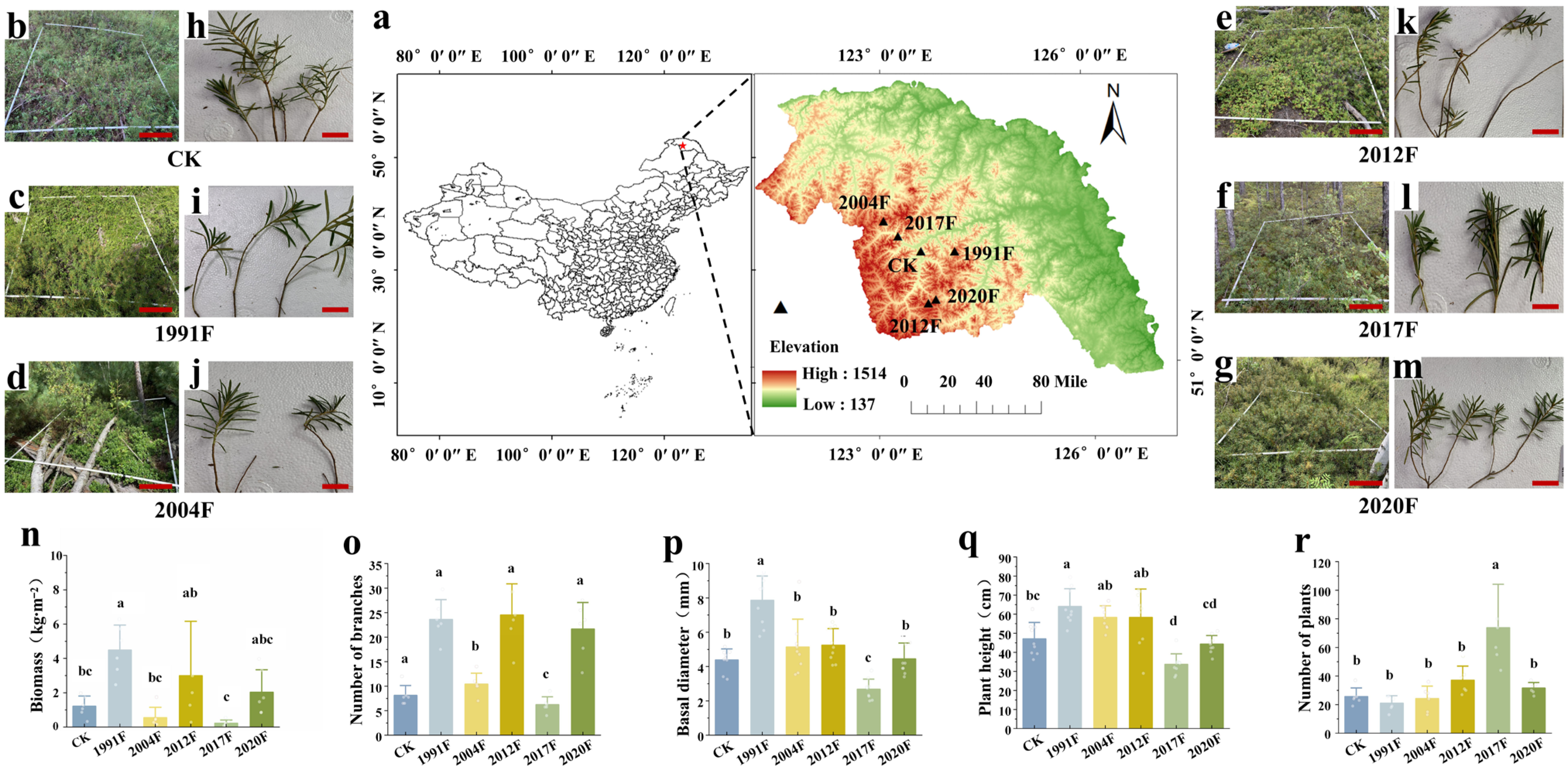
Field surveys indicated that Ledum palustre (L. palustre) exhibited dense, patchy distributions across all the study sites (Figure 1a–g). Systematic measurements of morphological traits across different postfire recovery stages revealed clear temporal differences in the responses of biomass, basal diameter, plant height, branch number, and stem density to fire disturbance (Figure 1n–r). Compared with the unburned control plants, the individual plants at the 1991 burned site significantly increased in growth (p < 0.05), with the biomass, basal diameter, plant height, and branch number increasing by 270.49%, 79.32%, 191.36%, and 36.11%, respectively, while the stem density remained unchanged. In contrast, at the 2017 burned site, individual plant growth was significantly suppressed (p < 0.05), with biomass, basal diameter, and plant height decreasing by 81.63%, 38.88%, and 28.39%, respectively, whereas stem density increased significantly by 188.28%. Moreover, the branch number of L. palustre generally tended to increase significantly with increasing postfire recovery time (p < 0.05), with values significantly greater than those of the control by 202.47% and 166.98% in the 2012 and 2020 burn sites, respectively.

3.2. Isolation, Identification, and Community Analysis of Culturable Microorganisms from the Rhizosphere Soil of Unburned L. palustre

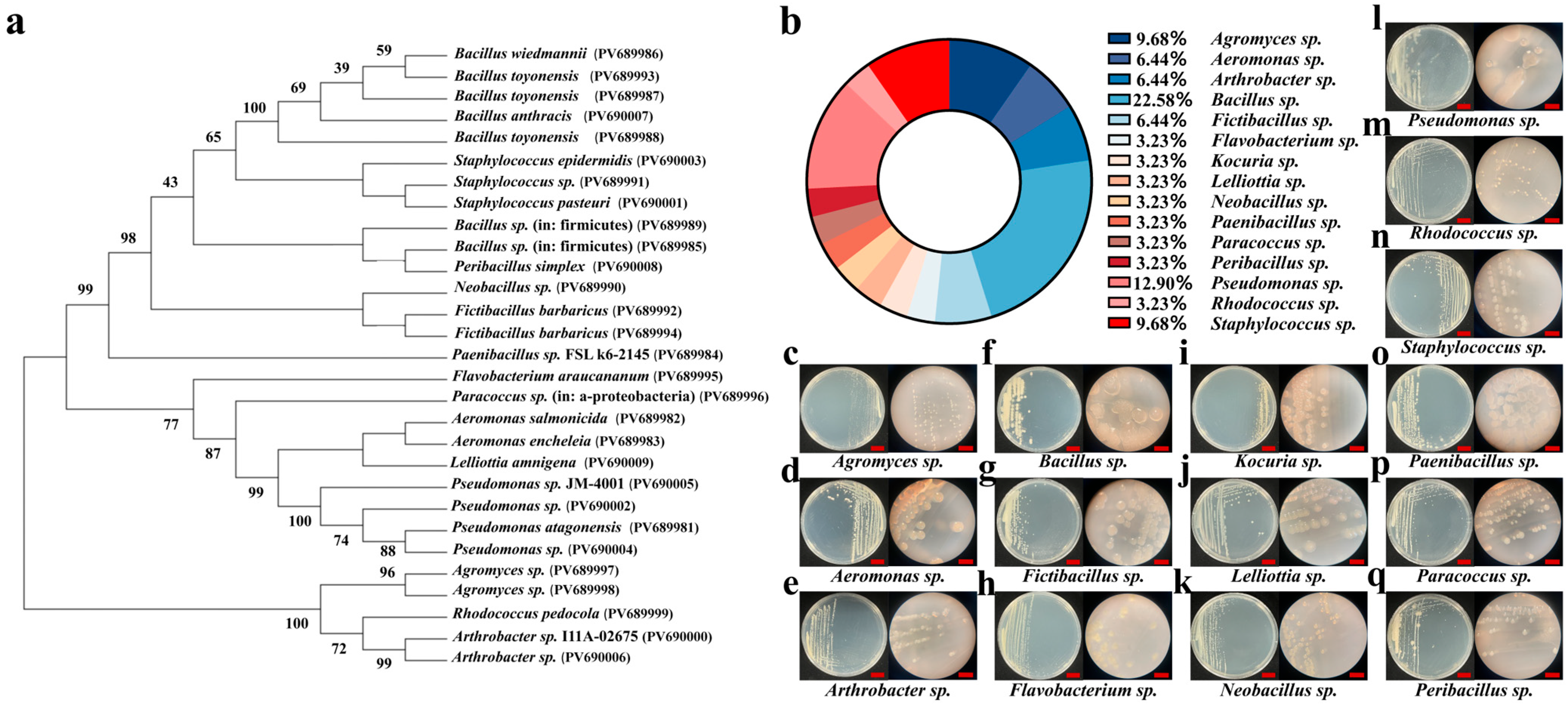
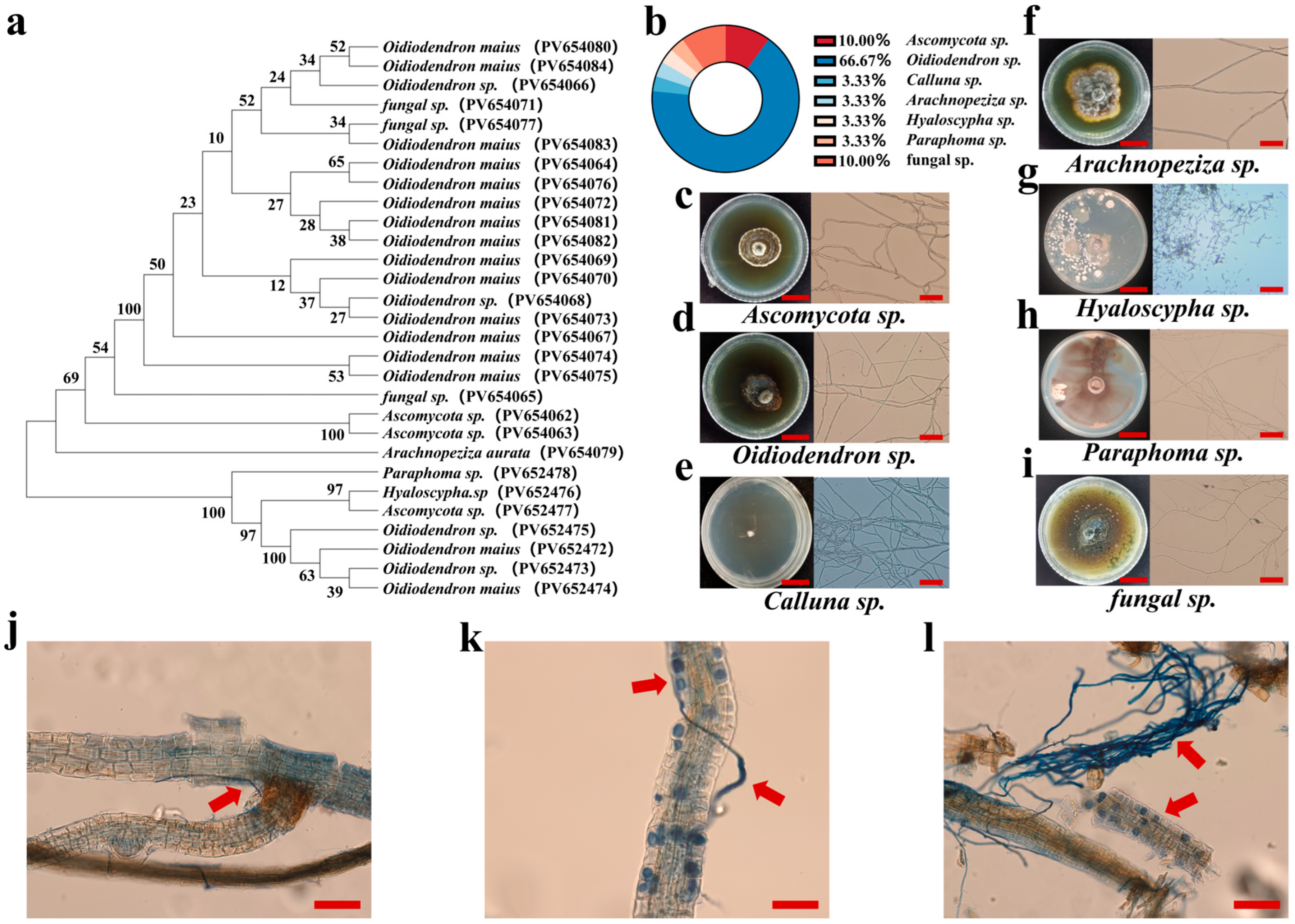
To further elucidate the microbial mechanisms driving the morphological adaptation of L. palustre, culturable rhizosphere microorganisms were analyzed. Using rhizosphere soil from unburned (control) L. palustre, a total of 29 fungal (Figure 2) and 29 bacterial (Figure 3) strains were isolated. Sequencing of PCR-amplified 16S rDNA for bacteria and ITS regions for fungi was performed, and the resulting sequences were deposited in the NCBI database with corresponding accession numbers. Phylogenetic analysis using BLAST comparison and neighbor-joining trees constructed in MEGA 12.0 confirmed the taxonomic identities of the isolates. At the genus level, the bacterial community was dominated by Bacillus sp. (relative abundance 22.58%) (Figure 3b), whereas other genera, including Flavobacterium sp. and Kocuria sp., had lower relative abundances (3.23% each). In the fungal community, Oidiodendron sp. was predominant, accounting for 66.67% of the isolates (Figure 2b), while Calluna sp., ArachnoPeziza sp., and four other genera each represented 3.33%. Observations of colony morphology and microscopic structure revealed distinct differences in culture characteristics and cellular morphology between bacterial and fungal genera. Additionally, trypan blue staining revealed clear hyphal ring structures on the roots of unburned L. palustre, indicating successful colonization of the host roots by the isolated fungi (Figure 2j–l).

3.3. Effects of Fire Disturbance on the Rhizosphere Soil of Wild L. palustre

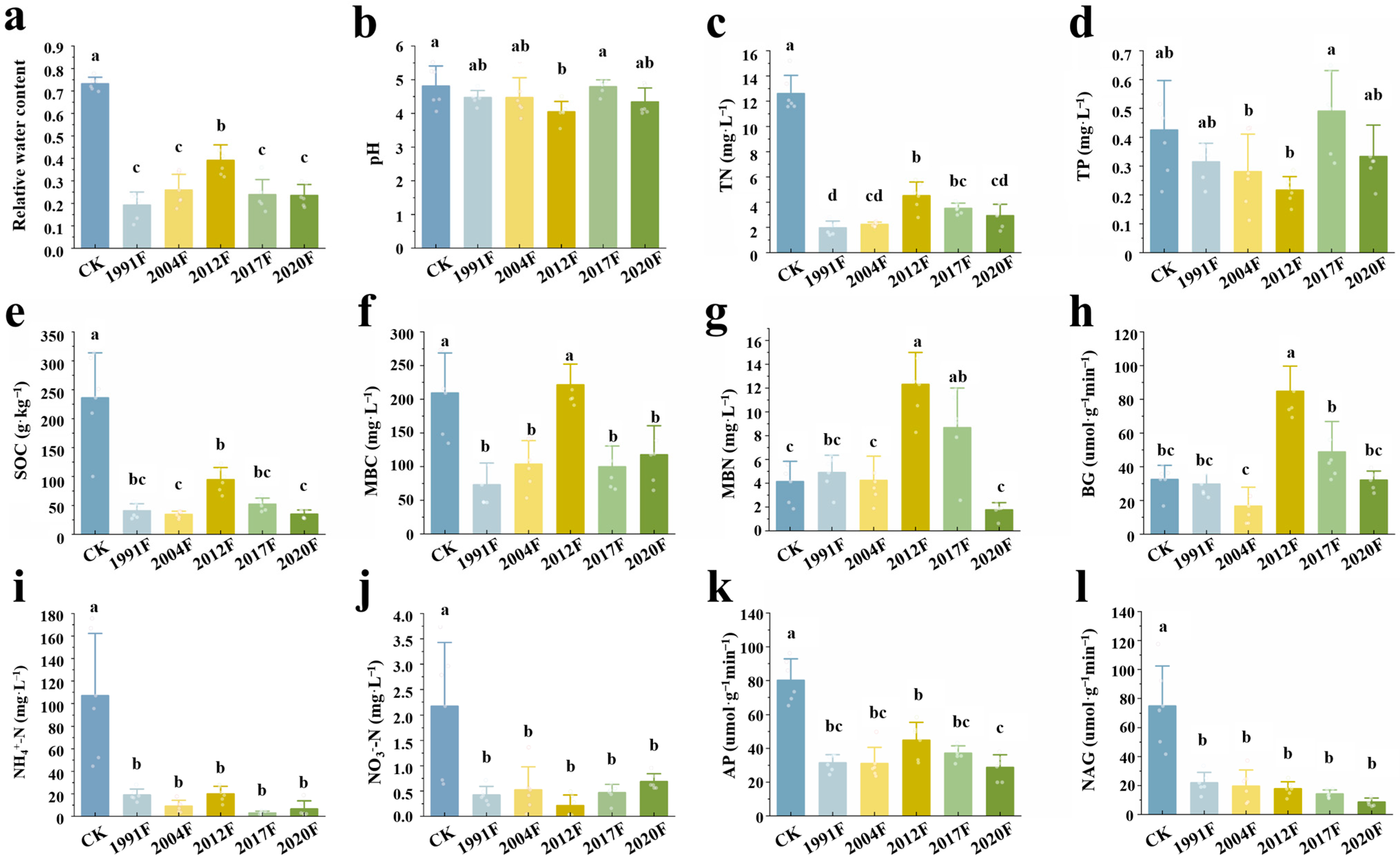
To explore the potential habitat and driving factors of soil microorganisms, we further analyzed the physicochemical properties of L. palustre rhizosphere soils under different fire disturbance conditions (Figure 4). The results revealed significant spatiotemporal differences in soil responses to fire. With increasing postfire recovery time, the soil moisture content (Figure 4a), total nitrogen (TN) (Figure 4c), ammonium nitrogen (NH4+–N) (Figure 4i), nitrate nitrogen (NO3–N) (Figure 4j), soil organic carbon (SOC) (Figure 4e), and acid phosphatase (AP) (Figure 4k) and N-acetyl-β-D-glucosaminidase (NAG) (Figure 4l) activities generally significantly decreased (p < 0.05). Specifically, compared with that at the unburned control (CK) site, the soil moisture content at the 2017, 2020, 2004, 2012, and 1991 burned sites decreased significantly—by 73.72%, 64.68%, 46.56%, 67.46%, and 67.88%, respectively. Total nitrogen decreased by 84.46%, 82.22%, 64.26%, 72.22%, and 76.81%; ammonium nitrogen decreased by 82.27%, 91.51%, 81.27%, 97.23%, and 93.91%; nitrate nitrogen decreased by 80.54%, 75.89%, 90.13%, 78.52%, and 68.37%; SOC decreased by 82.77%, 85.40%, 59.94%, 77.89%, and 85.24%; acid phosphatase activity decreased by 60.76%, 61.24%, 44.08%, 53.66%, and 64.15%; and NAG activity decreased by 70.68%, 73.80%, 76.26%, 80.99%, and 88.54%, respectively. Furthermore, the soil microbial biomass carbon (MBC) was significantly lower in all the burned sites than in the CK site (p < 0.05) (Figure 4f), with decreases of 65.12%, 50.48%, 52.31%, and 43.79% in the 2017, 2020, 2004, and 1991 burned sites, respectively. In contrast, the soil pH at the 2012 burn site significantly decreased by 15.93% (Figure 4b). Notably, some indicators exhibited opposite trends at specific recovery stages: the microbial biomass nitrogen (MBN) at the 2017 burned site increased significantly by 109.64% (Figure 4g), whereas both the MBN activity and the β-1,4-glucosidase (BG) activity at the 2012 burned site increased significantly by 197.58% and 160.88%, respectively (p < 0.05). Compared with the unburned control, the available phosphorus significantly increased (p < 0.05) at the burned sites in 2017, 2012, and 2017 (Figure S1).

3.4. Effects of Fire Disturbance on the Rhizosphere Soil Microbial Communities of Wild L. palustre

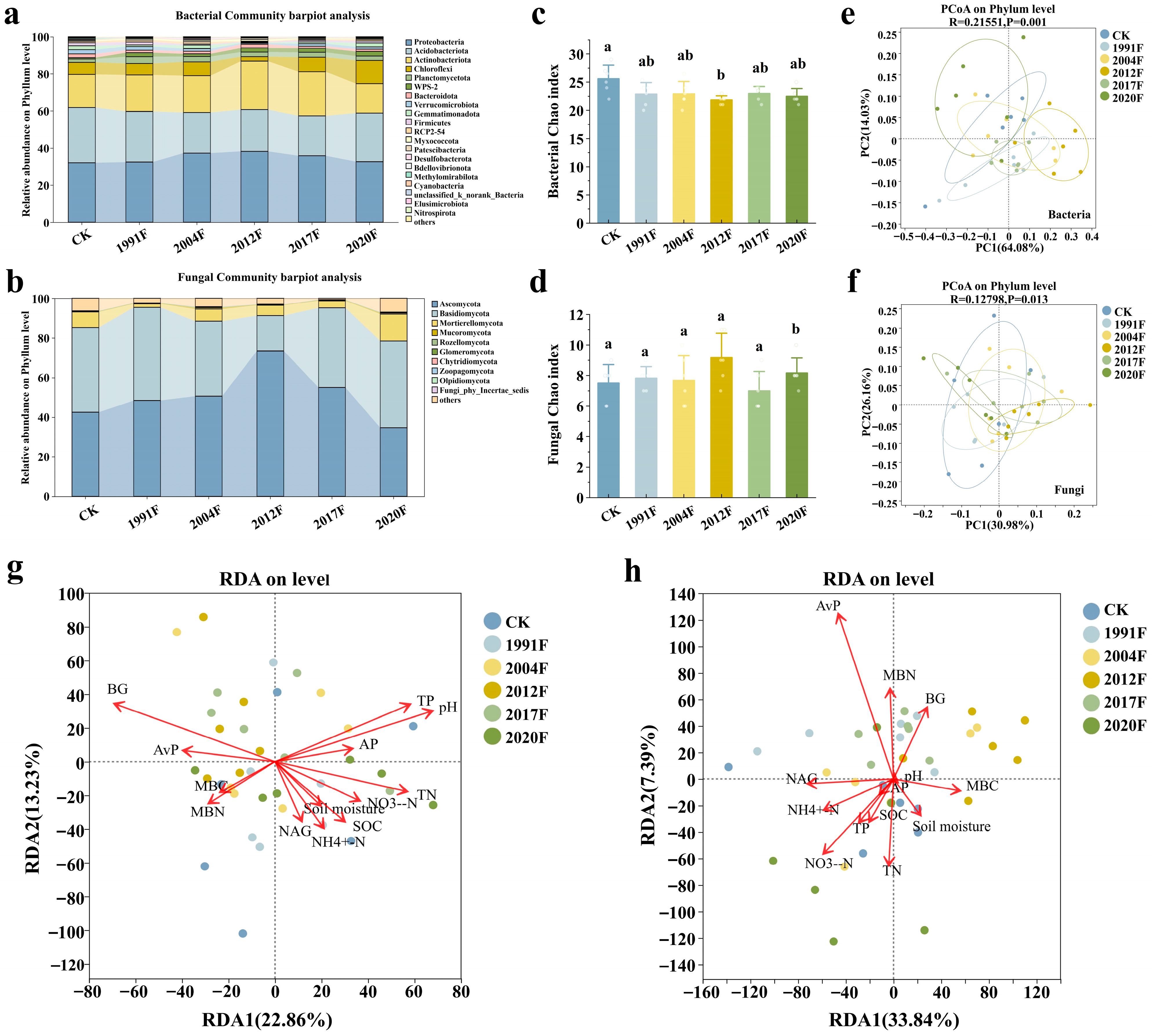
To systematically assess the overall effects of fire disturbance on rhizosphere microbial communities, high-throughput sequencing was performed on L. palustre rhizosphere soils from all the study sites (Figure 5). Analysis of 36 soil samples yielded a total of 782,964 effective bacterial OTUs and 1,060,128 effectives fungal OTUs.
Taxonomic annotation revealed that bacteria belonged to 27 phyla, 62 classes, 133 orders, 210 families, 343 genera, and 690 species, whereas fungi were classified into 11 phyla, 37 classes, 95 orders, 191 families, 291 genera, and 413 species. At the phylum level, the bacterial communities were dominated by Proteobacteria, Acidobacteria, Actinobacteria, Chloroflexi, and Planctomycetes, whose relative abundances ranged between 32.06–38.14%, 21.53–29.71%, 15.80–26.16%, 2.36–12.54%, and 1.74–3.59%, respectively. Consistent with previous culture-based results, the relative abundance of Firmicutes tended to increase with increasing postfire recovery time (0.38–1.58%). The fungal communities were mainly composed of Ascomycota, Basidiomycota, and Mucoromycota, whose relative abundances ranged between 34.75–73.47%, 17.85–47.02%, and 1.82–13.62%, respectively. Alpha (α) diversity analysis revealed that compared with that of the unburned control, the Chao1 index of the bacterial community at the 2012 burned site was significantly lower (Figure 5c), whereas fire disturbance had no significant effect on the bacterial Shannon or Simpson indices (Figure S2a,b). In contrast, the fungal community at the 2012 burn site exhibited a significantly higher Shannon index, and the Chao1 index significantly increased at the 2020 burn site (Figure 5d). Additionally, the Simpson index at the 1991 burn site was significantly lower than that at the 2020 burn site (Figure S2c,d). Beta (β) diversity analysis further revealed significant separation of microbial community structures among sites with different recovery durations. For the bacterial communities, the first two principal coordinates (PC1 and PC2) explained 30.98% and 26.16% of the variance, respectively; for the fungal communities (Figure 5e), PC1 and PC2 explained 64.08% and 14.03%, respectively, indicating a stronger explanatory power and more distinct spatial separation among the sampling sites (Figure 5f).

3.5. Relationships Between Postfire Rhizosphere Microbial Communities of L. palustre and Environmental Factors

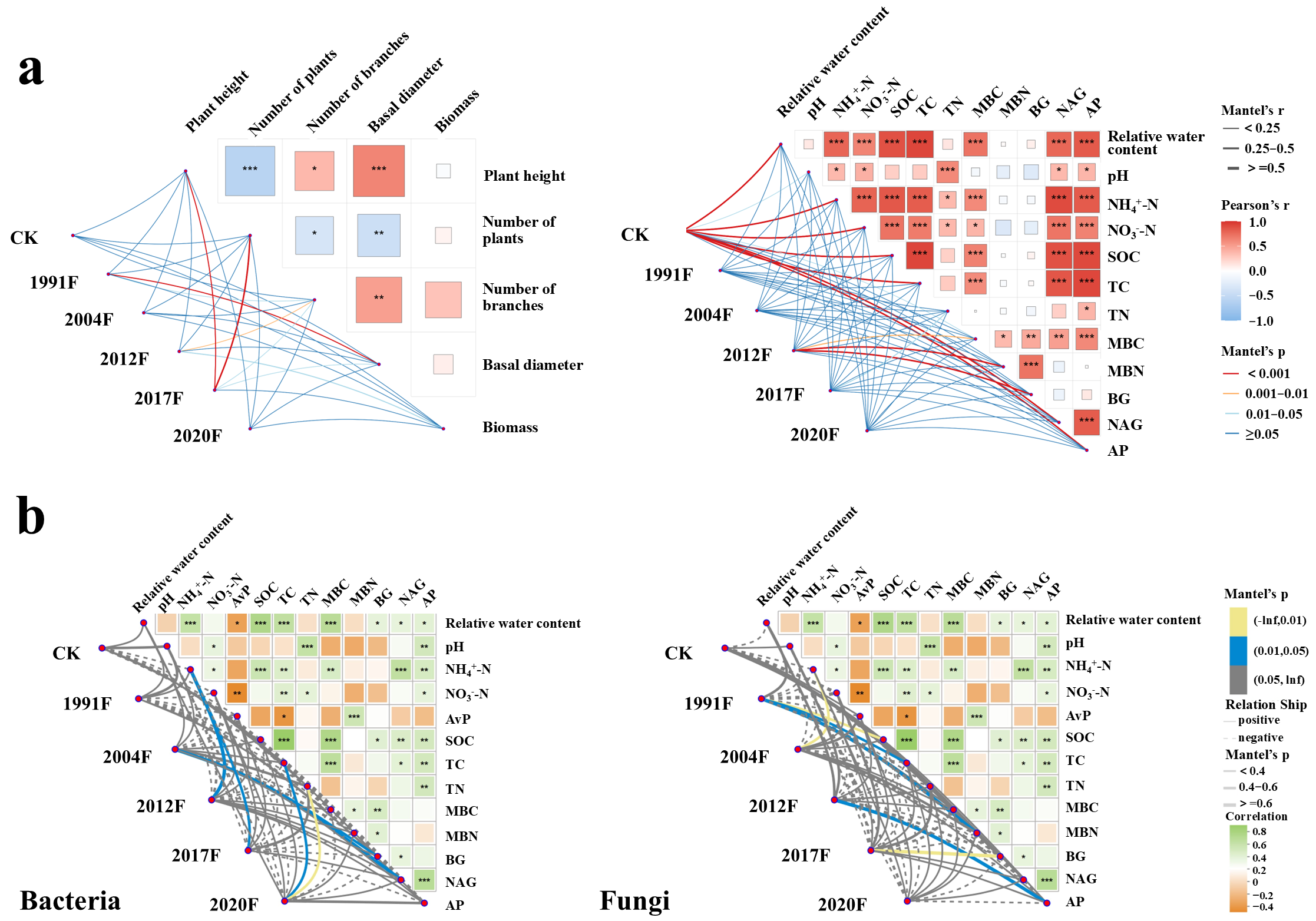
To further elucidate the effects of environmental factors on the soil microbial communities of wild L. palustre, Mantel tests and redundancy analysis (RDA) were conducted to examine the correlations between the microbial community structure and plant traits, soil physicochemical properties, and enzyme activities (Figure 5g,h). The results of the Mantel test indicated that the structure of the rhizosphere bacterial communities was significantly associated with soil environmental factors and that the patterns of association varied with the postfire recovery stage (Figure 6). Specifically, the bacterial communities at the 2004 site were significantly positively correlated with N-acetyl-β-D-glucosaminidase (NAG) activity (p < 0.05); those at the 2012 and 2017 sites were significantly positively correlated with the soil ammonium nitrogen (NH4+–N) content (p < 0.05), and the bacterial communities at the 2020 site were significantly positively correlated with total nitrogen (TN) (p < 0.05) and strongly positively correlated with total phosphorus (TP) (p < 0.01). In contrast to bacterial communities, fungal communities exhibit distinct spatiotemporal patterns of association with soil factors. At the 1991 site, fungal communities were significantly positively correlated with TN and microbial biomass nitrogen (MBN) (p < 0.05) and highly significantly positively correlated with soil organic carbon (SOC) (p < 0.01). The fungal communities at the 2004 site were strongly significantly positively correlated with NH4+–N (p < 0.01); at the 2012 site, they were highly significantly positively correlated with acid phosphatase (AP) activity (p < 0.01); and at the 2017 site, they were significantly positively correlated with β-1,4-glucosidase (BG) activity (p < 0.05).
Within the soil factor network, the unburned site exhibited the strongest correlations, with soil relative moisture, NH4+–N, nitrate nitrogen (NO3–N), SOC, TN, MBN, BG, and NAG activities, which were strongly positively correlated with each other (p < 0.001) and significantly positively correlated with microbial biomass carbon (MBC) (p < 0.05). At the 2012 site, microbial-related indicators were strongly correlated, with MBN showing a highly significant positive correlation with BG activity (p < 0.001), and both variables were significantly positively correlated with MBC (p < 0.05). Network analysis of plant trait indicators also revealed clear temporal patterns (Figure 6a). At the 1991 site, the growth traits of L. palustre were highly significantly positively correlated with the basal diameter (p < 0.001); at the 2012 site, the traits were significantly positively correlated with the branch number (p < 0.05), whereas at the 2017 site, the traits were highly significantly positively correlated with the plant height and stem density (p < 0.001) (Figure 6a). On the basis of the key environmental factors identified by Mantel tests, RDA was conducted to quantify their specific contributions (Figure 5g,h and Figure 6b). For the bacterial communities, the first two RDA axes cumulatively explained 36.09% of the variation (p < 0.05). The environmental vectors indicated that the greatest arrow and the smallest angle were associated with pH in RDA1, suggesting that it was the dominant factor driving bacterial community differentiation along the postfire recovery gradient (RDA1). For fungal communities, the first two RDA axes cumulatively explained 41.23% of the variation (p < 0.05), with BG activity identified as the most critical factor driving community structure along RDA1. In addition, other factors, such as SOC and TN, were significantly associated with different RDA axes, collectively shaping the distribution patterns of the microbial communities within the multidimensional environmental space.

3.6. Mechanisms of Coupled Recovery Between L. palustre Populations and Soil After Fire

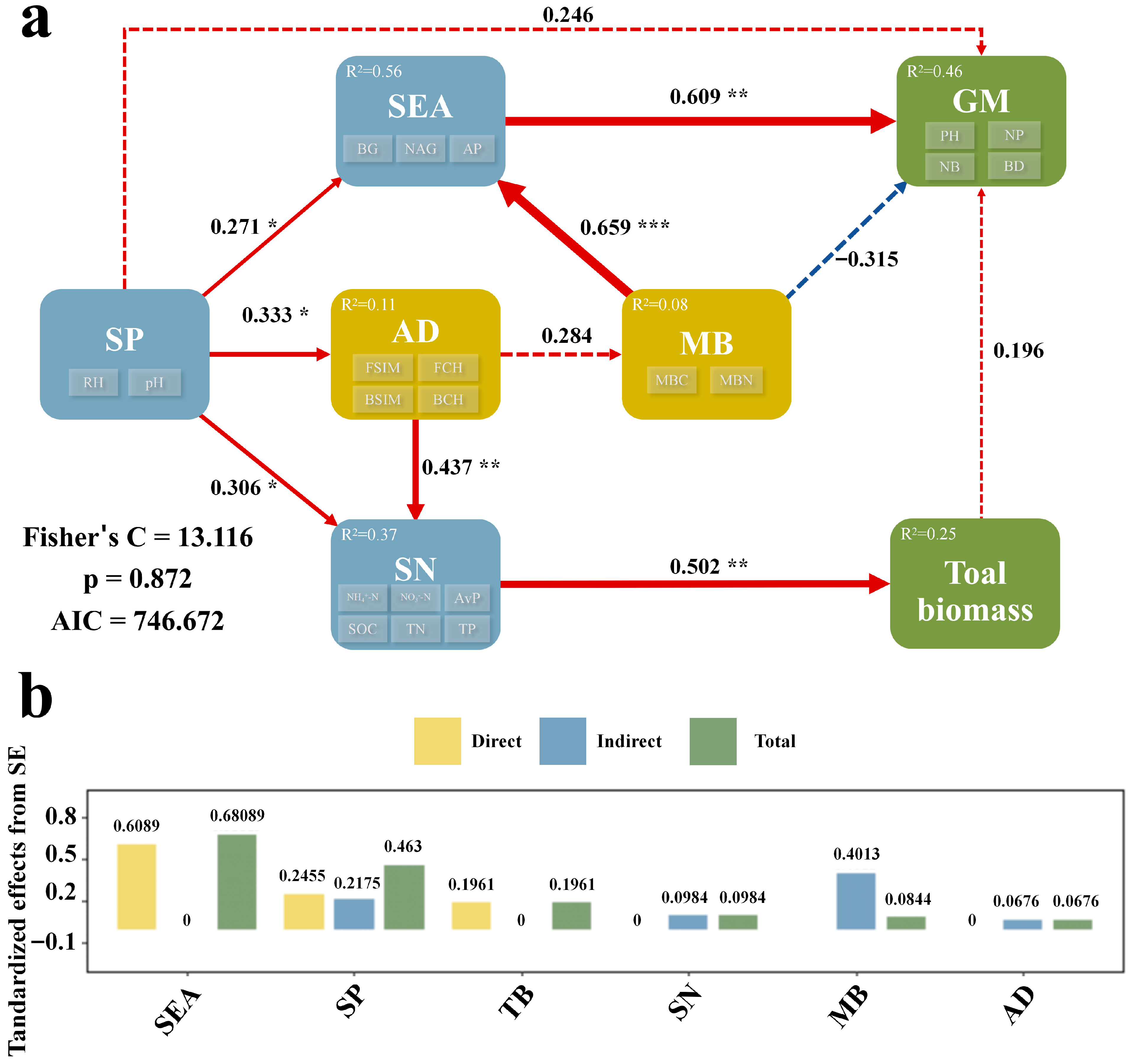
We employed a piecewise structural equation model (piecewise SEM) to evaluate the causal relationships between the morphological traits of L. palustre and soil-related observed variables. Model fit was assessed using Fisher’s C test. The results showed that Fisher’s C = 13.116 and p = 0.872 (p > 0.05), indicating a good overall model fit. On the basis of the well-fit model, the direct, indirect, and total effects of each variable on total plant biomass were further quantified (Figure 7a).
The model exhibited the greatest explanatory power for soil enzyme activity (R2 = 0.56), followed by the morphological traits of L. palustre (R2 = 0.46), suggesting that the model is effective for evaluating the influence of soil changes on the postfire recovery of L. palustre populations. The results indicated that postfire soil enzyme activity had a significant positive direct effect on the morphological traits of L. palustre (β = 0.609, p < 0.01). Although soil microbial diversity did not directly affect plant morphology, it indirectly increased microbial biomass (β = 0.284), which in turn suppressed morphological traits (β = −0.315). Changes in soil nutrients significantly increased the biomass of L. palustre (β = 0.502, p < 0.01), and plant biomass further contributed directly to its morphological traits (β = 0.196). In addition, soil physicochemical properties significantly promoted soil enzyme activity (β = 0.271, p < 0.05). Together, the structural model and effect analyses indicate that the postfire recovery of L. palustre populations primarily follows the following pathway: soil physicochemical properties soil enzyme activity morphological traits (Figure 7a,b).

4. Discussion

With the increasing recognition of the impacts of wildfires on forest ecosystems, postfire ecological recovery has become a focal topic of research [35]. As a key component of postfire ecosystems, shrubs play critical roles in maintaining community structure and facilitating nutrient cycling. However, their response mechanisms and ecological adaptation strategies across different postfire recovery stages remain poorly understood [36]. In this study, we focused on the cold-temperate coniferous forests of the Da Xing’an Mountains and systematically analyzed the dynamic changes in the Ledum palustre (L. palustre) population morphology, rhizosphere soil physicochemical properties, and microbial community structure across sites with different recovery ages. Our findings provide preliminary insights into the response patterns of “plant–soil–microbial” interactive systems under fire disturbance, offering a novel perspective for understanding postfire ecological recovery mechanisms in cold-temperate forest regions.
Our results indicate that L. palustre populations exhibit significant differences in their morphological traits across different postfire recovery stages, reflecting their adaptive strategies to fire disturbance and the dynamic progression of recovery mechanisms. In the early postfire stage, the populations were dominated by a numerical compensation strategy, characterized by significant reductions in individual biomass, basal diameter, and plant height, accompanied by a significant increase in population density. This strategy likely facilitates rapid niche occupation under conditions of fluctuating resources and intensified competition. As recovery time increased (e.g., at the 1991 burned site), L. palustre populations shifted toward an individual dominance strategy, with the biomass, basal diameter, height, and branch number significantly greater than those in unburned controls, indicating a transition in resource allocation from population expansion to increasing individual competitiveness and structural complexity. The continued increase in branch number further suggests that L. palustre gradually progresses from the rapid occupation phase to a stage characterized by structured growth and improved resource use efficiency [37].
Analysis of culturable microbes at the unburned control sites revealed that the rhizosphere of L. palustre harbors a functionally specialized microbial community. The bacterial community is dominated by members of the genus Bacillus, whose members are generally characterized by strong environmental resilience and plant growth-promoting potential [38]. The fungal community was primarily composed of typical ericoid mycorrhizal fungi, with Oidiodendron sp. being the dominant genus [39]. Trypan blue staining confirmed the successful colonization of L. palustre roots by Oidiodendron sp., indicating the establishment of a stable symbiotic relationship [40]. Such mycorrhizal fungi can significantly increase host nutrient acquisition, particularly that of nitrogen and phosphorus, via the expansion of hyphal networks, representing an important microbial mechanism supporting L. palustre growth in undisturbed habitats [41]. However, culturable approaches capture only a fraction of the microbial community and may not fully reflect the community structure, highlighting the need for complementary culture-independent analyses.
Soil physicochemical properties exhibited continuous dynamic responses to fire disturbance. Soil moisture, organic carbon (SOC), total nitrogen (TN), ammonium nitrogen (NH4+–N), nitrate nitrogen (NO3–N), acid phosphatase (AP) and N-acetyl-β-D-glucosaminidase (NAG) activities generally decreased significantly with increasing postfire recovery time, suggesting that rapid organic matter mineralization immediately after fire may transiently increase soil nutrient availability [42]. As recovery progressed, enhanced nutrient uptake by vegetation and leaching effects likely contributed to the gradual decline and stabilization of soil nutrient levels [43]. The overall reduction in microbial biomass carbon (MBC) further corroborates the general suppression of soil microbial activity after fire. However, microbial biomass nitrogen (MBN) and β-1,4-glucosidase (BG) activity significantly increased during intermediate recovery stages, such as in 2012, indicating the presence of stage-specific nutrient mobilization and increased carbon turnover, which may have stimulated carbon- and nitrogen-related enzyme activities. Reductions in soil pH in certain years may be associated with rhizosphere acidification caused by root exudate input and organic acid accumulation during vegetation recovery [44].
High-throughput sequencing results further indicated that fire disturbance significantly altered the community structure and diversity of Daphniphyllum oldhamii rhizosphere microorganisms. Fire disturbance had little effect on the richness and evenness of bacterial communities; however, the Chao index at the 2012 site decreased, indicating that bacterial richness decreased during this stage of postfire recovery. Fungal communities were more sensitive to fire disturbance. The Shannon index of fungi increased at the 2012 site, and the Chao index increased at the 2020 site, suggesting that fire disturbance affected fungal richness. The Simpson index at the 1991 site was significantly greater than that in 2020, implying that after long-term recovery, the dominant species tended to occupy a leading position in the fungal communities of the burned sites, resulting in more pronounced differentiation in β diversity. At the phylum level, the relative abundances of groups involved in organic matter decomposition, such as Actinobacteria and Ascomycota, exhibited systematic fluctuations across recovery years, reflecting the selective effects of postfire changes in resource input and quality on microbial functional guilds [45]. Notably, the number of unique species at the 2012 burn site increased, indicating that the mid-recovery stage may have created a distinct microhabitat that drove microbial community reassembly and differentiation [46].
Mantel analysis further revealed that the environmental factors driving microbial community succession clearly exhibited functional guild specificity. The bacterial community structure across different recovery stages was correlated primarily with nitrogen availability indicators (e.g., ammonium nitrogen and total nitrogen) and nitrogen cycling-related enzymes (e.g., NAG), suggesting that disturbances in postfire soil nitrogen cycling are key drivers shaping bacterial assemblages [4]. During the early postfire stage, intense organic matter mineralization increased inorganic nitrogen, particularly ammonium, potentially promoting the enrichment of bacterial groups responsive to readily available nutrients. As recovery progressed, total soil nitrogen became a more dominant influencing factor [47]. In contrast, fungal communities respond more strongly to soil organic carbon, microbial biomass nitrogen, and carbon- and phosphorus-cycling-related enzyme activities (e.g., AP and BG) [48], indicating a potentially central role of fungi in postfire organic matter transformation and nutrient cycling. Notably, during the mid-to-late recovery stages, the significant association between β-1,4-glucosidase activity and fungal community structure highlights the importance of carbon cycling [49], particularly the decomposition of complex substrates such as cellulose, as a key ecological driver of fungal community succession. These findings are consistent with the well-established ecological role of fungi in the decomposition of complex organic matter [50].
In this study, on the basis of a piecewise structural equation model, the dominant mechanistic pathway underlying the postfire recovery of L. palustre populations was identified as follows: soil physicochemical properties → soil enzyme activity → morphological traits of L. palustre. This pathway indicates that improvements in soil environmental conditions following fire primarily regulate plant morphological development and population recovery by enhancing soil enzymatic functions. These findings highlight the pivotal role of soil biochemical processes in ecosystem recovery. Moreover, these findings have important implications for postfire vegetation management, suggesting that regulating soil properties and promoting the recovery of soil functional processes can effectively accelerate the restoration of L. palustre populations and the reconstruction of associated ecosystems.
L. palustre has significant economic and medicinal value. However, fire disturbance often leads to unstable biomass accumulation and the synthesis of bioactive compounds. Therefore, elucidating its response mechanisms is of both ecological theoretical importance and practical relevance for resource management and sustainable utilization. Furthermore, as a pioneer shrub species following fire, L. palustre can rapidly colonize burned areas. Its growth dynamics are highly sensitive to early-stage recovery indicators such as soil conditions and microbial communities, making it an ideal model for investigating postfire ecosystem succession. However, this study was conducted at the regional scale in the Da Xing’an Mountains of China, and whether the identified mechanisms are applicable to broader ecosystems requires further validation. Although the amplicon sequencing approach used in this study revealed changes in soil microbial community structure after fire disturbance, it does not provide detailed insights into microbial functional mechanisms. Future studies should integrate shotgun metagenomic sequencing and functional analyses, where feasible, to further elucidate the functional responses of microbial communities to fire disturbance.

5. Conclusions

This study revealed the morphological adaptation strategies of Ledum palustre (L. palustre) populations and the coupled responses of their rhizosphere microbiome under fire disturbance. These results indicate that during the early postfire stage, L. palustre rapidly occupied ecological niches primarily through increased population density, whereas in the long-term recovery phase, the strategy shifted toward enhancing the individual growth advantage. Rhizosphere microbial analysis revealed that culturable Bacillus species and the ericoid mycorrhizal fungus Oidiodendron sp. form stable symbiotic associations with L. palustre. In postfire soils, the relative abundance of Firmicutes, including Bacillus, increased, potentially facilitating the establishment of individual dominance in later stages. Soil physicochemical properties exhibited persistent responses to fire, with significant declines in soil moisture, nitrogen and phosphorus contents, and associated hydrolytic enzyme activities during the recovery period. Microbial biomass carbon also decreased concurrently, reflecting the overall suppression of soil resource pools and microbial activity. High-throughput sequencing further demonstrated that fire significantly altered the rhizosphere microbial community structure, reduced bacterial α diversity, and led to distinct microbial assemblages across different recovery stages. The bacterial communities were driven primarily by nitrogen availability and related enzymatic activity, whereas the fungal communities were closely associated with soil organic carbon, microbial biomass nitrogen, and carbon-cycling enzyme activities, highlighting function-driven community assembly. These findings provide new insights into the microscale mechanisms underlying postfire ecosystem recovery in China’s northern forests and offer valuable references for postfire management strategies.

Supplementary Materials

The following supporting information can be downloaded at https://www.mdpi.com/article/10.3390/agronomy16090846/s1. Figure S1: Available phosphorus content in rhizosphere soil; Figure S2: Simpson index and Shannon index of rhizosphere microorganisms in L. palustre.

Author Contributions

Y.L.: Writing—original draft, writing—review and editing, conceptualization, methodology, investigation, visualization, formal analysis, data curation. T.L.: Writing—original draft, writing—review and editing, conceptualization, methodology, visualization. H.C.: Writing—review and editing, conceptualization, investigation. Q.L.: Writing—review and editing, data curation. H.L.: Writing—review and editing, conceptualization, supervision, funding acquisition. L.S.: Writing—review and editing, conceptualization, supervision, funding acquisition. All authors have read and agreed to the published version of the manuscript.

Funding

This work was supported by the China Postdoctoral Science Foundation under Grant Number 2024M760386 and the National Natural Science Foundation of China (32401583).

Data Availability Statement

The original contributions presented in this study are included in the article/Supplementary Material. Further inquiries can be directed to the corresponding authors.

Acknowledgments

The authors would like to acknowledge the invaluable support of Northeast Forestry University in this study.

Conflicts of Interest

The authors declare that they have no conflicts of interest.

References

  1. Nolan, R.H.; Collins, L.; Leigh, A.; Ooi, M.K.J.; Curran, T.J.; Fairman, T.A.; de Dios, V.R.; Bradstock, R. Limits to post-fire vegetation recovery under climate change. Plant Cell Environ. 2021, 44, 3471–3489. [Google Scholar] [CrossRef] [PubMed]
  2. Pellegrini, A.F.A.; Ahlström, A.; Hobbie, S.E.; Reich, P.B.; Nieradzik, L.P.; Staver, A.C.; Scharenbroch, B.C.; Jumpponen, A.; Anderegg, W.R.L.; Randerson, J.T.; et al. Fire frequency drives decadal changes in soil carbon and nitrogen and ecosystem productivity. Nature 2018, 553, 194–198. [Google Scholar] [CrossRef] [PubMed]
  3. Nelson, A.R.; Narrowe, A.B.; Rhoades, C.C.; Fegel, T.S.; Daly, R.A.; Roth, H.K.; Chu, R.K.; Amundson, K.K.; Young, R.B.; Steindorff, A.S.; et al. Wildfire-dependent changes in soil microbiome diversity and function. Nat. Microbiol. 2022, 7, 1419–1430. [Google Scholar] [CrossRef] [PubMed]
  4. Liu, G.; Gu, Z.; Liu, X.; Li, B. Microenvironment heterogeneity affected by anthropogenic wildfire-perturbed soil mediates bacterial community in Pinus tabulaeformis forests. Front. Microbiol. 2024, 15, 1415726. [Google Scholar] [CrossRef]
  5. Shao, Y.-K.; Li, W.-K.; Wang, M.-Y.; Du, Q.-Y.; Wang, J.; Shu, L.-F.; Si, L.-Q.; Zhao, F.-J.; Feng, Z.-K.; Sun, L.-H.; et al. Optimising future scenarios of forest fire occurrence in Daxing’anling using long-term survey data and intelligent modelling. Adv. Clim. Change Res. 2026, 17, 388–399. [Google Scholar] [CrossRef]
  6. Nelson, A.R.; Rhoades, C.C.; Fegel, T.S.; Roth, H.K.; Caiafa, M.V.; Glassman, S.I.; Borch, T.; Wilkins, M.J. Wildfire impact on soil microbiome life history traits and roles in ecosystem carbon cycling. ISME Commun. 2024, 4, ycae108. [Google Scholar] [CrossRef]
  7. Moreno, J.; Zuazua, E.; Pérez, B.; Luna, B.; Velasco Garcia, Á.; Resco de Dios, V. Rainfall patterns after fire differentially affect the recruitment of three Mediterranean shrubs. Biogeosciences 2011, 8, 3721–3732. [Google Scholar] [CrossRef]
  8. Baudena, M.; Santana, V.M.; Baeza, M.J.; Bautista, S.; Eppinga, M.B.; Hemerik, L.; Garcia Mayor, A.; Rodriguez, F.; Valdecantos, A.; Vallejo, V.R.; et al. Increased aridity drives post-fire recovery of Mediterranean forests towards open shrublands. New Phytol. 2020, 225, 1500–1515. [Google Scholar] [CrossRef]
  9. van Blerk, J.J.; West, A.G.; Altwegg, R.; Hoffman, M.T. Post-fire summer rainfall differentially affects reseeder and resprouter population recovery in fire-prone shrublands of South Africa. Sci. Total Environ. 2021, 788, 147699. [Google Scholar] [CrossRef]
  10. Dampc, A.; Luczkiewicz, M. Rhododendron tomentosum (Ledum palustre). A review of traditional use based on current research. Fitoterapia 2013, 85, 130–143. [Google Scholar] [CrossRef]
  11. Cui, X.; Paterson, A.M.; Alam, M.A.; Wyse, S.V.; Marshall, K.; Perry, G.L.W.; Curran, T.J. Shoot-level flammability across the Dracophyllum (Ericaceae) phylogeny: Evidence for flammability being an emergent property in a land with little fire. New Phytol. 2020, 228, 95–105. [Google Scholar] [CrossRef] [PubMed]
  12. Young, D.J.N.; Venuti, N.E.; Greene, D.F.; Latimer, A.M. Canopy seed survival through extreme fire in non-serotinous conifers: An unexpected source of forest resilience. Ecol. Appl. 2025, 35, e70142. [Google Scholar] [CrossRef] [PubMed]
  13. Parro, K.; Köster, K.; Jõgiste, K.; Seglinš, K.; Sims, A.; Stanturf, J.A.; Metslaid, M. Impact of post-fire management on soil respiration, carbon and nitrogen content in a managed hemiboreal forest. J. Environ. Manag. 2019, 233, 371–377. [Google Scholar] [CrossRef] [PubMed]
  14. Souza-Alonso, P.; Prats, S.A.; Merino, A.; Guiomar, N.; Guijarro, M.; Madrigal, J. Fire enhances changes in phosphorus (P) dynamics determining potential post-fire soil recovery in Mediterranean woodlands. Sci. Rep. 2024, 14, 21718. [Google Scholar] [CrossRef]
  15. Agbeshie, A.A.; Abugre, S.; Atta-Darkwa, T.; Awuah, R. A review of the effects of forest fire on soil properties. J. For. Res. 2022, 33, 1419–1441. [Google Scholar] [CrossRef]
  16. Jiang, S.; Qu, H.; Cheng, Z.; Fu, X.; Yang, L.; Zhou, J. Actinobacteria Emerge as Novel Dominant Soil Bacterial Taxa in Long-Term Post-Fire Recovery of Taiga Forests. Microorganisms 2025, 13, 1262. [Google Scholar] [CrossRef]
  17. Cheng, Z.; Wu, S.; Pan, H.; Lu, X.; Liu, Y.; Yang, L. Cortinarius and Tomentella Fungi Become Dominant Taxa in Taiga Soil after Fire Disturbance. J. Fungi 2023, 9, 1113. [Google Scholar] [CrossRef]
  18. Pinto, R.; Ansola, G.; Calvo, L.; Sáenz de Miera, L.E. Medium-term response of soil bacterial communities to two post-fire management strategies after a large wildfire. J. Environ. Manag. 2025, 395, 127714. [Google Scholar] [CrossRef]
  19. Hinojosa, M.B.; Laudicina, V.A.; Parra, A.; Albert-Belda, E.; Moreno, J.M. Drought and its legacy modulate the post-fire recovery of soil functionality and microbial community structure in a Mediterranean shrubland. Glob. Change Biol. 2019, 25, 1409–1427. [Google Scholar] [CrossRef]
  20. Barbour, K.M.; Weihe, C.; Walters, K.E.; Martiny, J.B.H.; Shade, A. Testing the contribution of dispersal to microbial succession following a wildfire. mSystems 2023, 8, e0057923. [Google Scholar] [CrossRef]
  21. Shi, Y.; Chen, X.; Su, X.; Li, Z.; Qiao, H.; Dong, C.; Zhang, K.; Liu, Y.; Huang, W. Phoenix Nirvana and rebirth-pyrophilous microbes reconstruct soil microbial communities in a short term post-fire forest. Environ. Res. 2026, 292, 123659. [Google Scholar] [CrossRef] [PubMed]
  22. Yang, T.; Tedersoo, L.; Lin, X.; Fitzpatrick, M.C.; Jia, Y.; Liu, X.; Ni, Y.; Shi, Y.; Lu, P.; Zhu, J.; et al. Distinct fungal successional trajectories following wildfire between soil horizons in a cold-temperate forest. New Phytol. 2020, 227, 572–587. [Google Scholar] [CrossRef]
  23. Lou, H.; Cai, H.; Fu, R.; Guo, C.; Fan, B.; Hu, H.; Zhang, J.; Sun, L. Effects of wildfire disturbance on forest soil microbes and colonization of ericoid mycorrhizal fungi in northern China. Environ. Res. 2023, 231, 116220. [Google Scholar] [CrossRef] [PubMed]
  24. Liu, M.; Li, D.; Hu, J.; Liu, D.; Ma, Z.; Cheng, X.; Zhao, C.; Liu, Q. Altitudinal pattern of shrub biomass allocation in Southwest China. PLoS ONE 2020, 15, e0240861. [Google Scholar] [CrossRef] [PubMed]
  25. Lyu, Q.; Luo, Y.; Liu, S.; Zhang, Y.; Li, X.; Hou, G.; Chen, G.; Zhao, K.; Fan, C.; Li, X. Forest gaps alter the soil bacterial community of weeping cypress plantations by modulating the understory plant diversity. Front. Plant Sci. 2022, 13, 920905. [Google Scholar] [CrossRef]
  26. Irfan, Z.; Firdous, S.M.; Citarasu, T.; Uma, G.; Thirumalaikumar, E. Isolation and screening of antimicrobial biosurfactants obtained from mangrove plant root-associated bacteria. Naunyn Schmiedeb. Arch. Pharmacol. 2024, 397, 3261–3274. [Google Scholar] [CrossRef]
  27. Cheng, C.-Y.; Zhang, M.-Y.; Niu, Y.-C.; Zhang, M.; Geng, Y.-H.; Deng, H. Comparison of Fungal Genera Isolated from Cucumber Plants and Rhizosphere Soil by Using Various Cultural Media. J. Fungi 2023, 9, 934. [Google Scholar] [CrossRef]
  28. Doyle, E.; Blanchon, D.; Wells, S.; de Lange, P.; Lockhart, P.; Waipara, N.; Manefield, M.; Wallis, S.; Berry, T.-A. Internal Transcribed Spacer and 16S Amplicon Sequencing Identifies Microbial Species Associated with Asbestos in New Zealand. Genes 2023, 14, 729. [Google Scholar] [CrossRef]
  29. Liu, B.; Chen, H.Y.H.; Yang, J. Linking understory species diversity, community-level traits and productivity in a Chinese boreal forest. J. Veg. Sci. 2019, 30, 247–256. [Google Scholar] [CrossRef]
  30. Liu, X.; Wu, D.; Abid, A.A.; Liu, Y.; Zhou, J.; Zhang, Q. Determination of Paddy Soil Ammonia Nitrogen Using Rapid Detection Kit Coupled with Microplate Reader. Toxics 2022, 10, 725. [Google Scholar] [CrossRef]
  31. Reinsch, S.; Lebron, I.; de Jonge, L.W.; Weber, P.L.; Norgaard, T.; Arthur, E.; Gomes, L.; Pesch, C.; Konstantinos, K.; Zalidis, G.; et al. The Fraction of Carbon in Soil Organic Matter as a National-Scale Soil Process Indicator. Glob. Change Biol. 2025, 31, e70572. [Google Scholar] [CrossRef]
  32. Shaheen, S.M.; Hooda, P.S.; Tsadilas, C.D. Opportunities and challenges in the use of coal fly ash for soil improvements–A review. J. Environ. Manag. 2014, 145, 249–267. [Google Scholar] [CrossRef]
  33. Wang, C.; Wang, X.; Zhang, Y.; Morrissey, E.; Liu, Y.; Sun, L.; Qu, L.; Sang, C.; Zhang, H.; Li, G.; et al. Integrating microbial community properties, biomass and necromass to predict cropland soil organic carbon. ISME Commun. 2023, 3, 86. [Google Scholar] [CrossRef] [PubMed]
  34. Kanwar, A.; Dhillon, A.; Goyal, A. Construction of an efficient thermostable cellulolytic chimera of β-glucosidase and β-1,4-endoglucanase from Acetivibrio thermocellus ATCC 27405 and its application in lignocellulose saccharification. Int. J. Biol. Macromol. 2025, 322, 146785. [Google Scholar] [CrossRef] [PubMed]
  35. Gundale, M.J.; Axelsson, E.P.; Buness, V.; Callebaut, T.; DeLuca, T.H.; Hupperts, S.F.; Ibáñez, T.S.; Metcalfe, D.B.; Nilsson, M.-C.; Peichl, M.; et al. The biological controls of soil carbon accumulation following wildfire and harvest in boreal forests: A review. Glob. Change Biol. 2024, 30, e17276. [Google Scholar] [CrossRef] [PubMed]
  36. Rogers, E.I.E.; Mehnaz, K.R.; Ellsworth, D.S. Stimulated photosynthesis of regrowth after fire in coastal scrub vegetation: Increased water or nutrient availability? Tree Physiol. 2024, 44, tpae079. [Google Scholar] [CrossRef]
  37. van Blerk, J.J.; West, A.G.; Altwegg, R.; Hoffman, M.T. Does a trade-off between growth plasticity and resource conservatism mediate post-fire shrubland responses to rainfall seasonality? New Phytol. 2021, 230, 1407–1420. [Google Scholar] [CrossRef]
  38. Olanrewaju, O.S.; Ayilara, M.S.; Ayangbenro, A.S.; Babalola, O.O. Genome Mining of Three Plant Growth-Promoting Bacillus Species from Maize Rhizosphere. Appl. Biochem. Biotechnol. 2021, 193, 3949–3969. [Google Scholar] [CrossRef]
  39. Yang, Z.; Dong, H.; Zhang, S.; Jiang, J.; Zhu, H.; Yang, H.; Li, L. Isolation and identification of mycorrhizal helper bacteria of Vaccinium uliginosum and their interaction with mycorrhizal fungi. Front Microbiol. 2023, 14, 1180319. [Google Scholar] [CrossRef]
  40. van Tuinen, D.; Jacquot, E.; Zhao, B.; Gollotte, A.; Gianinazzi-Pearson, V. Characterization of root colonization profiles by a microcosm community of arbuscular mycorrhizal fungi using 25S rDNA-targeted nested PCR. Mol. Ecol. 1998, 7, 879–887. [Google Scholar] [CrossRef]
  41. Wei, X.; Zhang, W.; Zulfiqar, F.; Zhang, C.; Chen, J. Ericoid mycorrhizal fungi as biostimulants for improving propagation and production of ericaceous plants. Front Plant Sci. 2022, 13, 1027390. [Google Scholar] [CrossRef] [PubMed]
  42. Shen, H.; Dai, Z.; Zhang, Q.; Tong, D.; Su, W.Q.; Dahlgren, R.A.; Xu, J. Postfire Phosphorus Enrichment Mitigates Nitrogen Loss in Boreal Forests. Environ. Sci. Technol. 2024, 58, 10611–10622. [Google Scholar] [CrossRef] [PubMed]
  43. Jiang, Y.; Rastetter, E.; Shaver, G.; Rocha, A.; Zhuang, Q.; Kwaitkowski, B. Modeling long-term changes in tundra carbon balance following wildfire, climate change, and potential nutrient addition. Ecol. Appl. 2017, 27, 105–117. [Google Scholar] [CrossRef] [PubMed]
  44. Kong, J.J.; Yang, J.; Cai, W. Topography controls post-fire changes in soil properties in a Chinese boreal forest. Sci. Total Environ. 2019, 651, 2662–2670. [Google Scholar] [CrossRef]
  45. Xu, X.; Zhao, L.; Chen, Y.; Wang, H.; Cai, L.; Wang, Y.; Wijayawardene, N.N.; Pan, W.; Wang, F.; Kang, Y. Phyllospheric microbial community structure and carbon source metabolism function in tobacco wildfire disease. Front. Cell. Infect. Microbiol. 2024, 14, 1458253. [Google Scholar] [CrossRef]
  46. Ammitzboll, H.; Jordan, G.J.; Baker, S.C.; Freeman, J.; Bissett, A. Diversity and abundance of soil microbial communities decline, and community compositions change with severity of post-logging fire. Mol. Ecol. 2021, 30, 2434–2448. [Google Scholar] [CrossRef]
  47. Kennedy, N.M.; Robertson, S.J.; Green, D.S.; Scholefield, S.R.; Arocena, J.M.; Tackaberry, L.E.; Massicotte, H.B.; Egger, K.N. Site properties have a stronger influence than fire severity on ectomycorrhizal fungi and associated N-cycling bacteria in regenerating post-beetle-killed lodgepole pine forests. Folia Microbiol. 2015, 60, 399–410. [Google Scholar] [CrossRef]
  48. Sari, E.; Enright, D.J.; Ordoñez, M.E.; Allison, S.D.; Homyak, P.M.; Wilkins, M.J.; Glassman, S.I. Gene duplication, horizontal gene transfer, and trait trade-offs drive evolution of postfire resource acquisition in pyrophilous fungi. Proc. Natl. Acad. Sci. USA 2026, 123, e2519152123. [Google Scholar] [CrossRef]
  49. Krichels, A.H.; Stephens, E.Z.; Reid, C.; Barriga, M.F.P.; Ordoñez, M.E.; McLaren, J.R.; Kargul, M.; Larios, L.; Glassman, S.I.; Homyak, P.M. Wildfire-Induced Losses of Soil Particulate and Mineral-Associated Organic Carbon Persist for Over 4 Years in a Chaparral Ecosystem. Glob. Change Biol. 2025, 31, e70404. [Google Scholar] [CrossRef]
  50. Burrill, H.M.; Ralston, E.B.; Dawson, H.A.; Roy, B.A. Litter Decomposition in Pacific Northwest Prairies Depends on Fire, with Differential Responses of Saprotrophic and Pyrophilous Fungi. Microorganisms 2025, 13, 1834. [Google Scholar] [CrossRef]
Figure 1. Investigation of the morphological traits of L. palustre in the field; CK, unburned control site; F, burned site. The number preceding “F” indicates the year in which the fire occurred. (a) Sampling sites within the study area. (bg) L. palustre samples from unburned areas and areas burned in 1991, 2004, 2012, 2017, and 2020. (hm) Morphological traits of L. palustre collected from unburned and burned areas in 1991, 2004, 2012, 2017, and 2020. (n) Aboveground biomass of L. palustre per unit area. (o) Number of branches per individual L. palustre. (p) Basal diameter of individual L. palustre. (q) Height of individual L. palustre. (r) Density of L. palustre per unit area. (bg) Scale bar = 40 cm; (hm) Scale bar = 1 cm. p values were calculated by Student’s t test, lowercase letters in (nr) are p < 0.05.
Agronomy 16 00846 g001
Figure 2. Isolation and identification of the rhizosphere fungi of L. palustre. (a) Phylogenetic analysis of fungal isolates from the rhizosphere of L. palustre. (b) Relative abundance of isolated fungal taxa at the genus level. (ci) Representative colony and microscopic morphology of fungal isolates for each genus. (jl) Fungal colonization in the root tissues of L. palustre. Red arrows represent mycelium of mycorrhizal fungi. (ci) Scale bar = 1 cm, 20 μm, (jl) Scale bar = 20 μm.
Agronomy 16 00846 g002
Figure 3. Isolation and identification of the rhizosphere bacteria of L. palustre. (a) Phylogenetic analysis of bacterial isolates from the rhizosphere of L. palustre. (b) Relative abundance of isolated bacterial taxa at the genus level. (cq) Representative colonies and growth morphologies of bacterial isolates for each genus. (cq) Scale bar = 1 cm.
Agronomy 16 00846 g003
Figure 4. Changes in the physicochemical properties of the rhizosphere soil of L. palustre. (a) Relative soil moisture content in the rhizosphere of L. palustre. (b) Soil pH in the rhizosphere of L. palustre. (c) Total nitrogen content in the rhizosphere soil of L. palustre. (d) Total phosphorus content in the rhizosphere soil of L. palustre. (e) Soil organic carbon content in the rhizosphere of L. palustre. (f) Microbial biomass carbon content in the rhizosphere soil of L. palustre. (g) Microbial biomass nitrogen in the rhizosphere soil of L. palustre. (h) β-glucosidase (BG) activity in the rhizosphere soil of L. palustre. (i) Ammonium nitrogen content in the rhizosphere soil of L. palustre. (j) Nitrate nitrogen content in the rhizosphere soil of L. palustre. (k) Acid phosphatase (AP) activity in the rhizosphere soil of L. palustre. (l) N-acetyl-β-D-glucosaminidase (NAG) activity in the rhizosphere soil of L. palustre. p values were calculated by Student’s t test, lowercase letters are p < 0.05.
Agronomy 16 00846 g004
Figure 5. Changes in the microbial community structure of the rhizosphere soil of L. palustre. (a,b) Composition of the bacterial and fungal communities in the rhizosphere soil of L. palustre. (c,d) Chao1 index of microbial community diversity in the rhizosphere of L. palustre. (e,f) PCoA of microbial community diversity in the rhizosphere soil of L. palustre. (g,h) RDA of the microbial community structure in the rhizosphere soil of L. palustre. p values were calculated by Student’s t test, lowercase letters are p < 0.05.
Agronomy 16 00846 g005
Figure 6. Morphological traits of L. palustre and their relationships with rhizosphere soil physicochemical properties and microbial communities. (a) Analysis of the correlations among the morphological traits of L. palustre populations and the physicochemical properties of the rhizosphere soil of L. palustre. (b) Mantel test analysis of the relationships between the physicochemical properties of the rhizosphere soil and the bacterial and fungal communities of L. palustre. p values were calculated by Student’s t test, * is p < 0.05, ** is p < 0.01, and *** is p < 0.001.
Agronomy 16 00846 g006
Figure 7. Mechanisms of coupled recovery between L. palustre populations and soil after fire; SEA, soil enzyme activity; SP, soil physical properties; AD, soil α diversity; SN, soil nutrient content; MB, soil microbial biomass; GM, morphological characteristics of L. palustre. (a) Structural equation model illustrating the effects of postfire soil changes on the morphological traits of L. palustre. (b) Effects of individual variables on the morphological traits of L. palustre according to the structural equation model. Red arrow, positive correlation. Blue arrow, negative correlation. p values were calculated by Student’s t test, * is p < 0.05, ** is p < 0.01, and *** is p < 0.001.
Agronomy 16 00846 g007
Table 1. Geography, topography and climate of each site based on different fire histories.
CK1991F2004F2012F2017F2020F
No. of plots666666
Time since fire (yr)31181052
LatitudeN 52°2′29″N 52°2′14″N 52°18′35″N 51°34′44″N 52°10′29″N 51°36′35″
LongitudeE 123°35′56″E 124°5′1″E 123°3′35″E 123°41′56″E 123°15′27″E 123°48′27″
Altitude (m)535.50653.50834.50861.50628848
Slope (°)7.512.09.517.020.510.5
Forest typeLarix gmelinii mixed forestLarix gmelinii mixed forestLarix gmelinii mixed forestLarix gmelinii mixed forestLarix gmelinii mixed forestLarix gmelinii mixed forest
Soil typeBrown coniferous forest soilBrown coniferous forest soilBrown coniferous forest soilBrown coniferous forest soilBrown coniferous forest soilBrown coniferous forest soil
Relative humidity817980928080
Disclaimer/Publisher’s Note: The statements, opinions and data contained in all publications are solely those of the individual author(s) and contributor(s) and not of MDPI and/or the editor(s). MDPI and/or the editor(s) disclaim responsibility for any injury to people or property resulting from any ideas, methods, instructions or products referred to in the content.