Genome-Wide Identification, Characterization, and Expression Profiling of the HvLEA Family Genes Under Salt Stress, and Prediction of Their Protein–Protein Interaction Networks in Barley (Hordeum vulgare L.)




Abstract
1. Introduction
2. Materials and Methods
2.1. Identification of HvLEA Gene Families in Barley
2.2. Phylogenetic Tree, Gene Structure, and Chromosome Localization Analyses of HvLEA Genes in Barley
2.3. Analysis of HvLEA Gene Expression Patterns
2.4. Plant Growth Conditions and Salinity Stress Treatments
2.5. RNA-Seq Analysis of Barley Under Salinity Stress
2.6. Analysis of the Dynamics Expression of HvLEA Under Salt Stress
2.7. Identification of HvLEA Putative Interacting Proteins
2.8. Statistical Analysis
3. Results
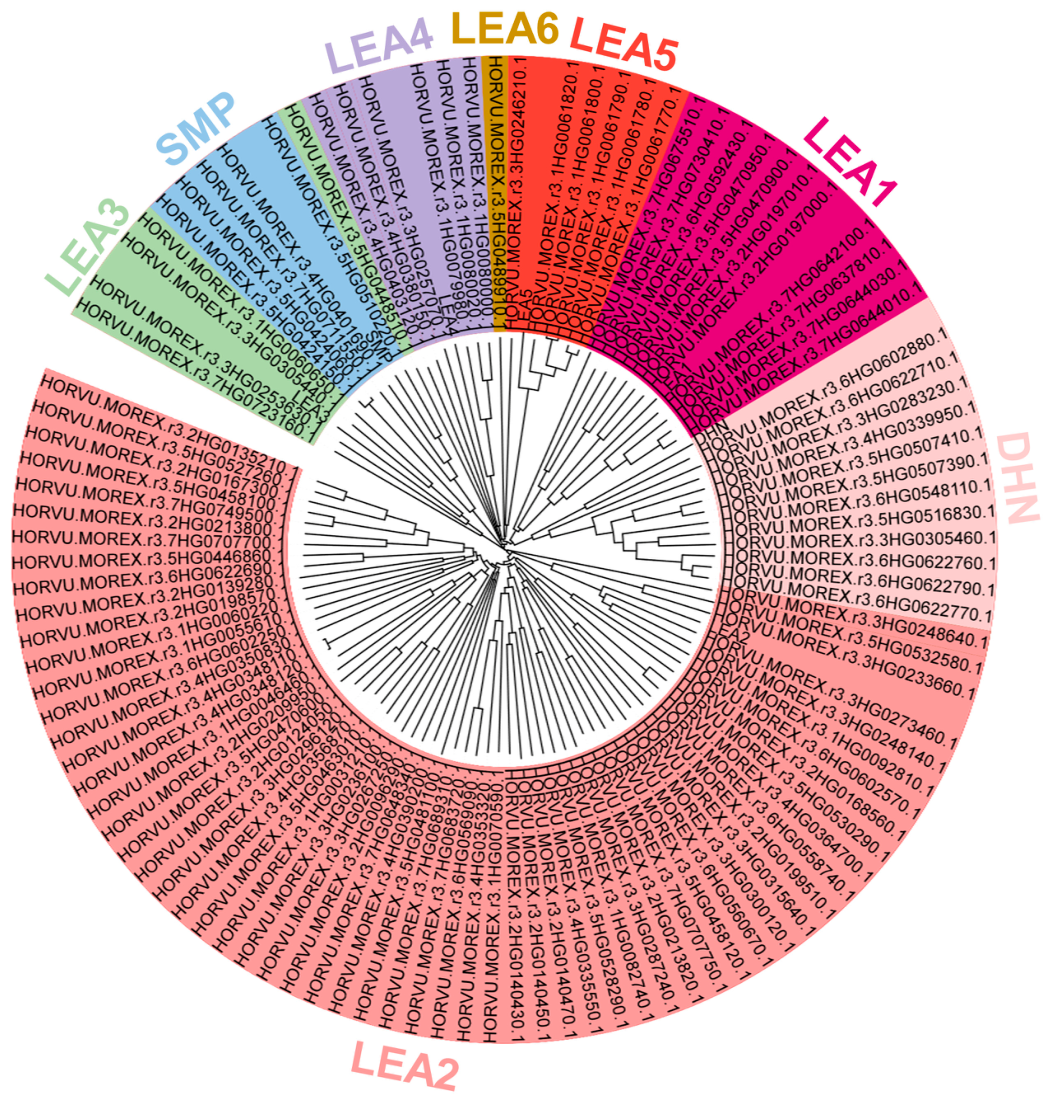
3.1. Identification of the HvLEA Gene Family, Subcellular Localization, and Prediction of Protein Physicochemical Properties
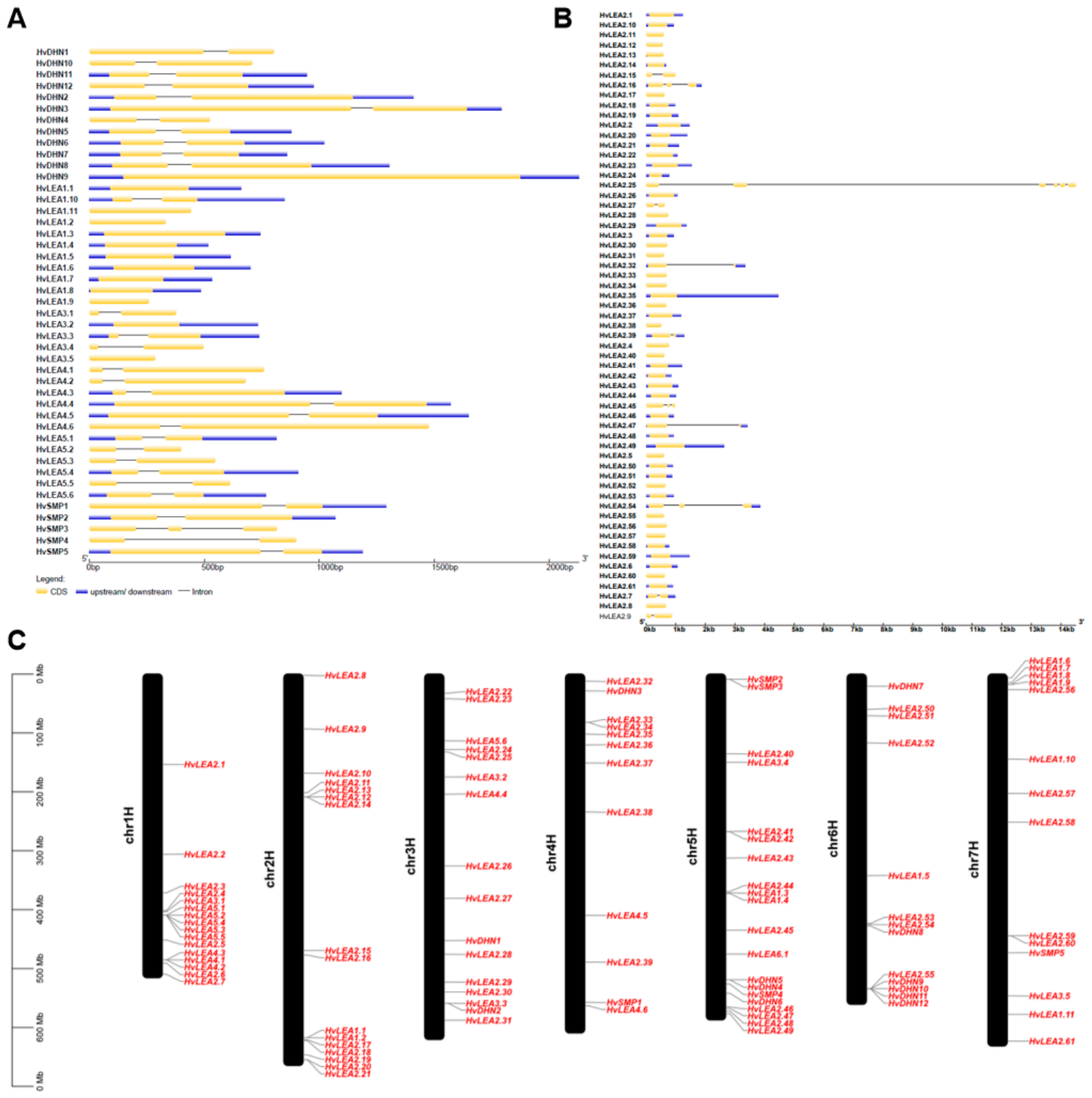
3.2. Gene Structures of HvLEA Family Genes
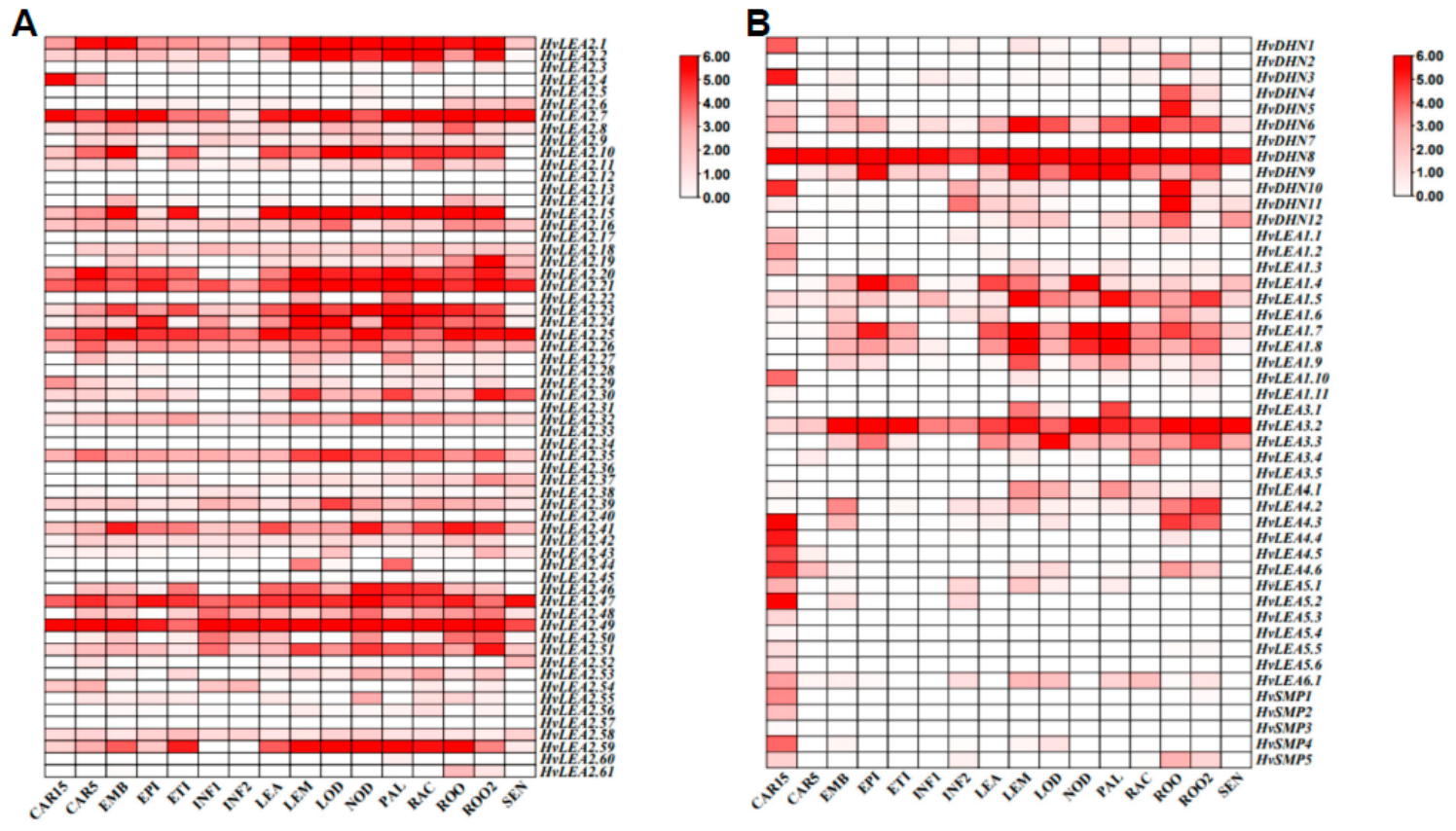
3.3. Analysis of the Expression Patterns of HvLEA Family Members in Barley Tissues
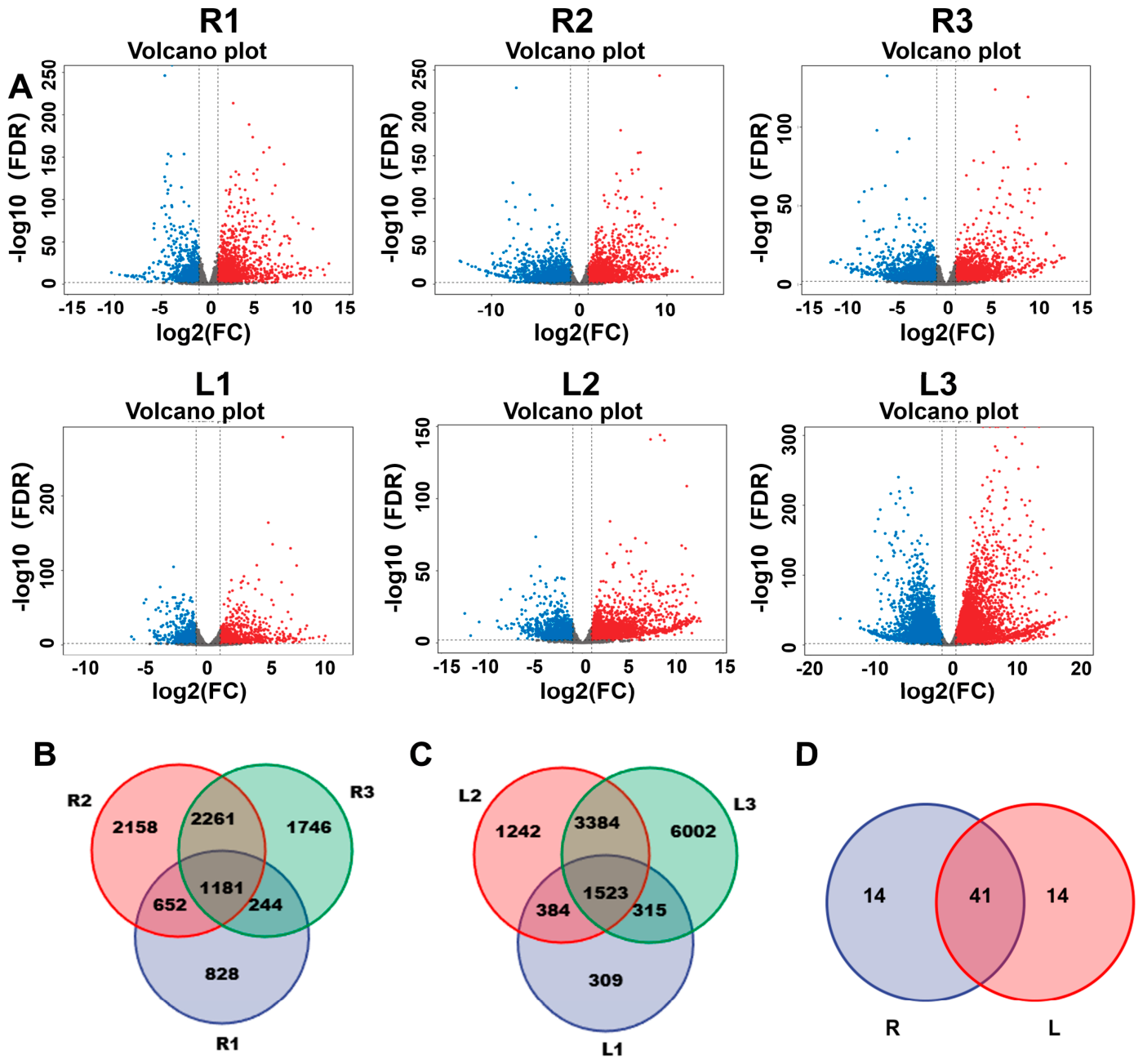
3.4. Analysis of HvLEA Family Gene Expression Under Salt Stress
3.5. Dynamic Transcriptional Responses of Six HvLEA Genes with Strong Response to Salt Stress
3.6. Analysis of HvLEA Potential Interacting Proteins and Their Expression Under Salt Stress
4. Discussion
5. Conclusions
Supplementary Materials
Author Contributions
Funding
Data Availability Statement
Conflicts of Interest
References
- Dure, L., 3rd; Greenway, S.C.; Galau, G.A. Developmental biochemistry of cottonseed embryogenesis and germination: Changing messenger ribonucleic acid populations as shown by in vitro and in vivo protein synthesis. Biochemistry 1981, 20, 4162–4168. [Google Scholar] [CrossRef]
- Kuang, L.; Zhou, H.; Zhang, T.; Gao, F.; Yan, T.; Chen, Z.; Shen, Q.; Zhang, G.; Li, L.; Wu, D. MicroRNA164d suppresses the HvNAC92-HvHKT1;5 module to enhance salinity tolerance in barley. Proc. Natl. Acad. Sci. USA 2025, 122, e2514555122. [Google Scholar] [CrossRef] [PubMed]
- Hanin, M.; Ebel, C.; Ngom, M.; Laplaze, L.; Masmoudi, K. New insights on plant salt tolerance mechanisms and their potential use for breeding. Front. Plant Sci. 2016, 7, 1787. [Google Scholar] [CrossRef] [PubMed]
- Shavrukov, Y.; Gupta, N.K.; Miyazaki, J.; Baho, M.N.; Chalmers, K.J.; Tester, M.; Langridge, P.; Collins, N.C. HvNax3—A locus controlling shoot sodium exclusion derived from wild barley (Hordeum vulgare ssp. spontaneum). Funct. Integr. Genom. 2010, 10, 277–291. [Google Scholar] [CrossRef]
- Zhu, J.; Zhou, H.; Fan, Y.; Guo, Y.; Zhang, M.; Shabala, S.; Zhao, C.; Lv, C.; Guo, B.; Wang, F.; et al. HvNCX, a prime candidate gene for the novel qualitative locus qS7.1 associated with salinity tolerance in barley. Theor. Appl. Genet. 2023, 136, 9. [Google Scholar] [CrossRef]
- Rivandi, J.; Miyazaki, J.; Hrmova, M.; Pallotta, M.; Tester, M.; Collins, N.C. A SOS3 homologue maps to HvNax4, a barley locus controlling an environmentally sensitive Na+ exclusion trait. J. Exp. Bot. 2010, 62, 1201–1216. [Google Scholar] [CrossRef]
- Huang, L.; Kuang, L.H.; Wu, L.Y.; Shen, Q.F.; Han, Y.; Jiang, L.X.; Wu, D.Z.; Zhang, G.P. The HKT Transporter HvHKT1;5 negatively regulates salt tolerance. Plant Physiol. 2020, 182, 584–596. [Google Scholar] [CrossRef] [PubMed]
- Zhu, J.; Sun, C.; Zhang, Y.; Zhang, M.; Zhao, C.; Lv, C.; Guo, B.; Wang, F.; Zhou, M.; Xu, R. Functional analysis on the role of HvHKT1.4 in barley (Hordeum vulgare L.) salinity tolerance. Plant Physiol. Biochem. 2024, 215, 109061. [Google Scholar] [CrossRef]
- Shen, Q.; Fu, L.; Su, T.; Ye, L.; Huang, L.; Kuang, L.; Wu, L.; Wu, D.; Chen, Z.; Zhang, G. Calmodulin HvCaM1 negatively regulates salt tolerance via modulation of HvHKT1s and HvCAMTA4. Plant Physiol. 2020, 183, 1650–1662. [Google Scholar] [CrossRef]
- Fu, L.; Wu, D.; Zhang, X.; Xu, Y.; Kuang, L.; Cai, S.; Zhang, G.; Shen, Q. Vacuolar H+-pyrophosphatase HVP10 enhances salt tolerance via promoting Na+ translocation into root vacuoles. Plant Physiol. 2022, 188, 1248–1263. [Google Scholar] [CrossRef]
- Xu, Y.; Liu, L.; Shen, L.; Wan, B.; Sun, H.; Hu, Z.; Zhang, G.; Shen, Q. A transcription factor HvCBP60-8 confers salt tolerance in barley. Plant J. 2025, 124, e70535. [Google Scholar] [CrossRef] [PubMed]
- Tunnacliffe, A.; Hincha, D.K.; Leprince, O.; Macherel, D. LEA Proteins: Versatility of Form and Function; Springer: Berlin/Heidelberg, Germany, 2010; Volume 21, pp. 91–108. [Google Scholar]
- Amara, I.; Zaidi, I.; Masmoudi, K.; Ludevid, M.D.; Pagès, M.; Goday, A.; Brini, F. Insights into late embryogenesis abundant (LEA) proteins in plants: From structure to the functions. Am. J. Plant Sci. 2014, 5, 3440–3455. [Google Scholar] [CrossRef]
- Athar, H.R.; Zulfiqar, F.; Moosa, A.; Ashraf, M.; Zafar, Z.U.; Zhang, L.; Ahmed, N.; Kalaji, H.M.; Nafees, M.; Hossain, M.A.; et al. Salt stress proteins in plants: An overview. Front. Plant Sci. 2022, 13, 999058. [Google Scholar] [CrossRef]
- Shao, H.B.; Liang, Z.S.; Shao, M.A. LEA proteins in higher plants: Structure, function, gene expression and regulation. Colloids Surf. B Biointerfaces 2005, 45, 131–135. [Google Scholar]
- Battaglia, M.; Olvera-Carrillo, Y.; Garciarrubio, A.; Campos, F.; Covarrubias, A.A. The enigmatic LEA proteins and other hydrophilins. Plant Physiol. 2008, 148, 6–24. [Google Scholar] [CrossRef]
- Jia, C.; Guo, B.; Wang, B.; Li, X.; Yang, T.; Li, N.; Wang, J.; Yu, Q. The LEA gene family in tomato and its wild relatives: Genome-wide identification, structural characterization, expression profiling, and role of SlLEA6 in drought stress. BMC Plant Biol. 2022, 22, 596. [Google Scholar] [CrossRef]
- Hunault, G.; Jaspard, E. LEAPdb: A database for the late embryogenesis abundant proteins. BMC Genomics 2010, 11, 221. [Google Scholar] [CrossRef]
- Wang, X.S.; Zhu, H.B.; Jin, G.L.; Liu, H.L.; Wu, W.R.; Zhu, J. Genome-scale identification and analysis of LEA genes in rice (Oryza sativa L.). Plant Sci. 2007, 172, 414–420. [Google Scholar] [CrossRef]
- Zhang, Y.; Zhang, X.; Zhu, L.; Wang, L.; Zhang, H.; Zhang, X.; Xu, S.; Xue, J. Identification of the maize LEA gene family and its relationship with kernel dehydration. Plants 2023, 12, 3674. [Google Scholar] [CrossRef]
- Altunoglu, C.Y.; Baloglu, P.; Yer, E.N.; Pekol, S.; Baloglu, M.C. Identification and expression analysis of LEA gene family members in cucumber genome. Plant Growth Regul. 2016, 80, 225–241. [Google Scholar] [CrossRef]
- Liang, Y.; Xiong, Z.; Zheng, J.; Xu, D.; Zhu, Z.; Xiang, J.; Gan, J.; Raboanatahiry, N.; Yin, Y.; Li, M. Genome-wide identification, structural analysis and new insights into late embryogenesis abundant (LEA) gene family formation pattern in Brassica napus. Sci. Rep. 2016, 6, 24265. [Google Scholar] [CrossRef]
- Zan, T.; Li, L.; Li, J.; Zhang, L.; Li, X. Genome-wide identification and characterization of late embryogenesis abundant protein-encoding gene family in wheat: Evolution and expression profiles during development and stress. Gene 2020, 736, 144422. [Google Scholar] [CrossRef]
- Geng, W.; Wang, Y.; Zhang, J.; Liu, Z.; Chen, X.; Qin, L.; Yang, L.; Tang, H. Genome-wide identification and expression analyses of late embryogenesis abundant (LEA) gene family in tobacco (Nicotiana tabacum L.) reveal their function in abiotic stress responses. Gene 2022, 836, 146665. [Google Scholar] [CrossRef] [PubMed]
- Wang, Q.; Lei, X.; Wang, Y.; Di, P.; Meng, X.; Peng, W.; Rong, J.; Wang, Y. Genome-wide identification of the LEA gene family in Panax ginseng: Evidence for the role of PgLEA2-50 in plant abiotic stress response. Plant Physiol. Biochem. 2024, 212, 108742. [Google Scholar] [CrossRef]
- Li, Z.; Chi, H.; Liu, C.; Zhang, T.; Han, L.; Li, L.; Pei, X.; Long, Y. Genome-wide identification and functional characterization of LEA genes during seed development process in linseed flax (Linum usitatissimum L.). BMC Plant Biol. 2021, 21, 193. [Google Scholar] [CrossRef] [PubMed]
- Jin, X.; Cao, D.; Wang, Z.; Ma, L.; Tian, K.; Liu, Y.; Gong, Z.; Zhu, X.; Jiang, C.; Li, Y. Genome-wide identification and expression analyses of the LEA protein gene family in tea plant reveal their involvement in seed development and abiotic stress responses. Sci. Rep. 2019, 9, 14123. [Google Scholar] [CrossRef] [PubMed]
- Huang, R.; Xiao, D.; Wang, X.; Zhan, J.; Wang, A.; He, L. Genome-wide identification, evolutionary and expression analyses of LEA gene family in peanut (Arachis hypogaea L.). BMC Plant Biol. 2022, 22, 155. [Google Scholar] [CrossRef]
- Ge, Y.; Chen, G.; Cheng, X.; Li, C.; Tian, Y.; Chi, W.; Li, J.; Dai, Z.; Wang, C.; Duan, E.; et al. The superior allele LEA12(OR) in wild rice enhances salt tolerance and yield. Plant Biotechnol. J. 2024, 22, 2971–2984. [Google Scholar] [CrossRef]
- Ghanmi, S.; Zaidi, I.; Ebel, C.; Hanin, M. The Atriplex halimus dehydrin AhDHN1 enhances growth, seed size, and yield under salt and drought stress in Arabidopsis. Plant Sci. 2026, 364, 112938. [Google Scholar] [CrossRef]
- Xu, D.; Duan, X.; Wang, B.; Hong, B.; Ho, T.; Wu, R. Expression of a late embryogenesis abundant protein gene, HVA1, from barley confers tolerance to water deficit and salt stress in transgenic rice. Plant Physiol. 1996, 110, 249–257. [Google Scholar] [CrossRef]
- Habib, I.; Shahzad, K.; Rauf, M.; Ahmad, M.; Alsamadany, H.; Fahad, S.; Saeed, N.A. Dehydrin responsive HVA1 driven inducible gene expression enhanced salt and drought tolerance in wheat. Plant Physiol. Biochem. 2022, 180, 124–133. [Google Scholar] [CrossRef] [PubMed]
- Chen, Y.S.; Lo, S.F.; Sun, P.K.; Lu, C.A.; Ho, T.H.; Yu, S.M. A late embryogenesis abundant protein HVA1 regulated by an inducible promoter enhances root growth and abiotic stress tolerance in rice without yield penalty. Plant Biotechnol. J. 2015, 13, 105–116. [Google Scholar] [CrossRef]
- Samtani, H.; Sharma, A.; Khurana, P. Overexpression of HVA1 enhances drought and heat stress tolerance in Triticum aestivum doubled haploid plants. Cells 2022, 11, 912. [Google Scholar] [CrossRef]
- Zhu, J.; Zhang, Y.; Zhang, M.; Hong, Y.; Sun, C.; Guo, Y.; Yin, H.; Lv, C.; Guo, B.; Wang, F.; et al. Natural variation and CRISPR/Cas9 gene editing demonstrate the role of a group VII ethylene response factor, HvERF62, in regulation of barley waterlogging tolerance. J. Exp. Bot. 2025, 76, 5071–5085. [Google Scholar] [CrossRef]
- Koubaa, S.; Bremer, A.; Hincha, D.K.; Brini, F. Structural properties and enzyme stabilization function of the intrinsically disordered LEA_4 protein TdLEA3 from wheat. Sci. Rep. 2019, 9, 3720. [Google Scholar] [CrossRef] [PubMed]
- Mohanty, S.; Hembram, P. An overview of LEA genes and their importance in combating abiotic stress in rice. Plant Mol. Biol. Report. 2025, 43, 337–351. [Google Scholar] [CrossRef]
- Duan, J.; Cai, W. OsLEA3-2, an abiotic stress induced gene of rice plays a key role in salt and drought tolerance. PLoS ONE 2012, 7, e45117. [Google Scholar] [CrossRef]
- Hu, T.; Liu, Y.; Zhu, S.; Qin, J.; Li, W.; Zhou, N. Overexpression of OsLea14-A improves the tolerance of rice and increases Hg accumulation under diverse stresses. Environ. Sci. Pollut. Res. 2019, 26, 10537–10551. [Google Scholar] [CrossRef]
- Jia, F.; Qi, S.; Li, H.; Liu, P.; Li, P.; Wu, C.; Zheng, C.; Huang, J. Overexpression of late embryogenesis abundant 14 enhances arabidopsis salt stress tolerance. Biochem. Biophys. Res. Commun. 2014, 454, 505–511. [Google Scholar] [CrossRef]
- Shiraku, M.L.; Magwanga, R.O.; Zhang, Y.; Hou, Y.; Kirungu, J.N.; Mehari, T.G.; Xu, Y.; Wang, Y.; Wang, K.; Cai, X.; et al. Late embryogenesis abundant gene LEA3 (Gh_A08G0694) enhances drought and salt stress tolerance in cotton. Int. J. Biol. Macromol. 2022, 207, 700–714. [Google Scholar] [CrossRef] [PubMed]
- Wu, Y.; Liu, C.; Kuang, J.; Ge, Q.; Zhang, Y.; Wang, Z. Overexpression of SmLEA enhances salt and drought tolerance in Escherichia coli and Salvia miltiorrhiza. Protoplasma 2014, 251, 1191–1199. [Google Scholar] [CrossRef] [PubMed]
- Li, Q.; Zhang, X.; Lv, Q.; Zhu, D.; Qiu, T.; Xu, Y.; Bao, F.; He, Y.; Hu, Y. Physcomitrella patens dehydrins (PpDHNA and PpDHNC) confer salinity and drought tolerance to transgenic arabidopsis plants. Front. Plant Sci. 2017, 8, 1316. [Google Scholar] [CrossRef] [PubMed]
- Sun, M.; Shen, Y.; Yin, K.; Guo, Y.; Cai, X.; Yang, J.; Zhu, Y.; Jia, B.; Sun, X. A late embryogenesis abundant protein GsPM30 interacts with a receptor like cytoplasmic kinase GsCBRLK and regulates environmental stress responses. Plant Sci. 2019, 283, 70–82. [Google Scholar] [CrossRef]
- Cao, Y.; Zhang, M.; Liang, X.; Li, F.; Shi, Y.; Yang, X.; Jiang, C. Natural variation of an EF-hand Ca2+-binding-protein coding gene confers saline-alkaline tolerance in maize. Nat. Commun. 2020, 11, 186. [Google Scholar] [CrossRef]
- Zhang, Y.; Tian, H.; Chen, D.; Zhang, H.; Sun, M.; Chen, S.; Qin, Z.; Ding, Z.; Dai, S. Cysteine-rich receptor-like protein kinases: Emerging regulators of plant stress responses. Trends Plant Sci. 2023, 28, 776–794. [Google Scholar] [CrossRef] [PubMed]
- Zhou, S.; Luo, Q.; Nie, Z.; Wang, C.; Zhu, W.; Hong, Y.; Zhao, J.; Pei, B.; Ma, W. CRK41 modulates microtubule depolymerization in response to salt stress in Arabidopsis. Plants 2023, 12, 1285. [Google Scholar] [CrossRef]
- Jang, Y.J.; Oh, S.D.; Kin, K.; Lee, S.K.; Chang, A.; Yun, D.W.; Kim, C.M.; Lee, B. Overexpression of CRK4, the cysteine-rich receptor-like protein kinase of Arabidopsis, regulates the resistance to abiotic stress and abscisic acid responses. Plant Biotechnol. Rep. 2024, 18, 735–742. [Google Scholar] [CrossRef]
- Wang, T.; Li, X.K.; Liu, X.; Yang, X.Q.; Li, Y.J.; Hou, B.K. Rice glycosyltransferase gene UGT2 functions in salt stress tolerance under the regulation of bZIP23 transcription factor. Plant Cell Rep. 2023, 42, 17–28. [Google Scholar] [CrossRef]
- Dong, N.Q.; Sun, Y.; Guo, T.; Shi, C.L.; Zhang, Y.M.; Kan, Y.; Xiang, Y.H.; Zhang, H.; Yang, Y.B.; Li, Y.C.; et al. UDP-glucosyltransferase regulates grain size and abiotic stress tolerance associated with metabolic flux redirection in rice. Nat. Commun. 2020, 11, 2629. [Google Scholar] [CrossRef]
- Liu, J.; Zhang, X.; Liu, Y.; Li, Z.; Liu, Y.; Chen, C.; Yang, Z.; Chen, Y. Overexpression of CdZFP3, a Cynodon dactylon zinc finger protein gene, enhanced salt tolerance in Arabidopsis thaliana. Plant Growth Regul. 2025, 105, 2247–2257. [Google Scholar] [CrossRef]
- Yang, Z.; Zhang, Z.; Qiao, Z.; Guo, X.; Wen, Y.; Zhou, Y.; Yao, C.; Fan, H.; Wang, B.; Han, G. The RING zinc finger protein LbRZF1 promotes salt gland development and salt tolerance in Limonium bicolor. J. Integr. Plant Biol. 2024, 66, 787–809. [Google Scholar] [CrossRef] [PubMed]
- Admas, T.; Shu, J.; Bimpong, D.; Pan, R.; Zhang, W. Identification of C2H2 zinc finger proteins revealed that HvZFP1 plays a regulatory role for ROS detoxification in response to salt stress in barley. Int. J. Biol. Macromol. 2026, 355, 151511. [Google Scholar] [CrossRef] [PubMed]


Disclaimer/Publisher’s Note: The statements, opinions and data contained in all publications are solely those of the individual author(s) and contributor(s) and not of MDPI and/or the editor(s). MDPI and/or the editor(s) disclaim responsibility for any injury to people or property resulting from any ideas, methods, instructions or products referred to in the content. |
© 2026 by the authors. Licensee MDPI, Basel, Switzerland. This article is an open access article distributed under the terms and conditions of the Creative Commons Attribution (CC BY) license.
Share and Cite
Mao, Y.; Li, N.; Zhao, D.; Li, L.; Yang, Y.; Qian, A.; Wang, J.; Zheng, X.; Hong, Y.; Lv, C.; et al. Genome-Wide Identification, Characterization, and Expression Profiling of the HvLEA Family Genes Under Salt Stress, and Prediction of Their Protein–Protein Interaction Networks in Barley (Hordeum vulgare L.). Agronomy 2026, 16, 836. https://doi.org/10.3390/agronomy16080836
Mao Y, Li N, Zhao D, Li L, Yang Y, Qian A, Wang J, Zheng X, Hong Y, Lv C, et al. Genome-Wide Identification, Characterization, and Expression Profiling of the HvLEA Family Genes Under Salt Stress, and Prediction of Their Protein–Protein Interaction Networks in Barley (Hordeum vulgare L.). Agronomy. 2026; 16(8):836. https://doi.org/10.3390/agronomy16080836
Chicago/Turabian StyleMao, Yiru, Nan Li, Duo Zhao, Lufei Li, Ye Yang, Ao Qian, Jiaying Wang, Xuqi Zheng, Yi Hong, Chao Lv, and et al. 2026. "Genome-Wide Identification, Characterization, and Expression Profiling of the HvLEA Family Genes Under Salt Stress, and Prediction of Their Protein–Protein Interaction Networks in Barley (Hordeum vulgare L.)" Agronomy 16, no. 8: 836. https://doi.org/10.3390/agronomy16080836
APA StyleMao, Y., Li, N., Zhao, D., Li, L., Yang, Y., Qian, A., Wang, J., Zheng, X., Hong, Y., Lv, C., Guo, B., Wang, F., Xu, R., & Zhu, J. (2026). Genome-Wide Identification, Characterization, and Expression Profiling of the HvLEA Family Genes Under Salt Stress, and Prediction of Their Protein–Protein Interaction Networks in Barley (Hordeum vulgare L.). Agronomy, 16(8), 836. https://doi.org/10.3390/agronomy16080836