Review

Integrative Roles of Growth-Regulating Factors (GRFs) in Leaf Morphogenesis, Stress Response, and Crop Regeneration


1
College of Life Sciences, Fujian Provincial Key Laboratory of Haixia Applied Plant Systems Biology, Fujian Agriculture and Forestry University, Fuzhou 350002, China
2
Biology Department, African Methodist Episcopal University, Monrovia 3340, Liberia
3
Institute of Applied Ecology, College of Plant Protection, Fujian Agriculture and Forestry University, Fuzhou 350002, China
4
College of Agriculture, Fujian Agriculture and Forestry University, Fuzhou 350002, China
5
Department of Agronomy, Agriculture Faculty, Paktia University, Gardiz City 2201, Paktia, Afghanistan
*
Authors to whom correspondence should be addressed.
Agronomy 2026, 16(6), 675; https://doi.org/10.3390/agronomy16060675
Submission received: 16 February 2026 / Revised: 14 March 2026 / Accepted: 18 March 2026 / Published: 23 March 2026

Abstract

Growth-Regulating Factors (GRFs) are plant-specific transcription factors that, together with GRF-Interacting Factors (GIFs) and under post-transcriptional control by miR396, coordinate cell proliferation and expansion to define organ size. This GRF–GIF–miR396 regulatory module holds major agronomic importance, shaping leaf architecture, source–sink relationships, nitrogen-use efficiency (NUE), and stress resilience in crops. Upregulation of specific GRF genes has been shown to enhance leaf width, yield potential, and other important agronomic traits. Synthetic GRF–GIF chimeras have revolutionized regeneration and genome editing in multiple crop species, revealing both successes and species-specific limitations. Expanding GRF/GIF gene families and functional analyses across various crops highlight conserved developmental functions with variable outcomes, including improved drought and salinity tolerance through sustained canopy growth. This review, focused on crop systems, integrates current advances in GRF-regulated leaf development, their contributions to abiotic and biotic stress adaptation, and the emerging utility of GRF–GIF chimeras. Finally, it outlines key challenges and future opportunities for leveraging GRFs in designing climate-resilient, high-efficiency crop ideotypes.

1. Introduction

Global agriculture faces an escalating challenge: producing higher yields under the pressures of climate change, shrinking arable land, and rising food demand [1,2]. Although advances in agronomy and conventional breeding have significantly enhanced productivity, the next frontier lies in uncovering and manipulating the molecular regulators that govern plant growth and development. Among these, GRFs have emerged as pivotal transcription factors influencing organ size, biomass accumulation, stress tolerance, and regenerative potential [3].
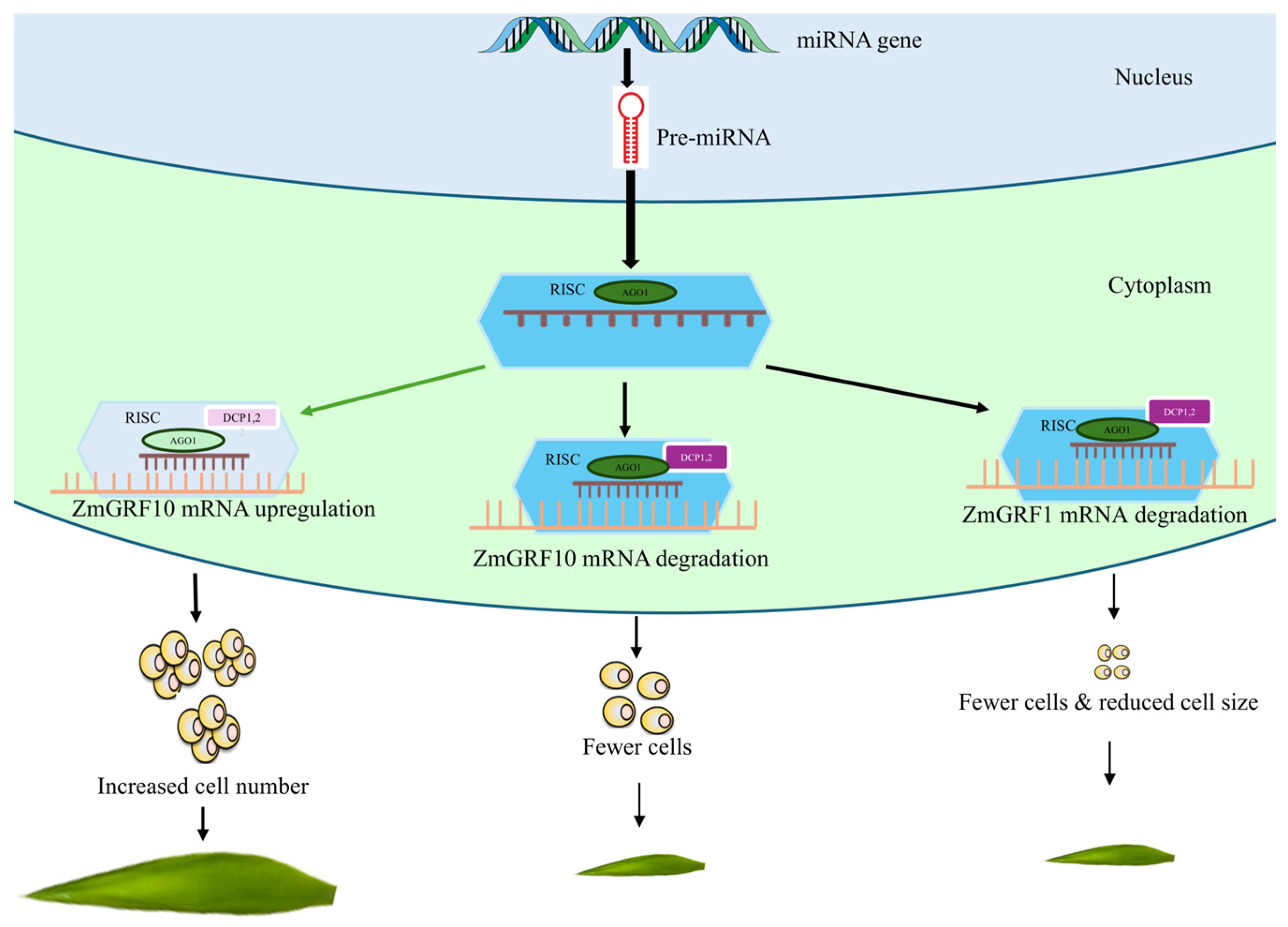
GRFs are plant-specific proteins characterized by the highly conserved QLQ and WRC domains, which mediate protein–protein interactions and DNA binding, respectively [4]. GRFs interact with GRF-Interacting Factors (GIFs) as transcriptional co-activators, and their expression is modulated by microRNA396 (miR396), one component of a broader regulatory network that includes transcriptional, hormonal, and epigenetic controls [5]. In addition to transcriptional and post-transcriptional regulation, recent studies indicate that epigenetic mechanisms—including DNA methylation, histone modification, and chromatin remodeling—also contribute to the regulation of plant developmental programs, stress responses, and regeneration capacity in crops, highlighting the importance of chromatin-level regulation in coordinating growth-related transcriptional networks [6,7]. In maize (Zea mays), for instance, differential regulation of ZmGRF10 and ZmGRF1 by miR396 coordinates cell division and expansion, ultimately shaping leaf dimensions (Figure 1) [8]. Collectively, this miR396–GRF–GIF regulatory module functions as a central hub integrating growth and stress-response pathways [5,8,9,10,11,12,13,14,15,16].
Importantly, the regulatory functions of GRFs operate within broader upstream signaling networks that connect environmental and developmental cues to downstream transcriptional responses. Under abiotic and biotic stress conditions, plants first perceive external stimuli through receptor-mediated systems that activate intracellular signaling pathways involving Ca2+ fluxes, reactive oxygen species (ROS), mitogen-activated protein kinase (MAPK) cascades, and phytohormonal signaling, particularly abscisic acid, auxin, and cytokinin pathways [17,18,19,20,21]. These signaling events subsequently reshape transcriptional and post-transcriptional regulatory programs, including microRNA-mediated regulation, thereby modulating GRF–GIF activity in a context-dependent manner. Consequently, GRFs function as downstream integrators of multilayered signaling processes that coordinate leaf morphogenesis, stress adaptation, and regeneration capacity in crops [22].
Initially characterized in model species, GRFs are now recognized as universal regulators across diverse crop groups. In cereals, they modulate yield-related traits in rice, wheat, maize, barley, and sorghum [23,24,25,26,27,28,29,30]. In legumes such as soybeans, chickpea, cowpea, and pigeon pea, GRFs control compound-leaf formation and stress adaptation [31,32,33]. In oilseeds, including Brassica species and peanuts, they influence both growth and tolerance to drought and cold [34,35,36,37]. Horticultural vegetables like tomato, cucumber, and potato rely on GRFs for lamina expansion and fruit-related organ development [38,39,40]. Likewise, fruit crops such as citrus, grapevine, peach, strawberry, and pear depend on GRF activity for organ enlargement and regeneration [41,42,43,44,45,46], while fiber and cash crops—including cotton and sugarcane—show GRF involvement in leaf morphology and regenerative growth [47,48,49]. Switchgrass, a bioenergy crop, also exhibits enhanced biomass accumulation through targeted manipulation of the miR396–GRF axis [50,51]. In terms of their diversity, the GRF family comprises 12, 17, 30, and 11 members in major monocots such as rice, maize, wheat, and sorghum respectively [52,53,54,55]. Despite this variation, GRF proteins in these species are consistently grouped into several subfamilies—five in wheat and three each in rice, maize, and sorghum—based largely on differences in protein domain organization [53,54,55,56], particularly within the variable C-terminal region that contains regulatory motifs such as transactivation domains, while the conserved QLQ and WRC domains responsible for protein interaction and DNA binding remain characteristic features of the family. Collectively, these findings highlight GRFs as a conserved regulatory nexus functioning across cereals, legumes, horticultural vegetables, fruit trees, and bioenergy species. This review synthesizes current understanding of GRF functions in crops, emphasizing their roles in leaf development through cell proliferation and expansion, their contributions to abiotic and biotic stress responses, their transformative use in regeneration via GRF–GIF chimeras, and the opportunities and challenges associated with harnessing these factors for future crop-improvement strategies.

2. GRF Influence on Leaf Development

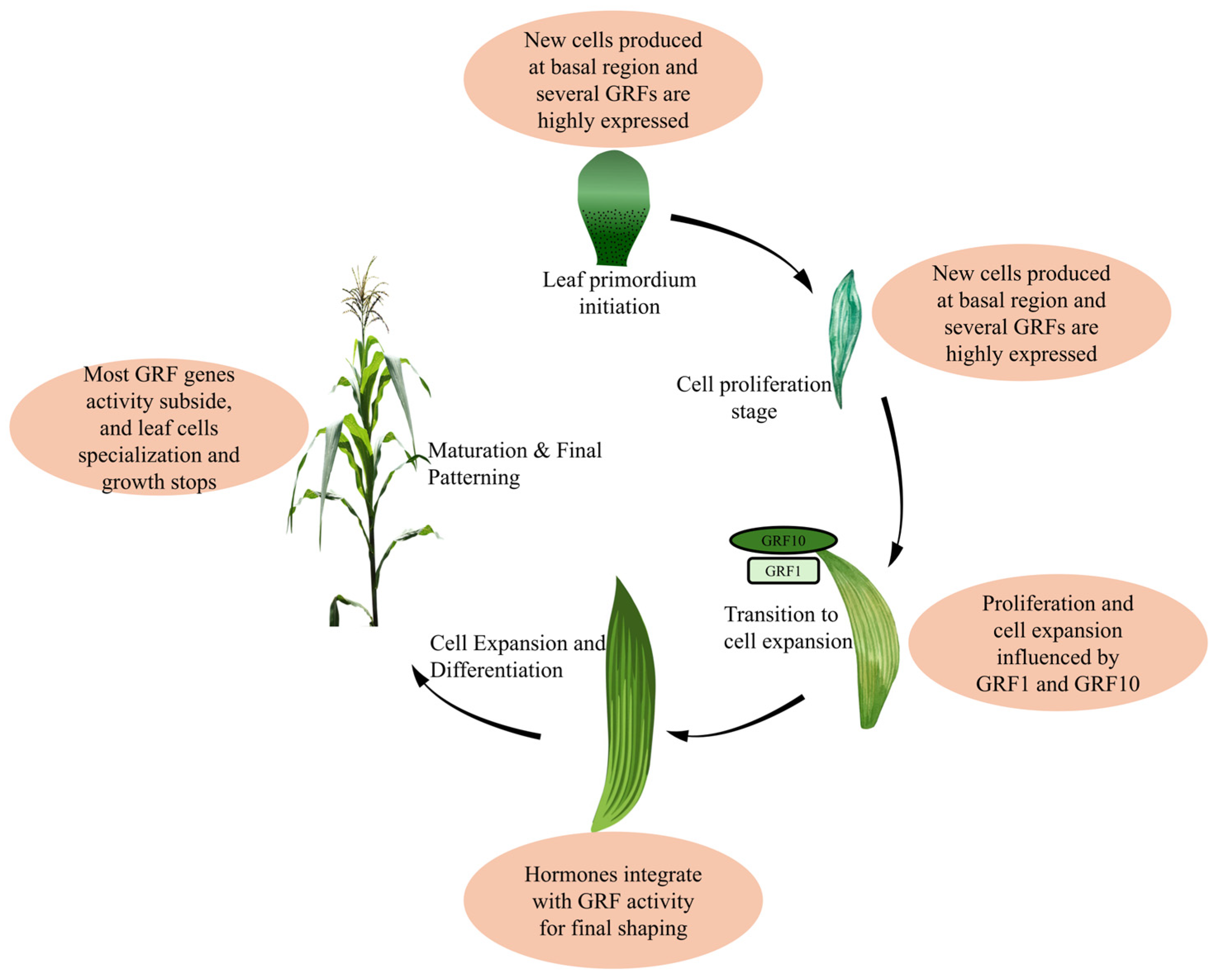
Leaves are the primary photosynthetic organs, and their morphology profoundly influences crop productivity by determining canopy photosynthetic efficiency, light interception, and assimilate allocation to reproductive structures. Among the molecular regulators of leaf growth, GRFs play a central role in coordinating cell proliferation and expansion across diverse crops (Figure 2) [3,5,57,58,59]. In rice, the gain-of-function allele OsGRF4 (GS2) simultaneously enlarges leaves and grains, thereby enhancing yield potential [24,26,60,61]. In wheat, TaGRF4 expression determines flag-leaf area and directly affects assimilate flow to spikes [27,41,62], while in maize, GRFs regulate lamina elongation and auricle development, shaping canopy structure [8,63,64]. Barley HvGRFs are linked to leaf length, and sorghum GRFs influence both leaf development and panicle morphology [56]. In legumes such as soybean, chickpea, and cowpea, GRFs determine compound-leaflet number and size [31,65,66], whereas in Brassica juncea they sustain lamina expansion under drought stress [36]. Horticultural species including tomato and cucumber rely on GRFs for lamina broadening and fruit-associated organ expansion [59,67,68], and fruit crops such as citrus and apple show GRF-mediated coordination of leaf and fruit growth [41,69,70,71]. In cotton, GRFs shape leaf morphology and canopy traits that contribute to fiber yield [44,47]. Across these species, GRFs regulate leaf growth mainly by promoting cell proliferation, enhancing cell expansion, or integrating both processes, thereby establishing themselves as master regulators of leaf architecture and photosynthetic performance in crops [3,5].

2.1. GRFs Involved in Cell Proliferation in Leaf Growth

Leaf development begins with an early phase of vigorous cell proliferation, during which the number of dividing cells establishes the structural framework that determines final leaf size [72]. Across crop species, GRFs act as pivotal transcriptional regulators during this proliferative stage, sustaining mitotic activity until the transition to expansion while being finely tuned by miR396 [58]. In rice (Oryza sativa), OsGRF1 is strongly expressed in young leaf primordia; overexpression of miR396-resistant OsGRF alleles significantly enhances cell number and lamina expansion, whereas miR396 overexpression or GRF knockdown suppresses division and reduces blade size [73,74]. In maize, overexpression of the truncated ZmGRF10 decreases leaf length and plant height by restricting proliferation in the basal division zone, indicating that GRF dosage directly modulates growth intensity [8]. In wheat (Triticum aestivum), genome-wide expression analyses reveal that TaGRF genes are most active in juvenile tissues, while regulation through the miR396–GRF axis governs early leaf morphogenesis [62,75]. In tomato (Solanum lycopersicum), SlGRF3 and SlGRF5 transcripts accumulate in developing leaf primordia, and their silencing yields smaller, simpler leaves, reinforcing the conserved proliferative function of GRFs in dicot crops [39]. Collectively, these studies demonstrate that GRFs are master regulators of the proliferative phase of leaf growth; modest up-regulation or relief from miR396 repression typically produces 20–35% increases in cell number, defining the cellular foundation upon which later expansion determines final organ size [76].

2.2. GRFs Involved in Cell Expansion in Leaf Growth

Following the cessation of cell proliferation, final leaf size is primarily determined by the extent of cell expansion, a process strongly influenced by GRFs. In tomato, SlGRF4 overexpression enlarges sepals by approximately 25% and leaves by about 20%, while the suppression of miR396-mediated repression further increases lamina area by up to 30% [5,67]. In cucumber, overexpression of CsGRF3 enhances leaf area by 22%, whereas CsGRF5 exerts an opposing effect, reducing lamina width by 18% [59,68]. In Brassica juncea, BjGRFs maintain lamina expansion under drought stress, with transgenic plants retaining 92% of normal leaf size compared to 75% in wild-type controls [36]. Collectively, these findings demonstrate that GRFs directly regulate post-proliferative cell expansion, producing consistent organ size increases of 15–30% across vegetables, fruit trees, and oilseed crops [3,5].

2.3. GRFs Involved in Both Cell Proliferation and Cell Expansion in Leaf Growth

Certain GRFs coordinate both cell proliferation and expansion, functioning as master regulators of final organ size. In rice, OsGRF4 exemplifies this dual role, where miR396-resistant alleles produce leaves that are 18–22% longer, grains 13–20% heavier, and panicles with more spikelets, collectively enhancing yield by up to 28% [24,26,60,61]. In maize, ZmGRF1 (Figure 2) extends the proliferative phase and sustains expansion, resulting in leaves approximately 20% longer and broader, along with ears bearing about 12% more kernel rows [63,64]. In soybean, miR396-resistant GmGRFs prolong both developmental phases, yielding 25–30% larger leaflets and improving canopy photosynthesis by roughly 20% [31,65,66]. Similarly, in citrus, CsGRFs integrate these processes within fruit development, producing fruits around 20% larger [41,70], and in cotton, GhGRFs simultaneously regulate both phases, expanding canopy leaf size by 15–20% [44,47]. Across crop species, such integrative GRFs orchestrate synchronized increases in cell number and size (Table 1), providing an efficient mechanism for maximizing organ growth and productivity [3,4,5].

3. GRF Response to Biotic and Abiotic Stress

GRFs operate at the intersection of plant growth and defence, integrating developmental and stress-response pathways [78]. Under environmental stress, plants frequently upregulate miR396, which represses GRF expression to conserve energy and prioritize survival overgrowth [58]. While this adaptive mechanism enhances stress tolerance, it often limits organ expansion and reduces yield [58]. In contrast, resistant alleles or engineered miR396-resistant GRFs sustain optimal GRF activity during stress, allowing continued growth and improved productivity [79]. Accumulating evidence across cereals, legumes, oilseeds, vegetables, fruit crops, and bioenergy species demonstrates that GRFs contribute to tolerance against a wide range of stressors—including drought, salinity, cold, nutrient limitation, pathogen infection, and pest attack—by maintaining growth–defense balance and promoting resilience without compromising yield potential [3,58].

3.1. GRF Response in Plants to Abiotic Stress

GRFs play vital roles in enabling plants to maintain growth and productivity under adverse environmental conditions. In tomato, SlGRF4 overexpression enhances drought tolerance, with transgenic plants retaining 28–32% higher relative water content and sustaining 80% of their photosynthetic rate compared with 55% in wild-type plants after ten days of water deficit [67,80]. In rice, OsGRF7 overexpression improves salt tolerance, leading to 15% higher seedling germination, 20% greater biomass under 150 mM NaCl, and 12% heavier grains under normal conditions [81,82]. Wheat TaGRF4 transgenic lines retain 85% of their yield under drought compared with 65% in wild type [27,75]. Similarly, HvGRFs in barley are upregulated during drought, maintaining leaf elongation within 10% of normal compared with a 30% reduction in wild type [83,84], while drought-inducible GRFs in sorghum flag leaves and panicles correlate with reduced yield losses under stress [85,86,87]. In cucumber, miR396-resistant CsGRF3 enhances root biomass by 30%, improving osmotic-stress survival [88]. In potato, StGRF overexpression increases cold tolerance, yielding 20% higher survival under chilling conditions [38,89], and in Brassica juncea, BjGRFs maintain lamina expansion during drought [36]. Likewise, in the bioenergy crop switchgrass, a reduction in miR396-mediated repression elevates biomass by 20% and enhances tolerance to nutrient limitation [50,51]. Collectively, these findings demonstrate that GRFs mitigate the trade-off between growth and stress resistance, enabling plants to sustain productivity under abiotic constraints.

3.2. GRF Response in Plants to Biotic Stress

GRFs also play critical roles in modulating plant responses to biotic stress, balancing defense activation with growth maintenance [3]. In rice, overexpression of miR396 suppresses OsGRFs, leading to smaller leaves but reducing blast lesion formation by approximately 50% compared with wild-type plants. Conversely, miR396-resistant OsGRF6 and OsGRF8 lines produce larger leaves and grains but exhibit nearly double the number of lesions, illustrating a clear growth–defense trade-off [90,91]. In maize, reduced ZmGRF1 expression lowers stalk rot severity but concurrently shortens internodes [28,92]. In soybean, the miR396–GmGRF regulatory module influences syncytium formation during cyst nematode infection, where resistant alleles reduce feeding sites by 20% but restrict root growth by 15% [65,93]. GRFs in potato have been implicated in mediating responses to late blight (NDSU Extension; University of Minnesota Extension). Together, these findings highlight GRFs as central regulators linking developmental growth with immune responses across crop species.

3.3. Epigenetic Regulation of GRF-Mediated Development, Stress Response, and Regeneration

Epigenetic mechanisms constitute an additional regulatory layer that shapes GRF-mediated developmental processes and regeneration competence in crops. Beyond transcriptional regulation and microRNA-mediated control, chromatin-level modifications influence the accessibility and activity of developmental gene networks associated with GRF function. DNA methylation, histone modifications, and ATP-dependent chromatin remodeling collectively regulate gene expression patterns during organogenesis, stress responses, and tissue regeneration. In crop species such as maize and rice, chromatin-remodeling complexes interacting with GRF-associated transcriptional machinery regulate the expression of growth-related genes that control meristem maintenance and organ development. For example, the GRF co-activator GRF-INTERACTING FACTOR1 (GIF1) in maize has been shown to interact with SWI/SNF chromatin-remodeling components, thereby modulating chromatin accessibility at genes involved in meristem determinacy and inflorescence architecture [94]. Similarly, epigenetic regulation through histone methylation and acetylation plays a key role in determining regeneration competence in crop tissues, as dynamic changes in histone marks such as H3K27me3 and H3K4 methylation accompany the activation of developmental programs during in vitro regeneration [7,95]. DNA methylation has also been shown to influence shoot regeneration capacity, indicating that epigenetic reprogramming is required for the transition from differentiated cells to regenerative states [96,97]. These epigenetic processes collectively establish a permissive chromatin environment that facilitates the activation of morphogenic regulators. Within this framework, GRF–GIF-mediated transcriptional activation can be viewed as operating within a broader epigenetic landscape that determines cellular competence for regeneration. Consequently, understanding the interaction between GRF regulatory networks and epigenetic modifications is essential for improving regeneration efficiency and transformation systems in crop species.

4. GRF–GIF Chimera

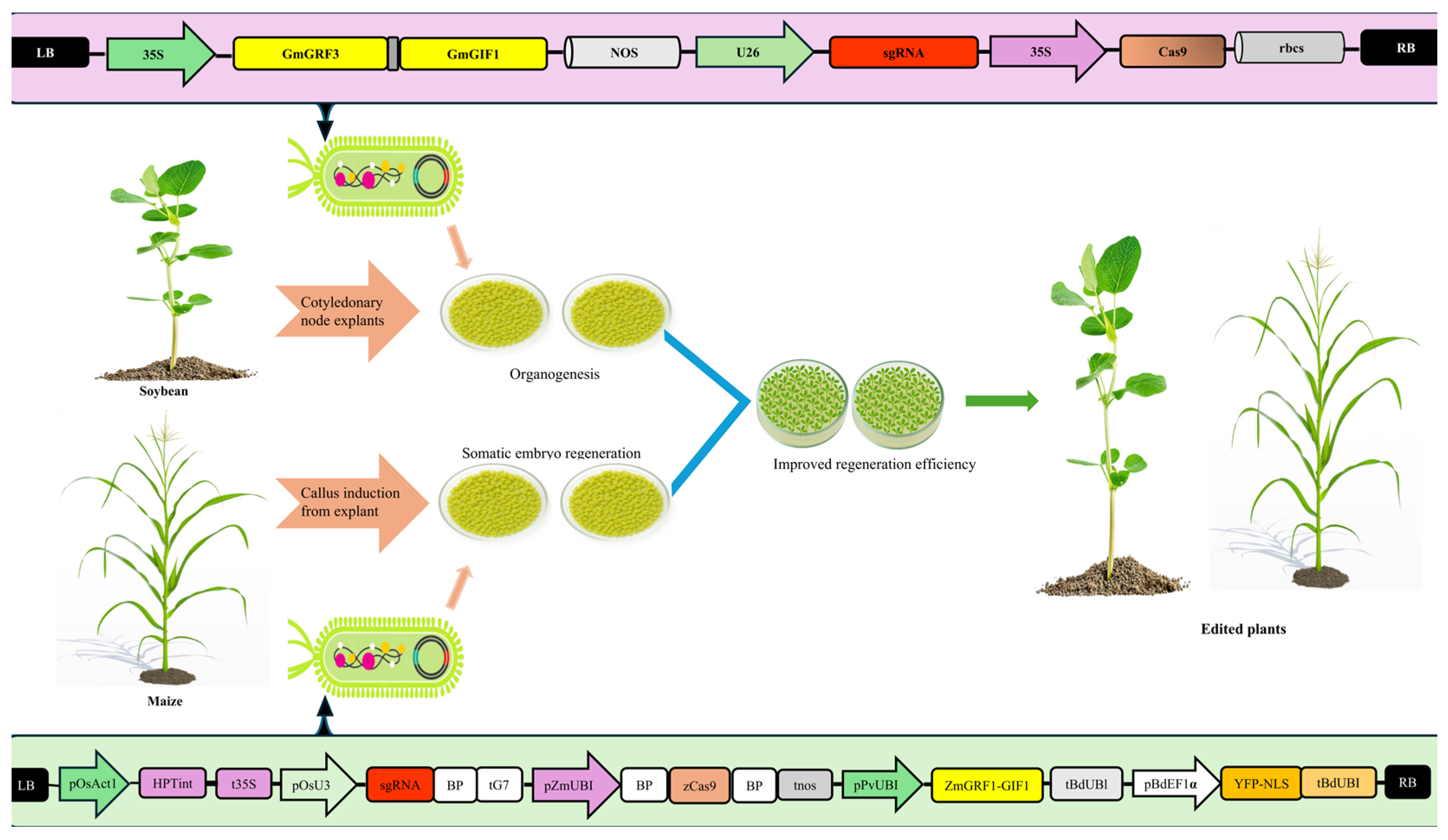
GRF with its co-activator GIF creates a synthetic transcriptional activator that markedly enhances plant regeneration by sustaining cell proliferation and meristematic competence during tissue culture. The original demonstration by [41] provided the first compelling evidence of this strategy in cereals. By designing a chimeric GRF4–GIF1 fusion driven by constitutive or regeneration-specific promoters, the authors achieved a remarkable acceleration of shoot organogenesis in Triticum aestivum (wheat), × Triticosecale (triticale), and Oryza sativa (rice) [41]. In wheat, embryogenic calli expressing GRF4–GIF1 regenerated shoots within 25–30 days—roughly half the usual time—and displayed up to a ten-fold increase in transformation efficiency compared with standard BBM–WUS or LEC2-based systems [41]. Triticale, a typically recalcitrant hybrid, also exhibited high regeneration frequencies and maintained normal fertility, demonstrating that the GRF–GIF chimera overcomes genotype dependence often seen in monocot transformation [41]. In rice, expression of the same chimera not only improved somatic embryo proliferation but also supported the recovery of healthy, fertile plants without the growth abnormalities commonly associated with strong morphogenic regulators [41]. These cereal-based results established the GRF–GIF fusion as a versatile regeneration booster compatible with CRISPR/Cas-mediated editing pipelines—[41] reported efficient generation of 30 edited wheat lines targeting Q/AP2L-A5, with normal flowering and seed set. In maize, incorporation of a ZmGRF1–ZmGIF1 chimera alongside a ternary helper vector increased transformation efficiency from 2.3% to 8.1% and then a further 3.5–6.5-fold (Figure 3), without growth penalties and with high CRISPR/Cas9 editing rates [98]. In tomato, a species-matched SlGRF–GIF chimera shortened regeneration by ≈1 month and nearly doubled the number of recovered transgenics, again with no developmental defects [99]. The GRF–GIF–Cas9 system in soybean utilizes a chimeric fusion of GmGRF3 and GmGIF1 to enhance plant regeneration and transformation efficiency. This fusion protein promotes cell proliferation and enlarges the shoot apical meristem (SAM), enabling genotype-independent transformation through Agrobacterium-mediated delivery. A miR396b-resistant variant (rGRF3-GIF1) further increased efficiency up to 23.9%, significantly higher than conventional methods. When combined with CRISPR/Cas9, the GRF3-GIF1 construct (Figure 3) improved editing efficiency more than fourfold, producing precise mutations in target genes such as GmPDS11 and GmPDS18 [100]. Overall, the GRF–GIF–Cas9 system provides a powerful and reliable platform for soybean genetic transformation and genome editing. Beyond these cereals and solanaceous species, citrus also showed strong regeneration gains using GRF–GIF constructs [41], while work in lettuce confirmed that both native and miR396-resistant GRF–GIF fusions enhance regeneration and transformation across diverse genotypes [69]. Together, these verified studies demonstrate that GRF–GIF chimeras deliver reliable, cross-species regeneration improvements while maintaining normal morphology and fertility—an advantage over other morphogenic regulators such as BBM and WUS (Table 2). Collectively, the widespread success of GRF–GIF chimeras across cereals and solanaceous and horticultural species highlights a breakthrough in overcoming genotype-dependent barriers in plant regeneration. These synthetic transcriptional activators not only improve transformation efficiency and genome-editing precision but also preserve normal developmental trajectories—features that make them exceptionally valuable for modern plant biotechnology. However, as the deployment of GRF–GIF systems expands to more crops and genomic contexts, important questions remain regarding their long-term stability, tissue-specific expression control, and potential pleiotropic effects under field conditions. The next section explores these prospects and challenges, emphasizing the need for refined regulatory mechanisms, optimized expression systems, and integrative frameworks that merge GRF–GIF technologies with advanced editing, epigenomic, and synthetic biology approaches.

5. Future Prospects and Challenges

The next frontier in GRF research lies in the precision manipulation of the GRF–GIF–miR396 regulatory axis to balance vegetative growth, stress resilience, and yield. Recent breakthroughs demonstrate that CRISPR-based editing of MIR396 genes or the miR396-target site of OsGRF4 (GS2) markedly enhances grain size and overall yield in rice without major developmental penalties [61,90]. Conversely, overexpression of ZmGRF10 in maize reduces leaf expansion and plant stature [8], underscoring the importance of dosage-sensitive and tissue-specific control of GRF expression. Future applications will depend on integrative multi-omics frameworks—transcriptomics, epigenomics, proteomics, and metabolomics—to delineate GRF-centered regulatory networks across species and developmental stages. Emerging evidence reveals that GRFs participate extensively in hormone cross-talk, particularly with gibberellin and brassinosteroid signaling [74,101]. Such interactions present opportunities for synergistic engineering that coordinates transcriptional regulation with hormonal growth control. Stress adaptation represents another promising avenue. Overexpression of SlGRF4 in tomato improves drought tolerance by sustaining photosynthetic activity and root vigor [67], while OsGRF7 enhances salt tolerance in rice by modulating osmoprotectant metabolism [81,82]. Nevertheless, functional trade-offs remain intrinsic to this network: elevated miR396 levels or GRF repression enhances disease resistance—such as against rice blast—at the cost of organ growth [90]. Future strategies should thus adopt inducible, spatio-temporal, or promoter-specific constructs to optimize the balance between growth and defense. In horticultural crops such as tomato, cucumber, citrus, and apple, targeted GRF regulation offers potential to increase fruit size, strengthen pericarp structure, and refine canopy architecture. In fiber and bioenergy crops such as cotton, miscanthus, and switchgrass, precise modulation of GRF pathways could elevate biomass accumulation and harvest index. Furthermore, GRF–GIF chimeras have emerged as transformative tools for plant regeneration and genome editing, significantly improving transformation efficiency in cereals, citrus, and tomato [41,99]. Looking ahead, the integration of these molecular innovations with high-resolution phenotyping, AI-driven modeling, and predictive breeding pipelines will be pivotal for designing next-generation crop ideotypes that unite productivity, resilience, and resource efficiency. As GRF-based technologies mature, addressing biosafety, regulatory compliance, and field-scale validation will be critical to ensure their sustainable adoption in global crop improvement programs.

6. Conclusions

GRFs have emerged as central regulators of plant growth, developmental plasticity, and regenerative potential. Evidence across diverse species underscores their broad influence on organ development and productivity. In cereals, OsGRF4 (GS2) enhances rice grain size and yield through reduced miR396-mediated repression [24,61], while TaGRF and ZmGRF homologs shape flag-leaf architecture and leaf expansion, illustrating the importance of dosage-dependent regulation [8]. In horticultural and legume systems, SlGRF4 promotes fruit development in tomato [99], GmGRFs contribute to leaflet expansion in soybean [31], and citrus GRFs participate in fruit-growth regulation [41]. Likewise, GhGRFs in cotton influence canopy architecture [102], and manipulation of the miR396–GRF module in switchgrass enhances tillering and biomass accumulation [50]. Beyond developmental control, the advent of GRF–GIF chimeras has transformed plant biotechnology, markedly improving transformation and regeneration efficiencies in cereals and citrus, and extending to previously recalcitrant crops such as grapevine [41,69]. As precision genome editing, tissue-specific promoter engineering, and synthetic GRF–GIF constructs converge, GRFs are poised to anchor next-generation crop design—enabling cultivars that combine high productivity, stress resilience, and regenerative capacity. Continued exploration of this regulatory axis will be pivotal for sustainable advances in global food security and bioenergy production.

Author Contributions

O.A.O.: Conceptualization; literature review; writing—original draft; visualization. L.X.: Literature review; writing—review and editing. I.A.: Literature review; data curation; writing—review and editing. M.G.A.: Literature review; writing—review and editing. T.W.: Visualization; writing—review and editing. J.G.: Writing—review and editing; validation. F.K.: Writing—review and editing. Q.B.: Writing—review and editing. S.C.: Writing—review and editing. C.A.: Writing—review and editing. Y.Q.: Conceptualization; supervision; project administration; writing—review and editing. L.W.: Conceptualization; supervision; project administration; writing—review and editing. All authors have read and agreed to the published version of the manuscript.

Funding

This work was supported by the Major Science and Technology Project of Fujian Province (2024NZ029029), and the project of the ‘Guangxi Featured Fruit Innovation Team’ Pineapple Nanning Integrated Test Station Post under the National Modern Agricultural Industry Technology System (nycytxgxcxtd-2024-17-10).

Data Availability Statement

No new data were created or analyzed in this study. Data sharing is not applicable to this article.

Conflicts of Interest

The authors declare no conflict of interest.

References

  1. Raihan, A.; Ridwan, M.; Rahman, M.S. An exploration of the latest developments, obstacles, and potential future pathways for climate-smart agriculture. Clim. Smart Agric. 2024, 1, 100020. [Google Scholar] [CrossRef]
  2. Yang, Y.; Tilman, D.; Jin, Z.; Smith, P.; Barrett, C.B.; Zhu, Y.G.; Burney, J.; D’Odorico, P.; Fantke, P.; Fargione, J.; et al. Climate change exacerbates the environmental impacts of agriculture. Science 2024, 385, eadn3747. [Google Scholar] [CrossRef]
  3. Omidbakhshfard, M.A.; Proost, S.; Fujikura, U.; Mueller-Roeber, B. Growth-regulating factors (GRFs): A small transcription factor family with important functions in plant biology. Mol. Plant 2015, 8, 998–1010. [Google Scholar] [CrossRef]
  4. Fonini, L.S.; Lazzarotto, F.; Barros, P.M.; Cabreira-Cagliari, C.; Martins, M.A.B.; Saibo, N.J.; Margis-Pinheiro, M. Molecular evolution and diversification of the GRF transcription factor family. Genet. Mol. Biol. 2020, 43, 20200080. [Google Scholar] [CrossRef]
  5. Kim, J.H.; Tsukaya, H. Regulation of plant growth and development by the GROWTH-REGULATING FACTOR and GRF-INTERACTING FACTOR duo. J. Exp. Bot. 2015, 66, 6093–6107. [Google Scholar] [CrossRef]
  6. Ikeuchi, M.; Sugimoto, K.; Iwase, A. Plant callus: Mechanisms of induction and repression. Plant Cell 2013, 25, 3159–3173. [Google Scholar] [CrossRef] [PubMed]
  7. Li, J.; Zhang, Q.; Wang, Z.; Liu, Q. The roles of epigenetic regulators in plant regeneration: Exploring patterns amidst complex conditions. Plant Physiol. 2024, 194, 2022–2038. [Google Scholar] [CrossRef] [PubMed]
  8. Wu, L.; Zhang, D.; Xue, M.; Qian, J.; He, Y.; Wang, S. Overexpression of the maize GRF10, an endogenous truncated growth-regulating factor protein, leads to reduction in leaf size and plant height. J. Integr. Plant Biol. 2014, 56, 1053–1063. [Google Scholar] [CrossRef]
  9. Debernardi, J.M.; Mecchia, M.A.; Vercruyssen, L.; Smaczniak, C.; Kaufmann, K.; Inze, D.; Rodriguez, R.E.; Palatnik, J.F. Post-transcriptional control of GRF transcription factors by microRNA miR396 and GIF co-activator affects leaf size and longevity. Plant J. 2014, 79, 413–426. [Google Scholar] [CrossRef]
  10. Debernardi, J.M.; Rodriguez, R.E.; Mecchia, M.A.; Palatnik, J.F. Functional Specialization of the Plant miR396 Regulatory Network through Distinct MicroRNA–Target Interactions. PLoS Genet. 2012, 8, e1002419. [Google Scholar] [CrossRef]
  11. Kim, J.H.; Choi, D.; Kende, H. The AtGRF family of putative transcription factors is involved in leaf and cotyledon growth in Arabidopsis. Plant J. 2003, 36, 94–104. [Google Scholar] [CrossRef]
  12. Lee, B.H.; Ko, J.H.; Lee, S.; Lee, Y.; Pak, J.H.; Kim, J.H. The Arabidopsis GRF-INTERACTING FACTOR Gene Family Performs an Overlapping Function in Determining Organ Size as Well as Multiple Developmental Properties. Plant Physiol. 2009, 151, 655–668. [Google Scholar] [CrossRef]
  13. Liebsch, D.; Palatnik, J.F. MicroRNA miR396, GRF transcription factors and GIF co-regulators: A conserved plant growth regulatory module with potential for breeding and biotechnology. Curr. Opin. Plant Biol. 2020, 53, 31–42. [Google Scholar] [CrossRef] [PubMed]
  14. Omidbakhshfard, M.A.; Fujikura, U.; Olas, J.J.; Xue, G.P.; Balazadeh, S.; Mueller-Roeber, B. GROWTH-REGULATING FACTOR 9 negatively regulates arabidopsis leaf growth by controlling ORG3 and restricting cell proliferation in leaf primordia. PLoS Genet. 2018, 14, e1007484. [Google Scholar] [CrossRef] [PubMed]
  15. Rodriguez, R.E.; Mecchia, M.A.; Debernardi, J.M.; Schommer, C.; Weigel, D.; Palatnik, J.F. Control of cell proliferation in Arabidopsis thaliana by microRNA miR396. Development 2010, 137, 103–112. [Google Scholar] [CrossRef] [PubMed]
  16. Wang, L.; Gu, X.; Xu, D.; Wang, W.; Wang, H.; Zeng, M.; Chang, Z.; Huang, H.; Cui, X. miR396-targeted AtGRF transcription factors are required for coordination of cell division and differentiation during leaf development in Arabidopsis. J. Exp. Bot. 2011, 62, 761–773. [Google Scholar] [CrossRef]
  17. Boudsocq, M.; Sheen, J. CDPKs in immune and stress signaling. Trends Plant Sci. 2013, 18, 30–40. [Google Scholar] [CrossRef] [PubMed]
  18. Sewelam, N.; Kazan, K.; Schenk, P.M. Global plant stress signaling: Reactive oxygen species at the cross-road. Front. Plant Sci. 2016, 7, 187. [Google Scholar] [CrossRef]
  19. Cristina, M.S.; Petersen, M.; Mundy, J. Mitogen-activated protein kinase signaling in plants. Annu. Rev. Plant Biol. 2010, 61, 621–649. [Google Scholar] [CrossRef]
  20. Kumar, M.; Kesawat, M.S.; Ali, A.; Lee, S.-C.; Gill, S.S.; Kim, H.U. Integration of abscisic acid signaling with other signaling pathways in plant stress responses and development. Plants 2019, 8, 592. [Google Scholar] [CrossRef]
  21. Rogers, K.; Chen, X. Biogenesis, turnover, and mode of action of plant microRNAs. Plant Cell 2013, 25, 2383–2399. [Google Scholar] [CrossRef] [PubMed]
  22. Wang, J.; Mei, J.; Ren, G. Plant microRNAs: Biogenesis, homeostasis, and degradation. Front. Plant Sci. 2019, 10, 360. [Google Scholar] [CrossRef] [PubMed]
  23. Bélanger, S.; Baldrich, P.; Lemay, M.A.; Marchand, S.; Esteves, P.; Meyers, B.C.; Belzile, F. The commitment of barley microspores into embryogenesis correlates with miRNA-directed regulation of members of the SPL, GRF and HD-ZIPIII transcription factor families. Plant Direct 2020, 4, e00289. [Google Scholar] [CrossRef]
  24. Duan, P.; Ni, S.; Wang, J.; Zhang, B.; Xu, R.; Wang, Y.; Chen, H.; Zhu, X.; Li, Y. Regulation of OsGRF4 by OsmiR396 controls grain size and yield in rice. Nat. Plants 2016, 2, 15203. [Google Scholar] [CrossRef] [PubMed]
  25. Li, J.; Pan, W.; Zhang, S.; Ma, G.; Li, A.; Zhang, H.; Liu, L. A rapid and highly efficient sorghum transformation strategy using GRF4-GIF1/ternary vector system. Plant J. 2024, 117, 1604–1613. [Google Scholar] [CrossRef]
  26. Li, S.; Gao, F.; Xie, K.; Zeng, X.; Cao, Y.; Zeng, J.; He, Z.; Ren, Y.; Li, W.; Deng, Q.; et al. The OsmiR396c-OsGRF4-OsGIF1 regulatory module determines grain size and yield in rice. Plant Biotechnol. J. 2016, 14, 2134–2146. [Google Scholar] [CrossRef]
  27. Qiu, F.; Xing, S.; Xue, C.; Liu, J.; Chen, K.; Chai, T.; Gao, C. Transient expression of a TaGRF4-TaGIF1 complex stimulates wheat regeneration and improves genome editing. Sci. China Life Sci. 2022, 65, 731–738. [Google Scholar] [CrossRef]
  28. Wang, Y.; Xu, Q.; Shan, H.; Ni, Y.; Xu, M.; Xu, Y.; Cheng, B.; Li, X. Genome-wide analysis of 14-3-3 gene family in four gramineae and its response to mycorrhizal symbiosis in maize. Front. Plant Sci. 2023, 14, 1117879. [Google Scholar] [CrossRef]
  29. Yang, X.; Zhao, X.; Dai, Z.; Ma, F.; Miao, X.; Shi, Z. OsmiR396/growth regulating factor modulate rice grain size through direct regulation of embryo-specific miR408. Plant Physiol. 2021, 186, 519–533. [Google Scholar] [CrossRef]
  30. Zhang, J.; Zhou, Z.; Bai, J.; Tao, X.; Wang, L.; Zhang, H.; Zhu, J.K. Disruption of MIR396e and MIR396f improves rice yield under nitrogen-deficient conditions. Natl. Sci. Rev. 2020, 7, 102–112. [Google Scholar] [CrossRef]
  31. Chen, F.; Yang, Y.; Luo, X.; Zhou, W.; Dai, Y.; Zheng, C.; Liu, W.; Yang, W.; Shu, K. Genome-wide identification of GRF transcription factors in soybean and expression analysis of GmGRF family under shade stress. BMC Plant Biol. 2019, 19, 269. [Google Scholar] [CrossRef]
  32. Khisti, M.; Avuthu, T.; Yogendra, K.; Kumar Valluri, V.; Kudapa, H.; Reddy, P.S.; Tyagi, W. Genome-wide identification and expression profiling of growth-regulating factor (GRF) and GRF-interacting factor (GIF) gene families in chickpea and pigeonpea. Sci. Rep. 2024, 14, 17178. [Google Scholar] [CrossRef]
  33. Misra, V.A.; Wang, Y.; Timko, M.P. A compendium of transcription factor and Transcriptionally active protein coding gene families in cowpea (Vigna unguiculata L.). BMC Genom. 2017, 18, 898. [Google Scholar] [CrossRef] [PubMed]
  34. Li, F.; Han, Y.; Zhang, Z.; Zhang, B.; Zhou, Y.; Li, L.; Li, Q.; Davis, K.E.; Patterson, C.; Oo, S.; et al. Response of Root Growth and Development to Nitrogen and Potassium Deficiency as well as microRNA-Mediated Mechanism in Peanut (Arachis hypogaea L.). Front. Plant Sci. 2021, 12, 695234. [Google Scholar] [CrossRef]
  35. Zhang, X.; Ren, C.; Xue, Y.; Tian, Y.; Zhang, H.; Li, N.; Sheng, C.; Jiang, H.; Bai, D. Small RNA and Degradome Deep Sequencing Reveals the Roles of microRNAs in Peanut (Arachis hypogaea L.) Cold Response. Front. Plant Sci. 2022, 13, 920195. [Google Scholar] [CrossRef] [PubMed]
  36. Zhang, Y.; Jiang, H.; Liang, F.; Yang, B.; Wang, L.; Tang, R.; Lei, S.; Xiao, H.; Zhang, C. Genome-wide identifcation and expression analysis of growth-regulating factors under drought in Brassica juncea. Sci. Rep. 2024, 14, 29835. [Google Scholar] [CrossRef]
  37. Mittal, M.; Dhingra, A.; Dawar, P.; Payton, P.; Rock, C.D. The role of microRNAs in responses to drought and heat stress in peanut (Arachis hypogaea). Plant Genome 2023, 16, e20350. [Google Scholar] [CrossRef] [PubMed]
  38. Cui, D.; Song, Y.; Jiang, W.; Ye, H.; Wang, S.; Yuan, L.; Liu, B. Genome-wide characterization of the GRF transcription factors in potato (Solanum tuberosum L.) and expression analysis of StGRF genes during potato tuber dormancy and sprouting. Front. Plant Sci. 2024, 15, 1417204. [Google Scholar] [CrossRef]
  39. Khatun, K.; Robin, A.H.K.; Park, J.-I.; Nath, U.K.; Kim, C.K.; Lim, K.-B.; Nou, I.S.; Chung, M.-Y. Molecular Characterization and Expression Profiling of Tomato GRF Transcription Factor Family Genes in Response to Abiotic Stresses and Phytohormones. Int. J. Mol. Sci. 2017, 18, 1056. [Google Scholar] [CrossRef]
  40. Zhou, Y.; Ge, L.; Li, G.; Jiang, L.; Yang, Y. Characterization and expression analysis of growth regulating factor (GRF) family genes in cucumber. Arch. Biol. Sci. 2018, 70, 629–637. [Google Scholar] [CrossRef]
  41. Debernardi, J.M.; Tricoli, D.M.; Ercoli, M.F.; Hayta, S.; Ronald, P.; Palatnik, J.F.; Dubcovsky, J. A GRF–GIF chimeric protein improves the regeneration efficiency of transgenic plants. Nat. Biotechnol. 2020, 38, 1274–1279. [Google Scholar] [CrossRef] [PubMed]
  42. Fu, M.K.; He, Y.N.; Yang, X.Y.; Tang, X.; Wang, M.; Dai, W.S. Genome-wide identification of the GRF family in sweet orange (Citrus sinensis) and functional analysis of the CsGRF04 in response to multiple abiotic stresses. BMC Genom. 2024, 25, 37. [Google Scholar] [CrossRef]
  43. Hu, Q.; Jiang, B.; Wang, L.; Song, Y.; Tang, X.; Zhao, Y.; Fan, X.; Gu, Y.; Zheng, Q.; Cheng, J.; et al. Genome-wide analysis of growth-regulating factor genes in grape (Vitis vinifera L.): Identification, characterization and their responsive expression to osmotic stress. Plant Cell Rep. 2023, 42, 107–121. [Google Scholar] [CrossRef]
  44. Liu, L.; Li, X.j.; Li, B.; Sun, M.y.; Li, S.x. Genome-wide analysis of the GRF gene family and their expression profiling in peach (Prunus persica). J. Plant Interact. 2022, 17, 437–449. [Google Scholar] [CrossRef]
  45. Sanchez, E.R.; Price, R.J.; Marangelli, F.; McLeary, K.; Harrison, R.J.; Kundu, A. Overexpression of Vitis GRF4-GIF1 improves regeneration efficiency in diploid Fragaria vesca Hawaii 4. Plant Methods 2024, 20, 160. [Google Scholar] [CrossRef]
  46. Zhu, R.; Cao, B.; Sun, M.; Wu, J.; Li, J. Genome-Wide Identification and Evolution of the GRF Gene Family and Functional Characterization of PbGRF18 in Pear. Int. J. Mol. Sci. 2023, 24, 14690. [Google Scholar] [CrossRef]
  47. Cao, J.F.; Huang, J.Q.; Liu, X.; Huang, C.C.; Zheng, Z.S.; Zhang, X.F.; Shangguan, X.X.; Wang, L.J.; Zhang, Y.G.; Wendel, J.F.; et al. Genome-wide characterization of the GRF family and their roles in response to salt stress in Gossypium. BMC Genom. 2020, 21, 575. [Google Scholar] [CrossRef]
  48. Wang, Q.; Li, Y.; Lin, D.; Feng, X.; Wang, Y.; Wang, T.; Ding, H.; Zhang, J. A growth-regulating factor 7 (GRF7)-mediated gene regulatory network promotes leaf growth and expansion in sugarcane. Crop J. 2024, 12, 422–431. [Google Scholar] [CrossRef]
  49. Wu, Z.; Chen, X.; Fu, D.; Zeng, Q.; Gao, X.; Zhang, N.; Wu, J. Genome-wide characterization and expression analysis of the growth-regulating factor family in Saccharum. BMC Plant Biol. 2022, 22, 510. [Google Scholar] [CrossRef] [PubMed]
  50. Liu, Y.; Yan, J.; Wang, K.; Li, D.; Yang, R.; Luo, H.; Zhang, W. MiR396-GRF module associates with switchgrass biomass yield and feedstock quality. Plant Biotechnol. J. 2021, 19, 1523–1536. [Google Scholar] [CrossRef]
  51. Xu, M.; Li, L.; Yan, J.; Li, D.; Liu, Y.; Zhang, W.; Liu, Y. Blocking miR396 activity by overexpression MIM396 improved switchgrass tiller number and biomass yield. Biotechnol. Biofuels Bioprod. 2024, 17, 69. [Google Scholar] [CrossRef] [PubMed]
  52. Choi, D.; Kim, J.H.; Kende, H. Whole genome analysis of the OsGRF gene family encoding plant-specific putative transcription activators in rice (Oryza sativa L.). Plant Cell Physiol. 2004, 45, 897–904. [Google Scholar] [CrossRef] [PubMed]
  53. Qin, L.; Chen, H.; Wu, Q.; Wang, X. Identification and exploration of the GRF and GIF families in maize and foxtail millet. Physiol. Mol. Biol. Plants 2022, 28, 1717–1735. [Google Scholar] [CrossRef]
  54. Zan, T.; Zhang, L.; Xie, T.; Li, L. Genome-wide identification and analysis of the growth-regulating factor (GRF) gene family and GRF-interacting factor family in Triticum aestivum L. Biochem. Genet. 2020, 58, 705–724. [Google Scholar] [CrossRef]
  55. Tu, M.; Li, Z.; Zhu, Y.; Wang, P.; Jia, H.; Wang, G.; Zhou, Q.; Hua, Y.; Yang, L.; Xiao, J. Potential roles of the GRF transcription factors in Sorghum internodes during post-reproductive stages. Plants 2024, 13, 2352. [Google Scholar] [CrossRef]
  56. Wang, W.; Cheng, M.; Wei, X.; Wang, R.; Fan, F.; Wang, Z.; Tian, Z.; Li, S.; Yuan, H. Comprehensive evolutionary analysis of growth-regulating factor gene family revealing the potential molecular basis under multiple hormonal stress in Gramineae crops. Front. Plant Sci. 2023, 14, 1174955. [Google Scholar] [CrossRef]
  57. Kim, J.H. Biological roles and an evolutionary sketch of the GRF-GIF transcriptional complex in plants. BMB Rep. 2019, 52, 227–238. [Google Scholar] [CrossRef]
  58. Liu, Y.; Guo, P.; Wang, J.; Xu, Z.Y. Growth-regulating factors: Conserved and divergent roles in plant growth and development and potential value for crop improvement. Plant J. 2023, 113, 1122–1145. [Google Scholar] [CrossRef]
  59. Schneider, M.; Van Bel, M.; Inzé, D.; Baekelandt, A. Leaf growth–complex regulation of a seemingly simple process. Plant J. 2024, 117, 1018–1051. [Google Scholar] [CrossRef] [PubMed]
  60. Hu, J.; Wang, Y.; Fang, Y.; Zeng, L.; Xu, J.; Yu, H.; Shi, Z.; Pan, J.; Zhang, D.; Kang, S.; et al. A rare allele of GS2 enhances grain size and grain yield in rice. Mol. Plant 2015, 8, 1455–1465. [Google Scholar] [CrossRef]
  61. Wang, W.; Wang, W.; Pan, Y.; Tan, C.; Li, H.; Chen, Y.; Ma, C. A new gain-of-function OsGS2/GRF4 allele generated by CRISPR/Cas9 genome editing increases rice grain size and yield. Crop J. 2022, 10, 1207–1212. [Google Scholar] [CrossRef]
  62. Yao, Z.; Wang, Q.; Xue, Y.; Liang, Z.; Ni, Y.; Jiang, Y.; Zhang, P.; Wang, T.; Li, Q.; Li, L.; et al. Tae-miR396b regulates TaGRFs in spikes of three wheat spike mutants. PeerJ 2024, 12, e18550. [Google Scholar] [CrossRef]
  63. Zhang, D.; Sun, W.; Singh, R.; Zheng, Y.; Cao, Z.; Li, M.; Lunde, C.; Hake, S.; Zhang, Z. GRF-interacting factor1 Regulates Shoot Architecture and Meristem Determinacy in Maize. Plant Cell 2018, 30, 360–374. [Google Scholar] [CrossRef]
  64. Zhang, D.F.; Li, B.; Jia, G.Q.; Zhang, T.F.; Dai, J.R.; Li, J.S.; Wang, S.C. Isolation and characterization of genes encoding GRF transcription factors and GIF transcriptional coactivators in Maize (Zea mays L.). Plant Sci. 2008, 175, 809–817. [Google Scholar] [CrossRef]
  65. Noon, J.B.; Hewezi, T.; Baum, T.J. Homeostasis in the soybean miRNA396–GRF network is essential for productive soybean cyst nematode infections. J. Exp. Bot. 2019, 70, 1653–1668. [Google Scholar] [CrossRef] [PubMed]
  66. Xie, H.; Su, F.; Niu, Q.; Geng, L.; Cao, X.; Song, M.; Dong, J.; Zheng, Z.; Guo, R.; Zhang, Y.; et al. Knockout of miR396 genes increases seed size and yield in soybean. J. Integr. Plant Biol. 2024, 66, 1148–1157. [Google Scholar] [CrossRef]
  67. Hua, Q.; Feng, Y.; Zheng, L.; Li, X.; Li, K.; Xu, H. Overexpression of SlGRF4 positively regulates drought stress tolerance in tomato by alleviating ROS damage and increasing nitrogen signaling pathway. Plant Sci. 2025, 358, 112568. [Google Scholar] [CrossRef] [PubMed]
  68. Wang, X.; Hong, Z.; Yang, A.; He, Y.; Zhu, Z.; Xu, Y. Systematic analysis of the CsmiR396-CsGRFs/CsGIFs module and the opposite role of CsGRF3 and CsGRF5 in regulating cell proliferation in cucumber. Plant Sci. 2022, 323, 111407. [Google Scholar] [CrossRef] [PubMed]
  69. Bull, T.; Debernardi, J.; Reeves, M.; Hill, T.; Bertier, L.; Van Deynze, A.; Michelmore, R. GRF–GIF chimeric proteins enhance in vitro regeneration and Agrobacterium-mediated transformation efficiencies of lettuce (Lactuca spp.). Plant Cell Rep. 2023, 42, 629–643. [Google Scholar] [CrossRef]
  70. Kelly, G.; Plesser, E.; Bdolach, E.; Arroyave, M.; Belausov, E.; Doron-Faigenboim, A.; Rozen, A.; Zemach, H.; Zach, Y.Y.; Goldenberg, L.; et al. In planta genome editing in citrus facilitated by co-expression of CRISPR/Cas and developmental regulators. Plant J. 2025, 122, e70155. [Google Scholar] [CrossRef]
  71. Youngstrom, C.; Wang, K.; Lee, K. Unlocking regeneration potential: Harnessing morphogenic regulators and small peptides for enhanced plant engineering. Plant J. 2025, 121, e17193. [Google Scholar] [CrossRef]
  72. Kalve, S.; De Vos, D.; Beemster, G.T. Leaf development: A cellular perspective. Front. Plant Sci. 2014, 5, 362. [Google Scholar] [CrossRef]
  73. Kim, Y.; Takahashi, S.; Miyao, M. Relationship between reduction in rice (Nipponbare) leaf blade size under elevated CO2 and miR396–GRF module. Plant Signal. Behav. 2022, 17, 2041280. [Google Scholar] [CrossRef]
  74. Lu, Y.; Zeng, J.; Liu, Q. The Rice miR396-GRF-GIF-SWI/SNF Module: A Player in GA Signaling. Front. Plant Sci. 2022, 12, 786641. [Google Scholar] [CrossRef] [PubMed]
  75. Huang, W.; He, Y.; Yang, L.; Lu, C.; Zhu, Y.; Sun, C.; Ma, D.; Yin, J. Genome-wide analysis of growth-regulating factors (GRFs) in Triticum aestivum. PeerJ 2021, 9, e10701. [Google Scholar] [CrossRef] [PubMed]
  76. Lv, Z.; Zhao, W.; Kong, S.; Li, L.; Lin, S. Overview of molecular mechanisms of plant leaf development: A systematic review. Front. Plant Sci. 2023, 14, 1293424. [Google Scholar] [CrossRef]
  77. Liu, W.; Zhou, Y.; Li, X.; Wang, X.; Dong, Y.; Wang, N.; Liu, X.; Chen, H.; Yao, N.; Cui, X.; et al. Tissue-specific regulation of Gma-miR396 family on coordinating development and low water availability responses. Front. Plant Sci. 2017, 8, 252104. [Google Scholar] [CrossRef]
  78. Liu, J.; Rice, J.H.; Chen, N.; Baum, T.J.; Hewezi, T. Synchronization of developmental processes and defense signaling by growth regulating transcription factors. PLoS ONE 2014, 9, e98477. [Google Scholar] [CrossRef]
  79. Hewezi, T.; Baum, T.J. Complex feedback regulations govern the expression of miRNA396 and its GRF target genes. Plant Signal. Behav. 2012, 7, 749–751. [Google Scholar] [CrossRef]
  80. Arazi, T.; Khedia, J. Tomato microRNAs and their functions. Int. J. Mol. Sci. 2022, 23, 11979. [Google Scholar] [CrossRef] [PubMed]
  81. Chen, Y.; Dan, Z.; Li, S. GROWTH REGULATING FACTOR 7-mediated arbutin metabolism enhances rice salt tolerance. Plant Cell 2024, 36, 2834–2850. [Google Scholar] [CrossRef]
  82. Lorenzo, C.D. Taking stress with much more than a pinch of salt: osGRF7 regulates salinity resistance in rice through arbutin biosynthesis. Plant Cell 2024, 36, 2753–2754. [Google Scholar] [CrossRef] [PubMed]
  83. Mahalingam, R.; Duhan, N.; Kaundal, R.; Smertenko, A.; Nazarov, T.; Bregitzer, P. Heat and drought induced transcriptomic changes in barley varieties with contrasting stress response phenotypes. Front. Plant Sci. 2022, 13, 1066421. [Google Scholar] [CrossRef]
  84. Paul, M.; Tanskanen, J.; Jääskeläinen, M.; Chang, W.; Dalal, A.; Moshelion, M.; Schulman, A.H. Drought and recovery in barley: Key gene networks and retrotransposon response. Front. Plant Sci. 2023, 14, 1193284. [Google Scholar] [CrossRef]
  85. Abreha, K.B.; Enyew, M.; Carlsson, A.S.; Vetukuri, R.R.; Feyissa, T.; Motlhaodi, T.; Ng’uni, D.; Geleta, M. Sorghum in dryland: Morphological, physiological, and molecular responses of sorghum under drought stress. Planta 2022, 255, 20. [Google Scholar] [CrossRef]
  86. Adotey, R.E.; Patrignani, A.; Bergkamp, B.; Kluitenberg, G.; Prasad, P.V.; Jagadish, S.K. Water-deficit stress alters intra-panicle grain number in sorghum. Crop Sci. 2021, 61, 2680–2695. [Google Scholar] [CrossRef]
  87. Enyew, M.; Carlsson, A.S.; Geleta, M.; Tesfaye, K.; Hammenhag, C.; Seyoum, A.; Feyissa, T. Novel sources of drought tolerance in sorghum landraces revealed via the analyses of genotype-by-environment interactions. Front. Plant Sci. 2022, 13, 1062984. [Google Scholar] [CrossRef]
  88. Wang, X.; Wang, X.; Sun, Z.; Zhou, C.; Fan, Z.; Yan, G.; He, Y.; Zhu, Z.; Xu, Y. The role of CsaMIR396E-CsaGRFs in regulating root:shoot ratio under osmotic stress in cucumber. Environ. Exp. Bot. 2025, 232, 106120. [Google Scholar] [CrossRef]
  89. He, F.; Duan, S.; Jian, Y.; Xu, J.; Hu, J.; Zhang, Z.; Lin, T.; Cheng, F.; Li, G. Genome-wide identification and gene expression analysis of the 14–3-3 gene family in potato (Solanum tuberosum L.). BMC Genom. 2022, 23, 811. [Google Scholar] [CrossRef] [PubMed]
  90. Chandran, V.; Wang, H.; Gao, F.; Cao, X.L.; Chen, Y.P.; Li, G.B.; Zhu, Y.; Yang, X.M.; Zhang, L.L.; Zhao, Z.X.; et al. miR396-OsGRFs Module Balances Growth and Rice Blast Disease-Resistance. Front. Plant Sci. 2019, 9, 1999. [Google Scholar] [CrossRef]
  91. Yuan, H.; Cheng, M.; Fan, F.; Zheng, X.; Wang, R.; Si, F.; Luo, X.; Li, N.; Li, S. OsGRF6-OsYUCCA1/OsWRKY82 signaling cascade upgrade grain yield and bacterial blight resistance in rice. Adv. Sci. 2024, 11, e2407733. [Google Scholar] [CrossRef]
  92. Yin, P.; Wang, H.; Ye, Z.; Li, Y.; Liang, X.; Jiang, C. The ZmMPK3-ZmGRF1 module promotes maize growth by enhancing cell proliferation under salt stress. Sci. Bull. 2025, 71, 269–272. [Google Scholar] [CrossRef]
  93. Jaubert-Possamai, S.; Noureddine, Y.; Favery, B. MicroRNAs, New Players in the Plant–Nematode Interaction. Front. Plant Sci. 2019, 10, 479071. [Google Scholar] [CrossRef]
  94. Li, M.; Zheng, Y.; Cui, D.; Du, Y.; Zhang, D.; Sun, W.; Du, H.; Zhang, Z. GIF1 controls ear inflorescence architecture and floral development by regulating key genes in hormone biosynthesis and meristem determinacy in maize. BMC Plant Biol. 2022, 22, 127. [Google Scholar] [CrossRef]
  95. Ishihara, H.; Sugimoto, K.; Tarr, P.T.; Temman, H.; Kadokura, S.; Inui, Y.; Sakamoto, T.; Sasaki, T.; Aida, M.; Suzuki, T. Primed histone demethylation regulates shoot regenerative competency. Nat. Commun. 2019, 10, 1786. [Google Scholar] [CrossRef] [PubMed]
  96. Lee, S.; Park, Y.S.; Rhee, J.H.; Chu, H.; Frost, J.M.; Choi, Y. Insights into plant regeneration: Cellular pathways and DNA methylation dynamics. Plant Cell Rep. 2024, 43, 120. [Google Scholar] [CrossRef] [PubMed]
  97. Wang, Z.; Bart, R.S. Using targeted genome methylation for crop improvement. J. Exp. Bot. 2025, 76, 2394–2404. [Google Scholar] [CrossRef] [PubMed]
  98. Vandeputte, W.; Coussens, G.; Aesaert, S.; Haeghebaert, J.; Impens, L.; Karimi, M.; Debernardi, J.M.; Pauwels, L. Use of GRF-GIF chimeras and a ternary vector system to improve maize (Zea mays L.) transformation frequency. Plant J. 2024, 119, 2116–2132. [Google Scholar] [CrossRef]
  99. Swinnen, G.; Lizé, E.; Loera Sánchez, M.; Stolz, S.; Soyk, S. Application of a GRF-GIF chimera enhances plant regeneration for genome editing in tomato. Plant Biotechnol. J. 2025, 23, 4044–4056. [Google Scholar] [CrossRef]
  100. Zhao, Y.; Cheng, P.; Liu, Y.; Liu, C.; Hu, Z.; Xin, D.; Chen, Q. A highly efficient soybean transformation system using GRF3-GIF1 chimeric protein. J. Integr. Plant Biol. 2024, 67, 3–6. [Google Scholar] [CrossRef]
  101. Lu, Y.; Meng, Y.; Zeng, J.; Luo, Y.; Feng, Z.; Bian, L.; Gao, S. Coordination between GROWTH-REGULATING FACTOR1 and GRF-INTERACTING FACTOR1 plays a key role in regulating leaf growth in rice. BMC Plant Biol. 2020, 20, 200. [Google Scholar] [CrossRef]
  102. Liu, K.; Kabir, N.; Wei, Z.; Sun, Z.; Wang, J.; Qi, J.; Liu, M.; Liu, J.; Zhou, K. Genome-wide identification and expression profile of GhGRF gene family in Gossypium hirsutum L. PeerJ 2022, 10, e13372. [Google Scholar] [CrossRef] [PubMed]
Figure 1. Model illustrating the role of miRNA regulation in controlling cell proliferation and size through the modulation of ZmGRF10 and ZmGRF1 mRNA. The figure shows three possible outcomes of miRNA activity: (1) upregulation of ZmGRF10 mRNA leading to an increased cell number, (2) ZmGRF10 mRNA degradation resulting in fewer cells, and (3) ZmGRF1 mRNA degradation causing fewer cells and reduced cell size.
Agronomy 16 00675 g001
Figure 2. Regulation of leaf development in corn (Zea mays) involving GRF genes. This diagram illustrates the stages of leaf formation, from the initiation of the leaf primordium to final leaf shaping. At the basal region, new cells are produced with high expression of GRF genes, influencing cell proliferation and expansion. GRF1 and GRF10 play key roles in the transition to cell expansion and final leaf shaping, with hormone integration coordinating the process. As the leaf matures, GRF gene activity subsides, and cell specialization occurs, halting further growth.
Agronomy 16 00675 g002
Figure 3. This figure illustrates a genetic modification approach to improve regeneration efficiency in soybean and maize plants. The process begins with explants from cotyledonary nodes of soybean and maize, followed by callus induction. These explants undergo organogenesis or somatic embryo regeneration to improve regeneration efficiency. The edited plants are then developed using a CRISPR/Cas9 system (shown by the genetic construct at the bottom of the figure), featuring an sgRNA and Cas9 for gene editing. Key elements of the genetic construct include regulatory regions like 35S, U6, and others that enable the expression of desired genes like ZmGRF1-GFP for enhanced regeneration.
Agronomy 16 00675 g003
Table 1. GRF-mediated effects on leaf proliferation and expansion in major crops.
CropGRF Gene/ManipulationTrait (s) MeasuredLeaf Effect (Proliferation/Expansion)Quantitative OutcomeReference
RiceOsGRF4 (GS2E:miR396 site edited)Leaf width, TGW, Yield↑ proliferation + ↑ expansionTGW ↑ 23.5%, Yield ↑ 10.4% [61]
RicemiR396e/f knockoutGrain & leaf size, Yield↑ proliferation + expansionGrain yield ↑ ~15% (low N)[30]
MaizeZmGRF10 (truncated OE)Leaf blade size↓ proliferationLeaf area ↓ 20%[8]
TomatoSlGRF4 OELeaf size & drought tolerance↑ expansion maintainedLarger leaves, less wilting[67]
SoybeanShade → GmGRFs ↓Leaf biomass↓ proliferationBiomass ↓ 15–20%[77]
CottonSalt stress GRFsLeaf expansion↑ stress-buffered expansionLeaves maintain ~90% growth vs. 60% WT[47]
↓ (Downward arrow) indicates a decrease in the trait. ↑ (Upward arrow) indicates a increase in the trait.
Table 2. Verified regeneration gains achieved by GRF–GIF chimeras across major crops, showing only peer-reviewed, quantitatively or qualitatively confirmed data.
SpeciesOutcome with GRF–GIFQuantitative DetailReference
WheatHigher regeneration; faster protocol; fertile, normal plantsProtocol shortened (13 → 8 weeks); 30 edited plants (Q/AP2L-A5)[41]
TriticaleIncreased regeneration efficiencyQualitative increase reported in same study[41]
RiceIncreased regeneration frequencyQualitative increase reported in same study[41]
MaizeMarkedly higher transformation & editing; no growth penalty2.3% → 8.1% (with helper); additional 3.5–6.5× with ZmGRF1–GIF1[98]
TomatoFaster regeneration; higher transgenic recovery; normal growth≈1 month faster; ~2× more transgenics[99]
CitrusImproved regeneration efficiency in scion cultivarsClear qualitative increase shown in experiments[41]
Lettuce (Lactuca spp.)Enhanced regeneration & transformation across genotypes (esp. miR396-resistant versions)Quantitative increases demonstrated across tested genotypes[69]
Disclaimer/Publisher’s Note: The statements, opinions and data contained in all publications are solely those of the individual author(s) and contributor(s) and not of MDPI and/or the editor(s). MDPI and/or the editor(s) disclaim responsibility for any injury to people or property resulting from any ideas, methods, instructions or products referred to in the content.