Review

The Role of Salicylic Acid in Shaping Plant Resistance to Environmental Stresses

1
Agri-Top Sp. z o.o., Wichrowa 26c/5, 53-027 Wrocław, Poland
2
Department of Crops and Yield Quality, Institute of Soil Science and Plant Cultivation—State Research Institute, Czartoryskich 8, 24-100 Puławy, Poland
*
Author to whom correspondence should be addressed.
Agronomy 2026, 16(8), 785; https://doi.org/10.3390/agronomy16080785

Submission received: 18 February 2026 / Revised: 17 March 2026 / Accepted: 3 April 2026 / Published: 10 April 2026
(This article belongs to the Special Issue Plant Stress Tolerance: From Genetic Mechanism to Cultivation Methods)

Abstract

Salicylic acid (SA) is a key endogenous regulator involved in plant defense responses to biotic and abiotic stresses. The increasing resistance of pathogens to chemical plant protection products and growing environmental restrictions have intensified the search for alternative strategies to enhance plant health and stress tolerance. Among these strategies, the induction of natural defense mechanisms, in which SA plays a central signaling role, has gained particular attention. This review summarizes current knowledge on the role of SA in shaping plant resistance to environmental factors. The fundamental mechanisms of plant defense, including innate immunity, induced systemic resistance (ISR), and systemic acquired resistance (SAR), are discussed, with emphasis on the signaling function of SA and its interaction with other phytohormones, especially jasmonic acid and ethylene. The role of SA in regulating physiological processes associated with stress tolerance, such as antioxidant system activity, photosynthesis, plant growth, and senescence, is highlighted. The review of research results indicates that appropriately selected doses and timing of SA treatments can enhance resistance to selected pathogens and improve plant tolerance to adverse environmental conditions. However, treatment effectiveness depends on multiple factors, particularly SA concentration and plant–pathogen interactions. Salicylic acid is a promising component of integrated and sustainable plant protection strategies. Further research, especially under field conditions, is necessary to optimize its practical use and fully determine its potential in modern agriculture.

1. Introduction

Over the last few decades, as a result of rapidly advancing adaptation processes, there has been a problem of increasing resistance of pathogens to plant protection products. This phenomenon poses a significant challenge to modern agriculture, both in terms of the effectiveness of crop protection and the reduction in the negative impact on the environment. In addition to the development of new plant protection technologies, disease control can also be achieved through the breeding of resistant cultivars. Breeding utilizes the genetic and physiological mechanisms of plant resistance, in particular the interactions between the plant and the pathogen. The foundation of this process was the discovery of complementary gene interactions, described by the “gene-for-gene” relationship, which allowed the understanding of the specific defense reactions of plants to specific pathogens. This initiated the development of phytopathology and resistance breeding. In recent years, increasing attention has also been paid to the mechanisms of induced immunity, in which endogenous growth regulators and signaling compounds capable of activating local and systemic defense responses play an important role. Among them, particular importance is attached to salicylic acid (SA), which acts as a signaling molecule in the systemic acquired immunity of plants and participates in the plant’s response to stress factors.
The aim of this review article is to present the current state of knowledge on the role of salicylic acid (SA) in shaping plant resistance to biotic and abiotic stresses. The paper discusses the mechanisms of innate and induced immunity, SA biosynthesis and signaling pathways, its interaction with other phytohormones, and the importance of this compound in regulating plant physiological processes under stress conditions. Particular attention is paid to the practical application of exogenous SA in agriculture as part of a strategy to reduce pathogen pressure and increase plant tolerance to adverse environmental conditions.
This review was informed by a structured literature search designed to ensure transparency and reproducibility. We used two authoritative databases (Web of Science Core Collection and Google Scholar) to search for literature. The following search string was applied: (“salicylic acid” AND (“plant resistance” OR “plant defense” OR “systemic acquired resistance” OR “abiotic stress” OR “biotic stress”)). Additional searches included combinations such as: (“salicylic acid” AND “phytohormone interaction”), (“salicylic acid” AND “oxidative stress”). The literature search covered the period from 1990 to February 2026, with earlier seminal studies included where they provided essential conceptual background. Searches were applied to titles, abstracts, and author keywords to ensure broad coverage of relevant studies. In addition to database searches, Google Scholar was used to retrieve complementary literature not fully captured by predefined keyword combinations. The screening process followed a structured workflow. First, records were identified through database searches. After removal of duplicates, titles and abstracts were screened for relevance. Full-text articles were then assessed according to predefined inclusion criteria. Studies were included if they: (i) were peer-reviewed articles or review papers, (ii) addressed the role of salicylic acid in plant resistance or stress responses, and (iii) provided experimental or mechanistic insights. Studies not meeting these criteria, including non-scientific reports and publications lacking sufficient methodological detail, were excluded. The final selection of studies was based on their relevance to the scope of the review, with particular emphasis on experimental evidence under field, greenhouse, or controlled conditions. The overall workflow followed a PRISMA-inspired approach to minimize selection bias and improve reproducibility.

2. Fundamentals of Plant Resistance to Pathogens

Plant resistance to pests and pathogens is a complex set of genetic, physiological, and biochemical mechanisms that limit their development and minimize crop losses. Depending on the mode of inheritance and the nature of the defense response, there are two basic types of resistance: horizontal (general) resistance and vertical (specific) resistance. The two types of resistance are not mutually exclusive and can coexist within a single plant, determining its ultimate level of resistance under natural conditions [1]. Horizontal resistance is characterized by a non-specific effect against many different pathogens and is controlled by a large number of genes with a small effect. It does not directly protect the plant from the pathogen, but slows down the development of the disease within a single plant or plant population. The mechanisms that inhibit pathogen development can be active or passive and include, among others, reducing infectivity, limiting sporulation, prolonging the pathogen incubation period, or increasing the rate of removal of infected tissues [2].
Research on horizontal resistance conducted as part of breeding programs under controlled conditions is not always reflected in field production, as its expression is strongly dependent on environmental conditions, which makes it difficult to unequivocally assess this form of resistance in field conditions [3]. Horizontal resistance can be identified through a reliable assessment of disease development, the impact of environmental interactions, changes in the physiological state of the plant, and inoculum potential. The differences between breeding lines are limited and generally result from selection under controlled conditions and the sensitivity of the lines to environmental factors [4]. The latent period of the pathogen plays an important role in the course of the disease. A reduction in the rate of spread of disease changes and a reduction in the number of spores produced prolong the disease development period. According to Van der Plank [5], even a slight decrease in the rate of disease development can prevent yield losses more than a great effort to limit the development of the pathogen. Under certain environmental conditions, horizontal resistance can delay the development of the disease, e.g., by reducing the number of spores. In this way, it controls the development of the pathogen and further infections. Horizontal resistance can reduce the level of inoculum after the winter period and thus reduce disease pressure [6]. It can also reduce the offspring-to-parent ratio to ≤1, which is below the value required for disease development [7]. From an agricultural practice perspective, horizontal resistance is particularly important because it is more durable and less susceptible to being broken by pathogens than vertical resistance [8].
The second type of resistance is vertical resistance, which should be distinguished from induced resistance, which is controlled by individual resistance genes (R) in the plant. In the classic “gene-for-gene” concept, a specific gene (R) in the plant corresponds to a complementary avirulence gene (Avr) in the pathogen. The interaction between the R and Avr genes triggers a defense mechanism and produces a resistance phenotype. In this interaction, compatibility leads to disease development, whereas incompatibility results in resistance [9]. Vertical resistance is highly effective against specific pathogens. In the breeding process, vertical resistance is easy to identify and select, and because it is typically controlled by a single major gene, it can be quickly introduced into cultivated cultivars, but it has limited durability. The selection pressure exerted on the pathogen population favors the emergence of races capable of breaking resistance, which in practice leads to the loss of resistance by a given crop cultivar [10]. Examples of horizontal and vertical resistance of crops in historical terms are presented in Table 1.
Growing mixtures of resistant and susceptible cultivars reduces pathogen infestation [15]. For example, the use of winter wheat crop mixtures against non-specialized pathogens, such as Septoria nodorum, reduced the incidence of the disease to almost the same level as in single-cultivar resistant crops [16]. The response of some mixtures is greater under specific environmental conditions. Typically, the effect of host diversity is greater if the host genotype area is small. Similarly, a greater effect of the mixture is observed when there is strong host specificity or when the pathogen spread gradient is small (e.g., by air rather than in high humidity conditions), when the disease changes are minor (e.g., rusts, powdery mildew) and when the pathogen has a high reproduction rate with many generations per season. Conversely, the effect of the mixture is less pronounced if the pathogen is monocyclic and is transmitted by water droplets or soil particles [17]. Furthermore, the effect of mixtures is small in large plant populations. The inoculum is more effectively distributed over the surface of small individuals [5].
In breeding practice, increasing attention is being paid to combining both types of resistance and to the use of induced resistance mechanisms that can enhance the natural defenses of plants. Understanding the basic types of plant resistance is an essential starting point for further consideration of the role of signaling regulators, including salicylic acid, in shaping plant resistance to biotic and abiotic stresses.

3. Induced Systemic Resistance (ISR)

Induced resistance in plants may occur in two main forms: systemic acquired resistance (SAR) and induced systemic resistance (ISR), depending on the signaling pathways involved. Induced systemic resistance (ISR) involves the creation of physical barriers and the activation of defense mechanisms that limit the growth and development of pathogens. It is a form of induced resistance that is most often activated by biotic factors (e.g., non-pathogenic rhizosphere microorganisms, rhizobacteria promoting plant growth) and certain abiotic factors. It leads to an increase in the plant’s readiness to respond more quickly after contact with a pathogen. Recognition of the inducing factor leads to the activation of a signaling pathway and the defense system. This initiates, among other processes, the production of reactive oxygen species, the synthesis of secondary metabolites, cell wall lignification, and the activation of defense-related genes, including those encoding lipoxygenases, defensins, thionins, and lytic enzymes (e.g., glucanases and chitinases) [18]. The building blocks for some structural constraints (e.g., lignification) are produced in the final stages of the shikimate pathway. This pathway produces aromatic amino acids: phenylalanine, tyrosine, and tryptophan, which are components of proteins and serve as precursors of secondary metabolites. Aromatic phenolic and phenylpropanoic acids are also produced, which build complex structures of secondary metabolites, e.g., lignin [19].
The effectiveness of ISR in field conditions has been proven by various authors. The use of yeast extracts as elicitors inducing defense mechanisms (including phytoalexins) provided an effective method of controlling powdery mildew in barley when the treatment was performed 24 h before infection. The reduction in infection was as high as 95% [20]. Hervás et al. [21] described the use of non-pathogenic Fusarium oxysporum as a seed dressing to control Fusarium oxysporum f. sp. ciceris in chickpeas, which resulted in an extension of the pathogen incubation period from 35.4 days to 46.8 days for the ICCV 4 cultivar and from 21.7 days to 46.5 days for the PV 61 cultivar. These results indicate the quantitative nature of induced resistance to soil pathogens. In turn, in an experiment with wheat, the induction of resistance by a non-virulent form of Puccinia striiformis reduced the infection of ears by its virulent form by 44–57%, depending on the cultivar [22]. Differences in the response of cultivars may result from the mechanism of pathogen recognition, control of immunity induction, and the available defense mechanisms activated after induction [23]. The response of plants in field conditions depends on many factors, including the presence of various pathogens and environmental stresses that may affect the final effect of immunity induction [23]. The mechanisms of immunity of resistant cultivars and plants that are not hosts for the pathogen have not been identified. Among parasites, host specificity is common and has remained stable over time. Non-host resistance used in the breeding of resistant cultivars could contribute to effective and sustainable disease control in crops [24].
Another issue is the tolerance of cultivars to pathogens. Tolerant cultivars show lower sensitivity and, as a result, suffer lower crop losses than susceptible genotypes exposed to the same level of risk. Tolerance reduces the response to the stimulus, preventing infection, while the hypersensitivity mechanism prevents infection by localizing the infected sites. Under natural conditions, when plants are 100% infected by a pathogen and yet their condition does not deteriorate significantly, this suggests high tolerance or low virulence of the pathogen [25]. Tolerance may result from compensation for damage and changes in resource allocation, whereby the plant allocates physiological resources, for example, to regrowth rather than growth, allowing it to tolerate pest damage. [26]. Compensation mechanisms are physiological processes independent of true resistance. For example, beans can compensate for Fusarium solani f. sp. phaseoli infections through intensive adventitious root development, and some wheat cultivars tolerant to Septoria tritici maintain high yield parameters thanks to higher CO2 assimilation with fewer chlorophyll units [27].
During infection, the pathogen penetrates the cell wall and alters its chemical composition, structure, and function. The pathogen is recognized by receptors located in the plasma membrane or inside the cells through the participation of pathogen avirulence proteins. The transport of such effectors from pathogen cells to plant cells takes place, among others, via the type III protein secretion system, encoded by hrp genes [28]. The interaction between pathogen particles and the plant’s recognition system can consequently trigger local defense responses, including programmed cell death at the site of infection, which is an effective defense mechanism limiting pathogen growth. At the same time, the activated defense mechanisms spread chemical signals to neighboring healthy cells, preparing them for potential pathogen invasion. Over time, this signal can spread throughout the plant, preparing it for possible infections associated with a specific pathogen [29,30].
Plant defense responses are triggered by numerous pathogen-derived molecules (elicitors), including cell wall–degrading enzymes such as cellulases, cutinases, pectinases, xylanases, and proteases, as well as toxins and carbohydrate products of plant cell wall degradation. These molecules are recognized by receptors located in the plasma membrane, which initiate a series of biochemical reactions leading to the activation of defense-related genes and the synthesis of metabolites inhibitory or toxic to the pathogen. However, some pathogens have developed mechanisms that enable them to neutralize plant defense signals or counteract the toxic effects of phytoalexins, which may limit the effectiveness of induced immunity [31].
Induced systemic resistance (ISR) can be triggered by non-pathogenic microorganisms living in the rhizosphere of roots. Plant growth-promoting rhizobacteria (PGPR) belonging to the genera Pseudomonas, Bacillus, Enterobacter, and Erwinia activate ISR through direct contact with the plant. This induction occurs mainly through jasmonic acid (JA) and ethylene (ET) signaling pathways [32], while some PGPR activate SA-dependent pathways [33]. ISR can also be induced by mechanical damage caused by nematodes and insects. Defense mechanisms are activated at the site of injury and then spread throughout the plant. Damage to the above-ground parts of plants causes the release of volatile organic compounds, such as terpenes, fatty acid derivatives, aromatic and amino acid compounds, which act as defense signals [34]. Damage caused by insects activates the JA biosynthesis pathway [35]. The effect of ISR induction can persist for several weeks or even up to 4 months after the initiating factor has acted [36,37].

4. Systemic Acquired Resistance (SAR)

Rapid recognition of the pathogen and immediate activation of defense responses, leading to gene expression, enable an effective defense response within the framework of SAR. Intensive synthesis of fungistatic and bactericidal inhibitors, enzymes damaging pathogen structures, and glycoproteins forming a structural barrier increases the effectiveness of the defense response. Sometimes, agglutination of pathogenic microorganism cells also occurs [38,39]. SAR leads to the development of long-lasting, broad-spectrum immunity, which also covers pathogens unrelated to the primary infection factor and protects the plant in the event of secondary infections [40,41,42].
During infection, the virulence factors of the pathogen are recognized and the expression of defense genes is triggered, and the resulting products interact biochemically with each other. The speed of pathogen recognition and the triggering of local and systemic mechanisms determine the effectiveness of the defense. Among the defense responses, both immediate and delayed defense processes involving the genome can be distinguished. The most effective is SAR [29]. In the early stages of infection, rapid changes in cell membrane permeability occur, including the efflux of potassium and chloride ions and the influx of calcium ions and protons (H+). At the same time, increased production of hydrogen peroxide (H2O2) involves NADPH-dependent oxidases, leading to the formation of reactive oxygen species (ROS), nitrogen oxides, and other metabolites that have an inhibitory or toxic effect on the pathogen. At the same time, the synthesis of phytohormones and signaling regulators, including ET, JA, and SA, as well as phenolic compounds and phenylpropanoids, is initiated. These molecules act as secondary signal transmitters, activating protein kinases which, through the phosphorylation of regulatory proteins and histones, initiate the expression of defense genes. This triggers a series of reactions that make up the SAR mechanism, including changes in the structure of cell walls and the plasma membrane [43]. Although SA is not a direct mobile signal of SAR, its accumulation in systemic tissues is necessary for the full activation of the immune response [44].
Molecular defense mechanisms of the SAR type are associated with the expression of genes encoding pathogenesis-related proteins (PR proteins) [43]. The precursors of many of these proteins are phenylalanine, tyrosine and tryptophan. PR proteins were first described as a response of tobacco to infection with tobacco mosaic virus. Currently, there are 17 families of these proteins, which are structurally and functionally diverse. These include glucanases, chitinases, proteinase inhibitors, peroxidases, defensins and thionins [45]. PR proteins perform various functions in plant life processes. Chitinases and β-glucanases occur in cells in low concentrations, with their concentration depending on the plant’s developmental stage [46,47]. For example, PR-5 proteins are observed in banana, cherry and apple trees during fruit ripening and under conditions of water stress and soil salinity [48]. The accumulation of PR-2 and PR-3 proteins increases with the age of the plant [49], while PR-10 proteins are necessary for the proper development of pollen in tobacco and rice [50]. In response to fungal infections, PR proteins belonging to the PR-3, PR-4, PR-8 and PR-11 (chitinases) and PR-2 and PR-5 (β-glucanases) families play a significant role, whose activity is associated with the hydrolysis of pathogen cell wall components [48]. Synergistic effects of proteins from different families, e.g., chitinases with lipid transport proteins (PR-14), have also been demonstrated, which increase the effectiveness of the defense response [51]. Chitinases catalyze the hydrolysis of β-1,4-glycosidic bonds in chitin, which also acts as an elicitor recognized by kinase-like receptors. Disruption of this mechanism leads to a reduction in plant resistance to fungal infections [52]. These enzymes are located in the apoplast or cell vacuoles [47]. The best-known PR-4 proteins are wheatwin (Win) proteins isolated from wheat, active against Fusarium culmorum, which are activated by SA and its derivatives [53].
Defensins (PR-12) and thionins are also important components of the SAR response. Defensins exhibit activity against fungal pathogens by disrupting cell membrane integrity, inducing ion flux and activating reactive oxygen species, which lead to pathogen death [54,55,56]. Thionins, on the other hand, are molecules that are toxic to bacteria and fungi, causing cell membrane lysis and rapid destruction of pathogen structures [57]. Defensins and thionins are important effector elements of defense reactions activated in the course of induced plant immunity.

5. Salicylic Acid (SA) as a Signaling Molecule

Systemic acquired resistance (SAR) induces the synthesis of SA and its derivatives, as well as hydrogen peroxide. An increase in SA concentration in plant cells is a signal that initiates the activation of systemic resistance mechanisms [58]. SA synthesis occurs via two main metabolic pathways, and the process begins with chorismic acid, the end product of the shikimate pathway [59]. The importance of SA biosynthesis and signaling-related gene activation has been confirmed in studies on rice resistance to Aphelenchoides besseyi. The resistant cultivar was characterized by strong induction of genes related to SA biosynthesis and signaling, while in the susceptible cultivar, their expression was reduced, which correlated with the severity of infection. These results indicate that a well-functioning SA pathway is an important component of genotype-dependent plant resistance [60].
Increased SA levels in plant tissues promote the induction of systemic resistance (SAR). However, the effect of SA is highly dependent on its concentration. A sufficiently high level of SA in plant cells promotes the induction of systemic immunity, while its excessive accumulation can lead to the inhibition of the synthesis of certain immunity-related proteins, including PR proteins. Some of these proteins play an important role in limiting pest feeding, e.g., by hindering digestion. Consequently, elevated SA levels may weaken the defense mechanisms of plants against pests, indicating a trade-off between pathogen resistance and pest resistance [61].
The importance of SA is also observed in interactions between plants and symbiotic microorganisms. Rhizobium nodule bacteria, classified as PGPR, participate in the nodulation process of legumes, whereby SA usually accompanies the early stages of nodulation and nodule formation on the roots of host plants. The nodulation factor produced by bacteria in response to plant flavonoids changes the level of endogenous SA in the plant. It has been proven that the use of exogenous SA during nodulation negatively affects this process and, as a consequence, reduces the number of nodules. At the same time, inoculation of seeds with the wrong strain of Rhizobium bacteria causes an increase in SA concentration, which indicates the role of this compound in the recognition of symbionts [62].
The activation of SAR and induced resistance (ISR) is the result of the interaction of SA, JA, and ET signaling pathways [63]. Although SAR and ISR are often described as distinct defense mechanisms, increasing evidence suggests that they may interact and function in a complementary manner in plant defense responses. In natural conditions, both mechanisms can be activated simultaneously, which may enhance the overall effectiveness of plant resistance to pathogens and environmental stresses. SA is the basis of resistance to biotrophic pathogens, while JA and ET are mainly responsible for defense responses against necrotrophic pathogens. The interactions between these hormones are dynamic and include both antagonistic and synergistic effects, enabling the plant to precisely tailor its defense response to the type of stress. In particular, the antagonism between the SA and JA pathways plays a key role in regulating the balance between growth and defense [64,65]. The relationships between these regulators depend on the specific relationship between the plant and the pathogen, the type of stress, and the stage of plant development [66]. The transmission of defense signals from the site of infection to distant tissues leads to the activation of SAR, and the accumulation of PR proteins is one of the markers of this response [67]. SA is an important SAR factor in plant responses to pathogenic fungal infections [68]. Low SA concentrations in cells lead to a lack of systemic immunity induction, and plants become more susceptible to diseases caused by pathogenic fungi. Hydrogen peroxide is also an important element of SAR signaling, acting as a secondary immune signal transmitter. Exogenous delivery of reactive oxygen species has been shown to cause SA accumulation in plant tissues [69]. Recent studies indicate that salicylic acid (SA) signaling should be understood as a complex regulatory network rather than a single linear pathway. At the level of SA accumulation, its synthesis is controlled by several interacting components, including key enzymes and transcription factors, which together regulate SA levels depending on plant condition and environmental factors [70]. At the signaling level, NPR1 plays a central role in activating plant defense responses. However, recent findings suggest that NPR1 does not act alone, but functions as part of a broader regulatory system involving interactions with transcription factors and coordinated activation of multiple defense-related genes [71]. This indicates that SA responses are based on coordinated changes in gene expression rather than the activation of individual pathways. In addition, emerging evidence suggests that some effects of SA in plants, particularly those related to growth and cellular processes, may occur partly independently of the classical NPR1-dependent pathway. This further supports the view that SA signaling operates through a flexible and context-dependent network [72]. These findings support the view that the effectiveness of SA-mediated resistance depends on the integration of multiple regulatory processes rather than on SA signaling alone.
In addition to the interactions with JA and ET, recent studies indicate that salicylic acid may also interact with other plant hormones, including strigolactones, which are increasingly recognized as regulators of plant development and stress responses. Although the mechanisms underlying SA–strigolactone interactions remain insufficiently understood, available evidence suggests that these signaling pathways may jointly contribute to the regulation of plant adaptation to environmental stresses [73].
Although the antagonistic interaction between SA and JA signaling pathways is well documented, the outcome of this crosstalk is highly context-dependent. Several factors appear to determine whether SA signaling enhances or suppresses plant resistance. One of the most important variables is pathogen lifestyle. SA-mediated defenses are typically associated with resistance against biotrophic and hemibiotrophic pathogens, whereas JA-dependent responses are generally more effective against necrotrophic pathogens and herbivorous insects. Consequently, activation of SA signaling may enhance resistance to biotrophs but may simultaneously suppress JA-dependent defenses required to combat necrotrophs.
The timing and intensity of SA signaling also play a critical role. Moderate or transient increases in SA can prime plant defense responses, whereas excessively high or prolonged SA accumulation may suppress alternative defense pathways or impose metabolic costs that reduce overall stress tolerance. In addition, genotype-dependent variation in hormonal sensitivity and regulatory networks may explain why SA treatments produce contrasting outcomes among plant species or cultivars. Environmental factors, including temperature, nutrient availability, and concurrent abiotic stresses, may further modulate SA signaling efficiency.
These observations suggest that the effectiveness of SA-mediated resistance cannot be predicted solely by the presence of SA signaling itself but rather by the integration of hormonal crosstalk, pathogen biology, and plant genotype. Future research should therefore aim to develop predictive frameworks that incorporate pathogen lifestyle, timing of SA induction, and dose-dependent responses. Experimental studies comparing multiple genotypes and controlled SA concentrations across different pathogen types could help clarify the conditions under which SA signaling enhances resistance versus those in which it compromises defense against necrotrophic pathogens.
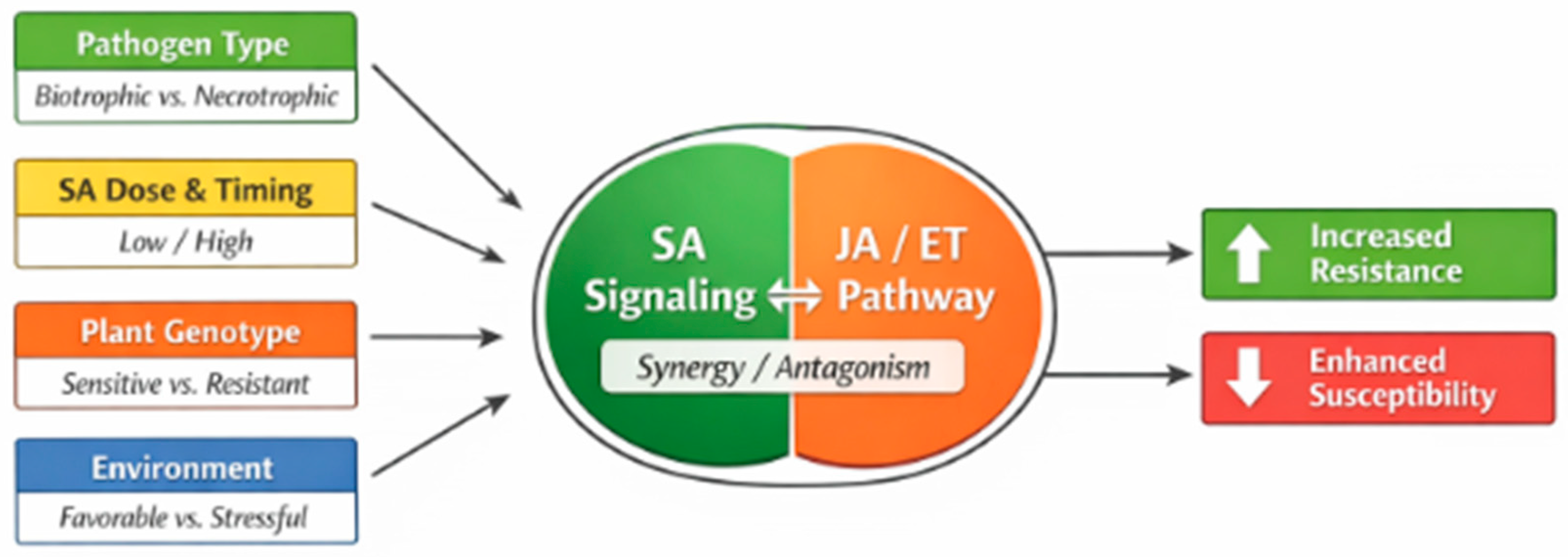
Based on the evidence summarized above, a conceptual framework can be proposed to predict the outcome of SA-mediated signaling in plant defense. The effectiveness of SA depends on the interaction between four major factors: (i) pathogen lifestyle, (ii) SA concentration and timing, (iii) plant genotype, and (iv) environmental conditions (Figure 1). In this framework, SA signaling is generally associated with enhanced resistance against biotrophic and hemibiotrophic pathogens, whereas it may suppress defense responses against necrotrophic pathogens through antagonistic interactions with the JA/ET pathway. Moderate and transient increases in SA typically promote defense priming, while excessive or prolonged accumulation may lead to metabolic costs and reduced stress tolerance. The model assumes that the final outcome of SA signaling results from the integration of these factors rather than from SA activity alone. Therefore, predictive assessment of SA effectiveness requires consideration of the biological context in which signaling occurs.

6. The Role of SA in the Regulation of Physiological Processes and Plant Tolerance to Abiotic Stress

Salicylic acid (SA) is an endogenous growth regulator that induces specific responses to abiotic stresses, leading to increased plant tolerance to adverse environmental conditions. It is associated with protecting plants against many stresses, e.g., soil salinity, cold, ultraviolet radiation, excess and deficiency of water, as well as reducing the negative effects of herbicides [74,75,76]. One of the basic mechanisms of the protective effect of SA is the strengthening of the plant’s antioxidant system. In addition to its physiological effects, SA also regulates the expression of stress-related genes and signaling pathways involved in antioxidant defense, osmotic regulation, and cellular redox balance, which together contribute to enhanced plant tolerance to abiotic stresses. SA affects the activity of antioxidant enzymes, resulting in reduced oxidative damage to cells under environmental stress. In addition, SA increases cell membrane permeability, facilitating the transport of minerals, including nitrates, by increasing nitrate reductase activity [77]. Exogenous application of SA in appropriate doses can also increase the rate of photosynthesis, among other mechanisms, by regulating stomatal activity and increasing the activity of carbonic anhydrase [62,74].
The level of endogenous SA in plant tissues varies greatly and depends on the species, plant organ and environmental conditions. Differences in SA content between species can reach up to two orders of magnitude [78]. For example, within the Solanaceae family, SA in tobacco remains at a low baseline level of <100 ng g−1, while in potatoes it can reach values of around 10 μg g−1 of total SA [79]. High SA contents have been reported, among others, in plants of the willow family, in rice, in the flowers of thermogenic plants, and in the tissues of plants infected by pathogens [78,80]. Most of the SA synthesized in plants occurs in conjugated forms, primarily as SA glucosides stored in vacuoles, and also as methyl salicylate, which acts as a volatile signal of acquired immunity [68,81].
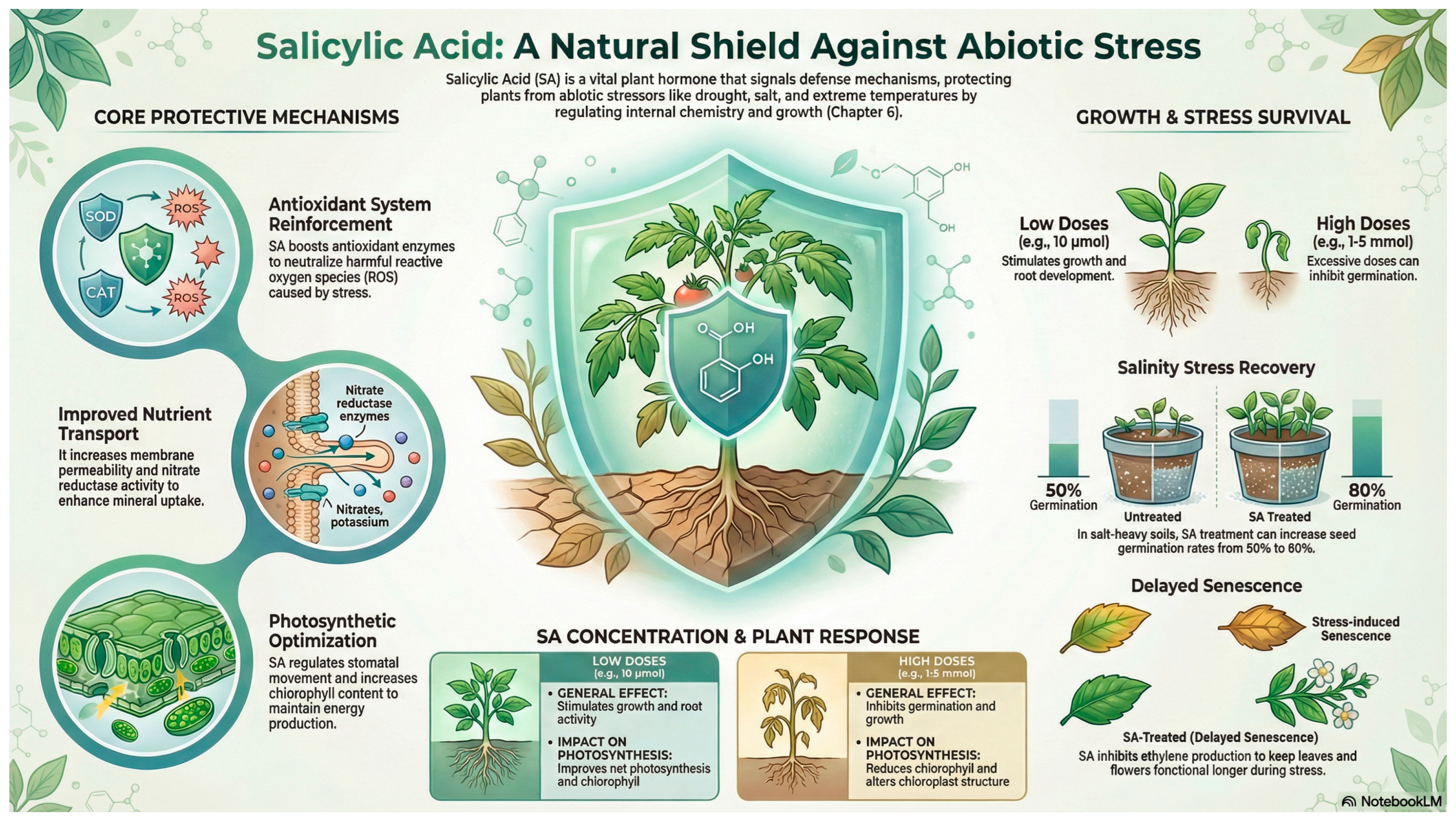
Salicylic acid affects many physiological processes in plants, but its effect is strongly dependent on concentration [82]. A review of studies conducted on various plant species indicates that low doses of SA (0.1–1.0 mM) significantly reduce the negative effects of environmental stresses such as salinity, drought, and extreme temperatures (Table 2) [83,84]. These effects are mainly due to the stabilization of the photosynthetic apparatus, the reduction in oxidative stress, as well as the improvement of the ion and water metabolism of plants [85]. The concentration-dependent effect of SA is already evident at the stage of seed germination and early seedling development. Low concentrations of exogenous SA improved the germination capacity of seeds and rooting of Arabidopsis thaliana seedlings [86], while high doses of SA inhibited seed germination in this species [87], as well as in barley [88] and maize [89]. Under salt stress conditions, only about 50% of Arabidopsis seeds germinated, while after applying a low concentration of SA (0.05–0.5 mM), the germination capacity increased to about 80% [87]. A similarly varied effect of SA is observed in relation to photosynthesis. High SA concentrations (1–5 mM) led to a decrease in photosynthetic rate in barley [90], changes in chloroplast structure [91], and a decrease in chlorophyll content in beans and wheat [92,93]. In contrast, treatment of plants with low doses of exogenous SA (10 μmol dm−3) resulted in an increase in net photosynthetic efficiency, increased photosynthetic enzyme activity and increased chlorophyll content in leaves [94]. Endogenous SA also participates in the regulation of stomatal movements, which is important for both water management and the innate immunity of plants [95]. Numerous studies also indicate the stimulating effect of low SA concentrations on plant growth and vegetative development. Such effects were observed in soybeans, where SA application promoted shoot and root growth by up to 45% [96], and in wheat, which produced larger ears and whose root meristems showed greater activity compared with the control [97]. The beneficial effects of SA have also been demonstrated in maize [98] and chamomile [99]. Salicylic acid also participates in the regulation of plant aging processes. In aging leaves, an increase in SA levels is observed, accompanied by increased oxidative stress and changes in gene expression [100]. At the same time, SA can delay the ageing of certain organs (flowers, roots), among other things by inhibiting the synthesis of ethylene and its precursor, 1-aminocyclopropane-1-carboxylic acid [101]. Studies on peppers have shown that SA delays leaf fall [29].
The beneficial protective effect of SA has also been confirmed under abiotic stress conditions. Under extremely high temperatures, SA spraying (1 mM) led to an increase in photosynthetic pigment content and a decrease in malondialdehyde (MDA), H2O2 and ROS levels in cucumber [111], while in grapevines it increased photosynthetic activity and improved the transport of minerals from the roots to the above-ground parts of the plants [112]. Under cold stress conditions, SA (0.1 mM) increased the tolerance of potatoes to low temperatures [114,115], and at a concentration of 0.5 mM, it enhanced antioxidant activity in bananas, accompanied by a decrease in ROS, MDA, and H2O2 levels and an improvement in the overall condition of the plants [113]. Positive effects of SA application were also observed under drought and salinity stress conditions. Application of SA at a concentration of 0.1 mM under soil water deficiency increased water use efficiency (WUE) and photosynthetic and enzymatic activity in tomatoes [102], while in peppers, SA (0.1–0.5 mM) reduced oxidative stress and increased proline accumulation [103]. Similar effects of SA were observed in cereals, including wheat [116] and maize [117]. Under salt stress conditions, exogenous SA limited the accumulation of Na+ and increased the content of Ca2+ and K+ in tissues, which had a beneficial effect on the vegetative and generative growth of garlic [118]. It also reduced Na+ toxicity in cucumber, promoting the maintenance of ionic balance in cells [119]. In turn, in soybean, the application of SA (1 mM) in combination with JA (0.5 mM) led to a significant increase in plant biomass, relative water content (RWC), leaf greenness index and seed yield, which highlights the potential for the practical use of SA under salt stress conditions [107]. The mechanism of action of SA in the context of increasing plant resistance to abiotic stresses is shown in Figure 2.
Abiotic stresses lead to excessive production of ROS, which can cause damage to lipids, proteins, nucleic acids, and photosynthetic structures. SA plays an important role in regulating oxidative balance by supporting the functioning of the enzymatic and non-enzymatic antioxidant system in plants. An efficient antioxidant system is one of the key elements increasing plant tolerance to environmental stresses [120].

7. The Role of SA in Response to Biotic Stresses

The first evidence of the possibility of inducing plant resistance through exogenous application of SA appeared in the late 1970s. White [121] showed that SA application led to the accumulation of PR proteins, which effectively reduced tobacco mosaic virus (TMV) infection in tobacco. The author concluded that the effect of SA is indirect and consists of inducing plant defense mechanisms rather than direct antiviral action. These results were confirmed in studies on cucumber, in which the application of SA or its derivatives (acetylsalicylic acid) induced SAR-type resistance to Pseudomonas syringae [122]. More recent reviews indicate that the effectiveness of SA-induced immunity against biotrophic pathogens results from the activation of SAR marker genes (including PR), regulated by the NPR-1 protein, and that the intensity of this response depends on the level of SA and its interaction with other phytohormones, especially JA [82]. The transcriptional response induced by SA is rapid and transient, reaching its maximum in the first hours after induction and then gradually declining. The dynamic nature of this response allows for the effective activation of SAR mechanisms while limiting long-term physiological costs [123].
The effectiveness of exogenous SA against fungal pathogens depends on environmental conditions, in particular pH. In acidic conditions, SA contributes to limiting the growth of Fusarium graminearum, while in a neutral environment its effect is negligible, and in alkaline conditions the pathogen can neutralize its effect [124]. Some fungal pathogens, e.g., Fusarium culmorum, increase the pH of the environment by producing metabolites (e.g., ammonia), which alkalize the substrate, weakening the effectiveness of SA. The concentration of SA also plays an important role in combating pathogens. Studies by Qi et al. [125] showed that SA at concentrations above 0.6 mM inhibited the germination of F. graminearum spores, and at concentrations above 1 mM caused rapid damage to the pathogen cells. At the same time, lower SA concentrations (0.4 mM) contributed to a reduction in virulence and a decrease in the content of deoxynivalenol (DON) in infected tissues. Similar phenomena were also observed in other fungal pathosystems, where moderate doses of SA did not eliminate the pathogen directly, but reduced its ability to colonize tissues and produce toxic metabolites, confirming the indirect, regulatory nature of SA in plant defense responses [82]. Studies on wheat have shown that both exogenous application of SA and overexpression of resistance-related genes (e.g., PR-1) increase plant tolerance to Fusarium head blight [126]. The plant response to SA is highly dependent on its concentration, which is related, among other things, to the regulation of NPR1 and NPR4 receptor activity [44]. The complexity of this mechanism is also confirmed by studies indicating the role of pH in the regulation of Tri gene expression, responsible for the synthesis of mycotoxins by F. graminearum [127].
The role of SA in inducing immunity is not universal for all groups of pathogens. SA is primarily associated with plant defense responses to biotrophic pathogens, known as obligate pathogens, whereas in the case of necrotrophic pathogens, signaling pathways based on JA and ET are more important. An example of the contextual role of SA is the interaction of wheat with the necrotrophic fungus Stagonospora nodorum, which produces the effector SnTox1. Studies conducted on cultivars with varying susceptibility showed that exogenous application of SA increased the area of necrosis and the accumulation of H2O2, accompanied by a decrease in catalase activity. Jasmonates and ethylene had the opposite effect, limiting disease development and enhancing the activity of antioxidant enzymes. These results indicate that SnTox1 may utilize the activation of the SA pathway to suppress the JA/ET response and increase plant susceptibility to the pathogen [128]. This phenomenon confirms that the effectiveness of SA-induced immunity depends on the type of pathogen and plant genotype, and in the case of necrotrophs, activation of the SA pathway may promote disease development. In many pathosystems, antagonistic interactions between the SA and JA/ET pathways are observed, although there are also plant mutants in which such antagonism does not occur [79,129,130]. For this reason, the results of studies on the effectiveness of exogenous SA application in controlling Fusarium head blight in wheat are inconclusive [131,132]. Li and Yen [133] showed that it is JA and ET that reduce the development of F. graminearum, and not SA as previously thought. Similarly, Rocheleau et al. [134] showed that the most resistant wheat cultivars had the lowest SA concentration. The timing of regulator application is also crucial. In the early stages of infection, SA-dependent reactions dominate, while in the later stages, JA and ET become more important [126,135]. However, it remains true that SA, JA, and ET induce plant resistance by influencing each other through synergistic or antagonistic interactions [65,130,136]. Examples of such relationships have been described, among others, in bacterial and viral pathosystems, where SA effectively limited the colonization of tissues by biotrophic pathogens, while the activation of the jasmonate pathway promoted their development [82].
Positive effects of SA application have been observed in various plant species. Spraying cucumber leaves with SA solution induced resistance to Colletrichum lagenarium, with the highest efficacy achieved when infection occurred 96 h after SA application and lower efficacy when the time was only 24 h, with a significant effect of the spraying method also demonstrated [137]. In turn, studies on kiwi fruit storage showed that delaying cooling of the fruit after harvest or applying SA activated natural defense mechanisms in the tissues, limiting the development of Botrytis cinerea [138]. It was found that immediate cooling increased the risk of pathogen development on the fruit. This effect was associated with an increase in the content of phenolic compounds and the activity of certain enzymes within the wound. Studies on tomato resistance have shown that SA plays an important role in regulating the activity of certain enzymes and controlling H2O2 levels during B. cinerea infection, and its deficiency led to disturbances in redox homeostasis and increased plant susceptibility to gray mold [139].
The exogenous application of SA to induce plant immunity faces certain limitations due to its low solubility in water (approx. 1.8 g L−1) [140]. Undissolved crystals hinder the treatment and limit the penetration of the substance into plant cells. In response to these problems, Woźnica and Heller [141] developed a soluble form of SA which, together with surfactants, has better physicochemical properties, better coverage and wetting of leaf surfaces, good permeability, and binding in plant cells. Field studies have shown that the application of SA solution to winter wheat plants increased the leaf greenness index and, in years with low rainfall, led to increased yields [142]. The effect of SA was particularly evident in years with unfavorable conditions for plant growth and yield. In other studies [143], the authors confirmed that appropriately selected doses of SA or its derivatives can reduce the infestation of wheat by selected fungal pathogens, including powdery mildew of cereals and grasses and Septoria leaf spot. In the case of Septoria, the split treatment proved to be more effective, while the effect was weaker under strong disease pressure. A tendency to reduce brown leaf spot was also observed. The effectiveness of the treatment was determined primarily by the concentration of SA, the timing of application, and weather conditions [143]. These studies confirm earlier reports indicating that the application of exogenous SA in cereal crops reduces infection by fungal pathogens [51].
Exogenous application of SA allows the activation of plant defense mechanisms without the need for primary infection, which enables the activation of the SAR pathway involving the NPR1 protein and the induction of PR protein gene expression [136,144]. The complexity of the interactions between the SA, JA, and ET signaling pathways means that the effectiveness of this approach depends on the plant species, the pathosystem, the dose of the compound and the timing of application. Despite these limitations, it is clear that a better understanding and practical use of plant resistance induction can contribute to reducing the use of chemical plant protection products and may constitute an important element of sustainable agricultural production systems.

8. Conclusions

Salicylic acid (SA) is one of the key regulators of plant defense responses, playing an important role in both biotic and abiotic stress responses. As demonstrated in this review article, this compound participates in the activation of local and systemic defense mechanisms, including SAR, by regulating signaling pathways, defense gene expression, and modulating the activity of proteins associated with pathogenesis. However, the importance of SA goes beyond the classical understanding of pathogen resistance. Its involvement in the regulation of plant physiological processes, such as photosynthesis, redox balance, antioxidant enzyme activity, tissue growth, and aging, indicates the multidimensional role of this compound in plant adaptation to environmental stress conditions. The interactions of SA with other phytohormones, in particular JA and ET, form a complex signaling network in which antagonistic and synergistic relationships determine the nature of the plant’s defense response depending on the type of stress and pathosystem.
A review of available studies indicates that the exogenous application of SA or its derivatives may be a promising tool for supporting the resistance of cultivated plants, especially under conditions of increasing environmental stress and growing disease pressure associated with climate change, as well as the need to reduce the use of chemical plant protection products. However, the effectiveness of this approach depends on many factors, including dosage, timing of application, formulation, and environmental conditions, which highlights the need for further integrated field research. A more detailed understanding of the mechanisms of action of SA and its role in regulating plant resistance and tolerance to biotic and abiotic stresses may contribute to the development of more sustainable agricultural production strategies. The use of natural resistance regulators, such as SA, offers a real opportunity to reduce the use of chemicals in agriculture while maintaining stable yields in changing environmental conditions.

Author Contributions

Conceptualization, P.K. and M.S.; writing—original draft preparation, P.K.; writing—review and editing, P.K. and M.S.; visualization, P.K.; supervision, M.S. All authors have read and agreed to the published version of the manuscript.

Funding

This research received no external funding.

Data Availability Statement

No new data were created or analyzed in this study. Data sharing is not applicable to this article.

Acknowledgments

During the preparation of this manuscript, the authors used NotebookLM (Google, version available as of 2026) for the purpose of generating a graphical schematic illustrating the role of salicylic acid in the regulation of plant growth, photosynthesis, and tolerance to abiotic stress. The author has reviewed and edited the output and takes full responsibility for the content of this publication.

Conflicts of Interest

Author Piotr Kostiw is the owner of the company Agri-Top Sp. z o.o. This article is a review paper and did not involve experimental research or external funding. The remaining authors declare that the research was conducted in the absence of any commercial or financial relationships that could be construed as a potential conflict of interest.

Abbreviations

The following abbreviations are used in this manuscript:
APXAscorbate peroxidase
CATCatalase
DONDeoxynivalenol
ETEthylene
ISRInduced systemic resistance
JAJasmonic acid
MDAMalondialdehyde
PGPRPlant growth-promoting rhizobacteria
PRPathogenesis-related proteins
ROSReactive oxygen species
RWCRelative water content
SASalicylic acid
SARSystemic acquired resistance
SODsuperoxide dismutase
SPADSoil–Plant Analysis Development (leaf greenness index)
WUEWater Use Efficiency

References

  1. Niks, R.E.; Qi, X.; Marcel, T.C. Quantitative Resistance to Biotrophic Filamentous Plant Pathogens: Concepts, Misconceptions, and Mechanisms. Annu. Rev. Phytopathol. 2015, 53, 445–470. [Google Scholar] [CrossRef]
  2. Corwin, J.A.; Kliebenstein, D.J. Quantitative resistance: More than just perception of a pathogen. Plant Cell Environ. 2017, 40, 735–745. [Google Scholar] [CrossRef]
  3. Deadman, M.L. Epidemiological consequences of plant disease resistance. In The Epidemiology of Plant Diseases; Jones, D.G., Ed.; Springer: Dordrecht, The Netherlands, 1998. [Google Scholar] [CrossRef]
  4. Bennett, F.G.A. Resistance to powdery mildews in wheat: A review of its use in agriculture and plant breeding programmes. Plant Pathol. 1984, 33, 279–300. [Google Scholar] [CrossRef]
  5. Van der Plank, J.E. Disease Resistance in Plants; Academic Press: New York, NY, USA, 1968; p. 206. Available online: https://openlibrary.org/books/OL5615267M/Disease_resistance_in_plants (accessed on 25 February 2026).
  6. Pilet-Nayel, M.-L.; Moury, B.; Caffier, V.; Montarry, J.; Kerlan, M.-C.; Fournet, S.; Durel, C.-E.; Delourme, R. Quantitative resistance to plant pathogens in pyramiding strategies for durable crop protection. Front. Plant Sci. 2017, 8, 1838. [Google Scholar] [CrossRef]
  7. Gilligan, C.A.; van den Bosch, F. Epidemiological models for invasion and persistence of pathogens. Annu. Rev. Phytopathol. 2008, 46, 385–418. [Google Scholar] [CrossRef]
  8. Brown, J.K.M. Durable resistance of crops to disease: A Darwinian perspective. Ann. Rev. Phytopathol. 2021, 59, 31–51. [Google Scholar] [CrossRef] [PubMed]
  9. Johnson, R. A critical analysis of durable resistance. Ann. Rev. Phytopathol. 1984, 22, 309–330. [Google Scholar] [CrossRef]
  10. Priestley, R.H. Detection of increased virulence in populations of wheat yellow rust. In Plant Disease Epidemiology; Scott, P.R., Bainbridge, A., Eds.; Blackwell: Oxford, UK, 1978; pp. 63–70. [Google Scholar]
  11. Guzman, N.J. Nature of partial resistance of certain clones of three Solanum species to Phytophthora infestans. Phytopathology 1964, 54, 1398–1404. [Google Scholar]
  12. Silva, M.d.C.; Guerra-Guimarães, L.; Diniz, I.; Loureiro, A.; Azinheira, H.; Pereira, A.P.; Tavares, S.; Batista, D.; Várzea, V. An Overview of the Mechanisms Involved in Coffee-Hemileia vastatrix Interactions: Plant and Pathogen Perspectives. Agronomy 2022, 12, 326. [Google Scholar] [CrossRef]
  13. Kong, G.A.; Simpson, G.B.; Kochman, J.K.; Brown, J.F. Components of quantitative resistance in sunflower to Alternaria helianthi. Ann. Appl. Biol. 1997, 130, 439–451. [Google Scholar] [CrossRef]
  14. Parry, D.W. Plant Pathology in Agriculture; Cambridge University Press: Cambridge, UK, 1990; p. 385. [Google Scholar]
  15. Wolfe, M.S. Trying to understand and control powdery mildew. Plant Pathol. 1984, 33, 451–466. [Google Scholar] [CrossRef]
  16. Jeger, M.J.; Jones, D.G.; Griffiths, E. Disease spread of non-specialised fungal pathogens from inoculated point sources in intraspecific mixed stands of cereal cultivars. Ann. Appl. Biol. 1983, 102, 237–244. [Google Scholar] [CrossRef]
  17. Garrett, K.A.; Mundt, C.C. Epidemiology in Mixed Host Populations. Phytopathology 1999, 89, 984–990. [Google Scholar] [CrossRef]
  18. Glazebrook, J.; Rogers, E.E.; Ausubel, F.M. Use of Arabidopsis for genetic dissection of plant defense responses. Ann. Rev. Genet. 1997, 31, 547–569. [Google Scholar] [CrossRef] [PubMed]
  19. Weaver, L.M.; Herrmann, K.M. Dynamics of the shikimate pathway in plants. Trends Plant Sci. 1997, 2, 346–351. [Google Scholar] [CrossRef]
  20. Regliński, T.; Newton, A.C.; Lyon, G.D. Assessment of yeast-derived resistance elicitors to control barley powdery mildew in the field. J. Plant Dis. Protect. 1994, 101, 1–10. [Google Scholar]
  21. Hervás, A.; Landa, B.; Jiménez-Díaz, R.M. Influence of Chickpea Genotype and Bacillus sp. on Protection from Fusarium Wilt by Seed Treatment with Nonpathogenic Fusarium oxysporum. Eur. J. Plant Pathol. 1997, 103, 631–642. [Google Scholar] [CrossRef]
  22. Calonnec, A.; Goyeau, H.; de Vallavielle-Pope, C. Effects of induced resistance on infection efficiency and sporulation of Puccinia striiformis on seedlings in varietal mixtures and on field epidemics in pure stands. Eur. J. Plant Pathol. 1996, 102, 733–741. [Google Scholar] [CrossRef]
  23. Lyon, G.D.; Newton, A.C. Do resistance elicitors offer new opportunities in integrated disease control strategies? Plant Pathol. 1997, 46, 636–641. [Google Scholar] [CrossRef]
  24. Ngugi, H. Epidemiology of sorghum antracnose (Colletotrichum sublineolum) and leaf blight (Exserohilum turcicum) in Kenya. Plant Pathol. 2000, 49, 129–140. [Google Scholar] [CrossRef]
  25. Roy, B.A.; Kirchner, J.W.; Christian, C.E.; Rose, L.E. High disease incidence and apparent disease tolerance in a North American Great Basin plant community. Evol. Ecol. 2000, 14, 421–438. [Google Scholar] [CrossRef]
  26. Simms, E.L.; Triplett, J. Costs and benefits of plant response to disease: Resistance and tolerance. Evolution 1994, 48, 1933–1945. [Google Scholar] [CrossRef]
  27. Zuckerman, E.; Eshel, A.; Eyal, Z. Physiological aspects related to tolerance of spring wheat cultivars to Septoria tritici blotch. Phytopathology 1997, 87, 60–65. [Google Scholar] [CrossRef]
  28. Alfano, J.R.; Colmer, A. Bacterial Pathogens in Plants: Life Up Against the Wall. Plant Cell 1996, 8, 1683–1698. [Google Scholar] [CrossRef]
  29. Raskin, I. Role of salicylic acid in plants. Ann. Rev. Plant Biol. 1992, 43, 439–463. [Google Scholar] [CrossRef]
  30. Durner, J.; Shah, J.; Klessig, D.F. Salicylic acid and disease resistance in plants. Trends Plant Sci. 1997, 2, 266–274. [Google Scholar] [CrossRef]
  31. Wobbe, K.K.; Klessig, D.F. Salicylic acid—An important signal in plants. In Plant Gene Research; Dennis, E.S., Ed.; Springer: Berlin/Heidelberg, Germany, 1996; pp. 167–196. [Google Scholar]
  32. Pospieszny, H. Nabyta odporność systemiczna roślin na patogeny-od nauki do praktyki. Post. Nauk Rol. 2000, 5, 27–42. (In Polish) [Google Scholar]
  33. Kalitkiewicz, A.; Kępczyńska, E. Wykorzystanie ryzobakterii do stymulacji wzrostu roślin. Biotechnologia 2008, 2, 102–114. (In Polish) [Google Scholar]
  34. Baldwin, I.T. Plant volatiles. Curr. Biol. 2010, 20, R392–R397. [Google Scholar] [CrossRef]
  35. Schaller, F.; Schaller, A.; Stintzi, A. Biosynthesis and metabolism of jasmonates. J. Plant Growth Regul. 2005, 23, 179–199. [Google Scholar] [CrossRef]
  36. Arimura, G.; Shiojiri, K.; Karban, R. Acquired immunity to herbivory and allelopathy caused by airborne plant emissions. Phytochemistry 2010, 71, 1642–1649. [Google Scholar] [CrossRef]
  37. Karban, R.; Shiojiri, K.; Ishizaki, S. An Air transfer experiment confirms the role of volatile cues in plant communication between plants. Am. Nat. 2010, 176, 381–384. [Google Scholar] [CrossRef]
  38. Frfy, S.; Carver, T.L.W. Induction of systemic resistance in pea to pea powdery mildew by exogenous application of salicylic acid. J. Phytopathol. 1998, 146, 239–245. [Google Scholar] [CrossRef]
  39. Smith-Becker, J.; Marois, E.; Huguet, E.J.; Midldand, S.L.; Sims, J.J.; Keen, N.T. Accumulation of salicylic acid and 4-hydroxybenzoic acid in phloem fluids of cucumber during systemic acquired resistance is preceded by a transient increase in phenylalanine ammonia-lyase activity in petioles and stems. Plant Physiol. 1998, 116, 231–238. [Google Scholar] [CrossRef]
  40. Gao, Q.M.; Zhu, S.F.; Kachroo, P.; Kachroo, A. Signal regulators of systemic acquired resistance. Front. Plant Sci. 2015, 6, 288. [Google Scholar] [CrossRef] [PubMed]
  41. Wenig, M.; Ghirardo, A.; Sales, J.H.; Pabst, E.S.; Breitenbach, H.H.; Antritter, F.; Weber, B.; Lange, B.; Lenk, M.; Cameron, R.K.; et al. Systemic acquired resistance networks amplify airborne defense cues. Nat. Commun. 2019, 10, 3813. [Google Scholar] [CrossRef] [PubMed]
  42. Zhou, J.M.; Zhang, Y.L. Plant immunity: Danger perception and signaling. Cell 2020, 181, 978–989. [Google Scholar] [CrossRef]
  43. Bajguz, A.; Czerpak, R. Rola kwasu salicylowego w odpowiedziach obronnych roślin na działanie patogenów. Kosmos 2001, 50, 49–59. (In Polish) [Google Scholar]
  44. Tian, H.; Xu, L.; Li, X.; Zhang, Y. Salicylic acid: The roles in plant immunity and crosstalk with other hormones. J. Integ. Plant Biol. 2025, 67, 773–785. [Google Scholar] [CrossRef]
  45. Byczkowski, B.; Macioszek, V.K.; Kononowicz, A.K. Roślinne białka PR w odpowiedzi obronnej na atak grzybów nekrotroficznych. Post. Biol. Kom. 2009, 36, 121–134. (In Polish) [Google Scholar]
  46. Cota, L.E.; Troncoso-Rojas, R.; Sotelo-Mundo, R.; Sanches-Estrada, A.; Tiznado-Hernandez, M.E. Chitinase and β-1,3-glucanase activities in response to infection by Alternaria alternata in tomato fruits. Sci. Hortic. 2007, 112, 42–50. [Google Scholar] [CrossRef]
  47. Xu, F.; Fan, C.; He, Y. Chitinases in Oryza sativa ssp. japonica and Arabidopsis thaliana. J. Genet. Genom. 2007, 34, 138–150. [Google Scholar] [CrossRef]
  48. Jami, S.K.; Anuradha, T.S.; Guruprasad, L.; Kirti, P.B. Molecular, biochemical, and structural characterization of osmotin-like protein from black nightshade (Solanum nigrum). J. Plant Physiol. 2007, 164, 238–252. [Google Scholar] [CrossRef]
  49. Menu-Bouaouiche, L.; Vriet, C.; Peumans, W.J.; Barre, A.; Van Damme, E.J.M.; Rouge, P. Molecular basis for endo-β-1,3-glucanase activity of thaumatin-like proteins from edible fruits. Biochimie 2003, 85, 123–131. [Google Scholar] [CrossRef]
  50. Worral, D.; Hird, D.L.; Hodge, R.; Paul, W.; Draper, J.; Scott, R. Premature dissolution of the microsporocyte callose wall causes male sterility in transgenic tobacco. Plant Cell 1994, 4, 759–771. [Google Scholar] [CrossRef]
  51. Jayaraj, J.; Muthukrishnan, S.; Liang, G.H.; Velazhahan, R. Jasmonic and salicylic acid induce accumulation β-1,3-glucanase and thaumatin-like proteins in wheat and enhance resistance against Stagonospora nodorum. Biol. Plant. 2004, 48, 425–430. [Google Scholar] [CrossRef]
  52. Wasternack, C. Jasmonates: An update on biosynthesis, signal transduction and action in plant stress response, growth and development. Ann. Bot. 2007, 100, 681–697. [Google Scholar] [CrossRef]
  53. Altenbach, S.B.; Kothari, K.M.; Tanaka, C.K.; Hurkman, W.J. Genes encoding the PR-4 protein, weatwin, are developmentally regulated in wheat grains and respond to high temperatures during grain fill. Plant Sci. 2007, 173, 135–143. [Google Scholar] [CrossRef]
  54. Aerts, A.M.; François, I.E.; Bammens, L.; Cammue, B.P.; Smets, B.; Winderick, X.J.; Accardo, S.; De Vos, D.E.; Thevissen, K. Level of M(IP)2C sphingolipid affects plant defensin sensitivity, oxidative stress resistance and chronological life-span in yeast. FEBS Lett. 2006, 580, 1903–1907. [Google Scholar] [CrossRef] [PubMed]
  55. Van der Weerden, L.; Lay, F.T.; Anderson, M.A. The plant defensin NaD1 enters the cytoplasm of Fusarium oxysporum hyphae. J. Biol. Chem. 2008, 283, 14445–14452. [Google Scholar] [CrossRef] [PubMed]
  56. Huffaker, A.; Ryan, C.A. Endogenous peptide defense signals in Arabidopsis differentially amplify signaling for the innate immune response. Plant Biol. 2007, 104, 10732–10736. [Google Scholar] [CrossRef]
  57. Oard, S.; Karki, B.; Enright, F. Is there a difference in metal-ion-based inhibition between members of the thionin family? A molecular dynamics simulation study. Biophys. Chem. 2007, 130, 65–75. [Google Scholar] [CrossRef]
  58. van Butselaar, T.; Van den Ackerveken, G. Salicylic acid steers the growth–immunity tradeoff. Trends Plant Sci. 2020, 25, 6. [Google Scholar] [CrossRef]
  59. Miura, K.; Tada, Y. Regulation of water, salinity, and cold stress responses by salicylic acid. Front. Plant Sci. 2014, 5, 4. [Google Scholar] [CrossRef]
  60. Xie, J.; Yang, F.; Xu, X.; Peng, Y.; Ji, H. Salicylic acid, jasmonate, and ethylene contribute to rice defense against white tip nematodes Aphelenchoides besseyi. Front. Plant Sci. 2022, 12, 755802. [Google Scholar] [CrossRef] [PubMed]
  61. Jankiewicz, N.S. (Ed.) Regulatory Wzrostu i Rozwoju; T1. Właściwości i działanie; PWN: Warszawa, Poland, 1997. (In Polish) [Google Scholar]
  62. Hayat, Q.; Hayat, S.; Irfan, M.; Ahmad, A. Effect of exogenous salicylic acid under changing environment: A review. Environ. Exp. Bot. 2010, 68, 14–25. [Google Scholar] [CrossRef]
  63. Yang, Y.X.; Ahammed, G.J.; Wu, C.; Fan, S.Y.; Zhou, Y.H. Crosstalk among jasmonate, salicylate and ethylene signaling pathways in plant disease and immune responses. Curr. Protein Pept. Sci. 2015, 16, 450–461. [Google Scholar] [CrossRef]
  64. Li, N.; Han, X.; Feng, D.; Yuan, D.; Huang, L. Signaling crosstalk between salicylic acid and ethylene/jasmonate in plant defense: Do we understand what they are whispering? Int. J. Mol. Sci. 2019, 20, 671. [Google Scholar] [CrossRef]
  65. Jang, G.; Yoon, Y.; Choi, Y.D. Crosstalk with jasmonic acid integrates multiple responses in plant development. Int. J. Mol. Sci. 2020, 21, 305. [Google Scholar] [CrossRef] [PubMed]
  66. Mur, L.A.J.; Kenton, P.; Atzorn, R.; Miersch, O.; Wasternack, C. The outcomes of concentration-specific interactions between salicylate and jasmonate signaling include synergy, antagonism, and oxidative stress leading to cell death. Plant Physiol. 2006, 140, 249–262. [Google Scholar] [CrossRef]
  67. Heil, M.; Ton, J. Long-distance signaling in plant defence. Trends Plant Sci. 2008, 13, 264–272. [Google Scholar] [CrossRef]
  68. Vlot, A.C.; Dempsey, D.M.A.; Klessig, D.F. Salicylic acid, a multifaceted hormone to combat disease. Ann. Rev. Phytopathol. 2009, 47, 177–206. [Google Scholar] [CrossRef] [PubMed]
  69. Świderski, M.; Świderska, A. Genetyczne podstawy odporności roślin. Biotechnologia 1999, 3, 36–44. (In Polish) [Google Scholar]
  70. Salinas, P.; Velozo, S.; Herrera-Vasquez, A. Salicylic acid accumulation: Emerging molecular players and novel perspectives on plant development and nutrition. J. Exp. Botany. 2025, 76, 1950–1969. [Google Scholar] [CrossRef]
  71. Powers, J.; Zhang, X.; Reyes, A.V.; Zavaliev, R.; Ochakovski, R.; Xu, S.L.; Dong, X. Next-generation mapping of the salicylic acid signaling hub and transcriptional cascade. Mol. Plant 2024, 17, 1558–1572. [Google Scholar] [CrossRef]
  72. Müller, J.; Scheuring, D. Salicylic acid: New pathways arising? Front. Plant Sci. 2025, 16, 1681791. [Google Scholar] [CrossRef]
  73. Khalid, M.F.; Shafqat, W.; Khan, R.I.; Jawaid, M.Z.; Hussain, S.; Saqib, M.; Rizwan, M.; Ahmed, T. Unveiling the resilience mechanism: Strigolactones as master regulators of plant responses to abiotic stresses. Plant Stress 2024, 12, 100490. [Google Scholar] [CrossRef]
  74. Hayat, Q.; Hayat, S.; Alyemeni, M.N.; Ahmad, A. Salicylic acid mediated changes in growth, photosynthesis, nitrogen metabolism and antioxidant defense system in Cicer arietinum L. Plant Soil Environ. 2012, 58, 417–423. [Google Scholar] [CrossRef]
  75. Hussain, K.; Nawaz, K.; Majeed, A.; Ilyas, U.; Finn, F.; Ali, K.; Nisar, M.F. Role of exogenous salicylic acid applications for salt tolerance in violet. Sarhad J. Agric. 2011, 27, 629–643. [Google Scholar]
  76. Patel, P.K.; Hemantaranjan, A.; Sarma, B.K. Effect of salicylic acid on growth and metabolism of chickpea (Cicer arietinum L.) under drought stress. Indian J. Plant Physiol. 2012, 17, 151–157. [Google Scholar]
  77. Hayat, S.; Ahmad, A. Salicylic Acid—A Plant Hormone; Springer-Verlag: New York, NY, USA, 2006. [Google Scholar] [CrossRef]
  78. Raskin, I. Salicylic acid. In Plant Hormones: Physiology, Biochemistry and Molecular Biology; Davies, P.J., Ed.; Kluwer Academic Publishers: Dordrecht, The Netherlands, 1995; pp. 188–205. [Google Scholar] [CrossRef]
  79. Navarre, D.A.; Mayo, D. Differential characteristics of salicylic acid-mediated signaling in potato. Physiol. Mol. Plant Pathol. 2004, 64, 179–188. [Google Scholar] [CrossRef]
  80. Hayat, S.; Fariduddin, Q.; Ali, B.; Ahmad, A. Effect of salicylic acid on growth and enzyme activities of wheat seedlings. Acta Agron. Hungar. 2005, 53, 433–437. [Google Scholar] [CrossRef]
  81. Song, J.T. Induction of a salicylic acid glucosyltransferase, AtSGT1, is an early disease response in Arabidopsis thaliana. Mol. Cells 2006, 22, 233–238. [Google Scholar] [CrossRef]
  82. Pandey, E.; Kumari, R.; Faizan, S.; Pandey, S. Linking the interaction of Salicylates and Jasmonates for stress resilience in plants. Stress Biol. 2025, 6, 64. [Google Scholar] [CrossRef]
  83. Cavalcante, I.E.; de Melo, A.S.; Ferraz, R.L.d.S.; de Alencar, R.S.; Dias, G.F.; Viana, P.M.d.O.; Rocha, M.M.; Ndhlala, A.R.; Sá, F.V.d.S.; de Lacerda, C.F.; et al. Salicylic acid improves cowpea productivity under water restriction in the field by modulating metabolism. Front. Plant Sci. 2024, 15, 1415682. [Google Scholar] [CrossRef]
  84. Sheuli, S.A.; Arafin, M.S.; Sultana, S.; Rabbi, M.A.; Ghosh, A. Exogenous salicylic acid, abscisic acid, and shikimic acid enhance drought tolerance in tea by modulating antioxidant defense and osmotic regulation. PLoS ONE 2025, 20, e0331456. [Google Scholar] [CrossRef] [PubMed]
  85. Chen, S.; Zhao, C.B.; Ren, R.M.; Jiang, J.H. Salicylic acid had the potential to enhance tolerance in horticultural crops against abiotic stress. Front. Plant Sci. 2023, 14, 1141918. [Google Scholar] [CrossRef]
  86. Alonso-Ramírez, A.; Rodríguez, D.; Reyes, D.; Jiménez, J.A.; Nicolás, G.; López-Climent, M.; Gómez-Cadenas, A.; Nicolás, C. Evidence for a role of gibberellins in salicylic acid-modulated early plant responses to abiotic stress in Arabidopsis seeds. Plant Physiol. 2009, 150, 1335–1344. [Google Scholar] [CrossRef] [PubMed]
  87. Rajjou, L.; Belghazi, M.; Huguet, R.; Robin, C.; Moreau, A.; Job, C.; Job, D. Proteomic investigation of the effect of salicylic acid on Arabidopsis seed germination and establishment of early defense mechanisms. Plant Physiol. 2006, 141, 910–923. [Google Scholar] [CrossRef]
  88. Xie, Z.; Zhang, Z.L.; Hanzlik, S.; Cook, E.; Shen, Q.J. Salicylic acid inhibits gibberellin-induced alpha-amylase expression and seed germination via a pathway involving an abscisic-acid inducible WRKY gene. Plant Mol. Biol. 2007, 64, 293–303. [Google Scholar] [CrossRef] [PubMed]
  89. Guan, L.; Scandalios, J.G. Developmentally related responses of maize catalase genes to salicylic acid. Proc. Natl. Acad. Sci. USA 1995, 92, 5930–5934. [Google Scholar] [CrossRef]
  90. Pancheva, T.V.; Popova, L.P.; Uzunova, A.N. Effects of salicylic acid on growth and photosynthesis in barley plants. J. Plant Physiol. 1996, 149, 57–63. [Google Scholar] [CrossRef]
  91. Uzunova, A.N.; Popova, L.P. Effect of salicylic acid on leaf anatomy and chloroplast ultrastructure of barley. Photosynthetica 2000, 38, 243–250. [Google Scholar] [CrossRef]
  92. Rao, M.V.; Paliyath, G.; Ormrod, D.P.; Murr, D.P.; Watkins, C.B. Influence of salicylic acid on H2O2 production, oxidative stress, and H2O2-metabolizing enzymes. Plant Physiol. 1997, 115, 137–149. [Google Scholar] [CrossRef]
  93. Chandra, A.; Bhatt, R.K. Biochemical and physiological response to salicylic acid in relation to systemic acquired resistance. Photosynthetica 1998, 35, 255–258. [Google Scholar] [CrossRef]
  94. Fariduddin, Q.; Hayat, S.; Ahmad, A. Salicylic acid influences net photosynthetic rate, carboxylation efficiency, nitrate reductase activity, and seed yield in Brassica juncea. Photosynthetica 2003, 41, 281–284. [Google Scholar] [CrossRef]
  95. Melotto, M.; Underwood, W.; Koczan, J.; Nomura, K.; He, S.Y. Plant stomata function in innate immunity against bacterial invasion. Cell 2006, 126, 969–980. [Google Scholar] [CrossRef] [PubMed]
  96. Gutiérrez-Coronado, M.A.; Trejo-López, C.; Larqué-Saavedra, A. Effects of salicylic acid on the growth of roots and shoots in soybean. Plant Physiol. Biochem. 1998, 36, 563–565. [Google Scholar] [CrossRef]
  97. Shakirova, F.M.; Sakhabutdinova, A.R.; Bezrukova, V.; Fatkhutdinova, R.A.; Fatkhutdinova, D.R. Changes in the hormonal status of wheat seedlings induced by salicylic acid and salinity. Plant Sci. 2003, 164, 317–322. [Google Scholar] [CrossRef]
  98. Gunes, A.; Inal, A.; Alpaslan, M.; Eraslan, F.; Guneri Bagci, E.; Cicek, N. Salicylic acid induced changes on some physiological parameters symptomatic for oxidative stress and mineral nutrition in maize (Zea mays L.) grown under salinity. J. Plant Physiol. 2007, 164, 728–736. [Google Scholar] [CrossRef]
  99. Kovácik, J.; Grúz, J.; Backor, M.; Strnad, M.; Repcák, M. Salicylic acid-induced changes to growth and phenolic metabolism in Matricaria chamomilla. Plant Cell Rep. 2009, 28, 135–143. [Google Scholar] [CrossRef]
  100. Morris, K.; Mackerness, S.A.H.; Page, T.; John, C.F.; Murphy, A.M.; Carr, J.P.; Buchanan-Wollaston, V. Salicylic acid has a role in regulating gene expression during leaf senescence. Plant J. 2000, 23, 677–685. [Google Scholar] [CrossRef] [PubMed]
  101. Li, N.; Parsons, B.L.; Liu, D.; Mattoo, A.K. Accumulation of wound-inducible ACC synthase transcript in tomato fruits is inhibited by salicylic acid and polyamines. Plant Mol. Biol. 1992, 18, 477–487. [Google Scholar] [CrossRef] [PubMed]
  102. Galviz, Y.C.; Bortolin, G.S.; Guidorizi, K.A.; Deuner, S.; Reolon, F.; de Moraes, D.M. Effectiveness of seed priming and soil drench with salicylic acid on tomato growth, physiological and biochemical responses to severe water deficit. J. Soil Sci. Plant Nutr. 2021, 21, 2364–2377. [Google Scholar] [CrossRef]
  103. Kaya, C. Nitrate reductase is required for salicylic acid-induced water stress tolerance of pepper by upraising the AsA-GSH pathway and glyoxalase system. Physiol. Plant 2021, 172, 351–370. [Google Scholar] [CrossRef]
  104. Melo, A.S.d.; Costa, R.R.d.; Sá, F.V.d.S.; Dias, G.F.; Alencar, R.S.d.; Viana, P.M.d.O.; Peixoto, T.D.C.; Suassuna, J.F.; Brito, M.E.B.; Ferraz, R.L.d.S.; et al. Modulation of Drought-Induced Stress in Cowpea Genotypes Using Exogenous Salicylic Acid. Plants 2024, 13, 634. [Google Scholar] [CrossRef]
  105. Rai, G.K.; Magotra, I.; Khanday, D.M.; Choudhary, S.M.; Bhatt, A.; Gupta, V.; Rai, P.K.; Kumar, P. Boosting Drought Tolerance in Tomatoes through Stimulatory Action of Salicylic Acid Imparted Antioxidant Defense Mechanisms. Agronomy 2024, 14, 1227. [Google Scholar] [CrossRef]
  106. Ali, E.; Hussain, S.; Jalal, F.; Khan, M.A.; Imtiaz, M.; Said, F.; Ismail, M.; Khan, S.; Ali, H.M.; Hatamleh, A.A.; et al. Salicylic acid-mitigates abiotic stress tolerance via altering defense mechanisms in Brassica napus (L.). Front. Plant Sci. 2023, 14, 1187260. [Google Scholar] [CrossRef]
  107. Ghassemi-Golezani, K.; Farhangi-Abriz, S. Foliar sprays of salicylic acid and jasmonic acid stimulate H+-ATPase activity of tonoplast, nutrient uptake and salt tolerance of soybean. Ecotoxicol. Environ. Saf. 2018, 166, 18–25. [Google Scholar] [CrossRef]
  108. Elhakem, A.H. Salicylic acid ameliorates salinity tolerance in maize by regulation of phytohormones and osmolytes. Plant Soil Environ. 2020, 66, 533–541. [Google Scholar] [CrossRef]
  109. Abdi, N.; Van Biljon, A.; Steyn, C.; Labuschagne, M.T. Salicylic Acid Improves Growth and Physiological Attributes and Salt Tolerance Differentially in Two Bread Wheat Cultivars. Plants 2022, 11, 1853. [Google Scholar] [CrossRef] [PubMed]
  110. Bouallegue, A.; Horchani, F.; Souissi, F.; Tebini, M.; Jalali, K.; Ahmed, H.B.; Abbes, Z.; Mhadhbi, H. Enhancement of plant growth in lentil (Lens culinaris) under salinity stress by exogenous application or seed priming with salicylic acid and hydrogen peroxide. PLoS ONE 2025, 20, e0326093. [Google Scholar] [CrossRef]
  111. Shi, Q.; Bao, Z.; Zhu, Z.; Ying, Q.; Qian, Q. Effects of different treatments of salicylic acid on heat tolerance, chlorophyll fluorescence, and antioxidant enzyme activity in seedlings of Cucumis sativa L. Plant Growth Regul. 2006, 48, 127–135. [Google Scholar] [CrossRef]
  112. Wang, L.J.; Fan, L.; Loescher, W.; Duan, W.; Liu, G.J.; Cheng, J.S.; Luo, H.B.; Li, S.H. Salicylic acid alleviates decreases in photosynthesis under heat stress and accelerates recovery in grapevine leaves. BMC Plant Biol. 2010, 10, 36. [Google Scholar] [CrossRef]
  113. Kang, G.; Wang, C.; Sun, G.; Wang, Z. Salicylic acid changes activities of H2O2-metabolizing enzymes and increases the chilling tolerance of banana seedlings. Environ. Exp. Bot. 2003, 50, 9–15. [Google Scholar] [CrossRef]
  114. Haider, M.W.; Abbas, S.M.; Hussain, T.; Akram, M.T.; Farooq, U.; Alwahibi, M.S.; Elshikh, M.S.; Shakeel, Z.; Nafees, M.; Rizwan, M.; et al. Assessment of salicylic acid and potassium nitrate to mitigate frost stress in autumn-sown potato crop cv. Sutlej. Sci. Rep. 2025, 15, 1942. [Google Scholar] [CrossRef]
  115. Mora-Herrera, M.E.; López-Delgado, H.; Castillo-Morales, A.; Foyer, C.H. Salicylic acid and H2O2 function by independent pathways in the induction of freezing tolerance in potato. Physiol. Plant 2005, 125, 430–440. [Google Scholar] [CrossRef]
  116. Ilyas, N.; Gull, R.; Mazhar, R.; Saeed, M.; Kanwal, S.S.; Bibi, F. Influence of salicylic acid and jasmonic acid on wheat under drought stress. Commun Soil Sci. Plant Anal. 2017, 48, 2715–2723. [Google Scholar] [CrossRef]
  117. Tayyab, N.; Naz, R.; Yasmin, H.; Nosheen, A.; Keyani, R.; Sajjad, M.; Hassan, M.N.; Roberts, T.H. Combined seed and foliar pre-treatments with exogenous methyl jasmonate and salicylic acid mitigate drought-induced stress in maize. PLoS ONE 2020, 15, e0232269. [Google Scholar] [CrossRef]
  118. Shama, A.M.; Moussa, S.; Abo-El-Fadel, N.I. Salicylic acid efficacy on resistance of garlic plants (Allium sativum L.) to water salinity stress on growth, yield and its quality. Alexand. Sci. Exch. J. 2016, 37, 165–174. [Google Scholar] [CrossRef]
  119. Yildirim, E.; Turan, M.; Guvenc, I. Effect of foliar salicylic acid applications on growth, chlorophyll, and mineral content of cucumber grown under salt stress. J. Plant Nutrit. 2008, 31, 593–612. [Google Scholar] [CrossRef]
  120. Mittler, R. Abiotic stress, the field environment and stress combination. Trends Plant Sci. 2006, 11, 15–19. [Google Scholar] [CrossRef]
  121. White, R.F. Acetylsalicylic acid (aspirin) induces resistance to tobacco mosaic virus in tobacco. Virology 1979, 99, 410–412. [Google Scholar] [CrossRef] [PubMed]
  122. Rasmussen, J.B.; Hammerschmidt, R.; Zook, M.N. Systemic induction of salicylic acid accumulation in cucumber after inoculation with Pseudomonas syringae pv syringae. Plant Physiol. 1991, 97, 1342–1347. [Google Scholar] [CrossRef] [PubMed]
  123. Stroud, E.A.; Jayaraman, J.; Templeton, M.D.; Rikkerink, E.H.A. Comparison of the pathway structures influencing the temporal response of salicylate and jasmonate defence hormones in Arabidopsis thaliana. Front. Plant Sci. 2022, 13, 952301. [Google Scholar] [CrossRef] [PubMed]
  124. Dodge, A.G.; Wackett, L.P. Metabolism of bismuth subsalicylate and intracellular accumulation of bismuth by Fusarium sp. strain BI. Appl. Environ. Microbiol. 2005, 71, 876–882. [Google Scholar] [CrossRef]
  125. Qi, P.F.; Johnston, A.; Balcerzak, M.; Rocheleau, H.; Harris, L.J.; Long, X.Y.; Wei, Y.M.; Zheng, Y.L.; Ouellet, T. Effect of salicylic acid on Fusarium graminearum, the major causal agent of fusarium head blight in wheat. Fungal Biol. 2012, 116, 413–426. [Google Scholar] [CrossRef]
  126. Makandar, R.; Nalam, V.; Chaturvedi, R.; Jeannotte, R.; Sparks, A.A.; Shah, J. Interaction between salicylic acid and jasmonate signaling in Arabidopsis interaction with Fusarium graminearum. Mol. Plant-Microbe Interact. 2010, 23, 861–870. [Google Scholar] [CrossRef]
  127. Merhej, J.; Richard-Forget, F.; Barreau, C. The pH regulatory factor Pac1 regulates Tri gene expression and trichothecene production in Fusarium graminearum. Fungal Genet. Biol. 2011, 48, 275–284. [Google Scholar] [CrossRef]
  128. Veselowa, S.; Nuzhnaya, T.; Maksimov, I. The Role of salicylic, jasmonic acid and ethylene in the development of the resistance/susceptibility of wheat to the SnTox1-producing isolate of the pathogenic fungus Stagonospora nodorum (Berk.). Plants 2024, 13, 2546. [Google Scholar] [CrossRef]
  129. Yang, J.; Duan, G.; Li, C.; Liu, L.; Han, G.; Zhang, Y.; Wang, C. The crosstalks between jasmonic acid and other plant hormone signaling highlight the involvement of jasmonic acid as a core component in plant response to biotic and abiotic stresses. Front. Plant Sci. 2019, 10, 1349. [Google Scholar] [CrossRef] [PubMed]
  130. Zhang, P.; Edan, J.; Li, X.; Zhang, Y. Salicylic acid and jasmonic acid in plant immunity. Hortic. Res. 2025, 12, uhaf082. [Google Scholar] [CrossRef]
  131. Makandar, R.; Essig, J.S.; Schapaugh, M.A.; Trick, H.N.; Shah, J. Genetically engineered resistance to Fusarium head blight in wheat by expression of Arabidopsis NPR1. Mol. Plant Microbe Interact. 2006, 19, 123–129. [Google Scholar] [CrossRef]
  132. Makandar, R.; Nalam, V.J.; Lee, H.; Trick, H.N.; Dong, Y.; Shah, J. Salicylic acid regulates basal resistance to Fusarium head blight in wheat. Mol. Plant-Microbe Interact. 2012, 25, 431–439. [Google Scholar] [CrossRef]
  133. Li, G.; Yen, Y. Jasmonate and ethylene signaling may mediate Fusarium head blight resistance in wheat. Crop Sci. 2008, 48, 1888–1896. [Google Scholar] [CrossRef]
  134. Rocheleau, H.J.; Zheng, W.; Gulden, S.; Xu, R.; Wang, L.; Ouellet, T. Comparative gene expression profiling of major phytohormone pathways during infection by Fusarium graminearum. In Proceedings of the 6th Canadian Workshop on Fusarium Head Blight, Ottawa, ON, Canada, 1–4 November 2009; Available online: https://www.researchgate.net/publication/284025750_Comparative_gene_expression_profiling_of_major_plant_hormone_pathways_during_infection_by_Fusarium_graminearum (accessed on 26 February 2026).
  135. Ding, L.; Xu, H.; Yi, Y.; Yang, L.; Kong, Z.; Zhang, L.; Xue, S.; Jia, H.; Ma, Z. Resistance to hemi-biotrophic Fusarium graminearum infection is associated with coordinated expression of defense signaling pathways. PLoS ONE 2011, 6, e19008. [Google Scholar] [CrossRef]
  136. Spoel, S.H.; Dong, X. Salicylic acid in plant immunity and beyond. Plant Cell 2024, 36, 1451–1464. [Google Scholar] [CrossRef]
  137. Mills, P.R.; Wood, R.K.S. Effects of polyacrylic acid, acetylsalicylic acid, and salicylic acid on cucumber resistance to Colletotrichum lagenarium. J. Phytopathol. 1984, 111, 209–216. [Google Scholar] [CrossRef]
  138. Poole, P.R.; McLeod, L.C. Development of resistance to storage root entry by Botrytis cinerea in kiwi fruit. N. Z. J. Crop Hortic. Sci. 1994, 22, 387–392. [Google Scholar] [CrossRef]
  139. Wang, Q.; Chen, X.; Chai, X.; Zheng, W.; Shi, Y.; Wang, A. The involvement of jasmonic acid, ethylene, and salicylic acid in the signaling pathway of Clonostachys rosea—Induced resistance to gray mold disease in tomato. Phytopathology 2019, 109, 1102–1114. [Google Scholar] [CrossRef] [PubMed]
  140. Wani, A.B.; Chadar, H.; Wani, A.H.; Singh, S.; Upadhyay, N. Saliclic acid to decrease plant stress. Environ. Chem. Lett. 2017, 15, 101–123. [Google Scholar] [CrossRef]
  141. Woźnica, Z.; Heller, K. Płynny Biostymulator Zwiększający Odporność Roślin Uprawnych na Warunki Stresowe. Patent 409229, 2014. [Google Scholar]
  142. Woźnica, Z.; Idziak, R.; Sawinska, Z.; Sobiech, Ł. Effect of salicylic acid on growth and grain yield of winter wheat. Przem. Chem. 2014, 4, 510–513. (In Polish) [Google Scholar] [CrossRef]
  143. Woźnica, Z.; Heller, K.; Idziak, R.; Sawinska, Z. Effect of salicylic acid on winter wheat infestation by fungal diseases. Prog. Plant Prot. 2016, 56, 62–66. (In Polish) [Google Scholar]
  144. Kumar, D. Salicylic acid signaling in disease resistance. Plant Sci. 2014, 228, 127–134. [Google Scholar] [CrossRef] [PubMed]
Figure 1. Conceptual model of SA-mediated plant resistance and SA-JA/ET crosstalk. The scheme illustrates the main factors determining the outcome of SA signaling, including pathogen type, SA dose and timing, plant genotype, and environmental conditions. The model highlights the context-dependent interaction between SA and JA/ET pathways, which may lead to enhanced resistance or increased susceptibility.
Agronomy 16 00785 g001
Figure 2. Schematic representation of the role of salicylic acid in the regulation of plant growth, photosynthesis, and abiotic stress tolerance. The diagram summarizes mechanisms described in the literature, including SA-mediated regulation of antioxidant activity, photosynthesis, and stress signaling pathways. The figure represents a conceptual synthesis prepared by the authors based on published studies. Figure was generated using NotebookLM (Google, version available as of 2026).
Agronomy 16 00785 g002
Table 1. Examples of horizontal and vertical resistance of crops to selected pathogens.
Resistance TypePlant SpeciesPathogen Resistance EffectSource
Horizontal potatoPhytophthora
infestans
Reduction in the number of lesions (by 50%) and sporulation (7-fold)[11]
Horizontal robusta coffeeHemileia
vastatrix
3-fold extension of the disease incubation period[12]
Horizontal sunflower Alternaria
helianthi
Smaller average size of disease spots[13]
VerticalpotatoPhytophthora
infestans
Breakdown of R1–R3 gene resistance [3]
Verticalbarley Monographella
nivalis
Decrease in the resistance of the Triumph cultivar to snow mould[14]
Vertical barleyBlumeria
graminis
Loss of resistance to powdery mildew in cultivars with the Mlg gene [15]
Table 2. Examples of agronomic studies on exogenous salicylic acid (SA) application in different crops.
Plant SpeciesStress TypeDose of SAMain Effect Reference
Tomato (Solanum lycopersicum)drought 0.1 mMincreased WUE, photosynthetic and enzymatic activity[102]
Pepper (Capsicum annuum)drought0.1–0.5 mMreduced oxidative stress, increased proline accumulation [103]
Cowpea (Vigna unguiculata)drought0.5 mMincreased SOD activity, decreased CAT activity, and increased biomass[104]
Tomato (S. lycopersicum) drought250 mg L−1increased activity of antioxidant enzymes (SOD, APX, CAT), and increased shoot and root weight[105]
Oilseed rape (Brassica napus)drought
salinity
50 µMimproved physiological and growth indices (e.g., MDA, antioxidants, proline, sugars) [106]
Soybean (Glycine max)salinity1 mMincreased plant biomass, RWC, SPAD index, and seed yield [107]
Wheat (Triticum aestivum)salinity increased root meristem activity and improved yield components[97]
Arabidopsis (Arabidopsis thaliana)salinity 0.05–0.5 mMIncreased root meristem activity and improved yield components[87]
Maize (Zea mays)salinity0.05 mMaccumulation of organic and inorganic osmolytes, regulation of phytohormones[108]
Wheat (Triticum aestivum)salinity0.5 mMincreased shoot and root growth, yield attributes, grain protein content, macro- and microelements[109]
Lentil (Lens culinaris)salinity0.1 mMenhanced shoot and root growth, increased physiological parameters (e.g., photosynthesis, chlorophyll, carotenoids) and growth indicators (MDA, antioxidants) [110]
Cucumber (Cucumis sativus)extremely high temperature1 mMincreased chlorophyll content, decreased MDA, H2O2 and ROS levels, improved plant growth[111]
Grapevines (Vitis vinifera)extremely high temperatures1 mMincreased photosynthetic activity and nutrient uptake[112]
Banana (Musa spp.)cold0.5 mMenhanced antioxidant activity, decreased ROS, MDA, and H2O2 levels[113]
Potato (S. tuberosum)cold0.5 mMincreased growth, yield, fluorescence, and biochemical indices[114]
Disclaimer/Publisher’s Note: The statements, opinions and data contained in all publications are solely those of the individual author(s) and contributor(s) and not of MDPI and/or the editor(s). MDPI and/or the editor(s) disclaim responsibility for any injury to people or property resulting from any ideas, methods, instructions or products referred to in the content.