

Article

Planting Date Influences on Growth, Yield and Nutrient Status of Fodder Radish Under Rainfed Conditions in South Africa


by
Lusanda Ncisana
1,2,*,
Ntuthuko Raphael Mkhize
3,
Sivuyisiwe Mvundlela
1,
Julius Tlou Tjelele
4,5,
Khuliso Emmanuel Ravhuhali
6,
Tafadzwa Mabhaudhi
1,7,
Patrick Ngwako Rakau
4,
Lwando Mbambalala
3,
Melvin Kudu Nyathi
8 and
Albert Thembinkosi Modi
9
1
Centre for Transformative Agricultural and Food Systems, School of Agricultural, Earth and Environmental Sciences, University of KwaZulu-Natal, P/Bag X01, Scottsville, Pietermaritzburg 3209, South Africa
2
Department of Mathematics, Science and Technology Education, University of Limpopo, Sovenga, Polokwane 0727, South Africa
3
Animal and Poultry Science, School of Agricultural, Earth and Environmental Sciences, University of KwaZulu-Natal, P/Bag X01, Scottsville, Pietermaritzburg 3209, South Africa
4
Animal Production, Agricultural Research Council, P/Bag X02, Irene 0062, South Africa
5
Department of Agriculture and Animal Health, University of South Africa, Roodepoort 1709, South Africa
6
Food Security and Safety Niche Area, Faculty of Natural and Agricultural Sciences, North-West University, Mmabatho, Mafikeng 2745, South Africa
7
Centre on Climate Change and Planetary Health, London School of Hygiene and Tropical Medicine, London WC1E 7HT, UK
8
Vegetables and Ornamental Plants (ARC-VOP), Agricultural Research Council, Private Bag X 293, Roodeplaat, Pretoria 0001, South Africa
9
Faculty of Natural Science, Walter Sisulu University, Mthatha 5099, South Africa
*
Author to whom correspondence should be addressed.
Agronomy 2026, 16(7), 759; https://doi.org/10.3390/agronomy16070759
Submission received: 24 February 2026 / Revised: 1 April 2026 / Accepted: 2 April 2026 / Published: 4 April 2026
(This article belongs to the Section Grassland and Pasture Science)

Abstract

Ranked 30th globally in dryness, South Africa faces severe challenges in ensuring fodder security, which is worsened by climate change impacts on agriculture. However, there is still limited knowledge about optimising fodder radish cultivation under shifting climatic conditions. This study investigated the effects of planting dates (December to March), cultivars (Nooitgedacht, Line 2 and Endurance) and seasons (2020/21 and 2021/22) on growth, yield, and crude protein (CP) and mineral concentrations under rainfed conditions. Seasonal variation significantly (p < 0.05) influenced emergence, relative growth, and flowering across planting dates. Fresh tuber yield was highest when Nooitgedacht was planted in December (2052 and 2102 kg ha−1). In contrast, January planting enhanced aboveground biomass and crude protein (CP) yield, with Endurance recording the highest biomass (1260 and 1157.95 kg ha−1 DM) and tuber CP yield (19.2 and 18 kg ha−1). December planting favoured tuber production, whereas January planting optimised biomass, CP yield, and persistence. Planting date and cultivar significantly affected leaf and tuber mineral concentrations. December–January plantings generally enhanced leaf P, K, and Zn concentrations. Endurance and Nooitgedacht accumulated higher micronutrients than Line 2, particularly under early planting. The late flowering of Endurance extended the grazing period, aligning with late-winter forage demand under rainfed conditions. Overall, this study offers practical guidance for improving the quantity and quality of fodder radish in diverse agricultural settings. Future work should evaluate these cultivars across more sites to confirm performance stability under variable rainfall patterns.

1. Introduction

South Africa is already ranked among the 30 driest countries in the world and faces increasing water scarcity as population growth intensifies competition among agriculture (particularly irrigation), industrial processing, and domestic consumption [1]. In rural areas, communal farmers rely heavily on livestock production, with national herds exceeding 12 million cattle, 20 million sheep, and 5 million goats [2]. Growing competition for water resources hinders progress toward Sustainable Development Goal 6 on clean water and sanitation and Goal 2 on zero hunger, as water scarcity limits agricultural productivity and threatens food security.
The growing demand for animal protein is expected to increase livestock numbers, yet productivity remains constrained by fodder insecurity [3]. Rising temperatures and the encroachment of woody species into tropical and subtropical grasslands further threaten the availability of quality forage, particularly for communal farmers who rely heavily on natural rangelands [4]. In South Africa, recurrent droughts have intensified forage scarcity, contributing to livestock mortality in several rural areas [5]. In this context, fodder radish (Raphanus sativus L.) has emerged as a valuable cover and forage crop in dry-land regions where rainfall is the primary water source, offering a promising alternative due to its rapid growth, high biomass production, and adaptability to variable water conditions, thereby enhancing fodder security in such farming systems. [6]. Fodder radish offers distinct advantages in such environments due to its quick growth, deep rooting system, and ability to improve soil structure and fertility [7,8,9,10].
Forage quality is influenced by factors such as anatomy, morphology, and chemical composition differences [11], but suitable crop management practices such as the adjustment of planting dates and fertiliser application, can effectively enhance the quality and quantity of crops [12]. Planting date is important in dry-land agriculture as it determines the crop’s exposure to rainfall and temperature variations during its growth cycle [13,14]. However, the changing climate might alter the optimum planting time for fodder radish. Therefore, selecting appropriate planting dates enhances the radish ability to establish, grow vigorously, and achieve optimal biomass production [15,16]. Optimum planting dates can considerably impact the development, emergence, vigour, and the attainment of optimal biomass productivity of fodder radish. According to Tully and Ryals [17], the duration of flowering and mineral accumulation is related to planting dates, which has significant consequences for the quality of fodder for grazing livestock.
Understanding how different fodder radish cultivars and planting dates interact under rainfed conditions can enhance resource use efficiency, forage quality, and soil health. This, in turn, supports resilient and productive agriculture in areas with limited water availability [18,19]. While Ncisana et al. [20] claimed that a nutritious diet or feed is essential for grazing livestock, supporting good health and optimising productivity. However, limited research has assessed how planting date influences the performance of recently developed fodder radish cultivars under rainfed conditions in South Africa. Understanding these responses is crucial for identifying optimal management practices to enhance fodder productivity and resilience in the country’s dry-land farming systems.
In a study exploring the impact of planting dates under irrigation on various fodder radish cultivars in Limpopo and Gauteng provinces [21], they explained that crops planted in March outyielded crops planted in February or April. Conversely, Atıs and Akar [22] reported lower biomass and CP yields with earlier planting dates. Additionally, Bellaloui et al. [23] and Bhardwaj et al. [24] discovered that earlier planting dates were associated with higher concentrations of nitrogen (N) and essential minerals such as phosphorus (P), potassium (K), calcium (Ca), magnesium (Mg), sodium (Na), and zinc (Zn).
Fodder radish is an important forage crop for improving feed availability and quality during dormant season. Although several cultivars have been evaluated under different environmental conditions, newly developed genotypes such as Endurance and Line 2 have not been scientifically assessed for their productivity, mineral accumulation, and crude protein yield under rainfed conditions. These genotypes were specifically bred for late flowering and high-quality fodder production in late winter [20], yet their agronomic performance and nutritional value across different planting dates remain unknown. Furthermore, climate variability and shifting seasonal rainfall patterns are increasingly affecting optimal planting windows, which may alter crop growth, yield, and nutrient composition. Currently, there is limited information on how planting date interacts with these new genotypes to influence biomass production and forage quality. Although several trials have examined fodder radish production under supplementary irrigation, reported biomass yields vary widely, typically ranging from approximately 5 to 15 t DM ha−1 depending on planting density and management practices. However, no studies in southern Africa including the KwaZulu-Natal Midlands have quantified yield and biomass benchmarks across planting dates under rainfed conditions without fertiliser application. Therefore, evaluating Endurance and Line 2 across different planting dates is essential to determine their suitability and to identify climate-resilient planting strategies that maximise fodder yield and nutritional value under rainfed conditions. It was hypothesised that March planting would enhance growth and yield due to best environmental conditions, especially moderate day temperatures and cooler nights, and this would allow plants to mature during cooler months and the early winter period, while January planting would improve mineral concentration, crude protein concentration, and crude protein yield, this can be attributed to enhanced soil microbial activity and nitrogen mineralisation under elevated temperatures, coupled with increased nutrient bioavailability and uptake efficiency. This study aimed to (i) evaluate the effect of planting date on growth, yield and nutrient quality of fodder radish cultivars, and (ii) identify optimal cultivar and planting date combinations for maximising biomass and CP yield under rainfed conditions.

2. Materials and Methods

2.1. Site Description

Field trials were conducted during the 2020/21 and 2021/22 growing seasons at the Department of Agriculture Research Institute, Cedara, under the Agricultural Research Council dry-land fields which are situated in the midlands of KwaZulu-Natal, South Africa (altitude 1076 m above sea level, 29°32′ S, 30°17′ E). The study site receives mean annual summer rainfall of 876 mm, with mean minimum and maximum temperatures of 14 °C and 25 °C, respectively. The soil at Cedara is characterised as deep, red and kaolinitic Hutton with a heavy clay loam texture, according to the Soil Classification Working Group [25]. The chemical properties are provided in (Table 1).

2.2. Plant Material

Seeds from the Agricultural Research Council-animal production institute (ARC-RFI), Cedara seedbank, South Africa were utilised in this study. This research assessed three cultivars: Endurance, Line 2 and Nooitgedacht. The Nooitgedacht, which is considered the most popular fodder radish cultivar in South Africa, is known for its large roots but has hairy, prickly leaves. Recently, the ARC-RFI developed two new dual-purpose cultivars, Endurance and Line 2, which feature soft leaves [20]. Unlike Nooitgedacht, Endurance and Line 2 offer greater leaf bulk and superior forage quality. Notably, Endurance and Nooitgedacht cultivars are already available on the market, while Line 2 is yet to be commercialised.

2.3. Trial Layout and Design

The experiment was conducted using a randomised complete block design with a split-plot treatment arrangement and three replications over two growing seasons (2020–2022). The study consisted of two experimental factors: planting date and cultivar. The main-plot factor was planting date, with four levels: 14 December, 14 January, 14 February, and 14 March. The sub-plot factor was cultivar, with three levels: Endurance, Line 2, and Nooitgedacht. Nooitgedacht is a commercially established cultivar and was included as the control for comparison with the newly developed genotypes Endurance and Line 2. The treatments were arranged in a factorial combination of four planting dates and three cultivars, resulting in twelve experimental variants per replication and a total of thirty-six experimental units across the three replications.
The experimental area measured 144 m2. Each sub-plot measured 6 m × 6 m (36 m2), with a 1 m buffer zone between adjacent plots to minimise edge effects. Plants were spaced at 0.5 m between rows and 0.5 m within rows, resulting in 12 plants per row and 144 plants per sub-plot, equivalent to a planting density of 40,000 plants per hectare. Each sub-plot consisted of six rows, of which the three central rows (18 m2) were used for data collection to avoid border effects. Figure 1 provides an overview of the meteorological conditions during the 2020/2021 and 2021/2022 growing seasons, with data from the Agricultural Research Council’s Cedara weather station.

2.4. Agronomic Practice and Data Collection

The site had been ploughed three years prior to this study and was sown with ryegrass in the intervening period. Before planting, the land was mechanically ploughed, disked, and rotovated. The chemical properties of the topsoil (0.3 m) are provided in (Table 1). No fertiliser was applied throughout the study to reflect the realities of smallholder dry-land farming, where limited access to inputs such as fertiliser and irrigation constrains production [26]. This approach ensured that crop performance was evaluated under conditions representative of actual smallholder farming practices in South Africa. The weeds were removed by hand before planting and during the experiment. Hand sowing took place at 1 cm depth. Emergence up to 10 days after planting was recorded. Data collection focused on middle-row plants to avoid border effects. Then, 12 plants per plot were marked with numbered plastic bands and used to measure plant height, leaf number, leaf length, width, leaf area. Fresh mass was measured by weighing the freshly harvested aboveground biomass (AGB), including leaves and stems from 18 m2 area. The samples were then oven-dried at 75 °C for 3–4 days or until a constant weight, after which the dry biomass was recorded. Plant height was measured from the soil surface to the tip of the fully developed leaf using a tape measure. Leaf area (LA) was determined using the equation (Equation (1)) suggested by Silva et al. [27], with leaf length and the width measured on the youngest fully developed leaf using a 30 cm ruler.
L A = C   ×   L   ×   f
where C = length, in cm; L = width, in cm; and f = correction factor for radish (0.57).
The relative growth rate, relative height rate, persistence, and the number of days to full flowering were also measured. Persistence was assessed by determining the number of fodder radish plants that remained alive and productive over a period of ninety days. The relative growth rate (RGR) (Equation (2)) and relative height rate (RHR).
R G R = ( ln M 2 ln M 1 ) t 2 t 1
where M1 and M2 represent initial and final biomass at times t1 and t2, respectively
R H R = ( ln H 2 ln H 1 ) t 2 t 1
where H1 and H2 represent the natural initial and final height at times t1 and t2, respectively.
The number of days to full flowering was recorded from the first day of planting to the full flowering in each plot.
Ninety days after planting, an 18 m2 area was excavated to harvest tubers for the measurement of tuber size and yield. Tuber length was measured with a 30 cm ruler, while tuber diameter was recorded using a digital vernier calliper. The aboveground biomass (AGB) was separated from tubers, and tubers were placed in labelled sampling bags and weighed to determine fresh mass. Tuber fresh plant material was dried at 75 °C for four days or until a constant weight was achieved. Yield was expressed as fresh and dry tuber weight (kg ha−1), with tuber yield per hectare calculated based on measurements from an 18 m2 area. Then, the above and belowground plant material was milled using a 1 mm sieve before chemical analysis. Milled samples were transferred into airtight sample bottles.

2.5. Mineral, Crude Protein and Crude Protein Yield

The mineral elements analysed included phosphorus (P), calcium (Ca), sodium (Na), magnesium (Mg), potassium (K), zinc (Zn), copper (Cu), manganese (Mn), iron (Fe) and aluminium (Al) [28]. Fodder radish leaves and tuber samples were dried at 75 °C for 3 to 4 days or until a constant weight, then milled to pass through a 1 mm sieve. Thereafter, subsamples weighing 0.5 g underwent dry ashing at 450 °C overnight, followed by dissolution in 25 mL of 1 M HCl. The resulting solutions were diluted fourfold with deionised water before the analysis of P, K, Ca, Mg, Na, Cu, Zn, Fe, Mn, and Al using ICP-OES (inductively coupled plasma optical emission spectroscopy). Total nitrogen, carbon, and sulfur were determined using an automated Dumas dry combustion method with a LECO TruMac CNS (LECO Corporation, St. Joseph, MI, USA; Matejovic) [29]. This involved weighing 0.125 g samples into a ceramic boat, adding a combustion catalyst (COM-CAT), and thoroughly mixing it with the sample. The boat was then placed into a horizontal furnace where the sample underwent combustion in an oxygen stream at 1350 °C. Nitrogen was measured (as N2) using a thermal conductivity cell. The crude protein (CP) content of the herbage was calculated by multiplying the Kjeldahl nitrogen (N) value by the standard factor 6.25 (CP = N × 6.25) using Kjeldahl method [30]. Then, the crude protein yield (CP yield) (kg ha−1) was determined by multiplying the dry mass of leaves and tubers by their respective CP concentrations as per Leon et al. [31].

2.6. Statistical Analysis

The normality and homogeneity of variances were assessed using the Kolmogorov–Smirnov and Levene’s tests, respectively and visualised with Q-Q plots. All parameters satisfied both assumptions, except for crude protein yield and relative growth rate (RGR), which deviated from normality and were successfully log10-transformed prior to analysis. The IBM SPSS statistical software (version 25; www.spss.com, accessed on 22 February 2024) was used to perform statistical analyses, including analysis of variance (ANOVA) using a univariate general linear model. Planting date and cultivar were treated as fixed factors, while block was included as a random factor. All measured variables were used in the ANOVA as dependent variables.
The data were analysed separately for each season. A two-way ANOVA was conducted to evaluate the effects of planting date and cultivar on various plant traits, including leaf dry weight, leaf number, plant height, leaf length, leaf width, leaf area, emergence, persistence, number of days to full flowering, tuber dry weight, tuber length, and tuber diameter, mineral, crude protein, crude protein yield, and biomass yield. The LSD post hoc test was applied for means comparison, and statistical significance was determined at p < 0.05.

3. Results

3.1. Growth and Phenology

For the 2020/21 season, there was no significant interaction between cultivar and planting date for seed emergence (p = 1.000), persistence (p = 0.999), relative growth rate (RGR) (p = 0.930) or relative height rate (RHR) (p = 1.000) and number of days to full flowering (p = 1.000). Cultivar had no significant effect on emergence (p = 1.000), persistence (p = 0.998), RGR (p = 0.997) or RHR (p = 1.000), but on the number of days to full flowering (p = 0.008). However, planting date significantly affected emergence (p = 0.003), persistence (p = 0.015), (RGR) (p = 0.001), (RHR) (p = 0.005) and days to full flowering (p = 0.001) (Table 2).
During the 2021/22 season, no significant interaction between cultivar and planting date was observed for emergence (p = 1.000), persistence (p = 0.999) RGR (p = 1.000) or RHR (p = 0.983), number of days to full flowering (p = 1.000). Cultivar had no significant effect on emergence (p = 1.000), RGR (p = 0.991) or RHR (p = 0.991), persistence (p = 0.999) but did on the number of days to full flowering (p = 0.017), while planting date significantly influenced all parameters.
Across cultivars, emergence reached 90% by day 6 (Table 2). December plantings generally achieved the highest RGR and RHR, while late (February–March) plantings reduced growth rates by up to 64%. Line 2 and Endurance maintained superior persistence, whereas Nooitgedacht showed earlier flowering and shorter stature.
In the first season, the interaction between cultivar and planting date had no significant effect on tuber length (p = 0.210), tuber diameter (p = 0.785), number of leaves (p = 0.075), leaf length (p = 0.798), leaf area (p = 0.588), leaf width (p = 0.488), or plant height (p = 0.785). The main effect of cultivar was significant only for the number of leaves (p = 0.040) and tuber diameter (p < 0.001), but not for tuber length (p = 0.354), leaf length (p = 0.840), leaf area (p = 0.469), leaf width (p = 0.398), or plant height (p = 0.177). In contrast, planting date had a significant (p < 0.05) effect on plant height, number of leaves, leaf length, and leaf area (Table 3).
Similarly, the second season (2021/2022) follows the previous season trend. The interaction between cultivar and planting date was also not significant for the tuber length (p = 0.311), tuber diameter (p = 0.822), number of leaves (p = 0.115), leaf length (p = 0.792), leaf area (p = 0.514), leaf width (p = 0.461), and plant height (p = 0.916). The effect of cultivar remained significant only for the number of leaves (p = 0.002) and tuber diameter (p < 0.001). Planting date again showed a highly significant effect (p < 0.001) on the number of leaves, leaf length, leaf area, and plant height. For, tubers, Endurance and Line 2 produced the largest diameters (Table 3).

3.2. Aboveground Biomass and Tuber Yield

For the 2020/21 season, there was no significant interaction observed between cultivar and planting date on aboveground biomass (AGB) (p = 1.000) and dry tuber yield (p = 0.66). While significant interaction between planting date and cultivar was observed for fresh tuber yield (p = 0.007). Cultivar had a significant effect on AGB (p = 0.001) and fresh tuber yield only (p = 0.038), whereas planting date significantly influenced all parameters (Table 4).
Similarly, in the 2021/22 season, a significant interaction between planting date and cultivar was observed for fresh tuber yield (p = 0.004), with no significant interaction found for dry tuber yield (p = 0.24) and AGB (p = 0.96). Cultivar significantly affected AGB (p = 0.003) and fresh tuber yield only (p = 0.014), while planting date significantly influenced all parameters (p < 0.05).
Endurance planted in January consistently produced the greatest AGB in both seasons. December plantings achieved the highest fresh tuber yields, while January plantings optimised dry tuber yields. In contrast, late plantings (February-March) reduced dry yield by up to 65%.

3.3. Mineral Concentration of Leaves and Tubers

For leaf, planting date significantly affected all measured mineral elements, except for P and Mg (Table 5). Cultivar did not influence Mg, Fe, and AL. For tubers, planting date significantly affected all mineral elements (Table 5). Cultivar did influence Mg, Zn, and Al. December–January plantings generally enhanced leaf P, K, and Zn concentrations, while later sowings increased Ca and Fe accumulation. Endurance and Nooitgedacht accumulated higher micronutrients than Line 2, particularly under early planting. In tubers, Line 2 planted in December recorded the highest P and Cu concentrations, while Endurance and Nooitgedacht had greater Ca and Fe under later sowings (Table 6).

3.4. Biomass and Crude Protein Yield

Both biomass and crude protein (CP) yield were significantly affected by planting date and cultivar interaction (p < 0.05). January plantings produced the highest biomass and CP yields across cultivars, with Endurance reaching 1157 kg ha−1 DM and 326 kg ha−1 CP. February plantings consistently produced the lowest values (Table 7).

4. Discussion

4.1. Growth and Phenology

Achieving high emergence is critical in forage production, as it determines stand establishment and ultimately influences yield potential. Contrary to our hypothesis that March planting would enhance growth metrics and yield across all cultivars, neither planting date nor cultivar significantly affected emergence (Table 2). Again, opposite to our study results, Ladumor et al. [32] observed a decreasing trend in seed emergence as planting dates are delayed. Additionally, Kaur and Singh [33] reported variations in the germination of different radish cultivars, while other studies [21,31,32] noted differences in time to emergence across fodder radish cultivars. However, our study results are in agreement with those of Husnain et al. [34], which revealed no effect of cultivar on the germination. A possible explanation for the consistently high emergence in this study could be the sufficient soil moisture levels available across all four planting dates, ensuring optimal conditions for emergence regardless of planting time or cultivar.
In addition, the results for RGR and flowering did not align with our hypothesis that planting in March would improve growth metrics and yield across all cultivars. Cultivars planted in December showed higher RGR (with the exception of Endurance in 2020/2021, which showed higher RGR in January). Relative height rate and tuber length partially agreeing with our hypothesis as a result of mixed responses of cultivars in line with planting date in both seasons. In contrast, Line 2 and Endurance, planted in March displayed greater tuber diameters and higher persistence values. December plantings, which received more rainfall, supported higher RGR, consistent with the findings of Stagnari et al. [35] and Ncisana et al. [36], who reported an increase in RGR under well-watered radish plots. Similarly, Silva et al. [37] observed that water-stress treatments in Salvia hispanica L. negatively affected growth metrics, including RGR, while Galmes et al. [38] noted the reduction in RGR under water-stressed conditions linked to leaf senescence and a decrease in leaf area index [39]. This suggests that correct planting date together with better selection of cultivars for rainfed conditions is ideal for optimizing the yield of these particular fodder crops.
All planting dates for Endurance and Line 2 resulted in a longer period for plants to reach full flowering than other planting dates (210 and 200 days, respectively). This is likely due to the higher soil moisture levels delaying the transition from vegetative to reproductive growth. These findings are consistent with Ncisana et al. [36], who observed that water-stressed fodder radish plants reached full flowering earlier than well-watered plants. On the contrary, Ngoasheng [21] claimed that planting fodder radish before February could lead to earlier flowering. This suggests that soil moisture is critical in determining full flowering time in most of the crops, with higher moisture concentration leading to a longer flowering period, as seen on Endurance and Line 2 during rainy months of December and January planting dates.
Line 2 planted in March showed longer tuber lengths compared to Endurance and Nooitgedacht in the same planting date. These findings align with those of Ngoasheng [21] but contradict with those of Kaur and Singh [33]. Differences were observed in the number of days to full flowering, with Endurance taking thirty-nine days longer to flower than Nooitgedacht. This outcome aligns with expectations, as Endurance and Line 2 were specifically bred for late flowering, providing high-quality forage later in the season for grazing livestock [20]. Nonetheless, these results contrast with the findings of Husnain et al. [34], who did not observe any effect of cultivar on flowering time.
The results of this study partially supported the hypothesis that planting in March would improve the growth metrics of all cultivars. For instance, in the second season, March planting resulted in higher values for the leaf length and leaf width compared to other planting dates for Line 2 and Nooitgedacht. Again, the tuber length and diameter were higher in March Line 2 in both seasons. These current study findings align with Ngoasheng [21]; meanwhile, on the contrary, Kaur & Singh [33] observed larger tubers with earlier planting dates. Specifically, cultivar height improved in March planting. Studies by Soltanbeigi et al. [40] and Kaur & Singh [33] have shown that planting date and environmental conditions significantly influenced crop height, consistent with our findings. The cooler temperatures likely contributed to this improvement. This can be attributed to the fact that fodder radish thrives in optimal maximum temperatures ranging from 18 °C to 24 °C, making the cooler conditions ideal for growth. Among the cultivars, Nooitgedacht produced more leaves, whereas Line 2 planted in March produced larger tuber diameter in both seasons. This variability aligns with previous studies [21,22,23,24,25,26,27,28,29,30,31,32,41], which attributed the differences to genetic variation and potential of certain crops under different climatic conditions.

4.2. Biomass and Tuber Yields

The January planting date excluding Nooitgedacht produced the highest aboveground biomass. Endurance consistently achieved the highest aboveground biomass. Additionally, this planting period resulted in the highest values for leaf number, leaf length, leaf width and leaf area contributing to increased photosynthetic capacity and biomass production. This is likely due to the favourable combination of sufficient soil moisture and cooler temperatures, as evidenced by Abbus et al. [42], who noted that higher temperatures can negatively impact plant growth and development. The results of the current study are inconsistent with those of Ngoasheng [21], who found that early autumn planting season (March) produced better results than wet season (February) in South Africa. However, Panwar et al. [41] reported that wet season in July planting performed best in India, likely due to the different climatic conditions and the waterlogged tolerance of the cultivars studied during their rainy season.
In terms of fresh tuber yield, both cultivar and the planting date significantly influenced outcomes. While Ngoasheng [21] found that March planting produced more tubers, our study results revealed that December (Line 2 and Nooitgedadt for both seasons) and January (Endurance for both seasons) planting produced the highest fresh tuber yield. January planting yielded the highest dry tuber yield across cultivars and seasons, likely due to the high rainfall received in December, which provided optimal soil moisture. Similarly, Kaur and Singh [33] observed higher yields with earlier planting dates, noting that delayed planting reduced overall yield.

4.3. Nutritional Quality

Our second hypothesis that planting in January would enhance mineral accumulation, CP concentration and CP yield across all cultivars was partially supported. Mineral accumulation showed variation, with December and January plantings yielding higher mineral and CP values, and the CP yield supported the hypothesis.
The planting date significantly affected the concentrations of all minerals in tubers, whereas only Ca, K, Zn, Mn, Cu, Fe, and Al were affected by planting date in leaves. These effects varied among cultivars, with some showing higher levels of specific minerals while others showed reduced levels. Previous studies by Bellaloui et al. [23] and Bhardwaj et al. [24] also found that early planting dates were associated with increased concentrations of minerals (P, K, S, Ca, Mg, Mn, Cu, Zn, and B). Our findings partially align with these results. For instance, the cultivar Nooitgedacht, planted in January and December had the highest levels of P in its leaves, while Endurance planted in January, February and March demonstrated the highest concentrations of Ca. This may be due to the higher rainfall during these months, which supported better nutrient uptake. However, the findings of Ncisana et al. [20] contrast with the present study’s results. They reported that none of the mineral concentrations improved in Endurance under well-watered conditions, while micronutrients such as Zn and Ca were higher under water-stressed conditions. Additionally, for Line 2, Fe, Mg, and Al levels increased under stress.
A similar pattern was observed in tubers, with the December and January plantings having better mineral accumulation. For example, Line 2, planted in December, had the highest P and Cu levels in its tubers, while Nooitgedacht planted in January had the highest levels of Fe and Al. This aligns with Krizek and Foy [43], who observed high Al concentrations under well-watered conditions. Ncisana et al. [20] found Fe and copper increased under water-stressed conditions. The higher rainfall in December and January (Figure 1) could explain these results, as adequate soil moisture supports nutrient availability and uptake. This highlights the strength of each cultivar in acquiring and conserving little resources from soil, especially during harsh conditions for optimal growth.
Fodder radish cultivars showed significant variation in mineral concentration, likely due to genetic factors. Understanding these differences is critical for selecting cultivars that thrive under different soil moisture levels and can meet specific nutritional requirements in livestock farming. Across all planting dates and cultivars, the mineral concentration in leaves and fodder radish tubers met the minimum requirements for various livestock classes and production levels.
The forage, specifically the leaves, of fodder radish cultivars offers a relatively high CP concentration (ranging from 132 to 267 g/kg DM), making it an excellent alternative protein for ruminants [44,45]. Nyathi et al. [46] noted that nutritional yield is determined by both nutritional composition and the amount of edible biomass; while “nutritional yield” is a relatively uncommon term in forage production, biomass and CP concentration are critical, as biomass determines feed quantity and CP affects nutritional quality. Balancing these factors is crucial for achieving optimal livestock performance by ensuring rumen fill and high-quality forage intake. Our second hypothesis, which proposed that planting in January would enhance CP concentration and CP yield across all cultivars, was partially supported by the leaves and fully supported by the tubers. For example, Nooitgedacht planted in December showed the highest CP levels in its leaves; however, this was not significantly different from the levels observed in the cultivar Endurance. Meanwhile, tubers for Line 2 and Nooitgedacht planted in December, January and February had higher values, with the March planting date having the lowest CP values in all the cultivars. The lower CP concentrations observed in March may be attributed to limited soil moisture. Kanda et al. [47] supported these findings, noting reduced protein concentration under increased water deficit. Similarly, Ncisana et al. [20] found higher CP levels under well-watered conditions and reduced concentrations under severe water-stressed conditions. Leon et al. [31] observed that Pueraria phaseoloides had the highest CP concentration in Trinidad and Tobago during the early dry and wet seasons, likely due to greater rainfall and soil moisture retention. In contrast, Atis and Akar [22] reported lower protein concentration with earlier planting dates.
Nematpour et al. [12] found that early and late planting dates could improve forage quantity and quality, similar to our study findings. This study observed the highest biomass and CP yield in the January planting date, which is an early planting date, with Endurance outperforming Line 2 and Nooitgedacht on the planting date. This contrasts with Atis and Akar [22], who reported lower biomass and CP yield with early planting. However, Salama et al. [48] supported our results, showing that some forage genotypes had higher biomass when planted early. The higher biomass and CP yield in January compared to the optimal planting date of March may be due to the increased rainfall during December and January (Figure 1). Kanda et al. [47] also observed higher protein yield under wet conditions, which aligns with our findings. The higher biomass in January was directly linked to increased CP yield, supporting Leon et al. [31], who found that high CP yield in P. phaseoloides during the late wet season was due to increased biomass production.

4.4. Synthesis and On-Farm Guidance

Overall, the results show that rainfall timing and seasonal temperature conditions are more critical than total rainfall for fodder radish establishment and productivity under rainfed conditions. Early plantings (December–January) achieved higher biomass, tuber yield, and nutritional quality, while later plantings (March) improved persistence and tuber diameter under lower moisture. Endurance and Line 2 performed best in terms of biomass and CP yield, whereas Nooitgedacht excelled in leaf production and P concentration.
For smallholder farmers in the Midland of KwaZulu-Natal, South Africa, planting between mid-December and late-January is recommended to optimise both yield and nutritional value, particularly in seasons with early rainfall onset. March planting can still provide acceptable yields under late or reduced rainfall, offering flexibility within variable rainfed systems.

5. Conclusions and Implications

This study demonstrates that planting date is a key management factor influencing the productivity, nutritional quality, and developmental patterns of fodder radish under rainfed conditions. Earlier planting improved overall forage value by enhancing biomass accumulation, crude protein yield, and mineral content, highlighting the importance of aligning crop establishment with favourable environmental conditions to maximise resource use efficiency. The superior performance of the newly developed genotypes, particularly Endurance, confirms their suitability for high-quality forage production and their potential contribution to improving feed availability during critical seasonal periods. The observed variation in flowering response among cultivars further emphasises the role of genotype in adapting to environmental cues, which is important for optimising forage utilisation and crop management. These findings provide important insights for developing climate-resilient planting strategies and demonstrate the value of selecting appropriate genotype and planting time combinations to enhance fodder production, nutritional quality, and overall system sustainability under variable rainfed environments.

6. Limitations and Future Work

This study was conducted at a single site over two seasons under rainfed conditions and without fertiliser application, which may limit the generalisation of the results across different environments. Future research should therefore include multi-location and multi-season trials that capture varying rainfall patterns, soil water content, soil types, soil physical properties, including field capacity and permanent wilting point and management practices to strengthen the understanding of fodder radish performance under diverse rainfed systems.

Author Contributions

L.N.: Writing—original draft, review and editing; methodology; investigation; funding acquisition; formal analysis; data curation; conceptualisation. N.R.M.: Writing—review and editing; supervision; funding acquisition; conceptualisation. S.M.: Review and editing; resources; methodology. J.T.T.: Writing—review and editing; supervision; resources; methodology; funding acquisition; conceptualisation. K.E.R.: Writing—review and editing; resources; methodology; conceptualisation. T.M.: Writing—review and editing; supervision; conceptualisation. P.N.R.: Review and editing; resources; methodology. L.M.: Review and editing; methodology. M.K.N.: Writing—review and editing; supervision; methodology; conceptualisation. A.T.M.: Writing—review and editing; supervision; methodology; conceptualisation. All authors have read and agreed to the published version of the manuscript.

Funding

This research received funding from Agricultural Research Council and National Research Foundation of South Africa.

Institutional Review Board Statement

An ethical approval was obtained from the Agricultural Research Council of South Africa animal ethics committee (approval number: APAEC [2019/27]).

Informed Consent Statement

Not applicable.

Data Availability Statement

The original contributions presented in this study are included in the article. Further inquiries can be directed to the corresponding author.

Acknowledgments

Special acknowledgement is extended to employees of the Agricultural Research Council, Forage Unit, Cedara in South Africa for their valuable assistance in data collection. We would also like to recognise Dave Goodenough and Alan Stewart for their significant contributions to breeding Endurance and Line 2 genotypes.

Conflicts of Interest

The authors declare no competing interests.

References

  1. Plessis, A.D. Water as an Inescapable Risk; Springer International Publishing: New York, NY, USA, 2019. [Google Scholar]
  2. Department of Agriculture, Land Reform and Rural Development of Republic of South Africa. Newsletter: National Livestock Statistics; Department of Agriculture, Land Reform and Rural Development of Republic of South Africa: Pretoria, South Africa, 2023. [Google Scholar]
  3. Erdaw, M.M. Contribution, prospects and trends of livestock production in sub-Saharan Africa: A review. Int. J. Agric. Sustain. 2023, 21, 2247776. [Google Scholar] [CrossRef]
  4. Ncisana, L.; Mkhize, N.R.; Scogings, P.F. Warming promotes growth of seedlings of a woody encroacher in grassland dominated by C4 species. Afr. J. Range Forage Sci. 2022, 39, 272–280. [Google Scholar] [CrossRef]
  5. Vetter, S.; Goodall, V.L.; Alcock, R. Effect of drought on communal livestock farmers in KwaZulu-Natal, South Africa. Afr. J. Range Forage Sci. 2020, 37, 93–106. [Google Scholar] [CrossRef]
  6. Tsytsiura, Y. Potential of oilseed radish (Raphanus sativus l. var. oleiformis Pers.) as a multi-service cover crop (MSCC). Agron. Res. 2024, 22, 1026–1070. [Google Scholar]
  7. Wang, F.; Li, W.; Gao, Y.; Zhu, L.; Chen, H.; Yang, L.; Weil, R.R.; Wang, T.; Nan, X. Radish cover crop and manure alter organic carbon characteristics and improve soil physicochemical properties as well as wolfberry yields. Agric. Ecosyst. Environ. 2024, 371, 109097. [Google Scholar] [CrossRef]
  8. Wang, F.; Li, W.H.; Chen, H.N.; Weil, R.R.; Zhu, L.Z.; Nan, X.X. Forage radish cover crops improve soil quality and fruit yield of Lycium barbarum L. in an arid area of Northwest China. Agronomy 2023, 13, 1634. [Google Scholar] [CrossRef]
  9. Wang, W.; Li, M.Y.; Zhou, R.; Zhu, S.G.; Tao, H.Y.; Khan, A.; Uzamurera, A.G.; Wang, B.Z.; Jin, J.M.; Ma, Y.; et al. Effects of interspecific interactions on soil carbon emission and efficiency in the semiarid intercropping systems. Soil Tillage Res. 2023, 234, 105857. [Google Scholar] [CrossRef]
  10. Pescatore, A.; Delgado, A.; Orlandini, S.; Napoli, M. Unveiling the impact of tillage radish on soil chemical, biological, and physical soil properties under reduced and conventional tillage. Soil Tillage Res. 2025, 253, 106676. [Google Scholar] [CrossRef]
  11. Xu, L.; Tang, G.; Wu, D.; Zhang, J. Yield and nutrient composition of forage crops and their effects on soil characteristics of winter fallow paddy in South China. Front. Plant Sci. 2024, 14, 1292114. [Google Scholar] [CrossRef]
  12. Nematpour, A.; Eshghizadeh, H.R.; Zahedi, M.; Ghorbani, G.R. Millet forage yield and silage quality as affected by water and nitrogen application at different sowing dates. Grass Forage Sci. 2020, 75, 169–180. [Google Scholar] [CrossRef]
  13. Feleke, H.G.; Amdie, T.A.; Rasche, F.; Mersha, S.Y.; Brandt, C. Climate on the edge: Impacts and adaptation in Ethiopia’s agriculture. Sustainability 2025, 17, 5119. [Google Scholar] [CrossRef]
  14. Liliane, T.N.; Charles, M.S. Factors affecting yield of crops. In Agronomy-Climate Change & Food Security; Intech Open: London, UK, 2020. [Google Scholar]
  15. Teasdale, J.R.; Brandsaeter, L.O.; Calegari, A.; Skora Neto, F. Cover crops and weed management. In Non-Chemical Weed Management: Principles, Concepts and Technology; Upadhyaya, M.K., Blackshaw, R.E., Eds.; CABI: Wallingford, UK, 2007; pp. 49–64. [Google Scholar]
  16. Bybee-Finley, K.A.; Cordeau, S.; Yvoz, S.; Mirsky, S.B.; Ryan, M.R. Finding the right mix: A framework for selecting seeding rates for cover crop mixtures. Ecol. Appl. 2022, 32, e02484. [Google Scholar] [CrossRef] [PubMed]
  17. Tully, K.; Ryals, R. Nutrient cycling in agroecosystems: Balancing food and environmental objectives. Agroecol. Sustain. Food Syst. 2017, 41, 761–798. [Google Scholar] [CrossRef]
  18. Tittonell, P.; Giller, K.E. When yield gaps are poverty traps: The paradigm of ecological intensification in African smallholder agriculture. Field Crops Res. 2013, 143, 76–90. [Google Scholar] [CrossRef]
  19. Duc, G.; Agrama, H.; Bao, S.; Berger, J.; Bourion, V.; de Ron, A.M.; Zong, X. Breeding annual grain legumes for sustainable agriculture: New methods to approach complex traits and target new cultivar ideotypes. Crit. Rev. Plant Sci. 2015, 34, 381–411. [Google Scholar] [CrossRef]
  20. Ncisana, L.; Mabhaudhi, T.; Mkhize, N.R.; Ravhuhali, K.; Tjelele, T.J.; Nyathi, M.K.; Mbambalala, L.; Msiza, N.H.; Nzeru, M.S.; Modi, A.T. Water regimes in selected fodder radish (Raphanus sativus) genotypes: Effects on nutritional value and in vitro ruminal dry matter degradability. Heliyon 2024, 10, e29203. [Google Scholar] [CrossRef]
  21. Ngoasheng, M.A. Effect of Planting Dates and Cutting Stages on Raphanus sativus and Brassica rapa in Contribution of Fodder Flow Planning. Master’s Thesis, University of Limpopo, Polokwane, South Africa, 2014. [Google Scholar]
  22. Atıs, İ.; Akar, M. Grain yield, forage yield and forage quality of dual-purpose wheat as affected by cutting heights and sowing date. Turk. J. Field Crops 2018, 23, 38–48. [Google Scholar] [CrossRef]
  23. Bellaloui, N.; Reddy, K.N.; Gillen, A.M.; Fisher, D.K.; Mengistu, A. Influence of planting date on seed protein, oil, sugars, minerals, and nitrogen metabolism in soybean under irrigated and non-irrigated environments. Am. J. Plant Sci. 2011, 2, 702. [Google Scholar] [CrossRef]
  24. Bhardwaj, H.L.; Hamama, A.A.; Kraemer, M.E.; Langham, D.R. Cultivars, planting dates, and row spacing effects on sesame seed yield and mineral composition. J. Agric. Sci. 2014, 6, 1. [Google Scholar] [CrossRef]
  25. Soil Classification Working Group. Soil Classification: A Taxonomic System for South Africa, Memoir on the Agricultural Natural Resource (15); Department of Agricultural Development: Pretoria, South Africa, 1991. [Google Scholar]
  26. Moswetsi, G.; Fanadzo, M.; Ncube, B. Cropping systems and agronomic management practices in smallholder farms in South Africa: Constraints, challenges and opportunities. J. Agron. 2017, 16, 51–64. [Google Scholar] [CrossRef]
  27. Silva, P.F.; Matos, R.M.; Ediclecia, V.; Alencar, A.E.; Dantas Neto, J. Growth and plant mass of radish fertirrigated with different doses nitrogen. Revista Ceres 2016, 63, 122–128. [Google Scholar] [CrossRef]
  28. Bath, D.L. Testing Alfalfa for Its Feeding Value; Cooperative Extension, University of California, Division of Agriculture and Natural Resources: Berkeley, CA, USA, 1989; Volume 21457. [Google Scholar]
  29. AgriLASA (Agri-Laboratory Association of Southern Africa). Handbook of Feeds; AgriLASA: Pretoria, South Africa, 1998. [Google Scholar]
  30. AOAC. Official Methods of Analysis of AOAC International; Association of Official Analytical Chemists: Rockville, ML, USA, 1990. [Google Scholar]
  31. Leon, E.; Hughes, M.P.; Daley, O. Nutritive value and herbage mass of Pueraria phaseoloides (tropical kudzu) in un-utilized open grasslands in north-eastern and central Trinidad and Tobago. J. Saudi Soc. Agric. Sci. 2023, 22, 11–17. [Google Scholar] [CrossRef]
  32. Ladumor, R.G.; Nandre, B.M.; Sharma, M.K.; Wankhade, V.R.; Joshi, P.C. Effect of different date of sowing on growth, yield and quality of carrot (Daucus carota L.). Int. J. Chem. Stud. 2020, 8, 1517–1520. [Google Scholar] [CrossRef]
  33. Kaur, A.; Singh, N. Effect of sowing time on different radish varieties (Raphanus sativus L.). J. Krishi Vigyan 2022, 11, 162–166. [Google Scholar] [CrossRef]
  34. Husnain, R.T.; Amjad, M.; Ziaf, K.; Sahi, S.T. Planting geometry effects on seed yield and quality of two radish cultivars. Pak. J. Agric. Sci. 2020, 57, 637–643. [Google Scholar]
  35. Stagnari, F.; Galieni, A.; D’Egidio, S.; Pagnani, G.; Pisante, M. Responses of radish (Raphanus sativus) to drought stress. Ann. Appl. Biol. 2018, 172, 170–186. [Google Scholar] [CrossRef]
  36. Ncisana, L.; Nyathi, M.K.; Mkhize, N.R.; Mabhaudhi, T.; Tjelele, T.J.; Mbambalala, L.; Modi, A.T. Water use efficiency (WUE) and nutrient concentration of selected fodder radish (Raphanus sativus L.) genotypes for sustainable diets. Sci. Rep. 2024, 14, 31315. [Google Scholar] [CrossRef] [PubMed]
  37. Silva, H.; Arriagada, C.; Campos-Saez, S.; Baginsky, C.; Castellaro-Galdames, G.; Morales-Salinas, L. Effect of sowing date and water availability on growth of plants of chia (Salvia hispanica L.) established in Chile. PLoS ONE 2018, 13, e0203116. [Google Scholar] [CrossRef] [PubMed]
  38. Galmes, J.; Cifre, J.; Medrano, H.; Flexas, J. Modulation of relative growth rate and its components by water stress in Mediterranean species with different growth forms. Oecologia 2005, 145, 21–31. [Google Scholar] [CrossRef] [PubMed]
  39. Shabani, A.; Sepaskhah, A.R.; Kamgar-Haghighi, A.A. Growth and physiologic response of rapeseed (Brassica napus L.) to deficit irrigation, water salinity and planting method. Int. J. of Plant Prod. 2013, 7, 569–596. [Google Scholar]
  40. Soltanbeigi, A.; Özgüven, M.; Hassanpouraghdam, M.B. Planting-date and cutting-time affect the growth and essential oil composition of Mentha × piperita and Mentha arvensis. Ind. Crops Prod. 2021, 170, 113790. [Google Scholar] [CrossRef]
  41. Panwar, N.S.; Mishra, A.C.; Uniyal, S.P.; Pandey, V.; Bali, R.S. Effect of date of sowing on yield and quality of radish (Raphanus sativus L.) cultivars under rainfed mid-hill conditions of Uttarakhand. Ann. Agri Bio Res. 2013, 18, 360–363. [Google Scholar]
  42. Abbas, G.; Younis, H.; Naz, S.; Fatima, Z.; Hussain, S.; Ahmed, M.; Ahmad, S. Effect of Planting Dates on Agronomic Crop Production; Hasanuzzaman, M., Ed.; Springer Agronomic Crops: Singapore, 2019; pp. 131–147. [Google Scholar]
  43. Krizek, D.T.; Foy, C.D. Role of water stress in differential aluminum tolerance of two barley cultivars grown in an acid soil. J. Plant Nutr. 1988, 11, 351–367. [Google Scholar] [CrossRef]
  44. Bell, L.W.; Watt, L.J.; Stutz, R.S. Forage brassicas have potential for wider use in drier, mixed crop–livestock farming systems across Australia. Crop Pasture Sci. 2020, 71, 924–943. [Google Scholar] [CrossRef]
  45. Akram, M.Z.; Fırıncıoğlu, S.Y. The use of agricultural crop residues as alternatives to conventional feedstuffs for ruminants: A review. Eurasian J. Agric. Res. 2019, 3, 58–66. [Google Scholar]
  46. Nyathi, M.K.; Du Plooy, C.P.; van Halsema, G.E.; Stomph, T.J.; Annandale, J.G.; Struik, P.C. The dual-purpose use of orange-fleshed sweet potato (Ipomoea batatas var. Bophelo) for improved nutritional food security. Agric. Water Manag. 2019, 217, 23–37. [Google Scholar] [CrossRef]
  47. Kanda, E.K.; Senzanje, A.; Mabhaudhi, T.; Mubanga, S.C. Nutritional yield and nutritional water productivity of cowpea (Vigna unguiculata L. Walp) under varying irrigation water regimes. Water SA 2020, 46, 410–418. [Google Scholar] [CrossRef]
  48. Salama, H.S.; Shaalan, A.M.; Nasser, M.E. Forage performance of pearl millet (Pennisetum glaucum [L.] R. Br.) in arid regions: Yield and quality assessment of new genotypes on different sowing dates. Chil. J. Agric. Res. 2020, 80, 572–584. [Google Scholar] [CrossRef]
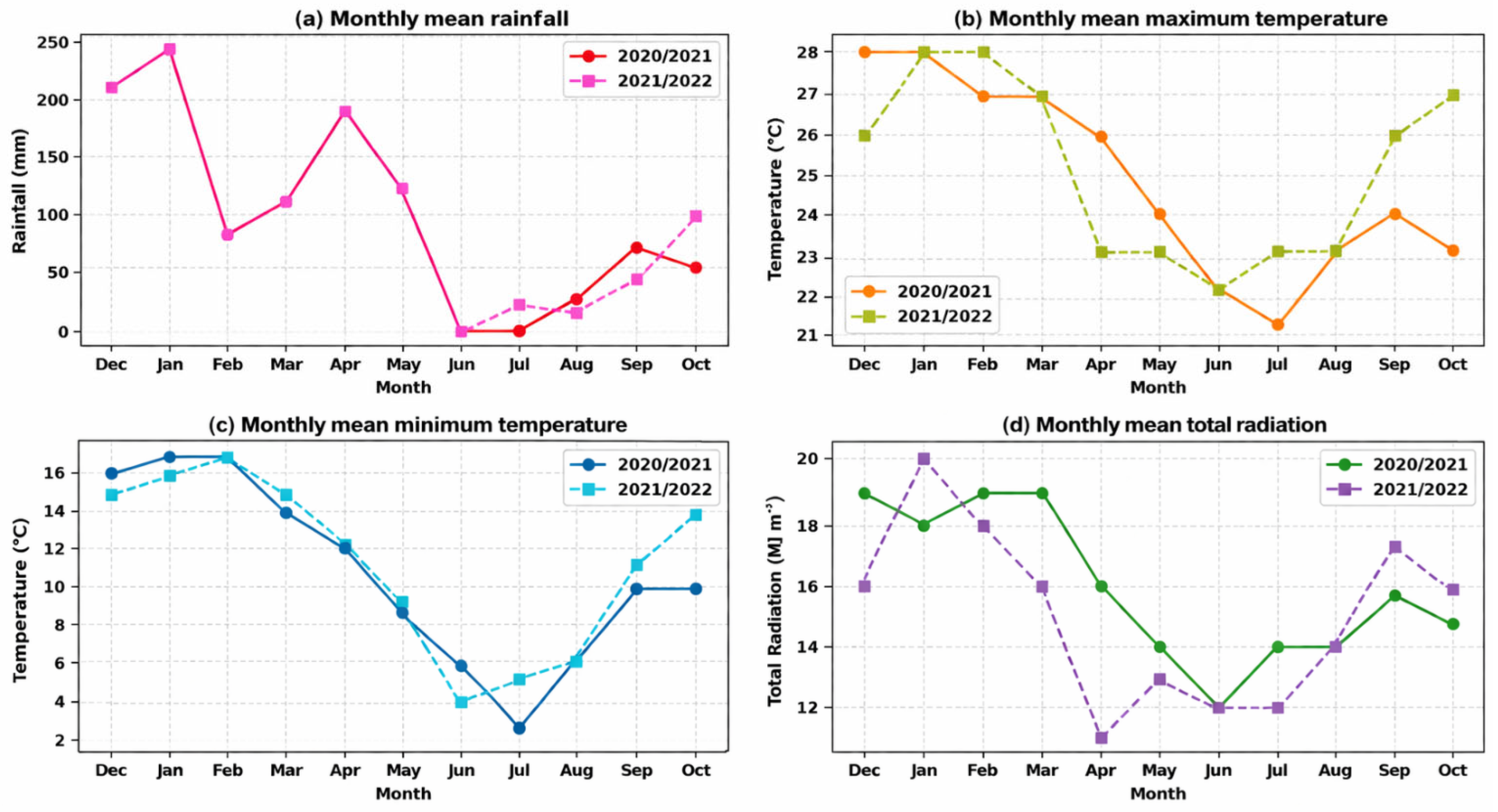
Figure 1. Monthly mean meteorological data for 2020/21 and 2021/22 growing seasons.
Agronomy 16 00759 g001
Table 1. Chemical properties of the topsoil in mg kg−1, unless otherwise stated (0–30 cm depth) at the experimental site.
SeasonsNutrientsAverage per 0.3 m DepthFertility Status
2020/2021P18.90Low
K75.00Low
Ca400.00Low
Mg80.89Low
Na25.40Very low
Clay (%)58.00
Silt (%)16.00
Sandy (%)18.00
pH5.5Moderately acidic
2021/2022
P19.7Low
K79.00Low
Ca450.00Low
Mg81.00Low
Na26.70Very low
Clay (%)56.00
Silt (%)16.00
Sandy (%)20.00
pH5.10Moderately acidic
Table 2. Effect of planting date and cultivar on growth rate (RGR), relative height rate (RHR), persistence (%), number of days to full flowering (DFF) for 2020/2021 and 2021/2022 season.
CultivarPDEmergence %RGRRHRPersistenceDFF
2020/2021
EnduranceDecember95.00 aA1.6 bA2.8 aA56 cA210 aA
January95.00 aA1.7 aA2.6 bA63 bA210 aA
February95.00 aA1.5 cA2.6 bA60 bA210 aA
March95.00 aA1.4 cA2.5 cA65 aA210 aA
Line 2December95.00 aA1.7 aA2.7 aA52 dA200 aA
January95.00 aA1.7 aA2.7 aA58 cA200 aA
February95.00 aA1.4 bA2.7 aA61 bA200 aA
March95.00 aA1.4 bA2.6 bA65 aA200 aA
NooitgedachtDecember95.00 aAAa1.8 aA2.7 aA56 cA180 aB
January95.00 aA1.6 bA2.6 bA61 aA180 aB
February95.00 aA1.5 cA2.6 bA62 aA180 aB
March95.00 aA1.0 dA2.6 bA60 bA161 bB
2021/2022
EnduranceDecember94.00 aA2.9 aA1.6 bA58 cA210 aA
January94.00 aA1.9 bA1.9 aA65 aA210 aA
February94.00 aA1.1 dA1.9 aA62 bA210 aA
March94.00 aA1.8 cA1.9 aA67 aA210 aA
Line 2December94.00 aA2.9 aA1.5 bA54 cA200 aA
January94.00 aA2.0 bA1.9 aA60 bA200 aA
February94.00 aA1.1 cA1.9 aA63 bA200 aA
March94.00 aA1.8 bA1.9 aA67 aA200 aA
NooitgedachtDecember94.00 aA2.9 aA1.9 aA58 cA180 aB
January94.00 aA1.9 bA1.9 aA63 aA180 aB
February94.00 aA1.3 dA1.9 aA64 aA161 bB
March94.00 aA1.7 cA1.9 aA62 bA161 bB
abcd Means within the same column and within each season followed by different lowercase letters indicate significant differences among planting date on each cultivar (p < 0.05). AB Means within the same column and within each season followed by different uppercase letters indicate significant differences among cultivars on each planting date (p < 0.05). Mean separation was performed using the LSD test.
Table 3. Effect of planting date (PD) and cultivar on tuber length (Tuber L.) cm, tuber diameter (Tuber D.) mm, leaf number per plant (Leaf N.), plant height (Plant H.) cm, leaf length (Leaf L.) cm, leaf width (Leaf W.) cm, and leaf area (LA) cm2 for 2020/2021 and 2021/2022 seasons.
CultivarPDTuber L.Tuber D.Leaf N.Plant H.Leaf L.Leaf W.LA
2020/2021
EnduranceDecember36 abA56 cA22 bB100 bA25 bA28 bA408 bA
January40 aA63 aA32 aB111 aA75 aA35 aA1506 aA
February21 cA60 bA16 cB88 cA21 cA24 cA289 cA
March26 bA65 aA15 cB51 dA15 dA18 dA159 dA
Line 2December37 aA52 dB20 bB145 bA21 cA24 bA299 cA
January37 aA58 cB30 aB155 aA78 aA31 bA1379 aA
February35 aA61 bA17 cB86 cA29 bA22 bcA247 dA
March40 aA65 aA15 cB49 dA21 cA23 bA343 bA
NooitgedachtDecember39 aA56 cA29 bA103 bA22 bA16 cA351 bA
January34 abA61 aA39 aA114 aA74 aA32 aA1399 aA
February20 cA62 aA21 cA281 cA17 cA20 bA207 cA
March25 bA60 bA18 dA52 dA13 dA22 bA123 aA
2021/2022
EnduranceDecember33 abA58 cA20 bB100 aA21 bA24 bA311 cA
January37 aA65 abA14 cB87 bA17 cA20 cA349 bA
February18 cA62 bA13 cB50 cA12 dB14 dA100 dA
March23 bA67 aA30 aA110 abA72 aA31 aA1281 aA
Line 2December34 aA54 cB18 bB144 bA18 bA20 bA215 bA
January34 aA60 bA16 bB84 cA16 cA18 bA172 dA
February33 aA63 bA13 cB48 dA18 bA20 bA261 cA
March38 aA67 aA28 aA154 aA75 aA27 aA1155 aA
NooitgedachtDecember36 aA58 cA27 bA102 bA19 bA21 bA262 bA
January31 aA63 aA19 bA80 cA10 dA16 cA138 cA
February17 cA64 aA16 bA51 dA14 cA12 dA72 dA
March22 bA62 bA37 aA112 aA71 aA28 aA1179 aA
abcd Means within the same column and within each season followed by different lowercase letters indicate significant differences among planting date on each cultivars (p < 0.05). AB Means within the same column and within each season followed by different uppercase letters indicate significant differences among cultivars on each planting date (p < 0.05). Mean separation was performed using the LSD test.
Table 4. Effect of planting date (PD), cultivar and season on aboveground biomass in kg DM ha−1 and tuber yield (kg ha−1) during 2020/21 and 2021/22 seasons.
CultivarsPDAboveground BiomassTuber Fresh YieldTuber Dry Yield
2020/2021
EnduranceDecember940 bA1494 aC108 cA
January1260 aA581 bA136 aA
February360 bB275 cB68 dA
March810 bB325 cB118 bA
Line 2December830 cB1722 aB89 cA
January1100 aB556 bB144 aA
February340 dB304 dA67 dA
March1000 bA354 cA117 bA
NooitgedachtDecember900 bA2101 aA95 cA
January1050 bB536 bC141 aA
February1080 aA262 dC66 dA
March280 cC312 cC116 bA
2021/2022
EnduranceDecember820 bB1444 aC58 cA
January1157 aA531 bA86 aA
February260 cB225 cB18 dA
March834 bB275 cB68 bA
Line 2December713 bC1672 aB39 cA
January949 aC506 bB94 aA
February238 cB254 cA17 dA
March733 bC304 cA67 bA
NooitgedachtDecember896 cA2052 aA47 cA
January1080 aB486 bC91 aA
February281 dA212 cC16 dA
March916 bA262 cC66 bA
abcd Means within the same column and within each season followed by different lowercase letters indicate significant differences among planting date on each cultivars (p < 0.05). ABC Means within the same column and within each season followed by different uppercase letters indicate significant differences among cultivars on each planting date (p < 0.05). Mean separation was performed using the LSD test.
Table 5. Effect of planting date and cultivar on macro (g kg−1) and micro (mg kg−1) minerals of fodder radish leaves.
CultivarPlanting DatePCaMgKZnCuMnFeAl
EnduranceDecember1 aB6 bA16 aA7 bA10 bB1 bA24 cA91 bB44 dB
January1 aB8 aA17 aA10 aAB12 aB2 aA42 aA229 aA147 cA
February1 aA8 aA17 aA10 aA10 cA1 cA38 bA108 bC116 aC
March1 aA9 aA17 aA5 cA11 aA1 bA37 bA248 aA232 bA
Line 2December1 aB6 aA15 aA6 bcA10 bB1 bA27 cA159 bA85 cA
January1 aB7 aAB15 aA8 abB11 aC2 aA40 aA84 cB70 cB
February1 aA7 aA15 aA10 aA9 cB1 cA35 aA190 aB218 aB
March1 aA7 aB14.3 aA5 cA1 bA1 bA29 bB184 aC174 bC
NooitgedachtDecember2 aA6 bA13 aA7 bA14 aA1 bA17 dC66 dC48 cB
January2 aA5 cB13 aA11 aA12 bA2 aB27 cB82 cB51 cC
February1 aA7 abA14 aA11 aA10 cA1 cA28 bcB343 aA292 aA
March1 aA8 aAB16 aA8 bA12 bA1 bA37 aA225 bB204 bB
abcd means in the same column with different lowercase superscripts for planting dates from each cultivar are significantly different (p < 0.05). ABC different uppercase superscripts for cultivars from each planting date significantly differ (p < 0.05). LSD post hoc test was used to separate the means. P: phosphorus; Ca: calcium; Mg: magnesium; K: potassium; Zn: zinc; Cu: copper; Mn: manganese; Fe: iron; Al: aluminium.
Table 6. Effect of planting date and cultivar on macro (g kg−1) and micro (mg kg−1) minerals of fodder radish tubers.
CultivarPlanting DatePCaMgKZnCuMnFeAl
Endurance December1.3 abB1.9 bA1.1 bA17.5 aA10.1 bC0.4 cC9.5 cA79.3 dC135.6 dC
January1.2 bA2.2 bA1.2 bA16.5 aA10.7 bA0.3 cC11.3 bB358.1 cB432.5 cC
February1.5 aA2.8 aA1.8 aA14.7 aA13.3 aA0.9 aA14.3 aA890.6 aA556.7 aA
March0.9 cA1.9 bA1.2 bA5.0 bA10.7 bB0.7 bB8.1 dA499.6 bC520.9 bB
Line 2December1.5 aA2.2 aA1.2 aA17.9 aA13.3 aB1.6 aA8.3 bC85.0 cB169.9 dB
January1.1 bA2.3 aA1.3 aA14.8 bA9.2 cB0.5 bB11.6 aB307.3 bC455.5 bB
February1.3 bAB2.1 aB1.3 aB12.8 bA9.6 cC0.7 bB11.5 aB294.9 bC281.8 cC
March0.8 cA1.6 bB0.9 bB4.7 cA9.8 bC0.7 bB7.9 bA584.9 aA536.7 aB
NooitgedachtDecember1.4 aAB2.3 aA1.4 aA17.6 aA15.1 aA0.7 bB9.2 cB434.8 cA533.2 cA
January1.1 bcA2.3 aA1.3 aA15.6 aA9.9 cB0.7 bA12.3 aA910.9 aA1096.5 aA
February1.2 abB2.2 aB1.5 aB15.1 aA11.9 bB0.5 cC9.6 bC353.6 dB332.9 dB
March0.9 cA1.7 bAB1.3 aA5.2 bA11.0 cA0.8 aA7.6 dB549.5 bB561.6 bA
abcd means in the same column with different lowercase superscripts for planting dates from each cultivar are significantly different (p < 0.05); ABC means in the same column with different uppercase superscripts for cultivars from each planting date are significantly different (p < 0.05). LSD post hoc test was used to separate the means. P: phosphorus; Ca: calcium; Mg: magnesium; K: potassium; Zn: zinc; Cu: copper; Mn: manganese; Fe: iron; Al: aluminium.
Table 7. Effect of planting date and cultivar on yield (kg ha−1), crude protein concentration (CP) in g kg−1 DM and crude protein yield (kg ha−1) of fodder radish leaves and tubers during the 2021/22 season.
CultivarPlanting DateLeavesTubers
Yield
(kg ha−1)
CP
(g kg−1 DM)
CP Yield
(kg ha−1)
Yield
(kg ha−1)
CP
(g kg−1 DM)
CP Yield
(kg ha−1)
EnduranceDecember814 bB283 aA231 bB58 cA210 bA12 bA
January1157 aA281 aA326 aA86 aA223 aA19 aA
February260 cB234 bA60 dA18 dA193 bA4 cA
March834 bB194 cA162 cC68 bA179 cA12 bA
Line 2December713 bC265 aB189 bC39 cC204 aA8 cC
January949 aC276 aA263 aB94 aA209 aA20 aA
February238 cB241 bA57 dA17 dA206 aA3 dA
March733 bC233 bA171 cB67 bA135 bA9 bB
NooitgedachtDecember896 cA312 aA279 aA47 cB202 aA9 bB
January1080 aB241 bB264 bB91 aA199 aA18 aB
February281 dA237 bA66 dA16 dA192 aA3 cA
March916 bA243 bA224 cA66 bA146 bA10 bB
abcd means in the same column with different lowercase superscripts for planting dates from each cultivar are significantly different (p < 0.05); ABC means in the same column with different uppercase superscripts for cultivars from each planting date are significantly different (p < 0.05); LSD post hoc test was used to separate the means.
Disclaimer/Publisher’s Note: The statements, opinions and data contained in all publications are solely those of the individual author(s) and contributor(s) and not of MDPI and/or the editor(s). MDPI and/or the editor(s) disclaim responsibility for any injury to people or property resulting from any ideas, methods, instructions or products referred to in the content.


