Article

Delayed Panicle Nitrogen Application Enhances Stem Nonstructural Carbohydrate Accumulation in Large-Panicle Rice Through the Sucrose–Starch Metabolic Network


1
College of Agronomy, Anhui Agricultural University, Hefei 230031, China
2
Hunan Yahua Seed Industry Co., Ltd., Changsha 410119, China
3
College of Agronomy, Xinyang Agriculture and Forestry University, Xinyang 464000, China
4
Anhui Provincial Science and Technology Achievements Transformation Promotion Center, Hefei 230031, China
*
Authors to whom correspondence should be addressed.
These authors contributed equally to this work.
Agronomy 2026, 16(4), 464; https://doi.org/10.3390/agronomy16040464

Submission received: 4 January 2026 / Revised: 29 January 2026 / Accepted: 13 February 2026 / Published: 16 February 2026

Abstract

Accumulation of stem non-structural carbohydrates (NSC) at heading is crucial for mitigating grain-setting defects in large-panicle rice. While traditional panicle nitrogen fertilizer application at the emergence of the fourth leaf from the flag leaf stage (TL4) may weaken stem sink strength, delaying application to the emergence of the third leaf from the flag leaf stage (TL3) significantly enhances NSC accumulation. This study aimed to elucidate the molecular mechanisms through which TL3 remodels stem sink strength to promote NSC storage. Using two large-panicle rice varieties (Huiliangyou 280 and Yangliangyou 228), we compared stem NSC dynamics under TL4 and TL3 treatments and integrated sugar-related metabolite profiling with transcriptome analysis during the critical NSC accumulation phase. The results showed that TL3 treatment significantly increased stem NSC content and NSC per spikelet at heading, leading to a higher percentage of filled grains. The period from 5 days before heading (DBH) to heading showed the highest NSC accumulation rate. At the molecular level, TL3 treatment specifically up-regulated eight key genes in the sucrose–starch metabolism pathway, increasing the activities of sucrose phosphate synthase, sucrose synthase, and ADP–glucose pyrophosphorylase, and thereby promoting the accumulation of sucrose, trehalose, and D-fructose. In summary, delaying panicle nitrogen application to TL3 enhances stem NSC storage by remodeling sink strength via coordinated regulation of the sucrose–starch metabolic network.

1. Introduction

Large-panicle rice is currently being promoted for its ability to achieve high yields. However, its grain sink capacity (notably for inferior grains) is usually insufficient, resulting in a generally low percentage of filled grains and severely limiting the yield-improving potential of varieties [1,2,3]. Studies have shown that accumulation of stem non-structural carbohydrates (NSCs) at heading can increase the sink strength and effectively alleviate setting defects in large-panicle rice [4,5]. The ratio of stem NSC and total spikelet number (i.e., the NSC per spikelet) at heading, has been widely demonstrated to be positively correlated with the percentage of filled grains in rice [6,7]. Increasing stem NSC accumulation at heading is currently a major research direction for high-yielding rice cultivation.
Rice stem NSC begins to accumulate at two weeks before heading, and its levels are significantly affected by nitrogen nutrition status during that stage [8]. This means that panicle nitrogen fertilizer application is essential, as it substantially affects stem NSC during the heading stage. Previous studies have shown that traditional panicle nitrogen fertilizer management during the emergence of the fourth leaf from the flag leaf stage (TL4) is detrimental to stem NSC accumulation. This often presents as a decrease in stem NSC with increasing nitrogen application rate, reaching a maximum without nitrogen fertilizer application [9,10]. This pattern is robust to different rice varieties and ecological niches [9,11]. However, compared to high nitrogen conditions, the lower nitrogen conditions during the heading stage promotes stem NSC accumulation, but at a level insufficient to overcome yield loss due to the decreased spikelets per panicle and insufficient photosynthetic product at the grain filling stage [12]. Studies have demonstrated that compared to TL4, delaying panicle nitrogen fertilizer application could increase stem NSC under high nitrogen conditions [4,10,13]. Our recent study further showed that panicle nitrogen fertilizer applied at the emergence of the third leaf from the flag leaf stage (TL3) under high nitrogen conditions could significantly improve leaf area duration from 5 days before heading to heading to increase stem NSCs and the percentage of filled grains at heading, ultimately increase rice yield by 10.1% to 13.6% [14]. This discovery enabled the successful coordination of nitrogen supply and increased carbon accumulation under high-nitrogen conditions, challenging the traditional view that “high nitrogen inhibits carbon accumulation”. However, the intrinsic mechanism of action remains unknown.
It is generally thought that stem NSC accumulation is primarily regulated by sucrose–starch metabolism enzymatic activities, constituting the so-called stem “sink strength”. Previous studies have focused on the physiological mechanisms by which low nitrogen increases stem “sink strength” under TL4 conditions. Compared to high nitrogen, low nitrogen increased the activities of ADP-glucose pyrophosphorylase (AGPase), starch synthase (StS), starch branching enzyme (SBE), and sucrose synthase (SUS) in stems before the heading stage, thereby synergistically promoting starch synthesis and sucrose degradation [11,15,16]. However, most existing studies on the regulation of sink strength by panicle nitrogen fertilizer application have focused on the grains. For example, Fu et al. [4] reported that delaying panicle nitrogen fertilizer application could increase SUS and AGPase activities in inferior grains and increase the grain sink strength. The study by Zhang et al. [13] supported this conclusion. Based on the above results, we hypothesized that TL3 is associated with increased stem NSC and sucrose–starch metabolism-related enzymatic activities under high panicle nitrogen fertilizer application conditions. However, a core scientific problem remains unresolved: compared with TL4, what are the specific mechanisms by which TL3 remodels stem sink strength?
In recent years, combined sugar-related metabolite profiling and transcriptome analyses have been used as effective methods for investigating the physiological regulatory mechanisms of plants [17,18]. In rice, researchers have employed genome sequencing and gene map-based cloning to identify critical genes that regulate sucrose–starch metabolism, including the OsAGPL1-3 genes that encodes an AGPase subunit [19], OsSUS1-6 encoding SUS [20,21], and OsSBEs that encode SBEs [22]. However, functional studies on these genes have focused on leaf photosynthesis, carbon assimilation, and grain starch accumulation [17,23]. The regulatory effects of these genes on NSC synthesis in rice stems remain unknown. In addition, nitrogen addition has significant regulatory effects on the expression of related genes. How TL3 remodels critical genetic regulatory networks that govern stem sink strength under high-nitrogen conditions remains to be elucidated.
Therefore, in this study, we selected two large-panicle hybrid rice varieties that are promoted in the study region. Based on a previous report [14], we set up two panicle fertilizer application treatments (TL4 and TL3) using high nitrogen levels and employed a combined transcriptome and sugar-related metabolite profiling analysis. The objectives were (1) to systematically identify critical differentially expressed genes and metabolites in the stem that respond to TL3 treatment, including the determination of core metabolic pathways and the construction of a gene interaction network; (2) to reveal, at the molecular and physiological levels, the mechanisms that promote NSC accumulation through the remodeling of stem sink strength when panicle fertilizer application is delayed until the TL3 stage. This study will provide a basis for optimizing panicle nitrogen fertilizer management and improving the setting rate and yield of large-panicle rice.

2. Materials and Methods

2.1. Plant Materials and Management

The experiments were performed at Wanzhong test station (31°48′ N, 117°23′ E) of Anhui Agricultural University in Lujiang county, Anhui province in 2021, 2022, and 2023. Meteorological data were obtained from a meteorological station (Watch Dog 2900ET, SPECTRUM, Inc., Plainfield, IL, USA) positioned approximately 1 km from the field site (Figure S1). The characteristics of the topsoil (0–20 cm) before the experiment were as follows: 32.4 g kg−1 soil organic matter, 2.0 g kg−1 total nitrogen, 24.8 mg kg−1 Olsen-P, 211.42 mg kg−1 available potassium, and pH 5.11.
Two large-panicle hybrid indica rice cultivars, ‘Huiliangyou 280’ (HLY280) and ‘Yangliangyou 228’ (YLY228), were used in this experiment (Table S1). Both cultivars possess the typical agronomic traits of large-panicle medium hybrid indica rice grown in the middle and lower reaches of the Yangtze River in China [24].

2.2. Experimental Design

The field experiment was conducted in a randomized block design with two cultivars and three replications for two panicle nitrogen application timings: at the emergence of the fourth leaf from the flag leaf stage (TL4) and the third leaf from the flag leaf stage (TL3) of the main stem. A newly emerged leaf represented a leaf less than 0.5 cm in length [25]. The timing of TL4 and TL3 was approximately 32–35 days and 24–27 days before heading, respectively. In all treatments, basal nitrogen (as urea) was applied at 40% and 20% of the total amount and incorporated in all plots one day before transplanting and 7 days after transplanting, respectively, and the remaining nitrogen was applied as panicle nitrogen. In addition, 112.5 kg ha−1 phosphorus (as superphosphate) and 180 kg ha−1 potassium (as potassium chloride) were incorporated into the soil once before transplanting. Ridges were constructed around each plot and covered with a plastic film to form separate plots of 8.0 m × 5.0 m each.
Seeds were sown on special plastic nursery trays at 80 g of dry seeds per tray; after 48 h of dark treatment, the seeds were planted as crops (28-day-old seedlings) and transplanted into the fields on June 15 in 2021, June 16 in 2022, and June 16 in 2023. The row spacing was 33 cm × 16 cm, with two seedlings per hill. During the rice growing season and until physiological maturity was achieved, the plots were irrigated by flooding to a depth of 5 ± 2 cm above the soil surface, except during midseason aeration. Pest and disease management were the same as for local high-yield rice cultivation.

2.3. Sampling and Analysis

2.3.1. Determination of the Growth Stage

Heading was defined as the date when 80% of the stems in a plot began anthesis, and maturity was defined as the date when 95% of the grains turned yellow [26].

2.3.2. Chemical and Histochemical Analysis of NSCs (Sucrose, Starch, and Soluble Sugars)

At 20, 15, 10, and 5 days before heading (DBH) and at heading, two representative plants from two hills were sampled based on the average number of tillers in each plot. Oven-dried stem samples were ground into fine powder and filtered through a 1 mm sieve. The NSC concentration, starch concentration, and sucrose content were determined according to the method described by Li et al. [11]. The stem NSC (t ha−1) was calculated as the stem biomass multiplied by the NSC concentration (the sum of the concentrations of soluble sugars and starch); the stem starch (t ha−1) was calculated as the stem biomass multiplied by the starch concentration; the stem soluble sugars (t ha−1) was calculated as the stem biomass multiplied by the soluble sugars concentration, and the stem sucrose (t ha−1) was calculated as the stem biomass multiplied by the sucrose concentration.

2.3.3. Extraction of Sugar-Related Metabolites

Three stems from each variety and treatment were collected 5 days before heading in 2023 and combined for sugar-related metabolite profiling. A total of three repeat experiments were performed. After crushing the stems in liquid nitrogen, 100 mg samples were resuspended in prechilled 80% methanol and incubated on ice for 5 min. After centrifugation at 4 °C for 20 min, the supernatant was diluted with liquid chromatography tandem mass spectrometry (LC–MS) grade water. The sample was centrifuged again at 4 °C for 20 min, and the supernatant was collected and analyzed by ultra-high performance liquid chromatography-mass spectrometry MS/MS (UHPLC-MS/MS). Equal volumes of each experimental sample were combined for quality control. Blank samples were prepared as a 53% aqueous methanol solution with 0.1% formic acid and treated using the same method.

2.3.4. Metabolomics Data Processing and Metabolite Identification

For data preprocessing, the acquired raw data files were analyzed using the Compound Discoverer 3.1 software (Thermo Fisher Scientific, Les Ulis, France). The Kyoto Encyclopedia of Genes and Genomes (KEGG) database (https://www.genome.jp/kegg/pathway, 20 January 2025) was used for metabolite annotation. A partial least squares discriminant analysis (PLS-DA) was used to compare the metabolite profiles between samples from the TL4 and TL3 treatment groups. Differentially accumulated metabolites (DAMs) were screened using the criteria of variable importance in projection (VIP) > 1 and fold change (FC) > 1.5 or <0.8.

2.3.5. RNA Extraction, Transcriptome Sequencing and Data Analysis

Three stems from each variety and treatment were collected 5 days before heading in 2023. Three main stems were combined as a biological replicate. Three replicates were used for transcriptome sequencing. The transcriptome sequencing in this study was performed by Wuhan Frasergen Biotechnology Co., Ltd. (Wuhan, China). An Illumina Novaseq 6000 platform was used to sequence all transcribed mRNAs, and an Illumina TruseqTM RNA sample prep Kit was used for library construction. Total RNA was extracted from tissue samples, and a Nanodrop 2000 was used to determine the concentration and purity of the extracted RNA. Agarose gel electrophoresis was used to assess RNA integrity, and an Agilent 2100 Bioanalyzer (Agilent Technologies, Santa Clara, CA, USA) was used to determine the RIN value. A single library construction required total RNA amount ≥ 1 ug, a concentration ≥ 35 ng μL−1, OD260/280 ≥ 1.8, and OD260/230 ≥ 1.0. The 3′ end of eukaryotic mRNA contains a polyA tail structure. Magnetic beads with Oligo (dT) were used for A-T base pairing with polyA to isolate mRNA from total RNA for analysis of transcriptome information.
High-quality reads were obtained after filtering the original sequencing data with fastp (version 0.18.0), and the transcriptome was obtained by splicing the high-quality sequencing data using Trinity. The differentially expressed genes (DEGs) of the samples were analyzed using the DESeq2 R package (1.20.0) with a p-value ≤ 0.05 and an absolute FC ≥ 2. The final representative transcripts were annotated using BLAST2GO to obtain GO terms, and then BLASTKOALA (https://www.kegg.jp/blastkoala/, 20 January 2025) was used to assign KEGG Orthology terms.

2.3.6. Confirmation of RNA-Seq Data by qRT-PCR

To validate the reliability of the RNA-Seq data in 2023, eight representative genes, OsHXK6, OsFRK2, OsUGP2, OsSBE1, OsTPS1, OsSUS4, OsAGPL3, and OsAGPS1, were selected for qRT-PCR analysis, and Actin was used as the internal reference gene. The primers used in this study are listed in Table S2. The FC in gene expression between samples under different treatments was calculated using the 2−ΔΔCT method, with three replicates [27].

2.3.7. Measurement of Key Enzyme Activities in the Stem

Three main stems were sampled from each treatment at 5 DBH in 2023. These samples were used to determine the enzyme activities of SPS, AGPase, and SUS. The stems were first frozen in liquid nitrogen for 1 min and ground into a fine powder before being stored at −80 °C. Approximately 100 mg of fine powder was used for testing enzyme activity. The activity of SPS was determined using the method described by Rufty et al. [28]. AGPase activity was measured based on the method outlined by Nakamura et al. [29]. SUS activity was measured as described by Ranwala and Miller [30]. The enzymatic activities are expressed on a fresh weight basis (µmol min−1 g−1), all samples were processed, extracted, and measured in strict synchronization to ensure the validity of the comparison [31].

2.3.8. Total Yield and Yield Components

Once the rice had matured in 2021 and 2022, the yield components (panicles per m2, spikelets per panicle, percentage of filled grains, and grain weight) were determined from 10 hills of rice plants in each plot. The theoretical yield was calculated using the method of Li et al. [32].

2.4. Statistical Analysis

Two-way analysis of variance (ANOVA) was conducted using Duncan’s new multiple range test, with statistical significance considered as p < 0.05. Analyses were performed using SPSS 26.0 (SPSS, Inc., Chicago, IL, USA). The figures were drawn using the “ggplot2” package for R 4.4.2 (R Foundation for Statistical Computing, Vienna, Austria).

3. Results

3.1. Percentage of Filled Grains and Stem NSC Accumulation

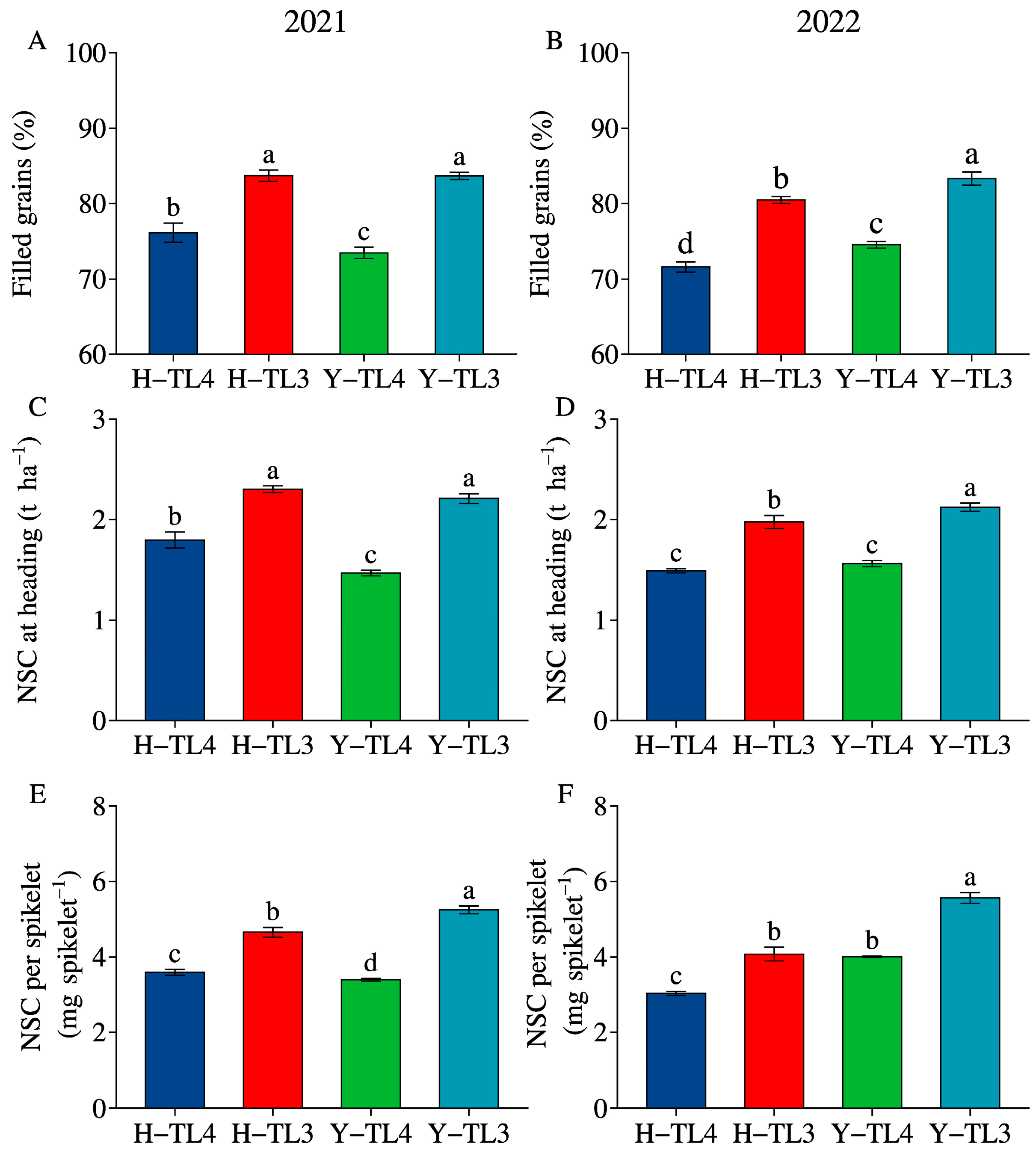
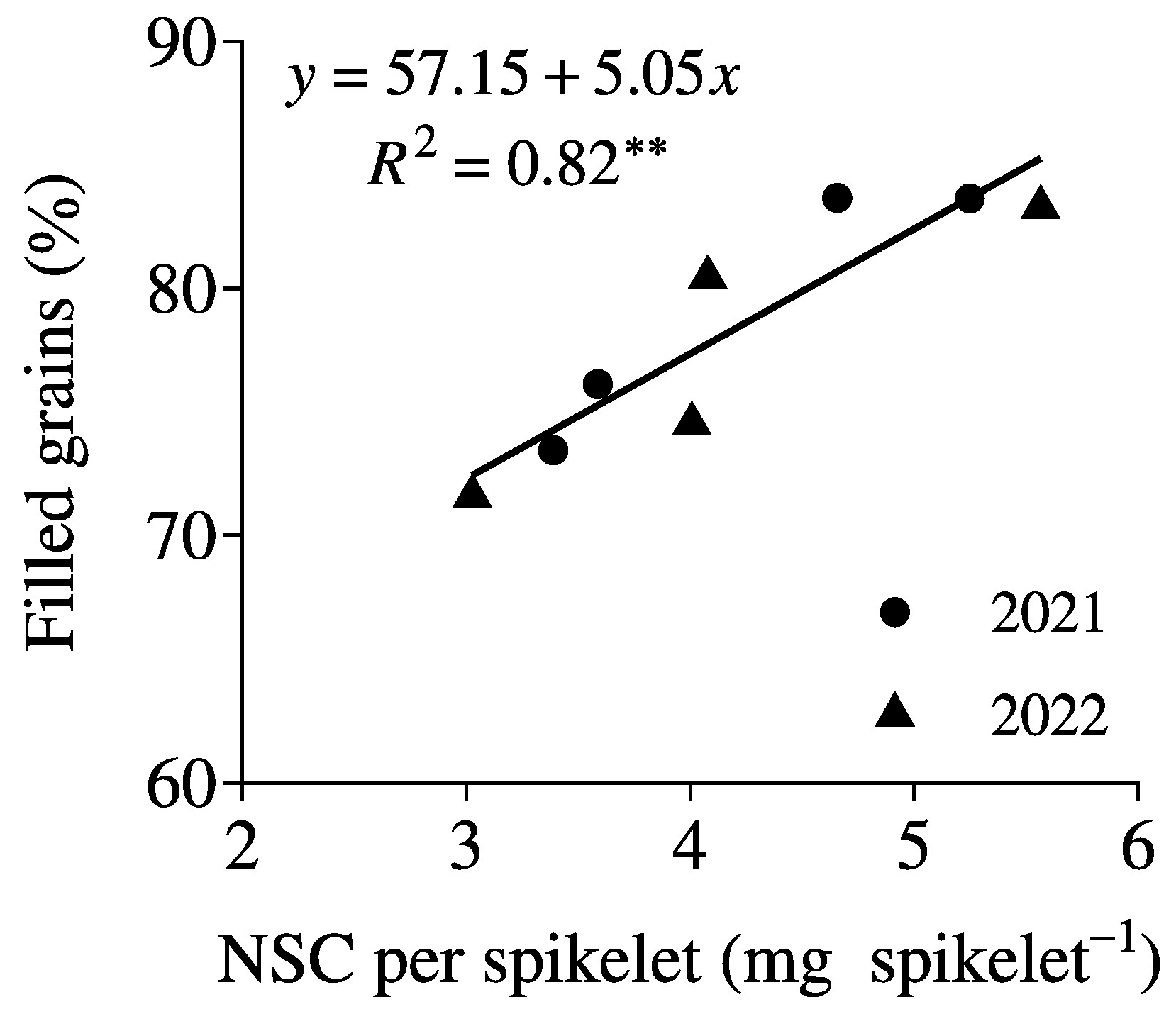
TL3 significantly increased the grain setting rate compared to TL4, as well as the stem NSC and NSC per spikelet at heading. The two-year trends of the two varieties were consistent (Figure 1). Compared to TL4, TL3 increased the two-year mean setting rate of the varieties by 11.97% (relative increase), increased stem NSC at heading by 36.68%, and increased the NSC per spikelet by 39.57%. The setting rate and NSC per spikelet were significantly positively correlated (Figure 2).

3.2. Stem NSC Constituent Accumulation Dynamics

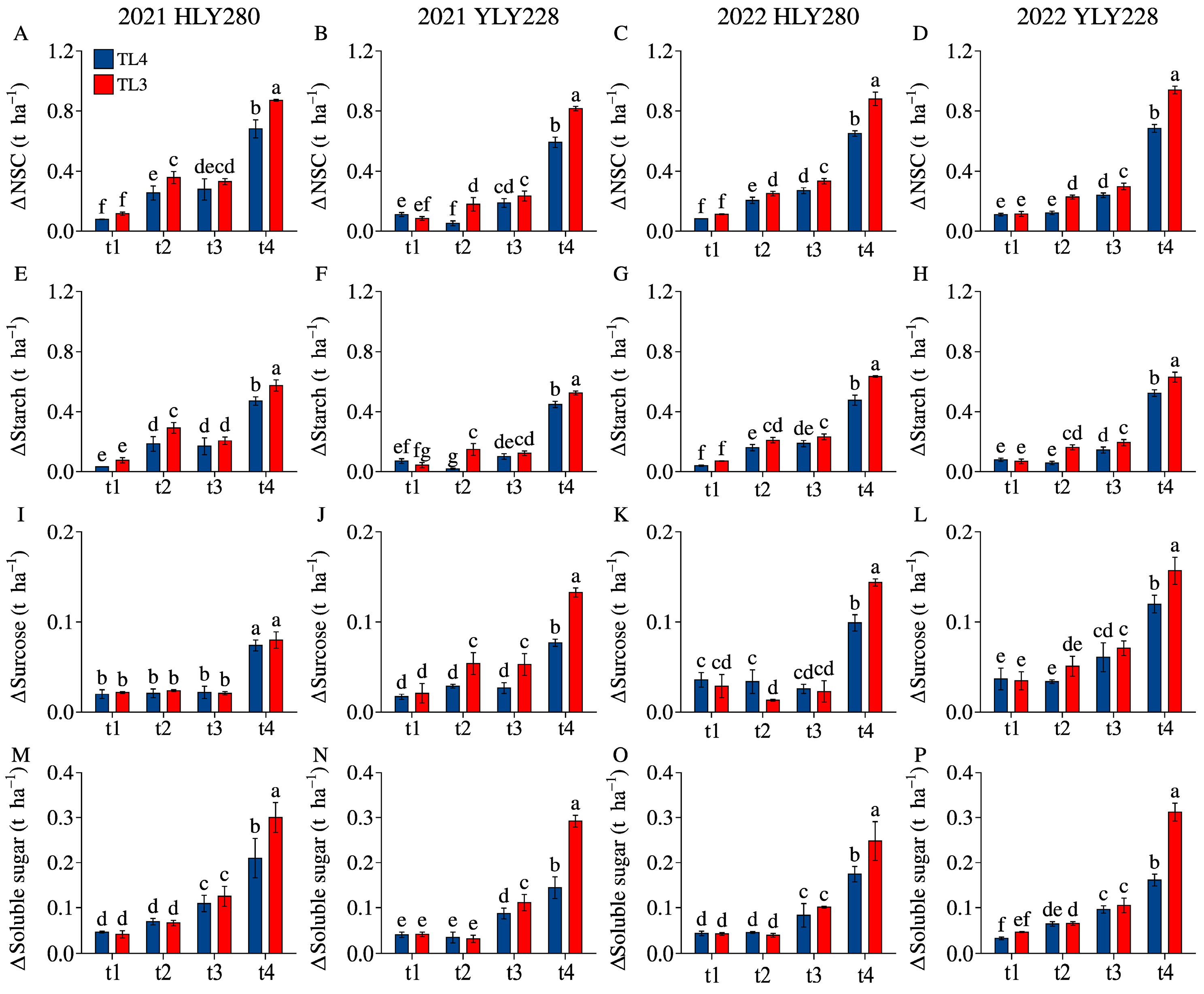
Stem NSC stage accumulation showed significant differences in reproductive progression due to fertilizer application, regardless of variety or stage (Figure 3). The period comprising 5 days before heading to heading (t4) accounted for 43.21% of the total NSC accumulation during the heading stage. The t4 stage is also a sensitive period for the response to panicle nitrogen fertilizer treatment. During the t4 period, TL3 significantly increased the accumulation of stem NSC compared to TL4, and the two-year trends of the two varieties were consistent. In addition, TL3 increased starch, sucrose, soluble sugar, and other stem NSC components by varying degrees.

3.3. Sugar-Related Metabolite Profiling

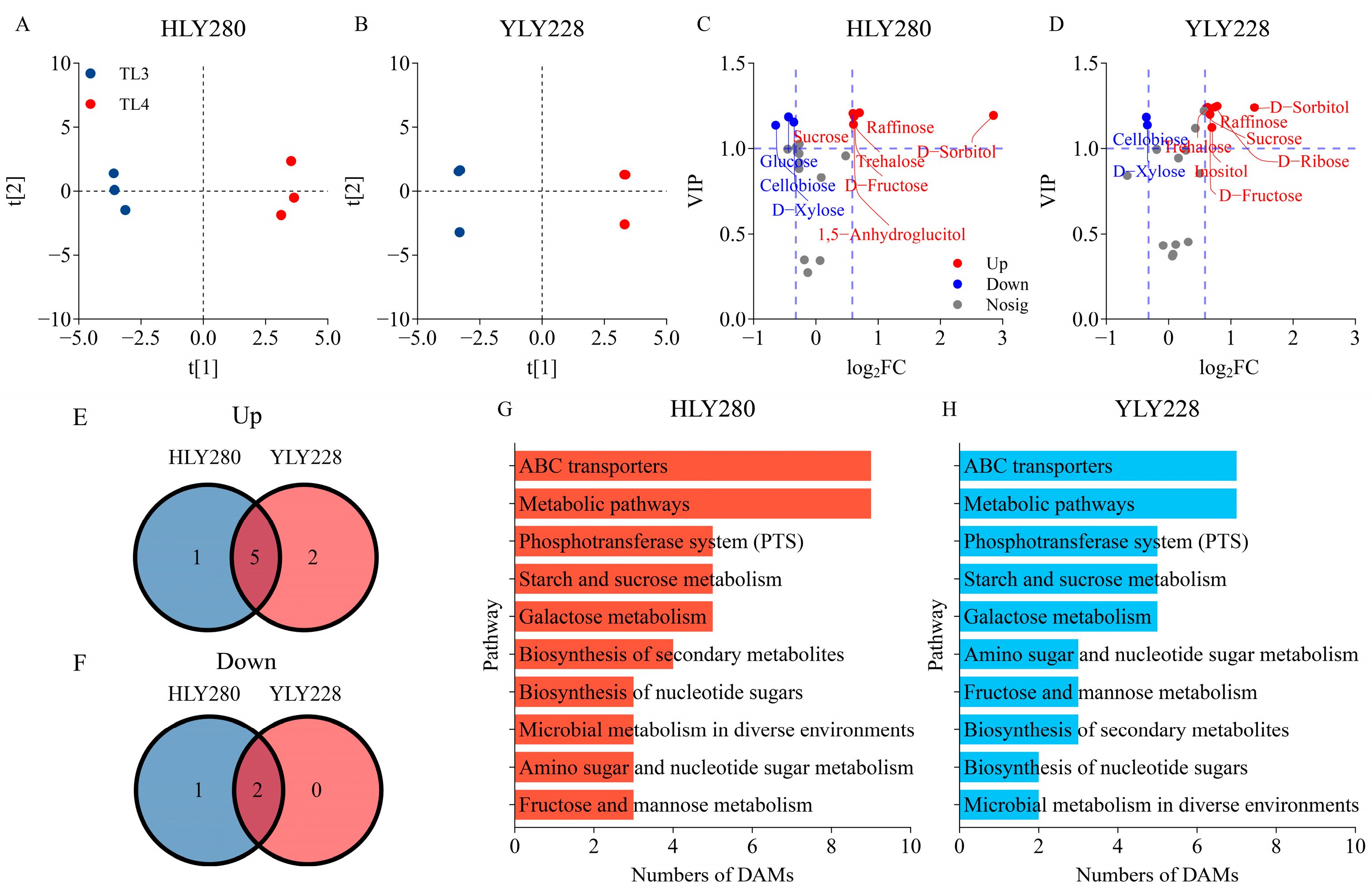
Sugar-related metabolite profiling of stem samples taken five days before heading identified a total of 21 sugar-related metabolites (Figure S2). The OPLS-DA model shows significant separation between the TL3 and TL4 metabolite profiles (Figure 4A,B). This indicated that different panicle nitrogen fertilizer treatments significantly affected the stem sugar metabolomes. Differentially expressed metabolite (DAM) analysis showed that in HLY280, nine metabolites exhibited significant changes between TL3 and TL4: six were upregulated and three were downregulated. Nine DAMs were similarly detected in YLY228, of which seven were upregulated and two were downregulated (Figure 4C,D). There were seven DAMs that were common to the two varieties, of which five were upregulated in both (sucrose, trehalose, D-sorbitol, D-fructose, and raffinose) and two were downregulated in both (cellobiose and D-xylose) (Figure 4E,F).
KEGG pathway enrichment analysis showed that the DAMs in the two varieties were significantly enriched in the top 10 pathways, of which starch and sucrose metabolism, galactose metabolism, amino sugar and nucleotide sugar metabolism, and fructose and mannose metabolism were critical pathways in sugar metabolism (Figure 4G,H).

3.4. Transcriptome Analysis

3.4.1. Transcriptome Data Quality and Identification of Differentially Expressed Genes

A total of 74.18 G of high-quality sequencing data was obtained from RNA-seq analysis of stem samples collected 5 days before heading (Table S3). The Q30 values of all samples were higher than 96.64%, showing that the sequencing data were reliable. Principal component analysis (PCA) showed significant separation between samples from different panicle nitrogen fertilizer treatments (Figure S3). PC1 and PC2 combined to explain 69.9% of the total variance, indicating that panicle nitrogen fertilizer treatment is the main factor driving differences in gene expression.
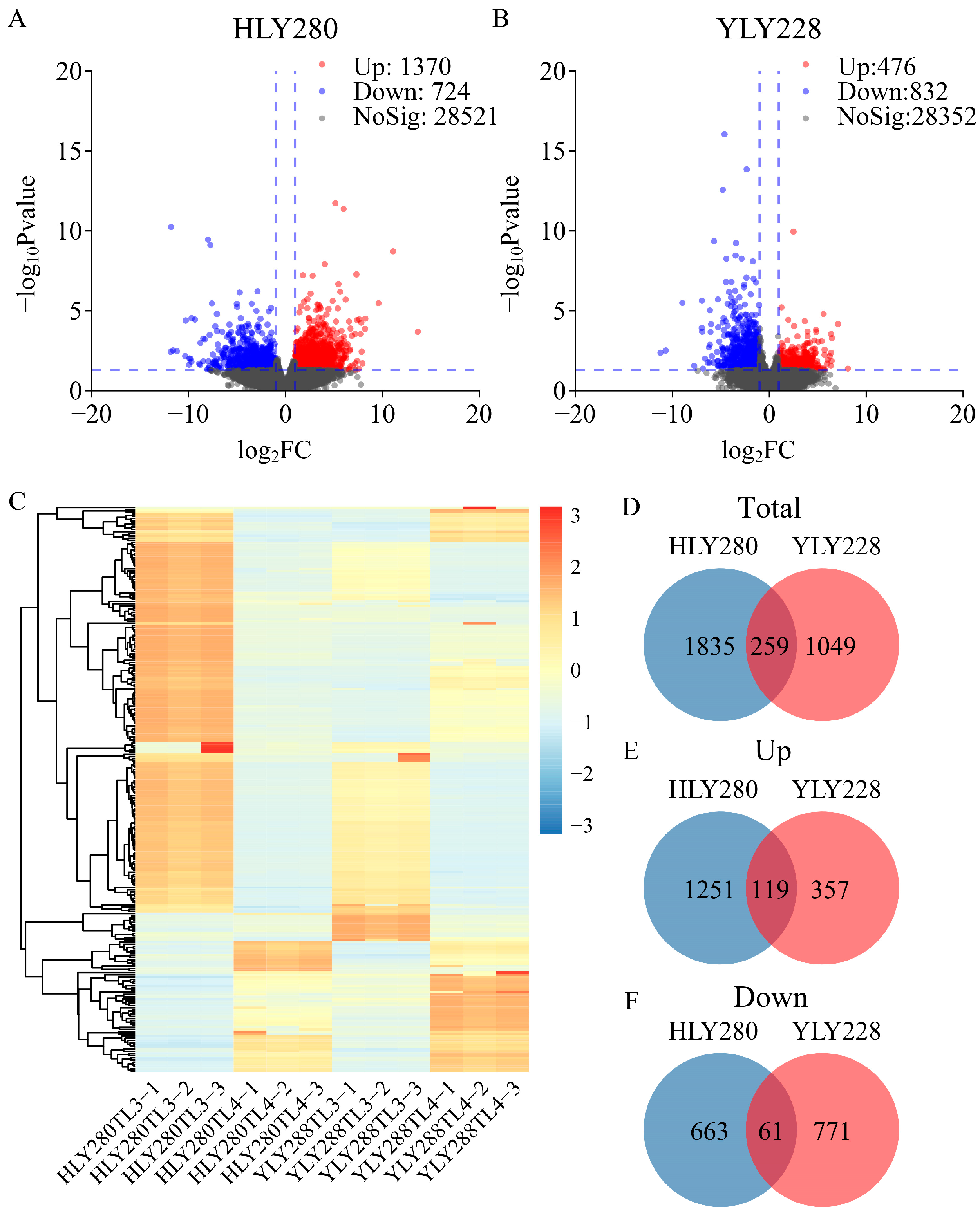
Differential expression analysis showed that under TL3, a total of 2094 and 1308 differentially expressed genes (DEGs) were identified in HLY280 and YLY228, respectively, compared to TL4 (Figure 5A,B). In HLY280, 1370, and 724 genes were upregulated and downregulated, respectively. In YLY228, 476, and 832 genes were upregulated and downregulated, respectively. Further analysis identified 259 DEGs common to both varieties (Figure 5D), of which 119 were upregulated and 61 were downregulated (Figure 5E,F). These common DEGs may represent the core transcription responses of panicle nitrogen fertilizer treatment.

3.4.2. KEGG Pathway Enrichment Analysis of Differentially Expressed Genes

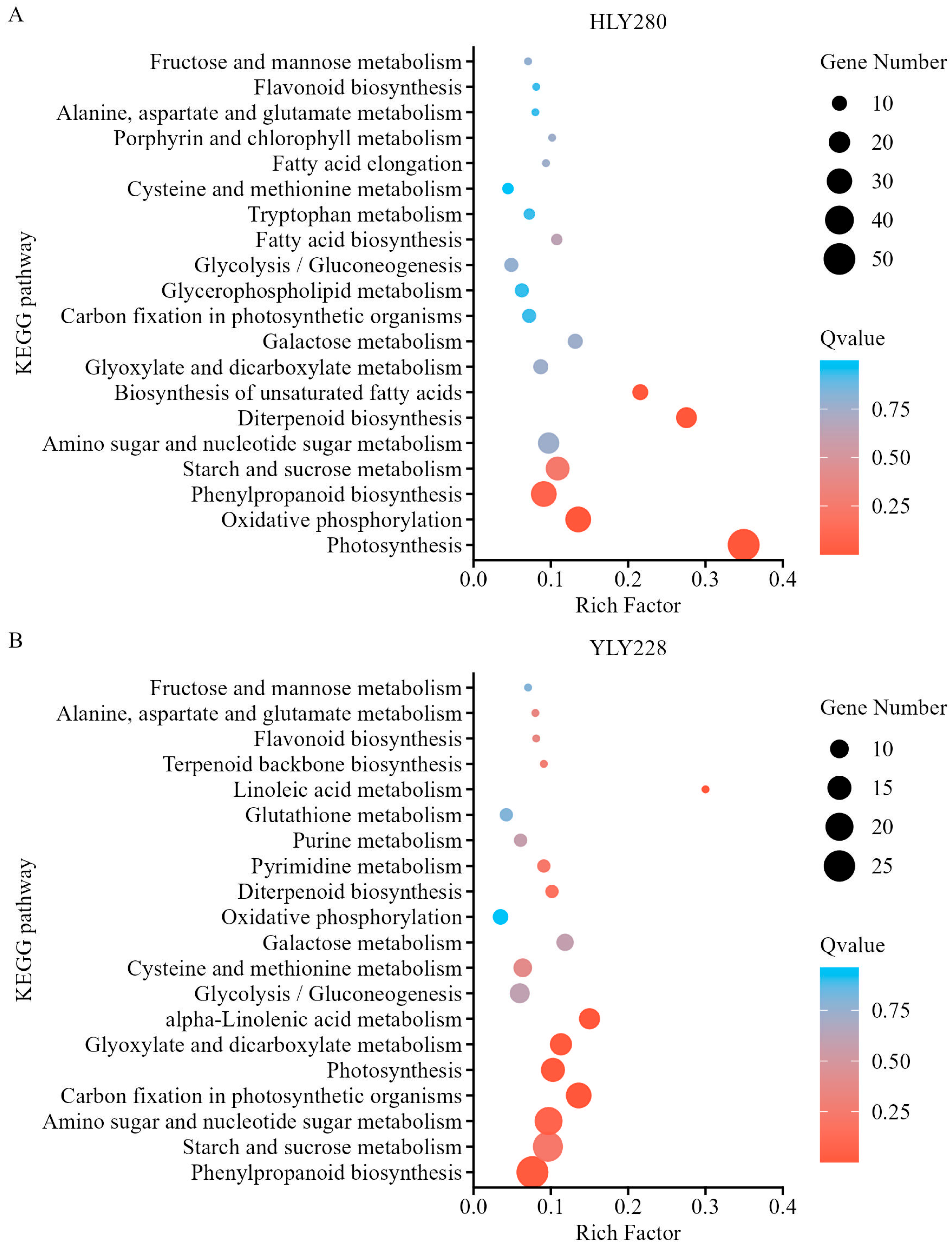
KEGG pathway enrichment analysis showed that the DEGs of HLY280 and YLY228 were significantly enriched in 106 and 92 pathways, respectively. We extracted metabolism-related pathways and displayed the top 20 pathways with the most significant enrichment based on Q values (Figure 6). A total of 14 significantly enriched pathways were common to the two varieties, including photosynthesis, glyoxylate, and dicarboxylate metabolism, and many sugar metabolism-related pathways, such as starch and sucrose metabolism, galactose metabolism, amino sugar and nucleotide sugar metabolism, and fructose and mannose metabolism. This shows that TL3 may regulate these critical metabolic pathways in a coordinated manner, thereby affecting carbon flux and carbohydrate accumulation in stems.

3.5. Combined Transcriptome and Sugar-Related Metabolite Profiling Analysis

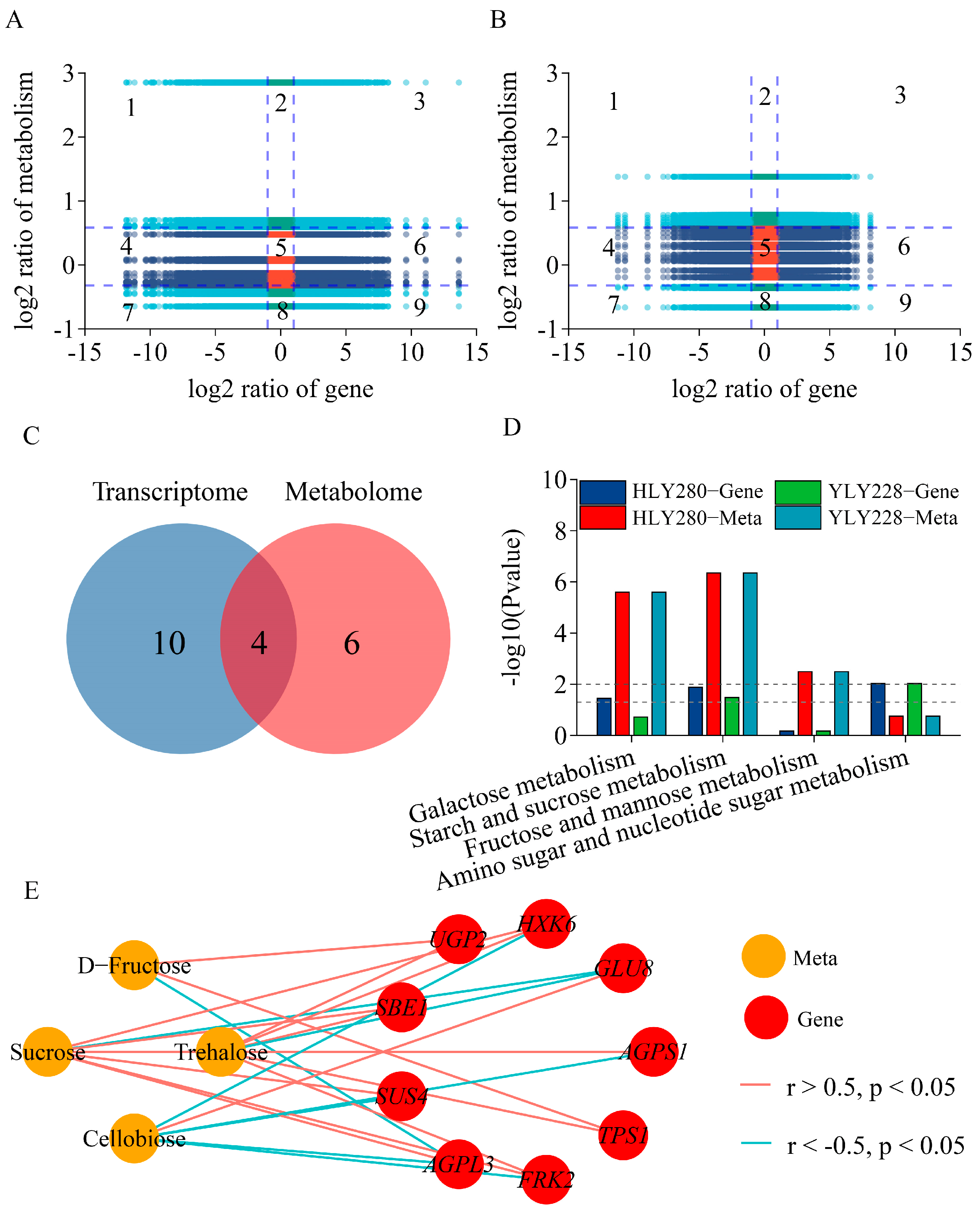
A nine-quadrant association diagram was constructed to screen gene-metabolite pairs with consistent expression patterns. Ten sugar metabolite changes in HLY280 and YLY228 were positively regulated by 9671 and 6733 genes, respectively (Figure 7A,B). Comparison of the KEGG pathways of DEGs (top 20) and DAMs (top 10) identified four common pathways of galactose metabolism, starch and sucrose metabolism, fructose and mannose metabolism, and amino sugar and nucleotide sugar metabolism (Figure 7C). Among these, starch and sucrose metabolism was significantly enriched in both omics analyses (p < 0.05, Figure 7D), suggesting that this pathway is a core nexus that responds to panicle nitrogen fertilizer treatment, coordinates gene expression, and metabolite changes.
In this pathway, four critical DAMs (D-fructose, trehalose, cellobiose, and sucrose) and nine critical DEGs (OsHXK6, OsGLU8, OsAPS1, OsTPS9, OsFRK2, OsAGPL3, OsSUS4, OsSBE1, and OsUGP2) were identified, and a regulatory network was constructed (Figure 7E). Specifically, sucrose level is positively correlated with OsSUS4 and OsUGP2, and negatively correlated with OsGLU8, while trehalose is positively correlated with OsTPS1 and OsFRK2. This network identified the potential mechanisms by which TL3 remodels the stem sugar mechanism and promotes NSC accumulation at the molecular level.

3.6. NSCs, Enzymatic Activity, and qRT-PCR Validation

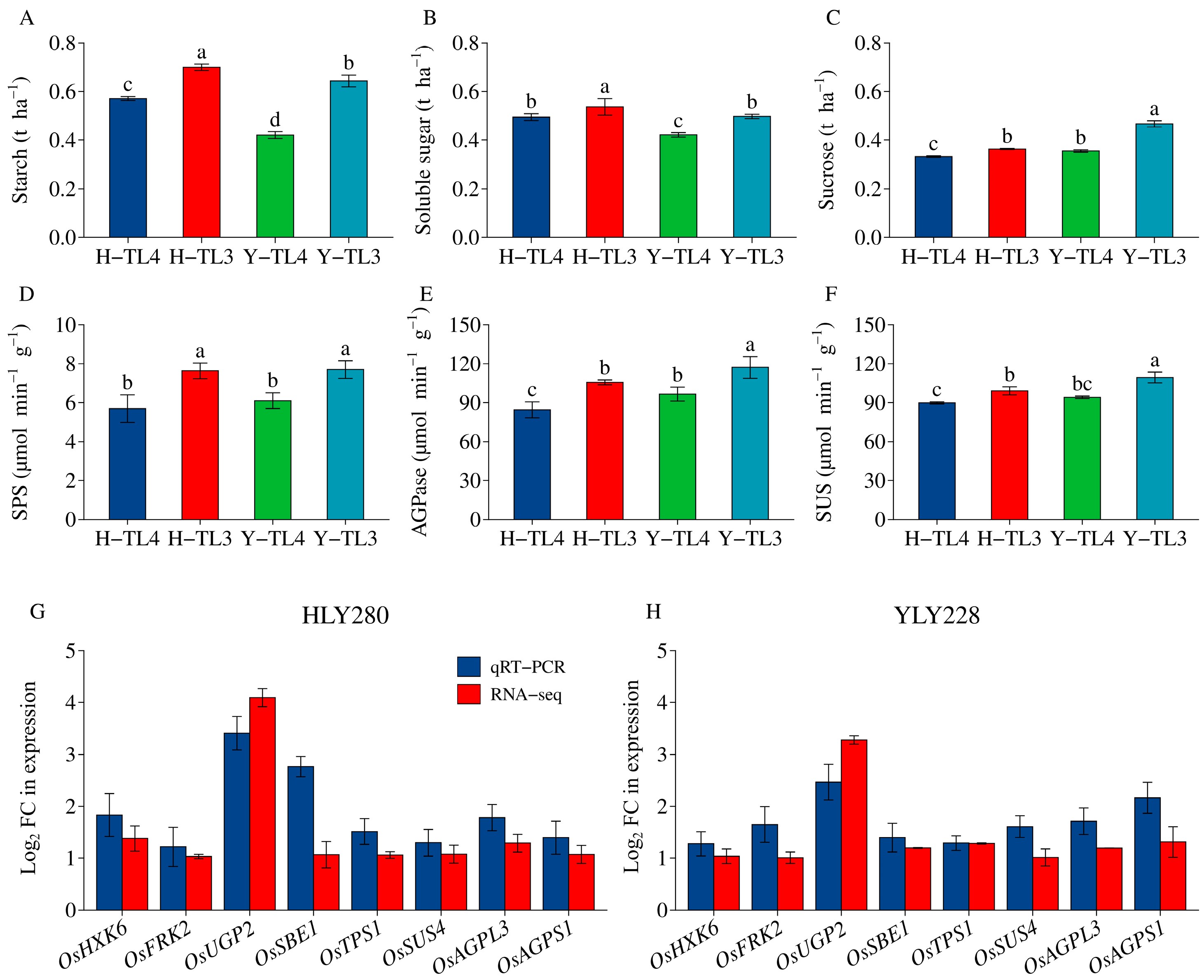
Compared to TL4, TL3 significantly increased stem starch, soluble sugar, and sucrose levels (Figure 8A–C). Consistent with this result, the activities of SPS, AGPase, and SUS were significantly increased by the TL3 treatment (Figure 8D–F). Furthermore, the variation trends of eight DEGs common to the two varieties were highly consistent with the RNA-seq data and were significantly upregulated by the TL3 treatment (Figure 8G,H).

4. Discussion

4.1. The Effects of an Appropriate Delay in Panicle Nitrogen Fertilizer Application on Rice Stem NSC and Setting Rate

This study showed that, compared to TL4, TL3 significantly increased the stem NSC and NSC per spikelet at heading in rice, thereby eliminating the problem of low percentage of filled grains in large-panicle rice (Figure 1 and Figure 2). This result demonstrates the importance of delaying panicle nitrogen fertilizer application to increase stem NSC during the heading stage, thereby optimizing grain filling and increasing the potential yield.
Dynamic monitoring of stem NSC accumulation showed that 5 days before heading (DBH) to heading is a critical period, as NSC accumulation during this period accounted for 43.21% of the total amount (Figure 3A–D). These results were consistent with those of Wakabayashi et al. [33] and Li et al. [11], who reported a large increase in stem NSC before heading and quantitatively demonstrated the decisive role of this critical stage on stem NSC storage. At the same time, we found that 5 DBH to heading showed the highest NSC accumulation rate responds to nitrogen application (Figure 3A–D). During this critical window period, the TL3 treatment increased starch, sucrose, soluble sugar, and other stem NSC components (Figure 3E–P). This suggests that focusing on the mechanisms of action by which panicle nitrogen fertilizer application remodels the stem sink strength during the stem NSC critical stage and nitrogen-sensitive period could avoid the “dilution” problem encountered when the entire reproductive period is used as the study object. Based on the above findings, we selected stem samples collected 5 DBH for subsequent combined sugar-related metabolite profiling and transcriptome analysis to reveal the molecular mechanisms by which TL3 treatment promoted NSC accumulation.

4.2. Combined Sugar-Related Metabolite Profiling and Transcriptome Analysis Reveals the Core Effects of Starch and Sucrose Metabolism

The sugar-related metabolite profiling analysis showed that TL3 treatment upregulated sucrose, trehalose, and D-fructose in both rice varieties (Figure 4C–F). These sugars act as crucial nodes in the carbon flux distribution and signal transduction, and their accumulation means that stem carbon metabolism tends toward increasing synthesis of storage carbohydrates. Particularly important is the accumulation of trehalose, which is highly consistent with the upregulation of its synthesis gene OsTPS9. Studies have shown that, in addition to acting as a carbon source, trehalose can regulate the distribution of carbon sources through the trehalose-6-phosphate (T6P) signaling pathway [34,35]. The present study has shown that at the intrinsic level, delaying panicle nitrogen fertilizer application can naturally induce the accumulation of trehalose. This was consistent with the results of Hu et al. [36], who demonstrated that exogenous trehalose spraying promoted NSC accumulation. Both studies reveal the essential role of trehalose-mediated pathways in carbon storage strategies under optimized nitrogen fertilizer management.
Transcriptome analysis further showed that TL3 induced the upregulation of 119 genes in the two varieties, and these genes were significantly enriched in the starch and sucrose metabolism pathway (Figure 6). This pathway has been identified as a core nexus in the regulation of the carbon distribution in many crop systems. For example, Li et al. [37] found that this pathway coordinates sucrose degradation and starch synthesis in maize to increase cold resistance during the flowering period. Zeng et al. [18] reported that reduced GF14f protein levels regulate this metabolic pathway, thereby increasing grain filling ability in ratoon rice. This study is the first to systematically reveal the central role of the starch and sucrose metabolism pathway in the response of a temporary storage organ (the stem) to delayed panicle nitrogen fertilizer application; we have expanded this functional background to the stem NSC accumulation process that regulates nitrogen management.
Through combined sugar-related metabolite profiling and transcriptome analyses, this study has confirmed that the starch and sucrose metabolism pathway is a central metabolism nexus that regulates stem NSC accumulation when delayed panicle nitrogen fertilizer application (Figure 7C,D). At the metabolite level, this pathway manifests as significant accumulation of critical substrates such as sucrose and trehalose, as well as other signaling molecules. Correspondingly, the expression of a series of critical enzymes encoding starch synthesis (i.e., OsSUS4, OsAGPL3, and OsSBE1) is synergistically upregulated at the transcription level. Synchronous changes in metabolites and gene expression jointly form a module for starch anabolism from substrate supply to polymerization and synthesis. Analysis of this system layer not only reveals the molecular and physiological basis by which the TL3 treatment regulates the stem carbon metabolic network to achieve efficient NSC accumulation but also provides crucial evidence and potential gene targets for directional regulation of this metabolic nexus to optimize crop storage efficiency.

4.3. Critical Genes and Metabolic Networks Synergistically Regulate Stem Starch Synthesis

This study identified nine critical functional genes, which jointly constitute a core genetic network that could synergistically regulate the synthesis of stem starch (Figure 7E). Consistent with this, the present study shows that, even under high nitrogen conditions, optimizing the panicle fertilizer application time (TL3) can effectively upregulate the expression of OsAGPL3 and OsAGPS1 (Figure 8E,G,H). This result not only validates the central role of AGPase in stem carbon storage but also reveals that optimizing the timing of nitrogen application can activate this rate-limiting step, thereby providing a new agronomic regulation pathway that could be employed to increase the capacity for stem starch synthesis.
The TL3 treatment synergistically upregulated critical functional genes and enhanced stem starch synthesis at the levels of sugar-related metabolism and signal regulation. First, at the sugar-related metabolism level, the upregulation of the sucrose synthase gene OsSUS4 occurred in parallel with an increase in stem sucrose levels (Figure 8F–H). SUS is a critical enzyme that catalyzes the degradation of sucrose to provide precursors for polysaccharide synthesis in sink organs, and its function is vital for carbon distribution [38]. This suggests that TL3 treatment activated sucrose catabolism to provide sufficient carbon skeleton and energy substrates for starch synthesis. More importantly, at the signal regulation level, the heightened expression of the trehalose-6-phosphate synthase gene OsTPS9 was highly consistent with the increase in the trehalose level. A recent study showed that the trehalose metabolite trehalose-6-phosphate (T6P) is a core “carbon status sensor” that can positively regulate starch synthesis [35]. At present study, the upregulation of OsTPS9 and concomitant increase in trehalose under TL3 treatment indicate a potential elevation in stem T6P levels. As a central signaling molecule that mirrors cellular sucrose status, T6P plays a pivotal role in redirecting carbon flux toward storage pathways. Under conditions of elevated sucrose availability, T6P likely functions by antagonizing the SnRK1 kinase, a key inhibitor of anabolism [39]. This repression release leads to the transcriptional activation of critical enzymes in the starch biosynthetic pathway, including AGPase and starch synthases. Consequently, the TL3-induced enhancement of the trehalose/T6P pathway may establish a self-reinforcing cycle that amplifies the expression of starch synthesis genes, thereby driving more efficient conversion and storage of sucrose in stems. This mechanism elucidates a novel signaling nexus that integrates nitrogen management with carbon partitioning, offering potential targets for optimizing source–sink balance in crop plants.
To verify the regulatory relationships deduced from the aforementioned multiomics analysis, we experimentally validated several critical metabolic enzymatic activities and the expression of related genes. The results showed that TL3 treatment significantly increased SPS, AGPase, and SUS activities (Figure 8D–F), and qRT-PCR showed that the expression trends of eight core genes were highly consistent with the transcriptome sequencing results (Figure 8G–H). These consistent positive responses in gene expression, enzyme activity, and ultimately metabolite (starch and sucrose) accumulation constitute a complete “gene–enzyme–metabolic phenotype” regulatory chain and provide valuable evidence for the molecular physiology model proposed in this study.
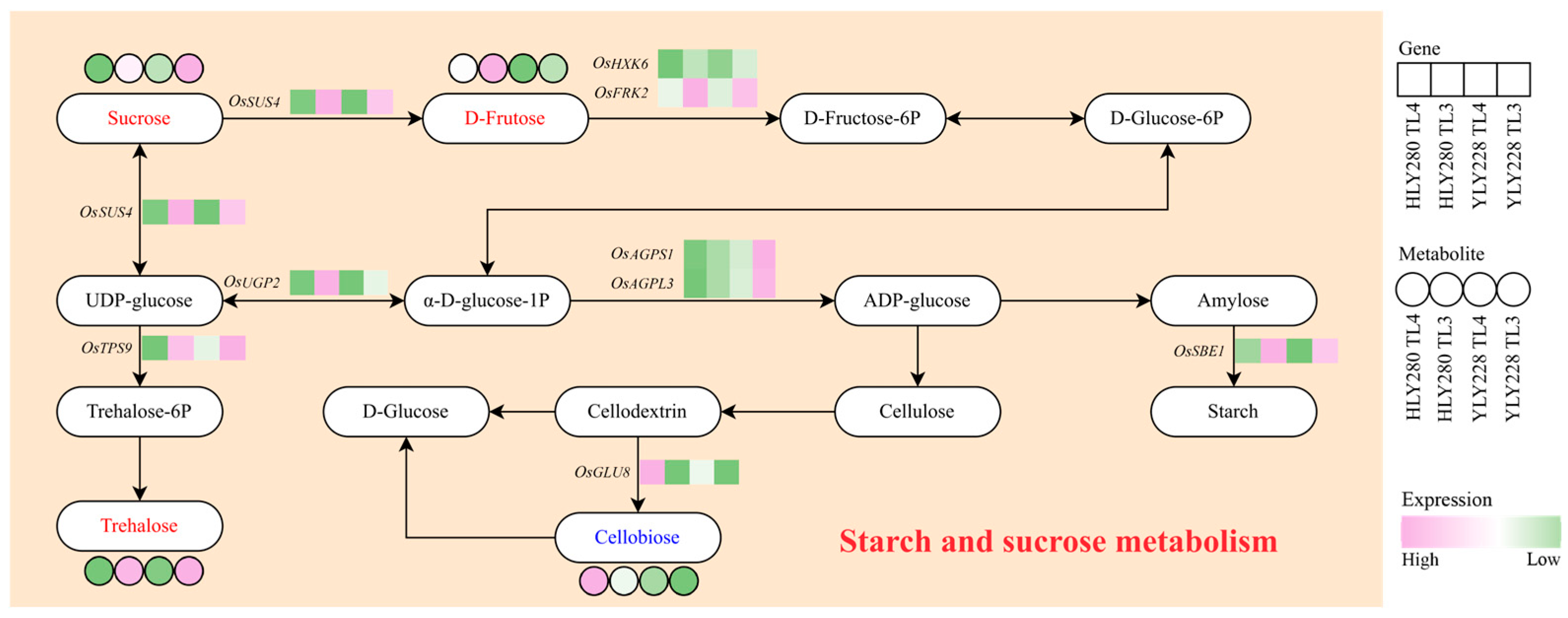
In summary, this study revealed a regulatory network consisting of multiple critical genes acting in synergy (Figure 9). Under optimal panicle fertilizer application, stem OsSUS4 mediates an increase in sucrose catabolism, providing sufficient carbon precursors and energy for starch synthesis. The upregulation of OsAGPL3, OsAGPS1, and OsSBE1 directly strengthens starch synthesis and branching. At the same time, OsTPS9 mediates trehalose metabolism, synergistically amplifying the carbon flux and integrating trehalose regulation through its signaling molecule T6P. These processes do not occur in isolation but constitute an efficient system comprising metabolite supply, strengthening of synthetic pathways, and amplification of signal cascades. This systematically remodels starch synthesis in the stem, ultimately leading to a significant increase in NSC accumulation during the heading stage.

4.4. Study Limitations and Prospects

In this study, multiomics analysis was used to systematically reveal the molecular basis by which delayed panicle fertilizer application (TL3) upregulates critical gene networks in the starch and sucrose metabolism pathway to remodel starch synthesis in the stem. However, some important problems remain in the current analysis that require in-depth exploration.
First, rice stem NSC accumulation exhibits significant spatio-temporal heterogeneity, which poses a challenge for precise analysis of local regulatory mechanisms. Studies have shown that the second and fourth internodes of rice stems and leaf sheath bases are the main NSC storage and export sites [40,41,42,43]. Even though this study employed mixed sampling of entire stems to effectively capture core metabolic variation, this may have diluted local regulatory signals unique to these core functional sites. Therefore, future studies should go beyond the “entire stem” level, focusing on the critical pre-heading stage (10 DBH to heading) and conduct high-resolution spatio-temporal multiomics analyses of the second and fourth internodes to precisely reveal the dynamic network that regulates local NSC accumulation.
In addition, the critical genes identified through screening in this study have significant potential for selective breeding. This is particularly true for OsAGPS1 and OsAGPL3, which encode the rate-limiting enzyme of starch synthesis AGPase. The expression of these genes is highly sensitive to nitrogen management, making them excellent candidates for the development of molecular markers for available nitrogen management. Delaying panicle nitrogen application enhanced carbon translocation, as well as enhanced the corresponding metabolic enzyme activities and gene expression which can improve nitrogen translocation, and then synergistically improving yield and nitrogen use efficiency [13,16]. In the future, natural populations should be used to conduct allele diversity analyses and construct a genotype–phenotype correlation map to validate the effectiveness of these molecular markers. This will provide molecular tools for the cultivation of an “ideal source–sink structure” variety that can be used to sustainable fertilization strategies.
Lastly, an in-depth analysis of the trehalose metabolism signaling pathway would be key to understanding carbon–nitrogen synergy. This study found that high expression of the OsTPS9 gene is closely associated with trehalose accumulation in stems. Beyond its roles in drought resistance and antioxidant functions [44,45], OsTPS9-mediated trehalose metabolism may be a crucial node linking nitrogen signals and carbon flux distribution. Paul [35] pointed out that T6P is a core signaling molecule that plays a central role in coordinating carbon utilization and nitrogen signaling networks in plants. Future work should focus on how OsTPS9 regulates downstream starch synthesis genes (such as AGPase) through T6P signals under different nitrogen environments. The upstream and downstream interactions in the more extensive carbon–nitrogen synergistic regulatory network should be elucidated. This would overcome the traditional framework for the role in stress responses.
In summary, the DEGs identified in this study will not only provide important clues for understanding the molecular regulatory mechanism of rice stem NSC accumulation under different panicle nitrogen fertilizer treatment conditions but also provide a basis for selective breeding (development of molecular markers based on OsAGPS1 and other candidate genes), molecular design (regulating the expression of OsTPS9 and other hub genes), and cultivation (determining critical window periods and sites for precise fertilizer application). This will further provide feasible targets and directions for improving rice yield.

5. Conclusions

Delaying panicle nitrogen fertilizer application to TL3 promoted stem NSC accumulation from 5 days before heading (DBH) to heading. This increased NSC and the NSC per spikelet during the heading stage, thereby improving the percentage of filled grains. Combined sugar-related metabolite profiling and transcriptome analysis showed that the responses of DAMs and DEGs in stems at 5 DBH to panicle nitrogen fertilizer application were significant and were enriched in the starch and sucrose metabolism pathway. Under TL3, eight critical genes in the sucrose–starch metabolic pathway (including OsSUS4, OsTPS9, OsAGPS1, and OsAGPL3) were upregulated. This increased the activities of sucrose hydrolysis and starch synthesis-related enzymes (SPS, SUS, AGPase) could increase in sugar (sucrose, trehalose, and D-fructose) metabolite levels, which ultimately regulate the stem’s capacity for starch synthesis under high nitrogen conditions. The results of this study indicate that regulating the expression of critical genes and enzymatic activities in the starch and sucrose metabolic pathways and optimizing the nitrogen fertilizer application strategy can effectively increase stem carbon storage for large-panicle rice.

Supplementary Materials

The following supporting information can be downloaded at: https://www.mdpi.com/article/10.3390/agronomy16040464/s1, Figure S1. Daily temperature and rainfall during the rice growing seasons in 2021, 2022 and 2023. Figure S2. Heatmap of sugar-targeted metabolomes (DAMs) between different panicle nitrogen (N) application treatment among the two large-panicle rice. TL4: panicle N application at emergence of 4th leaf from flag leaf; TL3: panicle N application at emergence of 3rd leaf from flag leaf. Figure S3. Principal component analysis (PCA) of transcriptome results under different panicle nitrogen treatment among two large-panicle rice. Table S1. Information about large-panicle rice. Table S2. Primers used in a qRT-PCR. Table S3. Summary of RNA sequencing and reads mapping under different panicle nitrogen (N) treatment among two large-panicle rice.

Author Contributions

Conceptualization, Y.S. and T.Z.; methodology, Y.S.; software, T.Z.; validation, F.S., C.T. and C.X.; formal analysis, Y.S.; investigation, F.S. and C.T.; resources, L.W.; data curation, Q.Z.; writing—original draft preparation, Y.S.; writing—review and editing, C.Y.; visualization, T.Z.; supervision, H.H. and C.Y.; project administration, J.K.; funding acquisition, J.K. All authors have read and agreed to the published version of the manuscript.

Funding

This research was funded by the National Natural Science Foundation of China (32201895), Science and Technology Breakthrough Project of Anhui Province (202423m10050002), Science Research Project of Anhui Educational Committee (2023AH040131) and Research and Experimental Projects from Industry (RGZN2024001).

Data Availability Statement

The raw data supporting the conclusions of this article will be made available by the authors on request.

Conflicts of Interest

The authors declare no conflicts of interest.

Abbreviations

The following abbreviations are used in this manuscript:
NSCNon-structural carbohydrates
TL4Panicle nitrogen application at emergence of fourth leaf from flag leaf
TL3Panicle nitrogen application at emergence of third leaf from flag leaf
DBHDays before heading
SPSSucrose–phosphate synthase
SUSSucrose synthase
AGPaseADP–glucose pyrophosphorylase
StSStarch synthase
SBEStarch branching enzyme
LC–MSLiquid chromatography tandem mass spectrometry
KEGGKyoto Encyclopedia of Genes and Genomes
PLS-DAPartial least squares discriminant analysis
DAMsDifferentially accumulated metabolites
DEGsDifferentially expressed genes
VIPVariable importance in projection
FCFold change
T6PTrehalose-6-phosphate

References

  1. Yang, J.C.; Zhang, J.H. Grain-Filling Problem in ‘Super’ Rice. J. Exp. Bot. 2010, 61, 1–5. [Google Scholar] [CrossRef]
  2. You, C.C.; Zhu, H.L.; Xu, B.B.; Huang, W.X.; Wang, S.H.; Ding, Y.F.; Liu, Z.H.; Li, G.H.; Chen, L.; Ding, C.Q.; et al. Effect of Removing Superior Spikelets on Grain Filling of Inferior Spikelets in Rice. Front. Plant Sci. 2016, 7, 1161. [Google Scholar] [CrossRef]
  3. Jiang, Z.R.; Chen, Q.L.; Chen, L.; Liu, D.; Yang, H.Y.; Xu, C.S.; Hong, J.Z.; Li, J.Q.; Ding, Y.F.; Sakr, S.; et al. Sink Strength Promoting Remobilization of Non-Structural Carbohydrates by Activating Sugar Signaling in Rice Stem during Grain Filling. Int. J. Mol. Sci. 2022, 23, 4864. [Google Scholar] [CrossRef]
  4. Fu, J.; Huang, Z.H.; Wang, Z.Q.; Yang, J.C.; Zhang, J.H. Pre-Anthesis Non-Structural Carbohydrate Reserve in the Stem Enhances the Sink Strength of Inferior Spikelets During Grain Filling of Rice. Field Crop. Res. 2011, 123, 170–182. [Google Scholar] [CrossRef]
  5. Chen, L.; Deng, Y.; Zhu, H.L.; Hu, Y.X.; Jiang, Z.R.; Tang, S.; Wang, S.H.; Ding, Y.F. The Initiation of Inferior Grain Filling Is Affected by Sugar Translocation Efficiency in Large Panicle Rice. Rice 2019, 12, 75. [Google Scholar] [CrossRef]
  6. Tang, Y.P.; Li, X.F.; Wang, H.; Hu, W.Q.; Ren, C.T.; Huang, Y.R.; Xu, P.; You, C.C.; Ke, J.; He, H.B.; et al. Effect of Non-Structural Carbohydrate in Stem and Sheath on Grain Filling and Quality of Superior and Inferior Spikelets in Large-Panicle Japonica Rice. Acta Agric. Boreal.-Sin. 2021, 36, 107–117. (In Chinese) [Google Scholar] [CrossRef]
  7. Won, P.L.P.; Kanno, N.; Banayo, N.P.M.; Bueno, C.S.; Cruz, P.S.; Kato, Y. Source–Sink Relationships in Short-Duration and Hybrid Rice Cultivars in Tropical Asia. Field Crop. Res. 2022, 282, 108485. [Google Scholar] [CrossRef]
  8. Chu, G.; Chen, S.; Xu, C.M.; Wang, D.Y.; Zhang, X.F. Agronomic and Physiological Performance of Indica/Japonica Hybrid Rice Cultivar under Low Nitrogen Conditions. Field Crop. Res. 2019, 243, 107625. [Google Scholar] [CrossRef]
  9. Zheng, Y.M.; Ding, Y.F.; Liu, Z.H.; Wang, S.H. Effects of Panicle Nitrogen Fertilization on Non-Structural Carbohydrate and Grain Filling in Indica Rice. Agric. Sci. China 2010, 9, 1630–1640. [Google Scholar] [CrossRef]
  10. Deng, F.; Wang, L.; Mei, X.F.; Li, S.X.; Pu, S.L.; Ren, W.J. Polyaspartate Urea and Nitrogen Management Affect Nonstructural Carbohydrates and Yield of Rice. Crop Sci. 2016, 56, 3272–3285. [Google Scholar] [CrossRef]
  11. Li, G.H.; Hu, Q.Q.; Shi, Y.G.; Cui, K.H.; Nie, L.X.; Huang, J.L.; Peng, S.B. Low Nitrogen Application Enhances Starch-Metabolizing Enzyme Activity and Improves Accumulation and Translocation of Non-Structural Carbohydrates in Rice Stems. Front. Plant Sci. 2018, 9, 1128. [Google Scholar] [CrossRef] [PubMed]
  12. Zakari, S.A.; Asad, M.-A.; Han, Z.Y.; Guan, X.Y.; Zaidi, S.-H.; Gang, P.; Cheng, F.M. Senescence-Related Translocation of Nonstructural Carbohydrate in Rice Leaf Sheaths Under Different Nitrogen Supply. Agron. J. 2020, 112, 1601–1616. [Google Scholar] [CrossRef]
  13. Zhang, Z.J.; Chu, G.; Liu, L.J.; Wang, Z.Q.; Wang, X.M.; Zhang, H.; Yang, J.C.; Zhang, J.H. Mid-Season Nitrogen Application Strategies for Rice Varieties Differing in Panicle Size. Field Crop. Res. 2013, 150, 9–18. [Google Scholar] [CrossRef]
  14. Zhu, T.Z.; Yin, C.J.; Zhu, T.C.; Zhou, P.F.; Wu, L.Q.; Wang, G.J.; He, H.B.; You, C.C.; Zhang, Q.Q.; Ke, J. Delaying Panicle Nitrogen Application to Emergence of 3rd Leaf from Flag Leaf Increases the Grain-Filling Ability and Yield of Large-Panicle Rice by Increasing Stem Nonstructural Carbohydrates at Heading. Field Crop. Res. 2024, 312, 109405. [Google Scholar] [CrossRef]
  15. Chen, Y.K.; Teng, Z.N.; Yuan, Y.Q.; Yi, Z.X.; Zheng, Q.; Yu, H.H.; Lv, J.H.; Wang, Y.X.; Duan, M.J.; Zhang, J.H.; et al. Excessive Nitrogen in Field-Grown Rice Suppresses Grain Filling of Inferior Spikelets by Reducing the Accumulation of Cytokinin and Auxin. Field Crop. Res. 2022, 283, 108542. [Google Scholar] [CrossRef]
  16. Li, G.H.; Zhang, Y.; Xu, J.W.; Zhu, C.J.; Hu, Q.Q.; Xu, K. Nitrogen Uptake and Carbon–Nitrogen Synergistic Translocation Improve Yield and Nitrogen Use Efficiency in the Dep1 Rice Line. J. Integr. Agric. 2025, 24, 4787–4809. [Google Scholar] [CrossRef]
  17. Li, H.W.; Tiwari, M.; Tang, Y.L.; Wang, L.J.; Yang, S.; Long, H.C.; Guo, J.M.; Wang, Y.C.; Wang, H.; Yang, Q.H.; et al. Metabolomic and Transcriptomic Analyses Reveal That Sucrose Synthase Regulates Maize Pollen Viability under Heat and Drought Stress. Ecotoxicol. Environ. Saf. 2022, 246, 114191. [Google Scholar] [CrossRef]
  18. Zeng, Y.H.; Zi, H.J.; Wang, Z.C.; Min, X.M.; Chen, M.Y.; Zhang, B.H.; Li, Z.; Lin, W.X.; Zhang, Z.X. Comparative Proteomic Analysis Provides New Insights into Improved Grain-Filling in Ratoon Season Rice. Rice 2024, 17, 50. [Google Scholar] [CrossRef] [PubMed]
  19. Hashida, Y.; Kadoya, S.; Okamura, M.; Sugimura, Y.; Hirano, T.; Hirose, T.; Kondo, S.; Ohto, C.; Ohsugi, R.; Aoki, N. Characterization of Sugar Metabolism in the Stem of Tachisuzuka, a Whole-Crop Silage Rice Cultivar with High Sugar Content in the Stem. Plant Prod. Sci. 2018, 21, 233–243. [Google Scholar] [CrossRef]
  20. Hirose, T.; Scofield, G.N.; Terao, T. An Expression Analysis Profile for the Entire Sucrose Synthase Gene Family in Rice. Plant Sci. 2008, 174, 534–543. [Google Scholar] [CrossRef]
  21. Zhu, G.H.; Ye, N.H.; Yang, J.C.; Peng, X.X.; Zhang, J.H. Regulation of Expression of Starch Synthesis Genes by Ethylene and ABA in Relation to the Development of Rice Inferior and Superior Spikelets. J. Exp. Bot. 2011, 62, 3907–3916. [Google Scholar] [CrossRef]
  22. Jin, S.K.; Xu, L.N.; Leng, Y.J.; Zhang, M.Q.; Yang, Q.Q.; Wang, S.L.; Jia, S.W.; Song, T.; Wang, R.A.; Tao, T.; et al. The OsNAC24-OsNAP Protein Complex Activates and Expression to Fine-Tune Starch Biosynthesis in Rice Endosperm. Plant Biotechnol. J. 2023, 21, 2224–2240. [Google Scholar] [CrossRef]
  23. Zhang, L.N.; Cui, D.; Ma, X.D.; Han, B.; Han, L.Z. Comparative Analysis of Rice Reveals Insights into the Mechanism of Colored Rice via Widely Targeted Metabolomics. Food Chem. 2023, 399, 133926. [Google Scholar] [CrossRef]
  24. Tao, S.B.; Ke, J.; Sun, J.; Yin, C.J.; Zhu, T.Z.; Chen, T.T.; He, H.B.; You, C.C.; Guo, S.S.; Wu, L.Q. High-Yielding Population Agronomic Characteristics of Middleseason Indica Hybrid Rice with Different Panicle Sizes in the Middle and Lower Reaches of the Yangtze River. Acta Agro. Sin. 2023, 49, 511–525. (In Chinese) [Google Scholar] [CrossRef]
  25. Feng, Y.C.; Wei, G.B.; Li, G.H.; Ding, Y.F.; Wang, S.H. A Simulation Model of Leaf Appearance on Main Stem of Rice. Sci. Agric. Sin. 2009, 42, 1172–1180. (In Chinese) [Google Scholar] [CrossRef]
  26. Xu, L.; Zhan, X.W.; Yu, T.T.; Nie, L.X.; Huang, J.L.; Cui, K.H.; Wang, F.; Li, Y.; Peng, S.B. Yield Performance of Direct-Seeded, Double-Season Rice Using Varieties with Short Growth Durations in Central China. Field Crop. Res. 2018, 227, 49–55. [Google Scholar] [CrossRef]
  27. Pfaffl, M.W. A New Mathematical Model for Relative Quantification in Real-Time RT–PCR. Nucleic Acids Res. 2001, 29, e45. [Google Scholar] [CrossRef]
  28. Rufty, T.W., Jr.; Kerr, P.S.; Huber, S.C. Characterization of Diurnal Changes in Activities of Enzymes Involved in Sucrose Biosynthesis. Plant Physiol. 1983, 73, 428–433. [Google Scholar] [CrossRef]
  29. Nakamura, Y.; Yuki, K.; Park, S.-Y.; Ohya, T. Carbohydrate Metabolism in the Developing Endosperm of Rice Grains. Plant Cell Physiol. 1989, 30, 833–839. [Google Scholar] [CrossRef]
  30. Ranwala, A.P.; Miller, W.B. Sucrose-Cleaving Enzymes and Carbohydrate Pools in Lilium longiflorum Floral Organs. Physiol. Plant. 1998, 103, 541–550. [Google Scholar] [CrossRef]
  31. Steinhauser, M.-C.; Steinhauser, D.; Koehl, K.; Carrari, F.; Gibon, Y.; Fernie, A.R.; Stitt, M. Enzyme Activity Profiles during Fruit Development in Tomato Cultivars and Solanum Pennellii. Plant Physiol. 2010, 153, 80–98. [Google Scholar] [CrossRef]
  32. Li, G.H.; Xue, L.H.; Gu, W.; Yang, C.D.; Wang, S.; Ling, Q.H.; Qin, X.; Ding, Y.F. Comparison of Yield Components and Plant Type Characteristics of High-Yield Rice between Taoyuan, a ‘Special Eco-Site’ and Nanjing, China. Field Crop. Res. 2009, 112, 214–221. [Google Scholar] [CrossRef]
  33. Wakabayashi, Y.; Morita, R.; Yamagishi, J.; Aoki, N. Varietal Difference in Dynamics of Non-Structural Carbohydrates in Nodal Segments of Stem in Two Varieties of Rice (Oryza sativa L.) at Pre- and Post-Heading Stages. Plant Prod. Sci. 2021, 25, 30–42. [Google Scholar] [CrossRef]
  34. Lyra, D.H.; Griffiths, C.A.; Watson, A.; Joynson, R.; Molero, G.; Igna, A.-A.; Hassani-Pak, K.; Reynolds, M.P.; Hall, A.; Paul, M.J. Gene-Based Mapping of Trehalose Biosynthetic Pathway Genes Reveals Association with Source- and Sink-Related Yield Traits in a Spring Wheat Panel. Food Energy Secur. 2021, 10, e292. [Google Scholar] [CrossRef]
  35. Paul, M.J. Improving Rice Photosynthesis and Yield through Trehalose 6-Phosphate Signaling. Mol. Plant 2022, 15, 586–588. [Google Scholar] [CrossRef]
  36. Hu, Y.X.; Liu, J.J.; Lin, Y.; Xu, X.M.; Xia, Y.Q.; Bai, J.Q.; Yu, Y.C.; Xiao, F.; Ding, Y.F.; Ding, C.Q.; et al. Sucrose Nonfermenting-1-Related Protein Kinase 1 Regulates Sheath-to-Panicle Transport of Nonstructural Carbohydrates during Rice Grain Filling. Plant Physiol. 2022, 189, 1694–1714. [Google Scholar] [CrossRef]
  37. Li, Y.Y.; Zhang, P.P.; Wang, Z.W.; Zhang, Y.H.; Zhu, F.; Liu, Y.H.; Jones, A.; Wu, L.M.; Song, Y.H. Coordinated Regulation of Sucrose and Lignin Metabolism for Arrested Silk Elongation Under Drought Stress in Maize. Environ. Exp. Bot. 2023, 214, 105482. [Google Scholar] [CrossRef]
  38. Mathan, J.; Singh, A.; Ranjan, A. Sucrose Transport and Metabolism Control Carbon Partitioning between Stem and Grain in Rice. J. Exp. Bot. 2021, 72, 4355–4372. [Google Scholar] [CrossRef]
  39. Blanford, J.; Zhai, Z.; Baer, D.M.; Guo, G.; Liu, H.; Raugei, S.; Shanklin, J. Molecular Mechanism of Trehalose 6-phosphate Inhibition of the Plant Metabolic Sensor Kinase SnRK1. Sci. Adv. 2024, 10, Eadn0895. [Google Scholar] [CrossRef]
  40. Ishimaru, K.; Kosone, M.; Sasaki, H.; Kashiwagi, T. Leaf Contents Differ Depending on the Position in a Rice Leaf Sheath during Sink–Source Transition. Plant Physiol. Biochem. 2004, 42, 855–860. [Google Scholar] [CrossRef]
  41. He, H.Y.; Koike, M.; Ishimaru, T.; Ohsugi, R.; Yamagishi, T. Temporal and Spatial Variations of Carbohydrate Content in Rice Leaf Sheath and Their Varietal Differences. Plant Prod. Sci. 2005, 8, 546–552. [Google Scholar] [CrossRef]
  42. Xu, H.F.; Wang, Z.X.; Xiao, F.; Yang, L.; Li, G.H.; Ding, Y.F.; Paul, M.J.; Li, W.W.; Liu, Z.H. Dynamics of Dry Matter Accumulation in Internodes Indicates Source and Sink Relations during Grain-Filling Stage of Japonica Rice. Field Crop. Res. 2021, 263, 108009. [Google Scholar] [CrossRef]
  43. Cheng, Y.X.; Xiao, F.; Huang, D.Y.; Yang, Y.; Cheng, W.D.; Jin, S.C.; Li, G.; Ding, Y.F.; Paul, M.J.; Liu, Z.H. High Canopy Photosynthesis before Anthesis Explains the Outstanding Yield Performance of Rice Cultivars with Ideal Plant Architecture. Field Crop. Res. 2024, 306, 109223. [Google Scholar] [CrossRef]
  44. Avonce, N.; Leyman, B.; Mascorro-Gallardo, J.O.; Van Dijck, P.; Thevelein, J.M.; Iturriaga, G. The Arabidopsis Trehalose-6-P Synthase AtTPS1 Gene Is a Regulator of Glucose, Abscisic Acid, and Stress Signaling. Plant Physiol. 2004, 136, 3649–3659. [Google Scholar] [CrossRef] [PubMed]
  45. Zhan, C.; Lei, L.; Guo, H.; Zhou, S.; Xu, C.; Liu, Z.; Wu, Z.; Deng, Y.; Miao, Y.; Han, Y.; et al. Disease Resistance Conferred by Components of Essential Chrysanthemum Oil and the Epigenetic Regulation of OsTPS1. Sci. China Life Sci. 2023, 66, 1108–1118. [Google Scholar] [CrossRef] [PubMed]
Figure 1. Percentage of filled grains (A,B), NSC at heading (C,D) and NSC per spikelet (E,F) under different panicle nitrogen (N) treatment in 2021 and 2022, respectively. H–TL4: panicle N application at emergence of fourth leaf from flag leaf in HLY280; H–TL3: panicle N application at emergence of third leaf from flag leaf in HLY280; Y–TL4: panicle N application at emergence of fourth leaf from flag leaf in YLY228; Y–TL3: panicle N application at emergence of third leaf from flag leaf in YLY228. Data are presented as means ± SD of three biological replicates (n = 3). Significant differences are indicated by different letters (p < 0.05) as determined by Duncan’s test.
Agronomy 16 00464 g001
Figure 2. Relationships between stem NSC per spikelet and percentage of filled grains in 2021 and 2022. ** significant at p < 0.01.
Agronomy 16 00464 g002
Figure 3. Stem NSC dynamics in 2021 and 2022. (AD): stem NSC dynamics; (EH): stem starch dynamics. (IL): stem sucrose dynamics; (MP): stem soluble sugar dynamics. TL4: panicle nitrogen (N) application at emergence of fourth leaf from flag leaf; TL3: panicle N application at emergence of third leaf from flag leaf; ∆: the content of NSC, starch, sucrose or soluble sugar between two times; t1: the days from 20 days before heading (DBH) to 15 DBH; t2: the days from 15 DBH to 10 DBH; t3: the days from 10 DBH to 5 DBH; t4: the days from 5 DBH to heading. Data are presented as means ± SD of three biological replicates (n = 3). Significant differences are indicated by different letters with same color (p < 0.05) as determined by Duncan’s test.
Agronomy 16 00464 g003
Figure 4. Overview of differential sugar-targeted metabolites (DAMs) between different panicle nitrogen (N) application treatment among the two large-panicle rice in 2023. (A,B): OPLS-DA score plots; (C,D): DAMs volcano map; (E,F): Venn diagram of the common up-regulated and down-regulated DAMs among the two large-panicle rice, respectively; (G,H): KEGG analysis of DAMs between different panicle N application treatment in HLY280 and YLY228, respectively. TL4: panicle N application at emergence of fourth leaf from flag leaf; TL3: panicle N application at emergence of third leaf from flag leaf; VIP, variable importance for projection.
Agronomy 16 00464 g004
Figure 5. Number of differentially expressed genes (DEGs) under different panicle nitrogen (N) application treatment among two large-panicle rice in 2023. (A,B): differential genes volcano map; (C): heatmap of DEGs; (DF): Venn diagram of the common total-regulated, up-regulated, and down-regulated DEGs among the two large-panicle rice, respectively.
Agronomy 16 00464 g005
Figure 6. KEGG enrichment analysis of differentially expressed genes (DEGs) under different panicle nitrogen (N) application treatment among two large-panicle rice. (A): HLY280; (B): YLY228. Qvalue: the adjusted p value.
Agronomy 16 00464 g006
Figure 7. Network analysis of differentially expressed genes (DEGs) and differential sugar-targeted metabolomes (DAMs) under different panicle nitrogen (N) application treatment among two large-panicle rice in 2023. (A,B): nine-quadrant map of genes and sugar-related metabolites in HLY280 and YLY288, respectively; (C): Venn diagram of the common keg pathways under different treatment; (D): DEGs and DAMs enrichment in KEGG pathways, p value was calculated by a hypergeometric test, which indicated the degree of enrichment of DEGs or DAMs, the black dashed line means p value < 0.05, and the grey dashed line means p value < 0.01; (E): correlation network of DEGs and DEMs involved in starch and sucrose metabolism.
Agronomy 16 00464 g007
Figure 8. The contents of starch, sucrose, and soluble sugar; the activities of SPS, AGPase, and SUS; and the quantitative real-time PCR (qRT-PCR) validation for transcriptome under different panicle nitrogen (N) treatment among two large-panicle rice in 2023. (AC), the contents of starch, sucrose, and soluble sugar, respectively; (DF), the activities of SPS, AGPase, and SUS, respectively; (G,H): the comparison of expression patterns from transcriptome sequencing and qRT-PCR for eight genes. Expression was calculated by log2 fold change in expression. H–TL4: panicle N application at emergence of fourth leaf from flag leaf in HLY280; H–TL3: panicle N application at emergence of third leaf from flag leaf in HLY280; Y–TL4: panicle N application at emergence of fourth leaf from flag leaf in YLY228; Y–TL3: panicle N application at emergence of third leaf from flag leaf in YLY228. Data are presented as means ± SD of three biological replicates (n = 3). Significant differences are indicated by different letters with same color (p < 0.05) as determined by Duncan’s test.
Agronomy 16 00464 g008
Figure 9. Expression analysis of differentially expressed genes (DEGs) and metabolites (DEMs) in key pathways under different panicle nitrogen (N) treatment among two large-panicle rice in 2023. The rectangle patterns represent the genes, the circle patterns with different colors represent the metabolites, and the differential expression of each annotated gene and metabolite is presented as a heatmap on the corresponding place of the gene with the scale ranging from low to high. Red text in the figure indicates up-regulated metabolites, and blue text indicates down-regulated metabolites. TL4: panicle N application at emergence of fourth leaf from flag leaf; TL3: panicle N application at emergence of third leaf from flag leaf.
Agronomy 16 00464 g009
Disclaimer/Publisher’s Note: The statements, opinions and data contained in all publications are solely those of the individual author(s) and contributor(s) and not of MDPI and/or the editor(s). MDPI and/or the editor(s) disclaim responsibility for any injury to people or property resulting from any ideas, methods, instructions or products referred to in the content.