Article

Effects of Mechanical Weed Control on Soil Bacterial Communities in Paddy Fields: A One-Year Study

1
College of Engineering, South China Agricultural University, Guangzhou 510642, China
2
Faculty of Mechanical and Electrical Engineering, Kunming University of Science and Technology, Kunming 650500, China
3
School of Energy and Environmental Science, Yunnan Normal University, Kunming 650500, China
4
Department of Agricultural Engineering Technology, University of Wisconsin-River Falls, River Falls, WI 54022, USA
5
College of Water Conservancy and Civil Engineering, South China Agricultural University, Guangzhou 510642, China
*
Authors to whom correspondence should be addressed.
Agronomy 2026, 16(4), 429; https://doi.org/10.3390/agronomy16040429
Submission received: 7 January 2026 / Revised: 4 February 2026 / Accepted: 8 February 2026 / Published: 11 February 2026

Abstract

Mechanical weed-control methods using autonomous weeding machines provide an option for farmers to reduce the use of herbicides while efficiently dealing with weed issues. However, there is limited knowledge regarding the effects of advanced mechanical weed control technology on soil bacterial communities in paddy fields. In this study, a field experiment was conducted in southern China in 2021. High-throughput 16S rRNA gene sequencing was employed to sequence bacterial communities in soil samples under three treatments: mechanical weeding, chemical weeding, and no weeding. The objective was to investigate the impact of different weed-control methods on the diversity, composition, and co-occurrence patterns of soil bacteria. While mechanical weed-control method did not significantly alter bacterial alpha diversity, it specifically increased the relative abundance of the Bacteroidota phylum. Co-occurrence network analysis further showed that mechanical weed-control treatment enhanced network complexity and the proportion of positive interactions among bacteria, likely due to the physical intertillage effect of the weeding machinery. Our one-year study indicates that mechanical weed control can promote beneficial shifts in soil bacterial interactions without reducing diversity, offering a novel microcosmic perspective for selecting appropriate weed-control methods in agricultural management and sustainability of soil ecosystems.

1. Introduction

Weed control has always been perceived as one of the most challenging problems in agricultural production [1]. Uncontrolled weeds reduce crop yield and quality by competing with crops for nutrients, water, and light, while also contributing to the weed seedbank [2]. The use of herbicides is a common practice for weed control in paddy fields, but there are concerns about their negative impacts on weed resistance and the environment. Due to the increasing use of herbicides, many countries are under pressure to reduce their dependence on these chemicals [3]. For instance, the European Union promotes the adoption of mechanical weed control strategies [4]. The global trend towards the use of mechanical weed control tactics is being driven by the growing emphasis on agricultural sustainability and the increasing conversion to organic farming practices [5]. In China, the mechanical weed-control method is an increasingly popular practice that promotes sustainable crop management by reducing the use of herbicides, which might have a toxic effect on microbes. However, the effect of mechanical weed control practices on soil microorganisms, such as bacterial community diversity, composition and co-occurrence patterns in paddy fields, has seldom been reported.
Soil microorganisms are important components of an environmental ecosystem, playing a vital role in nutrient cycling [6], maintaining soil function [7] and promoting plant growth [8], and are often considered as sensitive bioindicators of soil health [9,10]. Soil microbial diversity is crucial for maintaining the multifunctionality of a terrestrial ecosystem by supporting processes such as litter decomposition and organic matter mineralization [11]. Soil bacteria, as a major component of microorganisms, have a complex community structure that is influenced by a variety of factors [12], including soil properties [13], plant diversity, and agricultural practices [14], such as intercropping [15], crop rotation [16], fertilization [17], and tillage [18]. Zhou et al. [19] found that changes in soil microbial communities may lead to alterations in the functions carried out by the community and consequently have an impact on the fitness and health of plants. Previous research has indicated that cropping systems and tillage practices are primary factors in shifting bacterial community structures and diversity, thus impacting both plant growth and crop yield [20,21]. Therefore, in addition to determining the diversity, structure, distribution, and co-occurrence network relationships between bacterial species, the analysis of soil bacterial communities should also take into account the interactions among tillage practices, bacteria, and plants.
Tillage practices affect soil microorganisms by altering the physical environment of the soil and the availability of food. Contradictory results have been reported about the influence of the tillage system on soil microbial biomass. Many studies have shown that the microbial biomass of uncultivated soil was higher than that of conventional cultivated soil [22]. The soil bacterial communities in conventional tillage typically consist of bacteria and herbivorous nematodes, while the communities in conservation tillage tend to support a higher proportion of fungi and predatory nematodes [23]. Others have found that there was no substantial difference between different tillage systems [24]. In addition, the research on the influence of the tillage system on the main microbial communities was also frequently inconclusive, and the trend was either unclear or did not differ between experiments, particularly in terms of the relative abundance of each microbial community [25]. Therefore, it can be inferred that the response of soil microorganisms to tillage systems is likely to be site-specific, and will depend on contextual factors such as climate, soil type and fertility, and other management practices. The heterogeneity of soil ecosystems and the complex interactions between biotic and abiotic factors make it challenging to establish universal conclusions regarding the effects of tillage systems on soil microbial biomass [26].
Mechanical weed control may have more complex effects on soil bacterial communities than chemical weed control. This is mainly attributed to the fact that mechanical weeding involves the use of tools such as rollers, hoes, and harrows to disturb, bury, and cut weeds in the soil, which has a certain intertillage effect [27]. During the weeding process, the surface soil is disturbed, thus altering the soil aeration and bacterial habitat. The use of the mechanical weeding method has the potential to impact the composition and diversity of soil bacterial communities, which, in turn, could affect root growth and ultimately rice yield. While the benefits of mechanical weed control in promoting rice growth are well established [28], there has been limited research conducted on the effects of this practice on the relationship between soil bacterial communities. This study aims to investigate this issue by conducting a field experiment to control weeds using an autonomous rice inter-cultivation weeding machine.
In this research, we investigated whether mechanical weed control would cause changes in soil bacterial diversity and composition. The objectives of this research were to: (1) investigate the difference in diversity and composition of bacterial communities in mechanical and chemical weed control soils through high-throughput sequencing; (2) identify which sensitive bacterial communities were affected by mechanical weed control through comparison; (3) examine the effects of mechanical and chemical weed-control methods on bacterial co-occurrence networks.

2. Materials and Methods

2.1. Site Description and Field Management

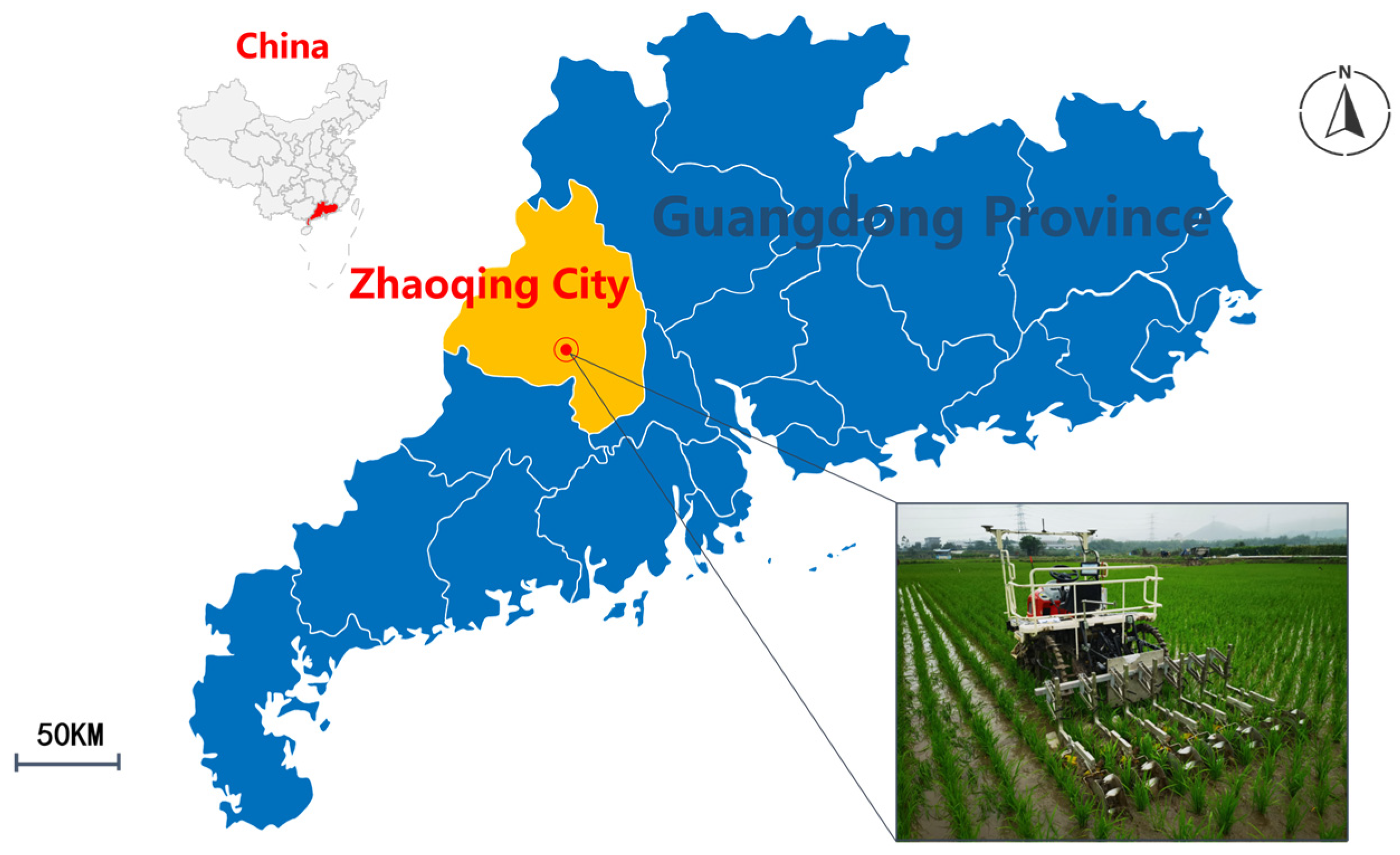
The study was conducted at Shapu Experimental Farm of Zhaoqing Agricultural Research Institute in Zhaoqing City, Guangdong province, China (23°15′ N, 112°65′ E with 17 m of elevation) (Figure 1). The region has a sub-tropical and monsoon climate [29], with a mean annual temperature of 22.6 °C, precipitation of 1853.1 mm, mean sunshine duration of 1194.2 h, and average humidity of 76.8% [28]. The soil is classified as Ultisol (Ut), with a sandy loam (SL) topsoil texture. Prior to the establishment of weed-control treatments, the field was dominated by annual weed species such as Echinochloa crusgalli (L.), Beauv, Leptochloa chinensis (L.) Nees, Alternanthera philoxeroides (Mart.) Griseb, Cyperus difformis L. and Ludwigia prostrata Roxb, with an average density of 24 weeds per square meter.
The experimental field was transplanted with rice seedlings with the cultivar of Huahang 57 on 30 March 2021. At the time of transplanting, the seedlings had 2–4 leaves and reached a height of 100–150 mm with a seedling age of 14–20 days. Rice transplanting with synchronous basal fertilizer application was conducted using a transplanter (PZ60, ISEKI, Changzhou, China) equipped with an autonomous driving system. Its key technical specifications were as follows: transplanting 6 rows per pass, with an inter-raw spacing of 180 mm and an inter-row spacing of 300 mm. The field was fertilized throughout the fertility period using urea and a compound fertilizer containing nitrogen, phosphorus, and potassium (N:P2O5:K2O at a ratio of 15:15:15). Two fertilizer application methods were adopted, including side banding at 50 mm and manual surface broadcast. The compound fertilizer was applied three times for a total of 525 kg ha−1, in which 225 kg ha−1 was applied through the side banding at the time of transplanting, and 150 kg ha−1 was manually spread 15 and 27 days each time after transplanting. Additionally, 75 kg ha−1 of urea (46% N) was top-dressed 7 days after transplanting. Pesticides were applied using unmanned aerial vehicles (P20, XAG, Guangzhou, China) for pest and disease control as needed. During the rice growth period, pesticides were applied as needed using unmanned aerial vehicles (P20, XAG, China): for the control of leaf roller caterpillars, 1.7% Abamectin + 4.3% Chlorantraniliprole suspension concentrate at 600 mL ha−1; for sheath blight, 30% Difenoconazole–Propiconazole emulsifiable concentrate at 225 mL ha−1; for planthoppers, 25% Pymetrozine suspension concentrate at 300–450 mL ha−1; for stem borers, 5% Abamectin at 3 L ha−1; and for bacterial diseases, 2% Kasugamycin at 1.5–2.25 L ha−1.

2.2. Experimental Design

The experiment included three weed-control treatments: mechanical weed control (MW), chemical weed control (CW), and no weed control (NW). Each treatment plot was randomly arranged, with three repetitions in this study. The field plots measured 4 m (width) and 30 m (length). All field plots were subjected to identical conditions in terms of fertilization and pest control as described above.
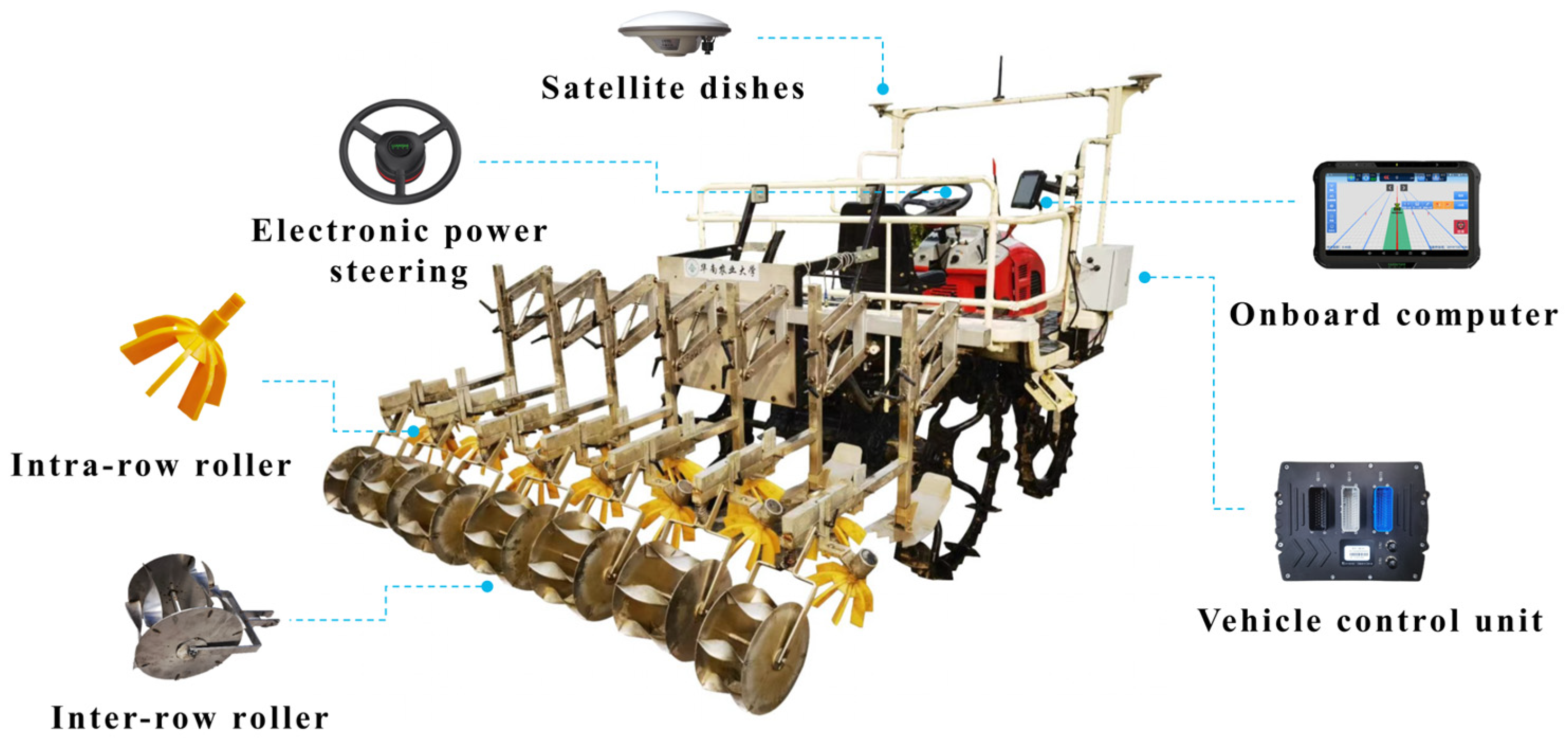
For the mechanical weed-control treatment, an autonomous rice intertillage weeding machine (3ZSC-190W, South China Agricultural University, Guangzhou, China) as shown in Figure 2 was utilized once at two weeks after transplanting or at the 4–5 leaf stage of the rice [28]. At this stage, almost all the weeds have emerged and are still small, making it the optimal time for mechanical weed control. The weeding machine was equipped with an automatic driving system based on the Beidou navigation satellite system, a power system, a profiling mechanism, and synchronous inter-row and intra-row weeding devices spanning 2 m in width. The weeding unit had two types of rollers: umbrella-like intra-row rollers with 8 tines for cutting weeds within the crop row, and spiral scraper-like inter-row rollers for cultivating and killing weeds between the crop rows. The driving system of the machine was automated to control its movement and weeding action based on the predetermined route of transplanted rice seedlings. Meanwhile, a precision computer system provided real-time in-field directional adjustments to prevent any inadvertent damage to the rice seedlings during the weeding process. The weeding machine achieved a field capacity of 0.57 ha h−1.
For the chemical weed-control treatment, a mixture of 60% Butachlor emulsion (a selective pre-emergent herbicide; rate: 1.95 L ha−1) and 10% Benzosulfuron methyl wettable powder (a selective systemic herbicide; rate: 75 g ha−1) was applied on the 7th day after transplanting [28]. This mixed herbicide is mainly used for controlling annual gramineous weeds and some broadleaf weeds in paddy fields after plugging soil treatment. Subsequently, based on weed emergence during plant growth, a stem and leaf herbicide was sprayed locally with a backpack sprayer at a rate of 1.8 L ha−1 mixed with water. The herbicide used was compound with a total active ingredient content of 60 g·L−1 (containing 10 g·L−1 of Penoxsulam and 50 g·L−1 of Cyhalothrin).

2.3. Soil Sampling

Soil samples were collected five weeks after transplanting (late-tillering stage (TL) of the rice) to analyze the characteristics of the soil bacterial community. This specific timing was selected because it represents a phase of highly active competition between rice and weeds, during which the effects of weeding treatments on the soil (including both physical disturbance and chemical inputs) have fully manifested. However, this period precedes the long-term dominance of rice canopy closure, which typically occurs around 5–6 weeks after transplanting and ultimately suppresses weeds by blocking sunlight [30]. Therefore, sampling at this juncture allows us to capture the soil bacterial community when it is most responsive to the direct and intermediate-term impacts of the weeding practices themselves, before the ecosystem is predominantly shaped by crop-driven indirect effects. This approach enables a clearer attribution of observed changes in microbial characteristics to the weed management practices under study. In each plot, excessive water was drained first, followed by the removal of surface debris. Soil samples were collected vertically using a soil sampler at a depth of 2–15 cm. Six random samples were collected and mixed to obtain a composite sample for each plot. Before analysis, plant roots and stones present in the composite samples were removed to ensure homogeneity. All soil samples were stored at a temperature of −80 °C to preserve the soil DNA for later extraction and analysis [31].

2.4. DNA Collection and High-Throughput Sequencing

Microbial community genomic DNA was extracted from soil samples using the E.Z.N.A.® soil DNA Kit (Omega Bio-tek, Norcross, GA, USA). The DNA extract was checked on 1% agarose gel, and DNA concentration and purity were determined with NanoDrop 2000 UV-vis spectrophotometer (Thermo Scientific, Waltham, MA, USA). The hypervariable region V3-V4 of the bacterial 16S rRNA gene was amplified with primer pairs 338F (5′-ACTCCTACGGGAGGCAGCAG-3′) and 806R(5′-GGACTACHVGGGTWTCTAAT-3′) by an ABI GeneAmp® 9700 PCR thermocycler (Applied Biosystems, Foster City, CA, USA). The PCR products from the same sample were mixed, and then the mixture was subjected to agarose gel electrophoresis using a 2% agarose gel for recovery. The recovered products were purified using the AxyPrep DNA Gel Extraction Kit (Axygen Biosciences, Union City, CA, USA) and quantified using Quantus™ Fluorometer (Promega, Madison, WI, USA). Purified amplicons were pooled in equimolar and paired-end sequenced on an Illumina MiSeq PE300 platform (Illumina, San Diego, CA, USA) according to the standard protocols by Majorbio Bio-Pharm Technology Co., Ltd. (Shanghai, China). The specific sequencing methods were adopted from a previous study by Pan et al. [32]. Quality filtering and bioinformatics processing of the sequencing data were performed using the Majorbio Cloud Platform (www.majorbio.com) of Majorbio Bio-Pharm Technology Co., Ltd.

2.5. Statistical Analyses

Statistical analysis of the soil bacterial data was conducted using the Data Processing System (DPS) 9.01 version statistical software through one-way ANOVA [33]. The significance of the results was determined using Tukey’s HSD (Honestly Significant Difference) test (p < 0.05). The Majorbio Cloud Platform was utilized for principal component analysis (PCA) to investigate the relationship between the soil microbial community structure and its affecting factors [34].

3. Results and Discussion

3.1. Soil Bacterial Diversity

A total of 6398 unique bacterial operational taxonomic units (OTUs) were generated with 97% sequence similarity after quality filtering, with an average of 4083 bacterial OTUs per sample. The bacteria were from 52 phyla, 170 classes, 379 orders, 577 families, and 1029 genera. The diversity indices including ACE, Chao1, OTUs, Shannon, and Simpson of the bacterial communities showed no significant effect among the weed-control treatments (Table 1). The MW treatment resulted in numerically higher values of ACE, Chao1, and observed OTUs for soil bacteria samples as compared to the CW. Among them, the OTU is widely recognized as one of the most important indicators for understanding bacterial communities and their ecological roles. It represents the number of distinct microbial taxa or species observed in a sample. The MW produced the highest number of OTUs among all treatments, indicating its potential positive impact on the diversity and abundance of soil bacteria. Additionally, the Shannon index of MW treatment was slightly higher than that of CW and NW treatments. Notably, this divergence occurred despite comparable weed control efficacy between the two treatments (MW: 80%; CW: 79%), suggesting that the differences in bacterial communities may stem from the weeding “method” itself rather than its “effectiveness” in weed removal.
The effect of weed-control methods on soil bacterial diversity was found to be minimal. However, the MW treatment tended to have slightly higher values in almost all soil bacterial diversity indices measured as compared to the CW. This may be attributed to the fact that mechanical weeding increases the organic matter in soil through the degradation of weed fragments. During mechanical weeding, the removed or cut weed debris is returned to the soil surface as fresh organic matter. The decomposition of this debris directly increases the content of labile organic matter in the soil, particularly readily decomposable carbon sources. This newly added organic matter serves as a key substrate for microbial growth, thereby potentially altering the activity, composition, and interactions of the rhizosphere soil microbial community [35]. Consequently, mechanical weed control may indirectly drive changes in the soil bacterial community through this pathway of resource input. Furthermore, herbicides may substantially disturb the soil microbial ecology and affect the diversity and composition of microbial communities [36]. Yang et al. [37] reported that microbial biomass and biochemical activities in rhizosphere soils were depressed by butachlor addition, regardless of plant type, which explains the lowest bacterial diversity in CW-treated soil in this study.

3.2. Soil Bacterial Community Composition

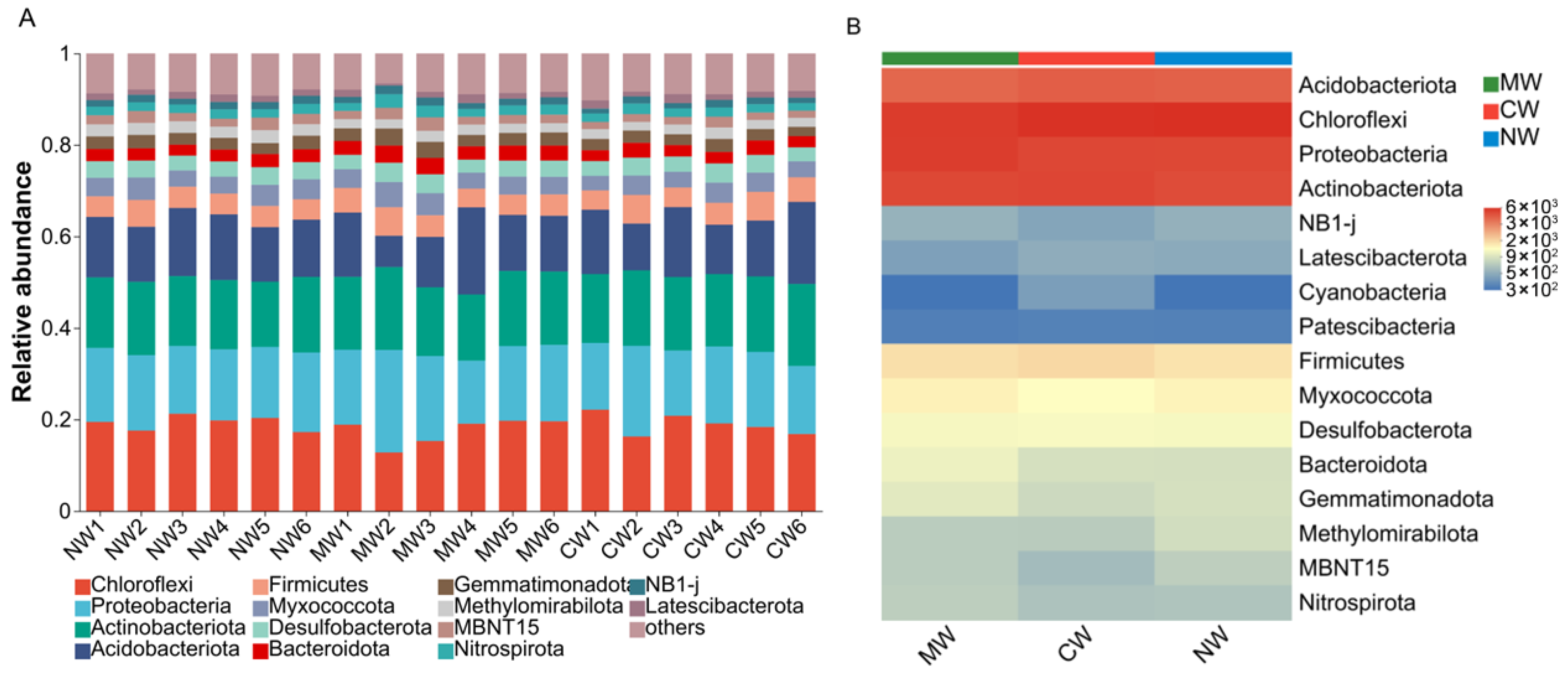
The relative abundance of bacteria under different weed-control treatments is shown in Figure 3A, revealing the detection of 14 major bacterial phyla in soil samples collected from the treatments. The dominant bacterial phyla were Chloroflexi (17.55–19.27%), Proteobacteria (15.98–17.36%), Actinobacteriota (15.43–16.29%), Acidobacteriota (12.56–13.41%), Firmicutes (4.77–5.20%), Myxococcota (3.81–4.27%), Desulfobacterota (3.56–3.61%) and Bacteroidota (2.66–3.3%). The results exhibit common and ubiquitous dominant soil bacterial phyla community composition, regardless of the weed-control treatment. When comparing the abundance of bacteria phyla among plots in the same treatment, most phyla showed insignificant differences. To further visualize the differences in soil bacterial communities under different weed-control treatments, the 16 most abundant bacterial phyla were selected for the heatmap analysis, highlighting their relative distribution and abundance (Figure 3B). Each row of the heatmap represents a phylum of bacteria, and each column represents a treatment. The color scheme of the heatmap ranges from dark blue (low abundance) to brick red (high abundance).
The heatmap clustering analysis suggested that the dominant bacteria phylum type among the treatments was virtually the same with slight abundance differences in certain phyla. Chloroflexi, Proteobacteria, Actinobacteriota, and Acidobacteriota were among the most abundant and dominant bacterial phyla in all soil samples across the treatments. Chloroflexi may have a significant role in the biogeochemical cycling of chlorine [38] and is known to be involved in the degradation of soluble microbial products such as organic carbohydrates and cellular materials [39]. Proteobacteria is the most abundant phylum recorded in soil libraries [40] and is also widespread in symbiotic relationships between water bodies, plants, and animals. Actinobacteria is recognized as a decomposer of organic matter and plays a significant role in soil organic matter cycling. According to Raklami et al. [41], Actinobacteria is considered one of the most promising microorganisms for improving plant growth, agricultural productivity, and overall soil health with its ability to decompose cellulose. It is worth noting that the abundance of Acidobacteriota in MW was slightly lower than that in NW and CW, perhaps due to its different tolerance to intertillage. Acidobacteriota is commonly found in soils with low pH values [42] but does not thrive under fully aerobic or anoxic conditions [43]. The use of the automatic weeding machine increased soil oxygen content due to the soil loosening effect, which may be responsible for the reduction in Acidobacteriota as compared to the other treatments.
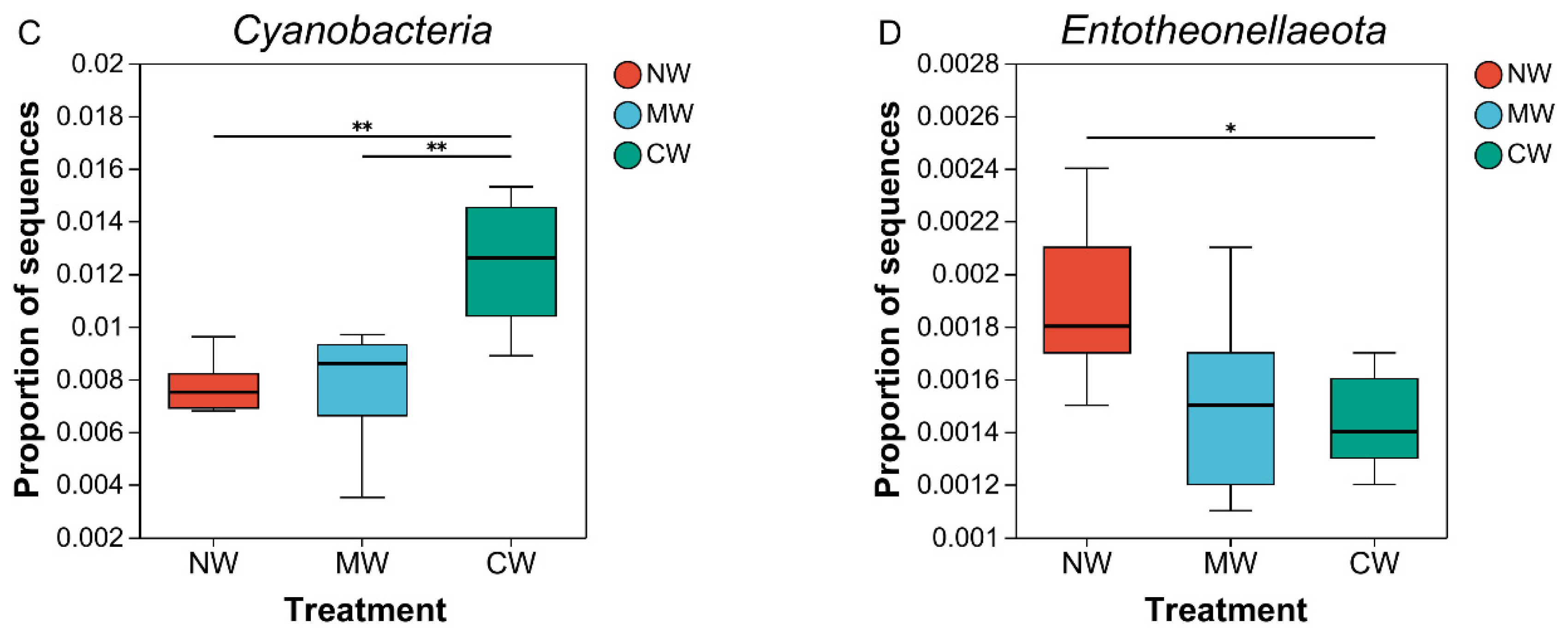
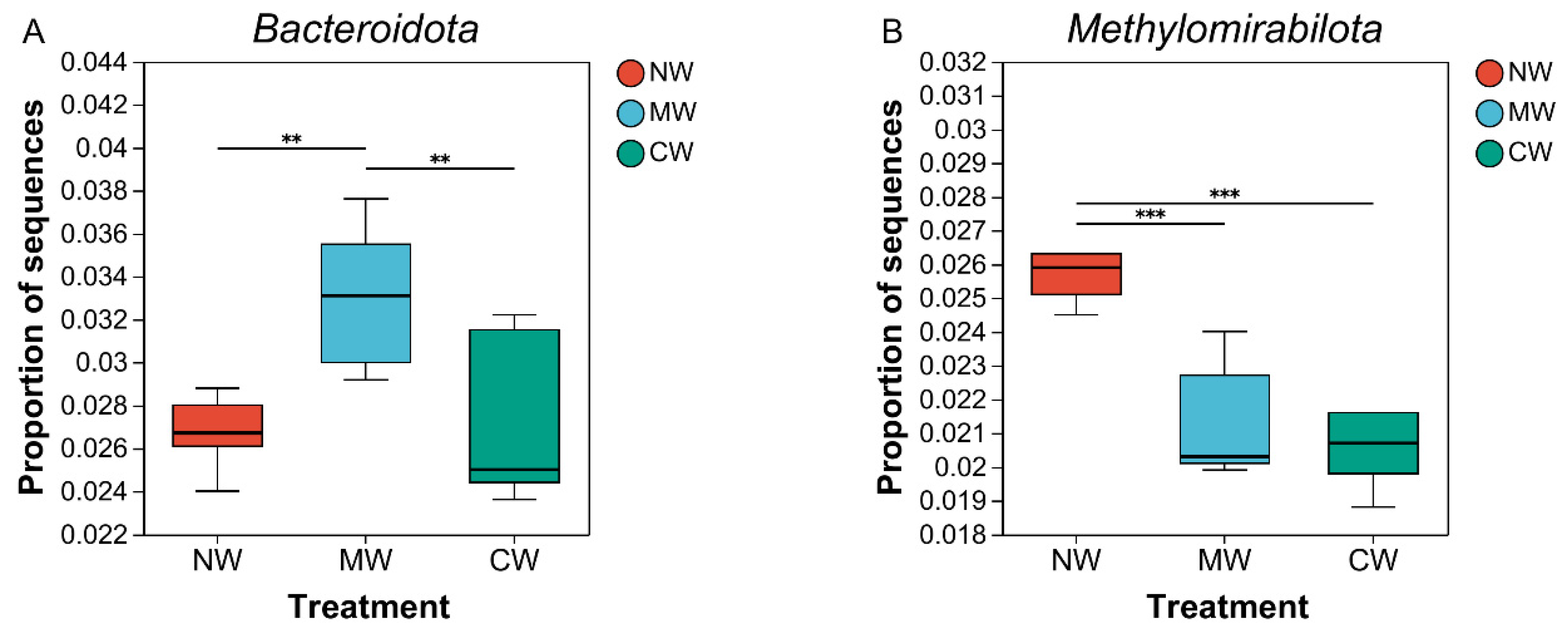
Further ANOVA analyses suggested that four bacterial phyla showed significant differences among the weeding treatments (Figure 4). The abundance of Bacteroidota (p < 0.01) in MW treatment was significantly higher than that in NW and CW treatments (Figure 4A). This can be attributed to the tillage function of the weeding machine, and the rotation of the weeding wheels increases soil oxygen content and enhances soil activity [44]. Kruczynska et al. [45] suggested that the decrease in Bacteroidota abundance may indicate inadequate soil chemical parameters, leading to agricultural soil fatigue. This indirectly suggested the potential of mechanical weed control in improving agricultural soil quality. It was worth noting that the MW and CW treatments had significantly lower values in the relative abundance of Methylomirabilota (p < 0.001) as compared to the NW treatment (Figure 4B), indicating that changes in weed density may have a great influence on the composition of this bacterial phylum. At present, the understanding of the metabolic diversity of Methylomirabilota methane-oxidizing bacteria is still very limited [46]. Methane-oxidizing microorganisms play a critical role in reducing the emission of this potent greenhouse gas into the atmosphere, which indicates that both weed-control methods may increase the emission of methane gas into the atmosphere [47]. The relative abundance of Cyanobacteria (p < 0.01) in CW treatment was significantly higher than that of NW and MW treatments (Figure 4C). Chen et al. [48] have reported that some features of Cyanobacteria are associated with their ability to nitrogen fixture. The higher proportion of Cyanobacteria in the soil treated with chemical weed control suggests that it may be more favorable for plants to absorb nitrogen nutrients. A significant difference in the relative abundance of Entotheonellaeota (p < 0.05) was detected between the CW and NW treatments (Figure 4D). Specifically, weed-control methods are negatively correlated with the abundance of Entotheonellaeota, which may slow down the cycling of micronutrients [49]. Overall, the weed-control methods had a significant effect on several specific bacteria, but they had a limited effect on the composition of most soil bacterial communities.

3.3. Soil Bacterial Community Structure

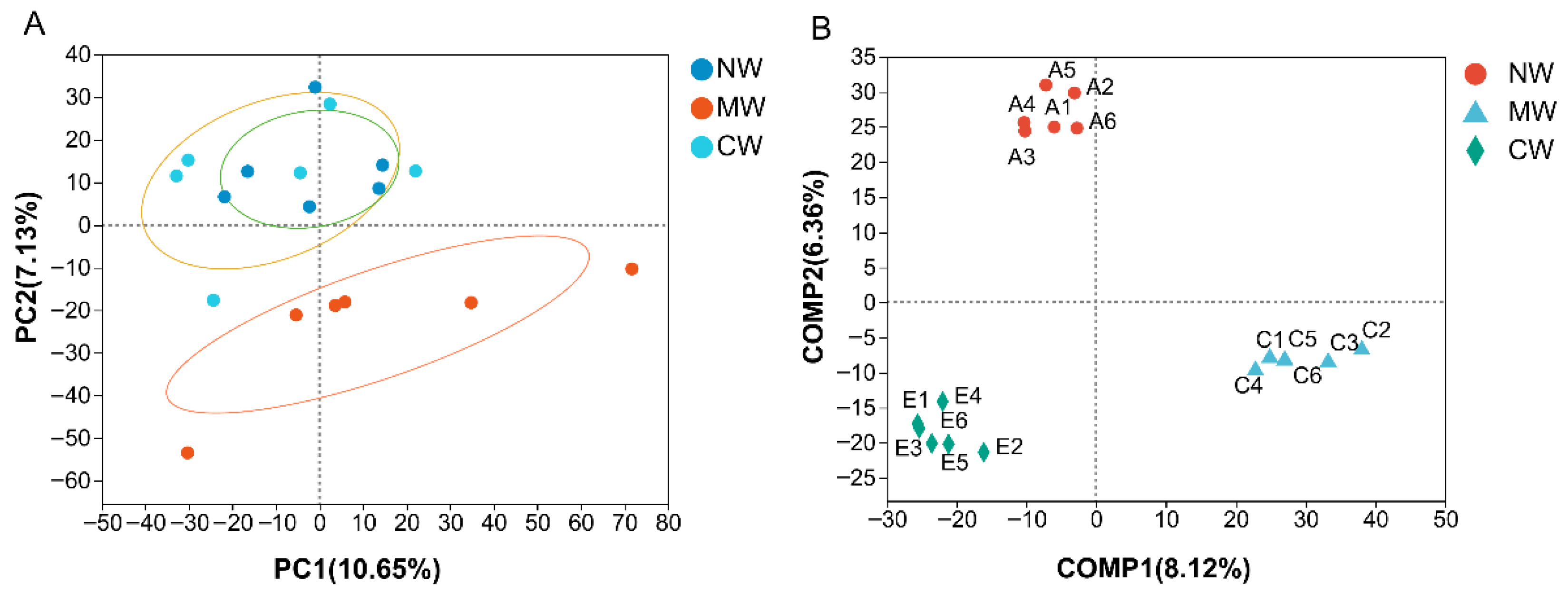
Principal component analysis (PCA) was performed on the bacterial abundance matrix, and the first two principal components (PCs) were plotted to visualize the effect of different treatments on bacterial community composition (Figure 5A). The PC1 and PC2 axes explained 10.65% and 7.13% of the total variance in the bacterial species in the eighteen samples. The PCA plot showed distinct spatial distribution differences in soil bacterial communities under different weed-control methods. Bacterial community composition from the CW and NW plots was generally similar and was distinctly separated from MW treatment along the second component (PC2). This indicated that mechanical weed control had a strong impact on the soil bacterial community structure.
To further evaluate the sample grouping, partial least squares discriminant analysis (PLS-DA) was performed, and the results are presented in Figure 5B. This figure shows the correct bacterial differentiation at the OTU level in all test samples. Test samples from all three treatments were significantly differentiated in the PLS-DA model, indicating good sample differentiation performance.
Our study revealed that the mechanical weed-control treatment affected the soil bacterial community structure, indicating that the soil bacterial community was sensitive to intertillage mechanical weed-control treatments. These results were in line with the previous studies that tillage methods influenced the bacterial diversity and composition of rhizosphere soil in the plough layer (20–40 cm depth) by altering soil moisture content. This, in turn, can impact the metabolism, environmental information processing, and genetic information processing of bacteria in the rhizosphere soil [50]. Furthermore, certain weed species possess efficient phosphorus uptake capabilities, leading to the accumulation of surplus phosphorus in their biomass and promoting phosphorus biocycling. The use of mechanical weed control, such as weed wheels, enhances phosphorus release by turning over topsoil and burying weeds into the soil thereby improving soil fertility [51]. These factors may contribute to the observed differences in soil bacterial community structure between mechanical weed-control treatments and other treatments.

3.4. Bacterial Co-Occurrence Network Analysis

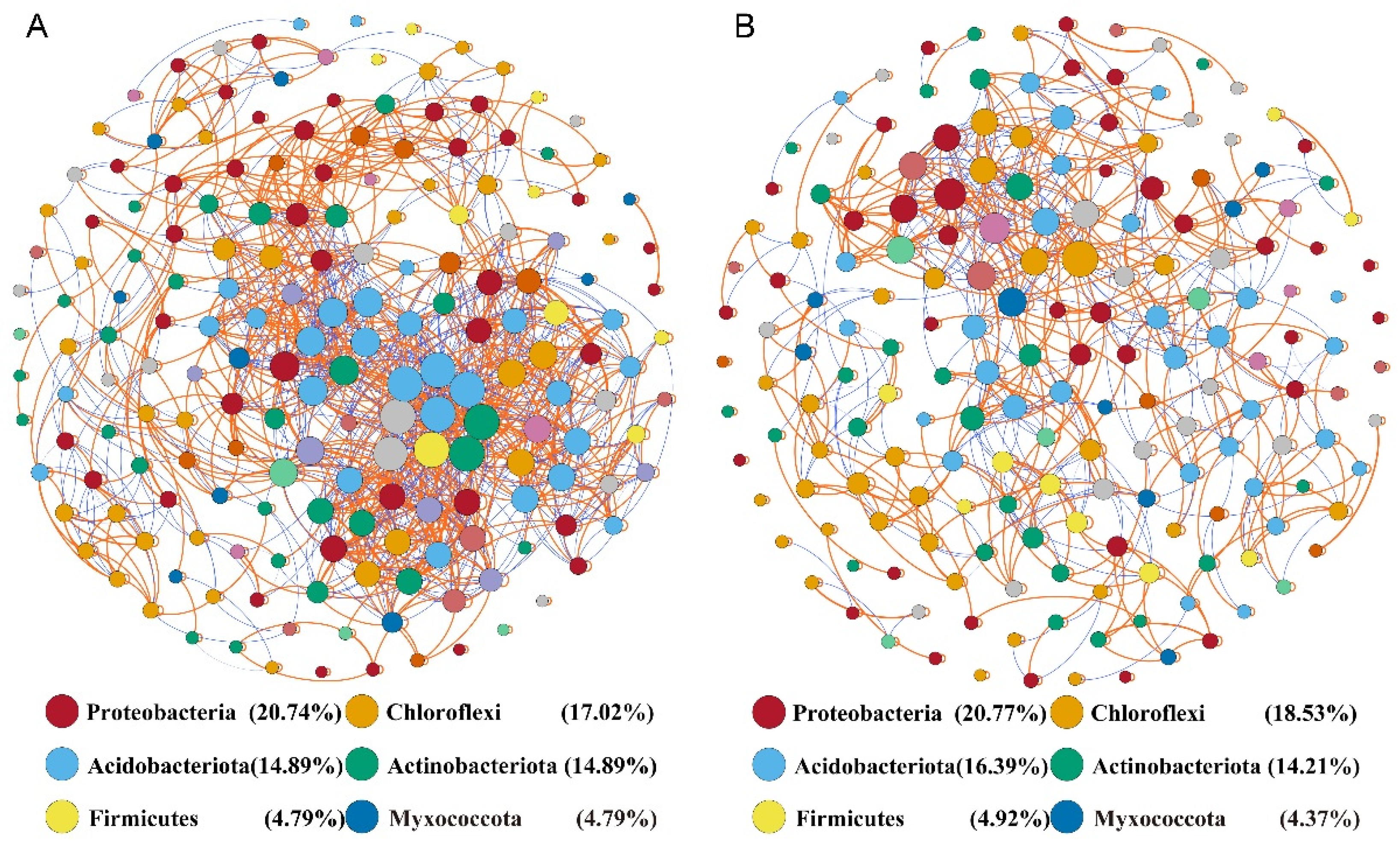
Microbial communities harbor keystone taxa, which drive community composition and function [52]. Network analysis can identify the interactions between microbial communities and screen key indicator taxa [53,54]. A co-occurrence network was constructed to explore the effect of two weed-control methods on the ecological interactions among bacterial communities (Figure 6), based on the correlation between bacterial OTUs and the two treatments. The bacterial network in both mechanical and chemical weed-control treatments exhibited a strong “small world” characteristic, which is unique in its ability to have specialized nodes or areas in the network while simultaneously exhibiting shared or distributed processing across all of the communicating nodes within the network [55]. The network topology analysis revealed significant differences between the co-occurrence networks of MW and CW treatments. Compared to the CW treatment, the bacterial network under MW exhibited higher complexity, as reflected by the higher average connectivity, more nodes and links, and the positive correlation of links, is much higher than the negative correlation. The MW treatment had different effects on the topological characteristics of bacterial networks. Specifically, the bacterial network under MW showed an increased trend in both average degree and modularity, and a decrease in average path length.
According to the analysis results, the central nodes in the co-occurrence networks under both treatments were classified into six bacterial phyla. These central nodes mainly belonged to the Proteobacteria, Chloroflexi, Acidobacteriota, Actinobacteriota, Myxococcota, and Firmicutes phyla, which accounted for 77.12% of all nodes in the MW network and 79.19% in the CW network. They were also the dominant bacterial phyla in the community composition. In the MW treatment, the genera from the phylum Actinobacteriota, Acidobacteria, Verrucomicrobiales, Firmicutes, Coriobacteriia, and Latescibacterota had high connectivity, while Proteobacteria and Chloroflexi were the keystone genera in the CW treatment. In the co-occurrence network, there were more bacterial central nodes in the network of the mechanical weed-control method, indicating that it had more bacterial key genera.
In this study, mechanical weed-control treatments increased the complexity of bacterial networks and the ratio between their positive and negative links. These implied that the nodes in the network are more tightly connected, which facilitates information transfer, material exchange, and interactions between nodes. At the genus level, Clostridium under Firmicutes phylum, Streptomyces under Actinobacteriota phylum, and unidentified genera (Acidobacteriota, Latescibacterota, Vicinamibacterales, and Coriobacteriia) were considered central taxa under the MW treatment due to their high degrees (>40). Clostridium spp. has diverse metabolic functions and are important microorganisms capable of degrading complex biomasses, including the conversion of starch, protein, and purines into organic acids, alcohols, CO2, and hydrogen [56]. Streptomyces is a genus of bacteria widely regarded as one of the important producers of bioactive compounds, which grow in soil. Members of the genus Streptomyces have fungal-like growth patterns and biosynthetic capabilities, and are the primary source of secondary metabolites, producing many important bioactive compounds such as antibiotics, immunosuppressants, and anticancer drugs [57]. In conclusion, considering the network results, some members of Acidobacteriota, Latescibacterota, Vicinamibacterales, and Coriobacteriia mainly play a crucial role in the C and N cycling of soil ecosystems. On the other hand, the chemical weed-control treatment weakened the interaction between soil bacteria, which may be due to the inhibition of bacteria by toxins under herbicide conditions [58]. The central taxa in the bacterial community under chemical weeding treatment include an unidentified genus under the class Anaerolineae of the phylum Chloroflexi and the genus Hyphomicrobium under the phylum Proteobacteria. A previous study indicated that butachlor disturbs the symbiotic pattern of soil bacteria, and various bacteria with the ability to metabolize herbicides work together to degrade them [59].

3.5. Discussion

This discussion synthesizes the key findings from our study and contextualizes them within the broader framework of soil microbial ecology and sustainable agricultural practices. We aimed to elucidate not only how different weed-control methods alter soil bacterial communities but also what these changes imply for soil ecosystem functioning and long-term agricultural sustainability.
In this study, we investigated and analyzed the soil bacteria in paddy fields under different weed-control methods, focusing on the soil bacterial diversity, community composition, community structure and bacterial co-occurrence network. We found that the mechanical weed control had a higher count of 4117 OTUs compared to chemical weed control and no weed control, which could provide a more favorable environment in terms of soil bacterial diversity. While the dominant bacterial taxa were similar across different weed-control methods, mechanical weed control, with its intertillage function, significantly influenced the abundance of bacterial phyla including Bacteroidota, Methylomirabilota, Cyanobacteria, and Entotheonellaeota, in comparison to chemical weed control and no weed control. The enrichment of Bacteroidota, a phylum often associated with the degradation of complex organic compounds, suggests that mechanical weed-control method may enhance soil organic matter turnover through physical incorporation of weed residues. Similarly, changes in Methylomirabilota and Cyanobacteria phyla indicate potential shifts in methane cycling and nitrogen fixation processes, respectively, highlighting the broader functional implications of tillage-induced microbial restructuring.
Further analyses of PCA and PLS-DA suggested distinct spatial distribution differences in soil bacterial communities under different weed-control methods, which can be attributed to the sensitivity of bacterial communities to tillage practices and the impact of specific weed species on phosphorus biocycling. These spatial patterns underscore the role of habitat heterogeneity created by mechanical disturbance, which can promote niche differentiation and alter microbial assembly processes. In contrast, chemical weeding may impose more uniform selective pressure, leading to reduced diversity and community convergence. Furthermore, the observation that chemical weeding had an even weaker impact on the soil bacterial community can be interpreted from several perspectives. Firstly, the herbicide used in the trial, Butachlor emulsion and Benzosulfuron methyl wettable powder, are selective herbicides with limited direct toxicity to soil microorganisms. More importantly, the no-weed-control treatment does not constitute a static control; the continuously growing weeds themselves continuously disturb the microbial community through root activity, resource competition, and residue decomposition, which may have diminished the apparent differences compared to the chemical weeding treatment. Additionally, long-term agricultural practices may have conferred a degree of resistance to such chemical inputs in the local microbial community. This indirectly reflects the complex, context-dependent nature of soil microbial community responses to external disturbances.
Beyond community composition, the structural and interactive dimensions of microbial assemblages provide critical insights into ecosystem stability and function. The bacterial co-occurrence network analysis revealed that mechanical weed control enhanced the complexity of bacterial networks and increased the proportion of positive links, whereas chemical weed control weakened bacterial interactions. A more complex and cooperative network under mechanical weed-control method suggests higher functional redundancy and resilience, which may buffer the soil ecosystem against environmental fluctuations. In contrast, the simplified network under chemical weed-control method could indicate a partial loss of synergistic interactions, potentially compromising nutrient cycling efficiency and pathogen suppression capacity. These benefits indicate that mechanical weed control has the potential to foster intricate and cooperative relationships among soil bacteria, thereby enhancing ecosystem functions and facilitating plant growth.
The integration of microbial findings with agronomic outcomes strengthens the practical relevance of this study. In our concurrent study, we conducted research on the effects of mechanical weed control on weed control efficacy, rice growth characteristics, and yield in paddy fields [28]. The results revealed that both mechanical and chemical weed-control methods maintained a weed control efficacy of over 80% five weeks after transplanting. Compared to chemical weed control, mechanical weed control resulted in a 45% increase in total rice biomass after the stem elongation (SE) stage, effectively promoting crop growth. This increase can be attributed to the tillage effect and mechanical stimulation provided by the weeding machine. This result is consistent with previous research by Li et al. [60], where a rice–duck co-culture system realized the benefits of weed control through eating and trampling of the ducks and crop growth stimulation through stirring and rubbing the rice roots system of the ducks. Specifically, the stimulation process increases root biomass and chlorophyll content, enhancing their lodging resistance and photosynthetic capacity, and consequently leads to an increase in the biomass of rice plants. Similarly, some farmers often trample wheat and barley seedlings under stress to prevent slender growth, strengthen roots, shorten plant height, and ultimately increase yield [61]. The weeding machine used in this study had similar functions resulting from the interaction between weeding rollers and plants.
Both mechanical and chemical weed-control methods could significantly improve crop yield. The plots treated with the mechanical weed control and the chemical weed control achieved a higher rice yield of 7.51 t ha−1 and 7.40 t ha−1, respectively, as compared to the no-weeding plots of 5.80 t ha−1 (data available from [28]). In other words, the mechanical weed-control treatment resulted in a 29% higher rice yield compared to the no-weed-control treatment and a 1.5% higher rice yield compared to the chemical weed-control treatment. Although the mechanical weed control in this study was found to increase soil oxygen levels and activity, enhance the abundance of the Bacteroidota, and improve agricultural soil quality, we infer that it would not be a superior choice over chemical weeding in terms of crop yield. This is likely because mechanical weed control did not exert a substantial influence on the composition and proportion of soil bacterial communities in general. As a result, the chemical weed control can also increase rice yield at a similar magnitude as compared to the control treatment. Although some rice plants treated with the butachlor may experience a reduction in tiller number and plant height, and were suppressed by herbicides at the tillering stage, they can self-degrade and resume normal growth in the later growth period. Additionally, the proportion of nitrogen-fixing bacteria, such as Cyanobacteria, was higher in the soil treated with chemical weed control, which enhanced nitrogen fixation in paddy soil and promoted better nitrogen uptake by plants [3]. All of these factors contributed to an overall increase in rice yield. However, the primary factor contributing to the increased rice yield in both weed-control methods was the reduction in weed density. The positive correlation between weed control efficacy, rice growth characteristics, and yield further highlighted the importance of implementing effective weed control strategies for maximizing crop productivity. Beyond immediate crop yield, the ecological implications of the chosen method warrant consideration. Mechanical weed control supports a more complex and interactive soil microbiome, which may enhance long-term soil health, carbon sequestration, and ecosystem multifunctionality. In contrast, repeated chemical applications risk reducing microbial diversity and network resilience, potentially leading to functional degradation over time.
An increasing body of research suggests that the mechanical weed-control method is an effective practice for paddy field management, because it promotes the growth of rice plants by reducing competition between rice and weeds [62,63]. With the development and application of genome sequencing technology, researchers have gained a deeper understanding of the factors involved in promoting rice growth through the use of the mechanical weed-control method. In this study, high-throughput sequencing technology was employed to compare the composition of soil bacterial communities under different weed-control methods and explore the potential mechanisms by which mechanical weed control affects the bacterial community. Future research should further clarify the functional activities and metabolic pathways driven by these microbial shifts. Additionally, long-term field trials across diverse agroecological zones are needed to assess the temporal stability of these effects and their dependency on soil type, climate, and weed-control methods.
These research findings not only contribute to a better understanding of the ecological characteristics of soil bacteria but also hold significant implications for the improvement of agricultural management and the sustainability of soil ecosystems. By prioritizing microbial-friendly practices such as mechanical weed-control method, farmers can support soil biological integrity while maintaining productivity, thereby aligning agricultural outcomes with broader environmental sustainability goals.

4. Conclusions

As a preliminary one-year study, our results demonstrate that mechanical weed control (MW) treatment induces specific in-soil bacterial communities of paddy fields, distinct from chemical weed-control (CW) or no-weed-control (NW) treatments. Although MW did not significantly alter alpha diversity indices (ACE, Chao1, Shannon, Simpson), it increased the observed OTUs count to 4117, compared to 4045 in CW and 4090 in NW. The MW treatment significantly increased the relative abundance of the Bacteroidota phylum compared to CW and NW. Principal component analysis revealed clear spatial separation of bacterial communities under MW along the second principal component (PC2, explaining 7.13% of variance), indicating a structural shift. Bacterial co-occurrence network analysis revealed that, compared to the CW treatment, the MW treatment enhanced network complexity, characterized by higher average connectivity and a greater proportion of positive interactions. Our study provided preliminary evidence for the differential short-term effects of mechanical weed control and chemical weed control on soil bacterial communities, offering a new perspective for selecting appropriate weed-control methods in agricultural management and soil ecosystem sustainability. In future research, time-series sampling will be employed to further explore the relationships between mechanical weed control, soil physicochemical properties, and microorganisms, providing deeper insight into how weeding methods drive the structure and function of microbial communities.

Author Contributions

Methodology, C.L., S.W., Z.W., Z.T., C.J., Z.Z. and L.Q.; validation, S.W., Z.W., Z.T. and C.J.; data curation, S.W., Z.W., Z.T. and C.J.; writing—original draft preparation, C.L., Z.Z. and L.Q.; writing—review and editing, C.L., Z.Z. and L.Q.; visualization, C.L. and Z.Z.; supervision, L.Q.; funding acquisition, L.Q. All authors have read and agreed to the published version of the manuscript.

Funding

This research was financially supported by the National Natural Science Foundation of China (U23A20174), the Earmarked Fund for Modern Agro-industry Technology Research System in China, grant number CARS-01, National Key R&D Program Project, grant number 2023YFD1401100, Kunming University of Science and Technology Human Resources Development Fund under Grant KKZ3202501039 and the Guangdong Special Support Program—Provincial Department of Agriculture and Rural Affairs (Agriculture and Rural Vitalization Talent), NO. NYQN2025006.

Data Availability Statement

The data has been presented in the article.

Conflicts of Interest

The authors declare no conflicts of interest.

References

  1. Priyadarshini, A.; Dash, S.; Jena, J.; Kusumavathi, K.; Pattnaik, P.; Holderbaum, W. Review of the cutting edge technologies for weed control in field crops. Int. J. Agric. Biol. Eng. 2024, 17, 44–57. [Google Scholar] [CrossRef]
  2. Brown, B.; Gallandt, E.R.; Riemens, M. Evidence of synergy with ‘stacked’ intrarow cultivation tools. Weed Res. 2018, 58, 284–291. [Google Scholar] [CrossRef]
  3. Yu, J.H.; Zhang, J.; Zheng, X.Z.; Zhang, Y.S.; Chen, D.L.; Ding, H. Divergent modulation of land use-driven changes in soil properties and herbicide acetochlor application on soil nitrogen cycling. Soil Tillage Res. 2022, 215, 105231. [Google Scholar] [CrossRef]
  4. Melander, B.; Lattanzi, B.; Pannacci, E. Intelligent versus non-intelligent mechanical intra-row weed control in transplanted onion and cabbage. Crop Prot. 2015, 72, 1–8. [Google Scholar] [CrossRef]
  5. Zeng, Z.; Martin, A.; Chen, Y.; Ma, X. Weeding performance of a spring-tine harrow as affected by timing and operational parameters. Weed Sci. 2020, 69, 247–256. [Google Scholar] [CrossRef]
  6. Jiao, S.; Chen, W.M.; Wang, J.L.; Du, N.N.; Li, Q.P.; Wei, G.H. Soil microbiomes with distinct assemblies through vertical soil profiles drive the cycling of multiple nutrients in reforested ecosystems. Microbiome 2018, 6, 146. [Google Scholar] [CrossRef]
  7. Chen, L.; Li, C.; Zhang, Z.; Feng, Q.; Xi, H.; Guo, R.; Zhang, C.; Wei, Y. Landscape differentiation of soil bacteria and bacteria-soil-vegetation interactions in desert-oasis ecosystems. Glob. Planet. Change 2024, 232, 104323. [Google Scholar] [CrossRef]
  8. Gao, Y.X.; Song, X.; Zheng, W.K.; Wu, L.; Chen, Q.; Yu, X.J.; Li, Z.L.; Li, R.C.; Gao, Y.; Tian, H. The controlled-release nitrogen fertilizer driving the symbiosis of microbial communities to improve wheat productivity and soil fertility. Field Crops Res. 2022, 289, 108712. [Google Scholar] [CrossRef]
  9. Balota, E.L.; Machineski, O.; Hamid, K.I.A.; Yada, I.F.U.; Barbosa, G.M.C.; Nakatani, A.S.; Coyne, M.S. Soil microbial properties after long-term swine slurry application to conventional and no-tillage systems in Brazil. Sci. Total Environ. 2014, 490, 397–404. [Google Scholar] [CrossRef]
  10. Liu, Z.X.; Liu, J.J.; Yu, Z.H.; Yao, Q.; Li, Y.S.; Liang, A.Z.; Zhang, W.; Mi, G.; Jin, J.; Liu, X.B.; et al. Long-term continuous cropping of soybean is comparable to crop rotation in mediating microbial abundance, diversity and community composition. Soil Tillage Res. 2020, 197, 104503. [Google Scholar] [CrossRef]
  11. Delgado-Baquerizo, M.; Maestre, F.T.; Reich, P.B.; Jeffries, T.C.; Gaitan, J.J.; Encinar, D.; Berdugo, M.; Campbell, C.D.; Singh, B.K. Microbial diversity drives multifunctionality in terrestrial ecosystems. Nat. Commun. 2016, 7, 10541. [Google Scholar] [CrossRef]
  12. Fierer, N.; Jackson, R.B. The diversity and biogeography of soil bacterial communities. Proc. Natl. Acad. Sci. USA 2006, 103, 626–631. [Google Scholar] [CrossRef]
  13. Li, Q.X.; Feng, J.; Wu, J.J.; Jia, W.; Zhang, Q.; Chen, Q.; Zhang, D.D.; Cheng, X.L. Spatial variation in soil microbial community structure and its relation to plant distribution and local environments following afforestation in central China. Soil Tillage Res. 2019, 193, 8–16. [Google Scholar] [CrossRef]
  14. Segal, L.M.; Miller, D.N.; McGhee, R.P.; Loecke, T.D.; Cook, K.L.; Shapiro, C.A.; Drijber, R.A. Bacterial and archaeal ammonia oxidizers respond differently to long-term tillage and fertilizer management at a continuous maize site. Soil Tillage Res. 2017, 168, 110–117. [Google Scholar] [CrossRef]
  15. Gong, X.W.; Liu, C.J.; Li, J.; Luo, Y.; Yang, Q.H.; Zhang, W.L.; Yang, P.; Feng, B.L. Responses of rhizosphere soil properties, enzyme activities and microbial diversity to intercropping patterns on the Loess Plateau of China. Soil Tillage Res. 2019, 195, 104355. [Google Scholar] [CrossRef]
  16. Wang, X.Y.; Duan, Y.; Zhang, J.; Ciampitti, I.A.; Cui, J.W.; Qiu, S.J.; Xu, X.P.; Zhao, S.C.; He, P. Response of potato yield, soil chemical and microbial properties to different rotation sequences of green manure-potato cropping in North China. Soil Tillage Res. 2022, 217, 105273. [Google Scholar] [CrossRef]
  17. Bao, Y.Y.; Dolfing, J.; Chen, R.R.; Li, Z.P.; Lin, X.G.; Feng, Y.Z. Trade-off between microbial ecophysiological features regulated by soil fertility governs plant residue decomposition. Soil Tillage Res. 2023, 229, 105679. [Google Scholar] [CrossRef]
  18. Deng, J.Y.; Deng, Y.L.; Sun, Z.J.; Wang, G.; Cao, L.L.; Yuan, H.F.; Huang, D.Y.; Jia, H.L. Tillage and residue management affect growing-season soil respiration in paddy fields. Soil Tillage Res. 2022, 218, 105315. [Google Scholar] [CrossRef]
  19. Zhou, X.G.; Wang, Z.L.; Jia, H.T.; Li, L.; Wu, F.Z. Continuously Monocropped Jerusalem Artichoke Changed Soil Bacterial Community Composition and Ammonia-Oxidizing and Denitrifying Bacteria Abundances. Front. Microbiol. 2018, 9, 705. [Google Scholar] [CrossRef]
  20. Momesso, L.; Crusciol, C.A.C.; Bossolani, J.W.; Moretti, L.G.; Leite, M.F.A.; Kowalchuk, G.A.; Kuramae, E.E. Toward more sustainable tropical agriculture with cover crops: Soil microbiome responses to nitrogen management. Soil Tillage Res. 2022, 224, 105507. [Google Scholar] [CrossRef]
  21. Zhang, S.X.; Li, Q.; Lu, Y.; Sun, X.M.; Jia, S.X.; Zhang, X.P.; Liang, W.J. Conservation tillage positively influences the microflora and microfauna in the black soil of Northeast China. Soil Tillage Res. 2015, 149, 46–52. [Google Scholar] [CrossRef]
  22. Badagliacca, G.; Benitez, E.; Amato, G.; Badalucco, L.; Giambalvo, D.; Laudicina, V.A.; Ruisi, P. Long-term no-tillage application increases soil organic carbon, nitrous oxide emissions and faba bean (Vicia faba L.) yields under rain-fed Mediterranean conditions. Sci. Total Environ. 2018, 639, 350–359. [Google Scholar] [CrossRef] [PubMed]
  23. Xu, X.; Jiang, R.; Wang, X.; Liu, S.; Dong, M.; Mao, H.; Li, X.; Ni, Z.; Lv, N.; Deng, X. Protorhabditis nematodes and pathogen-antagonistic bacteria interactively promote plant health. Microbiome 2024, 12, 221. [Google Scholar] [CrossRef]
  24. Mbuthia, L.W.; Acosta-Martinez, V.; DeBruyn, J.; Schaeffer, S.; Tyler, D.; Odoi, E.; Mpheshea, M.; Walker, F.; Eash, N. Long term tillage, cover crop, and fertilization effects on microbial community structure, activity: Implications for soil quality. Soil Biol. Biochem. 2015, 89, 24–34. [Google Scholar] [CrossRef]
  25. Sun, B.J.; Jia, S.X.; Zhang, S.X.; McLaughlin, N.B.; Liang, A.Z.; Chen, X.W.; Liu, S.Y.; Zhang, X.P. No tillage combined with crop rotation improves soil microbial community composition and metabolic activity. Environ. Sci. Pollut. Res. 2016, 23, 6472–6482. [Google Scholar] [CrossRef] [PubMed]
  26. Badagliacca, G.; Laudicina, V.A.; Amato, G.; Badalucco, L.; Frenda, A.S.; Giambalvo, D.; Ingraffia, R.; Plaia, A.; Ruisi, P. Long-term effects of contrasting tillage systems on soil C and N pools and on main microbial groups differ by crop sequence. Soil Tillage Res. 2021, 211, 104995. [Google Scholar] [CrossRef]
  27. Kunz, C.; Weber, J.; Gerhards, R. Benefits of Precision Farming Technologies for Mechanical Weed Control in Soybean and Sugar Beet—Comparison of Precision Hoeing with Conventional Mechanical Weed Control. Agronomy 2015, 5, 130–142. [Google Scholar] [CrossRef]
  28. Liu, C.; Yang, K.Q.; Chen, Y.; Gong, H.; Feng, X.; Tang, Z.Y.; Fu, D.B.; Qi, L. Benefits of mechanical weeding for weed control, rice growth characteristics and yield in paddy fields. Field Crops Res. 2023, 293, 108852. [Google Scholar] [CrossRef]
  29. Li, M.J.; Ashraf, U.; Tian, H.; Mo, Z.W.; Pan, S.G.; Anjum, S.A.; Duan, M.Y.; Tang, X.R. Manganese-induced regulations in growth, yield formation, quality characters, rice aroma and enzyme involved in 2-acetyl-1-pyrroline biosynthesis in fragrant rice. Plant Physiol. Biochem. 2016, 103, 167–175. [Google Scholar] [CrossRef]
  30. Uno, T.; Tajima, R.; Suzuki, K.; Nishida, M.; Ito, T.; Saito, M. Rice yields and the effect of weed management in an organic production system with winter flooding. Plant Prod. Sci. 2021, 24, 405–417. [Google Scholar] [CrossRef]
  31. Wang, H.H.; Guo, Q.C.; Li, X.; Li, X.; Yu, Z.X.; Li, X.Y.; Yang, T.T.; Su, Z.C.; Zhang, H.W.; Zhang, C.G. Effects of long-term no-tillage with different straw mulching frequencies on soil microbial community and the abundances of two soil-borne pathogens. Appl. Soil Ecol. 2020, 148, 103488. [Google Scholar] [CrossRef]
  32. Pan, X.M.; Zhang, S.R.; Zhong, Q.M.; Gong, G.S.; Wang, G.Y.; Guo, X.; Xu, X.X. Effects of soil chemical properties and fractions of Pb, Cd, and Zn on bacterial and fungal communities. Sci. Total Environ. 2020, 715, 136904. [Google Scholar] [CrossRef] [PubMed]
  33. Tang, Q.Y.; Zhang, C.X. Data Processing System (DPS) software with experimental design, statistical analysis and data mining developed for use in entomological research. Insect Sci. 2013, 20, 254–260. [Google Scholar] [CrossRef]
  34. Ren, Y.; Yu, G.; Shi, C.; Liu, L.; Guo, Q.; Han, C.; Zhang, D.; Zhang, L.; Liu, B.; Gao, H.; et al. Majorbio Cloud: A one-stop, comprehensive bioinformatic platform for multiomics analyses. iMeta 2022, 1, e12. [Google Scholar] [CrossRef] [PubMed]
  35. Corneo, P.E.; Pellegrini, A.; Cappellin, L.; Gessler, C.; Pertot, I. Weeds influence soil bacterial and fungal communities. Plant Soil 2013, 373, 107–123. [Google Scholar] [CrossRef]
  36. Masotti, F.; Garavaglia, B.S.; Gottig, N.; Ottado, J. Bioremediation of the herbicide glyphosate in polluted soils by plant-associated microbes. Curr. Opin. Microbiol. 2023, 73, 102290. [Google Scholar] [CrossRef] [PubMed]
  37. Yang, C.M.; Wang, M.M.; Chen, H.Y.; Li, J.H. Responses of butachlor degradation and microbial properties in a riparian soil to the cultivation of three different plants. J. Environ. Sci. 2011, 23, 1437–1444. [Google Scholar] [CrossRef]
  38. Krzmarzick, M.J.; Crary, B.B.; Harding, J.J.; Oyerinde, O.O.; Leri, A.C.; Myneni, S.C.B.; Novak, P.J. Natural Niche for Organohalide-Respiring Chloroflexi. Appl. Environ. Microbiol. 2012, 78, 393–401. [Google Scholar] [CrossRef]
  39. Sanjeeviraman, J.Z. Chloroflexi: The Tale of a Bacterium Present in Human and Environmental Habitats; San Jóse State University: San Jose, CA, USA, 2015. [Google Scholar]
  40. Zhang, D.Q.; Yan, D.D.; Fang, W.S.; Huang, B.; Wang, X.L.; Wang, X.N.; Zhu, J.H.; Liu, J.; Ouyang, C.B.; Li, Y.; et al. Chloropicrin alternated with biofumigation increases crop yield and modifies soil bacterial and fungal communities in strawberry production. Sci. Total Environ. 2019, 675, 615–622. [Google Scholar] [CrossRef]
  41. Raklami, A.; Quintas-Nunes, F.; Nascimento, F.X.; Jemo, M.; Oufdou, K.; Syed, A.; Bahkali, A.H.; Verma, M.; Nafis, A. Assessing the growth-promoting traits of actinobacteria spp. isolated from Cleome africana: Implications on growth and root enhancement of Medicago sativa. J. King Saud Univ.—Sci. 2023, 35, 102722. [Google Scholar] [CrossRef]
  42. Wang, C.; Jia, Y.X.; Wang, Q.Q.; Yan, F.F.; Wu, M.H.; Li, X.; Fang, W.Z.; Xu, F.; Liu, H.K.; Qiu, Z.P. Responsive change of crop-specific soil bacterial community to cadmium in farmlands surrounding mine area of Southeast China. Environ. Res. 2022, 214, 113748. [Google Scholar] [CrossRef]
  43. Pankratov, T.A.; Kirsanova, L.A.; Kaparullina, E.N.; Kevbrin, V.V.; Dedysh, S.N. Telmatobacter bradus gen. nov., sp nov., a cellulolytic facultative anaerobe from subdivision 1 of the Acidobacteria, and emended description of Acidobacterium capsulatum Kishimoto et al. 1991. Int. J. Syst. Evol. Microbiol. 2012, 62, 430–437. [Google Scholar] [CrossRef]
  44. Moreno-Espindola, I.P.; Ferrara-Guerrero, M.J.; Luna-Guido, M.L.; Ramirez-Villanueva, D.A.; De Leon-Lorenzana, A.S.; Gomez-Acata, S.; Gonzalez-Terreros, E.; Ramirez-Barajas, B.; Navarro-Noya, Y.E.; Sanchez-Rodriguez, L.M.; et al. The Bacterial Community Structure and Microbial Activity in a Traditional Organic Milpa Farming System Under Different Soil Moisture Conditions. Front. Microbiol. 2018, 9, 2737. [Google Scholar] [CrossRef] [PubMed]
  45. Kruczynska, A.; Kuzniar, A.; Jacek, P.; Slomczewski, A.; Grzadziel, J.; Marzec-Grzadziel, A.; Galazka, A.; Wolinska, A. Bacteroidota structure in the face of varying agricultural practices as an important indicator of soil quality—A culture independent approach. Agric. Ecosyst. Environ. 2023, 342, 108252. [Google Scholar] [CrossRef]
  46. Zhu, B.; Karwautz, C.; Andrei, S.; Klingl, A.; Pernthaler, J.; Lueders, T. A novel Methylomirabilota methanotroph potentially couples methane oxidation to iodate reduction. mLife 2022, 1, 323–328. [Google Scholar] [CrossRef]
  47. Cai, Y.F.; Zheng, Y.; Bodelier, P.L.E.; Conrad, R.; Jia, Z.J. Conventional methanotrophs are responsible for atmospheric methane oxidation in paddy soils. Nat. Commun. 2016, 7, 11728. [Google Scholar] [CrossRef] [PubMed]
  48. Chen, M.Y.; Teng, W.K.; Zhao, L.; Han, B.P.; Song, L.R.; Shu, W.S. Phylogenomics Uncovers Evolutionary Trajectory of Nitrogen Fixation in Cyanobacteria. Mol. Biol. Evol. 2022, 39, msac171. [Google Scholar] [CrossRef]
  49. Jia, J.; Zhang, J.; Li, Y.; Koziol, L.; Podzikowski, L.; Delgado-Baquerizo, M.; Wang, G.; Zhang, J. Relationships between soil biodiversity and multifunctionality in croplands depend on salinity and organic matter. Geoderma 2023, 429, 116273. [Google Scholar] [CrossRef]
  50. Xia, Q.; Liu, X.L.; Gao, Z.Q.; Wang, J.M.; Yang, Z.P. Responses of rhizosphere soil bacteria to 2-year tillage rotation treatments during fallow period in semiarid southeastern Loess Plateau. PeerJ 2020, 8, e8853. [Google Scholar] [CrossRef]
  51. Xiao, J.; Chen, S.Y.; Sun, Y.; Wu, S.Y.; Liang, W.H.; Yang, S.D. Effects of mechanical weeding on soil fertility and microbial community structure in star anise (Illicium verum Hook.f.) plantations. PLoS ONE 2022, 17, e0266949. [Google Scholar] [CrossRef]
  52. Banerjee, S.; Schlaeppi, K.; van der Heijden, M.G.A. Keystone taxa as drivers of microbiome structure and functioning. Nat. Rev. Microbiol. 2018, 16, 567–576. [Google Scholar] [CrossRef] [PubMed]
  53. Berry, D.; Widder, S. Deciphering microbial interactions and detecting keystone species with co-occurrence networks. Front. Microbiol. 2014, 5, 219. [Google Scholar] [CrossRef]
  54. Zhang, L.; Fang, W.K.; Li, X.C.; Lu, W.X.; Li, J. Strong linkages between dissolved organic matter and the aquatic bacterial community in an urban river. Water Res. 2020, 184, 116089. [Google Scholar] [CrossRef]
  55. Zhang, L.; Li, S.; Zhang, S.Q.; Cai, H.; Fang, W.K.; Shen, Z. Recovery trajectories of the bacterial community at distances in the receiving river under wastewater treatment plant discharge. J. Environ. Manag. 2023, 326, 116622. [Google Scholar] [CrossRef]
  56. Du, Y.; Zou, W.; Zhang, K.; Ye, G.; Yang, J. Advances and Applications of Clostridium Co-culture Systems in Biotechnology. Front. Microbiol. 2020, 11, 560223. [Google Scholar] [CrossRef]
  57. Romero-Rodriguez, A.; Maldonado-Carmona, N.; Ruiz-Villafan, B.; Koirala, N.; Rocha, D.; Sanchez, S. Interplay between carbon, nitrogen and phosphate utilization in the control of secondary metabolite production in Streptomyces. Antonie Van Leeuwenhoek 2018, 111, 761–781. [Google Scholar] [CrossRef] [PubMed]
  58. Lee, H.; Kim, N.H.; Kim, D.U. Isolation and Characterization of Novel Butachlor-Degrading Bacteria from Rice Paddy Soils. Processes 2023, 11, 1222. [Google Scholar] [CrossRef]
  59. Lin, Z.Q.; Pang, S.M.; Zhou, Z.; Wu, X.Z.; Bhatt, P.; Chen, S.H. Current insights into the microbial degradation for butachlor: Strains, metabolic pathways, and molecular mechanisms. Appl. Microbiol. Biotechnol. 2021, 105, 4369–4381. [Google Scholar] [CrossRef] [PubMed]
  60. Li, M.; Li, R.; Liu, S.; Zhang, J.; Luo, H.; Qiu, S. Rice-duck co-culture benefits grain 2-acetyl-1-pyrroline accumulation and quality and yield enhancement of fragrant rice. Crop J. 2019, 7, 419–430. [Google Scholar] [CrossRef]
  61. Iida, H. Mugifumi, a beneficial farm work of adding mechanical stress by treading to wheat and barley seedlings. Front. Plant Sci. 2014, 5, 453. [Google Scholar] [CrossRef]
  62. Jiao, J.K.; Wang, Z.M.; Luo, H.W.; Chen, G.L.; Liu, H.L.; Guan, J.J.; Hu, L.; Zane, Y. Development of a mechanical weeder and experiment on the growth, yield and quality of rice. Int. J. Agric. Biol. Eng. 2022, 15, 92–99. [Google Scholar] [CrossRef]
  63. Maimunah, M.A.; Kautsar, V.; Bimantara, P.O.; Kimani, S.M.; Torita, R.; Tawaraya, K.; Murayama, H.; Utami, S.N.H.; Purwanto, B.H.; Cheng, W. Weeding Frequencies Decreased Rice–Weed Competition and Increased Rice N Uptake in Organic Paddy Field. Agronomy 2021, 11, 1904. [Google Scholar] [CrossRef]
Figure 1. The geographical location of the experimental site. The map of Guangdong Province highlights Zhaoqing City (yellow) and other cities (blue). The red dot in the inset map of China marks the location of Guangdong Province.
Agronomy 16 00429 g001
Figure 2. The autonomous rice intertillage weeding machine (Model 3ZSC-190W).
Agronomy 16 00429 g002
Figure 3. Soil bacterial community composition: (A) relative abundances of bacterial phyla of all treatment plots and (B) heatmap clustering analysis under different weed-control treatments. NW: no weed control; MW: mechanical weed control; CW: chemical weed control.
Agronomy 16 00429 g003
Figure 4. The significant differences between groups of four dominant bacterial phyla were tested and analyzed for three different treatments: no weed control (NW), mechanical weed control (MW) and chemical weed control (CW) (one-way ANOVA, * p < 0.05, ** p < 0.01, *** p < 0.001). (A) Bacteroidota; (B) Methylomirabilota; (C) Cyanobacteria; (D) Entotheonellaeota.
Agronomy 16 00429 g004aAgronomy 16 00429 g004b
Figure 5. Soil bacterial community structure results: (A) principal component analysis (PCA) and (B) partial least squares discriminant analysis (PLS-DA) of bacterial communities. The points represented by different colors or shapes represent sample groups under different weeding treatments.
Agronomy 16 00429 g005
Figure 6. The correlation-based networks of abundant and OTUs for the bacteria in the mechanical weed control (A) and chemical weed control (B) treatments. The size of each node is proportional to the number of connections, and the nodes are colored according to different phyla. Numbers inside parentheses following the names of each phylum represent the relative proportion of nodes belonging to the phylum. Positive and negative correlations are indicated by orange and blue links, respectively.
Agronomy 16 00429 g006
Table 1. Effects of weed-control treatments on the alpha diversity indices of the bacterial communities.
Treatments *Chao 1ShannonACE1/SimpsonNumber of OTUs
NW5218.61 a7.19 a5371.07 a415.50 a4090 a
MW5195.20 a7.20 a5345.89 a400.74 a4117 a
CW5124.93 a7.16 a5299.70 a389.58 a4045 a
* NW: no weed control; MW: mechanical weed control; CW: chemical weed control. Values labeled with the same letter in the same row were not statistically different at probability of p < 0.05.
Disclaimer/Publisher’s Note: The statements, opinions and data contained in all publications are solely those of the individual author(s) and contributor(s) and not of MDPI and/or the editor(s). MDPI and/or the editor(s) disclaim responsibility for any injury to people or property resulting from any ideas, methods, instructions or products referred to in the content.