Article

The Effect of Organic Waste and Hydrogel on the Yield and P, Ca, and Mg Content of Selected Grass Species with the C4 Photosynthesis Pathway in the First Three Years of Cultivation


by
Elżbieta Malinowska
* and
Urszula Ostaszewska
Department of Agricultural Sciences, Institute of Agriculture and Horticulture, University of Siedlce, Bolesława Prusa 14, 08-114 Siedlce, Poland
*
Author to whom correspondence should be addressed.
Agronomy 2026, 16(2), 255; https://doi.org/10.3390/agronomy16020255
Submission received: 12 December 2025 / Revised: 16 January 2026 / Accepted: 17 January 2026 / Published: 21 January 2026

Abstract

The aim of the experiment was to assess the effects of municipal sewage sludge, mushroom substrate, and hydrogel on the quality of energy grass species and their biomass yield. The experiment was conducted in the climatic conditions of central-eastern Poland between 2020 and 2022. Two perennial grass species were used: Miscanthus giganteus (giant miscanthus) M 19 and Panicum virgatum L. (rod millet) var. Northwind. Sewage sludge and mushroom substrate doses, each corresponding to 170 kg N·ha−1, were applied in the spring of the first year. The experiment was established on microplots with four replications. Each year, biomass was harvested in January, and the yield of fresh and dry matter was determined. Then plant material was adequately prepared, and the total content of P, Ca, and Mg was measured with the ICP-OES method. The application of hydrogel resulted in a significant increase in the yield of each grass species: giant miscanthus by 11.87% and rod millet by 8.28%. Organic waste applied in combination with hydrogel increased the yield of energy plants and improved their chemical composition.

1. Introduction

Growing demand for renewable energy sources and the need to reduce greenhouse gas emissions result in intensive development of research on energy crops [1]. Energy grass species, such as giant miscanthus (Miscanthus giganteus), prairie cordgrass (Spartina pectinata), rod millet (Panicum virgatum L.), and reed canary grass (Phalaris arundinacea L.), are increasingly important due to their high biomass productivity, resistance to harsh growing conditions, and their ability to grow on low-quality soil [2]. Giant miscanthus and rod millet are grass species with C4 photosynthesis. Such plants are of high yield potential, low water needs, and increased absorption of CO2 [3]. The photosynthetic productivity of C4 plants grown in optimal conditions (high light intensity, high temperature, and adequate water supply) is 1.5–2 times higher than that of C3 plants [4,5]. There are 4500 grass species with C4 photosynthesis [6], and new environmentally friendly technologies are needed to take advantage of their high yield potential.
In this context, organic waste, especially from local resources, and hydrogel are of particular importance in the agricultural economy. If managed according to the circular economy, both municipal sewage sludge and substrate left after the production of white mushrooms can be a valuable source of organic matter and nutrients [7,8,9]. In accordance with legal regulations, sewage sludge in Poland can be applied to energy crops if the requirements regarding its chemical and sanitary composition are met [10]. Hydrogel, on the other hand, can retain water and then gradually release it, improving soil moisture conditions and reducing the effects of droughts, a serious threat to agricultural production in recent years [11,12,13,14,15,16]. In most cases, in the literature, the issues regarding the impact of different types of waste materials and polymers absorbing and storing water have been analyzed separately.
The present experiment aimed at determining the effect of organic waste on the mineral composition and biomass production of energy plants. The use of hydrogel as an agent affecting the availability of nutrients and water was an additional, innovative element of research, important in the context of water deficits, which has become increasingly frequent recently, and sustainable management of soil resources.
The aim of this study was to quantitatively evaluate the effect of selected organic wastes and a water-retaining hydrogel, used individually and in combination, on biomass productivity and macronutrient (P, Ca, and Mg) accumulation in two perennial energy grasses: Miscanthus giganteus and Panicum virgatum L. The study also aimed to determine whether the combined use of organic wastes and hydrogel induces synergistic effects that increase nutrient uptake efficiency and biomass yield, thus improving the sustainability of energy crop production systems.
The following research hypotheses were formulated:
  • The use of organic waste will increase the yield of Miscanthus giganteus and Panicum virgatum L. biomass.
  • Organic waste and hydrogel will increase the bioaccumulation of P, Ca, and Mg in plant biomass.
  • Compared to the effect of their separate application, the combined use of organic waste and hydrogel will increase the yield and mineral content of the grass species.

2. Materials and Methods

2.1. Experimental Design

The field experiment was conducted at the experimental facility of Siedlce University (52°16′ N, 22°28′ E) throughout three growing seasons, between 2020 and 2022. In the spring of 2020, microplots of 2 m2 were planted with giant miscanthus M 19 (Miscanthus giganteus) and rod millet (Panicum virgatum L.) of the Northwind variety. Rhizomes were obtained from a perennial field with giant miscanthus and rod millet, belonging to the University of Siedlce and intended for liquidation. They were planted by hand to a depth of 15–20 cm, three pieces per m2. The space between rows of plants was 70 cm, and the distance between plants in a row was 30 cm. This way, about 30 thousand rhizomes were planted per ha. Plants took root on all experimental plots. The experiment was conducted with two variants: with and without hydrogel. Both hydrogel and organic waste were applied only once and properly covered with soil.
As part of cooperation with Siedlce University, the hydrogel was obtained from Artagro Polska Sp. z o.o. (Miechów, Poland), with its registered office in Miechów. It is a Polish producer of innovative hydrogels for wide application, both to vegetables and fruit trees, as well as to forage crops. In the experiment, AgroNanoGel® Basic hydrogel was applied in the recommended dose of 150 kg·ha−1, with 0.03 kg per plot. It is a superabsorbent with a granular structure, completely biodegradable, hygroscopic, and with an absorbency of 400–500 mL H2O g−1. It was expected that in the first years of growth, a single application of hydrogel would increase the yield of energy crops. Hydrogel is particularly effective on light soils and degraded areas, increasing the number of seedlings that have taken root, their resistance to drought stress, and their absorption of nutrients. Despite the additional costs incurred before planting crops, hydrogel application can be profitable [17].
The experiment was conducted according to the following experimental units:

2.1.1. Variant Without Hydrogel

1a. Control plot (no treatment);
2a. Municipal sewage sludge (SS), at a dose corresponding to 170 kg·N ha−1 (0.907 kg per plot, 4.54 Mg·ha−1);
3a. Spent mushroom substrate (SMS), at a dose corresponding to 170 kg N·ha−1 (5.60 kg per plot, 28 Mg·ha−1).

2.1.2. Variant with Hydrogel

1b. Control plot with hydrogel (0.03 kg per plot) but no organic waste treatment;
2b. Municipal sewage sludge (SS), at a dose corresponding to 170 kg N·ha−1 (0.907 kg per plot, 4.54 Mg·ha−1) + hydrogel (0.03 kg per plot);
3b. Spent mushroom substrate (SMS), at a dose corresponding to 170 kg·N ha−1 (5.60 kg per plot, 28 Mg·ha−1) + hydrogel (0.03 kg per plot).
The dose of 170 kg·ha−1 of organic N was adopted based on Nitrates Directive recommendations, aimed at reducing water pollution by nitrates from agricultural sources.
The experiment was conducted in a system of randomized blocks with four replications for each plot, which reduced the impact of soil variability. Analysis of variance for a three-factor experiment was used: A—organic waste, B—hydrogel addition, and C—years of research. The statistical processing included not only the main effects of individual factors (A, B, and C), but also all possible two-factor interactions. A total of 24 plots were planted with giant miscanthus and 24 plots with rod millet. The experiment was conducted for three growing periods, as perennial plants can be grown in the same field for a few years or even longer.
Organic waste, i.e., municipal sewage sludge and substrate left after the production of white mushrooms (spent mushroom substrate), was applied once in the spring of 2020, before planting rhizomes. The municipal sewage sludge used in this study originated from the wastewater treatment plant in Siedlce, Poland, operated by the local Water and Sewerage Company (PWiK Siedlce). The capacity of the plant was 24,000 m3 of wastewater per day. The amount of wastewater treated in 2021 was 6,656,000 m3 (18,236 m3 per day). Annually, 1897 Mg of sludge was generated in the wastewater treatment plant, with an average of 5.2 Mg per day. The dry matter content of sewage sludge used in the experiment was 93.7%. During microbiological analyses, no bacteria of the genus Salmonella and no live eggs of intestinal parasites (Ascaris sp., Trichuris sp., or Toxocara sp.) were found.
The manufacturer of mushroom substrate was the Unikost company, while the peat cover was produced by the Wokas company. Mushroom substrate used in the experiment came from a mushroom farm located in the Siedlce district, with modern production technology. As it was to be used for fertilizer purposes, the substrate was subjected to disinfection before being removed from the production hall. The Siedlce district is known for intensive mushroom production, leaving behind mushroom substrate as a byproduct. Consequently, among other things, the aim of the research was to investigate the possibility of its agricultural utilization.
In the first year, weeds were removed mechanically as herbicides could have damaged young shoots. In the second and third years, selective herbicides were used. Biomass was harvested in January every year (2020–2022), and the yield of fresh matter was determined. During each harvest, a representative sample of plants was collected from each plot (5 leafy shoots) in order to determine dry matter content and to perform chemical analyses. From each plot, five grass shoots with four replications were collected, resulting in one representative sample of 20 shoots. Dry matter yield was determined after drying samples at 105 °C until constant weight. Then plant material was ground, and the total content of macronutrients (P, Ca, and Mg) was determined by the optical emission spectrometry method (ICP-OES) at Eurofins OBiKŚ Polska Sp. z o.o. in Katowice, formerly the Centre for Environmental Research and Control. Before the analyses were conducted, plant samples were subjected to wet mineralization with aqua regia. Sample decomposition was performed in accordance with PN-EN 13657:2006, PN-EN ISO11885:2009, with the following limits of quantification (LOQs): for P (0.005–100 mg·kg−1), Ca (0.001–200 mg·kg−1), Mg (0.0007–25 mg·kg−1). The obtained results are within the working ranges of the method.

2.2. Meteorological Conditions

Data on precipitation and mean air temperatures for the three years of the experiment (2020–2022) were obtained from the Hydrological and Meteorological Station in Siedlce, a part of the Institute of Meteorology and Water Management, National Research Institute in Warsaw. On the basis of the data, Sielianinov’s hydrothermal coefficient (K) was calculated according to the formula:
K = P 0.1 Σ t
where P—monthly precipitation (mm);
Σt—the sum of daily air temperatures in a given month (°C) [18].
Based on the coefficient, the effect of temporal variability of precipitation and air temperatures on plant growth and development was assessed. Nine ranges of Sielianinov’s hydrothermal coefficient (K) values are presented in Table 1 [19]. According to the table, in the last year of the experiment (2022), optimal thermal and moisture conditions were only in July (Table 1). Weather conditions differed considerably across the growing seasons. Considering the period from March to September, the months with the most unfavorable conditions, i.e., from extremely dry (ed) to quite dry (qd), for the growth and development of perennial grass were recorded in the first year (2020). In other years, the weather conditions were not favorable either. In 2021, in March, April, and May, the hydrothermal coefficient indicated weather ranging from very wet (vw) to wet (w), while June and July were dry to very dry. In the following year (2022), March and May were dry, and April was very wet, but some summer months, i.e., June and August, were very dry (vd).

2.3. Soil Conditions

The experiment was conducted at the experimental facility of the University of Siedlce on anthropogenic order (A) soil, culture-earth type (AK), and hortisol subtype (AKho) according to the Systematics of Polish Soils [20]. It developed from glacial sands, with clay loam as topsoil and sandy loam as subsoil. Before the experiment, soil samples were collected from the arable layer (30 cm). Then, air-dried soil samples were sieved through a 2 mm mesh in order to separate skeletal parts from fine-earth ones.
The following analyses were performed on air-dried soil samples:
  • pH value in H2O and in 1 mol·L−1 KCl, by the potentiometric method;
  • Total N, C, and H content, by elemental analysis with the CHNS/O Series II 2400 (Perkin Elmer, Waltham, Ma, USA) equipped with a Thermal Conductivity Detector (TCD),
  • The total content of selected macronutrients (P, K, Ca, Mg, and S), micronutrients, and heavy metals (Pb, Zn, Cr, and Ni), by Perkin Elmer’s Inductively Coupled Plasma-Atomic Emission Spectrometry (ICP-AES) after wet mineralization with aqua regia;
  • Available forms of P and K were determined by the Egner–Riehm method, using a 00.0275 mol·L−1 calcium lactate solution. Measurements were performed using Atomic Absorption Spectrometry (AAS) with a Varian Spectra AA20 instrument (Varian Inc., Palo Alto, CA, USA) and Merck standards (Merck KGaA, Darmstadt, Germany);
  • Available forms of Mg, by the Schachtschabel method, using a 0.025 mol·L−1 CaCl2 solution and Atomic Absorption Spectrometry (AAS) with the Varian Spectra AA20 instrument and Merck standards.
Before the experiment pH of the soil was neutral (pHH2O 6.91) and its total C content was 39.91 g·kg−1 DM, with 1.73 g·kg−1 DM of N. The content of available P and Mg forms was high (mg·100 g of soil): P2O5 70.50 and Mg 7.21, with moderate amounts of K (K2O 15.34 mg·100 g of soil). The content of most heavy metals (Cr, Cd, and Ni) was several times lower than the permissible amounts for light soils, according to the Regulation of the Ministry of the Environment (2015) [10] on the application of municipal sewage sludge to crops not intended for human consumption or animal feed (Table 2). The content of Zn and Pb was within the standards listed in the above-mentioned regulation [10].

2.4. Waste Organic Materials Used in the Experiment

On the basis of their chemical properties, the suitability of municipal sewage sludge and mushroom substrate for their fertilizer use was assessed. For this purpose, in representative samples, the following were determined (in three replications): dry matter content, pH value, and the content of Corg, selected macro- and micronutrients, and heavy metals:
  • Dry matter content, by the dryer-weight method, after drying the sample at 105 °C until constant weight was achieved;
  • pH value in H2O and 1 mol·L−1 KCl, by the potentiometric method;
  • Total N, by the modified Kjeldahl method, after sample mineralization in concentrated sulfuric acid (VI) in the presence of a selenium mixture [21];
  • Organic C content, by the oxidation–titration method [22];
  • The total content of macronutrients (P, K, Ca, Mg, and Na), micronutrients, and heavy metals (Pb, Cd, Cr, Zn, and Ni), using the optical emission spectrometry method (ICP-OES) after wet mineralization of samples with aqua regia;
  • Total S content, by the titration method;
  • The C:N ratio was calculated based on the total N and C content in organic compounds.
Municipal sewage sludge used in the experiment (Table 3) contained high amounts of dry matter (93%) and macronutrients, with low content of K. According to the Regulation of the Ministry of the Environment [10] and the Ministry of Climate and the Environment [23], the amounts of heavy metals in municipal sewage sludge were lower than permissible levels.
Mushroom substrate applied to perennial grass species was of a narrow C:N ratio (14.1:1) and with 30% of dry matter (Table 4). The content of total N, P, and K was as follows (g∙kg−1 DM): N—20.9; P—8.1; K—13.3. Its N:P:K ratio was 1:0.4:0.6, which indicated a deficiency of K and P. The low content of K was probably due to its leaching when the mushroom substrate was treated with water during the production cycle. The content of heavy metals in the mushroom substrate was at a low level.

2.5. Statistical Processing

The results were statistically processed using analysis of variance for a three-factor experiment. The significance of the effect of experimental factors on the investigated characteristics was assessed using the Fisher–Snedecor F test, and the LSD0.05 value (for a detailed comparison of means) was calculated by Tukey’s test. For calculations, the Statistica StatSoft 13.3 [24] program was used.

3. Results and Discussion

3.1. Yield of Selected Grass Species

The yield of Miscanthus giganteus fresh biomass (Table 5) statistically significantly varied throughout the growing period, depending on the organic substance applied and the addition of hydrogel. A significant difference was noted between control plants and those treated with organic waste. On average, the largest amount of fresh biomass (16.12 Mg ha−1) was harvested on the plot with municipal sewage sludge, while the lowest (13.62 Mg ha−1) was on the control one. The results indicated that organic waste with fertilizing properties, applied to energy and other crops, could be an effective alternative to traditional mineral fertilizers. Lisowski and Porwisiak [25] reported that sewage sludge increased the yield of miscanthus by 81% compared to the control. Likewise, Ociepa [26] recorded a more than two-fold higher yield of miscanthus treated with sewage sludge at a dose of 40 Mg·ha−1.
Dubis et al. [27] reported that nitrogen application of 100 kg N·ha−1 increased M. sacchariflorus dry matter yield by 15% compared to the control, while an increased dose of 160 kg N·ha−1 did not produce a similar effect. According to the authors, the yield-increasing effect of mineral nitrogen was comparable to that of digestate and sewage sludge. In the present research, the yield of M. giganteus biomass in response to organic waste did not increase as much as in experiments conducted by other authors. It could have resulted from the fact that the soil was already rich in nutrients, among others in available P. Over three years of research, the average fresh biomass yield of giant miscanthus was 15.27 Mg·ha−1. The yield of plants treated with sewage sludge and of those treated with mushroom substrate did not differ significantly.
Compared to plants grown without hydrogel, its addition resulted in an increase in biomass amounts by about 12% on average. On all experimental plots with hydrogel, significantly higher biomass yield was noted. Its addition increased fresh biomass on the control plot by 12.7%, on the one with sewage sludge by 11.3%, and on the plot with mushroom substrate by 11.7%.
Of all three growing periods, the lowest yield of giant miscanthus fresh biomass, average for all plots, was recorded in the first year, with 10.01 Mg·ha−1 (Table 5). The low yield of this plant in the first year is treated by some authors as a result of the undeveloped root system; its full development is necessary for the growth of perennial plants in consecutive growing periods [28]. Thus, in subsequent years, M. giganteus biomass yield increased significantly. In the third year, it was more than two times higher than in the first, with an average of 22.49 Mg·ha−1.
Experimental factors significantly affected the amounts of M. giganteus dry biomass (Table 6). Determined after drying samples at 105 °C, the average yield was 14.14 Mg·ha−1. Such an amount proved that M. giganteus harvest was conducted at the proper time and in favorable weather conditions, as the biomass moisture was on average only about 8%. Dry and fresh matter yields varied, depending on the harvest date, weather conditions during plant growth, as well as on the proportion of leaf blades to stems. Leaves absorb more water than stems, increasing fresh matter yield. The share of leaves in M. giganteus biomass yield can amount to 38% on average [29]. The yield of dry biomass varied greatly over growing periods. In the first year, it was significantly the lowest, with 9.08 Mg DM·ha−1 on average, 12.12 Mg DM·ha−1 in the second, and 21.42 Mg DM·ha−1 in the third. Other authors [30,31,32] reported that M. giganteus dry matter yield ranged from 16 to 29 Mg·ha−1, after three years of cultivation. In irrigated fields and in favorable climatic conditions, e.g., in Italy, its yield can be as high as 30–32 Mg DM·ha−1, with even 44 Mg DM·ha−1 in Greece [33,34,35].
The yield of Panicum virgatum L. fresh and dry biomass significantly varied depending on the experimental factors (Table 7 and Table 8). Organic waste (municipal sewage sludge and mushroom substrate) application resulted in a significant increase compared to the control. No significant difference in either fresh or dry Panicum virgatum yield was noted between plots treated with sewage sludge and those with mushroom substrate. On average over three years, the yield of fresh biomass was 6.92 Mg·ha−1, with 6.24 Mg·ha−1 of dry biomass.
The addition of hydrogel to organic waste increased Panicum virgatum L. fresh biomass yield, while the values on the control plot with and without hydrogel were both similar (Table 7). Sewage sludge used with hydrogel increased yield by 14% compared to plants treated with sewage sludge on its own. On the plot with mushroom substrate applied with hydrogel, a smaller increase of 7% was recorded. Despite C4 plants’ extensive root systems and their ability to absorb water from deeper soil layers, water stress can reduce their biomass yields by more than 30% [31]. Barney et al. [36] report that drought can reduce the length and number of P. virgatum L. shoots, leaf area, and biomass production by up to 80%.
In the first year (2020), the average yield of rod millet fresh biomass was the lowest, with 2.55 Mg·ha−1. In the third year (2022), it increased more than four times and amounted to an average of 12.77 Mg·ha−1. Biomass yields of perennial species are usually unstable, with the lowest in the first year and usually varying in consecutive years [31,32].
The average over three years of research, the dry matter amount produced by rod millet, was 6.24 Mg·ha−1 (Table 8). The application of hydrogel resulted in a significant increase, by an average of 11%, compared to plants not treated with hydrogel. The highest Panicum virgatum L. dry biomass yield (7.37 Mg·ha−1) was noted on the plot with municipal sewage sludge, and the lowest, with an average of 4.17 Mg ha−1, on the control plot. In turn, in the studies of Muir et al. [37] and Friensen et al. [38], it ranged between 9 and 15 Mg DM·ha−1. Like all C4 grass species, rod millet full yields start with the third year of cultivation [39]. This species is not common in Poland, although it has become popular in other countries because of its energy value, but also because of its large amounts of underground biomass, with approx. 6.7 Mg·ha−1 [38,40]. Its yield potential is high, and it can be grown on marginal lands because of its adaptability. That is why P. virgatum L., an herbaceous plant, is an important feedstuff, and it can also be used to produce bioenergy [36,41,42,43,44].

3.2. Content of P, Ca, and Mg in the Biomass of Selected Grass Species

According to many authors like Schwarz et al. [45], Lewandowski et al. [33], Cadoux et al. [46], and Monti et al. [47], the chemical composition of giant miscanthus biomass varies to a great extent, depending on weather and habitat conditions, and, above all, on agricultural technology. The chemical composition of its above-ground part varies throughout the growing period, which means that it should be harvested when its combustion properties are at their best [48,49]. The quality and energy value of biofuel crops affect the costs of bioenergy production.
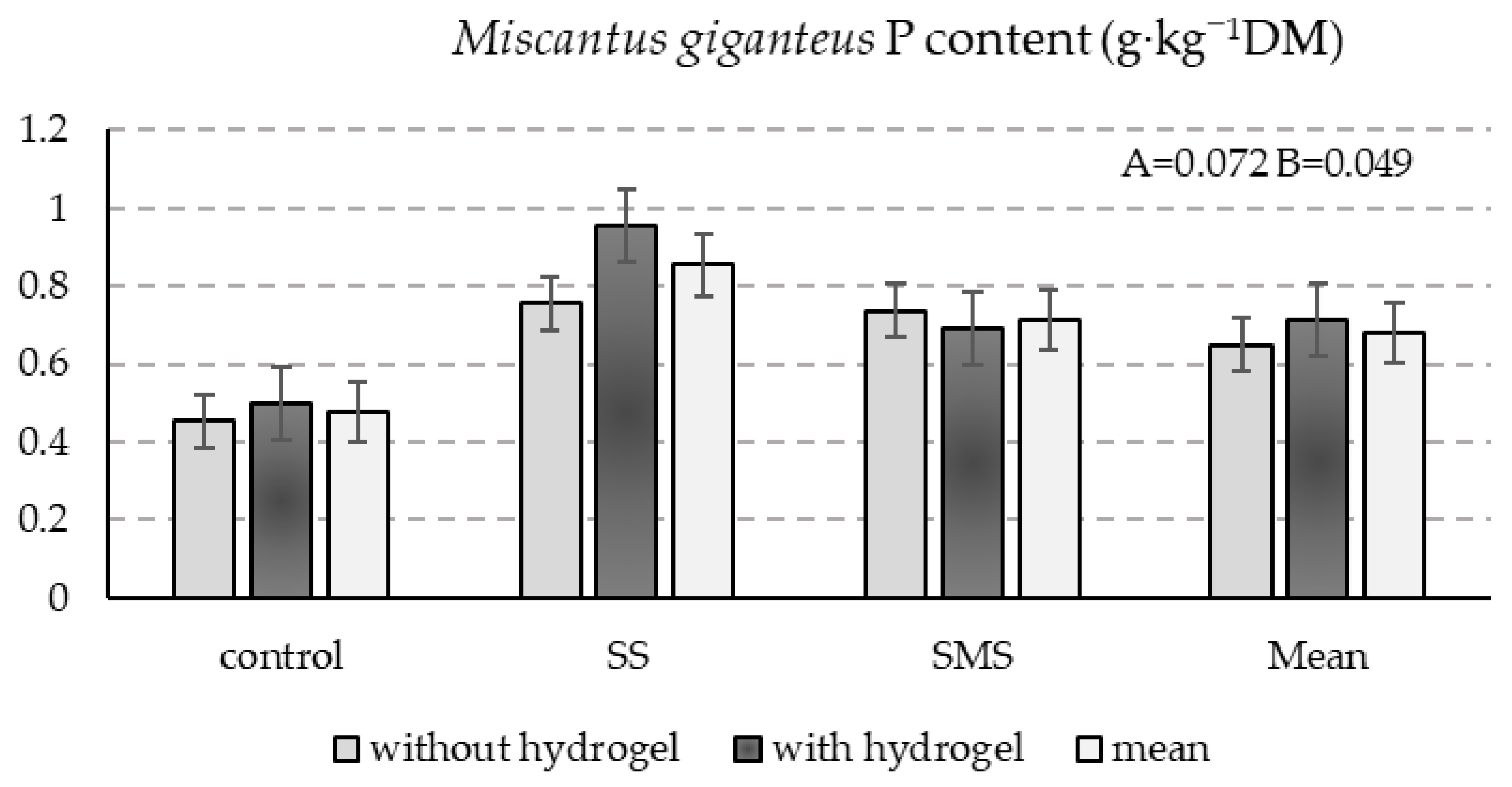
The total P content of giant miscanthus biomass significantly increased in response to organic waste and hydrogel application (Figure 1). The highest value of 0.854 g·kg−1, average for plants with and without hydrogel, was recorded on the plot with municipal sewage sludge, and the lowest on the control plot (0.477 g·kg−1). P content in biomass increased more in response to sewage sludge than to mushroom substrate, each introducing the same amount of nitrogen into the soil.
The addition of hydrogel significantly increased giant miscanthus P content, to 0.715 g·kg−1 DM (average of all plots), while without hydrogel it was 0.649 g·kg−1 DM. Municipal sewage sludge applied together with hydrogel resulted in a significant increase of 26.2% compared to sewage sludge applied on its own. Sewage sludge used in the experiment contained as much as 93% of dry matter, and the addition of hydrogel, a water-retaining substance, could have caused its faster decomposition and mineralization, increasing the amounts of nutrients available to plants. Increased content of P was also noted on the control plot treated with hydrogel. Unlike in the case of sewage sludge, the addition of hydrogel to mushroom substrate decreased the content of P in biomass, compared to the plot with mushroom substrate on its own.
According to Borkowska and Lipiński [50], giant miscanthus P content was 0.32 g·kg−1 DM. Kotecki [51] reported that with an increase in nitrogen doses, P content in the above-ground parts of giant miscanthus decreased, with a similar relationship confirmed by Beale and Long [52], as well as Borkowska and Lipiński [50].
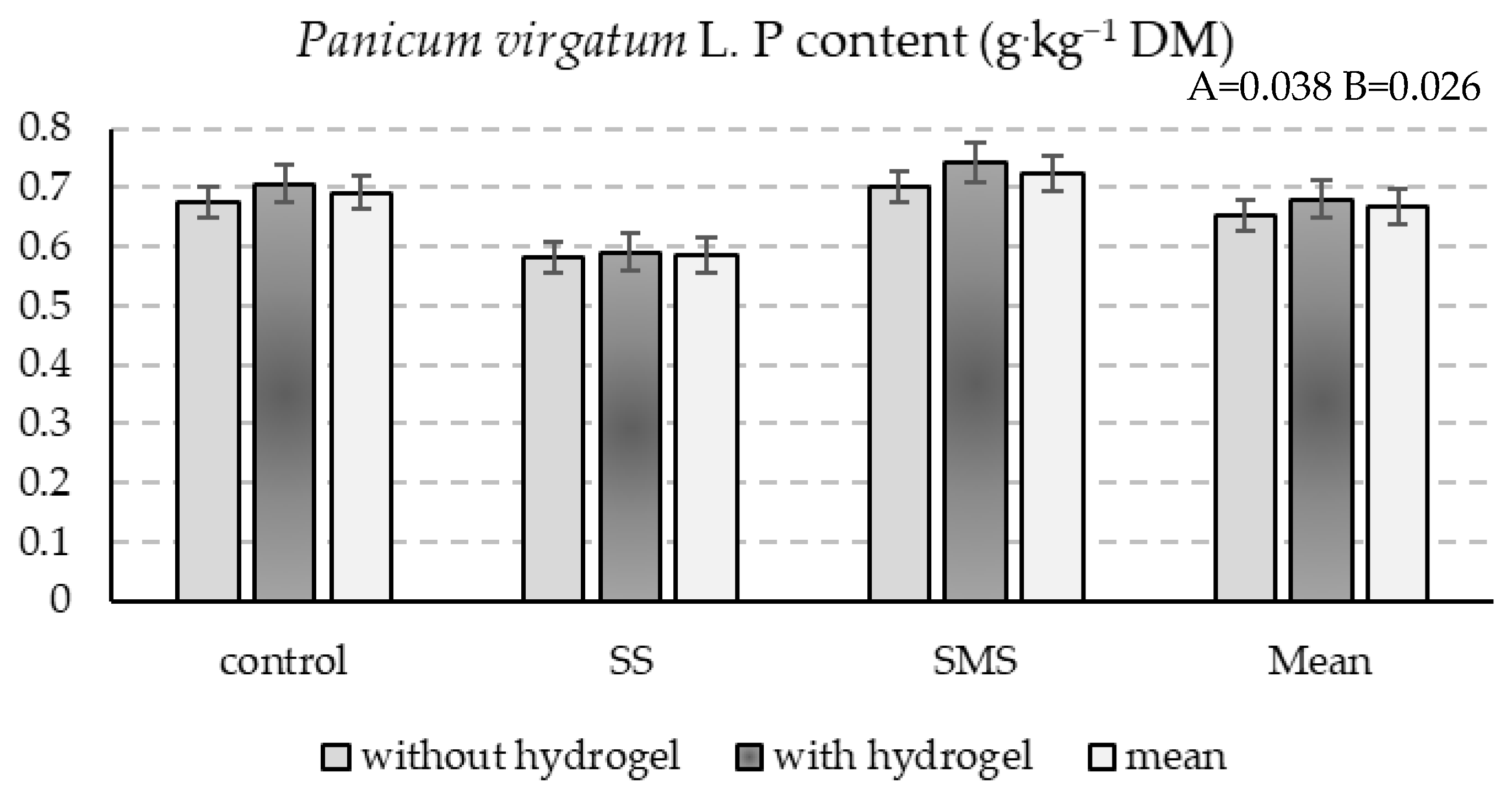
Total P content in Panicum virgatum L. biomass in response to hydrogel applied together with organic waste varied significantly (Figure 2). The average value across all experimental units (0.667 g kg−1 DM) was similar to that of Miscantus giganteus (Figure 1), but not on individual plots. A significantly higher P accumulation was noted in control plants (0.692 g·kg−1 DM) than in those treated with municipal sewage sludge (0.586 g·kg−1 DM). The highest amounts were recorded in plants treated with mushroom substrate (0.723 g·kg−1 DM).
The addition of hydrogel resulted in a significant P content increase in rod millet, to 0.681 g·kg−1 DM on average, compared to 0.654 g·kg−1 DM on plots without hydrogel. For plants treated with municipal sewage sludge, the increase was the lowest (0.591). The chemical composition of live plants can be affected by many factors. The harvest date is important for the value of energy crops as it affects their content of raw ash, as well as macro- and micronutrients [53].
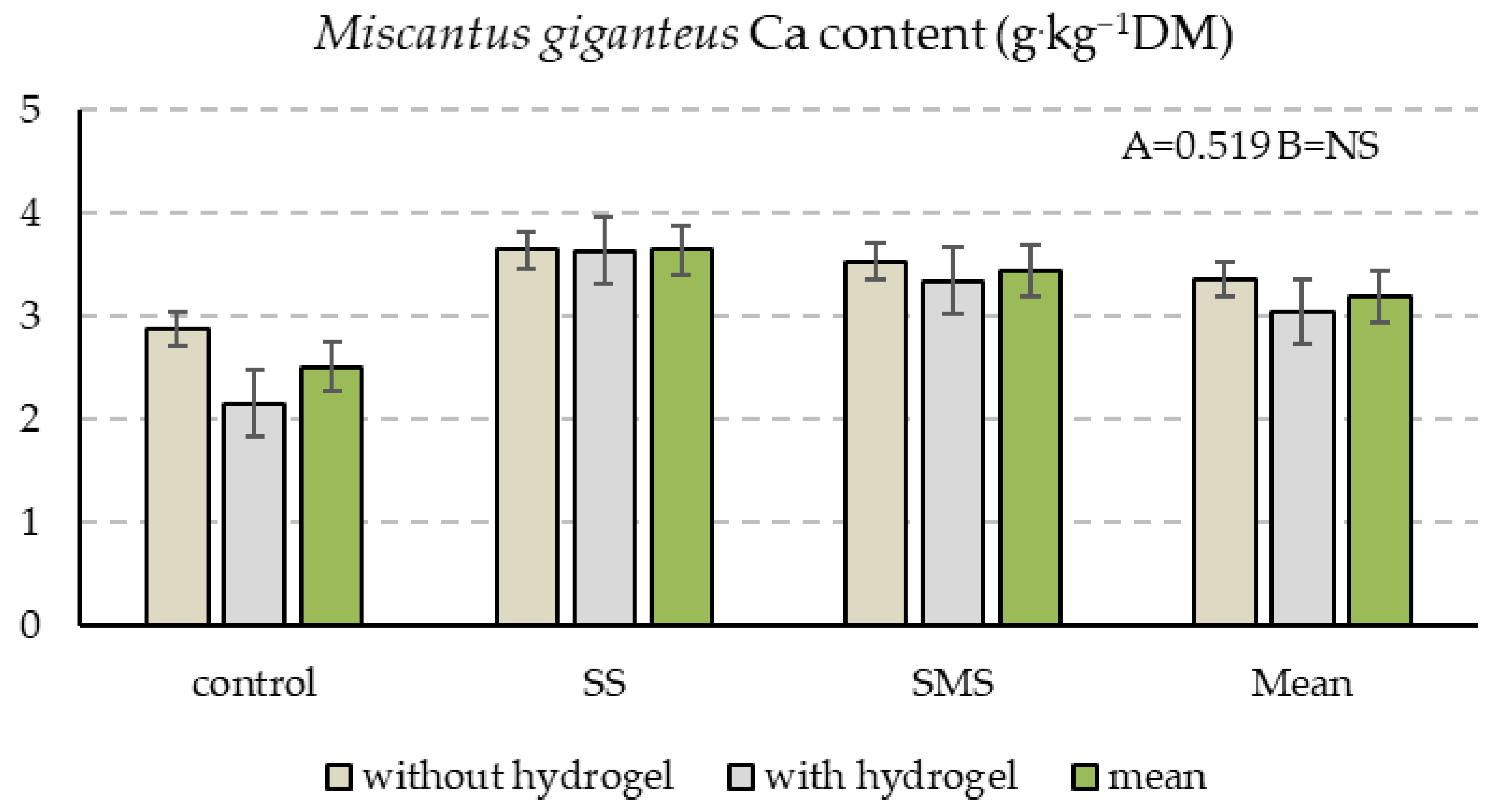
Municipal sewage sludge and mushroom substrate significantly increased Ca amounts in giant miscanthus biomass, compared to control plants (Figure 3). However, on plots without hydrogel, no significant differences were noted between the effects of sewage sludge and mushroom substrate, with 3.64 and 3.53 g·kg−1 DM, respectively. On the control plot, on the other hand, the content was the lowest (2.87 g·kg−1 DM). The use of hydrogel did not affect Ca bioaccumulation in plants, but it was higher on plots without hydrogel (3.35 g·kg−1 DM) than with it (3.04 g·kg−1 DM). According to Borkowska and Lipiński [50], Ca content in the giant miscanthus biomass was 2.78 g·kg−1 DM. In turn, in an experiment of Singh et al. [54] conducted in Florida, Ca content in energy grasses was similar to the results of the present research and ranged from 2.2 g kg−1 to 4.7 g·kg−1 DM.
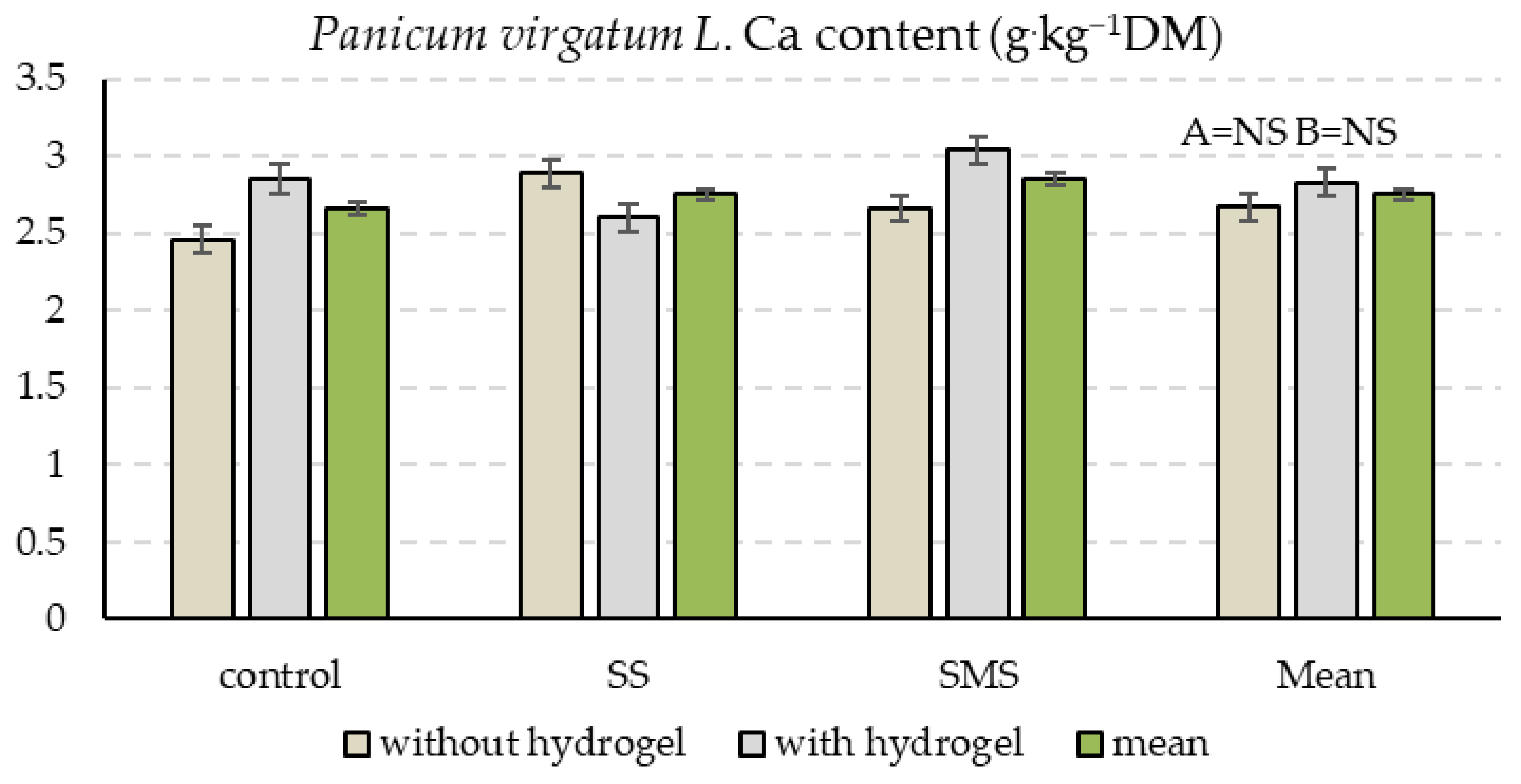
Hydrogel addition to organic waste resulted in a slight increase in rod millet Ca content, but not in a statistically significant way (Figure 4). Its highest amounts were recorded on plots with mushroom substrate, lower in response to municipal sewage sludge, and the lowest on the control plot, but these differences were not statistically significant. The average content of Ca in biomass from these plots was, respectively, as follows: 2.85, 2.75, and 2.66 g·kg−1 DM. The average value for all plots with hydrogel was 2.83 g·kg−1 DM, with 2.67 g·kg−1 DM on plots without it. Contrary to rod millet, hydrogel treatment of giant miscanthus decreased its Ca content (Figure 3).
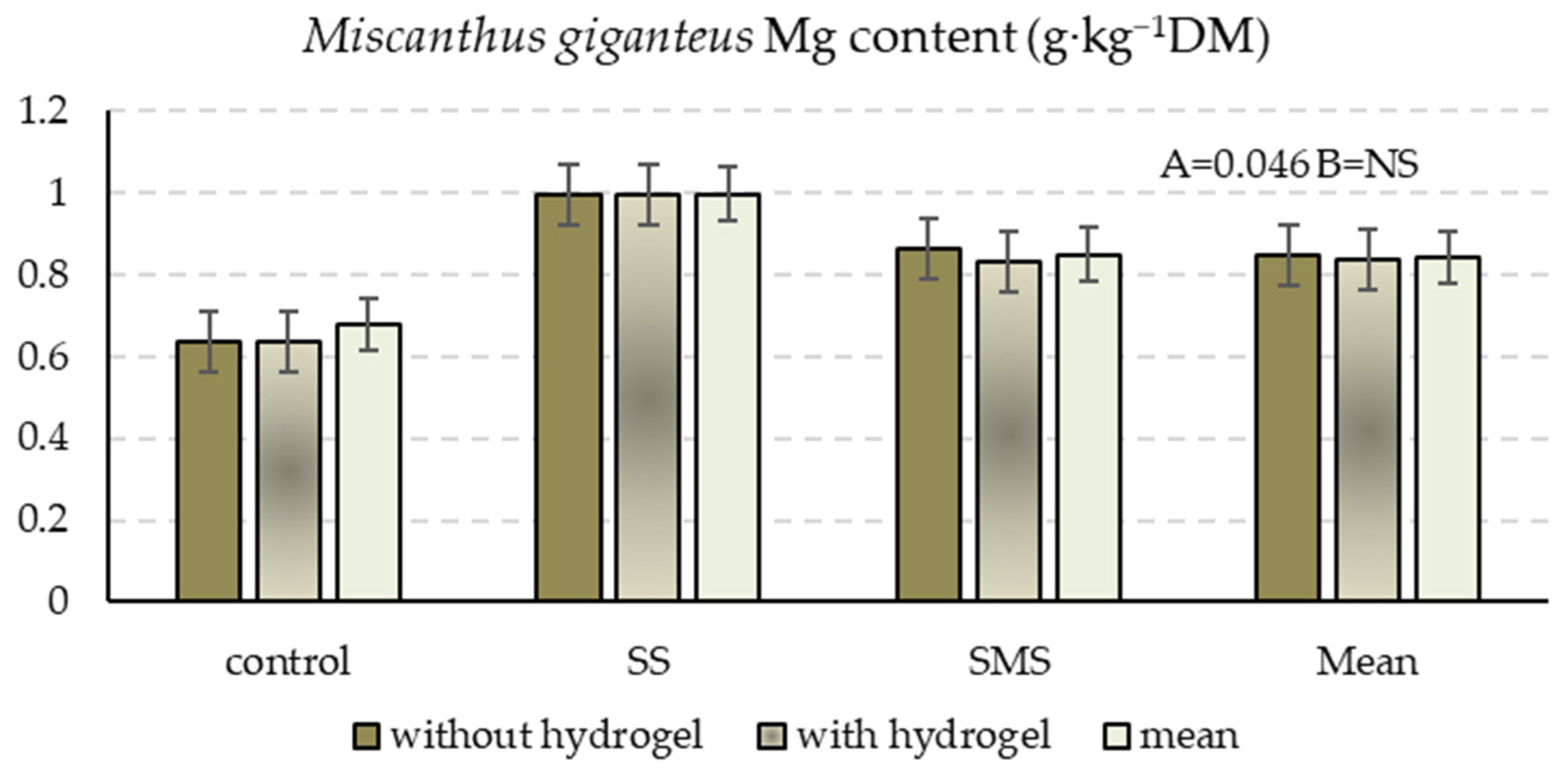
Like in the case of Ca, giant miscanthus Mg content statistically significantly increased in response to organic materials, but it was not significantly affected by the addition of hydrogel (Figure 5). The content of Mg, averaged across fertilizer treatments and years of research, was higher in miscanthus without hydrogel treatment (0.848 g·kg−1 DM) than after its application (0.835 g·kg−1 DM), but the difference was not statistically significant. Its greatest amount of 0.997 g·kg−1 DM, average for plots with and without hydrogel, was recorded in plants treated with municipal sewage sludge, whereas on the control plot it was 0.678 g·kg−1 DM. Likewise, Krzywy et al. [55] (2003) noted a significant effect of sewage sludge and of its compost on Mg content in Miscanthus sacchariflorus biomass. Antonkiewicz and Wiśniowska-Kielian [56] reported an increase in Mg accumulation in grass mixtures grown in a landfill with combustion waste and treated with sewage sludge. According to Borkowska and Lipiński [50], Mg content in giant miscanthus biomass was 0.64 g·kg−1 DM. Many authors report that miscanthus biomass accumulates more Mg during the other half of the growing season [34,51].
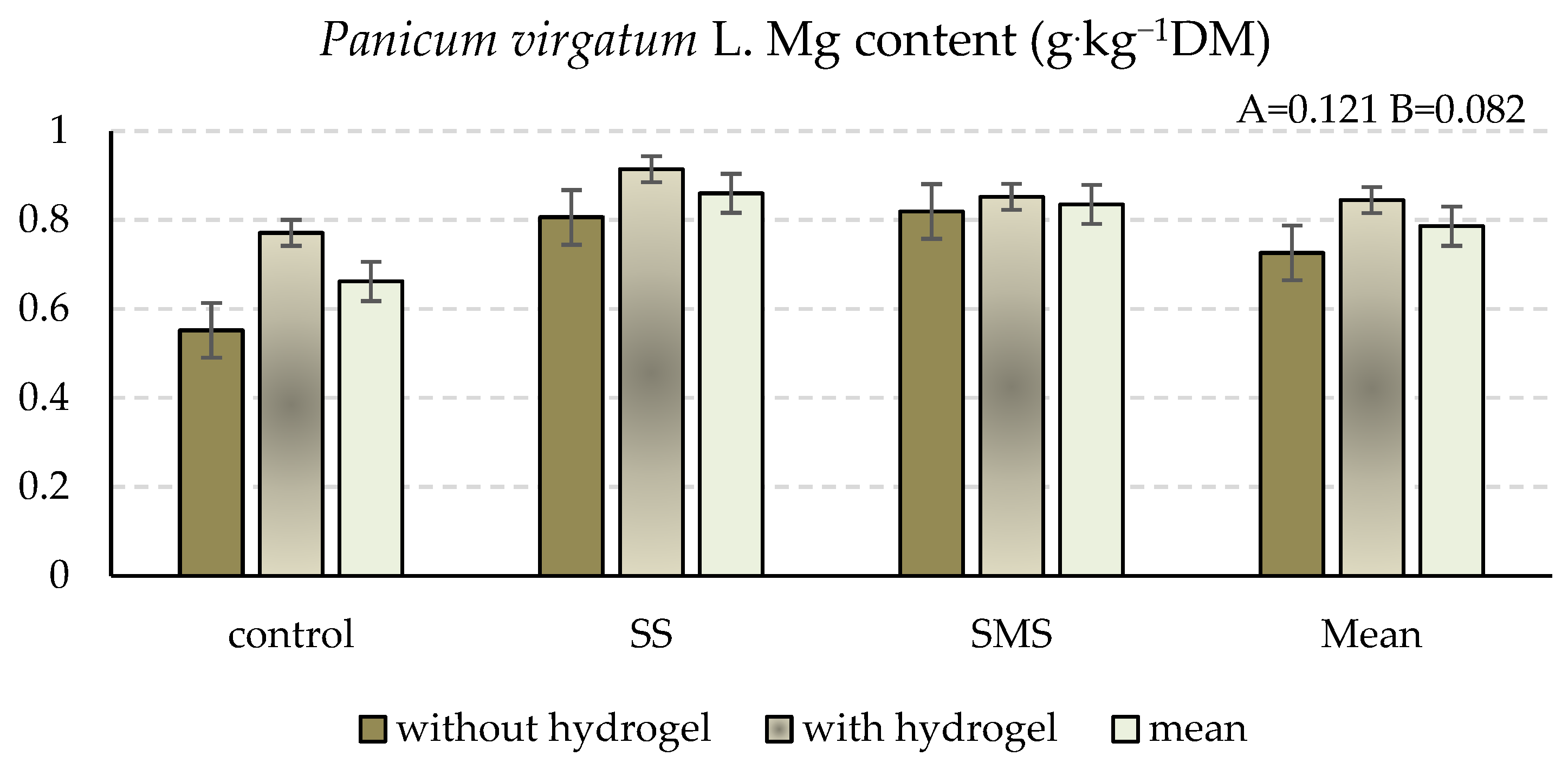
In rod millet, Mg content was, on average, 0.786 g kg−1 DM and was lower than in giant miscanthus (Figure 6). Compared to the control, it was significantly affected by the application of organic material and by the addition of hydrogel. The highest Mg amounts were found in grass treated with municipal sewage sludge (on average 0.860 g·kg−1 DM), and the lowest in the control plot (0.662 g·kg−1 DM). Unlike in the case of giant miscanthus, the addition of hydrogel resulted in a significant Mg content increase in P. virgatum L. biomass on all experimental plots (Figure 6). It increased by 39.7% after the application of hydrogel to the control plot, by 13% in plants treated with municipal sewage sludge, and by 4% on the plot with mushroom waste.
According to Król et al. [57], the average Mg content in sunflower is 0.36%, with 0.10% in grass, and 0.08% in cereal straw. The authors state that in biomass rich in Mg, P, and Cl and intended for combustion, salts with a low melting point may be formed, which causes a risk of contaminating the surface of heating devices.
The present results indicate that, despite the same environmental and agrotechnical conditions, the uptake of nutrients by Miscanthus giganteus is more intensive than by Panicum virgatum L., which might be due to a very strongly developed and deep root system of the former species, and thus better utilization of poorly available components [46,58]. From the point of view of energy use, P, Ca, and Mg content are important in the combustion of biomass [59]. Although the standards for biomass fuel quality, such as EN ISO 17225-1:2021, do not specify the acceptable content of such elements as P, Ca, and Mg, their amounts can be evaluated indirectly through their impact on the content of ash and its melting point [60].

4. Conclusions

The yield of fresh and dry biomass of Miscanthus giganteus and Panicum virgatum in the first three years of growing in central-eastern Poland varied significantly throughout the experiment in response to organic waste and the addition of hydrogel. The average yield of M. giganteus fresh biomass in the third year was 22.49 Mg·ha−1, and Panicum virgatum was 12.77 Mg·ha−1. In the case of miscanthus, its yield was not affected in a statistically significant way by the type of organic waste. However, the biomass yield of rod millet was significantly the highest on the plot with municipal sewage sludge. The application of hydrogel resulted in a significant increase in grass yield, for giant miscanthus by an average of 11.87%, and for rod millet by 8.28%, compared to traditional cultivation without a water-absorbing substance. The use of hydrogel and its application together with organic waste significantly affected the content of P, Ca, and Mg in plants. That treatment significantly increased the accumulation of P in the above-ground parts of both grass species, but the content of Ca and Mg increased only in rod millet. On average, over three years of research, the application of hydrogel together with municipal sewage sludge resulted in a significant 26.2% increase in M. giganteus P content and 13.4% in Panicum virgatum L. Mg content. On the other hand, compared to the application of mushroom substrate on its own, hydrogel used together with mushroom substrate significantly increased P, Ca, and Mg content in rod mullet, by an average of 5.7%, 14.3%, and 4.0%, respectively. Despite the intensive increase in its biomass yield, Miscanthus giganteus on average accumulated more P, Ca, and Mg in the aboveground parts than Panicum virgatum L. This resulted from the different physiological characteristics of both species, in particular from differences in the root system architecture and the greater ability of Miscanthus giganteus to use poorly available nutrients from deeper soil layers, but also from different growth rates and phenology, and from differences in nutrient remobilization.

Author Contributions

Conceptualization, E.M.; methodology, E.M.; data collection, E.M.; formal analysis, E.M. and U.O.; visualization, U.O.; writing—original draft preparation, E.M.; writing—review and editing, E.M.; supervision, E.M. All authors have read and agreed to the published version of the manuscript.

Funding

The results of the research carried out under the research theme. No. 161/23/B were financed from the grant that was granted by the Ministry of Sciences and Higher Education.

Data Availability Statement

The original contributions presented in this study are included in the article. Further inquiries can be directed to the corresponding author.

Acknowledgments

The authors express their gratitude to Artagro Polska Sp. z o.o. for supplying the hydrogel used in the experiment.

Conflicts of Interest

The authors declare no conflicts of interest.

References

  1. Malinowska, E.; Torma, S. Evaluation of organic waste long-term effects on cellulose, hemicellulose and lignin content in energy grass species grown in East-Central Poland. Energies 2024, 17, 5598. [Google Scholar] [CrossRef]
  2. Karsznicka, A.M.; Grzesik, M.; Mika, B. Cultivation of grasses for biomass—Possibilities and restrictions. Fragm. Agron. 2005, 22, 127–135. (In Polish) [Google Scholar]
  3. Majtkowska, G.; Majtkowski, W. Grasses as a source of energy. Agro Serwis 2005, 9, 94–97. [Google Scholar]
  4. Hibberd, J.M.; Sheehy, J.E.; Langdale, J.A. Using C4 photosynthesis to increase the yield of rice—Rationale and feasibility. Curr. Opin. Plant Biol. 2008, 11, 228–231. [Google Scholar] [CrossRef] [PubMed]
  5. Tanigushi, Y.; Ohkawa, H.; Masumoto, C.; Fukuda, T.; Tamai, T.; Lee, K.; Sudoh, S.; Tsuhida, H.; Sasaki, H.; Fukayama, H.; et al. Overproduction of C4 photosynthetic enzymes in transgenic rice plants: An aproch to introduce the C4-like photosynthetic pathway into rice. J. Exp. Bot. 2008, 59, 1799–1809. [Google Scholar] [CrossRef] [PubMed]
  6. Drożak, A.; Wasilewska, W.; Buczyńska, A.; Romanowska, E. C4 type photosynthesis. Post. Biochem. 2012, 58, 44–53. (In Polish) [Google Scholar]
  7. Szulc, W.; Rutkowska, B.; Łabetowicz, J. Fertilization value of organic wastes. Zesz. Probl. Post. Nauk Roln. 2009, 535, 395–403. (In Polish) [Google Scholar]
  8. Hanafi, F.H.M.; Rezania, S.; Taib, S.M.; Din, M.F.M.; Yamauchi, M.; Sakamoto, M.; Hara, H.; Park, J.; Ebrahimi, S.S. Environmentally sustainable applications of agro-based spent mushroom substrate (SMS): An overview. J. Mater. Cycles Waste Manag. 2018, 20, 1383–1396. [Google Scholar] [CrossRef]
  9. Greinert, A.; Mrówczyńska, M.; Szefner, W. The use of waste biomass from the wood industry and municipal sources for energy production. Sustainability 2019, 11, 3083. [Google Scholar] [CrossRef]
  10. Regulation of the Minister of the Environment of 6 February 2015 on the Use of Municipal Sewage Sludge (t.j. Dz. U. z 2023 r. poz. 23). Available online: https://dziennikustaw.gov.pl/DU/2023/23 (accessed on 1 November 2025).
  11. Shariatinia, Z.; Jalali, A.M. Chitosan-Based Hydrogels: Preparation, Properties and Applications. Int. J. Biol. Macromol. 2018, 115, 194–220. [Google Scholar] [CrossRef]
  12. Chang, L.; Xu, L.; Liu, Y.; Qiu, D. Superabsorbent polymers used for agricultural water retention. Polym. Test. 2021, 94, 107021. [Google Scholar] [CrossRef]
  13. Patra, S.K.; Poddar, R.; Brestic, M.; Acharjee, P.U.; Bhattacharya, P.; Sengupta, S.; Pal, P.; Bam, N.; Biswas, B.; Barek, V.; et al. Prospects of hydrogels in agriculture for enhancing crop and water productivity under water deficit condition. Int. J. Polym. Sci. 2022, 4914836. [Google Scholar] [CrossRef]
  14. Andreazza, R.; Morales, A.; Pieniz, S.; Labidi, J. Gelatin-based hydrogels: Potential biomaterials for remediation. Polymers 2023, 15, 1026. [Google Scholar] [CrossRef]
  15. Vedovello, P.; Sanches, L.V.; da Silva Teodoro, G.; Majaron, V.F.; Bortoletto-Santos, R.; Ribeiro, C.; Putti, F.F. An overview of polymeric hydrogel applications for sustainable agriculture. Agriculture 2024, 14, 840. [Google Scholar] [CrossRef]
  16. Wu, Y.; Li, S.; Chen, G. Hydrogels as water and nutrient reservoirs in agricultural soil: A comprehensive review of classification, performance, and economic advantages. Environ. Dev. Sustain. 2024, 26, 24653–24685. [Google Scholar] [CrossRef]
  17. Kulikowski, Ł.; Kulikowski, E.; Matuszewski, A.; Kiepurski, J. Hydrogels in the natural environmental—History and technologies. Ecol. Eng. 2018, 19, 205–218. (In Polish) [Google Scholar] [CrossRef]
  18. Ziernicka-Wojtaszek, A. Comparison of selected indices for the assessment of atmospheric drought in the Podkarpackie Province in the years 1901–2000. Woda Sr. Obsz. Wiej. 2012, 12, 365–376. (In Polish) [Google Scholar]
  19. Skowera, B.; Puła, J. Pluviometric extreme conditions in spring season in Poland in the years 1971–2000. Acta Agroph. 2004, 1, 171–177. (In Polish) [Google Scholar]
  20. Polish Soil Science Society. Taxonomy of Polish soils. In Komisja Genezy Klasyfikacji i Kartografii Gleb; Wyd. UP: Wrocław, Poland, 2019. [Google Scholar]
  21. Kalembasa, S.; Carlson, R.W.; Kalembasa, D. A new method for the reduction in nitrates in total nitrogen determination according to the Kjeldahl method. Pol. J. Soil Sci. 1989, 22, 21–26. [Google Scholar]
  22. Kalembasa, S.; Kalembasa, D. A quick method for determination of C/N ratio in mineral soils. Pol. J. Soil Sci. 1992, 25, 41–46. [Google Scholar]
  23. Regulations of the Ministry of Climate and the Environment of December 31 on the Use of Municipal Sewage Sludge. Dz.U. 2021 poz. 89. Available online: https://dziennikustaw.gov.pl/DU/2022/89 (accessed on 7 November 2025).
  24. StatSoft, Inc. Statistica (Data Analysis Software System), Version 13.1. 2021. Available online: www.statsoft.com (accessed on 2 December 2025).
  25. Lisowski, J.; Porwisiak, H. Influence of sludge fertilization on yield of miscanthus (Miscanthus giganteus). Frag. Agron. 2010, 27, 94–101. (In Polish) [Google Scholar]
  26. Ociepa, A. The Influence of Fertilization on the Phytoremediation and Energetic Properties of Selected Plant Species. Rozprawa Doktorska, Politechnika Częstochowska, Częstochowa, Poland, 2010. (In Polish) [Google Scholar]
  27. Dubis, B.; Szatkowski, A.; Jankowski, K.J. Sewage sludge, digestate, and mineral fertilizer application affects the yield and energy balance of Amur silvergrass. Industr. Crops Prod. 2022, 175, 114235. [Google Scholar] [CrossRef]
  28. Clifton-Brown, J.C.; Lewandowski, I. Screening Miscanthus genotypes in field trials to optimise biomass yield and quality in Southern Germany. Eur. J. Agron. 2002, 16, 97–110. [Google Scholar] [CrossRef]
  29. Matyka, M. Production and economic aspects of growing perennial crops for energy purposes. In Monografie i Rozprawy Naukowe; IUNG-PIB Puławy: Puławy, Poland, 2013; No. 35. [Google Scholar]
  30. Fischer, G.; Prieler, S.; van Velthuizen, H. Biomass potentials of Miscanthus, willow and poplar: Results and policy implications for Eastern Europe, Northern and Central Asia. Biomass Bioenerg. 2005, 28, 119–132. [Google Scholar] [CrossRef]
  31. Podlaski, S.; Chołuj, D.; Wiśniewski, G. Biomass production from energy plants. Post. Nauk Roln. 2010, 2, 163–174. (In Polish) [Google Scholar]
  32. Szempliński, W.; Dubis, B. Preliminary studies on the yield and energy efficiency of selected plants grown for biogas purposes. Fragm. Agron. 2011, 28, 77–86. (In Polish) [Google Scholar]
  33. Lewandowski, I.; Clifton-Brown, J.C.; Scurlock, J.M.O.; Huisman, W. Miscanthus: European experience with a novel energy crop. Biomass Bioenerg. 2000, 19, 209–227. [Google Scholar] [CrossRef]
  34. Kahle, P.; Beuch, S.; Boelcke, B.; Leinweber, P.; Schulten, H.R. Cropping of Miscanthus in Central Europe: Biomass production and influence on nutrients and soil organic matter. Eur. J. Agron. 2001, 15, 171–184. [Google Scholar] [CrossRef]
  35. Aravindhakshan, S.C.; Epplin, F.M.; Taliaferro, C.M. Economics of switchgrass and miscanthus relative to coal as feedstock for generating electricity. Biomass Bioenerg. 2010, 34, 1375–1383. [Google Scholar] [CrossRef]
  36. Barney, J.N.; DiTomaso, J.M. Nonnative species and bioenergy: Are we cultivating the next invader? BioScience 2008, 58, 64–70. [Google Scholar] [CrossRef]
  37. Muir, J.P.; Sanderson, M.A.; Ocumpaugh, W.R.; Jones, R.M.; Reed, R.L. Biomass production of ‘Alamo’ Switchgrass in response to nitrogen, phosphorus, and row spacing. Agron. J. 2001, 93, 896–901. [Google Scholar] [CrossRef]
  38. Friensen, P.C.; Fink, W.; Slama, A.; Cattani, D.J. Third and fourth year biomass yields of Miscanthus x giganteus, switchgrass, big bluestem, and prairie cordgrass in southern Manitoba, Canada: Latitude of origin affects biomass yield among native grasses. Biomass Bioenerg. 2022, 160, 106441. [Google Scholar] [CrossRef]
  39. Majtkowski, W. Biodiversity of energetic crops as a basis for sustainable development. Prob. Inż. Roln. 2006, 14, 25–36. (In Polish) [Google Scholar]
  40. Liebig, M.A.; Johnson, H.A.; Hanson, J.D.; Frank, A.B. Soil carbon under switchgrass stands and cultivated cropland. Biomass Bioenerg. 2005, 28, 347–354. [Google Scholar] [CrossRef]
  41. McLaughlin, S.B.; Kszos, L.A. Development of switchgrass (Panicum virgatum) as a bioenergy feedstock in the United States. Biomass Bioenerg. 2005, 28, 515–535. [Google Scholar] [CrossRef]
  42. Parrish, D.J.; Fike, J.H. The biology and agronomy of switchgrass for biofuels. Crit. Rev. Plant Sci. 2005, 24, 423–459. [Google Scholar] [CrossRef]
  43. Sanderson, M.A.; Adler, P.R.; Boateng, A.A.; Casler, M.D.; Sarath, G. Switchgrass as a biofuels feedstock in the USA. Can. J. Plant Sci. 2006, 86, 1315–1325. [Google Scholar] [CrossRef]
  44. Wright, L.; Turhollow, A. Switchgrass selection as a “model” bioenergy crop: A history of the process. Biomass Bioenerg. 2010, 34, 851–868. [Google Scholar] [CrossRef]
  45. Schwarz, H.; Liebhard, P.; Ehrendorfer, K.; Ruckenbauer, P. The effect of fertilization on yield and quality of Miscanthus sinensis ‘Giganteus’. Ind. Crops Prod. 1994, 2, 153–159. [Google Scholar] [CrossRef]
  46. Cadoux, S.; Riche, A.B.; Yates, N.; Machet, J.M. Nutrient requirements of Miscanthus x giganteus: Conclusions from a review of published studies. Biomass Bioenerg. 2012, 38, 14–22. [Google Scholar] [CrossRef]
  47. Monti, A.; Zegada-Lizarazu, W.; Zanetti, F.; Casler, M. Chapter two-nitrogen fertilization management of switchgrass, miscanthus and giant reed: A Review. Adv. Agron. 2019, 153, 87–119. [Google Scholar] [CrossRef]
  48. Lewandowski, I.; Heinz, A. Delayed harvest of miscanthus—Influences on biomass quantity and quality and environmental impacts of energy production. Eur. J. Agron. 2003, 19, 45–63. [Google Scholar] [CrossRef]
  49. Baxter, X.C.; Darvell, L.I.; Jones, J.M.; Baraclough, T.; Yates, N.E.; Shield, I. Miscanthus combustion properties and variations with Miscanthus agronomy. Fuel 2014, 117, 851–869. [Google Scholar] [CrossRef]
  50. Borkowska, H.; Lipiński, W. Content of selected elements in biomass of several species of energy plants. Acta Agroph. 2007, 10, 287–292. (In Polish) [Google Scholar]
  51. Kotecki, A. Energy and non-energy possibilities of using straw. In Growing Miscanthus Giant; Wyd. UP: Wrocław, Poland, 2010. (In Polish) [Google Scholar]
  52. Beale, C.V.; Long, S.P. Seasonal dynamics of nutrient accumulation and partitioning in the perennial C4-grasses Miscanthus × giganteus and Spartina cynosuroides. Biomass Bioenerg. 1997, 12, 419–428. [Google Scholar] [CrossRef]
  53. Tarkowski, A. Infuence of harvest time on some minerals content in soda forage (Sida hermaphrodita Rusby). Acta Agroph. 2006, 8, 509–514. (In Polish) [Google Scholar]
  54. Singh, M.P.; Erickson, J.E.; Sollenberger, L.E.; Woodard, K.R.; Vendramini, J.M.; Gilbert, R.A. Mineral composition and removal of six perennial grasses grown for bioenergy. Agron. J. 2015, 107, 466–474. [Google Scholar] [CrossRef]
  55. Krzywy, E.; Iżewska, A.; Jeżowski, S. Assessment of the possibility of using municipal sewage sludge for fertilizing Chinese reed (Miscanthus sacchariflorus (Maxim. Hack.). Zesz. Probl. Post. Nauk Roln. 2003, 494, 225–232. (In Polish) [Google Scholar]
  56. Antonkiewicz, J.; Wiśniowska-Kielian, B. Effect of furnace waste and municipal sewage sludge on the Ca, Mg, K, Na and P uptake by a mixture of grasses. Ann. Univ. Mariae Curie-Skłodowska. Sect. E Agric. 2014, 69, 56–69. (In Polish) [Google Scholar]
  57. Król, D.; Łach, J.; Poskrobko, S. About some problems related to the use of non-forest biomass in energy. Energetyka I Ekol. 2010, 53–62. Available online: www.elektroenergetyka.pl (accessed on 3 November 2025). (In Polish)
  58. Wang, C.; Kong, Y.; Hu, R.; Zhou, G. Miscanthus: A fast-growing crop for environmental remediation and biofuel production. Gcb Bioenergy 2021, 13, 58–69. [Google Scholar] [CrossRef]
  59. Falk, J.; Hannl, T.K.; Skoglund, N.; Backman, R.; Ohman, M. Thermodynamic equilibrium study on the melting tendency of the K-Ca-Mg-P-Si-O system with relevance to woody and agricultural biomass ash compositions. Energy Fuels 2022, 36, 7035–7051. [Google Scholar] [CrossRef]
  60. ISO 17225-1:2021; Solid Biofuels—Fuel Specifications and Classes—Part 1: General Requirements. International Organization for Standardization: Geneva, Switzerland, 2021.
Figure 1. Miscanthus giganteus biomass P content, averaged across years (g·kg−1 DM). LSD0.05 for the following: A—treatment and B—hydrogel.
Agronomy 16 00255 g001
Figure 2. Panicum virgatum biomass P content, averaged across years (g kg−1 DM). LSD0.05 for the following: A—treatment and B—hydrogel.
Agronomy 16 00255 g002
Figure 3. Miscanthus giganteus biomass Ca content, averaged across years (g·kg−1 DM). LSD0.05 for the following: A—treatment and B—hydrogel. NS—No significant difference.
Agronomy 16 00255 g003
Figure 4. Panicum virgatum biomass Ca content, averaged across years (g·kg−1 DM). LSD0.05 for the following: A—treatment and B—hydrogel. NS—No significant difference.
Agronomy 16 00255 g004
Figure 5. Miscanthus giganteus biomass Mg content, averaged across years (g·kg−1 DM). LSD0.05 for the following: A—treatment and B—hydrogel; NS—No significant difference.
Agronomy 16 00255 g005
Figure 6. Panicum virgatum biomass Mg content, averaged across years (g·kg−1 DM). LSD0.05 for the following: A—treatment and B—hydrogel.
Agronomy 16 00255 g006
Table 1. The value of Sielianinov’s hydrothermal coefficient (K) in 2020–2022.
YearsMonths
Jan.Feb.MarchApr.May JuneJulyAug.Sept.Oct.Nov.Dec.
20204.33 (ew)6.52 (ew)0.96
(d)
0.29 (ed)3.24 (ew)3.02 (ew)0.69 (vd)1.09 (qd)1.06 (qd)2.73 (vw)0.99 (d)6.31 (ew)
2021−7.81 (ed)−3.1 (ed)1.96 (qw)2.74 (vw)2.09 (w)0.89 (d)0.69 (vd)3.11 (ew)1.94 (qw)0.19 (ed)2.33 (w)−3.26 (ed)
20227.5 (ew)1.07 (qd)0.75
(d)
2.57 (vw)0.92 (d)0.42 (vd)1.59 (o)0.53 (vd)2.48 (w)0.63 (vd)1.99 (qw)−6.90 (ed)
K ≤ 0.4, extremely dry—ed; 0.4 < K ≤ 0.7, very dry—vd; 0.7 < K ≤ 1.0, dry—d; 1.0 < K ≤ 1.3, quite dry—qd; 1.3 < K ≤ 1.6, optimal—o; 1.6 < K ≤ 2.0, quite wet—qw; 2.0 < K ≤ 2.5, wet—w; 2.5 < K ≤ 3.0, very wet—vw; K > 3.0, extremely wet—ew.
Table 2. Chemical properties of the soil before the experiment.
pHCtHContent of C, N, P, K, Ca, Mg, S (g·kg−1 DM)Content of Cd, Pb, Cr, Zn, Ni (mg·kg−1 DM)
H2OKClNPKCaMgSCdPbCrZnNi
6.915.5839.915.581.731.040.8518.430.9520.3830.26747.519.51165.26.04
Table 3. Chemical properties of municipal sewage sludge.
pHCorgC:NContent of C, N, P, K, Ca, Mg, S (g·kg−1 DM)Content of Cd, Pb, Cr, Zn, Ni (mg·kg−1 DM)
H2OKClNPKCaMgSCdPbCrZnNi
6.485.923288.1:140.517.82.8933.67.215.982.0939.718.394953.9
50 *1500 *2500 *5000 *500 *
* Permissible amounts of heavy metals according to Appendix No. 1 to the Regulation of the Ministry of the Environment [10] on the use of municipal sewage sludge.
Table 4. Chemical properties of mushroom substrate.
pHCorgC:NContent of C, N, P, K, Ca, Mg (g·kg−1 DM)Content of Cd, Pb, Cr, Zn, Ni (mg·kg−1 DM)
H2OKClNPKCaMgSCdPbCrZnNi
6.806.1029514.1:120.98.113.375.14.0917.90.3894.783.151907.98
Table 5. Fresh biomass yield of Miscanthus giganteus in the first three years of cultivation (Mg·ha−1).
Years (Y)Hydrogel (B)Experimental Units (A)
Control SSSMSMean
2020 (1)Without hydrogel8.95 ± 0.7410.40 ± 0.889.11 ± 1.099.48
2021 (2)11.34 ± 0.9812.96 ± 0.95613.56 ± 0.8912.62
2022 (3)18.12 ±1.2022.42 ± 1.3422.86 ± 1.0921.13
2020 (1)With hydrogel9.63 ± 0.8910.56 ± 0.7811.40 ± 0.7610.53
2022 (2)13.71 ± 0.9314.72 ± 0.8813.51 ± 1.0713.98
2020 (3)19.92 ± 1.0825.68 ± 1.2525.94 ± 1.2323.85
Mean13.62 16.12 16.06 15.27
Mean for hydrogel
Without hydrogel12.8015.26 15.17 14.41
With hydrogel14.4216.99 16.95 16.12
Mean for years
2020 (1)9.29 10.48 10.26 10.01
2021 (2)12.53 13.84 13.54 13.30
2022 (3)19.0224.05 24.40 22.49
LSD0.05 for the following: A—treatment A = 0.644; B—hydrogel B = 0.437; Y—years Y = 0.644. Interaction: B/A = NS; A/B = NS; and Y/A = 0.911; A/Y = 0.911; Y/B = 0.911; and B/Y = 0.756. NS—No significant difference; ±SD—standard deviation.
Table 6. Dry biomass yield of Miscanthus giganteus in the first three years of cultivation (Mg·ha−1).
Years (Y)Hydrogel (B)Experimental Plots (A)
ControlSSSMSMean
2020 (1)Without hydrogel7.62 ± 0.739.54 ± 0.688.50 ± 0.768.55
2021 (2)10.20 ± 0.8111.71 ± 0.7912.08 ± 0.8711.33
2022 (3)17.00 ± 1.0821.70 ± 1.0921.95 ± 1.2320.12
2020 (1)With hydrogel8.81 ± 0.719.87 ± 0.6610.13 ± 0.879.60
2022 (2)12.50 ± 0.7813.30 ± 0.7112.89 ± 0.8112.88
2020 (3)18.00 ± 0.9924.30 ± 0.9824.50 ± 1.2222.27
Mean12.3615.0715.0114.14
Mean for hydrogel
Without hydrogel11.6214.3214.1813.37
With hydrogel13.1015.8215.8414.92
Mean for years
2020 (1)8.229.719.329.08
2021 (2)11.3512.5112.4912.12
2022 (3)17.5023.0023.2321.24
LSD0.05 for the following: A—treatment A = 0.710; B—hydrogel B = 0.481; Y—years Y = 0.710. Interaction: B/A = NS; A/B = NS; Y/A = 1.00; A/Y = 1.00; Y/B = NS; and B/Y = NS. NS—No significant difference; ±SD—standard deviation.
Table 7. Fresh biomass yield of Panicum virgatum L. in the first three years of cultivation (Mg·ha−1).
Years (Y)Hydrogel (B)Experimental Plots (A)
ControlSSSMSMean
2020 (1)Without hydrogel1.65 ± 0.232.16 ± 0.132.79 ± 0.212.20
2021 (2)4.50 ± 0.345.85 ± 0.205.10 ± 0.175.15
2022 (3)8.09 ± 0.5914.89 ± 0.7414.76 ± 0.3212.58
2020 (1)With hydrogel2.27 ± 0.283.35 ± 0.253.05 ± 0.202.89
2022 (2)3.76 ± 0.217.14 ± 0.326.33 ± 0.195.74
2020 (3)8.32 ± 0.3315.70 ± 0.4414.82 ± 0.4312.95
Mean4.778.18 7.81 6.92
Mean for hydrogel
Without hydrogel4.757.63 7.55 6.64
With hydrogel4.788.73 8.07 7.19
Mean for years
2020 (1)1.96 2.76 2.92 2.55
2021 (2)4.13 6.50 5.76 5.46
2022 (3)8.21 15.30 14.79 12.77
LSD0.05 for: A—treatment A = 0.462; B—hydrogel B = 0.312; Y—years Y = 0.462. Interaction: B/A = 0.543; A/B = 0.654; Y/A = 0.654; A/Y = 0.654; Y/B = NS; and B/Y = NS. NS—No significant difference; ±SD—standard deviation.
Table 8. Dry biomass yield of Panicum virgatum L. in the first three years of cultivation (Mg·ha−1).
Years (Y)Hydrogel (B)Experimental Plots (A)
ControlSSSMSMean
2020 (1)Without hydrogel1.06 ± 0.341.80 ± 0.242.02 ± 0.221.63
2021 (2)3.90 ± 0.304.10 ± 0.334.85 ± 0.324.28
2022 (3)7.65 ± 0.4514.01 ± 0.5713.83 ± 0.5511.83
2020 (1)With hydrogel1.96 ± 0.212.79 ± 0.312.60 ± 0.222.45
2022 (2)3.04 ± 0.256.62 ± 0.335.70 ± 0.325.12
2020 (3)7.40 ± 0.4314.92 ± 0.5514.05 ± 0.4712.12
Mean4.177.377.186.24
Mean for hydrogel
Without hydrogel4.206.646.905.91
With hydrogel4.138.117.456.56
Mean for years
2020 (1)1.512.302.312.04
2021 (2)3.475.365.284.70
2022 (3)7.5314.4713.9411.98
LSD0.05 for: A—treatment A = 0.439; B—hydrogel B = 0.298; and Y—years Y = 0.439. Interaction: B/A = 0.515; A/B = 0.621; Y/A = 0.621; A/Y = 0.621; Y/B = NS; and B/Y = NS. NS—No significant difference; ±SD—standard deviation.
Disclaimer/Publisher’s Note: The statements, opinions and data contained in all publications are solely those of the individual author(s) and contributor(s) and not of MDPI and/or the editor(s). MDPI and/or the editor(s) disclaim responsibility for any injury to people or property resulting from any ideas, methods, instructions or products referred to in the content.