Article

Design and Experimental Validation of a Weeding Device Integrating Weed Stem Damage and Targeted Herbicide Application


1
College of Mechanical and Electrical Engineering, Henan Agricultural University, Zhengzhou 450002, China
2
College of Agricultural Engineering, Jiangsu University, Zhenjiang 212013, China
*
Author to whom correspondence should be addressed.
Agronomy 2026, 16(2), 151; https://doi.org/10.3390/agronomy16020151
Submission received: 1 December 2025 / Revised: 28 December 2025 / Accepted: 31 December 2025 / Published: 7 January 2026
(This article belongs to the Special Issue Recent Advances in Legume Crop Protection—2nd Edition)

Abstract

In view of the problems of high weed regeneration rate in traditional mechanical weeding and environmental risk in chemical weeding, a synergetic strategy of “mechanical damage + wound spraying mechanism” was proposed, and an intelligent weeding device combining synchronous cutting and spraying was designed to enhance the efficacy of herbicides and reduce their use. Focusing on the physical characteristics of weeds and the cutting mechanism, the analysis of the weed-cutting system and the force characteristics of the cutting tool were conducted. Key factors affecting cutting quality were identified, and their respective value ranges were determined. A targeted spraying system was developed, featuring a conical nozzle, DC diaphragm pump, and electromagnetic control valve. The Delta parallel manipulator, equipped with both the cutting tool and nozzle, was designed, and a kinematic model was established for both its forward and inverse movements. Genetic algorithms were applied to optimize structural parameters, aiming to ensure effective coverage of typical weed distribution areas within the working space. A simulated environment measurement was built to verify the motion accuracy of the manipulator. Field experiments demonstrated that the equipment achieved an 81.5% wound weeding rate on malignant weeds in the seedling stage at an operating speed of 0.6 m/s, with a seedling injury rate below 5%. These results validate the high efficiency of the integrated mechanical cutting and targeted spraying system, offering a reliable technical solution for green and intelligent weed control in agriculture. This study fills the blank of only focusing on recognition accuracy or weeding rate under a single weeding method, but lacks a cooperative weeding operation.

1. Introduction

Weeds are the main biological stress in global agriculture, causing about 10–30% of grain yield reduction each year [1]. Although long-term dependence on chemical herbicides is efficient and convenient, it brings problems such as environmental pollution, non-target biological damage, and drug resistance [2]. The EU has proposed to reduce pesticide use by 50% by 2030 and promote the development of non-chemical prevention and control technologies [3]. Mechanical weeding is becoming an important path for agricultural green transformation because of its no-residue, flexible operation, and compatibility with organic agriculture [4].
Mechanical weeding can be divided into two categories: inter-row and intra-row. The former is suitable for large-row crops, cutting or burying weeds by disturbing the soil, but has a limited control effect on deep-rooted weeds and may damage crop roots [5]. The latter requires millimeter-level precise positioning, commonly used methods such as wounding cutting, heat, electric shock, or laser, and has high technical difficulty and cost [6,7,8,9]. For malignant weeds with developed underground reproductive organs or strong regeneration ability, a single mechanical operation is unlikely to eradicate them, and multiple operations increase costs and may affect crop growth [10]. Therefore, traditional mechanical weeding still has significant limitations in dealing with weeds with strong resistance and wide distribution.
In recent years, driven by artificial intelligence, machine vision, and robotic technology, mechanical weeding is developing towards an integrated intelligent system of “perception–decision–execution”. Jin et al. [11] proposed a new type of precision weeder that integrates AI and microneedle nozzles. It uses deep learning semantic segmentation technology to accurately identify weeds at the pixel level. The system uses 128 densely arranged microneedle nozzles combined with solenoid valve timing control to achieve precise application of herbicides on demand. Cardellicchio et al. [12], in order to realize the continuous monitoring and evaluate the phenotype of tomato and other widely distributed crops under extreme climate, used the YOLOv11 detector for incremental training. After testing, the model reduced the inference calculation burden by 19 ms while improving the generalization ability, which provided a feasible path for field phenological evaluation under the condition of few samples. Zhao et al. [13] designed a set of vision-based intelligent lettuce weeding systems. The core of the system is the newly proposed LettWd-YOLOv8l recognition model, which is superior to the comparison model in key indicators such as accuracy, recall rate, and mAP, and has excellent performance. The actuator of the integrated model adopts the oscillating pneumatic form, which realizes the effective removal of weeds in the row. Zheng et al. [14] designed an electric swing-type open-closed-line weeding control system based on deep learning. The system combines deep learning technology to realize the accurate identification of crops and the dynamic control of weeding knives, which can realize the accurate identification and positioning of cabbage, and control the precise operation and obstacle avoidance of weeding knives. Sabeethan et al. [15] developed an autonomous navigation weeding robot for paddy fields. Combining a global navigation system, electronic compass, and machine vision, a novel crop-row detection algorithm is proposed to generate an accurate navigation baseline. The robot can move steadily along the crop row in the changeable field environment. Huang et al. [16], aiming at the problems of high labor intensity and low accuracy of traditional strawberry canopy measurement methods, combined the zero-sample segmentation ability of the segmented arbitrary model (SAM) with the advanced detection accuracy of YOLOv11, and proposed an innovative prompt selection algorithm to realize the automatic optimization of canopy segmentation. This method further integrates Depth Anything v2, realizes the expansion from two-dimensional segmentation to three-dimensional volume estimation, and provides an efficient and reliable new scheme for automatic canopy analysis in precision agriculture. Zhang et al. [17], aiming at the monitoring problem of peanut leaf spot (LS) caused by small leaves and dense disease spots, proposed an improved YOLOv11 lightweight detection model. By introducing the EMA attention module, the Slim-neck structure, and the MPDIoU loss function, the detection ability and regression accuracy of small lesions are optimized. The model parameters and calculation amount were significantly reduced, and the detection accuracy (mAP) reached 96.90%. The accurate quantitative evaluation of disease area was realized (R2 = 0.98), which provided an efficient technical solution for intelligent monitoring and disease-resistance breeding of peanut diseases. Although the hardware and algorithm are continuously optimized to improve recognition accuracy and reduce error rate, the intelligent weeding mechanical system still has problems such as a complex structure and high cost, which limit its large-scale application in field environments.
This study aimed to (1) design and fabricate a novel weeding end-effector that integrates mechanical stem wounding with immediate, targeted herbicide spraying; (2) and to develop and kinematically optimize a Delta parallel manipulator for precise positioning of this end-effector within typical crop rows. The development of a precise weeding device that integrates weed identification, parallel manipulators, and wound-spray control has become a feasible path with low cost, low pollution, and high efficiency. It responds to the dual challenges of rising labor costs and the spread of malignant weeds, and contributes to the development of green agriculture. We hypothesized that the “mechanical wounding + targeted spraying” strategy would achieve a higher weed control efficacy than mechanical action alone, by enhancing herbicide uptake, and the genetic algorithm-optimized manipulator workspace would adequately cover the target weeding area, enabling efficient operation at agronomically relevant travel speeds.

2. Materials and Methods

2.1. Working Principle and Overall Structure

Internally absorbed herbicides are slowly absorbed and easily influenced by the environment [18]. By creating wounds on the surface of weed stems and leaves, the penetration of herbicide can be enhanced, and the absorption efficiency and action speed can be improved. Based on the mechanism of “mechanical damage + wound spraying”, this study designed a wounding weeding end-effector, which integrated machine vision and precise control of the manipulator to achieve continuous and efficient operation of “cutting first and spraying later”, reduce the amount of herbicide, and improve the weeding effect. The overall workflow of the scheme is shown in Figure 1.
The visual perception part uses an improved weed instance segmentation model, FCB-YOLOv8s-Seg, based on YOLOv8s Seg as the core model [19]. This model uses a lightweight backbone network to speed up calculation and reduce model size. The squeeze excitation network (SENet) and the bidirectional feature pyramid network (BiFPN) modules were optimized and integrated into the neck network to improve the accuracy of weed recognition. An Intel RealSense depth camera (D455. From Shenzhen Yaboom Intelligent Technology Co., Ltd., Shenzhen, China) is selected. The internal parameters of the camera can be debugged through the development kit provided by the official website. The depth camera obtains RGB images and calculates depth data at the same time, aligns the identified weed area with the corresponding depth data, and obtains the coordinates of the center points of weeds and crops. At the same time, Jetson Orin nano is selected as the upper computer of the control system to ensure the smooth operation of the recognition processing system.
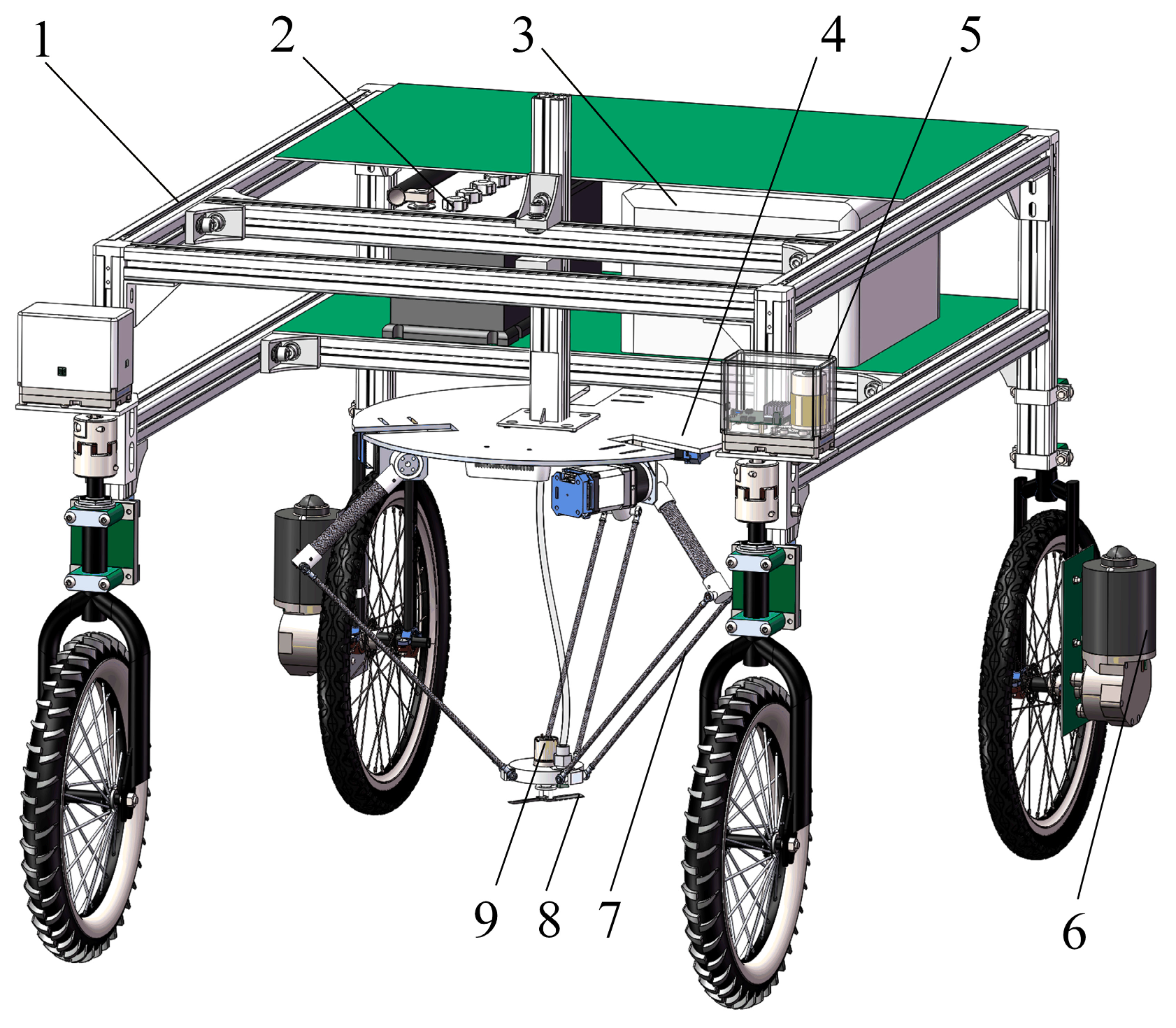
The weeding device is composed of core units such as a self-propelled four-wheel mobile platform, a weeding manipulator, a weed identification and positioning module, and a control system. The structure of the whole machine is shown in Figure 2. As the bearing and operation basis of the manipulator, the mobile platform integrates key components such as frame, wheel, weeding knife motor, steering motor, suspension adjustment mechanism, battery pack, medicine box, and main control unit. The platform adopts a two-wheel-steering, two-wheel-drive architecture with front-wheel steering and rear-wheel drive. The front wheel is driven by two high-torque servo motors through a coupling to achieve high-precision steering angles, while the rear wheel is driven independently by two DC gearmotors to provide forward and backward propulsion.
The weeding manipulator is mounted on the front end of the platform through an adjustable suspension mechanism, and the installation height of the end effector can be continuously adjusted in the range of 100–300 mm to adapt to different plant heights and row spacings, so as to achieve accurate targeted weeding in complex field environments. The power supply of the whole machine is a 48 V battery, which is powered by a 24 V step-down module for the platform steering motor (DH-03X. From Shenzhen Zhisheng Technology Co., Ltd., Shenzhen, China) and weeding knife motor (XD5263WB-4578. From Changzhou Huichuan Electronic Co., Ltd., Changzhou, China), and by a 12 V step-down module for the manipulator motor (BLDC-38SRZ-S. From Sinbad Motor Company Limited, Dongguan, China) and DC diaphragm pump (SFL33-035-045. From SaiFuer Fluid Technology Co., Ltd., Shenzhen, China).

2.2. Design of Wounding Spray End Effector

2.2.1. Weed Shear Resistance Test

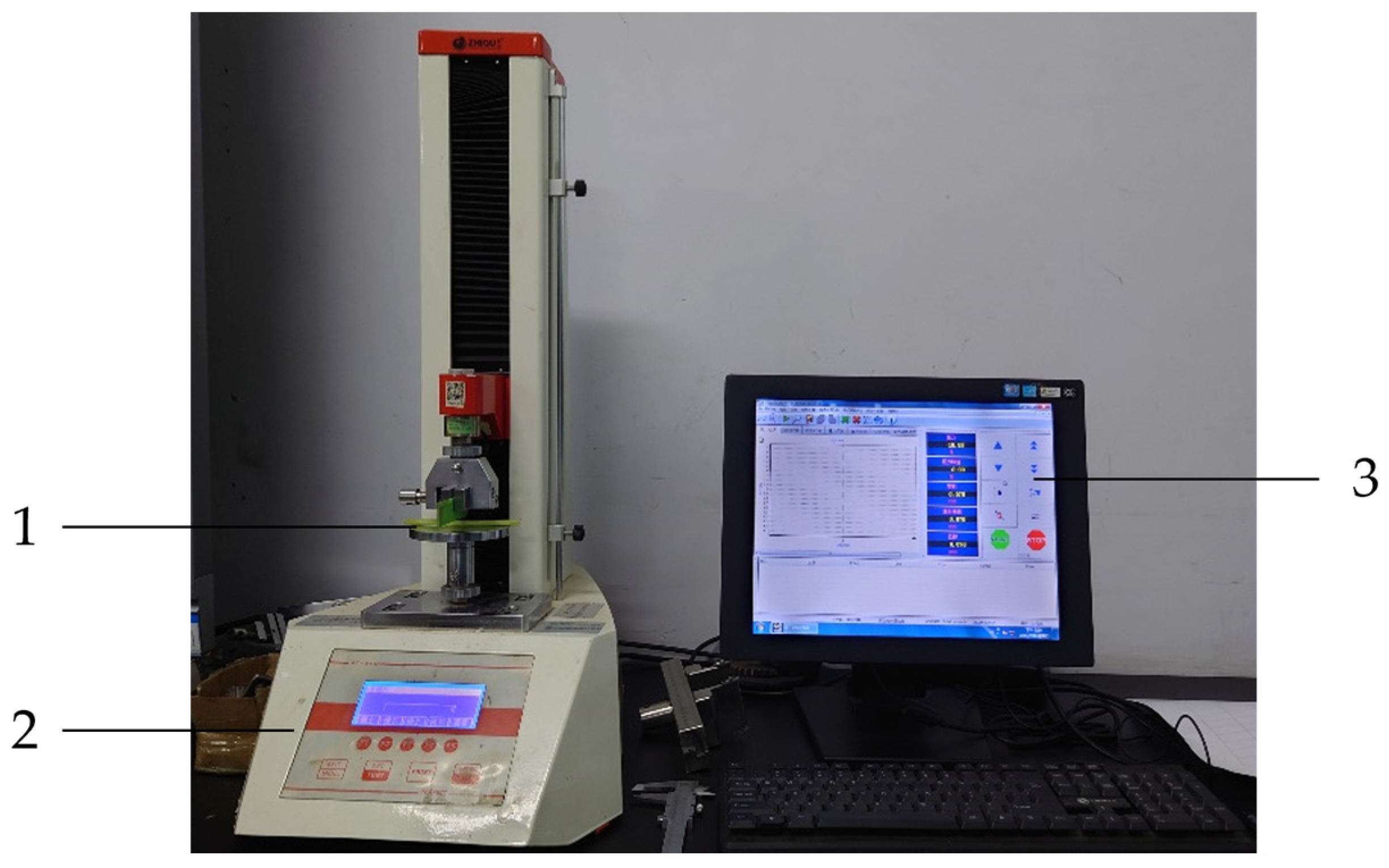
In order to clarify the operating parameters required for the effective removal of weed stalks by weeding knives, it is necessary to carry out shear mechanical properties tests on weed stalks. Target weed samples at different growth stages were collected in the planting demonstration field; the sampling criteria were complete stems and leaves, no pests or diseases, and sound roots. The main resistance in the process of weed cutting is due to the lignified structure and mechanical tissue inside the stem. Figure 3 is a multifunctional force tester. In order to accurately determine its shear force, the sample is pretreated before the test: the leaves and roots are removed, and only the stem part above the root is retained. The ZQ-PT-890 multi-functional force tester (From Dongguan ZhiQu Precision Instrument Co., Ltd., Dongguan, China) was used in the test, with a range of 0–50 N and a resolution of 0.005 N. The force and displacement data generated during the displacement of the power arm were recorded synchronously by supporting upper computer software.
In the shearing test, the treated weed stalks were placed horizontally on the test platform, and then sheared at 20 mm, 40 mm, and 60 mm from the root, respectively. The displacement speed of the power arm is set to 40 mm/min, the data acquisition frequency is 50 Hz, and the recording content includes pressure F and time t, as shown in Table 1.
According to Table 1, the diameter of the collected weed samples ranged from 3 to 6 mm. In the case of the same height from the root, the shearing force of the weed increased significantly with the increase in its diameter; under the condition of constant diameter, the shear force decreased slightly with the increase in the distance between the shear position and the root. It can be seen from the average shear force data in the table that the diameter of the weeds is the main factor affecting the shear force, and its shear resistance increases with the increase in diameter. When the weed diameter reached 6 mm, the average shear force reached the maximum value of 6–8 N.

2.2.2. Design and Optimization of Weeding Knife

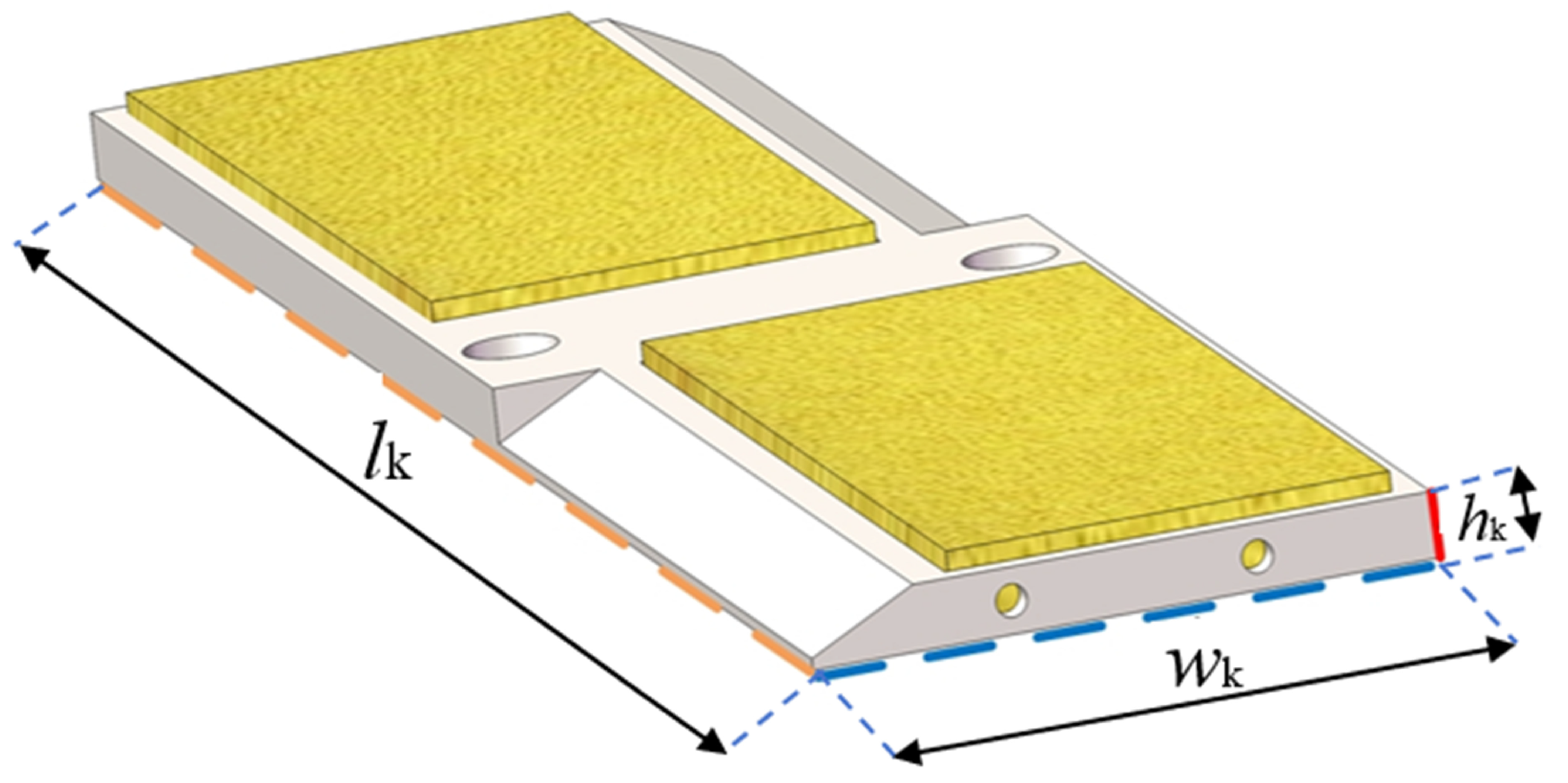
The geometric parameters, such as the length, thickness, width, and blade angle of the weeding knife, have a significant effect on the cutting performance of the weeding device [20]. The increase in blade size can expand the cutting range and increase the line speed, but a too-large size reduces the fault tolerance of inter-plant operation and increases the risk of crop damage. Thickness and edge angle not only determine the cutting efficiency, but also affect the tool life. In theory, a smaller blade angle can reduce the cutting energy consumption and improve the stability, but a too-thin blade is not rigid enough and easy to vibrate, deform, or break; a too-thick blade increases the driving force and moment of inertia, resulting in increased power consumption and cost [21,22]. The weeding equipment adopts a plane rotary design, and the functional requirements of the weeding knife determine the specific parameters. In order to achieve effective cutting and avoid damage to crops, the blade edge angle is set to 25° and the thickness hk is 2 mm, and the maximum length should refer to the row spacing and plant spacing of soybean, that is, the minimum plant spacing of soybean should be greater than the length of weeding knife to ensure the safety of the operation. The schematic diagram of the weeding knife based on the above principles is shown in Figure 4, the length lk is 80 mm, and the width wk is 20 mm.
In the weeding operation, the aboveground part of the weed is only supported by the stem, and the blade rotation cutting belongs to the unsupported cutting. In this process, the stalk is instantaneously subjected to the action of the weeding knife, resulting in a large acceleration and opposite inertial force, which puts forward higher speed and torque requirements for the drive system. The research shows that the minimum speed of the blade needs to reach 30 m/s when the long-strip blade is cut without support. In order to ensure the stability and efficiency of the cutting process, the working speed of the weeding knife must be higher than the limit speed [23,24,25].
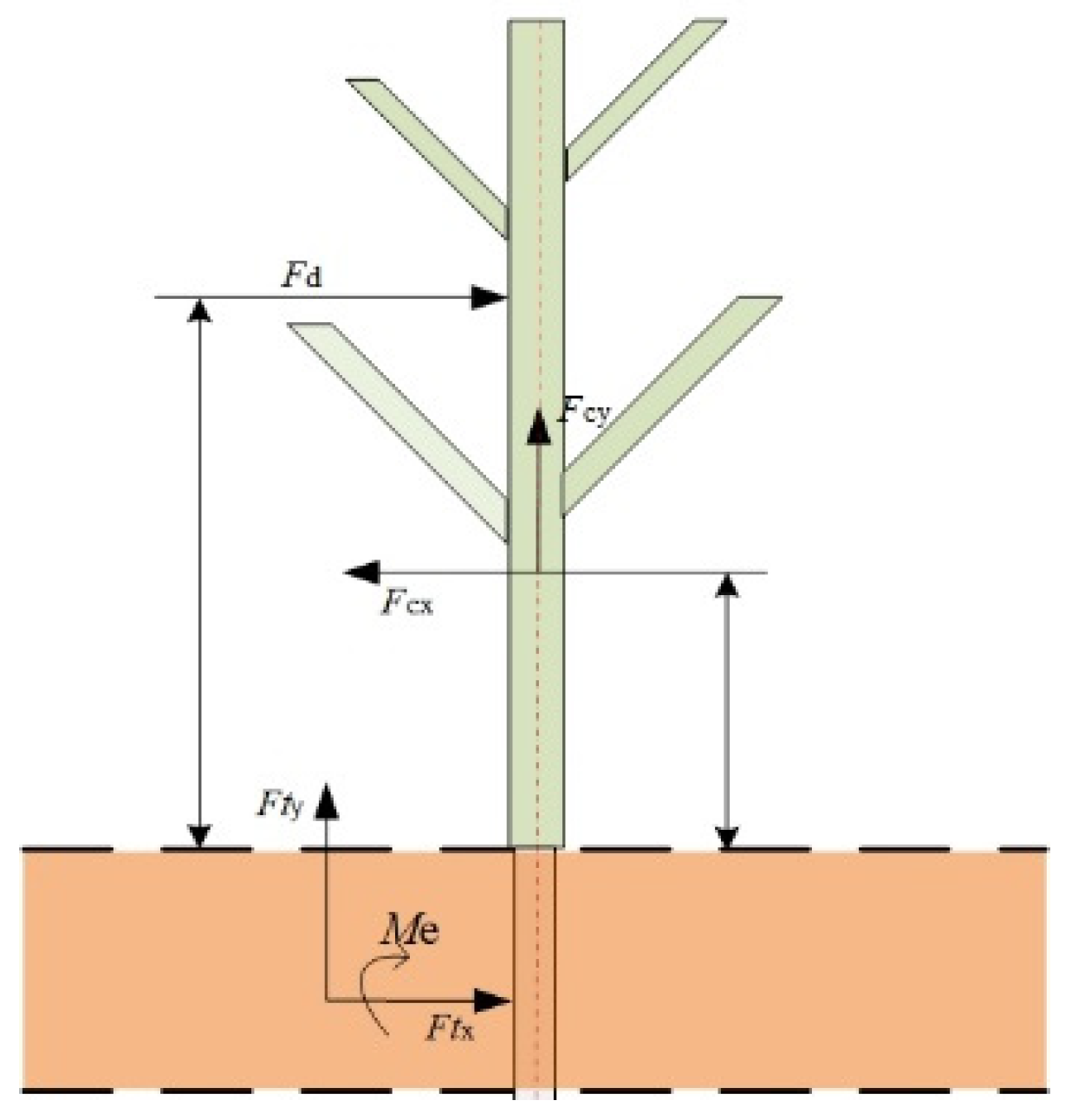
The selection of the weeding motor should consider the maximum shear force and cutting speed when cutting weeds. The detailed analysis of the weed force in this process is shown in Figure 5.
Here, Fcy and Fcx are the components of the blade cutting force in the horizontal and vertical directions, respectively. Fd is the bending resistance force generated by the stem opposite to the cutting direction, and the weed root is subjected to the force Ftx of the soil in the horizontal direction, the force Fty, and the torque Me in the vertical direction.
The balance equation of the force and moment of the weed during the cutting process is as follows:
F d + F tx = F cx F cy = F ty F d d 1 + M e = F cx d 2
The cutting height is 20 mm from the ground, and the maximum shear force of the weed is 7.80 N with reference to the test data. According to the calculation formula of rotational speed and linear speed, shear force, and torque,
ω = 2 v l
T = F cx l 2
Combining Formula (2) with the speed and angular velocity conversion formula, the rated speed of the weeding knife motor can be obtained:
n = 30 v π r
In the formula, ω is the motor speed, rad/s; v is the linear velocity of cutting, m/s; l is the blade diameter, m; T is the rated torque of the motor, N·m; r is the radius of the blade, m.

2.2.3. Design of Targeted Drug Delivery System

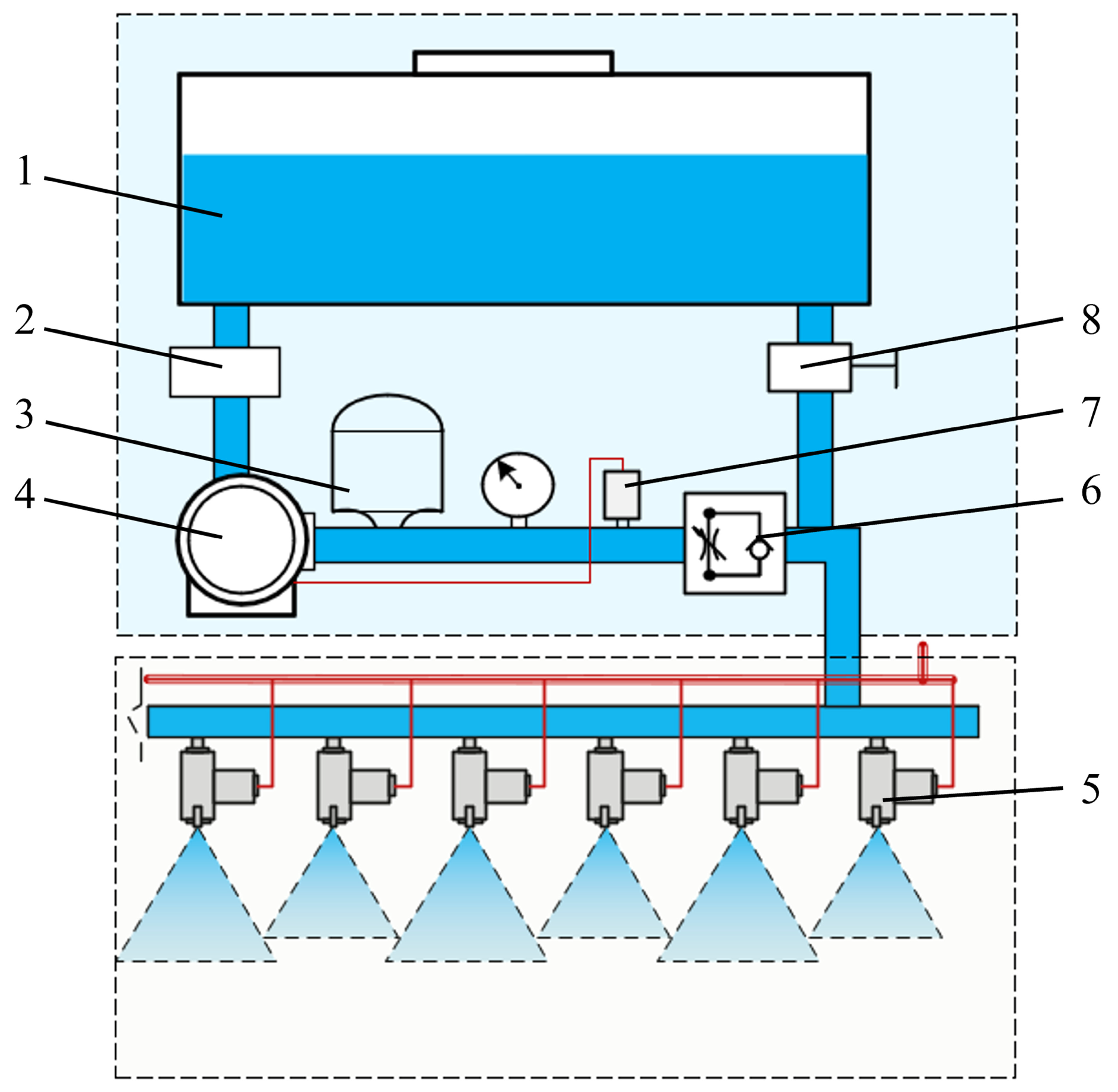
The spray application system of the weeding device is mainly composed of three parts, as shown in Figure 6, which are the medicine box, the direct current diaphragm pump, and the spray. After the weeding knife destroys the weed stalk, the drive board of the DC motor receives the switch command sent by the host computer to control the dosage of the pesticide. During the spray process, the DC diaphragm pump maintains a working pressure of 0.3 MPa, and a one-way countercurrent valve with an on-off pressure of 0.3 MPa is set at each part of the pipeline to reduce the delay of the liquid and improve the spray response speed. During the non-operation period, the pipe between the diaphragm pump and the nozzle keeps the liquid filled; after the pump starts, when the pressure exceeds the on-off pressure of the countercurrent valve, the spray system responds quickly. The arrangement position of the reverse flow valve is shown in Figure 6.
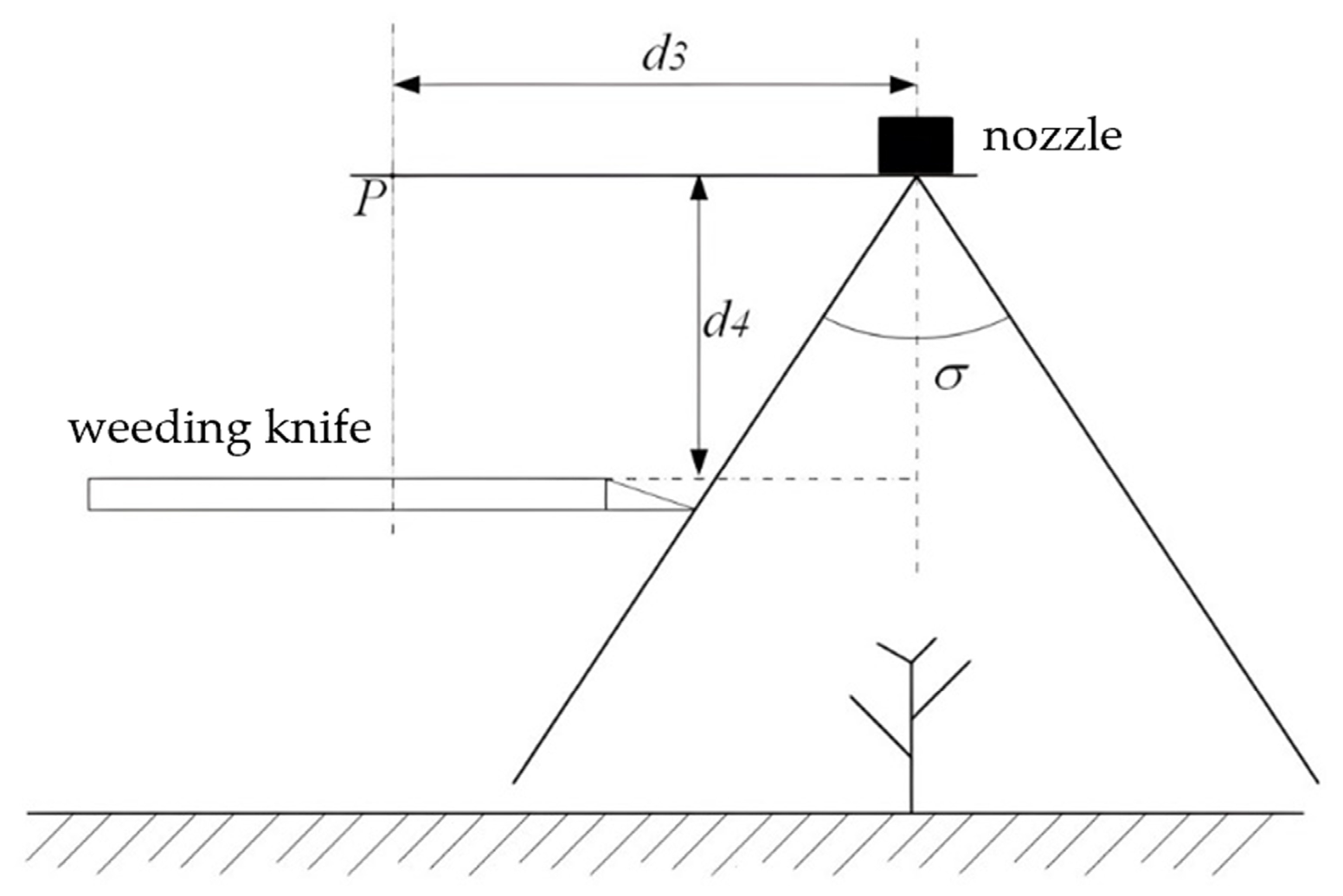
The conical nozzle used in this study has a spray angle of 80°. When the spray pressure is set to 0.3 MPa, the corresponding flow rate is 1.19 L/min, which can meet the requirements of circular coverage. In order to avoid the blocking of the spray path by the weeding knife, the installation position was optimized. The specific installation relationship is shown in Figure 7. Taking the center of the mobile platform as the reference point, combined with the distance between the spray cone angle of the nozzle and the center of the weeding motor and the nozzle, the installation distance between the weeding knife and the ground can be calculated:
d 4 = d 3 l k tan σ
In the formula, d3 is the distance between the weeding knife motor and the nozzle center; σ is the spray cone angle of the nozzle; and lk is the length of the weeding knife.
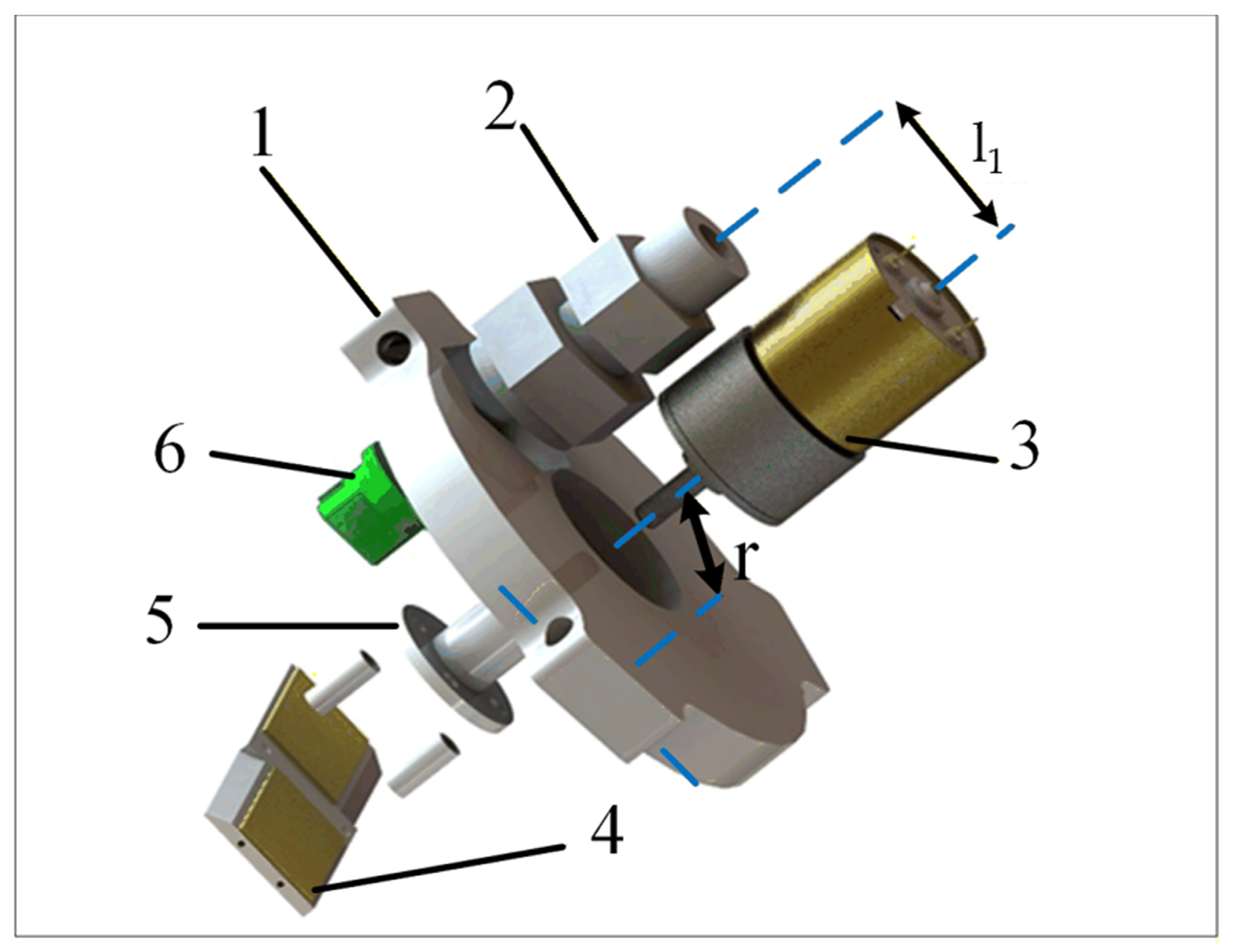
Figure 8 is the composition of the weeding end effector, including the weeding knife, the driving motor, the nozzle, the nozzle frame, the motor flange, and the mounting column. The DC deceleration motor (as the driving source) and the nozzle frame are integrated on the moving platform. The power is provided by the platform battery, and the weeding knife is connected to the motor shaft through the motor flange. In order to optimize the overall configuration, the DC diaphragm pump and the medicine box are arranged on the field operation platform.

2.3. Design and Optimization of Weeding Manipulator

2.3.1. Structure Design of Weeding Manipulator

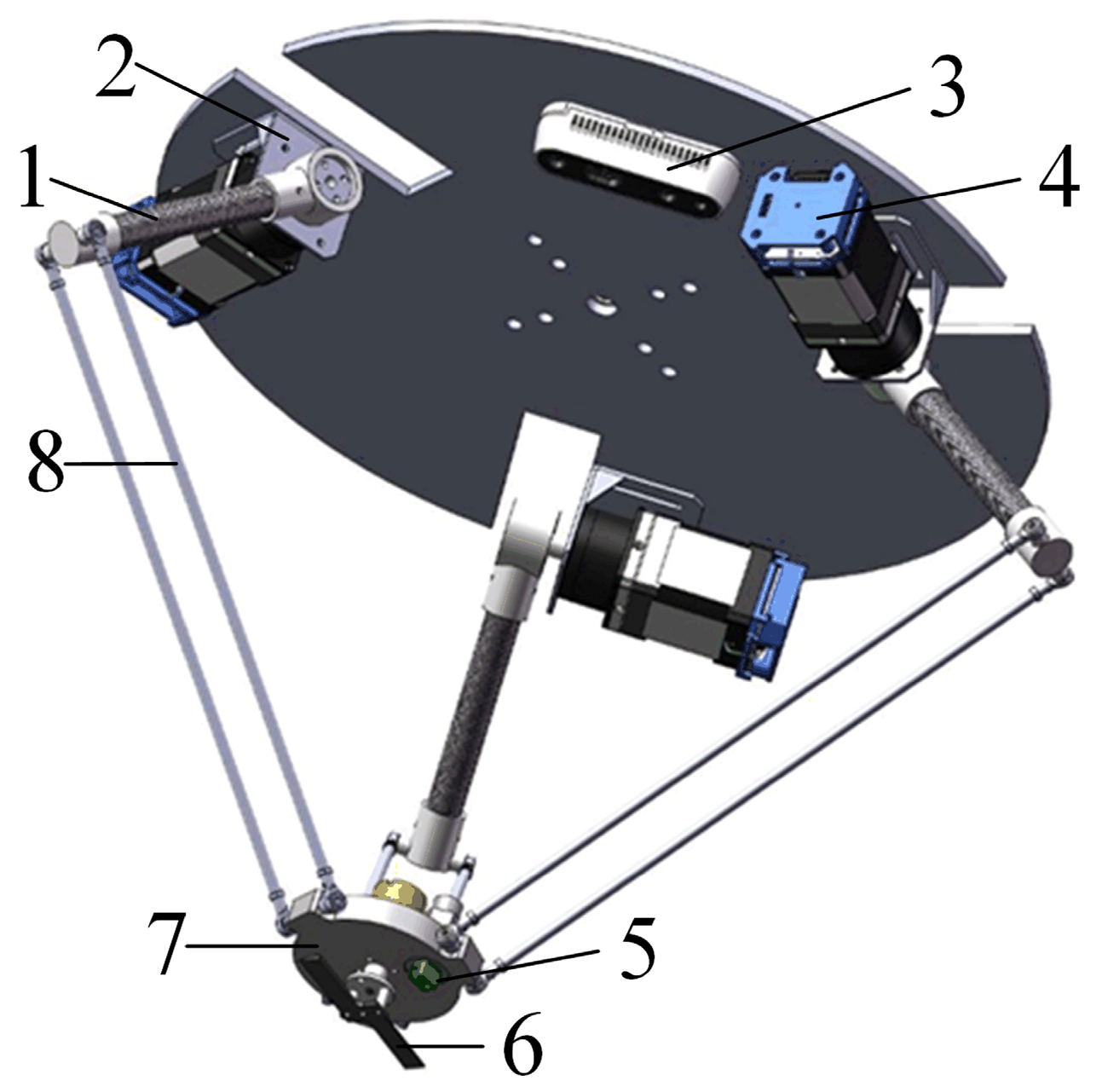
Based on the high speed, high stiffness, and compact structure of the Delta parallel mechanism, a parallel manipulator composed of a fixed platform, three active arms, and three driven arms is developed [26,27,28]. The structure is shown in Figure 9. The active arm and the driven arm are 3D-printed with PLA material, which has the characteristics of light weight and high machining accuracy. The driving system adopts a 42HS60 closed-loop stepper motor (12 V DC, 1.4 A. From Changzhou Heli Electric Co., Ltd., Changzhou, China) and a two-stage planetary reducer (reduction ratio 5.18, PLE series, Neugart GmbH, Shenzhen, China). The output rated torque is 3.5 N·m, and the speed is 424.7 r/min. The motor integrates Emm42_v4.x closed-loop controller and 16384-wire absolute magnetic encoder to realize three closed-loop precise control of torque loop, speed loop, and position loop. The end effector is driven by a 12 V DC planetary gear motor to drive the cutting blade to rotate at a high speed, and the no-load speed is 1800 r/min (reduction ratio 9.6), which can provide a stable cutting torque. The pesticide application system adopts a 12 V micro diaphragm pump with a built-in Hall encoder to realize the closed-loop control of pump speed and meet the requirements of on-demand and quantitative spraying of herbicides.

2.3.2. Kinematics Modeling

Because the motion of the weeding knife and the manipulator are not coupled with each other, the kinematics analysis and structural modeling do not need to consider the weeding knife. The mechanism model is established by analyzing the degree of freedom, and the quality of the weeding module is equivalent to that of the moving platform, and the quality of the fixed part, such as the driving motor, is equivalent to that of the static platform. The manipulator is composed of 11 effective components, including a static platform, three active arms, three driven arms, and a moving platform. The simplified model for calculation is shown in Figure 10.
The degree of freedom of the end actuator of the weeding manipulator is calculated by using the calculation formula of the degree of freedom of the spatial mechanism G:
G = 6 ( j g 1 ) + i = 1 g f i
In the formula, G is the degree of freedom of the mechanism; j is the number of components; g is the total number of kinematic pairs of the mechanism; and f is the number of degrees of freedom of the i th motion amplitude.
Because the total number of components of the simplified mechanism is j = 8, the total number of kinematic pairs is g = 9, and the sum of the degrees of freedom of the whole mechanism is 15. Bringing into Formula (6), G = 3.
The configuration of the weeding manipulator determines that the moving platform has three translational degrees of freedom (along the X-, Y-, and Z-axes, respectively) in space. Each branch chain constrains two rotational degrees of freedom of the moving platform, and any two branches can limit three rotational degrees of freedom.
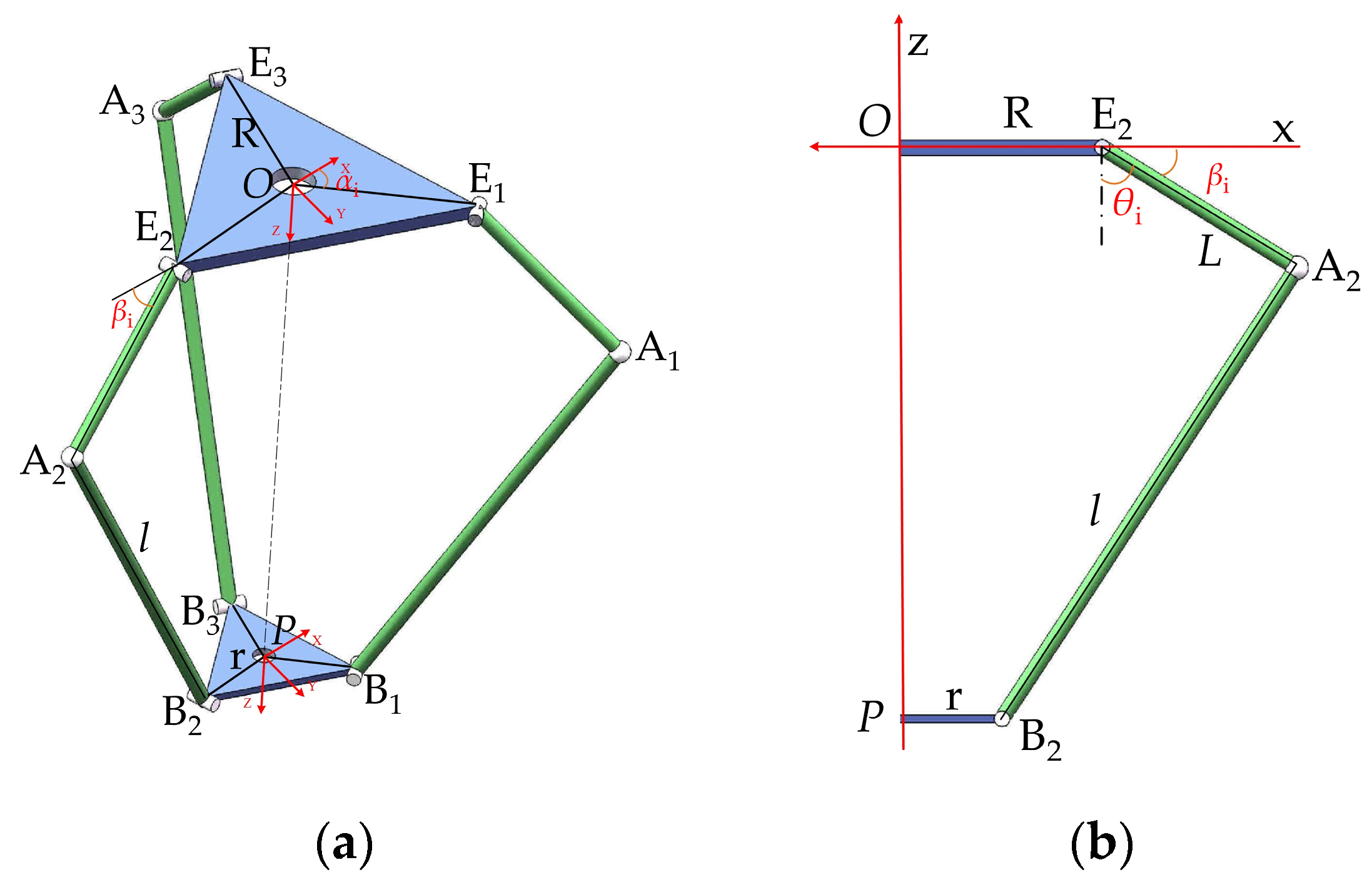
The kinematics analysis of the weeding manipulator is composed of forward and inverse kinematics. The forward kinematics aims to determine the spatial coordinates of the end center point through the input angle of the driving pair; the inverse kinematics solves the required input angle of the driving pair according to the specified end position. The inverse kinematics derivation needs to construct a coordinate system on a simplified manipulator model. As shown in Figure 10a,b, the schematic diagram of the mechanism after the coordinate system is established.
The coordinate system OXYZ is established at the center point O of the static platform. Ei is the center point of the rotation axis of the three hinges. The distance between the center point O of the static platform and the center point of the hinge rotation axis is the radius R of the static platform. The Z-axis of the static platform is perpendicular to the plane of the static platform, the X-axis passes through the origin and is perpendicular to E1E2, and the Y-axis is perpendicular to the X-axis and the Z-axis. Among them, EiAi is the active arm with a length of L, and AiBi is the driven arm with a length of l. The coordinate system PX1Y1Z1 is established at the center point P of the moving platform. Bi is the center point of the rotation axis of the three hinges of the moving platform. The distance between the center point P and Bi of the moving platform is the radius r of the moving platform. The inverse solution of the weeding manipulator is to know the spatial coordinates of the end effector in the base coordinate system OXYZ, and solve the rotation angle βi of the three active arms, as shown in Figure 11, where α1, α2, and α3 are the angles between E1, E2, E3, and the X-axis, respectively.
α i = 2 i 1 6 π i = 1 , 2 , 3
The position of E1, E2, and E3 in the base coordinate system OXYZ can be expressed as follows:
O E i = [ R cos α i R sin α i 0 ] T
According to the geometric relationship, the position of the active arm axis EiAi in the base coordinate system can be expressed as follows:
E i A i = R × [ ( R + L sin θ i ) cos α i ( R + L sin θ i ) sin α i L cos θ i ] T
The position of the driving joint Bi on the moving platform in the coordinate system of the moving platform is vector PBi:
P B i = [ r cos α i r sin α i 0 ] T
Given the coordinates (x, y, z) of the P coordinate of the center point of the moving platform in the base coordinate system OXYZ, then OBi can be expressed as follows:
O B i = [ R cos α i + x R sin α i + y z ] T ,
the length of EiAi is L, and the length of AiBi is l, then
A i B i = O B i O A i ,
A i B i 2 = ( O B i O A i ) 2 .
Sorting out the above formulas can obtain the following:
l 2 = ( R + L sin θ i r ) cos α i x 2 + ( R + L sin θ i r ) sin α i y 2 + ( L cos θ i z ) 2
By substituting, sorting, and simplifying, a one-variable quadratic equation about θi is obtained:
a i t i 2 + b i t i + c i = 0 i = 1 , 2 , 3
In the formula, the following is applied:
t i = sin θ i 2 cos θ i 2
a 1 a 2 a 3 = l 2 L 2 x 2 y 2 z 2 ( R r ) 2 + ( R r ) ( 3 x + y ) L + 2 z l 2 L 2 x 2 y 2 z 2 ( R r ) 2 ( R r ) ( 3 x y ) L + 2 z l 2 L 2 x 2 y 2 z 2 ( R r ) 2 2 y ( R r ) 2 L + z
b 1 b 2 b 3 = 2 2 ( R r ) 3 x y 2 2 ( R r ) + 3 x y 2 ( R r + y )
c 1 c 2 c 3 = l 2 L 2 x 2 y 2 z 2 + ( R r ) ( 3 x + y ) L 2 z l 2 L 2 x 2 y 2 z 2 ( R r ) ( 3 x + y ) L 2 z l 2 L 2 x 2 y 2 z 2 ( R r ) 2 y ( R - r ) 2 L z
According to the universal root formula of the quadratic formula of one variable,
t i = b i ± b i 2 4 a i c i 2 a i     i = 1 , 2 , 3
θ i = 2 arctan ( t i )
Because of θ i + β i = π 2 , the angle βi between the active arm of the weeding manipulator and the static platform is as follows:
β i = π 2 θ i = π 2 2 arctan ( t i )
According to Formulas (14) and (20), the inverse kinematics formula can be derived. The formula defines the mapping relationship between the coordinates of the end center point and the rotation angle of the three motors. The control target is to move the end to the identified weed coordinates. The coordinates are substituted into the inverse solution formula because the radius of the moving platform r, the radius of the static platform R, the length of the driven arm l, and the length of the active arm L in the inverse solution formula are all known quantities. Therefore, the premise of solving the motor rotation angle is to determine the position of the weeds in the manipulator coordinate system.
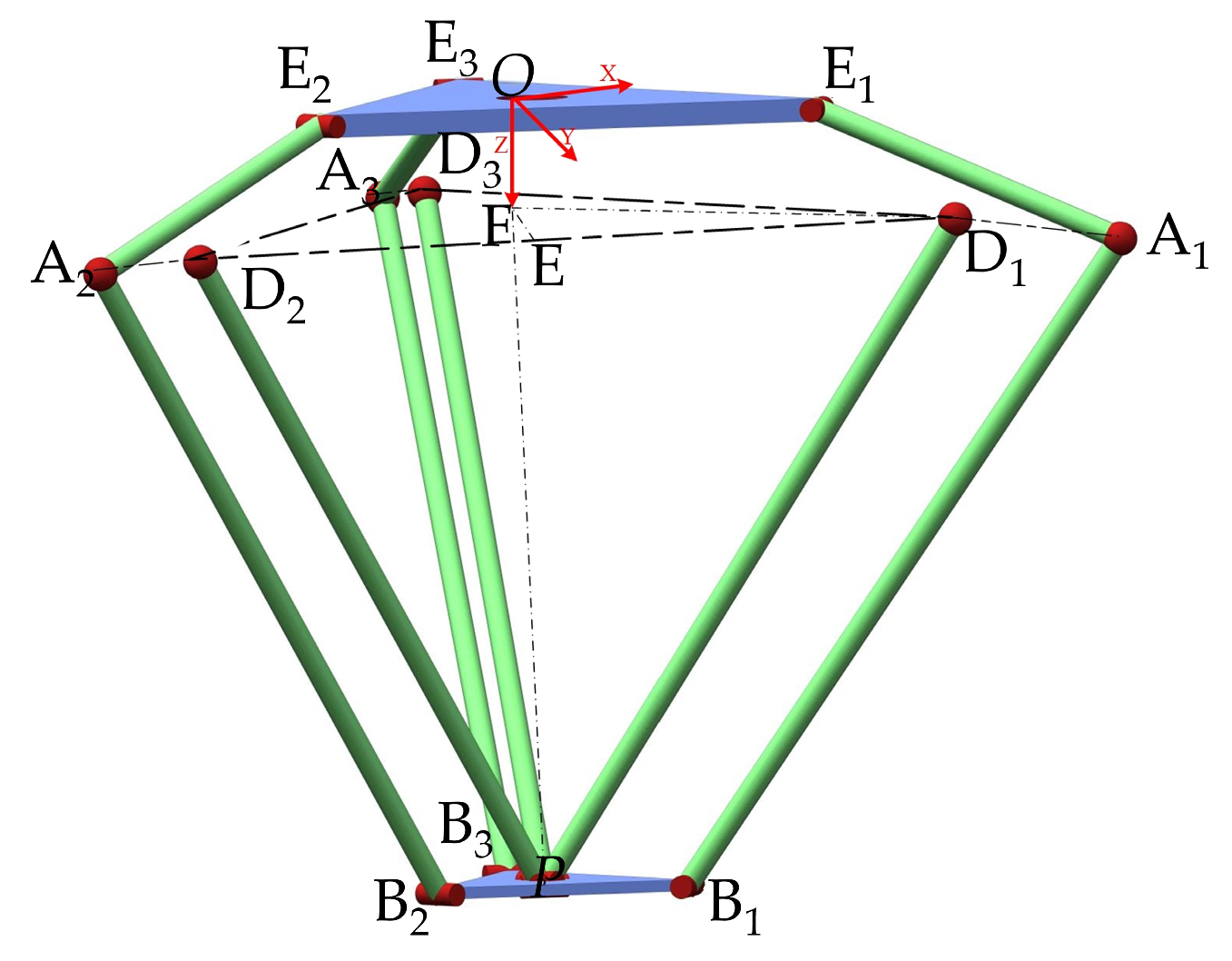
In order to avoid the complexity of the positive solution calculation of the parallel manipulator, the geometric method is used to calculate the positive solution. The coordinate system is established in the simplified parallel arm model, and the rods A1B1, A2B2, and A3B3 are translated along the directions of B1P, B2P, and B3P, respectively. The translation distance is r, so that the three rods intersect at the P point after translation, and the vertices of the three rods after translation are D1, D2, and D3, respectively. The constructed model is shown in Figure 11.
From the above reasoning Formula (8) of the inverse solution algorithm, the position coordinates of Ei and Ai points in the base coordinate system can be obtained. If the rotation angle βi of each active arm is known, only the coordinate value of the P point in the base coordinate system OXYZ can be obtained to complete the derivation of the forward solution algorithm. As shown in Figure 11, D1D2D3 is an equilateral triangle, point F is the incenter of the triangle D1D2D3, and point E is the center of the edge D1D2. According to the isosceles triangle theorem, there are PE vertical D1D2 and PF vertical plane D1D2D3.
It can be seen from Figure 11 that the relationship of point P in the base coordinate system OXYZ is O P = O F + F P . According to the calculation formula of the space vector, O F = O E + E F can be known, and because the moving platform and static platform of the parallel arm are equilateral triangles, and after translation P D 1 = P D 2 = P D 3 , then FE is perpendicular to D1D2. It can be concluded as follows:
O E = O D 1 + O D 2 2
In the formula,
O D 1 = O A 1 + A 1 D 1 = O A 1 + B 1 P ,
O D 2 = O A 2 + A 2 D 2 = O A 2 + B 2 P .
In the above derivation of the inverse solution algorithm, the values of O A 1 , O A 2 , B 1 P , and B 2 P are known, and O E is also a known quantity. We only need to calculate the values of vectors E F and F P , where E F = n EF E F , F P = n FP F P , where n EF , n FP are unit vectors, and E F , F P are the modules of vectors. The calculation of n EF and n FP can be obtained by the Heron formula based on the space vector rule and triangle area calculation:
n EF = D 1 D 2 × D 1 D 3 × D 2 D 3 D 1 D 2 × D 1 D 3 × D 2 D 3
E F = F D 1 2 D 1 D 2 2 4
n FP = D 1 D 2 × D 2 D 3 D 1 D 2 × D 2 D 3
F P = P D 1 2 F 1 D 2 2
Therefore, according to the vector relationship, the spatial geometric vector relationship formula of the P point at the end of the mechanism can be derived as follows:
O P = O F + F P = O E + E F + F P = O D 1 + O D 2 2 + n EF E F + n FP F P
Formula (30) can calculate the coordinate position from the motor rotation angle to the moving platform, that is, the forward kinematics model of the weeding manipulator.

2.3.3. Structural Parameters Optimization of the Weeding Manipulator Based on Workspace

Workspace is the key performance index and structural optimization goal of a parallel manipulator [29]. Since the workspace is usually smaller than that of the same-stage series mechanism, the genetic algorithm is introduced to optimize the structural parameters in order to improve the space utilization and job flexibility [30,31].
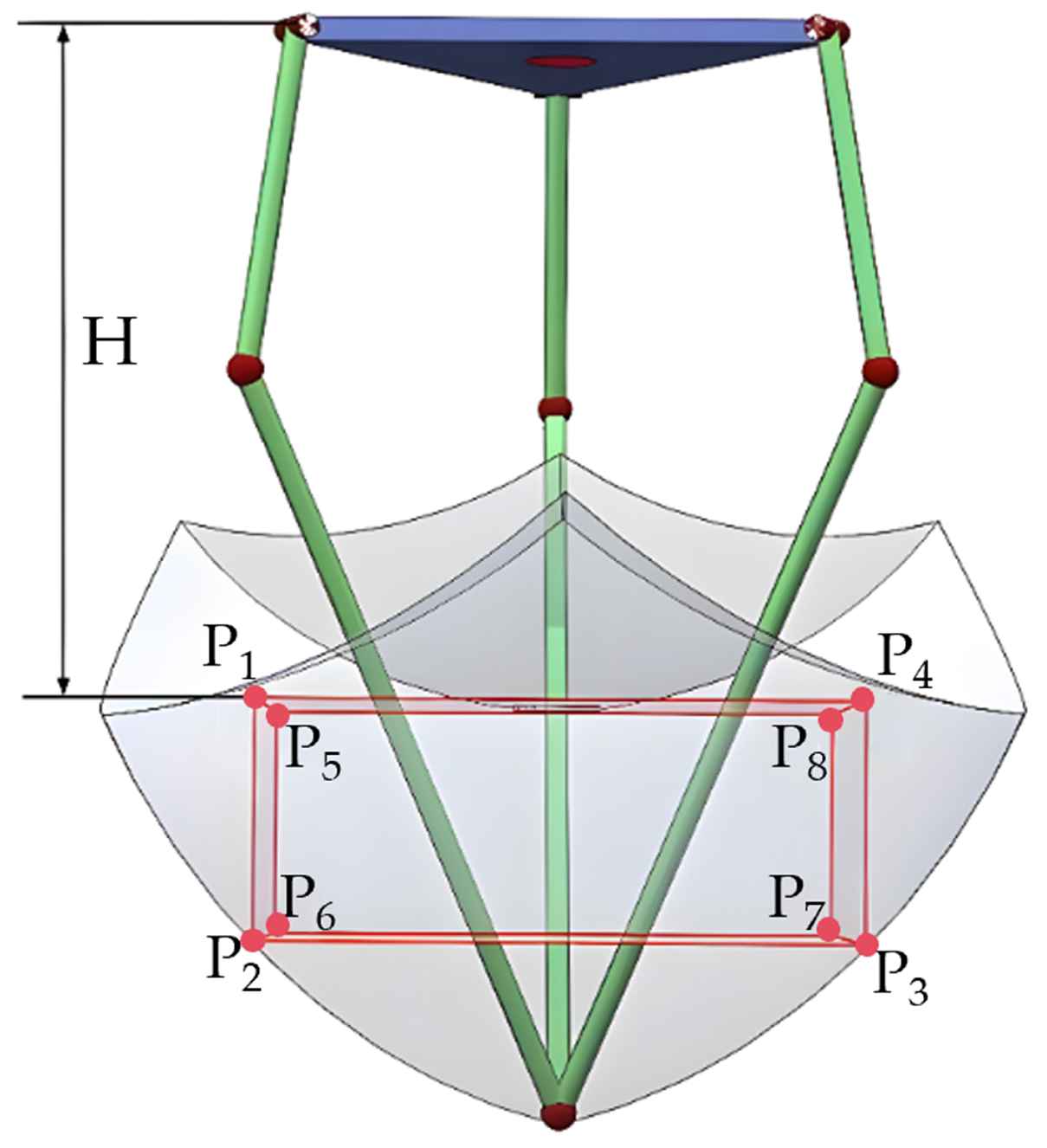
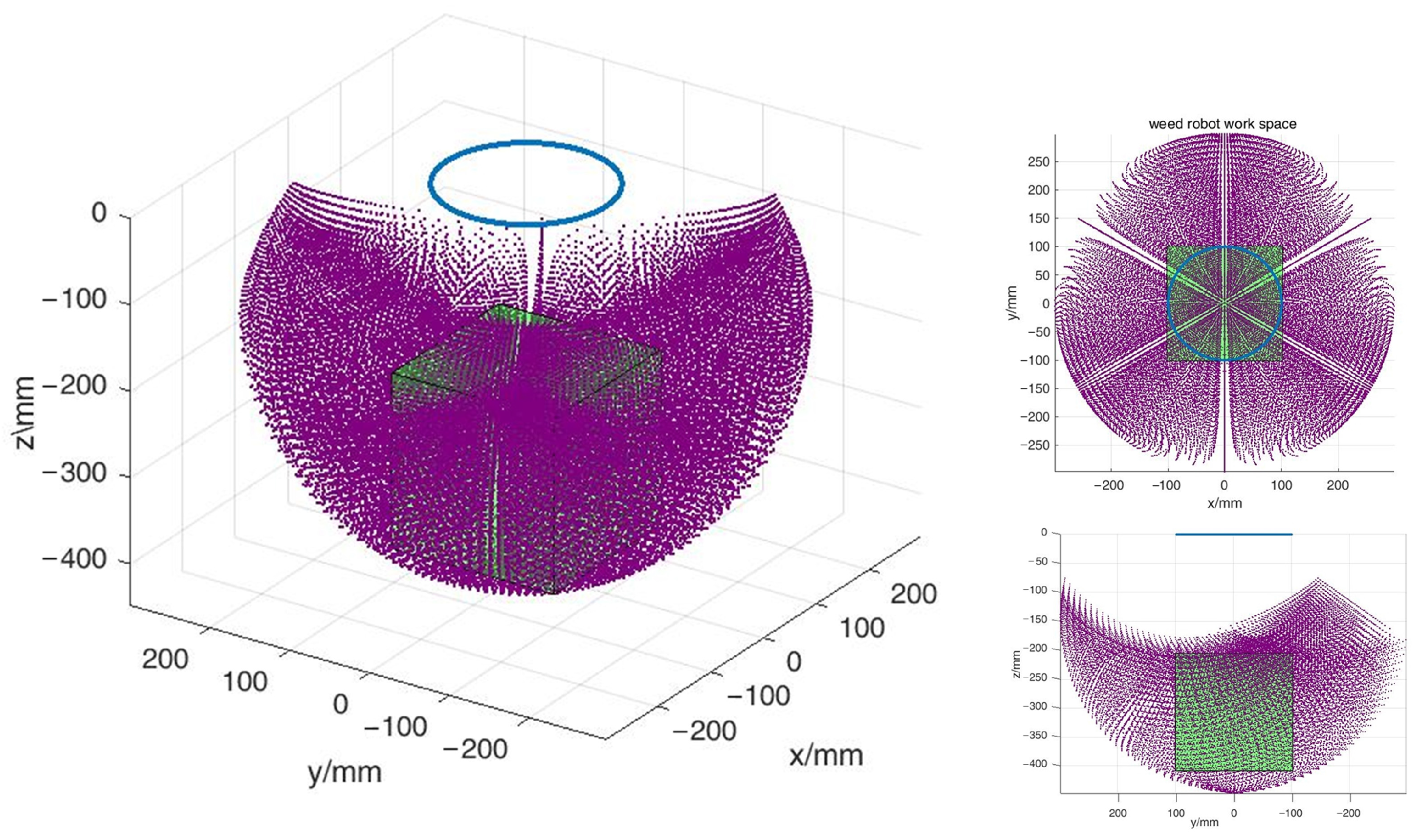
The setting of the target weeding workspace refers to the field soybean growth environment and is set as a cuboid. The height of the cuboid is greater than the growth height of the weed, and the length needs to be greater than a row of soybean planting row spacing. The volume of the target weeding workspace is required to be at least 1300 mm × 300 mm × 200 mm. The target weeding space is included in the working space of the weeding manipulator. The points P1, P2 ··· P7, P8 are the eight vertices of the cuboid, respectively, as shown in Figure 12.
From the previous analysis of the positive solution of the weeding manipulator, the workspace boundary equation can be obtained:
G i ( a , b , c ) = [ x 2 + a 2 + b 2 + c 2 y 2 + z 2 2 z ( a cos α i + b sin α i ) ] 2 4 x 2 [ ( z a cos α i b sin α i ) 2 + c 2 ] i = 1 , 2 , 3
If the vertex Pi of the target weeding space is within the workspace, it can be considered that the designed weeding manipulator meets the design requirements:
G i P j 0 i = 1 , 2 , 3   j = 1 , 2 , 3 8
In the formula, the coordinates of each vertex of the target weeding space are P j a , b , c , and x, y, z are the difference between the length of the active arm L, the length of the driven arm l, and the radius of the upper and lower platforms, respectively. H is the height difference between the upper plane and the working plane. The minimum sum of the distance between each vertex of the cuboid and the boundary surface of the workspace is the definition of the objective function of the genetic optimization algorithm. In order to solve the problem of whether the vertex P(j) satisfies the condition, which is not easy to judge, and ensure that the eight vertices are located inside the workspace, a maximum constant is introduced as the penalty function constraint. Therefore, the objective function of the workspace optimization problem in this paper is as follows:
F = min G i P j + 10 20     i = 1 , 2 , 3   j = 1 , 2 , 3 8
In order to optimize efficiently, the search interval of parameter variables needs to be preset. The radius of the moving platform should be minimized under the premise of satisfying the installation of the actuator (the measured lower limit is 60 mm) to improve the motion speed; the size of the static platform needs to ensure the installation space of the drive components and match with the mobile platform, and the distance between it and the upper boundary of the workspace needs to be constrained to avoid the singularity. In summary, the parameter constraint relationship is set to the following:
100 x 300 300 y 500   40 z 100 150 H 350
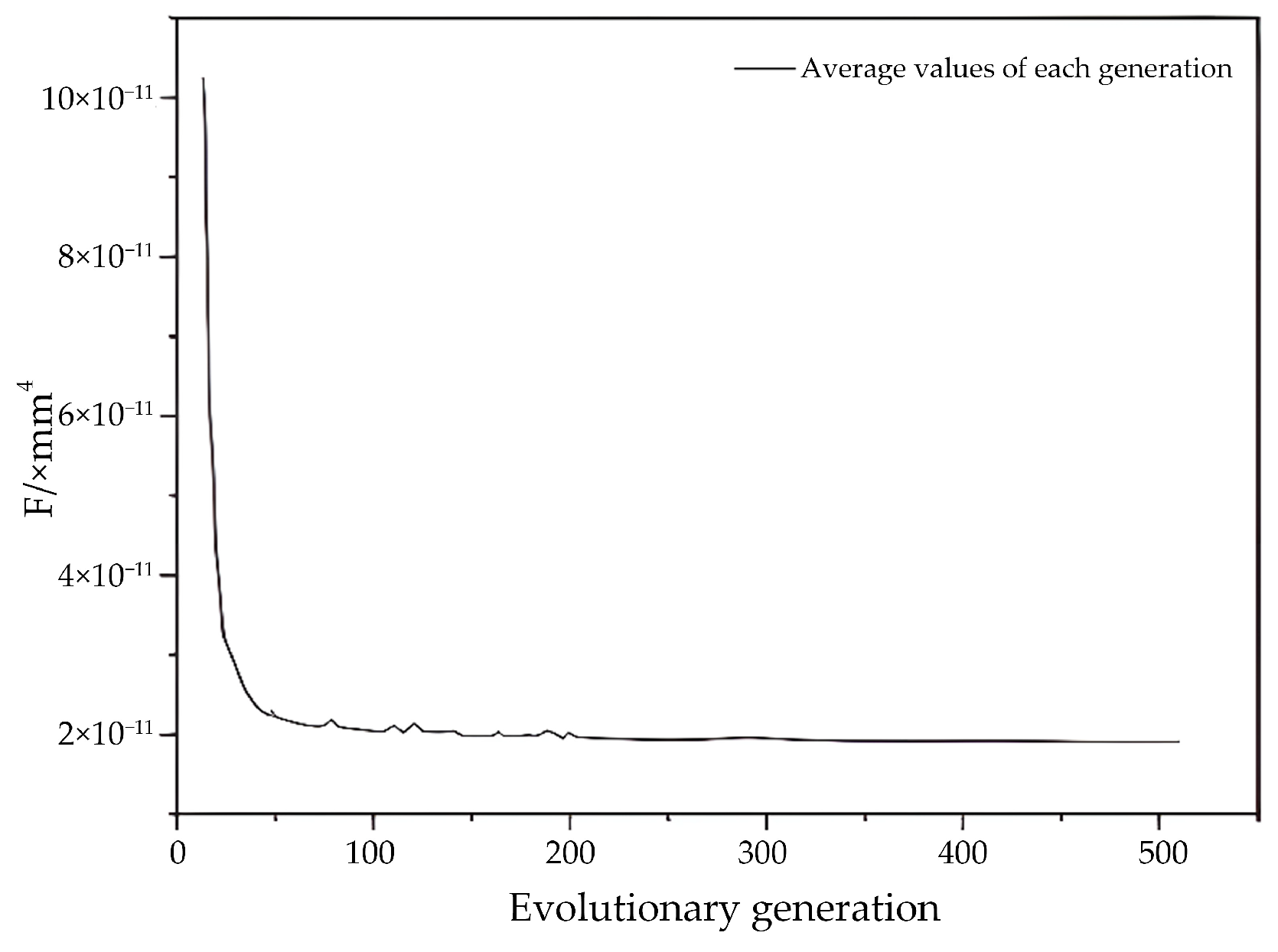
The objective function and its constraints are written in MATLAB R2023a, and the GA algorithm of its optimization toolbox is used to solve the problem. The algorithm parameters are set as follows: population size of 100, maximum iterations of 500, mutation probability of 0.01, and crossover probability of 0.9. According to this, the objective function is optimized by the minimum value, and the optimized function iteration curve is shown in Figure 13.
The objective function converges at 200 iterations, and the optimal curve is stable. The minimum value of the objective function obtained by this solution corresponds to the optimal structural size of the manipulator that satisfies the working space design and constraint conditions, as shown in Table 2.
The simulation results are rounded, and the optimization parameters are substituted into the boundary equation of the workspace. A Monte Carlo random method is used to draw the cloud map of the space point of the manipulator. The reachable space diagram is shown in Figure 14. It can be seen from the figure that the reachable height range is −200 mm to −600 mm, and the maximum width can reach ± 302.8 mm. The reachable space of the weeding manipulator includes the set target weeding space, which meets the operation requirements of the soybean field.

3. Results

3.1. Simulation Analysis of Weeding Manipulator Trajectory

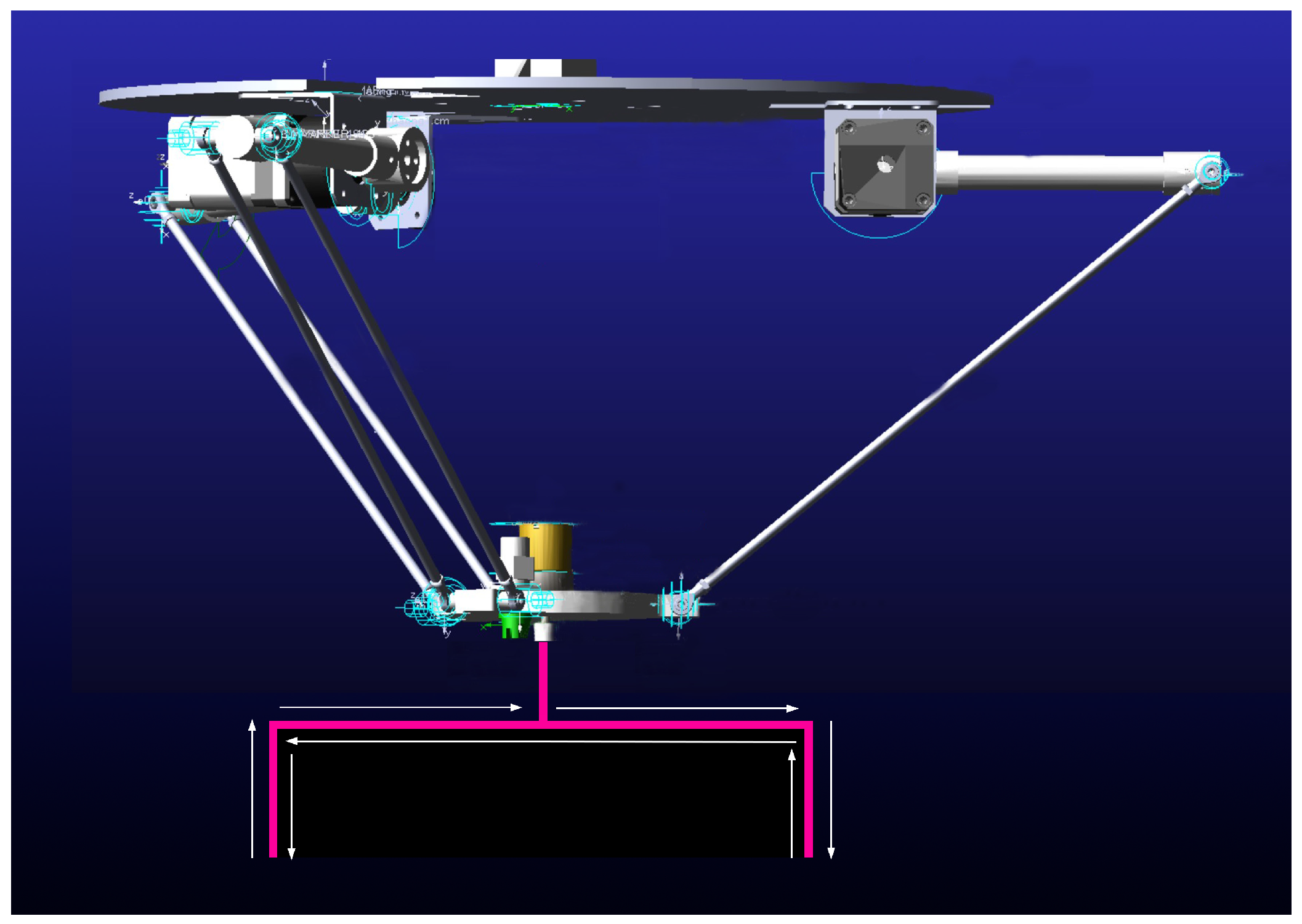
In order to determine the applicable range of motor speed and verify whether the optimized weeding manipulator operation interferes, the trajectory of the weeding operation is analyzed by ADAMS 2020dynamic simulation software. The virtual prototype model of the weeding manipulator is constructed and simplified in SolidWorks 2020, and the initial position is set as the horizontal position of the active arm. After adding material properties in ADAMS, the following motion pairs are defined: static platform-ground, nozzle frame-moving platform, weeding knife motor-moving platform as fixed pairs; motor shaft-active arm, weeding knife-motor shaft are revolute pairs; both ends of the driven arm are ball pairs. The gravity is set to be negative along the Z-axis, and a counterclockwise timing displacement rotation drive is applied to the three motors. The virtual prototype of the parallel weeding arm after setting constraints is shown in Figure 15.
The size of the three-dimensional model of the weeding manipulator is re-referenced to the parameters of the manipulator obtained by genetic algorithm parameter optimization, that is, the radius of the moving platform is 60 mm, the radius of the static platform is 102 mm, the length of the driven arm is 305 mm, and the length of the active arm is 143 mm. The modified model is imported into ADAMS dynamics simulation software again, and the trajectory simulation analysis and workspace verification of the weeding action are carried out.
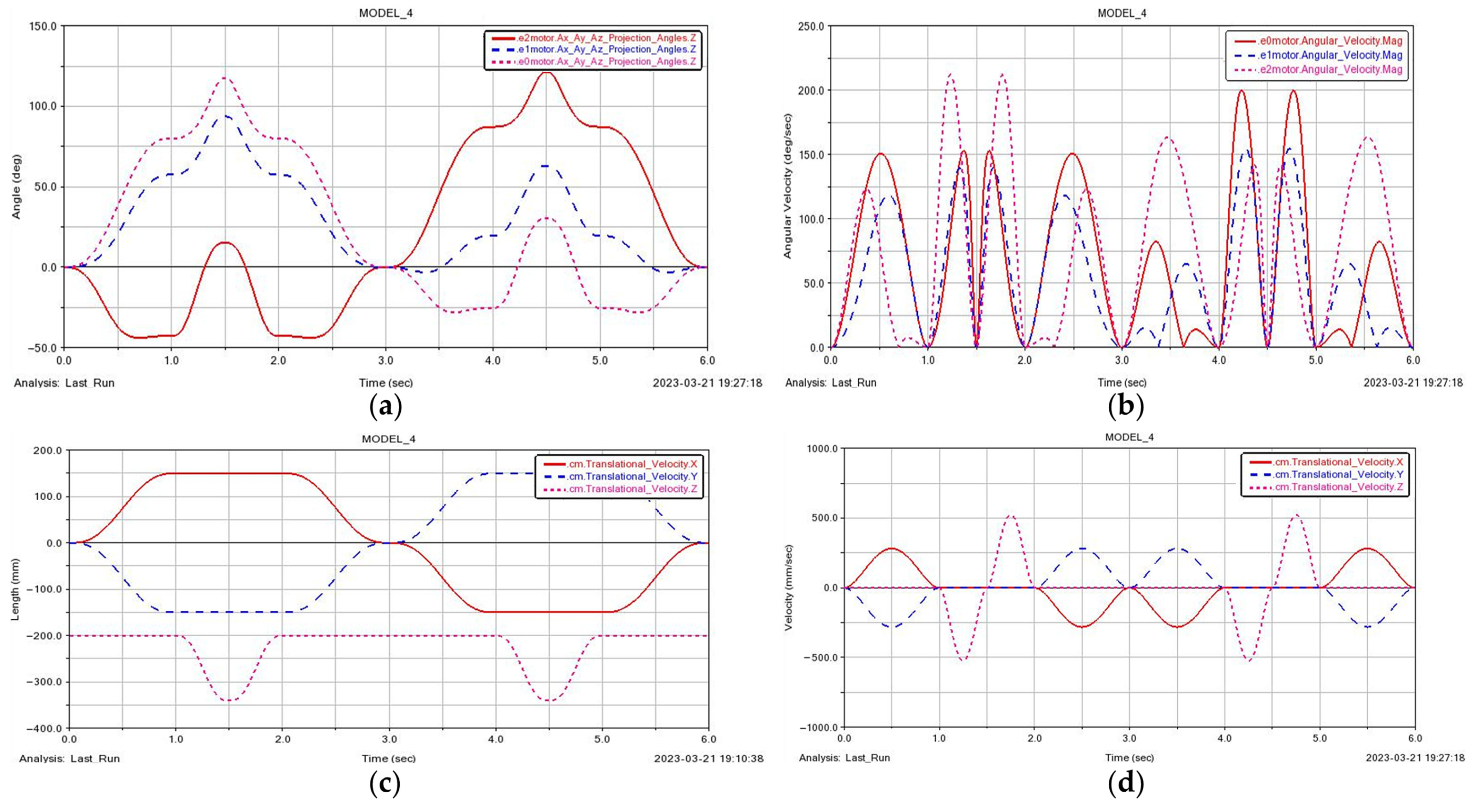
Assuming that there are weeds at P3 and P6 points in the target weeding space, the moving platform of the weeding manipulator performs two weeding operations along the trajectory composed of P3P4P5P6, which is the farthest weeding distance in the workspace. Based on the coordinates of each vertex, the corresponding motor rotation angle is solved by the inverse solution algorithm written in MATLAB. In ADAMS, the following step function is used to simulate the angular displacement of the three motors: step (time, 0, 0, 0.5, −9.6 d) + step (time, 0.5, 0, 1, 18 d) + step (time, 1, 0, 1.5, −18 d) + step (time, 1.5, 0, 2.0, 9.6 d) + step (time, 2.0, 0, 3, 67 d). The total time of the whole trajectory is set to 6 s. The single weeding operation was controlled within 3 s.
The trajectory simulation shows that the optimized parallel arm can complete the predetermined action without interference and cover the target workspace. As shown in the data analysis of the displacement and velocity curve of the moving platform in Figure 16, the rotation angle range of the three motors is −50° to 100°, the moving speed of the moving platform is uniformly stable at 200–500 mm/s, the speed of the moving platform is stable at 200–500 mm/s, and the single operation time is less than 3 s. This result determines the applicable range of the motor speed.

3.2. Motion Accuracy Test of Manipulator

Due to the angular error, stepper motor control error, installation error, and other factors, after the calculation of the kinematics model, the positioning error of the parallel arm is affected. Therefore, it is necessary to test the positioning accuracy of the Delta parallel arm platform. The motion error of the parallel-arm moving platform in the three directions of space (X-, Y-, and Z-axes) was primarily tested.
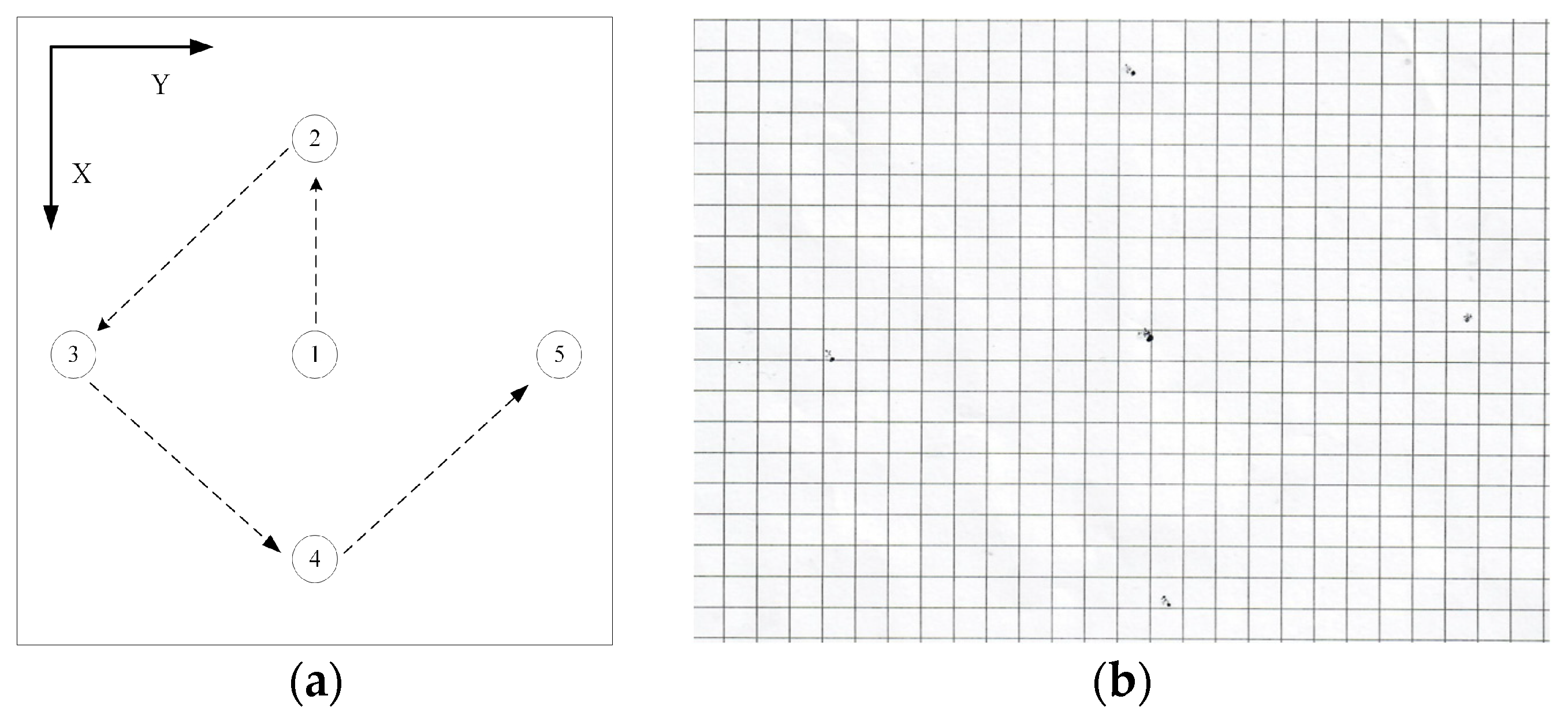
According to the above simulation data analysis, the moving speed of the parallel arm moving platform in the measurement process is set to 200 mm/s and 300 mm/s, respectively. The moving platform is controlled to move vertically downward from the initial position, and the point is marked on the printed test grid paper, repeated three times as the origin of the measurement. Then the moving platform of the parallel-arm is controlled to move 50 mm in the positive and negative directions of the X- and Y-axes, respectively, and a point is made to measure the actual distance between the five points. The positioning error of the manipulator is calculated by comparing the input moving distance, and the single grid of the grid is 5 mm × 5 mm. The Z-direction measurement is that the moving platform moves down 10 mm each time from the initial position, measures the moving distance, and calculates the error value.
Figure 17 shows the coordinates of the five points after the test. It can be seen from the figure that the three times of origin positioning are repeated at one point, with no obvious offset. The two vertices in the X direction occupy a total of 18.5 mesh heights, a total of 92.5 mm, and the two vertices in the Y direction occupy a total of 19.8 mesh widths, a total of 99 mm. The measured data in the Z direction are shown in Table 3.
When the moving speed of the moving platform is 200 mm/s, the average error in the X-direction is ±3.5 mm, the average error in the Y-direction is ±1.7 mm, and the average error in the Z-direction is ±0.8 mm. When the moving speed of the moving platform is 300 mm/s, the average error in the X-direction is ±3.7 mm, the average error in the Y-direction is ±2.2 mm, and the average error in the Z-direction is ±1.0 mm. The motion error of the built parallel arm in the X-direction is larger than that in the other two directions, which may be due to the safe rotation error between the active arm and the motor of the parallel arm in the X-direction. After the speed is increased to 300 mm/s, the three-way error of the parallel arm does not change much, and the overall error range is controllable. The accuracy of the built parallel manipulator and control system meets the expected design goals.

3.3. Field Experiment

3.3.1. Field Experiment Design

In order to evaluate the actual performance and working stability of the weeding device, a field weeding experiment was carried out in the experimental field of Changyuan Academy of Agricultural Sciences, Henan Province. The experiment was conducted about 20 days after soybean sowing. The size of the test field is about 20 m × 30 m. The soybean is in the seedling stage, the row spacing is 300–350 mm, and the plant spacing is 150–200 mm. The length of the test area is 10 m, and the starting point and the end point are marked by corner flags.
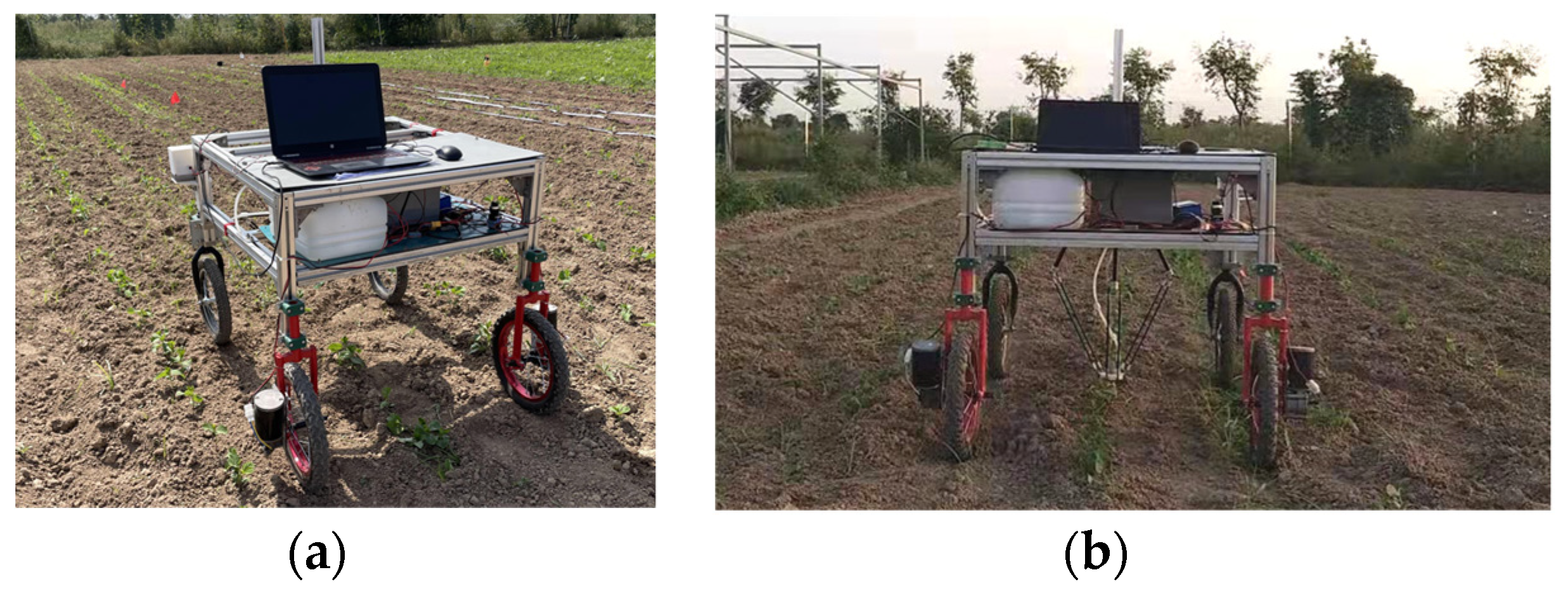
The field test data were collected by manual measurement, and the weeding effect was judged as complete wounding if the above-ground part of the weed was removed and the fracture was treated with pesticides. If the crop soybean leaves are exposed to herbicides or damaged by weeding knives, they are recorded as injured seedlings. The complete wound weeding and soybean seedling injury rate were used as the core evaluation indicators, and the test scenarios are shown in Figure 18.
By counting the number of weeds before and after weeding in the test area, the ratio of the number of weeds removed by wounding to the total number of weeds before weeding is defined as the weed-wounding clearance rate. The ratio of the number of damaged soybean plants to the total number of soybeans before weeding was used as the crop loss rate. In order to improve the reliability of the data, all weed and crop data were repeatedly collected three times before and after the experiment, and the average value was taken as the final result. The relevant calculation formulas are as follows:
η 3 = Q 1 Q 2 Q 1 ,
where Q1 is the actual number of weeds in the test area before weeding, and Q2 is the number of weeds after weeding,
η 4 = Q 3 Q 4 Q 3 ,
where Q3 is the actual number of weeds in the test area before weeding, and Q4 is the number of weeds after weeding.

3.3.2. Field Experiment Results and Analysis

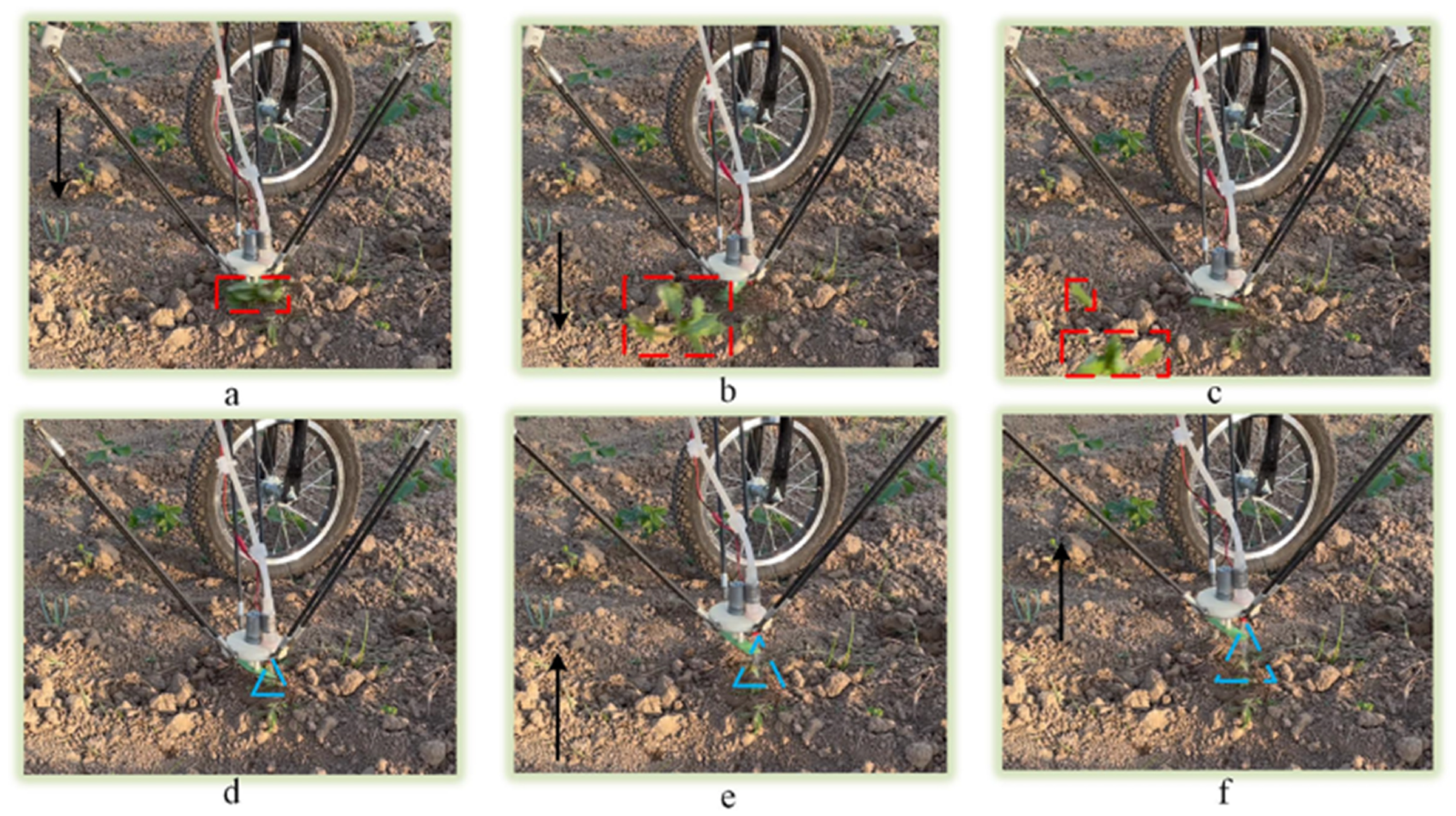
Field weeding experiments were carried out at three speeds of 0.2 m/s,0.4 m/s, and 0.6 m/s, and the corresponding performance indicators were counted. Figure 19 shows the wounding weeding process of inter-plant weeds (blue dotted line: spray area; red dotted line: weeds; black arrow: the moving direction of the manipulator). The whole operation process comprises a four-stage sequence: positioning–cutting–spraying–resetting. As shown in Figure 19a, the manipulator reaches the top of the weed position; Figure 19b,c is the process of cutting weeds by weeding knife; Figure 19d–f is the process of spraying the weed after cutting by the spraying system, and the start of the manipulator’s return to the initial position.
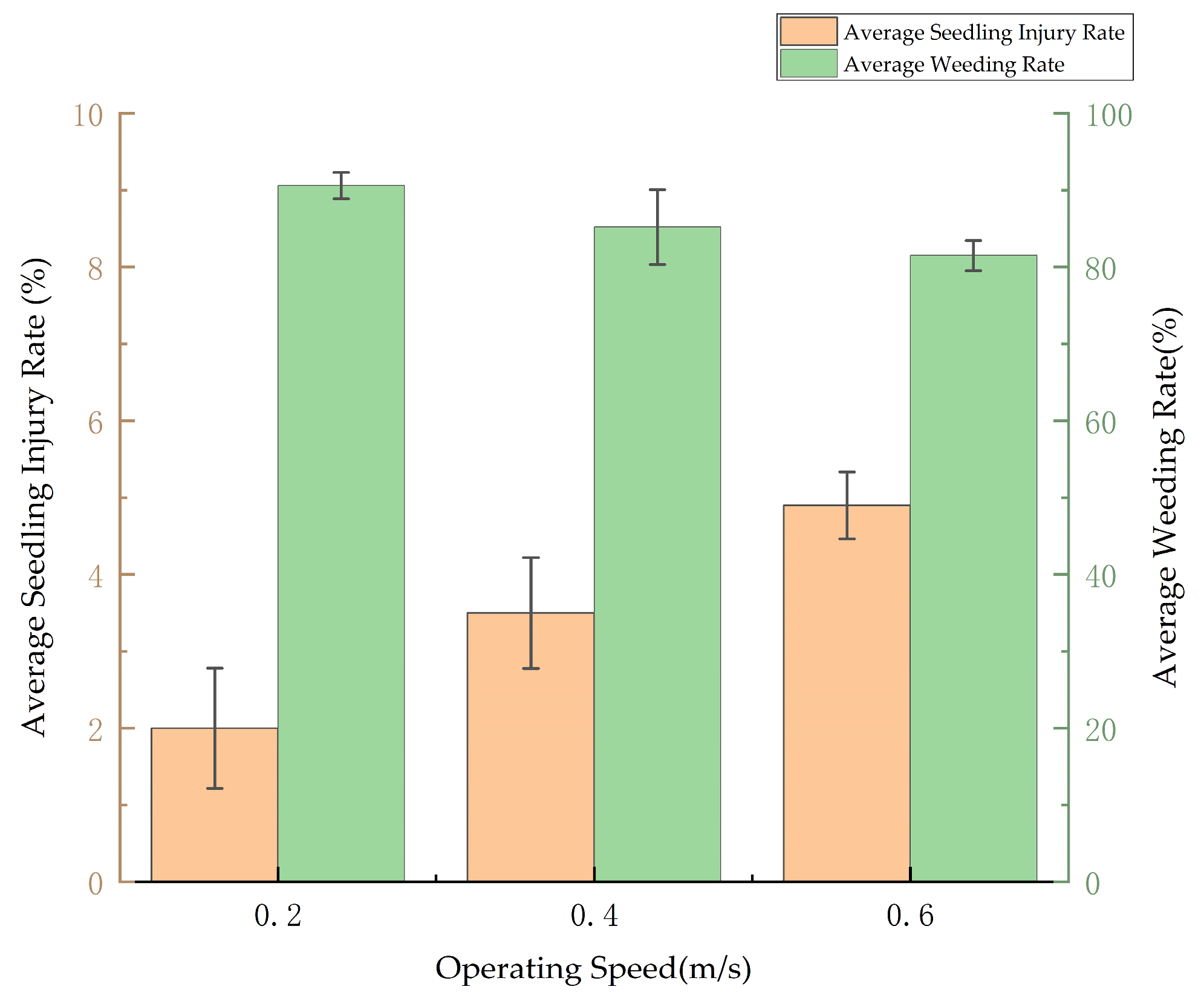
Table 4 counted the complete wound weeding rate and seedling injury rate at different operating speeds. The data show that the device can achieve 90.6% complete wound weeding rate at a low speed of 0.2 m/s, and the seedling injury rate of only 2.0%. However, when the speed increased to 0.6 m/s, the complete wound weeding rate decreased by 11.9%, and the injury rate increased to 3.0%. The performance degradation is mainly attributed to the platform vibration and camera frame-loss caused by high-speed travel, resulting in reduced weed identification and positioning accuracy. The specific performance is that some weeds deviate from the recognition and working area after the platform is stopped, and the soybean stems and leaves in front are injured by mistake during the lifting process of the manipulator. In summary, the device can effectively control weeds in the soybean seedling stage at a reasonable speed range.
The change trend of the complete wound weeding rate and injury seedling rate with the operating speed is shown in Figure 20. It can be seen from the figure that during the operation of the machine, with the increase in the operating speed, the complete wound weeding rate showed a decreasing trend, and the seedling injury rate showed an increasing trend. The average weeding rate at different operating speeds was 90.6%, 85.2%, and 81.5%, respectively. The average injury rates were 2.0%, 3.5%, and 4.9%, respectively. However, the standard deviation in the plot has no significant regularity. The reason is that the environment of the field test area is different, and the distribution of weeds and crops in different test areas is not uniform when selecting each test area, which makes the standard deviation unable to accurately estimate the true dispersion.

4. Discussion

This study developed and validated a weeding device that combines weed stem wounding and targeted application. Aiming at the problem of high weed regeneration potential after pure mechanical weeding and the environmental burden of chemical agents, a weeding strategy of “mechanical damage + wound spraying” was proposed. The field evaluation confirmed our primary hypothesis, demonstrating that creating a physical wound prior to herbicide application significantly enhances weed control. Furthermore, the workspace optimization of the Delta manipulator proved effective, as the system reliably accessed target weeds across the designated area. When the operating speed was 0.2 m/s, the complete damage weeding rate was 90.6%, and the crop damage rate was 2.0%. The test results show that with the increase in operating speed, the performance of the device shows a downward trend. However, when the operating speed is 0.6 m/s, the complete damage weeding rate is still above 81.5%. The trend of its operation is mainly due to system vibration and potential image blur, which damages the positioning accuracy of the visual system. The space of the weeding operation is limited, and the trajectory of the manipulator may damage the crop stem during the operation. These findings are consistent with the observation results of other dynamic robot platforms, in which navigation and positioning accuracy are crucial for effective crop-row operation [15]. The synergistic weeding strategy proposed in this paper has been proven to be very effective in improving the utilization rate of herbicides. The penetration and absorption of herbicides were significantly improved by creating micro-wounds on the stems of weeds. Compared with the traditional spread, the amount of herbicides can be reduced by more than 70%. This result directly supports global initiatives aimed at reducing pesticide dependence, such as the EU strategy [3], and resonates with the findings of Fang et al. [5]; the genetic algorithm was used to optimize the structure of the Delta parallel mechanism to ensure that its workspace (±302.8 mm × 200 mm) completely covered the target weeding area at the soybean seedling stage. The stability of the optimized manipulator was verified by ADAMS. The platform maintained a uniform motion of 200–500 mm/s and completed a single weeding cycle within 3 s. This systematic design and optimization method is consistent with the performance-oriented parallel robot design method advocated by researchers [29,30].
Although some achievements have been made, some limitations of this study should be recognized. Firstly, the field verification is carried out under the condition that the specific area is relatively controllable. The performance of the visual algorithm and the overall system under more diverse environmental conditions, such as changing soil types, humidity levels, and weed species, requires further investigation. At the same time, the size of the weed coverage rate also has a certain influence on the complete wound weeding rate of the weeding device. In the field test, it was found that with the increase in the weed coverage rate, the complete wound weeding rate of the weeding device will decrease. This is due to the fact that the weed leaves are blocked by each other when the weed density is too high. In the process of visual perception part recognition, multiple adjacent weed leaves are identified as the same plant, which leads to the wrong judgment of the visual perception of the weeding device, resulting in the fact that the rhizome of the weed cannot be accurately cut or cannot be accurately applied at the cutting wound. Future research may further optimize recognition accuracy under high weed coverage conditions to achieve the purpose of enhanced perception and adaptive control. Since the actual use of the weeding device is mostly in the crop seedling-stage environment, taking the field test scene as an example, the test period is about 20 days of soybean emergence, that is, when the soybean seedling is in the 3–5 compound leaf stage, the vegetation index has no effect on the operation performance of the device, so this study does not consider the influence of the vegetation index. Secondly, the seedling injury rate of soybeans is always higher than that of corn, which may be due to its narrow row spacing and shallow root system, which puts forward higher requirements for the positioning accuracy of the manipulator. As explored by Sabeethan et al. [15] and Zheng et al. [14], improving the visual navigation system or implementing more complex path planning algorithms can alleviate this problem. Finally, this study did not include a comparative evaluation of crop yield between mechanical damage + wound-spraying synergistic weeding and conventional chemical weeding. Some studies suggest that mechanical weeding can loosen the soil and benefit crop growth [4,5]; therefore, long-term agronomic evaluation is still an important field of future research.
This study provides a feasible and efficient solution for precision weeding by successfully integrating machine vision, a parallel manipulator, and a precision spraying system. The synergistic strategy of “mechanical damage + wound spraying” provides a new way for efficient, low-consumption, and environmentally friendly weed control. The research results provide a valuable reference for the sustainable development and practical application of intelligent agricultural machinery.

5. Conclusions

In this study, aiming at the problems of low eradication rate of traditional mechanical weeding, strong regeneration of malignant weeds, and heavy environmental burden of chemical control, a synergistic weeding strategy of “mechanical damage + wound spraying” was proposed to realize the compound synergistic effect of mechanical cutting and targeted application of internal-suction herbicides. The developed intelligent weeding device integrates machine vision, a Delta parallel manipulator, and a precision spray system, and optimizes the working space of the manipulator by genetic algorithm (±302.8 mm × 200 mm), covering the weed distribution area in the soybean seedling stage, and realizing the integrated operation of identification, cutting, and targeted application. The performance verification showed that under the working speed of 0.2 m/s, the complete clearance rate was 90.6%, and the seedling injury rate was only 2.0%. When the operation speed was increased to 0.6 m/s, the weeding rate remained above 81.5%. Compared with the whole-field spraying mode, the dosage of pesticide was reduced by more than 70%, and the environmental residue and pesticide input cost were significantly reduced. This study breaks through the bottleneck of traditional mechanical weeding and innovates the “physical cutting + chemical targeting” collaborative operation mode, which provides a feasible technical path for efficient, low-consumption, and green prevention and control of malignant weeds, and provides a reference for the engineering application of intelligent agricultural machinery and equipment.

Author Contributions

Conceptualization: H.L., S.C., C.L. and J.C.; methodology: H.L., C.L., S.C. and J.C.; software: C.L., Z.Y. and L.W.; validation: S.C., C.L. and Y.Y.; formal analysis: S.C., C.L., Z.Y. and L.W.; investigation: S.C., C.L. and Y.Y.; resources: H.L., S.C. and J.C.; data curation: S.C., C.L., L.W. and Y.Y.; writing—original draft preparation: C.L.; writing—review and editing: H.L., C.L. and S.C.; visualization: Z.Y., L.W. and S.C.; supervision: H.L., S.C. and Z.Y.; project administration: H.L., C.L. and S.C.; funding acquisition: H.L., S.C., Z.Y. and L.W. All authors have read and agreed to the published version of the manuscript.

Funding

This research was supported by the National Modern Agricultural Industrial Technology System Project (CARS-04-PS28).

Data Availability Statement

The data presented in this study are available on request from the corresponding author. The data are not publicly available due to possible further research.

Acknowledgments

The authors would like to express their sincere gratitude to their colleagues, laboratories, and the reviewers who provided helpful suggestions for this manuscript.

Conflicts of Interest

The authors declare no conflicts of interest.

References

  1. Xiang, M.; Qu, M.; Wang, G.; Ma, Z.; Chen, X.; Zhou, Z.; Qi, J.; Gao, X.; Li, H.; Jia, H. Crop Detection Technologies, Mechanical Weeding Executive Parts and Working Performance of Intelligent Mechanical Weeding: A Review. Front. Plant Sci. 2024, 15, 1361002. [Google Scholar] [CrossRef]
  2. Kunz, C.; Weber, J.F.; Gerhards, R. Benefits of Precision Farming Technologies for Mechanical Weed Control in Soybean and Sugar Beet—Comparison of Precision Hoeing with Conventional Mechanical Weed Control. Agronomy 2015, 5, 130–142. [Google Scholar] [CrossRef]
  3. Tataridas, A.; Kanatas, P.; Chatzigeorgiou, A.; Zannopoulos, S.; Travlos, I. Sustainable Crop and Weed Management in the Era of the EU Green Deal: A Survival Guide. Agronomy 2022, 12, 589. [Google Scholar] [CrossRef]
  4. Liu, C.; Yang, K.; Chen, Y.; Gong, H.; Feng, X.; Tang, Z.; Fu, D.; Qi, L. Benefits of Mechanical Weeding for Weed Control, Rice Growth Characteristics and Yield in Paddy Fields. Field Crops Res. 2023, 293, 108852. [Google Scholar] [CrossRef]
  5. Fang, H.; Xu, G.; Xue, X.; Niu, M.; Qiao, L. Study of Mechanical-Chemical Synergistic Weeding on Characterization of Weed–Soil Complex and Weed Control Efficacy. Sustainability 2023, 15, 665. [Google Scholar] [CrossRef]
  6. Hossain, M.Z.; Watanabe, S.; Okayama, T.; Komatsuzaki, M. Optimization of the Year-Round Mowing Schedule of a Robotic Lawnmower in a Japanese Pear Orchard. Weed Biol. Manag. 2022, 22, 29–36. [Google Scholar] [CrossRef]
  7. Scavo, A.; Mauromicale, G. Integrated Weed Management in Herbaceous Field Crops. Agronomy 2020, 10, 466. [Google Scholar] [CrossRef]
  8. Bloomer, D.J.; Harrington, K.C.; Ghanizadeh, H.; James, T.K. Micro Electric Shocks Control Broadleaved and Grass Weeds. Agronomy 2022, 12, 2039. [Google Scholar] [CrossRef]
  9. Gao, W.-T.; Su, W.-H. Weed Management Methods for Herbaceous Field Crops: A Review. Agronomy 2024, 14, 486. [Google Scholar] [CrossRef]
  10. Boström, U.; Brandsæter, L.O.; Andersson, L. Cirsium Arvense Differs from Tussilago Farfara in Regrowth from Intact and Fragmented Below-Ground Systems. Weed Res. 2024, 64, 395–405. [Google Scholar] [CrossRef]
  11. Jin, H.; Arsa, D.M.S.; Ilyas, T.; Lee, J.; Won, O.; Park, S.-H.; Sandesh, K.; Kim, S.C.; Kim, H. A Deep Learning-Based Pin Precision Weeding Machine with Densely Placed Needle Nozzles. Comput. Electron. Agric. 2025, 239, 110990. [Google Scholar] [CrossRef]
  12. Cardellicchio, A.; Renò, V.; Cellini, F.; Summerer, S.; Petrozza, A.; Milella, A. Incremental Learning with Domain Adaption for Tomato Plant Phenotyping. Smart Agric. Technol. 2025, 12, 101324. [Google Scholar] [CrossRef]
  13. Zhao, C.-T.; Wang, R.-F.; Tu, Y.-H.; Pang, X.-X.; Su, W.-H. Automatic Lettuce Weed Detection and Classification Based on Optimized Convolutional Neural Networks for Robotic Weed Control. Agronomy 2024, 14, 2838. [Google Scholar] [CrossRef]
  14. Zheng, S.; Zhao, X.; Fu, H.; Tan, H.; Zhai, C.; Chen, L. Design and Experimental Evaluation of a Smart Intra-Row Weed Control System for Open-Field Cabbage. Agronomy 2025, 15, 112. [Google Scholar] [CrossRef]
  15. Kanagasingham, S.; Ekpanyapong, M.; Chaihan, R. Integrating Machine Vision-Based Row Guidance with GPS and Compass-Based Routing to Achieve Autonomous Navigation for a Rice Field Weeding Robot. Precis. Agric. 2020, 21, 831–855. [Google Scholar] [CrossRef]
  16. Huang, Z.; Lee, W.S.; Yang, P.; Ampatzidis, Y.; Shinsuke, A.; Peres, N.A. Advanced Canopy Size Estimation in Strawberry Production: A Machine Learning Approach Using YOLOv11 and SAM. Comput. Electron. Agric. 2025, 236, 110501. [Google Scholar] [CrossRef]
  17. Zhang, Y.; Liu, M.; Chen, D.; Xu, X.; Lu, J.; Lai, H.; Wen, C.; Yin, Y. Development and Testing of Row-Controlled Weeding Intelligent Robot for Corn. J. Field Rob. 2025, 42, 850–866. [Google Scholar] [CrossRef]
  18. Landau, C.A.; Hager, A.G.; Tranel, P.J.; Davis, A.S.; Martin, N.F.; Williams, M.M., II. Future Efficacy of Pre-Emergence Herbicides in Corn (Zea Mays) Is Threatened by More Variable Weather. Pest Manag. Sci. 2021, 77, 2683–2689. [Google Scholar] [CrossRef] [PubMed]
  19. Yang, Z.; Wang, L.; Li, C.; Li, H. FCB-YOLOv8s-Seg: A Malignant Weed Instance Segmentation Model for Targeted Spraying in Soybean Fields. Agriculture 2024, 14, 2357. [Google Scholar] [CrossRef]
  20. Archbold, T.; Carson, J.K. Optimisation of a Grass Cutting Blade Using Design of Experiments with Qualitative and Quantitative Performance Metrics. Biosyst. Eng. 2023, 234, 66–80. [Google Scholar] [CrossRef]
  21. O’dogherty, M.J.; Gale, G.E. Laboratory Studies of the Effect of Blade Parameters and Stem Configuration on the Dynamics of Cutting Grass. J. Agric. Eng. Res. 1991, 49, 99–111. [Google Scholar] [CrossRef]
  22. Chen, B.; Yao, Q.; Ding, F.; Li, K.; Ma, B. Design and Optimization of a Negative Pressure Rotary Cutting Safflower Filaments Harvesting Device. Sci. Rep. 2025, 15, 9693. [Google Scholar] [CrossRef]
  23. Li, Z.; Wu, M.; Wang, G.; Dong, X.; Ou, M.; Jia, W. The Physical Cutting Process of Weeds. Weed Sci. 2025, 73, e67. [Google Scholar] [CrossRef]
  24. Wang, B.; Liu, Z.; Su, G.; Song, Q.; Ai, X. Investigations of Critical Cutting Speed and Ductile-to-Brittle Transition Mechanism for Workpiece Material in Ultra-High Speed Machining. Int. J. Mech. Sci. 2015, 104, 44–59. [Google Scholar] [CrossRef]
  25. Wang, W.; Lv, X.; Yi, Z. Parameter Optimization of Reciprocating Cutter for Chinese Little Greens Based on Finite Element Simulation and Experiment. Agriculture 2022, 12, 2131. [Google Scholar] [CrossRef]
  26. Altuzarra, O.; Urizar, M.; Hernández, A.; Amezua, E. Parallel Continuum Delta: On the Performance Analysis of Flexible Quasi-Translational Robots. Appl. Sci. 2024, 14, 9744. [Google Scholar] [CrossRef]
  27. Che, H.; Shi, C.; Wang, Y. Transmission Angle Analysis of a Type of Parallel Manipulators. Appl. Sci. 2022, 12, 9468. [Google Scholar] [CrossRef]
  28. Yang, H.; Chen, L.; Ma, Z.; Chen, M.; Zhong, Y.; Deng, F.; Li, M. Computer Vision-Based High-Quality Tea Automatic Plucking Robot Using Delta Parallel Manipulator. Comput. Electron. Agric. 2021, 181, 105946. [Google Scholar] [CrossRef]
  29. Chaudhury, A.N.; Ghosal, A. Optimum Design of Multi-Degree-of-Freedom Closed-Loop Mechanisms and Parallel Manipulators for a Prescribed Workspace Using Monte Carlo Method. Mech. Mach. Theory 2017, 118, 115–138. [Google Scholar] [CrossRef]
  30. Guo, H.; Qiu, Z.; Gao, G.; Wu, T.; Chen, H.; Wang, X. Safflower Picking Trajectory Planning Strategy Based on an Ant Colony Genetic Fusion Algorithm. Agriculture 2024, 14, 622. [Google Scholar] [CrossRef]
  31. Yang, M.; Sun, X.; Deng, X.; Lu, Z.; Wang, T. Extrapolation of Tractor Traction Resistance Load Spectrum and Compilation of Loading Spectrum Based on Optimal Threshold Selection Using a Genetic Algorithm. Agriculture 2023, 13, 1133. [Google Scholar] [CrossRef]
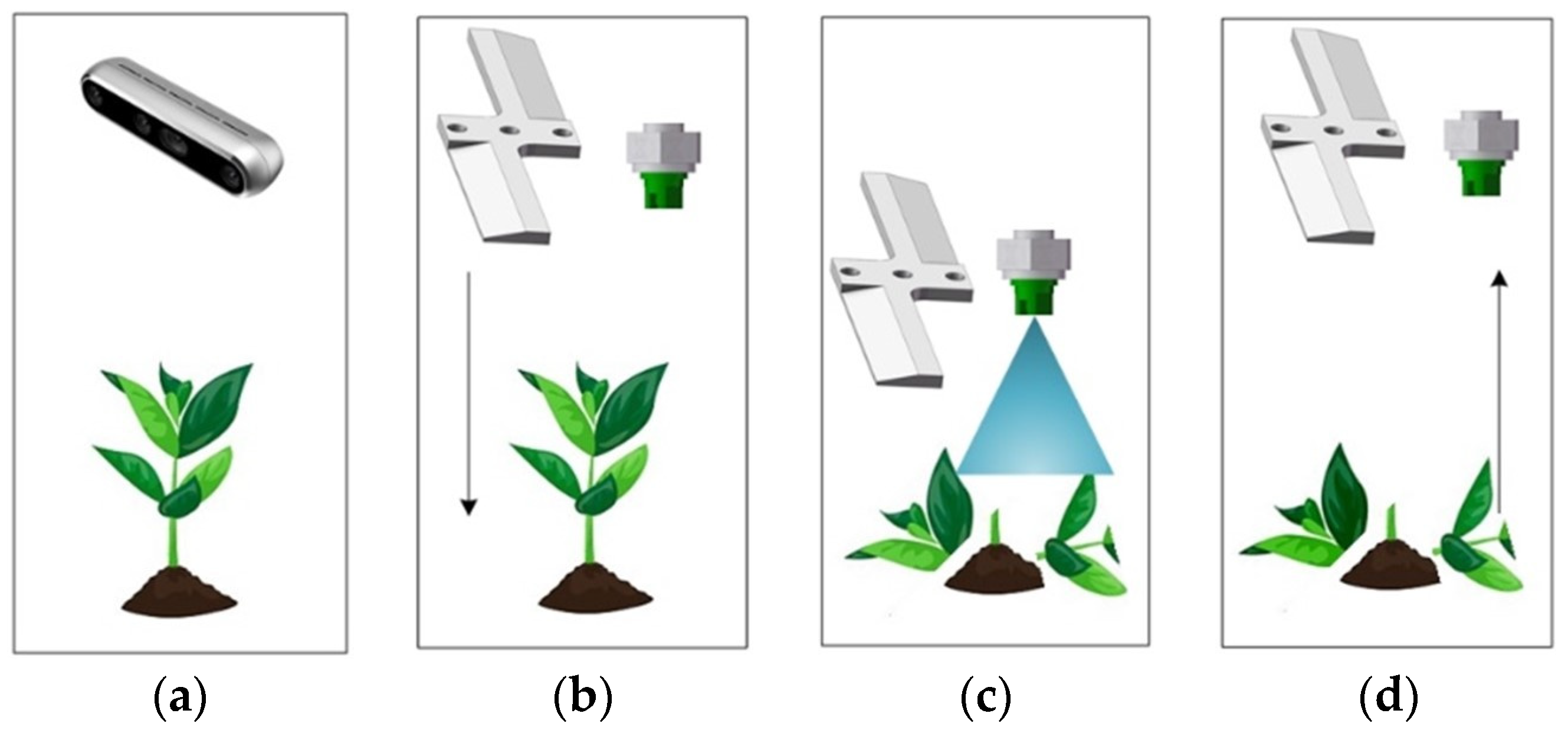
Figure 1. Wounding weeding working principle: (a) identification of weeds; (b) weed stem damage; (c) targeted herbicide application; (d) complete weeding.
Agronomy 16 00151 g001
Figure 2. The whole structure diagram of weeding device. 1. Mobile platform. 2. Battery pack. 3. Medicine box. 4. Parallel manipulator. 5. Steering motor. 6. Driving motor. 7. Driven arm. 8. Weeding knife. 9. Weeding knife motor.
Agronomy 16 00151 g002
Figure 3. Shear mechanical properties tests on weed stalks. 1. Weed stem. 2. Multi-functional force tester. 3. Data acquisition computer.
Agronomy 16 00151 g003
Figure 4. Schematic diagram of a weeding knife.
Agronomy 16 00151 g004
Figure 5. Force diagram of unsupported weed cutting.
Agronomy 16 00151 g005
Figure 6. Schematic diagram of spray system. 1. Medicine box. 2. Filter. 3. Pressure stabilizing tank. 4. Pump. 5. Nozzle. 6. Check valve. 7. Pressure switch. 8. Overflow valve.
Agronomy 16 00151 g006
Figure 7. Installation position diagram of the nozzle and weeding knife.
Agronomy 16 00151 g007
Figure 8. Cutting and spraying end effector. 1. Nozzle frame. 2. Nozzle mounting column. 3. Weeding knife motor. 4. Weeding knife. 5. Motor flange. 6. Nozzle.
Agronomy 16 00151 g008
Figure 9. Structure diagram of the parallel weeding manipulator. 1. Active arm. 2. Stepper motor. 3. Depth camera. 4. Stepper motor driver. 5. Nozzle. 6. Weeding knife. 7. Nozzle frame. 8. Driven arm.
Agronomy 16 00151 g009
Figure 10. Simplified manipulator coordinate system schematic diagram: (a) result diagram of coordinate system establishment; (b) inverse kinematics analysis model.
Agronomy 16 00151 g010
Figure 11. The result diagram of the inverse solution coordinate system is established.
Agronomy 16 00151 g011
Figure 12. The schematic diagram of the manipulator workspace and the target weeding space.
Agronomy 16 00151 g012
Figure 13. Evolutionary iteration graph.
Agronomy 16 00151 g013
Figure 14. Optimized manipulator workspace.
Agronomy 16 00151 g014
Figure 15. Work trajectory simulation diagram.
Agronomy 16 00151 g015
Figure 16. Manipulator simulation performance curve: (a) three-motor angle change curve; (b) three-motor speed change curve; (c) displacement curve of moving platform; (d) velocity curve of moving platform.
Agronomy 16 00151 g016
Figure 17. X-, Y-axis motion accuracy measurement principle and measurement results: (a) X-, Y-axis motion accuracy measurement principle, (b) X-, Y-axis motion accuracy measurement results.
Agronomy 16 00151 g017
Figure 18. Field experiment operation diagram: (a) field experiment machine diagram; (b) manipulator working state diagram.
Agronomy 16 00151 g018
Figure 19. Field test effect diagram: (a) the manipulator reaches the top of the weed position; (b) the weeding knife starts to remove weeds; (c) the weeding knife completes weeding; (d) the spraying system is used for spraying; (e) the spraying system completes the spraying; (f) the manipulator begins to return to its initial position.
Agronomy 16 00151 g019
Figure 20. Statistics of the average weeding rate and the average seedling injury rate at different speeds.
Agronomy 16 00151 g020
Table 1. Shear force test data of different parts of the target weeds.
Test GroupDiameter
(mm)
Distance From Root
(mm)
Shear Force
(N)
Average Shear Force (N)
13.0102.922.83
203.05
302.76
24.1103.833.63
203.72
303.36
35.0104.554.26
204.62
304.10
46.21010.706.46
207.80
305.90
Table 2. Genetic algorithm optimization results.
ParameterActive Arm Length (L)Driven Arm Length (l)Radius of Moving Platform (R)Workspace Height (H)
Initial Range
(mm)
100–300300–500100–160150–350
Optimization Results (mm)143.5305.2101.5200.0
Table 3. Manipulator motion accuracy test results.
Measuring PointMoving Platform Speed
200 mm/s
Moving Platform Speed
300 mm/s
X-Axis
Component
(mm)
Y-Axis
Component
(mm)
Z-Axis
Component
(mm)
X-Axis
Component
(mm)
Y-Axis
Component
(mm)
Z-Axis
Component
(mm)
Point 1000000
Point 2−9.0−2.51.0−8.5−3.01.1
Point 34.01.01.04.02.01.5
Point 42.55.02.05.04.02.0
Point 5−2.01.00−1.02.01.0
Average Error±3.5±1.7±0.8 ±3.7±2.2±1.0
Table 4. Field trial effect.
Operating Speed
(m/s)
TestNumber of Weeds
(Plants)
Number of Soybean Seedlings
(Plants)
Number of Weeds
Removed
(Plants)
Number of Injured Seedlings
(Plants)
Weeding Rate
(%)
Seedling Injury Rate (%)Average Weeding Rate
(%)
Average Seedling Injury Rate (%)
0.21326429190.61.690.62.0
2276824188.91.5
3266924292.32.9
0.41264623288.54.385.23.5
2496839279.62.9
3246021287.53.3
0.61226618381.84.681.54.9
2345627379.45.4
3246420383.34.7
Disclaimer/Publisher’s Note: The statements, opinions and data contained in all publications are solely those of the individual author(s) and contributor(s) and not of MDPI and/or the editor(s). MDPI and/or the editor(s) disclaim responsibility for any injury to people or property resulting from any ideas, methods, instructions or products referred to in the content.