Article

Nutritive Value of Silage from Two Genotypes of Sugarcane Associated with Calcium Oxide and Sodium Hydroxide as Chemical Additives

by
Claudio de O. Romão
1,
Manuela S. L. Tosto
1,
Stefanie A. Santos
1,
Aureliano J. V. Pires
2,
Ossival L. Ribeiro
3,
Camila M. A. Maranhão
4,
Luana M. A. Rufino
5,
Henry D. R. Alba
6,
George S. Correia
2 and
Gleidson G. P. de Carvalho
1,*
1
Department of Animal Science, Universidade Federal da Bahia, Salvador 40.170-110, Brazil
2
Department of Animal Science, Universidade Estadual do Sudoeste da Bahia, Itapetinga 45.700-000, Brazil
3
Department of Animal Science, Universidade Federal do Recôncavo da Bahia, Cruz das Almas 44.380-000, Brazil
4
Department of Animal Science, Universidade Estadual de Montes Claros, Janaúba 39.401-089, Brazil
5
Department of Animal Nutrition and Pastures, Universidade Federal Rural do Rio de Janeiro, Seropédica 23.897-000, Brazil
6
Department of Agronomy, Universidade Federal do Oeste do Pará, Juruti 68.170-000, Brazil
*
Author to whom correspondence should be addressed.
Agronomy 2025, 15(12), 2826; https://doi.org/10.3390/agronomy15122826 (registering DOI)
Submission received: 12 November 2025 / Revised: 2 December 2025 / Accepted: 8 December 2025 / Published: 9 December 2025
(This article belongs to the Section Agricultural Biosystem and Biological Engineering)

Abstract

Brazil is the world’s largest producer of sugarcane, and its processing residues have potential as feed for ruminants; however, treatments are required to improve their digestibility. This study evaluated the chemical composition, carbohydrate fractionation, and ruminal degradability of sugarcane silages from two genotypes treated with alkaline additives—calcium oxide (CaO) and sodium hydroxide (NaOH). A 2 × 4 factorial design was used, comprising two genotypes and four treatments (no additives, 1% CaO, 1% NaOH, and 0.5% CaO + 0.5% NaOH). A significant interaction (p < 0.05) between genotype and additive was observed for dry matter, ether extract, fiber components, lignin, cellulose, non-fiber carbohydrates, total digestible nutrients, and phosphorus. The IAC-862480 genotype without additives exhibited higher values for most variables compared with CTC-3. Interactions were also detected for total carbohydrates and fractions A + B1 and C, except in silages treated with 1% CaO or the combined 0.5% CaO + 0.5% NaOH, where genotypes did not differ. Overall, alkaline additives improved the nutritional quality of sugarcane silages. Treatments with 1% CaO or 0.5% CaO + 0.5% NaOH were the most effective in hydrolyzing structural carbohydrates and enhancing dry matter and neutral detergent fiber degradability, especially in the CTC-3 genotype.

1. Introduction

Brazil is the world’s largest producer of sugarcane (Saccharum officinarum L.), with an estimated production of 671 million metric tons in the 2025/26 marketing year, accounting for approximately 40% of global production. This production is primarily directed towards sugar and biofuel production [1]. During the mechanical harvesting process, crop residues, including leaves and straw, generate between 10 and 20 tons of dry mass per hectare [2]. Following the extraction of sugar or ethanol, a byproduct known as bagasse is produced, amounting to approximately 270–280 kg per ton of processed sugarcane (representing 30–40% of the total sugarcane mass) [3,4]. The chemical composition of bagasse is characterized by a high fiber content, with approximately 48–50% cellulose, 25–29% hemicellulose, and 24–25% lignin [3,4].
Generally, the sugarcane harvesting process involves the use of fire to quickly remove leaves and straw. However, this method contributes to environmental pollution by increasing greenhouse gas emissions and negatively impacting human health [5,6]. To mitigate the inappropriate disposal of this material, it can be utilized in ruminant feeding either in a fresh, disintegrated form or as silage [7]. This alternative use can support the feeding of ruminants such as sheep [8], dairy cattle [9], and beef cattle [10].
According to Romão et al. [11], the treatment of the sugarcane genotypes IAC-862480 and CTC-3 enhances their potential for use in silage production. However, it is important to consider several parameters that influence silage quality, particularly the type of additive employed. The literature reports variable results, which may be attributed to biological differences even among genotypes of the same species. Therefore, different additives were evaluated in the present study for these sugarcane genotypes. In this context, alkaline additives such as CaO and NaOH were used, as these compounds have demonstrated potential to improve the nutritional quality and preservation of sugarcane silage [12].
Although sugarcane exhibits high fresh forage mass productivity (averaging 77.69 t/ha) and significant energy potential [13], the most sustainable method of utilizing this forage is through conservation as silage [14,15]. This is particularly important in tropical climates, which are characterized by two predominant seasonal stages: the rainy and dry seasons. During the dry season, there is a notable scarcity of feed, and the nutritional quality of surviving forages declines. However, the silage quality of sugarcane is often suboptimal due to yeast activity, which leads to dry matter losses and reduces both its energy content and aerobic stability [16,17]. Moreover, tropical grasses generally have high fiber content, and sugarcane, in particular, contains a significant proportion of indigestible fiber [7,18].
Several methods have been described in the literature to improve the digestibility of feeds with high indigestible fiber content [19,20]. Among these, the use of chemical additives during the ensiling process has been shown to inhibit undesirable microbial populations and enhance the nutritional value of the silage [17]. Alkaline compounds, such as calcium oxide, sodium hydroxide, and urea, are among the chemical additives with potential for improving sugarcane silage, as they have been shown to reduce fermentation losses [21]. Additionally, alkaline additives act on ester linkages between phenolic acids and cell wall carbohydrates in forage plants, promoting the release of fibrous carbohydrates to ruminal microorganisms and thereby increasing digestibility [18].
The objective of this study was to evaluate the chemical composition, carbohydrate fractionation, and ruminal degradability of sugarcane silages produced from two genotypes, treated either without additives or with different combinations of calcium oxide (CaO) and sodium hydroxide (NaOH).

2. Materials and Methods

2.1. Experimental Design and Treatments

Two sugarcane genotypes, IAC-862480 and CTC-3, were used in this study. The plants were cultivated at the Experimental Farm of the Federal Institute of Minas Gerais, Salinas Campus.
The study employed a 2 × 4 factorial arrangement consisting of two sugarcane genotypes (IAC-862480 and CTC-3) and four treatments involving alkaline additives: no additive (control), 1% CaO, 1% NaOH, and 0.5% CaO + 0.5% NaOH. A completely randomized design was used, with four replicates per treatment.

2.2. Silage Production

The sugarcane was harvested manually by cutting 10 cm above the soil surface and removing the straw. The harvested material was then chopped in a chopper and grinder machine—3.0 cv GT-3000 L (Garthen, Machados, SC, Brazil). Immediately, the material was homogenized with 1.5% CaO before being ensiled with one of the following treatments: 1% CaO, 1% NaOH, 0.5% CaO + 0.5% NaOH, or no additive. The ensiling process took place in experimental PVC mini-silos, each 50 cm in height and 10 cm in diameter, equipped with a Bunsen valve to allow for the release of fermentation gases and facilitate the quantification of dry matter losses resulting from fermentation.
Each silo contained 1.0 kg of sand at the bottom, separated from the silage by a screen with a mesh designed to prevent contact with the material. This setup allowed for the collection of effluents produced during the ensiling process. Each silo was then filled with 1.8 kg of the sugarcane-additive mixture, which was compacted using concrete sockets to achieve a target density of 600 kg/m3 of green material. After compaction, the silos were sealed and weighed.
The mini-silos were weighed before ensiling, and again after being sealed and filled, to determine the losses due to gas release, dry matter recovery (DMR), and effluent losses based on gravimetric differences. Following fermentation, the silos were stored at room temperature for 75 days before being opened for further analysis.

2.3. Chemical Analysis and Degradability

Samples were collected from the silos and immediately frozen for subsequent analysis. Upon processing, the samples were thawed, with a portion dried in a forced-air oven at 55 °C for 72 h. The dried samples were then ground in a Wiley-type mill equipped with 1 mm and 2 mm mesh sieves. Dry matter (DM), ash, organic matter (OM), crude protein (CP), and ether extract (EE) were determined according to the methods outlined by AOAC [22]. Acid detergent fiber (ADF) and neutral detergent fiber (NDF) corrected for ash (NDFa) were analyzed following Mertens [23]. Hemicellulose, cellulose, and lignin contents were estimated using the equations provided by Goering and Van Soest [24]. All analyses were conducted at the Forage and Grassland Laboratory of the State University of Southwest Bahia.
Total carbohydrates and non-fiber carbohydrates (NFC) were estimated according to Sniffen et al. [25]. The indigestible neutral detergent fiber (iNDF) content was determined by incubating the samples in the rumen, as outlined by Krizsan and Huhtanen [26].
Calcium and phosphorus analyses were conducted in the Tissue Analysis Lab of the Executive Committee of Cocoa Farming (CEPLAC).
For the degradability assessment, sugarcane silage samples treated with CaO and NaOH were first processed in a knife mill using a 2 mm sieve. The samples were then placed in non-woven textile (TNT—100 mg/m2) bags containing approximately 500 mg DM per bag, ensuring a ratio of 20 mg DM/cm2 of bag surface area [27]. Incubation periods were 0, 12, 24, 48, 72, 96, 120, and 144 h. The bags were placed in reverse order for removal, ensuring uniformity and minimizing material loss during the incubation process. After 144 h of incubation, the bags were removed from the rumen, washed with tap water until the effluent ran clear, and then dried. Dry matter determination was performed by drying the bags in an oven at 105 °C for 24 h. The residue obtained was then used for NDF analysis.
Carbohydrates fractions A + B1, considered as non-fibrous carbohydrates, were determined as the difference between total carbohydrates and NDF [28]. The C fraction of the indigestible NDF was derived after 144 h of in situ incubation. The B2 fraction, representing the available fiber, was determined by subtracting the C fraction from the total NDF.
The degradability of DM and NDF was calculated based on the weight differences observed for each component before and after ruminal incubation, and results were expressed as percentages.

2.4. Statistical Analysis and Calculations

Data analysis was conducted using the statistical software SAS (SAS Institute, version 9.4; Cary, NC, USA). Dry matter degradation rates were calculated using the equation proposed by Ørskov and McDonald [29]:
Dt = A + B × (1 − e−Ct),
where: Dt = degradation rate at time t (h); A = immediately soluble fraction (% DM); B = potentially degradable insoluble fraction (% DM); C = degradation rate of the fraction B (h−1); and t = incubation time (h).
Neutral detergent fiber (NDF) degradability was estimated using the model of Mertens and Loften [30]:
Rt = B × e−Ct,
where Rt = fraction of NDF degraded at time t; B and C, are the parameters as previously defined. After using the fiber degradation equation, we applied the second standardization model by Mertens and Loften [30]:
Y = B × e(−kd (t − lag)) + I,
where Y = the fraction of NDF degraded at time t; B = potentially degradable fraction of the fiber (%); kd = rumen degradation rate of fraction B (h−1); t = incubation time (h); lag = lag time before degradation begins (h); and I = the undegradable fraction (% NDF).
The nonlinear coefficients (A, B, and C) were estimated using interactive Gauss-Newton procedures. Statistical significance was determined at the 5% level.
Effective degradability (ED) of DM in the rumen was calculated using the equation:
ED = A + (B × C/C’ + k),
where k is the fractional outflow rate from the rumen.
The data were submitted to analysis of variance (ANOVA), with genotypes and alkaline additives as the main sources of variation, and the genotype × additive interaction tested at a 5% significance level. When the interaction was significant, the results were further analyzed by splitting the data and evaluating the effects of genotypes and alkaline additives using the Tukey test.
The statistical model used for the analysis was as follows:
Yijk = µ + αi + βj + (αβ)ij + εijk
where Yijk = dependent variable; µ = population mean; αi = effect of genotypes (i = 1, 2); βj = effect of alkaline additives (j = 1, 2, 3, 4); (αβ)ij = effect of the interaction between genotype and alkaline additive; and εijk = random error, normally and independently distributed with mean 0 and variance σ2.

3. Results

3.1. Chemical Composition of the Silages

An interaction effect (p < 0.05) was observed between genotypes and chemical additives for DM, EE, NDFa, ADF, lignin, cellulose, NFC, TDN, phosphorus contents, and the A + B1 and C fractions (Table 1). Regarding the genotype effect, the CTC-3 genotype (872.4% DM) exhibited higher (p < 0.05) total carbohydrate content than the IAC-862480 genotype (860.9% DM). The effects on other nutrients will be described in relation to the interaction effects. The use of Additives affected (p < 0.05) OM, CP, hemicellulose, calcium, total carbohydrate contents, and the B2 fraction (Table 1). The results indicate that, in the absence of additives during sugarcane ensiling, higher values were observed for OM, CP, hemicellulose, and total carbohydrate contents. The calcium content increased when 1% calcium oxide (CaO) was used as an additive. The B2 fraction—the slowly degradable fraction—was higher when 1% sodium hydroxide (NaOH) was applied during the ensiling of sugarcane (Table 1).
The dry matter content of the CTC-3 sugarcane silage was 18.01% lower than that of the IAC-862480 genotype when no additive was included. However, when additives were incorporated into the silage, no differences in DM content were observed between genotypes. For the CTC-3 genotype, the highest DM content (311.4 g/kg FM) was observed when 1% CaO was added to the silage mixture, whereas the lowest DM content (229.5 g/kg FM) occurred in the absence of additives (Figure 1).
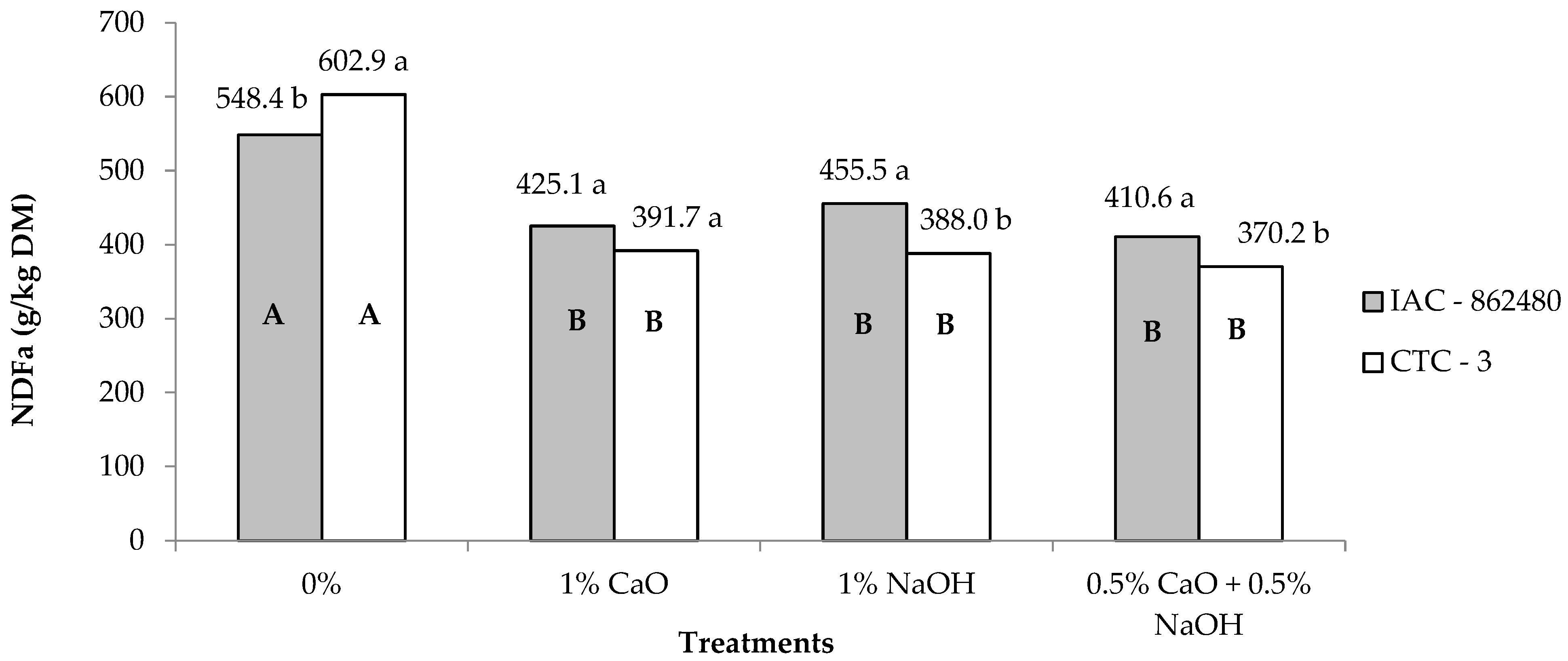
In both genotypes, the inclusion of additives resulted in a decrease NDFa content. However, the response differed between genotypes. In the absence of additives, the CTC-3 genotype showed a higher NDFa content (602.9 g/kg DM) compared with the IAC-862480 genotype (548.4 g/kg DM). When 1% NaOH or the combination of 0.5% CaO + 0.5% NaOH was applied, the CTC-3 genotype presented lower NDFa values. With the addition of 1% CaO, no significant differences were observed between genotypes (Figure 2).
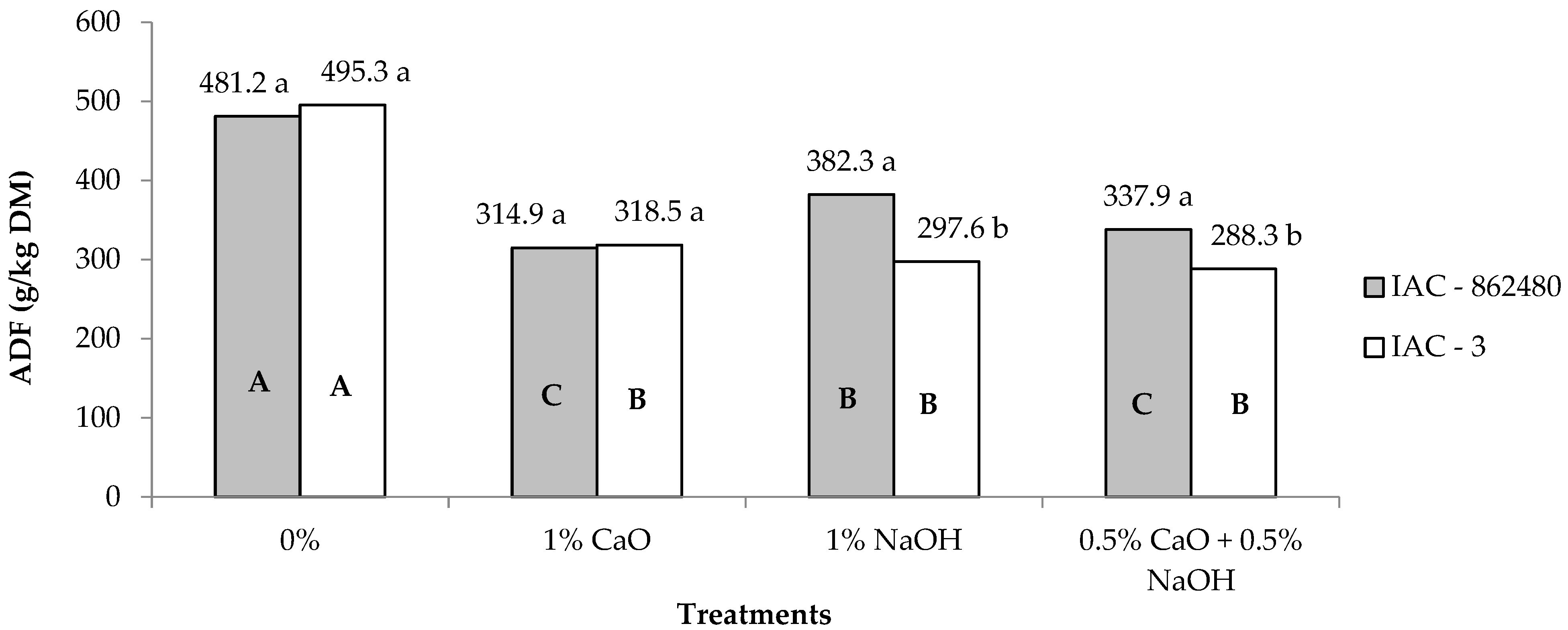
Similarly to the NDFa content, the ADF content decreased with the addition of additives to the silages, regardless of genotype. Between genotypes, lower ADF contents were observed when 1% NaOH or the combination of 0.5% CaO + 0.5% NaOH was applied to the material prior to ensiling, with the lowest values found in silages of the CTC-3 genotype when compared to silages from IAC-862480 genotype (Figure 3).
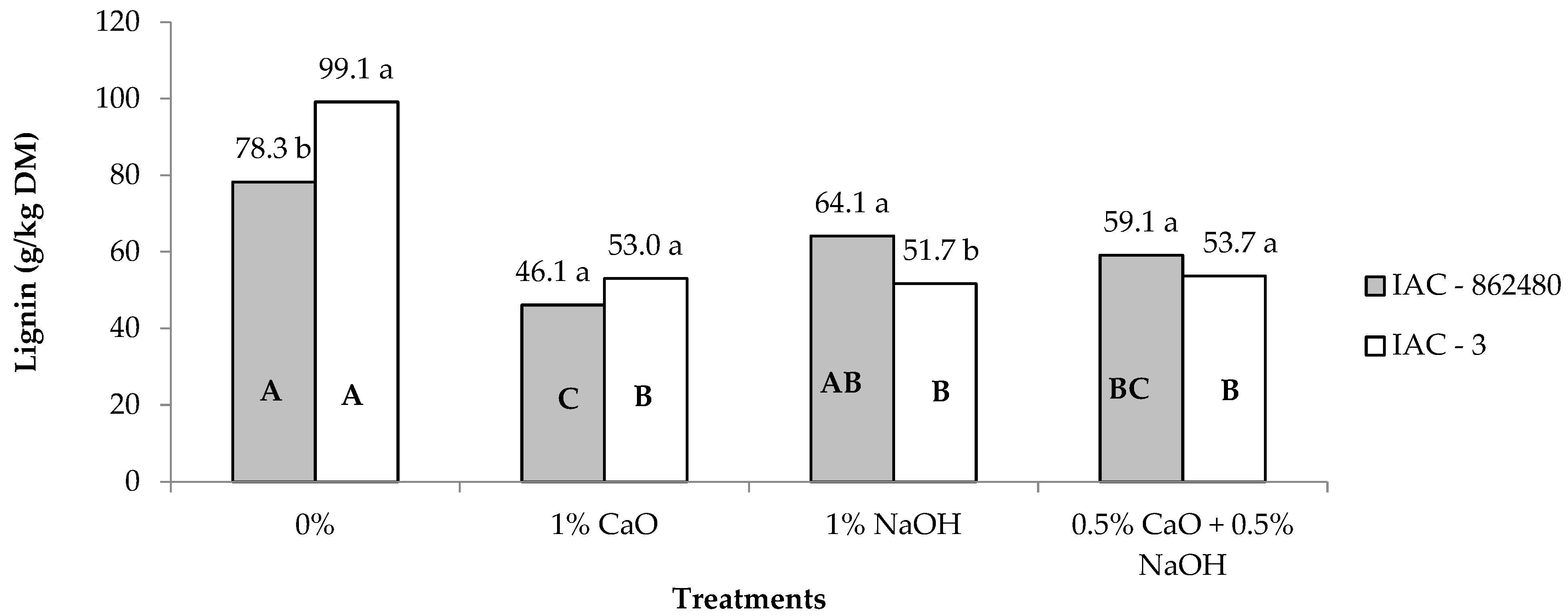
Except for the silages treated with 1% NaOH, the lignin content followed a pattern similar to that observed for NDFa and ADF, with lower values when additives were applied, regardless of genotype—except for the IAC-862480 genotype, which showed a lignin content comparable to that of the silage without additives. Between genotypes, lignin contents were similar when 1% CaO or the combination of 0.5% CaO + 0.5% NaOH was used. When 1% NaOH was applied, the lignin content was lower in the CTC-3 genotype (51.7 g/kg DM) compared with IAC-862480 (64.1 g/kg DM). In contrast, in the absence of additives, the IAC-862480 genotype showed a lower lignin content (78.3 g/kg DM) than CTC-3 (99.1 g/kg DM) (Figure 4).
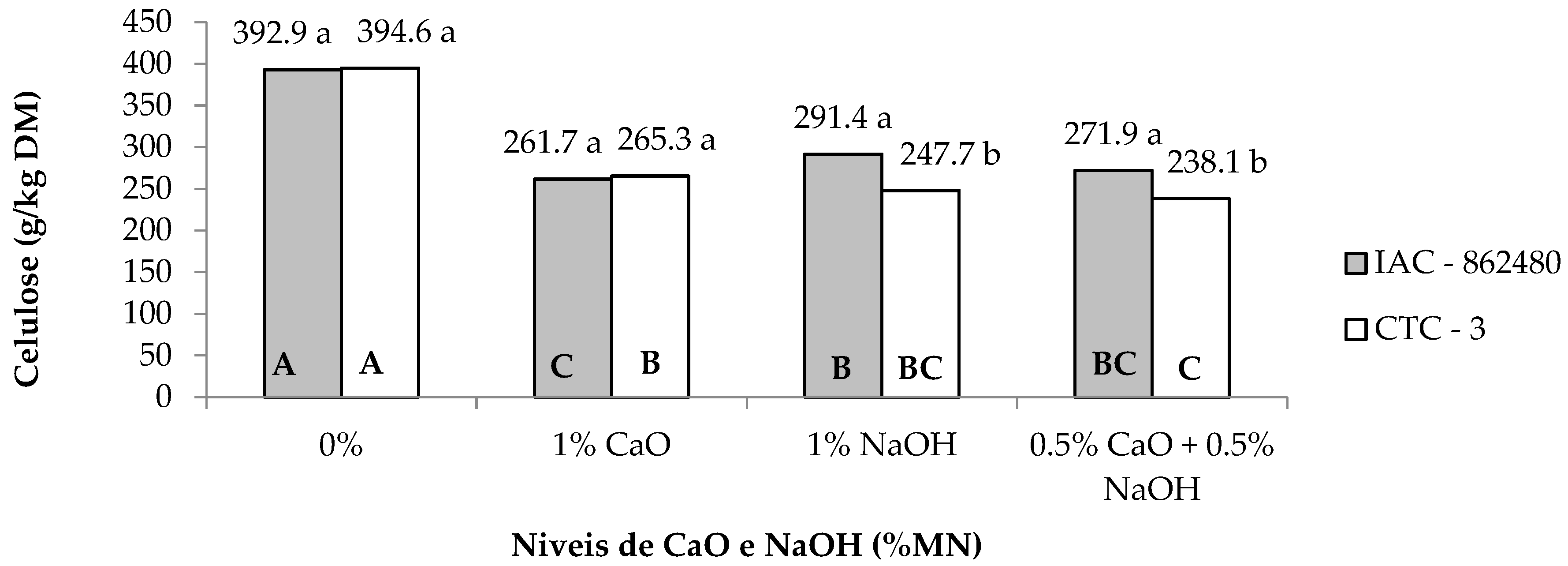
As with the other fiber fractions, the addition of additives to sugarcane silages reduced cellulose content, regardless of genotype. Between genotypes, cellulose contents were similar when no additives were used or when 1% CaO was added to the silage mixture. When 1% NaOH or the combination of 0.5% CaO + 0.5% NaOH was applied, cellulose content was lower in the CTC-3 genotype compared with the IAC-862480 genotype (Figure 5).
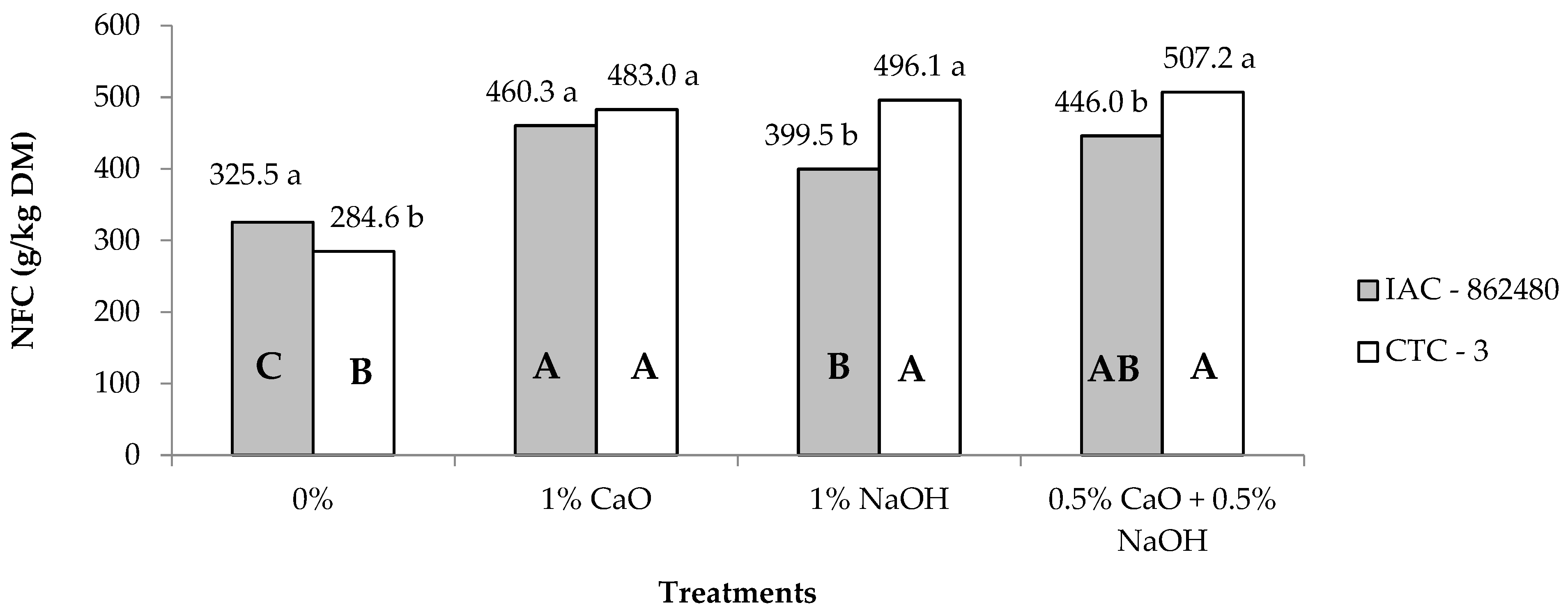
The interaction effect observed for NFC content (p < 0.01) showed that, in contrast to the fiber fractions, NFC content was lower in silages without additives compared with those treated with additives. Between genotypes, when 1% NaOH or the combination of 0.5% CaO + 0.5% NaOH was applied, NFC content was higher in the CTC-3 genotype compared to the IAC-862480 genotype. However, when no additives were used, the NFC content was higher in the IAC-862480 genotype compared to the CTC-3 genotype (Figure 6).
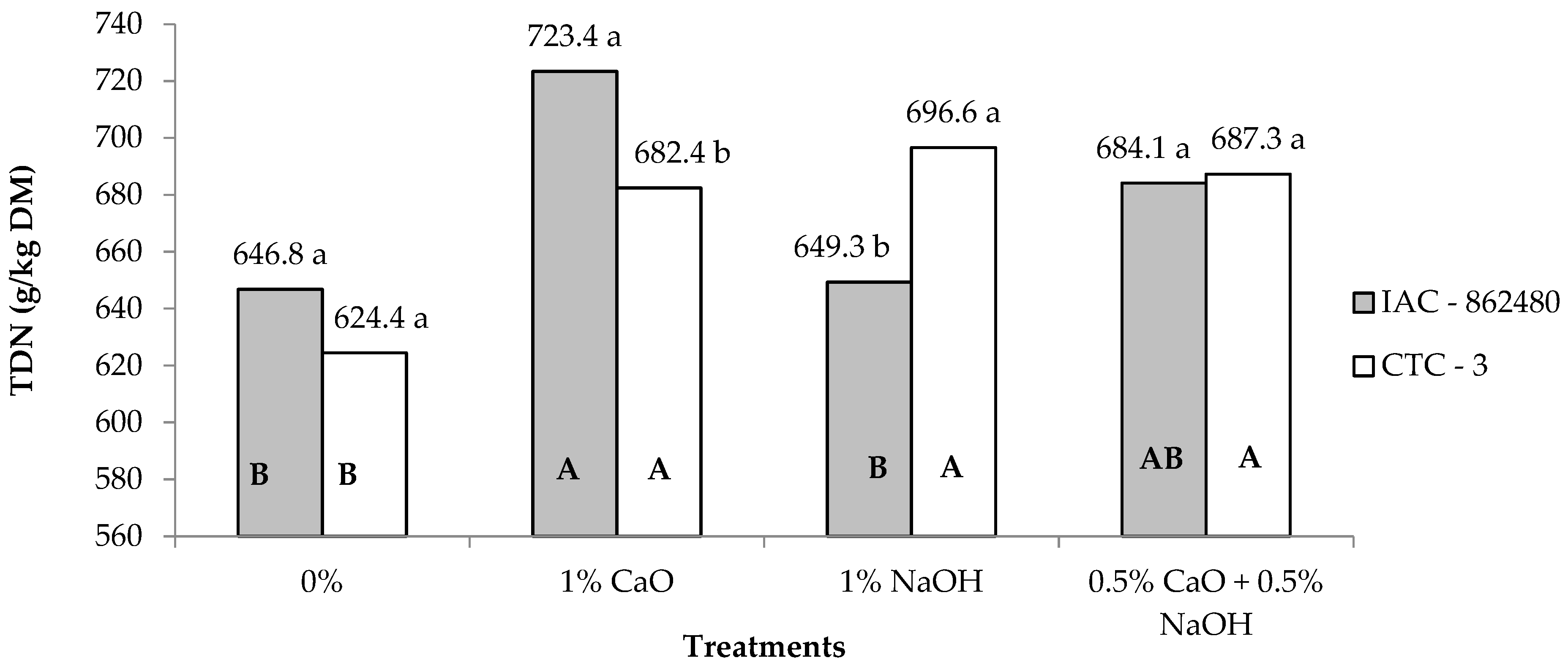
When additives were applied to CTC-3 silages, higher TDN contents were observed compared to silages without additives. In contrast, for the IAC-862480 genotype, TDN content was higher only when 1% CaO was applied. Regarding genotype differences, the TDN content of the IAC-862480 genotype was higher compared to CTC-3. Conversely, the TDN content of the IAC-862480 genotype was lower when compared to CTC-3 (Figure 7).
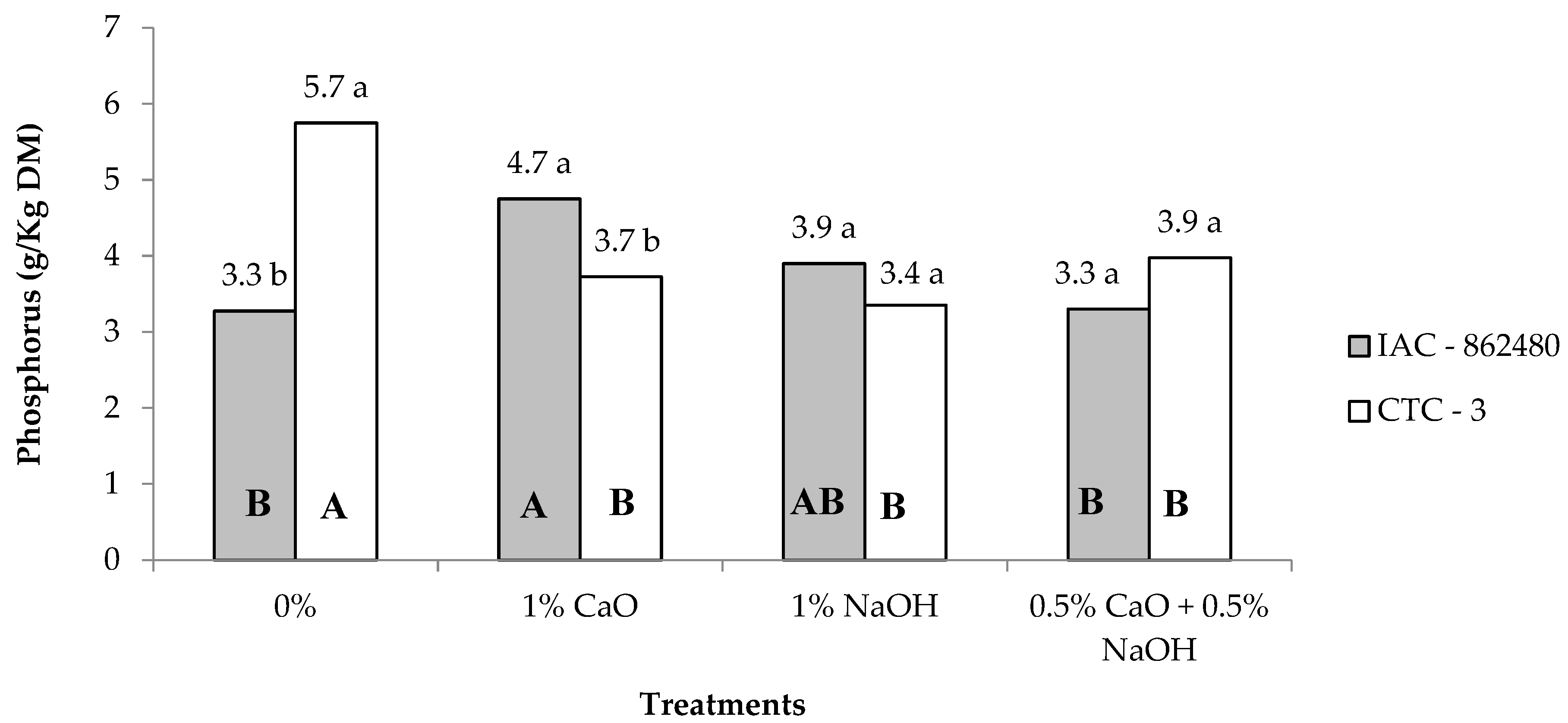
As shown in Figure 8, the phosphorus content varied significantly according to the use of additives and between genotypes (p < 0.01). In genotype CTC-3, the highest phosphorus content was observed in the absence of additives. In contrast, for genotype IAC-862480, the highest phosphorus content occurred with the addition of 1% CaO. When comparing phosphorus levels within each genotype, similar values were found in silages treated with 1% NaOH and with the combination of 0.5% CaO + 0.5% NaOH. Without additives, genotype CTC-3 exhibited the highest phosphorus content, whereas with the addition of 1% CaO, genotype IAC-862480 presented the highest phosphorus content.
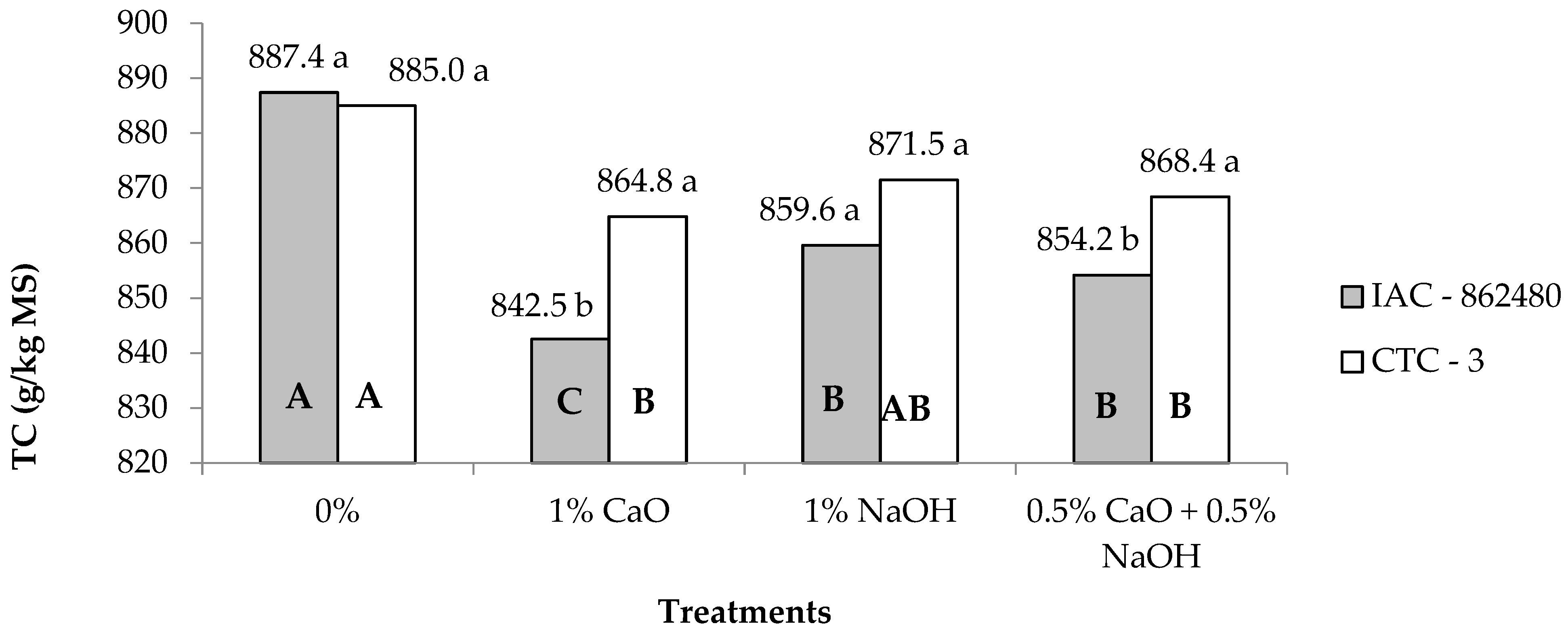
The total carbohydrate content was higher (p < 0.01) in silages without the use of additives, regardless of genotype. This content was lower in the IAC-862480 genotype when 1% CaO was added. Between genotypes, the use of either 1% CaO or 0.5% CaO + 0.5% NaOH resulted in higher total carbohydrate content in the CTC-3 genotype (Figure 9).
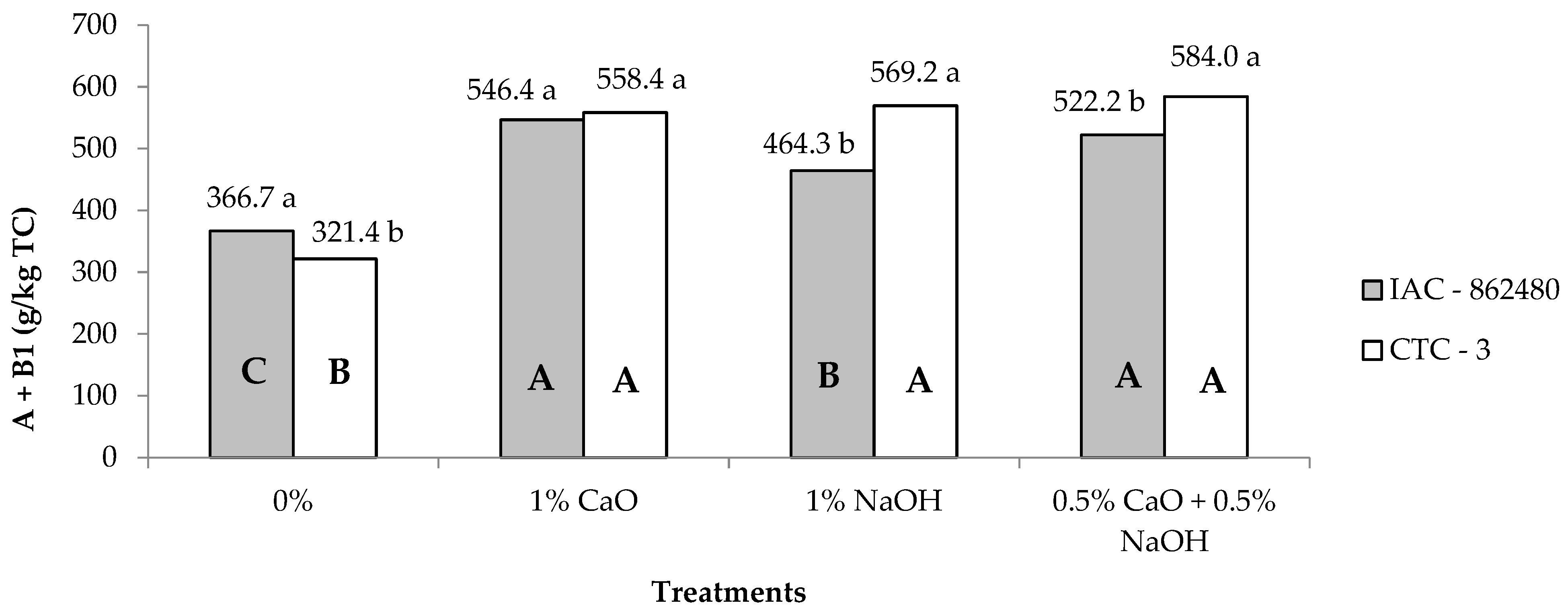
Regardless of genotype, the use of additives increased (p < 0.01) the content of the A + B1 fraction (the instantly and rapidly degradable fraction) in the silages. Between genotypes, when no additives were applied, the IAC-862480 genotype exhibited the highest A + B1 fraction. In contrast, with the addition of 1% NaOH or 0.5% CaO + 0.5% NaOH, the CTC-3 genotype presented the highest A + B1 fraction (Figure 10).
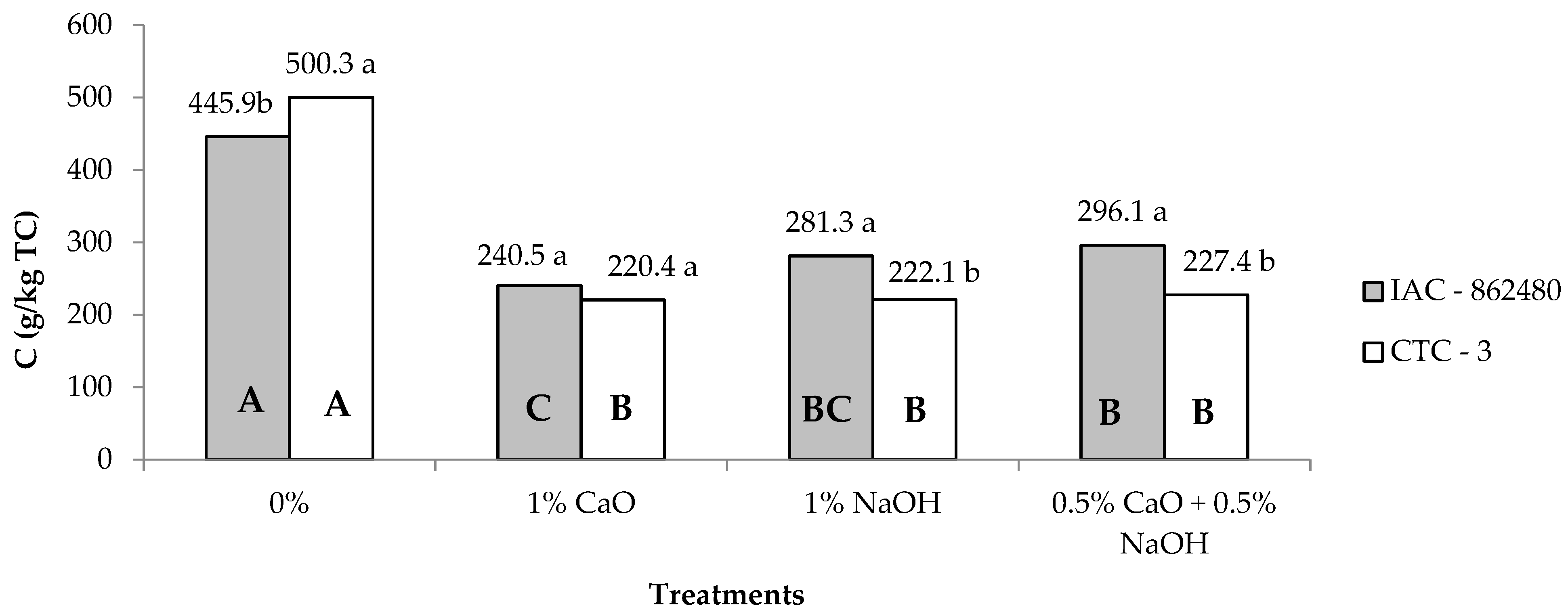
The undegradable carbohydrate fraction (C fraction) was higher in silages without the use of additives (p < 0.01). Between genotypes, the use of 1% NaOH or 0.5% CaO + 0.5% NaOH additives resulted in higher C fraction content in the IAC-862480 genotype compared with the CTC-3 genotype. However, in the absence of additives, the CTC-3 genotype exhibited the highest C fraction content (Figure 11).

3.2. Degradability Profile of the Silages

Regarding DM degradability (Table 2), no significant differences were observed in the soluble fraction (A) between silages treated with 1% CaO and those without additives for either genotype (IAC-862480 or CTC-3), with an average value of 34.8%. In contrast, the addition of 1% NaOH or the combination of 0.5% CaO + 0.5% NaOH resulted in higher soluble fractions, averaging 43.5% and 39.6%, respectively. Moreover, sugarcane silages from both genotypes treated with 1% NaOH or 0.5% CaO + 0.5% NaOH exhibited significantly higher values for the potentially degradable fraction (B) (Table 2).
Regarding NDF degradability, no significant difference was observed in the lag time of sugarcane, regardless of the use of additives or genetic group (Table 3). The use of additives resulted in approximately 51.4% and 50.4% reductions in the potentially degradable insoluble fraction (B) of the NDF. Moreover, the application of additives increased the NDF degradation rate (kd), particularly with the inclusion of 1% NaOH or 0.5% CaO + 0.5% NaOH, which exhibited degradation rates approximately 500% higher than those of untreated silage. The degradation of the undegradable fraction (I) of the NDF was also greater with additive treatment compared to the control, showing increases of 526.0% and 417.9% for the IAC-862480 and CTC-3 genotypes, respectively (Table 3).

4. Discussion

4.1. Chemical Composition of the Silages

Zhang et al. [31] reported that alkaline treatments contribute to the breakdown of plant lignocellulosic structures by promoting hydrolysis reactions within the fiber matrix. These treatments are particularly effective at cleaving the linkages between lignin and hemicellulose, hydrolyzing uronic and acetic ester bonds, and reducing cellulose crystallinity through fiber swelling. As a result, fiber and lignin become more soluble, facilitating their partial removal from the plant cell wall [32].
In addition to modifying the structural components of the cell wall, alkaline additives exhibit antimicrobial properties [33]. When CaO comes into contact with water, it forms Ca(OH)2, creating an environment with a pH above 11. The hydroxyl ions produced can interfere with the bacterial respiratory electron transport chain, inhibiting microbial growth and proliferation. Furthermore, reactive oxygen species generated under these conditions can oxidize cellular macromolecules—such as proteins, lipids, and nucleic acids—resulting in cell death. The release of Ca2+ ions from CaO also disrupts membrane charge stability, further enhancing the antimicrobial effect [34].
According to Borreani et al. [35], DM levels between 30% and 40% in forage are the most suitable for silage preparation, as they help minimize losses associated with undesirable fermentations, such as butyric fermentation. When DM content falls below this range, especially 25%, significant losses may occur due to excessive effluent production and reduced fermentation quality [36].
Regarding the DM content of the silages, no significant changes were observed for the IAC-862480 genotype, although the underlying cause remains uncertain. In contrast, the variations detected in the CTC-3 genotype may be associated with the effects of the applied additives. It can be inferred that, since the silages presented DM levels below 30%, conditions were favorable for the proliferation of undesirable microorganisms, which may increase effluent and nutrient losses [36]. However, the use of additives likely mitigated these effects due to their antimicrobial properties, which can inhibit the growth of non-beneficial bacteria [33]. Furthermore, CaO has the ability to retain water molecules [34], which may explain the higher DM content observed in silages treated with 1% CaO.
The organic matter content was significantly affected by the use of additives, a response primarily attributed to changes in the mineral composition of the treated silages. The addition of alkaline agents such as CaO and NaOH contributes to an increase in the ash fraction, as these compounds are inorganic and remain as mineral residues after combustion. Consequently, the relative proportion of OM decreases, as observed in the present study. Similar behavior was reported by Romão et al. [18] and Rezende et al. [37], who found that the application of alkaline additives to fresh sugarcane reduced OM content due to the elevated ash levels derived from the additive components.
The reduction in CP content observed in the silages may be associated with the increased dry matter and fiber degradability promoted by alkaline treatments. Under these conditions, a greater proportion of protein becomes exposed to microbial degradation during fermentation, leading to elevated ammonia production. The ammonia released can volatilize, thereby decreasing the residual CP content in silages treated with alkali compounds. Similar findings were reported by Rabelo et al. [38], who observed a linear reduction in CP content in sugarcane hydrolyzed with quicklime.
As shown in the results, the use of additives led to a reduction in fiber components (NDFa, ADF, lignin, hemicellulose, and cellulose), which consequently increased the NFC content. This effect can be attributed to the action of alkaline additives on the fibrous constituents—particularly cellulose and lignin—making them more accessible to microbial degradation [32]. This observation is further supported by the B2 carbohydrate fraction, which represents the potentially degradable fraction and exhibited a similar pattern.
Notably, CaO was the most effective additive in reducing fiber fractions or increasing their solubility. This effect may be explained by its hydrophilic properties, which promote two simultaneous mechanisms: the expansion of spaces within the lignocellulosic matrix and the hydrolysis of uronic and acetic ester bonds, thereby enhancing fiber solubilization [31].
Although NaOH also exerts an effect on reducing fiber structures, its impact appears to be less pronounced compared with that of CaO. The action of NaOH is primarily chemical, as it promotes the cleavage of lignin bonds and the formation of sodium–lignin complexes. In this process, Na+ ions bind to lignin, forming soluble sodium phenolate salts [39]. In contrast, CaO exhibits both chemical and physical effects, enhancing microbial activity and promoting a more extensive disruption of the lignocellulosic matrix. As a result, a greater proportion of structural constituents becomes solubilized, leading to an increase in the NFC content in the silages. This effect is further supported by the observed changes in the A + B1 carbohydrate fraction, which represents the soluble carbohydrate portion, commonly referred to as NFC. These results are further supported by the observed increase in TDN content in silages treated with additives, with the exception of those treated exclusively with NaOH. This outcome aligns with the comparatively lower effectiveness of NaOH relative to CaO in enhancing silage nutritive value. The improvements may result from the partial solubilization and reduction in hemicellulose content.
Similarly, Khorvash et al. [40] and Freitas et al. [41] found lower fiber content in soybean straw and sugarcane silages treated with CaO compared to those treated with Ca(OH)2, reinforcing the greater efficacy of oxides over hydroxides in disrupting fibrous structures.
Among the evaluated genotypes, the CTC-3 genotype exhibited a higher fiber content in silages without additive application compared to the IAC-862480 genotype. However, with the inclusion of alkaline additives—particularly 1% NaOH or the combination of 0.5% CaO + 0.5% NaOH—a marked reduction in fiber fractions was observed. These results suggest that the fibrous structures of the IAC-862480 genotype are more resistant to alkaline degradation than those of the CTC-3 genotype. As observed, the IAC-862480 silages presented higher cellulose content than the CTC-3 silages, indicating that the alkaline treatment was not sufficiently effective in hydrolyzing and reducing the cellulose fraction to the same extent as in the CTC-3 genotype. This interpretation is supported by the findings of Nadeem et al. [42] and Wang et al. [43], who reported that NaOH treatment primarily disrupts lignin structures, with a comparatively smaller effect on cellulose degradation. The disruption of lignin is further supported by the effect of the additives on the C fraction, or insoluble carbohydrate fraction, which exhibited a similar pattern in the present study.
The increase in calcium content observed in silages treated with CaO is directly attributable to the addition of this mineral-based additive. Mota et al. [44] reported average calcium increases of 605.9% and 452.9% in sugarcane treated with quicklime and hydrated lime, respectively, both applied at a 0.5% inclusion level, when compared to fresh, untreated sugarcane.
Phosphorus is an inorganic nutrient that can be utilized or stored in various plant tissues, with up to 75% of the total phosphorus content typically located within cell vacuoles [45]. In the present study, silages from the CTC-3 genotype exhibited higher fiber content than those from the IAC-862480 genotype, although these fiber fractions were markedly reduced following the application of additives, particularly in the CTC-3 silages. This observation helps explain why the phosphorus content was higher in silages without additives and lower in those treated with alkaline agents. The breakdown of lignocellulosic structures during alkaline treatment likely promoted the disruption of cell walls and vacuoles, facilitating the leaching of soluble cellular components, including phosphorus. Consequently, this process may have contributed to the lower phosphorus concentrations observed in the treated silages.
These processes can influence and modulate the total carbohydrate content in silages. As observed, total carbohydrate levels decreased regardless of the genotype, although among the genotypes, CTC-3 silages exhibited the highest total carbohydrate content. This pattern can be explained by the enhanced fiber degradability promoted by the additives, which reduced the fiber fraction and, consequently, the overall total carbohydrate content in the silages.

4.2. Degradability Profile of the Silages

According to the results, regardless of genotype, the application of 1% NaOH had the greatest effect on DM degradability, particularly in the A and B fractions, representing the soluble and potentially degradable insoluble fractions, respectively. However, no significant differences were observed in the degradation rate, although numerical trends suggest a slight reduction in the rate of degradability.
The effects of the alkali additives are linked to the partial hydrolysis [42,43] of the fiber in the plant cell, contributing to the exposure of the soluble material to degradation and potentiating DM. This result is consistent with the chemical composition findings, which showed a reduction in cell wall constituents, especially in silage treated with additives.
The result for NDF degradability indicates that the treatments did not affect the lag time, suggesting that bacterial adherence to silage particles was not influenced. Additionally, the reduction in the B fraction demonstrates that the additives were effective in decreasing the potentially insoluble fraction of NDF in the silage. Moreover, the degradation rate of this fraction was higher with the use of additives, particularly with 1% NaOH and the 0.5% CaO + 0.5% NaOH combination. This indicates that the microbial populations responsible for degrading this fraction were not negatively affected; on the contrary, the enhanced nutrient availability may have supported their activity and potentially increased their proliferation.
The insoluble fraction or I fraction of NDF appeared higher when examining the NDF fraction results; however, this is primarily a mathematical observation, as the values are expressed as proportions of the B and I fractions. Considering both the B and I fractions along with the degradation rate, the results indicate that a greater proportion of nutrients was both potentially and actually degraded when additives were applied.
The average NDF degradation rates reported by Ribeiro et al. [46] for natural sugarcane and sugarcane treated with 2.25% NaOH and 2.25% CaO (3.7, 3.9, and 4.3%/h, respectively) were higher than the rates observed in the present study (0.42, 1.45, 1.97, and 2.12%/h). These findings highlight the capacity of alkaline additives to reduce cell wall constituents, thereby increasing fiber availability for rumen microbial action and enhancing NDF degradability in sugarcane silage. The results further confirm the effectiveness of alkaline additives in improving the nutritional value of bulky, high-fiber silages by promoting greater degradation and nutrient accessibility.

5. Conclusions

The use of additives enhanced the nutritional quality of sugarcane silages. Among the evaluated treatments, the application of 1% CaO or the combination of 0.5% CaO + 0.5% NaOH proved to be the most effective in hydrolyzing the structural components of the cell wall, thereby improving the overall nutritive value of the silages. Regarding genotypic responses, the nutritional quality of the CTC-3 genotype was particularly improved by the use of alkaline additives, especially CaO. Furthermore, the application of these additives, either individually or in combination, increased the degradability of both dry matter and neutral detergent fiber.
Future research could focus on optimizing the rate of alkaline additive action—whether slow, fast, or normal—across different sugarcane genotypes and evaluating their long-term effects on rumen metabolism, animal performance, and meat quality. Investigating microbial community dynamics throughout the silage production process could provide valuable insights. Additionally, sustainability studies that examine animal performance, the environmental impact of alkaline treatments, and cost–benefit analyses could help improve farmers’ revenues and promote the adoption of sustainable practices. Finally, employing metagenomic approaches to assess both silage responses and animal outcomes would enhance the practical application of these treatments in livestock nutrition.

Author Contributions

Conceptualization, G.G.P.d.C. and C.d.O.R.; Methodology, G.G.P.d.C., A.J.V.P. and C.M.A.M.; Validation, G.G.P.d.C., S.A.S. and A.J.V.P.; Formal Analysis, S.A.S. and L.M.A.R.; Investigation, C.d.O.R., G.S.C., O.L.R., and C.M.A.M.; Resources, G.G.P.d.C.; Data Curation, G.G.P.d.C., A.J.V.P. and S.A.S.; Writing—Original Draft Preparation, L.M.A.R., C.M.A.M., G.S.C. and C.d.O.R.; Writing—Review and Editing, G.G.P.d.C., M.S.L.T., O.L.R. and H.D.R.A.; Visualization, G.G.P.d.C. and A.J.V.P.; Supervision, C.M.A.M., M.S.L.T. and H.D.R.A.; Project Administration, G.G.P.d.C. All authors have read and agreed to the published version of the manuscript.

Funding

This research received no external funding.

Data Availability Statement

The original contributions presented in the study are included in the article; further inquiries can be directed to the corresponding author.

Acknowledgments

The authors thank the “Fundação de Amparo à Pesquisa do Estado da Bahia—FAPESB”, the “Conselho Nacional de Desenvolvimento Científico e Tecnológico—CNPq”, and the “Coordenação de Aperfeiçoamento de Pessoal de Nível Superior—CAPES-Brazil” for giving grants to the students.

Conflicts of Interest

The authors declare no conflicts of interest.

References

  1. USDA Foreign Agricultural Service. Sugar Annual: Brazil [S.l.]; 22 April 2025, Report Number: BR2025-0011; USDA: Washington, DC, USA, 2025. Available online: https://apps.fas.usda.gov/newgainapi/api/Report/DownloadReportByFileName?fileName=Sugar%20Annual_Brasilia_Brazil_BR2025-0011.pdf (accessed on 4 November 2025).
  2. Melo, P.L.; Cherubin, M.R.; Gomes, T.C.; Lisboa, I.P.; Satiro, L.S.P.; Cerri, C.E.; Siqueira-Neto, M. Straw removal effects on sugarcane root system and stalk yield. Agronomy 2020, 10, 1048. [Google Scholar] [CrossRef]
  3. Ferreira, F.L.; Dall’Antonia, C.B.; Shiga, E.A.; Alvim, L.J.; Pessoni, R.A.B. Sugarcane bagasse as a source of carbon for enzyme production by filamentous fungi1. Hoehnea 2018, 45, 134–142. [Google Scholar] [CrossRef]
  4. Singh, S.P.; Jawaid, M.; Chandrasekar, M.; Senthilkumar, K.; Yadav, B.; Saba, N.; Siengchin, S. Sugarcane wastes into commercial products: Processing methods, production optimization and challenges. J. Clean. Prod. 2021, 328, 129453. [Google Scholar] [CrossRef]
  5. Pestana, P.R.D.S.; Braga, A.L.F.; Ramos, E.M.C.; Oliveira, A.F.D.; Osadnik, C.R.; Ferreira, A.D.; Ramos, D. Effects of air pollution caused by sugarcane burning in Western São Paulo on the cardiovascular system. Rev. Saúde Pública 2017, 51, 13. [Google Scholar] [CrossRef]
  6. Araujo, F.E.L.; Campos, A.G.; Domingues, R.C.; Santos, R.C.D.; Bezerra, V.C.R.; Gurgel, A.D.M. Fires in sugarcane cultivation and associated respiratory diseases in a municipality in Pernambuco. Saúde Debate 2025, 49, e9904. [Google Scholar] [CrossRef]
  7. Carvalho, B.F.; Ávila, C.L.S.; Pinto, J.C.; Schwan, R.F. Effect of propionic acid and Lactobacillus plantarum UFLA SIL 1 on the sugarcane silage with and without calcium oxide. Afr. J. Microbiol. Res. 2013, 7, 4159–4168. [Google Scholar] [CrossRef]
  8. Archimède, H.; Martin, C.; Périacarpin, F.; Rochette, Y.; Etienne, T.S.; Anais, C.; Doreau, M. Methane emission of Blackbelly rams consuming whole sugarcane forage compared with Dichanthium sp. Hay. Anim. Feed Sci. Technol. 2014, 190, 30–37. [Google Scholar] [CrossRef]
  9. Molavian, M.; Ghorbani, G.R.; Rafiee, H.; Beauchemin, K.A. Substitution of wheat straw with sugarcane bagasse in low-forage diets fed to mid-lactation dairy cows: Milk production, digestibility, and chewing behavior. J. Dairy Sci. 2020, 103, 8034–8047. [Google Scholar] [CrossRef]
  10. Alhadas, H.M.; Valadares Filho, S.C.; Silva, F.F.; Silva, F.A.S.; Pucetti, P.; Pacheco, M.V.C.; Silva, B.C.; Tedeschi, L.O. Effects of including physically effective fiber from sugarcane in whole corn grain diets on the ingestive, digestive, and ruminal parameters of growing beef bulls. Livest. Sci. 2021, 248, 104508. [Google Scholar] [CrossRef]
  11. Romão, C.O.; Carvalho, G.G.P.; Tosto, M.S.L.; Santos, S.A.; Pires, A.J.V.; Maranhão, C.M.A.; Rufino, L.M.A.; Correia, G.S.; de Oliveira, P.A. Nutritional profiles of three genotypes of sugarcane silage associated with calcium oxide. Grassl. Sci. 2018, 64, 16–28. [Google Scholar] [CrossRef]
  12. Santos, W.P.; Carvalho, B.F.; Ávila, C.L.S.; Júnior, G.S.D.; Pereira, M.N.; Schwan, R.F. Glycerin as an additive for sugarcane silage. Ann. Microbiol. 2014, 65, 1547–1556. [Google Scholar] [CrossRef]
  13. Almeida, L.J.M.; Silva, A.V.; Silva, J.S.L.; Silva, J.F.; Silva, J.H.B.; Pereira Neto, F.; Borba, M.A.; Barreto, S.S.C.; Rodrigues, H.A.; Sousa, V.F.O.; et al. Sugarcane productivity and economic viability in response to planting density. Braz. J. Biol. 2024, 84, e279536. [Google Scholar] [CrossRef]
  14. Souza, N.R.D.; Fracarolli, J.A.; Junqueira, T.L.; Chagas, M.F.; Cardoso, T.F.; Watanabe, M.D.; Cavalett, O.; Venzke Filho, S.P.; Dale, B.E.; Bonomi, A.; et al. Sugarcane ethanol and beef cattle integration in Brazil. Biomass Bioenergy 2019, 120, 448–457. [Google Scholar] [CrossRef]
  15. Bordonal, R.D.O.; Carvalho, J.L.N.; Lal, R.; De Figueiredo, E.B.; De Oliveira, B.G.; La Scala Jr, N. Sustainability of sugarcane production in Brazil. A review. Agron. Sustain. Dev. 2018, 38, 13. [Google Scholar] [CrossRef]
  16. Driehuis, F. Silage and the safety and quality of dairy foods: A review. Agric. Food Sci. 2013, 22, 16–34. [Google Scholar] [CrossRef]
  17. Ávila, C.L.S.; Carvalho, B.F.; Pinto, J.C.; Duarte, W.F.; Schwan, R.F. The use of Lactobacillus species as starter cultures for enhancing the quality of sugar cane silage. J. Dairy Sci. 2014, 97, 940–951. [Google Scholar] [CrossRef] [PubMed]
  18. Romão, C.O.; Tosto, M.S.L.; Santos, S.A.; Pires, A.J.V.; Ribeiro, O.L.; Maranhão, C.M.A.; Rufino, L.M.A.; Correia, G.S.; Alba, H.D.R.; Carvalho, G.G.P. Nutritive profile, digestibility, and carbohydrate fractionation of three sugarcane genotypes treated with calcium oxide. Agronomy 2023, 13, 733. [Google Scholar] [CrossRef]
  19. Morais, J.P.; Hartung, L.; Nunes, M.A.; Sobires, P.D.; Pereira, F.C.; Vargas, M.E.; Valle, T.A.; Campana, M. Calcium oxide reduces fermentation losses and improves the nutritional value of brewery-spent grain silage. Anim. Feed. Sci. Technol. 2025, 319, 116187. [Google Scholar] [CrossRef]
  20. Bachmann, M.; Martens, S.D.; Le Brech, Y.; Kervern, G.; Bayreuther, R.; Steinhöfel, O.; Zeyner, A. Physicochemical characterisation of barley straw treated with sodium hydroxide or urea and its digestibility and in vitro fermentability in ruminants. Sci. Rep. 2022, 12, 20530. [Google Scholar] [CrossRef]
  21. Schmidt, P.; Rossi Junior, P.; Junges, D.; Dias, L.T.; Almeida, R.D.; Mari, L.J. New microbial additives on sugarcane ensilage: Bromatological composition, fermentative losses, volatile compounds and aerobic stability. Rev. Bras. Zootec. 2011, 40, 543–549. [Google Scholar] [CrossRef]
  22. AOAC—Association of Official Analytical Chemists. Official Methods of Analysis of the Association of Official Analytical Chemists, 18th ed.; Association of Official Analytical Chemists Inc.: Gaithersburg, MD, USA, 2005. [Google Scholar]
  23. Mertens, D.R. Gravimetric determination of amylase-treated neutral detergent fiber in feeds with refluxing in beakers or crucibles: Collaborative study. J. AOAC Int. 2002, 85, 1217–1240. [Google Scholar] [CrossRef]
  24. Goering, H.K.; Van Soest, P.J. Forage Fiber Analysis; Agricultural Research Service, US Department of Agriculture: Washington, DC, USA, 1970. [Google Scholar]
  25. Sniffen, C.J.; O’connor, J.D.; Van Soest, P.J.; Fox, D.G.; Russell, J.B. A net carbohydrate and protein system for evaluating cattle diets: II. Carbohydrate and protein availability. J. Anim. Sci. 1992, 70, 3562–3577. [Google Scholar] [CrossRef]
  26. Krizsan, S.J.; Huhtanen, P. Effect of diet composition and incubation time on feed indigestible neutral detergent fiber concentration in dairy cows. J. Dairy Sci. 2013, 96, 1715–1726. [Google Scholar] [CrossRef]
  27. Nocek, J.E.; Russell, J. Protein and energy as an integrated system. Relationship of ruminal protein and carbohydrate availability to microbial synthesis and milk production. J. Dairy Sci. 1988, 71, 2070–2107. [Google Scholar] [CrossRef]
  28. Hall, M.B. Challenges with nonfiber carbohydrate methods. J. Anim. Sci. 2003, 81, 3226–3232. [Google Scholar] [CrossRef]
  29. Ørskov, E.R.; McDonald, I. The estimation of protein degradability in the rumen from incubation measurements weighted according to rate of passage. J. Agric. Sci. 1979, 92, 499–503. [Google Scholar] [CrossRef]
  30. Mertens, D.R.; Loften, J.R. The effect of starch on forage fiber digestion kinetics in vitro. J. Dairy Sci. 1980, 63, 1437–1446. [Google Scholar] [CrossRef] [PubMed]
  31. Zhang, J.; Kong, C.; Yang, M.; Zang, L. Comparison of calcium oxide and calcium peroxide pretreatments of wheat straw for improving biohydrogen production. ACS Omega 2020, 5, 9151–9161. [Google Scholar] [CrossRef]
  32. Jiang, D.; Ge, X.; Zhang, Q.; Zhou, X.; Chen, Z.; Keener, H.; Li, Y. Comparison of sodium hydroxide and calcium hydroxide pretreatments of giant reed for enhanced enzymatic digestibility and methane production. Bioresour. Technol. 2017, 244, 1150–1157. [Google Scholar] [CrossRef] [PubMed]
  33. Liang, X.; Dai, R.; Chang, S.; Wei, Y.; Zhang, B. Antibacterial mechanism of biogenic calcium oxide and antibacterial activity of calcium oxide/polypropylene composites. Colloids Surf. A Physicochem. Eng. Asp. 2022, 650, 129446. [Google Scholar] [CrossRef]
  34. Khan, A.U.; Hussain, T.; Abdullah; Khan, M.A.; Almostafa, M.M.; Younis, N.S.; Yahya, G. Antibacterial and antibiofilm activity of Ficus carica-mediated calcium oxide (CaONPs) phyto-nanoparticles. Molecules 2023, 28, 5553. [Google Scholar] [CrossRef]
  35. Borreani, G.; Tabacco, E.; Schmidt, R.J.; Holmes, B.J.; Muck, R.A. Silage review: Factors affecting dry matter and quality losses in silages. J. Dairy Sci. 2018, 101, 3952–3979. [Google Scholar] [CrossRef] [PubMed]
  36. Kung Jr, L.; Shaver, R.D.; Grant, R.J.; Schmidt, R.J. Silage review: Interpretation of chemical, microbial, and organoleptic components of silages. J. Dairy Sci. 2018, 101, 4020–4033. [Google Scholar] [CrossRef]
  37. Rezende, A.V.; Silveira Rabelo, C.H.; Andrade, L.P.; Silveira Rabelo, F.H.; Dos Santos, W.B. Characteristics of sugar cane in natura and hydrolyzed with lime in different storage times. Rev. Caatinga 2013, 26, 107–116. [Google Scholar]
  38. Rabelo, C.H.S.; De Rezende, A.V.; Rabelo, F.H.S.; Nogueira, D.A.; Elias, R.F.; de Faria Júnior, D.C. Estabilidade aeróbia de cana-de-açúcar in natura hidrolisada com cal virgem. Braz. Anim. Sci. 2011, 12, 257–265. [Google Scholar] [CrossRef]
  39. Permata, D.A.; Kasim, A.; Alfi Asben, Y. Delignification of lignocellulosic biomass. World J. Adv. Res. Rev. 2021, 12, 462–469. [Google Scholar] [CrossRef]
  40. Khorvash, M.; Kargar, S.; Yalchi, T.; Ghorbani, G.R. Effects of calcium oxide and calcium hydroxide on the chemical composition and in vitro digestibility of soybean straw. J. Food Agric. Environ. 2010, 8, 356–359. [Google Scholar]
  41. Freitas, A.W.P.; Rocha, F.C.; Fagundes, J.L.; Fonseca, R.; Zonta, A. Evaluation of sugar cane with calcium hydroxide different levels. Bol. Ind. Anim. 2009, 66, 137–144. Available online: https://bia.iz.sp.gov.br/index.php/bia/article/view/1093 (accessed on 4 November 2025).
  42. Nadeem, M.; Ashgar, U.; Abbas, S.; Ullah, S.; Syed, Q. Alkaline pretreatment: A potential tool to explore kallar grass (Leptochloa fusca) as a substrate for bio-fuel production. Middle East J. Sci. Res. 2013, 18, 1133–1139. Available online: https://idosi.org/mejsr/mejsr18(8)13.htm (accessed on 4 November 2025).
  43. Wang, W.; Wang, X.; Zhang, Y.; Yu, Q.; Tan, X.; Zhuang, X.; Yuan, Z. Effect of sodium hydroxide pretreatment on physicochemical changes and enzymatic hydrolysis of herbaceous and woody lignocelluloses. Ind. Crops Prod. 2020, 145, 112145. [Google Scholar] [CrossRef]
  44. Mota, D.A.; Oliveira, M.D.S.; Domingues, F.N.; Manzi, G.M.; Ferreira, D.S.; Santos, J. Hydrolysis of cane sugar with lime or hydrated lime. Rev. Bras. Zootec. 2010, 39, 1186–1190. [Google Scholar] [CrossRef]
  45. Chiang, C.P.; Yayen, J.; Chiou, T.J. Mobilization and recycling of intracellular phosphorus in response to availability. Quant. Plant Biol. 2025, 6, e3. [Google Scholar] [CrossRef] [PubMed]
  46. Ribeiro, L.S.O.; Pires, A.J.V.; Carvalho, G.G.P.; Chagas, D.M.T. Dry matter and fiber fraction degradability of sugar cane treated with calcium oxide or sodium hydroxide. Rev. Bras. Saúde Prod. Anim. 2009, 10, 573–585. Available online: https://revbaianaenferm.ufba.br/index.php/rbspa/article/view/40002 (accessed on 4 November 2025).
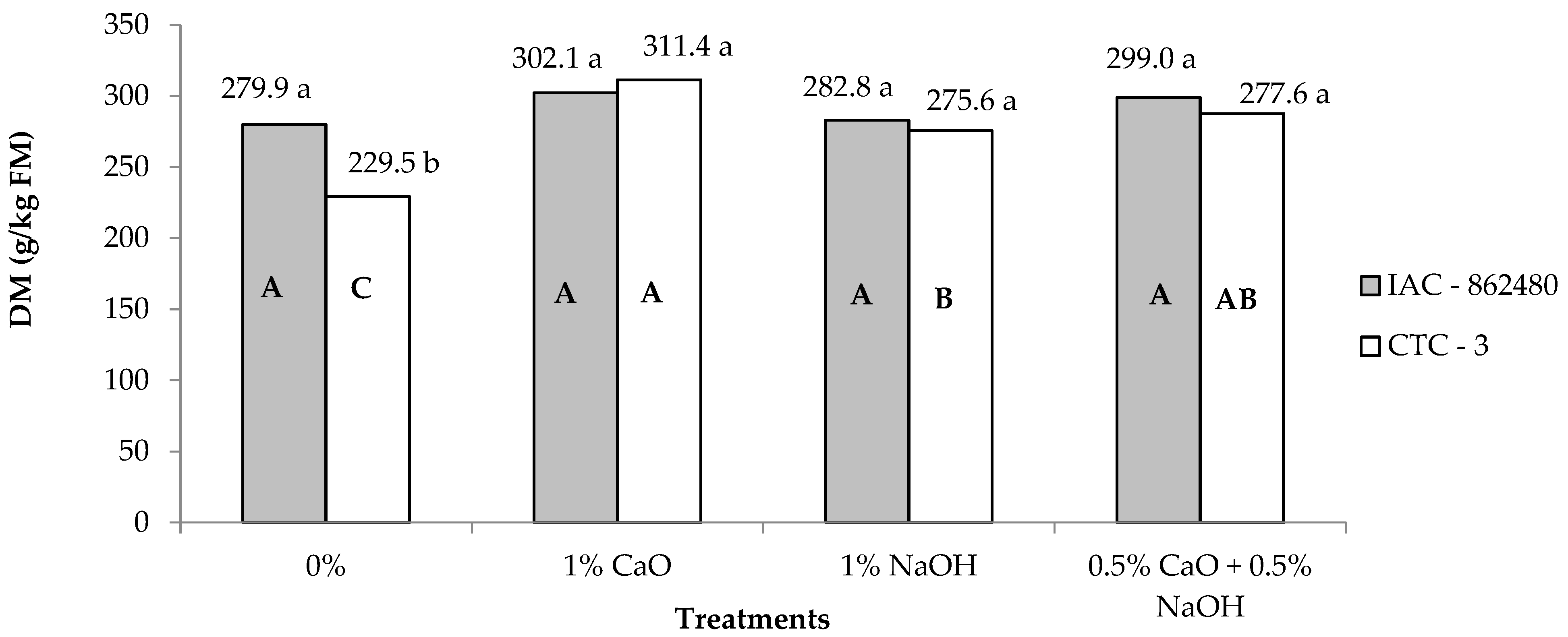
Figure 1. Interaction effect on the DM content (g/kg of fresh matter) of sugarcane silage from two genotypes treated with or without different additives. Lowercase letters compare means within additives and uppercase letters compare means within genotypes according to Tukey’s test at the 0.05 significance level.
Agronomy 15 02826 g001
Figure 2. Interaction effect on the NDFa content (g/kg DM) of sugarcane silage from two genotypes treated with or without different additives. Lowercase letters compare means within additives and uppercase letters compare means within genotypes according to Tukey’s test at the 0.05 significance level.
Agronomy 15 02826 g002
Figure 3. Interaction effect on the ADF content (g/kg DM) of sugarcane silage from two genotypes treated with or without different additives. Lowercase letters compare means within additives and uppercase letters compare means within genotypes according to Tukey’s test at the 0.05 significance level.
Agronomy 15 02826 g003
Figure 4. Interaction effect on the lignin content (g/kg DM) of sugarcane silage from two genotypes treated with or without different additives. Lowercase letters compare means within additives and uppercase letters compare means within genotypes according to Tukey’s test at the 0.05 significance level.
Agronomy 15 02826 g004
Figure 5. Interaction effect on the cellulose content (g/kg DM) of sugarcane silage from two genotypes treated with or without different additives. Lowercase letters compare means within additives and uppercase letters compare means within genotypes according to Tukey’s test at the 0.05 significance level.
Agronomy 15 02826 g005
Figure 6. Interaction effect on the NFC content (g/kg DM) of sugarcane silage from two genotypes treated with or without different additives. Lowercase letters compare means within additives and uppercase letters compare means within genotypes according to Tukey’s test at the 0.05 significance level.
Agronomy 15 02826 g006
Figure 7. Interaction effect on the TDN content (g/kg DM) of sugarcane silage from two genotypes treated with or without different additives. Lowercase letters compare means within additives and uppercase letters compare means within genotypes according to Tukey’s test at the 0.05 significance level.
Agronomy 15 02826 g007
Figure 8. Interaction effect on the phosphorus content (g/kg DM) of sugarcane silage from two genotypes treated with or without different additives. Lowercase letters compare means within additives and uppercase letters compare means within genotypes according to Tukey’s test at the 0.05 significance level.
Agronomy 15 02826 g008
Figure 9. Interaction effect on the total carbohydrates (TC) content (g/kg DM) of sugarcane silage from two genotypes treated with or without different additives. Lowercase letters compare means within additives and uppercase letters compare means within genotypes according to Tukey’s test at the 0.05 significance level.
Agronomy 15 02826 g009
Figure 10. Interaction effect on the A + B1 fraction (instantly and rapidly degradable fraction) content (g/kg of total carbohydrates) of sugarcane silage from two genotypes treated with or without different additives. Lowercase letters compare means within additives and uppercase letters compare means within genotypes according to Tukey’s test at the 0.05 significance level.
Agronomy 15 02826 g010
Figure 11. Interaction effect on the C fraction (undegradable fraction) content (g/kg of total carbohydrates) of sugarcane silage from two genotypes treated with or without different additives. Lowercase letters compare means within additives and uppercase letters compare means within genotypes according to Tukey’s test at the 0.05 significance level.
Agronomy 15 02826 g011
Table 1. Chemical composition of sugarcane silage from two genotypes treated with or without different additives.
Item *Genotype (G)Additives (A)SEMp-Value
IAC-862480CTC-3Without Additive1%
CaO
1%
NaOH
0.5%CaO +
0.5%NaOH
GAG × A
Dry matter 1290.9296.0254.6C306.7A279.2B293.2AB2.36<0.01<0.01<0.01
OM 2934.9936.4977.0A917.9C930.2B927.6B0.660.27<0.010.17
Crude protein 252.449.159.0A45.9B51.1AB47.0B1.060.14<0.010.68
Ether extract 221.616.121.8A19.6AB14.8B19.2AB0.66<0.010.01<0.01
NDFa 2459.8438.2575.6A408.4B421.7B390.4B4.670.02<0.01<0.01
ADF 2379.0349.9488.2A316.7B339.9B313.1B3.93<0.01<0.01<0.01
Hemicellulose 273.979.792.8A65.3B77.8AB71.5B2.150.19<0.010.12
Lignin 261.964.388.6A49.5B57.9B56.4B1.330.37<0.01<0.01
Cellulose 2304.4286.4393.7A263.4B269.5B254.9B2.41<0.01<0.01<0.01
NFC 2407.8442.7305.0B471.6A447.8A476.6A4.24<0.01<0.01<0.01
TDN 2675.9672.6635.6B702.9A672.9A685.6A3.880.68<0.01<0.01
Phosphorous3.84.24.54.23.63.60.110.090.02<0.01
Calcium135.1120.117.9C312.6A22.7C157.2B3.900.07<0.010.46
TC 2860.9872.4886.1A853.6C865.5B861.2AB1.48<0.01<0.010.05
A + B1 3474.9508.2344.0C552.4A516.7B553.1A4.52<0.01<0.01<0.01
B2 3209.1199.4182.8B217.1AB232.0A185.1B4.660.31<0.010.18
C 3315.9292.3473.0A230.4B251.2B261.7B4.430.01<0.01<0.01
1 g/kg of fresh matter; 2 g/kg of dry matter (DM); 3 g/kg of total carbohydrates (TC). * OM = organic matter; NDFa = neutral detergent fiber corrected for ash; ADF = acid detergent fiber; NFC = non-fibrous carbohydrates; TDN = total digestible nutrients; TC = total carbohydrates; A + B1 = instantly and rapidly degradable fraction; B2 = Slowly degradable fraction; C—undegradable fraction. SEM = standard error of the mean. Means followed by different letters differ with 5% probability by the Tukey test.
Table 2. Dry matter degradability of sugarcane silage from two genotypes treated with or without different additives.
ItemA (%)B (%)kd (g/h)
MediaSEMLILSMediaSEMLILSMediaSEMLILS
IAC-862480
Without additive34.840.4733.8835.8015.320.5314.2516.390.050.000.040.06
1% CaO34.790.7833.2236.3715.960.8814.1817.740.040.010.030.06
1% NaOH43.490.9741.5245.4619.951.1017.7322.180.040.010.030.06
0.5% CaO + 0.5% NaOH39.580.8837.7841.3718.161.0016.1420.180.040.010.030.06
CTC-3
Without additive36.250.4935.2537.2515.940.5514.8217.060.050.000.040.06
1% CaO36.200.8134.5637.8316.610.9114.7618.460.040.010.030.06
1% NaOH44.180.9942.1846.1920.301.1218.0322.560.040.010.030.06
0.5% CaO + 0.5% NaOH39.870.8938.0741.6818.331.0116.2920.380.040.010.030.06
A = soluble fraction; B = potentially degradable insoluble fraction; kd = rate of degradation of the B fraction; LI = lower limit; LS = upper limit.
Table 3. Neutral detergent fiber degradability of sugarcane silage from two genotypes treated with or without different additives.
ItemLag (h)B (%)kd (g/h)I (%)
MediaSEMLILSMediaSEMLILSMediaSEMLILSMediaSEMLILS
IAC-862480
Without additive6.62.80.912.492.125.141.31430.0040.0010.0010.0077.725.1−43.158.5
1% CaO6.91.24.59.453.01.949.156.90.0140.0010.0120.01746.61.942.850.5
1% NaOH7.01.04.99.150.81.348.353.40.0200.0010.0170.02248.81.246.551.3
0.5% CaO + 0.5% NaOH6.30.94.38.250.51.148.252.70.0210.0010.0180.02449.3147.251.3
CTC-3
Without additive6.70.90.912.390.224.540.4140.10.0040.0010.0010.0079.524.5−40.259.3
1% CaO6.91.24.49.451.91.948.155.80.0140.0010.0120.01747.61.843.851.4
1% NaOH7.01.04.99.149.81.247.352.30.0200.0010.0170.02249.91.147.552.2
0.5% CaO + 0.5% NaOH6.30.94.38.249.4147.251.60.0210.0010.0180.02450.20.948.252.2
Lag = lag time; B = potentially degradable insoluble fraction; kd = rate of degradation of the B fraction; I = undegradable fraction; LI = lower limit; LS = upper limit.
Disclaimer/Publisher’s Note: The statements, opinions and data contained in all publications are solely those of the individual author(s) and contributor(s) and not of MDPI and/or the editor(s). MDPI and/or the editor(s) disclaim responsibility for any injury to people or property resulting from any ideas, methods, instructions or products referred to in the content.