Article

Effect of Treated Wastewater Quality on Agronomic Performance, Yield, and Nutritional Composition of Tomato (Solanum lycopersicum L.)


1
Laboratory of Botany, Biotechnology and Plant Production, Faculty of Sciences, Ibn Tofail University, B.P 242, Kenitra 14000, Morocco
2
Dipartimento di Scienze, Università Della Basilicata, via Dell’Ateneo Lucano 10, 85100 Potenza, Italy
3
Dipartimento di Scienze Agrarie, Forestali, Alimentari e Ambientali, Università Degli Studi Della Basilicata, via Dell’Ateneo Lucano 10, 85100 Potenza, Italy
4
Hassan II Institute of Agronomy and Veterinary Medicine, Water Resources Management: Water, Irrigation and Infrastructure, Rabat 51687, Morocco
5
Research Unit for Induced Resistance and Plant Bioprotection—USC INRAe1488, UFR Sciences, University of Reims Champagne-Ardenne, 51687 Reims Cedex, France
*
Authors to whom correspondence should be addressed.
Agronomy 2025, 15(12), 2824; https://doi.org/10.3390/agronomy15122824 (registering DOI)
Submission received: 16 November 2025 / Revised: 2 December 2025 / Accepted: 5 December 2025 / Published: 9 December 2025

Abstract

Water scarcity in Mediterranean regions such as Morocco makes treated wastewater a strategic alternative for irrigation. This field study evaluated the effects of two treated wastewater sources, membrane bioreactor T2 and activated sludge T3, compared with groundwater (T1, control) on growth, yield, and fruit quality of two tomato cultivars (Solanum lycopersicum L., Bobcat and Galilia). Irrigation with activated sludge effluent T3 significantly improved agronomic performance relative to both MBR-treated water and groundwater. Under T3, plant height reached 158 ± 3.5 cm in Galilia and 150 ± 3.2 cm in Bobcat, while fruit yield increased to 9.93 ± 0.38 kg plant−1 in Bobcat and 7.12 ± 0.25 kg plant−1 in Galilia, more than double the yield recorded under T2. Physiological parameters such as chlorophyll a, proline, and soluble sugars increased markedly under T3, indicating enhanced photosynthetic activity and improved stress tolerance. Fruit quality was enhanced under T3, with higher soluble sugar and protein levels, while lycopene and acidity were greatest under groundwater irrigation. Overall, the results demonstrate that secondary treated wastewater, particularly from activated sludge processes, can sustainably improve tomato yield and quality while conserving freshwater resources in arid regions. These findings demonstrate the potential of treated wastewater as a sustainable irrigation source for water-scarce Mediterranean agriculture.

1. Introduction

The Mediterranean region is among the most vulnerable worldwide to water scarcity and pressure on freshwater resources due to the combined effect of climate change, demographic pressures, urbanization, agricultural intensification, and pollution [1,2]. Climate Projections indicate a 10–30% decrease in dry-season precipitation across the region [3]. By 2050, 44% of the global population may live in water-stressed areas [4], a challenge already evident throughout the Mediterranean [5].
Water management approaches differ between developed Southern European countries and developing North African nations. Two complementary strategies have been proposed to address the growing water demand: (i) adopting sustainable management practices for conventional freshwater sources and (ii) developing non-conventional water sources. While Southern Europe has the capacity to implement both, North African countries often face legal, economic, and sociocultural barriers that hinder their application [6,7,8].
In Morocco, water scarcity is particularly acute, and the reuse of treated wastewater remains limited to about 37 mm3 annually. Studies reveal that untreated wastewater is still used for irrigating fodder, grains, orchards, and vegetables [9,10] raising concerns about health and environmental risks. Untreated wastewater may contain high loads of pathogenic microorganisms, heavy metals, and emerging contaminants such as pharmaceuticals and personal-care residues, which can contaminate crops, alter soil properties, and pose serious risks to both human health and environmental sustainability. This underlines the importance of evaluating the agronomic effects of various wastewater treatment methods under real field conditions [11,12].
Conventional primary and secondary treatments at wastewater treatment plants (WWTPs) are generally ineffective for removing salts and dissolved solids [13,14]. Consequently, one of the primary challenges of wastewater reuse for irrigation is the risk of soil salinization, which can negatively affect crop growth and yield. Ref. [15] emphasizes that the assessment of wastewater reuse must consider both treatment level and soil characteristics. Salinity, in particular from chloride and chloride-sulfate salts, may negatively affect soil microbial communities, reducing biological activity and nutrient cycling [16,17,18]. Besides overall salinity, sodicity, typically evaluated through the Sodium Adsorption Ratio (SAR), is an equally important parameter when assessing the suitability of treated wastewater for irrigation. Elevated SAR levels can lead to the dispersion of soil clay particles, reduced aggregate stability, and impaired water infiltration and hydraulic conductivity [19]. These structural alterations may limit root development and ultimately reduce crop productivity, even when salinity remains within acceptable thresholds. Therefore, jointly considering salinity and sodicity indicators provides a more comprehensive understanding of the potential long-term effects of wastewater irrigation on soil health and plant performance.
Wastewater treatment primarily reduces biological oxygen demand (BOD) and suspended solids through decomposition during primary and secondary processes [20,21]. However, these conventional systems often fail to produce water of adequate quality for safe reuse, necessitating advanced treatment technologies capable of efficiently removing nutrients and hazardous compounds. Recent advances in wastewater management have focused on water reuse and resource recovery, with membrane technologies emerging as key solutions due to their high efficiency, low energy demand, and chemical-free operation [22,23]. While numerous studies have documented the agronomic impacts of wastewater produced by conventional activated sludge systems, very few have directly compared membrane bioreactor (MBR) effluents with activated sludge effluents for tomato production under semi-arid Mediterranean conditions. This gap is particularly evident in Morocco, where field-based comparative data remain scarce. This study contributes to this growing field by evaluating the agronomic effects of wastewater treated using a pilot-scale MBR system and comparing it with water treated by a conventional activated sludge process. Tomato (Solanum lycopersicum L.), a major crop in the Solanaceae family, is one of the most widely cultivated and consumed horticultural products worldwide [24,25,26] and represents a key dietary source of vitamins A, C, and E [27]. In Morocco, tomato production rose from 1.93 to 1.97 million tonnes between 2008 and 2018, with exports reaching 547,000 tonnes and generating 5.05 billion dirhams, 82% destined for the European Union [28]. Given its strategic economic importance and high water demand, sustainable irrigation practices such as treated wastewater reuse are essential. Therefore, this study addresses the lack of field-based assessments comparing different treated wastewater sources for horticultural production, a critical knowledge gap for Mediterranean and North African agriculture. Specifically, we aim (i) to evaluate how irrigation with treated wastewater affects the agro-morphological traits, physiological responses, and yield performance of two tomato cultivars grown under real field conditions, and (ii) to conduct, for the first time in this context, a direct comparison between two wastewater treatment technologies, a MBR system and a conventional activated sludge process, to determine how their contrasting effluent qualities influence plant growth, fruit nutritional characteristics, and overall agronomic suitability. By linking water treatment technology to crop response, this work provides novel insights that can guide the safe and effective adoption of wastewater reuse strategies in water-scarce regions.

2. Materials and Methods

2.1. Plant Material and Growth Conditions

The experiment was conducted as an open-field trial from May to August 2024, at Ibn Tofail University (34°14′50″ N 6°35′12″ W), Kenitra, Morocco. During this period, plants were exposed to natural sunlight, with relative humidity between 60 and 80% and approximately 13–14 h of daily light. The meteorological conditions during the experimental period were characterized by a mean temperature of 22.1 °C and a total rainfall of 12.5 mm [29]. Before establishing the experiment, soil samples were collected from a 0 to 20 cm depth for physiochemical characterization (Table 1). Two tomato (Solanum lycopersicum L.) cultivars were selected: Bobcat (F1 Hybrid, Syngenta, Basel, Switzerland) and Galilia (Hybrid, Hi-Tech seed, Casablanca, Morocco). These cultivars were chosen for their tolerance to heat stress. Homogenous 21-day seedlings (average height: 15.0 ± 0.5 cm) were transplanted into experimental plots of 25 m2 each.
The field experiment was laid out as a randomized complete block design (RCBD) in a (3 × 2) factorial scheme, comprising six treatments (3 irrigation water qualities × 2 tomato cultivars). The first factor was the irrigation water source with three levels: T1, groundwater (GW); T2, treated wastewater from Ibn Tofail University’s BRM pilot (UIT, Kenitra, Morocco); and T3, treated wastewater from the activated-sludge treatment plant of the Autonomous Authority of Kenitra (RAK). The second factor was the tomato cultivar, with two commercial varieties: V1, Bobcat and V2, Galilia. Each of the six treatment combinations was replicated five times, giving a total of 30 plants in the experimental plot.
Tomato plants were grown at a density of 2.5 plants m−2, with 0.8 m between rows and 0.5 m between plants. Each plant received a constant dose of 500 mL day−1, applied manually at the base of the stem to ensure infiltration into the root zone. This dose, kept constant throughout the crop cycle, was chosen as a moderate daily supply consistent with the average water requirements of tomato under Mediterranean conditions and adapted to the low water-holding capacity of the sandy Maâmora soil. At the planting density used, this corresponds to approximately 1.25 L m−2 day−1. No additional mineral fertilizer was applied in order to specifically assess the nutritive effect of the treated wastewater (TWW).

2.2. Properties of Water Used in This Study

Three irrigation treatments were applied in this experiment: Control T1: Groundwater obtained directly from the storage tank serving the university; Treatment T2: Treated wastewater (TWW) from the Ibn Tofail University, Morocco, equipped with a third-generation membrane bioreactor (MBR-UF) system. This system combines an aerobic biological process with ultrafiltration and is considered an advanced secondary treatment technology; Treatment T3: Treated wastewater from the Kenitra municipal activated sludge treatment plant, a municipal source and one of the most commonly used systems in Morocco, and all measured metal and metalloid concentrations in this effluent were within commonly accepted limits for agricultural irrigation. The main physicochemical properties indicate that both treated wastewaters are enriched in nutrients, particularly nitrogen, phosphorus, and potassium, with the highest levels observed in T3. The differences among the irrigation water sources are summarized in Table 2.

2.3. Measured Parameters

2.3.1. Soil Analysis

Soil samples were collected from the 0–30 cm layer at two dates: before tomato planting (initial soil characterization) and immediately after harvest at the end of the trial. At each sampling time, soils were taken separately for each combination of irrigation water and cultivar (T1V1, T1V2, T2V1, T2V2, T3V1 and T3V2), in order to assess treatment effects on soil properties. The samples were air-dried, gently crushed and passed through a 2 mm sieve prior to physicochemical analysis.
Soil pH was measured in a 1:5 soil-to-water suspension using a pH meter (Model 2005, J.P. Selecta, Barcelona, Spain) following the method of [30]. Electrical conductivity (EC) was determined using a conductivity meter (Model AD3000, Conductivity–TDS–TEMP with BPL ADWA) according to [31]. The organic matter (OM %) was assessed using the calcination method described by [32]. The lime total content (CaCO3 equivalent) was determined by following the approach of [33].
Available phosphorus (P2O5) was quantified using the method [34], while potassium oxide (K2O) content was determined from potassium concentrations measured by atomic absorption spectrophotometry (AAS) according to [35].

2.3.2. Agro-Morphological Parameters

Plant height was measured using a graduated ruler, from the base of the stem to the apical shoot. Stem diameter was determined with a digital caliper (precision ±0.001 mm), while leaf area (LA, cm2) was estimated from leaf length (L, cm) and maximum width (W, cm) using the empirical equation: LA = 0.75 × L × W, as proposed by [36]. The dry weights of roots and leaves (g) were obtained after oven-drying the samples at 50 °C for 72 h.

2.3.3. Physiological and Biochemical Parameters

The Chlorophyll a content (mg/g FM) was determined by spectrophotometry at 663 and 645 nm following the method of [37], while the chlorophyll content index was assessed using SPAD readings according to [38]. The relative water content (RWC %) was evaluated using the method of [39].
The proline content (mg g−1 FM) was determined according to [40]. In this method, methanol is used for extraction, ninhydrin for reaction, and toluene for color development. The optical density was read at 528 nm using a spectrophotometer.
Soluble sugar content (mg 100 g−1 FW) was quantified by the colorimetric method described by [41]. The intensity of the colored complex was measured at 490 nm by spectrophotometry, using an external glucose calibration curve.

2.3.4. Yield Parameters and Fruit Quality

The number of fruits per plant was determined manually, and the fresh fruit weight (g) was measured using a precision balance immediately after harvest. Titratable acidity of tomato fruit juice was determined by NaOH titration according to [42]. Lycopene content (mg g−1 DW)was quantified according to [43] by extracting 0.10–0.20 g of tomato dry powder with a hexane–ethanol–acetone solvent mixture and measuring the absorbance of the hexane phase at 503 nm. Soluble sugar content (mg/100 g FW) was measured using the phenol–sulfuric acid method described by [44], while soluble protein content (mg g−1 FW) was determined according to the method of [45].

2.4. Statistical Analysis

The statistical analysis was performed using the R software (V. 4.4.2) to evaluate the effect of three types of water irrigation on the yield and quality parameters of two tomato varieties. A two-way analysis of variance (ANOVA) was conducted with irrigation water type (T1, T2, T3) and cultivar (two varieties) as fixed factors, including their water × cultivar interaction. When significant effects were detected, means were separated using Tukey’s multiple comparison test at p < 0.05. All values were expressed as the mean ± SD of five replicates (n = 5 replicates per treatment combination). A correlation matrix between growth traits, yield and quality parameters was performed using Spearman’s correlation coefficients, with significance levels set at p < 0.001, p < 0.01 and p < 0.05.
Principal Component Analysis (PCA) was conducted to investigate the interrelationships among agro-morphological, biochemical, and physiological traits, using Minitab Statistical Software version 19, LLC. Principal Component Analysis, a multivariate method enables the reduction in data dimensionality while preserving essential information, especially in scenarios where variables exhibit high correlation [46]. The Shapiro–Wilk and Levene tests confirmed that all variables followed a normal distribution (p > 0.05) and exhibited homogeneity of variances (p > 0.05), thereby fulfilling the statistical assumptions required to perform Principal Component Analysis (PCA).

3. Results

3.1. Agro-Morphological Parameter

To evaluate the effects of the applied treatments on plant growth, several agro-morphological traits were measured, including leaf area, plant height, root dry weight, leaf dry weight, and the shoot-to-root ratio (Figure 1).
In both tomato cultivars, leaf area, plant height, root dry weight, and leaf dry weight increased significantly from treatment T1 to T3. ‘Galilia’ consistently exhibited slightly higher values than ‘Bobcat’. The highest leaf area was recorded under T3, reaching approximately 200 cm2 for ‘Galilia’ and 195 cm2 for ‘Bobcat’. Similarly, plant height peaked under T3 at about 158 cm and 150 cm for ‘Galilia’ and ‘Bobcat’, respectively.
Root and leaf dry weights followed the same upward trend, with T3 producing the greatest values in both cultivars. Leaf dry weight reached 55 g in ‘Galilia’ and 53 g in ‘Bobcat’, while root dry weight was 23 g and 22 g, respectively. Although the shoot-to-root ratio increased from T1 to T2, it declined slightly under T3 in ‘Galilia’, suggesting proportionally greater root development under activated sludge irrigation. In contrast, ‘Bobcat’ maintained a stable ratio between T2 and T3.
Overall, T3 significantly enhanced all measured growth traits, with ‘Galilia’ generally outperforming ‘Bobcat’ (Table S1). The increase in total biomass under T3, coupled with the slight decrease in the shoot-to-root ratio, indicates that root growth benefited more than shoot growth under this treatment.

3.2. Physiological and Biochemical Parameters

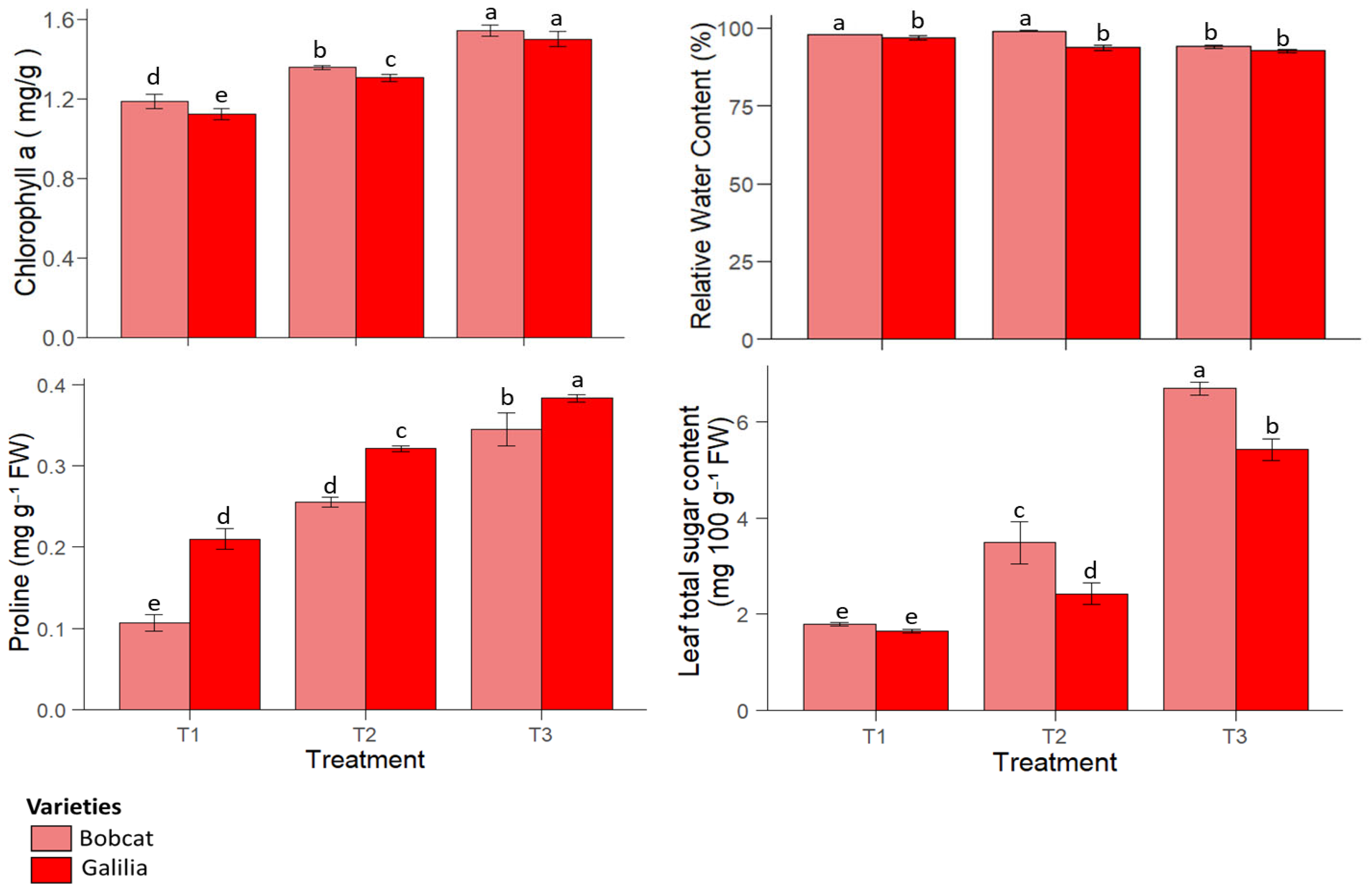
To better understand how the treatments influenced plant performance, key physiological and biochemical traits were analysed (Figure 2). Chlorophyll a content was measured as an indicator of photosynthetic efficiency; relative water content served as a marker of tissue hydration; proline was evaluated as a stress-related metabolite; and leaf total sugar content was assessed as an indicator of metabolic activity and energy reserves.
Treatment T3 resulted in a significant increase in chlorophyll a content in both ‘Galilia’ and ‘Bobcat’, reaching approximately 1.55 mg g−1 FW. This indicates that T3 enhanced photosynthetic capacity, likely by promoting chlorophyll synthesis. In contrast, T1 showed the lowest chlorophyll levels, while T2 produced intermediate values. Relative water content (RWC) remained consistently high across all treatments and cultivars, exceeding 90%.
Proline content increased progressively with treatment intensity and was significantly affected by irrigation water type (p < 0.05). Under T1, ‘Galilia’ and ‘Bobcat’ accumulated 0.2 and 0.1 mg g−1 FW of proline, respectively. These values increased significantly to 0.25–0.32 mg g−1 FW under T2 and reached their highest, significantly different levels (0.34–0.38 mg g−1 FW) under T3 for both cultivars. This significant accumulation of proline under T2 and T3 supports its interpretation as an adaptive physiological response to treatment-induced stress conditions.
Soluble sugar content also varied markedly among treatments. Under T1, sugar concentrations were relatively low (1.6–1.8 mg 100 g−1 FW), increased moderately under T2 (2.4–3.4 mg 100 g−1 FW), and peaked under T3, with ‘Bobcat’ reaching approximately 6.7 mg 100 g−1 FW and ‘Galilia’ 5.4 mg 100 g−1 FW. These results suggest that T3 substantially enhanced carbohydrate biosynthesis, likely through improved photosynthetic efficiency. Across all treatments, ‘Bobcat’ consistently accumulated more soluble sugars than ‘Galilia’, indicating a possible varietal difference in carbohydrate metabolism (Table S2).

3.3. Yield and Fruit Quality Parameters

3.3.1. Fruit Yield Parameters

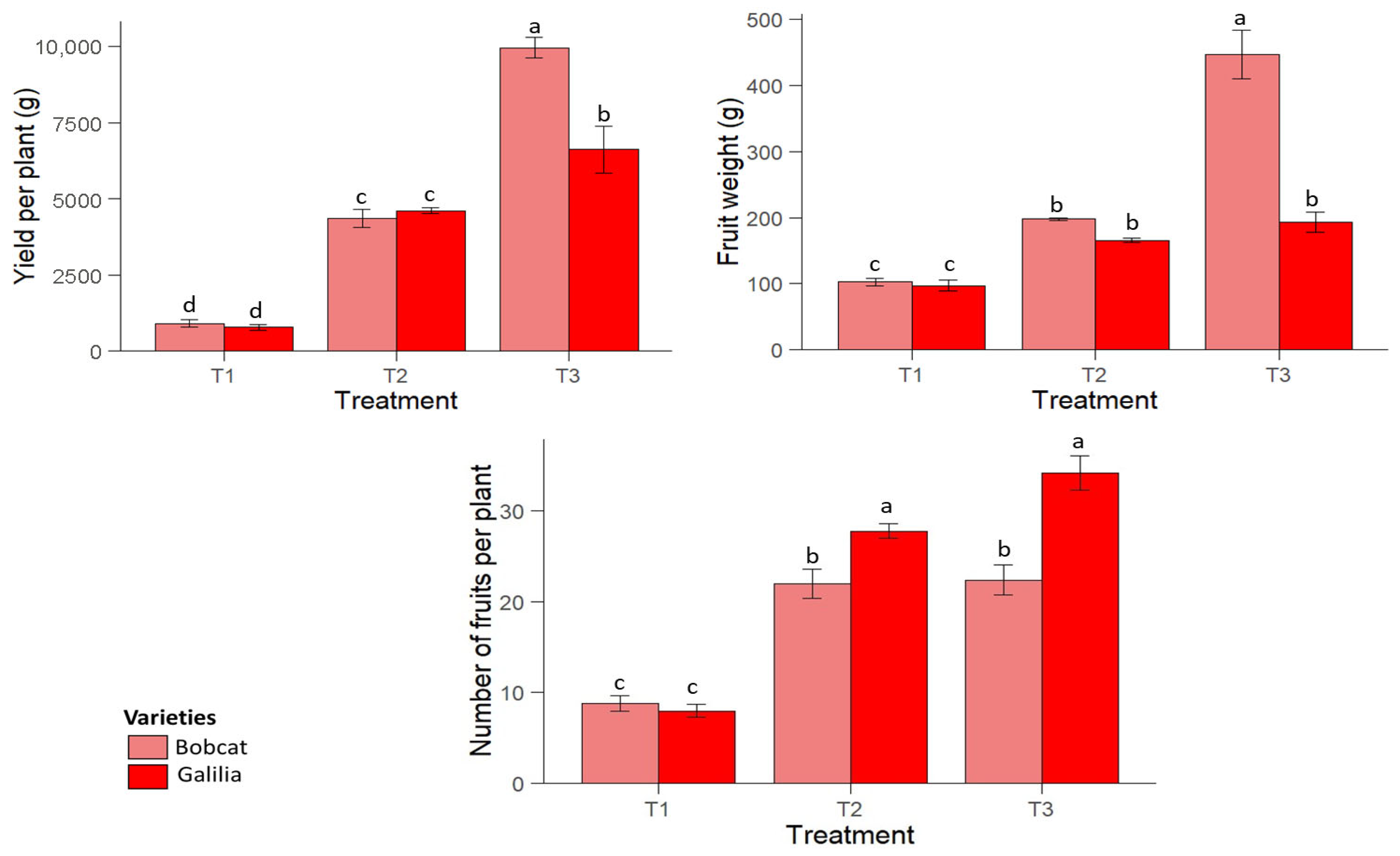
Since yield is the ultimate indicator of crop performance and economic value, fruit yield per plant, the number of fruits per plant and average fruit weight were evaluated. These parameters directly reflect the effectiveness of the applied treatments in improving productivity and fruit quality.
Among the two cultivars, the control treatment T1 resulted in the lowest yield, averaging approximately 800 g per plant. Yield increased substantially under T2, reaching around 4000 g for both ‘Bobcat’ and ‘Galilia’. The highest productivity was recorded under T3, particularly for ‘Bobcat’, which reached up to 9000 g per plant. Notably, T3 enhanced ‘Bobcat’s’ yield by nearly 11-fold compared with T1, highlighting its strong responsiveness to irrigation with nutrient-rich wastewater effluent. The difference in fruit production between the two cultivars under T3 further highlights Bobcat’s superior adaptability.
Under T1, the lightest fruits were recorded: ‘Galilia’ averaged 97.1 ± 8.63 g, and ‘Bobcat’ 103 ± 5.58 g. Fruit weight increased under T2, with ‘Bobcat’ reaching approximately 198 ± 1.85 g—about 16% higher than ‘Galilia’. The most significant improvement occurred under T3, where ‘Bobcat’ fruits reached an average weight of 447 ± 37.3 g. In contrast, ‘Galilia’ exhibited a less pronounced increase in fruit weight under the same treatment. Regarding yield components, the number of fruits per plant was also lowest under T1, with ‘Bobcat’ and ‘Galilia’ producing on average 8,8 ± 0.84 and 8 ± 0.71 fruits per plant, respectively. Under T2, fruit number increased to 22 ± 1.58 fruits per plant in ‘Bobcat’ and 27.8 ± 0.84 in ‘Galilia’, and reached its highest values under T3, with 22.4 ± 1.67 and 34.2 ± 1.92 fruits per plant, respectively (Figure 3). This pattern indicates that the higher yields observed under T2 and especially T3 resulted from a combined effect of increased fruit number and enhanced fruit size, with ‘Bobcat’ showing the strongest overall response.

3.3.2. Fruit Quality Parameters

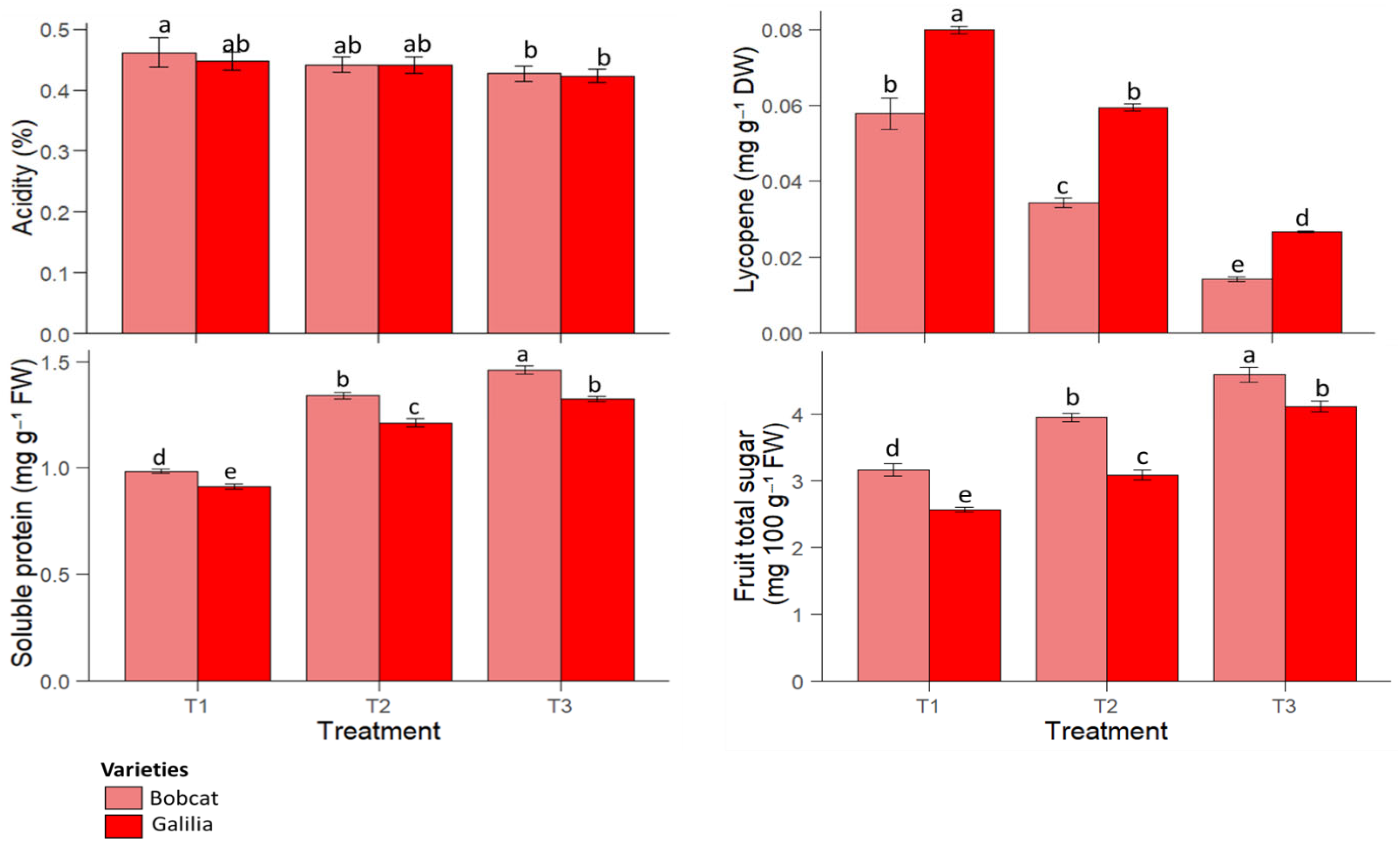
The evaluation of tomato fruit quality focused on key biochemical traits that determine both consumer preference and nutritional value. Acidity and total sugar content define the fundamental flavor balance between sourness and sweetness; lycopene represents a major antioxidant and pigment contributing to both health benefits and fruit coloration; and soluble protein content serves as an indicator of overall nutritional quality.
Titratable acidity, total sugar content, lycopene, and soluble protein contents for each treatment and cultivar are shown in Figure 4. The acidity of ‘Bobcat’ did not differ significantly (p > 0.05) from that of ‘Galilia’ under T2 and T3 treatments. However, under the control treatment T1, ‘Bobcat’ exhibited slightly higher acidity values, with total acid contents of approximately 0.41 and 0.46 g 100 mL−1, respectively. Based on fresh matter analysis, both cultivars irrigated with groundwater T1 showed the highest lycopene concentrations, 0.062 mg g−1 DW in ‘Bobcat’ and 0.081 mg g−1 DW in ‘Galilia’. In contrast, total sugar and soluble protein contents were highest under T3, followed by T2 and T1, indicating that wastewater irrigation enhanced fruit nutritional composition (Table S3).

3.3.3. Soil Chemical Properties

To characterize the soil environment and assess the impact of irrigation treatments, soil chemical properties were analysed at the end of the tomato growth cycle. The measured parameters included pH, electrical conductivity (EC), calcium carbonate (CaCO3), organic matter (OM), available phosphorus (P2O5), and potassium (K2O). The average values are presented in Table 3.
Soil pH remained near neutral across all treatments, ranging from 7.4 to 7.8. Electrical conductivity (EC) varied among treatments, with the highest value recorded under T2 (475 µS cm−1 in variety V1). However, this increase in EC was moderate and not uniform across treatments or cultivars. For instance, in T3 (V1), EC remained relatively low (299 µS cm−1), comparable to T1 (V1), indicating that the effect of treated wastewater on soil salinity depended on both the water source and the cultivar–soil interaction. Calcium carbonate content slightly increased following irrigation, while organic matter (OM) showed minor variations across treatments. A slight decrease in available phosphorus (P2O5) was observed under T3, whereas potassium (K2O) levels increased notably under both T2 and T3 compared with the control T1.

4. Discussion

This study evaluated the effects of different treated wastewater sources—membrane bioreactor T2 and activated sludge effluent T3—on the growth, physiology, yield, and fruit quality of two tomato cultivars (‘Bobcat’ and ‘Galilia’) under field conditions. Results demonstrated that treated wastewater, particularly from the activated sludge system, enhanced vegetative growth, photosynthetic activity, yield, and certain biochemical traits compared with groundwater T1. These outcomes highlight the agronomic potential of treated water use in water-limited Mediterranean regions such as Morocco.

4.1. Soil Chemical Properties

Soil analysis after irrigation revealed that pH values remained stable (7.4–7.8) across all treatments, confirming the buffering capacity of the soil and the limited effect of irrigation water on acidity. This stability is consistent with previous findings [17,47]. In contrast, electrical conductivity (EC) increased slightly under treated wastewater irrigation, particularly T2, indicating a temporary accumulation of soluble salts. Similar trends were reported by [48], in field-grown tomatoes irrigated with reclaimed water during the dry season. Calcium carbonate (CaCO3) content rose slightly after irrigation, confirming the findings of [49], who noted moderate carbonate accumulation under secondary effluent without detrimental alkalization. A minor decrease in available phosphorus (P2O5) across treatments suggests that, although treated wastewater supplies nutrients, phosphorus availability may be limited by soil fixation or plant uptake [50]. Conversely, potassium (K2O) levels increased under T2 and T3, consistent with [51], who reported enhanced soil K following irrigation with treated effluents. These trends indicate that treated wastewater enriches soil fertility while maintaining acceptable salinity levels, supporting its safe short-term use (i.e., within a single growing season) for irrigation. It is important to note that this conclusion applies only to short-term applications, as potential long-term cumulative effects on soil salinity, sodicity, and nutrient accumulation were not evaluated in this study. These moderate physicochemical changes likely contributed to improved nutrient uptake and vegetative vigor observed under treated wastewater irrigation.

4.2. Growth Parameters

Wastewater irrigation significantly influenced tomato vegetative development, enhancing plant height, leaf area, and dry biomass accumulation. The nutrient-rich composition of treated wastewater, especially its higher nitrogen, phosphorus, and potassium content compared with groundwater as shown in Table 2, likely contributed to this improvement. Refs. [52,53] observed, nutrient enrichment stimulates chlorophyll synthesis and photosynthetic activity, resulting in vigorous growth. Similar positive responses of tomatoes to treated wastewater irrigation were reported by [17,54]. The comparatively weaker growth under the control T1 reflects the limited availability of essential macronutrients, which restricts vegetative expansion and photosynthetic surface area [55,56]. Collectively, these results confirm that the nutrient input from treated wastewater can effectively replace part of conventional fertilization requirements.

4.3. Physiological and Biochemical Traits

Chlorophyll a content increased significantly under T3, confirming enhanced photosynthetic efficiency driven by nutrient availability, in agreement with [51]. Elevated relative water content (RWC) across treated wastewater treatments indicates improved plant water status, likely due to enhanced osmotic balance and nutrient-facilitated water uptake [57]. Proline accumulation was highest under T3, consistent with [26,58], who noted increased proline under saline or nutrient-rich wastewater irrigation. However, the observed range may suggest osmotic adjustment rather than clear evidence of stress damage, given that direct indicators of cellular injury (such as MDA content or electrolyte leakage) were not measured in this study. Higher soluble sugar levels under T3 support this interpretation. Soluble carbohydrates function as osmoprotectants that stabilize membranes and proteins under fluctuating water and salinity conditions [59]. The concurrent increase in chlorophyll a and soluble sugars is consistent with enhanced metabolic activity and a potential improvement in resilience to moderate osmotic stress induced by treated effluents.

4.4. Yield Response

Fruit yield and average fruit weight were markedly increased under wastewater irrigation, particularly in ‘Bobcat’, which demonstrated the strongest agronomic response. The improvement is primarily attributed to the additional macro- and micronutrients supplied by treated effluents, stimulating reproductive development and fruit enlargement. Similar enhancements in yield under wastewater irrigation were documented by [60]. In contrast, Ref. [61] observed no significant yield difference between wastewater and freshwater irrigation, possibly due to differences in effluent quality or management practices. The superior response of ‘Bobcat’ in the present study may therefore reflect genotypic adaptability and higher nutrient-use efficiency. These findings emphasize that cultivar selection is critical for maximizing the benefits of reclaimed water irrigation.

4.5. Fruit Quality Attributes

Fruit quality analysis revealed distinct responses depending on the irrigation source. Tomatoes irrigated with groundwater T1 had higher titratable acidity and lycopene concentrations, aligning with [62,63,64]. Lycopene accumulation is known to decrease under nutrient-rich or high-salinity conditions, possibly due to altered carotenoid metabolism. In the present study, the water × cultivar interaction was highly significant for lycopene (p < 0.001), indicating that the effect of irrigation water on lycopene accumulation differed between cultivars, and thus supporting the yield–quality trade-off observed under treated wastewater irrigation. By contrast, the water × cultivar interaction was not significant for titratable acidity (p = 0.592), suggesting a more uniform response of acidity across cultivars overall. Although lycopene was quantified in this study as a major carotenoid contributing to tomato antioxidant capacity, a broader nutraceutical assessment—including total carotenoids and total phenolic compounds was not performed. Such analyses would provide a more complete understanding of the biochemical responses of tomato fruits to treated wastewater irrigation and should be considered in future research. Conversely, treated wastewater (T3) increased soluble sugar and protein contents. The rise in sugars enhances fruit sweetness, while higher protein levels improve nutritional value, findings consistent with [17,65]. Protein concentrations (0.91–1.46 mg g−1 FW) were slightly lower than those reported by [66,67], likely due to varietal and environmental differences [68]. Overall, wastewater irrigation improved yield and nutritional components but slightly reduced sensory quality parameters such as acidity and lycopene, a common productivity–quality trade-off observed under nutrient-enriched or treated wastewater irrigation.

4.6. Correlations and Principal Component Analysis

Correlation analysis (Figure 5) highlighted strong positive associations between vegetative growth traits (leaf area, biomass) and yield, confirming that vigorous growth supports fruit productivity [69,70]. Leaf area correlated positively with chlorophyll a and RWC, reinforcing its role in maintaining photosynthetic capacity and water status [71]. RWC showed a positive relationship with proline, suggesting enhanced osmotic adjustment under nutrient-enriched irrigation [72,73]. Lycopene and acidity were negatively correlated with yield and growth traits, consistent with [74], implying that higher productivity tends to dilute these quality attributes.
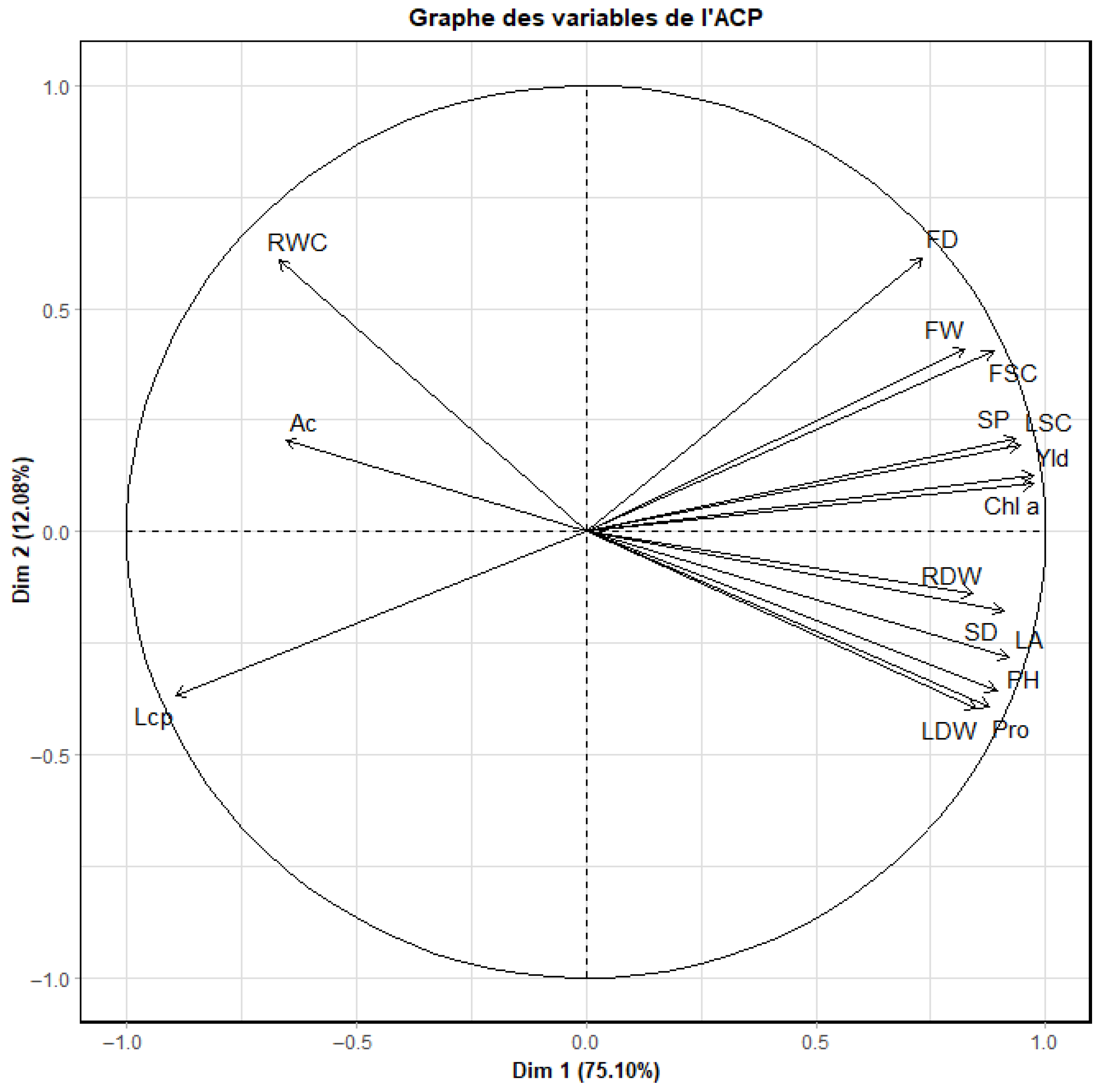
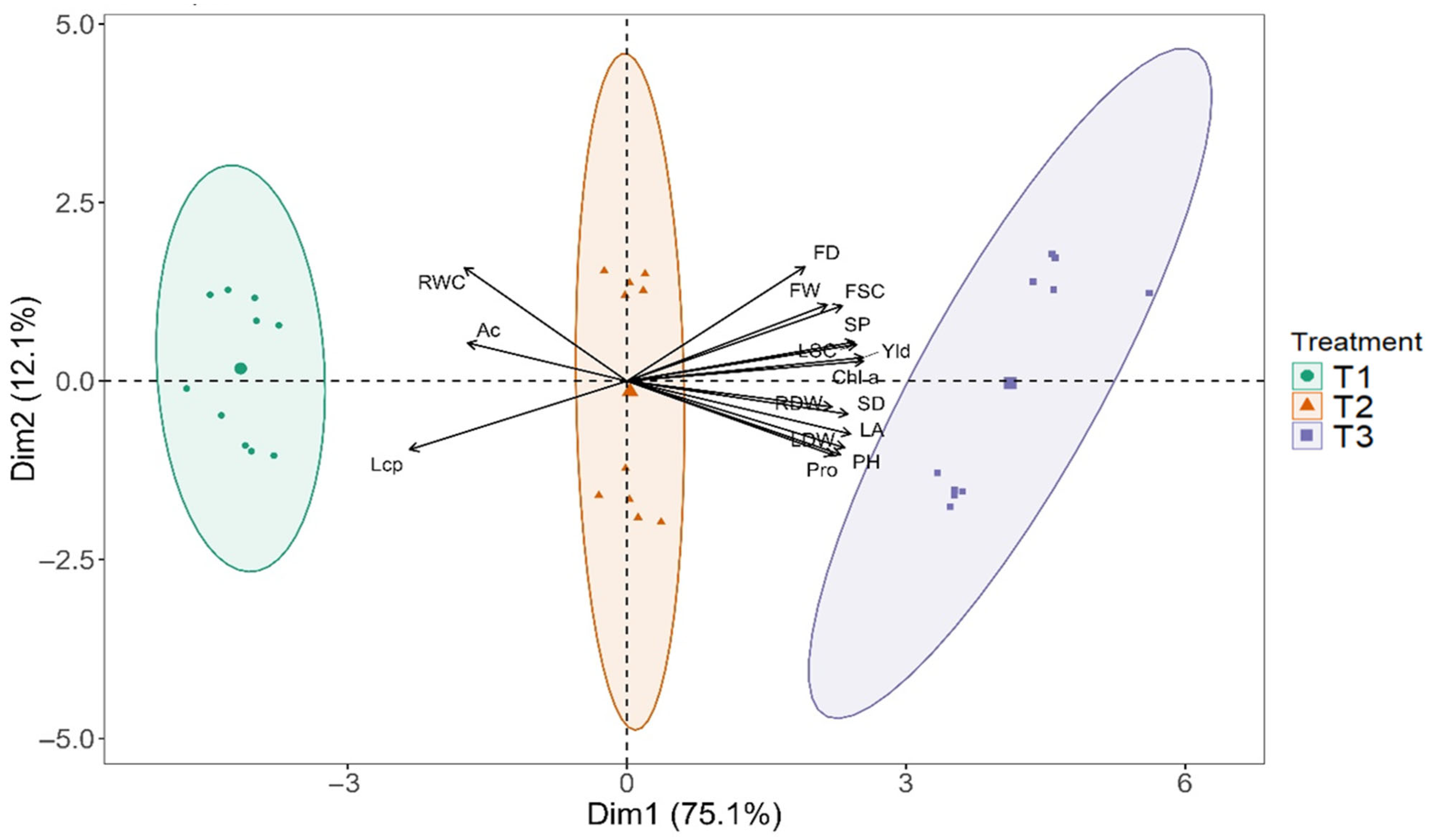
Principal component analysis (Figure 6) further confirmed these relationships: Dim 1 (75.10% variance) was strongly associated with vegetative, physiological, and yield traits [75,76,77]. Dim 2 (12.08%) correlated negatively with lycopene, acidity, and RWC, indicating a balance between yield performance and sensory quality. The PCA biplot (Figure 7) clearly differentiated treatments, showing that T3 was associated with vigorous growth and high yield, T1 with superior fruit quality, and T2 with an intermediate response. This pattern supports the existence of a typical yield–quality trade-off [78,79,80].

4.7. Agronomic and Environmental Implications

The findings confirm that treated wastewater—especially from activated sludge systems—can effectively supplement freshwater irrigation and reduce fertilizer inputs. However, the moderate EC increase suggests the need for long-term monitoring of soil salinity to prevent accumulation risks. The results also highlight that cultivar choice influences response to wastewater irrigation, underscoring the importance of integrating agronomic and genetic factors in reuse strategies. Beyond agronomic considerations, the reuse of treated wastewater also raises important health and environmental concerns. Even after secondary treatment, effluents may contain residual pathogenic microorganisms, trace metals, pharmaceutical residues, and other emerging contaminants that could accumulate in soil–plant systems or pose risks to farm workers and consumers. These potential hazards underscore the importance of adhering to international safety frameworks such as FAO and WHO water reuse guidelines, which establish microbiological and chemical thresholds to safeguard public health. Likewise, national regulations in Morocco set quality criteria for the agricultural reuse of treated wastewater, emphasizing pathogen reduction, heavy metal limits, and monitoring protocols. Ensuring compliance with these regulatory standards is essential for maximizing the benefits of wastewater reuse while minimizing associated risks. These outcomes align with sustainable water management goals in arid and semi-arid regions.

5. Conclusions

This study demonstrates that secondary treated wastewater can serve as a valuable irrigation source for tomato cultivation in water-scarce regions. Irrigation with activated sludge effluent (T3) significantly enhanced growth, physiological activity, yield, and certain quality parameters compared with both groundwater and membrane bioreactor-treated water. ‘Bobcat’ exhibited higher adaptability and productivity than ‘Galilia’, confirming genotypic variation in response to reclaimed water.
Although treated wastewater improved yield and nutritional quality (sugars and proteins), groundwater resulted in higher lycopene content and acidity, indicating a trade-off between productivity and sensory attributes. Future work should include comprehensive nutraceutical profiling, particularly the measurement of total phenols, total carotenoids, and antioxidant activity, to complement the lycopene data presented here and to better characterize the effects of treated wastewater on fruit quality. Short-term use of treated effluents was safe for soil and plants, with stable pH and manageable EC levels. Overall, wastewater reuse represents a practical and sustainable irrigation strategy for Mediterranean agriculture. Future research should focus on long-term monitoring of soil chemical evolution, trace element accumulation, and microbial safety to ensure sustainable adoption and compliance with national and international water reuse standards.

Supplementary Materials

The following supporting information can be downloaded at: https://www.mdpi.com/article/10.3390/agronomy15122824/s1.

Author Contributions

Conceptualization, N.B., M.B. and M.I.; methodology, N.B., M.B. and M.I.; validation, N.B. and M.I.; formal analysis, N.B., V.T., E.E.Y., F.E.B., R.B. and S.E.A.; resources, M.B. and M.I.; data curation, N.B., V.T., F.E.B., E.E.Y., R.B. and S.E.A.; writing—original draft preparation, N.B.; writing—review and editing, N.B., M.B., V.T., A.H., E.E.Y., E.A.B. and M.I.; supervision, M.B., E.A.B. and M.I.; project administration, M.B., A.H. and M.I.; funding acquisition, M.B. and M.I. All authors have read and agreed to the published version of the manuscript.

Funding

This research was funded by the PRIMA Programme under the project SAFE (ID: 1826).

Data Availability Statement

The original contributions presented in this study are included in the article. Further inquiries can be directed to the corresponding authors.

Acknowledgments

This work was funded by the Ministry of Higher Education, Scientific Research and Innovation of Morocco through the PRIMA Programme (Partnership for Research and Innovation in the Mediterranean Area), under the project SAFE (Sustainable Water Reuse Practices Improving Safety in Agriculture, Food, and Environment), Project ID: 1826. For the preparation of this manuscript, ChatGPT (model 4.5, version dated June 2025) was used exclusively to improve the linguistic quality of the English texts and to conduct preliminary research on specific scientific topics to be integrated in the manuscript. No AI assistance was employed in generating original contents (objectives, methodology, etc.).

Conflicts of Interest

The authors declare no conflicts of interest.

Abbreviations

The following abbreviations are used in this manuscript:
AASAtomic absorption spectroscopy
CODChemical oxygen demand
DBO5Biochemical oxygen demand
FMFresh matter
GWGroundwater
MBRMembrane bioreactor
OMOrganic matter
PCAPrincipal Component Analysis
RWCRelative water content
SPADSoil–plant analysis development
TWWTreated wastewater
WWTPwastewater treatment plant

References

  1. Kuper, M.; Leduc, C.; Massuel, S.; Bouarfa, S. Topical Collection: Groundwater-Based Agriculture in the Mediterranean. Hydrogeol. J. 2017, 25, 1525–1528. [Google Scholar] [CrossRef]
  2. Ortega-Pozo, J.L.; Alcalá, F.J.; Poyatos, J.M.; Martín-Pascual, J. Wastewater Reuse for Irrigation Agriculture in Morocco: Influence of Regulation on Feasible Implementation. Land 2022, 11, 2312. [Google Scholar] [CrossRef]
  3. Cramer, W.; Guiot, J.; Fader, M.; Garrabou, J.; Gattuso, J.-P.; Iglesias, A.; Lange, M.A.; Lionello, P.; Llasat, M.C.; Paz, S.; et al. Climate Change and Interconnected Risks to Sustainable Development in the Mediterranean. Nat. Clim. Change 2018, 8, 972–980. [Google Scholar] [CrossRef]
  4. Scheierling, S.M.; Bartone, C.R.; Mara, D.D.; Drechsel, P. Towards an Agenda for Improving Wastewater Use in Agriculture. Water Int. 2011, 36, 420–440. [Google Scholar] [CrossRef]
  5. Bdour, A.N.; Hamdi, M.R.; Tarawneh, Z. Perspectives on Sustainable Wastewater Treatment Technologies and Reuse Options in the Urban Areas of the Mediterranean Region. Desalination 2009, 237, 162–174. [Google Scholar] [CrossRef]
  6. Qadir, M.; Bahri, A.; Sato, T.; Al-Karadsheh, E. Wastewater Production, Treatment, and Irrigation in Middle East and North Africa. Irrig. Drain. Syst. 2010, 24, 37–51. [Google Scholar] [CrossRef]
  7. Alcalá, F.J.; Martín-Martín, M.; Guerrera, F.; Martínez-Valderrama, J.; Robles-Marín, P. A Feasible Methodology for Groundwater Resource Modelling for Sustainable Use in Sparse-Data Drylands: Application to the Amtoudi Oasis in the Northern Sahara. Sci. Total Environ. 2018, 630, 1246–1257. [Google Scholar] [CrossRef] [PubMed]
  8. Okello, C.; Githiora, Y.W.; Sithole, S.; Owuor, M.A. Nature-Based Solutions for Water Resource Management in Africa’s Arid and Sem-Arid Lands (ASALs): A Systematic Review of Existing Interventions. Nat.-Based Solut. 2024, 6, 100172. [Google Scholar] [CrossRef]
  9. Dahan, S. Gestion de la Rareté de l’Eau en Milieu Urbain au Maroc; Banque mondiale report; Banque mondiale: Washington, DC, USA, 2017. [Google Scholar]
  10. Benlemlih, N.; Elghali Khiyati, M.; El Aammouri, S.; Ibriz, M. A Review on Wastewater and Its Use in Agriculture in Morocco: Situation, Case Study and Recommendations. Res. J. Pharm. Technol. 2024, 17, 5132–5140. [Google Scholar] [CrossRef]
  11. Leonel, L.P.; Bize, A.; Mariadassou, M.; Midoux, C.; Schneider, J.; Tonetti, A.L. Impacts of Disinfected Wastewater Irrigation on Soil Characteristics, Microbial Community Composition, and Crop Yield. Blue-Green. Syst. 2022, 4, 247–271. [Google Scholar] [CrossRef]
  12. Marjaa, H.; Kajeiou, H.; Azizi, A.; Benayad, O.; Ibriz, M.; Ouhssine, M. Physico-Chemical and Bacteriological Evaluation of the Activated Sludge Wastewater Treatment Plant in Kenitra City, Morocco. Res. J. Pharm. Technol. 2025, 18, 2732–2738. [Google Scholar] [CrossRef]
  13. Jaramillo, M.; Restrepo, I. Wastewater Reuse in Agriculture: A Review about Its Limitations and Benefits. Sustainability 2017, 9, 1734. [Google Scholar] [CrossRef]
  14. Benlemlih, N.; Auajjar, N.; El Aammouri, S.; Nizar, Y.; Ibriz, M. Physicochemical Characterization of the Sludge Generated by the Wastewater Treatment Plant of Kenitra. Res. J. Pharm. Technol. 2023, 16, 5366–5371. [Google Scholar] [CrossRef]
  15. Gao, Y.; Shao, G.; Wu, S.; Xiaojun, W.; Lu, J.; Cui, J. Changes in Soil Salinity under Treated Wastewater Irrigation: A Meta-Analysis. Agric. Water Manag. 2021, 255, 106986. [Google Scholar] [CrossRef]
  16. Zhang, Q.; Wakelin, S.A.; Liang, Y.; Chu, G. Soil Microbial Activity and Community Structure as Affected by Exposure to Chloride and Chloride-Sulfate Salts. J. Arid. Land. 2018, 10, 737–749. [Google Scholar] [CrossRef]
  17. Muscarella, S.M.; Alduina, R.; Badalucco, L.; Capri, F.C.; Di Leto, Y.; Gallo, G.; Laudicina, V.A.; Paliaga, S.; Mannina, G. Water Reuse of Treated Domestic Wastewater in Agriculture: Effects on Tomato Plants, Soil Nutrient Availability and Microbial Community Structure. Sci. Total Environ. 2024, 928, 172259. [Google Scholar] [CrossRef] [PubMed]
  18. Brital, R.; Ibriz, M.; Benmrich, A.M.; Benyahia, H.; Aboutayeb, R.; Abail, Z. Soil and Leaf Nutrient Status of Selected Valencia Orange Orchards in the Gharb Plain of Morocco. Agronomy 2024, 14, 3040. [Google Scholar] [CrossRef]
  19. Luo, X.J.; Zhang, X.; Zhang, L.; Guo, L.L.; Nie, Z.Y.; Zhou, J.; Wang, R.Z.; Zhang, T.Y.; Miao, Y.; Ma, L.; et al. Characteristics of Clay Dispersion and Its Influencing Factors in Saline-Sodic Soils of Songnen Plain, China. Agric. Water Manag. 2024, 303, 109033. [Google Scholar] [CrossRef]
  20. Sonune, A.; Ghate, R. Developments in Wastewater Treatment Methods. Desalination 2004, 167, 55–63. [Google Scholar] [CrossRef]
  21. Hanae, M.; Ouijdane, B.; Abdelmajid, S.; Hamza, K.; Abderrahim, B.; Mohammed, O. Evaluation of the Wastewater Treatment Plant Efficiency in Western Morocco, Kenitra City. Res. J. Pharm. Technol. 2024, 17, 3358–3366. [Google Scholar] [CrossRef]
  22. Rout, P.R.; Shahid, M.K.; Dash, R.R.; Bhunia, P.; Liu, D.; Varjani, S.; Zhang, T.C.; Surampalli, R.Y. Nutrient Removal from Domestic Wastewater: A Comprehensive Review on Conventional and Advanced Technologies. J. Environ. Manag. 2021, 296, 113246. [Google Scholar] [CrossRef]
  23. Obayomi, O.V.; Olawoyin, D.C.; Oguntimehin, O.; Mustapha, L.S.; Kolade, S.O.; Oladoye, P.O.; Oh, S.; Obayomi, K.S. Exploring Emerging Water Treatment Technologies for the Removal of Microbial Pathogens. Curr. Res. Biotechnol. 2024, 8, 100252. [Google Scholar] [CrossRef]
  24. Olmstead, R.G.; Bohs, L.; Migid, H.A.; Santiago-Valentin, E.; Garcia, V.F.; Collier, S.M. A Molecular Phylogeny of the Solanaceae. Taxon 2008, 57, 1159–1181. [Google Scholar] [CrossRef]
  25. Muhammad, R.U.; Abubakar, A.A.; Muhammad, A. Effect of Water Stress on the Morphology of Tomato (Solanum lycopersicum M.) at Different Growth Stages. Asian J. Plant Biol. 2023, 5, 26–32. [Google Scholar] [CrossRef]
  26. Trotta, V.; Russo, D.; Rivelli, A.R.; Battaglia, D.; Bufo, S.A.; Caccavo, V.; Forlano, P.; Lelario, F.; Milella, L.; Montinaro, L.; et al. Wastewater Irrigation and Trichoderma Colonization in Tomato Plants: Effects on Plant Traits, Antioxidant Activity, and Performance of the Insect Pest Macrosiphum Euphorbiae. Environ. Sci. Pollut. Res. 2024, 31, 18887–18899. [Google Scholar] [CrossRef]
  27. Ahmad, M.; Abubakar, M.M.; Sale, S. Enhancing the Shelf Life of Tomato Fruits Using Plant Material during Storage. J. Hortic. Postharvest Res. 2020, 3, 347–354. [Google Scholar]
  28. Ministère de l’Agriculture, de la Pêche Maritime, du Développement Rural et des Eaux et Forêts. Agriculture en chiffres 2018; Morocco 2019. p. 26. Available online: http://www.mpm.gov.ma/wps/portal/PortaIl-MPM/ACCUEIL/!ut/p/b1/04_Sj9CPykssy0xPLMnMz0vMAfGjzOIN3Nx9_I0MzAwsAlwNDTyDXC3CfEycgCxToIJIkAIcwNGAkP5w_Sj8SsxgCnBb4eeRn5uqX5AbYZBl4qgIAA-XFU8!/dl4/d5/L2dBISEvZ0FBIS9nQSEh/#&panel1-3 (accessed on 4 December 2025).
  29. Climate Toolbox. Data Download. Climate Toolbox. Available online: https://climatetoolbox.org/tool/data-download (accessed on 8 January 2025).
  30. Tiwari, R.; Mahalpure, G.S. A Detailed Review of pH and Its Applications. J. Pharm. Biopharm. Res. 2024, 6, 492–505. [Google Scholar] [CrossRef]
  31. Rhoades, J.D.; Kandiah, A.; Mashali, A.M.; Rhoades, J.D. The Use of Saline Waters for Crop Production. In FAO Irrigation and Drainage Paper; Food and Agriculture Organization of the United Nations: Rome, Italy, 1992. [Google Scholar]
  32. Nelson, D.W.; Sommers, L.E. Total Carbon, Organic Carbon, and Organic Matter. In Methods of Soil Analysis: Part 3 Chemical Methods; Wiley: Hoboken, NJ, USA, 1996; Volume 5, pp. 961–1010. [Google Scholar]
  33. Allison, L.E.; Moodie, C.D. Carbonate. In Methods of Soil Analysis; John Wiley & Sons, Ltd.: Hoboken, NJ, USA, 1965; pp. 1379–1396. [Google Scholar]
  34. Olsen, S.; Sommers, L. Methods of Soil Analysis, Part 2, Chemical and Microbiological Properties, 2nd ed.; American Society of Agronomy and Soil Science Society of America: Madison, WI, USA, 1982. [Google Scholar]
  35. Benton Jones, J., Jr. Laboratory Guide for Conducting Soil Tests and Plant Analysis, 1st ed.; CRC Press: Boca Raton, FL, USA, 2001. [Google Scholar]
  36. Ruget, F.; Bonhomme, R.; Chartier, M. Estimation simple de la surface foliaire de plantes de maïs en croissance. Agronomie 1996, 16, 553–562. [Google Scholar] [CrossRef]
  37. Arnon, D.I. Copper Enzymes in Isolated Chloroplasts. Polyphenoloxidase in Beta Vulgaris. Plant Physiol. 1949, 24, 1–15. [Google Scholar] [CrossRef]
  38. Cristina, G.; Camelin, E.; Tommasi, T.; Fino, D.; Pugliese, M. Anaerobic Digestates from Sewage Sludge Used as Fertilizer on a Poor Alkaline Sandy Soil and on a Peat Substrate: Effects on Tomato Plants Growth and on Soil Properties. J. Environ. Manag. 2020, 269, 110767. [Google Scholar] [CrossRef]
  39. Galmés, J.; Flexas, J.; Savé, R.; Medrano, H. Water Relations and Stomatal Characteristics of Mediterranean Plants with Different Growth Forms and Leaf Habits: Responses to Water Stress and Recovery. Plant Soil. 2007, 290, 139–155. [Google Scholar] [CrossRef]
  40. Monneveux, P.; Nemmar, M. Contribution à l’étude de la résistance à la sécheresse chez le blé tendre (Triticum aestivum L.) et chez le blé dur (Triticum durum Desf.): Étude de l’accumulation de la proline au cours du cycle de développement. Agronomie 1986, 6, 583–590. [Google Scholar] [CrossRef]
  41. DuBois, M.; Gilles, K.A.; Hamilton, J.K.; Rebers, P.A.; Smith, F. Colorimetric Method for Determination of Sugars and Related Substances. Anal. Chem. 1956, 28, 350–356. [Google Scholar] [CrossRef]
  42. Demir, A.D.; Sahin, U. Effects of Different Irrigation Practices Using Treated Wastewater on Tomato Yields, Quality, Water Productivity, and Soil and Fruit Mineral Contents. Environ. Sci. Pollut. Res. 2017, 24, 24856–24879. [Google Scholar] [CrossRef] [PubMed]
  43. Fish, W.W.; Perkins-Veazie, P.; Collins, J.K. A Quantitative Assay for Lycopene That Utilizes Reduced Volumes of Organic Solvents. J. Food Compos. Anal. 2002, 15, 309–317. [Google Scholar] [CrossRef]
  44. Yue, F.; Zhang, J.; Xu, J.; Niu, T.; Lü, X.; Liu, M. Effects of Monosaccharide Composition on Quantitative Analysis of Total Sugar Content by Phenol-Sulfuric Acid Method. Front. Nutr. 2022, 9, 963318. [Google Scholar] [CrossRef]
  45. Lowry, O.H.; Rosebrough, N.J.; Farr, A.L.; Randall, R.J. Protein Measurement with the Folin Phenol Reagent. J. Biol. Chem. 1951, 193, 265–275. [Google Scholar] [CrossRef]
  46. Mishra, S.; Sarkar, U.; Taraphder, S.; Datta, S.; Swain, D.; Saikhom, R.; Panda, S.; Laishram, M. Multivariate Statistical Data Analysis-Principal Component Analysis (PCA). Int. J. Livest. Res. 2017, 7, 60–78. [Google Scholar]
  47. Ofori, S.; Abebrese, D.K.; Růžičková, I.; Wanner, J. Reuse of Treated Wastewater for Crop Irrigation: Water Suitability, Fertilization Potential, and Impact on Selected Soil Physicochemical Properties. Water 2024, 16, 484. [Google Scholar] [CrossRef]
  48. Vergine, P.; Salerno, C.; Libutti, A.; Beneduce, L.; Gatta, G.; Berardi, G.; Pollice, A. Closing the Water Cycle in the Agro-Industrial Sector by Reusing Treated Wastewater for Irrigation. J. Clean. Prod. 2017, 164, 587–596. [Google Scholar] [CrossRef]
  49. Alan, O.; Budak, B.; Sen, F.; Ongun, A.R.; Tepecik, M.; Ata, S. Solid and Liquid Digestate Generated from Biogas Production as a Fertilizer Source in Processing Tomato Yield, Quality and Some Health-Related Compounds. J. Agric. Sci. 2025, 163, 55–70. [Google Scholar] [CrossRef]
  50. Bedbabis, S.; Ben Rouina, B.; Boukhris, M.; Ferrara, G. Effects of Irrigation with Treated Wastewater on Root and Fruit Mineral Elements of Chemlali Olive Cultivar. Sci. World J. 2014, 2014, 973638. [Google Scholar] [CrossRef]
  51. Tzortzakis, N.; Saridakis, C.; Chrysargyris, A. Treated Wastewater and Fertigation Applied for Greenhouse Tomato Cultivation Grown in Municipal Solid Waste Compost and Soil Mixtures. Sustainability 2020, 12, 4287. [Google Scholar] [CrossRef]
  52. Aziz, F.; Farissi, M. Reuse of Treated Wastewater in Agriculture: Solving Water Deficit Problems in Arid Areas (Review). Ann. West Univ. Timis. Ser. Biol. 2014, 17, 95–110. [Google Scholar]
  53. Ofori, S.; Abebrese, D.K.; Klement, A.; Provazník, D.; Tomášková, I.; Růžičková, I.; Wanner, J. Impact of treated wastewater on plant growth: Leaf fluorescence, reflectance, and biomass-based assessment. Water Sci. Technol. 2024, 89, 1647–1664. [Google Scholar] [CrossRef]
  54. Alghobar, M.A.; Suresha, S. Growth and Yield of Tomato, Napier Grass and Sugarcane Crops as Influenced by Wastewater Irrigation in Mysore, Karnataka, India. World Res. J. Agric. Sci. 2016, 3, 69–79. [Google Scholar]
  55. Roosta, H.R.; Hamidpour, M. Effects of Foliar Application of Some Macro- and Micro-Nutrients on Tomato Plants in Aquaponic and Hydroponic Systems. Sci. Hortic. 2011, 129, 396–402. [Google Scholar] [CrossRef]
  56. Magwaza, S.T.; Magwaza, L.S.; Odindo, A.O.; Mditshwa, A.; Buckley, C. Partially Treated Domestic Wastewater as a Nutrient Source for Tomatoes (Lycopersicum solanum) Grown in a Hydroponic System: Effect on Nutrient Absorption and Yield. Heliyon 2020, 6, e05745. [Google Scholar] [CrossRef] [PubMed]
  57. Hajlaoui, H.; Akrimi, R.; Sayehi, S.; Hachicha, S. Usage of Treated Greywater as an Alternative Irrigation Source for Tomatoes Cultivation. Water Environ. J. 2022, 36, 484–493. [Google Scholar] [CrossRef]
  58. Al-Gaadi, K.A.; Tola, E.; Madugundu, R.; Zeyada, A.M.; Alameen, A.A.; Edrris, M.K.; Edrees, H.F.; Mahjoop, O. Response of Leaf Photosynthesis, Chlorophyll Content and Yield of Hydroponic Tomatoes to Different Water Salinity Levels. PLoS ONE 2024, 19, e0293098. [Google Scholar] [CrossRef]
  59. Patel, M.K.; Kumar, M.; Li, W.; Luo, Y.; Burritt, D.J.; Alkan, N.; Tran, L.-S.P. Enhancing Salt Tolerance of Plants: From Metabolic Reprogramming to Exogenous Chemical Treatments and Molecular Approaches. Cells 2020, 9, 2492. [Google Scholar] [CrossRef]
  60. Ouansafi, S.; Bellali, F.; Maaghloud, H.; Kabine, M. Treated Wastewater Irrigation of Tomato: Effects on Crop Production, and on Physico-Chemical Properties, SDH Activity and Microbiological Characteristics of Fruits. Agric. Eng. Int. CIGR J. 2022, 24, 13. [Google Scholar]
  61. Christou, A.; Maratheftis, G.; Eliadou, E.; Michael, C.; Hapeshi, E.; Fatta-Kassinos, D. Impact Assessment of the Reuse of Two Discrete Treated Wastewaters for the Irrigation of Tomato Crop on the Soil Geochemical Properties, Fruit Safety and Crop Productivity. Agric. Ecosyst. Environ. 2014, 192, 105–114. [Google Scholar] [CrossRef]
  62. Mahajan, G.; Singh, K.G. Response of Greenhouse Tomato to Irrigation and Fertigation. Agric. Water Manag. 2006, 84, 202–206. [Google Scholar] [CrossRef]
  63. Gatta, G.; Libutti, A.; Gagliardi, A.; Beneduce, L.; Brusetti, L.; Borruso, L.; Disciglio, G.; Tarantino, E. Treated Agro-Industrial Wastewater Irrigation of Tomato Crop: Effects on Qualitative/Quantitative Characteristics of Production and Microbiological Properties of the Soil. Agric. Water Manag. 2015, 149, 33–43. [Google Scholar] [CrossRef]
  64. Górecka, D.; Wawrzyniak, A.; Jędrusek-Golińska, A.; Dziedzic, K.; Hamułka, J.; Kowalczewski, P.Ł.; Walkowiak, J. Lycopene in Tomatoes and Tomato Products. Open Chem. 2020, 18, 752–756. [Google Scholar] [CrossRef]
  65. Gatta, G.; Libutti, A.; Gagliardi, A.; Disciglio, G.; Beneduce, L.; d’Antuono, M.; Rendina, M.; Tarantino, E. Effects of Treated Agro-Industrial Wastewater Irrigation on Tomato Processing Quality. Ital. J. Agron. 2015, 10, 632. [Google Scholar] [CrossRef]
  66. Dorais, M.; Ehret, D.L.; Papadopoulos, A.P. Tomato (Solanum lycopersicum) Health Components: From the Seed to the Consumer. Phytochem. Rev. 2008, 7, 231–250. [Google Scholar] [CrossRef]
  67. Raffo, A.; Leonardi, C.; Fogliano, V.; Ambrosino, P.; Salucci, M.; Gennaro, L.; Bugianesi, R.; Giuffrida, F.; Quaglia, G. Nutritional Value of Cherry Tomatoes (Lycopersicon esculentum Cv. Naomi F1) Harvested at Different Ripening Stages. J. Agric. Food Chem. 2002, 50, 6550–6556. [Google Scholar] [CrossRef] [PubMed]
  68. Ali, M.Y.; Sina, A.A.I.; Khandker, S.S.; Neesa, L.; Tanvir, E.M.; Kabir, A.; Khalil, M.I.; Gan, S.H. Nutritional Composition and Bioactive Compounds in Tomatoes and Their Impact on Human Health and Disease: A Review. Foods 2020, 10, 45. [Google Scholar] [CrossRef] [PubMed]
  69. Grattan, S.R.; Díaz, F.J.; Pedrero, F.; Vivaldi, G.A. Assessing the Suitability of Saline Wastewaters for Irrigation of Citrus Spp.: Emphasis on Boron and Specific-Ion Interactions. Agric. Water Manag. 2015, 157, 48–58. [Google Scholar] [CrossRef]
  70. Khalid, S.; Shahid, M.; Natasha; Bibi, I.; Sarwar, T.; Shah, A.H.; Niazi, N.K. A Review of Environmental Contamination and Health Risk Assessment of Wastewater Use for Crop Irrigation with a Focus on Low and High-Income Countries. Int. J. Environ. Res. Public Health 2018, 15, 895. [Google Scholar] [CrossRef]
  71. Shin, Y.K.; Bhandari, S.R.; Jo, J.S.; Song, J.W.; Lee, J.G. Effect of Drought Stress on Chlorophyll Fluorescence Parameters, Phytochemical Contents, and Antioxidant Activities in Lettuce Seedlings. Horticulturae 2021, 7, 238. [Google Scholar] [CrossRef]
  72. Bel Haj, H.; Ben Zhir, K.; Aboulhassan, M.A.; El Ouarghi, H. Impact Assessment of Treated Wastewater Reuse for Irrigation: Growth Potential and Development of Lettuce in Al Hoceima Province, Morocco. E3S Web Conf. 2023, 364, 01002. [Google Scholar] [CrossRef]
  73. Kijowska-Oberc, J.; Dylewski, Ł.; Ratajczak, E. Proline Concentrations in Seedlings of Woody Plants Change with Drought Stress Duration and Are Mediated by Seed Characteristics: A Meta-Analysis. Sci. Rep. 2023, 13, 15157. [Google Scholar] [PubMed]
  74. Psarras, G.; Chartzoulakis, K.; Kasapakis, I.; Kloppmann, W. Effect of Different Irrigation Techniques and Water Qualities on Yield, Fruit Quality and Health Risks of Tomato Plants. In Proceedings of the VII International Symposium on Irrigation of Horticultural Crops, Geisenheim, Germany, 16–20 July 2014; pp. 601–608. [Google Scholar]
  75. Alfosea-Simón, M.; Zavala-Gonzalez, E.A.; Camara-Zapata, J.M.; Martínez-Nicolás, J.J.; Simón, I.; Simón-Grao, S.; García-Sánchez, F. Effect of Foliar Application of Amino Acids on the Salinity Tolerance of Tomato Plants Cultivated under Hydroponic System. Sci. Hortic. 2020, 272, 109509. [Google Scholar] [CrossRef]
  76. Wang, W.; Zheng, W.; Lv, H.; Liang, B.; Jin, S.; Li, J.; Zhou, W. Animal-Derived Plant Biostimulant Alleviates Drought Stress by Regulating Photosynthesis, Osmotic Adjustment, and Antioxidant Systems in Tomato Plants. Sci. Hortic. 2022, 305, 111365. [Google Scholar] [CrossRef]
  77. Bello, A.S.; Huda, A.K.S.; Alsafran, M.; Jayasena, V.; Jawaid, M.Z.; Chen, Z.-H.; Ahmed, T. Tomato (Solanum lycopersicum) Yield Response to Drip Irrigation and Nitrogen Application Rates in Open-Field Cultivation in Arid Environments. Sci. Hortic. 2024, 334, 113298. [Google Scholar] [CrossRef]
  78. Ballesteros-Olza, M.; Blanco-Gutiérrez, I.; Esteve, P.; Gómez-Ramos, A.; Bolinches, A. Using Reclaimed Water to Cope with Water Scarcity: An Alternative for Agricultural Irrigation in Spain. Environ. Res. Lett. 2022, 17, 125002. [Google Scholar] [CrossRef]
  79. Costa, C.S.; Carlos, C.; Oliveira, A.A.; Barros, A.N. Reuse of Treated Wastewater to Address Water Scarcity in Viticulture: A Comprehensive Review. Agronomy 2025, 15, 941. [Google Scholar] [CrossRef]
  80. Patanè, C.; Pellegrino, A.; Saita, A.; Calcagno, S.; Cosentino, S.L.; Scandurra, A.; Cafaro, V. A Study on the Effect of Biostimulant Application on Yield and Quality of Tomato under Long-Lasting Water Stress Conditions. Heliyon 2025, 11, e41187. [Google Scholar] [CrossRef] [PubMed]
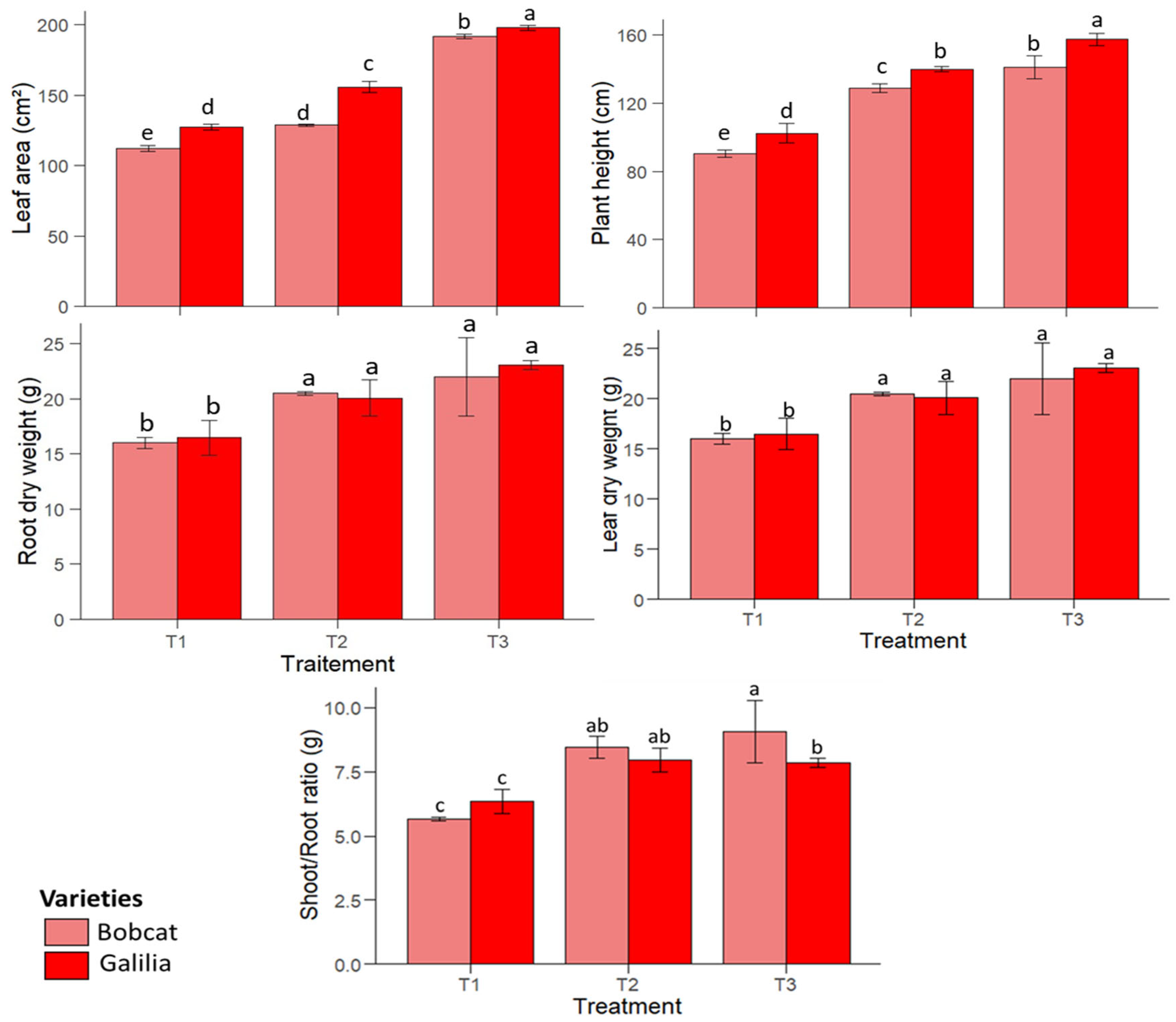
Figure 1. Effect of three types of irrigation (T1: Groundwater; T2: Treated wastewater from a membrane bioreactor «MBR-UF» plant; T3: Treated wastewater from an activated sludge treatment plant) on the Leaf area, Plant height, Root dry weight, Leaf dry weight and the Shoot/Root ratio, of two tomato varieties Bobcat and Galilia cultivated under field conditions. The data are presented as the average ± S.D; different letters indicate significant differences by the Tukey multiple comparison test (p < 0.05).
Agronomy 15 02824 g001
Figure 2. Effect of three types of irrigation (T1: Groundwater; T2: Treated wastewater from a membrane bioreactor «MBR-UF» plant, T3: Treated wastewater from an activated sludge treatment plant) on the Chlorophyll a, Relative water content, Proline and the leaf total sugar, of two tomato varieties Bobcat and Galilia cultivated under field conditions. The data are presented as the average± S.D; different letters indicate significant differences by the Tukey multiple comparison test (p < 0.05).
Agronomy 15 02824 g002
Figure 3. Effect of three types of irrigation (T1: Groundwater; T2: Treated wastewater from membrane bioreactor «MBR-UF» plant, T3: Treated wastewater from an activated sludge treatment plant) on the fruit yield fruit weight, and number of fruit per plant in two tomato varieties. The data are presented as the average ± S.D; different letters indicate significant differences by the Tukey multiple comparison test (p < 0.05).
Agronomy 15 02824 g003
Figure 4. Effect of three types of irrigation (T1: Groundwater; T2: Treated wastewater from a membrane bioreactor «MBR-UF» plant, T3: Treated wastewater from an activated sludge treatment plant), on tomato qualities, acidity, Lycopene, Soluble protein and Total sugar content of fruit of two tomato varieties Bobcat and Galilia cultivated in the field. The data are presented as the average ± S.D; different letters indicate significant differences by the Tukey multiple comparison test (p < 0.05).
Agronomy 15 02824 g004
Figure 5. Spearman correlation analysis between growth parameters, physiological and biochemical characteristics of tomato plants, and yield and fruit quality indicators. Red and blue represent positive and negative correlations, respectively. * p < 0.05, ** p < 0.01, *** p < 0.001.
Agronomy 15 02824 g005
Figure 6. Principal Component Analysis (PCA) of agro-morphological, physiological, biochemical, and yield-related traits of tomato under different irrigation treatments. Plant height: PH; Stem diameter: SD; Leaf area: LA; Leaf dry weight: LDW; Root dry weight: RDW; Chlorophyll a: Chl a; Relative water content: RWC; Proline: Pro; Leaf total sugar content: LSC; Yield per plant: Yld; Fruit diameter: FD; Fruit weight: FW; Lycopene: Lcp; Acidity: Ac; Soluble protein: SP; Fruit total sugar content: FSC.
Agronomy 15 02824 g006
Figure 7. Biplot of Principal Component Analysis (PCA) Showing Growth, Yield, and Fruit Quality Traits of Tomato Under Different Irrigation Treatments: (T1: Groundwater, T2:Treated wastewater from a membrane bioreactor MBR-UF plant, T3: Treated wastewater from an activated sludge treatment plant). Plant height: PH; Stem diameter: SD; Leaf area: LA; Leaf dry weight: LDW; Root dry weight: RDW; Chlorophyll: Chl a; Relative water content: RWC; Proline: Pro; Leaf total sugar content: LSC; Yield per plant: Yld; Fruit diameter: FD; Fruit weight: FW; Lycopene: Lcp; Acidity: Ac; Soluble protein: SP; Fruit total sugar content: FSC.
Agronomy 15 02824 g007
Table 1. Initial soil physico-chemical characteristics at the experimental site (Each value is the mean ± Standard Deviation of five replications).
ParametersAverage ± SEUnit
pH7.8 ± 0.31
Electrical conductivity (EC)300 ± 5.2μS/cm
Total CaCO30.14 ± 0.07%
Organic matter (OM)0.26 ± 0.1%
P2O5230 ± 1.63mg/kg
K2O56.55 ± 0.31mg/kg
Clay2.2 ± 0.47%
Fine silt1.6 ± 0.57%
Coarse silt2.4 ± 0.51%
Fine sand30 ± 2.7%
Coarse sand63.8 ± 6.55%
Table 2. Mean physico-chemical characteristics of groundwater T1, treated wastewater from the MBR-UF plant T2 and treated wastewater from the activated sludge Plant T3 used for tomato irrigation. (Each value is the mean ± Standard Deviation of five replications).
ParametersGW T1TWW T2TWW T3
pH7.29 ± 0.1136 ± 0.267.29 ± 0.069
EC (μS/cm)655 ± 5.213 767 ± 2.441579 ± 2.442
19 ± 0.95320 ± 0.4422 ± 0.44
N (mg/L)0.087 ± 0.021.73 ± 0.7623.38 ± 2.442
P (mg/L)0.009 ± 0.0030.28 ± 0.0260.77 ± 0.017
K (mg/L)1.6 ± 0.0426.76 ± 0.06127.2 ± 0.589
Na+ (mg/L)43.9 ± 0.13971.5 ± 0.156155.6 ± 0.225
Cl (mg/L)108 ± 0.433132 ± 0.52310.5 ± 2.078
Ca2+ (mg/L)110 ± 0.052121 ± 0.087149 ± 0.156
Mg2+ (mg/L)6.8 ± 0.2258.45 ± 0.2611.59 ± 0.346
Turbidity (NTU)0.4 ± 0.1392 ± 0.3463.9 ± 0.26
TSS (mg/L)0.9 ± 0.1732.34 ± 0.17345 ± 1.091
COD (mg O2/L)8.9 ± 0.20830.61 ± 0.296125 ± 1.542
BOD5 (mg O2/L)1.45 ± 0.20823.22 ± 0.19134 ± 0.762
Table 3. Average values of soil physicochemical properties after irrigation treatments. (Each value is the mean ± Standard Deviation of five replications).
SamplespH EC (μS/cm) CaCO3 (%)OM %P2O5K2O
(Soil, T1) V17.40 ± 0.225285.66 ± 2.5462.18 ± 0.2420.34 ± 0.06915.93 ± 0.22537.15 ± 0.225
(Soil, T2) V17.64 ± 0.208475.33 ± 2.3382.01 ± 0.0350.39 ± 0.06916.42 ± 0.20869.60 ± 0.641
(Soil, T3) V17.85 ± 0.208299.00 ± 1.4202.23 ± 0.0520.31 ± 0.06912.35 ± 0.19172.89 ± 0.866
(Soil, T1) V27.75 ± 0.191365.33 ± 1.8711.42 ± 0.0690.29 ± 0.05216.12 ± 0.26037.98 ± 0.849
(Soil, T2) V27.71 ± 0.121298.33 ± 1.7491.12 ± 0.0690.39 ± 0.05216.66 ± 0.20870.17 ± 0.468
(Soil, T3) V27.67 ± 0.156208.33 ± 2.5461.56 ± 0.0690.12 ± 0.05212.57 ± 0.13974.01 ± 0.675
Disclaimer/Publisher’s Note: The statements, opinions and data contained in all publications are solely those of the individual author(s) and contributor(s) and not of MDPI and/or the editor(s). MDPI and/or the editor(s) disclaim responsibility for any injury to people or property resulting from any ideas, methods, instructions or products referred to in the content.