
Review

A Review on Biological Synthesis of the Biodegradable Polymers Polyhydroxyalkanoates and the Development of Multiple Applications


by
Bryan Dalton
1,
Purabi Bhagabati
2,
Jessica De Micco
2,
Ramesh Babu Padamati
2,3,* and
Kevin O’Connor
1,3,*
1
School of Biomolecular and Biomedical Science, College of Science, University College Dublin, Stillorgan Road, Belfield, D04 V1W Dublin, Ireland
2
The Centre for Research on Adaptive Nanostructures and Nanodevices, School of Chemistry, Trinity College Dublin, The University of Dublin, D02 W272 Dublin, Ireland
3
BiOrbic Bioeconomy SFI Research Centre, University College Dublin, Stillorgan Road, Belfield, D04 V1W Dublin, Ireland
*
Authors to whom correspondence should be addressed.
Catalysts 2022, 12(3), 319; https://doi.org/10.3390/catal12030319
Submission received: 21 January 2022 / Revised: 14 February 2022 / Accepted: 16 February 2022 / Published: 11 March 2022

Abstract

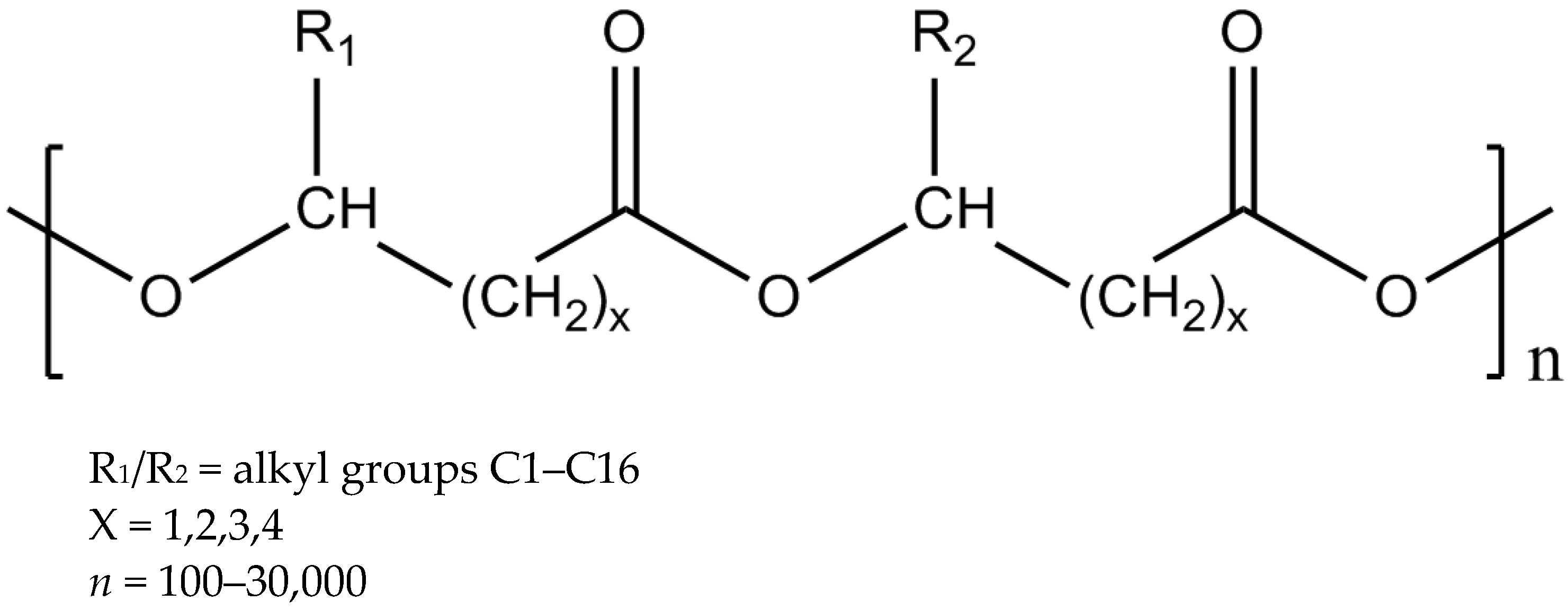
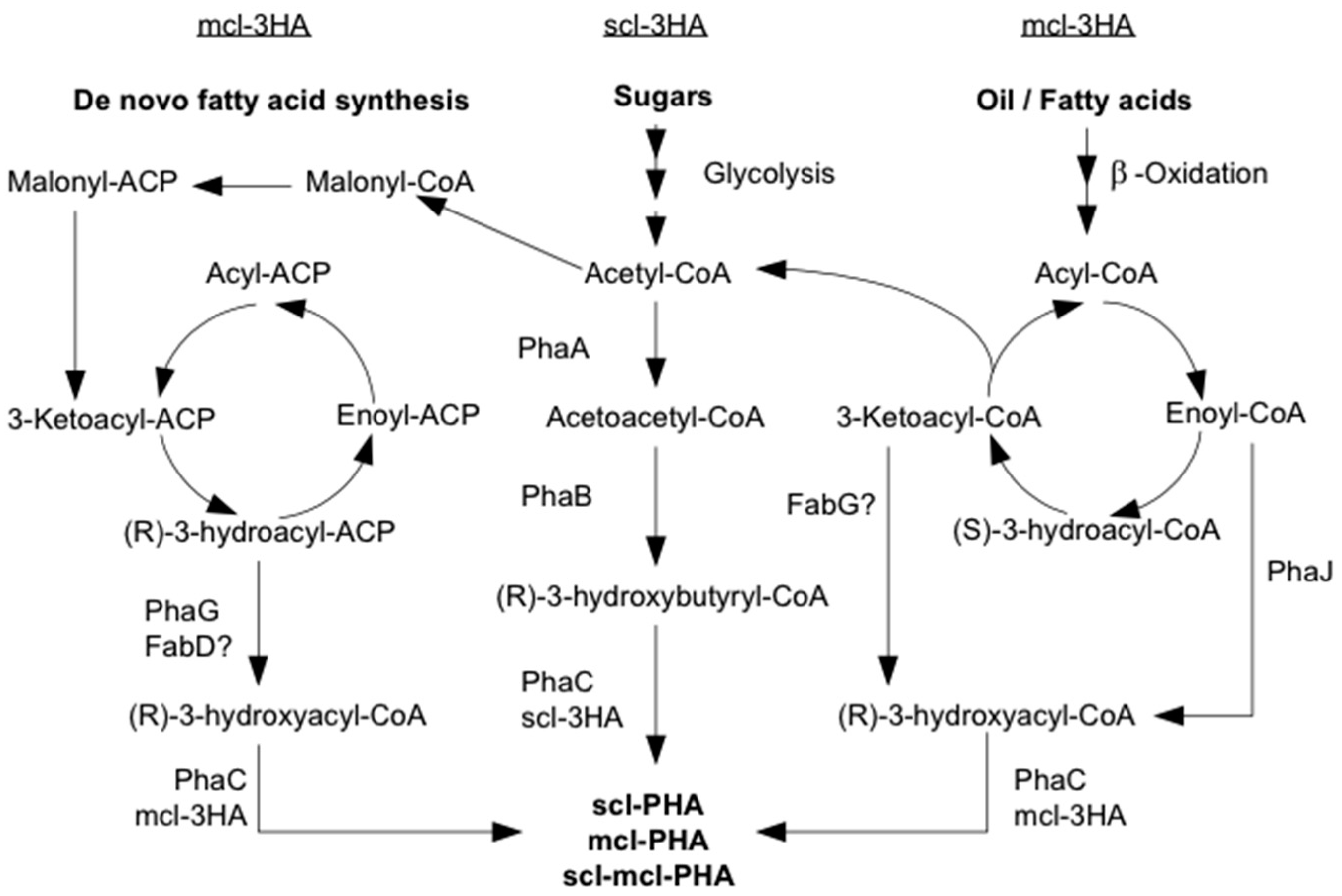
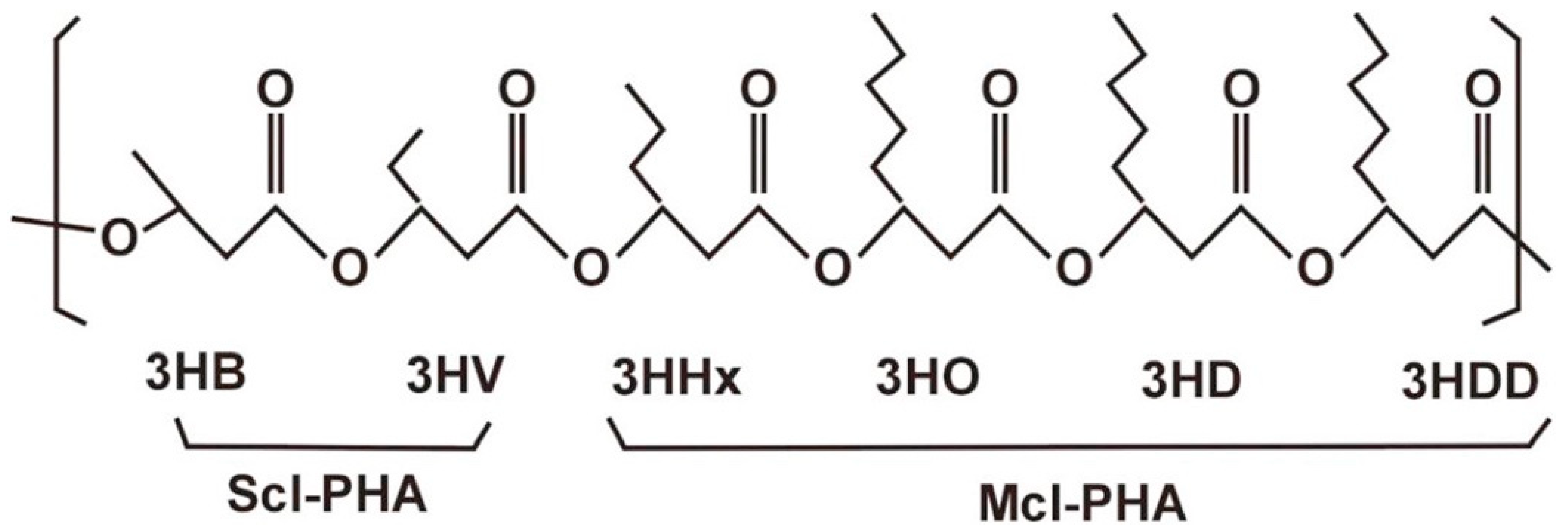
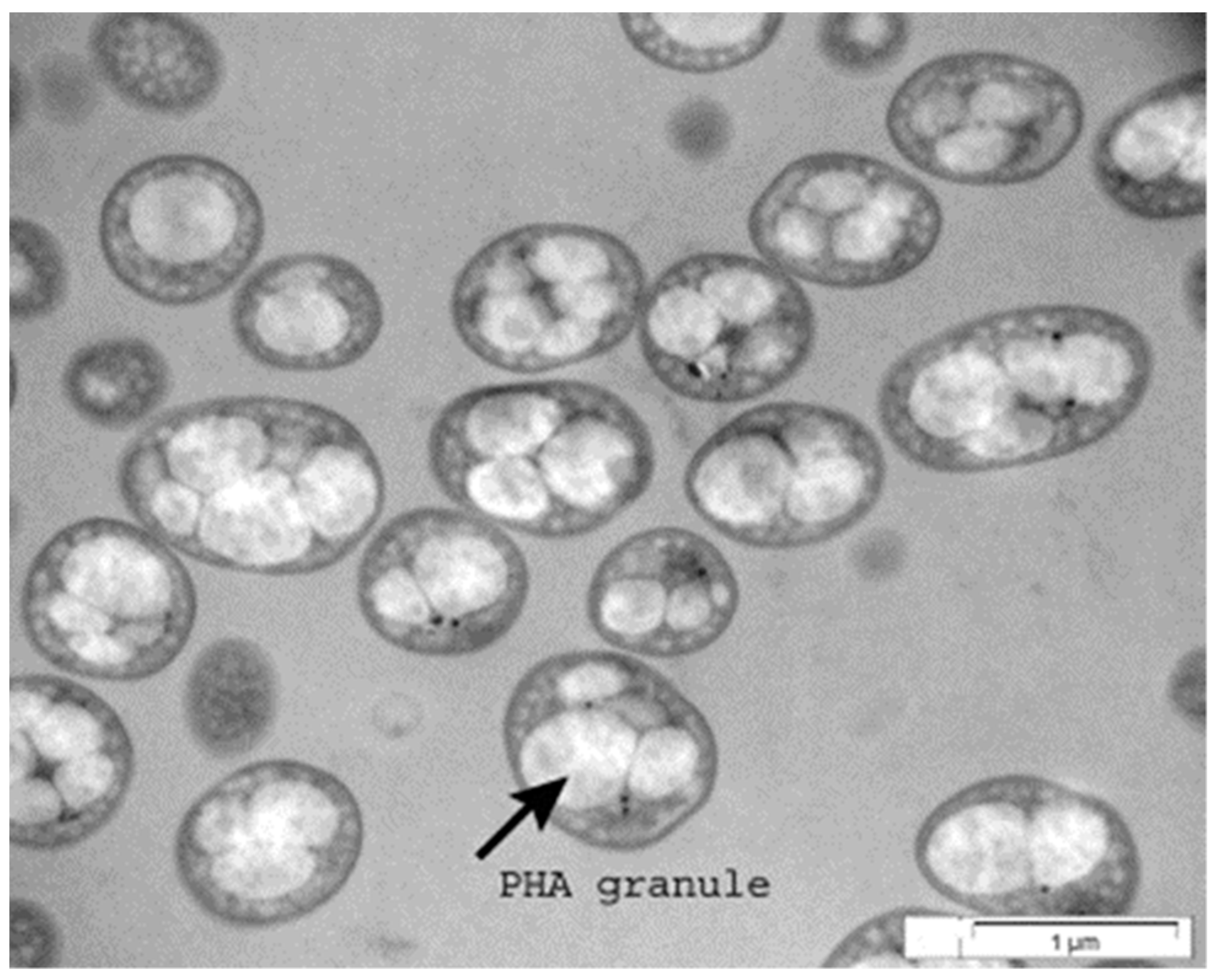
Polyhydroxyalkanoates, or PHAs, belong to a class of biopolyesters where the biodegradable PHA polymer is accumulated by microorganisms as intracellular granules known as carbonosomes. Microorganisms can accumulate PHA using a wide variety of substrates under specific inorganic nutrient limiting conditions, with many of the carbon-containing substrates coming from waste or low-value sources. PHAs are universally thermoplastic, with PHB and PHB copolymers having similar characteristics to conventional fossil-based polymers such as polypropylene. PHA properties are dependent on the composition of its monomers, meaning PHAs can have a diverse range of properties and, thus, functionalities within this biopolyester family. This diversity in functionality results in a wide array of applications in sectors such as food-packaging and biomedical industries. In order for PHAs to compete with the conventional plastic industry in terms of applications and economics, the scale of PHA production needs to grow from its current low base. Similar to all new polymers, PHAs need continuous technological developments in their production and material science developments to grow their market opportunities. The setup of end-of-life management (biodegradability, recyclability) system infrastructure is also critical to ensure that PHA and other biobased biodegradable polymers can be marketed with maximum benefits to society. The biobased nature and the biodegradability of PHAs mean they can be a key polymer in the materials sector of the future. The worldwide scale of plastic waste pollution demands a reformation of the current polymer industry, or humankind will face the consequences of having plastic in every step of the food chain and beyond. This review will discuss the aforementioned points in more detail, hoping to provide information that sheds light on how PHAs can be polymers of the future.
Keywords: biodegradable polymers; food-packaging; biodegradation; recycling; bioeconomy; circular economy; sustainability biodegradable polymers; food-packaging; biodegradation; recycling; bioeconomy; circular economy; sustainability