



Sensory Outcomes and Neurotization Techniques Following Mastectomies: A Comprehensive Systematic Review

 ,
,
Simple Summary
Abstract
1. Introduction
2. Materials and Methods
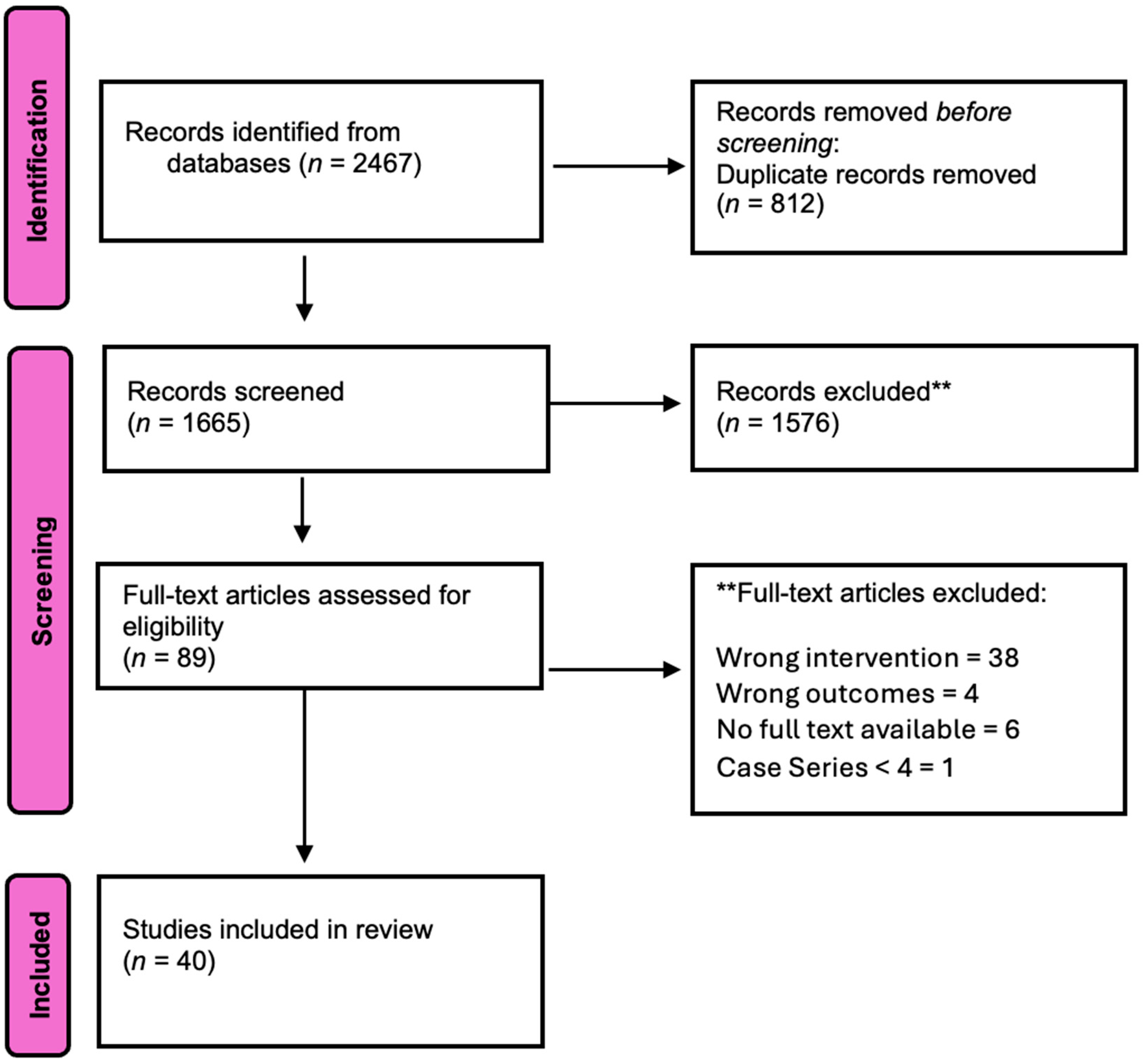
3. Results
3.1. Autologous Reconstruction: Direct Coaptation Only

| Author | Year | Journal | Design | Recon Type | Follow Up Mean ± SD [Range] | Method | Sensory Testing | Donor Nerve | Recipient Nerve | Key Results |
|---|---|---|---|---|---|---|---|---|---|---|
| Zhang [24] | 2025 | Annals of Plastic Surgery | Retro | DIEP (+coap) (n = 11) | 94.42 [71.98, 112.56]; | Direct coap used end-to-end epineural coaptation with 9-0 nylon; allograft group used 70 mm Avance nerve allograft (Axogen, Alachua, FL, USA) | AcroVal PSSD (AxoGen) | Sensory branches of T10–12 | Anterior cutaneous branch of the 3rd ICN | No significant difference in mean breast sensitivity between direct (64.58 g/mm2) and allograft (78.28 g/mm2) groups (p = 0.680); no regional sensory differences reached significance; BREAST-Q outcomes (psychosocial, sexual, satisfaction, physical, and sensation domains) were similar between groups (all p > 0.05); direct group had significantly longer follow-up for BREAST-Q (94.4 vs. 60.5 months, p = 0.013); both groups outperformed normative scores in multiple domains. |
| DIEP (+allo) (n = 19) | 60.45 [59.82, 70.34] | |||||||||
| Isenberg [25] | 2004 | Ann Plast Surg | Retro | TRAM (+) (n = 11) LD (+) (n = 4) | (2–16 months) | interrupted sutures; 10-0 nylon; microscope | SWM; 2-PD (Disk-Criminator); Sharp/dull (35G needle, cotton swab); Standard temp. probe | TRAM: intercostal perforator LD: thoracodorsal | Lateral ramus of 4th ICN | TRAM (+) flaps had greater pressure recovery than LD (+); both showed earlier sensory return than reported non-innervated cases and plateaued at 8–9 months; No difference in operative times and wound healing complications |
| Isenberg [26] | 2002 | J Reconstr Microsurg | Pros | pTRAM (+) (n = 10) | (2–25 months) | End-to end coap; microneurorrhaphy | SWM; 2-PD (Disk-Criminator); Sharp/dull (35G needle, cotton swab); Standard temp. probe | 11th ICN | Lateral-anterior branch of 4th ICN | TRAM (+) flaps demonstrated early, progressive, and superior recovery compared with reported TRAM (−) cases, though no erogenous sensation returned |
| Magarakis [27] | 2013 | Microsurgery | Retro | Implant (−) (n = 20) | Median: 26 months (18–49) | End-to end coap | PSSD | Branch of iliohypogastric or nerve co-located with primary vascular perforator | - | In non-irradiated cases, implants showed better sensation than DIEP flaps, whereas irradiated DIEP flaps outperformed irradiated implants; DIEP (+) trended toward better sensation than DIEP (+) without adjuvant radiation, though conclusions were limited by small sample size; no return of erotic sensation. |
| DIEP (−) (n = 12) | Median: 33 months (19–53) | |||||||||
| DIEP (+) (n = 5) | - | |||||||||
| Beugels [28] | 2021 | Plast Reconstr Surg | Pros | DIEP (+) (n = 67) DIEP (−) (n = 58) | 6 weeks, 3 months, 6–9 months, 12–15 months | End-to-end; microsurgical epineural coaptation with 9-0 nylon sutures | SWM | Anterior cutaneous sensory branch of the 10th–12th ICN | Anterior cutaneous branch of the 2nd or 3rd ICN | Innervated flaps had significantly better sensation in native, flap, and total skin (p ≤ 0.010); effect was stronger in immediate reconstructions; flap sensation improved more postoperatively in innervated group (p = 0.015–0.017); older age, higher flap weight, and shorter follow-up were associated with poorer sensory outcomes. |
| Bubberman [29] | 2024 | Breast Edinb Scotl. | Double-blind RCT | DIEP (+) (n = 19) DIEP (−) (n = 22) | 24 months (interim analysis) | End-to-end; 9-0 nylon sutures; performed after vascular anastomosis with fibrin sealant; microsurgery | SWM, PSSD, and thermal stimulator (PATHWAY, Medoc Ltd., Israel) | Sensory branch of flap | Anterior cutaneous branch of 2nd or 3rd ICN | At 24 months, flap skin monofilament threshold was significantly lower in innervated vs. non-innervated flaps (4.48 vs. 5.20, p = 0.003); protective sensation was preserved more often in innervated flaps; PSSD thresholds were significantly better in the flap center (1-PS: 47.8 vs. 71.2 g/mm2, p = 0.036; 1-PM: 16.2 vs. 53.0 g/mm2, p < 0.001); heat pain was imperceptible in 42.1% of non-innervated vs. 10.3% of innervated flaps (p = 0.004) |
| Beugels [30] | 2019 | Plast Reconstr Surg | Pros | DIEP (−) (n = 45) | Median: 17 months (IQR 12–24) | End-to-end; 9-0 nylon; 2 stitches | SWM | Sensory cutaneous branch of 10th–12th ICN running with perforators | Anterior cutaneous branch of 3rd ICN | Nerve coaptation was significantly associated with lower monofilament values in all areas of the reconstructed breast (adjusted difference, −1.2; p < 0.001); DIEP (+) sensory recovery was superior and started earlier postoperatively, with mean monofilament value decreasing by 0.083 per month in DIEP (+) and 0.012 in DIEP (−). |
| DIEP (+) (n = 36) | 15 months (IQR 11–17) | |||||||||
| Bijkerk [31] | 2020 | Breast Cancer Res Treat. | Partially Retro & Pros | DIEP (−/+) (n = 12) LTP (−/+) (n = 3) | 18.9 ± 5.2 months | End-to-end; 9-0 nylon; 2 stitches; epineural microsutures; fibrin sealant | SWM | ICN 10–12 in DIEP flaps; LFCN/ACFN in LTP flaps | Anterior cutaneous branch of the 2nd or 3rd ICN | DIEP/LTP (+) had improved sensory recovery in all flap skin areas (p < 0.001), with protective sensation maintained compared to DIEP/LTP (−); Longer follow-up periods correlate with lower monofilament values in both innervated and non-innervated breasts |
| Cornelissen [32] | 2018 | Breast Cancer Res Treat | Retro | DIEP (−) (n = 14) | 14.8 ± 4.3 months | End-to-end; 10-0 nylon; 2 stitches; epineural, microscope | SWM | Sensory nerve of DIEP flap | 2nd or 3rd ICN | DIEP (+) had better pressure sensation (4.35) than DIEP (−) (5.30) (p < 0.01); BREAST-Q score for the domain physical well-being of the chest was 77.89 ± 18.89 on average in patients with nerve coaptation and 66.21 ± 18.26 in patients without nerve coaptation (p = 0.09) |
| DIEP (+) (n = 18) | 16.1 ± 3.2 months | |||||||||
| Blondeel [33] | 1999 | Br J Plast Surg. | Pros | Control (n = 43) | — | End-to-end; 10-0 nylon; 2 simple stitches (Ethilon, Somerville, NJ, USA) | Pressure (SWM) Vibration (tuning forks, 30 and 256 Hz) Temp. (metal probes, 2 or 42C) SEP (0.2 ms, 2 Hz) | Pure sensory branch of 10th or 11th ICN | Anterior ramus of lateral branch of 4th ICN > posterior ramus of 4th > 3rd or 5th ICN | DIEP (+) flaps had statistically significant lower pressure thresholds, with more segments reacting to cold, warm, and vibratory stimuli compared to DIEP/TRAM (−); Patient satisfaction was highest in DIEP (+) with 30% of patients showing return of erogenous sensation |
| TRAM (−) (n = 26) | 19.9 months (12–39) | |||||||||
| DIEP (−) (n = 12) | 19.6 months (12–37.8) | |||||||||
| DIEP (+) (n = 23) | 21.4 months (12.8–40) | |||||||||
| Beugels [34] | 2021 | Plast Reconstr Surg. | Pros | LTP (−) (n = 18) | Median: 15 months (IQR 11–25) | End-to-end; 9-0 nylon; microsurgical | SWM | Branch of lateral femoral cutaneous | Anterior cutaneous branch of 3rd ICN | LTP (+) flaps had sensory recovery that was significantly better than LTP (−), reaching diminished light touch in native skin (monofilament values 3.22–3.61) and diminished protective sensation in flap skin (3.84–4.31); Lower mean monofilament values observed for each area of LTP (+) and LTP (−) compared to DIEP flaps in another study. |
| LTP (+) (n = 24) | Median: 17 months (IQR 10–19) | |||||||||
| Mori [35] | 2011 | Microsurgery | Retro | pTRAM (n = 28) | — | End-to-end | SWM; Pain (algesiometer) Temp. (metal probe, 10 or 50C) | Anterior cutaneous of 10th–11th ICN | Lateral cutaneous branch of 4th ICN | Innervated flaps demonstrated significantly greater sensitivity to touch and pain than non-innervated flaps (p < 0.05); TM with innervated flap showed better sensory recovery than NSM or SSM, regardless of whether sensory reconstruction is performed |
| VRAM (n = 5) | — | |||||||||
| TM (−) (n = 5) | 31.6 months (14–57) | |||||||||
| TM (+) (n = 5) | 14.8 months (12–19) | |||||||||
| NSM (−) (n = 8) | 13.8 months (12–17) | |||||||||
| NSM (+) (n = 6) | 13.0 months (12–18) | |||||||||
| SSM (−) (n = 5) | 14.2 months (12–18) | |||||||||
| SSM (+) (n = 4) | 13.8 months (12–18) | |||||||||
| Puonti [36] | 2011 | J Plast Reconstr Aesthet Surg | Retro | TRAM (−) (n = 20) | 54 months (27–77) | End-to-end or end-to-side; 9-0 nylon; epineural window for side-to-side | SWM; Sharp/blunt Vibration(32 and 256 Hz tuning fork) 2-point discrimination Temp./pain (Thermotest device) | 10th–12th ICN | Thoracic intercostal, thoracodorsal, or intercostobrachial (one case used internal mammary vessels) | TRAM (+) showed significantly better sensory recovery than TRAM (−), with median (quartiles) of total sensory scores in the operated breasts was 12.9 (9.5–19.2) in TRAM (+) and 8.1 (3.5–10.7) in TRAM (−); Operative time in TRAM (+) was 15 min longer on average |
| TRAM (+) (n = 20) | 32 months (23–43) | |||||||||
| Temple [37] | 2006 | Plast Reconstr Surg. | Pros | TRAM (−) (n = 12) | 16 months | End-to-end; 9-0 nylon; 2–3 simple stitches; epineural | Pressure (SWM, WEST device) 2-PD (Disk-Criminator) Temp. (tubes with water, 16 or 43C) | T10 nerve followed to lateral edge of rectus sheath; internal mammary or subscapular system used for anastomosis | Lateral cutaneous branch of 4th ICN | TRAM (+) had significantly improved postoperative pressure threshold and temperature discrimination compared to TRAM (−); TRAM (+) regained sensation throughout while TRAM (−) had increasing sensibility from the center toward the periphery. |
| TRAM (+) (n = 15) | 15 months | |||||||||
| Yap [38] | 2005 | Plast Reconstr Surg. | Pros | TRAM (−) (n = 7) | 40 months (31–46) | End-to-end; interrupted sutures; 8-0 Ethilon nylon; epineural (microscope) | Pressure (SWM, sensory topogram) Temp. (metal probe, 5 or 60 C) | Single thoracoabdominal nerve | Lateral cutaneous branch of 4th or 5th ICN | TRAM (+) flap skin had better sensitivity to fine touch and temperature differentiation than flap skin in TRAM (−), with sensory recovery beginning earlier at 4–6 months post-op versus 12–14 months |
| TRAM (+) (n = 7) | 39 months (35–46) | |||||||||
| Yano [39] | 1998 | Plast Reconstr Surg. | Pros | pTRAM (−) (n = 16) | 24.1 months (11–41) | End-to-end; 10-0 nylon; epineural & perineural (microscope) | SWM; Pain (algesiometer) Temp. (thermoesthesiometer, 0 or 60C) | 11th ICN > 10th ICN or subcostal | Lateral cutaneous branch of 4th ICN > 3rd or 5th > anterior cutaneous branch | TRAM (+) showed return of pressure, pain, and temperature starting at 6 months with rapid recovery from the center; TRAM (−) had slow recovery (>2 years) and was poorest in center of the flap |
| pTRAM (+) (n = 15) | 14.0 months (4–24) | |||||||||
| Spiegel [40] | 2013 | Plast Reconstr Surg Glob | Retro | DIEP (−); DIEP (+); DIEP (+cnd), polyglycolic acid Total n = 35 | 182.3 ± 115.5 weeks; 119.3 ± 57.5 weeks; 88.1 ± 36.2 weeks | 9-0 nylon for direct coaptation; 8-0 nylon for 40 mm NeuroTube conduit | PSSD | Pure sensory branch of T11 or T12 | Anterior cutaneous branch of the 3rd ICN | DIEP flap neurotization (+ and +cnd) both significantly improved sensory recovery compared to native mastectomy skin, with nerve conduit yielding better sensory recovery and lower pressure threshold at superior/lateral/center areas than direct coaptation. |
| Yano [41] | 2002 | Plast Reconstr Surg. | Retro | LD (−) (n = 10) | 26.9 months (15–49) | End-to-end; 10-0 nylon; epineural & perineural (microscope) | Pressure (SWM) Pain (algesiometer) Temp. (thermoesthesiometer, 0 or 60C) | Lateral cutaneous branch of dorsal divisions of 7th thoracic >6th or 8th | Lateral cutaneous branch of 4th ICN > 3rd or 5th > anterior cutaneous branch | LD (+) showed return of pressure, pain, and temperature beginning at 6 months with gradual approach to normal at 1 year; LD (−) showed slower recovery (>1 year) and was poorest in the center of the flap |
| LD (+) (n = 4) | 19.3 months (14–29) | |||||||||
| Blondeel [42] | 1999 | Br J Plast Surg. | Pros | SGAP (−) (n = 14) SGAP (+) (n = 2) | 11.1 months (3.1–21.6) | End-to-end; | SWM; sensory evoked potentials for 2 flaps | Dorsal branches of 2nd or 3rd lumbar segmental (nervi clunium superiores) | Anterior ramus of lateral branch of 4th ICN | SGAP (+) showed signs of returning superficial and erogenous sensation 5 and 7 months post-operatively; inconsistent anatomy at donor site but indications are the same as myocutaneous gluteal flaps |
| Djohan [43] | 2023 | Plastic and Reconstructive Surgery | Retro | DIEP (+; allo & cnd) (n = 42 breasts) MS-TRAM (+allo & cnd) (n = 10 breasts) fTRAM (+allo & cnd) (n = 8 breasts) DIEP (−) (n = 10 breasts) MS-TRAM (−) (n = 5 breasts) fTRAM (−) (n = 3 breasts) | Nonneurotized = 14.94 ± 6.62; Neurotized = 13.48 ± 7.70 | End-to-end microsurgical coaptation with 70 mm Avance allograft with AxoGard conduit; 9-0 nylon suture (1 per side), epineural | PSSD | 3rd or 4th anterior ICN | Cutaneous sensory branches of T10–T12 ICN on deep flap surface | At >12 months, dynamic sensation was significantly better in neurotized vs. non-neurotized breasts (38 ± 21.7 vs. 56.2 ± 20.8 g/mm2, p = 0.014); static sensation trended better but was not significant; lower BMI (p = 0.012), prophylactic surgery (p = 0.004), nipple-sparing mastectomy (p = 0.006), and no radiation (p = 0.020) or hormonal therapy (p = 0.008) predicted better outcomes. |
| Momeni [44] | 2021 | PRS Global Open | Pros | TRAM or DIEP(+allo) (n = 15) TRAM or DIEP(−) (n = 14) | ≥12 months | End-to-end with processed human nerve allograft; 9-0 nylon, microsurgery | SWM | 11th or 12th ICN | Anterior cutaneous branch of the 3rd ICN | Flap neurotization resulted in a greater return of protective sensation; Neurotized breasts showed a greater likelihood for return of sensation in 8 of 9 examined zones; 55% of neurotized breasts had protective sensation in ≥5 zones, compared to 7% in non-neurotized breasts (p < 0.01); 64% of non-neurotized flaps had no return of protective sensation versus 27% of neurotized flaps (p = 0.04) |
| Tevlin [45] | 2021 | J of Plastic, Recon, & Aesth Surg | Retro | Autologous flap (type not specified) (+allo or auto) (n = 12 and n = 2) Autologous flap (type not specified) (−) (n = 20) | Minimum 8 months; median 36 months in control group | End-to-end to a cadaveric nerve graft or autologous graft; epineurally sutured (7-0 prolene); loupe magnification | SWM | Lateral ICN (T3–T5) | Base of NAC or dermis | Neurotized breasts had significantly better whole-breast sensation (mean 4.8 ± 1.5 vs. 5.4 ± 1.0, p = 0.0001), improved areolar sensation (p = 0.0001), and preservation of nipple sensation compared to baseline (p = 0.096); control group showed significant loss of nipple sensation postoperatively (p = 0.0001) |
| Carrau [46] | 2022 | Annals of Breast Surg | Retro | N = 52 total, Number per group not detailed DIEP (+allo) DIEP (−) | Minimum 6 months, with assessments at 3, 6, and 12 months | Graft-bridged end-to-end; two interrupted 9-0 nylon, epineurally sutured under loupe magnification | SWM | T10–T12 intercostal sensory branches within the flap | Anterior cutaneous branch of the 3rd or 4th ICN | At 12 months, 93% of neurotized vs. 87% of non-neurotized flaps had regained sensation; both groups recovered sensation in 2/9 zones on average; neurotized flaps had slightly better monofilament thresholds (5.18 g vs. 5.43 g), but not clinically significant; sensory return occurred earlier and more frequently in neurotized flaps; Slightly higher rate and area of sensation recovery in neurotized flaps but difference narrowed at 12 months; literature review supports earlier, more complete, and erogenous sensory return with neurotization |
| Zhang [47] | 2025 | Annals of Plastic Surgery | Pros | DIEP (+allo) (n = 112) Implant (−) with TE (n = 82) | Sensory data collected at 6 m, 12 m, 24 m, and 24+ months | Single neurorrhaphy with 70 mm Avance nerve allograft (Axogen); microsurgical | PSSD | Sensory nerve per Spiegel et al. (likely 10th–12th ICN, as per prior studies) | Anterior 3rd ICN | In the autologous cohort, NAC sensitivity significantly correlated with higher psychosocial (β = −0.20, p = 0.01) and sexual wellbeing (β = −0.26, p = 0.04); overall breast sensitivity correlated with satisfaction with breasts on univariate analysis, but not multivariate; no breast region correlated with physical wellbeing scores. In the alloplastic cohort, only NAC sensitivity correlated with sexual wellbeing (β = −0.10, p = 0.002); no other domains showed significant associations. |
| Black [48] | 2024 | Annals of Plastic Surgery | Pros | DIEP (+allo) (n = 106) 2-stage alloplastic w TE (−) (n = 86) | 1072 ± 392.6 days (~3 years); 1875 ± 1029.3 days (~5 years) | End-to-end with 70 mm Avance allograft (Axogen); microsurgical | PSSD | Sensory branch of T10–Th12 | Anterior cutaneous branch of the 3rd ICN | At 1 year, the DIEP cohort showed significantly better sensation than the alloplastic group in 5 of 9 regions (including NAC and inner regions); at 4 years, this expanded to 7 of 9 regions; sensation improved most in the NAC (28.9 g/mm2) and outer lateral breast (30.4 g/mm2) in the DIEP group; alloplastic cohort had greater improvement at NAC than other regions, but lagged behind DIEP overall; average sensation thresholds at 4 years were 14.3 g/mm2 better in autologous vs. alloplastic reconstructions (p < 0.05). |
| Huang [49] | 2022 | Annals of Plastic Surgery | Pros | DIEP (+allo) (n = 41) TE (−) (n = 46) | Minimum 8 months; median 36 months in control group | End-to-end coaptation with Avance allograft (Axogen); microsurgical | PSSD (AcroVal, AxoGen) | Sensory branch of T10–T12 | Anterior cutaneous branch of the 3rd ICN | In DIEP patients, sensation in outer regions returned to baseline by 18 months and nearly all regions by 3 years, except inner inferior (p = 0.016); TE patients had significantly worse sensation than baseline in all regions at 5 years (p < 0.05); BREAST-Q scores trended higher in DIEP patients for all domains but differences were not statistically significant (p > 0.05). |
| Zhang [50] | 2025 | Ann Plast Surg | Retro | DIEP (+coap) (n = 11) | 92.67 months [60.35, 112.52] | Direct end-to-end coap; Coap with allo using 70 mm nerve | PSSD (AcroVal, AxoGen) | T10–12 | Anterior cutaneous branch of 3rd ICN | Overall breast cutaneous sensitivity measurement was 64.58 g/mm2 [40.06, 78.99] in the direct coaptation group and 78.28 g/mm2 [40.60, 82.06] in the nerve allograft group, with no significant differences overall (p = 0.680) or at any specific breast area. BREAST-Q surveys were comparable across all scales. |
| DIEP (+allo) (n = 19) | 84.79 months [65.05, 88.21] | |||||||||
| Lu Wang [51] | 2023 | Annals of Plastic Surgery | Pros | Nipple-sparing & buried DIEP (+allo) (n = 60) Skin-sparing & nonburied DIEP (+allo) (n = 10) | Up to 24 months; sensory testing at baseline, 6 mo, and 24 mo | End-to-end with 70 mm Avance nerve graft; microsurgical | PSSD (AcroVal, AxoGen) | Sensory branch of T10–T12 thoracoabdominal nerves | Anterior cutaneous branch of 3rd ICN | At 6 months, buried flap patients had significantly worse inner breast region sensation compared to baseline (10.19 vs. 70.83 g/mm2, p < 0.001), whereas nonburied flap patients showed no significant difference from baseline (27.54 vs. 57.24 g/mm2, p = 0.236); by 24 months, both groups returned to baseline sensitivity (p > 0.05); baseline sensitivity was significantly higher in the buried group preoperatively (p < 0.01 across all regions). |
| Lu Wang [52] | 2023 | Annals of Plastic Surgery | Pros | Immediate DIEP (+allo) (n = 65) Delayed-Immediate DIEP after tissue expander (+allo) (n = 26) | Up to 24 months post-mastectomy | End-to-end with 70 mm Avance nerve graft; microsurgical | PSSD (AcroVal, AxoGen) | Sensory branch of T10–T12 thoracoabdominal nerves | Anterior cutaneous branch of 3rd ICN | At 18 months post-mastectomy, both cohorts showed similar sensitivity in all breast regions (p > 0.05); by 24 months, sensitivity returned to baseline in all regions except the inner inferior quadrant (p = 0.016); BREAST-Q scores were not significantly different between cohorts at 18 or 24 months (p > 0.05), but psychosocial (p = 0.18) and sexual well-being (p = 0.08) trended higher in delayed-immediate patients. |
| Puonti [53] | 2017 | Clin Breast Cancer. | Partially retro & pros | ms-TRAM (+cnd) (n = 29) | 29.9 ± 5.8 months (24–43) | 9-0 nylon; perineural; 2–3 sutures (end-to-end); or 3–4 sutures (end-to-side); NeuraGen 3 mm diam. Conduit | Pressure (SWM) Temperature (thermostat) Vibration (32 and 256 Hz tuning fork) Sharp/blunt (pin) 2-PD | 10th–12th ICN | Medial: 3rd or 4th ICN Lateral: costobrachial, thoracodorsal, branches of 4th or 5th ICN in axillary | Dual neurorrhaphy had better median total sensory scores after 2-year follow-up, including tactile, cool detection, and nipple sensation compared to single neurorrhaphy (p = 0.037); no differences in operation times between dual and single neurorrhaphy (p = 0.0328); Dual neurorrhaphy may restore 60% of healthy breast sensation compared to 45% in single neurorrhaphy Questionnaire: slightly higher patient satisfaction in dual neurorrhaphy (median 9.5, IQR 8.6–10) vs. single neurorrhaphy (median 9.0, IQR 8–9) |
| ms-TRAM (++cnd) (n = 41) | 25.7 ± 2.4 months (23–36) | |||||||||
| Puonti [54] | 2017 | Clin Breast Cancer. | Partially retro & pros | Control (n = 56) ms-TRAM (−) (n = 20) ms-TRAM (++cnd) (n = 38) | 1–2+ years 54 months (27–77); 1–2+ years | End-to-end or end-to-side with 9-0 nylon; perineural; 2 sutures; NeuraGen 3 mm diam. conduit | Pressure (SWM) Thermostat; Vibration (32 and 256 Hz tuning fork); 2-PD; Somatosensory evoked potential (SEP) Biopsy (ENFD) | 10th–12th ICN | Medial: 3rd or 4th ICN Lateral: intercostobrachial | Sensory recovery in total peripheral nerve surgery can occur via collateral reinnervation from neighboring areas even if neurrorrhaphy on injured nerve is not performed; ms-TRAM (++cnd) dual neurrhaphy showed better median total sensory scores than ms-TRAM (−) when using tests that measured large fiber function (SEP, SENFD) |
| Temple [55] | 2009 | Plast Reconstr Surg. | Pros | TRAM (−) (n = 8) | 48 months | End-to-end; 9-0 nylon; 2–3 simple stitches; epineural | - | T10 nerve followed to lateral edge of rectus sheath | Lateral cutaneous branch of 4th ICN | Patient rated higher QoL improvements in TRAM (+) compared to TRAM (−) in the majority of domains, which included physical function, body image, and emotional well-being |
| TRAM (+) (n = 10) | - |
| Author | Year | Journal | Design | Recon Type | Follow Up Mean ± SD [Range] | Method | Sensory Testing | Donor Nerve | Recipient Nerve | Key Results |
|---|---|---|---|---|---|---|---|---|---|---|
| Zhang [56] | 2024 | J Reconstr Microsurg. | Retro | Direct-to-implant (+allo) (n = 33) Tissue expander (+allo) (n = 23) | 3, 6, and 12 months | End-to-end coap with allo; 9-0 and 8-0 nylon | SWM; 5 per breast | Lateral Th3-5 ICN | Undersurface of the NAC | At 12 months, significant improvement in monofilament thresholds across all NAC and breast skin regions compared to earlier timepoints (p < 0.001); average total nerve length was 12.3 cm from nerve origin to NAC; no chronic pain, neuroma, or dysesthesia |
| Peled [57] | 2023 | Plast Reconstr Surg. | Pros | Direct-to-implant (+allo) (n = 47) | 9.2 months (6–14 months) | End-to-end coap with allo | PSSD; 5 per breast | Lateral Th3-5 ICN | Subareolar nerve branches | At 12 months, 75% of one-point moving (1 PM) and 38–75% of one-point static (1 PS) thresholds across all breast and NAC areas tested were in the “excellent” range (<20 g/mm2); no chronic pain |
| Djohan [58] | 2020 | Plast Reconstr Surg. | Pros | Direct-to-implant (+allo) (n = 11 breasts) Tissue expander (+allo) (n = 4 breasts) | 1st follow-up: 4.2 ± 2.3 months 2nd follow-up: 10.6 ± 3.6 months | Coap with allo; 9-0 nylon | PSSD; 8 per breast | Lateral Th4 ICN | Processed nerve allo | Neurotized breasts had better thresholds in 6/8 areas compared to non-neurotized breasts; Sensory recovery best at superior and upper-inner quadrant breast areas; All areas had better sensation at 2nd follow-up |
| Peled [59] | 2019 | Plast Reconstr Surg Glob | Pros | Direct-to-implant (+; allo) (n = 16) | 3.6+ months | Coap with allo; 8-0 or 9-0 nylon | Gross, light touch (2-PD) | Th4 or Th5 lateral ICN | 1–2 mm diameter Avance nerve allo | NAC 2-point discrimination was preserved in 20 breasts (87%), worse in 2 breasts (9%), and improved in 1 breast (4%); 67% reported similar overall re-op/post-op breast and NAC sensation; no neuromas or dyesthesias |
| Shyu [60] | 2025 | Int Jour of Surg | Pros | DIEP (+autologous nerve graft) (n = 54) PAP (+autologous nerve graft) (n = 6) Implant (+autologous nerve graft) (n = 7) DIEP (−) (n = 27) PAP (−) (n = 3) Implant (−) (n = 35) | 1.3 ± 0.5 years | End-to-end autologous graft from ICN to nipple base; 9-0 nylon | SWM | Main branch of Th3-Th5 ICN (typically 4th) | Lateral cutaneous branch to nipple base | Better nipple sensation in innervated group compared to non-innervated groups (2.6 ± 1.2 vs. 1.9 ± 1.0, p = 0.002); monofilament values were significantly correlated with patient-reported psychosocial well-being (p = 0.033), nipple (p = 0.008), and breast sensation (p = 0.009) |
| Chang [61] | 2024 | Brit Jour Surg | Retro case-control | DIEP (+autologous nerve graft) (n = 53) Implant (+autologous nerve graft) (n = 3) DIEP (−) (n = 10) Implant (−) (n = 5) PAP (−) (n = 1) | Up to 24 months | End-to-end coap; autologous graft elongation (20–25 cm) from ICN to NAC | SWM + MRC scale; 5 per breast | Main branch of Th3-Th5 ICN (preferably 4th) | Base of the nipple; dermis for future NAC (in non-preserving cases) | Positive control breasts had mean monofilament values of 0.07 g and 179.13 g for the non-neurotized negative control group; Monofilament results for neurotized breasts improved from 138.2 g at 0–6 months to 0.37 g at 19–24 months (p < 0.001); sensation recovered faster in delayed vs. immediate reconstructions; no neuromatous pain reported |
| Juan [62] | 2024 | Front in Onc | RCT | Subpectoral prosthetic titanized polypropylene mesh (TiLOOP®, pfm medical, Cologne, Germany) Implant (+) (n = 50) Implant (−) (n = 53) | 6 months | End-to-end coap of ICN to NAC tissue | SWM; 9 per breast | Lateral cutaneous branches of Th2–Th4 ICN | Subareolar dermis of NAC | At 6 months, neurotized patients had significantly better nipple (p < 0.001), areola (p = 0.06), and breast skin sensation (p = 0.01) vs. control; operative time increased by ~20 min (p < 0.001) with no increase in complications, blood loss, or drainage volume. |
3.2. Autologous Reconstruction: Coaptation with Nerve Allograft or Conduit
3.3. Implant-Based Reconstruction: Nerve Allograft or Direct Neurorrhaphy
3.4. Quality of Life
4. Discussion
5. Conclusions
Supplementary Materials
Author Contributions
Funding
Institutional Review Board Statement
Informed Consent Statement
Data Availability Statement
Conflicts of Interest
References
- Breast Cancer Risk in American Women—NCI. 17 December 2020. Available online: https://www.cancer.gov/types/breast/risk-fact-sheet (accessed on 27 April 2025).
- Nardin, S.; Mora, E.; Varughese, F.M.; D’Avanzo, F.; Vachanaram, A.R.; Rossi, V.; Saggia, C.; Rubinelli, S.; Gennari, A. Breast Cancer Survivorship, Quality of Life, and Late Toxicities. Front. Oncol. 2020, 10, 864. [Google Scholar] [CrossRef] [Scilit] [PubMed]
- Lu, K.A.; Lu, K.B.; Janz, T.A.; Amirlak, B. Recent trends in total mastectomy techniques and post-mastectomy breast cancer reconstruction: A population-based analysis. Ann. Breast Surg. 2023, 7, 22. [Google Scholar] [CrossRef] [Scilit]
- Kummerow, K.L.; Du, L.; Penson, D.F.; Shyr, Y.; Hooks, M.A. Nationwide trends in mastectomy for early-stage breast cancer. JAMA Surg. 2015, 150, 9–16. [Google Scholar] [CrossRef] [Scilit]
- Albornoz, C.R.; Matros, E.; Lee, C.N.; Hudis, C.A.; Pusic, A.L.; Elkin, E.; Bach, P.B.; Cordeiro, P.G.; Morrow, M. Bilateral Mastectomy versus Breast-Conserving Surgery for Early Stage Breast Cancer: The Role of Breast Reconstruction. Plast. Reconstr. Surg. 2015, 135, 1518–1526. [Google Scholar] [CrossRef] [Scilit]
- Leskovar, J.; Petrovečki, M.; Bulić, K. Trastuzumab holds potential to accelerate spontaneous sensory reinnervation after free flap breast reconstruction: A proof of concept. Innov. Surg. Sci. 2025, 10, 81–89. [Google Scholar] [CrossRef] [Scilit]
- Shammas, R.L.; Fish, L.J.; Sergesketter, A.R.; Offodile, A.C.; Phillips, B.T.; Oshima, S.; Lee, C.N.; Hollenbeck, S.T.; Greenup, R.A. Dissatisfaction After Post-Mastectomy Breast Reconstruction: A Mixed-Methods Study. Ann. Surg. Oncol. 2022, 29, 1109–1119. [Google Scholar] [CrossRef] [Scilit]
- Slezak, S.; McGibbon, B.; Dellon, A.L. The Sensational Transverse Rectus Abdominis Musculocutaneous (TRAM) Flap: Return of Sensibility after TRAM Breast Reconstruction. Ann. Plast. Surg. 1992, 28, 210. [Google Scholar] [CrossRef] [Scilit] [PubMed]
- Malekpour, M.; Malekpour, F.; Wang, H.T.H. Breast reconstruction: Review of current autologous and implant-based techniques and long-term oncologic outcome. World J. Clin. Cases 2023, 11, 2201–2212. [Google Scholar] [CrossRef] [Scilit]
- Silverstein, M.L.; Momeni, A. Restoring Sensation through Abdominal Flap Neurotization in Breast Reconstruction. J. Clin. Med. 2024, 13, 3826. [Google Scholar] [CrossRef] [Scilit]
- Albornoz, C.R.; Bach, P.B.; Mehrara, B.J.; Disa, J.J.; Pusic, A.L.; McCarthy, C.M.; Cordeiro, P.G.; Matros, E. A paradigm shift in U.S. Breast reconstruction: Increasing implant rates. Plast. Reconstr. Surg. 2013, 131, 15–23. [Google Scholar] [CrossRef] [Scilit] [PubMed]
- Isaacs, J.; Nydick, J.A.; Means, K.R.; Merrell, G.A.; Asif, I.; Levin, L.S.; RECOM Study Group. A Multicenter Prospective Randomized Comparison of Conduits Versus Decellularized Nerve Allograft for Digital Nerve Repairs. J. Hand Surg. 2023, 48, 904–913. [Google Scholar] [CrossRef] [Scilit] [PubMed]
- Hentz, V.R.; Narakas, A. The results of microneurosurgical reconstruction in complete brachial plexus palsy. Assessing outcome and predicting results. Orthop. Clin. N. Am. 1988, 19, 107–114. [Google Scholar] [CrossRef] [Scilit] [PubMed]
- Ray, W.Z.; Mackinnon, S.E. Management of nerve gaps: Autografts, allografts, nerve transfers, and end-to-side neurorrhaphy. Exp. Neurol. 2010, 223, 77–85. [Google Scholar] [CrossRef] [Scilit]
- Griffin, M.S.; Malahias, M.; Hindocha, S.; Wasim, S.K. Peripheral Nerve Injury: Principles for Repair and Regeneration. Open Orthop. J. 2014, 8, 199. [Google Scholar] [CrossRef] [Scilit]
- Beris, A.; Gkiatas, I.; Gelalis, I.; Papadopoulos, D.; Kostas-Agnantis, I. Current concepts in peripheral nerve surgery. Eur. J. Orthop. Surg. Traumatol. 2019, 29, 263–269. [Google Scholar] [CrossRef] [Scilit]
- Beris, A.; Lykissas, M.; Korompilias, A.; Mitsionis, G. End-to-Side Nerve Repair in Peripheral Nerve Injury. J. Neurotrauma 2007, 24, 909–916. [Google Scholar] [CrossRef] [Scilit]
- Lundborg, G.; Zhao, Q.; Kanje, M.; Danielsen, N.; Kerns, J.M. Can Sensory and Motor Collateral Sprouting be Induced from Intact Peripheral Nerve by End-to-Side Anastomosis? J. Hand Surg. 1994, 19, 277–282. [Google Scholar] [CrossRef] [Scilit]
- Marcuzzi, A.; Wrigley, P.J.; Dean, C.M.; Adams, R.; Hush, J.M. The long-term reliability of static and dynamic quantitative sensory testing in healthy individuals. PAIN 2017, 158, 1217. [Google Scholar] [CrossRef] [Scilit] [PubMed]
- Shiah, E.; Laikhter, E.; Comer, C.D.; Manstein, S.M.; Bustos, V.P.; Bain, P.A.; Lee, B.T.; Lin, S.J. Neurotization in Innervated Breast Reconstruction: A Systematic Review of Techniques and Outcomes. J. Plast. Reconstr. Aesthetic Surg. JPRAS 2022, 75, 2890–2913. [Google Scholar] [CrossRef] [Scilit]
- Page, M.J.; McKenzie, J.E.; Bossuyt, P.M.; Boutron, I.; Hoffmann, T.C.; Mulrow, C.D.; Shamseer, L.; Tetzlaff, J.M.; Akl, E.A.; Brennan, S.E.; et al. The PRISMA 2020 statement: An updated guideline for reporting systematic reviews. PLoS Med. 2021, 18, e1003583. [Google Scholar] [CrossRef] [PubMed]
- Wells, G.A.; Shea, B.; O’Connell, D.; Peterson, J.; Welch, V.; Losos, M.; Tugwell, P. The Newcastle-Ottawa Scale (NOS) for Assessing the Quality of Nonrandomised Studies in Meta-Analyses. The Ottawa Hospital Research Institute. Available online: http://www.ohri.ca/programs/clinical_epidemiology/oxford.asp (accessed on 27 April 2025).
- Higgins, J.P.T.; Altman, D.G.; Gøtzsche, P.C.; Jüni, P.; Moher, D.; Oxman, A.D.; Savović, J.; Schulz, K.F.; Weeks, L.; Sterne, J.A. The Cochrane Collaboration’s tool for assessing risk of bias in randomised trials. BMJ 2011, 343, d5928. [Google Scholar] [CrossRef] [Scilit]
- Zhang, A.; Salingaros, S.; Arbuiso, S.; Black, G.G.; Wang, M.L.; Huang, H.; Otterburn, D. Comparing Primary Coaptation and Allograft in Deep Inferior Epigastric Perforator Flap Breast Reconstruction: Long-Term Sensory and BREAST-Q Outcomes. Ann. Plast. Surg. 2025, 94, S291–S296. [Google Scholar] [CrossRef] [Scilit] [PubMed]
- Isenberg, J.S.; Spinelli, H. Further experience with innervated autologous flaps in postoncologic breast reconstruction. Ann. Plast. Surg. 2004, 52, 448–451; discussion 451. [Google Scholar] [CrossRef] [Scilit] [PubMed]
- Isenberg, J.S. Sense and sensibility: Breast reconstruction with innervated TRAM flaps. J. Reconstr. Microsurg. 2002, 18, 23–28. [Google Scholar] [CrossRef] [Scilit]
- Magarakis, M.; Venkat, R.; Dellon, A.L.; Shridharani, S.M.; Bellamy, J.; Vaca, E.E.; Jeter, S.C.; Zoras, O.; Manahan, M.A.; Rosson, G.D. Pilot study of breast sensation after breast reconstruction: Evaluating the effects of radiation therapy and perforator flap neurotization on sensory recovery. Microsurgery 2013, 33, 421–431. [Google Scholar] [CrossRef] [Scilit]
- Beugels, J.; Bijkerk, E.; Lataster, A.; Heuts, E.M.; van der Hulst, R.R.W.J.; Tuinder, S.M.H. Nerve Coaptation Improves the Sensory Recovery of the Breast in DIEP Flap Breast Reconstruction. Plast. Reconstr. Surg. 2021, 148, 273–284. [Google Scholar] [CrossRef] [Scilit]
- Bubberman, J.M.; Brandts, L.; van Kuijk, S.M.J.; van der Hulst, R.R.W.J.; Tuinder, S.M.H. The efficacy of sensory nerve coaptation in DIEP flap breast reconstruction—Preliminary results of a double-blind randomized controlled trial. Breast 2024, 74, 103691. [Google Scholar] [CrossRef] [Scilit] [PubMed]
- Beugels, J.; Cornelissen, A.J.M.; van Kuijk, S.M.J.; Lataster, A.; Heuts, E.M.; Piatkowski, A.; Spiegel, A.J.; van der Hulst, R.R.W.J.; Tuinder, S.M.H. Sensory Recovery of the Breast following Innervated and Noninnervated DIEP Flap Breast Reconstruction. Plast. Reconstr. Surg. 2019, 144, 178e–188e. [Google Scholar] [CrossRef] [Scilit]
- Bijkerk, E.; van Kuijk, S.M.J.; Lataster, A.; van der Hulst, R.R.W.J.; Tuinder, S.M.H. Breast sensibility in bilateral autologous breast reconstruction with unilateral sensory nerve coaptation. Breast Cancer Res. Treat. 2020, 181, 599–610. [Google Scholar] [CrossRef] [Scilit]
- Cornelissen, A.J.M.; Beugels, J.; van Kuijk, S.M.J.; Heuts, E.M.; Rozen, S.M.; Spiegel, A.J.; van der Hulst, R.R.W.J.; Tuinder, S.M.H. Sensation of the autologous reconstructed breast improves quality of life: A pilot study. Breast Cancer Res. Treat. 2018, 167, 687–695. [Google Scholar] [CrossRef] [Scilit]
- Blondeel, P.N.; Demuynck, M.; Mete, D.; Monstrey, S.J.; Van Landuyt, K.; Matton, G.; Vanderstraeten, G.G. Sensory nerve repair in perforator flaps for autologous breast reconstruction: Sensational or senseless? Br. J. Plast. Surg. 1999, 52, 37–44. [Google Scholar] [CrossRef] [Scilit]
- Beugels, J.; van Kuijk, S.M.J.; Lataster, A.; van der Hulst, R.R.W.J.; Tuinder, S.M.H. Sensory Recovery of the Breast following Innervated and Noninnervated Lateral Thigh Perforator Flap Breast Reconstruction. Plast. Reconstr. Surg. 2021, 147, 281–292. [Google Scholar] [CrossRef] [Scilit] [PubMed]
- Mori, H.; Okazaki, M. Is the sensitivity of skin-sparing mastectomy or nipple-sparing mastectomy superior to conventional mastectomy with innervated flap? Microsurgery 2011, 31, 428–433. [Google Scholar] [CrossRef] [Scilit]
- Puonti, H.K.; Jääskeläinen, S.K.; Hallikainen, H.K.; Partanen, T.A. A new approach to microneurovascular TRAM-flap breast reconstruction--a pilot study. J. Plast. Reconstr. Aesthetic Surg. JPRAS 2011, 64, 346–352. [Google Scholar] [CrossRef] [Scilit]
- Temple, C.L.F.; Tse, R.; Bettger-Hahn, M.; MacDermid, J.; Gan, B.S.; Ross, D.C. Sensibility following innervated free TRAM flap for breast reconstruction. Plast. Reconstr. Surg. 2006, 117, 2119–2127; discussion 2128–2130. [Google Scholar] [CrossRef] [Scilit] [PubMed]
- Yap, L.H.; Whiten, S.C.; Forster, A.; Stevenson, H.J. Sensory recovery in the sensate free transverse rectus abdominis myocutaneous flap. Plast. Reconstr. Surg. 2005, 115, 1280–1288. [Google Scholar] [CrossRef] [Scilit] [PubMed]
- Yano, K.; Matsuo, Y.; Hosokawa, K. Breast reconstruction by means of innervated rectus abdominis myocutaneous flap. Plast. Reconstr. Surg. 1998, 102, 1452–1460. [Google Scholar] [CrossRef] [Scilit]
- Spiegel, A.J.; Menn, Z.K.; Eldor, L.; Kaufman, Y.; Dellon, A.L. Breast Reinnervation: DIEP Neurotization Using the Third Anterior Intercostal Nerve. Plast. Reconstr. Surg. Glob. Open 2013, 1, e72. [Google Scholar] [CrossRef] [Scilit]
- Yano, K.; Hosokawa, K.; Takagi, S.; Nakai, K.; Kubo, T. Breast reconstruction using the sensate latissimus dorsi musculocutaneous flap. Plast. Reconstr. Surg. 2002, 109, 1897–1902; discussion 1903. [Google Scholar] [CrossRef] [Scilit]
- Blondeel, P.N. The sensate free superior gluteal artery perforator (S-GAP) flap: A valuable alternative in autologous breast reconstruction. Br. J. Plast. Surg. 1999, 52, 185–193. [Google Scholar] [CrossRef] [Scilit]
- Djohan, R.; Scomacao, I.; Duraes, E.F.R.; Knackstedt, R.; Mangan, R.; Schwarz, G. Sensory Restoration in Abdominally Based Free Flaps for Breast Reconstruction Using Nerve Allograft. Plast. Reconstr. Surg. 2023, 151, 25–33. [Google Scholar] [CrossRef] [Scilit] [PubMed]
- Momeni, A.; Meyer, S.; Shefren, K.; Januszyk, M. Flap Neurotization in Breast Reconstruction with Nerve Allografts: 1-year Clinical Outcomes. Plast. Reconstr. Surg. Glob. Open 2021, 9, e3328. [Google Scholar] [CrossRef] [Scilit] [PubMed]
- Tevlin, R.; Brazio, P.; Tran, N.; Nguyen, D. Immediate targeted nipple-areolar complex re-innervation: Improving outcomes in immediate autologous breast reconstruction. J. Plast. Reconstr. Aesthetic Surg. JPRAS 2021, 74, 1503–1507. [Google Scholar] [CrossRef] [Scilit]
- Carrau, D.; Del Pinto, Z.; Carraher, A.; Chetta, M.D. Breast reinnervation—The next frontier in autologous breast reconstruction: A review of early results. Ann. Breast Surg. 2022, 6, 14. [Google Scholar] [CrossRef] [Scilit]
- Zhang, A.; Huang, H.; Lu Wang, M.; Arbuiso, S.; Black, G.G.; Ellison, A.; Otterburn, D.M. Breast Sensation and Quality of Life: Correlating Cutaneous Sensitivity of the Reconstructed Breast and BREAST-Q Scores. Ann. Plast. Surg. 2025, 94, S276–S282. [Google Scholar] [CrossRef] [Scilit] [PubMed]
- Black, G.G.; Chen, Y.; Qin, N.; Wang, M.L.; Huang, H.; Otterburn, D.M. An Evolving Landscape: Return of Breast Sensation After Mastectomy Varies by Anatomic Region and Reconstructive Method. Ann. Plast. Surg. 2024, 92, S91–S95. [Google Scholar] [CrossRef] [Scilit] [PubMed]
- Huang, H.; Wang, M.L.; Ellison, A.; Otterburn, D.M. Comparing Autologous to Device-Based Breast Reconstruction: A Pilot Study of Return in Breast Sensation. Ann. Plast. Surg. 2022, 88, S184–S189. [Google Scholar] [CrossRef] [Scilit]
- Zhang, A.; Arbuiso, S.; Lu Wang, M.; Huang, H.; Black, G.G.; Ellison, A.; Otterburn, D.M. Sensation in Neurotized Deep Inferior Epigastric Perforator Flap Breast Reconstruction With Different Donor Nerves: Comparing T11 and T12. Ann. Plast. Surg. 2025, 94, S271–S275. [Google Scholar] [CrossRef] [Scilit]
- Lu Wang, M.; Qin, N.; Chadab, T.M.; Chen, Y.; Huang, H.; Ellison, A.; Otterburn, D.M. A Pilot Study Comparing Sensation in Buried Versus Nonburied Deep Inferior Epigastric Perforator Flaps. Ann. Plast. Surg. 2023, 90, S574–S577. [Google Scholar] [CrossRef] [Scilit]
- Lu Wang, M.; Qin, N.; Chen, Y.; De Freitas, D.; Huang, H.; Ellison, A.; Otterburn, D.M. A Comparative Analysis of Sensory Return in Delayed-Immediate Versus Immediate Neurotized Deep Inferior Epigastric Perforator Flap Breast Reconstruction. Ann. Plast. Surg. 2023. [Google Scholar] [CrossRef] [Scilit]
- Puonti, H.K.; Jääskeläinen, S.K.; Hallikainen, H.K.; Partanen, T.A. Improved sensory recovery with a novel dual neurorrhaphy technique for breast reconstruction with free muscle sparing TRAM flap technique. Microsurgery 2017, 37, 21–28. [Google Scholar] [CrossRef] [Scilit]
- Puonti, H.K.; Broth, T.A.; Soinila, S.O.; Hallikainen, H.K.; Jääskeläinen, S.K. How to Assess Sensory Recovery After Breast Reconstruction Surgery? Clin. Breast Cancer 2017, 17, 471–485. [Google Scholar] [CrossRef] [Scilit]
- Temple, C.L.F.; Ross, D.C.; Kim, S.; Tse, R.; Bettger-Hahn, M.; Gan, B.S.; MacDermid, J. Sensibility following Innervated Free TRAM Flap for Breast Reconstruction: Part, I.I. Innervation Improves Patient-Rated Quality of Life. Plast. Reconstr. Surg. 2009, 124, 1419. [Google Scholar] [CrossRef] [Scilit]
- Zhang, C.; Moroni, E.A.; Moreira, A.A. One Size Does Not Fit All: Prediction of Nerve Length in Implant-based Nipple–Areola Complex Neurotization. J. Reconstr. Microsurg. 2024, 41, 566–574. [Google Scholar] [CrossRef] [Scilit]
- Peled, A.W.; von Eyben, R.; Peled, Z.M. Sensory Outcomes after Neurotization in Nipple-sparing Mastectomy and Implant-based Breast Reconstruction. Plast. Reconstr. Surg. Glob. Open 2023, 11, e5437. [Google Scholar] [CrossRef] [Scilit]
- Djohan, R.; Scomacao, I.; Knackstedt, R.; Cakmakoglu, C.; Grobmyer, S.R. Neurotization of the Nipple-Areola Complex during Implant-Based Reconstruction: Evaluation of Early Sensation Recovery. Plast. Reconstr. Surg. 2020, 146, 250–254. [Google Scholar] [CrossRef] [Scilit] [PubMed]
- Peled, A.W.; Peled, Z.M. Nerve Preservation and Allografting for Sensory Innervation Following Immediate Implant Breast Reconstruction. Plast. Reconstr. Surg. Glob. Open 2019, 7, e2332. [Google Scholar] [CrossRef] [Scilit]
- Shyu, S.; Chang, T.N.; Lu, J.C.; Chen, C.F.; Cheong, D.C.; Kao, S.W.; Kuo, W.L.; Huang, J.J. Breast neurotization along with breast reconstruction after nipple sparing mastectomy enhances quality of life and reduces denervation symptoms in patient-reported outcome: A prospective cohort study. Int. J. Surg. 2025, 111, 3235–3247. [Google Scholar] [CrossRef] [Scilit] [PubMed]
- Chang, T.N.; Lu, J.C.; Sung, C.W.; Illias, A.M.; Cheong, D.C.; Kao, S.W.; Kuo, W.L.; Pindur, L.; Chen, L.W.; Lin, J.A.; et al. Elongation of intercostal nerve cutaneous branches for breast and nipple neurotization during breast reconstruction after mastectomy for breast cancer: Case-control study. Br. J. Surg. 2024, 111, znae005. [Google Scholar] [CrossRef] [Scilit] [PubMed]
- Juan, Z.; Liang, Y.P.; Shen, J.L.; Dai, H.; Zhang, Y.; Yao, D.S.; Jiang, R.X.; Cai, H.F. Efficacy and safety of intercostal nerve anastomosis in immediate subpectoral prosthetic breast reconstruction after nipple-areola-sparing mastectomy: A randomized, controlled, open-label clinical study. Front. Oncol. 2024, 14, 1261936. [Google Scholar] [CrossRef] [Scilit]
- Shen, Y.; Zhang, J.; Liu, Y.; Cai, H. Nerve Grafts in Breast Reconstruction: A Narrative Review. Breast J. 2025, 2025, 1035158. [Google Scholar] [CrossRef] [Scilit] [PubMed] [PubMed Central]
- Rinker, B.; Zoldos, J.; Weber, R.V.; Ko, J.; Thayer, W.; Greenberg, J.; Leversedge, F.J.; Safa, B.; Buncke, G. Use of Processed Nerve Allografts to Repair Nerve Injuries Greater Than 25 mm in the Hand. Ann. Plast. Surg. 2017, 78, S292–S295. [Google Scholar] [CrossRef] [Scilit] [PubMed]
- Borrelli, M.R.; Shen, A.H.; Lee, G.K.; Momeni, A.; Longaker, M.T.; Wan, D.C. Radiation-induced skin fibrosis: Pathogenesis, current treatment options, and emerging therapeutics. Ann. Plast. Surg. 2019, 83, S59–S64. [Google Scholar] [CrossRef] [Scilit] [PubMed]
- Longo, B.; Timmermans, F.W.; Farcomeni, A.; Frattaroli, J.M.; D’orsi, G.; Atzeni, M.; Sorotos, M.; Laporta, R.; Santanelli di Pompeo, F. Septum-Based Mammaplasties: Surgical Techniques and Evaluation of Nipple-Areola Sensibility. Aesthetic Plast. Surg. 2020, 44, 689–697. [Google Scholar] [CrossRef] [Scilit] [PubMed]
- Lindau, S.T.; Bensmaia, S.J. Using Bionics to Restore Sensation to Reconstructed Breasts. Front. Neurorobot. 2020, 14, 24. [Google Scholar] [CrossRef] [Scilit] [PubMed]
Disclaimer/Publisher’s Note: The statements, opinions and data contained in all publications are solely those of the individual author(s) and contributor(s) and not of MDPI and/or the editor(s). MDPI and/or the editor(s) disclaim responsibility for any injury to people or property resulting from any ideas, methods, instructions or products referred to in the content. |
© 2026 by the authors. Licensee MDPI, Basel, Switzerland. This article is an open access article distributed under the terms and conditions of the Creative Commons Attribution (CC BY) license.
Share and Cite
Zhou, B.; Cipurko, D.; Dejenie, R.; Zietowski, M.; Wong, D.; Hanson, S.E. Sensory Outcomes and Neurotization Techniques Following Mastectomies: A Comprehensive Systematic Review. Cancers 2026, 18, 1052. https://doi.org/10.3390/cancers18071052
Zhou B, Cipurko D, Dejenie R, Zietowski M, Wong D, Hanson SE. Sensory Outcomes and Neurotization Techniques Following Mastectomies: A Comprehensive Systematic Review. Cancers. 2026; 18(7):1052. https://doi.org/10.3390/cancers18071052
Chicago/Turabian StyleZhou, Beryl, Denis Cipurko, Rebeka Dejenie, Maeson Zietowski, Daniel Wong, and Summer E. Hanson. 2026. "Sensory Outcomes and Neurotization Techniques Following Mastectomies: A Comprehensive Systematic Review" Cancers 18, no. 7: 1052. https://doi.org/10.3390/cancers18071052
APA StyleZhou, B., Cipurko, D., Dejenie, R., Zietowski, M., Wong, D., & Hanson, S. E. (2026). Sensory Outcomes and Neurotization Techniques Following Mastectomies: A Comprehensive Systematic Review. Cancers, 18(7), 1052. https://doi.org/10.3390/cancers18071052

