The Heterogeneity of Mucinous Colorectal Adenocarcinoma—Histologic and Molecular Phenotypes Drive Prognostic Outcomes

Simple Summary
Abstract
1. Introduction
2. Search Strategy
3. Subtypes of Colorectal Cancer

| Brief General Comments | |
|---|---|
| CRC NOS | Majority of CRCs (80%) are conventional-type (NOS) [5,7]. Commonly follows adenoma–carcinoma sequence. More common on left side. Tendency for liver metastases. |
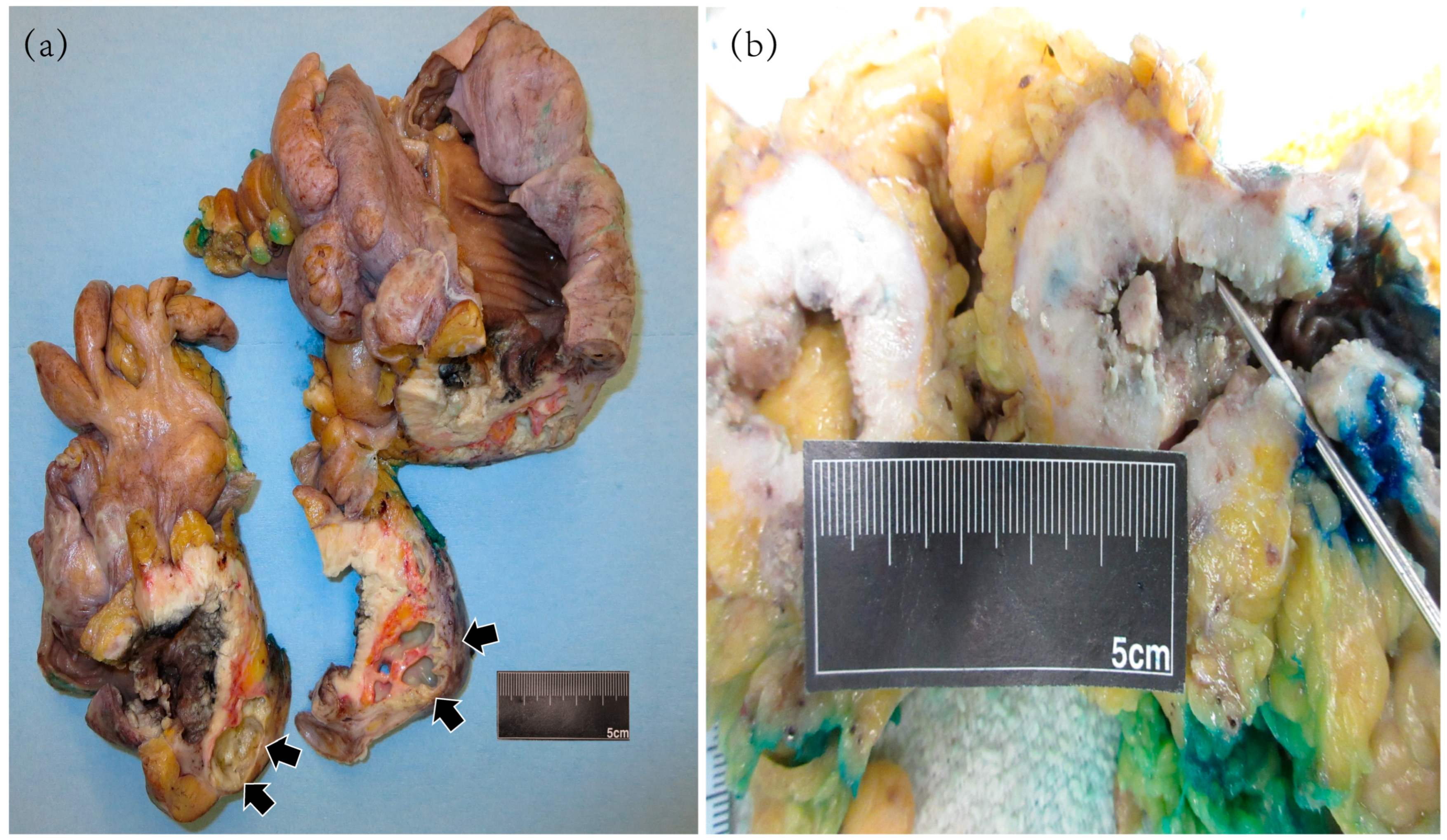
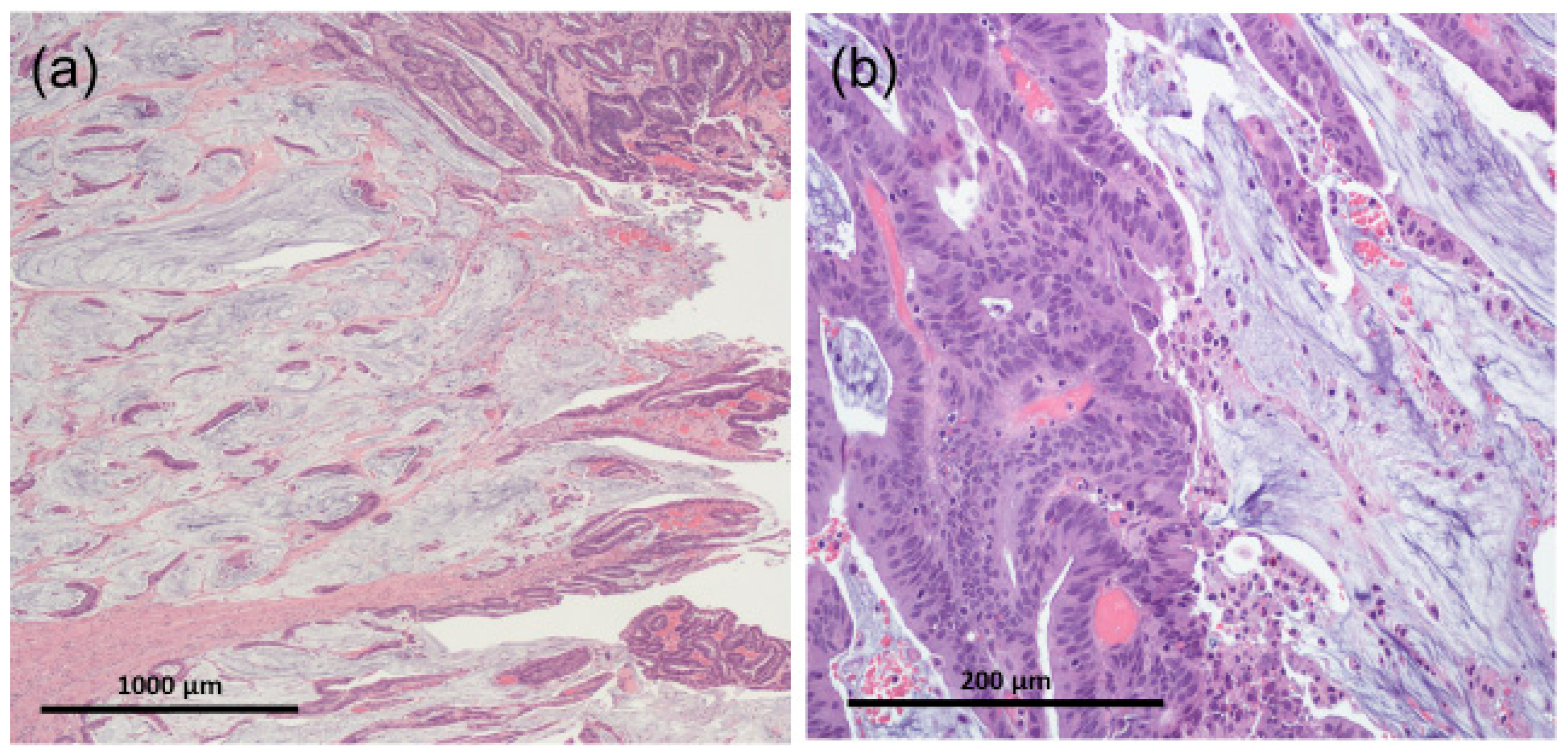
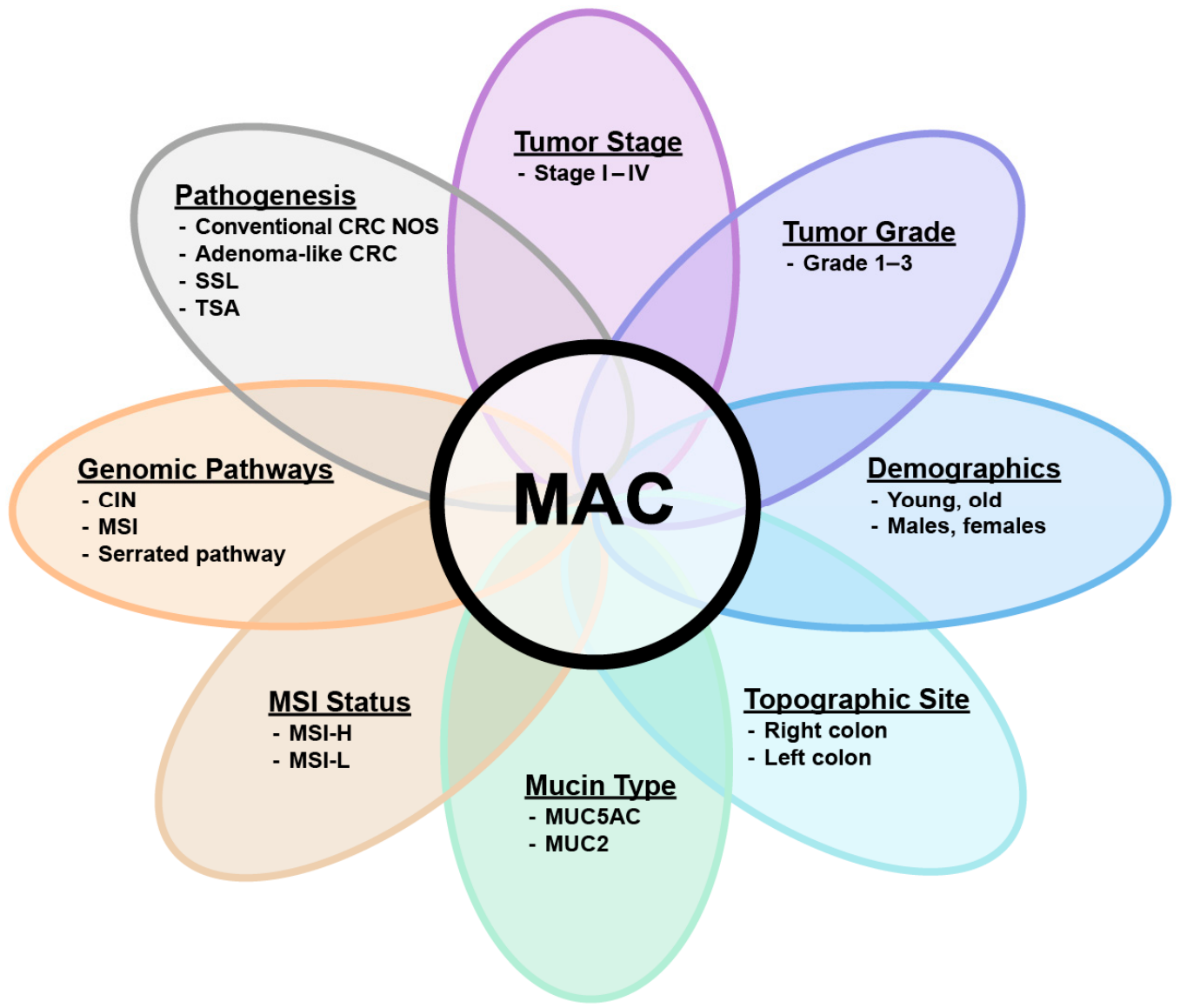
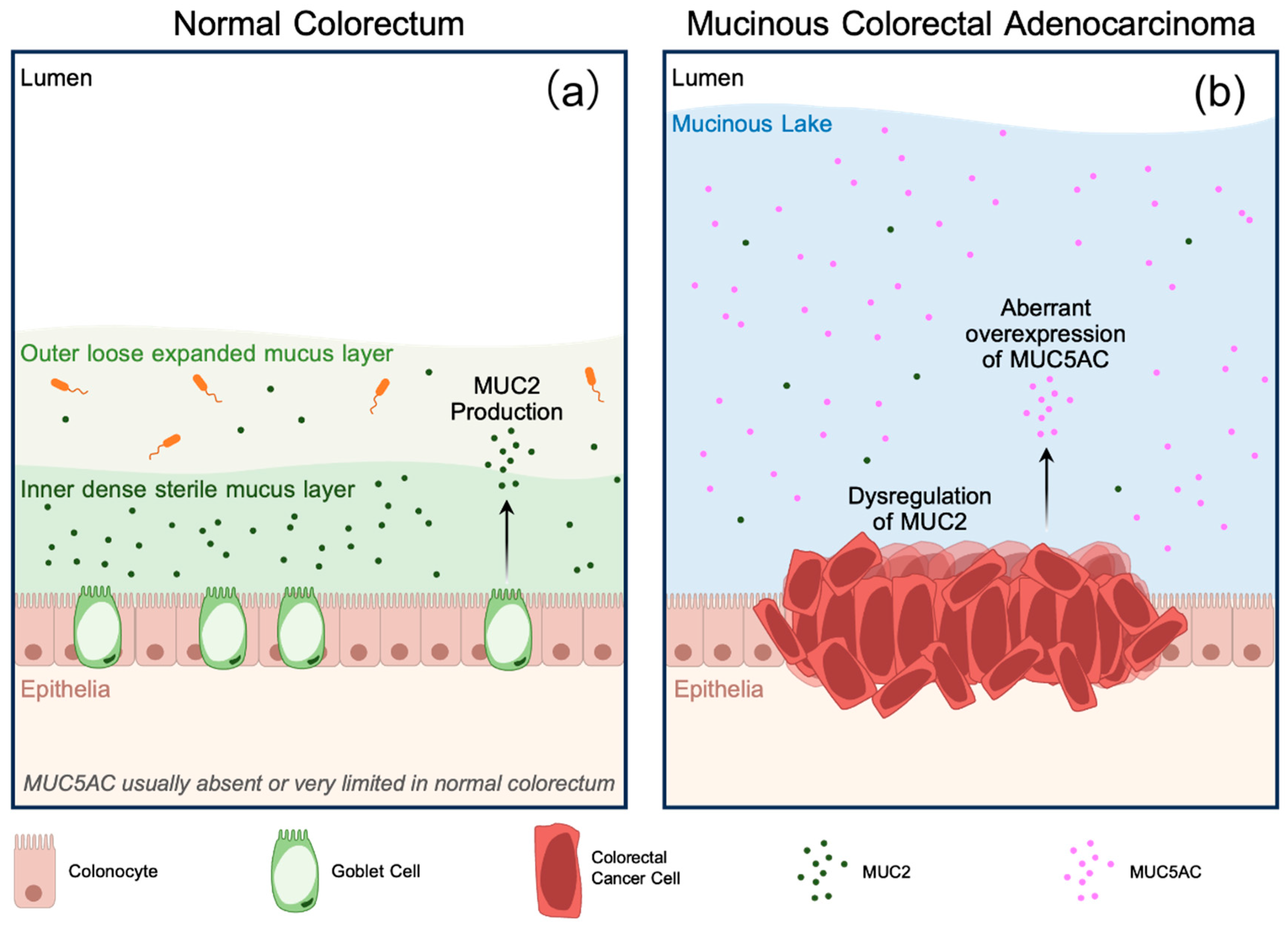
| MAC | 10–15% of CRC [5,7]. More common in right colon compared to the left. Commonly associated with pre-existent adenomatous polyps. Histologic grading is now a recommendation (Figure 2a,b). BRAF mutations more frequent than in CRC NOS whereas TP53 less frequent [32,33]. Overexpression of MUC2 and MUC 5AC [33]. |
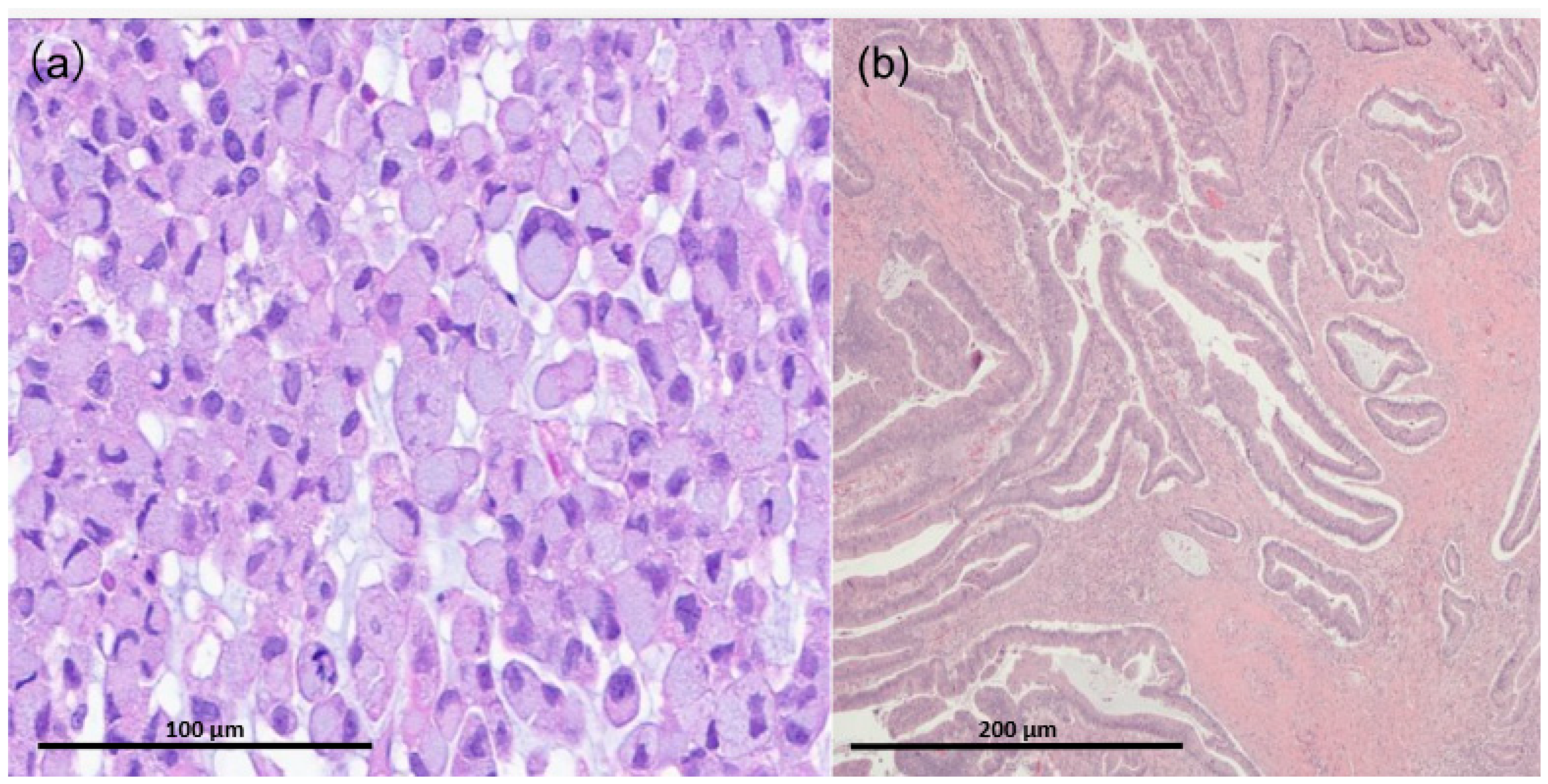
| Signet ring cell carcinoma (SRCC) | 1% of CRC. Also defined by >50% mucin content, but in this case, the mucin is intracellular (Figure 3a). Highly infiltrative. Regarded as high-grade carcinoma. |
| Serrated adenocarcinoma | First described in the 1990s [34]. ≥10% of CRC. Commonly have a mucinous component. Tend to arise from the serrated pathway (BRAF, CIMP) [35,36]. |
| Medullary carcinoma | First described in the 1990s [37,38]. Predilection for right colon. Associated with Lynch syndrome. Overrepresented in the hypermutator phenotype group. Relatively good prognosis. |
| Adenoma-like adenocarcinoma | Recently described (Figure 3b). Usually well-differentiated. Associated with MAC. Prognosis relatively good. Paradoxically, strong association with KRAS mutations [39,40]. |
| Micropapillary adenocarcinoma | Recently described. Early lymphovascular invasion. Aggressive clinical behavior [41]. |
| Sarcomatoid carcinoma | More common in left colon. Associated with CMS4 and tumor-budding; aggressive clinical behavior [5,7]. |
| Neuroendocrine carcinoma | Clinically and genomically closer to CRC than to other GI NETs [5]. |
| Undifferentiated carcinoma | Carcinomas with no discernible histologic line of differentiation (grade 4). Poor outcome [5,7]. |
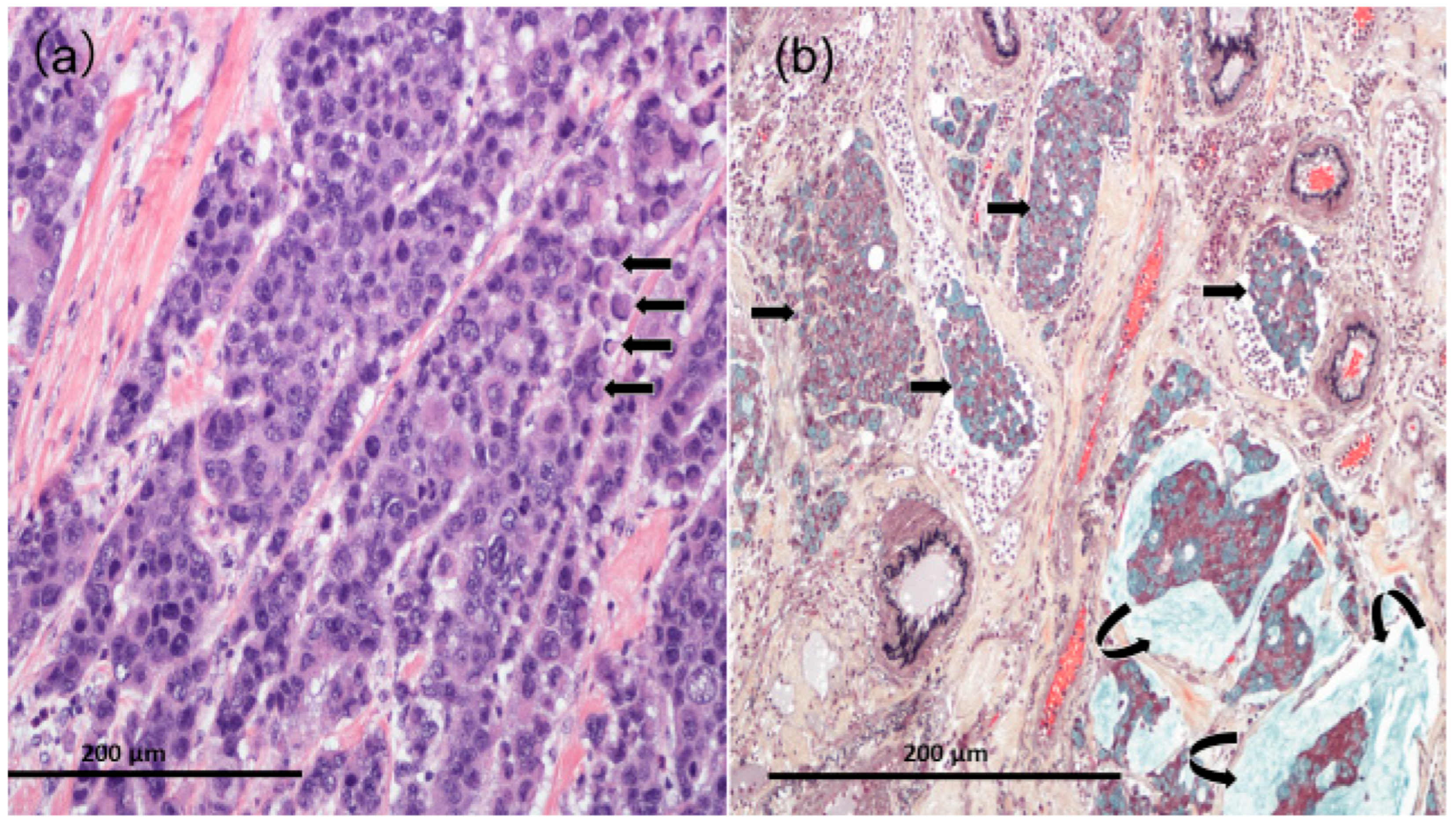
| Others | Includes rare entities, e.g., adenosquamous and multidirectional carcinoma [5,7]. Also, the recently described invasive stratified mucin-producing carcinoma (ISMC) may be relevant here since one report showed it devolving into MAC and SRCC with resultant poor prognosis (Figure 4a,b) [42]. However, further studies are required. |
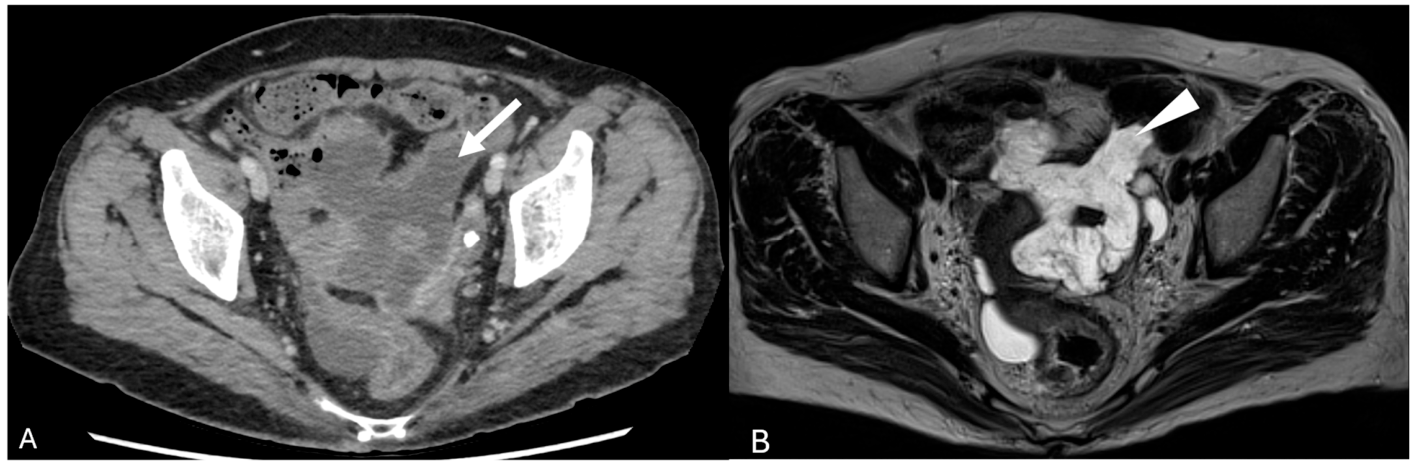
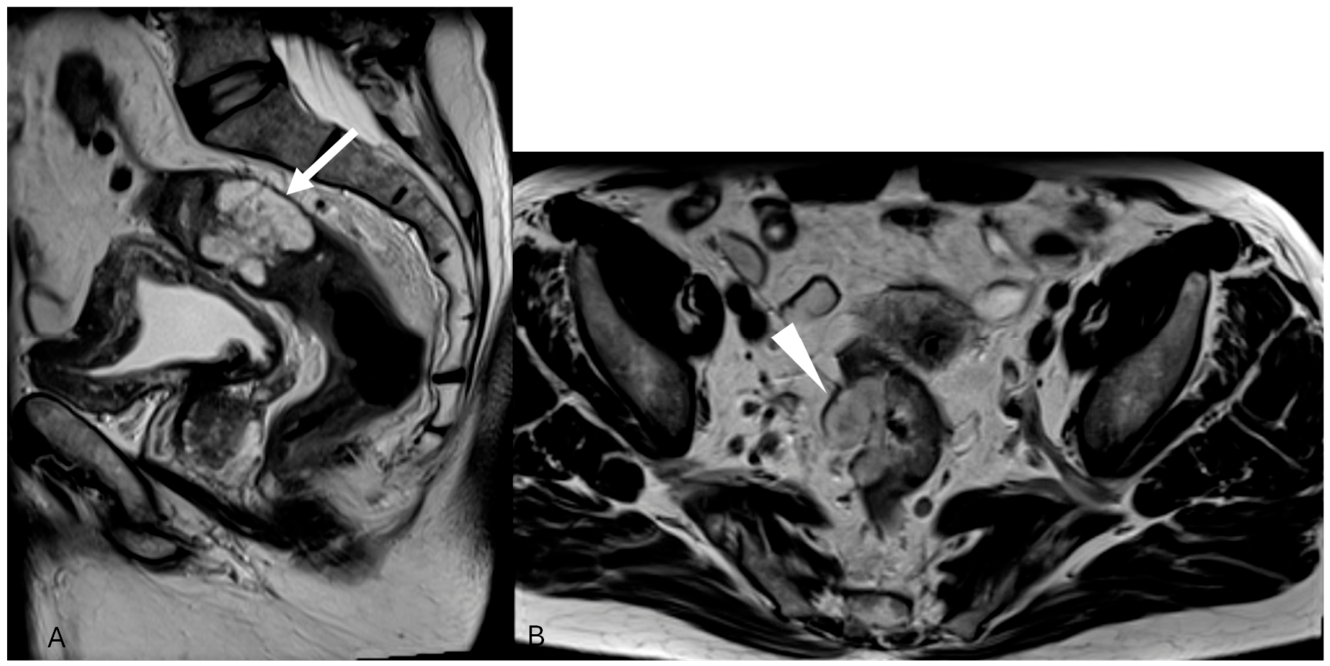
4. Imaging of MAC
5. Pathogenesis of MAC
6. Histologic Grading of MAC
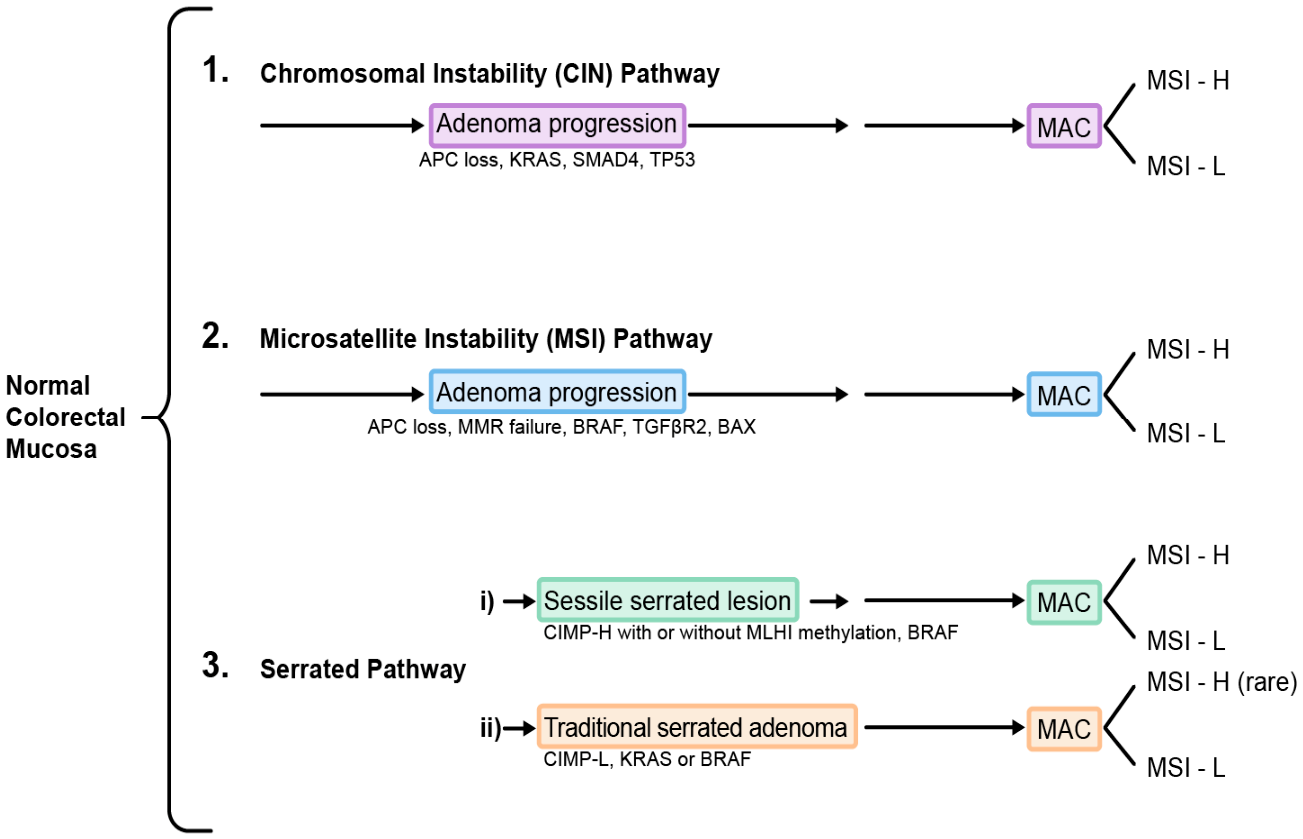
7. Genetic and Epigenetic Pathways
8. Microsatellite Instability
9. Mucin Expression
10. Conclusions
Author Contributions
Funding
Institutional Review Board Statement
Informed Consent Statement
Data Availability Statement
Conflicts of Interest
Abbreviations
| ADC | Apparent Diffusion Coefficient |
| CMS | Consensus Molecular Subtype |
| CRC | Colorectal Cancer |
| CRC NOS | Colorectal Cancer Not Otherwise Specified |
| CT | Computed Tomography |
| dMMR | Deficient Mismatch Repair |
| DWI | Diffusion Weighted Imaging |
| EMT | Epithelial–Mesenchymal Transition |
| GCC | Goblet Cell Carcinoma |
| GI | Gastrointestinal |
| IBD | Idiopathic Inflammatory Bowel Disease |
| ISMC | Invasive Stratified Mucinous Carcinoma |
| MAC | Mucinous Adenocarcinoma |
| MAC | Mucinous Colorectal Cancer |
| MRI | Magnetic Resonance Imaging |
| MSI | Microsatellite Instability |
| MSI-H | Microsatellite Instability-High |
| MSI-L | Microsatellite Instability-Low |
| NET | Neuroendocrine Tumor |
| SRCC | Signet Ring Cell Carcinoma |
| TNM | Tumor Node Metastasis |
| WHO | World Health Organization |
References
- Bray, F.; Laversanne, M.; Sung, H.; Ferlay, J.; Siegel, R.L.; Soerjomataram, I.; Jemal, A. Global cancer statistics 2022: GLOBOCAN estimates of incidence and mortality worldwide for 36 cancers in 185 countries. CA Cancer J. Clin. 2024, 74, 229–263. [Google Scholar] [CrossRef]
- Roshandel, G.; Ghasemi-Kebria, F.; Malekzadeh, R. Colorectal cancer: Epidemiology, risk factors, and prevention. Cancers 2024, 16, 1530. [Google Scholar] [CrossRef] [PubMed]
- Mattiuzzi, C.; Lippi, G. Current cancer epidemiology. J. Epidemiol. Glob. Health 2019, 9, 217–222. [Google Scholar] [CrossRef] [PubMed]
- Luo, C.; Cen, S.; Ding, G.; Wu, W. Mucinous colorectal adenocarcinoma: Clinical pathology and treatment options. Cancer Commun. 2019, 39, 13. [Google Scholar] [CrossRef]
- Nagtegaal, I.D.; Arends, M.; Odze, R. Tumours of the Colon and Rectum: WHO classification of tumours of the colon and rectum, TNM staging of carcinomas of the colon and rectum and the Introduction. In World Health Organization Classification of Tumours of the Digestive System; IARC Press: Lyon, France, 2019; pp. 157–162. [Google Scholar]
- Sepulveda, A.R.; Hamilton, S.R.; Allegra, C.J.; Grody, W.; Cushman-Vokoun, A.M.; Funkhouser, W.K.; Kopetz, S.E.; Lieu, C.; Lindor, N.M.; Minsky, B.D.; et al. Molecular biomarkers for the evaluation of colorectal cancer: Guideline from the American Society for Clinical Pathology, College of American Pathologists, Association for Molecular Pathology, and American Society of Clinical Oncology. Am. J. Clin. Pathol. 2017, 147, 221–260. [Google Scholar] [CrossRef]
- Riddell, R.H.; Petras, R.E.; Williams, G.T. Atlas of Tumor Pathology, Fascicle 32: Tumors of the Intestines; Armed Forces Institute of Pathology: Washington, DC, USA, 2002; Volume 327. [Google Scholar]
- Parham, D. Colloid carcinoma. Ann. Surg. 1923, 77, 90. [Google Scholar]
- Kang, H.; O’Connell, J.B.; Maggard, M.A.; Sack, J.; Ko, C.Y. A 10-year outcomes evaluation of mucinous and signet-ring cell carcinoma of the colon and rectum. Dis. Colon Rectum 2005, 48, 1161–1168. [Google Scholar] [CrossRef]
- Gonzalez, R.S.; Cates, J.M.; Washington, K. Associations among histological characteristics and patient outcomes in colorectal carcinoma with a mucinous component. Histopathology 2019, 74, 406–414. [Google Scholar] [CrossRef] [PubMed]
- Halvorsen, T.B.; Seim, E. Influence of mucinous components on survival in colorectal adenocarcinomas: A multivariate analysis. J. Clin. Pathol. 1988, 41, 1068–1072. [Google Scholar] [CrossRef]
- Huang, J.; Huang, Q.; Tang, R.; Chen, G.; Zhang, Y.; He, R.; Zu, X.; Fu, K.; Peng, X.; Xiao, S. Hemicolectomy does not provide survival benefit for right-sided mucinous colon adenocarcinoma. Front. Oncol. 2021, 10, 608836. [Google Scholar] [CrossRef]
- Farhat, M.H.; Barada, K.A.; Tawil, A.N.; Itani, D.M.; Hatoum, H.A.; Shamseddine, A.I. Effect of mucin production on survival in colorectal cancer: A case-control study. World J. Gastroenterol. WJG 2008, 14, 6981. [Google Scholar] [CrossRef] [PubMed]
- Catalano, V.; Loupakis, F.; Graziano, F.; Bisonni, R.; Torresi, U.; Vincenzi, B.; Mari, D.; Giordani, P.; Alessandroni, P.; Salvatore, L.; et al. Prognosis of mucinous histology for patients with radically resected stage II and III colon cancer. Ann. Oncol. 2012, 23, 135–141. [Google Scholar] [CrossRef] [PubMed]
- Warschkow, R.; Tarantino, I.; Huttner, F.J.; Schmied, B.M.; Guller, U.; Diener, M.K.; Ulrich, A. Predictive value of mucinous histology in colon cancer: A population-based, propensity score matched analysis. Br. J. Cancer 2016, 114, 1027–1032. [Google Scholar] [CrossRef]
- Hogan, J.; Burke, J.P.; Samaha, G.; Condon, E.; Waldron, D.; Faul, P.; Coffey, J.C. Overall survival is improved in mucinous adenocarcinoma of the colon. Int. J. Color. Dis. 2014, 29, 563–569. [Google Scholar] [CrossRef]
- Zhu, L.; Ling, C.R.; Xu, T.; Zhang, J.; Zhang, Y.; Liu, Y.; Fang, C.; Yang, L.; Zhuang, W.; Wang, R.; et al. Clinicopathological features and survival of signet-ring cell carcinoma and mucinous adenocarcinoma of right colon, left colon, and rectum. Pathol. Oncol. Res. 2021, 27, 1609800. [Google Scholar] [CrossRef]
- Hosseini, S.; Bananzadeh, A.M.; Salek, R.; Zare-Bandamiri, M.; Kermani, A.T.; Mohammadianpanah, M. Prognostic significance of mucinous histologic subtype on oncologic outcomes in patients with colorectal cancer. Ann. Coloproctology 2017, 33, 57. [Google Scholar] [CrossRef]
- Han, F.; Xu, Y.; Li, X.; Song, Z.; Xie, J.; Yao, J. Clinicopathological features and prognosis analysis of proximal colonic mucinous adenocarcinoma. Sci. Rep. 2024, 14, 18682. [Google Scholar] [CrossRef] [PubMed]
- Numata, M.; Shiozawa, M.; Watanabe, T.; Tamagawa, H.; Yamamoto, N.; Morinaga, S.; Watanabe, K.; Godai, T.; Oshima, T.; Fujii, S.; et al. The clinicopathological features of colorectal mucinous adenocarcinoma and a therapeutic strategy for the disease. World J. Surg. Oncol. 2012, 10, 109. [Google Scholar] [CrossRef]
- Sung, C.O.; Seo, J.W.; Kim, K.M.; Do, I.G.; Kim, S.W.; Park, C.K. Clinical significance of signet-ring cells in colorectal mucinous adenocarcinoma. Mod. Pathol. 2008, 21, 1533–1541. [Google Scholar] [CrossRef]
- Wang, X.; Wang, H.; He, H.; Lv, K.; Yuan, W.; Chen, J.; Yang, H. Clinicopathological and prognostic features of colorectal mucinous adenocarcinomas: A systematic review and meta-analysis. BMC Cancer 2024, 24, 1161. [Google Scholar] [CrossRef]
- Verhulst, J.; Ferdinande, L.; Demetter, P.; Ceelen, W. Mucinous subtype as prognostic factor in colorectal cancer: A systematic review and meta-analysis. J. Clin. Pathol. 2012, 65, 381–388. [Google Scholar] [CrossRef]
- Di Saverio, S.; Gutierrez, J.; Avisar, E. A retrospective review with long term follow up of 11,400 cases of pure mucinous breast carcinoma. Breast Cancer Res. Treat. 2008, 111, 541–547. [Google Scholar] [CrossRef]
- Budzik, M.P.; Fudalej, M.M.; Badowska-Kozakiewicz, A.M. Histopathological analysis of mucinous breast cancer subtypes and comparison with invasive carcinoma of no special type. Sci. Rep. 2021, 11, 5770. [Google Scholar] [CrossRef]
- Jain, D.; MacMahon, H.; Pelosi, G.; Riely, G.; Rusch, V.W.; Van Schil, P.E. Colloid adenocarcinoma of the lung. In WHO Classification of Tumours: Thoracic Tumours; WHO Classification of Tumours Editorial Board, Ed.; IARC Press: Lyon, France, 2021; pp. 79–80. [Google Scholar]
- Xu, X.; Shen, W.; Wang, D.; Li, N.; Huang, Z.; Sheng, J.; Rucker, A.J.; Mao, W.; Xu, H.; Cheng, G. Clinical features and prognosis of resectable pulmonary primary invasive mucinous adenocarcinoma. Transl. Lung Cancer Res. 2022, 11, 420. [Google Scholar] [CrossRef]
- Adsay, N.V.; Pierson, C.; Sarkar, F.; Abrams, J.; Weaver, D.; Conlon, K.C.; Brennan, M.F.; Klimstra, D.S. Colloid (mucinous noncystic) carcinoma of the pancreas. Am. J. Surg. Pathol. 2001, 25, 26–42. [Google Scholar] [CrossRef]
- Khalil, L.; Huang, Z.; Zakka, K.; Jiang, R.; Penley, M.; Alese, O.B.; Shaib, W.L.; Wu, C.; Behera, M.; Reid, M.D.; et al. Survival and prognostic factors in patients with pancreatic colloid carcinoma compared with pancreatic ductal adenocarcinoma. Pancreas 2023, 52, e75–e84. [Google Scholar] [CrossRef] [PubMed]
- Osunkoya, A.O.; Nielsen, M.E.; Epstein, J.I. Prognosis of mucinous adenocarcinoma of the prostate treated by radical prostatectomy: A study of 47 cases. Am. J. Surg. Pathol. 2008, 32, 468–472. [Google Scholar] [CrossRef] [PubMed]
- Osunkoya, A.O. Mucinous and secondary tumors of the prostate. Mod. Pathol. 2018, 31, 80–95. [Google Scholar] [CrossRef] [PubMed]
- Ogino, S.; Brahmandam, M.; Cantor, M.; Namgyal, C.; Kawasaki, T.; Kirkner, G.; Meyerhardt, J.A.; Loda, M.; Fuchs, C.S. Distinct molecular features of colorectal carcinoma with signet ring cell component and colorectal carcinoma with mucinous component. Mod. Pathol. 2006, 19, 59–68. [Google Scholar] [CrossRef]
- Huang, A.; Yang, Y.; Shi, J.Y.; Li, Y.K.; Xu, J.X.; Cheng, Y.; Gu, J. Mucinous adenocarcinoma: A unique clinicopathological subtype in colorectal cancer. World J. Gastrointest. Surg. 2021, 13, 1567–1583. [Google Scholar] [CrossRef]
- Jass, J.R.; Smith, M. Sialic acid and epithelial differentiation in colorectal polyps and cancer–a morphological, mucin and lectin histochemical study. Pathology 1992, 24, 233–242. [Google Scholar] [CrossRef]
- Mäkinen, M.J. Colorectal serrated adenocarcinoma. Histopathology 2007, 50, 131–150. [Google Scholar] [CrossRef] [PubMed]
- García-Solano, J.; Pérez-Guillermo, M.; Conesa-Zamora, P.; Acosta-Ortega, J.; Trujillo-Santos, J.; Cerezuela-Fuentes, P.; Mäkinen, M.J. Clinicopathologic study of 85 colorectal serrated adenocarcinomas: Further insights into the full recognition of a new subset of colorectal carcinoma. Hum. Pathol. 2010, 41, 1359–1368. [Google Scholar] [CrossRef] [PubMed]
- Rüschoff, J.; Dietmaier, W.; Lüttges, J.; Seitz, G.; Bocker, T.; Zirngibl, H.; Schlegel, J.; Schackert, H.K.; Jauch, K.W.; Hofstaedter, F. Poorly differentiated colonic adenocarcinoma, medullary type: Clinical, phenotypic, and molecular characteristics. Am. J. Pathol. 1997, 150, 1815. [Google Scholar]
- Jessurun, J.; Romero-Guadarrama, M.; Manivel, J.C. Medullary adenocarcinoma of the colon: Clinicopathologic study of 11 cases. Hum. Pathol. 1999, 30, 843–848. [Google Scholar] [CrossRef] [PubMed]
- González, I.A.; Bauer, P.S.; Liu, J.; Chatterjee, D. Adenoma-like adenocarcinoma: Clinicopathologic characterization of a newly recognized subtype of colorectal carcinoma. Hum. Pathol. 2021, 107, 9–19. [Google Scholar] [CrossRef]
- Ahadi, M.; Sokolova, A.; Brown, I.; Chou, A.; Gill, A.J. The 2019 World Health Organization Classification of appendiceal, colorectal and anal canal tumours: An update and critical assessment. Pathology 2021, 53, 454–461. [Google Scholar] [CrossRef]
- Sakamoto, K.; Watanabe, M.; De La Cruz, C.; Honda, H.; Ise, H.; Mitsui, K.; Namiki, K.; Mikami, Y.; Moriya, T.; Sasano, H. Primary invasive micropapillary carcinoma of the colon. Histopathology 2005, 47, 479–484. [Google Scholar] [CrossRef]
- Auld, F.M.; Moyana, T.N. Invasive stratified mucin-producing carcinoma of the colorectum: Expanding the morphologic spectrum of large bowel cancer. Diagn. Pathol. 2023, 18, 113. [Google Scholar] [CrossRef]
- Horvat, N.; Hope, T.A.; Pickhardt, P.J.; Petkovska, I. Mucinous rectal cancer: Concepts and imaging challenges. Abdom. Radiol. 2019, 44, 3569–3580. [Google Scholar] [CrossRef]
- Wnorowski, A.M.; Menias, C.O.; Pickhardt, P.J.; Kim, D.H.; Hara, A.K.; Lubner, M.G. Mucin-containing rectal carcinomas: Overview of unique clinical and imaging features. Am. J. Roentgenol. 2019, 213, 26–34. [Google Scholar] [CrossRef] [PubMed]
- Heming, C.A.; Alvarez, J.A.; Miranda, J.; Cardoso, D.; Ghezzi, C.L.; Nogueira, G.F.; Costa-Silva, L.; Damasceno, R.S.; Morita, T.O.; Smith, J.J.; et al. Mastering rectal cancer MRI: From foundational concepts to optimal staging. Eur. J. Radiol. 2025, 183, 111937. [Google Scholar] [CrossRef] [PubMed]
- Lee, S.; Kassam, Z.; Baheti, A.D.; Hope, T.A.; Chang, K.J.; Korngold, E.K.; Taggart, M.W.; Horvat, N. Rectal cancer lexicon 2023 revised and updated consensus statement from the Society of Abdominal Radiology Colorectal and Anal Cancer Disease-Focused Panel. Abdom. Radiol. 2023, 48, 2792–2806. [Google Scholar] [CrossRef]
- Kang, D.; Li, J.; Li, Y.; Xu, J.; Yang, J.; Zhang, Z. Prognostic significance of KRAS, NRAS, BRAF, and PIK3CA mutations in stage II/III colorectal cancer: A retrospective study and meta-analysis. PLoS ONE 2025, 20, e0320783. [Google Scholar] [CrossRef]
- Formica, V.; Sera, F.; Cremolini, C.; Riondino, S.; Morelli, C.; Arkenau, H.T.; Roselli, M. KRAS and BRAF mutations in stage II and III colon cancer: A systematic review and meta-analysis. JNCI J. Natl. Cancer Inst. 2022, 114, 517–527. [Google Scholar] [CrossRef]
- Sinicrope, F.A.; Shi, Q.; Allegra, C.J.; Smyrk, T.C.; Thibodeau, S.N.; Goldberg, R.M.; Meyers, J.P.; Pogue-Geile, K.L.; Yothers, G.; Sargent, D.J.; et al. Association of DNA mismatch repair and mutations in BRAF and KRAS with survival after recurrence in stage III colon cancers: A secondary analysis of 2 randomized clinical trials. JAMA Oncol. 2017, 3, 472–480. [Google Scholar] [CrossRef] [PubMed]
- Takeda, M.; Yoshida, S.; Inoue, T.; Sekido, Y.; Hata, T.; Hamabe, A.; Ogino, T.; Miyoshi, N.; Uemura, M.; Yamamoto, H.; et al. The role of KRAS mutations in colorectal cancer: Biological insights, clinical implications, and future therapeutic perspectives. Cancers 2025, 17, 428. [Google Scholar] [CrossRef]
- Ros, J.; Vaghi, C.; Baraibar, I.; Saoudi Gonzalez, N.; Rodriguez-Castells, M.; Garcia, A.; Alcaraz, A.; Salva, F.; Tabernero, J.; Elez, E. Targeting KRAS G12C mutation in colorectal cancer, a review: New arrows in the quiver. Int. J. Mol. Sci. 2024, 25, 3304. [Google Scholar] [CrossRef]
- Boyle, D.P.; McCluggage, W.G. Stratified mucin-producing intraepithelial lesion (SMILE): Report of a case series with associated pathological findings. Histopathology 2015, 66, 658–663. [Google Scholar] [CrossRef]
- Stolnicu, S.; Segura, S.; Parra-Herran, C.; Horn, L.C.; Hoang, L.; Terinte, C.; Pesci, A.; Aviel-Ronen, S.; Kyokawa, T.; Alvarado-Cabrero, I.; et al. Invasive stratified mucin-producing carcinoma (ISMC) of the cervix: A study on morphologic diversity. Am. J. Surg. Pathol. 2020, 44, 873–880. [Google Scholar] [CrossRef]
- Sappenfield, R.; Camacho-Cordovez, F.; Larman, T.; Xing, D.; Montgomery, E.A.; Ronnett, B.M.; Voltaggio, L. Stratified mucin-producing lesions of the anus: Insights into an emerging histologic type of HPV-driven anal neoplasia. Am. J. Surg. Pathol. 2025, 49, 121–129. [Google Scholar] [CrossRef]
- Chen, F.; Devins, K.M.; Yilmaz, O.; Rosenbaum, M.; Fugelso, D.; Jung, E.; Deshpande, V.; Vyas, M. Stratified Mucin-Producing Lesions of the Anal Canal: Expanding the Spectrum of a Newly Recognized Entity. Arch. Pathol. Lab. Med. 2026. online ahead of print.
- Ouban, A.; Nawab, R.A.; Coppola, D. Diagnostic and pathogenetic implications of colorectal carcinomas with multidirectional differentiation: A report of 4 cases. Clin. Color. Cancer 2002, 1, 243–248. [Google Scholar] [CrossRef]
- Yozu, M.; Johncilla, M.E.; Srivastava, A.; Ryan, D.P.; Cusack, J.C.; Doyle, L.; Setia, N.; Yang, M.; Lauwers, G.Y.; Odze, R.D.; et al. Histologic and outcome study supports reclassifying appendiceal goblet cell carcinoids as goblet cell adenocarcinomas, and grading and staging similarly to colonic adenocarcinomas. Am. J. Surg. Pathol. 2018, 42, 898–910. [Google Scholar] [CrossRef]
- Bell, P.D.; Pai, R.K. Goblet cell adenocarcinoma of the appendix: An update and practical approach to diagnosis and grading. Hum. Pathol. 2023, 132, 183–196. [Google Scholar] [CrossRef]
- Bosman, F.T.; Carneiro, F.; Hruban, R.H.; Theise, N.D. WHO Classification of Tumours of the Digestive System; World Health Organization: Geneva, Switzerland, 2010. [Google Scholar]
- Jass, J.R.; Sobin, L.H.; Watanabe, H. The World Health Organization’s histologic classification of gastrointestinal tumors: A commentary on the second edition. Cancer 1990, 66, 2162–2167. [Google Scholar] [CrossRef]
- Misdraji, J. Appendiceal mucinous neoplasms: Controversial issues. Arch. Pathol. Lab. Med. 2010, 134, 864–870. [Google Scholar] [CrossRef]
- Panarelli, N.C.; Yantiss, R.K. Mucinous neoplasms of the appendix and peritoneum. Arch. Pathol. Lab. Med. 2011, 135, 1261–1268. [Google Scholar] [CrossRef]
- Umetsu, S.E.; Kakar, S. Staging of appendiceal mucinous neoplasms: Challenges and recent updates. Hum. Pathol. 2023, 132, 65–76. [Google Scholar] [CrossRef]
- Hasan, A.; Chakrabarty, B.; Kearsey, C.; Nagaraju, R.; Wilson, M.; Renehan, A.; Fish, R.; Sutton, P.; Wild, J.; Selvasekar, C.; et al. Peritoneal metastasis histological grade independently predicts outcome in pseudomyxoma peritonei treated with curative surgery. Clin. Transl. Oncol. 2026. online ahead of print.
- Karamchandani, D.M.; Gonzalez, R.S.; Lee, H.; Westerhoff, M.; Cox, B.; Pai, R.K. Interobserver agreement and practice patterns for grading of colorectal carcinoma: World Health Organization (WHO) classification of tumours 5th edition versus American Joint Committee on Cancer (AJCC) staging manual. Histopathology 2025, 86, 1101–1111. [Google Scholar] [CrossRef]
- Nitsche, U.; Zimmermann, A.; Späth, C.; Müller, T.; Maak, M.; Schuster, T.; Slotta-Huspenina, J.; Käser, S.A.; Michalski, C.W.; Janssen, K.P.; et al. Mucinous and signet-ring cell colorectal cancers differ from classical adenocarcinomas in tumor biology and prognosis. Ann. Surg. 2013, 258, 775–783. [Google Scholar] [CrossRef]
- Inamura, K.; Yamauchi, M.; Nishihara, R.; Kim, S.A.; Mima, K.; Sukawa, Y.; Li, T.; Yasunari, M.; Zhang, X.; Wu, K.; et al. Prognostic significance and molecular features of signet-ring cell and mucinous components in colorectal carcinoma. Ann. Surg. Oncol. 2015, 22, 1226–1235. [Google Scholar] [CrossRef]
- Börger, M.E.; Gosens, M.J.; Jeuken, J.W.; van Kempen, L.C.; van de Velde, C.J.; van Krieken, J.H.; Nagtegaal, I.D. Signet ring cell differentiation in mucinous colorectal carcinoma. J. Pathol. A J. Pathol. Soc. Great Br. Irel. 2007, 212, 278–286. [Google Scholar] [CrossRef]
- Thota, R.; Fang, X.; Subbiah, S. Clinicopathological features and survival outcomes of primary signet ring cell and mucinous adenocarcinoma of colon: Retrospective analysis of VACCR database. J. Gastrointest. Oncol. 2014, 5, 18. [Google Scholar] [PubMed]
- Wang, J.D.; Xu, G.S.; Hu, X.L.; Li, W.Q.; Yao, N.; Han, F.Z.; Zhang, Y.; Qu, J. The histologic features, molecular features, detection and management of serrated polyps: A review. Front. Oncol. 2024, 14, 1356250. [Google Scholar] [CrossRef] [PubMed]
- Bettington, M.L.; Walker, N.I.; Rosty, C.; Brown, I.S.; Clouston, A.D.; McKeone, D.M.; Pearson, S.A.; Klein, K.; Leggett, B.A.; Whitehall, V.L. A clinicopathological and molecular analysis of 200 traditional serrated adenomas. Mod. Pathol. 2015, 28, 414–427. [Google Scholar] [CrossRef]
- Boland, C.R.; Goel, A. Microsatellite instability in colorectal cancer. Gastroenterology 2010, 138, 2073–2087. [Google Scholar] [CrossRef]
- Saillard, C.; Dubois, R.; Tchita, O.; Loiseau, N.; Garcia, T.; Adriansen, A.; Carpentier, S.; Reyre, J.; Enea, D.; von Loga, K.; et al. Validation of MSIntuit as an AI-based pre-screening tool for MSI detection from colorectal cancer histology slides. Nat. Commun. 2023, 14, 6695. [Google Scholar] [CrossRef] [PubMed]
- Hildebrand, L.A.; Pierce, C.J.; Dennis, M.; Paracha, M.; Maoz, A. Artificial intelligence for histology-based detection of microsatellite instability and prediction of response to immunotherapy in colorectal cancer. Cancers 2021, 13, 391. [Google Scholar] [CrossRef]
- Echle, A.; Grabsch, H.I.; Quirke, P.; van den Brandt, P.A.; West, N.P.; Hutchins, G.G.; Heij, L.R.; Tan, X.; Richman, S.D.; Krause, J.; et al. Clinical-grade detection of microsatellite instability in colorectal tumors by deep learning. Gastroenterology 2020, 159, 1406–1416. [Google Scholar] [CrossRef]
- Patil, D.T.; Shadrach, B.L.; Rybicki, L.A.; Leach, B.H.; Pai, R.K. Proximal colon cancers and the serrated pathway: A systematic analysis of precursor histology and BRAF mutation status. Mod. Pathol. 2012, 25, 1423–1431. [Google Scholar] [CrossRef]
- Patel, C.; Behring, M.; Al Diffalha, S.; Dhall, D.; Lee, G.; Shanmugam, C.; Grizzle, W.E.; Manne, U. Immunophenotypic profiles and prognosis for colorectal mucinous adenocarcinomas are dependent on anatomic location. Cancer Med. 2023, 12, 9637–9643. [Google Scholar] [CrossRef] [PubMed]
- Benesch, M.G.; Nelson, E.D.; O’Brien, S.B. Location has prognostic impact on the outcome of colorectal mucinous adenocarcinomas. Cancers 2023, 16, 147. [Google Scholar] [CrossRef]
- Emile, S.H.; Magdy, A.; Elnahas, W.; Hamdy, O.; Abdelnaby, M.; Khafagy, W. Predictors for local recurrence and distant metastasis of mucinous colorectal adenocarcinoma. Surgery 2018, 164, 56–65. [Google Scholar] [CrossRef]
- Aydin, İ.C.; Torun, M.; Sönmez, M.R.; Ademoğlu, S.; Sunar, A.O.; Uzun, O.; Gülmez, S.; Polat, E.; Duman, M. The Influence of Mucinous Histology on the Prognosis of Stage II and III Colorectal Cancers. Medicina 2025, 61, 456. [Google Scholar] [CrossRef]
- De Palma, F.D.; D’argenio, V.; Pol, J.; Kroemer, G.; Maiuri, M.C.; Salvatore, F. The molecular hallmarks of the serrated pathway in colorectal cancer. Cancers 2019, 11, 1017. [Google Scholar] [CrossRef]
- Bettington, M.; Walker, N.; Rosty, C.; Brown, I.; Clouston, A.; McKeone, D.; Pearson, S.A.; Leggett, B.; Whitehall, V. Clinicopathological and molecular features of sessile serrated adenomas with dysplasia or carcinoma. Gut 2017, 66, 97–106. [Google Scholar] [CrossRef]
- Crockett, S.D.; Nagtegaal, I.D. Terminology, molecular features, epidemiology, and management of serrated colorectal neoplasia. Gastroenterology 2019, 157, 949–966. [Google Scholar] [CrossRef]
- Borowsky, J.; Dumenil, T.; Bettington, M.; Pearson, S.A.; Bond, C.; Fennell, L.; Liu, C.; McKeone, D.; Rosty, C.; Brown, I.; et al. The role of APC in WNT pathway activation in serrated neoplasia. Mod. Pathol. 2018, 31, 495–504. [Google Scholar] [CrossRef] [PubMed]
- Hugen, N.; Verhoeven, R.H.; Radema, S.A.; De Hingh, I.H.; Pruijt, J.F.; Nagtegaal, I.D.; Lemmens, V.E.; De Wilt, J.H. Prognosis and value of adjuvant chemotherapy in stage III mucinous colorectal carcinoma. Ann. Oncol. 2013, 24, 2819–2824. [Google Scholar] [CrossRef] [PubMed]
- Cox, K.E.; Liu, S.; Lwin, T.M.; Hoffman, R.M.; Batra, S.K.; Bouvet, M. The mucin family of proteins: Candidates as potential biomarkers for colon cancer. Cancers 2023, 15, 1491. [Google Scholar] [CrossRef]
- Bhatia, R.; Gautam, S.K.; Cannon, A.; Thompson, C.; Hall, B.R.; Aithal, A.; Banerjee, K.; Jain, M.; Solheim, J.C.; Kumar, S.; et al. Cancer-associated mucins: Role in immune modulation and metastasis. Cancer Metastasis Rev. 2019, 38, 223–236. [Google Scholar] [CrossRef]
- Betge, J.; Schneider, N.I.; Harbaum, L.; Pollheimer, M.J.; Lindtner, R.A.; Kornprat, P.; Ebert, M.P.; Langner, C. MUC1, MUC2, MUC5AC, and MUC6 in colorectal cancer: Expression profiles and clinical significance. Virchows Arch. 2016, 469, 255–265. [Google Scholar] [CrossRef]
- Melhem, H.; Regan-Komito, D.; Niess, J.H. Mucins dynamics in physiological and pathological conditions. Int. J. Mol. Sci. 2021, 22, 13642. [Google Scholar] [CrossRef]
- Pothuraju, R.; Krishn, S.R.; Gautam, S.K.; Pai, P.; Ganguly, K.; Chaudhary, S.; Rachagani, S.; Kaur, S.; Batra, S.K. Mechanistic and functional shades of mucins and associated glycans in colon cancer. Cancers 2020, 12, 649. [Google Scholar] [CrossRef] [PubMed]
- Kasprzak, A.; Siodła, E.; Andrzejewska, M.; Szmeja, J.; Seraszek-Jaros, A.; Cofta, S.; Szaflarski, W. Differential expression of mucin 1 and mucin 2 in colorectal cancer. World J. Gastroenterol. WJG 2018, 24, 4164. [Google Scholar] [CrossRef]
- Imai, Y.; Yamagishi, H.; Fukuda, K.; Ono, Y.; Inoue, T.; Ueda, Y. Differential mucin phenotypes and their significance in a variation of colorectal carcinoma. World J. Gastroenterol. WJG 2013, 19, 3957. [Google Scholar] [CrossRef]
- Gosalia, N.; Leir, S.H.; Harris, A. Coordinate regulation of the gel-forming mucin genes at chromosome 11p15.5. J. Biol. Chem. 2013, 288, 6717–6725. [Google Scholar] [CrossRef] [PubMed]
- Walsh, M.D.; Clendenning, M.; Williamson, E.; Pearson, S.A.; Walters, R.J.; Nagler, B.; Packenas, D.; Win, A.K.; Hopper, J.L.; Jenkins, M.A.; et al. Expression of MUC2, MUC5AC, MUC5B, and MUC6 mucins in colorectal cancers and their association with the CpG island methylator phenotype. Mod. Pathol. 2013, 26, 1642–1656. [Google Scholar] [CrossRef] [PubMed]
- Reynolds, I.S.; Furney, S.J.; Kay, E.W.; McNamara, D.A.; Prehn, J.H.; Burke, J.P. Meta-analysis of the molecular associations of mucinous colorectal cancer. J. Br. Surg. 2019, 106, 682–691. [Google Scholar] [CrossRef]
- Toews, K.P.; Auld, F.M.; Moyana, T.N. Embryonic Signaling Pathways Shape Colorectal Cancer Subtypes: Linking Gut Development to Tumor Biology. Pathophysiology 2025, 32, 52. [Google Scholar] [CrossRef]
- Ten Hoorn, S.; de Back, T.R.; Sommeijer, D.W.; Vermeulen, L. Clinical value of consensus molecular subtypes in colorectal cancer: A systematic review and meta-analysis. JNCI J. Natl. Cancer Inst. 2022, 114, 503–516. [Google Scholar] [CrossRef] [PubMed]



| Proximal Colon Especially Cecum and Ascending Colon [80] | Distal Large Bowel Especially Rectum | |
|---|---|---|
| Incidence | Relatively high | Lower |
| Age | Relatively young | Relatively older individuals |
| Sex | Slightly more females | Slightly more males |
| Associations | Lynch syndrome MSI-H (e.g., MLH1 promoter methylation) | More mention of previous pelvic radiotherapy IBD |
| Predisposing factors | Sessile serrated lesions | Conventional adenomas; traditional serrated adenomas |
| Presentation | Less symptomatic; usually late at advanced stage | More symptomatic; can present late |
| Histologic grade | Variable [77] | Variable [77] |
| Mucin profile | MUC2, MUC5AC | MUC2, MUC5AC |
| TILs | Rich | Not as rich |
| Genomics | Relatively high BRAF and low aberrant TP53 mutation rates; CIMP; Bcl-2 [35,73,81,82] | APC relatively more common; BRAF not as common; origin from KRAS-mutated TSAs more common; TP53 more frequent [77,81,82,83,84,85] |
| CMS | CMS1 more common; immune-rich TME | CMS4 more common; stromal-rich; EMT; angiogenesis; tumor budding |
Disclaimer/Publisher’s Note: The statements, opinions and data contained in all publications are solely those of the individual author(s) and contributor(s) and not of MDPI and/or the editor(s). MDPI and/or the editor(s) disclaim responsibility for any injury to people or property resulting from any ideas, methods, instructions or products referred to in the content. |
© 2026 by the authors. Licensee MDPI, Basel, Switzerland. This article is an open access article distributed under the terms and conditions of the Creative Commons Attribution (CC BY) license.
Share and Cite
Wilsdon, D.W.; Park, Y.; Harper, K.; Moyana, T.N. The Heterogeneity of Mucinous Colorectal Adenocarcinoma—Histologic and Molecular Phenotypes Drive Prognostic Outcomes. Cancers 2026, 18, 1917. https://doi.org/10.3390/cancers18121917
Wilsdon DW, Park Y, Harper K, Moyana TN. The Heterogeneity of Mucinous Colorectal Adenocarcinoma—Histologic and Molecular Phenotypes Drive Prognostic Outcomes. Cancers. 2026; 18(12):1917. https://doi.org/10.3390/cancers18121917
Chicago/Turabian StyleWilsdon, Daniel W., Yoohyun Park, Kelly Harper, and Terence N. Moyana. 2026. "The Heterogeneity of Mucinous Colorectal Adenocarcinoma—Histologic and Molecular Phenotypes Drive Prognostic Outcomes" Cancers 18, no. 12: 1917. https://doi.org/10.3390/cancers18121917
APA StyleWilsdon, D. W., Park, Y., Harper, K., & Moyana, T. N. (2026). The Heterogeneity of Mucinous Colorectal Adenocarcinoma—Histologic and Molecular Phenotypes Drive Prognostic Outcomes. Cancers, 18(12), 1917. https://doi.org/10.3390/cancers18121917