Systematic Review

The Role of lncRNA Polymorphisms in Digestive System Cancers: A Systematic Review and Meta-Analysis


1
Department of Public Health Medicine, Medical School, University of Pécs, 7624 Pécs, Hungary
2
Cochrane Hungary, University of Pécs Medical School, 7624 Pécs, Hungary
3
PannonPharma Ltd., 7720 Pécsvárad, Hungary
*
Author to whom correspondence should be addressed.
These authors contributed equally to this work.
Cancers 2026, 18(12), 1916; https://doi.org/10.3390/cancers18121916
Submission received: 23 May 2026 / Revised: 4 June 2026 / Accepted: 10 June 2026 / Published: 12 June 2026

Simple Summary

Gastrointestinal cancers, including colorectal, stomach, and liver cancers, are among the leading causes of cancer-related mortality worldwide. Identifying inherited genetic factors that influence cancer risk may improve prevention, early detection, and future treatment strategies. In recent years, increasing attention has focused on long non-coding RNAs, molecules that help regulate gene activity and may contribute to cancer development. Many studies have examined whether small genetic differences in these molecules are linked to cancer risk, but their results have often been conflicting. In this study, we combined data from multiple previous investigations to provide a clearer overall picture. Our findings suggest that several genetic variants in long non-coding RNAs are associated with a higher risk of gastrointestinal cancers, particularly colorectal, liver, and stomach cancer. These results may help guide future genetic research and support the development of more personalized cancer risk assessment.

Abstract

Background: Gastrointestinal (GI) cancers, particularly colorectal, gastric, and liver cancers, account for a major global burden of incidence and mortality and remain important targets for genetic susceptibility research. Long non-coding RNAs (lncRNAs) can regulate gene expression and are increasingly studied in carcinogenesis. Numerous case–control studies have investigated associations between lncRNA polymorphisms and cancer risk, but findings are inconsistent. This study systematically evaluated the association between lncRNA single nucleotide polymorphisms (SNPs) and GI cancer susceptibility. Methods: A systematic literature search from Embase, Medline, Scopus, and Web of Science databases identified 174 potentially extractable studies. Eligible studies were case–control or cross-sectional studies published up to 8 May 2026; case reports, reviews, and meta-analyses were excluded. After screening for identical cancer type, identical SNP, and sufficient statistical data, only variants supported by at least three independent case–control studies were eligible for meta-analysis. Seven SNPs across six lncRNAs, comprising 23 studies (15,131 cases and 20,969 controls), were selected. Because of the limited number of eligible studies, subgroup analyses could not be performed consistently. Odds ratios (ORs) with 95% confidence intervals (CIs) were assessed under allelic, dominant, and recessive genetic models using fixed- or random-effects models according to heterogeneity. Results: In the primary analyses restricted to homogenous Chinese populations, H19 rs3024270 was significantly associated with hepatocellular carcinoma under allelic (OR = 1.22, 95% CI: 1.05–1.42, p = 0.01) and dominant models (OR = 1.22, 95% CI: 1.03–1.45, p = 0.02). Exploratory analyses including mixed populations identified additional associations, with the strongest observed for MEG3 rs7158663 and colorectal cancer, showing significant risk elevation under allelic (OR = 1.42, 95% CI: 1.25–1.63, p < 0.00001), dominant (OR = 1.42, 95% CI: 1.20–1.68, p < 0.0001), and recessive models (OR = 1.98, 95% CI: 1.46–2.68, p < 0.0001). PRNCR1 rs16901946 showed a significant association with gastric cancer under the dominant model (OR = 1.20, 95% CI: 1.02–1.41, p = 0.03), while GAS5 rs145204276 demonstrated a recessive-model association with gastric cancer (OR = 1.30, 95% CI: 1.16–1.46, p < 0.0001). In contrast, GAS5 rs145204276 in colorectal cancer; H19 rs2839698 and MALAT1 rs619586 in hepatocellular carcinoma yielded heterogeneous or unstable pooled estimates. Findings should be interpreted cautiously due to the limited number of studies, heterogeneity, and potential publication bias. Conclusions: Among the primary analyses, H19 rs3024270 showed the most consistent association with HCC susceptibility. Exploratory analyses identified candidate variants, including MEG3 rs7158663, PRNCR1 rs16901946, and GAS5 rs145204276. Population-specific effects and study heterogeneity remain important limitations. PROSPERO registration number for this study: CRD42023389742.

1. Introduction

Cancers of the gastrointestinal (GI) tract, mainly colorectal, gastric, and liver cancers represent a major contribution to the global cancer burden, both in terms of incidence and mortality. According to the WHO GLOBOCAN 2022 estimates, colorectal cancer (CRC) is the third most frequently diagnosed cancer worldwide, accounting for 9.6% of all new cancer cases, and ranks second in cancer-related mortality with 9.3% of all deaths [1]. While gastric and liver cancers show lower incidence rates (4.8% and 4.3%, respectively), they are responsible for an overly higher ratio of cancer-related deaths, contributing to 6.8% and 7.8% of the total mortality, respectively [1]. Dietary and lifestyle changes, particularly the increasing consumption of energy-dense, high-fat diets, have also been implicated in GI carcinogenesis through their effects on the gut microbiota. The bidirectional interaction between the intestinal microbiome and host gene regulation is increasingly recognized as an important factor in GI cancer development [2,3]. These observations underscore the urgent need for a better understanding of the genetic and molecular factors underlying GI cancers to improve early detection and prevention strategies.
Long non-coding RNAs (lncRNAs) are RNA molecules at least 200 nucleotides long [4]. They can be classified into several groups based on their genomic localization, and their expression exhibits a high level of tissue specificity [5,6,7]. Over the years, more than 35.000 human lncRNA genes and more than 190.000 lncRNA transcripts have been annotated in the human genome [7,8,9,10]. LncRNAs are involved in regulation at all levels of transcription. They are, with overlapping functionality, signaling molecules of specific cellular states, including cell growth and morphological phases [11,12,13], and thus can not only help to identify pathological changes in cells resulting from oncogenesis, but can also provide crucial information for prognosis and therapeutic decisions as biomarkers [14,15,16,17,18,19]. Accumulating evidence indicates that lncRNAs play important roles in the development and progression of GI cancer. Dysregulated expression of several lncRNAs has been implicated in key cancer-related processes, including cell proliferation, apoptosis, invasion, metastasis and chemoresistance in colorectal, gastric and hepatocellular carcinomas [17]. Certain lncRNAs such as H19, HOTAIR, MALAT1 and CCAT have been proposed as potential diagnostic and prognostic biomarkers in GI cancers due to their involvement in tumor growth and disease progression [20,21,22]. Recent studies have further highlighted that non-coding RNA networks extend beyond lncRNAs and include other regulatory RNA types, such as circular RNAs (circRNAs), which participate in tumor initiation, progression, and therapeutic response across multiple cancer types [23]. In addition, advances in molecular oncology continue to emphasize the growing importance of RNA-based regulatory mechanisms and biomarkers for improving cancer diagnosis, prognosis, and personalized treatment strategies [24]. Several meta-analyses have emphasized associations between single nucleotide polymorphisms (SNPs) in lncRNAs and susceptibility to various cancer types [25], including but not limited to gastric [26,27], gastrointestinal [28,29], breast [30,31] and lung [32,33] cancers. These findings highlight the possible role of lncRNA-related genetic variants in cancer pathogenesis and progression. However, the available evidence remains incomplete and inconsistent, as many reported associations are based on limited numbers of studies, small sample sizes, heterogeneous populations, or conflicting results across individual investigations. Therefore, we conducted the present systematic review and meta-analysis to offer a more comprehensive and updated evaluation of recurrently studied lncRNA polymorphisms in gastrointestinal cancers. Our aim was to synthesize and critically evaluate the available literature to refine the potential impact of lncRNA SNPs to GI cancer risk. By aggregating data across multiple independent studies, we wanted to provide a more robust estimation of the effect sizes and to identify consistent genetic markers that may serve as feasible biomarkers for GI cancer susceptibility.

2. Materials and Methods

2.1. Search Strategy and Data Extraction

A comprehensive literature search was performed on Embase, Medline (via Ovid), Scopus, and Web of Science databases using combinations of the keywords gastrointestinal, cancer, lncRNA, and SNP. Detailed search strategy is defined in Supplementary Figure S1. The systematic review and meta-analysis was registered in PROSPERO (ID: CRD42023389742) and was conducted in accordance with the Preferred Reporting Items for Systematic Reviews and Meta-Analyses (PRISMA) 2020 guidelines [34]. PRISMA 2020 checklist and checklist for abstracts are provided in Supplementary Tables S1 and S2. The full protocol can be accessed at https://www.crd.york.ac.uk/PROSPERO/view/CRD42023389742 (accessed on 4 June 2026). The inclusion criteria were case–control and cross-sectional studies published up to 8 May 2026. Case reports, review articles, and meta-analyses were excluded. All screening and data extraction steps were conducted independently by two authors. Covidence platform was used for the screening process (Covidence systematic review software, Veritas Health Innovation, Melbourne, Australia. Available at www.covidence.org, accessed on 4 June 2026). The reference list of the included studies were also screened manually by two independent authors to identify additional potentially eligible studies for inclusion. The following information was collected from each study by two independent authors, manually: first author, year of publication, cancer type, lncRNA, SNP, ethnicity, number of cases and controls, total sample size, genotype distribution, genotyping method and sample type.

2.2. Statistical Analysis

If at least three studies were available for the same lncRNA SNP in a specific gastrointestinal cancer type, a meta-analysis was conducted to estimate the pooled genetic effect. For each lncRNA SNP, three genetic models—dominant, recessive, and allelic—were evaluated. Given the marked inconsistency across studies in some cases, exploratory sensitivity analyses were performed to assess the influence of individual datasets. Experimental meta-analyses were performed for mixed population pools. Pooled effect sizes were expressed as odds ratios (ORs) with corresponding 95% confidence intervals (CIs), calculated using the Mantel-Haenszel method. A random-effects model was applied in cases of substantial heterogeneity; otherwise; the analysis was performed using a fixed-effects model. Potential publication bias was assessed by visual examination of Funnel plots for meta-analyses including at least three studies. Given the limited number of eligible studies, the evaluation of subgroup analyses was not consistently feasible. All statistical analyses were performed using Review Manager (RevMan) version 5.4.1 (Cochrane, London, UK). Hardy–Weinberg equilibrium (HWE) in control groups was re-assessed using the χ2 test with IBM SPSS Statistics version 27 (IBM Corporation, Armonk, NY, USA). The quality of the included studies was evaluated using the Newcastle-Ottawa Scale (NOS).

3. Results

3.1. Search Results, Characteristics of the Included Studies and Publication Bias Assessments

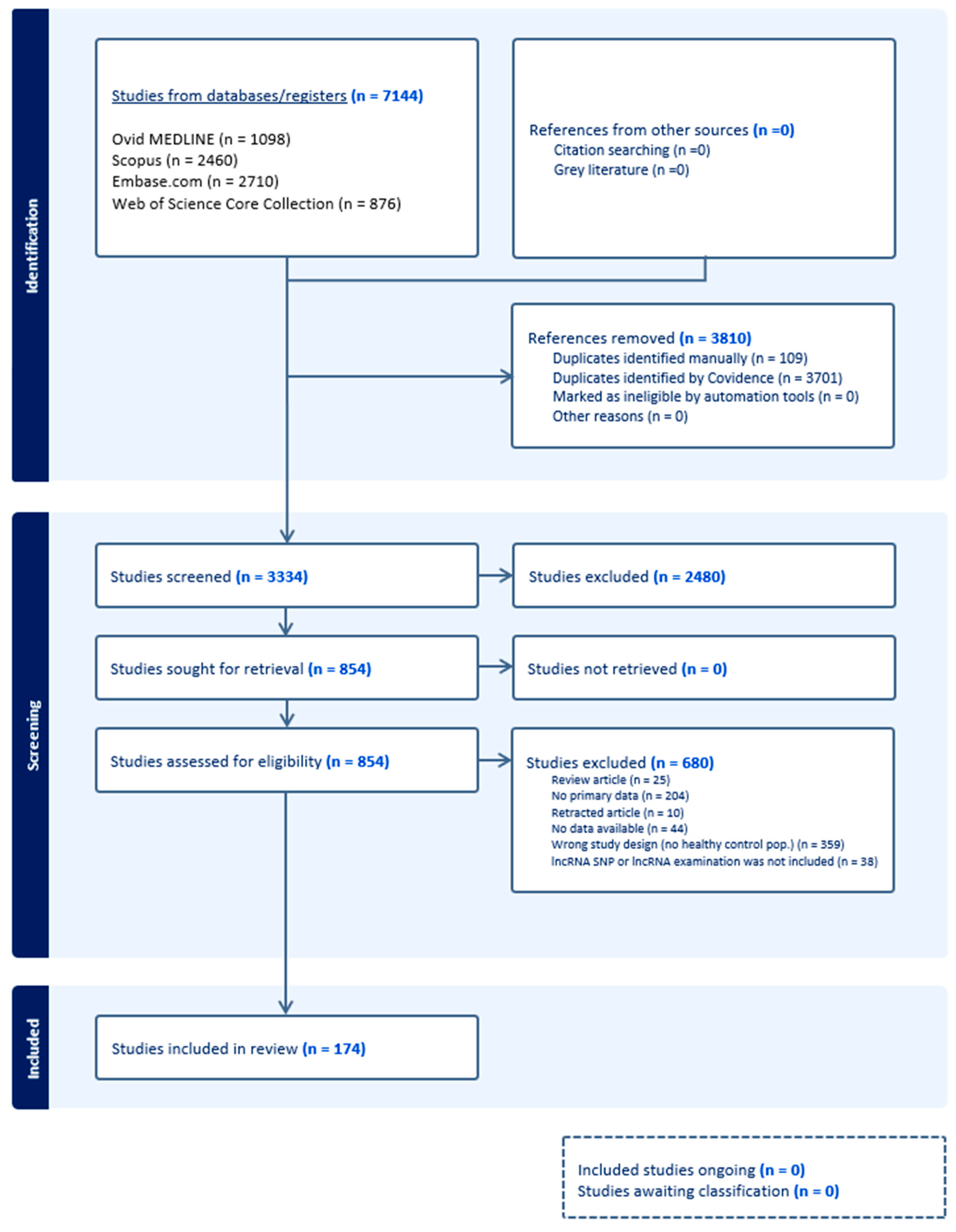
Following a systematic literature review conducted in accordance with our predefined search strategy, 174 studies were initially evaluated as potentially data-extractable for quantitative synthesis (Figure 1). We then performed an initial screening based on cancer type and investigated SNP to identify studies with sufficiently comparable datasets suitable for statistical pooling. For the majority of identified variants, each SNP had been investigated in only a single study, which precluded formal meta-analysis. To ensure that pooled estimates were statistically meaningful, sufficiently powered, and methodologically reliable, meta-analyses were restricted to SNPs supported by at least three independent case–control studies investigating the same cancer type, thereby maximizing clinical and biological comparability across pooled datasets (Table 1). Genotyping methods included targeted analyses as qPCR (SYBR), TaqMan RT-qPCR, RT-PCR, PCR-RFLP, Sequenom MassARRAY, KASP, microarray and direct sequencing. Sample types were predominantly peripherial or venous blood specimens (n = 21), while a smaller number of studies used tissue samples (n = 3), serum samples (n = 2), or both blood and tumor tissue samples (n = 1). The sample type was not available in three studies. The studies performed by Motawi et al. and Wei et al. (as well as H19 rs217727) were excluded from meta-analyses because the genotype distribution in the control groups significantly deviated from Hardy–Weinberg equilibrium (p = 0.013 and p < 0.001, respectively). The NOS scores ranged from 7 to 8, indicating moderate-to-high overall study quality (Supplementary Table S3). Most studies achieved high scores for case definition, control selection, and genotyping methodology. No study was classified as low quality. Following this screening process, only 7 SNPs across 6 distinct lncRNAs fulfilled the criteria for meta-analysis, corresponding to 23 case–control studies included in quantitative synthesis (Table 1). However, considerable between-study differences were observed in the ethnic composition of investigated populations, which may influence allele frequencies and genetic effect estimates, thereby limiting direct comparability. Therefore, primary meta-analyses in Chinese populations were performed only for SNPs within the H19, MALAT1 and HOTAIR lncRNAs. In contrast, exploratory meta-analyses involving partially mixed populations were conducted for SNPs within GAS5, PRNCR1 and MEG3. In these analyses, two of the three available studies were derived from Chinese populations, while one study represented a different ethnic background. Accordingly, these findings should be interpreted with appropriate caution due to population heterogeneity. Visual inspection of the Funnel plots (Supplementary Figure S2) did not reveal substantial asymmetry for any of the analyzed polymorphisms. However, because all comparisons included only three studies, the ability of Funnel plots to detect publication bias was limited, and the findings should therefore be interpreted with caution.

3.2. Primary Evidence from Chinese Population

3.2.1. H19 rs2839698 and Hepatocellular Carcinoma (HCC) Risk in Chinese Population

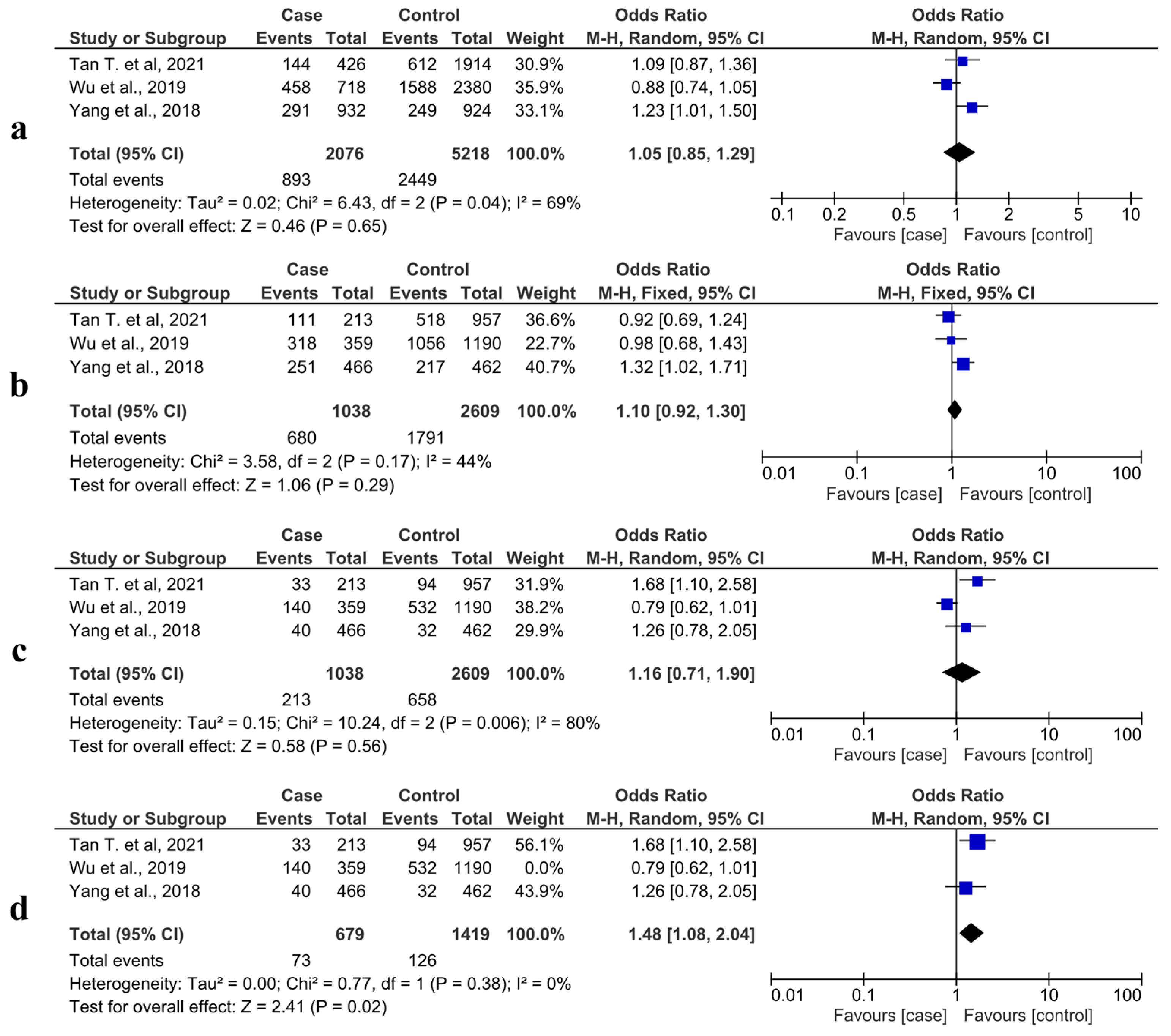
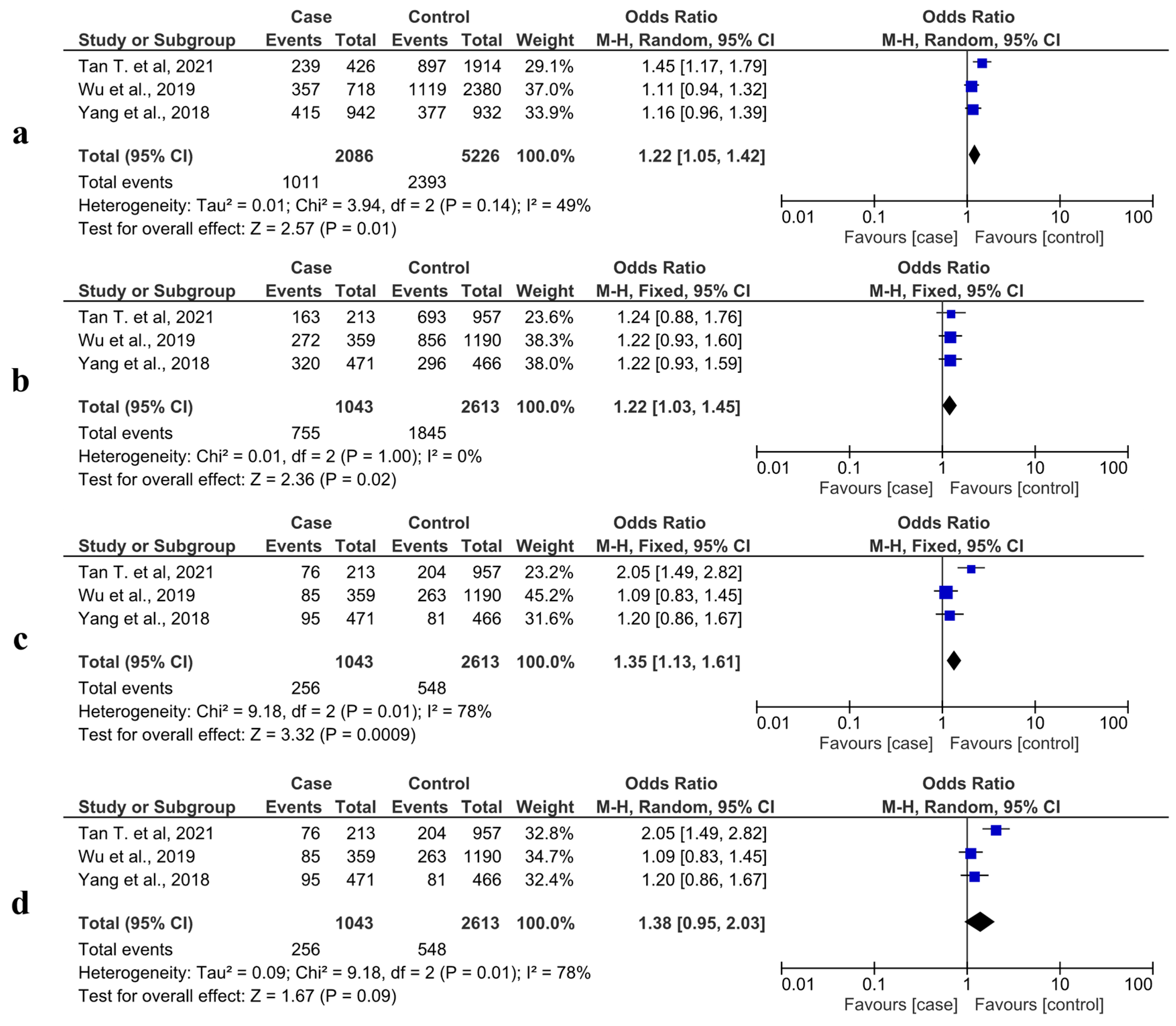
Pooled analysis under the allelic model using a random-effects approach demonstrated no statistically significant association between the risk allele and HCC risk (OR = 1.05, 95% CI: 0.85–1.29, p = 0.65), with considerable between-study heterogeneity (I2 = 69%) (Figure 2a). Similarly, under the dominant model, no significant association was observed (OR = 1.10, 95% CI: 0.92–1.30, p = 0.29), with moderate heterogeneity (I2 = 44%) (Figure 2b). Under the recessive model, the primary random-effects meta-analysis also showed no significant association (OR = 1.16, 95% CI: 0.71–1.90, p = 0.56), although high heterogeneity was present (I2 = 80%) (Figure 2c). Sequential exclusion analyses identified the Wu et al. [48] study as the principal source of heterogeneity. After removal of this dataset, heterogeneity was eliminated under the recessive model (I2 = 0%), and a statistically significant association emerged between rs2839698 and increased HCC susceptibility (OR = 1.48, 95% CI: 1.08–2.04, p = 0.02) (Figure 2d). This finding suggests that individuals homozygous for the variant genotype may have a higher risk of developing HCC. However, this result should be interpreted cautiously, as exclusion of Wu et al. reduced the analysis to only two remaining studies, thereby limiting statistical power and the robustness of the pooled estimate. A similar trend was observed under the allelic model after exclusion of Wu et al., although statistical significance was only borderline.

3.2.2. H19 rs3024270 and HCC Risk in Chinese Population

Across all included studies, the direction of effect was consistent, with study-specific estimates indicating increased risk among carriers of the variant allele. Under the allelic model, pooled analysis using a random-effects approach demonstrated a statistically significant association between rs3024270 and increased HCC susceptibility (OR = 1.22, 95% CI: 1.05–1.42, p = 0.01), with moderate between-study heterogeneity (I2 = 49%) (Figure 3a). Under the dominant model, a significant association was also observed (OR = 1.22, 95% CI: 1.03–1.45, p = 0.02), with no evidence of heterogeneity across studies (I2 = 0%) (Figure 3b). This indicates that carriers of at least one variant allele had a higher risk of HCC compared with individuals with the wild-type genotype. Under the recessive model, the fixed-effect analysis suggested a significant association (OR = 1.35, 95% CI: 1.13–1.61, p = 0.0009); however, extensive heterogeneity was present (I2 = 78%) (Figure 3c). Accordingly, the more appropriate random-effects model was applied, which attenuated the association and rendered it no longer statistically significant, although a positive trend remained (OR = 1.38, 95% CI: 0.95–2.03, p = 0.09) (Figure 3d).

3.2.3. HOTAIR rs4759314 and Gastric Carcinoma (GC) Risk in Chinese Population

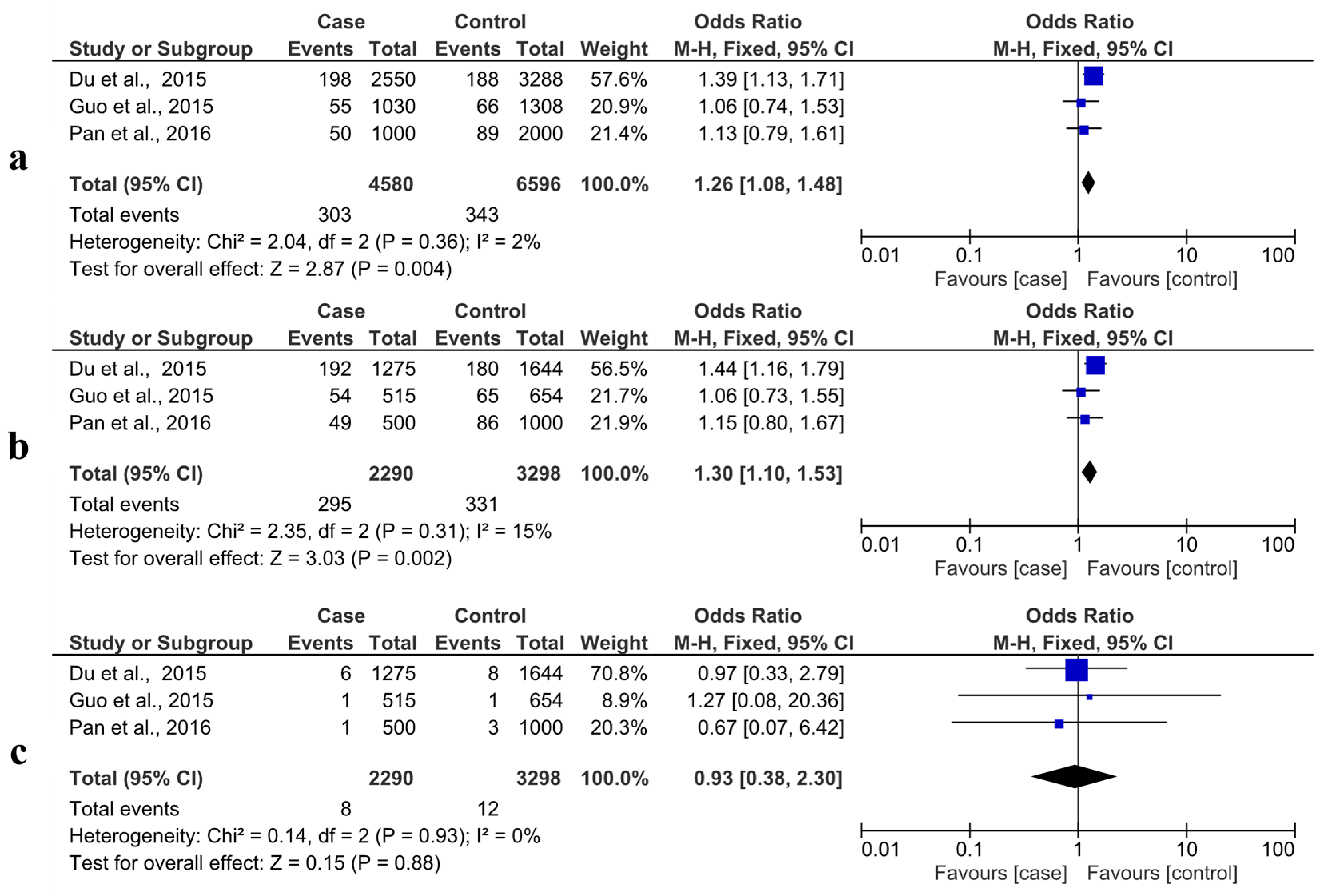
Under the allelic model, pooled fixed-effect analysis demonstrated a significant association between rs4759314 and increased GC susceptibility (OR = 1.26, 95% CI: 1.08–1.48, p = 0.004), with negligible between-study heterogeneity (I2 = 2%) (Figure 4a). Under the dominant model, a similarly significant association was observed (OR = 1.30, 95% CI: 1.10–1.53, p = 0.002), with low heterogeneity across studies (I2 = 15%) (Figure 4b). This indicates that individuals carrying at least one variant allele had a significantly higher risk of GC compared with wild-type homozygotes. In contrast, no significant association was detected under the recessive model (OR = 0.93, 95% CI: 0.38–2.30, p = 0.88), and no heterogeneity was observed (I2 = 0%) (Figure 4c). However, the number of homozygous variant carriers was very low across studies, resulting in low statistical power and broad confidence intervals.

3.2.4. MALAT1 rs619586 and HCC Risk in Chinese Population

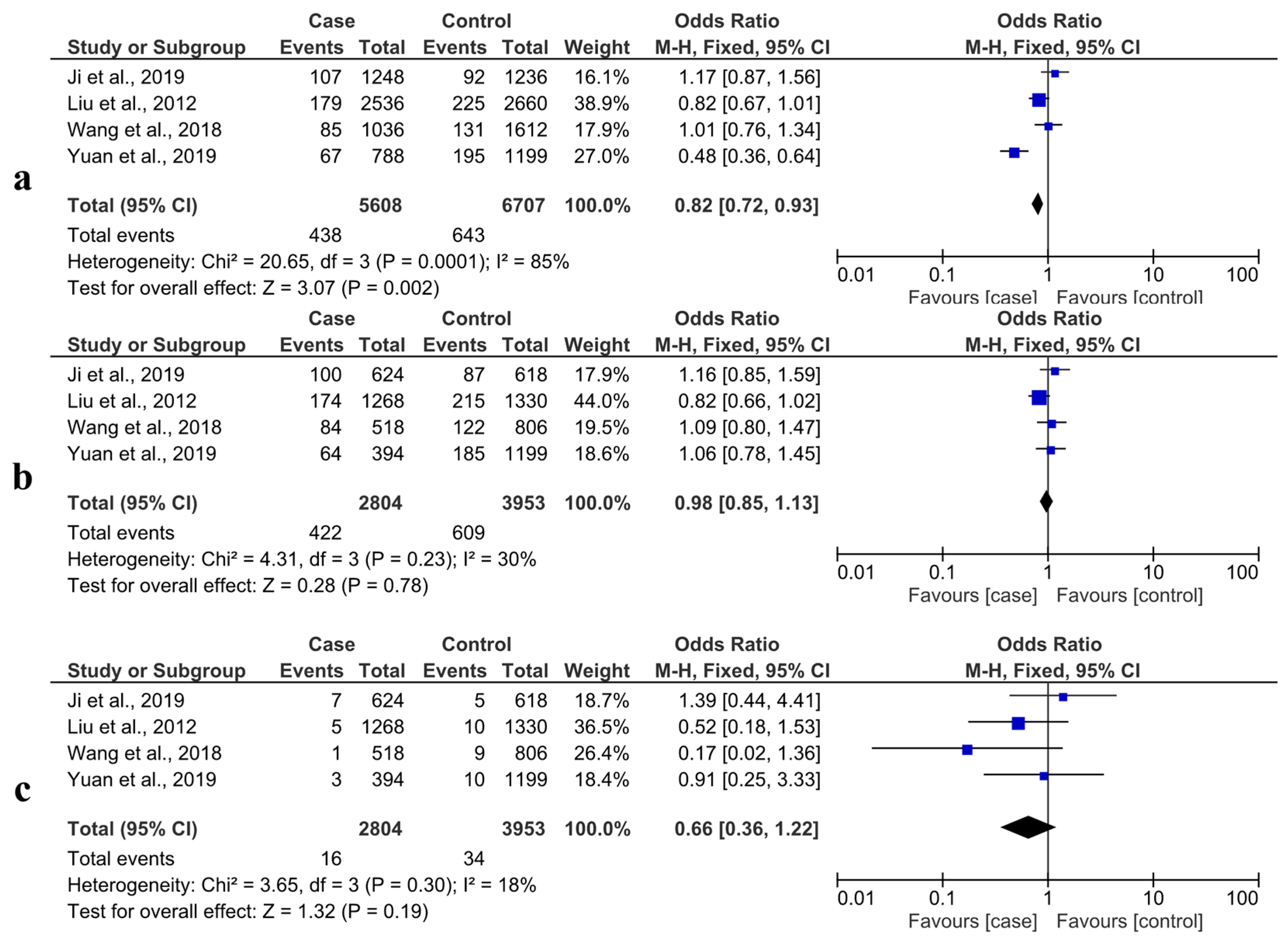
Under the allelic model, fixed-effect analysis demonstrated a significant association between rs619586 and HCC susceptibility (OR = 0.82, 95% CI: 0.72–0.93, p = 0.002), although substantial between-study heterogeneity was observed (I2 = 85%) (Figure 5a). Under the dominant model, fixed-effect analysis demonstrated no significant association between rs619586 and HCC susceptibility (OR = 0.98, 95% CI: 0.85–1.13, p = 0.78), with low-to-moderate heterogeneity across studies (I2 = 30%) (Figure 5b). Similarly, under the recessive model, no significant association was observed (OR = 0.66, 95% CI: 0.36–1.22, p = 0.19), with low heterogeneity (I2 = 18%) (Figure 5c). However, the number of homozygous variant carriers was very low across studies, resulting in limited statistical power and broad confidence intervals.

3.3. Exploratory Evidence from Partially Mixed Population

3.3.1. GAS5 rs145204276 and Colorectal Cancer (CRC) Risk in Mixed Populations

Three case–control studies were eligible for exploratory meta-analysis, including two Chinese cohorts and one Romanian cohort [36,37,38]. Across all inheritance models, substantial to extreme between-study heterogeneity was observed (allelic: I2 = 98%; dominant: I2 = 94%; recessive: I2 = 90%), indicating marked inconsistency among studies. Under the allelic model, the two Chinese studies showed protective associations (Zheng et al., OR = 0.79; Zhu et al., OR = 0.32), whereas the Romanian study (Mirea et al.) demonstrated an opposite, risk-increasing effect (OR = 1.99). Although the pooled estimate suggested an overall protective association (OR = 0.63, 95% CI: 0.57–0.69, p < 0.00001), this result was driven by highly conflicting individual effects and should be interpreted cautiously. Under the dominant model, study-specific findings remained inconsistent as Zheng et al. showed a protective effect (OR = 0.75), while Zhu et al. (OR = 1.44) and Mirea et al. (OR = 2.13) indicated increased risk. The pooled estimate was null (OR = 1.00, 95% CI: 0.89–1.12, p = 0.98). Similarly, under the recessive model, Zheng et al. suggested a protective association (OR = 0.72), whereas Zhu et al. (OR = 1.81) and Mirea et al. (OR = 2.52) showed risk-increasing tendencies. No significant pooled association was detected (OR = 1.05, 95% CI: 0.87–1.28, p = 0.61). All corresponding figures are provided in Supplementary Figure S3.

3.3.2. GAS5 rs145204276 and GC Risk in Mixed Populations

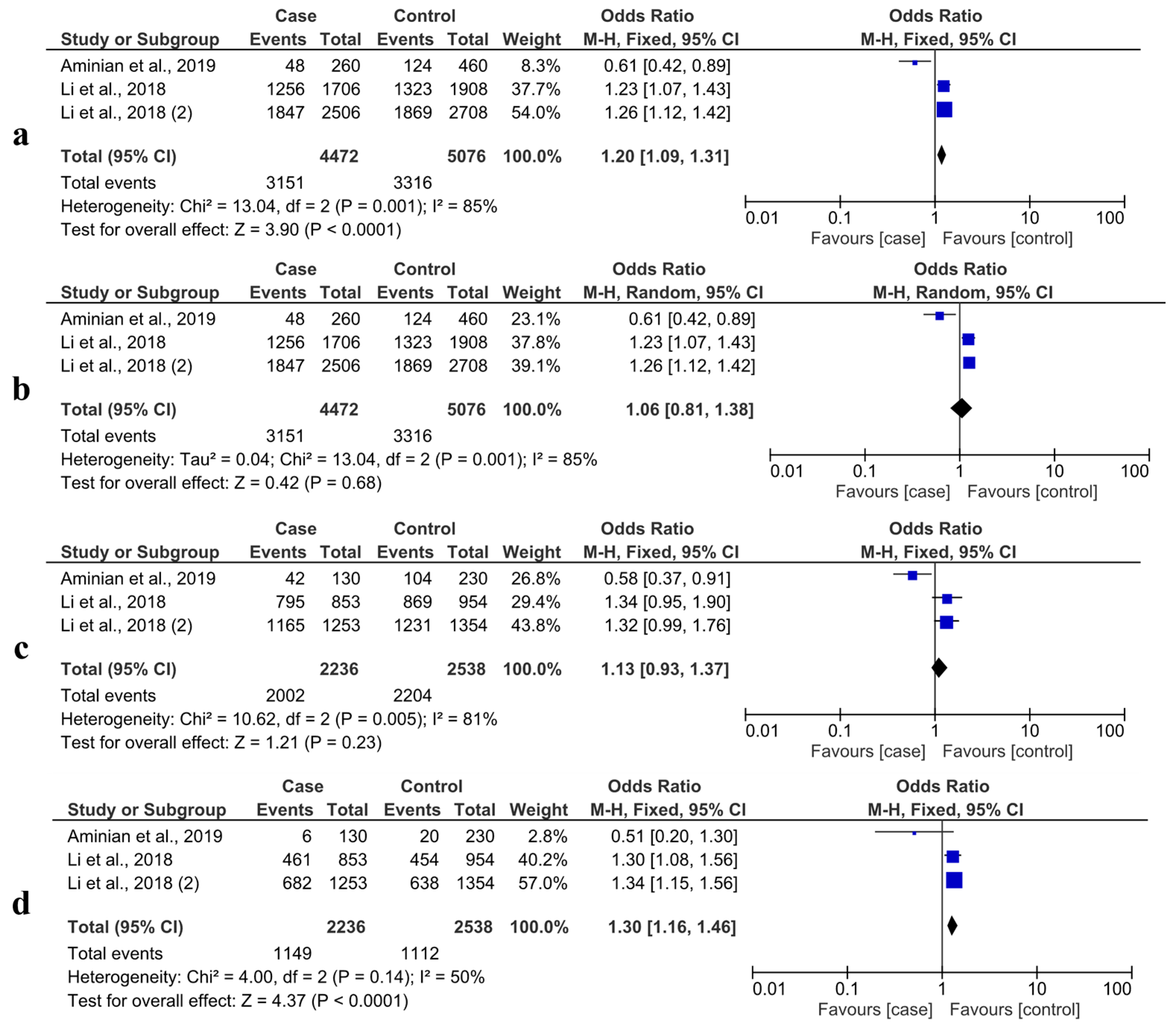
The exploratory pooled analysis included three case–control studies: two from Chinese and one from Iranian cohort. Across models, study-specific estimates showed a consistent risk-increasing effect in the two Chinese cohorts, whereas the smaller Iranian cohort demonstrated an opposite, protective direction of effect. Under the allelic model, the fixed-effect analysis suggested a significant association (OR = 1.20, 95% CI: 1.09–1.31, p < 0.0001); however, high heterogeneity was present (I2 = 85%) (Figure 6a). After application of the random-effects model, the association was no longer significant (OR = 1.06, 95% CI: 0.81–1.38, p = 0.68) (Figure 6b), indicating that the fixed-effect result was not robust. Similarly, under the dominant model, no significant overall association was observed (OR = 1.13, 95% CI: 0.93–1.37, p = 0.23), with considerable heterogeneity (I2 = 81%) (Figure 6c). In contrast, under the recessive model, a significant association was identified between rs145204276 and increased GC susceptibility (OR = 1.30, 95% CI: 1.16–1.46, p < 0.0001), with moderate heterogeneity (I2 = 50%) (Figure 6d). This positive effect was primarily driven by the two Chinese cohorts, while the Iranian cohort contributed minimal statistical weight and showed an opposite-direction estimate.

3.3.3. PRNCR1 rs16901946 and GC Risk in Mixed Populations

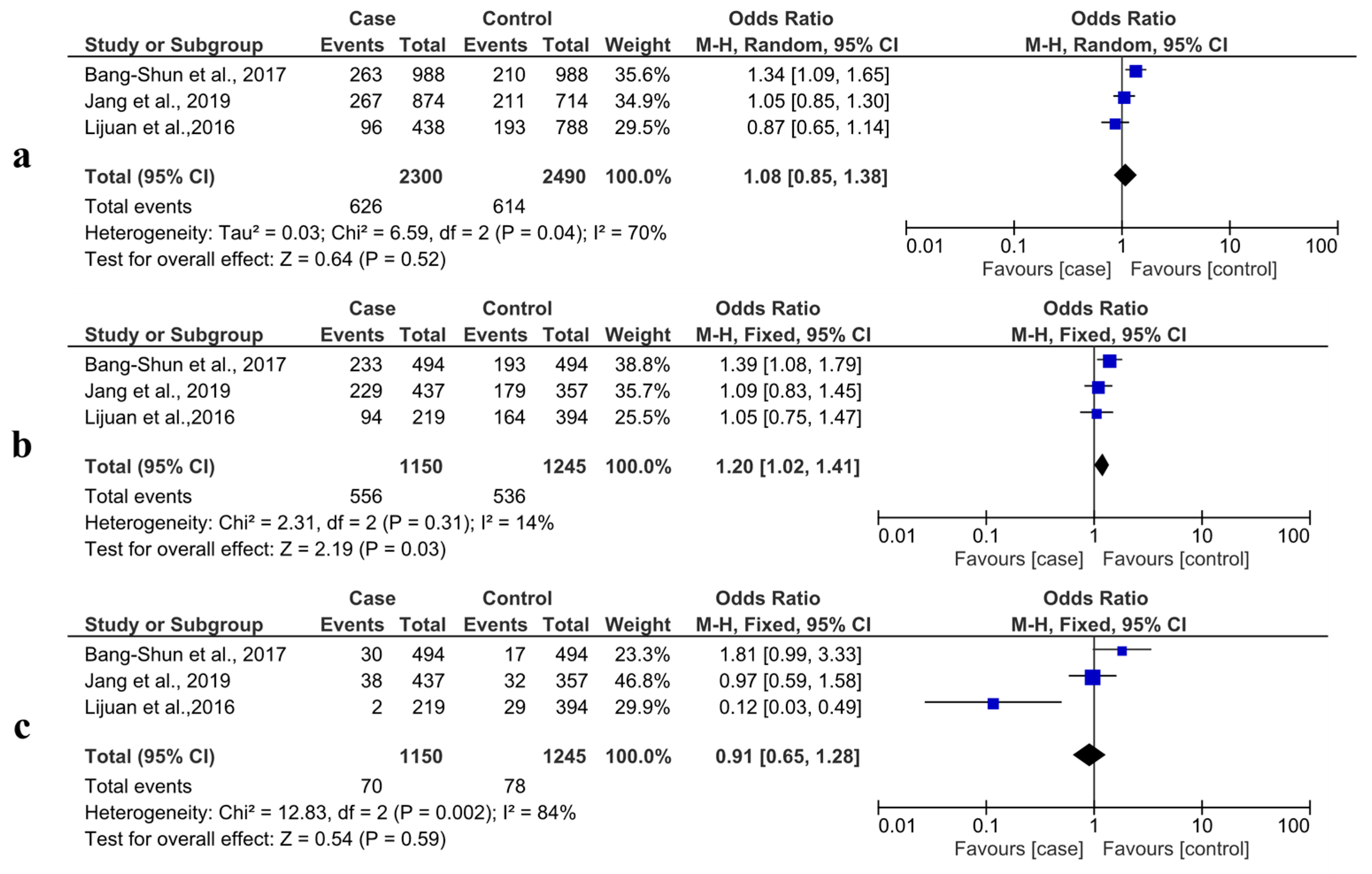
Three studies met the inclusion criteria for exploratory meta-analysis, consisting of two Chinese cohorts and one Korean cohort. Under the allelic model, no significant association was observed using a random-effects approach (OR = 1.08, 95% CI: 0.85–1.38, p = 0.52), with broad between-study heterogeneity (I2 = 70%) (Figure 7a). Study-specific estimates were inconsistent, including one protective Chinese cohort, one neutral Korean cohort, and one risk-increasing Chinese cohort. In contrast, under the dominant model, a significant association was identified between rs16901946 and increased GC susceptibility (OR = 1.20, 95% CI: 1.02–1.41, p = 0.03), with low heterogeneity (I2 = 14%) (Figure 7b). All three studies showed effect estimates in the same direction (OR > 1), indicating that carriers of at least one variant allele had a higher risk of GC compared with wild-type homozygotes. Under the recessive model, no significant association was detected (OR = 0.91, 95% CI: 0.65–1.28, p = 0.59), with marked heterogeneity across studies (I2 = 84%), reflecting highly conflicting study-specific results (Figure 7c).

3.3.4. MEG3 rs7158663 and CRC Risk in Mixed Populations

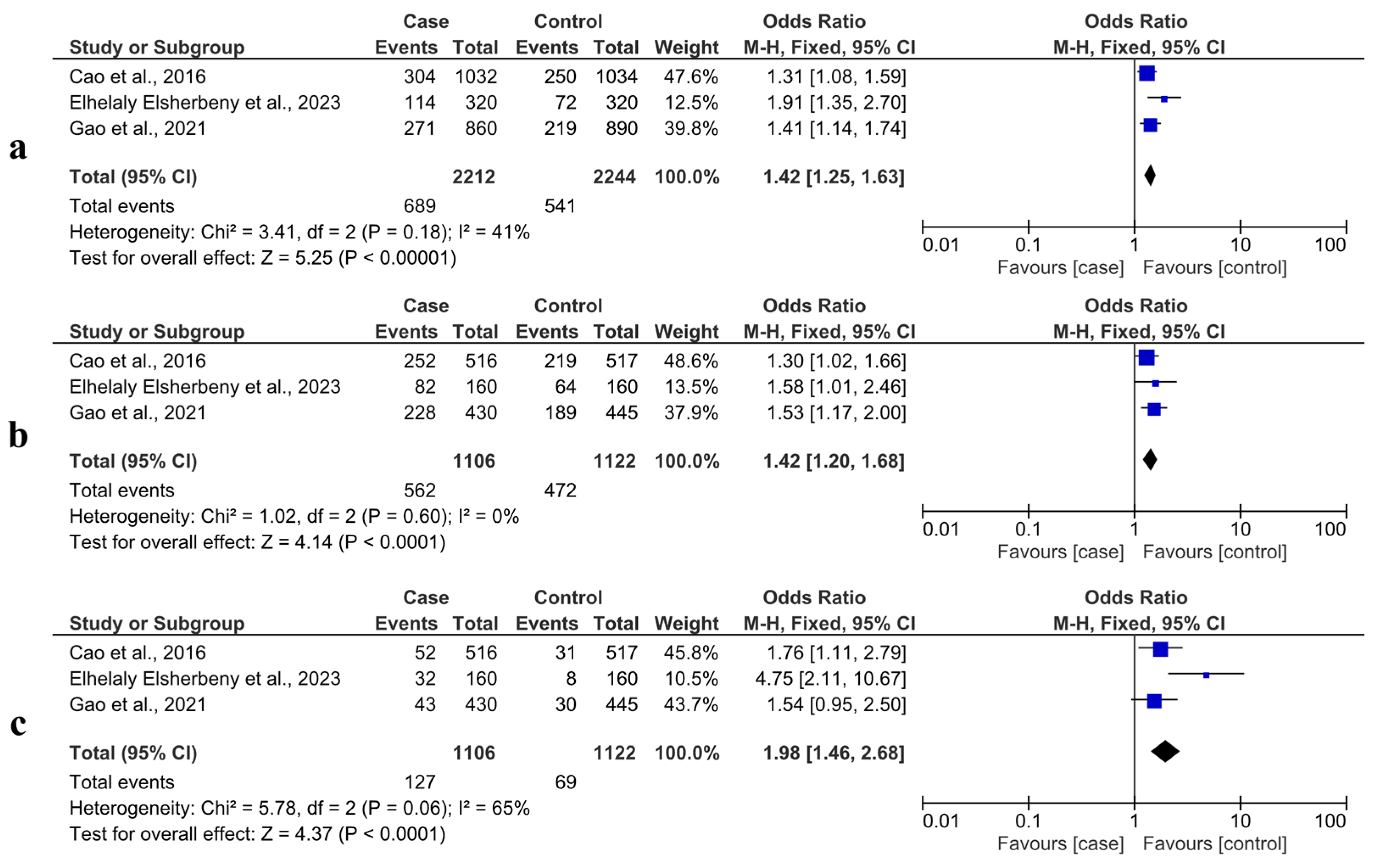
Three eligible case–control studies were identified, representing two Chinese cohorts and one Egyptian cohort. Because of the mixed ethnic composition, pooled analyses were interpreted with appropriate caution; however, study-specific effect estimates were directionally consistent across all included populations. Under the allelic model, rs7158663 was significantly associated with increased CRC risk (OR = 1.42, 95% CI: 1.25–1.63, p < 0.00001), with low-to-moderate heterogeneity (I2 = 41%) (Figure 8a). All three studies demonstrated risk-increasing effects. Similarly, under the dominant model, carriers of at least one variant allele had a significantly elevated CRC risk (OR = 1.42, 95% CI: 1.20–1.68, p < 0.0001), with no detectable heterogeneity (I2 = 0%) (Figure 8b). Study-specific estimates were highly concordant across the Chinese and Egyptian cohorts. The strongest association was observed under the recessive model, where homozygous variant carriers showed an almost twofold increased CRC risk (OR = 1.98, 95% CI: 1.46–2.68, p < 0.0001), with mild heterogeneity (I2 = 65%) (Figure 8c). All included studies showed effect estimates in the same risk-increasing direction.

4. Discussion

This meta-analysis identified several lncRNA polymorphisms associated with GI cancer susceptibility, although the strength and consistency of evidence varied clearly across cancer types. Notably, most of the included studies used peripherial or venous blood samples for genotyping, representing a liquid biopsy-based approach, while only a minority relied on tissue-derived specimens. Overall, the most robust signals were observed for MEG3 rs7158663 in CRC, H19 rs3024270 in HCC, HOTAIR rs4759314 in GC, and PRNCR1 rs16901946 in GC. In contrast, H19 rs2839698, MALAT1 rs619586 and GAS5 rs145204276 showed heterogeneous or population-dependent effects, highlighting the complexity of lncRNA-based cancer genetics.
In hepatocellular carcinoma, all meta-analyses were based on studies conducted in Chinese populations. For H19 rs2839698, no significant overall association with HCC was observed. Although sensitivity analysis yielded a significant association under the recessive model after exclusion of one heterogenous dataset, this result was based on only two remaining studies and therefore cannot be considered as robust evidence of an association. Consequently, the finding should be regarded as exploratory and interpreted with caution until further validation. Several previous meta-analyses have also examined the relationship between H19 rs2839698 and cancer susceptibility. Early analyses by Chu et al. [62] and Li et al. [63] reported inconsistent overall results, although subgroup analyses suggested increased risk particularly for digestive system cancers. Similarly, Hashemi et al. observed stronger associations in gastrointestinal malignancies [64]. More recent and larger meta-analyses by Liu et al. [65], Yuan et al. [66], and Yang et al. [67] consistently demonstrated that rs2839698 is associated with elevated overall cancer susceptibility, particularly in Asian populations and under recessive or homozygous genetic models. Several of these analyses also identified stronger effects in digestive system malignancies, including hepatocellular carcinoma, supporting the possibility that rs2839698 may contribute to HCC susceptibility in a population- and model-dependent manner.
By contrast, H19 rs3024270 showed a more consistent association with HCC, particularly under allelic and dominant models, indicating that a single risk allele may be sufficient to influence susceptibility. As all included studies were performed in Chinese Han populations, internal consistency was good, although external generalizability remains uncertain. Previous meta-analyses evaluating H19 polymorphisms in cancer susceptibility have also included rs3024270, although the available evidence remains more limited than for rs2839698. While some analyses reported no significant overall association for rs3024270 [65], subgroup analyses suggested possible effects in specific populations or genetic models [68]. However, Yang et al. [67] and Wang et al. [69] demonstrated a significant association between rs3024270 and overall, population-based cancer susceptibility, supporting a potential contribution of this variant to carcinogenesis. However, tumour-specific evidence for HCC remains relatively insufficient, and further studies in larger and ethnically diverse cohorts are warranted.
Similarly, MALAT1 rs619586 demonstrated no significant association with HCC susceptibility under dominant or recessive models. Study-specific effect estimates were inconsistent across the four included studies, with some studies showing a protective effect and the remaining studies demonstrating neutral or mildly risk-increasing associations. Substantial heterogeneity was observed under the allelic model, largely driven by the protective-effect study. The dominant and recessive models likewise demonstrated no evidence of association, suggesting that rs619586 is unlikely to play a key role in HCC susceptibility according to the currently available literature. These findings are in line with the meta-analysis by Ni et al., which reported that although rs619586 was associated with overall cancer susceptibility, no significant association was observed specifically for hepatocellular carcinoma in subgroup analyses [70]. This may indicate that the effect of rs619586 is cancer-type dependent and less relevant in HCC than in other malignancies.
In gastric cancer, HOTAIR rs4759314 demonstrated a stable positive association, strongest under the dominant model and with minimal heterogeneity. Similar findings were reported by Qi et al., whose subgroup analysis identified a significant association between rs4759314 and gastric cancer susceptibility under allelic, dominant, and heterozygous models, with little heterogeneity within the gastric cancer subgroup [71]. Together these findings collectively support a potential role of HOTAIR rs4759314 in gastric carcinogenesis.
PRNCR1 rs16901946 similarly showed a modest but consistent dominant-model association, supported by low heterogeneity across East Asian cohorts. Comparable findings have been reported in a previous meta-analysis investigating PRNCR1 polymorphisms and cancer susceptibility, in which Du et al. confirmed the contribution of rs16901946 to cancer susceptibility across multiple genetic models [72].
In contrast, GAS5 rs145204276 was associated with gastric cancer primarily under the recessive model, with the signal largely driven by Chinese cohorts, while the Iranian study showed an opposite effect direction. This suggests possible ancestry-specific effects. Previously Cai et al. confirmed a significant correlation between rs145204276 and gastric cancer susceptibility [73], whereas Gao et al. found no significant association with overall cancer risk, although stratified analyses suggested that rs145204276 may act as a protective factor in gastric cancer [74]. Both investigated Asian populations. Together, these findings indicate that the effect of GAS5 rs145204276 may differ according to ethnic background and tumour type.
For colorectal cancer, MEG3 rs7158663 was the strongest overall finding, with significant associations across all inheritance models and the largest effect under the recessive model. Concordant risk estimates across Chinese and Egyptian cohorts support a potential biological effect, although mixed-population pooling warrants cautious interpretation. Similar findings have been described in previous meta-analyses. Gao et al. demonstrated significant associations between rs7158663 and colorectal as well as gastric cancer risk [59], while Wang et al. also observed increased susceptibility particularly for colorectal cancer, but not liver cancer [75]. More recently, Hu et al. confirmed that the rs7158663 A allele was associated with elevated overall cancer risk, especially in East Asian and Middle Eastern populations [76]. These findings support a possible role of MEG3 rs7158663 in colorectal carcinogenesis while also suggesting possible population-specific effects.
Conversely, GAS5 rs145204276 yielded conflicting results across studies and models, possibly reflecting population stratification, methodological differences, or inconsistent in/del allele coding. Gao et al. found no significant relationship between rs145204276 and overall cancer susceptibility, although subgroup analyses suggested a protective effect in gastric cancer [74], whereas Cai et al. reported significant associations in gastrointestinal malignancies [73]. These discrepancies may partly result from ethnic differences or heterogeneous study designs.
Because GAS5 rs145204276 is an insertion/deletion polymorphism, differences in allele designation and genotype nomenclature across studies may potentially influence the interpretation of pooled results. To address this issue, we reviewed the genotype coding reported in all included studies of this SNP. No obvious inconsistencies in a genotype coding were identified. Notably, conflicting associations were observed even among Chinese studies, indicating that the observed heterogeneity is unlikely to be explained solely by allele-coding discrepancies, it is more likely influenced by population-specific genetic effects.
Nevertheless, several important limitations must be emphasized. First, the number of available studies was small, reducing the statistical power and overall robustness of the pooled estimates. The limited sample size also restricted the possibility of conducting more detailed subgroup analyses and may have reduced the ability to detect modest genetic effects. Second, potential population-specific effects and residual heterogeneity across analyses may have influenced the observed associations. Most of the included studies were conducted in Chinese populations, resulting in an ethnic imbalance that may limit the generalizability of the findings to other populations. Differences in allele frequencies, linkage disequilibrium patterns, environmental exposures, and genetic background across ethnic groups may contribute to variation in SNP-disease associations. Furthermore, population stratification may act as a potential confounder in genetic association studies and could partly explain discrepancies between studies conducted in different populations. This heterogeneity may be attributable as well to differences in study design, genotyping methods, and environmental factors among the included studies. Because of the limited number of studies, the sources of heterogeneity could not be explored further. Third, subgroup analyses and formal assessment of publication bias could not be conducted because of the limited number of eligible studies. Although Funnel plot analyses were performed for comparisons including at least three studies, their interpretability and reliability remain limited due to the small number of studies available for each analysis. This is particularly relevant, as publication bias is often more noticeable in meta-analyses based on few and relatively small studies. In this study, publication bias may have resulted from several factors, including the limited availability of evidence due to the relatively recent emergence of research on lncRNA SNPs, insufficient reporting of data in otherwise eligible studies that precluded inclusion in quantitative synthesis, and the potential presence of selective or biased findings within the included studies. Additionally, only articles published in English were considered, which may have further contributed to publication bias. Therefore, these findings should be interpreted with caution. Future studies should include larger, well-designed cohorts from diverse populations, ideally incorporating data from high-volume centers, which may provide more robust and generalizable results. Further investigations should also explore potential gene-gene and gene-environment interactions. Further functional studies are also needed to clarify the biological mechanisms underlying the observed associations. In addition, advances in computational and data-driven approaches, including artificial intelligence-based methods, may facilitate the integration of genetic and clinical data to support precision oncology in GI cancers [77]. A clearer understanding of the functional consequences of these polymorphisms may further support their potential application as biomarkers or therapeutic targets in digestive system cancers.

5. Conclusions

Taken together, the present findings refine the current understanding of lncRNA genetics in digestive system cancers. Rather than supporting a generalized role for all lncRNA polymorphisms, the results indicate that MEG3 rs7158663 in CRC, H19 rs3024270 in HCC, PRNCR1 rs16901946 in GC and GAS5 rs145204276 in GC emerge as the most credible susceptibility candidates, whereas evidence for H19 rs2839698 and MALAT1 rs619586 in HCC and GAS5 rs145204276 in CRC remains limited. A major strength of this study is the systematic evaluation of recurrently investigated lncRNS SNPs using predefined eligibility criteria and comparable SNP-cancer associations. However, the findings should be interpreted with caution, as several analyses were based on a limited number of eligible studies. The distinction of this study may help inform future research by highlighting variants that may deserve further functional study and could have potential relevance for biomarker investigation or genetic risk stratification. Importantly, by systematically evaluating recurrently studied lncRNA polymorphisms across major digestive system cancers, the present study offers an updated summary of the available evidence and helps differentiate more consistent associations from those that remain uncertain. Future studies should focus on larger and ethnically diverse cohorts, as well as functional validation of the identified variants to clarify their biological relevance.

Supplementary Materials

The following supporting information can be downloaded at: https://www.mdpi.com/article/10.3390/cancers18121916/s1, Figure S1: Detailed search strategy. Figure S2: Funnel plots for visual assessment of potential publication bias in meta-analyses including at least three studies. Figure S3: Forest plots of the association between GAS5 rs145204276 polymorphism and CRC risk under different genetic models: (a) allelic model; (b) dominant model; (c) recessive model. Table S1: PRISMA 2020 main checklist. Table S2: PRISMA 2020 checklists for abstracts. Table S3: Newcastle-Ottawa Scale quality assessment of included studies.

Author Contributions

Conceptualization, T.V., K.V., S.L. and I.K.; methodology, I.K. and S.L.; formal analysis, K.V.; investigation, K.V., resources, T.V. and I.K.; data curation, T.V., A.Z., M.K.-V., L.C. and K.V.; writing—original draft preparation, K.V.; writing—review and editing, T.V., visualization, K.V. and L.C.; supervision, I.K. and T.V. All authors have read and agreed to the published version of the manuscript.

Funding

The APC was funded by University of Pécs, Medical School.

Data Availability Statement

The original contributions presented in this study are included in the article and in the Supplementary Materials. Further inquiries can be directed to the corresponding authors.

Acknowledgments

The authors gratefully acknowledge Gergő Berke for his support and contributions to the initial conceptualization and steps of the study.

Conflicts of Interest

Márk Kovács-Valasek is employed by PannonPharma Pharmaceutical Ltd.; however, the company had no role in the design, conduct, or funding of this study. The research was carried out independently, and the author did not receive any direct financial or other benefits related to the reported findings. The authors declare no conflicts of interest.

Abbreviations

The following abbreviations are used in this manuscript:
GIGastrointestinal
SNPSingle nucleotide polymorphism
lncRNALong non-coding RNA
CRCColorectal cancer
GCGastric cancer
HCCHepatocellular cancer
HWEHardy–Weinberg equilibrium
NOSNewcastle-Ottawa Scale

References

  1. Ferlay, J.; Ervik, M.; Lam, F.; Laversanne, M.; Colombet, M.; Mery, L.; Pińeros, M.; Znaor, A.; Soerjomataram, I.; Bray, F. Global Cancer Observatory: Cancer Today; International Agency for Research on Cancer: Lyon, France, 2024; Available online: https://gco.iarc.who.int/today (accessed on 19 July 2025).
  2. Wong, S.H.; Yu, J. Gut microbiota in colorectal cancer: Mechanisms of action and clinical applications. Nat. Rev. Gastroenterol. Hepatol. 2019, 16, 690–704. [Google Scholar] [CrossRef]
  3. Sepich-Poore, G.D.; Zitvogel, L.; Straussman, R.; Hasty, J.; Wargo, J.A.; Knight, R. The microbiome and human cancer. Science 2021, 371, eabc4552. [Google Scholar] [CrossRef]
  4. Noh, J.H.; Kim, K.M.; McClusky, W.G.; Abdelmohsen, K.; Gorospe, M. Cytoplasmic functions of long noncoding RNAs. Wiley Interdiscip. Rev. RNA 2018, 9, e1471. [Google Scholar] [CrossRef] [PubMed]
  5. Cabili, M.N.; Trapnell, C.; Goff, L.; Koziol, M.; Tazon-Vega, B.; Regev, A.; Rinn, J.L. Integrative annotation of human large intergenic noncoding RNAs reveals global properties and specific subclasses. Genes Dev. 2011, 25, 1915–1927. [Google Scholar] [CrossRef] [PubMed]
  6. Hombach, S.; Kretz, M. Non-coding RNAs: Classification, Biology and Functioning. In Non-Coding RNAs in Colorectal Cancer; Advances in Experimental Medicine and Biology; Springer: Cham, Switzerland, 2016; Volume 937, pp. 3–17. [Google Scholar] [CrossRef]
  7. Derrien, T.; Johnson, R.; Bussotti, G.; Tanzer, A.; Djebali, S.; Tilgner, H.; Guernec, G.; Martin, D.; Merkel, A.; Knowles, D.G.; et al. The GENCODE v7 catalog of human long noncoding RNAs: Analysis of their gene structure, evolution, and expression. Genome Res. 2012, 22, 1775–1789. [Google Scholar] [CrossRef]
  8. Frankish, A.; Diekhans, M.; Ferreira, A.M.; Johnson, R.; Jungreis, I.; Loveland, J.; Mudge, J.M.; Sisu, C.; Wright, J.; Armstrong, J.; et al. GENCODE reference annotation for the human and mouse genomes. Nucleic Acids Res. 2019, 47, D766–D773. [Google Scholar] [CrossRef]
  9. Uszczynska-Ratajczak, B.; Lagarde, J.; Frankish, A.; Guigó, R.; Johnson, R. Towards a complete map of the human long non-coding RNA transcriptome. Nat. Rev. Genet. 2018, 19, 535–548. [Google Scholar] [CrossRef]
  10. Mudge, J.M.; Carbonell-Sala, S.; Diekhans, M.; Martinez, J.G.; Hunt, T.; Jungreis, I.; Loveland, J.E.; Arnan, C.; Barnes, I.; Bennett, R.; et al. GENCODE 2025: Reference gene annotation for human and mouse. Nucleic Acids Res. 2025, 53, D966–D975. [Google Scholar] [CrossRef]
  11. Rinn, J.L.; Chang, H.Y. Genome regulation by long noncoding RNAs. Annu. Rev. Biochem. 2012, 81, 145–166. [Google Scholar] [CrossRef]
  12. Lin, C.; Yang, L. Long Noncoding RNA in Cancer: Wiring Signaling Circuitry. Trends Cell Biol. 2018, 28, 287–301. [Google Scholar] [CrossRef] [PubMed]
  13. Kopp, F.; Mendell, J.T. Functional Classification and Experimental Dissection of Long Noncoding RNAs. Cell 2018, 172, 393–407. [Google Scholar] [CrossRef]
  14. Schmitt, A.M.; Chang, H.Y. Long Noncoding RNAs in Cancer Pathways. Cancer Cell 2016, 29, 452–463. [Google Scholar] [CrossRef]
  15. Bhan, A.; Soleimani, M.; Mandal, S.S. Long Noncoding RNA and Cancer: A New Paradigm. Cancer Res. 2017, 77, 3965–3981. [Google Scholar] [CrossRef]
  16. Huarte, M. The emerging role of lncRNAs in cancer. Nat. Med. 2015, 21, 1253–1261. [Google Scholar] [CrossRef]
  17. Peng, W.X.; Koirala, P.; Mo, Y.Y. LncRNA-mediated regulation of cell signaling in cancer. Oncogene 2017, 36, 5661–5667. [Google Scholar] [CrossRef]
  18. Esteller, M. Non-coding RNAs in human disease. Nat. Rev. Genet. 2011, 12, 861–874. [Google Scholar] [CrossRef]
  19. Iyer, M.K.; Niknafs, Y.S.; Malik, R.; Singhal, U.; Sahu, A.; Hosono, Y.; Barrette, T.R.; Prensner, J.R.; Evans, J.R.; Zhao, S.; et al. The landscape of long noncoding RNAs in the human transcriptome. Nat. Genet. 2015, 47, 199–208. [Google Scholar] [CrossRef] [PubMed]
  20. Gupta, R.A.; Shah, N.; Wang, K.C.; Kim, J.; Horlings, H.M.; Wong, D.J.; Tsai, M.C.; Hung, T.; Argani, P.; Rinn, J.L.; et al. Long non-coding RNA HOTAIR reprograms chromatin state to promote cancer metastasis. Nature 2010, 464, 1071–1076. [Google Scholar] [CrossRef] [PubMed]
  21. Ariel, I.; Sughayer, M.; Fellig, Y.; Pizov, G.; Ayesh, S.; Podeh, D.; Libdeh, B.A.; Levy, C.; Birman, T.; Tykocinski, M.L.; et al. The imprinted H19 gene is a marker of early recurrence in human bladder carcinoma. Mol. Pathol. 2000, 53, 320–323. [Google Scholar] [CrossRef] [PubMed]
  22. Gutschner, T.; Hämmerle, M.; Diederichs, S. MALAT1—A paradigm for long noncoding RNA function in cancer. J. Mol. Med. 2013, 91, 791–801. [Google Scholar] [CrossRef]
  23. Wu, Y.; Chen, Z.; Tang, F.; Sun, W.; Zhang, Q.; Li, M.-Y. Circular RNAs in Cancer: Epigenetic Regulation, Dual Functions and Clinical Translation. Biofactors 2026, 52, e70109. [Google Scholar] [CrossRef]
  24. Sharma, R.; Malviya, R. Modifying the electrical, optical, and magnetic properties of cancer cells: A comprehensive approach for cancer management. Med. Adv. 2024, 2, 3–19. [Google Scholar] [CrossRef]
  25. Huang, X.; Zhang, W.; Shao, Z. Association between long non-coding RNA polymorphisms and cancer risk: A meta-analysis. Biosci. Rep. 2018, 38, BSR20180365. [Google Scholar] [CrossRef] [PubMed]
  26. Wang, Z.; Dai, J.; Hu, N.; Miao, X.; Abnet, C.C.; Yang, M.; Freedman, N.D.; Chen, J.; Burdette, L.; Zhu, X.; et al. Identification of new susceptibility loci for gastric non-cardia adenocarcinoma: Pooled results from two Chinese genome-wide association studies. Gut 2017, 66, 581–587. [Google Scholar] [CrossRef]
  27. Hao, J.; Yuan, B.; Gou, Y.; Ma, J.; Huang, X. Prognostic Value of lncRNA PVT1 for Patients with Gastric Cancer: A Meta-Analysis. Dis. Markers 2021, 2021, 5595965. [Google Scholar] [CrossRef]
  28. Alidoust, M.; Hamzehzadeh, L.; Rivandi, M.; Pasdar, A. Polymorphisms in non-coding RNAs and risk of colorectal cancer: A systematic review and meta-analysis. Crit. Rev. Oncol. Hematol. 2018, 132, 100–110. [Google Scholar] [CrossRef] [PubMed]
  29. Zhao, S.; Liu, P.; Ruan, Z.; Li, J.; Zeng, S.; Zhong, M.; Tang, L. Association between long non-coding RNA (lncRNA) GAS5 polymorphism rs145204276 and cancer risk. J. Int. Med. Res. 2021, 49, 3000605211039798. [Google Scholar] [CrossRef]
  30. Li, L.; Huang, Q.; Yan, F.; Wei, W.; Li, Z.; Liu, L.; Deng, J. Association between long non-coding RNA H19 polymorphisms and breast cancer risk: A meta-analysis. Women Health 2022, 62, 565–575. [Google Scholar] [CrossRef] [PubMed]
  31. Mathias, C.; Garcia, L.E.; Teixeira, M.D.; Kohler, A.F.; Marchi, R.D.; Barazetti, J.F.; Gradia, D.F.; de Oliveira, J.C. Polymorphism of lncRNAs in breast cancer: Meta-analysis shows no association with susceptibility. J. Gene Med. 2020, 22, e3271. [Google Scholar] [CrossRef]
  32. Wang, X.; Zhong, J.; Chen, F.; Hu, K.; Sun, S.; Leng, Y.; Chen, X.; Gan, F.; Pan, Y.; Luo, Q. Association between lncRNA H19 rs217727 polymorphism and the risk of cancer: An updated meta-analysis. BMC Med. Genet. 2019, 20, 186. [Google Scholar] [CrossRef]
  33. Yuan, H.; Liu, H.; Liu, Z.; Owzar, K.; Han, Y.; Su, L.; Wei, Y.; Hung, R.J.; McLaughlin, J.; Brhane, Y.; et al. A Novel Genetic Variant in Long Non-coding RNA Gene NEXN-AS1 is Associated with Risk of Lung Cancer. Sci. Rep. 2016, 6, 34234. [Google Scholar] [CrossRef] [PubMed]
  34. Page, M.J.; McKenzie, J.E.; Bossuyt, P.M.; Boutron, I.; Hoffmann, T.C.; Mulrow, C.D.; Shamseer, L.; Tetzlaff, J.M.; Akl, E.A.; Brennan, S.E.; et al. The PRISMA 2020 statement: An updated guideline for reporting systematic reviews. BMJ 2021, 372, n71. [Google Scholar] [CrossRef] [PubMed]
  35. Petkevicius, V.; Streleckiene, G.; Balciute, K.; Link, A.; Leja, M.; Malfertheiner, P.; Skieceviciene, J.; Kupcinskas, J. Association of Long Non-Coding RNA Polymorphisms with Gastric Cancer and Atrophic Gastritis. Genes 2020, 11, 1505. [Google Scholar] [CrossRef]
  36. Zhu, Z.; Xue, Y.; Fu, W.; Li, C.; Feng, L.; Xing, Y.; Wang, H. Functional indel polymorphism within lncRNA GAS5 and colorectal carcinoma risk. Int. J. Clin. Exp. Pathol. 2016, 9, 11767–11773. [Google Scholar]
  37. Mirea, C.S.; Schenker, M.; Petre-Mandache, B.; Cucu, M.G.; Camen, G.C.; Vîlcea, I.D.; Albu, B.C.; Obleagă, C.V.; Ciorbagiu, M.C.; Streață, I.; et al. GAS5 rs145204276 Ins/Del Polymorphism Is Associated with CRC Susceptibility in a Romanian Population. Int. J. Mol. Sci. 2025, 26, 3078. [Google Scholar] [CrossRef]
  38. Zheng, Y.; Song, D.; Xiao, K.; Yang, C.; Ding, Y.; Deng, W.; Tong, S. LncRNA GAS5 contributes to lymphatic metastasis in colorectal cancer. Oncotarget 2016, 7, 83727–83734. [Google Scholar] [CrossRef]
  39. Aminian, K.; Mashayekhi, F.; Mirzanejad, L.; Salehi, Z. A functional genetic variant in GAS5 lncRNA (rs145204276) modulates p27Kip1 expression and confers risk for gastric cancer. Br. J. Biomed. Sci. 2019, 76, 83–85. [Google Scholar] [CrossRef]
  40. Li, Q.; Ma, G.; Sun, S.; Xu, Y.; Wang, B. Polymorphism in the promoter region of lncRNA GAS5 is functionally associated with the risk of gastric cancer. Clin. Res. Hepatol. Gastroenterol. 2018, 42, 478–482. [Google Scholar] [CrossRef]
  41. Li, Q.J.; Ma, G.; Guo, H.M.; Sun, S.H.; Xu, Y.; Wang, B.J. The Variant rs145204276 of GAS5 is Associated with the Development and Prognosis of Gastric Cancer. J. Gastrointest. Liver Dis. 2018, 27, 19–24. [Google Scholar] [CrossRef]
  42. Li, L.; Jia, F.; Bai, P.; Liang, Y.; Sun, R.; Yuan, F.; Zhang, L.; Gao, L. Association between polymorphisms in long non-coding RNA PRNCR1 in 8q24 and risk of gastric cancer. Tumor Biol. 2016, 37, 299–303. [Google Scholar] [CrossRef] [PubMed]
  43. Hong, J.H.; Jin, E.H.; Kang, H.; Chang, I.A.; Lee, S.I.; Sung, J.K. Correlations between Genetic Polymorphisms in Long Non-Coding RNA PRNCR1 and Gastric Cancer Risk in a Korean Population. Int. J. Mol. Sci. 2019, 20, 3355. [Google Scholar] [CrossRef]
  44. He, B.S.; Sun, H.L.; Xu, T.; Pan, Y.Q.; Lin, K.; Gao, T.Y.; Zhang, Z.Y.; Wang, S.K. Association of Genetic Polymorphisms in the LncRNAs with Gastric Cancer Risk in a Chinese Population. J. Cancer 2017, 8, 531–536. [Google Scholar] [CrossRef] [PubMed]
  45. Yang, C.; Tang, R.; Ma, X.; Wang, Y.; Luo, D.; Xu, Z.; Zhu, Y.; Yang, L. Tag SNPs in long non-coding RNA H19 contribute to susceptibility to gastric cancer in the Chinese Han population. Oncotarget 2015, 6, 15311–15320. [Google Scholar] [CrossRef]
  46. Wei, M.-R.; Wang, X.-F.; Luo, B. Association between lncRNAH19 polymorphisms and susceptibility to gastric carcinoma and EBV-associated gastric carcinoma in Han population in Qingdao. Chin. J. Cancer Biother. 2019, 6, 676–682. [Google Scholar] [CrossRef]
  47. Tan, T.; Li, J.; Wen, Y.; Zou, Y.; Yang, J.; Pan, J.; Hu, C.; Yao, Y.; Zhang, J.; Xin, Y.; et al. Association between lncRNA-H19 polymorphisms and hepatoblastoma risk in an ethic Chinese population. J. Cell. Mol. Med. 2021, 25, 742–750. [Google Scholar] [CrossRef]
  48. Wu, E.R.; Chou, Y.E.; Liu, Y.F.; Hsueh, K.C.; Lee, H.L.; Yang, S.F.; Su, S.C. Association of lncRNA H19 Gene Polymorphisms with the Occurrence of Hepatocellular Carcinoma. Genes 2019, 10, 506. [Google Scholar] [CrossRef]
  49. Yang, M.L.; Huang, Z.; Wang, Q.; Chen, H.H.; Ma, S.N.; Wu, R.; Cai, W.S. The association of polymorphisms in lncRNA-H19 with hepatocellular cancer risk and prognosis. Biosci. Rep. 2018, 38, BSR20171652. [Google Scholar] [CrossRef]
  50. Pan, W.; Liu, L.; Wei, J.; Ge, Y.; Zhang, J.; Chen, H.; Zhou, L.; Yuan, Q.; Zhou, C.; Yang, M. A functional lncRNA HOTAIR genetic variant contributes to gastric cancer susceptibility. Mol. Carcinog. 2016, 55, 90–96. [Google Scholar] [CrossRef] [PubMed]
  51. Abdi, E.; Latifi-Navid, S.; Zahri, S.; Kholghi-Oskooei, V.; Mostafaiy, B.; Yazdanbod, A.; Pourfarzi, F. SNP-SNP interactions of oncogenic long non-coding RNAs HOTAIR and HOTTIP on gastric cancer susceptibility. Sci. Rep. 2020, 10, 16763. [Google Scholar] [CrossRef]
  52. Guo, W.; Dong, Z.; Bai, Y.; Guo, Y.; Shen, S.; Kuang, G.; Xu, J. Associations between polymorphisms of HOTAIR and risk of gastric cardia adenocarcinoma in a population of north China. Tumor Biol. 2015, 36, 2845–2854. [Google Scholar] [CrossRef] [PubMed]
  53. Du, M.; Wang, W.; Jin, H.; Wang, Q.; Ge, Y.; Lu, J.; Ma, G.; Chu, H.; Tong, N.; Zhu, H.; et al. The association analysis of lncRNA HOTAIR genetic variants and gastric cancer risk in a Chinese population. Oncotarget 2015, 6, 31255–31262. [Google Scholar] [CrossRef]
  54. Motawi, T.M.K.; El-Maraghy, S.A.; Sabry, D.; Mehana, N.A. The expression of long non coding RNA genes is associated with expression with polymorphisms of HULC rs7763881 and MALAT1 rs619586 in hepatocellular carcinoma and HBV Egyptian patients. J. Cell. Biochem. 2019, 120, 14645–14656. [Google Scholar] [CrossRef]
  55. Ji, X.; Zhang, J.; Liu, L.; Lin, Z.; Pi, L.; Lin, Z.; Tian, N.; Lin, X.; Chen, S.; Yu, X.; et al. Association of tagSNPs at lncRNA MALAT-1 with HCC Susceptibility in a Southern Chinese Population. Sci. Rep. 2019, 9, 10895. [Google Scholar] [CrossRef]
  56. Yuan, L.T.; Chang, J.H.; Lee, H.L.; Yang, Y.C.; Su, S.C.; Lin, C.L.; Yang, S.F.; Chien, M.H. Genetic Variants of lncRNA MALAT1 Exert Diverse Impacts on the Risk and Clinicopathologic Characteristics of Patients with Hepatocellular Carcinoma. J. Clin. Med. 2019, 8, 1406. [Google Scholar] [CrossRef]
  57. Wang, B.G.; Xu, Q.; Lv, Z.; Fang, X.X.; Ding, H.X.; Wen, J.; Yuan, Y. Association of twelve polymorphisms in three onco-lncRNA genes with hepatocellular cancer risk and prognosis: A case-control study. World J. Gastroenterol. 2018, 24, 2482–2490. [Google Scholar] [CrossRef]
  58. Liu, Y.; Pan, S.; Liu, L.; Zhai, X.; Liu, J.; Wen, J.; Zhang, Y.; Chen, J.; Shen, H.; Hu, Z. A genetic variant in long non-coding RNA HULC contributes to risk of HBV-related hepatocellular carcinoma in a Chinese population. PLoS ONE 2012, 7, e35145. [Google Scholar] [CrossRef]
  59. Gao, X.; Li, X.; Zhang, S.; Wang, X. The Association of MEG3 Gene rs7158663 Polymorphism With Cancer Susceptibility. Front. Oncol. 2021, 11, 796774. [Google Scholar] [CrossRef]
  60. Elhelaly Elsherbeny, M.; Ramadan Elsergany, A.; Gamil Shaker, O. Association of lncRNA MEG3 Rs7158663 Polymorphism and Serum Expression with Colorectal Cancer in Egyptian Patients. Rep. Biochem. Mol. Biol. 2023, 12, 102–111. Available online: https://iranjournals.nlai.ir/handle/123456789/997515 (accessed on 4 June 2026). [CrossRef]
  61. Cao, X.; Zhuang, S.; Hu, Y.; Xi, L.; Deng, L.; Sheng, H.; Shen, W. Associations between polymorphisms of long non-coding RNA MEG3 and risk of colorectal cancer in Chinese. Oncotarget 2016, 7, 19054–19059. [Google Scholar] [CrossRef]
  62. Chu, M.; Yuan, W.; Wu, S.; Wang, Z.; Mao, L.; Tian, T.; Lu, Y.; Zhu, B.; Yang, Y.; Wang, B.; et al. Quantitative assessment of polymorphisms in H19 lncRNA and cancer risk: A meta-analysis of 13,392 cases and 18,893 controls. Oncotarget 2016, 7, 78631–78639. [Google Scholar] [CrossRef]
  63. Li, X.F.; Yin, X.H.; Cai, J.W.; Wang, M.J.; Zeng, Y.Q.; Li, M.; Niu, Y.M.; Shen, M. Significant association between lncRNA H19 polymorphisms and cancer susceptibility: A meta-analysis. Oncotarget 2017, 8, 45143–45153. [Google Scholar] [CrossRef]
  64. Hashemi, M.; Moazeni-Roodi, A.; Sarabandi, S.; Karami, S.; Ghavami, S. Association between genetic polymorphisms of long noncoding RNA H19 and cancer risk: A meta-analysis. J. Genet. 2019, 98, 81. [Google Scholar] [CrossRef]
  65. Liu, C.; Chen, L.; You, Z.; Wu, Y.; Wang, C.; Zhang, G.; Xu, B.; Chen, M. Association between lncRNA H19 polymorphisms and cancer susceptibility based on a meta-analysis from 25 studies. Gene 2020, 729, 144317. [Google Scholar] [CrossRef]
  66. Yuan, Y.; Wang, Y.; Niu, X.; Han, Y.; Li, W.; Cheng, M.; Li, Z.; Tan, J.; Zhao, Y.; Wang, W. Association of lncRNA H19 polymorphisms with cancer susceptibility: An updated meta-analysis based on 53 studies. Front. Genet. 2022, 13, 1051766. [Google Scholar] [CrossRef]
  67. Yang, M.; Zhang, M.; Wang, Q.; Guo, X.; Geng, P.; Gu, J.; Ji, W.; Zhang, L. Six polymorphisms in the lncRNA H19 gene and the risk of cancer: A systematic review and meta-analysis. BMC Cancer 2023, 23, 688. [Google Scholar] [CrossRef]
  68. Li, W.; Jiang, X.; Jin, X.; Yan, W.; Liu, Y.; Li, D.; Zhao, Z.; Daoud, S.S. Significant association between long non-coding RNA H19 polymorphisms and cancer susceptibility: A PRISMA-compliant meta-analysis and bioinformatics prediction. Medicine 2020, 99, e19322. [Google Scholar] [CrossRef]
  69. Wang, K.; Zhu, Z.; Wang, Y.; Zong, D.; Xue, P.; Gu, J.; Lu, D.; Tu, C. The influence of LncRNA H19 polymorphic variants on susceptibility to cancer: A systematic review and updated meta-analysis of 28 case-control studies. PLoS ONE 2021, 16, e0254943. [Google Scholar] [CrossRef]
  70. Ni, W.; Wang, X.; Sun, Y.; Gao, X. Meta-analysis of the association between MALAT1 rs619586 A>G polymorphism and cancer risk. J. Int. Med. Res. 2020, 48, 300060520941969. [Google Scholar] [CrossRef]
  71. Qi, Q.; Wang, J.; Huang, B.; Chen, A.; Li, G.; Li, X.; Wang, J. Association of HOTAIR polymorphisms rs4759314 and rs920778 with cancer susceptibility on the basis of ethnicity and cancer type. Oncotarget 2016, 7, 38775–38784. [Google Scholar] [CrossRef]
  72. Du, P.; Li, G.; Zhu, J.; Luo, Y.; Fu, N.; Li, Y. Association of lncRNA PRNCR1 polymorphisms with cancer susceptibility: A meta-analysis of the current literature. J. Genet. 2021, 100, 19. [Google Scholar]
  73. Cai, H.; Xu, W.; Zhang, X. LncRNA growth arrest-special 5 polymorphisms and predisposition to cancer: A meta-analysis. Int. J. Biol. Markers 2020, 35, 28–34. [Google Scholar] [CrossRef] [PubMed]
  74. Gao, G.; Liu, C.; Li, X.; Guan, X.; Yang, X.; Qin, P. Growth arrest-specific 5 (GAS5) insertion/deletion polymorphism and cancer susceptibility in Asian populations: A meta-analysis. Medicine 2021, 100, e27415. [Google Scholar] [CrossRef] [PubMed]
  75. Wang, W.; Xiong, W.; Zheng, J.; Jin, Y.; Dong, L.; Feng, X.; Ban, Y.; Chen, B. The contribution of MALAT1 gene rs3200401 and MEG3 gene rs7158663 to the risk of lung, colorectal, gastric and liver cancer. Pathol. Res. Pract. 2022, 240, 154212. [Google Scholar] [CrossRef]
  76. Hu, Y.Y.; Chen, R.; Li, X.F.; Niu, Y.M. Meta-analysis of the association between long non-coding RNA maternally expressed gene 3 polymorphisms and cancer susceptibility. Oncol. Lett. 2025, 30, 511. [Google Scholar] [CrossRef]
  77. Malerba, S.; Vladimirov, M.; Goyal, A.; Dulskas, A.; Baušys, A.; Cwalinski, T.; Girnyi, S.; Skokowski, J.; Duka, R.; Molchanov, R.; et al. Artificial Intelligence Applications in Gastric Cancer Surgery: Bridging Early Diagnosis and Responsible Precision Medicine. J. Clin. Med. 2026, 15, 2208. [Google Scholar] [CrossRef] [PubMed]
Figure 1. Flow chart of literature search and study selection according to PRISMA 2020, derived from Covidence.
Cancers 18 01916 g001
Figure 2. Forest plots of the association between H19 rs2839698 polymorphism and HCC risk under different genetic models: (a) allelic model; (b) dominant model; (c) recessive model; and (d) recessive model after sensitivity analysis excluding the study by Wu et al. [48]. The studies included for these analyses: Tan T. et al., Wu et al. and Yang et al. [47,48,49].
Cancers 18 01916 g002
Figure 3. Forest plots of the association between H19 rs3024270 polymorphism and HCC risk under different genetic models: (a) allelic model; (b) dominant model; (c) recessive model using a fixed-effect model; and (d) recessive model using a random-effects model [47,48,49].
Cancers 18 01916 g003
Figure 4. Forest plots of the association between HOTAIR rs4759314 polymorphism and GC risk under different genetic models: (a) allelic model; (b) dominant model; and (c) recessive model [50,52,53].
Cancers 18 01916 g004
Figure 5. Forest plots of the association between MALAT1 rs619586 polymorphism and hepatocellular carcinoma risk under different genetic models: (a) allelic; (b) dominant; (c) recessive [55,56,57,58].
Cancers 18 01916 g005
Figure 6. Forest plots of the association between GAS5 rs145204276 polymorphism and gastric cancer risk under different genetic models: (a) allelic model using a fixed-effect model; (b) allelic model using a random-effects model; (c) dominant model; and (d) recessive model [39,40,41].
Cancers 18 01916 g006
Figure 7. Forest plots of the association between PRNCR1 rs16901946 and GC risk under different genetic models: (a) allelic model; (b) dominant model; and (c) recessive model [42,43,44].
Cancers 18 01916 g007
Figure 8. Forest plots of the association between MEG3 rs7158663 polymorphism and colorectal cancer risk under different genetic models: (a) allelic model; (b) dominant model; and (c) recessive model [59,60,61].
Cancers 18 01916 g008
Table 1. Included studies for meta-analyses. 1: Two-stage studies counted together. 2: Studies conducted in different populations. 3: Excluded from meta-analyses. 4: Data recalculated from Table 3 of the original study (Petkevicius et al. [35]). SNP: single nucleotide polymorphism. CRC: colorectal cancer. GC: gastric cancer. HCC: hepatocellular cancer. GAS5: Growth Arrest Specific 5. PRNCR1: prostate cancer-associated non-coding RNA1. HOTAIR: HOX transcript antisense RNA. MALAT1: Metastasis Associated Lung Adenocarcinoma Transcript 1. MEG3: Maternally Expressed 3. NA: not available.
First AuthorPublishing YearCancer TypelncRNASNPEthnicityNumber of CasesNumber of ControlsTotal Sample SizeGenotype Distribution (n)HWE CalculatedGenotyping Method and Sample TypeReference
Homozygous MutantHeterozygous MutantWild Type
CaseControlCaseControlCaseControl
Zhu Z2016CRCGAS5rs145204276Chinese8139261739109733874093174440.1116targeted (qPCR (SYBR)); venous blood[36]
Mirea CS2025CRCGAS5rs145204276Romanian1561953512139271151670.9352targeted (TaqMan real-time PCR); peripherial blood [37]
Zheng Y 12016CRCGAS5rs145204276Chinese1400140028001121515506107386390.7633targeted (PCR); blood and tumor tissues[38]
Aminian K2019GCGAS5rs145204276Iranian1302303606203684881260.2710targeted (PCR); tissues[39]
Li Q2018GCGAS5rs145204276Chinese853954180746145433441558850.4759targeted (RT-PCR); peripherial blood[40]
Li Q 22018GCGAS5rs145204276Chinese125313542607682638483593881230.3757targeted (TaqMan real-time PCR); peripherial blood[41]
Li L2016GCPRNCR1rs16901946Chinese219394613229921351252300.1439targeted (PCR-RFLP); NA[42]
Hong JH2019GCPRNCR1rs16901946Korean43735779438321911472081780.8343targeted (TaqMan real-time PCR); peripherial blood[43]
He BS2017GCPRNCR1rs16901946Chinese49449498830172031762613010.1529targeted (Sequenom MassARRAY); peripherial blood[44]
Petkevicius V 32020GCH19rs217727Lithuanian, Latvian, German610 4473 4108929302291843522590.7245targeted (TaqMan real-time PCR); peripherial blood[35]
Yang C 32015GCH19rs217727Chinese Han500500100088632522441601930.2957targeted (TaqMan real-time PCR); serum[45]
Wei M 32019GCH19rs217727Chinese Han225200425659372448863<0.0001targeted (TaqMan real-time PCR); peripherial blood[46]
Tan T2021HCCH19rs2839698Chinese Han21395711703394784241024390.5679targeted (TaqMan real-time PCR); peripherial blood[47]
Wu ER2019HCCH19rs2839698Chinese35911901549140532178524411340.7718targeted (TaqMan real-time PCR); tissues[48]
Yang ML2018HCCH19rs2839698Chinese46646292840322111852152450.297targeted (KASP); NA[49]
Tan T2021HCCH19rs3024270Chinese Han21395711707620487489502640.4216targeted (TaqMan real-time PCR); peripherial blood[47]
Wu ER2019HCCH19rs3024270Chinese3591190154985263187593873340.9945targeted (TaqMan real-time PCR); tissues[48]
Yang ML2018HCCH19rs3024270Chinese47146693795812252151511700.3409targeted (KASP); NA[49]
Pan W2016GCHOTAIRrs4759314Chinese500100015001348834519140.4482targeted (PCR-RFLP); peripherial blood[50]
Abdi E 32020GCHOTAIRrs4759314Iranian3003006000014102862900.7691targeted (microarray); peripherial blood[51]
Guo W2015GCHOTAIRrs4759314Chinese51565411691153644615890.5872targeted (PCR-RFLP); peripherial blood[52]
Du M2015GCHOTAIRrs4759314Chinese12751644291968186172108314640.2297targeted (TaqMan real-time PCR); peripherial blood[53]
Motawi TMK 32019HCCMALAT1rs619586Egyptian707014047161750460.0134targeted (TaqMan real-time PCR); peripherial blood[54]
Ji X2019HCCMALAT1rs619586Chinese Han62461812427593825225310.3574targeted (TaqMan real-time PCR); peripherial blood[55]
Yuan LT2019HCCMALAT1rs619586Chinese Han394119915933106117533010140.4232targeted (TaqMan real-time PCR); peripherial blood[56]
Wang B2018HCCMALAT1rs619586Chinese Han518806132419831134346840.0800targeted (KASP); peripherial blood[57]
Liu Y2012HCCMALAT1rs619586Chinese Han126813302598510169205109411150.8600targeted (TaqMan real-time PCR); venous blood[58]
Gao X2021CRCMEG3rs7158663Chinese Han43044587543301851592022560.4349Direct sequencing, targeted (qPCR (SYBR)); peripherial blood[59]
Elhelaly Elsherbeny M2023CRCMEG3rs7158663Egyptian160160320328505678960.9638targeted (TaqMan real-time PCR); serum[60]
Cao X2016CRCMEG3rs7158663Chinese516517103352312001882642980.8520targeted (TaqMan real-time PCR); peripherial blood[61]
Disclaimer/Publisher’s Note: The statements, opinions and data contained in all publications are solely those of the individual author(s) and contributor(s) and not of MDPI and/or the editor(s). MDPI and/or the editor(s) disclaim responsibility for any injury to people or property resulting from any ideas, methods, instructions or products referred to in the content.