Tumor–Immune Cell Crosstalk Drives Immune Cell Reprogramming Towards a Pro-Tumor Proliferative State Involving STAT3 Activation


Simple Summary
Abstract
1. Introduction
2. Materials and Methods
2.1. Reagents
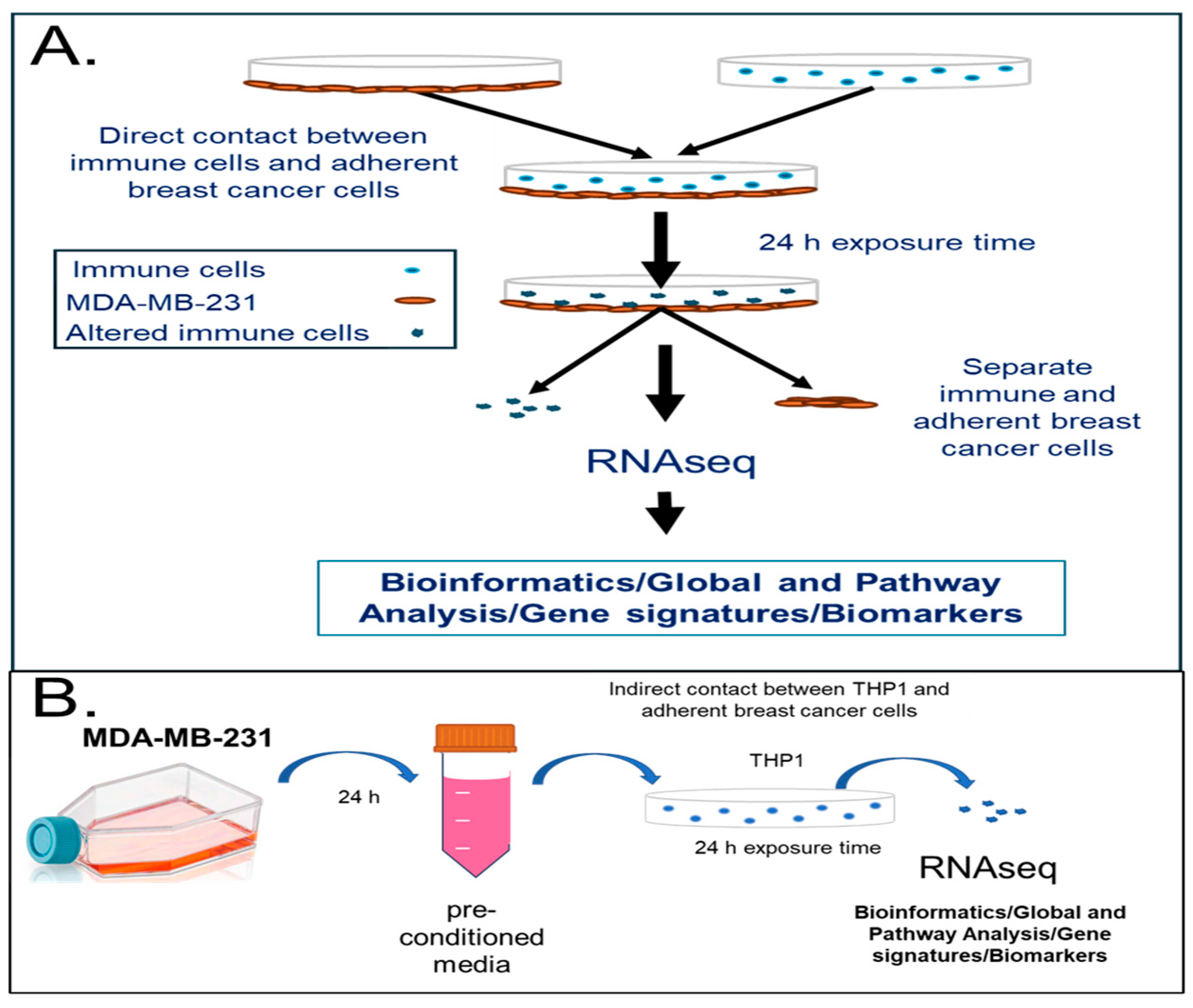
2.2. Cell Co-Culture Method for RNAseq Preparation
2.3. PBMC Preparation
2.4. Proliferation Assay
2.5. IL-6 and TGFB ELISA
2.6. RNA Sequencing/Bioinformatics
2.7. Imaging
2.8. Statistical Analysis
3. Results
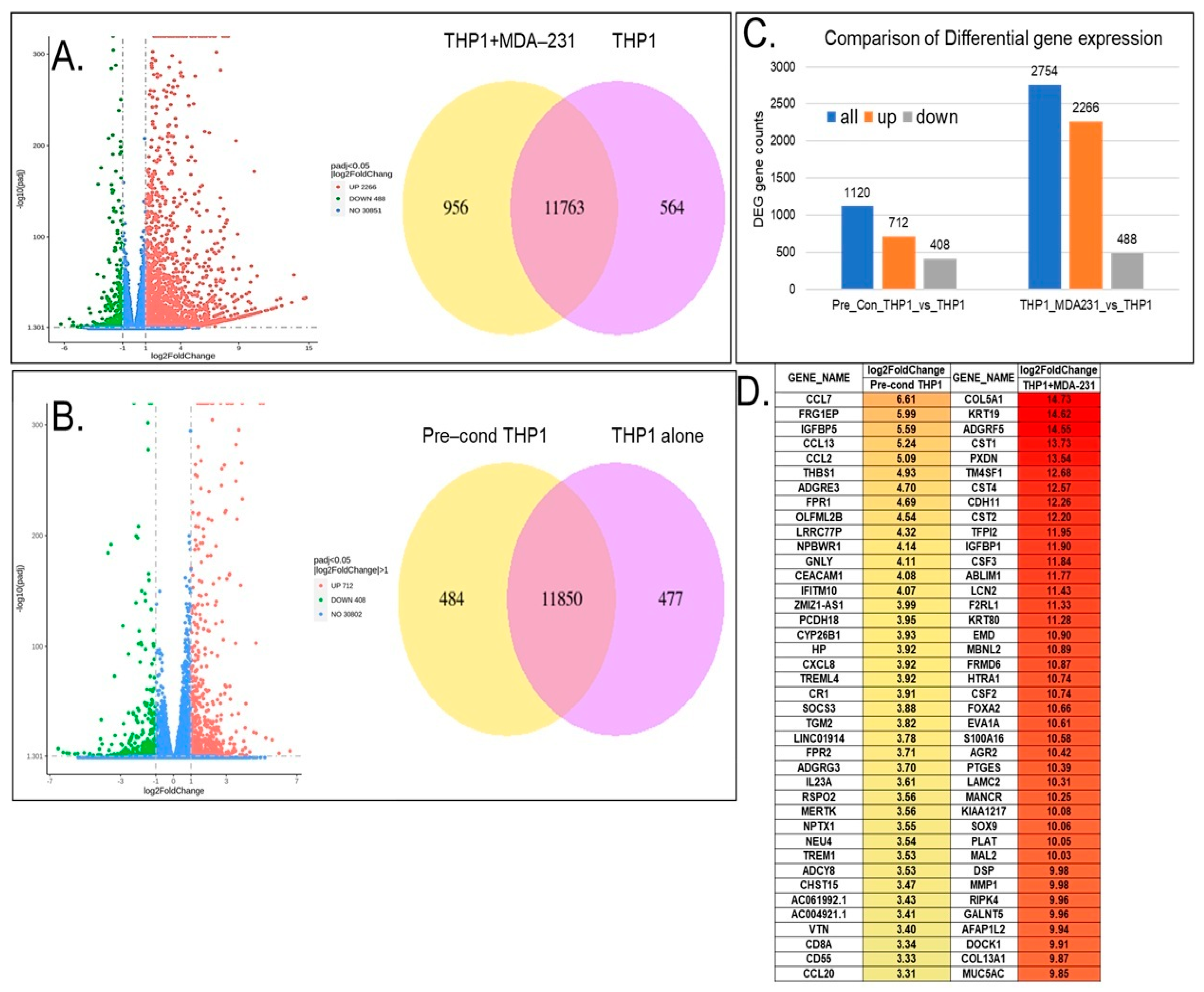
3.1. Human Monocyte Cell Model, THP1, Shows Transcriptional Alteration After Exposure to TNBC Cells
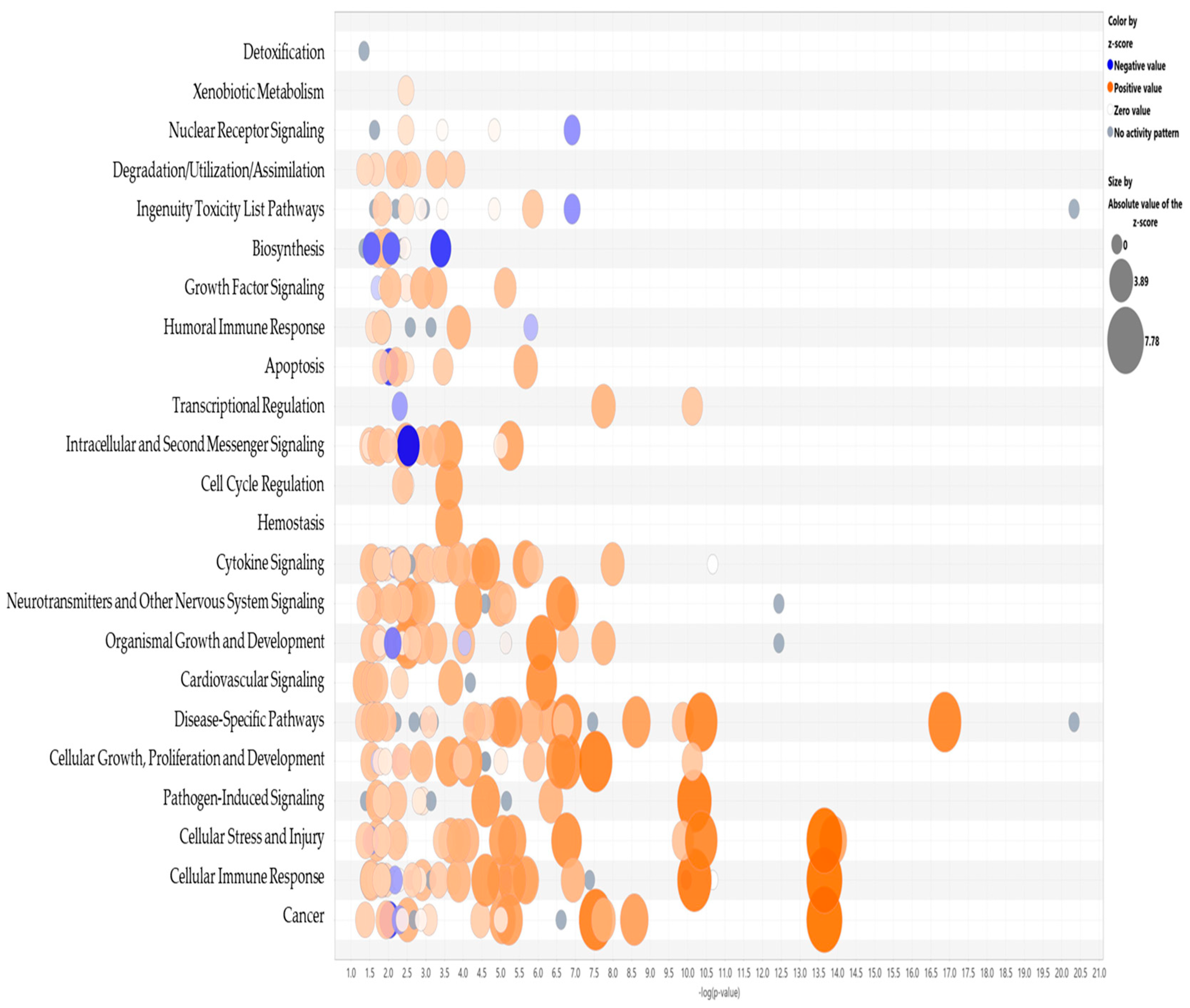
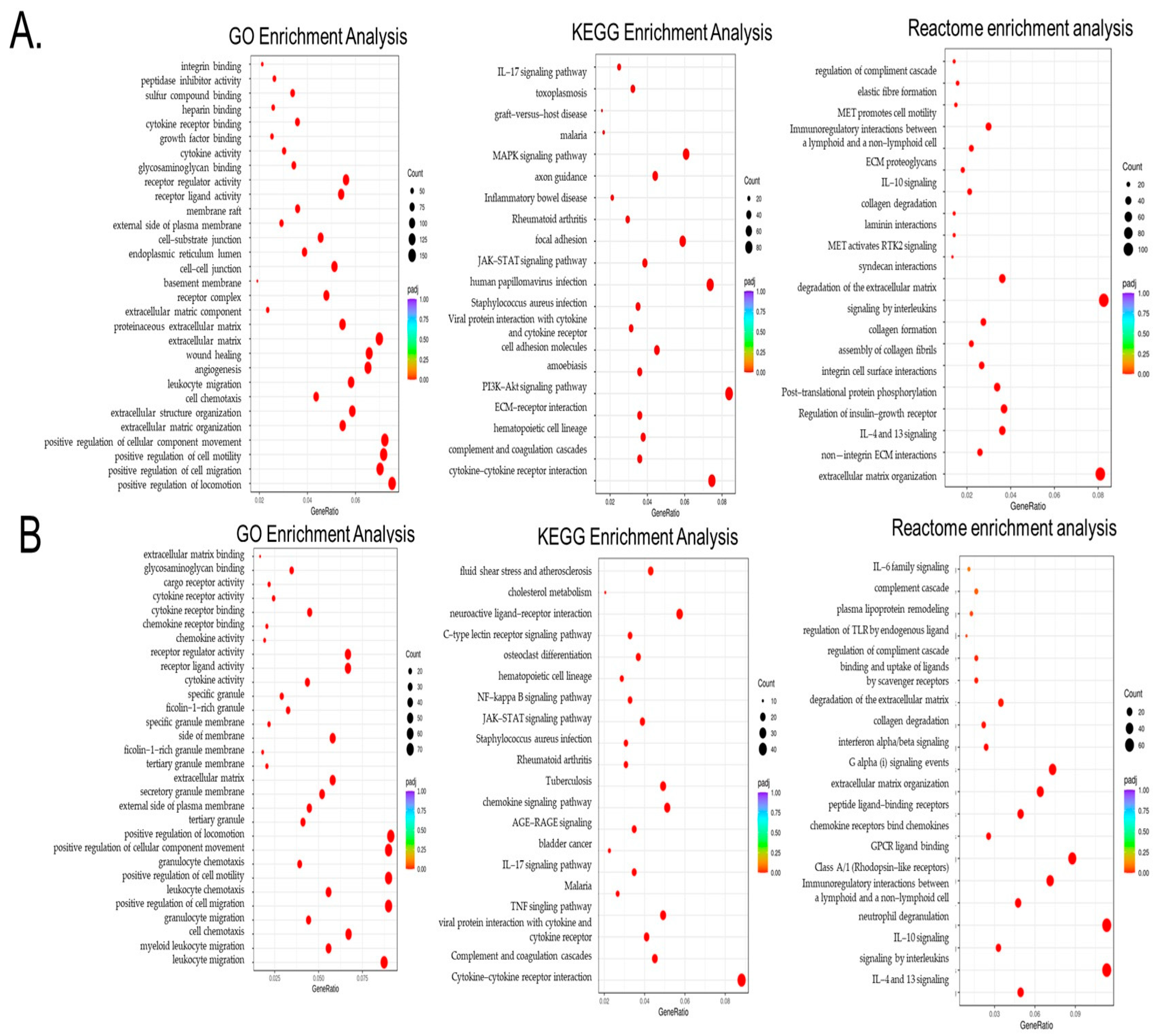
3.2. Tumor Education Reprograms Immune Cells Towards a Pro-Tumorigenic Phenotype: Pathway Analysis of the Key Regulators Involved in Tumor-Associated Reprogramming of the THP1 Cells Exposed to TNBC Cell Line Directly or Indirectly
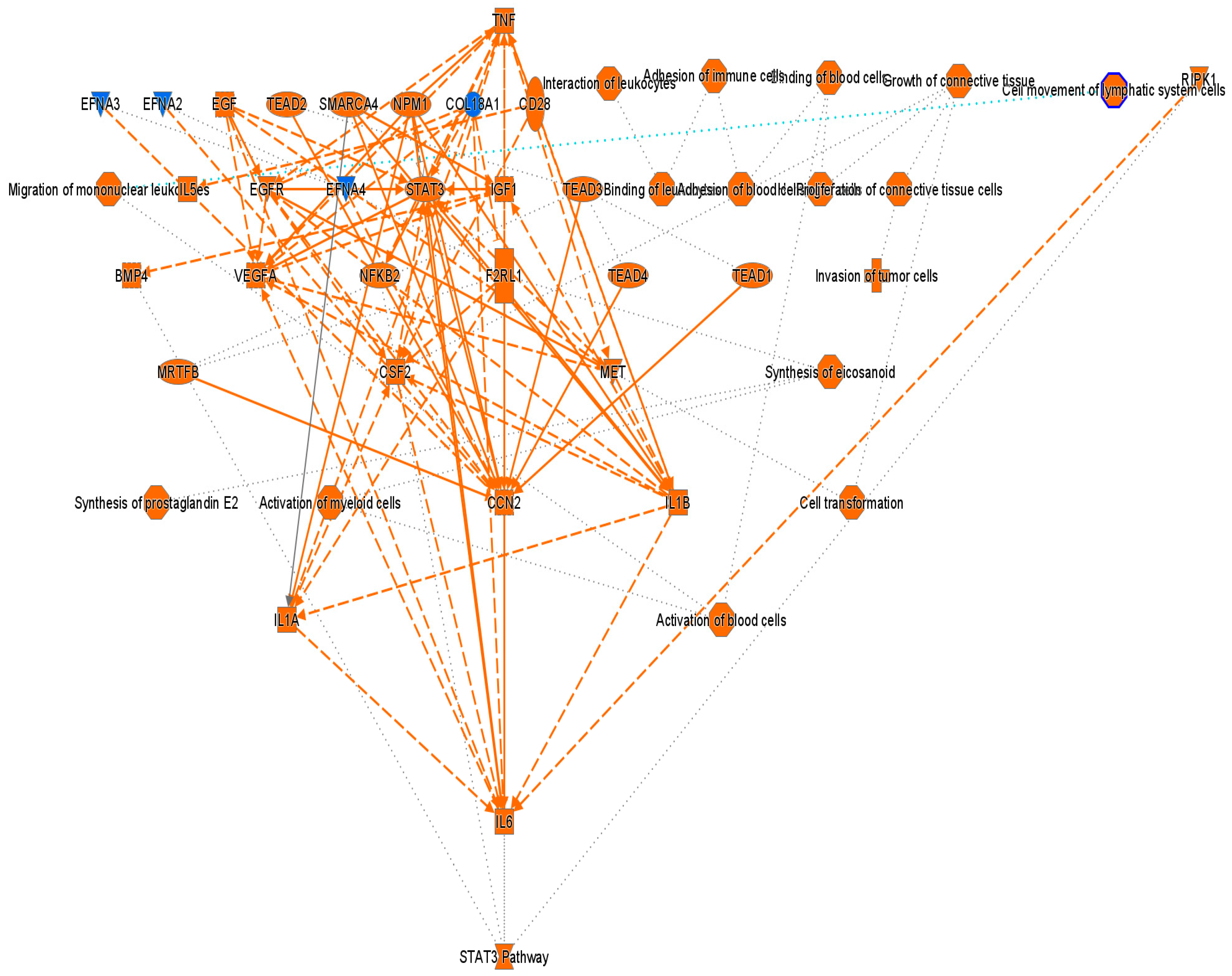
3.3. Functional Reprogramming of Tumor-Educated Immune Cells Reveals Broad Molecular and Pathological Associations
3.4. Effects of Tumor-Driven Immune Cell Reprogramming on Proliferation and Cytokine Release
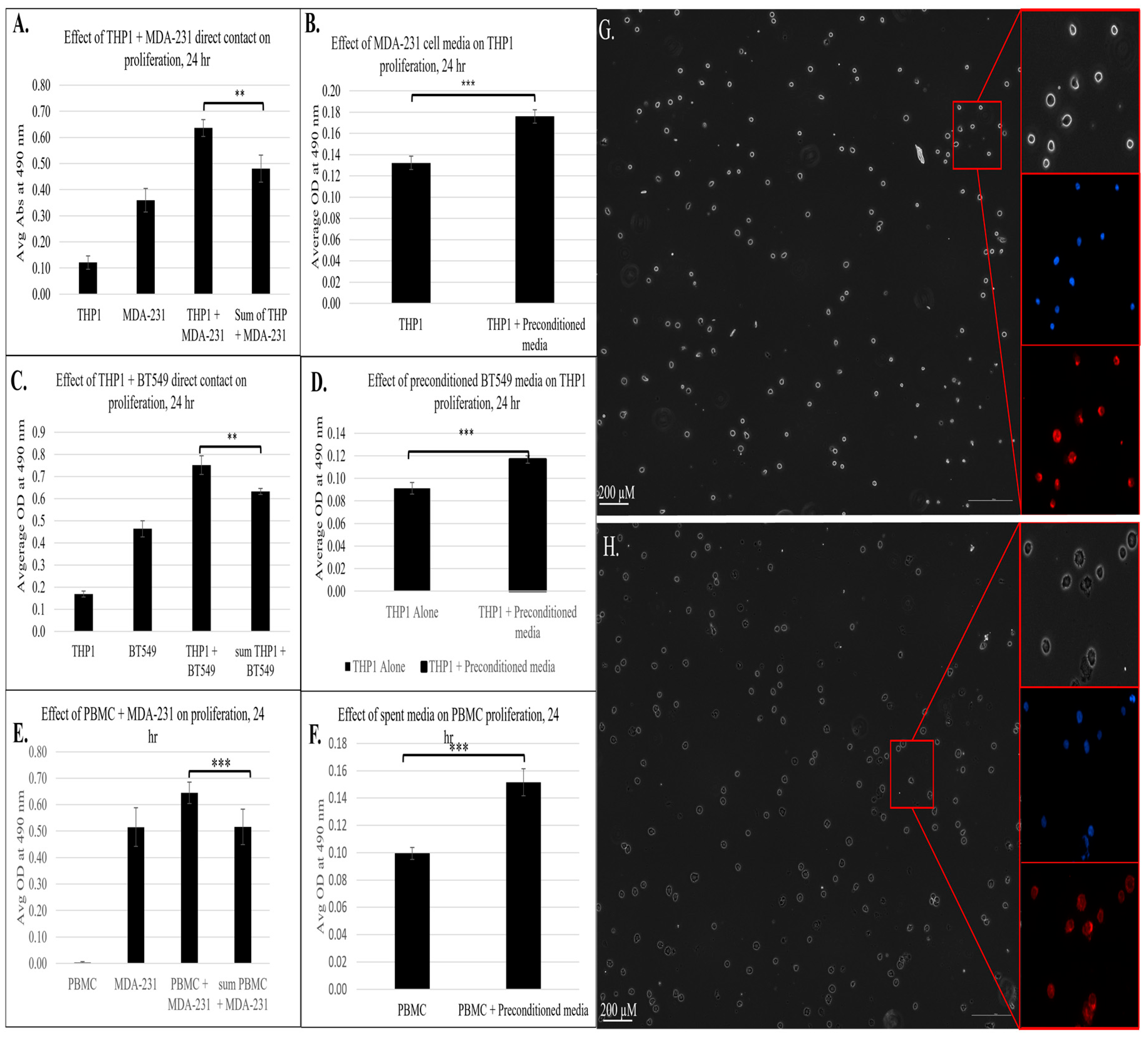
3.4.1. Tumor-Induced Cell Activation Enhances THP1 and PBMC Proliferation Through Direct and Indirect Contact (Via Pre-Conditioned MDA-MB-231 Media) with Breast Cancer Cells
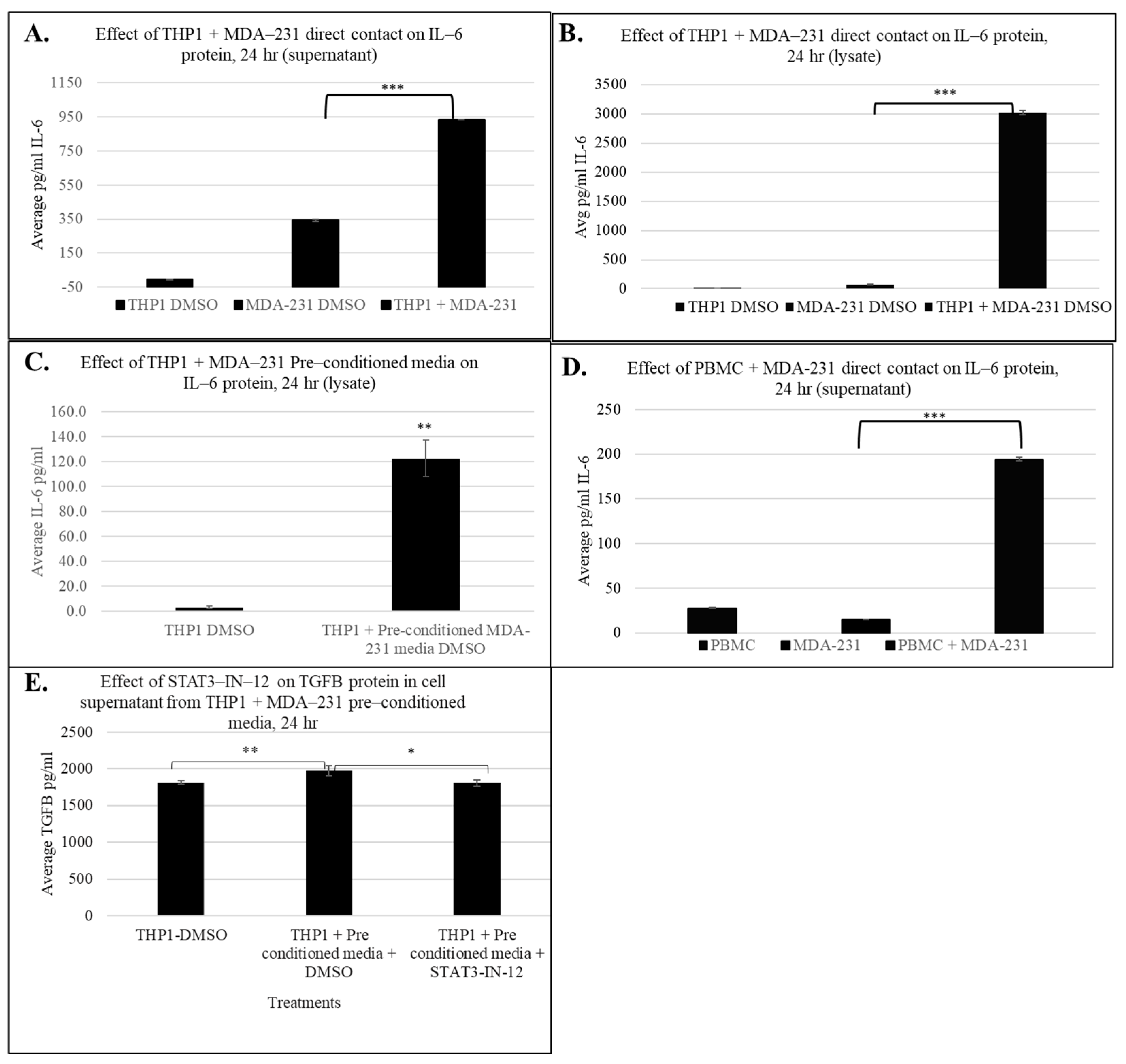
3.4.2. Cytokine Induction and STAT3 Pathway Activation Increases in Tumor-Educated Immune Cells Through Direct and Indirect Contact with Breast Cancer Cells
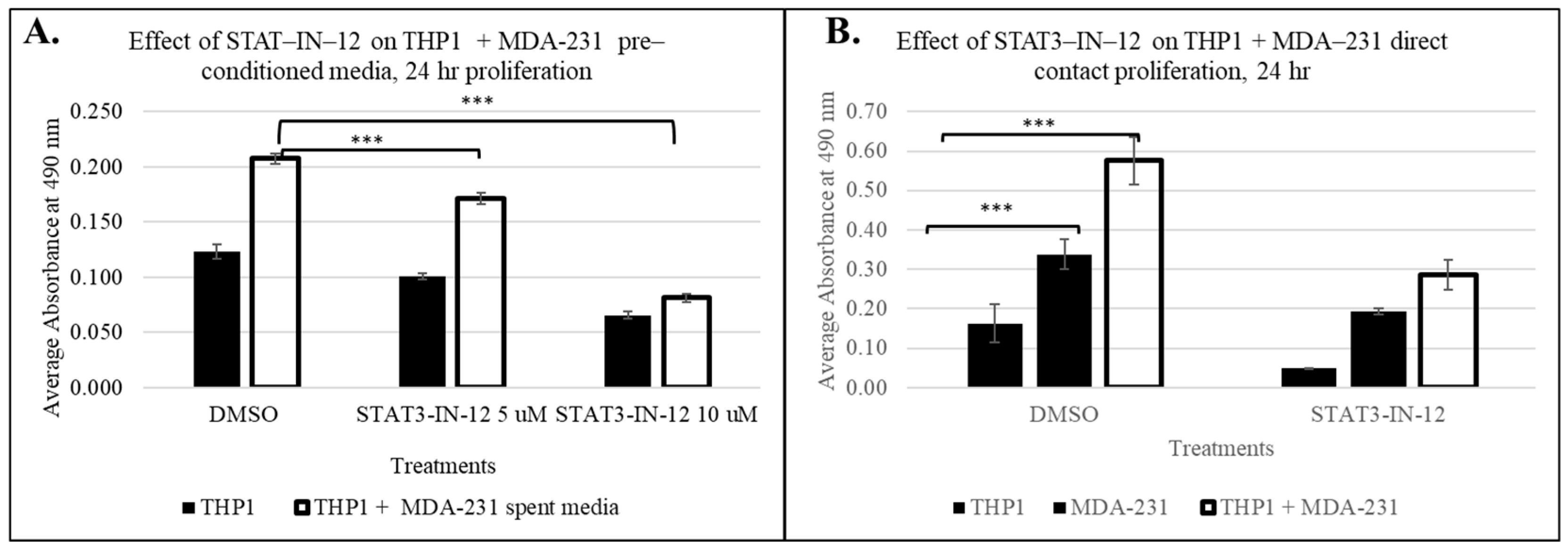
3.4.3. Small-Molecule Inhibitors Suppress Tumor-Induced Immune Cell Proliferation
4. Discussion
5. Conclusions
Supplementary Materials
Author Contributions
Funding
Institutional Review Board Statement
Informed Consent Statement
Data Availability Statement
Acknowledgments
Conflicts of Interest
Abbreviations
| TNBC | Triple negative breast cancer |
| TME | Tumor microenvironment |
| NK | Natural killer cells |
| TAMs | Tumor-associated macrophages |
| MDSCs | Myeloid-derived suppressor cells |
| ECM | Extracellular matrix remodeling |
| TEPs | Tumor-educated platelets |
| CRC | Colorectal cancer |
| DEGs | Differentially expressed genes |
| IGFs | Insulin-like growth factors |
| EMT | Epithelial–mesenchymal transition |
| GO | Gene Ontology |
| CCN2 | Cellular communication network factor 2 |
| TNF | Tumor necrosis factor alpha |
| PBMCs | Peripheral blood mononuclear cells |
References
- Singh, D.D.; Haque, S.; Kim, Y.; Han, I.; Yadav, D.K. Remodeling of Tumour Microenvironment: Strategies to Overcome Therapeutic Resistance and Innovate Immunoengineering in Triple-Negative Breast Cancer. Front. Immunol. 2024, 15, 1455211. [Google Scholar] [CrossRef]
- Ding, S.; Dong, X.; Song, X. Tumor Educated Platelet: The Novel BioSource for Cancer Detection. Cancer Cell Int. 2023, 23, 91. [Google Scholar] [CrossRef]
- Niu, L.; Guo, W.; Song, X.; Song, X.; Xie, L. Tumor-Educated Leukocytes MRNA as a Diagnostic Biomarker for Non-Small Cell Lung Cancer. Thorac. Cancer 2021, 12, 737–745. [Google Scholar] [CrossRef]
- Chennakrishnaiah, S.; Tsering, T.; Aprikian, S.; Rak, J. Leukobiopsy—A Possible New Liquid Biopsy Platform for Detecting Oncogenic Mutations. Front. Pharmacol. 2020, 10, 1608. [Google Scholar] [CrossRef]
- Chan, I.S.; Ewald, A.J. The Changing Role of Natural Killer Cells in Cancer Metastasis. J. Clin. Investig. 2022, 132, e143762. [Google Scholar] [CrossRef] [PubMed]
- Chan, I.S.; Knútsdóttir, H.; Ramakrishnan, G.; Padmanaban, V.; Warrier, M.; Ramirez, J.C.; Dunworth, M.; Zhang, H.; Jaffee, E.M.; Bader, J.S.; et al. Cancer Cells Educate Natural Killer Cells to a Metastasis-Promoting Cell State. J. Cell Biol. 2020, 219, e202001134. [Google Scholar] [CrossRef] [PubMed]
- Hamm, A.; Prenen, H.; Van Delm, W.; Di Matteo, M.; Wenes, M.; Delamarre, E.; Schmidt, T.; Weitz, J.; Sarmiento, R.; Dezi, A.; et al. Tumour-Educated Circulating Monocytes Are Powerful Candidate Biomarkers for Diagnosis and Disease Follow-up of Colorectal Cancer. Gut 2016, 65, 990–1000. [Google Scholar] [CrossRef] [PubMed]
- Zheng, Y.; Wang, Y.; Zou, C.; Hu, B.; Zhao, M.; Wu, X. Tumor-Associated Macrophages Facilitate the Proliferation and Migration of Cervical Cancer Cells. Oncologie 2022, 24, 147–161. [Google Scholar] [CrossRef]
- Lorenzo-Sanz, L.; Muñoz, P. Tumor-Infiltrating Immunosuppressive Cells in Cancer-Cell Plasticity, Tumor Progression and Therapy Response. Cancer Microenviron. 2019, 12, 119–132. [Google Scholar] [CrossRef]
- Walsh, M.J.; Ali, L.R.; Lenehan, P.; Kureshi, C.T.; Kureshi, R.; Dougan, M.; Knipe, D.M.; Dougan, S.K. Blockade of Innate Inflammatory Cytokines TNFα, IL-1β, or IL-6 Overcomes Virotherapy-Induced Cancer Equilibrium to Promote Tumor Regression. Immunother. Adv. 2023, 3, ltad011. [Google Scholar] [CrossRef]
- Barnes, B.J.; Somerville, C.C. Modulating Cytokine Production via Select Packaging and Secretion From Extracellular Vesicles. Front. Immunol. 2020, 11, 1040. [Google Scholar] [CrossRef]
- Fuh, K.F.; Withell, J.; Shepherd, R.D.; Rinker, K.D. Fluid Flow Stimulation Modulates Expression of S100 Genes in Normal Breast Epithelium and Breast Cancer. Cell Mol. Bioeng. 2022, 15, 115–127. [Google Scholar] [CrossRef] [PubMed]
- Fu, X.L.; Duan, W.; Su, C.Y.; Mao, F.Y.; Lv, Y.P.; Teng, Y.S.; Yu, P.W.; Zhuang, Y.; Zhao, Y.L. Interleukin 6 Induces M2 Macrophage Differentiation by STAT3 Activation That Correlates with Gastric Cancer Progression. Cancer Immunol. Immunother. 2017, 66, 1597–1608. [Google Scholar] [CrossRef]
- Best, M.G.; Wesseling, P.; Wurdinger, T. Tumor-Educated Platelets as a Noninvasive Biomarker Source for Cancer Detection and Progression Monitoring. Cancer Res. 2018, 78, 3407–3412. [Google Scholar] [CrossRef] [PubMed]
- Zhang, W.; Wang, M.; Ji, C.; Liu, X.; Gu, B.; Dong, T. Macrophage Polarization in the Tumor Microenvironment: Emerging Roles and Therapeutic Potentials. Biomed. Pharmacother. 2024, 177, 116930. [Google Scholar] [CrossRef] [PubMed]
- Jia, Q.; Xu, B.; Zhang, Y.; Ali, A.; Liao, X. CCN Family Proteins in Cancer: Insight into Their Structures and Coordination Role in Tumor Microenvironment. Front. Genet. 2021, 12, 649387. [Google Scholar] [CrossRef]
- Liu, X.-S.; Zhou, L.-M.; Yuan, L.-L.; Gao, Y.; Kui, X.-Y.; Liu, X.-Y.; Pei, Z.-J. NPM1 Is a Prognostic Biomarker Involved in Immune Infiltration of Lung Adenocarcinoma and Associated with M6A Modification and Glycolysis. Front. Immunol. 2021, 12, 724741. [Google Scholar] [CrossRef]
- de Miguel, F.J.; Gentile, C.; Feng, W.W.; Silva, S.J.; Sankar, A.; Exposito, F.; Cai, W.L.; Melnick, M.A.; Robles-Oteiza, C.; Hinkley, M.M.; et al. Mammalian SWI/SNF Chromatin Remodeling Complexes Promote Tyrosine Kinase Inhibitor Resistance in EGFR-Mutant Lung Cancer. Cancer Cell 2023, 41, 1516–1534.e9. [Google Scholar] [CrossRef]
- Li, Y.; Wilson, H.L.; Kiss-Toth, E. Regulating STING in Health and Disease. J. Inflamm. 2017, 14, 11. [Google Scholar] [CrossRef]
- Pickup, M.; Novitskiy, S.; Moses, H.L. The Roles of TGFβ in the Tumour Microenvironment. Nat. Rev. Cancer 2013, 13, 788–799. [Google Scholar] [CrossRef]
- Batlle, E.; Massagué, J. Transforming Growth Factor-β Signaling in Immunity and Cancer. Immunity 2019, 50, 924–940. [Google Scholar] [CrossRef]
- Flavell, R.A.; Sanjabi, S.; Wrzesinski, S.H.; Licona-Limón, P. The Polarization of Immune Cells in the Tumour Environment by TGFβ. Nat. Rev. Immunol. 2010, 10, 554–567. [Google Scholar] [CrossRef]
- Chanput, W.; Mes, J.J.; Wichers, H.J. THP-1 Cell Line: An in Vitro Cell Model for Immune Modulation Approach. Int. Immunopharmacol. 2014, 23, 37–45. [Google Scholar] [CrossRef]
- Hoppenbrouwers, T.; Bastiaan-Net, S.; Garssen, J.; Pellegrini, N.; Willemsen, L.E.M.; Wichers, H.J. Functional Differences between Primary Monocyte-Derived and THP-1 Macrophages and Their Response to LCPUFAs. PharmaNutrition 2022, 22, 100322. [Google Scholar] [CrossRef]
- Samad, M.A.; Ahmad, I.; Hasan, A.; Alhashmi, M.H.; Ayub, A.; Al-Abbasi, F.A.; Kumer, A.; Tabrez, S. STAT3 Signaling Pathway in Health and Disease. MedComm 2025, 6, e70152. [Google Scholar] [CrossRef] [PubMed]
- Mantovani, A.; Marchesi, F.; Malesci, A.; Laghi, L.; Allavena, P. Tumour-Associated Macrophages as Treatment Targets in Oncology. Nat. Rev. Clin. Oncol. 2017, 14, 399–416. [Google Scholar] [CrossRef] [PubMed]
- Li, K.; Shi, H.; Zhang, B.; Ou, X.; Ma, Q.; Chen, Y.; Shu, P.; Li, D.; Wang, Y. Myeloid-Derived Suppressor Cells as Immunosuppressive Regulators and Therapeutic Targets in Cancer. Signal Transduct. Target. Ther. 2021, 6, 362. [Google Scholar] [CrossRef]
- Wu, Y.; Yi, M.; Niu, M.; Mei, Q.; Wu, K. Myeloid-Derived Suppressor Cells: An Emerging Target for Anticancer Immunotherapy. Mol. Cancer 2022, 21, 184. [Google Scholar] [CrossRef] [PubMed]
- Groth, C.; Hu, X.; Weber, R.; Fleming, V.; Altevogt, P.; Utikal, J.; Umansky, V. Immunosuppression Mediated by Myeloid-Derived Suppressor Cells (MDSCs) during Tumour Progression. Br. J. Cancer 2019, 120, 16–25. [Google Scholar] [CrossRef]
- Hofer, F.; Di Sario, G.; Musiu, C.; Sartoris, S.; De Sanctis, F.; Ugel, S. A Complex Metabolic Network Confers Immunosuppressive Functions to Myeloid-Derived Suppressor Cells (MDSCs) within the Tumour Microenvironment. Cells 2021, 10, 2700. [Google Scholar] [CrossRef]
- Zou, S.; Tong, Q.; Liu, B.; Huang, W.; Tian, Y.; Fu, X. Targeting Stat3 in Cancer Immunotherapy. Mol. Cancer 2020, 19, 145. [Google Scholar] [CrossRef]
- Dong, Y.; Chen, J.; Chen, Y.; Liu, S. Targeting the STAT3 Oncogenic Pathway: Cancer Immunotherapy and Drug Repurposing. Biomed. Pharmacother. 2023, 167, 115513. [Google Scholar] [CrossRef] [PubMed]
- Jeong, H.; Koh, J.; Kim, S.; Yim, J.; Song, S.G.; Kim, H.; Li, Y.; Lee, S.H.; Chung, Y.K.; Kim, H.; et al. Cell-Intrinsic PD-L1 Signaling Drives Immunosuppression by Myeloid-Derived Suppressor Cells through IL-6/Jak/Stat3 in PD-L1-High Lung Cancer. J. Immunother. Cancer 2025, 13, e010612. [Google Scholar] [CrossRef] [PubMed]
- Hou, A.; Hou, K.; Huang, Q.; Lei, Y.; Chen, W. Targeting Myeloid-Derived Suppressor Cell, a Promising Strategy to Overcome Resistance to Immune Checkpoint Inhibitors. Front. Immunol. 2020, 11, 783. [Google Scholar] [CrossRef] [PubMed]
- Batool, S.M.; Yekula, A.; Khanna, P.; Hsia, T.; Gamblin, A.S.; Ekanayake, E.; Escobedo, A.K.; You, D.G.; Castro, C.M.; Im, H.; et al. The Liquid Biopsy Consortium: Challenges and Opportunities for Early Cancer Detection and Monitoring. Cell Rep. Med. 2023, 4, 101198. [Google Scholar] [CrossRef]




| Canonical Pathways | THP1 + MDA-231 Z Score | Pre_Cond THP1 Z Score |
|---|---|---|
| S100 Family Signaling Pathway | 7.78 | 3.76 |
| Phagosome Formation | 7.31 | 3.83 |
| FAK Signaling | 7.04 | 3.46 |
| Pathogen-Induced Cytokine Storm Signaling Pathway | 6.88 | 4.90 |
| Pulmonary Fibrosis Idiopathic Signaling Pathway | 6.74 | 4.04 |
| Cardiac Hypertrophy Signaling (Enhanced) | 6.22 | 2.92 |
| Hepatic Fibrosis Signaling Pathway | 6.10 | 2.34 |
| IL-17 Signaling | 5.52 | 3.96 |
| Role Of Osteoclasts In Rheumatoid Arthritis Signaling Pathway | 5.42 | 4.12 |
| Tumor Microenvironment Pathway | 5.40 | 3.27 |
| Macrophage Classical Activation Signaling Pathway | 5.38 | 2.98 |
| Breast Cancer Regulation by Stathmin1 | 5.29 | 2.95 |
| Pulmonary Healing Signaling Pathway | 5.25 | 2.83 |
| Wound Healing Signaling Pathway | 5.09 | 2.27 |
| Role Of Chondrocytes In Rheumatoid Arthritis Signaling Pathway | 5.05 | 3.80 |
| Colorectal Cancer Metastasis Signaling | 4.84 | 2.99 |
| IL-8 Signaling | 4.77 | 2.99 |
| Neuroinflammation Signaling Pathway | 4.33 | 2.45 |
| HIF1α Signaling | 4.32 | 2.60 |
| MSP-RON Signaling In Cancer Cell Pathway | 4.20 | 2.71 |
| Role of Hypercytokinemia/Hyperchemokinemia in the Pathogenesis of Influenza | 4.20 | 2.67 |
| ID1 Signaling Pathway | 4.14 | 2.13 |
| Macrophage Alternative Activation Signaling Pathway | 4.13 | 2.65 |
| Heparan Sulfate Biosynthesis (Late Stages) | 3.00 | 2.65 |
| Heparan Sulfate Biosynthesis | 3.00 | 2.65 |
| Multiple Sclerosis Signaling Pathway | 4.13 | 1.79 |
| HMGB1 Signaling | 4.08 | 2.36 |
| Role of JAK Family Kinases in IL-6-type Cytokine Signaling | 4.04 | 2.11 |
| NOD1/2 Signaling Pathway | 3.78 | 2.18 |
| RAC Signaling | 3.46 | 2.45 |
| Regulation Of The Epithelial Mesenchymal Transition By Growth Factors Pathway | 3.66 | 2.67 |
| TREM1 Signaling | 3.64 | 3.21 |
| Role of IL-17F in Allergic Inflammatory Airway Diseases | 3.46 | 2.83 |
| Dermatan Sulfate Biosynthesis | 3.46 | 2.45 |
| Osteoarthritis Pathway | 3.40 | 2.68 |
| ERBB Signaling | 3.36 | 2.33 |
| Pyroptosis Signaling Pathway | 3.30 | 2.32 |
| Dermatan Sulfate Biosynthesis (Late Stages) | 3.16 | 2.45 |
| Chondroitin Sulfate Biosynthesis (Late Stages) | 3.16 | 2.45 |
| Chondroitin Sulfate Biosynthesis | 3.16 | 2.45 |
| Pancreatic Adenocarcinoma Signaling | 3.15 | 2.31 |
| Role Of Osteoblasts In Rheumatoid Arthritis Signaling Pathway | 3.11 | 3.00 |
| Differential Regulation of Cytokine Production in Intestinal Epithelial Cells by IL-17A and IL-17F | 3.00 | 2.00 |
| IL-13 Signaling Pathway | 2.86 | 2.31 |
| HOTAIR Regulatory Pathway | 2.86 | 1.81 |
| Glioma Invasiveness Signaling | 2.83 | 3.00 |
| Role of IL-17A in Psoriasis | 2.83 | 2.65 |
| Oncostatin M Signaling | 2.83 | 1.63 |
| Macropinocytosis Signaling | 2.45 | 2.00 |
| IL-6 Signaling | 2.71 | 2.07 |
| p38 MAPK Signaling | 2.50 | 1.51 |
| Systemic Lupus Erythematosus In B Cell Signaling Pathway | 4.14 | 1.63 |
| IL-17A Signaling in Gastric Cells | 2.45 | 2.00 |
| Inflammasome Pathway | 2.45 | 1.63 |
| Interferon Signaling | 2.33 | 2.45 |
| Natural Killer Cell Signaling | 2.27 | 2.83 |
| Inhibition of Angiogenesis by TSP1 | 2.12 | 1.63 |
| Th2 Pathway | 1.94 | 2.33 |
| Leukocyte Extravasation Signaling | 1.67 | 2.00 |
| LXR/RXR Activation | −1.83 | −1.71 |
| Superpathway of Cholesterol Biosynthesis | −3.16 | −2.00 |
| Upstream Regulators | THP1 + MDA-231 Z Score | Pre-Cond THP1 Z Score |
|---|---|---|
| TNF | 9.35 | 6.19 |
| NPM1 | 8.32 | 5.90 |
| SMARCA4 | 7.80 | 3.21 |
| RRAS2 | 7.68 | 4.38 |
| IFNG | 6.84 | 4.02 |
| TGFB1 | 6.72 | 4.13 |
| STING1 | 6.66 | 5.28 |
| NFkB (complex) | 6.59 | 4.20 |
| PDGF BB | 6.44 | 4.54 |
| IL1A | 6.41 | 3.77 |
| CG | 6.03 | 4.21 |
| ERK | 5.81 | 4.36 |
| RIGI | 5.74 | 3.35 |
| MAVS | 5.68 | 3.72 |
| TGM2 | 5.66 | 5.16 |
| ASPSCR1-TFE3 | 5.65 | 3.32 |
| NONO | 5.60 | 3.93 |
| P38 MAPK | 5.58 | 3.54 |
| IFNA2 | 5.58 | 3.08 |
| SYVN1 | 5.56 | 3.00 |
| STAT1 | 5.50 | 2.00 |
| PRKCD | 5.45 | 3.08 |
| RELA | 5.43 | 3.45 |
| Interferon alpha | 5.40 | 3.62 |
| IL1B | 5.36 | 4.35 |
| STAT3 | 5.35 | 3.95 |
| TFEB | 5.28 | 3.83 |
| SORL1 | 5.25 | 1.73 |
| RIPK2 | 5.21 | 4.26 |
| IL-1R | 5.16 | 3.35 |
| (A) Top Molecular and Cellular Conditions | THP1 + MDA-231 | Pre-Cond THP1 | ||
|---|---|---|---|---|
| p Value Range | #Molecules | p Value Range | # Molecules | |
| Cellular movement | 1.47 × 10⁻¹¹–4.41 × 10−64 | 647 | 1.19 × 10⁻⁷- 1.07 × 10⁻²⁸ | 273 |
| Cell-to-cell signaling and interaction | 6.88 × 10⁻¹²–1.61 × 10−36 | 476 | 9.39 × 10⁻⁸- 3.77 × 10⁻²² | 244 |
| Cell death and survival | 1.49 × 10⁻¹¹ 1.77 × 10⁻³⁰ | 590 | - | - |
| Cellular development | 1.47 × 10⁻¹¹–8.79 × 10⁻²⁷ | 664 | 1.17 × 10⁻⁷–3.06 × 10⁻¹⁴ | 275 |
| Cellular growth and proliferation | 1.47 × 10⁻¹¹–8.79 × 10⁻²⁷ | 663 | 1.49 × 10⁻¹¹–1.77 × 10⁻³⁰ | 272 |
| Cellular function and maintenance | - | - | 1.17 × 10⁻⁷–3.06 × 10⁻¹⁴ | 184 |
| (B) Top Diseases and Disorders | THP1 + MDA-231 | Pre-cond THP1 | ||
| p value range | # Molecules | p value range | # Molecules | |
| Immunological disease | 1.55 × 10⁻¹¹–3.90 × 10−50 | 1083 | 6.38 × 10⁻⁸–7.16 × 10−39 | 409 |
| Inflammatory disease | 7.78 × 10⁻¹²–3.90 × 10−50 | 569 | 1.12 × 10⁻⁷–7.16 × 10−39 | 280 |
| Organismal injury and abnormalities | 1.55 × 10⁻¹¹–3.90 × 10−47 | 2208 | 1.18 × 10⁻⁷–7.16 × 10−39 | 886 |
| Cancer | 1.55 × 10⁻¹¹–6.26 × 10−47 | 2193 | - | - |
| Dermatological disease and conditions | 8.17 × 10⁻¹²–1.73 × 10−40 | 1713 | - | - |
| Immunological disease | 1.55 × 10⁻¹¹–3.90 × 19−50 | 1083 | - | - |
| Inflammatory response | - | - | 4.02 × 10⁻⁸–1.51 × 10⁻²³ | 298 |
| Infectious disease | - | - | 4.02 × 10⁻⁹–1.08 × 10⁻²² | 218 |
| Gene Name | Direct Contact (THP1+ MDA-MB-231) | Indirect Contact (Pre-Cond THP1) | ||
|---|---|---|---|---|
| Fold Change | Padj | Fold Change | Padj | |
| Pro-inflammatory cytokines and family members | ||||
| IL6 | 175.66 | 1.3 × 10−43 | ns | ns |
| IL1B | 7.78 | 1.4 × 10−266 | 9.47 | 0.0 |
| IL1A | 31.61 | 4.4 × 10⁻¹⁶ | 4.91 | 1.8 × 10⁻² |
| IL7 | 5.96 | 6.1 × 10⁻³ | ns | ns |
| IL15 | 7.66 | 3.9 × 10⁻⁶ | ns | ns |
| IL23A | 6.51 | 1.9 × 10−86 | 12.23 | 1.5 × 10−215 |
| IL32 | 4.70 | 1.2 × 10−38 | ns | ns |
| IL27 | ns | ns | 4.01 | 8.1 × 10⁻⁴ |
| Anti-inflammatory/immunosuppressive cytokines | ||||
| IL10 | 4.91 | 7.5 × 10⁻⁴ | ns | ns |
| TGFB1 | ns | ns | 2.58 | 0.0 |
| TGFB2 | 4.40 | 8.6 × 10⁻³⁴ | ns | ns |
| STAT3-related ligands often activating JAK/STAT3 | ||||
| LIF | 132.29 | 1.9 × 10−47 | 3.99 | 3.7 × 10⁻² |
| OSM | 7.19 | 2.4 × 10−56 | 7.65 | 1.1 × 10−65 |
| IL11 | 24.44 | 6.7 × 10⁻¹⁴ | ns | ns |
| IL6 | 175.66 | 1.3 × 10−43 | ns | ns |
| IL10 | 4.91 | 7.5 × 10⁻⁴ | ns | ns |
| IL27 | 3.22 | 9.6 × 10⁻³ | 4.01 | 8.1 × 10⁻⁴ |
| IL23A | 6.51 | 1.9 × 10−86 | 12.23 | 1.5 × 10−215 |
| SOCS3 | 19.61 | 0.0 | 14.69 | 3.4 × 10−266 |
| CISH | 3.01 | 2.3 × 10−55 | 3.20 | 2.3 × 10−67 |
| CXCL1 | 9.68 | 1.4 × 10−187 | 8.99 | 3.5 × 10−165 |
| CXCL2 | 11.73 | 4.1 × 10−45 | 4.32 | 3.6 × 10⁻¹⁰ |
| CXCL3 | 13.46 | 8.4 × 10⁻²¹ | 5.26 | 3.7 × 10⁻⁶ |
| CXCL8 | 9.09 | 0.0 | 9.09 | 0.0 |
| CCND1 | 13.84 | 0.0 | ns | ns |
| BCL2L1 | 3.31 | 1.4 × 10−122 | ns | ns |
| BCL2 | -2.33 | 1.4 × 10−191 | ns | ns |
| PIM1 | 6.14 | 0.0 | 2.41 | 2.5 × 10−60 |
| JUNB | 2.50 | 3.6 × 10−135 | 2.06 | 2.4 × 10−88 |
| SAA1 | 67.23 | 4.0 × 10−216 | ns | ns |
| SAA2 | 400.95 | 2.2 × 10⁻²³ | ns | ns |
| VEGFA | 2.64 | 1.4 × 10−155 | 2.02 | 1.9 × 10−80 |
| HP | 6.21 | 5.4 × 10−76 | 15.10 | 8.7 × 10−234 |
| CD163 | 3.81 | 2.2 × 10⁻²⁷ | 2.18 | 2.2 × 10⁻⁷ |
| HLA-DRA | 9.19 | 8.7 × 10−259 | ns | ns |
| BCL3 | 4.84 | 0.0 | 2.51 | 1.4 × 10−112 |
| Chemokines (monocyte and neutrophil recruitment) | ||||
| CXCL1 | 9.68 | 1.4 × 10−187 | 8.99 | 3.5 × 10−165 |
| CXCL2 | 11.73 | 4.1 × 10−45 | 4.32 | 3.6 × 10⁻¹⁰ |
| CXCL3 | 13.46 | 8.4 × 10⁻²¹ | 5.26 | 3.7 × 10⁻⁶ |
| CXCL6 | 2.72 | 4.5 × 10⁻⁴ | 3.87 | 3.9 × 10⁻⁷ |
| CXCL8 | 9.09 | 0.0 | 9.09 | 0.0 |
| CXCL11 | 6.13 | 1.4 × 10⁻¹⁶ | ns | ns |
| CXCL13 | 2.68 | 2.5 × 10⁻² | 4.07 | 3.0 × 10⁻⁴ |
| CXCL16 | 2.93 | 1.2 × 10⁻¹⁰ | 2.23 | 7.5 × 10⁻⁶ |
| CCL4 | 2.42 | 6.6 × 10⁻³ | ns | ns |
| CCL7 | 123.41 | 1.7 × 10⁻⁷ | 97.53 | 1.1 × 10⁻⁶ |
| CCL8 | 14.17 | 5.1 × 10⁻²⁷ | 5.70 | 6.8 × 10⁻⁸ |
| CCL13 | 26.02 | 9.6 × 10⁻¹⁴ | 37.68 | 2.1 × 10⁻¹⁸ |
| CCL20 | 3.22 | 3.7 × 10⁻⁶ | 9.93 | 3.1 × 10−39 |
| CCL2 | ns | ns | 34.15 | 0.0 |
| CCL8 | ns | ns | 5.70 | 6.8 × 10⁻⁸ |
| CCL24 | ns | ns | 4.87 | 9.0 × 10⁻⁷ |
| Colony-stimulating factors and related growth factors | ||||
| CSF1 | 57.44 | 0.0 | ns | ns |
| CSF3 | 3673.88 | 2.1 × 10⁻²² | ns | ns |
| CSF2 | 1709.15 | 2.2 × 10⁻¹⁸ | ns | ns |
| VEGFA | 2.64 | 1.4 × 10−155 | 2.02 | 1.9 × 10−80 |
| Acute phase/STAT3-responsive secreted factors | ||||
| SAA1 | 67.23 | 4.0 × 10−216 | ns | ns |
| SAA2 | 400.95 | 2.2 × 10⁻²³ | ns | ns |
| Cytokine receptors and signaling components | ||||
| IL10RA | 2.29 | 9.3 × 10−91 | 2.89 | 6.8 × 10−194 |
| TGFBR2 | 3.33 | 6.8 × 10−184 | 2.89 | 6.8 × 10−194 |
| JAK3 | 9.91 | 1.3 × 10⁻¹⁸ | 3.24 | 1.8 × 10⁻³ |
| Antigen presentation/macrophage activation markers (functional) | ||||
| CD14 | 8.53 | 0.0 | 8.51 | 0.0 |
| CD86 | ns | ns | 2.24 | 1.5 × 10⁻² |
| ICAM1 | 9.61 | 0.0 | 2.43 | 1.3 × 10−78 |
| HLA-DRA | 9.19 | 8.7 × 10−259 | ns | ns |
| HLA-DPB1 | 6.62 | 4.5 × 10−61 | ns | ns |
| CD163 | 3.81 | 2.2 × 10⁻²⁷ | 2.18 | 2.2 × 10⁻⁷ |
Disclaimer/Publisher’s Note: The statements, opinions and data contained in all publications are solely those of the individual author(s) and contributor(s) and not of MDPI and/or the editor(s). MDPI and/or the editor(s) disclaim responsibility for any injury to people or property resulting from any ideas, methods, instructions or products referred to in the content. |
© 2025 by the authors. Licensee MDPI, Basel, Switzerland. This article is an open access article distributed under the terms and conditions of the Creative Commons Attribution (CC BY) license.
Share and Cite
Norek, K.; Kennard, J.; Fuh, K.; Shepherd, R.D.; Rinker, K.D.; Kharenko, O.A. Tumor–Immune Cell Crosstalk Drives Immune Cell Reprogramming Towards a Pro-Tumor Proliferative State Involving STAT3 Activation. Cancers 2026, 18, 116. https://doi.org/10.3390/cancers18010116
Norek K, Kennard J, Fuh K, Shepherd RD, Rinker KD, Kharenko OA. Tumor–Immune Cell Crosstalk Drives Immune Cell Reprogramming Towards a Pro-Tumor Proliferative State Involving STAT3 Activation. Cancers. 2026; 18(1):116. https://doi.org/10.3390/cancers18010116
Chicago/Turabian StyleNorek, Karen, Jacob Kennard, Kenneth Fuh, Robert D. Shepherd, Kristina D. Rinker, and Olesya A. Kharenko. 2026. "Tumor–Immune Cell Crosstalk Drives Immune Cell Reprogramming Towards a Pro-Tumor Proliferative State Involving STAT3 Activation" Cancers 18, no. 1: 116. https://doi.org/10.3390/cancers18010116
APA StyleNorek, K., Kennard, J., Fuh, K., Shepherd, R. D., Rinker, K. D., & Kharenko, O. A. (2026). Tumor–Immune Cell Crosstalk Drives Immune Cell Reprogramming Towards a Pro-Tumor Proliferative State Involving STAT3 Activation. Cancers, 18(1), 116. https://doi.org/10.3390/cancers18010116