Ultrasound as a New Method for the Release and Identification of Novel microRNAs and Proteins as Candidate Biomarkers in Pancreatic Cancer
by
 , , , , ,
Veronica Zelli
1,
Alessandra Corrente
1,
Chiara Compagnoni
1,*,
Francesco Colaianni
1,
Martina Sara Miscione
1,
Monica Di Padova
1,
Daria Capece
1,
Gaetano Barbato
2,3 ,
,
Edoardo Alesse
1,
Francesca Zazzeroni
1 and
Alessandra Tessitore
1,* 1
Department of Biotechnological and Applied Clinical Sciences, University of L’Aquila, 67100 L’Aquila, Italy
2
Inno-Sol srl, 00165 Rome, Italy
3
Department of Biology, School of Pharmacy, University of Rome Tor Vergata, 00133 Rome, Italy
*
Authors to whom correspondence should be addressed.
Cancers 2025, 17(12), 1979; https://doi.org/10.3390/cancers17121979
Submission received: 6 May 2025
/
Revised: 7 June 2025
/
Accepted: 8 June 2025
/
Published: 13 June 2025
(This article belongs to the Special Issue Management of Pancreatic Cancer)
Simple Summary
The identification of highly sensitive and specific biomarkers for the early diagnosis of pancreatic cancer (PC) is a fundamental goal to improve the outcome and treatment options for PC patients. In this context, microRNAs and proteins released from the tumor microenvironment into body fluids represent promising non-invasive candidates for early cancer detection. Here, we employed an innovative ultrasound (US)-based instrument to promote and amplify the release of molecules from PC cell lines in order to identify novel putative diagnostic PC biomarkers. A preliminary validation of these findings using publicly available datasets of PC patients was also performed. Overall, the results of this study highlight the suitability and utility of US-based methodologies for the identification of novel molecules to be considered as candidate non-invasive biomarkers in PC.
Abstract
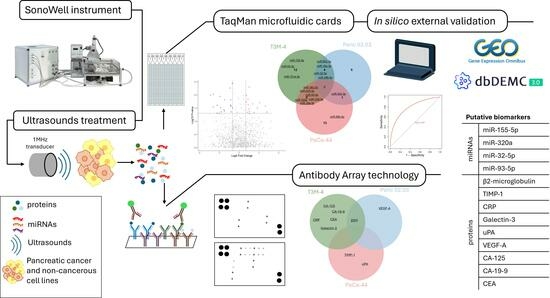
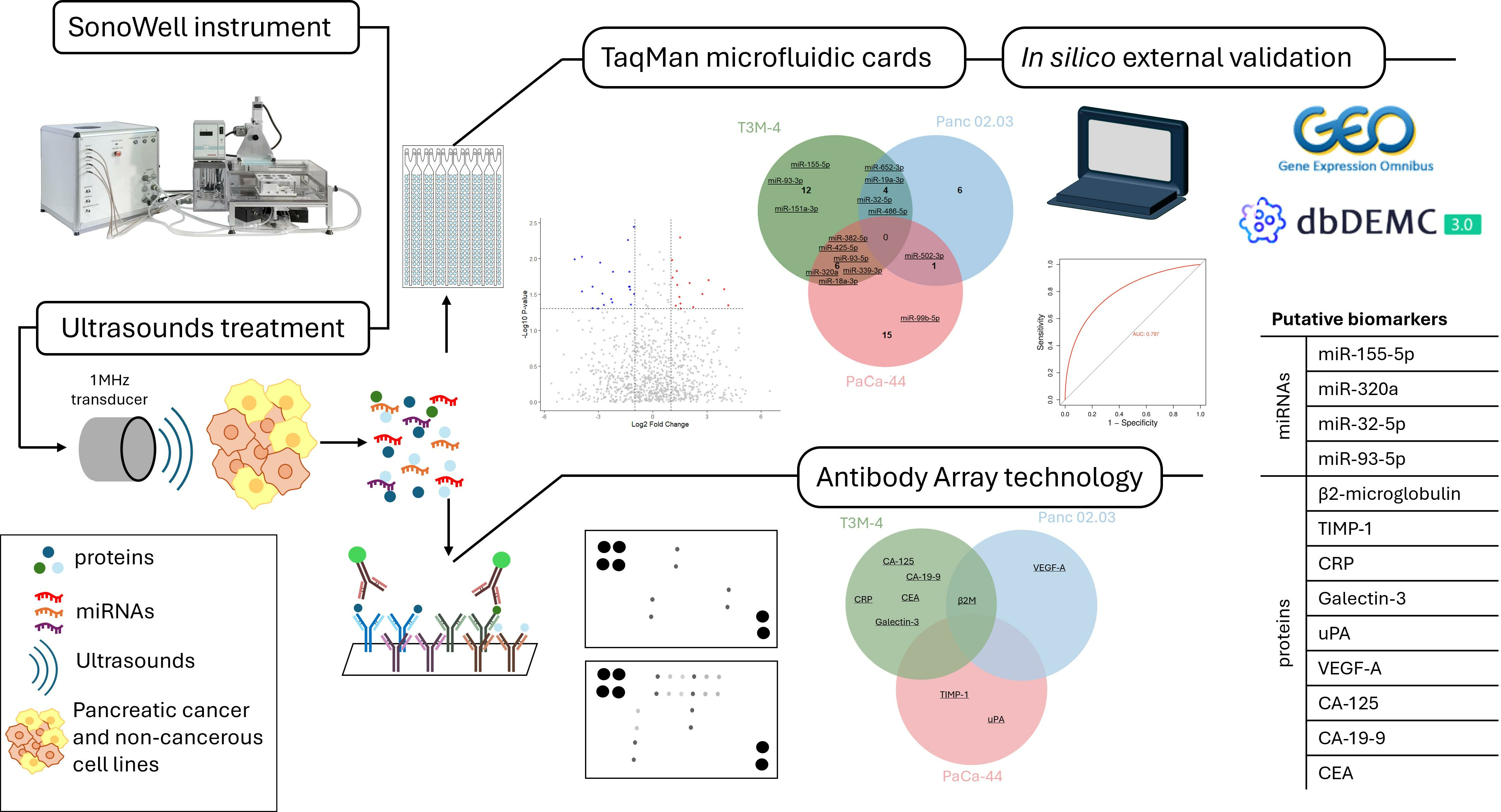
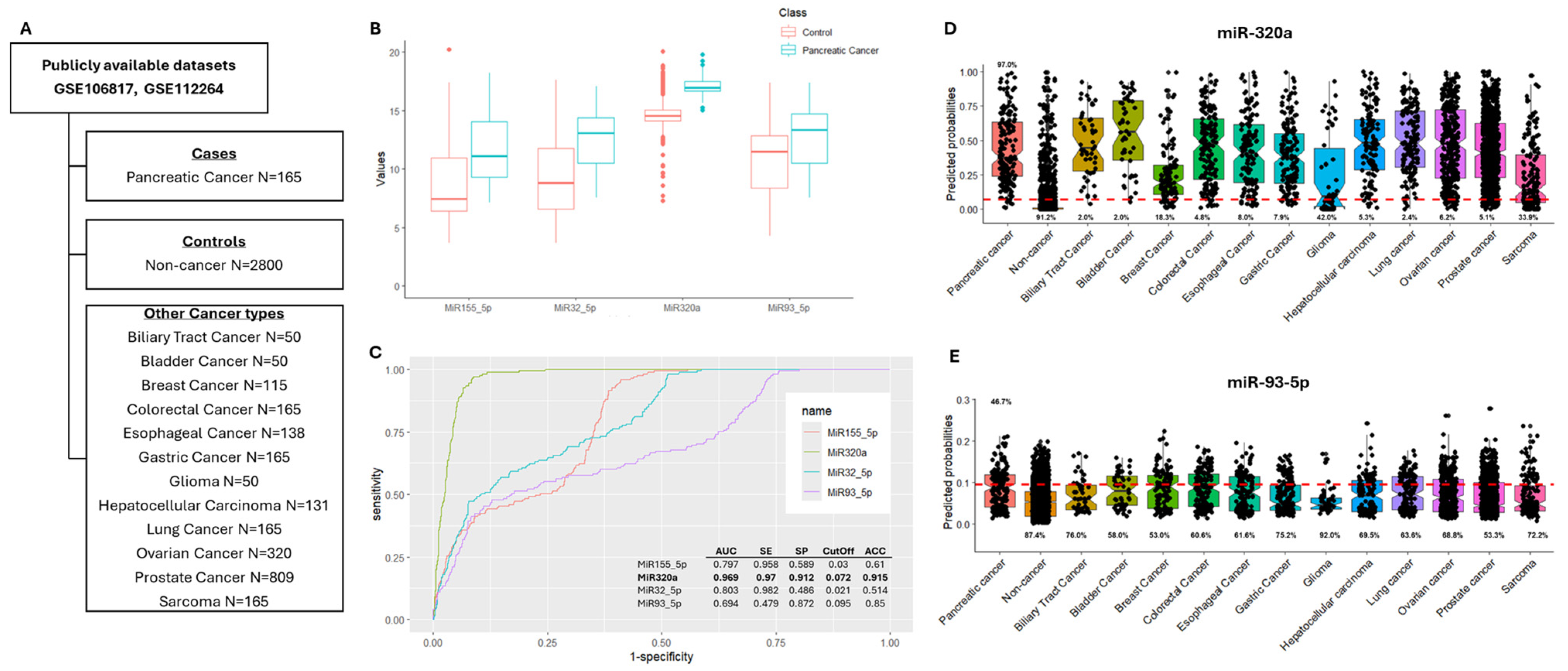
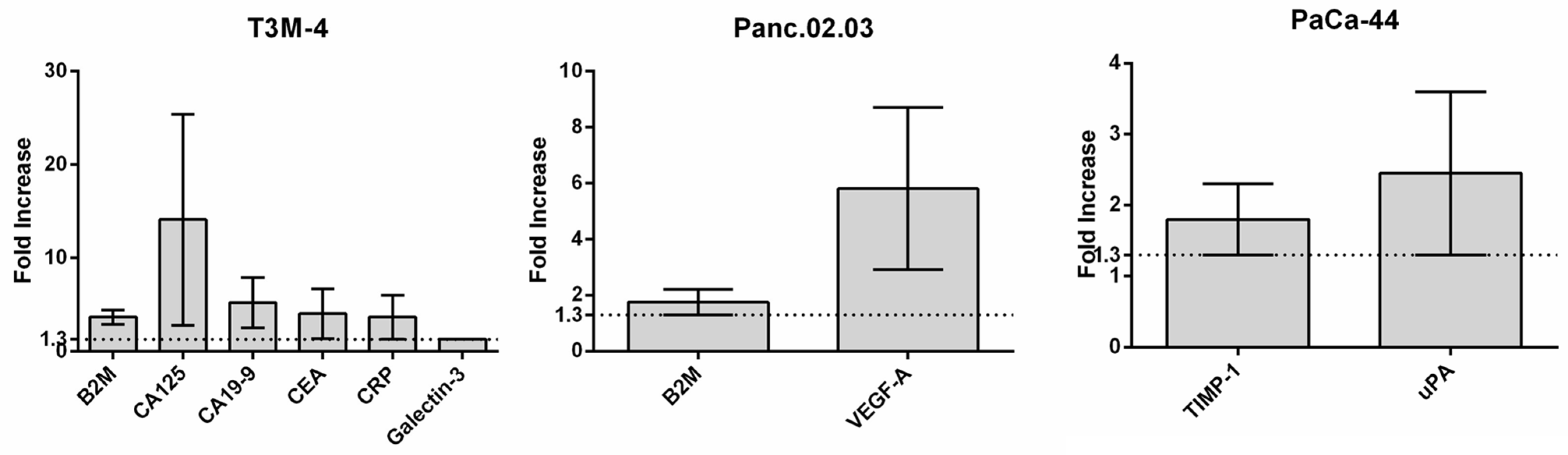
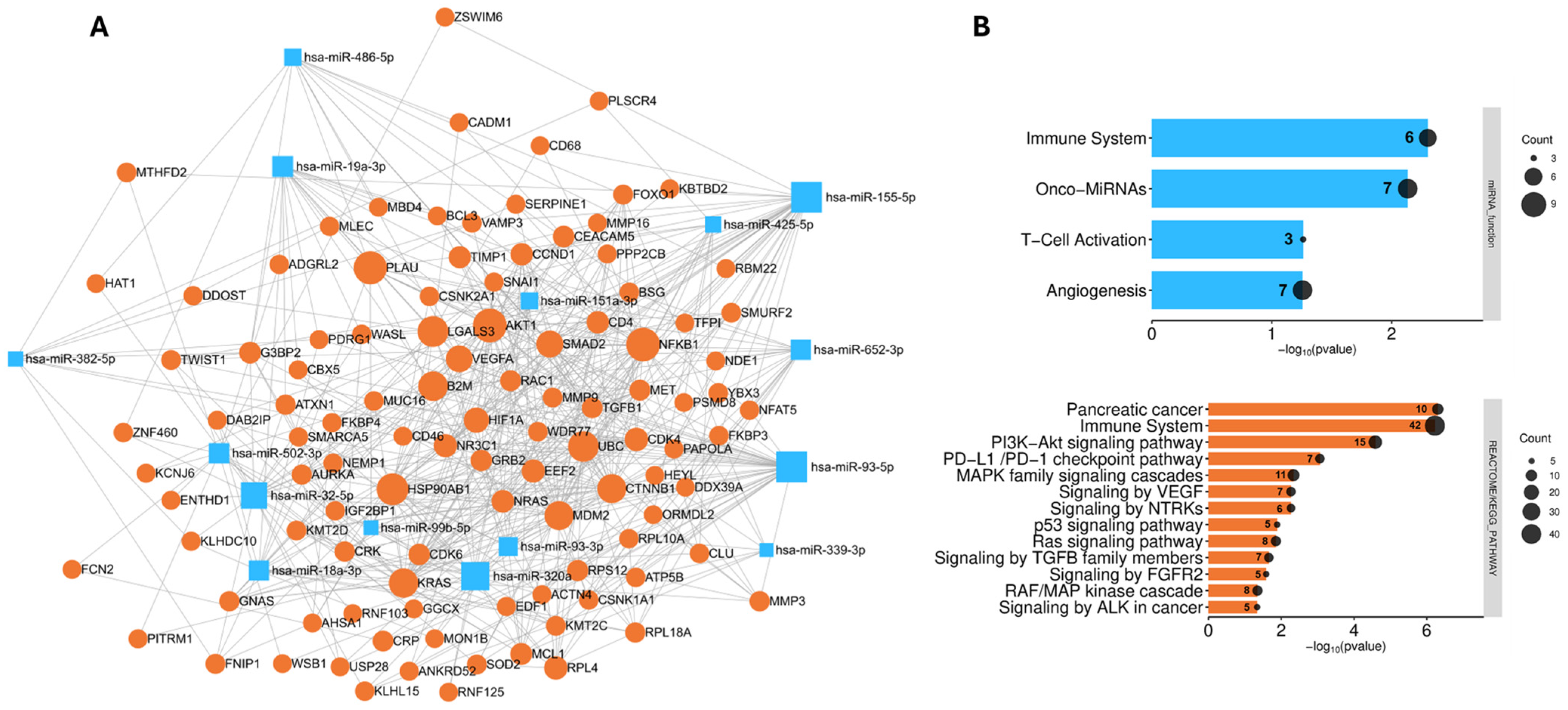
Background/Objectives: Pancreatic cancer (PC) is among the most aggressive malignancies, often diagnosed at late stages. MicroRNAs (miRNAs) and proteins released from the tumor microenvironment into body fluids represent promising non-invasive biomarkers for early cancer detection. In this study, we took advantage of an innovative ultrasound (US)-based instrument (SonoWell®, Inno-Sol srl, Rome, Italy) to treat PC cells in order to promote and amplify the release of molecules, with the aim of identifying novel putative diagnostic PC biomarkers. Methods: Three human pancreatic adenocarcinoma cell lines (T3M-4, Panc02.03, and PaCa-44) and a non-cancerous pancreatic epithelial line (HPanEPic) were subjected to US using the SonoWell instrument. MiRNAs released in the supernatants were profiled by TaqMan-based qRT-PCR microfluidic cards, while proteins were analyzed by antibody arrays. Publicly available datasets of circulating miRNAs in PC patients were also reviewed. Results: Expression levels of 22 miRNAs in T3M-4 cells, 11 in Panc02.03, and 22 in PaCa-44, none of which were identified in the non-cancerous cell line profiling, were increased in the supernatant of US-treated as opposed to control cells. Among the statistically significant miRNAs or miRNAs common to at least two tumor cell lines, the expression levels of miR-155-5p, miR-320a, miR-32-5p, and miR-93-5p were also found to be significantly upregulated in sera from PC patients compared to the results for healthy controls. With regard to proteins released after sonication, several molecules were identified as candidate biomarkers in cancer US supernatants (Beta-2 microglobulin, CA125, CA19-9, CEA, CRP, Galectin-3, TIMP-1, uPA, and VEGF-A). Conclusions: We demonstrated that US-mediated sonoporation can promote and amplify the release of small molecules, miRNAs, and proteins into cell culture supernatants for consideration as putative biomarkers, thus encouraging further studies aimed at directly validating their expression levels in sera/plasma from PC patients and at deepening their role in the treatment of PC.
Keywords:
pancreatic cancer; biomarkers; microRNA; early diagnosis; ultrasounds