Ablative Therapy in Non-HCC Liver Malignancy

1
Department of Surgery, Indiana University, Indianapolis, IN 46202, USA
2
Department of Interventional Radiology, Indiana University, Indianapolis, IN 46202, USA
*
Author to whom correspondence should be addressed.
Cancers 2023, 15(4), 1200; https://doi.org/10.3390/cancers15041200
Submission received: 11 January 2023
/
Revised: 7 February 2023
/
Accepted: 8 February 2023
/
Published: 14 February 2023
(This article belongs to the Special Issue Current Role of Ablation in Liver Cancer Therapy)
Simple Summary
Liver malignancy affects thousands of people, and its treatment is constantly evolving. Ablative therapies are a series of minimally invasive modalities that treat these tumors in combination with other established forms of treatment such as chemotherapy and surgery. Ablative therapy is well-studied in the case of the most common type of liver malignancy, hepatocellular carcinoma. There is much less information on ablative therapy in non-hepatocellular carcinoma liver malignancy treatment. Therefore, we have described the available literature, focusing on ablative therapy’s promising results, shortcomings, and detail areas for future research on the topic of non-hepatocellular carcinoma of the liver.
Abstract
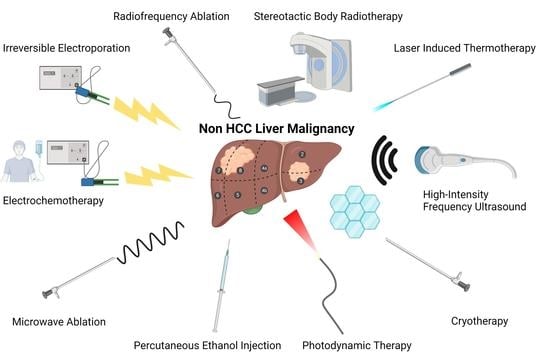
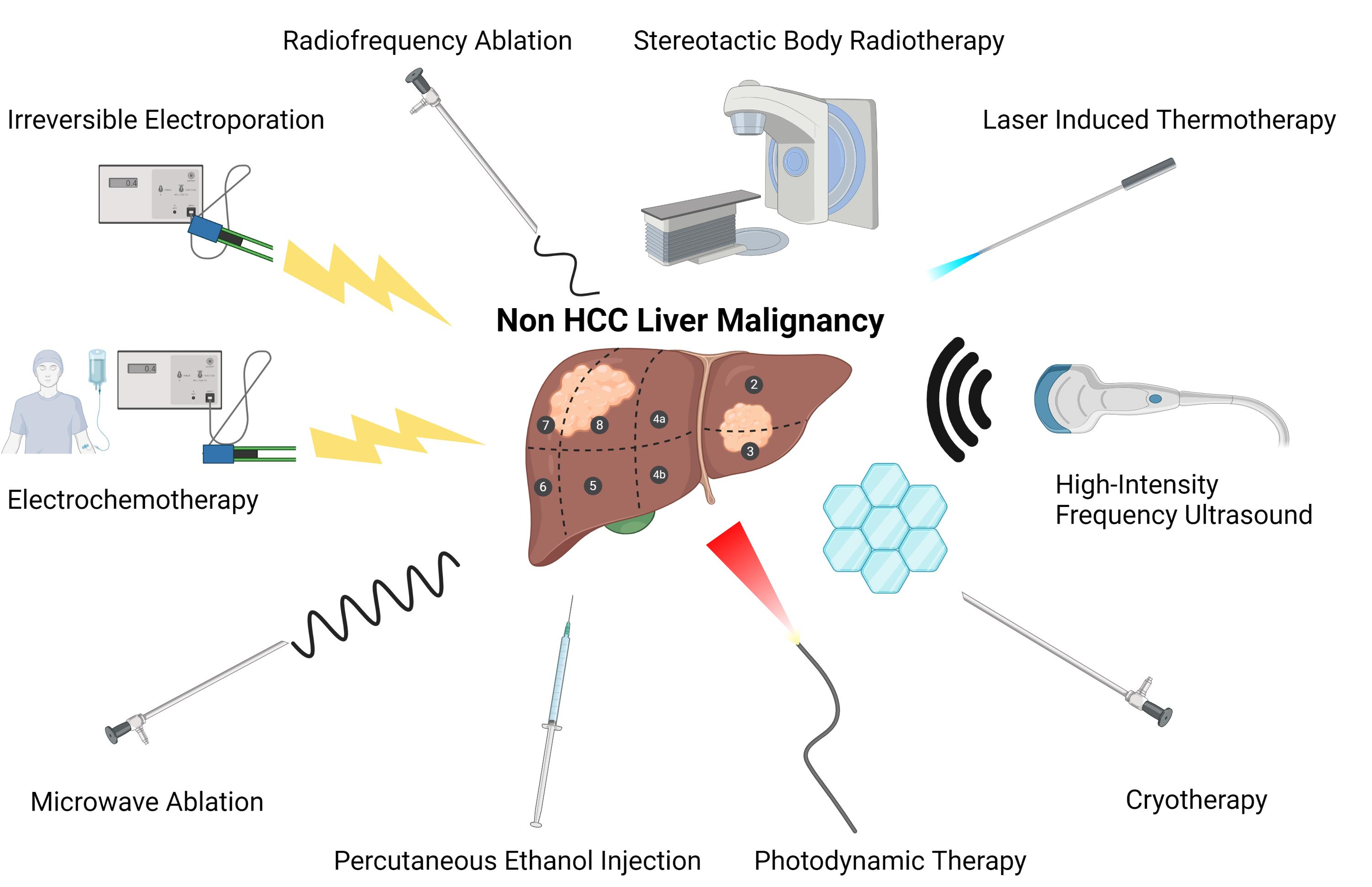
Surgical extirpation of liver tumors remains a proven approach in the management of metastatic tumors to the liver, particularly those of colorectal origin. Ablative, non-resective therapies are an increasingly attractive primary therapy for liver tumors as they are generally better tolerated and result in far less morbidity and mortality. Ablative therapies preserve greater normal liver parenchyma allowing better post-treatment liver function and are particularly appropriate for treating subsequent liver-specific tumor recurrence. This article reviews the current status of ablative therapies for non-hepatocellular liver tumors with a discussion of many of the clinically available approaches.