Comparison of the Basal Cell Carcinoma (BCC) Tumour Microenvironment to Other Solid Malignancies
by
 , and
, and
Eliana-Ruobing Zhang
1,† ,
,
Sarah Ghezelbash
1,2,3,†,
Pingxing Xie
1,4,
Misha Fotovati
1,
Ivan V. Litvinov
1,2,4 and
and
Philippe Lefrançois
1,2,3,4,5,* 1
Faculty of Medicine, McGill University, Montreal, QC H3T 1E2, Canada
2
Division of Experimental Medicine, Department of Medicine, McGill University, Montreal, QC H3T 1E2, Canada
3
Lady Davis Institute for Medical Research, Montreal, QC H3T 1E2, Canada
4
Division of Dermatology, Department of Medicine, McGill University, Montreal, QC H3T 1E2, Canada
5
Division of Dermatology, Department of Medicine, Jewish General Hospital, Montreal, QC H3T 1E2, Canada
*
Author to whom correspondence should be addressed.
†
These authors contributed equally to this work.
Cancers 2023, 15(1), 305; https://doi.org/10.3390/cancers15010305
Submission received: 30 November 2022
/
Revised: 28 December 2022
/
Accepted: 30 December 2022
/
Published: 2 January 2023
(This article belongs to the Section Tumor Microenvironment)
Simple Summary
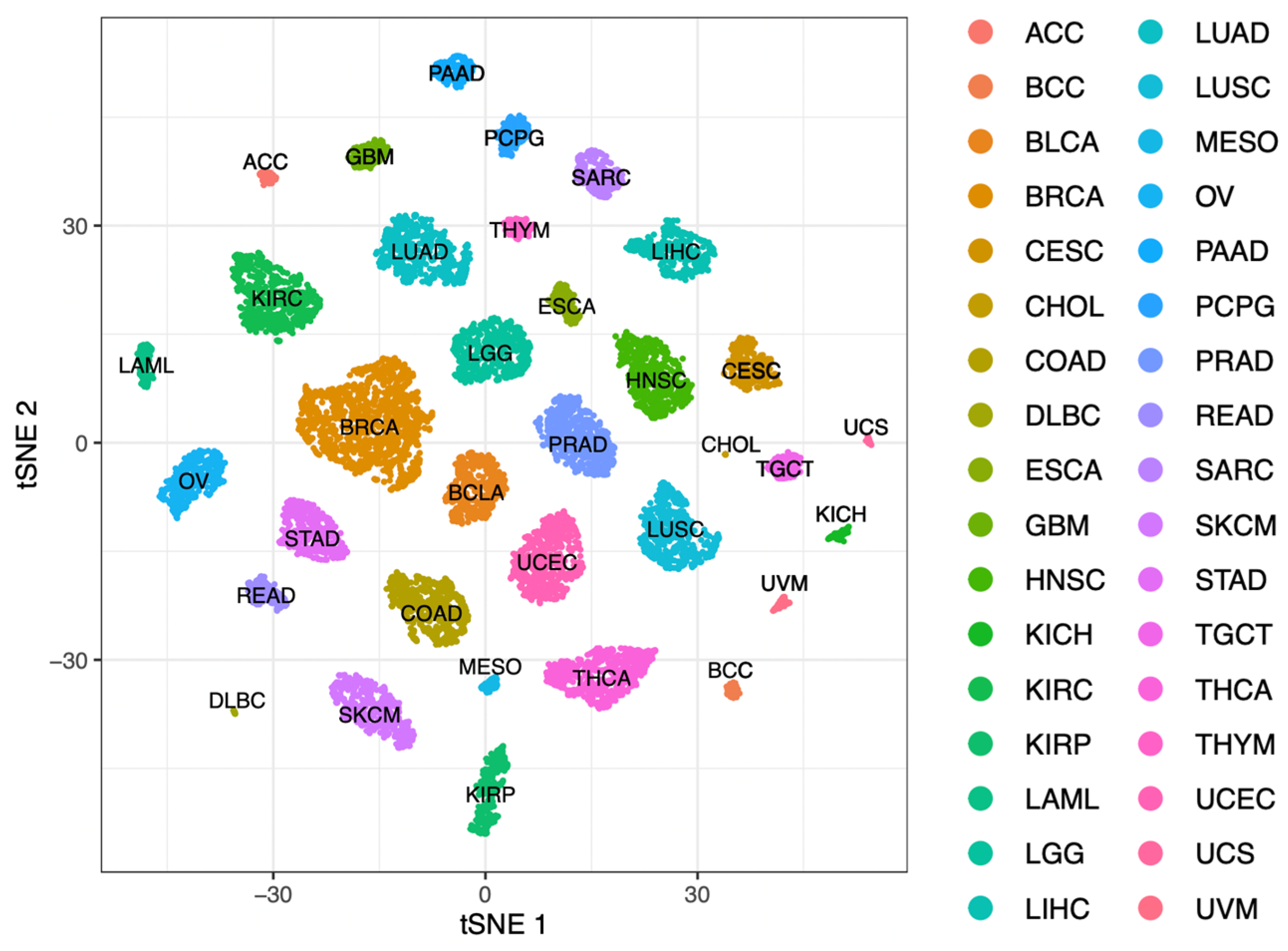
Basal cell carcinoma is the most common human cancer. Most BCCs are low-risk and are easily treated; however, 1–2% are aggressive and highly destructive to the surrounding skin, called advanced BCC. It was discovered that this subtype has a different immune profile than routine BCC, and they contain a special type of stem cell population that helps them grow and spread. There is currently no reliable laboratory model for advanced BCC, making it hard to further study it and find new treatments. For these reasons, this project was conducted using genomic data from 11,000 tumours coming from 33 non-BCC cancer types. Using computational biology, we have compared the immune cell makeup of the tumour microenvironments to determine the top three most similar cancers, which we will call BCC “relatives”. We will examine how these “relatives” develop and grow, as well as current existing treatments and their response to such treatments.
Abstract
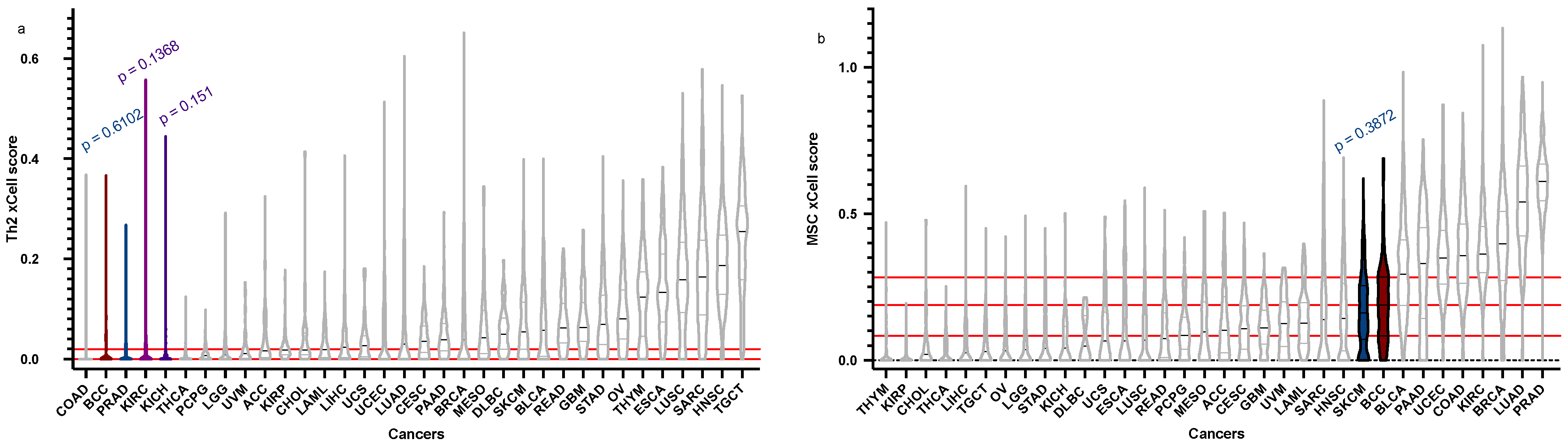
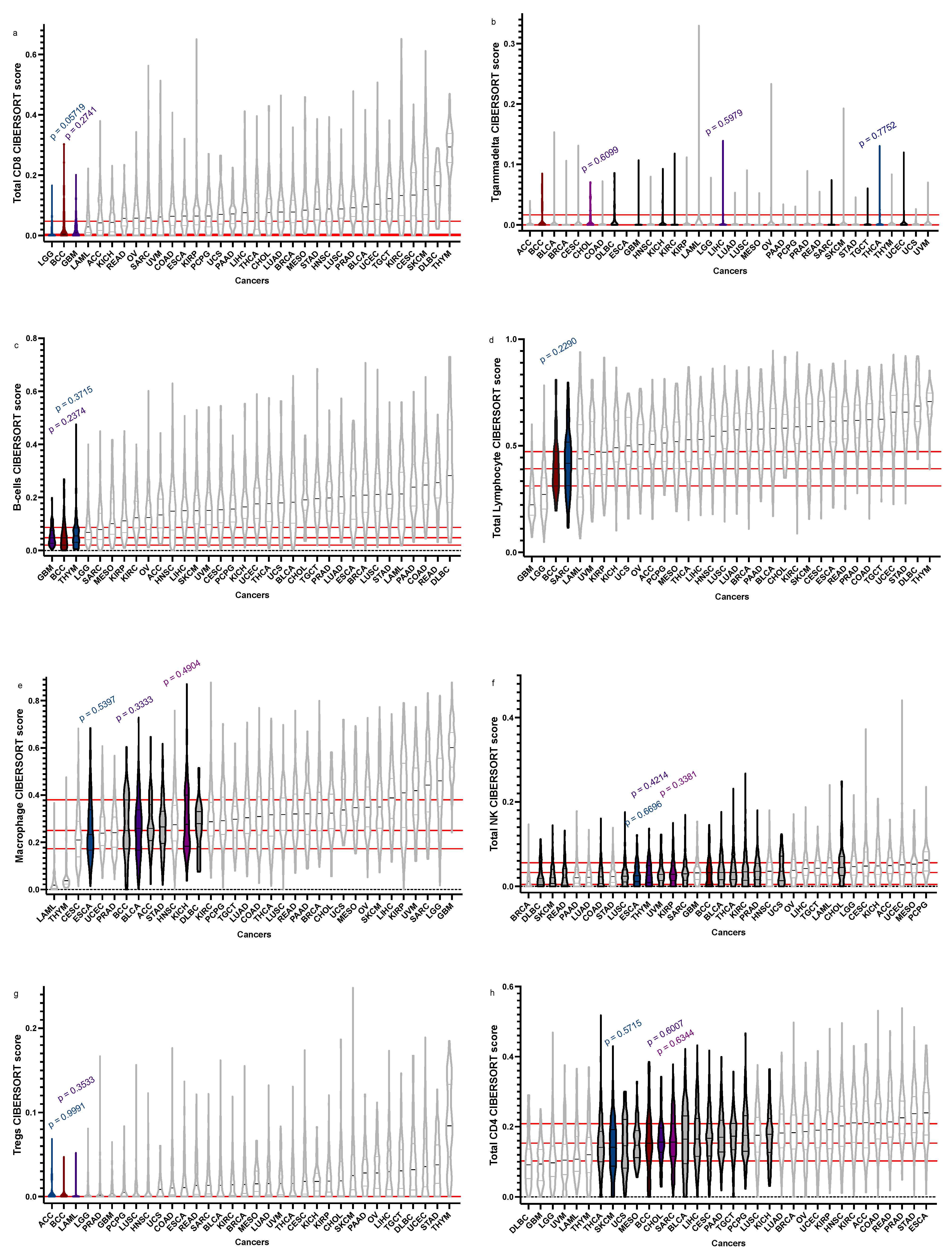
Basal cell carcinoma (BCC) is the most common form of skin cancer, contributing to nearly a third of new cancer cases in Western countries. Most BCCs are considered low risk “routine” lesions that can either be excised through surgery or treated with chemotherapeutic agents. However, around 1–2% of BCC cases are locally aggressive, present a high risk of metastasis, and often develop chemoresistance, termed advanced BCC. There currently exists no animal model or cell line that can recapitulate advanced BCC, let alone intermediate-risk and high-risk early BCC. We previously found that aggressive BCC tumours presented a Th2 cytokine inflammation profile, mesenchymal stem cell properties, and macrophage-induced tumoral inflammation. In this study, we aimed to identify potential BCC “relatives” among solid-organ malignancies who present similar immune cell proportions in their microenvironment compositions. Using immune cell type deconvolution by CIBERSORTx, and cell type enrichment by xCell, we determined three cancers with the most similar tumour microenvironments as compared to BCC. Specifically, chromophobe renal cell carcinoma, sarcoma, and skin cutaneous melanoma presented significance in multiple cell types, namely in CD4+ T lymphocytes, gammadelta T lymphocytes, and NK cell populations. Consequently, further literature analysis was conducted to understand similarities between BCC and its “relatives”, as well as investigating novel treatment targets. By identifying cancers most like BCC, we hope to propose prospective druggable pathways, as well as to gain insight on developing a reliable animal or cell line model to represent advanced BCC.