Histopathological Growth Pattern in Colorectal Liver Metastasis and The Tumor Immune Microenvironment
by
 ,
,
Claudia Zaharia
1,2,
Torhild Veen
2,3,
Dordi Lea
1,2,
Arezo Kanani
2,3,
Marina Alexeeva
2,3 and
Kjetil Søreide
2,3,4,* 1
Department of Pathology, Stavanger University Hospital, N-4068 Stavanger, Norway
2
Gastrointestinal Translational Research Group, Laboratory for Molecular Medicine, Stavanger University Hospital, N-4068 Stavanger, Norway
3
Department of Gastrointestinal Surgery, Stavanger University Hospital, N-4068 Stavanger, Norway
4
Department of Clinical Medicine, University of Bergen, N-7804 Bergen, Norway
*
Author to whom correspondence should be addressed.
Cancers 2023, 15(1), 181; https://doi.org/10.3390/cancers15010181
Submission received: 23 November 2022
/
Revised: 23 December 2022
/
Accepted: 24 December 2022
/
Published: 28 December 2022
(This article belongs to the Special Issue Prognostic and Therapeutic Implications of Tumor Biology in Colorectal Liver Metastases)
Simple Summary
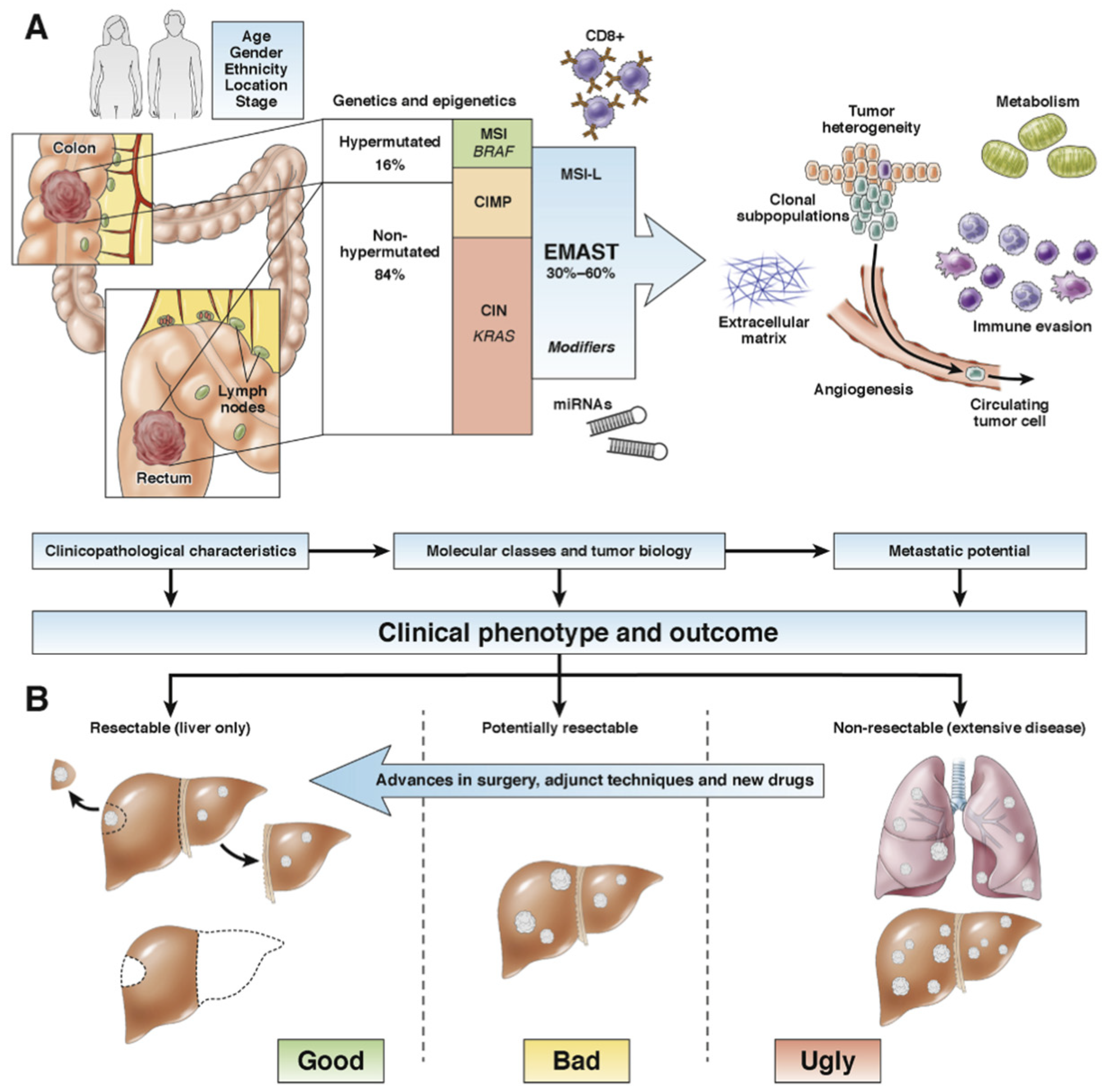
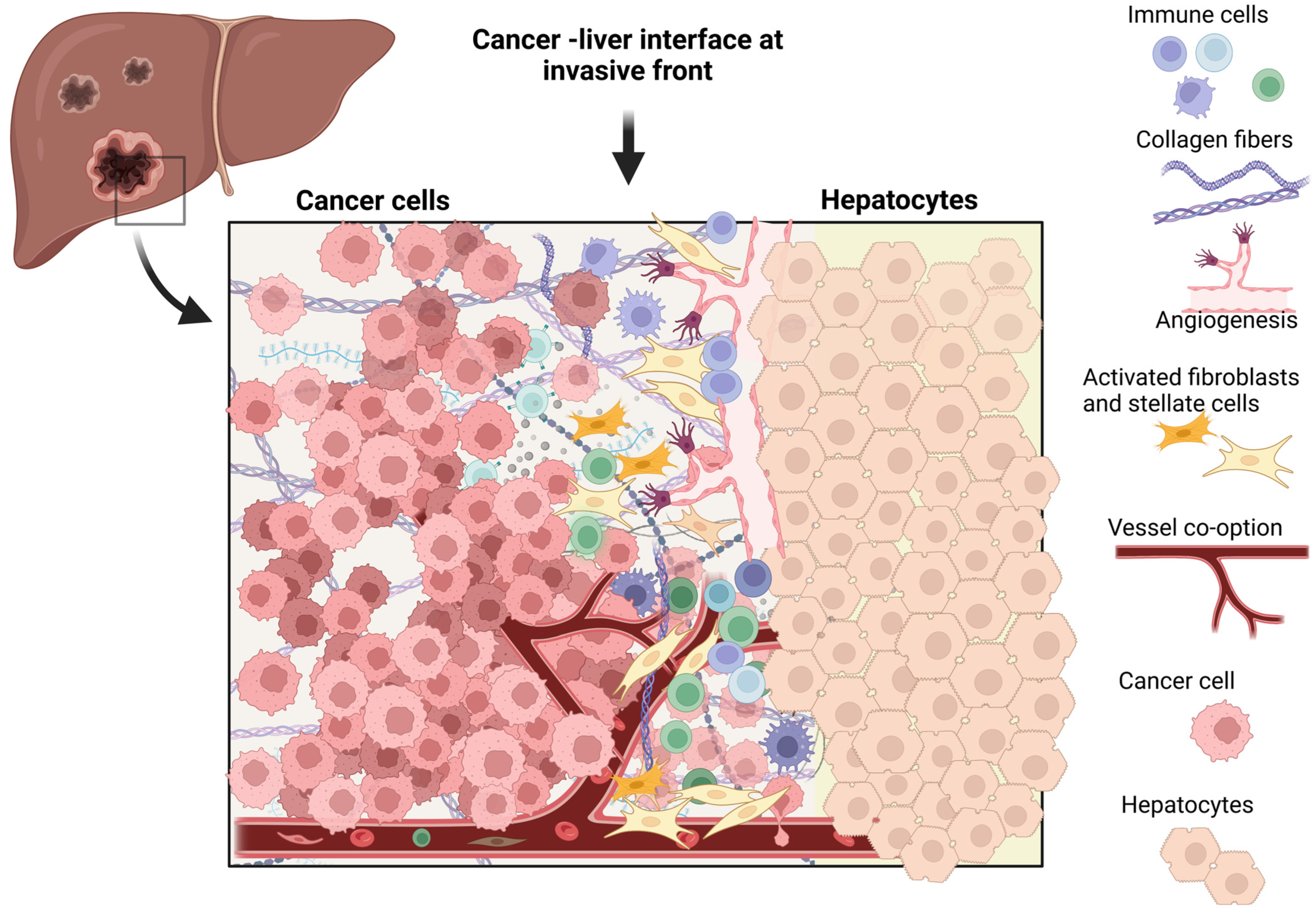
Liver metastases occur in almost half of patients with colorectal cancer, either at the time of presentation (synchronous) or eventually as a metachronous recurrence of the disease. Approximately one quarter of patients with metastasis to the liver receive surgical resection with curative intent but recurrence is frequent and related to tumor biology. Understanding cancer biology is crucial to improve outcomes. In an attempt at unveiling novel targets for treatment, this paper investigates and summarizes current knowledge of the distinct growth patterns of tumor cells at the interface with normal liver tissue, defined as the histopathological growth pattern, and their interaction with immune cells in the microenvironment.
Abstract
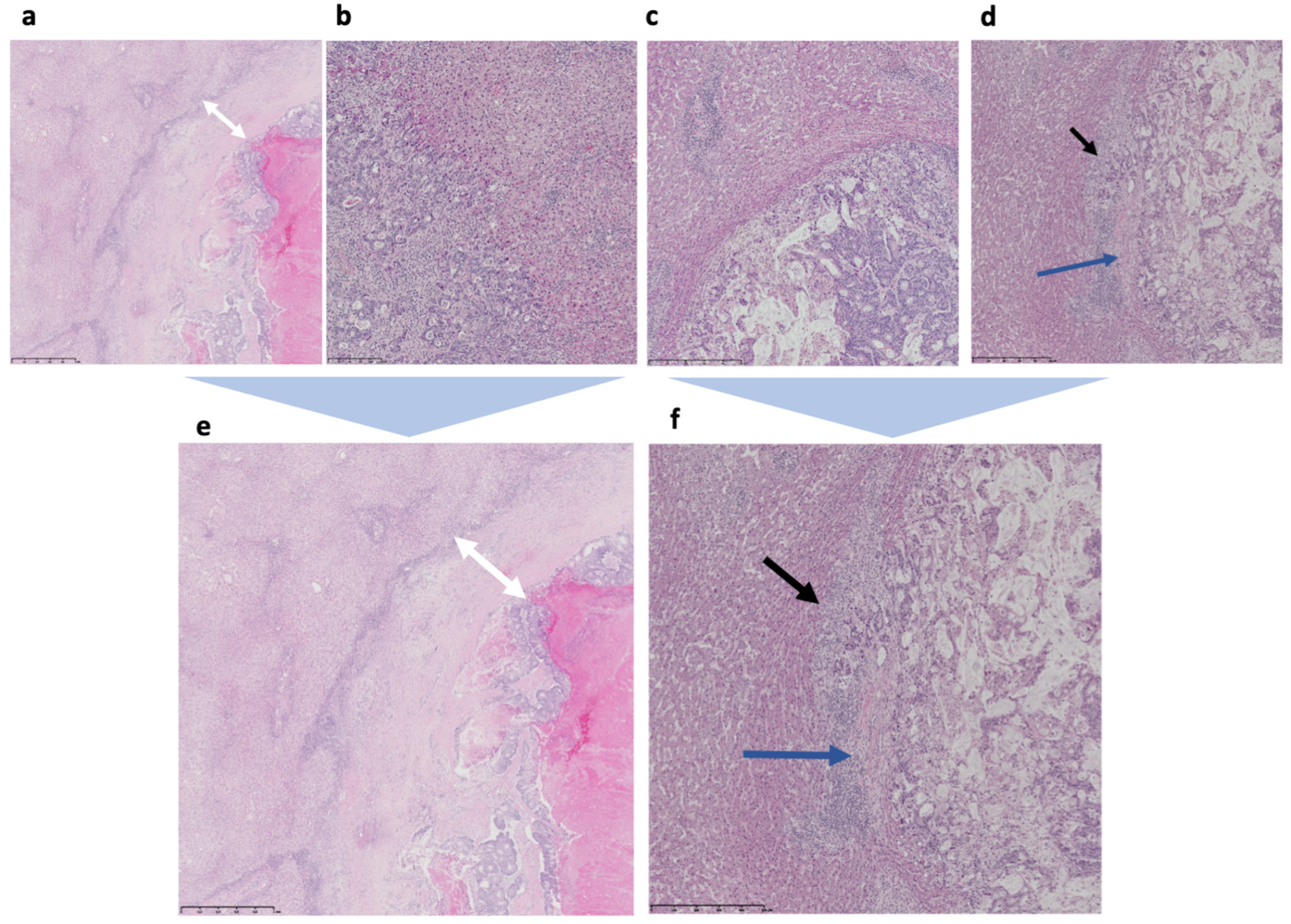
Almost half of all patients with colorectal cancer present with or eventually develop metastasis, most frequently in the liver. Understanding the histopathological growth patterns and tumor immune microenvironment of colorectal liver metastases may help determine treatment strategies and assess prognosis. A literature search was conducted to gather information on cancer biology, histopathological growth patterns, and the tumor immune microenvironment in colorectal liver metastases, including their mechanisms and their impact on clinical outcomes. A first consensus on histopathological growth patterns emerged in 2017, identifying five growth patterns. Later studies found benefits from a two-tier system, desmoplastic and non-desmoplastic, incorporated into the updated 2022 consensus. Furthermore, the tumor immune microenvironment shows additional characteristic features with relevance to cancer biology. This includes density of T-cells (CD8+), expression of claudin-2, presence of vessel co-option versus angiogenesis, as well as several other factors. The relation between histopathological growth patterns and the tumor immune microenvironment delineates distinct subtypes of cancer biology. The distinct subtypes are found to correlate with risk of metastasis or relapse, and hence to clinical outcome and long-term survival in each patient. In order to optimize personalized and precision therapy for patients with colorectal liver metastases, further investigation into the mechanisms of cancer biology and their translational aspects to novel treatment targets is warranted.