Post-Translational Modifications in Tumor-Associated Antigens as a Platform for Novel Immuno-Oncology Therapies

 ,
,  ,
,  and
and 
Abstract
Simple Summary
Abstract
1. Introduction
2. Acetylation
3. Citrullination
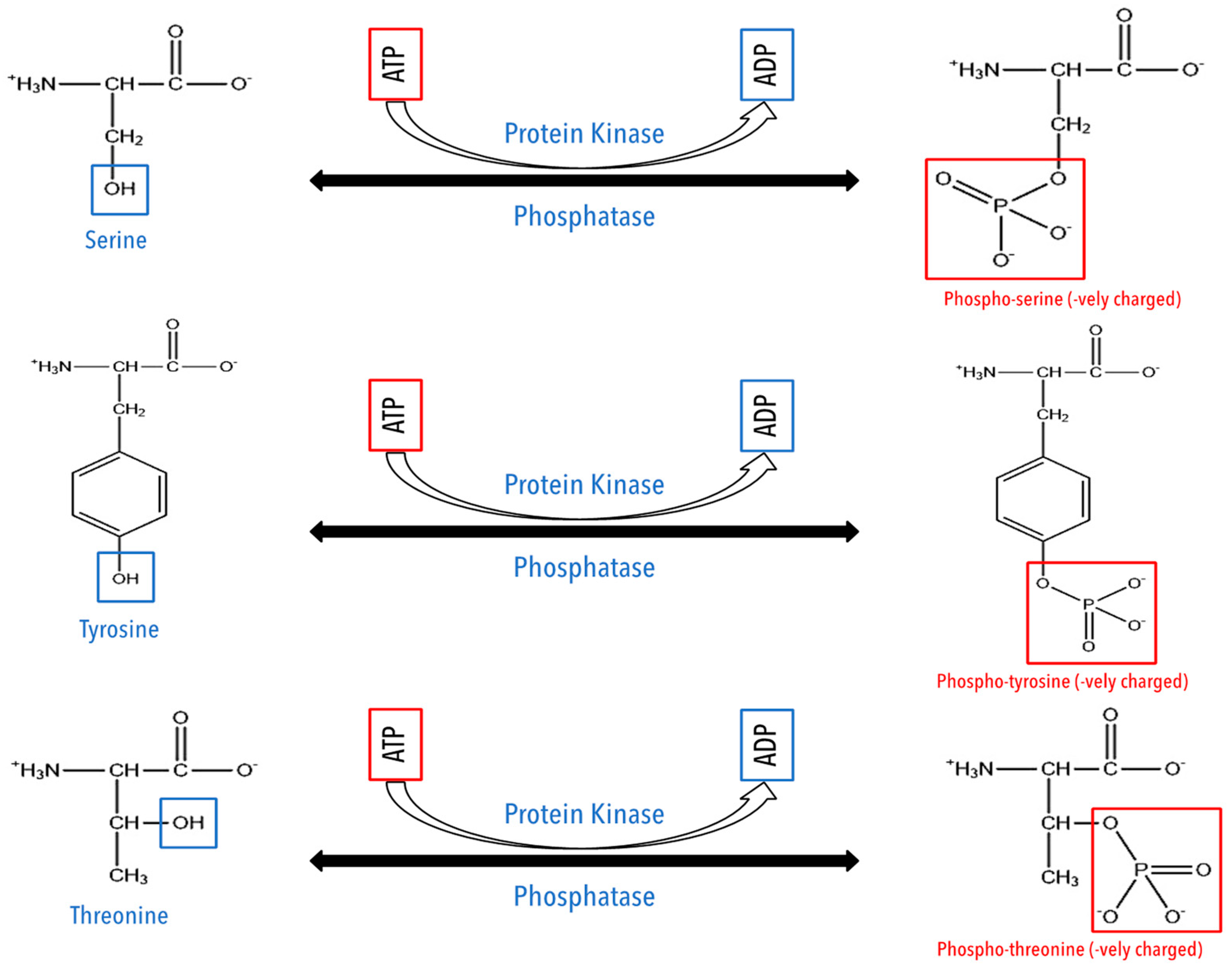
4. Phosphorylation
5. Glycosylation
6. Conclusions
Author Contributions
Funding
Acknowledgments
Conflicts of Interest
References
- Hermann, J.; Schurgers, L.; Jankowski, V. Identification and Characterization of Post-Translational Modifications: Clinical Implications. Mol. Aspects Med. 2022, 86, 101066. [Google Scholar] [CrossRef] [PubMed]
- Ramazi, S.; Zahiri, J. Post-Translational Modifications in Proteins: Resources, Tools and Prediction Methods. Database 2021, 2021, baab012. [Google Scholar] [CrossRef] [PubMed]
- Wegmann, S.; Biernat, J.; Mandelkow, E. A Current View on Tau Protein Phosphorylation in Alzheimer’s Disease. Curr. Opin. Neurobiol. 2021, 69, 131–138. [Google Scholar] [CrossRef] [PubMed]
- Darrah, E.; Andrade, F. Rheumatoid Arthritis and Citrullination. Curr. Opin. Rheumatol. 2018, 30, 72–78. [Google Scholar] [CrossRef] [PubMed]
- Lim, J.-M.; Wollaston-Hayden, E.E.; Teo, C.F.; Hausman, D.; Wells, L. Quantitative Secretome and Glycome of Primary Human Adipocytes during Insulin Resistance. Clin. Proteom. 2014, 11, 20. [Google Scholar] [CrossRef]
- Chatterjee, B.; Thakur, S.S. Investigation of Post-Translational Modifications in Type 2 Diabetes. Clin. Proteom. 2018, 15, 32. [Google Scholar] [CrossRef]
- Haen, S.P.; Löffler, M.W.; Rammensee, H.-G.; Brossart, P. Towards New Horizons: Characterization, Classification and Implications of the Tumour Antigenic Repertoire. Nat. Rev. Clin. Oncol. 2020, 17, 595–610. [Google Scholar] [CrossRef]
- Peng, M.; Mo, Y.; Wang, Y.; Wu, P.; Zhang, Y.; Xiong, F.; Guo, C.; Wu, X.; Li, Y.; Li, X. Neoantigen Vaccine: An Emerging Tumor Immunotherapy. Mol. Cancer 2019, 18, 128. [Google Scholar] [CrossRef]
- Sahin, U.; Türeci, O.; Schmitt, H.; Cochlovius, B.; Johannes, T.; Schmits, R.; Stenner, F.; Luo, G.; Schobert, I.; Pfreundschuh, M. Human Neoplasms Elicit Multiple Specific Immune Responses in the Autologous Host. Proc. Natl. Acad. Sci. USA 1995, 92, 11810–11813. [Google Scholar] [CrossRef]
- Le Naour, F.; Brichory, F.; Beretta, L.; Hanash, S.M. Identification of Tumor-Associated Antigens Using Proteomics. Technol. Cancer Res. Treat. 2002, 1, 257–262. [Google Scholar] [CrossRef]
- Zaenker, P.; Ziman, M.R. Serologic Autoantibodies as Diagnostic Cancer Biomarkers—A ReviewSerologic Autoantibodies as Diagnostic Cancer Biomarkers. Cancer Epidemiol. Biomark. Prev. 2013, 22, 2161–2181. [Google Scholar] [CrossRef] [PubMed]
- Capello, M.; Ferri-Borgogno, S.; Cappello, P.; Novelli, F. A-enolase: A Promising Therapeutic and Diagnostic Tumor Target. FEBS J. 2011, 278, 1064–1074. [Google Scholar] [CrossRef] [PubMed]
- Cappello, P.; Tomaino, B.; Chiarle, R.; Ceruti, P.; Novarino, A.; Castagnoli, C.; Migliorini, P.; Perconti, G.; Giallongo, A.; Milella, M. An Integrated Humoral and Cellular Response Is Elicited in Pancreatic Cancer by A-enolase, a Novel Pancreatic Ductal Adenocarcinoma-associated Antigen. Int. J. Cancer 2009, 125, 639–648. [Google Scholar] [CrossRef] [PubMed]
- Tomaino, B.; Cappello, P.; Capello, M.; Fredolini, C.; Sperduti, I.; Migliorini, P.; Salacone, P.; Novarino, A.; Giacobino, A.; Ciuffreda, L.; et al. Circulating Autoantibodies to Phosphorylated α-Enolase Are a Hallmark of Pancreatic Cancer. J. Proteome Res. 2011, 10, 105–112. [Google Scholar] [CrossRef] [PubMed]
- Capello, M.; Caorsi, C.; Bogantes Hernandez, P.J.; Dametto, E.; Bertinetto, F.E.; Magistroni, P.; Rendine, S.; Amoroso, A.; Novelli, F. Phosphorylated Alpha-Enolase Induces Autoantibodies in HLA-DR8 Pancreatic Cancer Patients and Triggers HLA-DR8 Restricted T-Cell Activation. Immunol. Lett. 2015, 167, 11–16. [Google Scholar] [CrossRef]
- Zhou, W.; Capello, M.; Fredolini, C.; Piemonti, L.; Liotta, L.A.; Novelli, F.; Petricoin, E.F. Mass Spectrometry Analysis of the Post-Translational Modifications of Alpha-Enolase from Pancreatic Ductal Adenocarcinoma Cells. J. Proteome Res. 2010, 9, 2929–2936. [Google Scholar] [CrossRef]
- Brentville, V.A.; Metheringham, R.L.; Daniels, I.; Atabani, S.; Symonds, P.; Cook, K.W.; Vankemmelbeke, M.; Choudhury, R.; Vaghela, P.; Gijon, M.; et al. Combination Vaccine Based on Citrullinated Vimentin and Enolase Peptides Induces Potent CD4-Mediated Anti-Tumor Responses. J. Immunother. Cancer 2020, 8, 6–9. [Google Scholar] [CrossRef]
- Zarling, A.L.; Obeng, R.C.; Desch, A.N.; Pinczewski, J.; Cummings, K.L.; Deacon, D.H.; Conaway, M.; Slingluff, C.L.J.; Engelhard, V.H. MHC-Restricted Phosphopeptides from Insulin Receptor Substrate-2 and CDC25b Offer Broad-Based Immunotherapeutic Agents for Cancer. Cancer Res. 2014, 74, 6784–6795. [Google Scholar] [CrossRef]
- Kumai, T.; Ishibashi, K.; Oikawa, K.; Matsuda, Y.; Aoki, N.; Kimura, S.; Hayashi, S.; Kitada, M.; Harabuchi, Y.; Celis, E.; et al. Induction of Tumor-Reactive T Helper Responses by a Posttranslational Modified Epitope from Tumor Protein P53. Cancer Immunol. Immunother. 2014, 63, 469–478. [Google Scholar] [CrossRef]
- Karanikas, V.; Hwang, L.A.; Pearson, J.; Ong, C.S.; Apostolopoulos, V.; Vaughan, H.; Xing, P.X.; Jamieson, G.; Pietersz, G.; Tait, B.; et al. Antibody and T Cell Responses of Patients with Adenocarcinoma Immunized with Mannan-MUC1 Fusion Protein. J. Clin. Investig. 1997, 100, 2783–2792. [Google Scholar] [CrossRef]
- Ohara, K.; Ohkuri, T.; Kumai, T.; Nagato, T.; Nozaki, Y.; Ishibashi, K.; Kosaka, A.; Nagata, M.; Harabuchi, S.; Ohara, M.; et al. Targeting Phosphorylated P53 to Elicit Tumor-Reactive T Helper Responses against Head and Neck Squamous Cell Carcinoma. Oncoimmunology 2018, 7, 1–10. [Google Scholar] [CrossRef] [PubMed]
- Saxena, M.; van der Burg, S.H.; Melief, C.J.M.; Bhardwaj, N. Therapeutic Cancer Vaccines. Nat. Rev. Cancer 2021, 21, 360–378. [Google Scholar] [CrossRef] [PubMed]
- Hollingsworth, R.E.; Jansen, K. Turning the Corner on Therapeutic Cancer Vaccines. NPJ Vaccines 2019, 4, 7. [Google Scholar] [CrossRef] [PubMed]
- Paston, S.J.; Brentville, V.A.; Symonds, P.; Durrant, L.G. Cancer Vaccines, Adjuvants, and Delivery Systems. Front. Immunol. 2021, 12, 627932. [Google Scholar] [CrossRef] [PubMed]
- Fortner, R.T.; Damms-Machado, A.; Kaaks, R. Systematic Review: Tumor-Associated Antigen Autoantibodies and Ovarian Cancer Early Detection. Gynecol. Oncol. 2017, 147, 465–480. [Google Scholar] [CrossRef] [PubMed]
- Alpízar, A.; Marino, F.; Ramos-Fernández, A.; Lombardía, M.; Jeko, A.; Pazos, F.; Paradela, A.; Santiago, C.; Heck, A.J.R.; Marcilla, M. A Molecular Basis for the Presentation of Phosphorylated Peptides by HLA-B Antigens. Mol. Cell. Proteom. 2017, 16, 181–193. [Google Scholar] [CrossRef]
- Li, Y.; Depontieu, F.R.; Sidney, J.; Salay, T.M.; Engelhard, V.H.; Hunt, D.F.; Sette, A.; Topalian, S.L.; Mariuzza, R.A. Structural Basis for the Presentation of Tumor-Associated MHC Class II-Restricted Phosphopeptides to CD4+ T Cells. J. Mol. Biol. 2010, 399, 596–603. [Google Scholar] [CrossRef]
- Petersen, J.; Wurzbacher, S.J.; Williamson, N.A.; Ramarathinam, S.H.; Reid, H.H.; Nair, A.K.N.; Zhao, A.Y.; Nastovska, R.; Rudge, G.; Rossjohn, J.; et al. Phosphorylated Self-Peptides Alter Human Leukocyte Antigen Class I-Restricted Antigen Presentation and Generate Tumor-Specific Epitopes. Proc. Natl. Acad. Sci. USA 2009, 106, 2776–2781. [Google Scholar] [CrossRef]
- Depontieu, F.R.; Qian, J.; Zarling, A.L.; McMiller, T.L.; Salay, T.M.; Norris, A.; Michelle English, A.; Shabanowitz, J.; Engelhard, V.H.; Hunt, D.F.; et al. Identification of Tumor-Associated, MHC Class II-Restricted Phosphopeptides as Targets for Immunotherapy. Proc. Natl. Acad. Sci. USA 2009, 106, 12073–12078. [Google Scholar] [CrossRef]
- Engelhard, V.H.; Obeng, R.C.; Cummings, K.L.; Petroni, G.R.; Ambakhutwala, A.L.; Chianese-Bullock, K.A.; Smith, K.T.; Lulu, A.; Varhegyi, N.; Smolkin, M.E.; et al. MHC-Restricted Phosphopeptide Antigens: Preclinical Validation and First-in-Humans Clinical Trial in Participants with High-Risk Melanoma. J. Immunother. Cancer 2020, 8, e000262. [Google Scholar] [CrossRef]
- Zarling, A.L.; Polefrone, J.M.; Evans, A.M.; Mikesh, L.M.; Shabanowitz, J.; Lewis, S.T.; Engelhard, V.H.; Hunt, D.F. Identification of Class I MHC-Associated Phosphopeptides as Targets for Cancer Immunotherapy. Proc. Natl. Acad. Sci. USA 2006, 103, 14889–14894. [Google Scholar] [CrossRef] [PubMed]
- Lin, M.H.; Shen, K.Y.; Liu, B.S.; Chen, I.H.; Sher, Y.P.; Tseng, G.C.; Liu, S.J.; Sung, W.C. Immunological Evaluation of a Novel HLA-A2 Restricted Phosphopeptide of Tumor Associated Antigen, TRAP1, on Cancer Therapy. Vaccine X 2019, 1, 100017. [Google Scholar] [CrossRef] [PubMed]
- Ohara, M.; Ohara, K.; Kumai, T.; Ohkuri, T.; Nagato, T.; Hirata-Nozaki, Y.; Kosaka, A.; Nagata, M.; Hayashi, R.; Harabuchi, S.; et al. Phosphorylated Vimentin as an Immunotherapeutic Target against Metastatic Colorectal Cancer. Cancer Immunol. Immunother. 2020, 69, 989–999. [Google Scholar] [CrossRef]
- Brentville, V.A.; Metheringham, R.L.; Gunn, B.; Symonds, P.; Daniels, I.; Gijon, M.; Cook, K.; Xue, W.; Durrant, L.G. Citrullinated Vimentin Presented on MHC-II in Tumor Cells Is a Target for CD4+ T-Cell-Mediated Antitumor Immunity. Cancer Res. 2016, 76, 548–560. [Google Scholar] [CrossRef] [PubMed]
- Symonds, P.; Marcu, A.; Cook, K.W.; Metheringham, R.L.; Durrant, L.G.; Brentville, V.A. Citrullinated Epitopes Identified on Tumour MHC Class II by Peptide Elution Stimulate Both Regulatory and Th1 Responses and Require Careful Selection for Optimal Anti-Tumour Responses. Front. Immunol. 2021, 12, 764462. [Google Scholar] [CrossRef] [PubMed]
- Brentville, V.A.; Symonds, P.; Cook, K.W.; Daniels, I.; Pitt, T.; Gijon, M.; Vaghela, P.; Xue, W.; Shah, S.; Metheringham, R.L.; et al. T Cell Repertoire to Citrullinated Self-Peptides in Healthy Humans Is Not Confined to the HLA-DR SE Alleles; Targeting of Citrullinated Self-Peptides Presented by HLA-DP4 for Tumour Therapy. Oncoimmunology 2019, 8, e1576490. [Google Scholar] [CrossRef]
- Cook, K.; Daniels, I.; Symonds, P.; Pitt, T.; Gijon, M.; Xue, W.; Metheringham, R.; Durrant, L.; Brentville, V. Citrullinated α-Enolase Is an Effective Target for Anti-Cancer Immunity. Oncoimmunology 2018, 7, e1390642. [Google Scholar] [CrossRef]
- Nuti, M.; Panici, P.B.; Mancuso, S. Human B-Cell Immune Response to the Polymorphic Epithelial Mucin. Cancer Res. 1993, 53, 2457–2459. [Google Scholar]
- Boland, C.R.; Montgomery, C.K.; Kim, Y.S. Alterations in Human Colonic Mucin Occurring with Cellular Differentiation and Malignant Transformation. Proc. Natl. Acad. Sci. USA 1982, 79, 2051–2055. [Google Scholar] [CrossRef] [PubMed]
- Longenecker, B.M.; Reddish, M.; Koganty, R.; Maclean, G.D. Immune Responses of Mice and Human Breast Cancer Patients Following Immunization with Synthetic Sialyl-Tn Conjugated to KLH Plus Detox Adjuvant. Ann. N. Y. Acad. Sci. 1993, 690, 276–291. [Google Scholar] [CrossRef]
- Fung, P.Y.S.; Madej, M.; Longenecker, B.M.; Koganty, R.R.; Longenecker, B.M. Active Specific Immunotherapy of a Murine Mammary Adenocarcinoma Using a Synthetic Tumor-Associated Glycoconjugate. Cancer Res. 1990, 50, 4308–4314. [Google Scholar] [PubMed]
- Itzkowitz, S.H.; Yuan, M.; Montgomery, C.K.; Kjeldsen, T.; Takahashi, H.K.; Bigbee, W.L.; Kim, Y.S. Expression of Tn, Sialosyl-Tn, and T Antigens in Human Colon Cancer. Cancer Res. 1989, 49, 197–203. [Google Scholar] [PubMed]
- MacLean, G.D.; Bowen-Yacyshyn, M.B.; Samuel, J.; Meikle, A.; Stuart, G.; Nation, J.; Poppema, S.; Jerry, M.; Koganty, R.; Wong, T. Active Immunization of Human Ovarian Cancer Patients Against a Common Carcinoma (Thomsen–Friedenreich) Determinant Using a Synthetic Carbohydrate Antigen. J. Immunother. 1992, 11, 292–305. [Google Scholar] [CrossRef] [PubMed]
- Rodriguez, M.S.; Desterro, J.M.P.; Lain, S.; Midgley, C.A.; Lane, D.P.; Hay, R.T. SUMO-1 Modification Activates the Transcriptional Response of P53. EMBO J. 1999, 18, 6455–6461. [Google Scholar] [CrossRef] [PubMed]
- Lee, K.K.; Workman, J.L. Histone Acetyltransferase Complexes: One Size Doesn’t Fit All. Nat. Rev. Mol. Cell Biol. 2007, 8, 284–295. [Google Scholar] [CrossRef]
- Shahbazian, M.D.; Grunstein, M. Functions of Site-Specific Histone Acetylation and Deacetylation. Annu. Rev. Biochem. 2007, 76, 75–100. [Google Scholar] [CrossRef]
- Allfrey, V.G.; Faulkner, R.; Mirsky, A.E. Acetylation and Methylation of Histones and Their Possible Role in the Regulation of RNA Synthesis. Proc. Natl. Acad. Sci. USA 1964, 51, 786–794. [Google Scholar] [CrossRef]
- Verdin, E.; Ott, M. 50 Years of Protein Acetylation: From Gene Regulation to Epigenetics, Metabolism and Beyond. Nat. Rev. Mol. Cell Biol. 2015, 16, 258–264. [Google Scholar] [CrossRef]
- Kim, S.C.; Sprung, R.; Chen, Y.; Xu, Y.; Ball, H.; Pei, J.; Cheng, T.; Kho, Y.; Xiao, H.; Xiao, L.; et al. Substrate and Functional Diversity of Lysine Acetylation Revealed by a Proteomics Survey. Mol. Cell 2006, 23, 607–618. [Google Scholar] [CrossRef]
- Choudhary, C.; Kumar, C.; Gnad, F.; Nielsen, M.L.; Rehman, M.; Walther, T.C.; Olsen, J.V.; Mann, M. Lysine Acetylation Targets Protein Complexes and Co-Regulates Major Cellular Functions. Science 2009, 325, 834–840. [Google Scholar] [CrossRef]
- Choudhary, C.; Weinert, B.T.; Nishida, Y.; Verdin, E.; Mann, M. The Growing Landscape of Lysine Acetylation Links Metabolism and Cell Signalling. Nat. Rev. Mol. Cell Biol. 2014, 15, 536–550. [Google Scholar] [CrossRef] [PubMed]
- Hu, M.; He, F.; Thompson, E.W.; Ostrikov, K.; Dai, X. Lysine Acetylation, Cancer Hallmarks and Emerging Onco-Therapeutic Opportunities. Cancers 2022, 14, 346. [Google Scholar] [CrossRef] [PubMed]
- Calcagno, D.Q.; Wisnieski, F.; da Silva Mota, E.R.; de Sousa, S.B.M.; da Silva, J.M.C.; Leal, M.F.; Gigek, C.O.; Santos, L.C.; Rasmussen, L.T.; Assumpção, P.P.; et al. Role of Histone Acetylation in Gastric Cancer: Implications of Dietetic Compounds and Clinical Perspectives. Epigenomics 2019, 11, 349–362. [Google Scholar] [CrossRef] [PubMed]
- Li, T.; Zhang, C.; Hassan, S.; Liu, X.; Song, F.; Chen, K.; Zhang, W.; Yang, J. Histone Deacetylase 6 in Cancer. J. Hematol. Oncol. 2018, 11, 111. [Google Scholar] [CrossRef] [PubMed]
- Liu, S.; Chang, W.; Jin, Y.; Feng, C.; Wu, S.; He, J.; Xu, T. The Function of Histone Acetylation in Cervical Cancer Development. Biosci. Rep. 2019, 39, BSR20190527. [Google Scholar] [CrossRef]
- Guo, P.; Chen, W.; Li, H.; Li, M.; Li, L. The Histone Acetylation Modifications of Breast Cancer and Their Therapeutic Implications. Pathol. Oncol. Res. 2018, 24, 807–813. [Google Scholar] [CrossRef]
- Audia, J.E.; Campbell, R.M. Histone Modifications and Cancer. Cold Spring Harb. Perspect. Biol. 2016, 8, a019521. [Google Scholar] [CrossRef]
- Lv, L.; Xu, Y.P.; Zhao, D.; Li, F.L.; Wang, W.; Sasaki, N.; Jiang, Y.; Zhou, X.; Li, T.T.; Guan, K.L.; et al. Mitogenic and Oncogenic Stimulation of K433 Acetylation Promotes PKM2 Protein Kinase Activity and Nuclear Localization. Mol. Cell 2013, 52, 340–352. [Google Scholar] [CrossRef]
- Li, T.; Liu, M.; Feng, X.; Wang, Z.; Das, I.; Xu, Y.; Zhou, X.; Sun, Y.; Guan, K.L.; Xiong, Y.; et al. Glyceraldehyde-3-Phosphate Dehydrogenase Is Activated by Lysine 254 Acetylation in Response to Glucose Signal. J. Biol. Chem. 2014, 289, 3775–3785. [Google Scholar] [CrossRef]
- Shanmugam, G.; Rakshit, S.; Sarkar, K. HDAC Inhibitors: Targets for Tumor Therapy, Immune Modulation and Lung Diseases. Transl. Oncol. 2022, 16, 101312. [Google Scholar] [CrossRef]
- Ramezankhani, R.; Solhi, R.; Es, H.A.; Vosough, M.; Hassan, M. Novel Molecular Targets in Gastric Adenocarcinoma. Pharmacol. Ther. 2021, 220, 107714. [Google Scholar] [CrossRef] [PubMed]
- Bondarev, A.D.; Attwood, M.M.; Jonsson, J.; Chubarev, V.N.; Tarasov, V.V.; Schiöth, H.B. Recent Developments of HDAC Inhibitors: Emerging Indications and Novel Molecules. Br. J. Clin. Pharmacol. 2021, 87, 4577–4597. [Google Scholar] [CrossRef] [PubMed]
- National Institute of Cancerología Hydralazine Valproate for Ovarian Cancer. Available online: https://clinicaltrials.gov/ct2/show/NCT00533299 (accessed on 16 December 2022).
- Chroma Therapeutics. Safety Study of the Histone Deacetylase Inhibitor, CHR-3996, in Patients With Advanced Solid Tumours. Available online: https://clinicaltrials.gov/ct2/show/NCT00697879 (accessed on 16 December 2022).
- Cancerología, N.I. Of A Phase II Study of Epigenetic Therapy to Overcome Chemotherapy Resistance in Refractory Solid Tumors. Available online: https://clinicaltrials.gov/ct2/show/NCT00404508 (accessed on 16 December 2022).
- Michael Luebbert, U.H.F. Study of Decitabine Alone or in Combination With Valproic Acid and All-Trans Retinoic Acid in Acute Myeloid Leukemia (DECIDER). Available online: https://clinicaltrials.gov/ct2/show/NCT00867672 (accessed on 16 December 2022).
- Corporation, C. A Single Agent Phase II Study of Romidepsin (Depsipeptide, FK228) in the Treatment of Cutaneous T-Cell Lymphoma (CTCL). Available online: https://clinicaltrials.gov/ct2/show/NCT00106431 (accessed on 16 December 2022).
- Hospital, J.W.G.U. Phase I/II Study With Oral Panobinostat Maintenance Therapy Following Allogeneic Stem Cell Transplantation in Patients With High Risk Myelodysplastic Syndrome (MDS) or Acute Myeloid Leukemia (AML). Available online: http://clinicaltrials.gov/show/NCT01451268 (accessed on 16 December 2022).
- Zhao, D.; Zou, S.W.; Liu, Y.; Zhou, X.; Mo, Y.; Wang, P.; Xu, Y.H.; Dong, B.; Xiong, Y.; Lei, Q.Y.; et al. Lysine-5 Acetylation Negatively Regulates Lactate Dehydrogenase a and Is Decreased in Pancreatic Cancer. Cancer Cell 2013, 23, 464–476. [Google Scholar] [CrossRef] [PubMed]
- Pancholi, V. Multifunctional α-Enolase: Its Role in Diseases. Cell. Mol. Life Sci. CMLS 2001, 58, 902–920. [Google Scholar] [CrossRef]
- Yuzhalin, A.E. Citrullination in Cancer. Cancer Res. 2019, 79, 1274–1284. [Google Scholar] [CrossRef]
- Alghamdi, M.; Alasmari, D.; Assiri, A.; Mattar, E.; Aljaddawi, A.A.; Alattas, S.G.; Redwan, E.M. An Overview of the Intrinsic Role of Citrullination in Autoimmune Disorders. J. Immunol. Res. 2019, 2019, 7592851. [Google Scholar] [CrossRef]
- Sakkas, L.I.; Bogdanos, D.P.; Katsiari, C.; Platsoucas, C.D. Anti-Citrullinated Peptides as Autoantigens in Rheumatoid Arthritis-Relevance to Treatment. Autoimmun. Rev. 2014, 13, 1114–1120. [Google Scholar] [CrossRef]
- Buitinga, M.; Callebaut, A.; Sodré, F.M.C.; Crèvecoeur, I.; Blahnik-Fagan, G.; Yang, M.L.; Bugliani, M.; Arribas-Layton, D.; Marré, M.; Cook, D.P.; et al. Inflammation-Induced Citrullinated Glucose-Regulated Protein 78 Elicits Immune Responses in Human Type 1 Diabetes. Diabetes 2018, 67, 2337–2348. [Google Scholar] [CrossRef]
- Schellekens, G.A.; De Jong, B.A.W.; Van Den Hoogen, F.H.J.; Van De Putte, L.B.A.; Van Venrooij, W.J. Citrulline Is an Essential Constituent of Antigenic Determinants Recognized by Rheumatoid Arthritis-Specific Autoantibodies. J. Clin. Invest. 1998, 101, 273–281. [Google Scholar] [CrossRef]
- Yang, L.; Tan, D.; Piao, H. Myelin Basic Protein Citrullination in Multiple Sclerosis: A Potential Therapeutic Target for the Pathology. Neurochem. Res. 2016, 41, 1845–1856. [Google Scholar] [CrossRef]
- Brentville, V.A.; Vankemmelbeke, M.; Metheringham, R.L.; Durrant, L.G. Post-Translational Modifications Such as Citrullination Are Excellent Targets for Cancer Therapy. Semin. Immunol. 2020, 47, 101393. [Google Scholar] [CrossRef] [PubMed]
- Katayama, H.; Kobayashi, M.; Irajizad, E.; Sevillarno, A.; Patel, N.; Mao, X.; Rusling, L.; Vykoukal, J.; Cai, Y.; Hsiao, F.; et al. Protein Citrullination as a Source of Cancer Neoantigens. J. Immunother. Cancer 2021, 9, 1–12. [Google Scholar] [CrossRef] [PubMed]
- Cohen, P. The Origins of Protein Phosphorylation. Nat. Cell Biol. 2002, 4, E127–E130. [Google Scholar] [CrossRef] [PubMed]
- Ehsanian, R.; Brown, M.; Lu, H.; Yang, X.P.; Pattatheyil, A.; Yan, B.; Duggal, P.; Chuang, R.; Doondeea, J.; Feller, S. YAP Dysregulation by Phosphorylation or ΔNp63-Mediated Gene Repression Promotes Proliferation, Survival and Migration in Head and Neck Cancer Subsets. Oncogene 2010, 29, 6160–6171. [Google Scholar] [CrossRef]
- Liu, Y.; Zhao, Q.; Xu, F.; Wang, K.; Zhao, Y.; Chen, H.; He, W.; Wang, W.; Zhang, J.; Zhang, J. Dysregulation of Phosphoproteins in Hepatocellular Carcinoma Revealed via Quantitative Analysis of the Phosphoproteome. Oncol. Lett. 2021, 21, 117. [Google Scholar] [CrossRef]
- Blume-Jensen, P.; Hunter, T. Oncogenic Kinase Signalling. Nature 2001, 411, 355–365. [Google Scholar] [CrossRef]
- Yang, T.; Choi, Y.; Joh, J.W.; Cho, S.K.; Kim, D.-S.; Park, S.-G. Phosphorylation of P53 Serine 15 Is a Predictor of Survival for Patients with Hepatocellular Carcinoma. Can. J. Gastroenterol. Hepatol. 2019, 2019, 9015453. [Google Scholar] [CrossRef]
- Anderton, S.M. Post-Translational Modifications of Self Antigens: Implications for Autoimmunity. Curr. Opin. Immunol. 2004, 16, 753–758. [Google Scholar] [CrossRef]
- Petersen, J.; Purcell, A.W.; Rossjohn, J. Post-Translationally Modified T Cell Epitopes: Immune Recognition and Immunotherapy. J. Mol. Med. 2009, 87, 1045–1051. [Google Scholar] [CrossRef]
- Engelhard, V.H.; Altrich-Vanlith, M.; Ostankovitch, M.; Zarling, A.L. Post-Translational Modifications of Naturally Processed MHC-Binding Epitopes. Curr. Opin. Immunol. 2006, 18, 92–97. [Google Scholar] [CrossRef]
- Craig, L.; Slingluff, J. Evaluation of a Multi-Phosphopeptide Vaccine Plus PolyICLC in Participants With High Risk and Advanced Malignancies (Mel59). Available online: https://clinicaltrials.gov/ct2/show/NCT01846143 (accessed on 17 December 2022).
- Eichler, J. Protein Glycosylation. Curr. Biol. 2019, 29, R229–R231. [Google Scholar] [CrossRef] [PubMed]
- Munkley, J. The Glycosylation Landscape of Pancreatic Cancer (Review). Oncol. Lett. 2019, 17, 2569–2575. [Google Scholar] [CrossRef] [PubMed]
- Silsirivanit, A. Glycosylation Markers in Cancer, 1st ed.; Elsevier Inc.: Amsterdam, The Netherlands, 2019; Volume 89, ISBN 9780128171455. [Google Scholar]
- Mereiter, S.; Balmaña, M.; Campos, D.; Gomes, J.; Reis, C.A. Glycosylation in the Era of Cancer-Targeted Therapy: Where Are We Heading? Cancer Cell 2019, 36, 6–16. [Google Scholar] [CrossRef] [PubMed]
- Kirwan, A.; Utratna, M.; O’Dwyer, M.E.; Joshi, L.; Kilcoyne, M. Glycosylation-Based Serum Biomarkers for Cancer Diagnostics and Prognostics. BioMed Res. Int. 2015, 2015, 490531. [Google Scholar] [CrossRef]
- Apostolopoulos, V.; Karanikas, V.; Haurum, J.S.; McKenzie, I.F.C. Induction of HLA-A2-Restricted CTLs to the Mucin 1 Human Breast Cancer Antigen. J. Immunol. 1997, 159, 5211–5218. [Google Scholar] [CrossRef]
- Hasegawa, H.; Komoda, M.; Yamada, Y.; Yonezawa, S.; Tsutsumida, H.; Nagai, K.; Atogami, S.; Tsuruda, K.; Osaka, A.; Sasaki, D. Aberrant Overexpression of Membrane-Associated Mucin Contributes to Tumor Progression in Adult T-Cell Leukemia/Lymphoma Cells. Leuk. Lymphoma 2011, 52, 1108–1117. [Google Scholar] [CrossRef]
- Nath, S.; Mukherjee, P. MUC1: A Multifaceted Oncoprotein with a Key Role in Cancer Progression. Trends Mol. Med. 2014, 20, 332–342. [Google Scholar] [CrossRef]
- Chang, S.-K.; Dohrman, A.F.; Basbaum, C.B.; Ho, S.B.; Tsuda, T.; Toribara, N.W.; Gum, J.R.; Kim, Y.S. Localization of Mucin (MUC2 and MUC3) Messenger RNA and Peptide Expression in Human Normal Intestine and Colon Cancer. Gastroenterology 1994, 107, 28–36. [Google Scholar] [CrossRef]
- O’Connell, J.T.; Hacker, C.M.; Barsky, S.H. MUC2 Is a Molecular Marker for Pseudomyxoma Peritonei. Mod. Pathol. 2002, 15, 958–972. [Google Scholar] [CrossRef]
- Hanski, C.; Hofmeier, M.; Schmitt-Gräff, A.; Riede, E.; Hanski, M.L.; Borchard, F.; Sieber, E.; Niedobitek, F.; Foss, H.; Stein, H. Overexpression or Ectopic Expression of MUC2 Is the Common Property of Mucinous Carcinomas of the Colon, Pancreas, Breast, and Ovary. J. Pathol. A J. Pathol. Soc. Great Br. Irel. 1997, 182, 385–391. [Google Scholar] [CrossRef]
- Barratt-Boyes, S.M.; Vlad, A.; Finn, O.J. Immunization of Chimpanzees with Tumor Antigen MUC1 Mucin Tandem Repeat Peptide Elicits Both Helper and Cytotoxic T-Cell Responses. Clin. Cancer Res. 1999, 5, 1918–1924. [Google Scholar] [PubMed]
- Soares, M.M.; Mehta, V.; Finn, O.J. Three Different Vaccines Based on the 140-Amino Acid MUC1 Peptide with Seven Tandemly Repeated Tumor-Specific Epitopes Elicit Distinct Immune Effector Mechanisms in Wild-Type Versus MUC1-Transgenic Mice with Different Potential for Tumor Rejection. J. Immunol. 2001, 166, 6555–6563. [Google Scholar] [CrossRef] [PubMed]
- Reichenbach, D.K.; Finn, O.J. Early in Vivo Signaling Profiles in MUC1-Specific CD4+ T Cells Responding to Two Different MUC1-Targeting Vaccines in Two Different Microenvironments. Oncoimmunology 2013, 2, e23429. [Google Scholar] [CrossRef] [PubMed]
- Beatty, P.L.; Narayanan, S.; Gariépy, J.; Ranganathan, S.; Finn, O.J. Vaccine against MUC1 Antigen Expressed in Inflammatory Bowel Disease and Cancer Lessens Colonic Inflammation and Prevents Progression to Colitis-Associated Colon Cancer. Cancer Prev. Res. 2010, 3, 438–446. [Google Scholar] [CrossRef] [PubMed]
- MacLean, G.D.; Reddish, M.A.; Koganty, R.R.; Longenecker, B.M. Antibodies against Mucin-Associated Sialyl-Tn Epitopes Correlate with Survival of Metastatic Adenocarcinoma Patients Undergoing Active Specific Immunotherapy with Synthetic STn Vaccine. J. Immunother. Emphas. Tumor Immunol. 1996, 19, 59–68. [Google Scholar] [CrossRef]
- Goydos, J.S.; Elder, E.; Whiteside, T.L.; Finn, O.J.; Lotze, M.T. A Phase I Trial of a Synthetic Mucin Peptide Vaccine: Induction of Specific Immune Reactivity in Patients with Adenocarcinoma. J. Surg. Res. 1996, 63, 298–304. [Google Scholar] [CrossRef]
- Scholl, S.M.; Balloul, J.M.; Le Goc, G.; Bizouarne, N.; Schatz, C.; Kieny, M.P.; von Mensdorff-Pouilly, S.; Vincent-Salomon, A.; Deneux, L.; Tartour, E.; et al. Recombinant Vaccinia Virus Encoding Human MUC1 and IL2 as Immunotherapy in Patients With Breast Cancer. J. Immunother. 2000, 23, 570–580. [Google Scholar] [CrossRef]
- Ramanathan, R.K.; Lee, K.M.; McKolanis, J.; Hitbold, E.; Schraut, W.; Moser, A.J.; Warnick, E.; Whiteside, T.; Osborne, J.; Kim, H.; et al. Phase I Study of a MUC1 Vaccine Composed of Different Doses of MUC1 Peptide with SB-AS2 Adjuvant in Resected and Locally Advanced Pancreatic Cancer. Cancer Immunol. Immunother. 2005, 54, 254–264. [Google Scholar] [CrossRef]
- Loveland, B.E.; Zhao, A.; White, S.; Gan, H.; Hamilton, K.; Xing, P.X.; Pietersz, G.A.; Apostolopoulos, V.; Vaughan, H.; Karanikas, V.; et al. Mannan-MUC1—Pulsed Dendritic Cell Immunotherapy: A Phase I Trial in Patients with Adenocarcinoma. Clin. Cancer Res. 2006, 12, 869–877. [Google Scholar] [CrossRef]
- Wierecky, J.; Müller, M.R.; Wirths, S.; Halder-Oehler, E.; Dörfel, D.; Schmidt, S.M.; Häntschel, M.; Brugger, W.; Schröder, S.; Horger, M.S.; et al. Immunologic and Clinical Responses after Vaccinations with Peptide-Pulsed Dendritic Cells in Metastatic Renal Cancer Patients. Cancer Res. 2006, 66, 5910–5918. [Google Scholar] [CrossRef]
- Gulley, J.L.; Arlen, P.M.; Tsang, K.Y.; Yokokawa, J.; Palena, C.; Poole, D.J.; Remondo, C.; Cereda, V.; Jones, J.L.; Pazdur, M.P.; et al. Pilot Study of Vaccination with Recombinant CEA-MUC-1-Tric0m Pox Viral-Based Vaccines in Patients with Metastatic Carcinoma. Clin. Cancer Res. 2008, 14, 3060–3069. [Google Scholar] [CrossRef] [PubMed]
- Lepisto, A.J.; Moser, A.J.; Zeh, H.; Lee, K.; Bartlett, D.; McKolanis, J.R.; Geller, B.A.; Schmotzer, A.; Potter, D.P.; Whiteside, T.; et al. A Phase I/II Study of a MUC1 Peptide Pulsed Autologous Dendritic Cell Vaccine as Adjuvant Therapy in Patients with Resected Pancreatic and Biliary Tumors. Cancer Ther. 2008, 6, 955–964. [Google Scholar] [PubMed]
- MercK Cancer Vaccine Study for Stage III, Unresectable, Non-Small Cell Lung Cancer (NSCLC) in the Asian Population (INSPIRE). Available online: https://clinicaltrials.gov/ct2/show/NCT01015443 (accessed on 15 June 2021).
- Apostolopoulos, V.; Pietersz, G.A.; Tsibanis, A.; Tsikkinis, A.; Drakaki, H.; Loveland, B.E.; Piddlesden, S.J.; Plebanski, M.; Pouniotis, D.S.; Alexis, M.N.; et al. Pilot Phase III Immunotherapy Study in Early-Stage Breast Cancer Patients Using Oxidized Mannan-MUC1 [ISRCTN71711835]. Breast Cancer Res. 2006, 8, R27. [Google Scholar] [CrossRef] [PubMed]
- Posey, A.D.; Schwab, R.D.; Boesteanu, A.C.; Steentoft, C.; Mandel, U.; Engels, B.; Stone, J.D.; Madsen, T.D.; Schreiber, K.; Haines, K.M.; et al. Engineered CAR T Cells Targeting the Cancer-Associated Tn-Glycoform of the Membrane Mucin MUC1 Control Adenocarcinoma. Immunity 2016, 44, 1444–1454. [Google Scholar] [CrossRef]
- Quoix, E.; Lena, H.; Losonczy, G.; Forget, F.; Chouaid, C.; Papai, Z.; Gervais, R.; Ottensmeier, C.; Szczesna, A.; Kazarnowicz, A.; et al. TG4010 Immunotherapy and First-Line Chemotherapy for Advanced Non-Small-Cell Lung Cancer (TIME): Results from the Phase 2b Part of a Randomised, Double-Blind, Placebo-Controlled, Phase 2b/3 Trial. Lancet Oncol. 2016, 17, 212–223. [Google Scholar] [CrossRef]
- Arlen, P.M.; Pazdur, M.; Skarupa, L.; Rauckhorst, M.; Gulley, J.L. A Ramdomized Phase II Study of Docetaxel Alone or in Combination with PANVACTM-V (Vaccinia) and PANVACTM-F (Fowlpox) in Patients with Metastatic Breast Cancer (NCI 05-C-0229). Clin. Breast Cancer 2006, 7, 176–179. [Google Scholar] [CrossRef]
- Wu, Y.L.; Park, K.; Soo, R.A.; Sun, Y.; Tyroller, K.; Wages, D.; Ely, G.; Yang, J.C.H.; Mok, T. INSPIRE: A Phase III Study of the BLP25 Liposome Vaccine (L-BLP25) in Asian Patients with Unresectable Stage III Non-Small Cell Lung Cancer. BMC Cancer 2011, 11, 430. [Google Scholar] [CrossRef]
- Miles, D.; Roché, H.; Martin, M.; Perren, T.J.; Cameron, D.A.; Glaspy, J.; Dodwell, D.; Parker, J.; Mayordomo, J.; Tres, A.; et al. Phase III Multicenter Clinical Trial of the Sialyl-TN (STn)-Keyhole Limpet Hemocyanin (KLH) Vaccine for Metastatic Breast Cancer. Oncologist 2011, 16, 1092–1100. [Google Scholar] [CrossRef]
- Limacher, J.M.; Quoix, E. TG4010: A Therapeutic Vaccine against MUC1 Expressing Tumors. Oncoimmunology 2012, 1, 791–792. [Google Scholar] [CrossRef][Green Version]
- Mitchell, P.L.; Quinn, M.A.; Grant, P.T.; Allen, D.G.; Jobling, T.W.; White, S.C.; Zhao, A.; Karanikas, V.; Vaughan, H.; Pietersz, G.; et al. A Phase 2, Single-Arm Study of an Autologous Dendritic Cell Treatment against Mucin 1 in Patients with Advanced Epithelial Ovarian Cancer. J. Immunother. Cancer 2014, 2, 16. [Google Scholar] [CrossRef]
- Butts, C.; Socinski, M.A.; Mitchell, P.L.; Thatcher, N.; Havel, L.; Krzakowski, M.; Nawrocki, S.; Ciuleanu, T.E.; Bosquée, L.; Trigo, J.M.; et al. Tecemotide (L-BLP25) versus Placebo after Chemoradiotherapy for Stage III Non-Small-Cell Lung Cancer (START): A Randomised, Double-Blind, Phase 3 Trial. Lancet Oncol. 2014, 15, 59–68. [Google Scholar] [CrossRef]
- Heery, C.R.; Ibrahim, N.K.; Arlen, P.M.; Mohebtash, M.; Murray, J.L.; Koenig, K.; Madan, R.A.; McMahon, S.; Marté, J.L.; Steinberg, S.M.; et al. Docetaxel Alone or in Combination with a Therapeutic Cancer Vaccine (PANVAC) in Patients with Metastatic Breast Cancer: A Randomized Clinical Trial. JAMA Oncol. 2015, 1, 1087–1095. [Google Scholar] [CrossRef]
- Akbulut, H.; Tang, Y.; Akbulut, K.G.; Maynard, J.; Deisseroth, A. Addition of Adenoviral Vector Targeting of Chemotherapy to the MUC-1/EcdCD40L VPPP Vector Prime Protein Boost Vaccine Prolongs Survival of Mice Carrying Growing Subcutaneous Deposits of Lewis Lung Cancer Cells. Gene Ther. 2010, 17, 1333–1340. [Google Scholar] [CrossRef][Green Version]
- Mohebtash, M.; Tsang, K.Y.; Madan, R.A.; Huen, N.Y.; Poole, D.J.; Jochems, C.; Jones, J.; Ferrara, T.; Heery, C.R.; Arlen, P.M.; et al. A Pilot Study of MUC-1/CEA/TRICOM Poxviral-Based Vaccine in Patients with Metastatic Breast and Ovarian Cancer. Clin. Cancer Res. 2011, 17, 7164–7173. [Google Scholar] [CrossRef]
- Gabitzsch, E.S.; Tsang, K.Y.; Palena, C.; David, J.M.; Fantini, M.; Kwilas, A.; Rice, A.E.; Latchman, Y.; Hodge, J.W.; Gulley, J.L.; et al. The Generation and Analyses of a Novel Combination of Recombinant Adenovirus Vaccines Targeting Three Tumor Antigens as an Immunotherapeutic. Oncotarget 2015, 6, 31344–31359. [Google Scholar] [CrossRef]
- Tosch, C.; Bastien, B.; Barraud, L.; Grellier, B.; Nourtier, V.; Gantzer, M.; Limacher, J.M.; Quemeneur, E.; Bendjama, K.; Préville, X. Viral Based Vaccine TG4010 Induces Broadening of Specific Immune Response and Improves Outcome in Advanced NSCLC. J. Immunother. Cancer 2017, 5, 70. [Google Scholar] [CrossRef]
- Scheid, E.; Major, P.; Bergeron, A.; Finn, O.J.; Salter, R.D.; Eady, R.; Yassine-Diab, B.; Favre, D.; Peretz, Y.; Landry, C.; et al. Tn-MUC1 DC Vaccination of Rhesus Macaques and a Phase I/II Trial in Patients with Nonmetastatic Castrate-Resistant Prostate Cancer. Cancer Immunol. Res. 2016, 4, 881–892. [Google Scholar] [CrossRef]
- Gray, H.J.; Benigno, B.; Berek, J.; Chang, J.; Mason, J.; Mileshkin, L.; Mitchell, P.; Moradi, M.; Recio, F.O.; Michener, C.M.; et al. Progression-Free and Overall Survival in Ovarian Cancer Patients Treated with CVac, a Mucin 1 Dendritic Cell Therapy in a Randomized Phase 2 Trial. J. Immunother. Cancer 2016, 4, 34. [Google Scholar] [CrossRef]
- Apostolopoulos, V.; Pietersz, G.A.; Gordon, S.; Martinez-Pomares, L.; McKenzie, I.F.C. Aldehyde-mannan Antigen Complexes Target the MHC Class I Antigen-presentation Pathway. Eur. J. Immunol. 2000, 30, 1714–1723. [Google Scholar] [CrossRef]
- Kimura, T.; McKolanis, J.R.; Dzubinski, L.A.; Islam, K.; Potter, D.M.; Salazar, A.M.; Schoen, R.E.; Finn, O.J. MUC1 Vaccine for Individuals with Advanced Adenoma of the Colon: A Cancer Immunoprevention Feasibility Study. Cancer Prev. Res. 2013, 6, 18–26. [Google Scholar] [CrossRef]
- Fiedler, W.; Dedosso, S.; Cresta, S.; Weidmann, J.; Tessari, A.; Salzberg, M.; Dietrich, B.; Baumeister, H.; Goletz, S.; Gianni, L.; et al. A Phase i Study of PankoMab-GEX, a Humanised Glyco-Optimised Monoclonal Antibody to a Novel Tumour-Specific MUC1 Glycopeptide Epitope in Patients with Advanced Carcinomas. Eur. J. Cancer 2016, 63, 55–63. [Google Scholar] [CrossRef]
- García-Labastida, L.; Garza-Guajardo, R.; Barboza-Quintana, O.; Rodríguez-Sanchez, I.P.; Ancer-Rodríguez, J.; Flores-Gutierrez, J.P.; Gómez-Macías, G.S. CDX-2, MUC-2 and B-Catenin as Intestinal Markers in Pure Mucinous Carcinoma of the Breast. Biol. Res. 2014, 47, 43. [Google Scholar] [CrossRef][Green Version]
- Li, C.; Zuo, D.; Yin, L.; Lin, Y.; Li, C.; Liu, T.; Wang, L. Prognostic Value of MUC2 Expression in Colorectal Cancer: A Systematic Review and Meta-Analysis. Gastroenterol. Res. Pract. 2018, 2018, 6986870. [Google Scholar] [CrossRef]
- Lakshmanan, I.; Ponnusamy, M.P.; Macha, M.A.; Haridas, D.; Majhi, P.D.; Kaur, S.; Jain, M.; Batra, S.K.; Ganti, A.K. Mucins in Lung Cancer: Diagnostic, Prognostic, and Therapeutic Implications. J. Thorac. Oncol. 2015, 10, 19–27. [Google Scholar] [CrossRef]
- McIntire, M.G.; Soucy, G.; Vaughan, T.L.; Shahsafaei, A.; Odze, R.D. MUC2 Is a Highly Specific Marker of Goblet Cell Metaplasia in the Distal Esophagus and Gastroesophageal Junction. Am. J. Surg. Pathol. 2011, 35, 1007–1013. [Google Scholar] [CrossRef]
- Hu, L.N.; Su, W.; Guo, X.Z.; Xu, T.; Wang, H.; Yu, M.H. Prognostic Role of MUC-2 Expression in Patients with Gastric Carcinoma: A Systematic Review and Meta-Analysis. Eur. Rev. Med. Pharmacol. Sci. 2021, 25, 3700–3708. [Google Scholar]
- Astashchanka, A.; Shroka, T.M.; Jacobsen, B.M. Mucin 2 (MUC2) Modulates the Aggressiveness of Breast Cancer. Breast Cancer Res. Treat. 2019, 173, 289–299. [Google Scholar] [CrossRef]
- Rakha, E.A.; Boyce, R.W.G.; El-Rehim, A.; Kurien, T.; Green, A.R.; Paish, E.C.; Robertson, J.F.R.; Ellis, I.O. Expression of Mucins (MUC1, MUC2, MUC3, MUC4, MUC5AC and MUC6) and Their Prognostic Significance in Human Breast Cancer. Mod. Pathol. 2005, 18, 1295–1304. [Google Scholar] [CrossRef]
- Lesuffleur, T.; Porchet, N.; Aubert, J.-P.; Swallow, D.; Gum, J.R.; Kim, Y.S.; Real, F.X.; Zweibaum, A. Differential Expression of the Human Mucin Genes MUC1 to MUC5 in Relation to Growth and Differentiation of Different Mucus-Secreting HT-29 Cell Subpopulations. J. Cell Sci. 1993, 106, 771–783. [Google Scholar] [CrossRef]
- Ragupathi, G.; Adluri, R.; Amaravathi, R.; Howarad, L.; Gilewski, T.; Slovin, S.F. Specificity Analysis of Sera from Breast and Prostate Cancer Patients Vaccinated with MUC1-KLH and MUC-2-KLH Conjugate Vaccines. Proc. Am. Assoc. Cancer Res. 1999, 40, 312. [Google Scholar]
- Slovin, S.F.; Ragupathi, G.; Donaldson, C.; Olkiewicz, K.; Terry, K.; De-Paolo, R. MUC-2-KLH Conjugate Vaccine: Immunogenicity in Patients with Relapsed Prostate Cancer. Proc. Am. Assoc. Cancer Res. 1999, 40, 312. [Google Scholar]
- Slovin, S.; Ragupathi, R.; Fernandez, C.; Randall, E.; Diani, M. A Bivalent Vaccine Containing Glycosylated MUC-2-KLH and Globo H-KLH Conjugates Using a New Semi-Synthetic Saponin Immunological Adjuvant, GPI-0100, in Biochemically Relapsed Prostate Cancer (PC). Proc. Am. Soc. Clin. Oncol. 2002, 21, 196a. [Google Scholar]
- Slovin, S.F.; Scher, H.I. Peptide and Carbohydrate Vaccines in Relapsed Prostate Cancer: Immunogenicity of Synthetic Vaccines in Man--Clinical Trials at Memorial Sloan-Kettering Cancer Center. Semin. Oncol. 1999, 26, 448–454. [Google Scholar]
- Slovin, S.F.; Ragupathi, G.; Fernandez, C.; Jefferson, M.P.; Diani, M.; Wilton, A.S.; Powell, S.; Spassova, M.; Reis, C.; Clausen, H.; et al. A Bivalent Conjugate Vaccine in the Treatment of Biochemically Relapsed Prostate Cancer: A Study of Glycosylated MUC-2-KLH and Globo H-KLH Conjugate Vaccines given with the New Semi-Synthetic Saponin Immunological Adjuvant GPI-0100 OR QS-21. Vaccine 2005, 23, 3114–3122. [Google Scholar] [CrossRef]
- Madan, R.A.; Arlen, P.M.; Gulley, J.L. PANVACTM-VF: Poxviral-Based Vaccine Therapy Targeting CEA and MUC1 in Carcinoma. Expert Opin. Biol. Ther. 2007, 7, 543–554. [Google Scholar] [CrossRef]
- Yu, J.X.; Hubbard-Lucey, V.M.; Tang, J. The Global Pipeline of Cell Therapies for Cancer. Nat. Rev. Drug Discov. 2019, 18, 821–823. [Google Scholar]

| PTMs | TAA | Type of Tumor in Which TAA Has Been Identified or to Which the Antigen Is Associated | Immune Recognition (If Any) | References |
|---|---|---|---|---|
| Acetylation | ENO1 | Pancreas | NA | [16] |
| p53 | Colon, Prostrate, Pharynx | CD4+ T Cell | [19] | |
| Phosphorylation | MART-1 | Melanoma, Leukemia | CD4+ T Cell | [29] |
| IRS2 | Melanoma, Breast, Ovary, Colon | CD8+ T Cell | [18,30,31] | |
| β-Catenin | Ovary, Melanoma | CD8+ T Cell | [30,31] | |
| Breast cancer antiestrogen resistance 3 | Melanoma | CD8+ T Cell | [30] | |
| p53 | Head and Neck | CD4+ T Cell | [21] | |
| ENO1 | Pancreas | Ab, CD4+ T Cell | [14,15] | |
| CDC25b | Melanoma, Breast, Ovary, Colon, Leukemia | CD8+ T Cell | [18,31] | |
| TNF receptor associated protein (TRAP-1) | Lung | CD8+ T Cell | [32] | |
| Vim | Colon | CD4+ T cells | [33] | |
| Citrullination | Vim | Melanoma, Lung | CD4+ T Cell | [17,34,35,36] |
| Enolase | Melanoma, Lung | CD4+ T Cell | [17,35,36,37] | |
| Glycosylation | MUC1 | Breast, Ovary | CD8+ T Cell, Ab | [38,39] |
| Sialylation | Silayl-Tn-Antigen | Breast, Ovary | Ab (IgM) | [40,41,42,43] |
| SUMOylation | p53 | Sarcoma | NA | [44] |
| Methylation | Enolase | Pancreas | NA | [16] |
| Vaccine | Number of Patients | Treatment | Outcome | References |
|---|---|---|---|---|
| Oxidized mannan MUC1 peptide | 31 doubly blind breast cancer stage II | Administered subcutaneous injections of either placebo or oxidized mannan- MUC1 | 5.5 years since the final patient began treatment (8.5 years from the start of treatment of the first patient); the recurrence rate in patients receiving the placebo was 27% (4/15; the expected rate of recurrence in stage II breast cancer); those receiving immunotherapy had no recurrences (0/16); and this finding was statistically significant (P = 0.0292). | [112] |
| PANVAC-VF viral vector expressing CEA. and MUC1 plus B7.1, | 255 advanced pancreatic cancer patients | PANVAC-VF versus palliative chemotherapy | No significant difference in OS of patients receiving PANVAC-VF versus palliative chemotherapy or best supportive care | [144] |
| Silayl Tn-KLH | 1028 breast cancer patients | Silayl Tn-KLH versus KLH | No significant difference in OS in patients receiving Silayl Tn-KLH versus KLH alone | [117] |
| Tecemotide (L-BLP25) lyophilized 25mer MUC1 | 1513 NSCLC patients | Tecemotide (L-BLP25) versus placebo after chemoradiotherapy | No significant OS difference within whole cohort | [120] |
| TG4010 (a modified vaccinia Ankara expressing MUC1) and interleukin 2 | 222 stage IV NSCLC patients (phase 2b/3) | TG4010 plus chemotherapy seems to improve progression-free survival compared to placebo plus chemotherapy | [114] | |
| Tecemotide (L-BLP25) lyophilized 25mer MUC1 | 285 Stage IV NSCLC patients | Study was prematurely terminated | [111,116] |
Disclaimer/Publisher’s Note: The statements, opinions and data contained in all publications are solely those of the individual author(s) and contributor(s) and not of MDPI and/or the editor(s). MDPI and/or the editor(s) disclaim responsibility for any injury to people or property resulting from any ideas, methods, instructions or products referred to in the content. |
© 2022 by the authors. Licensee MDPI, Basel, Switzerland. This article is an open access article distributed under the terms and conditions of the Creative Commons Attribution (CC BY) license (https://creativecommons.org/licenses/by/4.0/).
Share and Cite
Srivastava, A.K.; Guadagnin, G.; Cappello, P.; Novelli, F. Post-Translational Modifications in Tumor-Associated Antigens as a Platform for Novel Immuno-Oncology Therapies. Cancers 2023, 15, 138. https://doi.org/10.3390/cancers15010138
Srivastava AK, Guadagnin G, Cappello P, Novelli F. Post-Translational Modifications in Tumor-Associated Antigens as a Platform for Novel Immuno-Oncology Therapies. Cancers. 2023; 15(1):138. https://doi.org/10.3390/cancers15010138
Chicago/Turabian StyleSrivastava, Anurag Kumar, Giorgia Guadagnin, Paola Cappello, and Francesco Novelli. 2023. "Post-Translational Modifications in Tumor-Associated Antigens as a Platform for Novel Immuno-Oncology Therapies" Cancers 15, no. 1: 138. https://doi.org/10.3390/cancers15010138
APA StyleSrivastava, A. K., Guadagnin, G., Cappello, P., & Novelli, F. (2023). Post-Translational Modifications in Tumor-Associated Antigens as a Platform for Novel Immuno-Oncology Therapies. Cancers, 15(1), 138. https://doi.org/10.3390/cancers15010138