Impaired Glucose Metabolism, Anti-Diabetes Medications, and Risk of Thyroid Cancer

1
Diabetes and Endocrinology Center, University of South Florida, Tampa, FL 33612, USA
2
Department of Radiology, Moffitt Cancer Center, Tampa, FL 33612, USA
3
F. Edward Hébert School of Medicine, Uniformed Services University, Bethesda, MD 20814, USA
4
National Institute of Diabetes and Digestive and Kidney Diseases, National Institutes of Health, Bethesda, MD 20892, USA
*
Author to whom correspondence should be addressed.
†
These authors contributed equally to this work.
Cancers 2022, 14(3), 555; https://doi.org/10.3390/cancers14030555
Submission received: 6 December 2021
/
Revised: 15 January 2022
/
Accepted: 18 January 2022
/
Published: 22 January 2022
(This article belongs to the Special Issue Thyroid Cancer: Focus on Invasion and Metastasis Mechanisms, Therapeutic Target and Drug Treatment)
Simple Summary
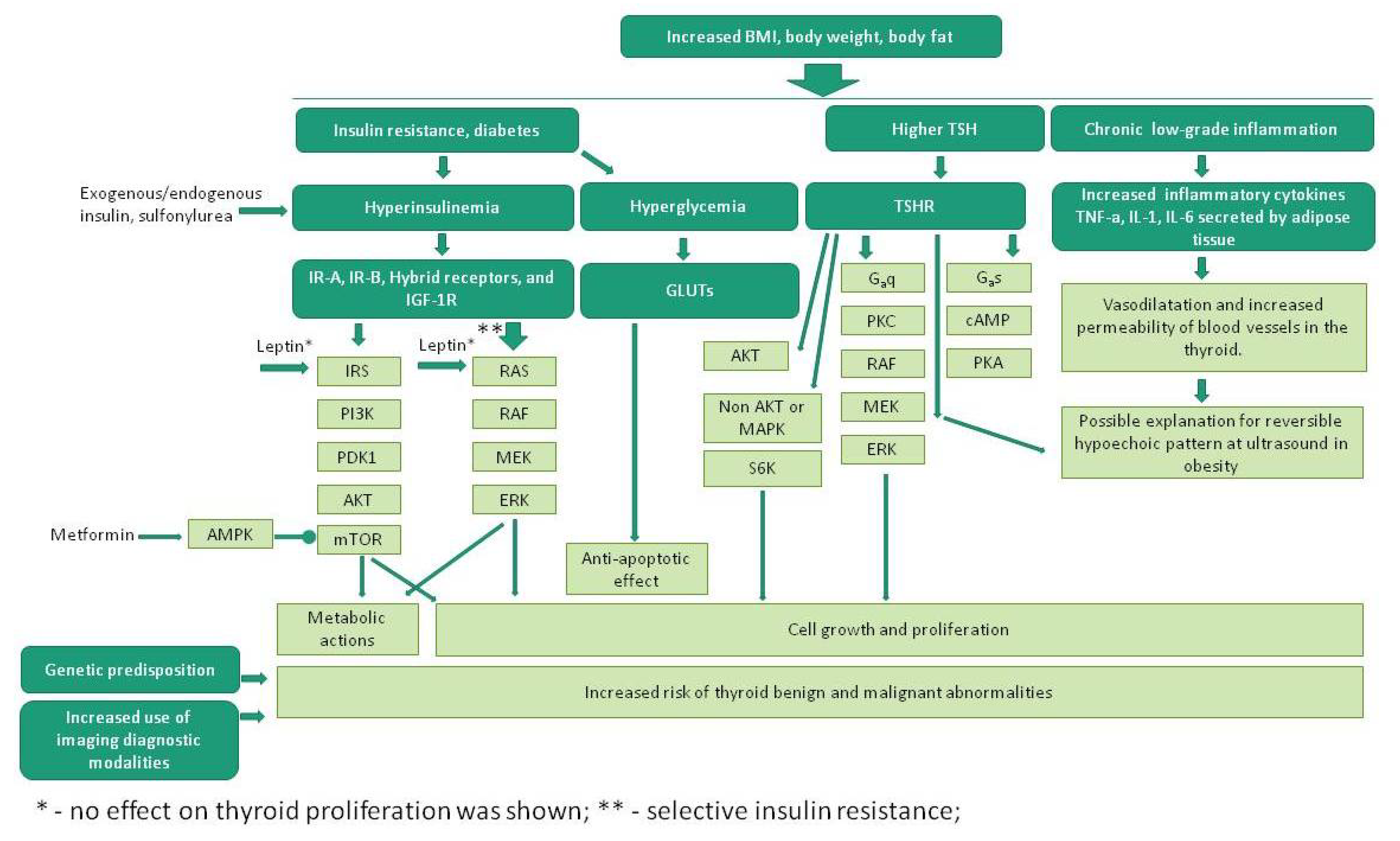
An epidemiologic link exists between obesity, insulin resistance, diabetes, and some cancers, such as breast cancer and colon cancer. The prevalence of obesity and diabetes is increasing, and additional epidemiologic data suggest that there may be a link between obesity and risk of thyroid abnormalities. Factors that may link obesity and diabetes with thyroid proliferative disorders include elevated circulating levels of insulin, increased body fat, high blood sugars, and exogenous insulin use. However, mechanisms underlying associations of obesity, diabetes, and thyroid proliferative disorders are not yet fully understood. The present manuscript reviews and summarizes current evidence of mechanisms and epidemiologic associations of obesity, insulin resistance, and use of anti-diabetes medications with benign and malignant proliferative disorders of the thyroid.
Abstract
The prevalence of obesity is progressively increasing along with the potential high risk for insulin resistance and development of type 2 diabetes mellitus. Obesity is associated with increased risk of many malignancies, and hyperinsulinemia has been proposed to be a link between obesity and cancer development. The incidence of thyroid cancer is also increasing, making this cancer the most common endocrine malignancy. There is some evidence of associations between obesity, insulin resistance and/or diabetes with thyroid proliferative disorders, including thyroid cancer. However, the etiology of such an association has not been fully elucidated. The goal of the present work is to review the current knowledge on crosstalk between thyroid and glucose metabolic pathways and the effects of obesity, insulin resistance, diabetes, and anti-hyperglycemic medications on the risk of thyroid cancer development.