Current Evidence of the Role of the Myokine Irisin in Cancer
by
 and
and
Evangelia Tsiani
1,2,*, 
Nicole Tsakiridis
1, 
Rozalia Kouvelioti
1,3,
Alina Jaglanian
1 and
Panagiota Klentrou
2,3
1
Department of Health Sciences, Brock University, St. Catharines, ON L2S 3A1, Canada
2
Centre for Bone and Muscle Health, Brock University, St. Catharines, ON L2S 3A1, Canada
3
Department of Kinesiology, Brock University, St. Catharines, ON L2S 3A1, Canada
*
Author to whom correspondence should be addressed.
Cancers 2021, 13(11), 2628; https://doi.org/10.3390/cancers13112628
Submission received: 1 April 2021
/
Revised: 16 May 2021
/
Accepted: 22 May 2021
/
Published: 27 May 2021
(This article belongs to the Special Issue The Mechanisms of Physical Activity, Diet, and Body Composition in Cancer Prevention and Control)
Simple Summary
Regular exercise/physical activity is beneficial for the health of an individual and lowers the risk of getting different diseases, including cancer. How exactly exercise results in these health benefits is not known. Recent studies suggest that the molecule irisin released by muscles into the blood stream after exercise may be responsible for these effects. This review summarizes all the available in vitro/cell culture, animal and human studies that have investigated the relationship between cancer and irisin with the aim to shed light and understand the possible role of irisin in cancer. The majority of the in vitro studies indicate anticancer properties of irisin, but more animal and human studies are required to better understand the exact role of irisin in cancer.
Abstract
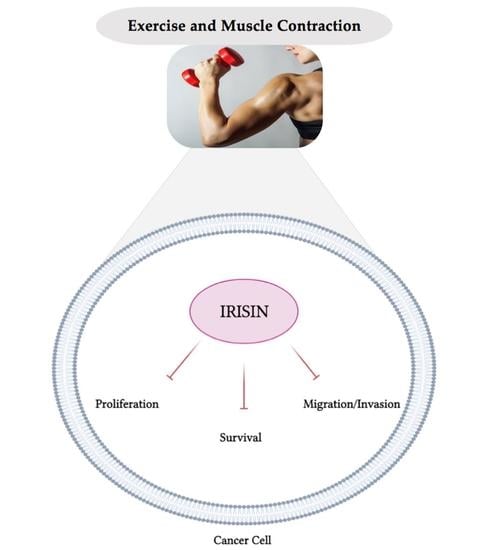
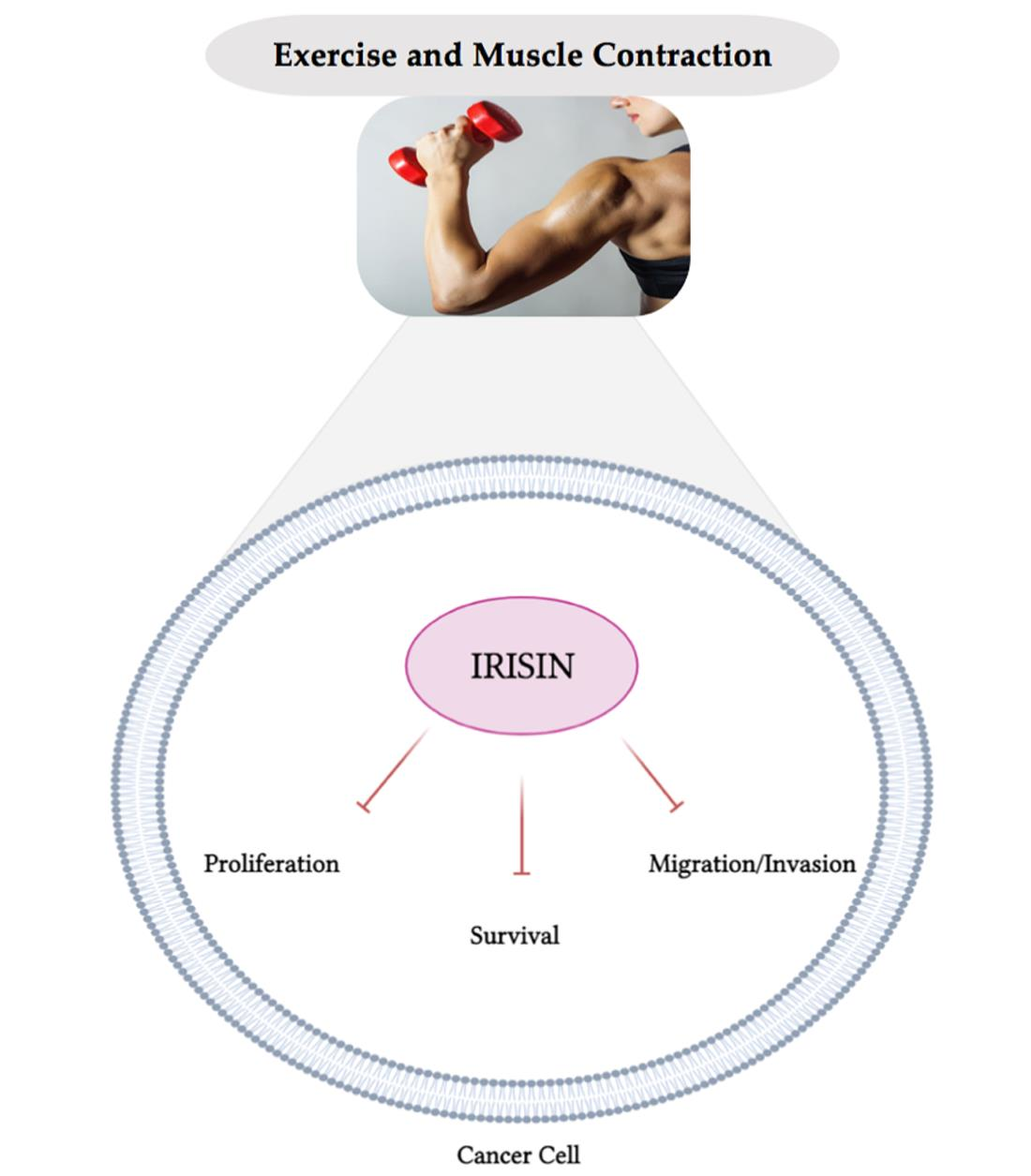
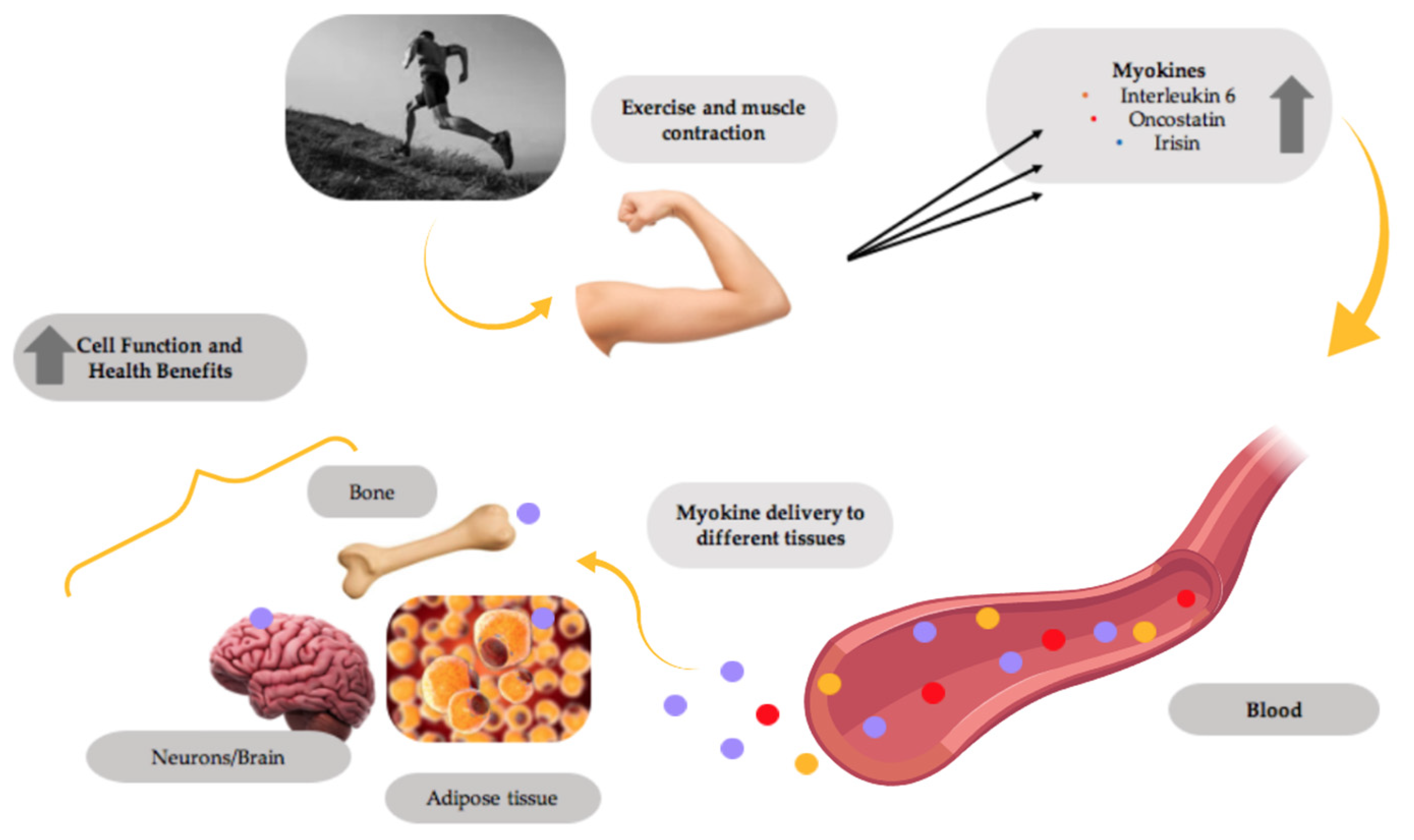
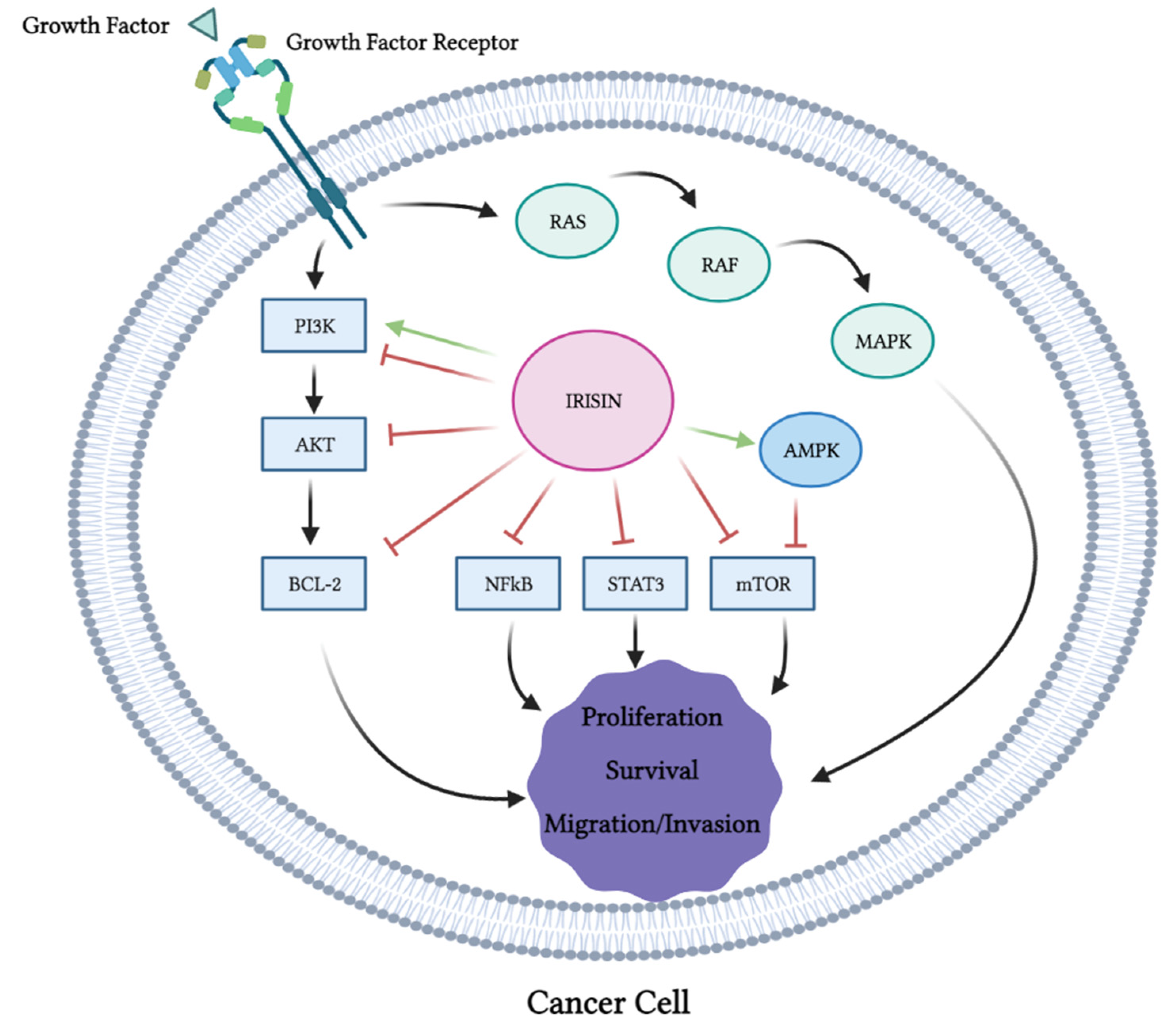
Cancer is a disease associated with extreme human suffering, a huge economic cost to health systems, and is the second leading cause of death worldwide. Regular physical activity is associated with many health benefits, including reduced cancer risk. In the past two decades, exercising/contracting skeletal muscles have been found to secrete a wide range of biologically active proteins, named myokines. Myokines are delivered, via the circulation, to different cells/tissues, bind to their specific receptors and initiate signaling cascades mediating the health benefits of exercise. The present review summarizes the existing evidence of the role of the myokine irisin in cancer. In vitro studies have shown that the treatment of various cancer cells with irisin resulted in the inhibition of cell proliferation, survival, migration/ invasion and induced apoptosis by affecting key proliferative and antiapoptotic signaling pathways. However, the effects of irisin in humans remains unclear. Although the majority of the existing studies have found reduced serum irisin levels in cancer patients, a few studies have shown the opposite. Similarly, the majority of studies have found increased levels of irisin in cancer tissues, with a few studies showing the opposite trend. Clearly, further investigations are required to determine the exact role of irisin in cancer.
Keywords:
exercise; contraction; muscle; health benefits; myokines; irisin; cancer; in vitro; in vivo