Article

The Intermediate Filament Synemin Regulates Non-Homologous End Joining in an ATM-Dependent Manner

1
OncoRay—National Center for Radiation Research in Oncology, Faculty of Medicine Carl Gustav Carus, Technische Universität Dresden, 01307 Dresden, Germany
2
Helmholtz-Zentrum Dresden—Rossendorf (HZDR), Institute of Radiooncology—OncoRay, 01328 Dresden, Germany
3
National Center for Tumor Diseases, Partner Site Dresden: German Cancer Research Center, 69120 Heidelberg, Germany
4
German Cancer Consortium, Partner Site Dresden: German Cancer Research Center, 69120 Heidelberg, Germany
5
Laboratory of Radiobiology and Experimental Radiation Oncology, University Medical Center Hamburg-Eppendorf, 20246 Hamburg, Germany
6
Department of Radiotherapy and Radiation Oncology, University Hospital Carl Gustav Carus, Technische Universität Dresden, 01307 Dresden, Germany
*
Author to whom correspondence should be addressed.
Cancers 2020, 12(7), 1717; https://doi.org/10.3390/cancers12071717

Submission received: 14 May 2020 / Revised: 20 June 2020 / Accepted: 24 June 2020 / Published: 28 June 2020
(This article belongs to the Section Molecular Cancer Biology)

Abstract

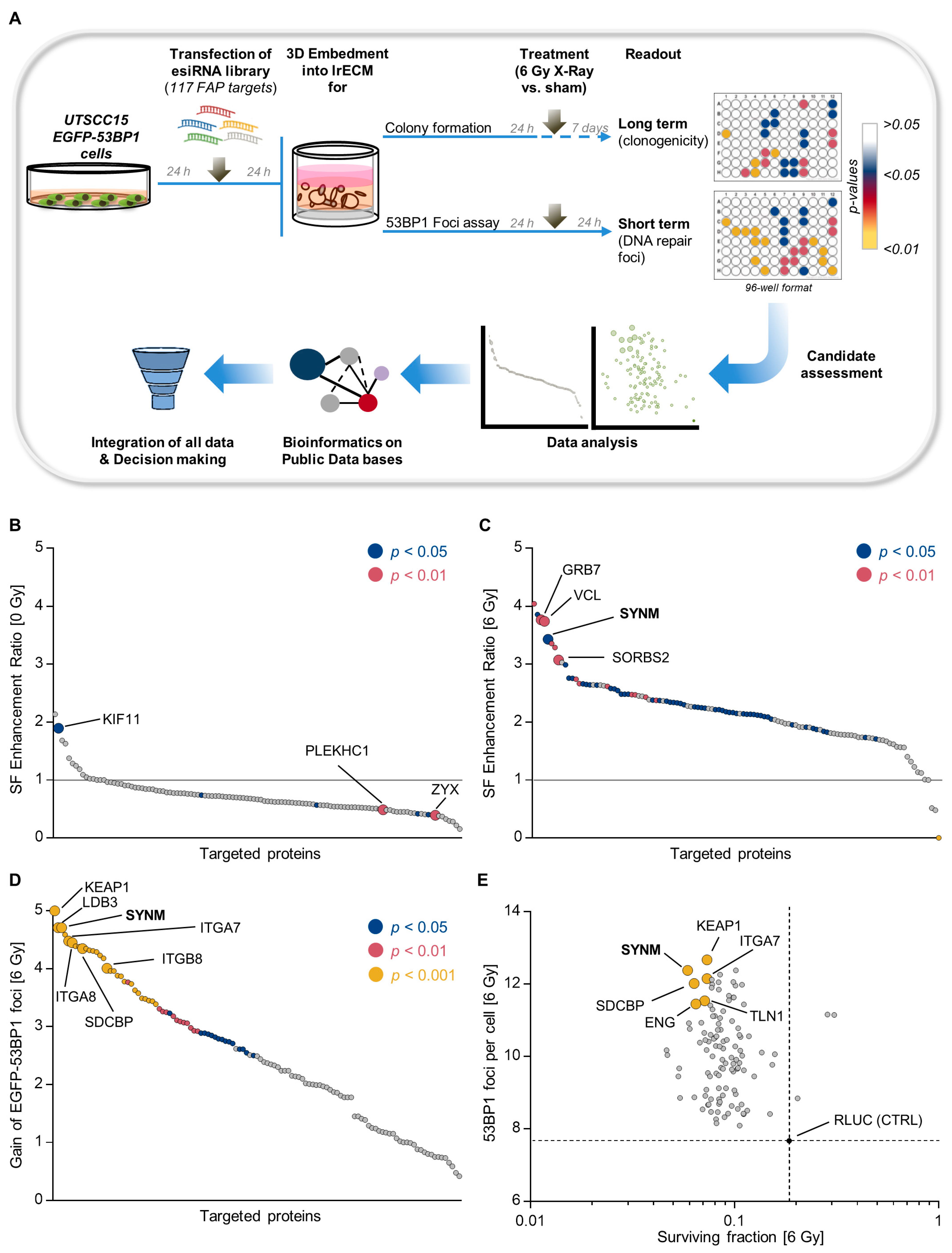
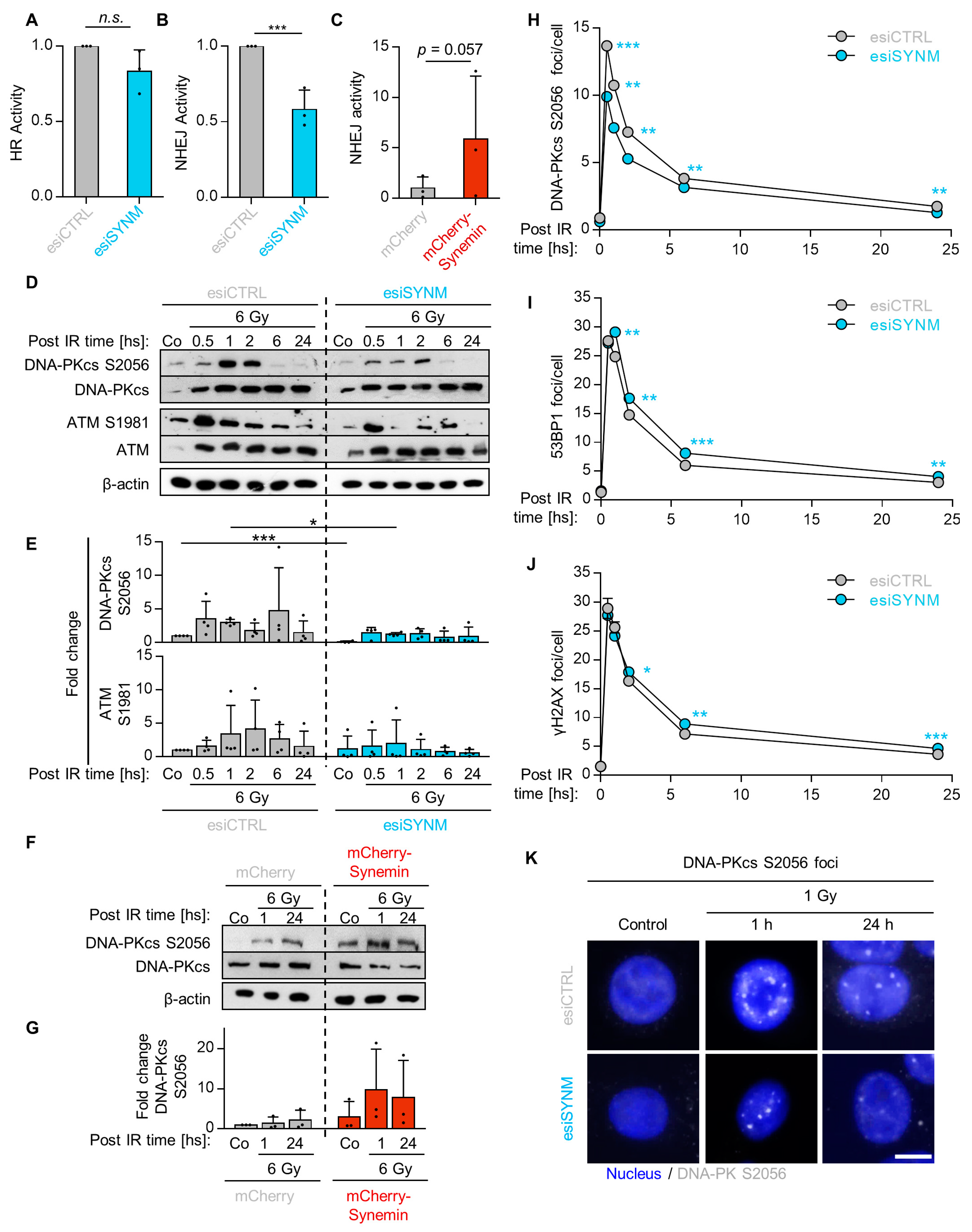
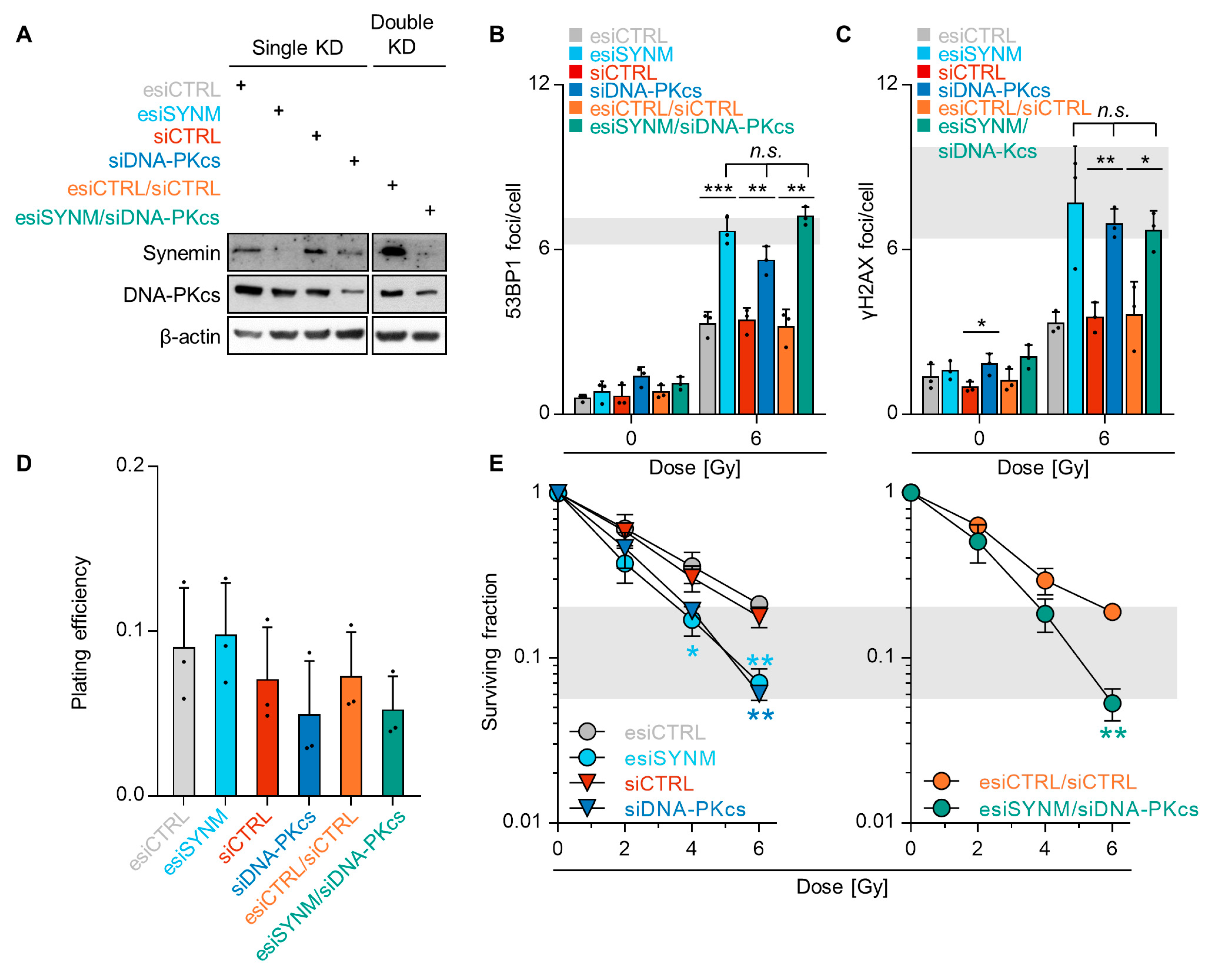
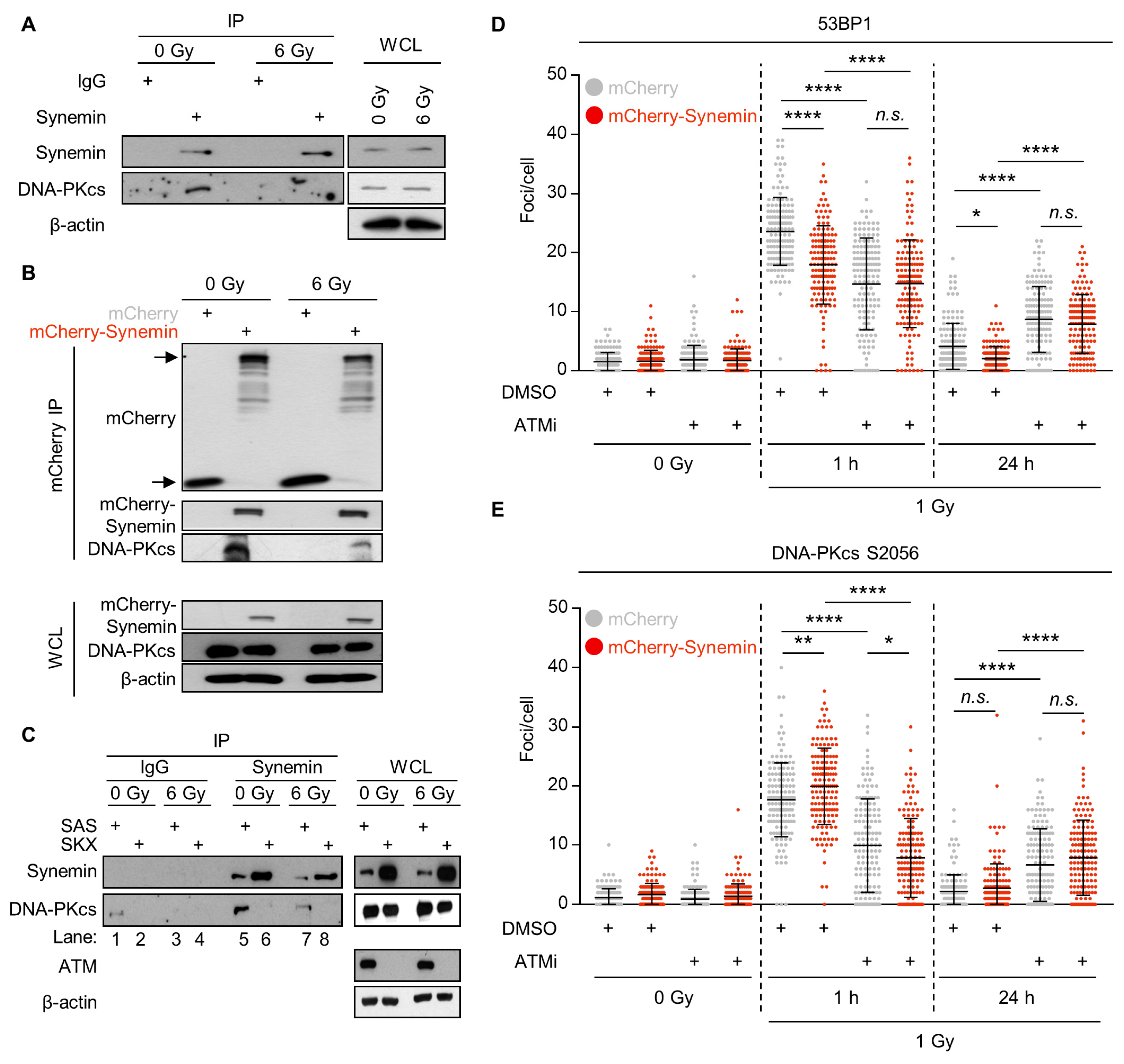
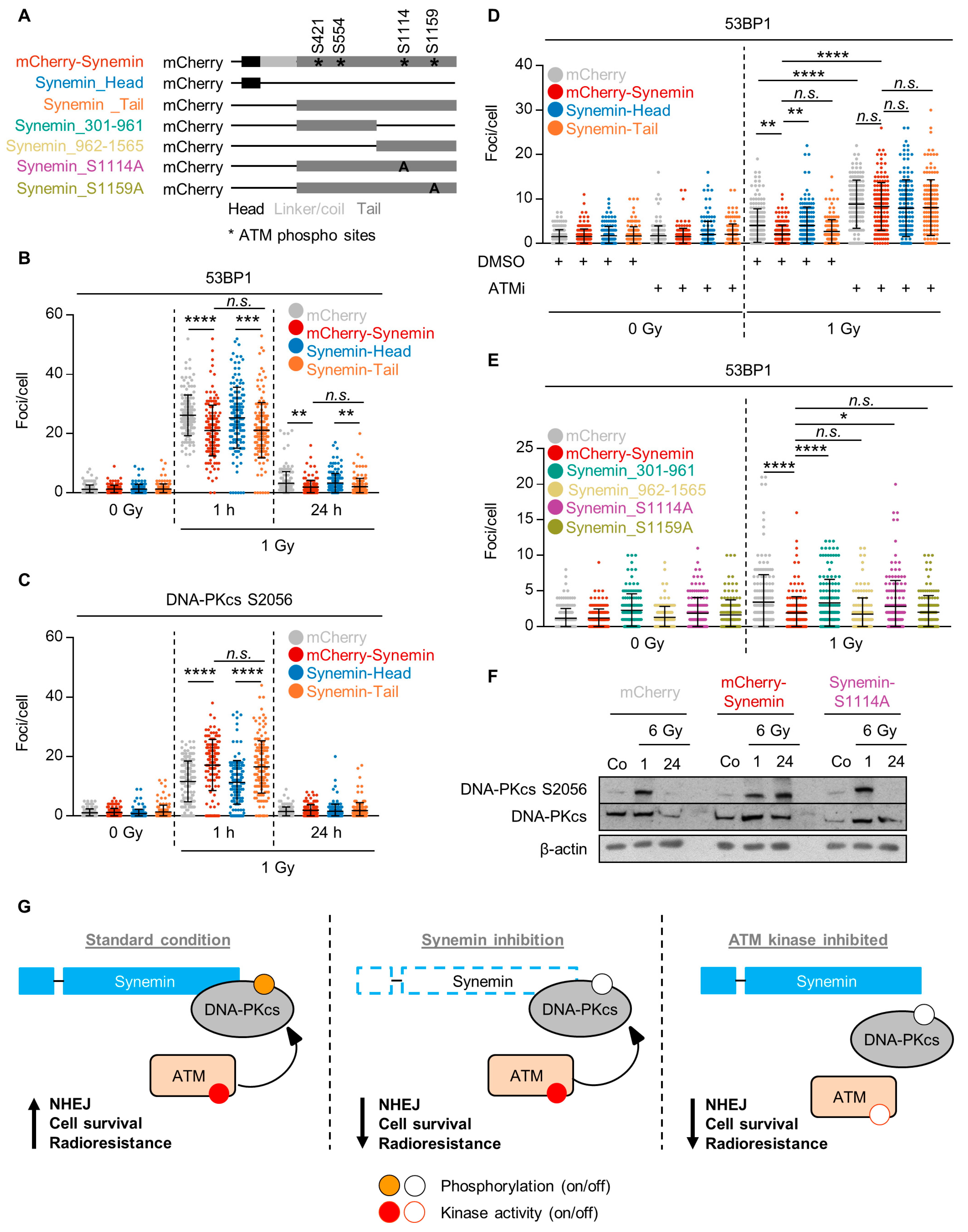
The treatment resistance of cancer cells is a multifaceted process in which DNA repair emerged as a potential therapeutic target. DNA repair is predominantly conducted by nuclear events; yet, how extra-nuclear cues impact the DNA damage response is largely unknown. Here, using a high-throughput RNAi-based screen in three-dimensionally-grown cell cultures of head and neck squamous cell carcinoma (HNSCC), we identified novel focal adhesion proteins controlling DNA repair, including the intermediate filament protein, synemin. We demonstrate that synemin critically regulates the DNA damage response by non-homologous end joining repair. Mechanistically, synemin forms a protein complex with DNA-PKcs through its C-terminal tail domain for determining DNA repair processes upstream of this enzyme in an ATM-dependent manner. Our study discovers a critical function of the intermediate filament protein, synemin in the DNA damage response, fundamentally supporting the concept of cytoarchitectural elements as co-regulators of nuclear events.
Keywords: synemin; DNA-PKcs; ATM; DNA repair; NHEJ; radiosensitivity; HNSCC synemin; DNA-PKcs; ATM; DNA repair; NHEJ; radiosensitivity; HNSCC