Article

Interleukin-6 and Lymphocyte Count Associated and Predicted the Progression of Frailty Syndrome in Prostate Cancer Patients Undergoing Antiandrogen Therapy

by
Cristina Buigues
1,2,
Rut Navarro-Martínez
1,2,3,
Vanessa Sánchez-Martínez
1,2,
María Serrano-Carrascosa
4,
José Rubio-Briones
4 and
Omar Cauli
1,2,*
1
Department of Medicine and Nursing. University of Valencia, 46010 Valencia, Spain
2
Frailty Research organized Group (FROG), University of Valencia, 46010 Valencia, Spain
3
Department of Haematology, Hospital General Universitario, 46014 Valencia, Spain
4
Department of Urology, Fundación IVO, 46009 Valencia, Spain
*
Author to whom correspondence should be addressed.
Cancers 2020, 12(7), 1716; https://doi.org/10.3390/cancers12071716

Submission received: 18 May 2020 / Revised: 24 June 2020 / Accepted: 25 June 2020 / Published: 29 June 2020
(This article belongs to the Special Issue Interleukin in Cancer Pathogenesis and Treatment)

Abstract

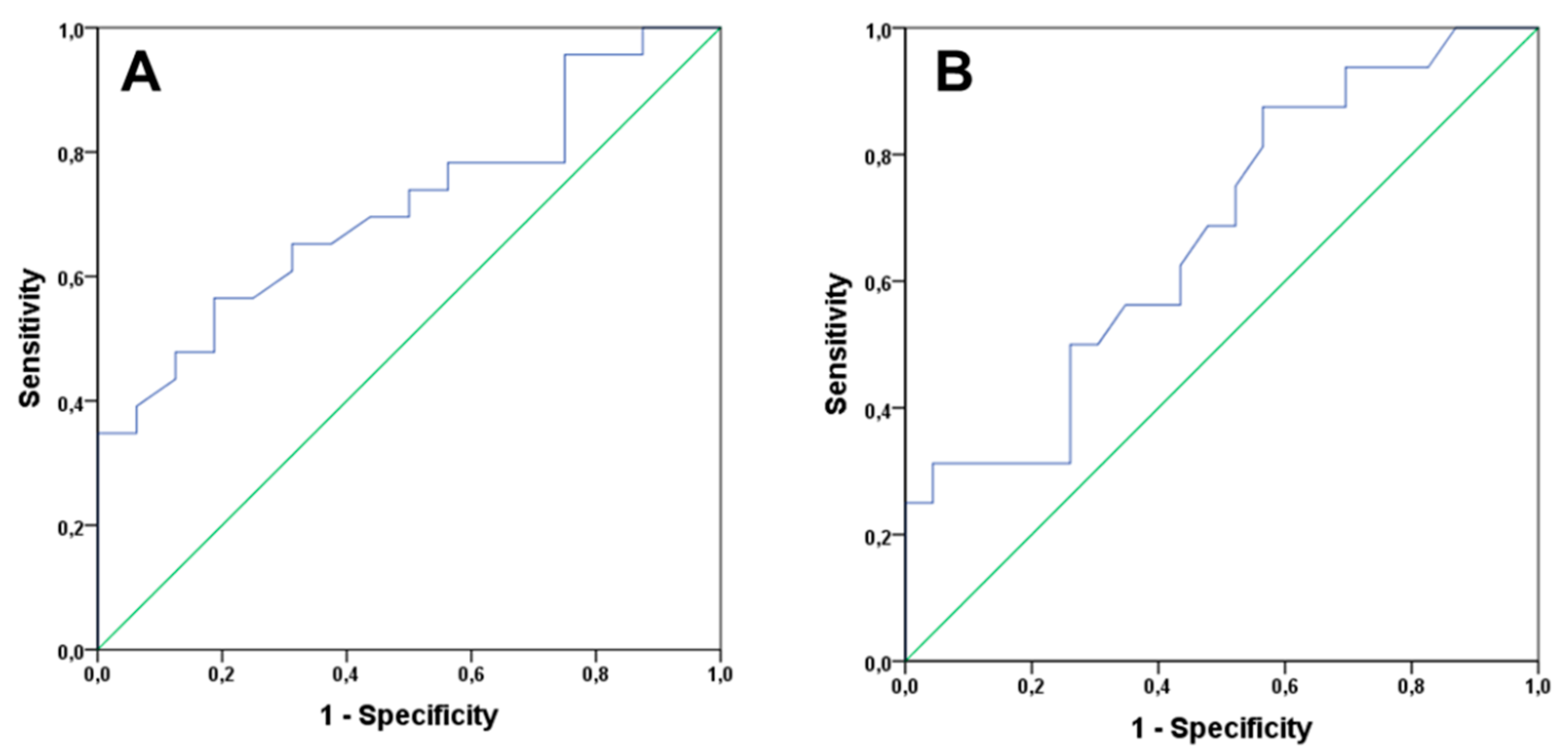
Frailty syndrome is a functional state that includes a loss of ability to react to stressors, and is associated with poor outcomes, morbidity and premature mortality. The first line treatment in many men with prostate cancer (PCa) consists of an androgen-deprivation therapy (ADT) which can promote or favor frailty syndrome and ADT may therefore favor the progression of frailty over time. Among the pathophysiological bases of frailty, the presence of chronic low-grade inflammation has been associated with its adverse outcomes, but longitudinal studies are needed to validate these biomarkers. In this study, we prospectively evaluate frailty syndrome and blood inflammatory markers (IL1-beta, IL-6, IL-8, TNF alpha, C reactive protein) and leukocytes were measured at baseline and an average of 1 year later in PCa under ADT. Frailty was defined as having three or more of the following components: low lean mass, weakness, self-reported exhaustion, low activity level, and slow walking speed; prefrailty was defined as having one or two of those components. Multinomial regression analysis showed that among the inflammatory biomarkers, those significantly and repeatedly (baseline and follow-up time points) (p < 0.05) associated with frailty syndrome were high IL-6 levels and low lymphocyte counts in blood. Other biomarkers such as IL-8, monocyte counts and C reactive protein were significantly associated with frailty syndrome (p < 0.05) in cross-sectional analyses, but they do not predict frailty progression at 1 year-follow-up. Receiver operating characteristic curve analysis showed that both lymphocyte counts and IL-6 concentration significantly (p < 0.05) (although moderately) discriminate PCa patients that progressed in the severity of frailty syndrome. IL-6 and lymphocytes count are possible biomarkers, useful for identifying frail patients and predicting the progression of frailty in PCa under ADT. Our study suggests the use of these biomarkers to guide clinical decisions on prostate cancer treatment based on a multidisciplinary approach.
Keywords: interleukin-6; interleukin-1 beta; inflammation; leukocytes; biomarker; geriatric assessment interleukin-6; interleukin-1 beta; inflammation; leukocytes; biomarker; geriatric assessment