Two-Step Polishing Technique for Flat and Smooth Copper Substrates by Electrochemical and Chemical Etching


Abstract
1. Introduction
2. Mechanism and Model
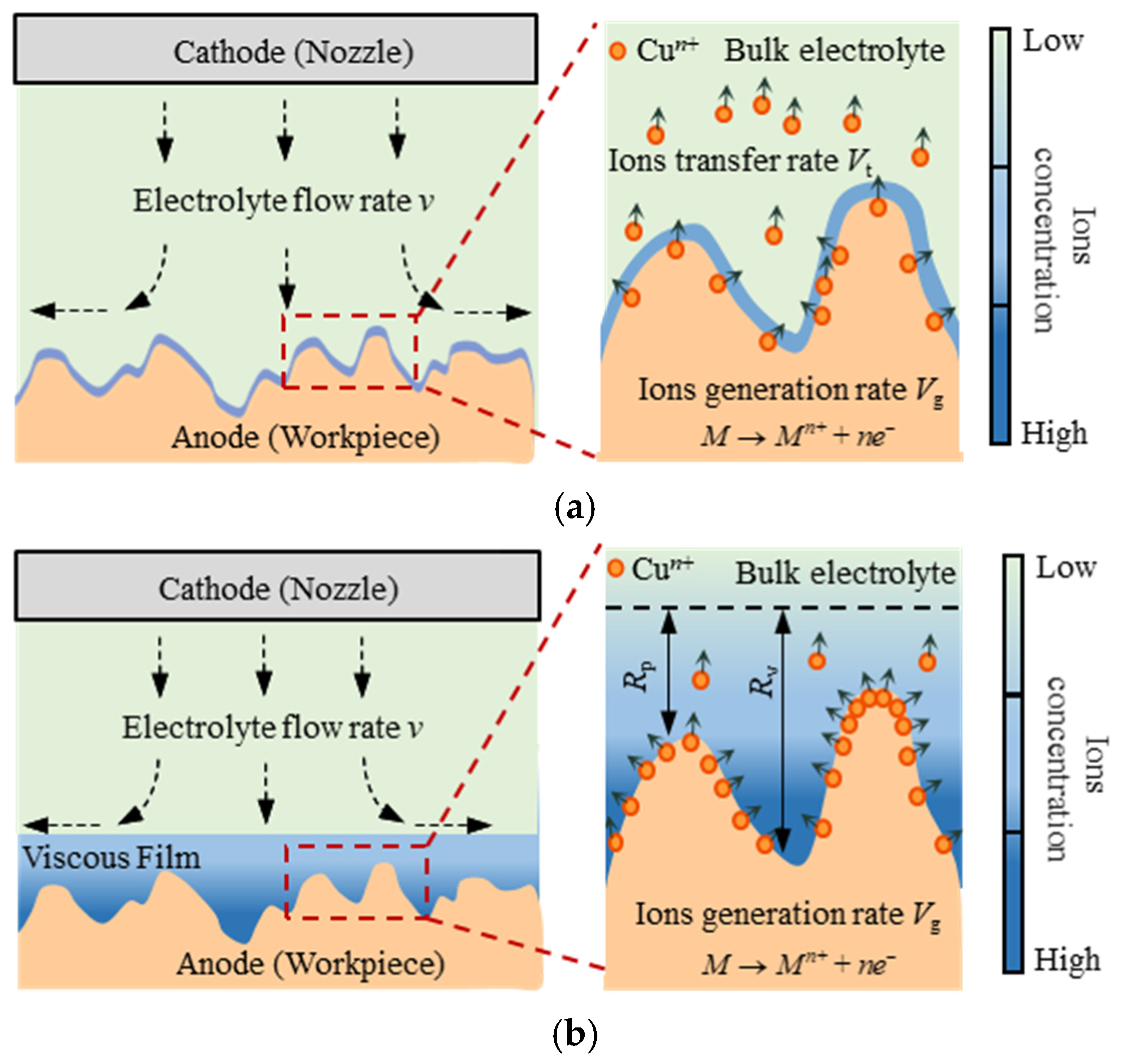
2.1. Improve the Stability and Surface Quality of the Jet-ECM
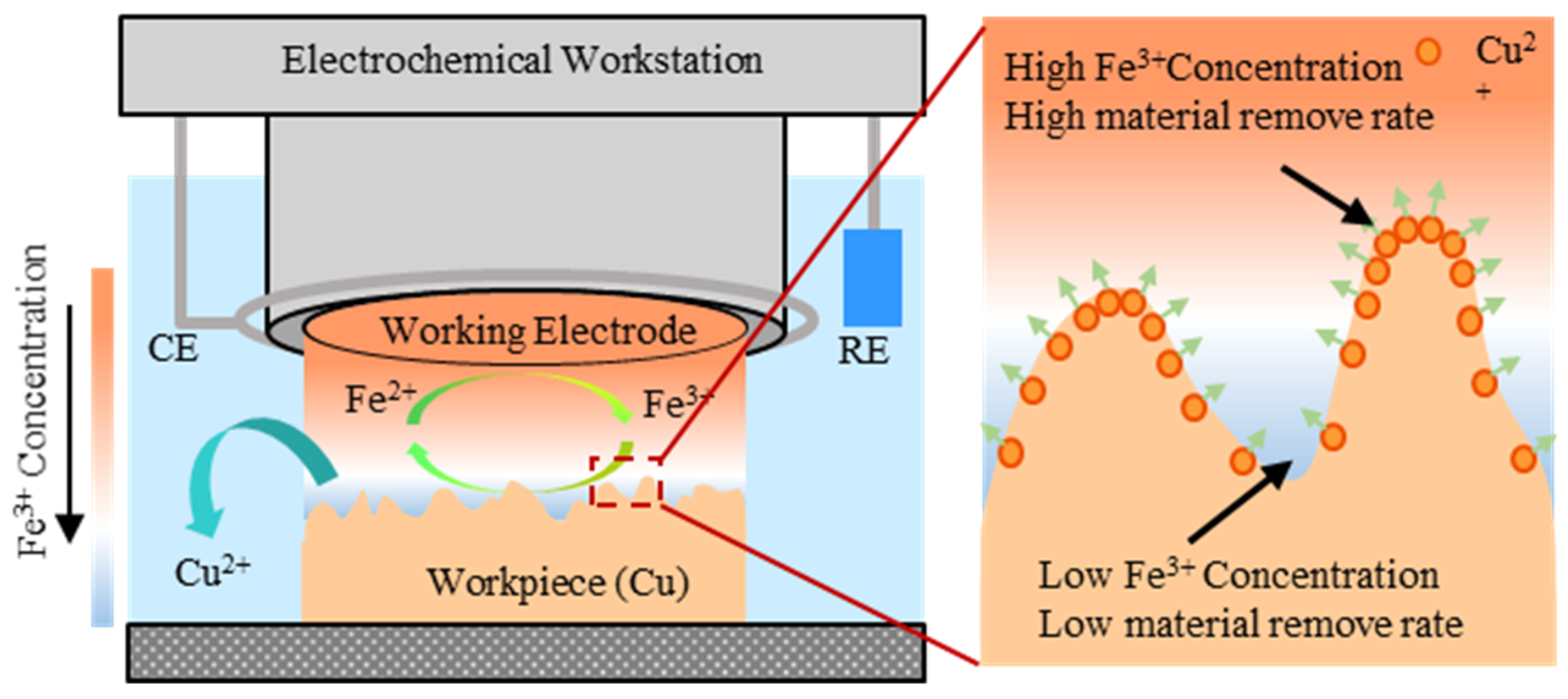
2.2. The Dynamic Etching Analysis of EGCP
- The electrolyte is incompressible.
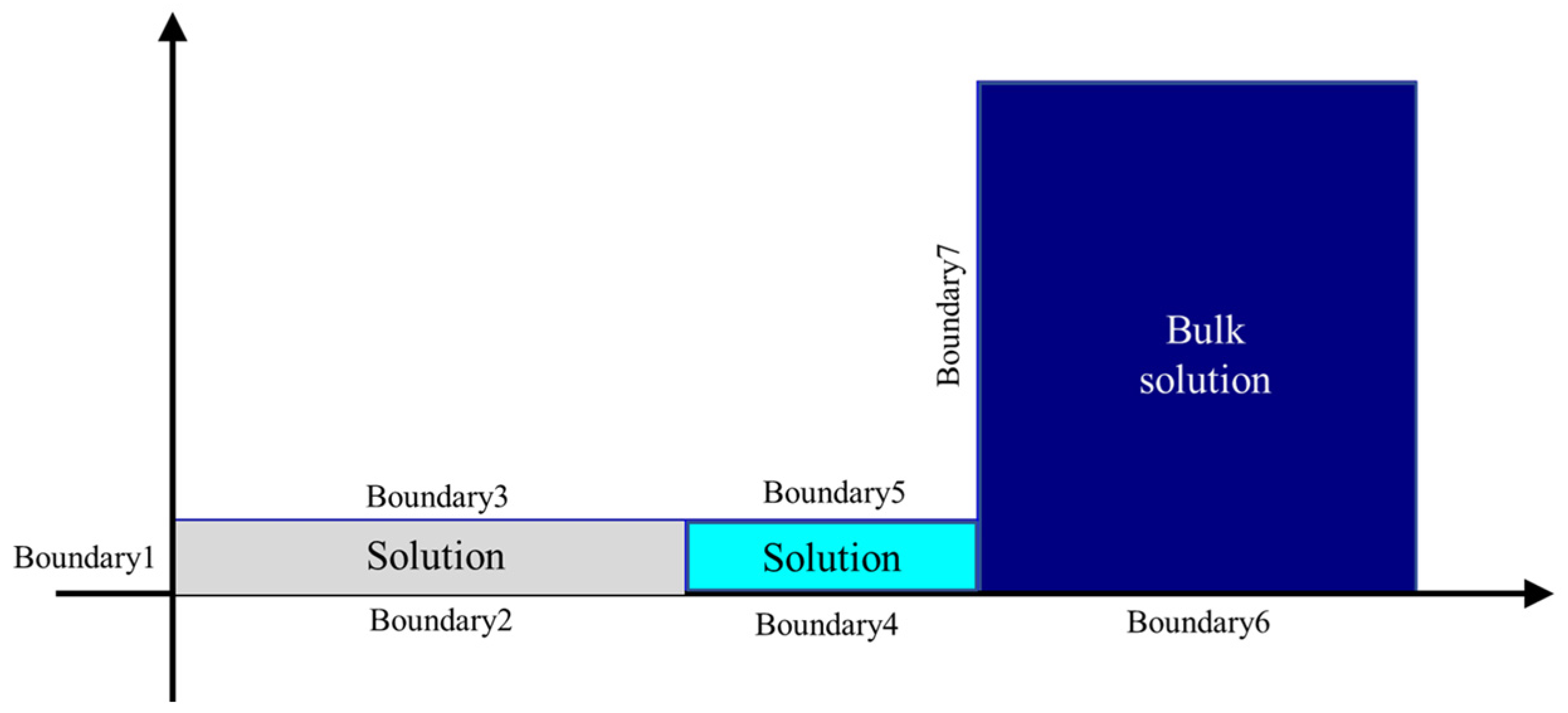
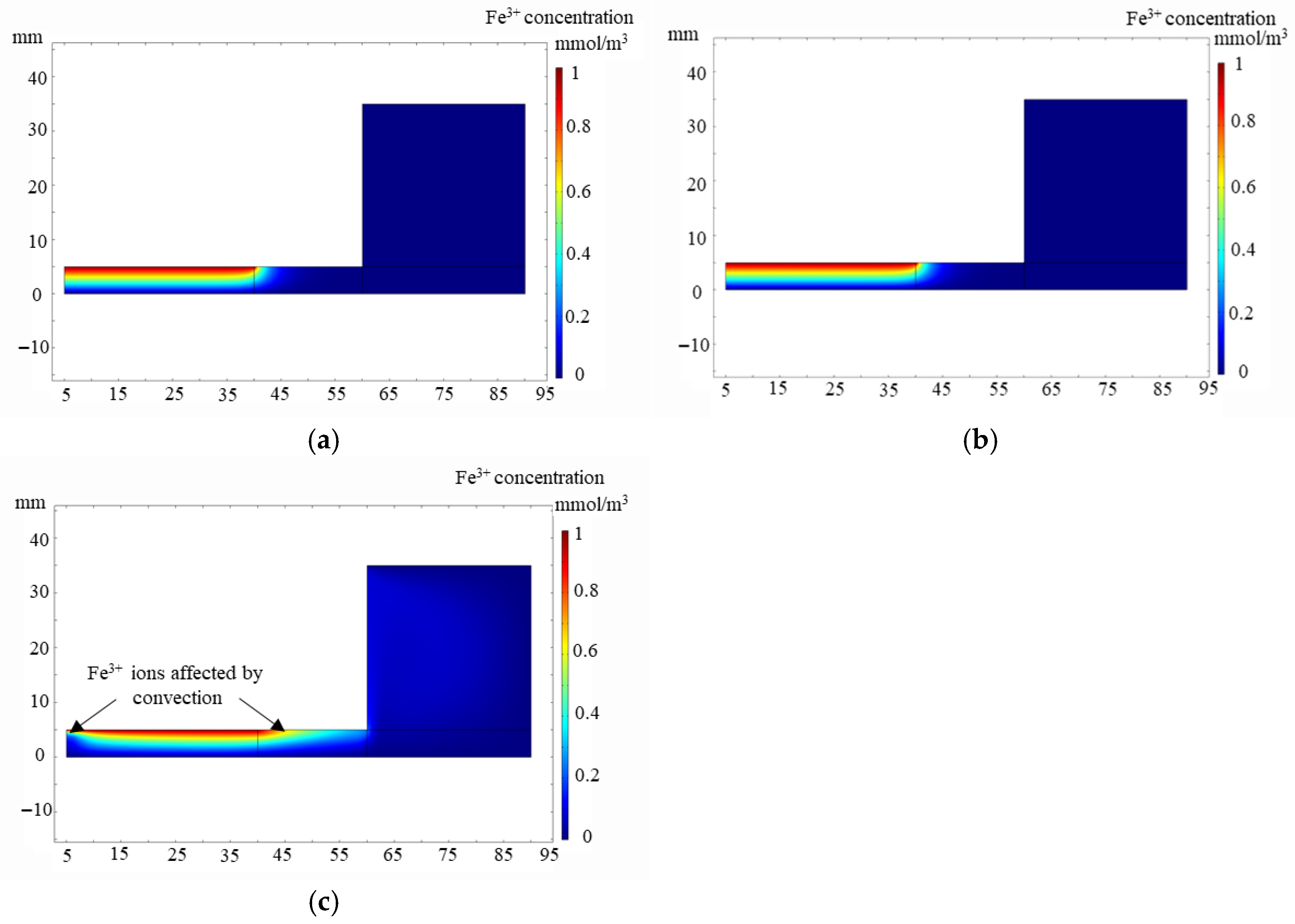
- For simplicity, only the concentration distribution of the etching agent at the junction of the WE, the insulation layer, and the bulk solution is considered.
- The effects of the concentration of Cu2+ ions on the etching behavior of Cu in EGCP are ignored.
3. Experiments and Methodology
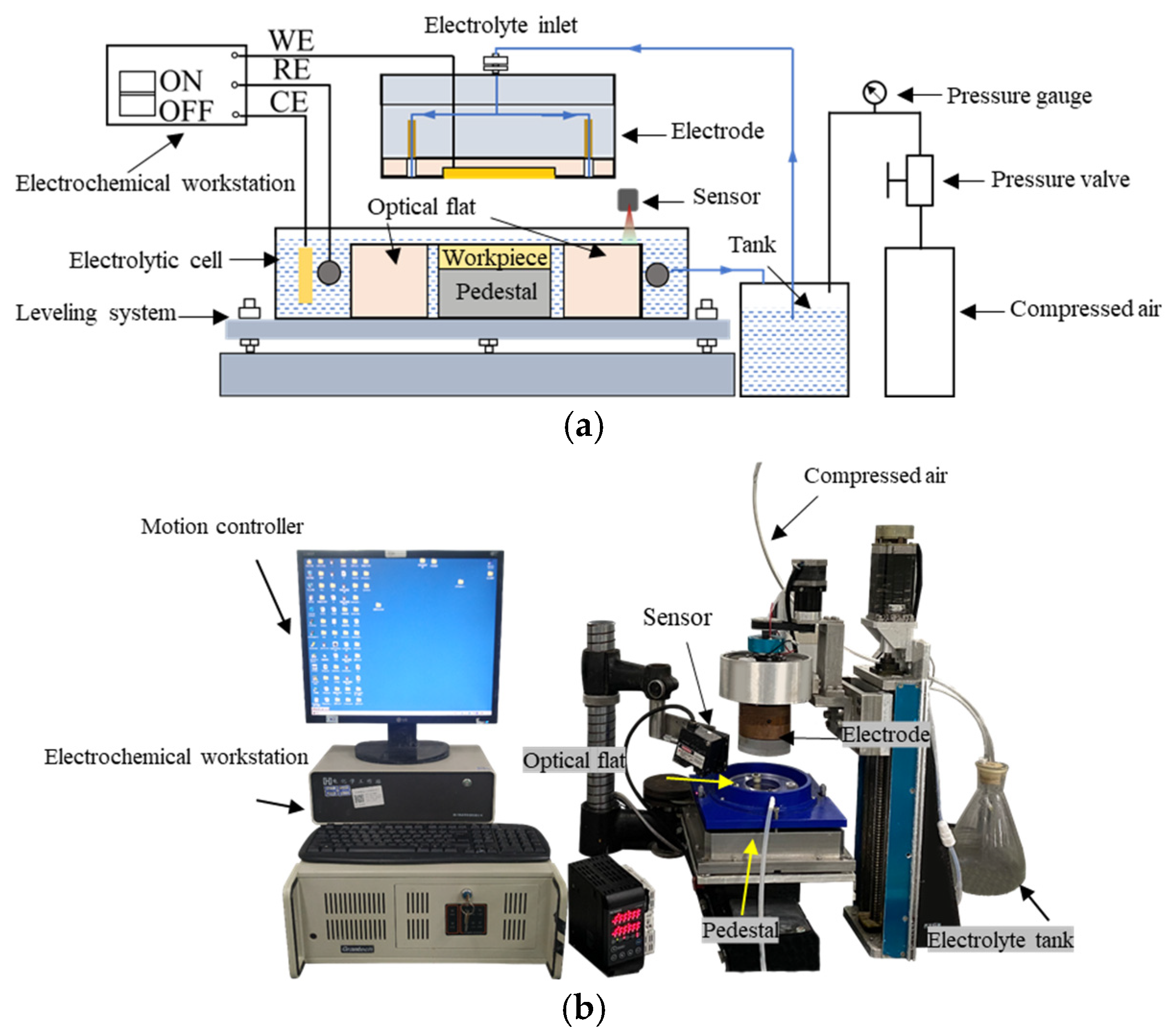
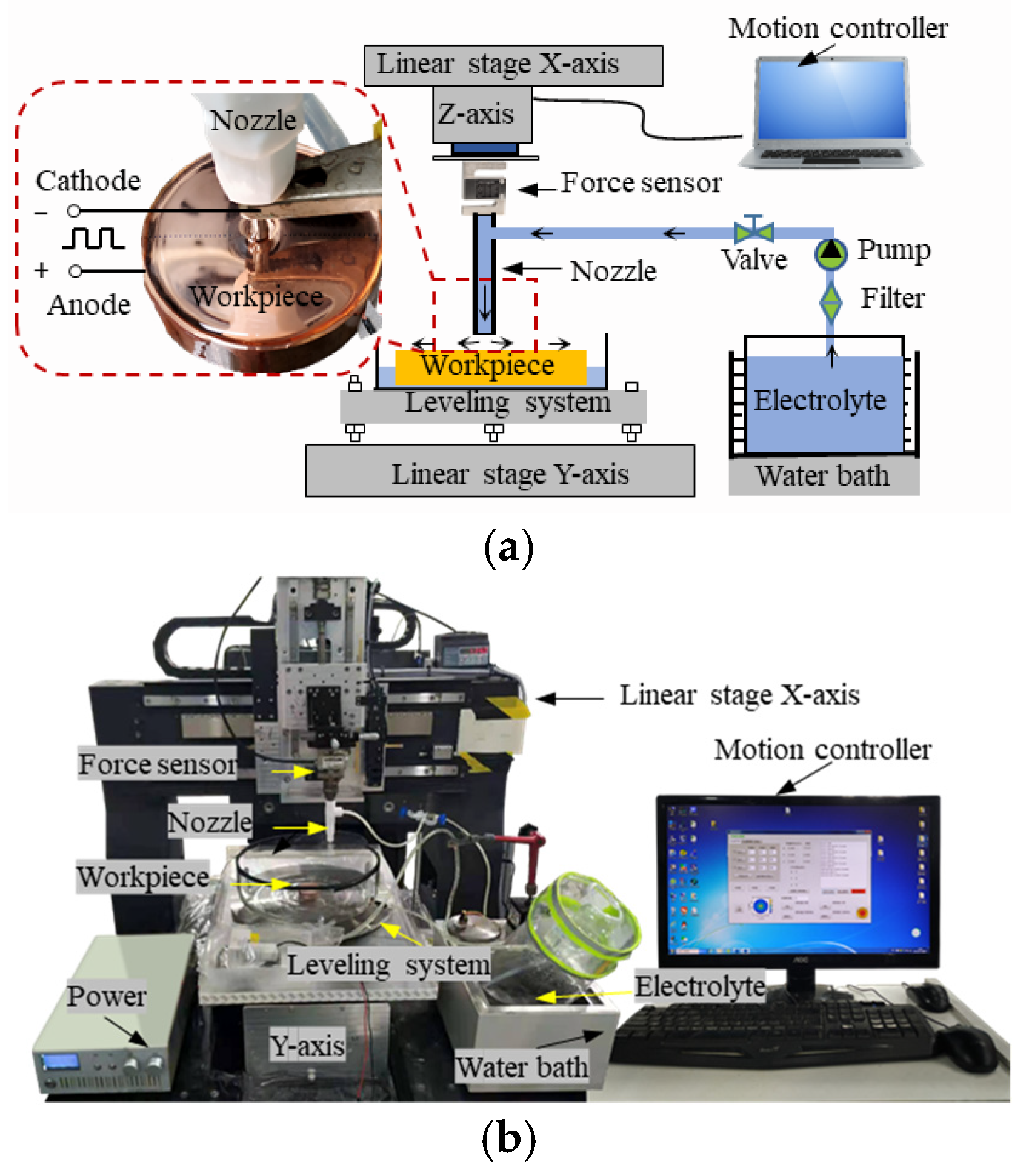
3.1. The Equipment of the Jet-ECM
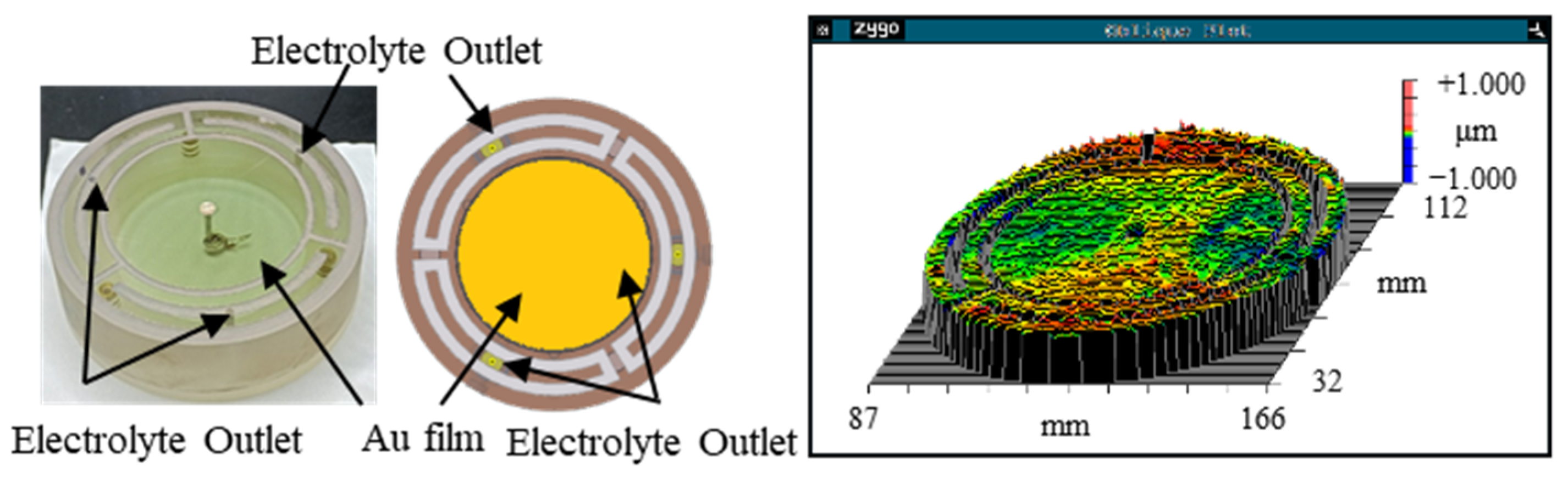
3.2. The Equipment of EGCP
4. Results and Discussions
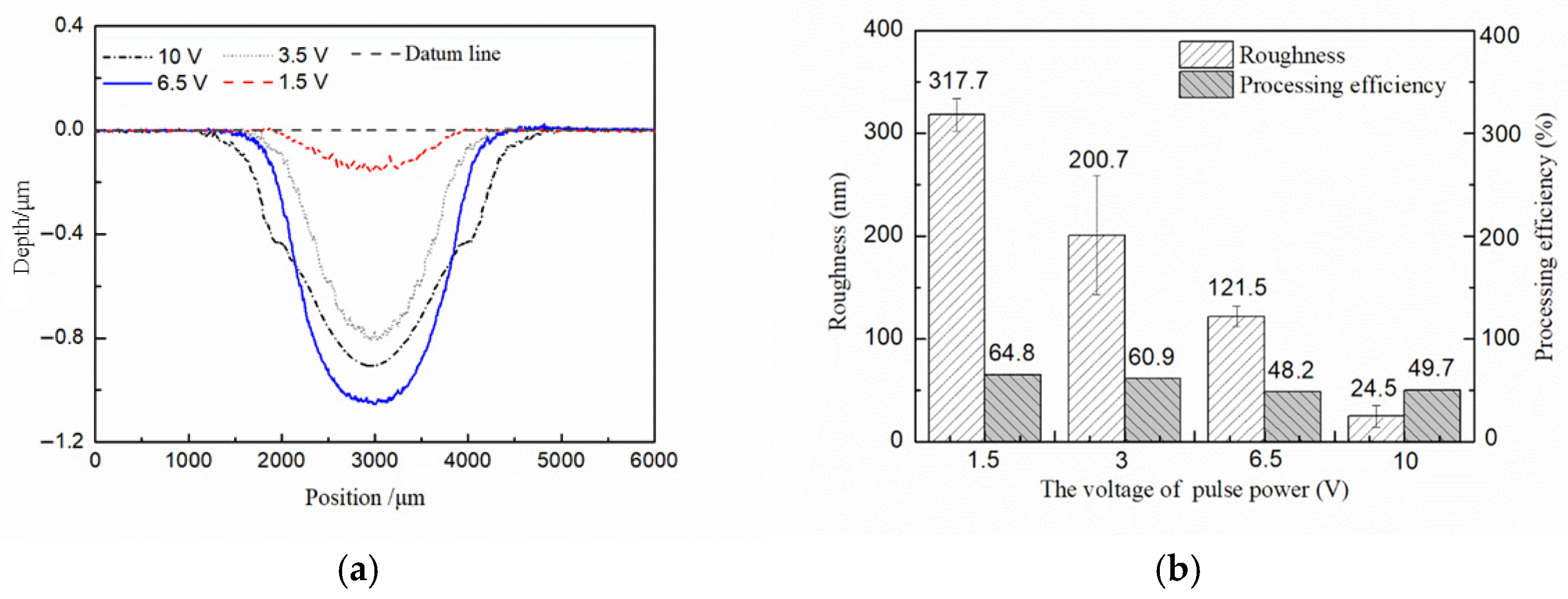
4.1. Parameters for Jet-ECM
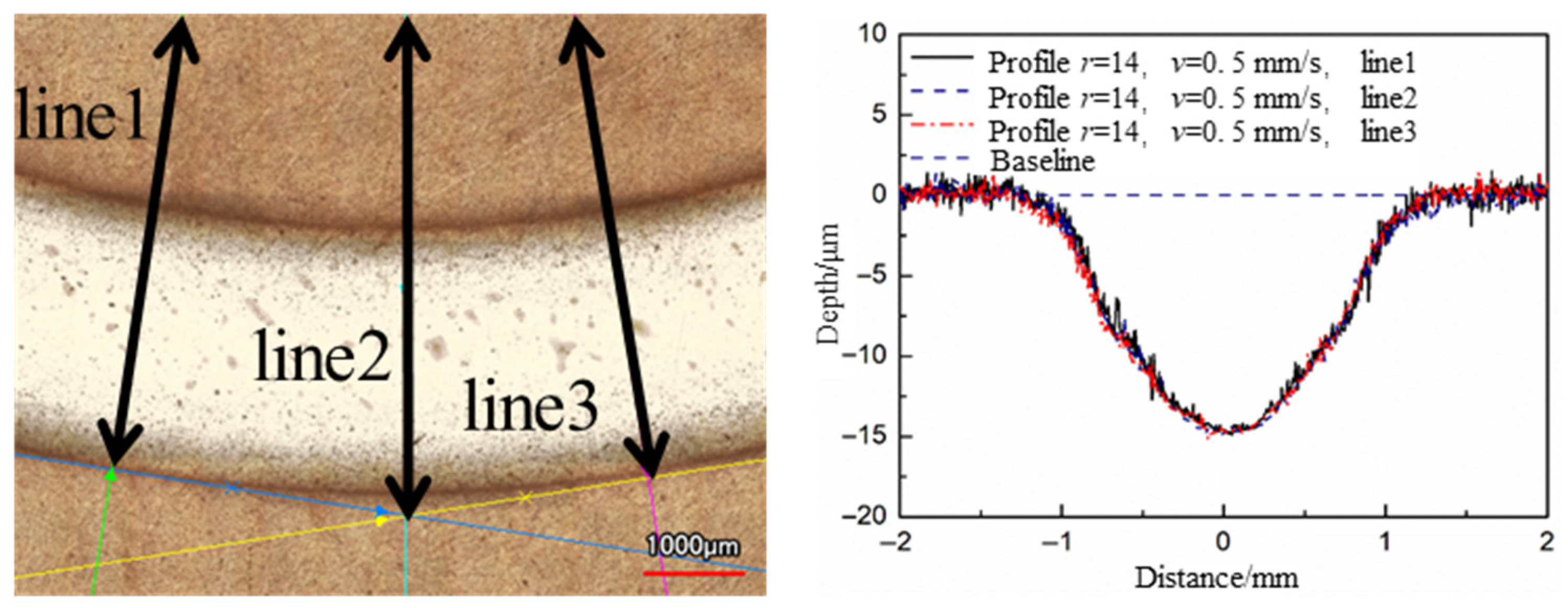
4.2. The Stability of Jet-ECM
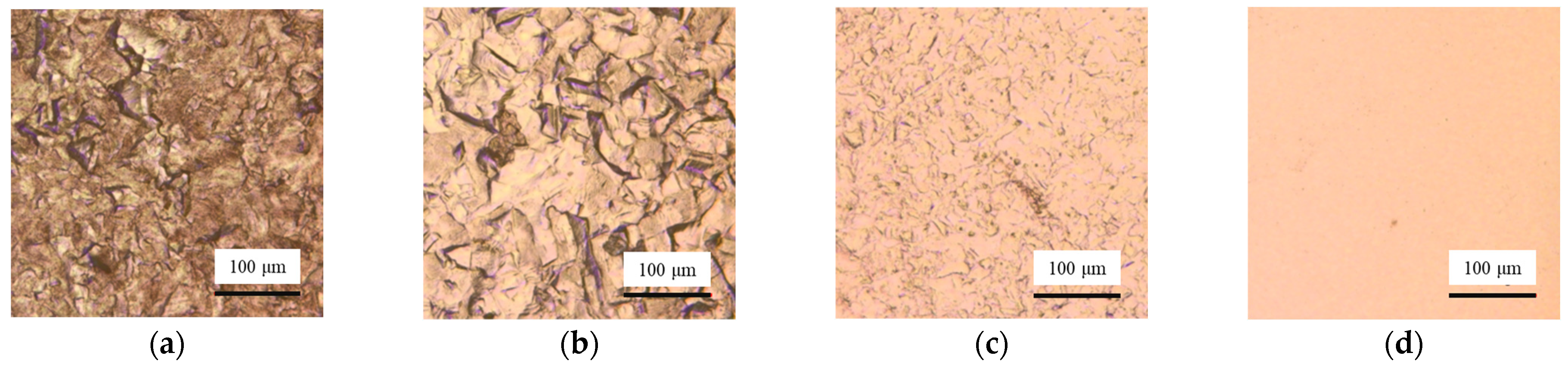
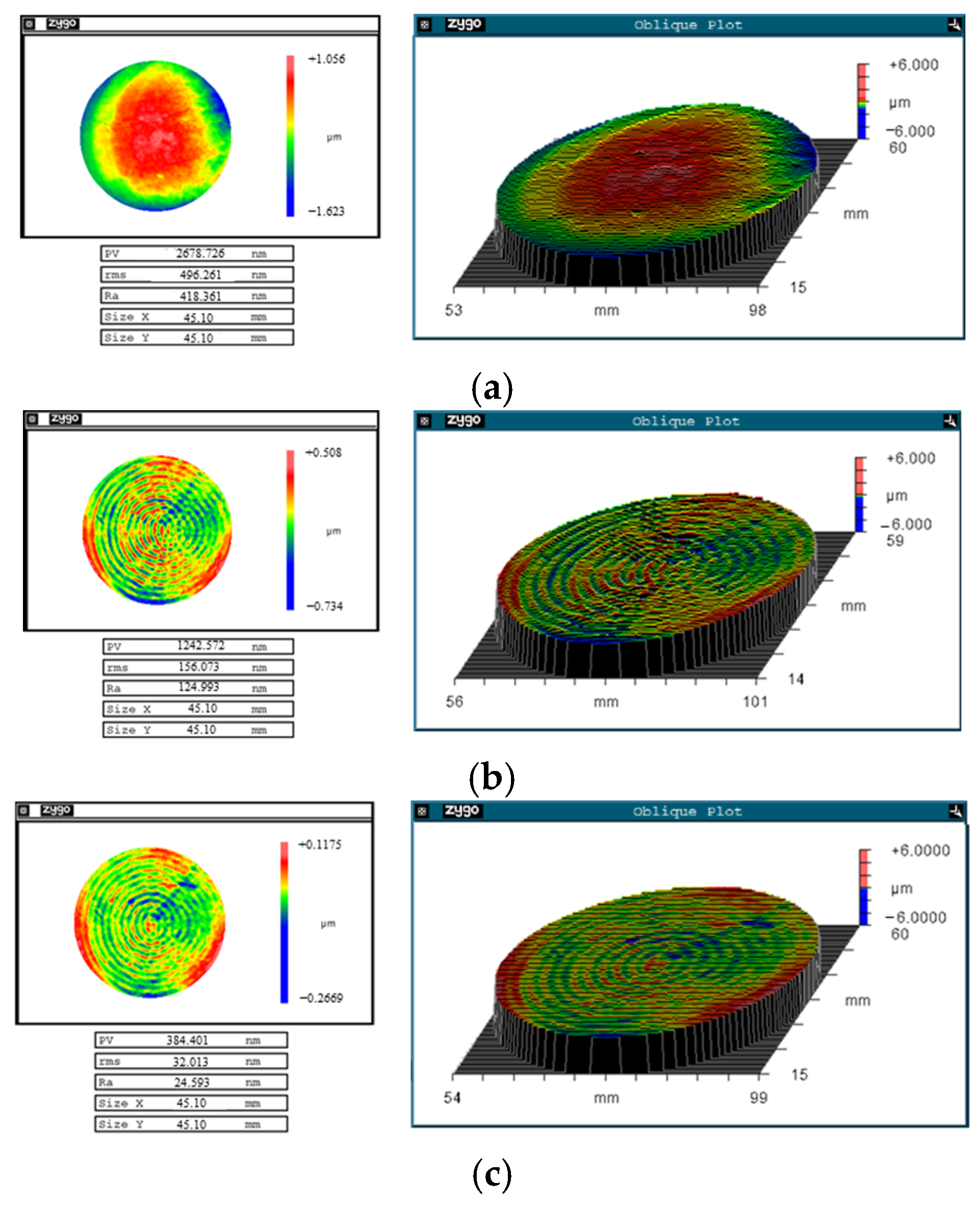
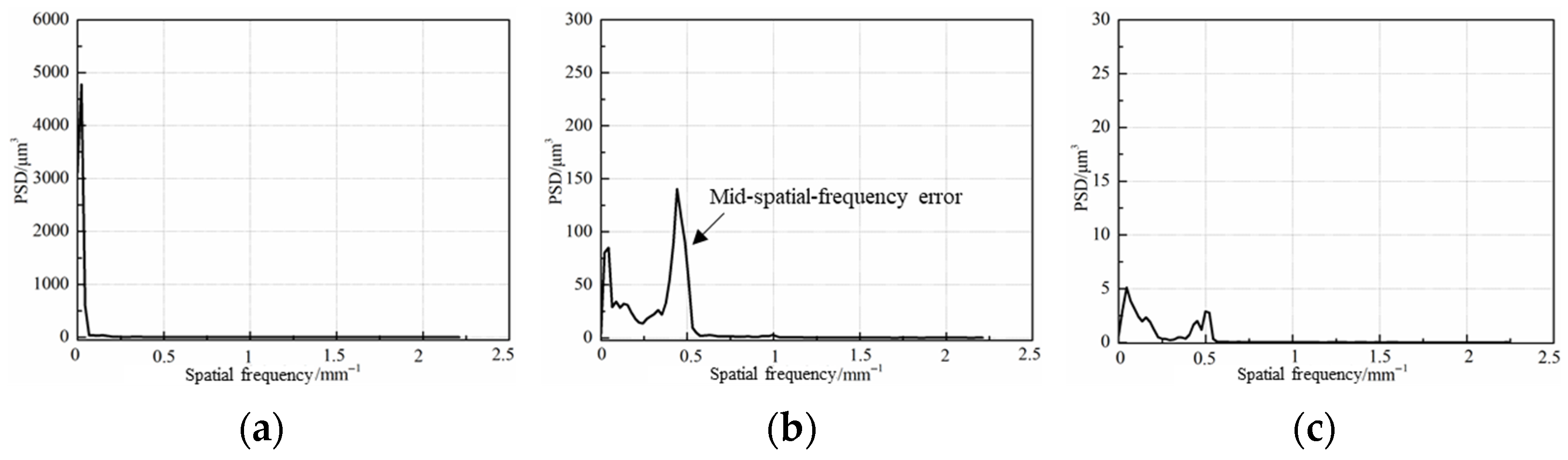
4.3. Correcting the Surface Shape Error with the Two-Step Etching Process Chain
5. Conclusions
- (1)
- A new two-step stress-free polishing process chain is proposed, which uses controllable electrochemical etching and chemical etching to correct the surface shape error of the Cu surface. The Jet-ECM, which uses the electrochemical etching mechanism, can be applied to the computer-controlled optical surfacing to correct the shape error of the workpiece with high efficiency. In addition, EGCP, which uses the mechanism of diffusion-controlled chemical etching, is implemented as a follow-up process to reduce the MSF error caused by computer-controlled optical surfacing. During the whole process, the workpiece does not contact any tool. In addition, the workpiece does not need to be clamped, which is helpful to obtain a substrate with high shape accuracy.
- (2)
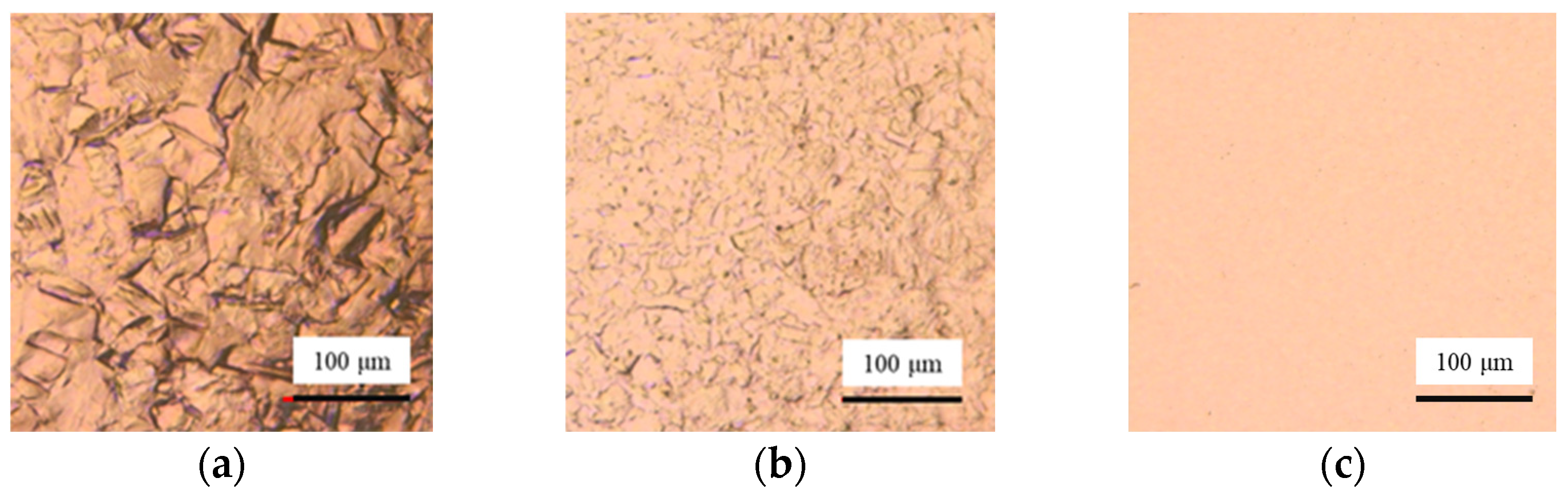
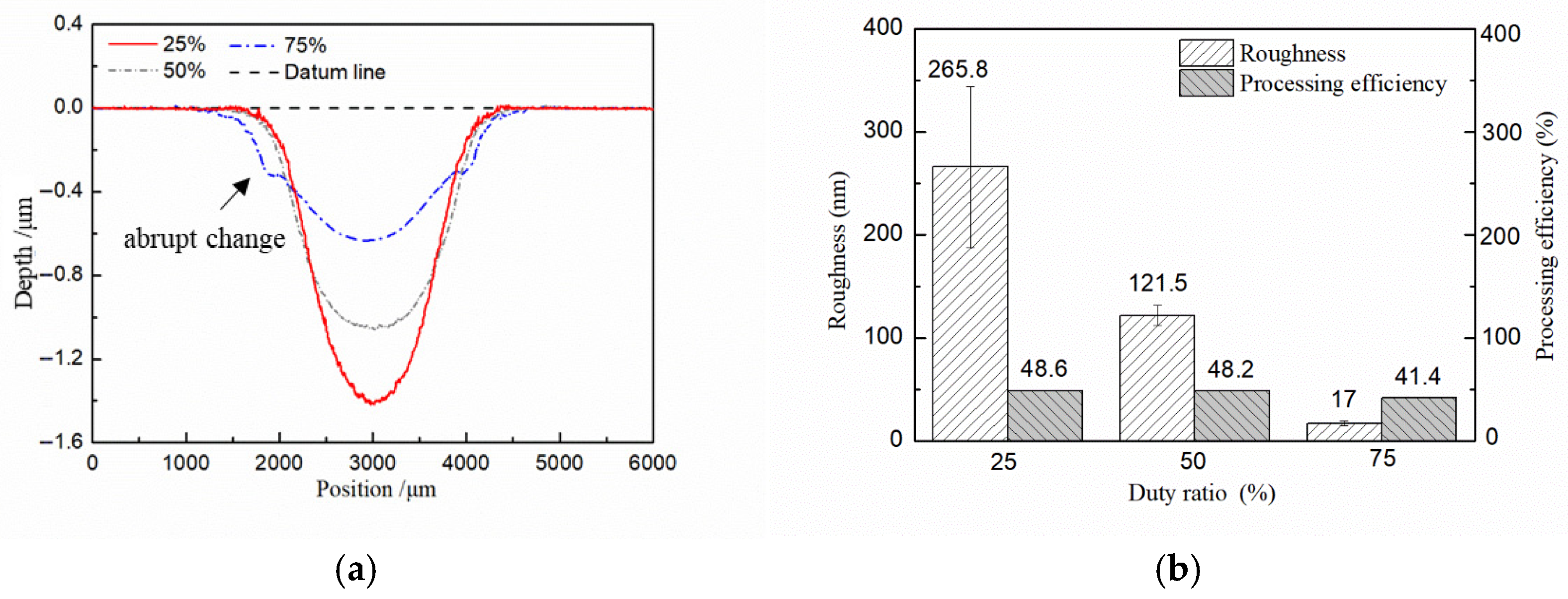
- According to the theory of viscous film, increasing the voltage and duty ratio are conducive to the formation of the viscous film in Jet-ECM. After the formation of the viscous film, the surface quality and the stability of electrochemical machining can be improved significantly. Increasing the electrolyte flow rate increases the effect of convection, which is not conducive to surface quality in Jet-ECM.
- (3)
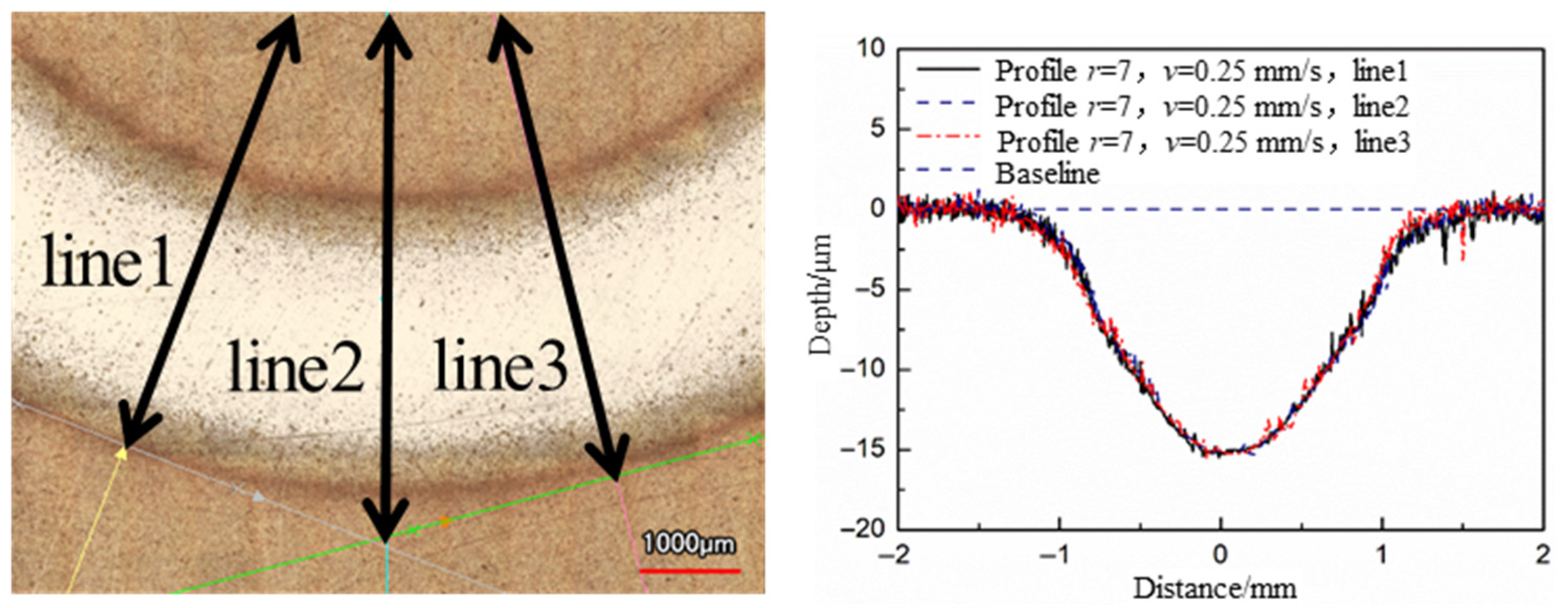
- The dynamic etching of EGCP keeps the WE rotation at a constant slow speed during processing. In this way, the profiles of the WE are homogenized, which is equivalent to improving the shape accuracy of the WE. Through this process, better shape accuracy can be obtained without increasing the cost and manufacturing difficulty of the WE.
Author Contributions
Funding
Institutional Review Board Statement
Informed Consent Statement
Data Availability Statement
Conflicts of Interest
References
- Cho, Y.C.; Lee, S.; Ajmal, M.; Kim, W.; Cho, C.R.; Jeong, S.Y.; Park, J.H.; Park, S.E.; Park, S.; Park, H.K.; et al. Copper better than silver: Electrical resistivity of the grain-free single-crystal copper wire. Cryst. Growth Des. 2010, 10, 2780–2784. [Google Scholar] [CrossRef]
- Dhingra, S.; Hsu, J.F.; Vlassiouk, I.; D’Urso, B. Chemical vapor deposition of graphene on large-domain ultra-flat copper. Carbon 2014, 69, 188–193. [Google Scholar] [CrossRef]
- Holmes, S.; Klugman, A.; Kraatz, P. Copper Mirror Surfaces for High Power Infrared Lasers. Appl. Opt. 1973, 12, 1743–1745. [Google Scholar] [CrossRef]
- Kirino, O.; Enomoto, T. Ultra-flat and ultra-smooth Cu surfaces produced by abrasive-free chemical-mechanical planarization/polishing using vacuum ultraviolet light. Precis. Eng.-J. Int. Soc. Precis. Eng. Nanotechnol. 2011, 35, 669–676. [Google Scholar] [CrossRef]
- Chen, C.H.; Liu, X.J.; Wang, Z.B. The Effects of Joining Methods on the Resistivity of W-Cu Alloy and Cu Joint. Phys. Procedia 2012, 25, 68–72. [Google Scholar] [CrossRef]
- Pan, B.; Kang, R.; Zhang, Y.; Li, K.; Du, D.; Guo, X.; Wang, C.; Guo, J.; Zhu, X.; Huang, W. Feasibility Study on Magnetorheological Finishing of Thin Copper Substrate. Chin. J. Mech. Eng. 2024, 37, 164. [Google Scholar] [CrossRef]
- Wu, D. High-Quality Machining of Thin Copper Plate Based on Error Proofing Method. J. Manuf. Process. 2025, 145, 172–189. [Google Scholar] [CrossRef]
- Liu, Y.; Qu, N.S. Obtaining high surface quality in electrolyte jet machining TB6 titanium alloy via enhanced product transport. J. Mater. Process. Technol. 2020, 276, 116381. [Google Scholar] [CrossRef]
- Tanaka, H.; Shimada, S.; Higuchi, M.; Yamaguchi, T.; Kaneeda, T.; Obata, K. Mechanism of cutting edge chipping and its suppression in diamond turning of copper. CIRP Ann.-Manuf. Technol. 2005, 54, 51–54. [Google Scholar] [CrossRef]
- Furushiro, N.; Higuchi, M.; Yamaguchi, T.; Shimada, S.; Obata, K. Polishing of single point diamond tool based on thermo-chemical reaction with copper. Precis. Eng.-J. Int. Soc. Precis. Eng. Nanotechnol. 2009, 33, 486–491. [Google Scholar] [CrossRef]
- Jiang, Y.; Jin, X.; Sun, H.; Zhao, J.; Zheng, Z.; Deng, S.; Tang, Y.; Zhang, X. A Review of the Deformation Mechanism and Control of Low Stiffness Thin-Walled Parts. CIRP J. Manuf. Sci. Technol. 2025, 60, 322–355. [Google Scholar] [CrossRef]
- Yang, L.; Guo, X.; Kang, R.; Zhu, X.; Zhu, Z.; Jia, Y. Theoretical and Experimental Analysis for the Surface Shape Evolution of Ultrathin Workpiece Considering the Pad Surface Shape in Double-Sided Polishing. Mater. Sci. Semicond. Process. 2024, 169, 107917. [Google Scholar] [CrossRef]
- Wang, L.; Zhou, P.; Yan, Y.; Zhang, B.; Kang, R.K.; Guo, D.M. Chemical–mechanical wear of monocrystalline silicon by a single pad asperity. Int. J. Mach. Tools Manuf. 2017, 120, 61–71. [Google Scholar] [CrossRef]
- Huo, A.J.; Solanki, R.; McAndrew, J. Electrochemical Planarization of Patterned Copper Films for Microelectronic Applications. J. Mater. Eng. Perform. 2004, 13, 413–420. [Google Scholar] [CrossRef]
- Huo, J.; Solanki, R.; McAndrew, J. Study of anodic layers and their effects on electropolishing of bulk and electroplated films of copper. J. Appl. Electrochem. 2004, 34, 305–314. [Google Scholar] [CrossRef]
- Tsai, L.W.; Tai, N.H. Enhancing the Electrical Properties of a Flexible Transparent Graphene-Based Field-Effect Transistor Using Electropolished Copper Foil for Graphene Growth. ACS Appl. Mater. Interfaces 2014, 6, 10489–10496. [Google Scholar] [CrossRef]
- Jiang, L.M.; Tian, Z.Q.; Liu, Z.F.; Mao, B.W.; Huang, H.G.; Sun, J.J. Electrochemical Microetching Methods for Metals. Electrochemistry 2002, 8, 139–147. (In Chinese) [Google Scholar] [CrossRef]
- Wang, K.; Yan, Y.; Zhou, P.; Zhang, C.; Kang, R.K.; Guo, D.M. Preparation of flat and smooth copper surface by jet electrochemical machining and electrochemical polishing. J. Electrochem. Soc. 2020, 167, 163501. [Google Scholar] [CrossRef]
- Wan, S.; Wei, C.; Hu, C.; Situ, G.; Shao, Y.; Shao, J. Novel magic angle-step state and mechanism for restraining the path ripple of magnetorheological finishing. Int. J. Mach. Tools Manuf. 2021, 161, 103673. [Google Scholar] [CrossRef]
- Qiu, R.; Guo, X.; Deng, Y.; Gao, S.; Wang, X. Prediction Model and Experimental Investigation of Mid-Spatial-Frequency Error in Bonnet Polishing of Off-Axis Aspheric X-Ray Mirror. Opt. Express 2025, 33, 44792–44810. [Google Scholar] [CrossRef] [PubMed]
- Zhong, B.; Deng, W.; Zheng, X.; Lei, P.; Wang, M.; Liu, C.; Fan, F. Enhanced Mid-Spatial Frequency Error Suppression through Multi-Directional Randomized Path Superposition Processing. Opt. Express 2025, 33, 19142–19157. [Google Scholar] [CrossRef] [PubMed]
- Shan, K.; Zhou, P.; Cai, J.; Kang, R.K.; Shi, K.; Guo, D.M. Electrogenerated chemical polishing of copper. Precis. Eng.-J. Int. Soc. Precis. Eng. Nanotechnol. 2015, 39, 161–166. [Google Scholar] [CrossRef]
- Shan, K.; Zhou, P.; Zuo, Y.S.; Kang, R.K.; Guo, D.M. Analysis of the polishing ability of electrogenerated chemical polishing. Precis. Eng.-J. Int. Soc. Precis. Eng. Nanotechnol. 2017, 47, 122–130. [Google Scholar] [CrossRef]
- Cai, J.Q.; Zhou, P.; Kang, R.K.; Shan, K.; Guo, D.M. A novel method for micro-gap control in electrogenerated chemical polishing. Precis. Eng.-J. Int. Soc. Precis. Eng. Nanotechnol. 2015, 41, 96–101. [Google Scholar] [CrossRef]
- Wang, K.; Yan, Y.; Zhou, P.; Shi, K.; Guo, D.M. Effect of cupric ion concentration on the etching behavior of copper in Electrogenerated Chemical Polishing (EGCP). Precis. Eng.-J. Int. Soc. Precis. Eng. Nanotechnol. 2019, 55, 70–76. [Google Scholar] [CrossRef]
- Landolt, D. Fundamental aspects of electropolishing. Electrochim. Acta 1987, 32, 1–11. [Google Scholar] [CrossRef]
- Leidheiser, H.; Gwathmey, A.T. The Influence of Crystal Face on the Electrochemical Properties of a Single Crystal of Copper. Trans. Electrochem. Soc. 1947, 91, 95–110. [Google Scholar] [CrossRef]
- Kawanaka, T.; Kunieda, M. Mirror-like finishing by electrolyte jet machining. CIRP Ann.-Manuf. Technol. 2015, 64, 237–240. [Google Scholar] [CrossRef]
- Mitchell-Smith, J.; Speidel, A.; Clare, A.T. Transitory electrochemical masking for precision jet processing techniques. J. Manuf. Process. 2018, 31, 273–285. [Google Scholar] [CrossRef]
- Edward, J.T. Molecular volumes and the Stokes-Einstein equation. J. Chem. Educ. 1970, 47, 261. [Google Scholar] [CrossRef]
- Wang, K.; Wang, H.; Zhang, Y.; Shi, H.; Shi, J. The Development of the Stress-Free Polishing System Based on the Positioning Error Analysis for the Deterministic Polishing of Jet Electrochemical Machining. Micromachines 2024, 15, 393. [Google Scholar] [CrossRef]





| Phosphoric Acid | Ethanol | Lactic Acid | Benzotriazole | Ammonium Acetate |
|---|---|---|---|---|
| 850 mL | 90 mL | 60 mL | 6 g | 3 g |
| Composition | Value |
|---|---|
| Voltage/V | 1.5, 3.5, 6.5, 10 |
| Frequency/kHz | 10 |
| Duty ratio/% | 25, 50, 75 |
| Gap/μm | 600 |
| Electrolyte temperature/°C | 35 |
| Electrolyte flow rate/mL/min | 460, 300 |
| Composition | Value |
|---|---|
| FeSO4/mmol/L | 1 |
| H2SO4/mol/L | 0.2 |
| Benzotriazole/mmol/L | 1 |
Disclaimer/Publisher’s Note: The statements, opinions and data contained in all publications are solely those of the individual author(s) and contributor(s) and not of MDPI and/or the editor(s). MDPI and/or the editor(s) disclaim responsibility for any injury to people or property resulting from any ideas, methods, instructions or products referred to in the content. |
© 2026 by the authors. Licensee MDPI, Basel, Switzerland. This article is an open access article distributed under the terms and conditions of the Creative Commons Attribution (CC BY) license.
Share and Cite
Wang, K.; Chen, X.; Hou, B.; Xu, P.; Li, Y.; Liu, X.; Shi, H.; Zhang, M.; Wang, H. Two-Step Polishing Technique for Flat and Smooth Copper Substrates by Electrochemical and Chemical Etching. Micromachines 2026, 17, 466. https://doi.org/10.3390/mi17040466
Wang K, Chen X, Hou B, Xu P, Li Y, Liu X, Shi H, Zhang M, Wang H. Two-Step Polishing Technique for Flat and Smooth Copper Substrates by Electrochemical and Chemical Etching. Micromachines. 2026; 17(4):466. https://doi.org/10.3390/mi17040466
Chicago/Turabian StyleWang, Ke, Xinghua Chen, Boju Hou, Peng Xu, Yufei Li, Xutong Liu, Huirong Shi, Ming Zhang, and Hongding Wang. 2026. "Two-Step Polishing Technique for Flat and Smooth Copper Substrates by Electrochemical and Chemical Etching" Micromachines 17, no. 4: 466. https://doi.org/10.3390/mi17040466
APA StyleWang, K., Chen, X., Hou, B., Xu, P., Li, Y., Liu, X., Shi, H., Zhang, M., & Wang, H. (2026). Two-Step Polishing Technique for Flat and Smooth Copper Substrates by Electrochemical and Chemical Etching. Micromachines, 17(4), 466. https://doi.org/10.3390/mi17040466