Article

Intelligent Design Optimization System for Additively Manufactured Flow Channels Based on Fluid–Structure Interaction

1
Center for Advanced Jet Engineering Technologies (CaJET), School of Mechanical Engineering, Shandong University, Jinan 250061, China
2
Key Laboratory of High-Efficiency and Clean Mechanical Manufacture at Shandong University, Ministry of Education, Jinan 250061, China
3
National Demonstration Center for Experimental Mechanical Engineering Education, Shandong University, Jinan 250061, China
4
Department of Mechanical and Energy Engineering, Southern University of Science and Technology, Shenzhen 518055, China
5
Department of Mechanical Engineering, University of Alberta, Edmonton, AB T6G 1H9, Canada
*
Author to whom correspondence should be addressed.
Micromachines 2022, 13(1), 100; https://doi.org/10.3390/mi13010100
Submission received: 13 December 2021 / Revised: 5 January 2022 / Accepted: 5 January 2022 / Published: 8 January 2022
(This article belongs to the Special Issue Intelligent Additive/Subtractive Manufacturing)

Abstract

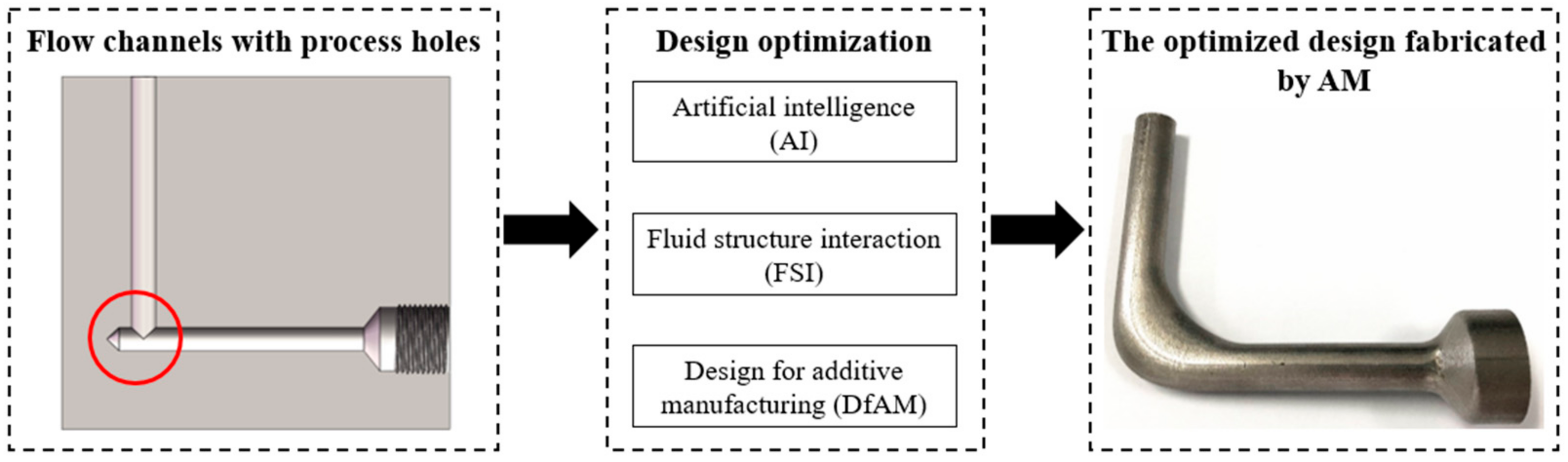
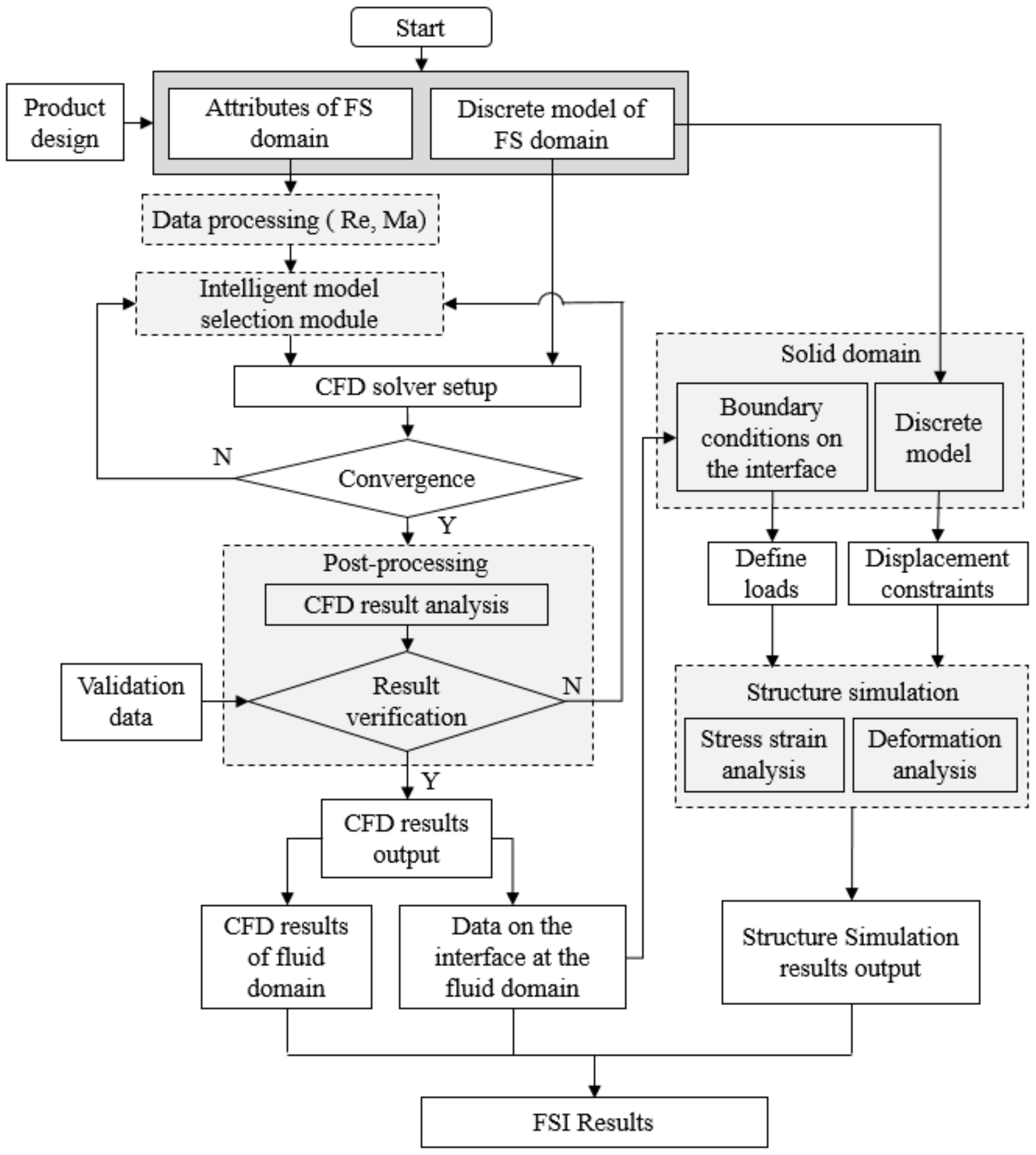
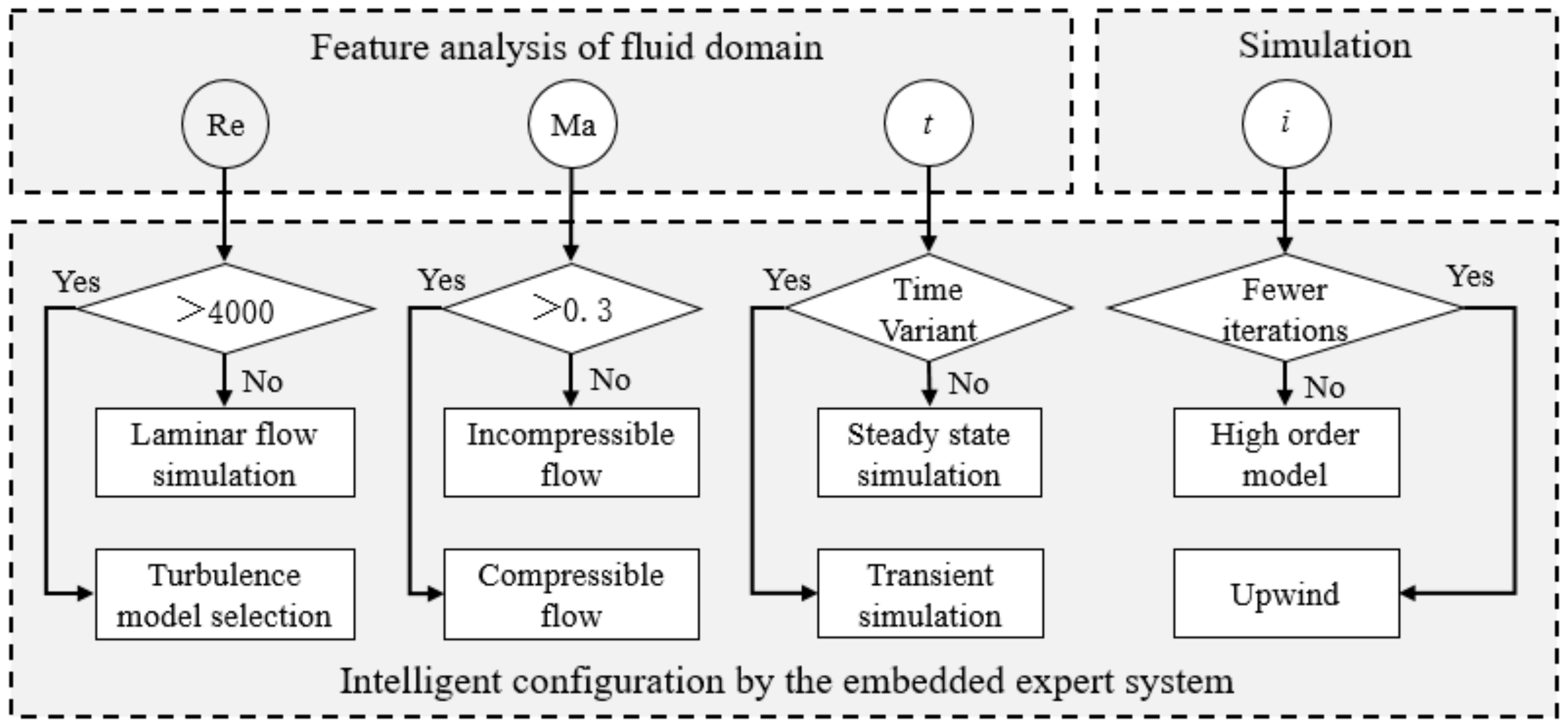
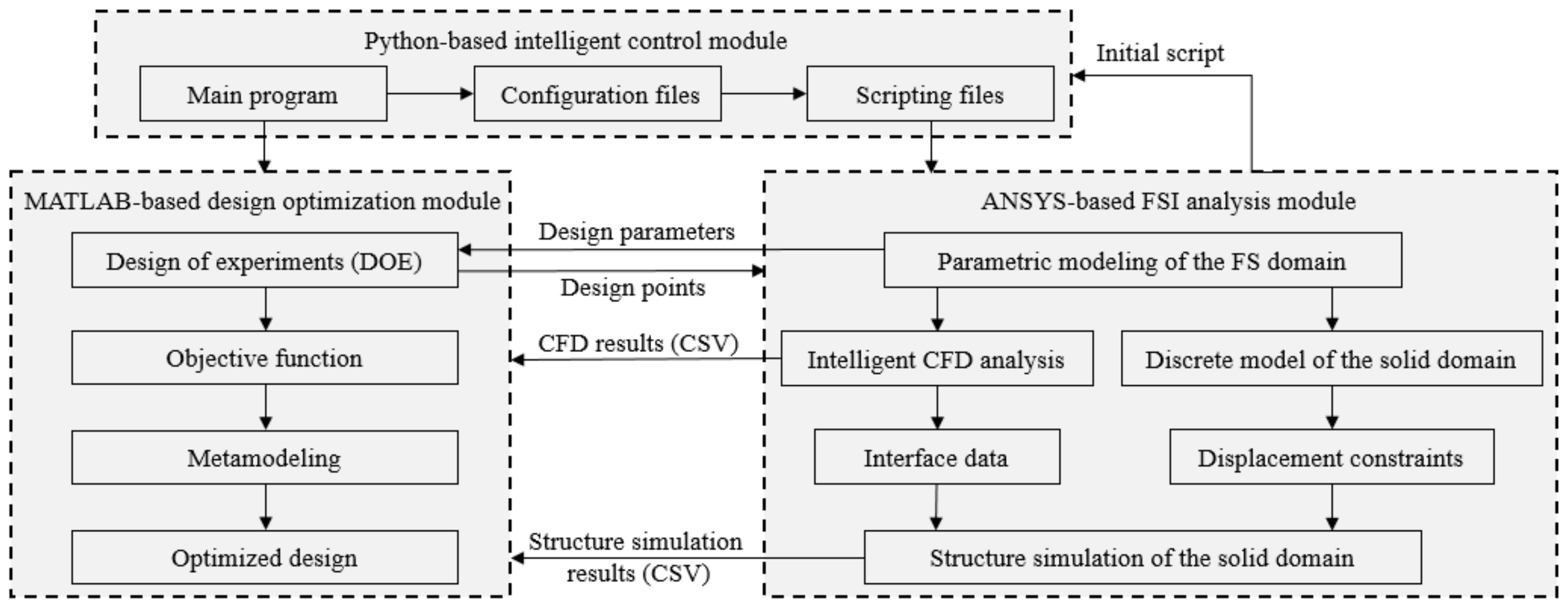
Based on expert system theory and fluid–structure interaction (FSI), this paper suggests an intelligent design optimization system to derive the optimal shape of both the fluid and solid domain of flow channels. A parametric modeling scheme of flow channels is developed by design for additive manufacturing (DfAM). By changing design parameters, a series of flow channel models can be obtained. According to the design characteristics, the system can intelligently allocate suitable computational models to compute the flow field of a specific model. The pressure-based normal stress is abstracted from the results and transmitted to the solid region by the fluid–structure (FS) interface to analyze the strength of the structure. The design space is obtained by investigating the simulation results with the metamodeling method, which is further applied for pursuing design objectives under constraints. Finally, the improved design is derived by gradient-based optimization. This system can improve the accuracy of the FSI simulation and the efficiency of the optimization process. The design optimization of a flow channel in a simplified hydraulic manifold is applied as the case study to validate the feasibility of the proposed system.
Keywords: expert system; fluid–structure interaction; design optimization; additive manufacturing; flow channel expert system; fluid–structure interaction; design optimization; additive manufacturing; flow channel