Beyond Taste: The Impact of Chocolate on Cardiovascular and Steatotic Liver Disease Risk Factors


 ,
, 

Abstract
1. Introduction
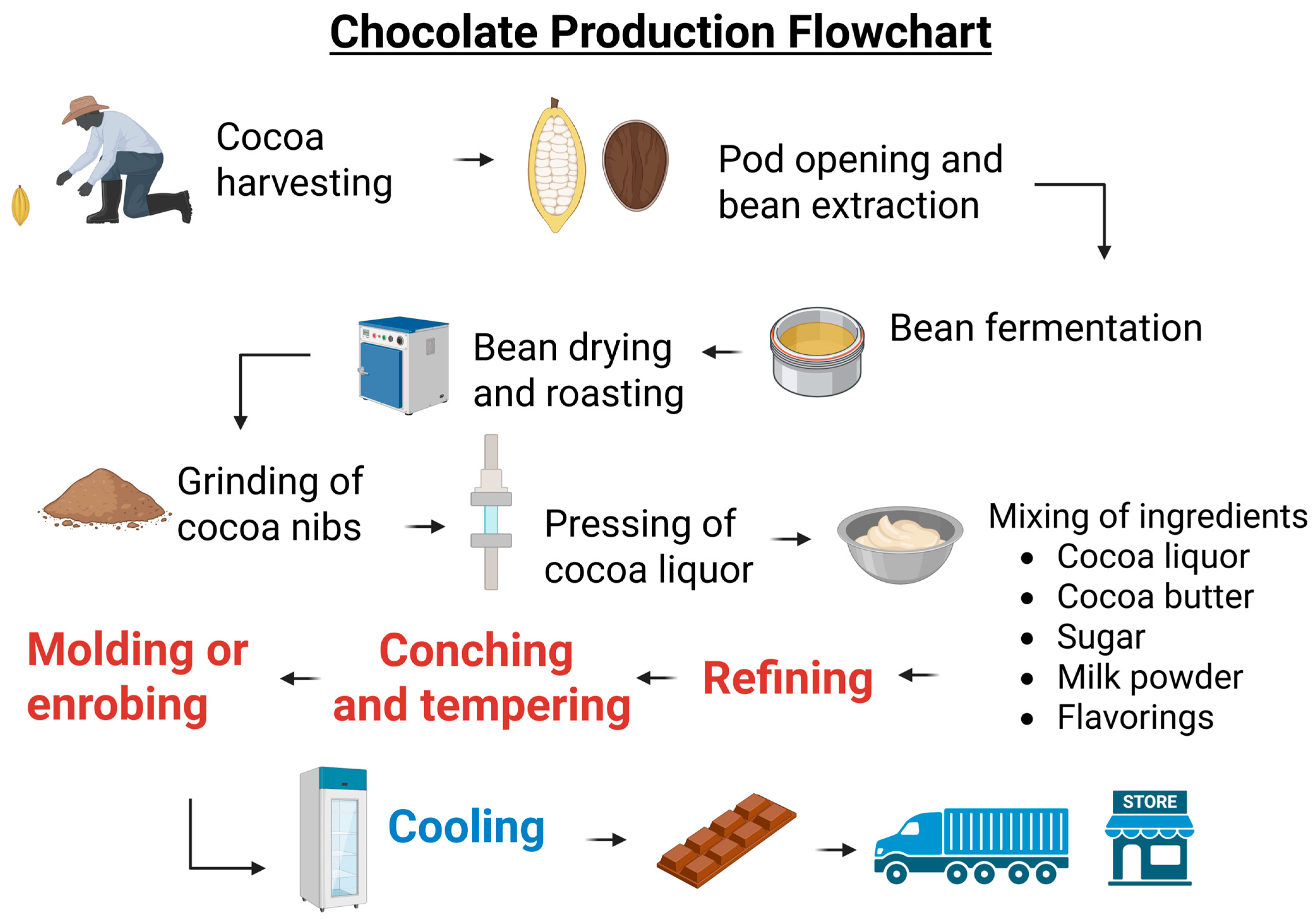
2. Chocolate Overview and Production
Cocoa Processing Stages Leading to Chocolate Production
- Cultivation and Harvesting: Cocoa plants are grown in tropical regions, and their fruits (called pods) are manually harvested at peak ripeness.
- Fermentation: Once extracted, the seeds undergo fermentation, an essential step for developing the precursors of chocolate’s characteristic aroma and flavor.
- Drying: The fermented seeds are sun-dried or dried by artificial methods to reduce moisture content and enable proper storage.
- Roasting: Once dried, the seeds are roasted to enhance flavor and eliminate undesirable compounds.
- Grinding: Roasted seeds are ground to produce cocoa mass, also known as cocoa liquor.
- Refining: The cocoa mass is refined to achieve a fine and uniform texture, crucial for the product’s sensory quality.
- Conching: This step involves continuous mixing and heating of the mass, which promotes the release of volatile acids and improves texture and flavor.
- Tempering: The chocolate is subjected to precise temperature control to ensure the formation of stable cocoa butter crystals, resulting in a shiny appearance and firmness.
- Molding and Cooling: The tempered chocolate is molded into the desired shapes and cooled until completely solidified.
- Packaging, Storage, and Distribution: The product is then packaged and stored under controlled conditions to maintain its physicochemical and sensory properties.
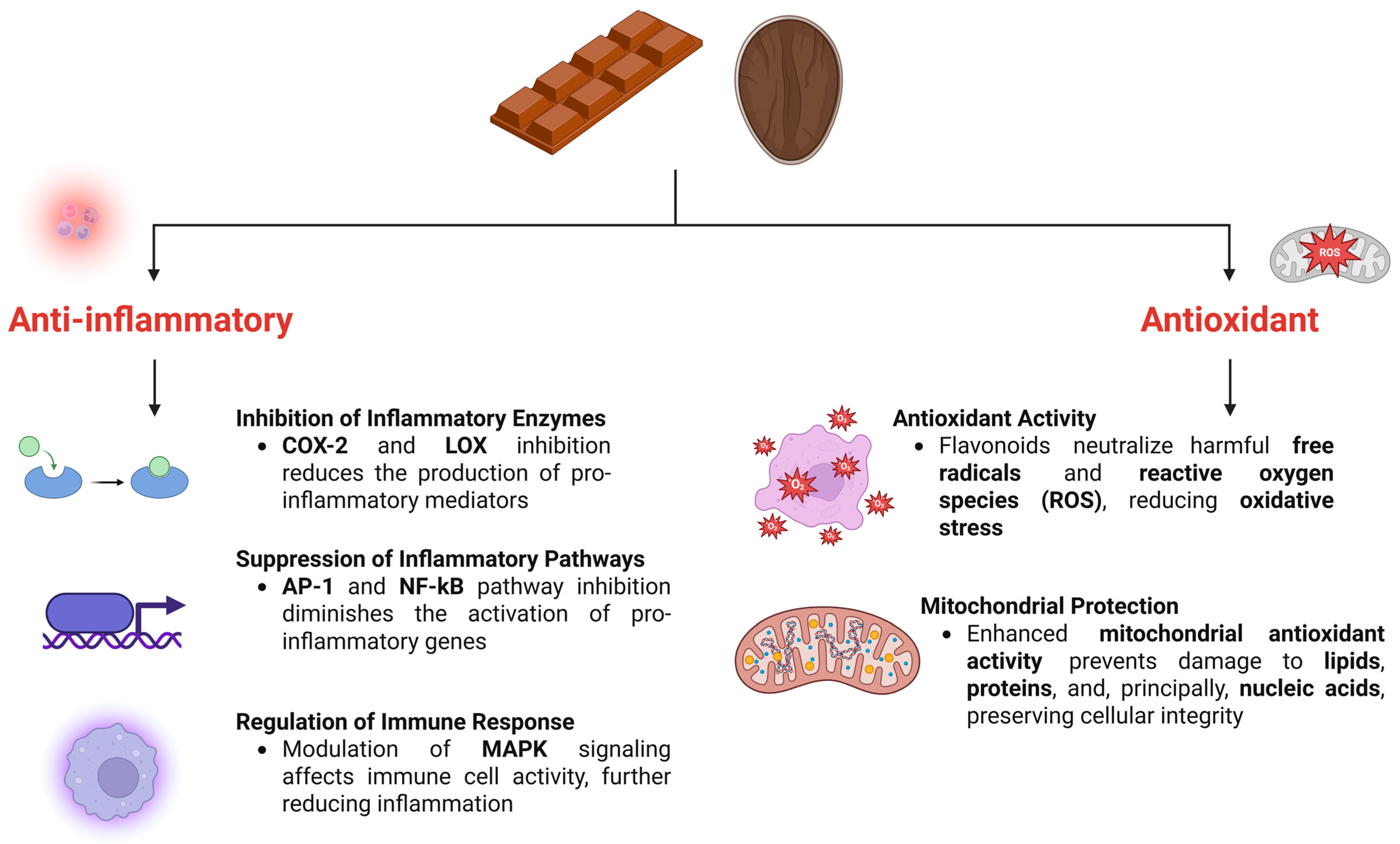
3. Chocolate Bioactive Compounds and Their Effects on Inflammation and Oxidative Stress
3.1. Chocolate Consumption and Inflammation
3.2. Chocolate Consumption and Oxidative Stress
4. Chocolate Consumption, Obesity, and Glycemia
5. Chocolate Consumption and Lipids
6. Chocolate Consumption and Hypertension
7. Chocolate Consumption and Endothelial Dysfunction
8. Clinical Trials Showing the Effects of Chocolate Consumption on CVD and Related Risk Factors
9. Clinical Trials Showing the Effects of Chocolate Consumption on MASLD-Related Risk Factors
10. Heterogeneity of Results and Modulating Factors
11. Conclusions and Limitations
12. Future Perspectives
Practical Implications for Daily Practice
Author Contributions
Funding
Institutional Review Board Statement
Informed Consent Statement
Data Availability Statement
Acknowledgments
Conflicts of Interest
Appendix A
Approach to Literature Selection
References
- Domanski, M.J.; Wu, C.O.; Tian, X.; Hasan, A.A.; Ma, X.; Huang, Y.; Miao, R.; Reis, J.P.; Bae, S.; Husain, A.; et al. Association of Incident Cardiovascular Disease with Time Course and Cumulative Exposure to Multiple Risk Factors. JACC 2023, 81, 1151–1161. [Google Scholar] [CrossRef]
- Martin, S.S.; Aday, A.W.; Almarzooq, Z.I.; Anderson, C.A.; Arora, P.; Avery, C.L.; Baker-Smith, C.M.; Gibbs, B.B.; Beaton, A.Z.; Boehme, A.K.; et al. 2024 Heart Disease and Stroke Statistics: A Report of US and Global Data from the American Heart Association. Circulation 2024, 149, E347–E913. [Google Scholar] [CrossRef]
- Guo, Y.; Li, M.; Huang, Y. Association of dietary fiber intake with all-cause and cardiovascular mortality in U.S. adults with metabolic syndrome: NHANES 1999–2018. Front. Nutr. 2025, 12, 1659000. [Google Scholar] [CrossRef]
- Zarepour, P.; Salehi, S.; Khojaste, M.; Azizpour, Y.; Khosravi, S.; Yunesian, M. The prevalence of secondhand smoke exposure and its association with chronic diseases and metabolic abnormalities: Findings from the STEPS survey 2021. J. Diabetes Metab. Disord. 2025, 24, 211. [Google Scholar] [CrossRef]
- Swarup, S.; Ahmed, I.; Grigorova, Y.; Zeltser, R. Metabolic Syndrome. 2024. Available online: https://www.ncbi.nlm.nih.gov/books/NBK459248/ (accessed on 31 January 2026).
- Chang, K.-S.; Kuo, W.-H.; Chang, M.-H.; Hsiao, Y.; Tsai, R.-Y. Gut Microbiota and Liver Health: Meta-Analysis of Bifidobacterium-Containing Probiotics in NAFLD Management. Int. J. Mol. Sci. 2025, 26, 5944. [Google Scholar] [CrossRef]
- Rossi, J.L.S.; Barbalho, S.M.; de Araujo, R.R.; Bechara, M.D.; Sloan, K.P.; Sloan, L.A. Metabolic syndrome and cardiovascular diseases: Going beyond traditional risk factors. Diabetes/Metab. Res. Rev. 2022, 38, e3502. [Google Scholar] [CrossRef] [PubMed]
- Chan, W.-K.; Chuah, K.-H.; Rajaram, R.B.; Lim, L.-L.; Ratnasingam, J.; Vethakkan, S.R. Metabolic Dysfunction-Associated Steatotic Liver Disease (MASLD): A State-of-the-Art Review. J. Obes. Metab. Syndr. 2023, 32, 197–213. [Google Scholar] [CrossRef]
- Mejía-Guzmán, J.E.; Belmont-Hernández, R.A.; Chávez-Tapia, N.C.; Uribe, M.; Nuño-Lámbarri, N. Metabolic-Dysfunction-Associated Steatotic Liver Disease: Molecular Mechanisms, Clinical Implications, and Emerging Therapeutic Strategies. Int. J. Mol. Sci. 2025, 26, 2959. [Google Scholar] [CrossRef] [PubMed]
- Ghanbari, P.; Raiesi, D.; Alboebadi, R.; Zarejavid, A.; Dianati, M.; Razmi, H.; Bazyar, H. The effects of grape seed extract supplementation on cardiovascular risk factors, liver enzymes and hepatic steatosis in patients with non-alcoholic fatty liver disease: A randomised, double-blind, placebo-controlled study. BMC Complement. Med. Ther. 2024, 24, 1–14. [Google Scholar] [CrossRef] [PubMed]
- Nilghaz, M.; Sadeghi, A.; Koochakpoor, G.; Poustchi, H.; Khodadadi, N.; Narimani, B.; Ghods, M.; Shafiee, M.; Shahparvari, M.R.; Hekmatdoost, A. The efficacy of DASH combined with time-restricted feeding (16/8) on metabolic associated fatty liver disease management: A randomized controlled trial. Sci. Rep. 2025, 15, 1–13. [Google Scholar] [CrossRef]
- Rodríguez-Carrillo, A.A.; Espinoza-Vargas, M.R.; Vargas-Ortiz, K.; Ibarra-Reynoso, L.d.R.; Olvera-Juárez, M.; Gómez-Ojeda, A.; Garay-Sevilla, M.E.; Figueroa, A. Impact of L-Citrulline Supplementation and HIIT on Lipid Profile, Arterial Stiffness, and Fat Mass in Obese Adolescents with Metabolic-Dysfunction-Associated Fatty Liver Disease: A Randomized Clinical Trial. Nutrients 2025, 17, 402. [Google Scholar] [CrossRef]
- Ramírez-Mejía, M.M.; Barbalho, S.M.; Ponciano-Rodríguez, G.; Eslam, M.; George, J.; Zheng, M.; Méndez-Sánchez, N. Metabolic Divergence Between MASLD and Metabolic Syndrome: Distinct Clinical Phenotypes and Risk Stratification Implications. Liver Int. Off. J. Int. Assoc. Study Liver 2025, 45, e70305. [Google Scholar] [CrossRef]
- Sinatora, R.V.; Chagas, E.F.B.; Mattera, F.O.P.; Mellem, L.J.; Santos, A.R.d.O.d.; Pereira, L.P.; Aranão, A.L.d.C.; Guiguer, E.L.; Araújo, A.C.; Haber, J.F.d.S.; et al. Relationship of Inflammatory Markers and Metabolic Syndrome in Postmenopausal Women. Metabolites 2022, 12, 73. [Google Scholar] [CrossRef]
- Surendran, A.; Zhang, H.; Stamenkovic, A.; Ravandi, A. Lipidomics and cardiovascular disease. Biochim. Biophys. Acta (BBA)—Mol. Basis Dis. 2025, 1871, 167806. [Google Scholar] [CrossRef]
- Mensah, G.A.; Roth, G.A.; Fuster, V. The Global Burden of Cardiovascular Diseases and Risk Factors: 2020 and Beyond. J. Am. Coll. Cardiol. 2019, 74, 2529–2532. [Google Scholar] [CrossRef]
- Virani, S.S.; Alonso, A.; Aparicio, H.J.; Benjamin, E.J.; Bittencourt, M.S.; Callaway, C.W.; Carson, A.P.; Chamberlain, A.M.; Cheng, S.; Delling, F.N.; et al. Heart Disease and Stroke Statistics—2021 Update: A Report From the American Heart Association. Circulation 2021, 143, e254–e743. [Google Scholar] [CrossRef]
- Marinho, F. The Impact of Cardiovascular Disease on Economic Loss. Arq. Bras. Cardiol. 2024, 121, e20240175. [Google Scholar] [CrossRef]
- GBD 2021 Diseases and Injuries Collaborators. Global incidence, prevalence, years lived with disability (YLDs), disability-adjusted life-years (DALYs), and healthy life expectancy (HALE) for 371 diseases and injuries in 204 countries and territories and 811 subnational locations, 1990–2021: A systematic analysis for the Global Burden of Disease Study 2021. Lancet 2024, 403, 2133–2161. [Google Scholar] [CrossRef]
- GBD 2021 Causes of Death Collaborators. Global burden of 288 causes of death and life expectancy decomposition in 204 countries and territories and 811 subnational locations, 1990–2021: A systematic analysis for the Global Burden of Disease Study 2021. Lancet 2024, 403, 2100–2132. [Google Scholar] [CrossRef] [PubMed]
- Bakhit, M.; Fien, S.; Abukmail, E.; Jones, M.; Clark, J.; Scott, A.M.; Glasziou, P.; Cardona, M. Cardiovascular disease risk communication and prevention: A meta-analysis. Eur. Heart J. 2024, 45, 998–1013. [Google Scholar] [CrossRef] [PubMed]
- Komuro, K.; Kaneko, H.; Komuro, J.; Suzuki, Y.; Okada, A.; Mizuno, A.; Fujiu, K.; Morita, H.; Node, K.; Yasunaga, H.; et al. Differences in the association of lifestyle-related modifiable risk factors with incident cardiovascular disease between individuals with and without diabetes. Eur. J. Prev. Cardiol. 2025, 32, 376–383. [Google Scholar] [CrossRef]
- Ventura, H.O.; Elagizi, A.; Lavie, C.J. Optimal Prevention of Cardiovascular Diseases: The Earlier the Better. JACC 2023, 81, 1162–1164. [Google Scholar] [CrossRef]
- Méndez-Sánchez, N.; Ramírez-Mejía, M.M.; Cortez-Hernández, C.; Tovar-Bojorquez, E.M.; Contreras-Omaña, R.; Monsiváis-Morales, J.D.; Cordova-Gallardo, J.; Castillo-Barradas, M.; Guzmán-Rodríguez, N.; González-Huezo, M.S.; et al. Epidemiology and etiologic trends of hepatocellular carcinoma in cirrhotic patients in Mexico: A multicenter retrospective study (2018–2024). Ann. Hepatol. 2025, 31, 102131. [Google Scholar] [CrossRef]
- Barghchi, H.; Milkarizi, N.; Belyani, S.; Ostad, A.N.; Askari, V.R.; Rajabzadeh, F.; Goshayeshi, L.; Kheyrabadi, S.Y.G.; Razavidarmian, M.; Dehnavi, Z.; et al. Pomegranate (Punica granatum L.) peel extract ameliorates metabolic syndrome risk factors in patients with non-alcoholic fatty liver disease: A randomized double-blind clinical trial. Nutr. J. 2023, 22, 1–17. [Google Scholar] [CrossRef] [PubMed]
- Beaver, L.M.; Leonard, S.W.; Uesugi, S.L.; Wong, C.P.; Lytle, L.-M.; Vasudevan, A.; Papenhausen, E.M.; Jupudi, Y.; Bella, D.; Bobe, G.; et al. Beneficial changes in total cholesterol, LDL-C, biomarkers of intestinal inflammation, and vitamin E status in adults with metabolic syndrome consuming almonds as snack foods: A randomized controlled clinical trial. Nutr. Res. 2025, 139, 50–65. [Google Scholar] [CrossRef]
- Chung, H.-K.; Kim, J.H.; Choi, A.; Ahn, C.W.; Kim, Y.-S.; Nam, J.S. Antioxidant-Rich Dietary Intervention Improves Cardiometabolic Profiles and Arterial Stiffness in Elderly Koreans with Metabolic Syndrome. Yonsei Med. J. 2022, 63, 26–33. [Google Scholar] [CrossRef]
- Younossi, Z.M.; Kalligeros, M.; Henry, L. Epidemiology of metabolic dysfunction-associated steatotic liver disease. Clin. Mol. Hepatol. 2025, 31, S32–S50. [Google Scholar] [CrossRef] [PubMed]
- Pal, S.C.; Ramírez-Mejía, M.M.; Keaveny, A.P.; Méndez-Sánchez, N. Non-invasive biomarkers for monitoring portal hypertension in metabolic dysfunction-associated steatotic liver disease (MASLD). Expert Rev. Gastroenterol. Hepatol. 2025, 19, 1021–1032. [Google Scholar] [CrossRef] [PubMed]
- Anadani, M.; Turan, T.N.; Yaghi, S.; Spiotta, A.M.; Gory, B.; Sharma, R.; Sheth, K.N.; de Havenon, A. Change in Smoking Behavior and Outcome After Ischemic Stroke: Post-Hoc Analysis of the SPS3 Trial. Stroke 2023, 54, 921–927. [Google Scholar] [CrossRef]
- Wang, J.; Zhao, J.; Zhong, Y.; He, C.; Hu, F. Healthy Lifestyle and Metabolic Dysfunction-Associated Steatotic Liver Disease: A Study of the Efficacy of Fatty Liver Regression. Clin. Transl. Gastroenterol. 2025, 16, e00806. [Google Scholar] [CrossRef]
- Tacke, F.; Horn, P.; Wong, V.W.-S.; Ratziu, V.; Bugianesi, E.; Francque, S.; Zelber-Sagi, S.; Valenti, L.; Roden, M.; Schick, F.; et al. EASL-EASD-EASO Clinical Practice Guidelines on the management of metabolic dysfunction-associated steatotic liver disease (MASLD). J. Hepatol. 2024, 81, 492–542. [Google Scholar] [CrossRef]
- Miller, D.M.; McCauley, K.F.; Dunham-Snary, K.J. Metabolic Dysfunction-Associated Steatotic Liver Disease (MASLD): Mechanisms, Clinical Implications and Therapeutic Advances. Endocrinol. Diabetes Metab. 2025, 8, e70132. [Google Scholar] [CrossRef]
- Le, P.; Kaya, E.; Phan, A.; Yilmaz, Y.; Alkhouri, N. Resmetirom-eligible population among US adults: An estimation analysis based on NHANES 2017–March 2020. Hepatol. Commun. 2025, 9, e0755. [Google Scholar] [CrossRef]
- Liu, G.; Mao, Q.; Tian, X.; Zhang, C.; Zhang, Y.; He, J.; Kong, Y. Association of biological aging and the prevalence of nonalcoholic fat liver disease: A population-based study. BMC Gastroenterol. 2025, 25, 1–8. [Google Scholar] [CrossRef]
- Quek, J.; Chan, K.E.; Wong, Z.Y.; Tan, C.; Tan, B.; Lim, W.H.; Tan, D.J.H.; Tang, A.S.P.; Tay, P.; Xiao, J.; et al. Global prevalence of non-alcoholic fatty liver disease and non-alcoholic steatohepatitis in the overweight and obese population: A systematic review and meta-analysis. Lancet Gastroenterol. Hepatol. 2023, 8, 660–670. [Google Scholar] [CrossRef] [PubMed]
- Ditchfield, C.; Kushida, M.M.; Mazalli, M.R.; Sobral, P.J.A. Can Chocolate Be Classified as an Ultra-Processed Food? A Short Review on Processing and Health Aspects to Help Answer This Question. Foods 2023, 12, 3070. [Google Scholar] [CrossRef]
- Tan, T.Y.C.; Lim, X.Y.; Yeo, J.H.H.; Lee, S.W.H.; Lai, N.M. The Health Effects of Chocolate and Cocoa: A Systematic Review. Nutrients 2021, 13, 2909. [Google Scholar] [CrossRef] [PubMed]
- Grassi, D.; Socci, V.; Tempesta, D.; Ferri, C.; De Gennaro, L.; Desideri, G.; Ferrara, M. Flavanol-rich chocolate acutely improves arterial function and working memory performance counteracting the effects of sleep deprivation in healthy individuals. J. Hypertens. 2016, 34, 1298–1308. [Google Scholar] [CrossRef]
- Hashim, N.T.; Babiker, R.; Chaitanya, N.C.S.K.; Mohammed, R.; Priya, S.P.; Padmanabhan, V.; Ahmed, A.; Dasnadi, S.P.; Islam, S.; Gismalla, B.G.; et al. New insights in natural bioactive compounds for periodontal disease: Advanced molecular mechanisms and therapeutic potential. Molecules 2025, 30, 807. [Google Scholar] [CrossRef]
- Du, B.; Xu, B. Natural Bioactive Compounds Exerting Health-Promoting Effects by Ameliorating Oxidative Stress. Antioxidants 2025, 14, 85. [Google Scholar] [CrossRef]
- Paparella, A.; Schirone, M.; López, C.C. The Health Impact of Cocoa from Cultivation to the Formation of Biogenic Amines: An Updated Review. Foods 2025, 14, 255. [Google Scholar] [CrossRef]
- González-Barrio, R.; Nuñez-Gomez, V.; Cienfuegos-Jovellanos, E.; García-Alonso, F.J.; Periago-Castón, M.J. Improvement of the Flavanol Profile and the Antioxidant Capacity of Chocolate Using a Phenolic Rich Cocoa Powder. Foods 2020, 9, 189. [Google Scholar] [CrossRef] [PubMed]
- La Mantia, A.; Ianni, F.; Schoubben, A.; Cespi, M.; Lisjak, K.; Guarnaccia, D.; Sardella, R.; Blasi, P. Effect of Cocoa Roasting on Chocolate Polyphenols Evolution. Antioxidants 2023, 12, 469. [Google Scholar] [CrossRef]
- Sejbuk, M.; Mirończuk-Chodakowska, I.; Karav, S.; Witkowska, A.M. Dietary Polyphenols, Food Processing and Gut Microbiome: Recent Findings on Bioavailability, Bioactivity, and Gut Microbiome Interplay. Antioxidants 2024, 13, 1220. [Google Scholar] [CrossRef]
- Gu, L.; House, S.E.; Wu, X.; Ou, B.; Prior, R.L. Procyanidin and catechin contents and antioxidant capacity of cocoa and chocolate products. J. Agric. Food Chem. 2006, 54, 4057–4061. [Google Scholar] [CrossRef] [PubMed]
- Martín, M.A.; Ramos, S. Cocoa polyphenols in oxidative stress: Potential health implications. J. Funct. Foods 2016, 27, 570–588. [Google Scholar] [CrossRef]
- Lamport, D.J.; Christodoulou, E.; Achilleos, C. Beneficial effects of dark chocolate for episodic memory in healthy young adults: A parallel-groups acute intervention with a white chocolate control. Nutrients 2020, 12, 483. [Google Scholar] [CrossRef]
- Muhammad, D.R.A.; Tuenter, E.; Patria, G.D.; Foubert, K.; Pieters, L.; Dewettinck, K. Phytochemical composition and antioxidant activity of Cinnamomum burmannii Blume extracts and their potential application in white chocolate. Food Chem. 2021, 340, 127983. [Google Scholar] [CrossRef]
- Cadoná, F.C.; Dantas, R.F.; de Mello, G.H.; Silva-Jr, F.P. Natural products targeting into cancer hallmarks: An update on caffeine, theobromine, and (+)-catechin. Crit. Rev. Food Sci. Nutr. 2022, 62, 7222–7241. [Google Scholar] [CrossRef]
- Poliński, S.; Topka, P.; Tańska, M.; Kowalska, S.; Czaplicki, S.; Szydłowska-Czerniak, A. Impact of bioactive compounds of plant leaf powders in white chocolate production: Changes in antioxidant properties during the technological processes. Antioxidants 2022, 11, 752. [Google Scholar] [CrossRef] [PubMed]
- Razola-Díaz, M.d.C.; Aznar-Ramos, M.J.; Verardo, V.; Melgar-Locatelli, S.; Castilla-Ortega, E.; Rodríguez-Pérez, C. Exploring the nutritional composition and bioactive compounds in different cocoa powders. Antioxidants 2023, 12, 716. [Google Scholar] [CrossRef]
- Cortez, D.; Quispe-Sanchez, L.; Mestanza, M.; Oliva-Cruz, M.; Yoplac, I.; Torres, C.; Chavez, S.G. Changes in bioactive compounds during fermentation of cocoa (Theobroma cacao) harvested in Amazonas-Peru. Curr. Res. Food Sci. 2023, 6, 100494. [Google Scholar] [CrossRef] [PubMed]
- Gomes, S.M.; Miranda, R.; Santos, L. Enhancing the Biological Properties of White Chocolate: Moringa oleifera Leaf Extract as a Natural Functional Ingredient. Foods 2025, 14, 359. [Google Scholar] [CrossRef]
- Lagou, V.; Greyling, A.; Ferruzzi, M.G.; Skene, S.S.; Dubost, J.; Demirkan, A.; Prokopenko, I.; Shlisky, J.; Rodriguez-Mateos, A.; Heiss, C. Impact of flavan-3-ols on blood pressure and endothelial function in diverse populations: A systematic review and meta-analysis of randomized controlled trials. Eur. J. Prev. Cardiol. 2025, 32, 1322–1334. [Google Scholar] [CrossRef]
- Cooper, K.A.; Campos-Giménez, E.; Alvarez, D.J.; Nagy, K.; Donovan, J.L.; Williamson, G. Rapid reversed phase ultra-performance liquid chromatography analysis of the major cocoa polyphenols and inter-relationships of their concentrations in chocolate. J. Agric. Food Chem. 2007, 55, 2841–2847. [Google Scholar] [CrossRef]
- Haskell-Ramsay, C.F.; Schmitt, J.; Actis-Goretta, L. The impact of epicatechin on human cognition: The role of cerebral blood flow. Nutrients 2018, 10, 986. [Google Scholar] [CrossRef] [PubMed]
- Grassia, M.; Salvatori, G.; Roberti, M.; Planeta, D.; Cinquanta, L. Polyphenols, methylxanthines, fatty acids and minerals in cocoa beans and cocoa products. J. Food Meas. Charact. 2019, 13, 1721–1728. [Google Scholar] [CrossRef]
- Miller, K.B.; Hurst, W.J.; Flannigan, N.; Ou, B.; Lee, C.Y.; Smith, N.; Stuart, D.A. Survey of commercially available chocolate-and cocoa-containing products in the United States. 2. Comparison of flavan-3-ol content with nonfat cocoa solids, total polyphenols, and percent cacao. J. Agric. Food Chem. 2009, 57, 9169–9180. [Google Scholar] [CrossRef]
- Nehlig, A. The neuroprotective effects of cocoa flavanol and its influence on cognitive performance. Br. J. Clin. Pharmacol. 2013, 75, 716–727. [Google Scholar] [CrossRef]
- Tušek, K.; Valinger, D.; Jurina, T.; Cvetnić, T.S.; Kljusurić, J.G.; Benković, M. Bioactives in cocoa: Novel findings, health benefits, and extraction techniques. Separations 2024, 11, 128. [Google Scholar] [CrossRef]
- Samanta, S.; Sarkar, T.; Chakraborty, R.; Rebezov, M.; Shariati, M.A.; Thiruvengadam, M.; Rengasamy, K.R. Dark chocolate: An overview of its biological activity, processing, and fortification approaches. Curr. Res. Food Sci. 2022, 5, 1916–1943. [Google Scholar] [CrossRef]
- Sitarek, P.; Merecz-Sadowska, A.; Sikora, J.; Osicka, W.; Śpiewak, I.; Picot, L.; Kowalczyk, T. Exploring the therapeutic potential of Theobroma cacao L.: Insights from in vitro, in vivo, and nanoparticle studies on anti-inflammatory and anticancer effects. Antioxidants 2024, 13, 1376. [Google Scholar] [CrossRef] [PubMed]
- García, D.V.; Esteve, É.P.; Baviera, J.M.B. Changes in cocoa properties induced by the alkalization process: A review. Compr. Rev. Food Sci. Food Saf. 2020, 19, 2200–2221. [Google Scholar] [CrossRef] [PubMed]
- Rana, A.; Samtiya, M.; Dhewa, T.; Mishra, V.; Aluko, R.E. Health benefits of polyphenols: A concise review. J. Food Biochem. 2022, 46, e14264. [Google Scholar] [CrossRef]
- Aghababaei, F.; Hadidi, M. Recent advances in potential health benefits of quercetin. Pharmaceuticals 2023, 16, 1020. [Google Scholar] [CrossRef]
- Carrillo-Martinez, E.J.; Flores-Hernández, F.Y.; Salazar-Montes, A.M.; Nario-Chaidez, H.F.; Hernández-Ortega, L.D. Quercetin, a flavonoid with great pharmacological capacity. Molecules 2024, 29, 1000. [Google Scholar] [CrossRef]
- Chatterjee, A.; Chatterjee, P.; Irani, R.; Ghosh, S.; Basu, B.; Prajapati, B. Impact of Polyphenol-Rich Chocolate on Microbial Diversity and Human Health: A Comprehensive Review. Curr. Nutr. Food Sci. 2025, 21, 671–689. [Google Scholar] [CrossRef]
- Coyago-Cruz, E.; Salazar, I.; Guachamin, A.; Alomoto, M.; Cerna, M.; Mendez, G.; Heredia-Moya, J.; Vera, E. Bioactive Compounds, Antioxidant, and Antimicrobial Activity of Seeds and Mucilage of Non-Traditional Cocoas. Antioxidants 2025, 14, 299. [Google Scholar] [CrossRef]
- Ganguly, R.; Singh, S.V.; Jaiswal, K.; Kumar, R.; Pandey, A.K. Modulatory effect of caffeic acid in alleviating diabetes and associated complications. World J. Diabetes 2023, 14, 62–75. [Google Scholar] [CrossRef]
- Dang, Y.K.T.; Nguyen, H.V.H. Effects of maturity at harvest and fermentation conditions on bioactive compounds of cocoa beans. Plant Foods Hum. Nutr. 2019, 74, 54–60. [Google Scholar] [CrossRef] [PubMed]
- Marcucci, M.C.; Gonç, A.; Gonç, C.P.; Sawaya, A.C.H.F.; Alonso, R.C.B.; de Oliveira, M.M.; Barbin, D.F. Quality parameters, caffeine and theobromine contents and antioxidant activity of artisan and commercial chocolate from Brazil. Open Access Libr. J. 2021, 8, 1–18. [Google Scholar] [CrossRef]
- Goya, L.; Kongor, J.E.; de Pascual-Teresa, S. From cocoa to chocolate: Effect of processing on flavanols and methylxanthines and their mechanisms of action. Int. J. Mol. Sci. 2022, 23, 14365. [Google Scholar] [CrossRef] [PubMed]
- Llerena, W.; Samaniego, I.; Vallejo, C.; Arreaga, A.; Zhunio, B.; Coronel, Z.; Quiroz, J.; Angós, I.; Carrillo, W. Profile of bioactive components of cocoa (Theobroma cacao L.) by-products from Ecuador and evaluation of their antioxidant activity. Foods 2023, 12, 2583. [Google Scholar] [CrossRef] [PubMed]
- Hernández-Hernández, C.; Viera-Alcaide, I.; Morales-Sillero, A.M.; Fernández-Bolaños, J.; Rodríguez-Gutiérrez, G. Bioactive compounds in Mexican genotypes of cocoa cotyledon and husk. Food Chem. 2018, 240, 831–839. [Google Scholar] [CrossRef]
- Ren, Y.; Liu, Y.; Sun, X.-Z.; Wang, B.-Y.; Zhao, Y.; Liu, D.-C.; Zhang, D.-D.; Liu, X.-J.; Zhang, R.-Y.; Sun, H.-H.; et al. Chocolate consumption and risk of cardiovascular diseases: A meta-analysis of prospective studies. Heart 2019, 105, 49–55. [Google Scholar] [CrossRef] [PubMed]
- Brito, B.d.N.D.C.; Chisté, R.C.; Pena, R.d.S.; Gloria, M.B.A.; Lopes, A.S. Bioactive amines and phenolic compounds in cocoa beans are affected by fermentation. Food Chem. 2017, 228, 484–490. [Google Scholar] [CrossRef]
- Cova, I.; Leta, V.; Mariani, C.; Pantoni, L.; Pomati, S. Exploring cocoa properties: Is theobromine a cognitive modulator? Psychopharmacology 2019, 236, 561–572. [Google Scholar] [CrossRef]
- Muñoz-Esparza, N.C.; Latorre-Moratalla, M.L.; Comas-Basté, O.; Toro-Funes, N.; Veciana-Nogués, M.T.; Vidal-Carou, M.C. Polyamines in food. Front. Nutr. 2019, 6, 108. [Google Scholar] [CrossRef]
- Dala-Paula, B.M.; Starling, M.d.F.V.; Gloria, M.B.A. Vegetables consumed in Brazilian cuisine as sources of bioactive amines. Food Biosci. 2021, 40, 100856. [Google Scholar] [CrossRef]
- Deus, V.L.; Bispo, E.S.; Franca, A.S.; Gloria, M.B.A. Influence of cocoa clones on the quality and functional properties of chocolate–Nitrogenous compounds. LWT 2020, 134, 110202. [Google Scholar] [CrossRef]
- Oracz, J.; Nebesny, E.; Żyżelewicz, D. Effect of roasting conditions on the fat, tocopherol, and phytosterol content and antioxidant capacity of the lipid fraction from cocoa beans of different Theobroma cacao L. cultivars. Eur. J. Lipid Sci. Technol. 2014, 116, 1002–1014. [Google Scholar] [CrossRef]
- Huang, J.; Xu, M.; Fang, Y.-J.; Lu, M.-S.; Pan, Z.-Z.; Huang, W.-Q.; Chen, Y.-M.; Zhang, C.-X. Association between phytosterol intake and colorectal cancer risk: A case–control study. Br. J. Nutr. 2017, 117, 839–850. [Google Scholar] [CrossRef] [PubMed]
- Zarabadipour, F.; Piravi-Vanak, Z.; Aminifar, M. Evaluation of sterol composition in different formulations of cocoa milk as milk fat purity indicator. Food Sci. Technol. 2020, 41, 519–523. [Google Scholar] [CrossRef]
- Warraich, U.-E.; Hussain, F.; Kayani, H.U.R. Aging-Oxidative stress, antioxidants and computational modeling. Heliyon 2020, 6, e04107. [Google Scholar] [CrossRef]
- Lemos, I.L.; Macedo, M.J.; Machado, A.P.d.F.; Nascimento, R.d.P.D.; Reguengo, L.M.; Cagnon, V.H.A.; Junior, M.R.M. The chemopreventive effects of native Brazilian plants on stomach cancer: A review of the last 25 years. Oncoscience 2025, 12, 36–51. [Google Scholar] [CrossRef]
- Melo, B.P.; de Oliveira, J.C.C.; Zacarias, A.C.; Cordeiro, L.M.d.S.; Rodrigues, J.G.d.S.; dos Santos, M.L.; de Avelar, G.F.; Meeusen, R.; Heyman, E.; Gomes, C.B.; et al. Cocoa flavanol supplementation in optimizing post-exercise glycemic control in rats with normoglycemia or diabetes mellitus: Findings from the ECODIA study. Arq. Bras. Endocrinol. Metabol. 2025, 68, e240169. [Google Scholar] [CrossRef]
- Silva, J.M.; Peyronel, F.; Huang, Y.; Boschetti, C.E.; Corradini, M.G. Extraction, Identification, and Quantification of Polyphenols from the Theobroma cacao L. Fruit: Yield vs. Environmental Friendliness. Foods 2024, 13, 2397. [Google Scholar] [CrossRef]
- Lima, G.V.S.; Moura, F.G.; Gofflot, S.; Pinto, A.S.O.; de Souza, J.N.S.; Baeten, V.; Rogez, H. Targeted metabolomics for quantitative assessment of polyphenols and methylxanthines in fermented and unfermented cocoa beans from 18 genotypes of the Brazilian Amazon. Food Res. Int. 2025, 211, 116394. [Google Scholar] [CrossRef]
- Wang, H.; Zhang, Z.; Wu, S.; Zhu, Y.; Liang, T.; Huang, X.; Yao, J. Dietary patterns suggest that dark chocolate intake may have an inhibitory effect on oral cancer: A Mendelian randomization study. Front. Nutr. 2024, 11, 1342163. [Google Scholar] [CrossRef]
- Loffredo, L.; Baratta, F.; Ludovica, P.; Battaglia, S.; Carnevale, R.; Nocella, C.; Novo, M.; Pannitteri, G.; Ceci, F.; Angelico, F.; et al. Effects of dark chocolate on endothelial function in patients with non-alcoholic steatohepatitis. Nutr. Metab. Cardiovasc. Dis. 2017, 28, 143–149. [Google Scholar] [CrossRef]
- Arisi, T.O.P.; da Silva, D.S.; Stein, E.; Weschenfelder, C.; de Oliveira, P.C.; Marcadenti, A.; Lehnen, A.M.; Waclawovsky, G. Effects of Cocoa Consumption on Cardiometabolic Risk Markers: Meta-Analysis of Randomized Controlled Trials. Nutrients 2024, 16, 1919. [Google Scholar] [CrossRef]
- Dugo, L.; Belluomo, M.G.; Fanali, C.; Russo, M.; Cacciola, F.; Maccarrone, M.; Sardanelli, A.M. Effect of Cocoa Polyphenolic Extract on Macrophage Polarization from Proinflammatory M1 to Anti-Inflammatory M2 State. Oxidative Med. Cell. Longev. 2017, 2017, 6293740. [Google Scholar] [CrossRef]
- Flammer, A.J.; Sudano, I.; Wolfrum, M.; Thomas, R.; Enseleit, F.; Périat, D.; Kaiser, P.; Hirt, A.; Hermann, M.; Serafini, M.; et al. Cardiovascular effects of flavanol-rich chocolate in patients with heart failure. Eur. Heart J. 2012, 33, 2172–2180. [Google Scholar] [CrossRef] [PubMed]
- Marrone, G.; Murri, A.; Urciuoli, S.; Di Lauro, M.; Grazioli, E.; Vignolini, P.; Cornali, K.; Tranchita, E.; Masci, C.; Cerulli, C.; et al. Functional Foods and Adapted Physical Activity as New Adjuvant Therapy for Chronic Kidney Disease Patients. Nutrients 2024, 16, 2325. [Google Scholar] [CrossRef]
- Gimblet, C.J.; Kruse, N.T.; Geasland, K.; Michelson, J.; Sun, M.; Mandukhail, S.R.; Wendt, L.H.; Eyck, P.T.; Pierce, G.L.; Jalal, D.I. Effect of Resveratrol on Endothelial Function in Patients with CKD and Diabetes: A Randomized Controlled Trial. Clin. J. Am. Soc. Nephrol. 2024, 19, 161–168. [Google Scholar] [CrossRef]
- Mancin, L.; Rollo, I.; Golzato, D.; Segata, N.; Petri, C.; Pengue, L.; Vergani, L.; Cassone, N.; Corsini, A.; Mota, J.F.; et al. Short-Term Cocoa Supplementation Influences Microbiota Composition and Serum Markers of Lipid Metabolism in Elite Male Soccer Players. Int. J. Sport Nutr. Exerc. Metab. 2024, 34, 349–361. [Google Scholar] [CrossRef]
- Dural, I.E.; Onrat, E.; Celik, S.; Vurmaz, A.; Yalim, Z.; Gokaslan, S.; Gokaslan, C.; Korucu, C.; Aksu, U. The Relationships Between Chocolate Consumption and Endothelial Dysfunction in Patients with Heart Failure. Turk Kardiyol. Dernegi Arsivi-Archives Turk. Soc. Cardiol. 2022, 50, 334–339. [Google Scholar] [CrossRef] [PubMed]
- Sarıtaş, S.; Duman, H.; Pekdemir, B.; Rocha, J.M.; Oz, F.; Karav, S. Functional chocolate: Exploring advances in production and health benefits. Int. J. Food Sci. Technol. 2024, 59, 5303–5325. [Google Scholar] [CrossRef]
- Kobi, H.d.B.; Fernandes, R.B.A.; de Senna, D.S.; Borges, L.L.R.; Vidigal, M.C.T.R.; Marrocos, P.C.L.; Freitas, V.V.; Souza, M.S.d.S.d.; Castro, G.A.D.; Fernandes, S.A.; et al. Metabolic profile of fatty acids, phenolic compounds, and methylxanthines of cocoa kernels (Theobroma cacao L.) from different cultivars produced in cabruca and full sun farming systems. Food Res. Int. 2025, 197, 115198. [Google Scholar] [CrossRef] [PubMed]
- Dinh, A.H.; Hoang, A.Q. An updated review on chemical compositions of cocoa products and by-products with a focus on toxic elements and organic pollutants. Food Chem. 2025, 489, 145001. [Google Scholar] [CrossRef]
- Pappoe, J.A.; Mongson, O.; Amuah, C.L.Y.; Opoku-Ansah, J.; Adueming, P.O.-W.; Boateng, R.; Eghan, M.J.; Sackey, S.S.; Anyidoho, E.K.; Huzortey, A.A.; et al. Classification of Organic and Conventional Cocoa Beans Using Laser-Induced Fluorescence Spectroscopy Combined with Chemometric Techniques. J. Fluoresc. 2025, 35, 9–19. [Google Scholar] [CrossRef] [PubMed]
- de Melo, C.W.B.; Bandeira, M.d.J.; Maciel, L.F.; Bispo, E.d.S.; de Souza, C.O.; Soares, S.E. Chemical composition and fatty acids profile of chocolates produced with different cocoa (Theobroma cacao L.) cultivars. Food Sci. Technol. 2020, 40, 326–333. [Google Scholar] [CrossRef]
- Jean-Marie, E.; Jiang, W.; Bereau, D.; Robinson, J.-C. Theobroma cacao and Theobroma grandiflorum: Botany, Composition and Pharmacological Activities of Pods and Seeds. Foods 2022, 11, 3966. [Google Scholar] [CrossRef]
- Delgado-Ospina, J.; Molina-Hernández, J.B.; Chaves-López, C.; Romanazzi, G.; Paparella, A. The Role of Fungi in the Cocoa Production Chain and the Challenge of Climate Change. J. Fungi 2021, 7, 202. [Google Scholar] [CrossRef]
- Hurko-Romeyko, I.; Kowalska, J.; Pochitskaya, I. Cocoa powder as source of phenolic compounds, determining factors—A review. Postępy Tech. Przetwórstwa Spożywczego 2020, 30, 117–125. [Google Scholar]
- Santander, M.; Chica, V.; Correa, H.A.M.; Rodríguez, J.; Villagran, E.; Vaillant, F.; Escobar, S. Unravelling cocoa Drying Technology: A comprehensive Review of the influence on flavor formation and quality foods. Foods 2025, 14, 721. [Google Scholar] [CrossRef]
- Muth, H.; Bereswill, S.; Heimesaat, M.M. Come to the dark side—A review on the health-beneficial and disease-alleviating effects of cocoa- rich dark chocolate. Eur. J. Microbiol. Immunol. 2025, 15, 74–82. [Google Scholar] [CrossRef] [PubMed]
- Silva, N.M.J.; Lima, C.L.S.; Meireles Dos Santos, R.; Rogez, H.; Souza, J.N.S. Exploring variations in quality parameters of Theobroma cacao L. beans from Eastern Amazonia. Heliyon 2024, 10, e39295. [Google Scholar] [CrossRef]
- Febrianto, N.A.; Zhu, F. Composition of methylxanthines, polyphenols, key odorant volatiles and minerals in 22 cocoa beans obtained from different geographic origins. LWT 2022, 153, 112395. [Google Scholar] [CrossRef]
- Thilakarathna, R.; Siow, L.F.; Tang, T.-K.; Cheong, L.-Z.; Lee, Y.-Y. Mahua oil fraction: A sustainable and functional 1,3-dipalmitoyl-2-oleoylglycerol (POS)-enriched cocoa butter equivalent for chocolate production. Food Chem. 2024, 477, 143564. [Google Scholar] [CrossRef]
- Klis, V.; Pühn, E.; Jerschow, J.J.; Fraatz, M.A.; Zorn, H. Fermentation of Cocoa (Theobroma cacao L.) Pulp by Laetiporus persicinus Yields a Novel Beverage with Tropical Aroma. Fermentation 2023, 9, 533. [Google Scholar] [CrossRef]
- Guillen-Guerrero, K.M.; de la Rosa-Millan, J. Effects of Fermentation Temperature on the Physicochemical Properties, Bioactive Compounds, and In Vitro Digestive Profile of Cacao (Theobroma cacao) Seeds. Fermentation 2025, 11, 167. [Google Scholar] [CrossRef]
- Beckett, S.T.; Fowler, M.S.; Ziegler, G.R. Beckett’s Industrial Chocolate Manufacture and Use; Wiley: Hoboken, NJ, USA, 2017. [Google Scholar]
- Sundaresan, T.; Rao, P.S.; Hellwig, M. Study on the Extent of the Maillard Reaction in Chocolate. J. Agric. Food Chem. 2025, 73, 22724–22733. [Google Scholar] [CrossRef] [PubMed]
- Putri, D.N.; Sari, A.B.T.; Firmanto, H.; Schouteten, J.J. Comparison of flash profile (FP), projective mapping (PM) and CATA for the sensory profiling of chocolate with unique flavor characteristics. Food Res. Int. 2025, 208, 116026. [Google Scholar] [CrossRef] [PubMed]
- Lončarević, I.; Pajin, B.; Petrović, J.; Nikolić, I.; Maravić, N.; Ačkar, Đ.; Šubarić, D.; Zarić, D.; Miličević, B. White Chocolate with Resistant Starch: Impact on Physical Properties, Dietary Fiber Content and Sensory Characteristics. Molecules 2021, 26, 5908. [Google Scholar] [CrossRef]
- Paranjape, A.; Sonawane, S.; Patil, S. Development of Sugar Free and Fortified Chocolates with D-Optimal Design Approach. J. Food Eng. Technol. 2021, 10. Available online: https://www.xpublication.com/index.php/jfet/article/view/608 (accessed on 31 January 2026). [CrossRef]
- Daniele, A.; Lucas, S.J.E.; Rendeiro, C. The Impact of Cocoa Flavanols in Modulating Resting Cerebral Blood Flow During Prolonged Sitting in Healthy Young and Older Adults. Nutrients 2025, 17, 2099. [Google Scholar] [CrossRef]
- Zeli, C.; Lombardo, M.; Storz, M.A.; Ottaviani, M.; Rizzo, G. Chocolate and Cocoa-Derived Biomolecules for Brain Cognition during Ageing. Antioxidants 2022, 11, 1353. [Google Scholar] [CrossRef]
- Silveira, P.T.d.S.; Glória, M.B.A.; Tonin, I.P.; Martins, M.O.P.; Efraim, P. Varietal Influence on the Formation of Bioactive Amines during the Processing of Fermented Cocoa with Different Pulp Contents. Foods 2023, 12, 495. [Google Scholar] [CrossRef]
- Silva, G.S.; Dala-Paula, B.M.; Bispo, E.S.; Gloria, M.B.A. Bioaccessibility of bioactive amines in dark chocolates made with different proportions of under-fermented and fermented cocoa beans. Food Chem. 2023, 404, 134725. [Google Scholar] [CrossRef]
- Becerra, L.D.; Quintanilla-Carvajal, M.X.; Escobar, S.; Pardo, R.Y.R. From controlled transformed cocoa beans to chocolate: Bioactive properties, metabolomic profile, and in vitro bioaccessibility. Food Chem. 2024, 433, 137321. [Google Scholar] [CrossRef]
- Gaspar, D.P.; Junior, G.C.A.C.; Andrade, E.H.d.A.; Nascimento, L.D.D.; Chisté, R.C.; Ferreira, N.R.; Martins, L.H.d.S.; Lopes, A.S. How Climatic Seasons of the Amazon Biome Affect the Aromatic and Bioactive Profiles of Fermented and Dried Cocoa Beans? Molecules 2021, 26, 3759. [Google Scholar] [CrossRef]
- Freitas, L.S.; Silva, G.S.; dos Santos, I.C.; Ferreira, A.C.R.; Santos, L.E.S.; Umaharan, P.; Motilal, L.A.; Calle-Bellido, J.; Zhang, D.; Corrêa, R.X.; et al. Elite Cacao Clonal Cultivars with Diverse Genetic Structure, High Potential of Production, and Good Organoleptic Quality Are Helping to Rebuild the Cocoa Industry in Brazil. Int. J. Mol. Sci. 2025, 26, 3386. [Google Scholar] [CrossRef]
- Crowe-White, K.M.; Evans, L.W.; Kuhnle, G.G.C.; Milenkovic, D.; Stote, K.; Wallace, T.; Handu, D.; E Senkus, K. Flavan-3-ols and Cardiometabolic Health: First Ever Dietary Bioactive Guideline. Adv. Nutr. Int. Rev. J. 2022, 13, 2070–2083. [Google Scholar] [CrossRef]
- Richardson, S.; Marshall, J.; Rendeiro, C. The role of cocoa flavanols in modulating peripheral and cerebral microvascular function in healthy individuals and populations at-risk of cardiovascular disease: A systematic review. Nutr. J. 2025, 24, 57. [Google Scholar] [CrossRef]
- Jomova, K.; Alomar, S.Y.; Valko, R.; Liska, J.; Nepovimova, E.; Kuca, K.; Valko, M. Flavonoids and their role in oxidative stress, inflammation, and human diseases. Chem. Interact. 2025, 413, 111489. [Google Scholar] [CrossRef] [PubMed]
- Halib, H.; Ismail, A.; Yusof, B.-N.M.; Osakabe, N.; Daud, Z.A.M. Effects of Cocoa Polyphenols and Dark Chocolate on Obese Adults: A Scoping Review. Nutrients 2020, 12, 3695. [Google Scholar] [CrossRef]
- Divvela, S.S.K.; Gallorini, M.; Gellisch, M.; Patel, G.D.; Saso, L.; Brand-Saberi, B. Navigating redox imbalance: The role of oxidative stress in embryonic development and long-term health outcomes. Front. Cell Dev. Biol. 2025, 13, 1521336. [Google Scholar] [CrossRef]
- Laurindo, L.F.; Rodrigues, V.D.; Oliveira, J.d.S.C.; Boaro, B.L.; Araújo, A.C.; Guiguer, E.L.; Detregiachi, C.R.P.; Catharin, V.M.C.S.; Chagas, E.F.B.; Direito, R.; et al. Evaluating the effects of seed oils on lipid profile, inflammatory and oxidative markers, and glycemic control of diabetic and dyslipidemic patients: A systematic review of clinical studies. Front. Nutr. 2025, 12, 1502815. [Google Scholar] [CrossRef] [PubMed]
- Mastroiacovo, D.; Kwik-Uribe, C.; Grassi, D.; Necozione, S.; Raffaele, A.; Pistacchio, L.; Righetti, R.; Bocale, R.; Lechiara, M.C.; Marini, C.; et al. Cocoa flavanol consumption improves cognitive function, blood pressure control, and metabolic profile in elderly subjects: The Cocoa, Cognition, and Aging (CoCoA) Study—A randomized controlled trial. Am. J. Clin. Nutr. 2015, 101, 538–548. [Google Scholar] [CrossRef] [PubMed]
- Davinelli, S.; Corbi, G.; Zarrelli, A.; Arisi, M.; Calzavara-Pinton, P.; Grassi, D.; De Vivo, I.; Scapagnini, G. Short-term supplementation with flavanol-rich cocoa improves lipid profile, antioxidant status and positively influences the AA/EPA ratio in healthy subjects. J. Nutr. Biochem. 2018, 61, 33–39. [Google Scholar] [CrossRef] [PubMed]
- Mehrabani, S.; Arab, A.; Mohammadi, H.; Amani, R. The effect of cocoa consumption on markers of oxidative stress: A systematic review and meta-analysis of interventional studies. Complement. Ther. Med. 2020, 48, 102240. [Google Scholar] [CrossRef]
- Juan, C.A.; de la Lastra, J.M.P.; Plou, F.J.; Pérez-Lebeña, E. The Chemistry of Reactive Oxygen Species (ROS) Revisited: Outlining Their Role in Biological Macromolecules (DNA, Lipids and Proteins) and Induced Pathologies. Int. J. Mol. Sci. 2021, 22, 4642. [Google Scholar] [CrossRef] [PubMed]
- Yokoyama, T.; Kosaka, Y.; Mizuguchi, M. Structural insight into the interactions between death-associated protein kinase 1 and natural flavonoids. J. Med. Chem. 2015, 58, 7400–7408. [Google Scholar] [CrossRef] [PubMed]
- Taniguchi, K.; Karin, M. NF-κB, inflammation, immunity and cancer: Coming of age. Nat. Rev. Immunol. 2018, 18, 309–324. [Google Scholar] [CrossRef]
- Zhao, H.; Wu, L.; Yan, G.; Chen, Y.; Zhou, M.; Wu, Y.; Li, Y. Inflammation and tumor progression: Signaling pathways and targeted intervention. Signal Transduct. Target. Ther. 2021, 6, 263. [Google Scholar] [CrossRef]
- Guan, C.; Zhou, X.; Li, H.; Ma, X.; Zhuang, J. NF- κ B inhibitors gifted by nature: The anticancer promise of polyphenol compounds. Biomed. Pharmacother. 2022, 156, 113951. [Google Scholar] [CrossRef]
- Kopustinskiene, D.M.; Jakstas, V.; Savickas, A.; Bernatoniene, J. Flavonoids as anticancer agents. Nutrients 2020, 12, 457. [Google Scholar] [CrossRef]
- Liao, G.; Liu, W.; Dai, Y.; Shi, X.; Liu, Y.; Li, D.; Xu, T. Beneficial effects of flavonoids on animal models of atherosclerosis: A systematic review and meta-analysis. iScience 2023, 26, 108337. [Google Scholar] [CrossRef]
- Monteiro, S.; Dias, J.; Lourenço, V.; Partidário, A.; Lageiro, M.; Lampreia, C.; Fernandes, J.; Lidon, F.; Reboredo, F.; Alvarenga, N. Development of a Functional Dark Chocolate with Baobab Pulp. Foods 2023, 12, 1711. [Google Scholar] [CrossRef]
- Murakami, R.; Natsume, M.; Ito, K.; Ebihara, S.; Terauchi, M. Effect of Flavanol-Rich Cacao Extract on the Profile of Mood State in Healthy Middle-Aged Japanese Women: A Randomized, Double-Blind, Placebo-Controlled Pilot Study. Nutrients 2023, 15, 3843. [Google Scholar] [CrossRef]
- Shin, J.-H.; Kim, C.-S.; Cha, J.; Kim, S.; Lee, S.; Chae, S.; Chun, W.Y.; Shin, D.-M. Consumption of 85% cocoa dark chocolate improves mood in association with gut microbial changes in healthy adults: A randomized controlled trial. J. Nutr. Biochem. 2022, 99, 108854. [Google Scholar] [CrossRef]
- Abdoli, E.; Rezaie, E.; Mirghafourvand, M.; Payahoo, L.; Naseri, E.; Ghanbari-Homaie, S. A clinical trial of the effects of cocoa rich chocolate on depression and sleep quality in menopausal women. Sci. Rep. 2024, 14, 23971. [Google Scholar] [CrossRef]
- Garbarino, S.; Garbarino, E.; Lanteri, P. Cyrcadian Rhythm, Mood, and Temporal Patterns of Eating Chocolate: A Scoping Review of Physiology, Findings, and Future Directions. Nutrients 2022, 14, 3113. [Google Scholar] [CrossRef] [PubMed]
- Oishi, K.; Okauchi, H.; Yamamoto, S.; Higo-Yamamoto, S. Dietary natural cocoa ameliorates disrupted circadian rhythms in locomotor activity and sleep-wake cycles in mice with chronic sleep disorders caused by psychophysiological stress. Nutrition 2020, 75–76, 110751. [Google Scholar] [CrossRef]
- Ciccone, M.M.; Principi, M.; Ierardi, E.; Di Leo, A.; Ricci, G.; Carbonara, S.; Gesualdo, M.; Devito, F.; Zito, A.; Cortese, F.; et al. Inflammatory bowel disease, liver diseases and endothelial function: Is there a linkage? J. Cardiovasc. Med. 2015, 16, 11–21. [Google Scholar] [CrossRef] [PubMed]
- Behzadi, M.; Bideshki, M.V.; Ahmadi-Khorram, M.; Zarezadeh, M.; Hatami, A. Effect of dark chocolate/ cocoa consumption on oxidative stress and inflammation in adults: A GRADE-assessed systematic review and dose-response meta-analysis of controlled trials. Complement. Ther. Med. 2024, 84, 103061. [Google Scholar] [CrossRef] [PubMed]
- Zhang, M.; Liu, W.; Dai, H.; Jiang, H.; Zhao, Q.; Liu, W.; Rui, H.; Liu, B. Heterogeneity of Renal Endothelial Cells, Interact with Neighboring Cells, and Endothelial Injury in Chronic Kidney Disease: Mechanisms and Therapeutic Implications. Int. J. Med Sci. 2025, 22, 2103–2118. [Google Scholar] [CrossRef]
- Vettori, J.C.; Da-Silva, L.G.; Pfrimer, K.; Jordão, A.A.; Louzada-Junior, P.; Moriguti, J.C.; Ferriolli, E.; Lima, N.K.C. Effect of chocolate on older patients with cancer in palliative care: A randomised controlled study. BMC Palliat. Care 2022, 21, 1–12. [Google Scholar] [CrossRef]
- Bell, W.; Jennings, A.; Thompson, A.S.; Bondonno, N.P.; Tresserra-Rimbau, A.; Kühn, T.; Cassidy, A. A flavonoid-rich diet is associated with lower risk and improved imaging biomarkers of nonalcoholic fatty liver disease: A prospective cohort study. Am. J. Clin. Nutr. 2024, 120, 1325–1334. [Google Scholar] [CrossRef]
- Petermann-Rocha, F.; Carrasco-Marin, F.; Boonpor, J.; Parra-Soto, S.; Shannon, O.; Malcomson, F.; Phillips, N.; Jain, M.; Deo, S.; Livingstone, K.M.; et al. Association of five diet scores with severe NAFLD incidence: A prospective study from UK Biobank. Diabetes Obes. Metab. 2023, 26, 860–870. [Google Scholar] [CrossRef]
- Hadefi, A.; Arvanitakis, M.; Trépo, E.; Zelber-Sagi, S. Dietary strategies in non-alcoholic fatty liver disease patients: From evidence to daily clinical practice, a systematic review. United Eur. Gastroenterol. J. 2023, 11, 663–689. [Google Scholar] [CrossRef]
- Zhong, Q.-W.; Wu, Y.-Y.; Xiong, F.; Liu, M.; Liu, Y.-P.; Wang, C.; Chen, Y.-M. Higher flavonoid intake is associated with a lower progression risk of non-alcoholic fatty liver disease in adults: A prospective study. Br. J. Nutr. 2020, 125, 460–470. [Google Scholar] [CrossRef] [PubMed]
- Junior, E.d.O.R.; de Santana, I.R.; Durço, A.O.; Conceição, L.S.R.; Barreto, A.S.; Menezes, I.A.C.; Roman-Campos, D.; dos Santos, M.R.V. The effects of flavonoids in experimental sepsis: A systematic review and meta-analysis. Phytother. Res. 2023, 37, 2531–2551. [Google Scholar] [CrossRef]
- Li, L.; Ji, K.; Du, F.; Jin, N.; Boesch, C.; Farag, M.A.; Li, H.; Liu, X.; Xiao, J. Does Flavonoid Supplementation Alleviate Non-Alcoholic Fatty Liver Disease? A Systematic Review and Meta-Analysis of Randomized Controlled Trials. Mol. Nutr. Food Res. 2023, 67, e2300480. [Google Scholar] [CrossRef]
- Ali, F.; Ismail, A.; Kersten, S. Molecular mechanisms underlying the potential antiobesity-related diseases effect of cocoa polyphenols. Mol. Nutr. Food Res. 2013, 58, 33–48. [Google Scholar] [CrossRef]
- Tauil, R.B.; Golono, P.T.; de Lima, E.P.; Goulart, R.d.A.; Guiguer, E.L.; Bechara, M.D.; Nicolau, C.C.T.; Junior, J.L.Y.; Fiorini, A.M.R.; Méndez-Sánchez, N.; et al. Metabolic-Associated Fatty Liver Disease: The Influence of Oxidative Stress, Inflammation, Mitochondrial Dysfunctions, and the Role of Polyphenols. Pharmaceuticals 2024, 17, 1354. [Google Scholar] [CrossRef]
- Luengo, A.; Li, Z.; Gui, D.Y.; Sullivan, L.B.; Zagorulya, M.; Do, B.T.; Ferreira, R.; Naamati, A.; Ali, A.; Lewis, C.A.; et al. Increased demand for NAD + relative to ATP drives aerobic glycolysis. Mol. Cell 2021, 81, 691–707.e6. [Google Scholar] [CrossRef]
- Zhong, J.; Shi, G. Editorial: Regulation of Inflammation in Chronic Disease. Front. Immunol. 2019, 10, 737. [Google Scholar] [CrossRef] [PubMed]
- Bar, S.; Kara, M. Linalool exerts antioxidant activity in a rat model of diabetes by increasing catalase activity without antihyperglycemic effect. Exp. Ther. Med. 2024, 28, 1–8. [Google Scholar] [CrossRef] [PubMed]
- Kobayashi, Y.; Kurokawa, H.; Tokinoya, K.; Matsui, H. Monascus pigment prevent the oxidative cytotoxicity in myotube derived hydrogen peroxide. J. Clin. Biochem. Nutr. 2023, 75, 33–39. [Google Scholar] [CrossRef]
- Wang, X.; Dong, Y.; Du, H.; Lu, Y.; Jiang, Y.; Ding, M.; Sheng, X. Vascular endothelial cells of Mongolian gerbils are resistant to cholesterol-induced mitochondrial dysfunction and oxidative damage. Exp. Ther. Med. 2024, 28, 1–8. [Google Scholar] [CrossRef]
- Lin, H.; Wang, L.; Jiang, X.; Wang, J. Glutathione dynamics in subcellular compartments and implications for drug development. Curr. Opin. Chem. Biol. 2024, 81, 102505. [Google Scholar] [CrossRef]
- He, Q.; He, W.; Dong, H.; Guo, Y.; Yuan, G.; Shi, X.; Wang, D.; Lu, F. Role of liver sinusoidal endothelial cell in metabolic dysfunction-associated fatty liver disease. Cell Commun. Signal. 2024, 22, 1–18. [Google Scholar] [CrossRef]
- Jiang, S.; Liu, H.; Li, C. Dietary Regulation of Oxidative Stress in Chronic Metabolic Diseases. Foods 2021, 10, 1854. [Google Scholar] [CrossRef] [PubMed]
- Lonardo, A. Alanine aminotransferase predicts incident steatotic liver disease of metabolic etiology: Long life to the old biomarker! World J. Gastroenterol. 2024, 30, 3016–3021. [Google Scholar] [CrossRef]
- Wang, W.; Guo, X.L.; Qiu, X.P.; Yu, Y.J.; Tu, M. Systemic immune-inflammation index mediates the association between metabolic dysfunction-associated fatty liver disease and sub-clinical carotid atherosclerosis: A mediation analysis. Front. Endocrinol. 2024, 15, 1406793. [Google Scholar] [CrossRef] [PubMed]
- Sha, X.; Zou, X.; Liu, S.; Guan, C.; Shi, W.; Gao, J.; Zhong, X.; Jiang, X. Forkhead box O1 in metabolic dysfunction-associated fatty liver disease: Molecular mechanisms and drug research. Front. Nutr. 2024, 11, 1426780. [Google Scholar] [CrossRef]
- Imi, Y.; Ogawa, W.; Hosooka, T. Insulin resistance in adipose tissue and metabolic diseases. Diabetol. Int. 2022, 14, 119–124. [Google Scholar] [CrossRef]
- Walke, P.B.; Bansode, S.B.; More, N.P.; Chaurasiya, A.H.; Joshi, R.S.; Kulkarni, M.J. Molecular investigation of glycated insulin-induced insulin resistance via insulin signaling and AGE-RAGE axis. Biochim. Biophys. Acta (BBA)—Mol. Basis Dis. 2021, 1867, 166029. [Google Scholar] [CrossRef] [PubMed]
- Legaki, A.-I.; Moustakas, I.I.; Sikorska, M.; Papadopoulos, G.; Velliou, R.-I.; Chatzigeorgiou, A. Hepatocyte Mitochondrial Dynamics and Bioenergetics in Obesity-Related Non-Alcoholic Fatty Liver Disease. Curr. Obes. Rep. 2022, 11, 126–143. [Google Scholar] [CrossRef]
- Vesković, M.; Šutulović, N.; Hrnčić, D.; Stanojlović, O.; Macut, D.; Mladenović, D. The Interconnection between Hepatic Insulin Resistance and Metabolic Dysfunction-Associated Steatotic Liver Disease-The Transition from an Adipocentric to Liver-Centric Approach. Curr. Issues Mol. Biol. 2023, 45, 9084–9102. [Google Scholar] [CrossRef] [PubMed]
- Trochimczyk, K.; Flisiak-Jackiewicz, M.; Bobrus-Chociej, A.; Lebensztejn, A.; Wojtkowska, M.; Jamiołkowski, J.; Lebensztejn, D.M. Biochemical and Anthropometric Indices of Insulin Resistance in Obese and Overweight Children with Metabolic Dysfunction-Associated Fatty Liver Disease. Med. Sci. Monit. 2024, 30, e943375. [Google Scholar] [CrossRef] [PubMed]
- Pal, S.C.; Méndez-Sánchez, N. Insulin resistance and adipose tissue interactions as the cornerstone of metabolic (dysfunction)-associated fatty liver disease pathogenesis. World J. Gastroenterol. 2023, 29, 3999–4008. [Google Scholar] [CrossRef]
- Rodríguez-Ramiro, I.; Martín, M.Á.; Ramos, S.; Bravo, L.; Goya, L. Comparative effects of dietary flavanols on antioxidant defences and their response to oxidant-induced stress on Caco2 cells. Eur. J. Nutr. 2010, 50, 313–322. [Google Scholar] [CrossRef]
- Choi, Y.; Kim, D.-Y.; Rhee, S.Y.; Lim, H. Postprandial Glucose, Insulin, and Glucagon-Like Peptide-1 Responses in Healthy Adults after Consumption of Chocolate-Products. Prev. Nutr. Food Sci. 2020, 25, 338–345. [Google Scholar] [CrossRef]
- Kawakami, Y.; Watanabe, Y.; Mazuka, M.; Yagi, N.; Sawazaki, A.; Koganei, M.; Natsume, M.; Kuriki, K.; Morimoto, T.; Asai, T.; et al. Effect of cacao polyphenol-rich chocolate on postprandial glycemia, insulin, and incretin secretion in healthy participants. Nutrition 2021, 85, 111128. [Google Scholar] [CrossRef] [PubMed]
- Shahidi, F.; Danielski, R. Review on the Role of Polyphenols in Preventing and Treating Type 2 Diabetes: Evidence from In Vitro and In Vivo Studies. Nutrients 2024, 16, 3159. [Google Scholar] [CrossRef]
- Jomova, K.; Alomar, S.Y.; Alwasel, S.H.; Nepovimova, E.; Kuca, K.; Valko, M. Several lines of antioxidant defense against oxidative stress: Antioxidant enzymes, nanomaterials with multiple enzyme-mimicking activities, and low-molecular-weight antioxidants. Arch. Toxicol. 2024, 98, 1323–1367. [Google Scholar] [CrossRef]
- Júnior, R.R.d.S.; Rodrigues, V.I.O.; de Carvalho, C.F.M.; Moura, M.M.B.; Feitosa, D.D.M.; Lima, E.K.F.; de Andrade, A.M.; Arrais, J.F.d.A.; de Souza, L.N.; Knackfuss, M.I.; et al. Unveiling the Impacts of Cashew Nuts on Oxidative Stress in Rats: A Systematic Review. Antioxidants 2025, 14, 441. [Google Scholar] [CrossRef]
- Iaia, N.; Rossin, D.; Sottero, B.; Venezia, I.; Poli, G.; Biasi, F. Efficacy of theobromine in preventing intestinal CaCo-2 cell damage induced by oxysterols. Arch. Biochem. Biophys. 2020, 694, 108591. [Google Scholar] [CrossRef]
- Yonemoto, E.; Ihara, R.; Tanaka, E.; Mitani, T. Cocoa extract induces browning of white adipocytes and improves glucose intolerance in mice fed a high-fat diet. Biosci. Biotechnol. Biochem. 2024, 88, 1188–1198. [Google Scholar] [CrossRef]
- Demirci-Çekiç, S.; Özkan, G.; Avan, A.N.; Uzunboy, S.; Çapanoğlu, E.; Apak, R. Biomarkers of Oxidative Stress and Antioxidant Defense. J. Pharm. Biomed. Anal. 2022, 209, 114477. [Google Scholar] [CrossRef]
- Weigant, J.; Afchar, A.; Barzen, M.; Dicks, L.; Zimmermann, B.F.; Schmid, M.; Weinhold, L.; Stoffel-Wagner, B.; Ellinger, J.; Stehle, P.; et al. Cardiometabolic Impact of Encapsulated Cocoa Powder and Pure Cocoa Ingredients Supplementation: A Comparative Placebo-Controlled RCT in Adults. Mol. Nutr. Food Res. 2025, 69, e202400490. [Google Scholar] [CrossRef]
- Suther, C.; Alba, B.; Yurkevicius, B.R.; Radcliffe, P.N.; Fagnant, H.S.; Castellani, J.; Karl, J.P. Effects of short-term, high-dose cocoa-derived flavanol supplementation on gut microbiota composition: Secondary findings from a randomized, double-blind, placebo-controlled crossover study. J. Nutr. Sci. 2024, 13, e22. [Google Scholar] [CrossRef]
- Ibero-Baraibar, I.; Abete, I.; Navas-Carretero, S.; Massis-Zaid, A.; Martinez, J.; Zulet, M. Oxidised LDL levels decreases after the consumption of ready-to-eat meals supplemented with cocoa extract within a hypocaloric diet. Nutr. Metab. Cardiovasc. Dis. 2014, 24, 416–422. [Google Scholar] [CrossRef] [PubMed]
- Matsui, N.; Ito, R.; Nishimura, E.; Yoshikawa, M.; Kato, M.; Kamei, M.; Shibata, H.; Matsumoto, I.; Abe, K.; Hashizume, S. Ingested cocoa can prevent high-fat diet-induced obesity by regulating the expression of genes for fatty acid metabolism. Nutrition 2005, 21, 594–601. [Google Scholar] [CrossRef] [PubMed]
- Aranaz, P.; Romo-Hualde, A.; Navarro-Herrera, D.; Zabala, M.; López-Yoldi, M.; González-Ferrero, C.; Gil, A.G.; Martínez, J.A.; Vizmanos, J.L.; Milagro, F.I.; et al. Low doses of cocoa extract supplementation ameliorate diet-induced obesity and insulin resistance in rats. Food Funct. 2019, 10, 4811–4822. [Google Scholar] [CrossRef] [PubMed]
- Min, S.Y.; Yang, H.; Seo, S.G.; Shin, S.H.; Chung, M.-Y.; Kim, J.; Lee, S.J.; Lee, H.J.; Lee, K.W. Cocoa polyphenols suppress adipogenesis in vitro and obesity in vivo by targeting insulin receptor. Int. J. Obes. 2013, 37, 584–592. [Google Scholar] [CrossRef]
- Flores, M.E.J. Cocoa Flavanols: Natural Agents with Attenuating Effects on Metabolic Syndrome Risk Factors. Nutrients 2019, 11, 751. [Google Scholar] [CrossRef]
- Carey, R.M.; Moran, A.E.; Whelton, P.K. Treatment of Hypertension: A Review. JAMA 2022, 328, 1849–1861. [Google Scholar] [CrossRef]
- Al Ghorani, H.; Götzinger, F.; Böhm, M.; Mahfoud, F. Arterial hypertension—Clinical trials update 2021. Nutr. Metab. Cardiovasc. Dis. 2022, 32, 21–31. [Google Scholar] [CrossRef]
- Gargiulo, L.; Hendriks-Balk, M.; Theiler, K.; Brito, W.; Corre, T.; Wuerzner, G.; Pruijm, M. The Acute Effect of Dark Chocolate on Blood Pressure and Renal Hemodynamics as Assessed With Doppler Ultrasound in Healthy Volunteers. J. Ren. Nutr. 2025, 35, 486–493. [Google Scholar] [CrossRef]
- Waheed Janabi, A.H.; Kamboh, A.A.; Saeed, M.; Xiaoyu, L.; BiBi, J.; Majeed, F.; Naveed, M.; Mughal, M.J.; Korejo, N.A.; Kamboh, R.; et al. Flavonoid-rich foods (FRF): A promising nutraceutical approach against lifespan-shortening diseases. Iran. J. Basic Med. Sci. 2020, 23, 140–153. [Google Scholar] [CrossRef] [PubMed]
- Groene, M.; Schillings, M.; Duse, D.A.; Kramser, N.; Quast, C.; Heiss, C.; Sansone, R.; Jung, C.; Kelm, M.; Erkens, R. Cocoa flavanol supplementation preserves early and late radial artery function after transradial catheterization. Food Funct. 2023, 14, 4824–4835. [Google Scholar] [CrossRef] [PubMed]
- Garcia-Yu, I.A.; Garcia-Ortiz, L.; Gomez-Marcos, M.A.; Rodriguez-Sanchez, E.; Agudo-Conde, C.; Gonzalez-Sanchez, J.; Maderuelo-Fernandez, J.A.; Recio-Rodriguez, J.I. Effects of Cocoa-Rich Chocolate on Blood Pressure, Cardiovascular Risk Factors, and Arterial Stiffness in Postmenopausal Women: A Randomized Clinical Trial. Nutrients 2020, 12, 1758. [Google Scholar] [CrossRef]
- Patel, N.; Jayswal, S.; Maitreya, B. Dark chocolate: Consumption for human health. J. Pharmacogn. Phytochem. 2019, 8, 2887–2890. [Google Scholar]
- Kontogianni, M.D.; Vijayakumar, A.; Rooney, C.; Noad, R.L.; Appleton, K.M.; McCarthy, D.; Donnelly, M.; Young, I.S.; McKinley, M.C.; McKeown, P.P.; et al. A High Polyphenol Diet Improves Psychological Well-Being: The Polyphenol Intervention Trial (PPhIT). Nutrients 2020, 12, 2445. [Google Scholar] [CrossRef]
- Langer, S.; Marshall, L.J.; Day, A.J.; Morgan, M.R.A. Flavanols and Methylxanthines in Commercially Available Dark Chocolate: A Study of the Correlation with Nonfat Cocoa Solids. J. Agric. Food Chem. 2011, 59, 8435–8441. [Google Scholar] [CrossRef]
- Yang, J.; Zhou, J.; Yang, J.; Lou, H.; Zhao, B.; Chi, J.; Tang, W. Dark chocolate intake and cardiovascular diseases: A Mendelian randomization study. Sci. Rep. 2024, 14, 968. [Google Scholar] [CrossRef]
- Regecova, V.; Jurkovicova, J.; Babjakova, J.; Bernatova, I. The Effect of a Single Dose of Dark Chocolate on Cardiovascular Parameters and Their Reactivity to Mental Stress. J. Am. Coll. Nutr. 2019, 39, 414–421. [Google Scholar] [CrossRef]
- Herrero-Fernandez, B.; Gomez-Bris, R.; Somovilla-Crespo, B.; Gonzalez-Granado, J.M. Immunobiology of Atherosclerosis: A Complex Net of Interactions. Int. J. Mol. Sci. 2019, 20, 5293. [Google Scholar] [CrossRef]
- Marchio, P.; Guerra-Ojeda, S.; Vila, J.M.; Aldasoro, M.; Victor, V.M.; Mauricio, M.D. Targeting Early Atherosclerosis: A Focus on Oxidative Stress and Inflammation. Oxidative Med. Cell. Longev. 2019, 2019, 8563845. [Google Scholar] [CrossRef]
- Strohbach, A.; Pennewitz, M.; Glaubitz, M.; Palankar, R.; Groß, S.; Lorenz, F.; Materzok, I.; Rong, A.; Busch, M.C.; Felix, S.B.; et al. The apelin receptor influences biomechanical and morphological properties of endothelial cells. J. Cell. Physiol. 2018, 233, 6250–6261. [Google Scholar] [CrossRef] [PubMed]
- Boen, J.R.A.; Gevaert, A.B.; De Keulenaer, G.W.; Van Craenenbroeck, E.M.; Segers, V.F.M. The role of endothelial miRNAs in myocardial biology and disease. J. Mol. Cell. Cardiol. 2020, 138, 75–87. [Google Scholar] [CrossRef]
- Sun, H.-J.; Wu, Z.-Y.; Nie, X.-W.; Bian, J.-S. Role of Endothelial Dysfunction in Cardiovascular Diseases: The Link Between Inflammation and Hydrogen Sulfide. Front. Pharmacol. 2020, 10, 1568. [Google Scholar] [CrossRef] [PubMed]
- Medina-Leyte, D.J.; Domínguez-Pérez, M.; Mercado, I.; Villarreal-Molina, M.T.; Jacobo-Albavera, L. Use of Human Umbilical Vein Endothelial Cells (HUVEC) as a Model to Study Cardiovascular Disease: A Review. Appl. Sci. 2020, 10, 938. [Google Scholar] [CrossRef]
- Loffredo, L.; Del Ben, M.; Bartimoccia, S.; Castellani, V.; Mancinella, M.; Ciacci, P.; Orlando, F.; Paraninfi, A.; Angelico, F.; Ferro, D.; et al. Chocolate enriched by extra virgin olive oil improves endothelial function and oxidative stress in patients with diabetes. Nutrition 2021, 90, 111270. [Google Scholar] [CrossRef] [PubMed]
- Martins, T.F.; Palomino, O.M.; Álvarez-Cilleros, D.; Martín, M.A.; Ramos, S.; Goya, L. Cocoa Flavanols Protect Human Endothelial Cells from Oxidative Stress. Plant Foods Hum. Nutr. 2020, 75, 161–168. [Google Scholar] [CrossRef]
- dos Santos, K.S.; Junior, O.J.F.R.; Tavares, I.R.G.; Volino-Souza, M.; de Oliveira, G.V.; Alvares, T.d.S. A single dose of microencapsulated cocoa supplementation attenuated eccentric exercise-induced endothelial dysfunction. Int. J. Food Sci. Nutr. 2023, 74, 373–381. [Google Scholar] [CrossRef]
- Baynham, R.; van Zanten, J.J.C.S.V.; Rendeiro, C. Cocoa flavanols rescue stress-induced declines in endothelial function after a high-fat meal, but do not affect cerebral oxygenation during stress in young, healthy adults. Food Funct. 2024, 15, 11472–11490. [Google Scholar] [CrossRef]
- Rodriguez-Mateos, A.; Hezel, M.; Aydin, H.; Kelm, M.; Lundberg, J.O.; Weitzberg, E.; Spencer, J.P.; Heiss, C. Interactions between cocoa flavanols and inorganic nitrate: Additive effects on endothelial function at achievable dietary amounts. Free. Radic. Biol. Med. 2015, 80, 121–128. [Google Scholar] [CrossRef]
- Montagnana, M.; Danese, E.; Angelino, D.; Mena, P.; Rosi, A.; Benati, M.; Gelati, M.; Salvagno, G.L.; Favaloro, E.J.; Del Rio, D.; et al. Dark chocolate modulates platelet function with a mechanism mediated by flavan-3-ol metabolites. Medicine 2018, 97, e13432. [Google Scholar] [CrossRef]
- Seecheran, N.A.; Sukha, D.; Grimaldos, K.; Grimaldos, G.; Richard, S.; Ishmael, A.; Gomes, C.; Kampradi, L.; Seecheran, R.; Seecheran, V.; et al. Effect of cocoa (Theobroma cacao L.) on platelet function testing profiles in patients with coronary artery disease: ECLAIR pilot study. Open Heart 2022, 9, e002066. [Google Scholar] [CrossRef]
- Leyva-Soto, A.; Chavez-Santoscoy, R.A.; Lara-Jacobo, L.R.; Chavez-Santoscoy, A.V.; Gonzalez-Cobian, L.N. Daily Consumption of Chocolate Rich in Flavonoids Decreases Cellular Genotoxicity and Improves Biochemical Parameters of Lipid and Glucose Metabolism. Molecules 2018, 23, 2220. [Google Scholar] [CrossRef]
- Babar, A.; Bujold, E.; Leblanc, V.; Lavoie-Lebel, É.; Paquette, J.; Bazinet, L.; Lemieux, S.; Marc, I.; Abdous, B.; Dodin, S. Changes in endothelial function, arterial stiffness and blood pressure in pregnant women after consumption of high-flavanol and high-theobromine chocolate: A double blind randomized clinical trial. Hypertens. Pregnancy 2018, 37, 68–80. [Google Scholar] [CrossRef] [PubMed]
- Dicks, L.; Kirch, N.; Gronwald, D.; Wernken, K.; Zimmermann, B.F.; Helfrich, H.-P.; Ellinger, S. Regular Intake of a Usual Serving Size of Flavanol-Rich Cocoa Powder Does Not Affect Cardiometabolic Parameters in Stably Treated Patients with Type 2 Diabetes and Hypertension-A Double-Blinded, Randomized, Placebo-Controlled Trial. Nutrients 2018, 10, 1435. [Google Scholar] [CrossRef] [PubMed]
- Lee, Y.; Berryman, C.E.; West, S.G.; Chen, C.O.; Blumberg, J.B.; Lapsley, K.G.; Preston, A.G.; Fleming, J.A.; Kris-Etherton, P.M. Effects of Dark Chocolate and Almonds on Cardiovascular Risk Factors in Overweight and Obese Individuals: A Randomized Controlled-Feeding Trial. J. Am. Heart Assoc. 2017, 6, e005162. [Google Scholar] [CrossRef]
- Hammer, A.; Koppensteiner, R.; Steiner, S.; Niessner, A.; Goliasch, G.; Gschwandtner, M.; Hoke, M. Dark chocolate and vascular function in patients with peripheral artery disease: A randomized, controlled cross-over trial. Clin. Hemorheol. Microcirc. 2015, 59, 145–153. [Google Scholar] [CrossRef] [PubMed]
- Rull, G.; Mohd-Zain, Z.N.; Shiel, J.; Lundberg, M.H.; Collier, D.J.; Johnston, A.; Warner, T.D.; Corder, R. Effects of high flavanol dark chocolate on cardiovascular function and platelet aggregation. Vasc. Pharmacol. 2015, 71, 70–78. [Google Scholar] [CrossRef]
- Koli, R.; Köhler, K.; Tonteri, E.; Peltonen, J.; Tikkanen, H.; Fogelholm, M. Dark chocolate and reduced snack consumption in mildly hypertensive adults: An intervention study. Nutr. J. 2015, 14, 84. [Google Scholar] [CrossRef] [PubMed]
- Loomba, R.; Friedman, S.L.; Shulman, G.I. Mechanisms and disease consequences of nonalcoholic fatty liver disease. Cell 2021, 184, 2537–2564. [Google Scholar] [CrossRef] [PubMed]
- Rosario, V.A.D.; Fitzgerald, Z.; Broyd, S.; Paterson, A.; Roodenrys, S.; Thomas, S.; Bliokas, V.; Potter, J.; Walton, K.; Weston–Green, K.; et al. Food anthocyanins decrease concentrations of TNF-α in older adults with mild cognitive impairment: A randomized, controlled, double blind clinical trial. Nutr. Metab. Cardiovasc. Dis. 2021, 31, 950–960. [Google Scholar] [CrossRef]
- Muscarà, C.; Molonia, M.S.; Speciale, A.; Bashllari, R.; Cimino, F.; Occhiuto, C.; Saija, A.; Cristani, M. Anthocyanins ameliorate palmitate-induced inflammation and insulin resistance in 3T3-L1 adipocytes. Phytother. Res. 2019, 33, 1888–1897. [Google Scholar] [CrossRef]
- Meir, A.Y.; Rinott, E.; Tsaban, G.; Zelicha, H.; Kaplan, A.; Rosen, P.; Shelef, I.; Youngster, I.; Shalev, A.; Blüher, M.; et al. Effect of green-Mediterranean diet on intrahepatic fat: The DIRECT PLUS randomised controlled trial. Gut 2021, 70, 2085–2095. [Google Scholar] [CrossRef]
- Pannunzio, A.; Baratta, F.; Maggio, E.; Palumbo, I.M.; Magna, A.; Trivigno, C.; Carnevale, R.; Simona, B.; Cammisotto, V.; Vidili, G.; et al. Dark chocolate’s impact on low-grade endotoxemia in metabolic dysfunction-associated steatohepatitis. Nutrition 2025, 131, 112643. [Google Scholar] [CrossRef]
- Wiese, M.; Bashmakov, Y.; Chalyk, N.; Nielsen, D.S.; Krych, L.; Kot, W.; Klochkov, V.; Pristensky, D.; Bandaletova, T.; Chernyshova, M.; et al. Prebiotic Effect of Lycopene and Dark Chocolate on Gut Microbiome with Systemic Changes in Liver Metabolism, Skeletal Muscles and Skin in Moderately Obese Persons. BioMed Res. Int. 2019, 2019, 4625279. [Google Scholar] [CrossRef] [PubMed]
- Loffredo, L.; Del Ben, M.; Perri, L.; Carnevale, R.; Nocella, C.; Catasca, E.; Baratta, F.; Ceci, F.; Polimeni, L.; Gozzo, P.; et al. Effects of dark chocolate on NOX-2-generated oxidative stress in patients with non-alcoholic steatohepatitis. Aliment. Pharmacol. Ther. 2016, 44, 279–286. [Google Scholar] [CrossRef]
- Yuan, S.; Li, X.; Jin, Y.; Lu, J. Chocolate Consumption and Risk of Coronary Heart Disease, Stroke, and Diabetes: A Meta-Analysis of Prospective Studies. Nutrients 2017, 9, 688. [Google Scholar] [CrossRef]
- Liu, B.; Zong, G.; Zhu, L.; Hu, Y.; Manson, J.E.; Wang, M.; Rimm, E.B.; Hu, F.B.; Sun, Q. Chocolate intake and risk of type 2 diabetes: Prospective cohort studies. BMJ 2024, 387, e078386. [Google Scholar] [CrossRef]
- Darand, M.; Oghaz, M.H.; Hadi, A.; Atefi, M.; Amani, R. The effect of cocoa/dark chocolate consumption on lipid profile, glycemia, and blood pressure in diabetic patients: A meta-analysis of observational studies. Phytother. Res. 2021, 35, 5487–5501. [Google Scholar] [CrossRef] [PubMed]
- Grassi, D.; Necozione, S.; Lippi, C.; Croce, G.; Valeri, L.; Pasqualetti, P.; Desideri, G.; Blumberg, J.B.; Ferri, C. Cocoa reduces blood pressure and insulin resistance and improves endothelium-dependent vasodilation in hypertensives. Hypertension 2005, 46, 398–405. [Google Scholar] [CrossRef]



| Bioactive Compound | Structure | General Effects on Humans | Reference |
|---|---|---|---|
| [Flavonoids] (Flavan-3-ols) Catechin |  |
| [46,47,48,49,50,51,52,53,54,55] |
| [Flavonoids] (Flavan-3-ols) Epicatechin |  |
| [48,51,52,54,55,56,57,58] |
| [Flavonoids] (Flavan-3-ols) Procyanidins |  Procyanidin B3 |
| [46,48,49,51,52,54,55,59,60,61] |
| [Flavonoids] (Anthocyanidins) Cyanidin |  |
| [62,63] |
| [Flavonoids] (Flavonols) Quercetin and Isoquercetin |  Quercetin  Isoquercetin |
| [64,65,66,67,68,69] |
| [Phenolic Acids] Caffeic acid and Chlorogenic acid |  Caffeic acid  Chlorogenic acid |
| [51,53,69,70] |
| [Methylxanthine] Theobromine |  |
| [50,51,64,71,72,73,74] |
| [Methylxanthine] Caffeine |  |
| [50,51,53,71,72,74,75,76] |
| [Bioactive amine] Tryptamine and Tyramine |  Tryptamine  Tyramine |
| [42,77,78,79,80,81] |
| [Phytosterols] β-sitosterol and Stigmasterol |  β-sitosterol  Stigmasterol |
| [42,82,83,84] |
| Reference | Type of Study/Population/ Country | Intervention/Comparison | Outcomes | Adverse Effects |
|---|---|---|---|---|
| [98] | - Randomized crossover clinical trial; - 20 patients with heart failure and reduced EF < 40% (58.4 ± 9.2 y) (12 males and 8 females); - Country: Turkey. | - DC (80% cocoa) or MC (29% cocoa); - Duration: 2 weeks per phase with a wash-out period. | - NT-proBNP decreased significantly after both chocolates; - FMD improved after DC (~8.9% → ~14%, p = 0.019); - Catechin and epicatechin levels increased more after DC; - Negative correlation between catechin/epicatechin and NT-proBNP in both chocolates. | NR |
| [216] | - Prospective, open-label, pilot study; - 20 patients with stable coronary artery disease on dual antiplatelet therapy (aspirin + clopidogrel); - Age: ~61.4 y; - 13 males/7 females; - Trinidad y Tobago. | 30 g/day of 65% cocoa DC for 7 days. | - ↓ PRU by 26.85 units (p = 0.001); - ↑ clopidogrel responsiveness; no change in aspirin effect. | No patients experienced any serious adverse events. |
| [198] | - Randomized, controlled parallel clinical trial; - 140 postmenopausal women (50–64 y), divided in two groups: IG (n = 73) and CG (n = 67); - Country: Spain. | - IG = 10 g of chocolate/daily (99% cocoa) and CG = no intervention; - 6 months. | A slight improvement in cardiovascular health (a decrease in pulse pressure) is possibly related to the intervention. | NR |
| [203] | - Randomized trial; - 42 healthy young female participants; - Country: Slovak Republic. | - DC (85% cocoa) or MC; - Single dose: 1 g/kg body weight. | - Resting: increase in SBP and double product after DC; - During mental stress: DC buffered the reactivity of DBP, HR, MAP, and double product; - MC showed no significant effects. | NR |
| [215] | - Interventional study with 18 healthy male volunteers; - Country: Italy; - Age: 36 ± 10 y. | - 50 g of 90% cocoa DC consumed once; - No control group. | - ↑ COL/ADP-induced PFA-100 closure time; - ↑ plasma flavan-3-ol metabolites; improved platelet function. | NR |
| [217] | - Randomized, placebo-controlled, double-blind study conducted in the USA with 47 men and 37 women; - Young volunteers with cardiovascular and MetS risk factors (age: 20–35 y). | - 42 subjects were allocated into IG = daily consumption of 2 g of DC (70% cocoa), and 42 were allocated into PG = daily consumption of 2 g of MC; - 6 months. | DC improved triglycerides, LDL-c and total cholesterol; the consumption could also be related to a decrease in cellular stress. | NR |
| [218] | - Randomized, double-blind, parallel-group trial; - 131 pregnant women at risk of preeclampsia; - Age: 18–38 y; - Single center: Canada. | - HFHT: 40 g (acute) and 30 g/day for 12 weeks (chronic); - LFLT: 40 g (acute) and 30 g/day for 12 weeks (chronic). | - Acute: compared to LFLT, HFHT increased epicatechin and theobromine levels and reduced arterial stiffness, with no effect on endothelial function; - Chronic: compared to LFLT, HFHT increased theobromine, but it did not have positive impacts on endothelial function, arterial stiffness or BP. | Nausea and digestive discomfort reported. |
| [219] | - Double-blinded, randomized, placebo-controlled trial with 35 patients (18 men and 17 women) with DM2 and hypertension; - Age: 64.2 ± 1.5 y; - Country: Germany. | The subjects were allocated into group A: received capsules with 2.5 g/day of flavanol-rich cocoa, and group B: received a placebo capsule (microcrystalline cellulose) daily for 12 weeks. | - No significant differences were detected in BP, glucose metabolism, and lipid profile in any group; - The results on outcome markers of intention-to-treat analysis (n = 42) were not different from those of the per-protocol analysis (n = 35). | NR |
| [220] | Randomized controlled, 4-period, crossover, feeding trial was conducted in the USA with 48 overweight and obese participants (30–70 y). | - Subjects consumed each of 4 diets: NTF (average American diet), ALD (42.5 g/daily of almonds), CD (43 g/daily of DC or 18 g/daily of cocoa powder) and all 3 foods (ALD and CD); - Each diet period lasted 4 weeks, followed by a 2-week compliance break. | The consumption of almonds and cocoa/DC had beneficial effects on LDL-c, Apolipoprotein B and lipid profile, which can be related to a reduced risk of coronary heart disease. | NR |
| [221] | Investigator blinded, randomized, controlled, cross-over trial conducted in Switzerland with 21 patients (17 men and 4 women) with symptomatic (Fontaine stage II) PAD. | Subjects were allocated into CG = 50 g of WC, and TG = 50 g of DC. | A single consumption of DC had no detected effect on microvascular function and endothelial function. | NR |
| [222] | - Randomized, double-blind, placebo-controlled crossover trial; - Single-center: United Kingdom; - 32 male participants (26 completed both phases); - Age: 45–70 y; - Condition: Pre-hypertension or mild hypertension. | - HFDC: 1064 mg flavanols/day (50 g/day); - LFDC: 88 mg flavanols/day (50 g/day); - Duration: 6 weeks per phase; - Frequency: twice daily (25 g morning, 25 g afternoon). | - HFDC showed modest improvements in cardiovascular function; - HR remained stable with HFDC, increased with LFDC; - Enhanced vascular response to salbutamol after HFDC; - Both chocolates reduced responses to ADP and TRAP6 relative to baseline. | NR |
| [223] | Randomized, controlled, and 8-week crossover study with 22 patients (8 women and 14 men) (aged 33–64 y) with mild hypertension. | - Intervention period: reduced habitual snack consumption and replaced them with DC (49 g/day); - Control period: reduced snacking only; - There was a wash-out period between both. | DC had no effects on 24 h BP, resting BP, and arterial stiffness; however, the BP decreased over the entire study. | NR |
| Reference | Type of Study/Population/Country | Intervention/Comparison | Outcomes | Adverse Effects |
|---|---|---|---|---|
| [228] | - Randomized, crossover, single-blind; - The study recruited 19 patients with MASH; - 11 males and 8 females (mean age 46.2 ± 11.2 y); - Country: Italy. | Participants consumed 40 g/day of chocolate, divided into 20 g every 12 h, for 14 consecutive days. The study occurred in two phases: DC (>85% cocoa solids) and MC (<35% cocoa solids), each followed by a minimum washout period of 1 week between the phases. | - A significant difference was observed between treatments in LPS (p = 0.04) and zonulin (p = 0.02); - After 14 days of DC, LPS levels decreased from 22 ± 4 to 19 ± 4 pg/dL (−15%), and zonulin levels decreased from 3.2 ± 0.9 to 2.5 ± 0.8 pg/mL (−20%). | NR |
| [97] | - A randomized controlled trial in a cohort of 38 elite male soccer players (27 ± 4 y); -Country: Italy. | - The subjects were randomly divided into two groups: DC group (n = 19) ingested 30 g of 88% cocoa DC; WC group (n = 19) was provided with 30 g of WC; - Each group ingested the chocolate intervention as a “solid bar” in the morning every day for 4 weeks. | - DC group showed increased plasma polyphenols (from 154.7 ± 18.6 μg gallic acid equivalents/mL to 185.11 ± 57.6 μg gallic acid equivalents/mL, Δ pre vs. post = +30.41 ± 21.50); - DC group also showed significant improvements in lipid profiles (Total cholesterol, triglycerides, and LDL-c) compared with WC group; - Significant increase in HDL-c in the group that consumed DC. | NR |
| [229] | - 30 volunteers (15 women and 15 men) (age: 55 ± 5.7 y) with moderate obesity; - The trial was double-blinded for the three lycopene groups and separately for the 2 DC groups (received blinded DC products); - Country: Denmark, United Kingdom, and Russia. | The subjects were divided into 5 groups and the trial lasted 1 month: 1st group → 10 g of DC with 7 mg lycopene/day; 2nd group → 7 mg GAL-MSFA (1 capsule/day); 3rd group → 30 mg GAL-MSFA (1 capsule/day); 4th group → 30 mg GAL-PUFA (1 capsule/day); 5th group → 10 g of the control DC/day. | DC with or without lycopene had a similar effect on the inhibition of inflammatory oxidative damage as 7 mg of lycopene. Although both chocolate products were able to reduce LDL-Px, their effectiveness was lower than that of lycopene. | NR |
| [91] | - Randomized, crossover, single-blind clinical trial; - 19 patients with NASH; - Mean age: 46 ± 11 y; - Country: Italy. | - All participants consumed 40 g/day of chocolate (20 g every 12 h) for 14 days; - Two phases: DC (>85% cocoa) and MC (<35% cocoa), separated by a 7-day washout. | Compared to baseline, FMD and NOx increased in subjects given DC but not in those given MC. A simple linear regression analysis showed that Δ (expressed by difference in values between before and after 14 days of chocolate assumption) of FMD was associated with Δ of NOX2 activity (Rs = −0.323; p = 0.04), serum isoprostanes (Rs: −0.553; p < 0.001) and NOx (Rs: 0.557; p < 0.001). | NR |
| [230] | - Randomized, single-blind, crossover study; - 19 patients with NASH; - Mean age: 46 ± 11 y; - Country: Italy. | Patients were allocated to groups of 40 g/day of DC (>85% cocoa) or 40 g/day of MC (<35% cocoa), for 2 weeks. | Compared to baseline, the intake of DC significantly reduced sNOX2-dp, serum isoprostanes and CK-18 levels. No change was observed after MC ingestion. | NR |
Disclaimer/Publisher’s Note: The statements, opinions and data contained in all publications are solely those of the individual author(s) and contributor(s) and not of MDPI and/or the editor(s). MDPI and/or the editor(s) disclaim responsibility for any injury to people or property resulting from any ideas, methods, instructions or products referred to in the content. |
© 2026 by the authors. Licensee MDPI, Basel, Switzerland. This article is an open access article distributed under the terms and conditions of the Creative Commons Attribution (CC BY) license.
Share and Cite
Tomaru, J.M.; Nunes, I.R.; Santiago, C.F.d.S.; Otoboni, A.M.M.B.; Mendes, C.G.; Fiorini, A.M.R.; Guiguer, E.L.; Nicolau, C.C.T.; Carvalho, A.C.A.; Spilla, C.S.G.; et al. Beyond Taste: The Impact of Chocolate on Cardiovascular and Steatotic Liver Disease Risk Factors. Nutrients 2026, 18, 636. https://doi.org/10.3390/nu18040636
Tomaru JM, Nunes IR, Santiago CFdS, Otoboni AMMB, Mendes CG, Fiorini AMR, Guiguer EL, Nicolau CCT, Carvalho ACA, Spilla CSG, et al. Beyond Taste: The Impact of Chocolate on Cardiovascular and Steatotic Liver Disease Risk Factors. Nutrients. 2026; 18(4):636. https://doi.org/10.3390/nu18040636
Chicago/Turabian StyleTomaru, Júlia Mayumi, Iara Ribeiro Nunes, Caroline Fernandes de Souza Santiago, Alda Maria Machado Bueno Otoboni, Claudemir Gregorio Mendes, Adriana Maria Ragassi Fiorini, Elen Landgraf Guiguer, Claudia Cristina Teixeira Nicolau, Antonelly Cassio Alves Carvalho, Caio Sérgio Galina Spilla, and et al. 2026. "Beyond Taste: The Impact of Chocolate on Cardiovascular and Steatotic Liver Disease Risk Factors" Nutrients 18, no. 4: 636. https://doi.org/10.3390/nu18040636
APA StyleTomaru, J. M., Nunes, I. R., Santiago, C. F. d. S., Otoboni, A. M. M. B., Mendes, C. G., Fiorini, A. M. R., Guiguer, E. L., Nicolau, C. C. T., Carvalho, A. C. A., Spilla, C. S. G., Yanaguizawa Junior, J. L., Valenti, V. E., Goulart, R. d. A., Abreu, L. C. d., Laurindo, L. F., & Barbalho, S. M. (2026). Beyond Taste: The Impact of Chocolate on Cardiovascular and Steatotic Liver Disease Risk Factors. Nutrients, 18(4), 636. https://doi.org/10.3390/nu18040636