Fermented Foods and the Gut–Liver Axis: Modulation of MASLD Through Gut Microbiota

 , , and
Abstract
1. Introduction
1.1. Fermented Foods
1.2. Gut Microbiome
1.3. MASLD
1.4. Aim
1.5. Literature Search Methodology
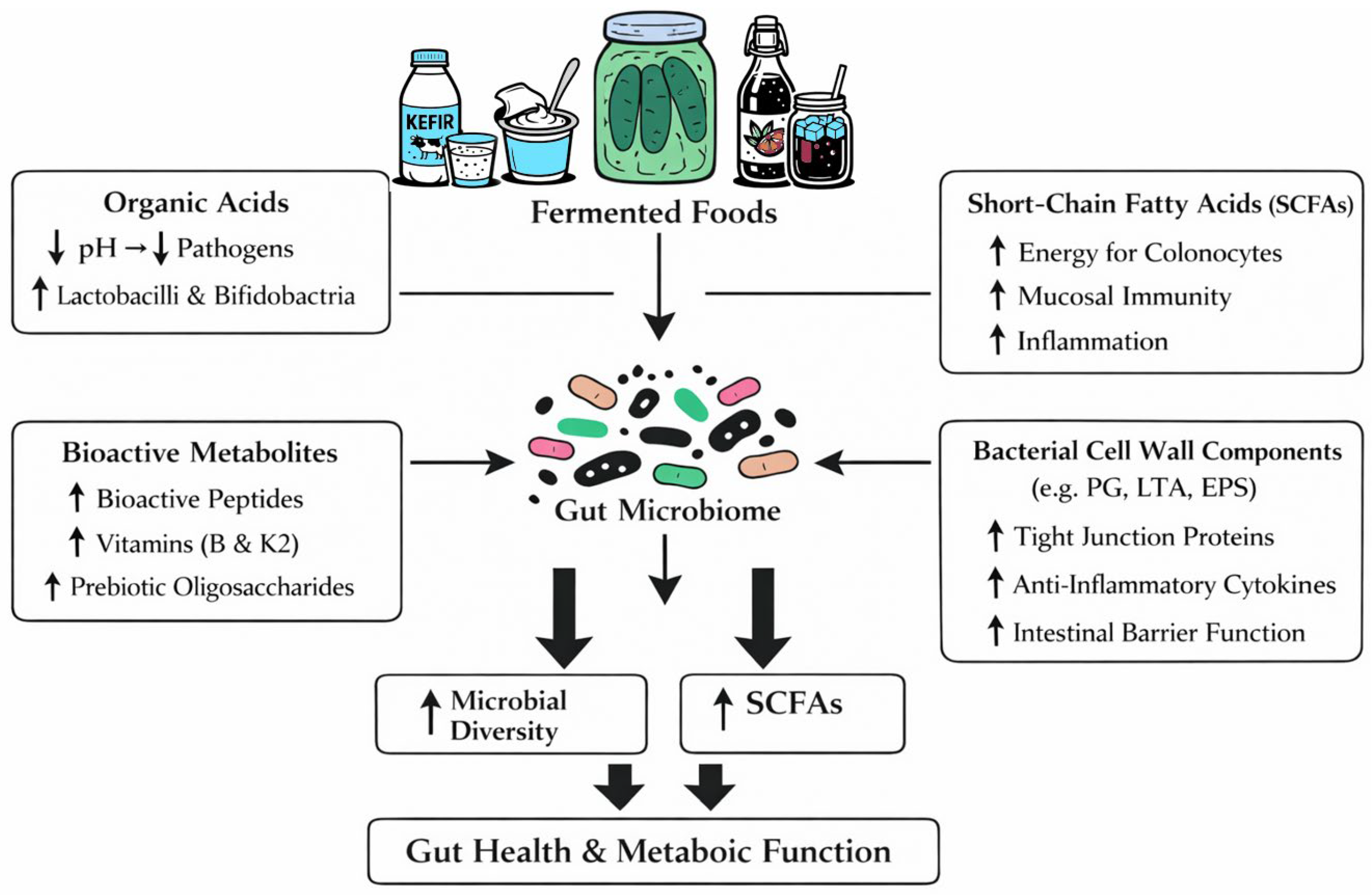
2. Impact of Fermented Foods on Gut Microbiota
3. Fermented Foods and the Gut–Liver Axis
3.1. Gut Microbiota Metabolites
3.2. Bile’s Role
4. Gut–Liver Axis in MASLD Pathogenesis
4.1. Gut Barrier Integrity
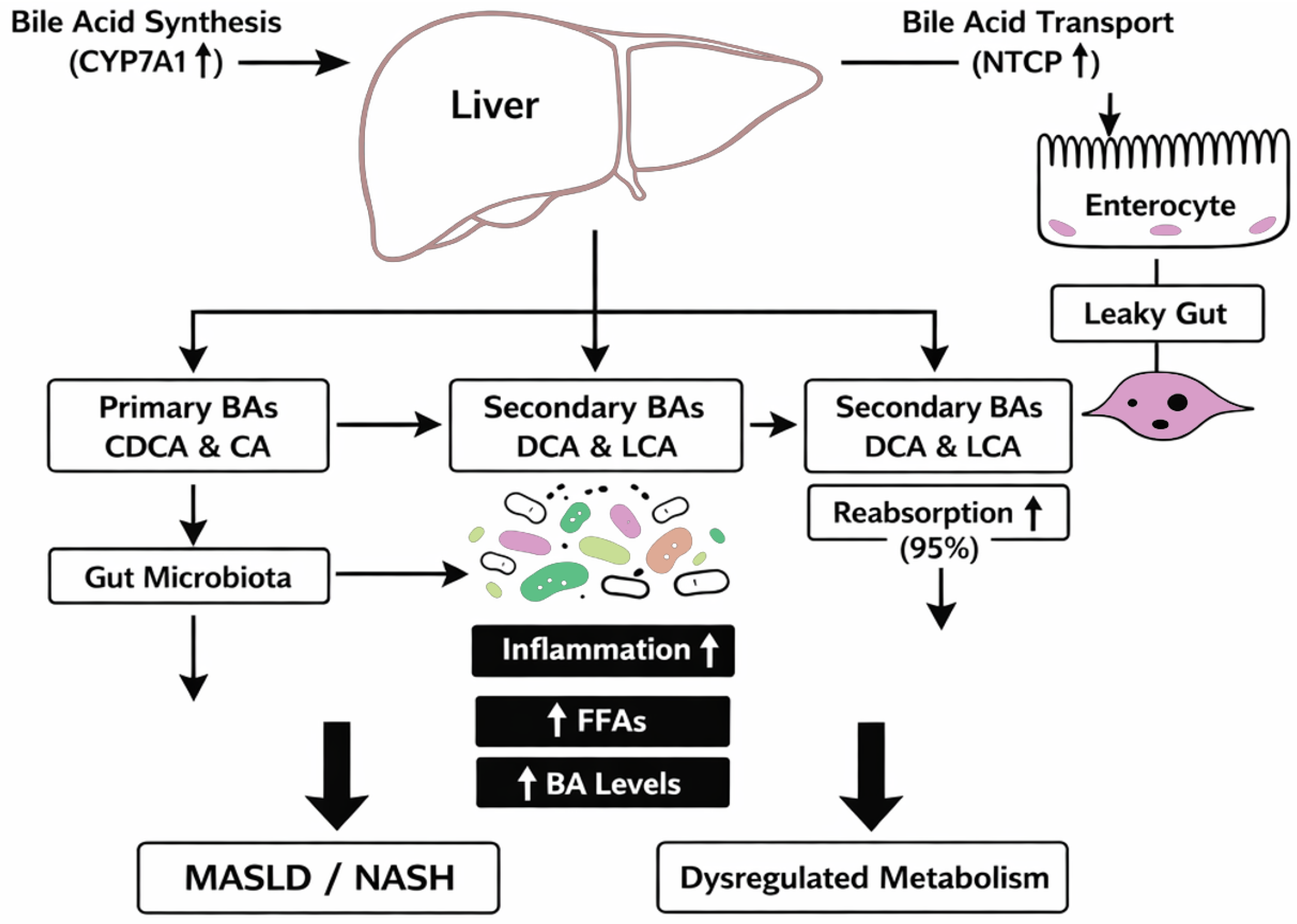
4.2. Bile Acids
4.3. Interaction Between Hepatic Inflammation, Insulin Resistance, and Microbiota
4.4. Role of Dysbiosis and Microbial Metabolites
5. MASLD and Food Fermentation—Studies
6. Modulation of MASLD Through Gut Microbiota
7. Practical and Clinical Implications
8. Conclusions
Author Contributions
Funding
Data Availability Statement
Conflicts of Interest
Abbreviations
| AGA | American Gastroenterological Association |
| AKT | Protein Kinase B |
| ALT | Alanine Aminotransferase |
| AMPK | AMP-Activated Protein Kinase |
| AST | Aspartate Aminotransferase |
| BAs | Bile Acids |
| BCAAs | Branched-Chain Amino Acids |
| CA | Cholic Acid |
| CAP | Controlled Attenuation Parameter |
| CD14 | Cluster of Differentiation 14 |
| CD36 | Cluster of Differentiation 36 |
| CDCA | Chenodeoxycholic Acid |
| CLD | Chronic Liver Disease |
| CO2 | Carbon Dioxide |
| CPT1 | Carnitine Palmitoyltransferase 1 |
| CYP7A1 | Cholesterol 7α-Hydroxylase |
| CXCL | C-X-C Motif Chemokine Ligand |
| DAMPs | Damage-Associated Molecular Patterns |
| DCA | Deoxycholic Acid |
| EPS | Exopolysaccharide |
| ER | Endoplasmic Reticulum |
| FFAs | Free Fatty Acids |
| F/B ratio | Firmicutes-to-Bacteroidetes Ratio |
| FGF15 | Fibroblast Growth Factor 15 (mouse) |
| FGF19 | Fibroblast Growth Factor 19 (human) |
| FIAF | Fasting-Induced Adipose Factor |
| FIB-4 | Fibrosis-4 Index |
| FMO3 | Flavin-Containing Monooxygenase 3 |
| FXR | Farnesoid X Receptor |
| GLP-1 | Glucagon-Like Peptide-1 |
| GPCR | G-Protein Coupled Receptor |
| GPR41 | G-Protein Coupled Receptor 41 |
| GPR43 | G-Protein Coupled Receptor 43 |
| GPR109A | G-Protein Coupled Receptor 109A |
| HCC | Hepatocellular Carcinoma |
| HDAC | Histone Deacetylase |
| HDL | High-Density Lipoprotein |
| HFD | High-Fat Diet |
| HIF-1α | Hypoxia-Inducible Factor 1 Alpha |
| IgA | Immunoglobulin A |
| IL | Interleukin |
| IL-1β | Interleukin 1 Beta |
| IL-6 | Interleukin 6 |
| IL-8 | Interleukin 8 |
| IL-12b | Interleukin 12 Subunit Beta |
| IL-18 | Interleukin 18 |
| iNOS | Inducible Nitric Oxide Synthase |
| IR | Insulin Resistance |
| LAB | Lactic Acid Bacteria |
| LCA | Lithocholic Acid |
| LPS | Lipopolysaccharide |
| MASLD | Metabolic Dysfunction-Associated Steatotic Liver Disease |
| MASH | Metabolic Dysfunction-Associated Steatohepatitis |
| MRI | Magnetic Resonance Imaging |
| NAFLD | Non-Alcoholic Fatty Liver Disease |
| NASH | Non-Alcoholic Steatohepatitis |
| NLR | Neutrophil-to-Lymphocyte Ratio |
| NO | Nitric Oxide |
| NOD2 | Nucleotide-Binding Oligomerization Domain 2 |
| NTCP | Sodium Taurocholate Co-Transporting Polypeptide |
| PAMPs | Pathogen-Associated Molecular Patterns |
| PPAR | Peroxisome Proliferator-Activated Receptor |
| PPARγ | Peroxisome Proliferator-Activated Receptor Gamma |
| PPARgc1α | Peroxisome Proliferator-Activated Receptor Gamma Coactivator 1 Alpha |
| PYY | Peptide YY |
| RNA | Ribonucleic Acid |
| ROS | Reactive Oxygen Species |
| SCFAs | Short-Chain Fatty Acids |
| SHP | Small Heterodimer Partner |
| SREBP-1 | Sterol Regulatory Element-Binding Protein 1 |
| SREBP-1c | Sterol Regulatory Element-Binding Protein 1c |
| TG | Triglycerides |
| TGR5 | Takeda G-Protein Receptor 5 |
| TJs | Tight Junctions |
| TLR | Toll-Like Receptor |
| TLR2 | Toll-Like Receptor 2 |
| TLR4 | Toll-Like Receptor 4 |
| TMA | Trimethylamine |
| TMAO | Trimethylamine N-Oxide |
| TNF-α | Tumor Necrosis Factor Alpha |
| VLDL | Very-Low-Density Lipoprotein |
| YY1 | Yin Yang 1 |
| ZO-1 | Zonula Occludens-1 |
References
- Valentino, V.; Magliulo, R.; Farsi, D.; Cotter, P.D.; O’Sullivan, O.; Ercolini, D.; De Filippis, F. Fermented Foods, Their Microbiome and Its Potential in Boosting Human Health. Microb. Biotechnol. 2024, 17, e14428. [Google Scholar] [CrossRef] [Scilit]
- Balasubramanian, R.; Schneider, E.; Gunnigle, E.; Cotter, P.D.; Cryan, J.F. Fermented Foods: Harnessing Their Potential to Modulate the Microbiota-Gut-Brain Axis for Mental Health. Neurosci. Biobehav. Rev. 2024, 158, 105562. [Google Scholar] [CrossRef] [Scilit]
- Dimidi, E.; Cox, S.; Rossi, M.; Whelan, K. Fermented Foods: Definitions and Characteristics, Impact on the Gut Microbiota and Effects on Gastrointestinal Health and Disease. Nutrients 2019, 11, 1806. [Google Scholar] [CrossRef] [Scilit] [PubMed]
- Abd El-Salam, M.H.; El-Shibiny, S.; Assem, F.M.; El-Sayyad, G.S.; Hasanien, Y.A.; Elfadil, D.; Soliman, T.N. Impact of Fermented Milk On Gut Microbiota And Human Health: A Comprehensive Review. Curr. Microbiol. 2025, 82, 107. [Google Scholar] [CrossRef] [Scilit]
- Pyo, Y.; Kwon, K.H.; Jung, Y.J. Probiotic Functions in Fermented Foods: Anti-Viral, Immunomodulatory, and Anti-Cancer Benefits. Foods 2024, 13, 2386. [Google Scholar] [CrossRef] [Scilit] [PubMed]
- Maftei, N.-M.; Raileanu, C.R.; Balta, A.A.; Ambrose, L.; Boev, M.; Marin, D.B.; Lisa, E.L. The Potential Impact of Probiotics on Human Health: An Update on Their Health-Promoting Properties. Microorganisms 2024, 12, 234. [Google Scholar] [CrossRef] [Scilit] [PubMed]
- Mukarromah, T.A.; Rustanti, N.; Mahati, E.; Suparmi; Ayustaningwarno, F. The Impact of Fermented Milk Products on Gut Microbiota-Derived Metabolites in Obesity: A Narrative Review. J. Food Sci. 2025, 90, e70301. [Google Scholar] [CrossRef] [Scilit]
- Lin, L.; Zhang, J. Role of Intestinal Microbiota and Metabolites on Gut Homeostasis and Human Diseases. BMC Immunol. 2017, 18, 2. [Google Scholar] [CrossRef] [Scilit]
- Carías Domínguez, A.M.; De Jesús Rosa Salazar, D.; Stefanolo, J.P.; Cruz Serrano, M.C.; Casas, I.C.; Zuluaga Peña, J.R. Intestinal Dysbiosis: Exploring Definition, Associated Symptoms, and Perspectives for a Comprehensive Understanding—A Scoping Review. Probiotics Antimicro. Prot. 2025, 17, 440–449. [Google Scholar] [CrossRef] [Scilit]
- Younossi, Z.M.; Kalligeros, M.; Henry, L. Epidemiology of Metabolic Dysfunction-Associated Steatotic Liver Disease. Clin. Mol. Hepatol. 2025, 31, S32–S50. [Google Scholar] [CrossRef] [Scilit]
- Li, Y.; Yang, P.; Ye, J.; Xu, Q.; Wu, J.; Wang, Y. Updated Mechanisms of MASLD Pathogenesis. Lipids Health Dis. 2024, 23, 117. [Google Scholar] [CrossRef] [Scilit]
- Tacke, F.; Horn, P.; Wai-Sun Wong, V.; Ratziu, V.; Bugianesi, E.; Francque, S.; Zelber-Sagi, S.; Valenti, L.; Roden, M.; Schick, F.; et al. EASL–EASD–EASO Clinical Practice Guidelines on the Management of Metabolic Dysfunction-Associated Steatotic Liver Disease (MASLD). J. Hepatol. 2024, 81, 492–542. [Google Scholar] [CrossRef] [Scilit]
- Vallianou, N.G.; Kounatidis, D.; Psallida, S.; Vythoulkas-Biotis, N.; Adamou, A.; Zachariadou, T.; Kargioti, S.; Karampela, I.; Dalamaga, M. NAFLD/MASLD and the Gut–Liver Axis: From Pathogenesis to Treatment Options. Metabolites 2024, 14, 366. [Google Scholar] [CrossRef] [Scilit] [PubMed]
- Pasta, A.; Formisano, E.; Calabrese, F.; Marabotto, E.; Furnari, M.; Bodini, G.; Torres, M.C.P.; Pisciotta, L.; Giannini, E.G.; Zentilin, P. From Dysbiosis to Hepatic Inflammation: A Narrative Review on the Diet-Microbiota-Liver Axis in Steatotic Liver Disease. Microorganisms 2025, 13, 241. [Google Scholar] [CrossRef] [Scilit] [PubMed]
- Chang, Z.; Xu, X.; Xu, Y.; Wei, X.; Yang, G.; Guo, P.; Jia, J.; Chen, Y.; Song, X.; Zheng, Y.; et al. Potential Effects of Functional Foods and Dietary Supplements on Metabolic-Associated Fatty Liver Disease and the Underlying Mechanisms: A Narrative Review with a Focus on the Modulation of the Gut Microbiota. J. Agric. Food Chem. 2025, 73, 29247–29280. [Google Scholar] [CrossRef] [Scilit]
- Mukherjee, A.; Breselge, S.; Dimidi, E.; Marco, M.L.; Cotter, P.D. Fermented Foods and Gastrointestinal Health: Underlying Mechanisms. Nat. Rev. Gastroenterol. Hepatol. 2024, 21, 248–266. [Google Scholar] [CrossRef] [Scilit]
- Illikoud, N.; Mantel, M.; Rolli-Derkinderen, M.; Gagnaire, V.; Jan, G. Dairy Starters and Fermented Dairy Products Modulate Gut Mucosal Immunity. Immunol. Lett. 2022, 251–252, 91–102. [Google Scholar] [CrossRef] [Scilit]
- Park, I.; Mannaa, M. Fermented Foods as Functional Systems: Microbial Communities and Metabolites Influencing Gut Health and Systemic Outcomes. Foods 2025, 14, 2292. [Google Scholar] [CrossRef] [Scilit]
- Schneider, E.; Balasubramanian, R.; Ferri, A.; Cotter, P.D.; Clarke, G.; Cryan, J.F. Fibre & Fermented Foods: Differential Effects on the Microbiota-Gut-Brain Axis. Proc. Nutr. Soc. 2024, 84, 365–380. [Google Scholar] [CrossRef] [Scilit] [PubMed]
- Terpou, A.; Dahiya, D.; Nigam, P.S. Evolving Dynamics of Fermented Food Microbiota and the Gut Microenvironment: Strategic Pathways to Enhance Human Health. Foods 2025, 14, 2361. [Google Scholar] [CrossRef] [Scilit]
- Ming, Z.; Ruishi, X.; Linyi, X.; Yonggang, Y.; Haoming, L.; Xintian, L. The Gut-Liver Axis in Fatty Liver Disease: Role Played by Natural Products. Front. Pharmacol. 2024, 15, 1365294. [Google Scholar] [CrossRef] [Scilit] [PubMed]
- Benedé-Ubieto, R.; Cubero, F.J.; Nevzorova, Y.A. Breaking the Barriers: The Role of Gut Homeostasis in Metabolic-Associated Steatotic Liver Disease (MASLD). Gut Microbes 2024, 16, 2331460. [Google Scholar] [CrossRef] [Scilit]
- Hsu, C.L.; Schnabl, B. The Gut–Liver Axis and Gut Microbiota in Health and Liver Disease. Nat. Rev. Microbiol. 2023, 21, 719–733. [Google Scholar] [CrossRef] [Scilit]
- Anand, S.; Mande, S.S. Host-Microbiome Interactions: Gut-Liver Axis and Its Connection with Other Organs. npj Biofilms Microbiomes 2022, 8, 89. [Google Scholar] [CrossRef] [Scilit]
- Yang, F.; Li, X.; Sun, J.; Pang, X.; Sun, Q.; Lu, Y. Regulatory Mechanisms of the Probiotic-Targeted Gut–Liver Axis for the Alleviation of Alcohol-Related Liver Disease: A Review. Crit. Rev. Food Sci. Nutr. 2025, 65, 6963–6984. [Google Scholar] [CrossRef] [Scilit] [PubMed]
- Kuchay, M.S.; Choudhary, N.S.; Ramos-Molina, B. Pathophysiological Underpinnings of Metabolic Dysfunction-Associated Steatotic Liver Disease. Am. J. Physiol.-Cell Physiol. 2025, 328, C1637–C1666. [Google Scholar] [CrossRef] [Scilit] [PubMed]
- Clements, W.D.; Parks, R.; Erwin, P.; Halliday, M.I.; Barr, J.; Rowlands, B.J. Role of the Gut in the Pathophysiology of Extrahepatic Biliary Obstruction. Gut 1996, 39, 587–593. [Google Scholar] [CrossRef] [Scilit]
- Friedman, E.S.; Li, Y.; Shen, T.-C.D.; Jiang, J.; Chau, L.; Adorini, L.; Babakhani, F.; Edwards, J.; Shapiro, D.; Zhao, C.; et al. FXR-Dependent Modulation of the Human Small Intestinal Microbiome by the Bile Acid Derivative Obeticholic Acid. Gastroenterology 2018, 155, 1741–1752.e5. [Google Scholar] [CrossRef] [Scilit]
- Fuchs, C.D.; Simbrunner, B.; Baumgartner, M.; Campbell, C.; Reiberger, T.; Trauner, M. Bile Acid Metabolism and Signalling in Liver Disease. J. Hepatol. 2025, 82, 134–153. [Google Scholar] [CrossRef] [Scilit]
- Kliewer, S.A.; Mangelsdorf, D.J. Bile Acids as Hormones: The FXR-FGF15/19 Pathway. Dig. Dis. 2015, 33, 327–331. [Google Scholar] [CrossRef] [Scilit]
- Inagaki, T.; Choi, M.; Moschetta, A.; Peng, L.; Cummins, C.L.; McDonald, J.G.; Luo, G.; Jones, S.A.; Goodwin, B.; Richardson, J.A.; et al. Fibroblast Growth Factor 15 Functions as an Enterohepatic Signal to Regulate Bile Acid Homeostasis. Cell Metab. 2005, 2, 217–225. [Google Scholar] [CrossRef] [Scilit] [PubMed]
- Cebi, M.; Yilmaz, Y. Epithelial Barrier Hypothesis in the Context of Nutrition, Microbial Dysbiosis, and Immune Dysregulation in Metabolic Dysfunction-Associated Steatotic Liver. Front. Immunol. 2025, 16, 1575770. [Google Scholar] [CrossRef] [Scilit] [PubMed]
- Ramos-da-Silva, L.A.; Souza-Tavares, H.; Medeiros, G.R.; Dantas-Miranda, N.S.; Lima-de-Figueiredo, G.; Santana-Oliveira, D.A.; Silva-Veiga, F.M.; Martins, F.F.; Souza-Mello, V. Gut-Liver Axis: An Emerging Target for Exercise in Obesity Management. Clin. Res. Hepatol. Gastroenterol. 2025, 49, 102687. [Google Scholar] [CrossRef] [Scilit]
- Yang, Z.; Zhao, J.; Xie, K.; Tang, C.; Gan, C.; Gao, J. MASLD Development: From Molecular Pathogenesis toward Therapeutic Strategies. Chin. Med. J. 2025, 138, 1807–1824. [Google Scholar] [CrossRef] [Scilit]
- Zhou, T.; Jin, Z.; Jiang, R.; Li, W. Gut Microbiota Modulation by Traditional Chinese Medicine: A Translational Strategy for Metabolic Dysfunction-Associated Steatotic Liver Disease. Front. Pharmacol. 2025, 16, 1600439. [Google Scholar] [CrossRef] [Scilit]
- Di Ciaula, A.; Garruti, G.; Lunardi Baccetto, R.; Molina-Molina, E.; Bonfrate, L.; Wang, D.Q.-H.; Portincasa, P. Bile Acid Physiology. Ann. Hepatol. 2017, 16, S4–S14. [Google Scholar] [CrossRef] [Scilit]
- Dua, A.; Kumari, R.; Singh, M.; Kumar, R.; Pradeep, S.; Ojesina, A.I.; Kumar, R. Metabolic Dysfunction-Associated Steatotic Liver Disease (MASLD): The Interplay of Gut Microbiome, Insulin Resistance, and Diabetes. Front. Med. 2025, 12, 1618275. [Google Scholar] [CrossRef] [Scilit] [PubMed]
- Wang, Z.; Tan, W.; Huang, J.; Li, Q.; Wang, J.; Su, H.; Guo, C.; Liu, H. Small Intestinal Bacterial Overgrowth and Metabolic Dysfunction-Associated Steatotic Liver Disease. Front. Nutr. 2024, 11, 1502151. [Google Scholar] [CrossRef] [Scilit]
- Maldonado-Rojas, A.D.C.; Zuarth-Vázquez, J.M.; Uribe, M.; Barbero-Becerra, V.J. Insulin Resistance and Metabolic Dysfunction-Associated Steatotic Liver Disease (MASLD): Pathways of Action of Hypoglycemic Agents. Ann. Hepatol. 2024, 29, 101182. [Google Scholar] [CrossRef] [Scilit]
- Portincasa, P.; Khalil, M.; Mahdi, L.; Perniola, V.; Idone, V.; Graziani, A.; Baffy, G.; Di Ciaula, A. Metabolic Dysfunction–Associated Steatotic Liver Disease: From Pathogenesis to Current Therapeutic Options. Int. J. Mol. Sci. 2024, 25, 5640. [Google Scholar] [CrossRef] [Scilit]
- Yang-Jensen, S.K.; Nägele, N.S.; Jensen, B.A.H. From Gut to Blood: Barrier Dysfunction as a Driver of Systemic Low-Grade Inflammation in Cardiometabolic Disease. Am. J. Physiol.-Cell Physiol. 2025, 329, C1723–C1741. [Google Scholar] [CrossRef] [Scilit]
- Termite, F.; Archilei, S.; D’Ambrosio, F.; Petrucci, L.; Viceconti, N.; Iaccarino, R.; Liguori, A.; Gasbarrini, A.; Miele, L. Gut Microbiota at the Crossroad of Hepatic Oxidative Stress and MASLD. Antioxidants 2025, 14, 56. [Google Scholar] [CrossRef] [Scilit]
- Kumar, A.R.; Nair, B.; Kamath, A.J.; Nath, L.R.; Calina, D.; Sharifi-Rad, J. Impact of Gut Microbiota on Metabolic Dysfunction-Associated Steatohepatitis and Hepatocellular Carcinoma: Pathways, Diagnostic Opportunities and Therapeutic Advances. Eur. J. Med. Res. 2024, 29, 485. [Google Scholar] [CrossRef] [Scilit]
- Guo, X.; Yin, X.; Liu, Z.; Wang, J. Non-Alcoholic Fatty Liver Disease (NAFLD) Pathogenesis and Natural Products for Prevention and Treatment. Int. J. Mol. Sci. 2022, 23, 15489. [Google Scholar] [CrossRef] [Scilit] [PubMed]
- Chopyk, D.M.; Grakoui, A. Contribution of the Intestinal Microbiome and Gut Barrier to Hepatic Disorders. Gastroenterology 2020, 159, 849–863. [Google Scholar] [CrossRef] [Scilit] [PubMed]
- Maslennikov, R.; Poluektova, E.; Zolnikova, O.; Sedova, A.; Kurbatova, A.; Shulpekova, Y.; Dzhakhaya, N.; Kardasheva, S.; Nadinskaia, M.; Bueverova, E.; et al. Gut Microbiota and Bacterial Translocation in the Pathogenesis of Liver Fibrosis. Int. J. Mol. Sci. 2023, 24, 16502. [Google Scholar] [CrossRef] [Scilit]
- Li, P.; Wang, Y.; Dong, Y.; Zhang, X. Unveiling the Gut-Liver Axis: The behind-the-Scenes “Manipulator” of Human Immune Function. Front. Immunol. 2025, 16, 1638197. [Google Scholar] [CrossRef] [Scilit] [PubMed]
- Riazi, K.; Azhari, H.; Charette, J.H.; Underwood, F.E.; King, J.A.; Afshar, E.E.; Swain, M.G.; Congly, S.E.; Kaplan, G.G.; Shaheen, A.-A. The Prevalence and Incidence of NAFLD Worldwide: A Systematic Review and Meta-Analysis. Lancet Gastroenterol. Hepatol. 2022, 7, 851–861. [Google Scholar] [CrossRef] [Scilit]
- Da Silva, H.E.; Teterina, A.; Comelli, E.M.; Taibi, A.; Arendt, B.M.; Fischer, S.E.; Lou, W.; Allard, J.P. Nonalcoholic Fatty Liver Disease Is Associated with Dysbiosis Independent of Body Mass Index and Insulin Resistance. Sci. Rep. 2018, 8, 1466. [Google Scholar] [CrossRef] [Scilit]
- Demir, M.; Lang, S.; Martin, A.; Farowski, F.; Wisplinghoff, H.; Vehreschild, M.J.G.T.; Krawczyk, M.; Nowag, A.; Scholz, C.J.; Kretzschmar, A.; et al. Phenotyping Non-alcoholic Fatty Liver Disease by the Gut Microbiota: Ready for Prime Time? J. Gastroenterol. Hepatol. 2020, 35, 1969–1977. [Google Scholar] [CrossRef] [Scilit]
- Scarpellini, E.; Scarcella, M.; Tack, J.F.; Scarlata, G.G.M.; Zanetti, M.; Abenavoli, L. Gut Microbiota and Metabolic Dysfunction-Associated Steatotic Liver Disease. Antioxidants 2024, 13, 1386. [Google Scholar] [CrossRef] [Scilit] [PubMed]
- Lee, G.; You, H.J.; Bajaj, J.S.; Joo, S.K.; Yu, J.; Park, S.; Kang, H.; Park, J.H.; Kim, J.H.; Lee, D.H.; et al. Distinct Signatures of Gut Microbiome and Metabolites Associated with Significant Fibrosis in Non-Obese NAFLD. Nat. Commun. 2020, 11, 4982. [Google Scholar] [CrossRef] [Scilit]
- Ma, R.; Shi, G.; Li, Y.; Shi, H. Trimethylamine N-Oxide, Choline and Its Metabolites Are Associated with the Risk of Non-Alcoholic Fatty Liver Disease. Br. J. Nutr. 2024, 131, 1915–1923. [Google Scholar] [CrossRef] [Scilit]
- Tan, X.; Liu, Y.; Long, J.; Chen, S.; Liao, G.; Wu, S.; Li, C.; Wang, L.; Ling, W.; Zhu, H. Trimethylamine N-Oxide Aggravates Liver Steatosis through Modulation of Bile Acid Metabolism and Inhibition of Farnesoid X Receptor Signaling in Nonalcoholic Fatty Liver Disease. Mol. Nutr. Food Res. 2019, 63, 1900257. [Google Scholar] [CrossRef] [Scilit]
- Flores-Guerrero, J.L.; Post, A.; Van Dijk, P.R.; Connelly, M.A.; Garcia, E.; Navis, G.; Bakker, S.J.L.; Dullaart, R.P.F. Circulating Trimethylamine-N-oxide Is Associated with All-cause Mortality in Subjects with Nonalcoholic Fatty Liver Disease. Liver Int. 2021, 41, 2371–2382. [Google Scholar] [CrossRef] [Scilit]
- Li, X.; He, M.; Yi, X.; Lu, X.; Zhu, M.; Xue, M.; Tang, Y.; Zhu, Y. Short-Chain Fatty Acids in Nonalcoholic Fatty Liver Disease: New Prospects for Short-Chain Fatty Acids as Therapeutic Targets. Heliyon 2024, 10, e26991. [Google Scholar] [CrossRef] [Scilit]
- Münte, E.; Hartmann, P. The Role of Short-Chain Fatty Acids in Metabolic Dysfunction-Associated Steatotic Liver Disease and Other Metabolic Diseases. Biomolecules 2025, 15, 469. [Google Scholar] [CrossRef] [Scilit]
- Qin, X.; Chen, M.; He, B.; Chen, Y.; Zheng, Y. Role of Short-Chain Fatty Acids in Non-Alcoholic Fatty Liver Disease and Potential Therapeutic Targets. Front. Microbiol. 2025, 16, 1539972. [Google Scholar] [CrossRef] [Scilit] [PubMed]
- Buchynskyi, M.; Kamyshna, I.; Halabitska, I.; Petakh, P.; Kunduzova, O.; Oksenych, V.; Kamyshnyi, O. Unlocking the Gut-Liver Axis: Microbial Contributions to the Pathogenesis of Metabolic-Associated Fatty Liver Disease. Front. Microbiol. 2025, 16, 1577724. [Google Scholar] [CrossRef] [Scilit] [PubMed]
- Kim, D.-H.; Kim, H.; Jeong, D.; Kang, I.-B.; Chon, J.-W.; Kim, H.-S.; Song, K.-Y.; Seo, K.-H. Kefir Alleviates Obesity and Hepatic Steatosis in High-Fat Diet-Fed Mice by Modulation of Gut Microbiota and Mycobiota: Targeted and Untargeted Community Analysis with Correlation of Biomarkers. J. Nutr. Biochem. 2017, 44, 35–43. [Google Scholar] [CrossRef] [Scilit]
- Moreira, G.V.; Araujo, L.C.C.; Murata, G.M.; Matos, S.L.; Carvalho, C.R.O. Kombucha Tea Improves Glucose Tolerance and Reduces Hepatic Steatosis in Obese Mice. Biomed. Pharmacother. 2022, 155, 113660. [Google Scholar] [CrossRef] [Scilit]
- Lee, C.; Kim, J.; Wang, S.; Sung, S.; Kim, N.; Lee, H.-H.; Seo, Y.-S.; Jung, Y. Hepatoprotective Effect of Kombucha Tea in Rodent Model of Nonalcoholic Fatty Liver Disease/Nonalcoholic Steatohepatitis. Int. J. Mol. Sci. 2019, 20, 2369. [Google Scholar] [CrossRef] [Scilit]
- Hyun, J.; Lee, Y.; Wang, S.; Kim, J.; Kim, J.; Cha, J.; Seo, Y.-S.; Jung, Y. Kombucha Tea Prevents Obese Mice from Developing Hepatic Steatosis and Liver Damage. Food Sci. Biotechnol. 2016, 25, 861–866. [Google Scholar] [CrossRef] [Scilit]
- Cardoso, R.R.; Moreira, L.D.P.D.; De Campos Costa, M.A.; Toledo, R.C.L.; Grancieri, M.; Nascimento, T.P.D.; Ferreira, M.S.L.; Da Matta, S.L.P.; Eller, M.R.; Duarte Martino, H.S.; et al. Kombuchas from Green and Black Teas Reduce Oxidative Stress, Liver Steatosis and Inflammation, and Improve Glucose Metabolism in Wistar Rats Fed a High-Fat High-Fructose Diet. Food Funct. 2021, 12, 10813–10827. [Google Scholar] [CrossRef] [Scilit] [PubMed]
- Wastyk, H.C.; Fragiadakis, G.K.; Perelman, D.; Dahan, D.; Merrill, B.D.; Yu, F.B.; Topf, M.; Gonzalez, C.G.; Van Treuren, W.; Han, S.; et al. Gut-Microbiota-Targeted Diets Modulate Human Immune Status. Cell 2021, 184, 4137–4153.e14. [Google Scholar] [CrossRef] [Scilit]
- Han, K.; Bose, S.; Wang, J.; Kim, B.; Kim, M.J.; Kim, E.; Kim, H. Contrasting Effects of Fresh and Fermented Kimchi Consumption on Gut Microbiota Composition and Gene Expression Related to Metabolic Syndrome in Obese Korean Women. Mol. Nutr. Food Res. 2015, 59, 1004–1008. [Google Scholar] [CrossRef] [Scilit] [PubMed]
- Yilmaz, I.; Dolar, M.E.; Ozpinar, H. Effect of Administering Kefir on the Changes in Fecal Microbiota and Symptoms of Inflammatory Bowel Disease: A Randomized Controlled Trial. Turk. J. Gastroenterol. 2020, 30, 242–253. [Google Scholar] [CrossRef] [Scilit]
- Chen, Y.; Feng, R.; Yang, X.; Dai, J.; Huang, M.; Ji, X.; Li, Y.; Okekunle, A.P.; Gao, G.; Onwuka, J.U.; et al. Yogurt Improves Insulin Resistance and Liver Fat in Obese Women with Nonalcoholic Fatty Liver Disease and Metabolic Syndrome: A Randomized Controlled Trial. Am. J. Clin. Nutr. 2019, 109, 1611–1619. [Google Scholar] [CrossRef] [Scilit] [PubMed]
- Nagao, Y.; Takahashi, H.; Kawaguchi, A.; Kitagaki, H. Effect of Fermented Rice Drink “Amazake” on Patients with Nonalcoholic Fatty Liver Disease and Periodontal Disease: A Pilot Study. Reports 2021, 4, 36. [Google Scholar] [CrossRef] [Scilit]
- Mohammadi, F.; Razmjooei, N.; Mohsenpour, M.A.; Nejati, M.A.; Eftekhari, M.H.; Hejazi, N. The Effects of Kefir Drink on Liver Aminotransferases and Metabolic Indicators in Patients with Nonalcoholic Fatty Liver Disease: A Randomized Controlled Trial. BMC Nutr. 2025, 11, 3. [Google Scholar] [CrossRef] [Scilit]



| Fermentation Type | Bacterial Family Involved | Main Products | Main Produced Fermented Foods |
|---|---|---|---|
| Lactic | Lactobacillaceae, Leuconostocaceae, Streptococcaceae | Lactic acid (homolactic), CO2, ethanol (heterolactic) | Dairy (yogurt, cheeses, kefir), sauerkraut, kimchi, pickles, tempeh, fermented meats |
| Alcoholic | Saccharomyces spp., Kloeckera spp. | Ethanol, CO2 | Wine, beer, kefir |
| Acetic | Acetobacter spp., Gluconacetobacter, Gluconobacter | Acetate, EPS | Chocolate, coffee, vinegar, specialty beers, water kefir |
| Propionic | Propionibacterium spp. | Propionate, acetate, CO2, succinate (Wood-Werkman pathway) | Swiss-type cheeses |
| Nutrient/Metabolite | Source/Production | Impact on Gut Barrier | Impact on Liver/MASLD | Mechanisms |
|---|---|---|---|---|
| SCFAs: butyrate, acetate, propionate | Fermentation of dietary fibers by gut bacteria (Faecalibacterium, Akkermansia, Roseburia, Bacteroides) | Strengthen barrier, maintain anaerobic environment, fuel β-oxidation | Anti-inflammatory, improve insulin sensitivity, reduce hepatic fat accumulation | Stimulate GLP-1, PYY, FIAF; activate PPARγ; suppress iNOS → ↓ NO; maintain gut–liver homeostasis |
| Choline | Eggs, meat, fish; metabolized by gut microbiota | May indirectly support barrier via microbial metabolites | Converted to TMA → TMAO in liver → promotes inflammation, steatosis, fibrosis | TMA oxidized by FMO3 → TMAO; gut microbiota-dependent |
| Carnitine | Meat, dairy; metabolized by gut microbiota | Similar to choline | TMA/TMAO pathway → liver inflammation and fibrosis | Gut bacteria produce TMA → TMAO formation in liver |
| Lipopolysaccharide (LPS) | Gram-negative bacteria in gut | Leaky gut allows translocation to portal vein | Activates TLR4/CD14 → cytokines ↑ → ROS ↑ → inflammation → fibrosis | Triggers TNF-α, IL-1, IL-6, IL-8, IL-18; Kupffer cell activation |
| Bile acids (CA, CDCA, DCA, LCA) | Synthesized in liver; modified by gut microbiota | Dysbiosis → barrier weakening | Dysregulated BA metabolism → inflammation, MASLD progression | ↑ FFAs → suppress SHP → overactivate CYP7A1 & NTCP → ↑ BA synthesis |
| Ethanol | Produced by fermentation from gut bacteria (Escherichia spp.) | Contributes to barrier disruption | Oxidative stress, inflammation, lipogenesis → hepatic steatosis | ↑ Pro-inflammatory cytokines, ROS; alters lipid metabolism |
| Mechanism/Factor | Model/Population | Key Changes/Observations | Effect on MASLD | References |
|---|---|---|---|---|
| Gut microbiota dysbiosis | Humans and animal models | ↑ Gram-negative bacteria (Bacteroidetes, Enterobacterales, Proteobacteria); ↓ beneficial bacteria (Akkermansia muciniphila, Faecalibacterium prausnitzii, Ruminococcaceae) | Gut leakiness ↑; LPS translocation ↑; chronic low-grade inflammation ↑; hepatic insulin resistance ↑; de novo lipogenesis ↑; mitochondrial dysfunction ↑; hepatic fat accumulation ↑; MASLD progression ↑ | [40,44,48,52] |
| Intestinal barrier dysfunction | Mice (HFD) | Tight junctions (TJs) ↓; PAMP permeability ↑ | Gut leakiness ↑; PAMP translocation ↑; Kupffer cell activation ↑; TLR-mediated signaling ↑; hepatic inflammation ↑; insulin resistance ↑; hepatic steatosis ↑; MASLD progression ↑ | [13,26] |
| High-fat, high-sugar diet | Humans/Animals | Fat accumulation ↑; oxidative stress ↑; intestinal permeability ↑ | Intestinal permeability ↑; endotoxemia ↑; oxidative stress ↑; hepatic insulin resistance ↑; de novo lipogenesis ↑; hepatic steatosis ↑; inflammation ↑; MASLD onset and progression ↑ | [44,48] |
| TMAO | Humans | TMAO ↑ via choline/carnitine metabolism | Hepatic fat accumulation ↑; FXR signaling ↓; ER stress ↑; gut barrier dysfunction ↑; bile acid dysregulation ↑; mitochondrial dysfunction ↑; hepatic insulin resistance ↑; pro-fibrotic signaling ↑; MASLD severity ↑ | [53,54,55] |
| SCFAs | Humans/Animals | SCFAs ↓ in dysbiosis; butyrate ↑ colonocyte energy; propionate ↑ gluconeogenesis; acetate ↑ acetyl-CoA | Lipogenesis ↓; fatty acid oxidation ↑; intestinal barrier integrity ↑; inflammation ↓; hepatic steatosis ↓; insulin sensitivity ↑; mitochondrial function ↑; bile acid homeostasis ↑; appetite regulation ↑; MASLD risk ↓ | [56,57,58,59] |
| SCFA epigenetic effects | Humans/Animals | HDAC inhibition ↑; regulatory T cells ↑; TNF-α, IL-6 ↓ | Anti-inflammatory effects ↑; hepatic inflammation ↓; fibrosis ↓; immune tolerance ↑; macrophage polarization toward M2 ↑; hepatic stellate cell activation ↓; oxidative stress ↓; hepatocellular injury ↓; MASLD progression ↓ | [57,58] |
| Dysbiosis-related metabolites | Humans | LPS ↑; ethanol ↑ | Hepatic inflammation ↑; oxidative stress ↑; endotoxemia ↑; Kupffer cell activation ↑; mitochondrial dysfunction ↑; hepatic insulin resistance ↑; fibrogenic signaling ↑; hepatocyte injury ↑; MASLD progression ↑ | [57] |
| Data | Study Population | Time | Intervention | Key Effects |
|---|---|---|---|---|
| Kim et al., [60] | Mice models (diet-induced hepatic steatosis), n = 20 | 12 weeks | Fermented dairy products (kefir) | Hepatic lipid accumulation ↓, oxidative stress ↓, inflammatory cytokines ↔ |
| Moreira et al., [61] | Mice with diet-induced obesity and MASLD, n not specified | 12 weeks | Kombucha | Glucose tolerance ↑, hyperinsulinemia ↓, hepatic steatosis ↓; TNF-α ↓, SREBP-1 ↓; collagen deposition ↓; AKT signaling ↑ |
| Lee et al., [62] | Methionine/choline-deficient MASH mice, n = 15 | 11 weeks | Kombucha | Hepatic triglycerides ↓, inflammation ↓, fibrosis ↓; apoptosis ↓, proliferation ↑; Cd36 ↓, Pparγ ↓, Fas ↓, Srebp1c ↓; β-oxidation genes ↑; FXR/TGR5 signaling modulated |
| Hyun et al., [63] | Methionine/choline-deficient mice, n = 15 | 4 weeks | Kombucha | Triglyceride ↓, ALT ↓, AST ↓; triglyceride synthesis ↓, fatty acid uptake ↓; liver regeneration ↑ |
| Cardoso et al. [64] | Rats on high-fat, high-fructose diet, n not specified | 10 weeks | Kombucha with green or black tea | Glucose metabolism ↑, antioxidant capacity ↑; inflammation ↓, NLR ↓, body fat ↓, blood triglycerides ↓; hepatic steatosis ↓; adipogenesis genes modulated, β-oxidation genes ↑ |
| Wastyk et al., [65] | Healthy adults, n = 18 | 10 weeks | Daily fermented foods | Microbiome diversity ↑; inflammatory markers ↓ (including IL-6 and IL-12b) |
| Han et al., [66] | Women with overweight, n = 24 | 8 weeks | Fermented kimchi | Metabolic markers ↓; gut microbiota composition altered |
| Yilmaz et al., [67] | IBD patients, n = 45 | 4 weeks | Kefir-based intervention | Inflammatory symptoms ↓ |
| Chen et al., [68] | Women with obesity, n = 92 | 24 weeks | Yogurt | Insulin sensitivity ↑; liver fat accumulation ↓ |
| Nagao et al., [69] | MASLD patients with periodontal disease, n = 10 | 60 days | Amazake | Serum TNF-α ↓; muscle spasms ↓, depression ↓ |
| Mohammadi et al., [70] | Adults with MASLD, n = 80 | 8 weeks | Kefir | HDL cholesterol ↑; systemic inflammation ↓; serum transaminases ↔ |
Disclaimer/Publisher’s Note: The statements, opinions and data contained in all publications are solely those of the individual author(s) and contributor(s) and not of MDPI and/or the editor(s). MDPI and/or the editor(s) disclaim responsibility for any injury to people or property resulting from any ideas, methods, instructions or products referred to in the content. |
© 2026 by the authors. Licensee MDPI, Basel, Switzerland. This article is an open access article distributed under the terms and conditions of the Creative Commons Attribution (CC BY) license.
Share and Cite
Wesołek-Leszczyńska, A.; Rosiejka, D.; Bogdańska, K.; Bogdański, P. Fermented Foods and the Gut–Liver Axis: Modulation of MASLD Through Gut Microbiota. Nutrients 2026, 18, 542. https://doi.org/10.3390/nu18030542
Wesołek-Leszczyńska A, Rosiejka D, Bogdańska K, Bogdański P. Fermented Foods and the Gut–Liver Axis: Modulation of MASLD Through Gut Microbiota. Nutrients. 2026; 18(3):542. https://doi.org/10.3390/nu18030542
Chicago/Turabian StyleWesołek-Leszczyńska, Agnieszka, Dawid Rosiejka, Kalina Bogdańska, and Paweł Bogdański. 2026. "Fermented Foods and the Gut–Liver Axis: Modulation of MASLD Through Gut Microbiota" Nutrients 18, no. 3: 542. https://doi.org/10.3390/nu18030542
APA StyleWesołek-Leszczyńska, A., Rosiejka, D., Bogdańska, K., & Bogdański, P. (2026). Fermented Foods and the Gut–Liver Axis: Modulation of MASLD Through Gut Microbiota. Nutrients, 18(3), 542. https://doi.org/10.3390/nu18030542