Article

High-Dose Zinc Supplementation Therapy Does Not Improve Survival Rates in Severe Trauma Patients: A Single-Center Retrospective Observational Study

Department of Emergency and Critical Care Medicine, Kitasato University School of Medicine, 1-15-1 Kitasato, Minami-ku, Sagamihara 252-0375, Japan
*
Author to whom correspondence should be addressed.
Nutrients 2026, 18(3), 541; https://doi.org/10.3390/nu18030541
Submission received: 19 December 2025 / Revised: 4 February 2026 / Accepted: 5 February 2026 / Published: 6 February 2026
(This article belongs to the Section Clinical Nutrition)

Abstract

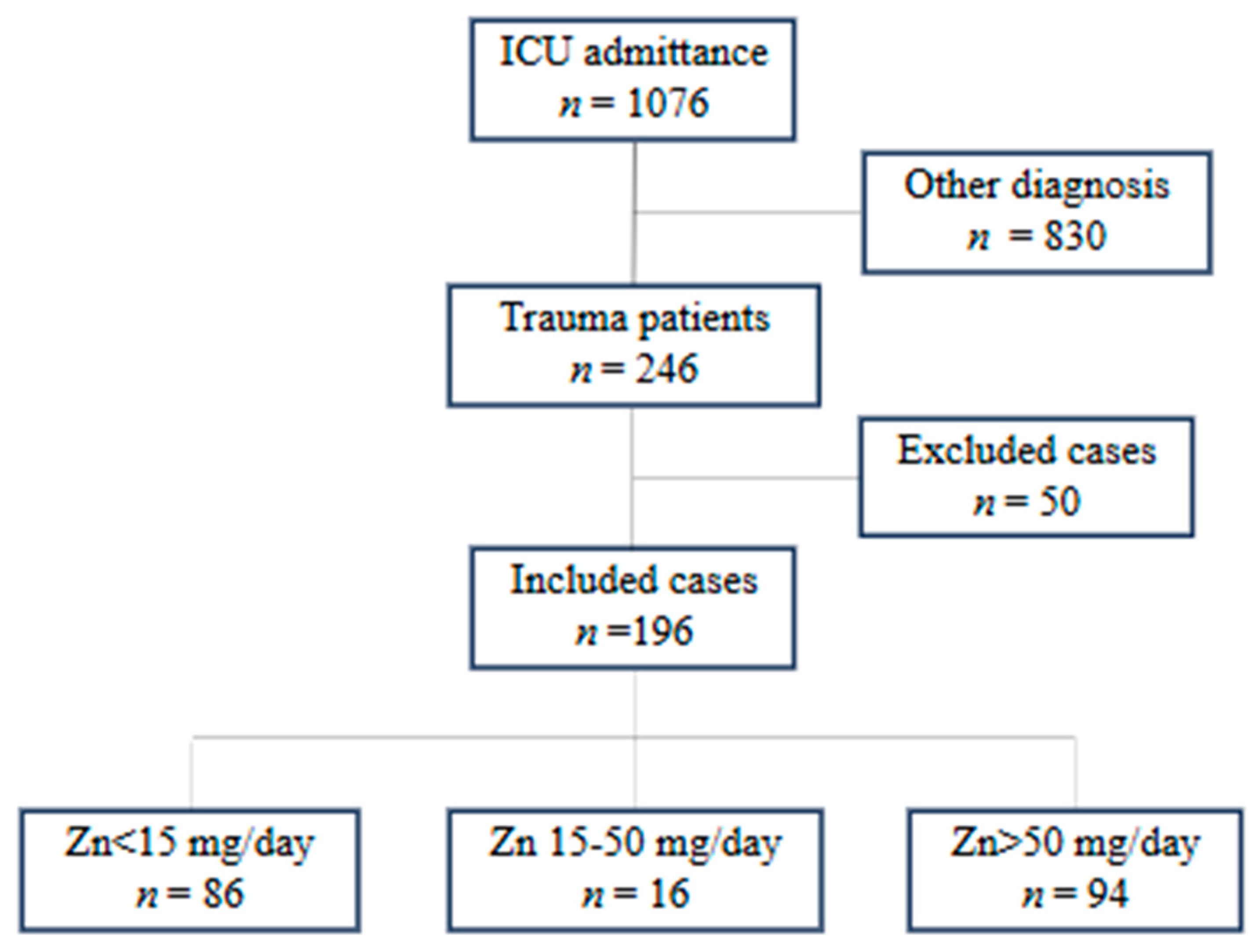
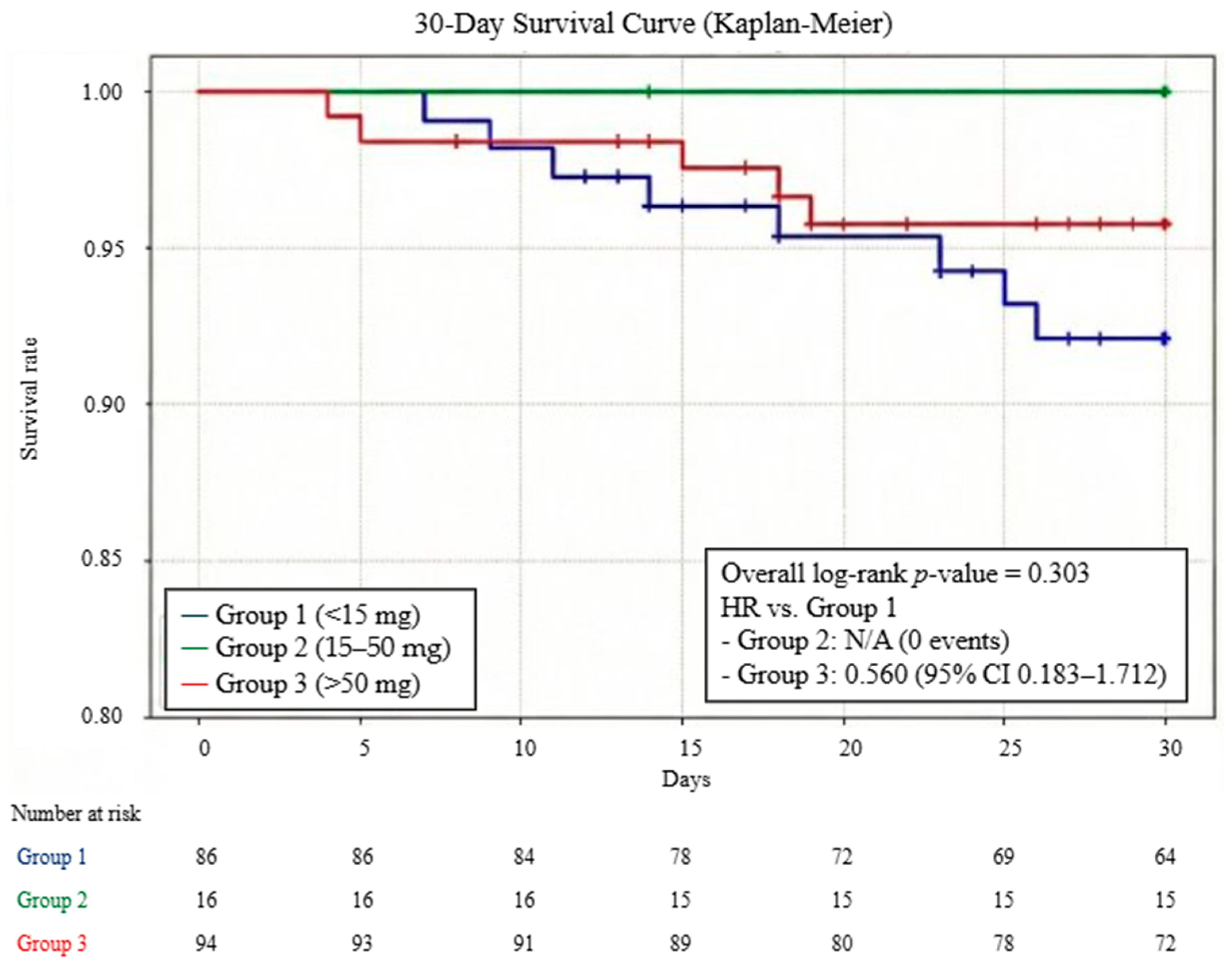
Background/Objectives: Hypozincemia associated with severe trauma contributes to immune dysfunction and poor prognosis; however, the clinical utility and optimal dosage of zinc supplementation remain unclear. In particular, it is unclear whether high-dose administration exceeding standard recommendations improves prognosis. Thus, we aimed to verify this in patients with severe trauma requiring mechanical ventilation. Methods: This single-center retrospective observational study included patients with severe trauma (Injury Severity Score [ISS] > 15) requiring mechanical ventilation admitted to our emergency intensive care unit (ICU) between April 2015 and March 2023. Patients were classified into three groups based on their mean daily zinc supplementation dose: low (<15 mg), medium (15–50 mg), and high (>50 mg). The primary outcome was the 30-day survival rate. Secondary outcomes included the 90-day survival rate, length of ICU stay, and hospital-acquired pneumonia. Multivariable regression evaluated the association between high-dose zinc supplementation and clinical outcomes after adjusting for confounding factors. Results: Of 196 patients, 86, 16, and 94 were in the low-, medium-, and high-dose groups, respectively. The high-dose group had significantly poorer nutritional status and lower serum zinc levels, whereas no significant differences were observed in severity scores or study outcomes. High-dose zinc supplementation showed no significant association with improved 30-day survival in adjusted analyses. Conclusions: In patients with severe trauma requiring mechanical ventilation, high-dose zinc supplementation did not improve 30-day survival or other clinical outcomes compared with standard doses. These results do not support the use of high-dose zinc supplementation for severe trauma.
Keywords: severe trauma; zinc supplementation; mechanical ventilation; survival rate; intensive care; critical care nutrition; 30-day mortality; retrospective observational study severe trauma; zinc supplementation; mechanical ventilation; survival rate; intensive care; critical care nutrition; 30-day mortality; retrospective observational study