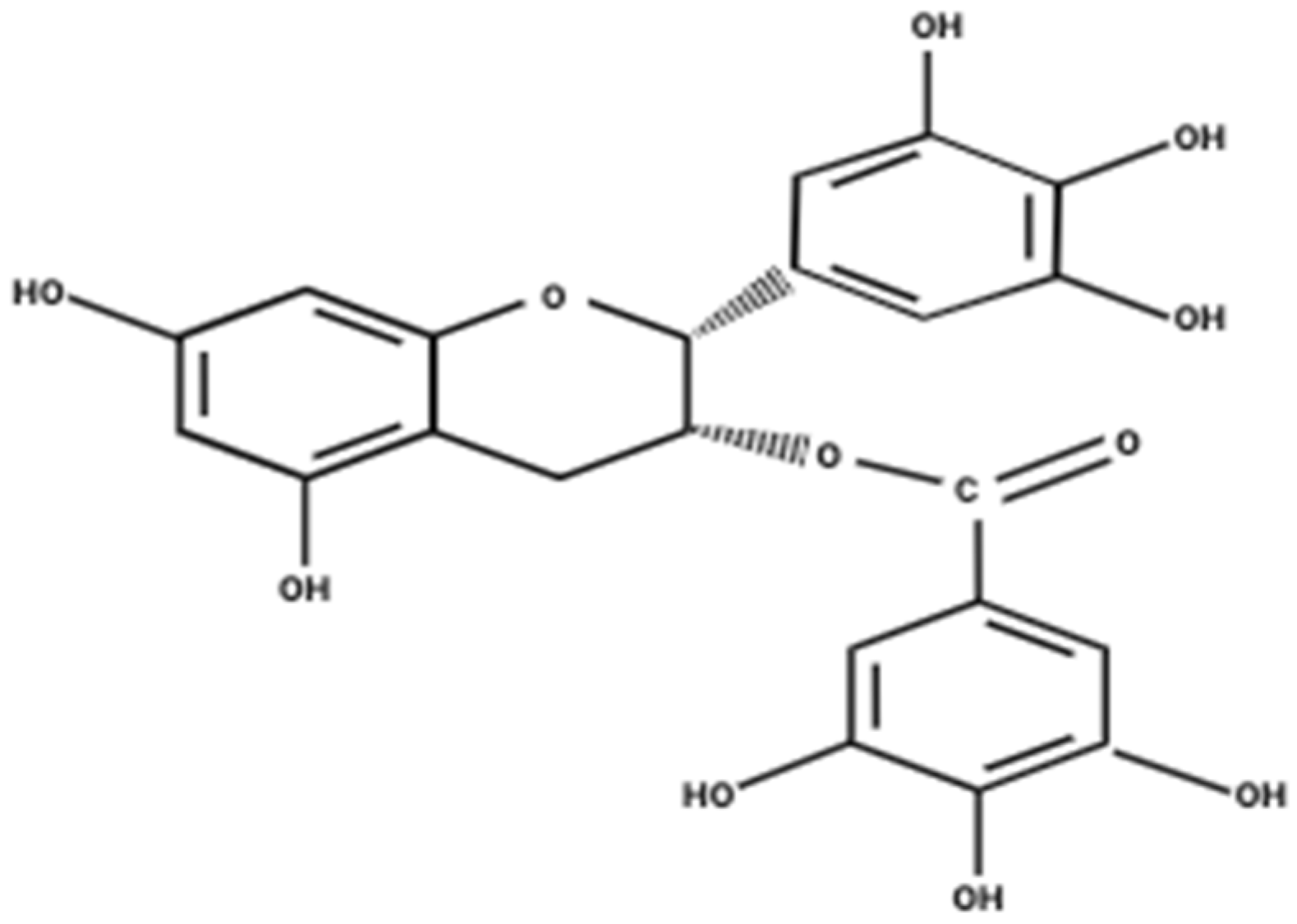
Effects of Epigallocatechin Gallate Against Lung Cancer: Mechanisms of Action and Therapeutic Potential



Abstract
1. Introduction
2. Effects of Epigallocatechin Gallate Against Lung Cancer
2.1. Proliferation and Cell-Cycle Control
2.2. Apoptosis and Ferroptosis
2.3. Cell Migration, Invasion, and EMT (Metastasis)
2.4. Angiogenesis
2.5. Cancer Stem Cell
2.6. Oncogenic Signalling
2.7. Cellular Metabolism and Oxidative Stress
2.8. Epigenetic and Non-Coding RNA
2.9. Immune Modulation
2.10. Drug Resistance
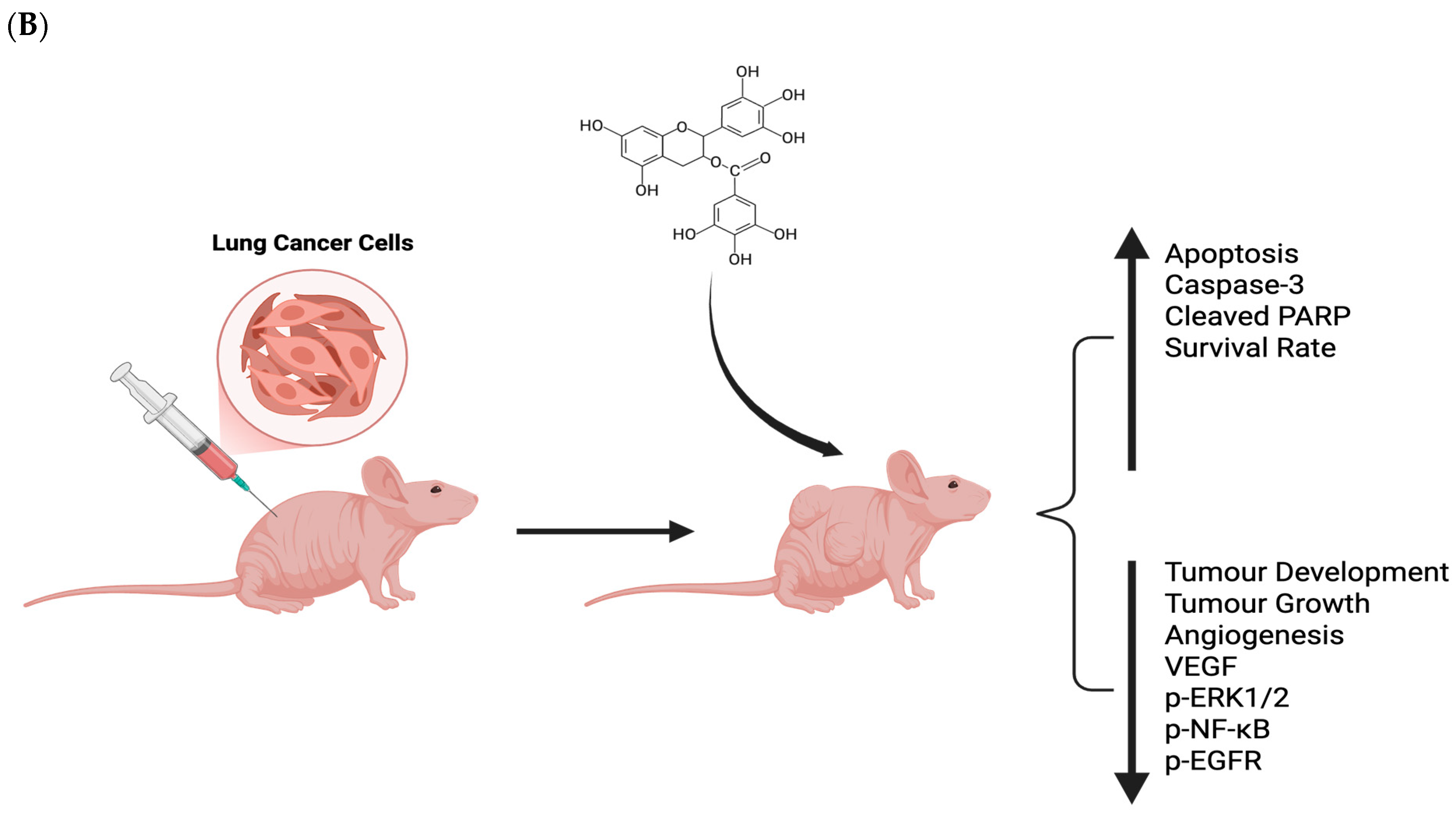
3. In Vivo Anticancer Effects of EGCG
4. Pharmacokinetics and Bioavailability
5. Clinical Evidence of EGCG in Lung Cancer
6. Conclusions
7. Limitations and Future Directions
Author Contributions
Funding
Institutional Review Board Statement
Informed Consent Statement
Data Availability Statement
Conflicts of Interest
References
- Guo, Q.; Liu, L.; Chen, Z.; Fan, Y.; Zhou, Y.; Yuan, Z.; Zhang, W. Current Treatments for Non-Small Cell Lung Cancer. Front. Oncol. 2022, 12, 945102. [Google Scholar] [CrossRef]
- Lahiri, A.; Maji, A.; Potdar, P.D.; Singh, N.; Parikh, P.; Bisht, B.; Mukherjee, A.; Paul, M.K. Lung Cancer Immunotherapy: Progress, Pitfalls, and Promises. Mol. Cancer 2023, 22, 40. [Google Scholar] [CrossRef] [PubMed]
- Schabath, M.B.; Cote, M.L. Cancer Progress and Priorities: Lung Cancer. Cancer Epidemiol. Biomark. Prev. 2019, 28, 1563–1579. [Google Scholar] [CrossRef] [PubMed]
- Garg, P.; Singhal, S.; Kulkarni, P.; Horne, D.; Malhotra, J.; Salgia, R.; Singhal, S.S. Advances in Non-Small Cell Lung Cancer: Current Insights and Future Directions. J. Clin. Med. 2024, 13, 4189. [Google Scholar] [CrossRef] [PubMed]
- Bertelli, A.; Biagi, M.; Corsini, M.; Baini, G.; Cappellucci, G.; Miraldi, E. Polyphenols: From Theory to Practice. Foods 2021, 10, 2595. [Google Scholar] [CrossRef]
- Niedzwiecki, A.; Roomi, M.W.; Kalinovsky, T.; Rath, M. Anticancer Efficacy of Polyphenols and Their Combinations. Nutrients 2016, 8, 552. [Google Scholar] [CrossRef]
- Nagle, D.G.; Ferreira, D.; Zhou, Y.-D. Epigallocatechin-3-Gallate (EGCG): Chemical and Biomedical Perspectives. Phytochemistry 2006, 67, 1849–1855. [Google Scholar] [CrossRef]
- Min, K.; Kwon, T.K. Anticancer Effects and Molecular Mechanisms of Epigallocatechin-3-Gallate. Integr. Med. Res. 2014, 3, 16–24. [Google Scholar] [CrossRef]
- Mokra, D.; Joskova, M.; Mokry, J. Therapeutic Effects of Green Tea Polyphenol (−)-Epigallocatechin-3-Gallate (EGCG) in Relation to Molecular Pathways Controlling Inflammation, Oxidative Stress, and Apoptosis. Int. J. Mol. Sci. 2022, 24, 340. [Google Scholar] [CrossRef]
- Okabe, S.; Suganuma, M.; Hayashi, M.; Sueoka, E.; Komori, A.; Fujiki, H. Mechanisms of Growth Inhibition of Human Lung Cancer Cell Line, PC-9, by Tea Polyphenols. Cancer Sci. 1997, 88, 639–643. [Google Scholar] [CrossRef]
- Yang, G.Y.; Liao, J.; Kim, K.; Yurkow, E.J.; Yang, C.S. Inhibition of Growth and Induction of Apoptosis in Human Cancer Cell Lines by Tea Polyphenols. Carcinogenesis 1998, 19, 611–616. [Google Scholar] [CrossRef]
- Mimoto, J.; Kiura, K.; Matsuo, K.; Yoshino, T.; Takata, I.; Ueoka, H.; Kataoka, M.; Harada, M. (−)-Epigallocatechin Gallate Can Prevent Cisplatin-Induced Lung Tumorigenesis in A/J Mice. Carcinogenesis 2000, 21, 915–919. [Google Scholar] [CrossRef]
- Sadava, D.; Whitlock, E.; Kane, S.E. The Green Tea Polyphenol, Epigallocatechin-3-Gallate Inhibits Telomerase and Induces Apoptosis in Drug-Resistant Lung Cancer Cells. Biochem. Biophys. Res. Commun. 2007, 360, 233–237. [Google Scholar] [CrossRef]
- Bhardwaj, V.; Mandal, A.K.A. Next-Generation Sequencing Reveals the Role of Epigallocatechin-3-Gallate in Regulating Putative Novel and Known microRNAs Which Target the MAPK Pathway in Non-Small-Cell Lung Cancer A549 Cells. Molecules 2019, 24, 368. [Google Scholar] [CrossRef]
- Milligan, S.A.; Burke, P.; Coleman, D.T.; Bigelow, R.L.; Steffan, J.J.; Carroll, J.L.; Williams, B.J.; Cardelli, J.A. The Green Tea Polyphenol, EGCG, Potentiates the Anti-Proliferative Activity of c-Met and EGFR Inhibitors in Non-Small Cell Lung Cancer Cells. Clin. Cancer Res. 2009, 15, 4885–4894. [Google Scholar] [CrossRef] [PubMed]
- Ma, Y.-C.; Li, C.; Gao, F.; Xu, Y.; Jiang, Z.-B.; Liu, J.-X.; Jin, L.-Y. Epigallocatechin Gallate Inhibits the Growth of Human Lung Cancer by Directly Targeting the EGFR Signaling Pathway. Oncol. Rep. 2014, 31, 1343–1349. [Google Scholar] [CrossRef] [PubMed]
- Li, G.-X.; Chen, Y.-K.; Hou, Z.; Xiao, H.; Jin, H.; Lu, G.; Lee, M.-J.; Liu, B.; Guan, F.; Yang, Z.; et al. Pro-Oxidative Activities and Dose–Response Relationship of (−)-Epigallocatechin-3-Gallate in the Inhibition of Lung Cancer Cell Growth: A Comparative Study In Vivo and In Vitro. Carcinogenesis 2010, 31, 902–910. [Google Scholar] [CrossRef]
- Yu, C.; Jiao, Y.; Xue, J.; Zhang, Q.; Yang, H.; Xing, L.; Chen, G.; Wu, J.; Zhang, S.; Zhu, W.; et al. Metformin Sensitizes Non-Small Cell Lung Cancer Cells to an Epigallocatechin-3-Gallate (EGCG) Treatment by Suppressing the Nrf2/HO-1 Signaling Pathway. Int. J. Biol. Sci. 2017, 13, 1560–1569. [Google Scholar] [CrossRef]
- Zhou, D.-H.; Wang, X.; Yang, M.; Shi, X.; Huang, W.; Feng, Q. Combination of Low Concentration of (−)-Epigallocatechin Gallate (EGCG) and Curcumin Strongly Suppresses the Growth of Non-Small Cell Lung Cancer In Vitro and In Vivo through Causing Cell Cycle Arrest. Int. J. Mol. Sci. 2013, 14, 12023–12036. [Google Scholar] [CrossRef]
- Oya, Y.; Mondal, A.; Rawangkan, A.; Umsumarng, S.; Iida, K.; Watanabe, T.; Kanno, M.; Suzuki, K.; Li, Z.; Kagechika, H.; et al. Down-Regulation of Histone Deacetylase 4, −5 and −6 as a Mechanism of Synergistic Enhancement of Apoptosis in Human Lung Cancer Cells Treated with the Combination of a Synthetic Retinoid, Am80 and Green Tea Catechin. J. Nutr. Biochem. 2017, 42, 7–16. [Google Scholar] [CrossRef] [PubMed]
- Zhou, D.-H.; Wang, X.; Feng, Q. EGCG Enhances the Efficacy of Cisplatin by Downregulating Hsa-miR-98-5p in NSCLC A549 Cells. Nutr. Cancer 2014, 66, 636–644. [Google Scholar] [CrossRef]
- Zhang, Y.; Wang, X.; Han, L.; Zhou, Y.; Sun, S. Green Tea Polyphenol EGCG Reverse Cisplatin Resistance of A549/DDP Cell Line through Candidate Genes Demethylation. Biomed. Pharmacother. 2015, 69, 285–290. [Google Scholar] [CrossRef] [PubMed]
- Li, M.; Li, J.-J.; Gu, Q.-H.; An, J.; Cao, L.-M.; Yang, H.-P.; Hu, C.-P. EGCG Induces Lung Cancer A549 Cell Apoptosis by Regulating Ku70 Acetylation. Oncol. Rep. 2016, 35, 2339–2347. [Google Scholar] [CrossRef]
- Gu, J.-J.; Qiao, K.-S.; Sun, P.; Chen, P.; Li, Q. Study of EGCG Induced Apoptosis in Lung Cancer Cells by Inhibiting PI3K/Akt Signaling Pathway. Eur. Rev. Med. Pharmacol. Sci. 2018, 22, 4557. [Google Scholar] [CrossRef]
- Sonoda, J.-I.; Ikeda, R.; Baba, Y.; Narumi, K.; Kawachi, A.; Tomishige, E.; Nishihara, K.; Takeda, Y.; Yamada, K.; Sato, K.; et al. Green Tea Catechin, Epigallocatechin-3-Gallate, Attenuates the Cell Viability of Human Non-Small-Cell Lung Cancer A549 Cells via Reducing Bcl-xL Expression. Exp. Ther. Med. 2014, 8, 59–63. [Google Scholar] [CrossRef] [PubMed]
- Suganuma, M.; Kurusu, M.; Suzuki, K.; Tasaki, E.; Fujiki, H. Green Tea Polyphenol Stimulates Cancer Preventive Effects of Celecoxib in Human Lung Cancer Cells by Upregulation of GADD153 Gene. Int. J. Cancer 2006, 119, 33–40. [Google Scholar] [CrossRef] [PubMed]
- Amin, A.R.M.R.; Wang, D.; Zhang, H.; Peng, S.; Shin, H.J.C.; Brandes, J.C.; Tighiouart, M.; Khuri, F.R.; Chen, Z.G.; Shin, D.M. Enhanced Anti-Tumor Activity by the Combination of the Natural Compounds (−)-Epigallocatechin-3-Gallate and Luteolin: Potential Role of P53. J. Biol. Chem. 2010, 285, 34557–34565. [Google Scholar] [CrossRef]
- Gao, Y.; Li, W.; Jia, L.; Li, B.; Chen, Y.C.; Tu, Y. Enhancement of (−)-Epigallocatechin-3-Gallate and Theaflavin-3-3′-Digallate Induced Apoptosis by Ascorbic Acid in Human Lung Adenocarcinoma SPC-A-1 Cells and Esophageal Carcinoma Eca-109 Cells via MAPK Pathways. Biochem. Biophys. Res. Commun. 2013, 438, 370–374. [Google Scholar] [CrossRef]
- Cromie, M.M.; Gao, W. Epigallocatechin-3-Gallate Enhances the Therapeutic Effects of Leptomycin B on Human Lung Cancer A549 Cells. Oxidative Med. Cell. Longev. 2015, 2015, 217304. [Google Scholar] [CrossRef]
- Yamauchi, R.; Sasaki, K.; Yoshida, K. Identification of Epigallocatechin-3-Gallate in Green Tea Polyphenols as a Potent Inducer of P53-Dependent Apoptosis in the Human Lung Cancer Cell Line A549. Toxicol. Vitr. 2009, 23, 834–839. [Google Scholar] [CrossRef]
- Jin, L.; Li, C.; Xu, Y.; Wang, L.; Liu, J.; Wang, D.; Hong, C.; Jiang, Z.; Ma, Y.; Chen, Q.; et al. Epigallocatechin Gallate Promotes P53 Accumulation and Activity via the Inhibition of MDM2-Mediated P53 Ubiquitination in Human Lung Cancer Cells. Oncol. Rep. 2013, 29, 1983–1990. [Google Scholar] [CrossRef] [PubMed]
- Jiang, P.; Wu, X.; Wang, X.; Huang, W.; Feng, Q. NEAT1 Upregulates EGCG-Induced CTR1 to Enhance Cisplatin Sensitivity in Lung Cancer Cells. Oncotarget 2016, 7, 43337–43351. [Google Scholar] [CrossRef]
- Zhu, J.; Jiang, Y.; Yang, X.; Wang, S.; Xie, C.; Li, X.; Li, Y.; Chen, Y.; Wang, X.; Meng, Y.; et al. Wnt/β-Catenin Pathway Mediates (−)-Epigallocatechin-3-Gallate (EGCG) Inhibition of Lung Cancer Stem Cells. Biochem. Biophys. Res. Commun. 2017, 482, 15–21. [Google Scholar] [CrossRef]
- Velavan, B.; Divya, T.; Sureshkumar, A.; Sudhandiran, G. Nano-Chemotherapeutic Efficacy of (−)-Epigallocatechin 3-Gallate Mediating Apoptosis in A549 cells: Involvement of Reactive Oxygen Species Mediated Nrf2/Keap1signaling. Biochem. Biophys. Res. Commun. 2018, 503, 1723–1731. [Google Scholar] [CrossRef]
- Flores-Pérez, A.; Marchat, L.A.; Sánchez, L.L.; Romero-Zamora, D.; Arechaga-Ocampo, E.; Ramírez-Torres, N.; Chávez, J.D.; Carlos-Reyes, Á.; Astudillo-de la Vega, H.; Ruiz-García, E.; et al. Differential Proteomic Analysis Reveals That EGCG Inhibits HDGF and Activates Apoptosis to Increase the Sensitivity of Non-Small Cells Lung Cancer to Chemotherapy. Proteom. Clin. Appl. 2016, 10, 172–182. [Google Scholar] [CrossRef]
- Jiang, P.; Xu, C.; Chen, L.; Chen, A.; Wu, X.; Zhou, M.; Haq, I.U.; Mariyam, Z.; Feng, Q. EGCG Inhibits CSC-like Properties through Targeting miR-485/CD44 Axis in A549-cisplatin Resistant Cells. Mol. Carcinog. 2018, 57, 1835–1844. [Google Scholar] [CrossRef] [PubMed]
- Relat, J.; Blancafort, A.; Oliveras, G.; Cufí, S.; Haro, D.; Marrero, P.F.; Puig, T. Different Fatty Acid Metabolism Effects of (−)-Epigallocatechin-3-Gallate and C75 in Adenocarcinoma Lung Cancer. BMC Cancer 2012, 12, 280. [Google Scholar] [CrossRef]
- Minnelli, C.; Cianfruglia, L.; Laudadio, E.; Mobbili, G.; Galeazzi, R.; Armeni, T. Effect of Epigallocatechin-3-Gallate on EGFR Signaling and Migration in Non-Small Cell Lung Cancer. Int. J. Mol. Sci. 2021, 22, 11833. [Google Scholar] [CrossRef] [PubMed]
- Wang, J.; Sun, P.; Wang, Q.; Zhang, P.; Wang, Y.; Zi, C.; Wang, X.; Sheng, J. (−)-Epigallocatechin-3-Gallate Derivatives Combined with Cisplatin Exhibit Synergistic Inhibitory Effects on Non-Small-Cell Lung Cancer Cells. Cancer Cell Int. 2019, 19, 266. [Google Scholar] [CrossRef]
- Zi, C.-T.; Wu, Y.-L.; Liu, Z.-H.; Niu, Y.; Yuan, W.-J.; Yang, Z.-W.; Wang, X.-J.; Sun, X.-L.; Yang, L.; Sheng, J. Novel (−)-Eigallocatechin-3-Gallate-Erlotinib Conjugates via Triazole Rings Inhibit Non-Small Cell Lung Cancer Cells through EGFR Signaling Pathway. Bioorganic Chem. 2025, 157, 108263. [Google Scholar] [CrossRef]
- Sun, X.-L.; Xiang, Z.-M.; Xie, Y.-R.; Zhang, N.; Wang, L.-X.; Wu, Y.-L.; Zhang, D.-Y.; Wang, X.-J.; Sheng, J.; Zi, C.-T. Dimeric-(−)-Epigallocatechin-3-Gallate Inhibits the Proliferation of Lung Cancer Cells by Inhibiting the EGFR Signaling Pathway. Chem.-Biol. Interact. 2022, 365, 110084. [Google Scholar] [CrossRef]
- Zhang, L.; Chen, W.; Tu, G.; Chen, X.; Lu, Y.; Wu, L.; Zheng, D. Enhanced Chemotherapeutic Efficacy of PLGA-Encapsulated Epigallocatechin Gallate (EGCG) Against Human Lung Cancer. Int. J. Nanomed. 2020, 15, 4417–4429. [Google Scholar] [CrossRef]
- Zhang, L.; Xie, J.; Gan, R.; Wu, Z.; Luo, H.; Chen, X.; Lu, Y.; Wu, L.; Zheng, D. Synergistic Inhibition of Lung Cancer Cells by EGCG and NF-κB Inhibitor BAY11-7082. J. Cancer 2019, 10, 6543–6556. [Google Scholar] [CrossRef]
- Park, S.; Kim, J.-H.; Hwang, Y.I.; Jung, K.-S.; Jang, Y.S.; Jang, S.H. Schedule-Dependent Effect of Epigallocatechin-3-Gallate (EGCG) with Paclitaxel on H460 Cells. Tuberc. Respir. Dis. 2014, 76, 114–119. [Google Scholar] [CrossRef] [PubMed]
- Wei, R.; Wirkus, J.; Yang, Z.; Machuca, J.; Esparza, Y.; Mackenzie, G.G. EGCG Sensitizes Chemotherapeutic-Induced Cytotoxicity by Targeting the ERK Pathway in Multiple Cancer Cell Lines. Arch. Biochem. Biophys. 2020, 692, 108546. [Google Scholar] [CrossRef] [PubMed]
- Meng, J.; Chang, C.; Chen, Y.; Bi, F.; Ji, C.; Liu, W. EGCG Overcomes Gefitinib Resistance by Inhibiting Autophagy and Augmenting Cell Death through Targeting ERK Phosphorylation in NSCLC. OncoTargets Ther. 2019, 12, 6033–6043. [Google Scholar] [CrossRef]
- Zhou, Y.; Qin, L.; Li, C.; Zhu, D.; Liu, B. EGCG Enhances Antitumor Effect of Apatinib in Nonsmall Cell Lung Cancer by Targeting VEGF Signaling to Inhibit Glycolysis. Drug Dev. Res. 2024, 85, e22239. [Google Scholar] [CrossRef]
- Wang, S.; Wang, R.; Hu, D.; Zhang, C.; Cao, P.; Huang, J.; Wang, B. Epigallocatechin Gallate Modulates Ferroptosis through Downregulation of tsRNA-13502 in Non-Small Cell Lung Cancer. Cancer Cell Int. 2024, 24, 200–215. [Google Scholar] [CrossRef] [PubMed]
- Li, F.; Hao, S.; Gao, J.; Jiang, P. EGCG Alleviates Obesity-Exacerbated Lung Cancer Progression by STAT1/SLC7A11 Pathway and Gut Microbiota. J. Nutr. Biochem. 2023, 120, 109416. [Google Scholar] [CrossRef]
- Yang, J.; Wei, D.; Liu, J. Repressions of MMP-9 Expression and NF-κB Localization Are Involved in Inhibition of Lung Carcinoma 95-D Cell Invasion by (−)-Epigallocatechin-3-Gallate. Biomed. Pharmacother. 2005, 59, 98–103. [Google Scholar] [CrossRef]
- Deng, Y.-T.; Lin, J.-K. EGCG Inhibits the Invasion of Highly Invasive CL1-5 Lung Cancer Cells through Suppressing MMP-2 Expression via JNK Signaling and Induces G2/M Arrest. J. Agric. Food Chem. 2011, 59, 13318–13327. [Google Scholar] [CrossRef]
- Liu, L.-C.; Tsao, T.C.-Y.; Hsu, S.-R.; Wang, H.-C.; Tsai, T.-C.; Kao, J.-Y.; Way, T.-D. EGCG Inhibits Transforming Growth Factor-β-Mediated Epithelial-to-Mesenchymal Transition via the Inhibition of Smad2 and Erk1/2 Signaling Pathways in Nonsmall Cell Lung Cancer Cells. J. Agric. Food Chem. 2012, 60, 9863–9873. [Google Scholar] [CrossRef]
- Ko, H.; So, Y.; Jeon, H.; Jeong, M.-H.; Choi, H.-K.; Ryu, S.-H.; Lee, S.-W.; Yoon, H.-G.; Choi, K.-C. TGF-Β1-Induced Epithelial–Mesenchymal Transition and Acetylation of Smad2 and Smad3 Are Negatively Regulated by EGCG in Human A549 Lung Cancer Cells. Cancer Lett. 2013, 335, 205–213. [Google Scholar] [CrossRef] [PubMed]
- Shi, J.; Liu, F.; Zhang, W.; Liu, X.; Lin, B.; Tang, X. Epigallocatechin-3-Gallate Inhibits Nicotine-Induced Migration and Invasion by the Suppression of Angiogenesis and Epithelial-Mesenchymal Transition in Non-Small Cell Lung Cancer Cells. Oncol. Rep. 2015, 33, 2972–2980. [Google Scholar] [CrossRef] [PubMed]
- Takahashi, A.; Watanabe, T.; Mondal, A.; Suzuki, K.; Kurusu-Kanno, M.; Li, Z.; Yamazaki, T.; Fujiki, H.; Suganuma, M. Mechanism-Based Inhibition of Cancer Metastasis with (−)-Epigallocatechin Gallate. Biochem. Biophys. Res. Commun. 2014, 443, 1–6. [Google Scholar] [CrossRef] [PubMed]
- Chen, B.-H.; Hsieh, C.-H.; Tsai, S.-Y.; Wang, C.-Y.; Wang, C.-C. Anticancer Effects of Epigallocatechin-3-Gallate Nanoemulsion on Lung Cancer Cells through the Activation of AMP-Activated Protein Kinase Signaling Pathway. Sci. Rep. 2020, 10, 5163. [Google Scholar] [CrossRef]
- Li, Y.; Shen, X.; Wang, X.; Li, A.; Wang, P.; Jiang, P.; Zhou, J.; Feng, Q. EGCG Regulates the Cross-Talk between JWA and Topoisomerase IIα in Non-Small-Cell Lung Cancer (NSCLC) Cells. Sci. Rep. 2015, 5, 11009. [Google Scholar] [CrossRef]
- Hsu, L.-S.; Lin, C.-L.; Pan, M.-H.; Chen, W.-J. Intervention of a Communication Between PI3K/Akt and β-Catenin by (−)-Epigallocatechin-3-Gallate Suppresses TGF-Β1-Promoted Epithelial-Mesenchymal Transition and Invasive Phenotype of NSCLC Cells. Environ. Toxicol. 2025, 40, 848–859. [Google Scholar] [CrossRef]
- Moar, K.; Brahma, M.; Pant, A.; Maruthi, M.; Maurya, P.K. Exploring the Effect of Epigallocatechin Gallate on Non Small Cell Lung Cancer. Int. J. Biochem. Mol. Biol. 2024, 15, 51–59. [Google Scholar] [CrossRef]
- Mishra, M.; Wasnik, K.; Sharma, A.; Kumar, K.; Verma, R.; Paik, P.; Chawla, R. Epigallocatechin-3-Gallate Synergistically Inhibits the Proliferation of Lung Cancer Cells with Gemcitabine by Induction of Apoptosis Mediated by ROS Generation. ACS Appl. Bio Mater. 2024, 7, 6832–6846. [Google Scholar] [CrossRef]
- Kim, K.-C.; Lee, C. Reversal of Cisplatin Resistance by Epigallocatechin Gallate Is Mediated by Downregulation of Axl and Tyro 3 Expression in Human Lung Cancer Cells. Korean J. Physiol. Pharmacol. 2014, 18, 61–66. [Google Scholar] [CrossRef]
- Forester, S.C.; Lambert, J.D. Synergistic Inhibition of Lung Cancer Cell Lines by (−)-Epigallocatechin-3-Gallate in Combination with Clinically Used Nitrocatechol Inhibitors of Catechol-O-Methyltransferase. Carcinogenesis 2014, 35, 365–372. [Google Scholar] [CrossRef]
- Sakamoto, Y.; Terashita, N.; Muraguchi, T.; Fukusato, T.; Kubota, S. Effects of Epigallocatechin-3-Gallate (EGCG) on A549 Lung Cancer Tumor Growth and Angiogenesis. Biosci. Biotechnol. Biochem. 2013, 77, 1799–1803. [Google Scholar] [CrossRef] [PubMed]
- Li, X.; Feng, Y.; Liu, J.; Feng, X.; Zhou, K.; Tang, X. Epigallocatechin-3-Gallate Inhibits IGF-I-Stimulated Lung Cancer Angiogenesis through Downregulation of HIF-1α and VEGF Expression. J. Nutr. Nutr. 2013, 6, 169–178. [Google Scholar] [CrossRef] [PubMed]
- He, L.; Zhang, E.; Shi, J.; Li, X.; Zhou, K.; Zhang, Q.; Le, A.D.; Tang, X. (−)-Epigallocatechin-3-Gallate Inhibits Human Papillomavirus (HPV)-16 Oncoprotein-Induced Angiogenesis in Non-Small Cell Lung Cancer Cells by Targeting HIF-1α. Cancer Chemother. Pharmacol. 2013, 71, 713–725. [Google Scholar] [CrossRef]
- Jiang, P.; Xu, C.; Chen, L.; Chen, A.; Wu, X.; Zhou, M.; Haq, I.U.; Mariyam, Z.; Feng, Q. Epigallocatechin-3-gallate Inhibited Cancer Stem Cell–like Properties by Targeting Hsa-mir-485-5p/RXRα in Lung Cancer. J. Cell. Biochem. 2018, 119, 8623–8635. [Google Scholar] [CrossRef]
- Namiki, K.; Wongsirisin, P.; Yokoyama, S.; Sato, M.; Rawangkan, A.; Sakai, R.; Iida, K.; Suganuma, M. (−)-Epigallocatechin Gallate Inhibits Stemness and Tumourigenicity Stimulated by AXL Receptor Tyrosine Kinase in Human Lung Cancer Cells. Sci. Rep. 2020, 10, 2444. [Google Scholar] [CrossRef]
- Jiang, P.; Xu, C.; Zhang, P.; Ren, J.; Mageed, F.; Wu, X.; Chen, L.; Zeb, F.; Feng, Q.; Li, S. Epigallocatechin-3-gallate Inhibits Self-renewal Ability of Lung Cancer Stem-like Cells through Inhibition of CLOCK. Int. J. Mol. Med. 2020, 46, 2216–2224. [Google Scholar] [CrossRef] [PubMed]
- Zhou, Y.; Huang, S.; Guo, Y.; Ran, M.; Shan, W.; Chen, W.-H.; Tam, K.Y. Epigallocatechin Gallate Circumvents Drug-induced Resistance in Non-small-cell Lung Cancer by Modulating Glucose Metabolism and AMPK/AKT/MAPK Axis. Phytother. Res. 2023, 37, 5837–5853. [Google Scholar] [CrossRef] [PubMed]
- Shim, J.-H.; Su, Z.-Y.; Chae, J.-I.; Kim, D.J.; Zhu, F.; Ma, W.-Y.; Bode, A.M.; Yang, C.S.; Dong, Z. Epigallocatechin Gallate Suppresses Lung Cancer Cell Growth through Ras-GTPase-Activating Protein SH3 Domain-Binding Protein 1. Cancer Prev. Res. 2010, 3, 670–679. [Google Scholar] [CrossRef]
- Wang, Y.; Shen, X.-J.; Su, F.-W.; Xie, Y.-R.; Wang, L.-X.; Zhang, N.; Wu, Y.-L.; Niu, Y.; Zhang, D.-Y.; Zi, C.-T.; et al. Novel Perbutyrylated Glucose Derivatives of (−)-Epigallocatechin-3-Gallate Inhibit Cancer Cells Proliferation by Decreasing Phosphorylation of the EGFR: Synthesis, Cytotoxicity, and Molecular Docking. Molecules 2021, 26, 4361. [Google Scholar] [CrossRef]
- Okabe, S.; Fujimoto, N.; Sueoka, N.; Suganuma, M.; Fujiki, H. Modulation of Gene Expression by (−)-Epigallocatechin Gallate in PC-9 Cells Using a cDNA Expression Array. Biol. Pharm. Bull. 2001, 24, 883–886. [Google Scholar] [CrossRef]
- Rawangkan, A.; Wongsirisin, P.; Namiki, K.; Iida, K.; Kobayashi, Y.; Shimizu, Y.; Fujiki, H.; Suganuma, M. Green Tea Catechin Is an Alternative Immune Checkpoint Inhibitor That Inhibits PD-L1 Expression and Lung Tumor Growth. Molecules 2018, 23, 2071. [Google Scholar] [CrossRef] [PubMed]
- Chen, A.; Jiang, P.; Zeb, F.; Wu, X.; Xu, C.; Chen, L.; Feng, Q. EGCG Regulates CTR1 Expression through Its Pro-oxidative Property in Non-small-cell Lung Cancer Cells. J. Cell. Physiol. 2020, 235, 7970–7981. [Google Scholar] [CrossRef]
- Wang, H.; Bian, S.; Yang, C.S. Green Tea Polyphenol EGCG Suppresses Lung Cancer Cell Growth through Upregulating miR-210 Expression Caused by Stabilizing HIF-1α. Carcinogenesis 2011, 32, 1881–1889. [Google Scholar] [CrossRef] [PubMed]
- Hu, D.-L.; Wang, G.; Yu, J.; Zhang, L.-H.; Huang, Y.-F.; Wang, D.; Zhou, H.-H. Epigallocatechin-3-gallate Modulates Long Non-coding RNA and mRNA Expression Profiles in Lung Cancer Cells. Mol. Med. Rep. 2019, 19, 1509–1520. [Google Scholar] [CrossRef]
- Gao, Z.; Xu, Z.; Hung, M.-S.; Lin, Y.-C.; Wang, T.; Gong, M.; Zhi, X.; Jablon, D.M.; You, L. Promoter Demethylation of WIF-1 by Epigallocatechin-3-Gallate in Lung Cancer Cells. Anticancer. Res. 2009, 29, 2025. [Google Scholar] [PubMed]
- Datta, S.; Sinha, D. Low Dose Epigallocatechin-3-gallate Revives Doxorubicin Responsiveness by a Redox-sensitive Pathway in A549 Lung Adenocarcinoma Cells. J. Biochem. Mol. Toxicol. 2022, 36, e22999. [Google Scholar] [CrossRef]
- Xu, Y.; Ho, C.T.; Amin, S.G.; Han, C.; Chung, F.L. Inhibition of Tobacco-Specific Nitrosamine-Induced Lung Tumorigenesis in A/J Mice by Green Tea and Its Major Polyphenol as Antioxidants. Cancer Res. 1992, 52, 3875. [Google Scholar]
- Zhou, H.; Chen, J.X.; Yang, C.S.; Yang, M.Q.; Deng, Y.; Wang, H. Gene Regulation Mediated by microRNAs in Response to Green Tea Polyphenol EGCG in Mouse Lung Cancer. BMC Genom. 2014, 15, S3. [Google Scholar] [CrossRef]
- Zhang, Q.; Fu, H.; Pan, J.; He, J.; Ryota, S.; Hara, Y.; Wang, Y.; Lubet, R.A.; You, M. Effect of Dietary Polyphenon E and EGCG on Lung Tumorigenesis in A/J Mice. Pharm. Res. 2010, 27, 1066–1071. [Google Scholar] [CrossRef]
- Li, J.-J.; Gu, Q.-H.; Li, M.; Yang, H.-P.; Cao, L.-M.; Hu, C.-P. Role of Ku70 and Bax in Epigallocatechin-3-Gallate-Induced Apoptosis of A549 Cells In Vivo. Oncol. Lett. 2013, 5, 101–106. [Google Scholar] [CrossRef]
- Henning, S.M.; Aronson, W.; Niu, Y.; Conde, F.; Lee, N.H.; Seeram, N.P.; Lee, R.-P.; Lu, J.; Harris, D.M.; Moro, A.; et al. Tea Polyphenols and Theaflavins Are Present in Prostate Tissue of Humans and Mice after Green and Black Tea Consumption. J. Nutr. 2006, 136, 1839–1843. [Google Scholar] [CrossRef]
- Lambert, J.D.; Lee, M.-J.; Lu, H.; Meng, X.; Hong, J.J.J.; Seril, D.N.; Yang, C.S.; Sturgill, M.G. Epigallocatechin-3-Gallate Is Absorbed but Extensively Glucuronidated Following Oral Administration to Mice. J. Nutr. 2003, 133, 4172–4177. [Google Scholar] [CrossRef] [PubMed]
- Lambert, J.D.; Lee, M.-J.; Diamond, L.; Ju, J.; Hong, J.; Bose, M.; Newmark, H.L.; Yang, C.S. Dose-Dependent Levels of Epigallocatechin-3-Gallate in Human Colon Cancer Cells and Mouse Plasma and Tissues. Drug Metab. Dispos. 2006, 34, 8–11. [Google Scholar] [CrossRef]
- Ullmann, U.; Haller, J.; Decourt, J.P.; Girault, N.; Girault, J.; Richard-Caudron, A.S.; Pineau, B.; Weber, P. A Single Ascending Dose Study of Epigallocatechin Gallate in Healthy Volunteers. J. Int. Med. Res. 2003, 31, 88–101. [Google Scholar] [CrossRef] [PubMed]
- Ullmann, U.; Haller, J.; Decourt, J.D.; Girault, J.; Spitzer, V.; Weber, P. Plasma-Kinetic Characteristics of Purified and Isolated Green Tea Catechin Epigallocatechin Gallate (EGCG) after 10 Days Repeated Dosing in Healthy Volunteers. Int. J. Vitam. Nutr. Res. 2004, 74, 269–278. [Google Scholar] [CrossRef] [PubMed]
- Yang, C.S.; Chen, L.; Lee, M.J.; Balentine, D.; Kuo, M.C.; Schantz, S.P. Blood and Urine Levels of Tea Catechins after Ingestion of Different Amounts of Green Tea by Human Volunteers. Cancer Epidemiol. Biomark. Prev. 1998, 7, 351. [Google Scholar]
- Chow, H.-H.S.; Cai, Y.; Hakim, I.A.; Crowell, J.A.; Shahi, F.; Brooks, C.A.; Dorr, R.T.; Hara, Y.; Alberts, D.S. Pharmacokinetics and Safety of Green Tea Polyphenols after Multiple-Dose Administration of Epigallocatechin Gallate and Polyphenon E in Healthy Individuals. Clin. Cancer Res. 2003, 9, 3312. [Google Scholar]
- Van Amelsvoort, J.M.M.; Van Het Hof, K.H.; Mathot, J.N.J.J.; Mulder, T.P.J.; Wiersma, A.; Tijburg, L.B.M. Plasma Concentrations of Individual Tea Catechins after a Single Oral Dose in Humans. Xenobiotica 2001, 31, 891–901. [Google Scholar] [CrossRef]
- Nakagawa, K.; Tohoku, U.; Okuda, S.; Miyazawa, T. Dose-Dependent Incorporation of Tea Catechins, (−)-Epigallocatechin-3-Gallate and (−)-Epigallocatechin, into Human Plasma. Biosci. Biotechnol. Biochem. 1997, 61, 1981–1985. [Google Scholar] [CrossRef]
- Lee, M.-J.; Maliakal, P.; Chen, L.; Meng, X.; Bondoc, F.Y.; Prabhu, S.; Lambert, G.; Mohr, S.; Yang, C.S. Pharmacokinetics of Tea Catechins after Ingestion of Green Tea and (−)-Epigallocatechin-3-Gallate by Humans: Formation of Different Metabolites and Individual Variability. Cancer Epidemiol. Biomark. Prev. 2002, 11, 1025–1032. [Google Scholar]
- Renouf, M.; Guy, P.; Marmet, C.; Longet, K.; Fraering, A.-L.; Moulin, J.; Barron, D.; Dionisi, F.; Cavin, C.; Steiling, H.; et al. Plasma Appearance and Correlation between Coffee and Green Tea Metabolites in Human Subjects. Br. J. Nutr. 2010, 104, 1635–1640. [Google Scholar] [CrossRef]
- Lazzeroni, M.; Guerrieri-Gonzaga, A.; Gandini, S.; Johansson, H.; Serrano, D.; Cazzaniga, M.; Aristarco, V.; Macis, D.; Mora, S.; Caldarella, P.; et al. A Presurgical Study of Lecithin Formulation of Green Tea Extract in Women with Early Breast Cancer. Cancer Prev. Res. 2017, 10, 363–370. [Google Scholar] [CrossRef]
- Furniturewalla, A.; Barve, K. Approaches to Overcome Bioavailability Inconsistencies of Epigallocatechin Gallate, a Powerful Anti-Oxidant in Green Tea. Food Chem. Adv. 2022, 1, 100037. [Google Scholar] [CrossRef]
- Zhao, H.; Zhu, W.; Xie, P.; Li, H.; Zhang, X.; Sun, X.; Yu, J.; Xing, L. A Phase I Study of Concurrent Chemotherapy and Thoracic Radiotherapy with Oral Epigallocatechin-3-Gallate Protection in Patients with Locally Advanced Stage III Non-Small-Cell Lung Cancer. Radiother. Oncol. 2014, 110, 132–136. [Google Scholar] [CrossRef] [PubMed]
- Zhao, H.; Xie, P.; Li, X.; Zhu, W.; Sun, X.; Sun, X.; Chen, X.; Xing, L.; Yu, J. A Prospective Phase II Trial of EGCG in Treatment of Acute Radiation-Induced Esophagitis for Stage III Lung Cancer. Radiother. Oncol. 2015, 114, 351–356. [Google Scholar] [CrossRef] [PubMed]
- Zhao, H.; Jia, L.; Chen, G.; Li, X.; Meng, X.; Zhao, X.; Xing, L.; Zhu, W. A Prospective, Three-Arm, Randomized Trial of EGCG for Preventing Radiation-Induced Esophagitis in Lung Cancer Patients Receiving Radiotherapy. Radiother. Oncol. 2019, 137, 186–191. [Google Scholar] [CrossRef] [PubMed]

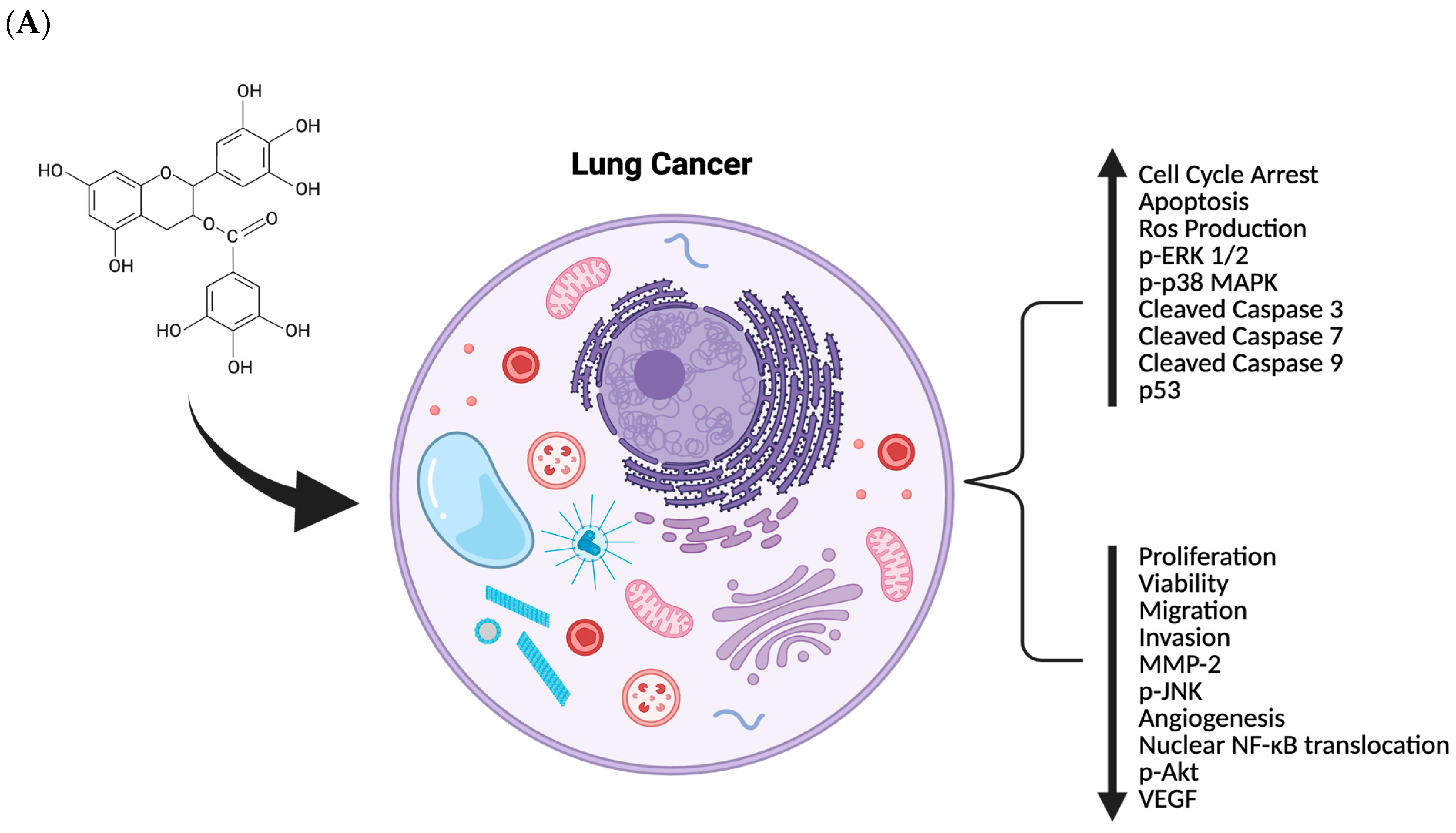


| Proliferation and Cell-Cycle Control | |||
| Cell Lines | Treatment | Findings | References |
| PC-9, H1299, H441, A549, H1650, H1975, H460, Hcc827, H358, SBC-3, H69 (drug-sensitive and drug-resistant variant variants), LK-2 | EGCG ± chemotherapy or targeted agents, or nanoformulations/derivatives | ↓ proliferation, colony formation, anchorage-dependent growth, Ki67, PCNA; ↑ cell-cycle arrest G0/G1, S, and G2/M phases; ↓ Cyclin D1, Cyclin B1; ↑ cell-cycle inhibitors (p21Cip1/Waf1); effective in therapy-resistant and parental NSCLC cells; enhanced cell-cycle arrest in combination treatments | [10,11,12,13,14,15,16,17,18,19,20,21,22] |
| Apoptosis and Ferroptosis | |||
| Cell Lines | Treatment | Findings | References |
| H661, HCC827, H358, H1975, H292, Calu-1, PC-9, H441, SPC-A-1, A549, H1299, H460, cisplatin-resistant A549, gefitinib-resistant A549, H69 drug-sensitive and drug-resistant variants | EGCG ± chemotherapy, TKIs, derivatives, or nanoformulations | ↑ apoptosis, ↑ intrinsic and extrinsic apoptotic pathways (↑ cytochrome c, DR5, ↑ caspase cascade activation (caspase-3, -7, -8, -9, cleaved PARP, DNA fragmentation); p53-dependent apoptosis (↑ Ser15 phosphorylated p53, mitochondrial translocation); Bcl-2 family modulation (↑ Bax; ↓ Bcl-2, Bcl-xL; Ku70 acetylation leads to Bax release); ↑ pro-apoptotic stress markers (GADD153); enhanced chemotherapy induced apoptosis | [11,17,18,20,22,23,24,25,26,27,28,29,30,31,32,33,34,35,36,37,38,39,40,41,42,43,44,45,46,47] |
| A549, H1299 | EGCG | ↓ GPX4, SLC7A11, tsRNA-13502; leptin-induced cell survival, colony formation, migration, invasion (through STAT1/SLC7A11) ↑ ACSL4, MDA, ROS, ferroptosis leptin-induced cell survival, colony formation, migration, invasion | [48,49] |
| Cell Migration, Invasion and EMT | |||
| Cell Lines | Treatment | Findings | References |
| CL1-5, A549, H1299, H1975, 95-D, Lu99 | EGCG alone, nanoformulations/derivatives, or combined with chemotherapeutics, TKIs, or pathway inhibitors | ↓ invasion, migration; ↓ MMP-2/MMP-9; ↓ vimentin, N-cadherin, Snail, Slug, Zeb1, Twist1; inhibition of TGF-β-induced EMT; ↓ Smad2, ERK, Akt, EGFR, NF-κB signalling; ↓ β-catenin nuclear localization; ↑ E-cadherin expression; reduced wound healing and cell motility | [21,28,35,38,40,41,43,47,49,50,51,52,53,54,55,56,57,58,59,60,61,62,63,64] |
| Angiogenesis | |||
| Cell Lines | Treatment | Findings | References |
| A549 | EGCG ± IGF-1 | ↓ angiogenesis; ↓ HIF-1α, VEGF, IL-8, COX-2, and Akt/ERK signalling; inhibition of IGF-1- and HPV- induced tube formation; ↑ endostatin expression | [54,63,64,65] |
| Cancer Stem Cells | |||
| Cell Lines | Treatment | Findings | References |
| A549, H1299, cisplatin-resistant A549, H460 | EGCG ± hsa-miR-485-5p | ↓ CSC markers and properties (CD133, CD44, ALDH1A1, Nanog, Oct4, CLOCK); ↓ tumoursphere formation and CSC-like properties; ↑ hsa-miR-485-5p; suppression of stemness-associated transcriptional programmes | [33,36,66,67,68] |
| Oncogenic Signalling | |||
| Cell Lines | Treatment | Findings | References |
| H2122, H358, A549, H1650, H460, H1299, CL13, 95-D, CL1-5, HCC827, H1975, gefitinib- or osimertinib-resistant H1975, H441, PC-9, Lu99 | EGCG ± targeted agents, chemotherapy, or derivatives | ↓ EGFR activation and phosphorylation; inhibition of downstream Akt, ERK/MAPK, mTOR, PI3K, and p38 MAPK signalling; suppression of c-Met activation; reduced Ras-MEK-ERK signalling; inhibition of NF-κB nuclear translocation and JNK signalling | [15,16,24,37,38,39,40,41,50,51,62,69,70,71,72,73] |
| Cellular Metabolism and Oxidative Stress | |||
| Cell Lines | Treatment | Findings | References |
| A549, gefitinib- or osimertinib-resistant H1975, H1299, CL-13, H460, 95-D | EGCG ± gefitinib/osimertinib, metabolic modulators, or nanoparticles | ↓ glycolysis, Warburg effect, and lactate production; ↓ fatty acid synthase activity; modulation of Akt/mTOR-linked metabolic signalling; ↑ mitochondrial respiration, AMPK activation, and intracellular ROS; regulation of redox pathways via Nrf2/HO-1 suppression; altered antioxidant and stress-response signalling | [18,37,42,50,62,69,74] |
| Epigenetic and Non-Coding RNA | |||
| Cell Lines | Treatment | Findings | References |
| A549, PC-9, LTEP-α-2, H460, H1299, cisplatin-resistant A549, CL13 | EGCG ± cisplatin, retinoids (Am80), or miRNA modulation (miR-210, miR485-5p) | ↓ HDAC activity and HDAC 4/5/6; ↓ DNMT activity; ↓ β-catenin expression; demethylation of WIF-1 promoter; ↑ acetylation of p53, α-tubulin, and multiple proteins; modulation of miRNAs (hsa-miR-98-5p, miR-125a-3p, miR-485-5p, miR-210) and long non-coding RNAs; altered expression of mRNAs (GAS1, TIMP4, ICAM1, WISP2) | [14,20,21,22,36,66,75,76,77] |
| Immune Modulation | |||
| Cell Lines | Treatment | Findings | References |
| A549, H1299, Lu99, H460, cisplatin-resistant H460, PC-9, CL-13 | EGCG ± metabolic or signalling inhibitors; nano-EGCG formulations | ↓ PD-L1 expression (IFN-γ/EGF-induced) ↓ Axl and Tyro3 ↓ NF-κB activity and nuclear translocation; ↑ IL-6 production and STAT3; ↓ IL-8 production | [18,42,43,61,62,65,72,73] |
| Drug Resistance | |||
| Cell Lines | Treatment | Findings | References |
| A549, LTEP-α-2, H460, gefitinib- or osimertinib-resistant H1975, H441, H1975, cisplatin resistant A549 and H460, H358, gefitinib-resistant A549, H1299 | EGCG ± chemotherapy or targeted agents (cisplatin, doxorubicin, 5-FU, gemcitabine, paclitaxel, gefitinib, osimertinib, erlotinib, apatinib), or EGCG derivative | ↓ proliferation, colony formation, migration, invasion, drug efflux, multidrug resistance signalling, glycolysis, ERK/MAPK, Akt/mTOR, EGFR, Axl, Tyro3, Bcl-2, procaspase-3, autophagic flux, ATG5, LC3 II/I; ↑ apoptosis, cell-cycle arrest, cleaved PARP, Bax, p53 activation, ROS production, mitochondrial respiration, AMPK activation, enhanced uptake of chemotherapeutics | [21,22,39,40,44,45,46,47,61,69,78] |
| In Vivo Anticancer Effects of EGCG | |||
|---|---|---|---|
| Model | Treatment | Findings | References |
| NNK- and B(a)P-induced lung cancer; A/J mice | Dietary EGCG or polyphenon E | ↓ tumour formation; ↓ oxidative DNA damage (8-OH-dGuo); miRNA reprogramming affecting Akt, NF-κB, MAPK, and cell-cycle pathways; improved EGCG stability in Poly E formulations | [79,80,81] |
| A/J mice; H460 and A549 xenografts | EGCG ± cisplatin, erlotinib, luteolin | ↓ tumour burden, weight, and volume; enhanced efficacy of chemotherapy and EGFR-targeted therapy; reduced treatment-associated toxicity | [12,15,27] |
| Xenografts (H1299, CL1-5, A549) | Dietary or intraperitoneal EGCG | Dose-dependent ↓ tumour growth; ↑ apoptosis (cleaved caspase-3, Bax, PARP cleavage); ↑ oxidative stress (8-OHdG); ↑ DNA damage-induced repair (γ-H2AX); ↓ Bcl-xL and; ↓ topoisomerase IIα; ↑ JWA | [17,43,51,57,82] |
| Nicotine-, IGF-1-, HPV-E6/E7-driven and A549-driven xenografts | EGCG | ↓ HIF-1α-dependent angiogenesis; ↓ HPV-16 E6- and E7-induced angiogenesis; ↓ VEGF, CD31, CD34-positive vessels; ↓ IGF-induced hemoglobin levels and angiogenesis; suppression of tumour vascularization | [54,63,64,65] |
| A549 xenografts; patient-derived models | EGCG + metformin, BAY11-7082, or EGCG nanoparticles | Enhanced tumour suppression; ↓ Ki-67, Nrf2, HO-1, PCNA, NF-κB signalling; ↑ apoptosis (TUNEL); improved efficacy compared with monotherapy | [18,42,43] |
| NNK-induced lung cancer; A/J mice | 0.3% green tea extract | ↓ tumour multiplicity; ↓ PD-L1-positive tumour cells, supporting immunomodulatory activity in vivo | [73] |
| A549 xenografts | EGCG ± cisplatin | Enhanced cisplatin efficacy; ↓ hsa-miR-98-5p and Ki-67; ↑ CTR1 and NEAT1; ↑ ROS; ↓ ERK1/2 and ERK1/2 phosphorylation | [32,74] |
| Xenografts and patient-derived tumours | EGCG derivatives, nanoparticles, PBOG | Improved tumour suppression versus free EGCG; ↓ Ki-67, p-EGFR, p-Akt, p-ERK, p-NF-κB; ↑ apoptosis (TUNEL, cleaved caspase-3) | [39,41,42,60] |
| A549, cisplatin-resistant A549, and AXL-high xenografts | EGCG or green tea extract | ↓ CSC markers (CD133, CD44, Sox2, Nanog, Oct4, CLOCK); ↑ hsa-miR-485-5p, miR-485; ↓ p-AXL, ALDH1A1, SLUG; suppression of aggressive tumour phenotypes (↓ Ki-67, RXRα) | [36,66,67,68] |
| Diet, carcinogen-, and drug-resistant models (A549, cisplatin-resistant A549, AR, H1299, xenografts) | EGCG combined with cisplatin, metformin, gefitinib, apatinib, tolcapone, osimertinib, or curcumin | ↓ tumour progression (Ki-67, CyclinB1, CyclinD1, hsa-miR-98-5p); improved metabolic and inflammatory profiles (↓ leptin levels, STAT1, SLC7A11, IL-4, IL-8, IL-10 ↑ IL-6, IL-12, and TNF- α); reversal of drug resistance; ↑ survival; ↓ GAS1, TIMP4, ICAM1, and WISP2 methylation in EGCG treatment; ↑ cleaved PARP, caspase-3 | [12,19,21,22,46,47,49,69] |
| Clinical Outcomes and Therapy-Associated Toxicity | |||
|---|---|---|---|
| Model | Treatment | Findings | References |
| Stage III NSCLC (including stage IIIA/IIIB; surgically unresectable) or limited stage SCLC | Oral EGCG administered during thoracic radiotherapy ± chemoradiation (three times daily; dose range 40–440 μmol/L or 400 μmol/L) | EGCG was well tolerated with no dose-limiting toxicity; ↓ pain severity; ↓ incidence and severity of acute radiation-induced esophagitis (grade 0–1 patients); ↓ dysphagia; prophylactic use slightly more effective than therapeutic use | [96,97,98] |
Disclaimer/Publisher’s Note: The statements, opinions and data contained in all publications are solely those of the individual author(s) and contributor(s) and not of MDPI and/or the editor(s). MDPI and/or the editor(s) disclaim responsibility for any injury to people or property resulting from any ideas, methods, instructions or products referred to in the content. |
© 2026 by the authors. Licensee MDPI, Basel, Switzerland. This article is an open access article distributed under the terms and conditions of the Creative Commons Attribution (CC BY) license.
Share and Cite
Mirbabaei Ghafghazi, D.; Kwan Sze, N.S.; Tsiani, E. Effects of Epigallocatechin Gallate Against Lung Cancer: Mechanisms of Action and Therapeutic Potential. Nutrients 2026, 18, 378. https://doi.org/10.3390/nu18030378
Mirbabaei Ghafghazi D, Kwan Sze NS, Tsiani E. Effects of Epigallocatechin Gallate Against Lung Cancer: Mechanisms of Action and Therapeutic Potential. Nutrients. 2026; 18(3):378. https://doi.org/10.3390/nu18030378
Chicago/Turabian StyleMirbabaei Ghafghazi, Dordaneh, Newman Siu Kwan Sze, and Evangelia Tsiani. 2026. "Effects of Epigallocatechin Gallate Against Lung Cancer: Mechanisms of Action and Therapeutic Potential" Nutrients 18, no. 3: 378. https://doi.org/10.3390/nu18030378
APA StyleMirbabaei Ghafghazi, D., Kwan Sze, N. S., & Tsiani, E. (2026). Effects of Epigallocatechin Gallate Against Lung Cancer: Mechanisms of Action and Therapeutic Potential. Nutrients, 18(3), 378. https://doi.org/10.3390/nu18030378