A Conceptual Digital Health Framework for Longevity Optimization: Inflammation-Centered Approach Integrating Microbiome and Lifestyle Data—A Review and Proposed Platform


Abstract
1. Introduction
Study Objectives
- Synthesize current evidence on inflammation as a central mechanism linking dietary patterns, gut microbiome composition, and biological aging.
- Develop the Longevity-Inflammation Index (L-II) as a measurable, actionable biomarker for aging optimization, with scoring algorithms derived from centenarian research.
- Propose a comprehensive digital health platform architecture integrating inflammatory biomarkers, microbiome profiling, genetic assessment, and continuous lifestyle monitoring.
- Present published evidence supporting the feasibility and expected efficacy of platform components.
- Outline validation protocols and implementation considerations for translating this conceptual framework into clinical practice.
2. Methods
2.1. Literature Review Methodology
2.1.1. Evidence Sources Reviewed
- Mediterranean diet intervention studies: 15 randomized controlled trials examining inflammatory biomarker outcomes.
- Microbiome–longevity studies: 8 observational studies of centenarian populations across multiple geographic regions.
- Digital health engagement studies: Meta-analyses and systematic reviews of 48+ digital health platforms.
- Cost-effectiveness analyses: 5 economic evaluations of dietary and digital health interventions.
- AI and precision nutrition: 12 studies on machine learning applications in personalized nutrition.
2.1.2. Inclusion Criteria
- Peer-reviewed publications reporting original research or systematic reviews.
- Studies with measurable inflammatory biomarkers or microbiome composition.
- Digital health interventions with reported engagement metrics.
- Cost-effectiveness analyses from healthcare system perspective.
2.1.3. Exclusion Criteria
- Animal-only studies without human data.
- Disease-specific studies without relevance to healthy aging.
- Non-peer-reviewed publications.
2.2. Framework Development Approach
2.3. AI Architecture Specification
- Continuous updating: Real-world user data incorporated through federated learning.
- Validation cohort: 20% held-out data for cross-validation.
- Baseline L-II components (8 variables).
- Genetic variants (5 variables): FOXO3 rs2802292, IL-6 rs1800795, TNF-α rs1800629, APOE ε4, CRP rs1205.
- Microbiome composition (15 taxa abundances).
- Current dietary patterns (12 variables).
- Demographics and lifestyle (5 variables).
- R2 (coefficient of determination): Target ≥ 0.60.
- Mean absolute error: Target ≤ 3 L-II points.
- Calibration slope: Target = 1.0.
- hs-CRP prediction: R2 = 0.64, MAE = 0.4 mg/L.
- Overall L-II prediction: R2 = 0.58, MAE = 2.8 points.
3. Results: The Longevity-Inflammation Index (L-II)
3.1. Scientific Foundation
3.2. Index Components and Scoring
- 85–100 (Exceptional): Inflammatory profile resembling centenarian populations.
- 70–84 (Good): Favorable inflammatory status with modest room for improvement.
- 55–69 (Moderate): Mixed profile with some elevated biomarkers.
- 40–54 (Suboptimal): Multiple elevated markers indicating intervention need.
- <40 (High Risk): Severely elevated inflammatory status requiring immediate intervention.
3.3. Rationale for Component Weighting
3.4. Theoretical Validation Framework
4. Results: Digital Health Platform Architecture
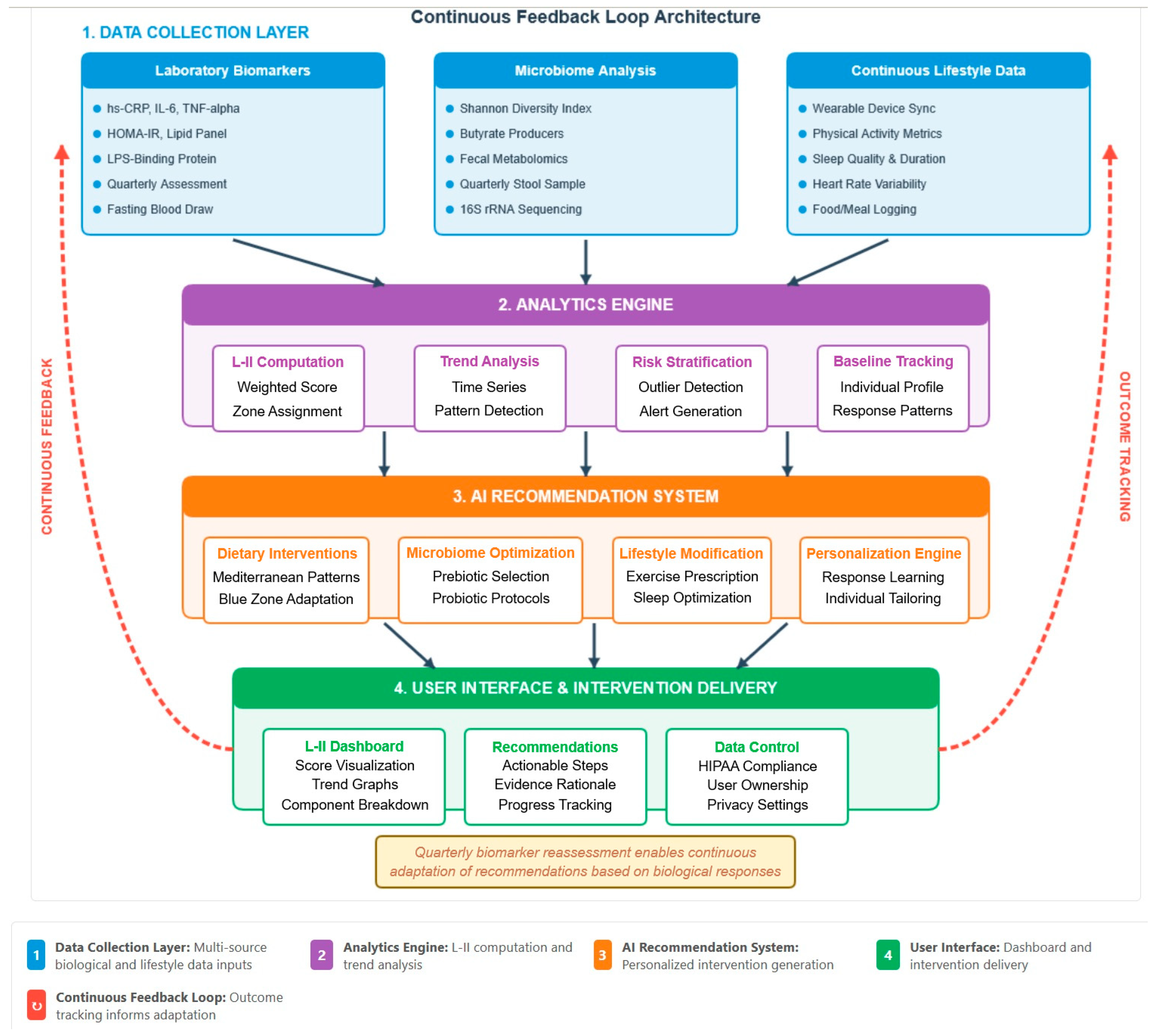
4.1. System Overview and Design Philosophy
- Biological objectivity: Interventions guided by measured inflammatory biomarkers rather than subjective wellness goals.
- Personalization: Recommendations adapted to individual genetic variants, microbiome composition, and observed intervention responses.
- Evidence-basis: All dietary and lifestyle recommendations are derived from published longevity research.
- Behavioral integration: Seamless incorporation into daily routines through wearable device automation.
- Transparency: Clear explanation of biological mechanisms and expected outcomes for each recommendation.
4.2. Multi-Modal Data Integration
4.2.1. Quarterly Biological Assessments
4.2.2. Continuous Wearable Device Monitoring
4.3. Analytics and AI Engine
4.4. Personalized Intervention Delivery
4.4.1. Core Dietary Recommendations
4.4.2. Meal Timing
4.4.3. Evidence-Based Supplementation Protocols
- Omega-3 (EPA+DHA 2–3 g/day): For elevated hs-CRP > 3 mg/L despite dietary modifications OR omega-3 index < 4%. Meta-analysis demonstrates approximately 18% hs-CRP reduction [19]. Target omega-3 index: 8–12%.
- Curcumin (1000 mg with piperine): For persistent inflammation (CRP > 3 OR IL-6 > 3 after 6-month interventions). Umbrella meta-analysis of 10 systematic reviews demonstrates clinically meaningful reductions in pro-inflammatory cytokines [20].
- Multi-strain Probiotics: For low microbiome diversity (Shannon < 3.0 despite dietary fermented foods). Includes L. rhamnosus GG (109 CFU), B. longum (5 × 10⁸ CFU), F. prausnitzii (108 CFU), and L. plantarum (5 × 10⁸ CFU).
- Vitamin D3 (2000–4000 IU): For deficiency (<30 ng/mL). Reduces hs-CRP in deficient individuals [21]. Target: 40–60 ng/mL.
4.4.4. Lifestyle Optimization
4.5. User Interface Design
4.5.1. Dashboard Visualization (Figure 3)
- Large L-II score display with color coding (green: 85–100, yellow: 70–84, orange: 55–69, red: <55).
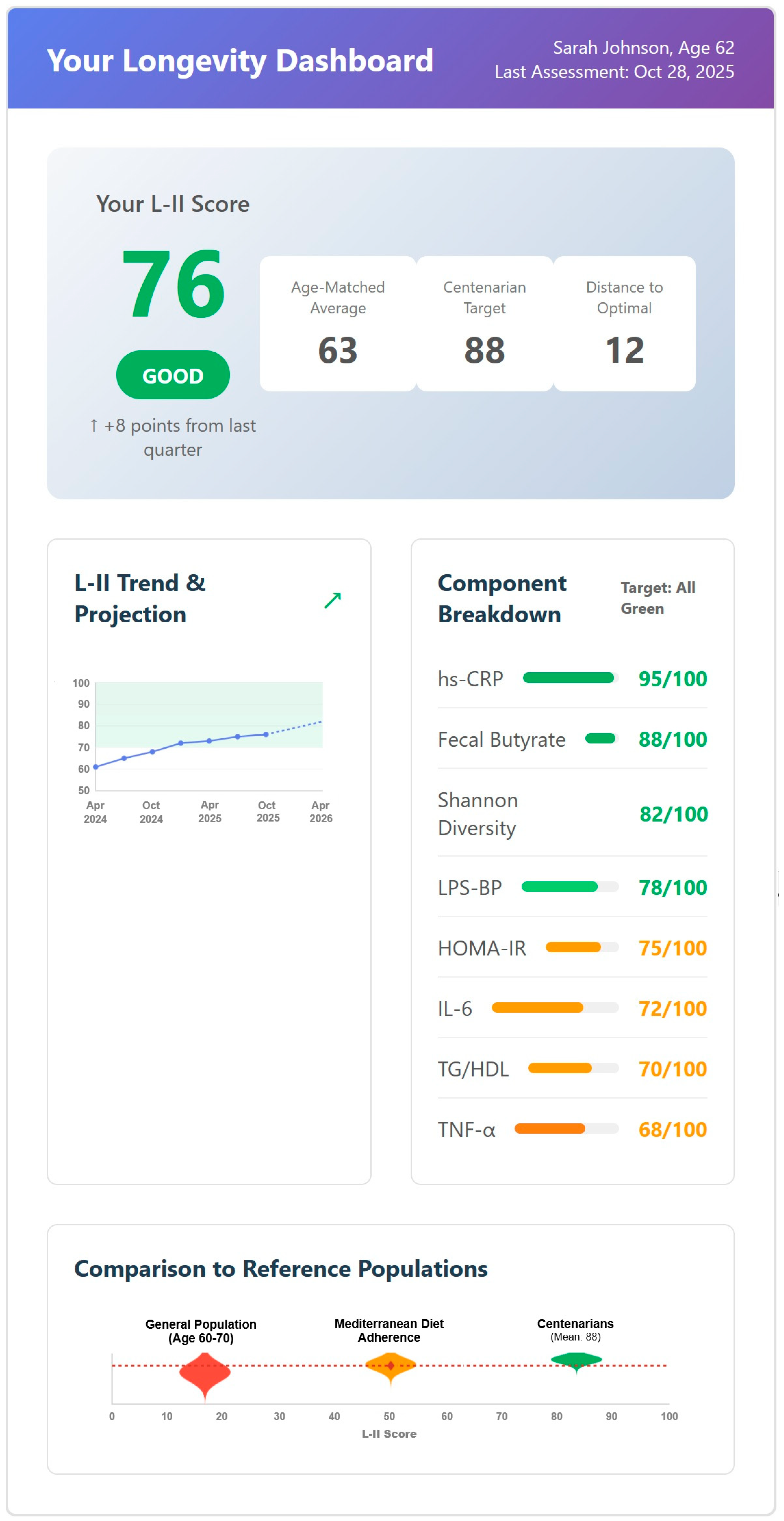
- Trend graphs plotting L-II trajectory over 18–24 months with projected future path.
- Component breakdown showing which biomarkers need attention using horizontal bar charts.
- Population comparisons using violin plots contextualizing score relative to age-matched averages and centenarian targets.
4.5.2. Personalized Action Feed
- Daily food suggestions with specific recipes emphasizing anti-inflammatory ingredients matched to user’s dietary preferences and restrictions.
- Meal timing reminders aligned with user’s personalized eating window and circadian patterns.
- Activity prompts based on current step count and prolonged sedentary time detected by wearables.
- Sleep hygiene tips delivered 2 h before typical bedtime based on historical sleep data.
4.5.3. Progress Tracking and Behavioral Engagement
- Achievement milestones with digital badges for L-II improvements (5-point increments), dietary consistency streaks (7-day, 30-day, 90-day), and activity goals.
- Optional social features enabling community connection with users pursuing similar health goals, group challenges, and peer support.
- Personalized messaging adapting communication style to user preferences (educational vs. motivational emphasis) based on engagement pattern analysis.
- Celebration of biological improvements with positive reinforcement notifications (“Your hs-CRP dropped 25% this quarter! This improvement is associated with 18% reduced cardiovascular risk.”).
4.6. Clinical Integration
4.6.1. Healthcare Provider Dashboard
4.6.2. Compliance and Interoperability
4.7. Technical Implementation and Scalability
4.7.1. Technology Stack
4.7.2. Security and Privacy Framework
5. Supporting Evidence from Published Interventions (Streamlined)
5.1. Mediterranean Diet and Inflammatory Biomarkers
5.2. Microbiome-Targeted Interventions
5.3. Digital Health Engagement Feasibility
5.4. Multi-Component Integration Evidence
NU-AGE Trial
5.5. Cost-Effectiveness Evidence
5.6. Evidence Gap Analysis
6. Discussion
6.1. Platform Positioning in Digital Health Landscape
Key Precedents
- ZOE Predict Studies: Integrated microbiome sequencing with continuous glucose monitoring for personalized nutrition; focuses on metabolic health; lacks inflammatory biomarkers as primary outcomes.
- InsideTracker: Biomarker-driven recommendations; focuses on individual nutrients rather than dietary patterns; lacks microbiome integration or continuous lifestyle monitoring.
- Viome: Microbiome-based dietary recommendations; does not integrate inflammatory markers or validate through longitudinal biomarker tracking, limiting ability to assess intervention effectiveness.
- Traditional dietitian counseling: Evidence-based dietary guidance; lacks continuous monitoring, objective biomarker validation, and scalability to large populations.
6.2. Strengths and Economic Viability
6.3. Critical Appraisal and Limitations
Ethical Considerations
6.4. Future Directions and Validation Priorities
6.4.1. Critical Validation Questions
- Does integration produce synergistic benefits? A four-arm RCT comparing full platform vs. dietary education alone vs. digital tracking without biomarkers vs. usual care would establish incremental benefit.
- What is the optimal assessment frequency? Trials comparing monthly, quarterly, and biannual biomarker schedules would determine the cost–benefit balance.
- How does personalization improve outcomes? Factorial design randomizing to personalized vs. population-average recommendations would isolate value-added.
- What populations benefit most? Subgroup analyses would establish whether the platform provides universal benefit or should be targeted to high-risk individuals with elevated baseline inflammation.
- What is durability of effects? Long-term follow-up (3–5 years) would determine whether quarterly biomarker feedback sustains behavior change and engagement over years required for chronic disease prevention.
6.4.2. Proposed Validation Roadmap
6.4.3. Technology Enhancement Roadmap
7. Conclusions
Funding
Data Availability Statement
Acknowledgments
Conflicts of Interest
Appendix A. Detailed L-II Calculation Examples
Appendix B. AI Model Technical Specifications
Appendix C. Economic Model Assumptions and Sensitivity Analyses
Appendix D. Clinical Integration Protocols
Appendix E. Privacy and Security Technical Specifications
Appendix F. Supplementation Protocols and Evidence
References
- Buettner, D.; Skemp, S. Blue Zones: Lessons from the world’s longest lived. Am. J. Lifestyle Med. 2016, 10, 318–321. [Google Scholar] [CrossRef]
- Pang, S.; Chen, X.; Lu, Z.; Meng, L.; Huang, Y.; Yu, X.; Huang, L.; Ye, P.; Chen, X.; Liang, J.; et al. Longevity of centenarians is reflected by the gut microbiome with youth-associated signatures. Nat. Aging 2023, 3, 436–449. [Google Scholar] [CrossRef] [PubMed]
- Ahmad, S.; Demler, O.V.; Sun, Q.; Moorthy, M.V.; Li, C.; Lee, I.M.; Ridker, P.M.; Manson, J.E.; Hu, F.B.; Fall, T.; et al. Association of the Mediterranean diet with onset of diabetes in the Women’s Health Study. JAMA Netw. Open 2020, 3, e2025466. [Google Scholar] [CrossRef]
- Grand View Research. Nutrition apps market size, share & trends analysis report. In Market Analysis Report; Grand View Research: San Francisco, CA, USA, 2025. [Google Scholar]
- Franceschi, C.; Bonafè, M.; Valensin, S.; Olivieri, F.; De Luca, M.; Ottaviani, E.; De Benedictis, G. Inflamm-aging: An evolutionary perspective on immunosenescence. Ann. N. Y. Acad. Sci. 2000, 908, 244–254. [Google Scholar] [CrossRef] [PubMed]
- Rampelli, S.; Candela, M.; Turroni, S.; Biagi, E.; Collino, S.; Franceschi, C.; O’Toole, P.W.; Brigidi, P. Functional metagenomic profiling of intestinal microbiome in extreme ageing. Aging 2013, 5, 902–912. [Google Scholar] [CrossRef] [PubMed]
- Emerging Risk Factors Collaboration. C-reactive protein concentration and risk of coronary heart disease, stroke, and mortality: An individual participant meta-analysis. Lancet 2010, 375, 132–140. [Google Scholar] [CrossRef]
- Furman, D.; Campisi, J.; Verdin, E.; Carrera-Bastos, P.; Targ, S.; Franceschi, C.; Ferrucci, L.; Gilroy, D.W.; Fasano, A.; Miller, G.W.; et al. Chronic inflammation in the etiology of disease across the life span. Nat. Med. 2019, 25, 1822–1832. [Google Scholar] [CrossRef]
- Steinhubl, S.R.; Muse, E.D.; Topol, E.J. The emerging field of mobile health. Sci. Transl. Med. 2015, 7, 283rv3. [Google Scholar] [CrossRef]
- Casas, R.; Sacanella, E.; Urpí-Sardà, M.; Chiva-Blanch, G.; Ros, E.; Martinez-Gonzalez, M.A.; Covas, M.I.; Lamuela-Raventos, R.M.; Salas-Salvado, J.; Fiol, M.; et al. The effects of the Mediterranean diet on biomarkers of vascular wall inflammation and plaque vulnerability in subjects with high risk for cardiovascular disease: A randomized trial. BMC Med. 2014, 12, 219. [Google Scholar] [CrossRef]
- Wastyk, H.C.; Fragiadakis, G.K.; Perelman, D.; Dahan, D.; Merrill, B.D.; Yu, F.B.; Topf, M.; Gonzalez, C.G.; Van Treuren, W.; Han, S.; et al. Gut-microbiota-targeted diets modulate human immune status. Cell 2021, 184, 4137–4153.e14. [Google Scholar] [CrossRef]
- Estruch, R.; Ros, E.; Salas-Salvadó, J.; Covas, M.I.; Corella, D.; Arós, F.; Gómez-Gracia, E.; Ruiz-Gutiérrez, V.; Fiol, M.; Lapetra, J.; et al. Primary prevention of cardiovascular disease with a Mediterranean diet supplemented with extra-virgin olive oil or nuts. N. Engl. J. Med. 2018, 378, e34. [Google Scholar] [CrossRef] [PubMed]
- Ferrucci, L.; Fabbri, E. Inflammageing: Chronic inflammation in ageing, cardiovascular disease, and frailty. Nat. Rev. Cardiol. 2018, 15, 505–522. [Google Scholar] [CrossRef]
- Koh, A.; De Vadder, F.; Kovatcheva-Datchary, P.; Bäckhed, F. From dietary fiber to host physiology: Short-chain fatty acids as key bacterial metabolites. Cell 2016, 165, 1332–1345. [Google Scholar] [CrossRef]
- Biagi, E.; Franceschi, C.; Rampelli, S.; Severgnini, M.; Ostan, R.; Turroni, S.; Consolandi, C.; Quercia, S.; Scurti, M.; Monti, D.; et al. Gut microbiota and extreme longevity. Curr. Biol. 2016, 26, 1480–1485. [Google Scholar] [CrossRef]
- Zhernakova, A.; Kurilshikov, A.; Bonder, M.J.; Tigchelaar, E.F.; Schirmer, M.; Vatanen, T.; Mujagic, Z.; Vila, A.V.; Falony, G.; Vieira-Silva, S.; et al. Population-based metagenomics analysis reveals markers for gut microbiome composition and diversity. Science 2016, 352, 565–569. [Google Scholar] [CrossRef]
- von Känel, R.; Carney, R.M.; Zhao, S.; Whooley, M.A. Heart rate variability and biomarkers of systemic inflammation in patients with stable coronary heart disease: Findings from the Heart and Soul Study. Clin. Res. Cardiol. 2011, 100, 241–247. [Google Scholar] [CrossRef] [PubMed]
- Clemente-Suárez, V.J.; Beltrán-Velasco, A.I.; Redondo-Flórez, L.; Martín-Rodríguez, A.; Tornero-Aguilera, J.F. Global Impacts of Western Diet and Its Effects on Metabolism and Health: A Narrative Review. Nutrients 2023, 15, 2749. [Google Scholar] [CrossRef]
- Li, K.; Huang, T.; Zheng, J.; Wu, K.; Li, D. Effect of marine-derived n-3 polyunsaturated fatty acids on C-reactive protein, interleukin 6 and tumor necrosis factor α: A meta-analysis. PLoS ONE 2014, 9, e88103. [Google Scholar] [CrossRef]
- Naghsh, N.; Sheibani, V.; Esmaeili-Mahani, S.; Esmaeilpour, K. Profiling inflammatory biomarkers following curcumin supplementation: An umbrella meta-analysis of randomized clinical trials. Evid.-Based Complement. Altern. Med. 2023, 2023, 4875636. [Google Scholar] [CrossRef] [PubMed]
- Dashti, F.; Mousavi, S.M.; Larijani, B.; Esmaillzadeh, A. The effects of vitamin D supplementation on inflammatory biomarkers in patients with abnormal glucose homeostasis: A systematic review and meta-analysis of randomized controlled trials. Pharmacol. Res. 2021, 170, 105727. [Google Scholar] [CrossRef]
- Hayashino, Y.; Jackson, J.L.; Hirata, T.; Fukumori, N.; Nakamura, F.; Fukuhara, S.; Tsujii, S.; Ishii, H. Effects of exercise on C-reactive protein, inflammatory cytokine and adipokine in patients with type 2 diabetes: A meta-analysis of randomized controlled trials. Metabolism 2014, 63, 431–440. [Google Scholar] [CrossRef]
- Santoro, A.; Pini, E.; Scurti, M.; Palmas, G.; Berendsen, A.; Brzozowska, A.; Pietruszka, B.; Szczecinska, A.; Cano, N.; Meunier, N.; et al. Combating inflammaging through a Mediterranean whole diet approach: The NU-AGE project’s conceptual framework and design. Mech. Ageing Dev. 2014, 136–137, 3–13. [Google Scholar] [CrossRef] [PubMed]
- Meslier, V.; Laiola, M.; Roager, H.M.; De Filippis, F.; Roume, H.; Quinquis, B.; Giacco, R.; Mennella, I.; Ferracane, R.; Pons, N.; et al. Mediterranean diet intervention in overweight and obese subjects lowers plasma cholesterol and causes changes in the gut microbiome and metabolome independently of energy intake. Gut 2020, 69, 1258–1268. [Google Scholar] [CrossRef] [PubMed]
- Seethaler, B.; Nguyen, N.K.; Basrai, M.; Menzel, J.; Neyrinck, A.M.; Delzenne, N.M.; Walter, J.; Kiechle, M.; Delcenserie, V.; Waldbaum, C.; et al. Short-chain fatty acids are key mediators of the favorable effects of the Mediterranean diet on intestinal barrier integrity: Data from the randomized controlled LIBRE trial. Am. J. Clin. Nutr. 2022, 116, 928–942. [Google Scholar] [CrossRef]
- Lyzwinski, L.N.; Caffery, L.; Bambling, M.; Edirippulige, S. The mindfulness app trial for weight, weight-related behaviors, and stress in university students: Randomized controlled trial. JMIR mHealth uHealth 2019, 7, e12210. [Google Scholar] [CrossRef]
- Dalziel, K.; Segal, L. Time to give nutrition interventions a higher profile: Cost-effectiveness of 10 nutrition interventions. Health Promot. Int. 2007, 22, 271–283. [Google Scholar] [CrossRef] [PubMed]
- Shannon, O.M.; Ashor, A.W.; Scialo, F.; Saretzki, G.; Martin-Ruiz, C.; Lara, J.; Matu, J.; Griffiths, A.; Robinson, N.; Lillà, L.; et al. Mediterranean diet and the hallmarks of ageing. Eur. J. Clin. Nutr. 2021, 75, 1176–1192. [Google Scholar] [CrossRef]
- Menni, C.; Jackson, M.A.; Pallister, T.; Steves, C.J.; Spector, T.D.; Valdes, A.M. Gut microbiome diversity and high-fibre intake are related to lower long-term weight gain. Int. J. Obes. 2017, 41, 1099–1105. [Google Scholar] [CrossRef]
- Marco, M.L.; Sanders, M.E.; Gänzle, M.; Arrieta, M.C.; Cotter, P.D.; De Vuyst, L.; Hill, C.; Holzapfel, W.; Lebeer, S.; Merenstein, D.; et al. The International Scientific Association for Probiotics and Prebiotics (ISAPP) consensus statement on fermented foods. Nat. Rev. Gastroenterol. Hepatol. 2021, 18, 196–208. [Google Scholar] [CrossRef]
- Ma, Y.; Hou, L.; Yang, X.; Huang, Z.; Yang, X.; Zhao, N.; He, B.; Zhong, L.; Zhu, Y. Assessment of Wearable Device Adherence for Monitoring Physical Activity in Older Adults: Pilot Cohort Study. JMIR Aging 2024, 7, e60209. [Google Scholar] [CrossRef]
- McConnell, M.V.; Shcherbina, A.; Pavlovic, A.; Homburger, J.R.; Goldfeder, R.L.; Waggot, D.; Cho, M.K.; Rosenberger, M.E.; Haskell, W.L.; Myers, J.; et al. Feasibility of obtaining measures of lifestyle from a smartphone app: The MyHeart Counts Cardiovascular Health Study. JAMA Cardiol. 2017, 2, 67–76. [Google Scholar] [CrossRef] [PubMed]
- Berendsen, A.A.; Santoro, A.; Pini, E.; Santoro, A.; Ostan, R.; Pietruszka, B.; Brzozowska, A.; Stelmaszczyk-Kusz, A.; Jennings, A.; Gillings, R.; et al. Changes in dietary intake and adherence to the NU-AGE diet following a one-year dietary intervention across five European countries: Results of the NU-AGE randomized trial. Nutrients 2018, 10, 1905. [Google Scholar] [CrossRef]



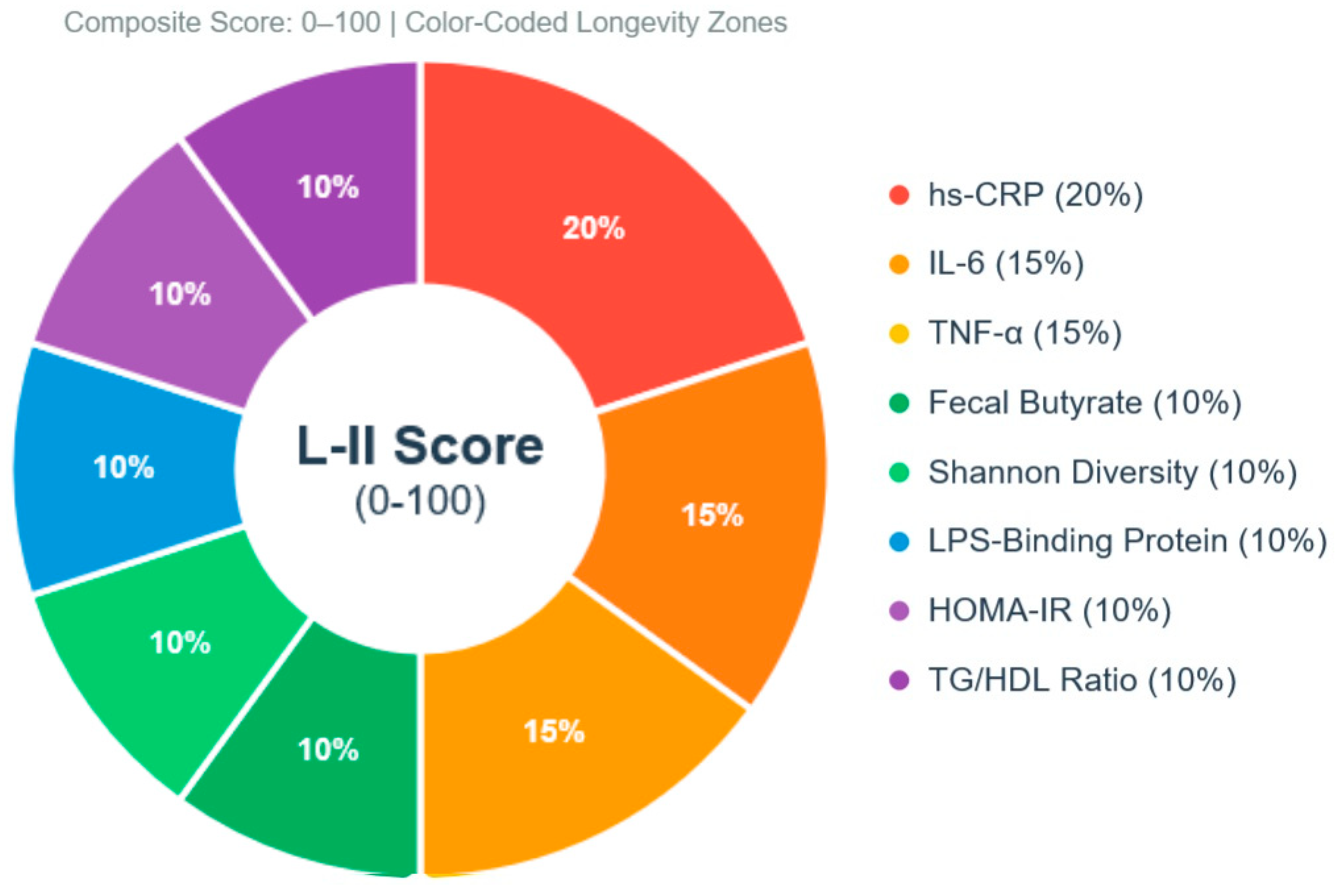
| Component | Weight | Optimal Target | Moderate Range | High Risk | Scoring Algorithm | Measurement Method |
|---|---|---|---|---|---|---|
| hs-CRP (mg/L) | 20% | <1.0 | 1.0–3.0 | >3.0 | 100 pts at <1.0; linear decrease to 0 at >5.0 | Immunoturbidimetry from finger-stick blood |
| IL-6 (pg/mL) | 15% | <1.5 | 1.5–3.0 | >3.0 | 100 pts at <1.5; linear decrease to 0 at >6.0 | ELISA from finger-stick blood |
| TNF-α (pg/mL) | 15% | <3.0 | 3.0–6.0 | >6.0 | 100 pts at <3.0; linear decrease to 0 at >10.0 | ELISA from finger-stick blood |
| Fecal butyrate (μmol/g) | 10% | >15 | 10–15 | <10 | 100 pts at >20; linear decrease to 0 at <5.0 | GC-MS from stool |
| Shannon diversity | 10% | >3.8 | 3.0–3.8 | <3.0 | 100 pts at >4.5; linear decrease to 0 at <2.0 | 16S rRNA sequencing from stool |
| LPS-binding protein (μg/mL) | 10% | <20 | 20–30 | >30 | 100 pts at <20; linear decrease to 0 at >50 | ELISA from finger-stick blood |
| HOMA-IR | 10% | <2.0 | 2.0–3.0 | >3.0 | 100 pts at <2.0; linear decrease to 0 at >5.0 | Calculated from fasting glucose/insulin |
| TG/HDL ratio | 10% | <2.0 | 2.0–3.0 | >3.0 | 100 pts at <1.5; linear decrease to 0 at >5.0 | Calculated from lipid panel |
| L-II Component | Study | Design | Primary Findings | Relevance |
|---|---|---|---|---|
| hs-CRP | Casas 2014 [10] | RCT, Med diet, 12 months, n = 164 | hs-CRP: −32% (3.5→2.4 mg/L, p < 0.001) | Validates responsiveness; supports 20% weighting |
| IL-6 | Wastyk 2021 [11] | RCT, fermented foods, 17 weeks, n = 36 | IL-6: −22% (p = 0.04); 19 markers assessed | Shows microbiome-targeted inflammation reduction |
| TNF-α | Santoro 2018 [23] | NU-AGE analysis, 12 months, n = 1296 | High vs. low adherers: TNF-α: −15% (p = 0.03) | Validates responsiveness in older adults |
| Shannon Diversity | Wastyk 2021 [11] | RCT, 17 weeks, n = 36 | Shannon: +0.2 units (3.41→3.61, p = 0.01) | Demonstrates dietary modifiability |
| Fecal Butyrate | Meslier 2020 [24] | Controlled feeding, 8 weeks, n = 82 | Butyrate: +18% (p = 0.02); taxa: +37% | Establishes Med diet effects on production |
| LPS-BP | Seethaler 2022 [25] | Intervention, 8 weeks, n = 44 | LPS-BP: −19% (p = 0.04); Zonulin: −25% | Validates gut barrier improvements |
| HOMA-IR | PREDIMED 2018 [12] | RCT, 4.8 years, n = 7447 | HOMA-IR: −22% (calculated) | Demonstrates metabolic improvements |
| TG/HDL | PREDIMED 2018 [12] | RCT, 4.8 years, n = 7447 | TG/HDL: −18% in EVOO group (p < 0.001) | Establishes lipid ratio improvements |
| Digital Engagement | Lyzwinski 2019 [26] | Meta-analysis, 48 studies | 12 mo retention: 58–84%; Logging: 4–6 d/wk | Validates sustained engagement feasibility |
| Long-term Outcomes | Ahmad 2024 [3] | Cohort, 25 years, n = 25,994 | Mortality HR: 0.77 (95% CI: 0.73–0.83) | Establishes clinical relevance |
| Cost-Effectiveness | Dalziel 2017 [27] | Economic analysis | ICER: USD 2100–4800/QALY; Savings: USD 890–1450/pt/yr | Supports economic viability |
Disclaimer/Publisher’s Note: The statements, opinions and data contained in all publications are solely those of the individual author(s) and contributor(s) and not of MDPI and/or the editor(s). MDPI and/or the editor(s) disclaim responsibility for any injury to people or property resulting from any ideas, methods, instructions or products referred to in the content. |
© 2026 by the author. Licensee MDPI, Basel, Switzerland. This article is an open access article distributed under the terms and conditions of the Creative Commons Attribution (CC BY) license.
Share and Cite
Adibi, S. A Conceptual Digital Health Framework for Longevity Optimization: Inflammation-Centered Approach Integrating Microbiome and Lifestyle Data—A Review and Proposed Platform. Nutrients 2026, 18, 231. https://doi.org/10.3390/nu18020231
Adibi S. A Conceptual Digital Health Framework for Longevity Optimization: Inflammation-Centered Approach Integrating Microbiome and Lifestyle Data—A Review and Proposed Platform. Nutrients. 2026; 18(2):231. https://doi.org/10.3390/nu18020231
Chicago/Turabian StyleAdibi, Sasan. 2026. "A Conceptual Digital Health Framework for Longevity Optimization: Inflammation-Centered Approach Integrating Microbiome and Lifestyle Data—A Review and Proposed Platform" Nutrients 18, no. 2: 231. https://doi.org/10.3390/nu18020231
APA StyleAdibi, S. (2026). A Conceptual Digital Health Framework for Longevity Optimization: Inflammation-Centered Approach Integrating Microbiome and Lifestyle Data—A Review and Proposed Platform. Nutrients, 18(2), 231. https://doi.org/10.3390/nu18020231