


Abstract
Objectives: This study investigates the effects of 600 mg/day Ashwagandha root extract on physiological stress biomarkers, perception of recovery, muscle strength and aerobic capacity in team sports athletes during pre-season training, a period associated with elevated cortisol and accumulated training stress. Methods: Fifty-six athletes (26.8 ± 4.4 years, 1.74 ± 0.10 m, 79.4 ± 17.3 kg, 11.0 ± 7.1 career years) across rugby, water polo and football were randomly assigned to an Ashwagandha (ASH; n = 28, 14 males and 14 females) or placebo (PLA; n = 28, 14 males and 14 females) group for 42 days. Salivary biomarkers were assessed after training, muscle strength and aerobic capacity were measured during training, and perception of recovery was evaluated with Hooper Index (HI) the following day. Mixed ANOVA was used to determine group × time interactions and Bonferroni post hoc analyses were conducted for multiple pairwise comparisons. Results: In female athletes, salivary cortisol increased significantly in PLA (p = 0.001), while recovery parameters such as the overall HI score (p = 0.001), Delayed Onset Muscle Soreness (DOMS) (p = 0.008) and perception of fatigue (p = 0.026) scores improved significantly in ASH. In males, salivary cortisone increased significantly in PLA (p = 0.022), while Countermovement Jump (CMJ) improved significantly in ASH (p = 0.018). Pull-up performance increased in both PLA (p = 0.004) and ASH (p < 0.0001) in males. Conclusions: Supplementation with 600 mg/day of Ashwagandha root extract for 42 days may stabilise stress biomarkers, improve perception of recovery and enhance muscle strength in team sports athletes during pre-season training. The trial is registered on ClinicalTrials.gov with the ID NCT07041853.
1. Introduction
Pre-season training is a pivotal phase in an athlete’s annual cycle, aimed at developing physical capacities, refining technical skills and preparing the body for the competitive in-season [1]. The cumulative load of pre-season training has been associated with changes in cortisol concentrations [2,3], which may impair recovery, disrupt anabolic processes and increase the risk of overtraining or injury [4]. In contact and team sports, these risks are further amplified by the intermittent high-intensity nature of training schedule demands, which often include sprints, collisions and rapid directional changes [5,6,7]. These demands can place strain on both the neuromuscular and endocrine systems, influencing cortisol response [8]. Physiological stress can be evaluated through salivary measurements of cortisol and cortisone: hormones that indicate activity of the hypothalamic–pituitary–adrenal (HPA) axis [9]. Moderate- to high-intensity exercise can provoke increases in circulating cortisol levels [10]. In a study involving female athletes, participation in high-stakes matches was associated with a marked reduction in sleep quality, which coincided with a substantial 354% increase in salivary cortisol concentrations [11]. Elevated post-exercise cortisol levels have been linked to suppressed immune function, increased muscle protein breakdown and disrupted sleep patterns, all of which can impair performance and recovery [12,13].
Consequently, effective recovery strategies during the pre-season are essential to mitigate the impact of elevated physiological stress responses and promote optimal adaptation to training. Typical recovery strategies for athletes involve achieving adequate sleep quality, efficient muscle repair and the restoration of hormonal balance [14,15]. Monitoring perceived recovery can offer valuable insight into an athlete’s readiness to train and compete, encompassing perceptions of stress, fatigue, muscle soreness and sleep quality. Assessing salivary hormones in addition may enable practitioners to better evaluate an athlete’s physiological and psychological adaptation throughout the pre-season phase.
Ashwagandha (Withania somnifera) root extract, a traditional adaptogenic herb, is known for its potential to modulate the stress response, enhance physical performance and improve the recovery process in healthy populations [16,17]. Recent systematic reviews and meta-analyses have highlighted the efficacy of Ashwagandha supplementation in clinical trials in reducing systemic stress by having a positive effect on wellbeing, muscle strength and exercise endurance parameters [18,19]. Trials using standardised root extracts have demonstrated significant reductions in cortisol in healthy adults and individuals experiencing mild to moderate stress, with effects observed across a range of doses (125–600 mg/day) and supplementation periods (4–12 weeks). These studies indicate that Ashwagandha may modulate the HPA axis as its mechanism of action by reducing the circulating cortisol and potentially improving stress resilience and sleep quality as a result [20,21].
The bioactive constituents of Ashwagandha include steroidal flavanol glycosides, glycowithanolides, steroidal lactones and phenolics, with more than 12 alkaloids, around 40 withanolides and several sitoindosides reported across its roots, aerial parts and berries [22]. The root extract of the Ashwagandha plant is associated with lower risk of containing, or having negligible levels of, potentially harmful compounds such as withanone and withaferin A that are found in higher content in the leaf of the herb [23,24,25]. These compounds may induce liver toxicity or adverse reactions with overuse [26], despite having been reported to elicit anticarcinogenic effects [27,28,29]. While it is not established, this may explain the adverse results found in research documenting liver injuries following Ashwagandha use [30,31]; the supplements reported are shown to contain the leaf or do not state the amount of withanolides, which are the active compounds that produce the adaptogenic effects. A recent in vitro study using primary human hepatocytes found that ethanolic Ashwagandha leaf extract exhibited dose- and time-dependent hepatocellular toxicity, suggesting possible liver risks at higher concentrations. In contrast, the root extract modulated CYP3A4 activity (an enzyme integral to drug metabolism, metabolising approximately 30–50% of known drugs [32]), indicating potential drug–herb interactions [33]. This suggests individuals taking prescription medications should avoid using it, echoed in a case study that found a patient having involuntary muscle contractions following Ashwagandha supplementation alongside use of 2.5 mg diazepam [34]. However, the safety profile of root-extracted Ashwagandha with a standardised amount of withanolides has been well-documented, with studies supporting its use in healthy participants [35,36,37,38], with one study observing administration over 12 months [39]. Therefore, the chosen investigational product KSM-66 Ashwagandha was obtained from the manufacturer Ixoreal Biomed Inc., Los Angeles, CA, USA. KSM-66 is a commercially available Ashwagandha extract derived exclusively from the root and standardised to the highest concentration. The supplement is produced through a green chemistry method that is devoid of any alcohol or chemical solvents. The product contains a root-only extract from Ashwagandha with >5% of withanolides as estimated by the HPLC method.
There is a lack of research specifically examining the effects of Ashwagandha supplementation in athletes participating in contact and team sports. Team sports athletes experience unique pre-season demands, including repeated high-intensity efforts and rapid changes in direction, which may influence recovery and performance [40]. This population is therefore suitable for evaluating interventions aimed at supporting adaptation and resilience during periods of elevated training stress. The optimal dosage, duration and timing of supplementation remain subjects of ongoing investigation. This study aims to address these gaps by evaluating the effects of 600 mg/day of root-extracted Ashwagandha over a 42-day period on salivary hormone concentrations, as well as perceived recovery and muscle strength in the pre-season period in male and female semi-professional athletes assigned to an academy. Accordingly, the present study examines the effects of Ashwagandha root extract supplementation on physiological stress biomarkers, perceived recovery and muscle strength across the pre-season period in athletes, with the aim of assessing whether an herbal supplement can improve these areas. It is hypothesised that root extract Ashwagandha supplementation, across male and female team sports athletes, will achieve the following: (1) reduce salivary cortisol and cortisone concentrations, (2) improve recovery perception, and (3) enhance muscle strength outcomes, providing a clear, testable framework for assessing its effectiveness in a team sport setting.
2. Materials and Methods
2.1. Study Design
The study followed a randomised, double-blind, placebo-controlled design over a 6-week period. Participants were recruited through convenience sampling from a sports academy in Barcelona, Spain and included athletes from rugby, water polo and football.
Eligible participants were team sports athletes assigned to a professional sports academy in Barcelona, Spain, aged above 18 years, competing at a sub-elite level and classified as ‘healthy’ or free from disease. Exclusion criteria included active supplementation with other ergogenic aids, pregnancy, allergies to nightshades, use of medications or hormonal contraceptives, to avoid potential interactions of Ashwagandha root extract, which may modulate CYP3A4 enzyme activity involved in drug metabolism [33]. Withdrawal from the study was permitted for participants who requested to exit or failed to complete the required study tests. Participants received a small monetary compensation of EUR 20 per testing session to support compliance and retention throughout the study period. Offering payment to research participants is recognised as an ethically acceptable method of enhancing recruitment and compliance in clinical trials [41]. Participants were randomised using an online (https://www.randomizer.org/ accessed on 13 June 2025) randomisation allocation programme to either the Ashwagandha or placebo group, with equal distribution by sex. The study participants (n = 56) were between the ages of 18 and 35 years (26.8 ± 4.4 years, 1.74 ± 0.10 m, 79.4 ± 17.3 kg and 11.0 ± 7.1 years in career) (Table 1).
Table 1.
Participant characteristics and differences by study group.
2.2. Procedures
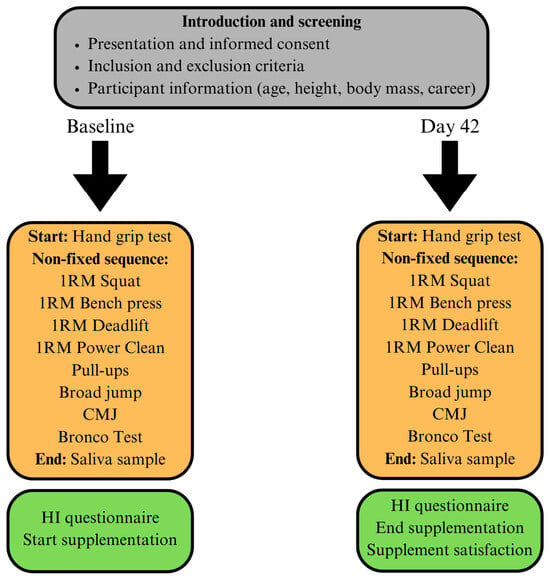
At the first visit, all participants received detailed information about the study procedures and were provided with written informed consent. Information about self-reported height and mass and career length of each athlete was collected from the strength and conditioning staff members. The study timeline is presented in Figure 1. For each of the testing sessions, all participants completed assessments evaluating salivary hormone markers, muscle strength, aerobic capacity and perception of recovery using a questionnaire the following day. Data collection for both timepoints took place at the gym of the academy, which is a familiar training ground for all participants.
Figure 1.
Study timeline. CMJ, countermovement jump; HI, Hooper Index.
Training load was recorded by documenting the type, frequency and duration of each session within the academy programme. Sessions combined resistance and conditioning work typical of pre-season preparation with comparable overall demands across sports despite minor differences in exercise content. Strength and conditioning staff supervised all sessions, recording the activities performed, their duration and athlete completion. Each session was designed to elicit a physiological training response consistent with pre-season intensity. Training sessions commenced at 19:30 h and there was a consistent temperature of 28–30 °C with 70–80% humidity.
Saliva samples were collected at the end of every training session using Salivette sample tubes (Sarstedt, Nümbrecht, Germany), documented as a reliable method to evaluate salivary cortisol compared to total and calculated serum cortisol levels [42,43]. Participants were instructed to not eat or drink (except water) at least 30 min prior to sampling. At 21:00 h, each athlete provided a passive saliva sample. Samples were immediately stored on ice before being transferred to a −20 °C freezer for later analysis of hormonal markers. The salivary samples had to be equal to or above 0.5 mL in quantity in order to evaluate cortisol, cortisone, testosterone, DHEA-S and amylase. Stress biomarkers were measured post-training to monitor the acute hormonal response to resistance exercise, as they play a key role in tissue remodelling and adaptation [44]. Assessing cortisol in particular, the primary variable of this study, allows for the quantification of exercise-induced physiological stress and provides insight into the effectiveness and recovery demands of the training protocol.
Recovery and wellbeing were assessed using the Hooper Index (HI), a validated subjective tool designed to capture exercise-induced fatigue in athletes [45]. The HI evaluates four key components: sleep quality, stress, fatigue and muscle soreness, with participants rating each domain on a 1–10 scale, where lower scores indicate better recovery. This method provides a practical and sensitive measure of how athletes perceive their recovery following training. To standardise data collection, the HI was distributed via WhatsApp and completed at 12:00 h on the day following each training session. Menstrual cycle data were self-reported but excluded from analysis. Evidence suggests hormonal fluctuations have minimal effects on strength, performance or recovery, and inconsistent verification methods limit firm conclusions [46]. Although small effects on recovery have been observed in endurance athletes, the menstrual cycle appears to be one of several minor stressors rather than a key factor [47,48].
Maximal strength was determined at the start of the training session with handgrip strength test, measured with the dominant hand using a dynamometer (CAMRY, CA, USA). It is a commonly used tool in sports performance and demonstrates validity and reliability in relation to athlete strength [49]. The validity for the use of a CAMRY dynamometer is documented [50] when comparing against the Jamar dynamometer. Only one maximal attempt was required, as previous work has shown single trials to yield results comparable to the mean of three [51]. Grip span was adjusted individually for comfort and accuracy. Following this measure, participants performed one-repetition maximum (1RM) tests for squat, bench press, deadlift and power clean. Additionally, explosive performance was captured through pull-ups, countermovement jump (CMJ) and standing broad jump These tests are well-established as reliable field indicators of lower-limb power [52]. Aerobic fitness was measured with the Bronco test, which consists of a 1.2 km shuttle run test. The Bronco test shows good validity, with maximum heart rate significantly correlated to match-play heart rate [53]. Testing order was not fixed between participants.
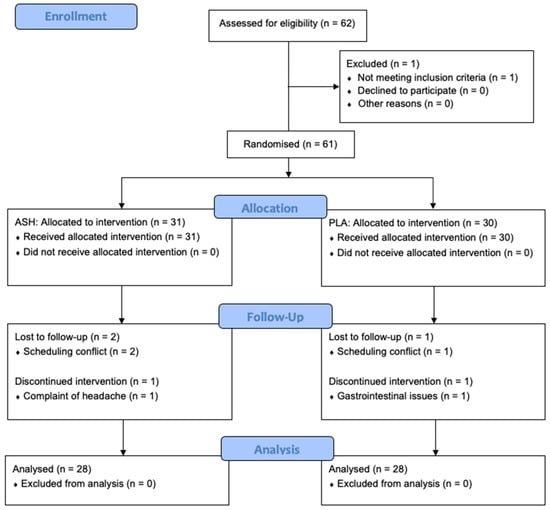
After the initial baseline measurements, participants commenced a 42-day daily supplementation protocol, receiving either 600 mg/day of the KSM-66 Ashwagandha-root extract (ASH), standardised to >5% withanolides, or 600 mg/day of chickpea flour encapsulated in hydroxypropyl methylcellulose (HPMC) as a placebo (PLA). Researchers were blinded to the allocation. Supplements were taken with dinner and a glass of water, as instructed by the study investigators. Chickpea flour was chosen for its visual similarity to Ashwagandha extract and its gluten-free properties, accommodating participants with potential gluten intolerance. The KSM-66 Ashwagandha extract is certified by Informed Ingredient, a comprehensive anti-doping programme that tests raw materials for banned substances in dietary supplements. Supplement adherence throughout the study was 100% in the remaining participants, monitored through daily check-ins conducted by the research team and academy staff. The monitoring of adverse events was undertaken jointly by the academy staff and research team. In addition, a supplement satisfaction survey was taken at the end of the supplementation period in both the ASH and PLA groups. Scores were taken from a Likert-scale-style survey (1 = very satisfied, 10 = very dissatisfied), inspired by the previous literature that assessed supplement satisfaction of tart cherry after analysing for muscle pain during running [54]. Figure 2 provides a CONSORT (Consolidated Standards of Reporting Trials) flow diagram of the study.
Figure 2.
CONSORT diagram. Consolidated Standards of Reporting Trials (CONSORT) diagram. ASH, root extract of Ashwagandha; PLA, placebo.
2.3. Ethical Committee
The study and the details of the informed consent form were approved by the Research Ethics Committee of the School of Health Sciences of Blanquerna Institute, University Ramon Llull (CER-FCSB) in June 2025 (Approval number: 05-03-2025). The trial was registered prior to data collection on ClinicalTrials.gov with ID NCT07041853.
2.4. Statistical Analysis
The required sample size for the study was estimated using G*Power (version 3.1.9.6) and follows the guidelines for sample size estimation in sport and exercise science research by including a formal a priori sample size estimation and rationale [55]. Previous research shows Ashwagandha produces a large effect on symptoms of stress and anxiety in stressed adults, with reported effect sizes of Cohen’s d = 0.8–1.2 [56,57,58]. When converted to ANOVA metrics, this corresponds to an effect size of approximately f = 0.40–0.60. To avoid potentially underpowering the trial, the sample size calculation is conservatively based on a medium effect (f = 0.25). The analysis assumes an effect size of f = 0.25, a significance level of α = 0.05 and power = 0.80, with a correlation of 0.5 among repeated measures. This calculation indicates that 34 participants are needed for statistical validity, with 17 in each of the ASH and PLA groups. The calculation was performed for the overall sample to ensure sufficient power for group-level effects, with results presented separately for men and women.
A 2 × 2 mixed-design ANOVA was employed with Timepoints (Baseline, T1) as the within-subject factor and Condition (PLA, ASH) × Sex (male, female) as between-subjects factors. Variables showing a significant Condition × Time interaction were checked for baseline differences using t-tests for normally distributed variables and Wilcoxon tests for non-normal variables. For outcomes with significant baseline differences, ANCOVA was applied using the baseline value as a covariate. Post hoc analyses were performed following the initial analyses and pairwise comparisons were adjusted using the Bonferroni correction to control for the increased risk of false positives, producing the final p-value. Supplement satisfaction scores from both the ASH and PLA groups were analysed using Mann–Whitney U tests as scores were on a Likert scale, resulting in ordinal data. For each variable, a single 95% confidence interval (CI) was calculated for the combined sample (ASH and PLA) at each timepoint using the pooled mean and its standard error.
The majority of variables deviated from normality, as indicated by Shapiro–Wilk tests. Data continued to be analysed with ANOVA, a statistical method that is robust to moderate deviations from normality when sample sizes are moderate and equal across groups (n = 14 per group/sex) [59].
2.5. Processing of Saliva Samples
Saliva samples were stored at −20 °C until analysis. The samples were analysed by Dresden LABservice GmbH (Dresden, Germany). Alpha-amylase was measured using a Genesis RSP8/150 liquid handling system (Tecan, Germany). Samples were diluted 1:625 and 20 µL of diluted saliva or standard were transferred to 96-well microplates. Standards (5.01–326 U/L) were prepared from a Calibrator f.a.s. solution (Roche Diagnostics, Mannheim, Germany). Eighty microliters of substrate reagent were added and plates were incubated at 37 °C. Absorbance at 405 nm was measured before and after a 5 min incubation, and concentrations were calculated using linear regression per plate (GraphPad Prism 4.0c, San Diego, CA, USA). Cortisol was measured after centrifugation of thawed samples at 3000 rpm for 5 min. Concentrations were determined with a high-sensitivity chemiluminescence immunoassay (IBL International, Hamburg, Germany), with intra- and inter-assay coefficients of variation below 8%.
Testosterone, DHEA-S and cortisone were analysed by LC-MS/MS using Shimadzu LC-20AD pumps, an SIL-20AC autosampler, and a CTO-20AC column oven (Shimadzu Corporation, Kyoto, Japan), coupled to an AB Sciex API 5000 triple quadrupole mass spectrometer with an APCI source (AB Sciex LLC, Framingham, MA, USA). Samples underwent on-line solid-phase extraction with a Chromolith SpeedROD RP-18e column (Merck KGaA, Darmstadt, Germany) prior to separation on a Shim-pack XR-ODS analytical column (Shimadzu Corporation, Kyoto, Japan) with a C18 guard cartridge (Phenomenex Inc., Torrance, CA, USA). The system was controlled via Analyst software (v1.5.1), with nitrogen and zero-grade air supplied by a high-purity nitrogen generator. Melatonin was also intended for analysis but degraded during processing and delivery due to light exposure and was therefore not included in the final dataset.
For testosterone, the assay limit of quantification (LOQ) was 1 pg/mL [60]. Three observations in the non-detectable group fell below this threshold. To include these values in the analyses while accounting for the measurement limitation, a common substitution method was applied by replacing each value below the LOQ with half the LOQ (0.5 pg/mL) [61].
A total of 29 values were missing across hormone outcome variables and 32 across the muscle strength variables. Missing data were addressed using multiple imputation by chained equations with predictive mean matching. To preserve the integrity of group-specific distributions, imputations were conducted separately within each treatment–sex subgroup (e.g., placebo-male, placebo-female, supplement-male, supplement-female). Within each subgroup, imputation models included Subject and Timepoints as predictors to account for repeated measurements. For each subgroup, five imputations were generated. Results from these imputed datasets were then pooled and used for subsequent analyses. This was performed to reduce bias and maintain valid inference under the assumption that data were missing at random, consistent with previous applications of multiple imputations in biomarker research [62].
3. Results
Significance was set at p < 0.05, with data presented as mean ± SD. No significant baseline differences were found between ASH and PLA groups in characteristics (age, height, body mass, career length), as assessed with independent t-tests (Table 1). A closely monitored adverse effect was gastrointestinal distress in the case of ingestion, in case there was an undiagnosed allergy of nightshades [63,64]. One participant in the ASH group reported a mild headache. One participant in the PLA group experienced minor gastrointestinal discomfort. In addition, two participants from the ASH group and one from the PLA group discontinued participation due to scheduling conflicts unrelated to the intervention, resulting in 28 participants per group. The p-values reported in the table are unadjusted and are presented prior to Bonferroni post hoc correction.
3.1. Salivary Hormone Markers
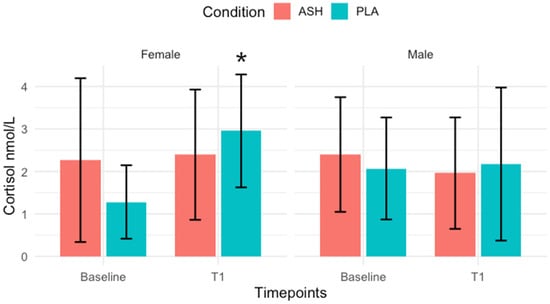
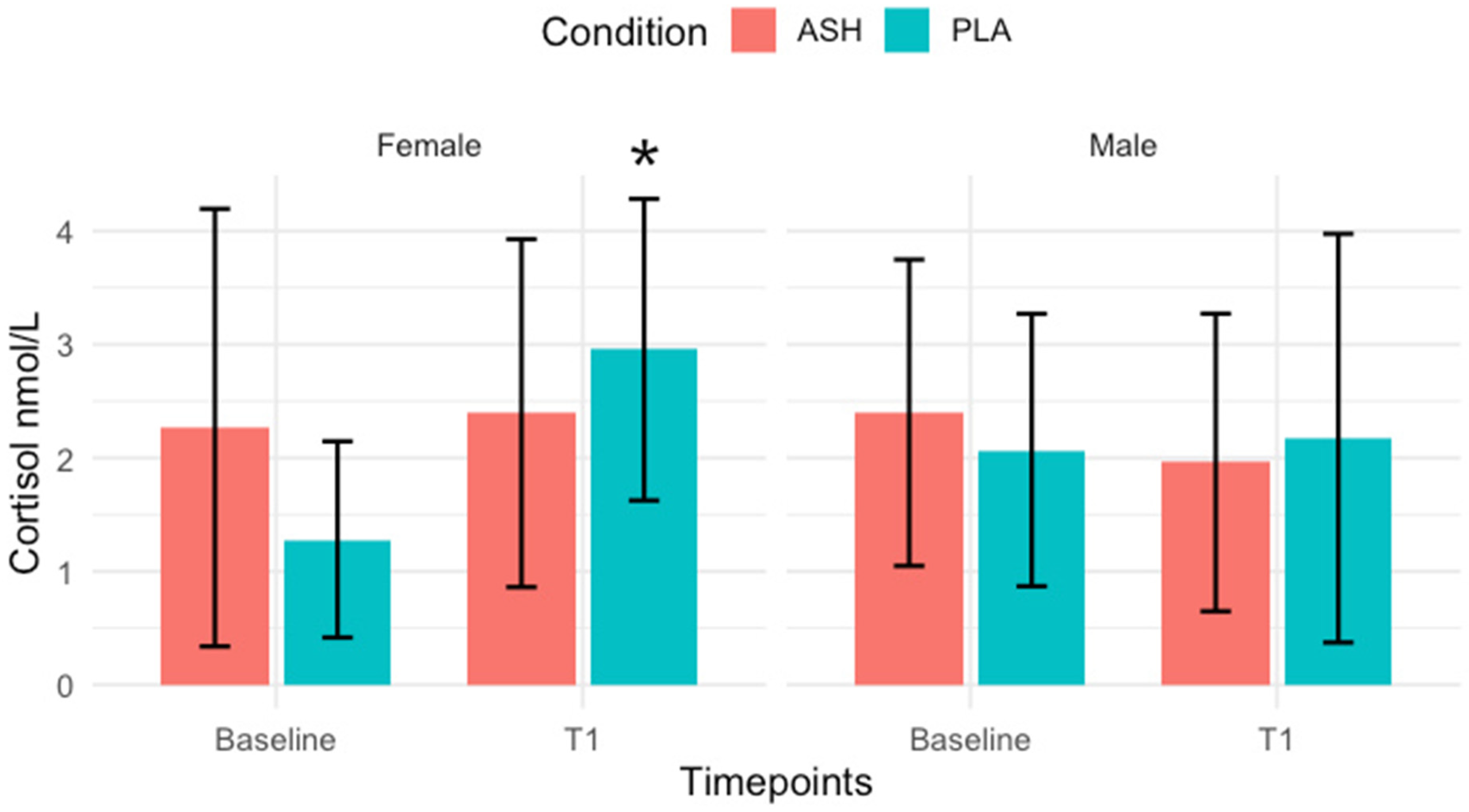
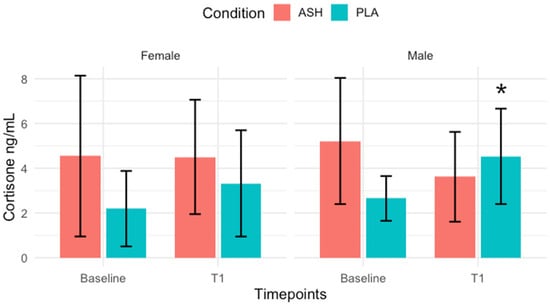
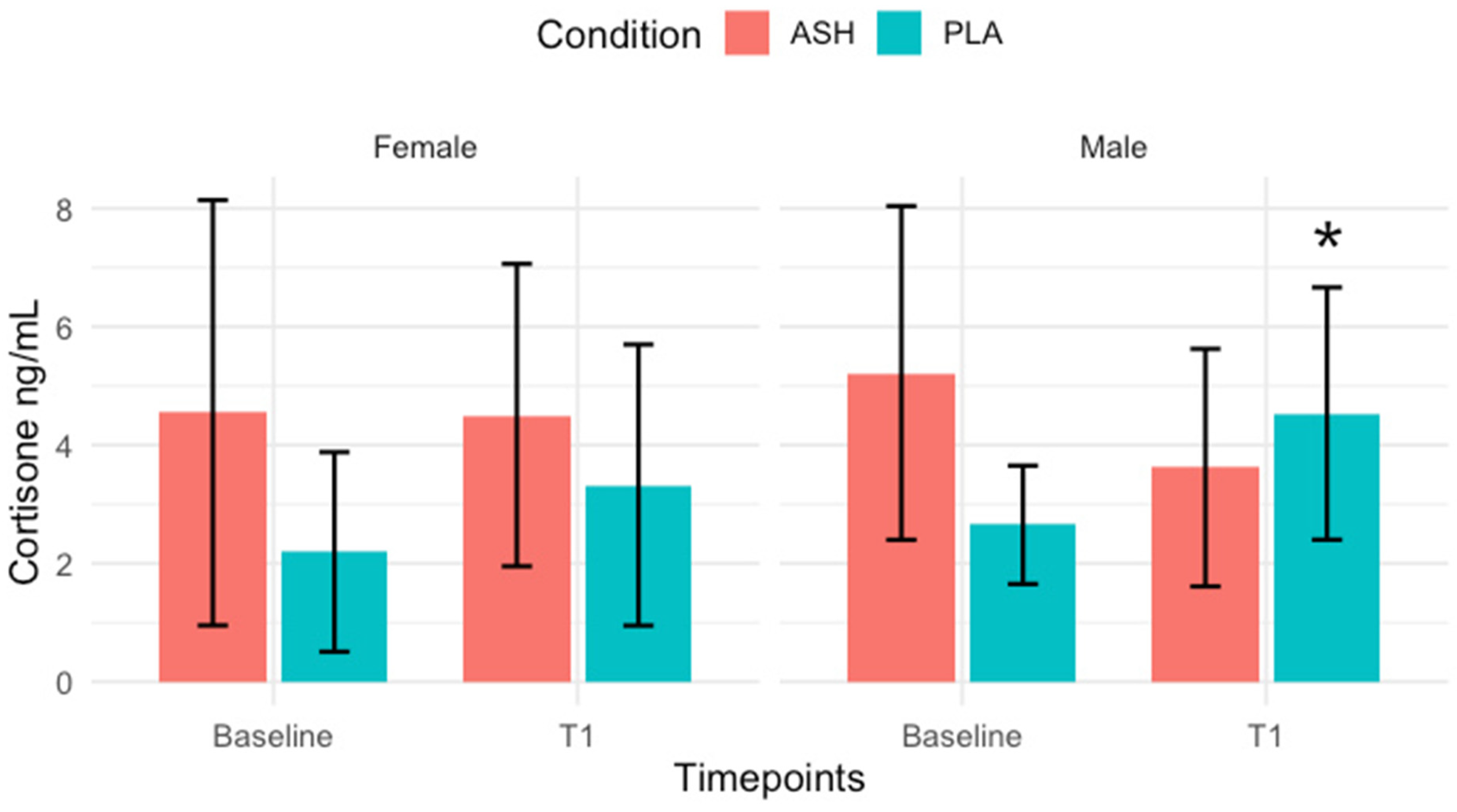
The full results are shown in Table 2 and Table 3. An analysis of mixed ANOVA revealed a significant group × time interaction for cortisol in females (p = 0.010), whereas no significant interaction was observed in males (p = 0.393). Post hoc Bonferroni correction test showed a significant increase in cortisol from baseline to 42 days in the PLA female group (p = 0.001), shown in Figure 3. Cortisone displayed a significant group × time interaction in males (p = 0.0003), with post hoc analysis indicating a significant increase from baseline to 42 days in the PLA male group (p = 0.022), shown in Figure 4. Amylase demonstrated a significant interaction in females (p = 0.022), although post hoc tests did not reach significance (p = 0.267). No significant interactions were observed for testosterone (Males: p = 0.915; Females: p = 0.615), DHEA-S (Males: p = 0.386; Females: p = 0.050), or the testosterone-to-cortisol ratio (T/C) (Males: p = 0.351; Females: p = 0.161).
Table 2.
Salivary hormone markers in female participants.
Table 3.
Salivary hormone markers in male participants.
Figure 3.
Salivary cortisol. Post-training, night-time salivary cortisol for ASH (red bars) and PLA (green bars) represented as means ± SD. Significant increase (p = 0.001) was noted in the PLA group from Baseline to T1 (42 days) following post hoc Bonferroni correction test. Significant change indicated with *.
Figure 4.
Salivary cortisone. Post-training, night-time salivary cortisone for ASH (red bars) and PLA (green bars) represented as means ± SD. Significant increase (p = 0.022) was noted in the PLA group from Baseline to T1 (42 days) following post hoc Bonferroni correction test. Significant change indicated with *.
3.2. Perception of Recovery
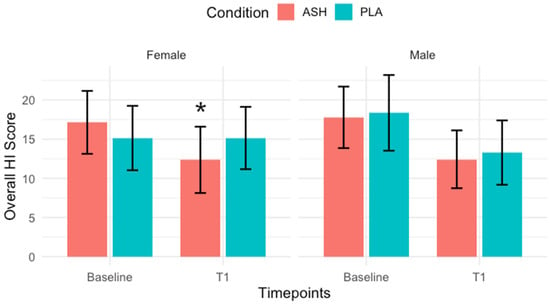
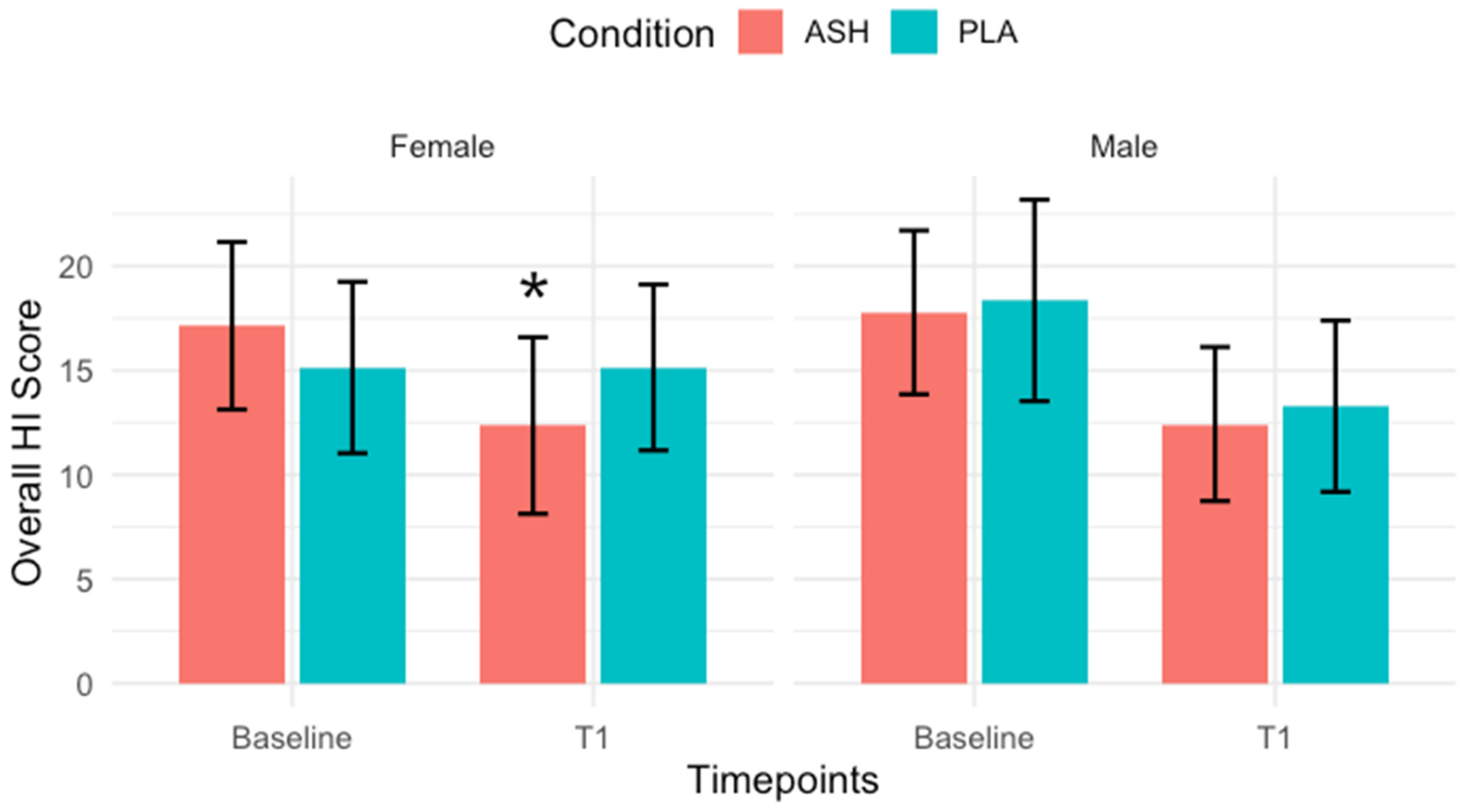
The full results are shown in Table 4 and Table 5 for female and male participants, respectively. No significant changes were observed in the male participants, and significant results regarding recovery were found exclusively in female participants. ANOVA revealed a significant group × time interaction for Overall (accumulated) HI scores in females (p = 0.005). Post hoc analysis showed a significant improvement from baseline to T1 in the ASH group (p = 0.001), as shown in Figure 5. DOMS also demonstrated a significant interaction (p = 0.0002), with post hoc analysis indicating a significant improvement from baseline to T1 in ASH females (p = 0.008). Fatigue scores exhibited a significant group × time interaction (p = 0.015); post hoc tests revealed a significant improvement from baseline to T1 in the ASH female group (p = 0.026).
Table 4.
Perception of recovery in female participants.
Table 5.
Perception of recovery in male participants.
Figure 5.
Overall Hooper Index Score. Significant improvement (p = 0.001) was noted in the female ASH group from Baseline to T1 (42 days) following post hoc Bonferroni correction test. Significant change indicated with *.
3.3. Muscle Strength and Aerobic Performance
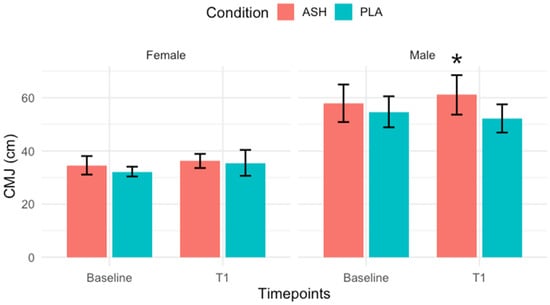
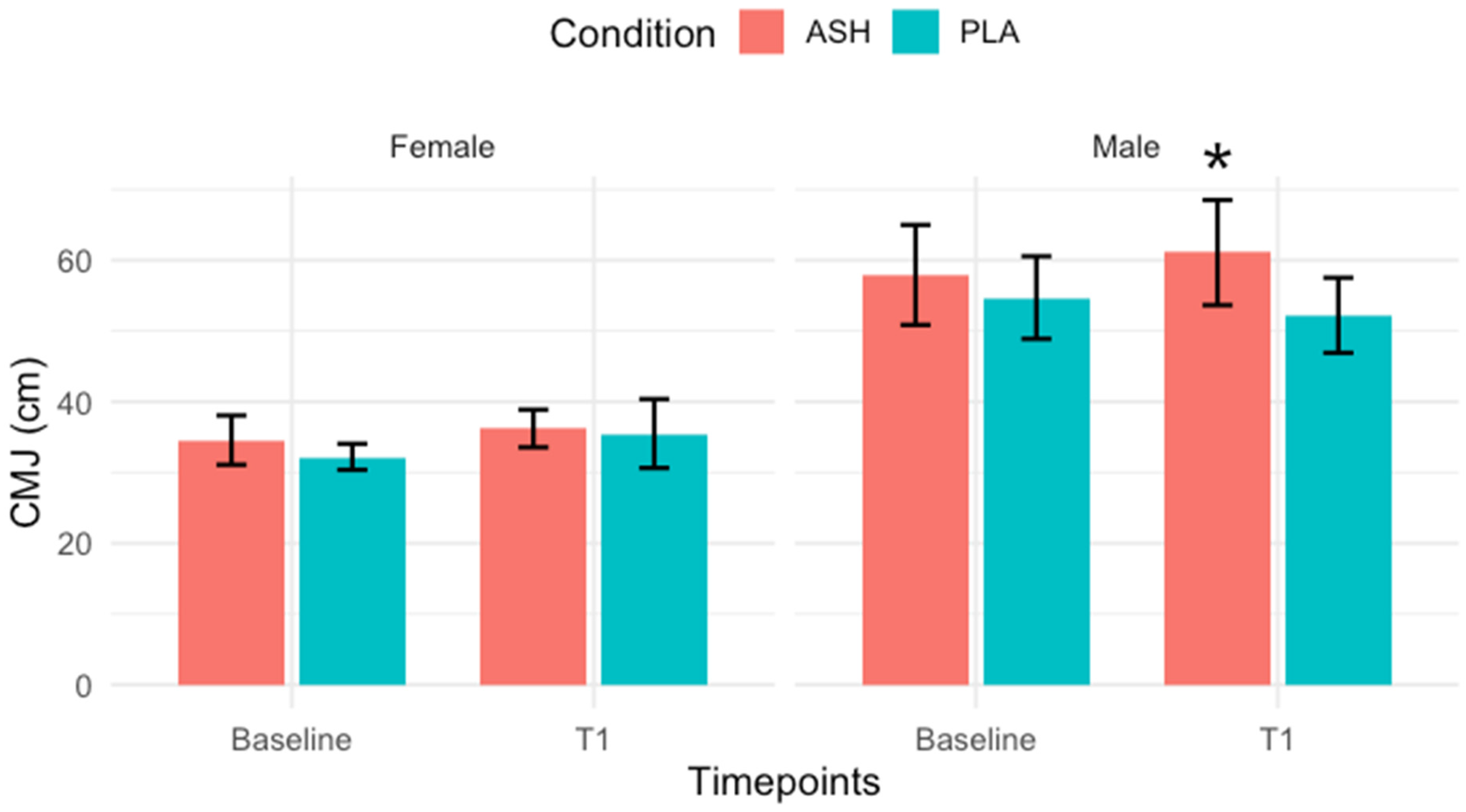
Significant results regarding muscle strength were observed exclusively in male participants. There were no significant changes in the Bronco test for either sex. ANOVA revealed significant group × time interactions for pull-up performance in males; however, a post hoc analysis demonstrated significant increases from baseline in both PLA and ASH male groups (p = 0.004 and p < 0.0001, respectively). CMJ showed a significant interaction in males (p = 0.0003), with post hoc tests indicating a significant increase from baseline to T1 in the ASH male group (p = 0.018), as shown in Figure 6. No significant group × time interactions were observed for the other muscle strength variables. The full results are shown in Table 6 and Table 7, for male and female participants, respectively.
Figure 6.
Countermovement jump. Countermovement jump (CMJ) height measured in centimetres (cm) for ASH (red bars) and PLA (green bars) represented as means ± SD. Significant improvement (p = 0.018) was noted in the male ASH group from Baseline to T1 (42 days). Significant change indicated with *.
Table 6.
Muscle strength and aerobic performance in male participants.
Table 7.
Muscle strength and aerobic performance in female participants.
3.4. Supplement Satisfaction
The ASH group, who supplemented their diet with 600 mg/day of KSM-66 root extract Ashwagandha for 42 days, reported a mean satisfaction score of 3.04 ± 1.1, while the PLA group, who supplemented their diet with a placebo made from chickpea flour, reported a significantly higher score of 4.25 ± 1.2. A Mann–Whitney U test indicated a significant difference between groups (p = 0.0004). Lower scores reflect greater satisfaction in the ASH group.
4. Discussion
4.1. Primary Outcomes
This study is the first to investigate the effects of Ashwagandha root extract supplementation on salivary hormones in semi-professional male and female team sports athletes. Over the 42-day intervention, sex-specific responses were observed, with Ashwagandha appearing to attenuate stress-related hormonal increases seen in the placebo group. Significant group × time interactions were found for cortisol in females and cortisone in males, while amylase showed a trend toward interaction in females. No effects were noted for testosterone, DHEA-S or the testosterone-to-cortisol ratio.
Previous studies have reported a decrease in resting cortisol levels following Ashwagandha [20,21]; however, this present study found that cortisol levels remained stable in the ASH group for females throughout six weeks of pre-season training, a time period where cortisol would typically be elevated without supplementation [65,66]. Only the placebo group exhibited elevated cortisol levels over the same period. This suggests ASH may not blunt the normal physiological stress response but rather help maintain cortisol within an adaptive range, thereby preventing excessive endocrine disruption associated with overtraining [67]. Cortisol plays a dual role during pre-season, supporting energy metabolism and tissue remodelling [68]; however, sustained elevations can impair recovery and performance [69]. Specifically, chronic elevations of cortisol may impair muscle function and sleep quality [70]. Therefore, the stability observed in the ASH group may reflect a more efficient physiological stress regulation, which allows for an effective adaptation to training demands without excessive catabolic strain [71]. A similar pattern was observed for the salivary marker of cortisone in males, with the placebo group showing a significant increase while ASH remained stable. Cortisone represents the inactive metabolite of cortisol [72] and has been shown to increase alongside cortisol during periods of intense training, with changes in the cortisol/cortisone ratio closely reflecting training load, strain, fatigue and alterations in performance, as shown in male rugby players [73]. These findings may indicate that ASH may help to preserve glucocorticoid balance and prevent excessive activation of the HPA axis, leading to better management of the pre-season training burden. This could contribute to more efficient recovery and adaptation by supporting the body’s physiological stress response without inducing prolonged catabolic effects.
The evening, post-exercise (21:00 h) salivary cortisol results observed in this study across both groups fall within, and in some cases below, the expected late-evening physiological range reported in the previous literature. In trained athletes, salivary cortisol concentrations increased from 2.6 nmol/L at the start of pre-season to 5.3 nmol/L after six weeks of resistance training, with samples collected during exercise sessions [74], reflecting the patterns observed in the placebo group of this trial. In comparison, the present study showed similarly modest evening cortisol concentrations, with values remaining stable in the Ashwagandha group compared to increases in the placebo group. This parallel suggests that while Ashwagandha may not directly suppress evening cortisol, it could play a stabilising role under conditions of physical or psychological stress, helping to prevent elevations typically associated with training or competition.
The previous literature supports the use of salivary cortisone as a reliable and stable biomarker of physiological stress [75]. Salivary cortisone displays strong temporal stability and lower day-to-day variability than cortisol, making it suitable for detecting small endocrine changes. It has also been shown that salivary cortisone closely reflects plasma cortisol responses following exercise on a treadmill, suggesting an important role for salivary cortisone as a marker of free cortisol response during exercise [76]. The stability observed in salivary cortisone concentrations in the Ashwagandha group, compared with the significant increase in the placebo group, may indicate that Ashwagandha helped to maintain HPA axis balance under training stress and that the supplement may have attenuated physiological strain across the 42-day period, supporting a consistent endocrine environment. Although attenuating excessive endocrine stress may be beneficial in circumstances, some activation of stress and inflammatory pathways is required to drive muscular and performance adaptations.
An inflammatory response is essential for muscle adaptation and performance gains in sport and has been described as a “mixed blessing” for muscle homeostasis and plasticity [77]. While acute inflammation facilitates tissue repair and strength development, excessive or prolonged inflammation can impede recovery and delay peak performance [78]. Our study observed that 6 weeks of Ashwagandha root extract supplementation did not suppress the typical cortisol response to training, suggesting that it may support the body’s natural inflammatory processes during this critical adaptation phase.
Sex differences in HPA axis regulation may help explain the different responses observed between male and female athletes. Evidence suggests that women may experience greater HPA activation and more persistent physiological changes in response to certain types of stress, whereas men tend to show higher adrenocorticotropic hormone and cortisol responses to performance stressors [79]. Previous research analysing sex-specific difference in the interconversion of cortisol and cortisone in men and women reported that the amount of generated labelled cortisone was significantly higher in men than in women, suggesting greater peripheral conversion of cortisol to cortisone through higher 11β-hydroxysteroid dehydrogenase type 1 oxoreductase activity [80]. This may explain why cortisol increased in females and cortisone increased in males in the placebo group. The stable responses in both Ashwagandha groups suggest that the supplement helped regulate HPA axis activity and minimise stress-related hormonal fluctuations during training.
4.2. Secondary Outcomes
Based on the existing evidence regarding ASH supplementation and perception of recovery in athletes [81], it was hypothesised that a 42-day intake of 600 mg/day of Ashwagandha root extract would elicit favourable effects across perceptive recovery markers taken from the HI compared with placebo. There were selectively improved recovery outcomes in female participants. These findings indicate that Ashwagandha may positively influence subjective recovery markers, potentially facilitating adaptation and readiness in female athletes during training periods. The perceptive improvements may be linked to Ashwagandha’s stabilising effect on the HPA axis, as reflected by stable cortisol levels in the ASH group compared with elevated levels in the placebo group. Maintaining cortisol within an adaptive range may support recovery and reduce physiological stress, providing a potential mechanistic explanation for the observed improvements in perceptual markers.
For muscle strength, significant changes were noted in both the male ASH and PLA groups, which would be a typical outcome of the pre-season training period. ANOVA revealed significant group × time interactions for pull-up count; post hoc analyses showed significant increases from baseline in both the PLA and ASH male groups, suggesting a training effect in both conditions. However, there was a significant interaction in only the male ASH group for CMJ, with post hoc tests showing a significant improvement from baseline to T1, indicating a benefit of supplementation on explosive lower-body power. CMJ is widely used as a reliable marker of lower-body power, neuromuscular function and fatigue in athletes [82,83,84]. It is a valid measure for monitoring performance and capabilities in sports such as football, rugby and water polo [85,86,87]. Improvements in CMJ height are moderately to largely correlated with lower-body power in squat exercises, performance in linear sprints and change in direction tasks [88], which may help athletes in pre-season by boosting their ability to perform sport-specific movements. No other physical performance measures displayed significant interactions. The intervention was generally well-tolerated, with one adverse event reported in each group, and participants reported positive responses towards ASH over placebo on the satisfaction questionnaire, indicating good acceptability.
Although this study was not specifically designed to investigate sex differences, it is notable that males and females differed across several outcomes. These differences may reflect physiological factors such as hormonal variations, differences in muscle mass or neuromuscular function and training history. In addition, it is worth noting that, during the trial, participants were exposed to high temperatures (~30 °C) and high humidity (70–80%) during the month of July in a southern European country. Heat stress can increase cortisol and induce a leukocyte response [89]. This may alter the body’s response to training or supplementation. It can also reduce muscle performance, slow down the recovery process, lower exercise capacity and increase feelings of fatigue and muscle soreness [90]. These contextual factors should be considered when interpreting the study’s findings.
Few, but notable, studies in athletes have examined supplements comparable to Ashwagandha for regulating cortisol responses during athletic training. A previous study observed that ingestion of a 6% carbohydrate solution during high-intensity running attenuated post-exercise cortisol elevations compared with placebo in trained marathon runners [91]. Vitamin C supplementation was reported to mitigate the immediate post-race cortisol response following an ultramarathon compared with placebo [92]. Additionally, phosphatidylserine supplementation has shown effects in attenuating exercise-induced cortisol increases, significantly reducing peak and total cortisol concentrations compared with placebo [93]. Rhodiola rosea, a recognised adaptogen, has demonstrated potential to enhance endurance performance and reduce fatigue by improving resilience to physiological stress, though its effects on cortisol remain nonsignificant [94]. In a non-athletic participant group, Omega-3 fatty acid supplementation demonstrated lower salivary cortisol during an acute stress challenge compared to placebo [95]. Ashwagandha appears to exert a more consistent effect on maintaining stable cortisol concentrations, supporting its role as an effective modulator of HPA axis activity in the context of exercise.
4.3. Limitations and Strengths
There are several limitations to this study. Convenience sampling was used, which helped recruitment but restricts the external validity of the findings beyond the study sample. The lack of a crossover design further limits the ability to control for potential confounders. Dietary intake across participants was not recorded, which is a potential confounding factor as nutritional habits can affect recovery and performance. The observed baseline differences may reflect heterogeneity in the sample, as participants were drawn from three different sport types with varying training backgrounds and performance levels, which may influence the generalisability of the findings. The non-standardised order of assessments across participants is a secondary limitation, although testing conditions were consistent and familiarisation was provided. Salivary hormone samples were collected in the evening to reduce circadian variation; however, individual differences in circadian rhythms remain a potential limitation when interpreting hormonal outcomes. Differences in habitual load, physiology and performance capacities may have contributed to unequal distributions of baseline values despite randomisation. Although several variables deviated from normality, ANOVA was used, which is generally robust in moderating deviations in small, equal-sized groups; however, multiple comparisons may increase the risk of false-positive results. Baseline differences were accounted for by using ANCOVA, including each variable’s baseline value as a covariate. The CONSORT guidelines recommend against formal statistical testing of baseline differences in the domain of sports medicine research [96]. Baseline values in this study are reported, and where baseline differences are present, they are addressed using baseline-adjusted analyses rather than being used to judge group comparability, in line with the updated CONSORT guidance [97].
Additional strengths include the study controls, which involved a randomised, double-blind, placebo-controlled design, recognised as the gold standard for clinical research, which can minimise bias and increase the reliability of findings. Importantly, this is the first study to specifically investigate the effect of Ashwagandha on salivary hormone markers in male and female semi-professional team sports athletes, filling a gap in the literature and offering novel insights into its potential benefits in a competitive sporting context.
The outcomes of this study may provide valuable insights into the practical applications of Ashwagandha supplementation during the pre-season phase for athletes. Highlighting its effects on performance and recovery metrics may inform evidence-based strategies for incorporating Ashwagandha into sports nutrition regimens and, particularly drawing from this present study, in sports characterised by high-intensity intermittent efforts and intense training schedules. While these findings highlight the potential efficacy of Ashwagandha root extract, further research is warranted to refine its role in athletic settings. Future studies may wish to explore optimal dosing strategies, supplementation duration and timing relative to training load. Incorporating crossover designs and longitudinal follow-ups could also enhance the understanding of Ashwagandha’s sustained effects on performance and adaptation throughout the competitive season. It is suggested to incorporate standardised dietary and fluid-intake monitoring in future studies to allow for a clear interpretation of hydration status and its interaction with recovery and performance outcomes. Additionally, future studies could investigate the osmotic properties of Ashwagandha root extract and their potential physiological implications in humans. As this study only compared Ashwagandha with placebo, future research could extend these findings by comparing it with other established non-prohibited ergogenic aids to contextualise its effectiveness.
5. Conclusions
In this double-blind, placebo-controlled, randomised trial, 42 days of supplementation with 600 mg/day of Ashwagandha root extract during the pre-season training led to significant improvements compared to the placebo group. Namely, these benefits were sex-specific, with improvements in perception of recovery observed in female athletes and lower-body muscle strength in male athletes. Of particular interest, post-training salivary cortisol in females and salivary cortisone in males remained stable following Ashwagandha supplementation, whereas the placebo group exhibited significant increases. These findings are particularly relevant given that pre-season training has previously been shown to elicit elevations in stress-related hormonal responses.
Author Contributions
Conceptualisation O.C.C., B.R.-V., T.J.S. and A.L.; project management O.C.C., E.O.; supplement partnership O.C.C.; data collection O.C.C., E.O., M.S. and M.A.-S.; data analysis O.C.C. and B.L.; supervision B.R.-V. and T.J.S.; original draft O.C.C.; review and editing B.R.-V. and T.J.S. All authors have read and agreed to the published version of the manuscript.
Funding
The authors received no external funding for this study.
Institutional Review Board Statement
This study was approved by the Research Ethics Committee of the School of Health Sciences of Blanquerna Institute, University Ramon Llull (CER-FCSB) in June 2025 (Approval number: 05-03-2025). All procedures performed in this study were in accordance with the ethical standards of the institutional research committee and adhered to the Declaration of Helsinki’s ethical standards for conducting human participant research.
Informed Consent Statement
Informed consent was obtained from all individual participants included in the study. Participation was voluntary and participants had the right to withdraw at any time without any repercussions. Confidentiality was maintained by anonymising the data and securely storing all information following data protection regulations.
Data Availability Statement
The datasets generated and analysed during the current study are available from the corresponding author upon reasonable request. Access may be granted for the purposes of academic research, subject to any ethical or confidentiality considerations.
Acknowledgments
This study was conducted by members of the SPARTA Research Group. The authors are grateful to Dresden LABservice for the analyses of salivary hormones and for their use of fair pricing in the academic industry. The authors are grateful to Ixoreal Biomed for providing the supplementation and materials for the study. Additionally, the authors are highly grateful to all the participants and staff of the academy who participated in the study. The publication of these results should not be interpreted as an endorsement of any product used in this study by Blanquerna Institute, University Ramon Llull or any affiliated organisations or universities of the authors.
Conflicts of Interest
E.O., M.S., M.A.-S., T.J.S. and B.R.-V. declare no conflict of interest. O.C.C. and A.L. have engaged in consulting and speaking activities for various companies in the dietary supplements industry, for which they have received honoraria. These companies include some that distribute the supplement investigated in this study and others that do not. These professional activities were entirely independent of the present research and did not influence its design, conduct, analysis or reporting. The authors have no direct financial or business interests related specifically to the product investigated in this study.
References
- Jeong, T.-S.; Reilly, T.; Morton, J.; Bae, S.-W.; Drust, B. Quantification of the physiological loading of one week of “pre-season” and one week of “in-season” training in professional soccer players. J. Sports Sci. 2011, 29, 1161–1166. [Google Scholar] [CrossRef] [Scilit]
- McFadden, B.A.; Walker, A.J.; Bozzini, B.N.; Hofacker, M.; Russell, M.; Arent, S.M. Psychological and Physiological Changes in Response to the Cumulative Demands of a Women’s Division I Collegiate Soccer Season. J. Strength Cond. Res. 2022, 36, 1373–1382. [Google Scholar] [CrossRef] [Scilit]
- Serpell, B.G.; Horgan, B.G.; Colomer, C.M.E.; Field, B.; Halson, S.L.; Cook, C.J. Sleep and Salivary Testosterone and Cortisol During a Short Preseason Camp: A Study in Professional Rugby Union. Int. J. Sports Physiol. Perform. 2019, 14, 796–804. [Google Scholar] [CrossRef] [Scilit]
- Popovic, B.; Popovic, D.; Macut, D.; Antic, I.B.; Isailovic, T.; Ognjanovic, S.; Bogavac, T.; Kovacevic, V.E.; Ilic, D.; Petrovic, M.; et al. Acute Response to Endurance Exercise Stress: Focus on Catabolic/Anabolic Interplay Between Cortisol, Testosterone, and Sex Hormone Binding Globulin in Professional Athletes. J. Med. Biochem. 2019, 38, 6–12. [Google Scholar] [CrossRef] [Scilit]
- Bibić, E.; Milić, V.; Radaković, M.; Ćeremidžic, D.; Andrašić, S.; Korobeynikov, G.; Trajković, N. Effects of change of direction during high-intensity interval training on physical performance in young football players. Sci. Rep. 2025, 15, 33865. [Google Scholar] [CrossRef] [Scilit]
- Bishop, D.; Girard, O.; Mendez-Villanueva, A. Repeated-Sprint Ability—Part II. Sports Med. 2011, 41, 741–756. [Google Scholar] [CrossRef] [Scilit] [PubMed]
- Johnston, R.D.; Gabbett, T.J.; Jenkins, D.G. Applied Sport Science of Rugby League. Sports Med. 2014, 44, 1087–1100. [Google Scholar] [CrossRef] [Scilit]
- Hackney, A.C. Exercise as a stressor to the human neuroendocrine system. Medicina 2006, 42, 788–797. [Google Scholar] [PubMed]
- Iqbal, T.; Elahi, A.; Wijns, W.; Shahzad, A. Cortisol detection methods for stress monitoring in connected health. Health Sci. Rev. 2023, 6, 100079. [Google Scholar] [CrossRef] [Scilit]
- Hill, E.E.; Zack, E.; Battaglini, C.; Viru, M.; Viru, A.; Hackney, A.C. Exercise and circulating cortisol levels: The intensity threshold effect. J. Endocrinol. Investig. 2008, 31, 587–591. [Google Scholar] [CrossRef] [Scilit]
- O’Donnell, S.; Bird, S.; Jacobson, G.; Driller, M. Sleep and stress hormone responses to training and competition in elite female athletes. Eur. J. Sport Sci. 2018, 18, 611–618. [Google Scholar] [CrossRef] [Scilit] [PubMed]
- Cunniffe, B.; Hore, A.J.; Whitcombe, D.M.; Jones, K.P.; Baker, J.S.; Davies, B. Time course of changes in immuneoendocrine markers following an international rugby game. Eur. J. Appl. Physiol. 2009, 108, 113–122. [Google Scholar] [CrossRef] [Scilit] [PubMed]
- De Nys, L.; Anderson, K.; Ofosu, E.F.; Ryde, G.C.; Connelly, J.; Whittaker, A.C. The effects of physical activity on cortisol and sleep: A systematic review and meta-analysis. Psychoneuroendocrinology 2022, 143, 105843. [Google Scholar] [CrossRef] [Scilit]
- Fusi, J.; Scarfò, G.; Silvestro, R.D.; Franzoni, F. Improving Sleep Quality to Enhance Athletic Activity—The Role of Nutrition and Supplementation: A Mini-Short Review. Nutrients 2025, 17, 1779. [Google Scholar] [CrossRef] [Scilit] [PubMed]
- O’Connor, E.; Mündel, T.; Barnes, M.J. Nutritional Compounds to Improve Post-Exercise Recovery. Nutrients 2022, 14, 5069. [Google Scholar] [CrossRef] [Scilit]
- Vittal, M.; Vinciguerra, M. Enhancing healthspan with Ashwagandha (Withania somnifera): A comprehensive review of its multifaceted geroprotective benefits. Biogerontology 2025, 26, 179. [Google Scholar] [CrossRef] [Scilit]
- Ziegenfuss, T.; Kedia, A.; Sandrock, J.; Raub, B.; Kerksick, C.; Lopez, H. Effects of an Aqueous Extract of Withania somnifera on Strength Training Adaptations and Recovery: The STAR Trial. Nutrients 2018, 10, 1807. [Google Scholar] [CrossRef] [Scilit]
- Bonilla, D.A.; Moreno, Y.; Gho, C.; Petro, J.L.; Odriozola-Martínez, A.; Kreider, R.B. Effects of Ashwagandha (Withania somnifera) on Physical Performance: Systematic Review and Bayesian Meta-Analysis. J. Funct. Morphol. Kinesiol. 2021, 6, 20. [Google Scholar] [CrossRef] [Scilit]
- Ferreira, J.F.; Ferreira, R.M.; Maia, F.; Fernandes, L.G.; Leão, C.; Pimenta, N. Biopsychological Effects of Ashwagandha (Withania somnifera) in Athletes and Healthy Individuals: An Overview of Reviews. Muscles 2025, 4, 24. [Google Scholar] [CrossRef] [Scilit]
- Della Porta, M.; Maier, J.A.; Cazzola, R. Effects of Withania somnifera on Cortisol Levels in Stressed Human Subjects: A Systematic Review. Nutrients 2023, 15, 5015. [Google Scholar] [CrossRef] [Scilit]
- Salve, J.; Pate, S.; Debnath, K.; Langade, D. Adaptogenic and Anxiolytic Effects of Ashwagandha Root Extract in Healthy Adults: A Double-blind, Randomized, Placebo-controlled Clinical Study. Cureus 2019, 11, e6466. [Google Scholar] [CrossRef] [Scilit]
- Lerose, V.; Ponticelli, M.; Benedetto, N.; Carlucci, V.; Lela, L.; Tzvetkov, N.T.; Milella, L. Withania somnifera (L.) Dunal, a Potential Source of Phytochemicals for Treating Neurodegenerative Diseases: A Systematic Review. Plants 2024, 13, 771. [Google Scholar] [CrossRef] [Scilit]
- Kaul, S.C.; Ishida, Y.; Tamura, K.; Wada, T.; Iitsuka, T.; Garg, S.; Kim, M.; Gao, R.; Nakai, S.; Okamoto, Y.; et al. Novel Methods to Generate Active Ingredients-Enriched Ashwagandha Leaves and Extracts. PLoS ONE 2016, 11, e0166945. [Google Scholar] [CrossRef] [Scilit] [PubMed]
- Khedgikar, V.; Ahmad, N.; Kushwaha, P.; Gautam, J.; Nagar, G.K.; Singh, D.; Trivedi, P.K.; Mishra, P.R.; Sangwan, N.S.; Trivedi, R. Preventive effects of withaferin A isolated from the leaves of an Indian medicinal plant Withania somnifera (L.): Comparisons with 17-β-estradiol and alendronate. Nutrition 2015, 31, 205–213. [Google Scholar] [CrossRef] [Scilit] [PubMed]
- Priyandoko, D.; Ishii, T.; Kaul, S.C.; Wadhwa, R. Ashwagandha Leaf Derived Withanone Protects Normal Human Cells Against the Toxicity of Methoxyacetic Acid, a Major Industrial Metabolite. PLoS ONE 2011, 6, e19552. [Google Scholar] [CrossRef] [Scilit]
- Siddiqui, S.; Ahmed, N.; Goswami, M.; Chakrabarty, A.; Chowdhury, G. DNA damage by Withanone as a potential cause of liver toxicity observed for herbal products of Withania somnifera (Ashwagandha). Curr. Res. Toxicol. 2021, 2, 72–81. [Google Scholar] [CrossRef] [Scilit]
- Kaur, K.; Rani, G.; Widodo, N.; Nagpal, A.; Taira, K.; Kaul, S.C.; Wadhwa, R. Evaluation of the anti-proliferative and anti-oxidative activities of leaf extract from in vivo and in vitro raised Ashwagandha. Food Chem. Toxicol. 2004, 42, 2015–2020. [Google Scholar] [CrossRef] [Scilit]
- Kumar, P.; Singh, R.; Nazmi, A.; Lakhanpal, D.; Kataria, H.; Kaur, G. Glioprotective Effects of Ashwagandha Leaf Extract against Lead Induced Toxicity. BioMed Res. Int. 2014, 2014, 182029. [Google Scholar] [CrossRef] [Scilit] [PubMed]
- Shah, N.; Singh, R.; Sarangi, U.; Saxena, N.; Chaudhary, A.; Kaur, G.; Kaul, S.C.; Wadhwa, R. Combinations of Ashwagandha Leaf Extracts Protect Brain-Derived Cells against Oxidative Stress and Induce Differentiation. PLoS ONE 2015, 10, e0120554. [Google Scholar] [CrossRef] [Scilit]
- Björnsson, H.K.; Björnsson, E.S.; Avula, B.; Khan, I.A.; Jonasson, J.G.; Ghabril, M.; Hayashi, P.H.; Navarro, V. Ashwagandha-induced liver injury: A case series from Iceland and the US Drug-Induced Liver Injury Network. Liver Int. 2020, 40, 825–829. [Google Scholar] [CrossRef] [Scilit]
- Philips, C.A.; Valsan, A.; Theruvath, A.H.; Ravindran, R.S.; Oommen, T.T.; Rajesh, S.; Bishnu, S.; Augustine, P. Ashwagandha-induced liver injury—A case series from India and literature review. Hepatol. Commun. 2023, 7, e0270. [Google Scholar] [CrossRef] [Scilit]
- Zhang, Y.; Wang, Z.; Wang, Y.; Jin, W.; Zhang, Z.; Jin, L.; Qian, J.; Zheng, L. CYP3A4 and CYP3A5: The crucial roles in clinical drug metabolism and the significant implications of genetic polymorphisms. PeerJ 2024, 12, e18636. [Google Scholar] [CrossRef] [Scilit]
- McDonald, K.L.; Raichura, Z.; Pondugula, S.R.; Marney, L.; Yang, L.; Choi, J.; Salamat, J.M.; Brandes, M.S.; Neff, C.; Adams, K.; et al. Ashwagandha (Withania somnifera) Plant Extracts Affect the Cytochrome P450 System and Cytotoxicity of Primary Human Hepatocytes. J. Diet. Suppl. 2025, 22, 613–639. [Google Scholar] [CrossRef] [Scilit] [PubMed]
- Fazlani, M.; Shetty, P.; Longi, A.; Akram, S.; Nawab, S. Acute-Onset Dystonia Following Ashwagandha Supplementation (Withania somnifera): A Case Report. Cureus 2025, 17, e89104. [Google Scholar] [CrossRef] [Scilit]
- Fatima, K.; Malik, J.; Muskan, F.; Raza, G.; Waseem, A.; Shahid, H.; Jaffery, S.F.; Khan, U.; Zaheer, M.K.; Shaikh, Y.; et al. Safety and efficacy of Withania somnifera for anxiety and insomnia: Systematic review and meta-analysis. Hum. Psychopharmacol. Clin. Exp. 2024, 39, e2911. [Google Scholar] [CrossRef] [Scilit]
- Kale, S.; Lopresti, A.; Suri, R.; Garg, N.; Langade, D. Safety and Efficacy of Ashwagandha Root Extract on Cognition, Energy and Mood Problems in Adults: Prospective, Randomized, Placebo-Controlled Study. J. Psychoact. Drugs 2024, 1–13. [Google Scholar] [CrossRef] [Scilit] [PubMed]
- Vaidya, V.G.; Gothwad, A.; Ganu, G.; Girme, A.; Modi, S.J.; Hingorani, L. Clinical safety and tolerability evaluation of Withania somnifera (L.) Dunal (Ashwagandha) root extract in healthy human volunteers. J. Ayurveda Integr. Med. 2024, 15, 100859. [Google Scholar] [CrossRef] [Scilit]
- Verma, N.; Gupta, S.K.; Tiwari, S.; Mishra, A.K. Safety of Ashwagandha Root Extract: A Randomized, Placebo-Controlled, study in Healthy Volunteers. Complement. Ther. Med. 2021, 57, 102642. [Google Scholar] [CrossRef] [Scilit]
- Salve, J.; Kale, S.; Prajapati, B.L.; Sparavigna, A.; Savant, M.; Ademola, J.; Langade, D. Safety of 12-Months Administration of Ashwagandha (Withania somnifera) Standardized Root Extract in Healthy Adults: A Prospective, Observational Study. Phytother. Res. 2025, 1–11. [Google Scholar] [CrossRef] [Scilit] [PubMed]
- Harper, D.J.; Carling, C.; Kiely, J. High-Intensity Acceleration and Deceleration Demands in Elite Team Sports Competitive Match Play: A Systematic Review and Meta-Analysis of Observational Studies. Sports Med. 2019, 49, 1923–1947. [Google Scholar] [CrossRef] [Scilit]
- Largent, E.A.; Eriksen, W.; Barg, F.K.; Greysen, S.R.; Halpern, S.D. Participants’ Perspectives on Payment for Research Participation: A Qualitative Study. Ethics Hum. Res. 2022, 44, 14–22. [Google Scholar] [CrossRef] [Scilit] [PubMed]
- Poll, E.-M.; Kreitschmann-Andermahr, I.; Langejuergen, Y.; Stanzel, S.; Michael Gilsbach, J.; Gressner, A.; Yagmur, E. Saliva collection method affects predictability of serum cortisol. Clin. Chim. Acta 2007, 382, 15–19. [Google Scholar] [CrossRef] [Scilit]
- Whetzel, C.A.; Klein, L.C. Measuring DHEA-S in saliva: Time of day differences and positive correlations between two different types of collection methods. BMC Res. Notes 2010, 3, 204. [Google Scholar] [CrossRef] [Scilit]
- Kraemer, W.J.; Ratamess, N.A. Hormonal Responses and Adaptations to Resistance Exercise and Training. Sports Med. 2005, 35, 339–361. [Google Scholar] [CrossRef] [Scilit]
- Rabbani, A.; Clemente, F.M.; Kargarfard, M.; Chamari, K. Match Fatigue Time-Course Assessment Over Four Days: Usefulness of the Hooper Index and Heart Rate Variability in Professional Soccer Players. Front. Physiol. 2019, 10, 109. [Google Scholar] [CrossRef] [Scilit]
- Colenso-Semple, L.M.; D’Souza, A.C.; Elliott-Sale, K.J.; Phillips, S.M. Current evidence shows no influence of women’s menstrual cycle phase on acute strength performance or adaptations to resistance exercise training. Front. Sports Act. Living 2023, 5, 1054542. [Google Scholar] [CrossRef] [Scilit]
- De Martin Topranin, V.; Engseth, T.P.; Hrozanova, M.; Taylor, M.; Sandbakk, Ø.; Noordhof, D.A. The Influence of Menstrual-Cycle Phase on Measures of Recovery Status in Endurance Athletes: The Female Endurance Athlete Project. Int. J. Sports Physiol. Perform. 2023, 18, 1296–1303. [Google Scholar] [CrossRef] [Scilit]
- Taylor, M.Y.; Hrozanova, M.; Nordengen, L.; Sandbakk, Ø.; Osborne, J.O.; Noordhof, D.A. Influence of Menstrual-Cycle Phase on Sleep and Recovery Following High- and Low-Intensity Training in Eumenorrheic Endurance-Trained Women: The Female Endurance Athlete Project. Int. J. Sports Physiol. Perform. 2024, 19, 1491–1499. [Google Scholar] [CrossRef] [Scilit] [PubMed]
- Cronin, J.; Lawton, T.; Harris, N.; Kilding, A.; McMaster, D.T. A Brief Review of Handgrip Strength and Sport Performance. J. Strength Cond. Res. 2017, 31, 3187–3217. [Google Scholar] [CrossRef] [Scilit] [PubMed]
- Huang, L.; Liu, Y.; Lin, T.; Hou, L.; Song, Q.; Ge, N.; Yue, J. Reliability and validity of two hand dynamometers when used by community-dwelling adults aged over 50 years. BMC Geriatr. 2022, 22, 580. [Google Scholar] [CrossRef] [Scilit]
- Coldham, F.; Lewis, J.; Lee, H. The Reliability of One vs. Three Grip Trials in Symptomatic and Asymptomatic Subjects. J. Hand Ther. 2006, 19, 318–327. [Google Scholar] [CrossRef] [Scilit] [PubMed]
- Markovic, G.; Dizdar, D.; Jukic, I.; Cardinale, M. Reliability and factorial validity of squat and countermovement jump tests. J. Strength Cond. Res. 2004, 18, 551. [Google Scholar] [PubMed]
- Sant’Anna, R.T.; Roberts, S.P.; Moore, L.J.; Kraak, W.J.; Stokes, K.A. Comparing the Yo-Yo intermittent and Bronco tests and their associations with match demands among amateur rugby union referees. Int. J. Sports Sci. Coach. 2022, 18, 174795412210782. [Google Scholar] [CrossRef] [Scilit]
- Kuehl, K.S.; Perrier, E.T.; Elliot, D.L.; Chesnutt, J.C. Efficacy of tart cherry juice in reducing muscle pain during running: A randomized controlled trial. J. Int. Soc. Sports Nutr. 2010, 7, 17. [Google Scholar] [CrossRef] [Scilit]
- Abt, G.; Boreham, C.; Davison, G.; Jackson, R.; Nevill, A.; Wallace, E.; Williams, M. Power, precision, and sample size estimation in sport and exercise science research. J. Sports Sci. 2020, 38, 1933–1935. [Google Scholar] [CrossRef] [Scilit] [PubMed]
- Abedon, B.; Auddy, B.; Hazra, J.; Mitra, A.; Ghosal, S. A standardized Withania somnifera extract significantly reduces stress-related parameters in chronically stressed humans: A double-blind, randomized, placebo-controlled study. Jana 2008, 11, 50–56. [Google Scholar]
- Chandrasekhar, K.; Kapoor, J.; Anishetty, S. A prospective, randomized double-blind, placebo-controlled study of safety and efficacy of a high-concentration full-spectrum extract of Ashwagandha root in reducing stress and anxiety in adults. Indian J. Psychol. Med. 2012, 34, 255–262. [Google Scholar] [CrossRef] [Scilit]
- Lopresti, A.L.; Drummond, P.D.; Smith, S.J. A Randomized, Double-Blind, Placebo-Controlled, Crossover Study Examining the Hormonal and Vitality Effects of Ashwagandha (Withania somnifera) in Aging, Overweight Males. Am. J. Men’s Health 2019, 13, 155798831983598. [Google Scholar] [CrossRef] [Scilit]
- Sullivan, L.M.; Weinberg, J.; Keaney, J.F. Common Statistical Pitfalls in Basic Science Research. J. Am. Heart Assoc. 2016, 5, e004142. [Google Scholar] [CrossRef] [Scilit] [PubMed]
- Gao, W.; Stalder, T.; Kirschbaum, C. Quantitative analysis of estradiol and six other steroid hormones in human saliva using a high throughput liquid chromatography–tandem mass spectrometry assay. Talanta 2015, 143, 353–358. [Google Scholar] [CrossRef] [Scilit]
- Herbers, J.; Miller, R.; Walther, A.; Schindler, L.; Schmidt, K.; Gao, W.; Rupprecht, F. How to deal with non-detectable and outlying values in biomarker research: Best practices and recommendations for univariate imputation approaches. Compr. Psychoneuroendocrinol. 2021, 7, 100052. [Google Scholar] [CrossRef] [Scilit]
- Lee, M.; Kong, L.; Weissfeld, L. Multiple imputation for left-censored biomarker data based on Gibbs sampling method. Stat. Med. 2012, 31, 1838–1848. [Google Scholar] [CrossRef] [Scilit]
- Bashir, A.; Nabi, M.; Tabassum, N.; Afzal, S.; Ayoub, M. An updated review on phytochemistry and molecular targets of Withania somnifera (L.) Dunal (Ashwagandha). Front. Pharmacol. 2023, 14, 1049334. [Google Scholar] [CrossRef] [Scilit]
- Kuang, R.; Levinthal, D.J.; Ghaffari, A.A.; Ramos, C.; Tansel, A.; Binion, D.G. Nightshade Vegetables: A Dietary Trigger for Worsening Inflammatory Bowel Disease and Irritable Bowel Syndrome? Dig. Dis. Sci. 2023, 68, 2853–2860. [Google Scholar] [CrossRef] [Scilit]
- Botelho, R.; Abad, C.C.C.; Spadari, R.C.; Winckler, C.; Garcia, M.C.; Guerra, R.L.F. Psychophysiological Stress Markers During Preseason Among Elite Female Soccer Players. J. Strength Cond. Res. 2022, 36, 1648–1654. [Google Scholar] [CrossRef] [Scilit] [PubMed]
- Perroni, F.; Fittipaldi, S.; Falcioni, L.; Ghizzoni, L.; Borrione, P.; Vetrano, M.; Del Vescovo, R.; Migliaccio, S.; Guidetti, L.; Baldari, C. Effect of pre-season training phase on anthropometric, hormonal and fitness parameters in young soccer players. PLoS ONE 2019, 14, e0225471. [Google Scholar] [CrossRef] [Scilit]
- Cadegiani, F.A.; da Silva, P.H.L.; Abrao, T.C.P.; Kater, C.E. Diagnosis of Overtraining Syndrome: Results of the Endocrine and Metabolic Responses on Overtraining Syndrome Study: EROS-DIAGNOSIS. J. Sports Med. 2020, 2020, 3937819. [Google Scholar] [CrossRef] [Scilit] [PubMed]
- Picard, M.; McEwen, B.S.; Epel, E.S.; Sandi, C. An energetic view of stress: Focus on mitochondria. Front. Neuroendocrinol. 2018, 49, 72–85. [Google Scholar] [CrossRef] [Scilit] [PubMed]
- Perna, F.M.; McDowell, S.L. Role of psychological stress in cortisol recovery from exhaustive exercise among elite athletes. Int. J. Behav. Med. 1995, 2, 13–26. [Google Scholar] [CrossRef] [Scilit]
- Hannibal, K.E.; Bishop, M.D. Chronic Stress, Cortisol Dysfunction, and Pain: A Psychoneuroendocrine Rationale for Stress Management in Pain Rehabilitation. Phys. Ther. 2014, 94, 1816–1825. [Google Scholar] [CrossRef] [Scilit]
- Zouhal, H.; Jayavel, A.; Parasuraman, K.; Hayes, L.D.; Tourny, C.; Rhibi, F.; Laher, I.; Abderrahman, A.B.; Hackney, A.C. Effects of Exercise Training on Anabolic and Catabolic Hormones with Advanced Age: A Systematic Review. Sports Med. 2021, 52, 1353–1368. [Google Scholar] [CrossRef] [Scilit]
- Chourpiliadis, C.; Aeddula, N.R. Physiology, Glucocorticoids; StatPearls Publishing: Treasure Island, FL, USA, 2023. [Google Scholar]
- Bouaziz, T.; Makni, E.; Passelergue, P.; Tabka, Z.; Lac, G.; Moalla, W.; Chamari, K.; Elloumi, M. Multifactorial monitoring of training load in elite rugby sevens players: Cortisol/cortisone ratio as a valid tool of training load monitoring. Biol. Sport 2016, 33, 231–239. [Google Scholar] [CrossRef] [Scilit] [PubMed]
- Anderson, T.; Haake, S.; Lane, A.R.; Hackney, A.C. Changes in resting salivary testosterone, cortisol and interleukin-6 as biomarkers of overtraining. Balt. J. Sport Health Sci. 2016, 2, 2–7. [Google Scholar] [CrossRef] [Scilit]
- Bakusic, J.; De Nys, S.; Creta, M.; Godderis, L.; Duca, R.C. Study of temporal variability of salivary cortisol and cortisone by LC-MS/MS using a new atmospheric pressure ionization source. Sci. Rep. 2019, 9, 19313. [Google Scholar] [CrossRef] [Scilit]
- Del Corral, P.; Schurman, R.C.; Kinza, S.S.; Fitzgerald, M.J.; Kordick, C.A.; Rusch, J.L.; Nadolski, J.B. Salivary but not plasma cortisone tracks the plasma cortisol response to exercise: Effect of time of day. J. Endocrinol. Investig. 2015, 39, 315–322. [Google Scholar] [CrossRef] [Scilit] [PubMed]
- Bouredji, Z.; Argaw, A.; Frenette, J. The inflammatory response, a mixed blessing for muscle homeostasis and plasticity. Front. Physiol. 2022, 13, 1032450. [Google Scholar] [CrossRef] [Scilit]
- Dinetz, E.; Bocharova, N. Inflammation in Elite Athletes: A Review of Novel Factors, the Role of Microbiome, and Treatments for Performance Longevity. Cureus 2024, 16, e72720. [Google Scholar] [CrossRef] [Scilit]
- Kudielka, B.M.; Kirschbaum, C. Sex differences in HPA axis responses to stress: A review. Biol. Psychol. 2005, 69, 113–132. [Google Scholar] [CrossRef] [Scilit]
- Vierhapper, H.; Heinze, G.; Nowotny, P. Sex-specific Difference in the Interconversion of Cortisol and Cortisone in Men and Women. Obesity 2007, 15, 820–824. [Google Scholar] [CrossRef] [Scilit]
- Coope, O.C.; Salguero, A.R.; Spurr, T.; Calvente, A.P.; Aina Domenech Farre Fisas, E.J.; Lloyd, B.; Gooderick, J.; Sangrà, M.A.; Roman-Viñas, B. Effects of Root Extract of Ashwagandha (Withania somnifera) on Perception of Recovery and Muscle Strength in Female Athletes. Eur. J. Sport Sci. 2025, 25, e12265. [Google Scholar] [CrossRef] [Scilit]
- Claudino, J.G.; Cronin, J.; Mezêncio, B.; McMaster, D.T.; McGuigan, M.; Tricoli, V.; Amadio, A.C.; Serrão, J.C. The countermovement jump to monitor neuromuscular status: A meta-analysis. J. Sci. Med. Sport 2017, 20, 397–402. [Google Scholar] [CrossRef] [Scilit]
- Hasegawa, T.; Muratomi, K.; Furuhashi, Y.; Mizushima, J.; Maemura, H. Effects of high-intensity sprint exercise on neuromuscular function in sprinters: The countermovement jump as a fatigue assessment tool. PeerJ 2024, 12, e17443. [Google Scholar] [CrossRef] [Scilit]
- Petrigna, L.; Karsten, B.; Marcolin, G.; Paoli, A.; D’Antona, G.; Palma, A.; Bianco, A. A Review of Countermovement and Squat Jump Testing Methods in the Context of Public Health Examination in Adolescence: Reliability and Feasibility of Current Testing Procedures. Front. Physiol. 2019, 10, 1384. [Google Scholar] [CrossRef] [Scilit] [PubMed]
- McMahon, J.J.; Lake, J.P.; Dos’Santos, T.; Jones, P.A.; Thomasson, M.L.; Comfort, P. Countermovement Jump Standards in Rugby League. J. Strength Cond. Res. 2020, 36, 1691–1698. [Google Scholar] [CrossRef] [Scilit] [PubMed]
- Mitchell, A.; Holding, C.; Greig, M. Factors influencing optimum countermovement jump performance and movement strategy in Championship professional football players: Implications for player profiling. Res. Sports Med. 2020, 30, 30–40. [Google Scholar] [CrossRef] [Scilit] [PubMed]
- Viero, V.; Triossi, T.; Bianchi, D.; Campagna, A.; Melchiorri, G. Physical and performance variables for talent identification in water polo. J. Sports Med. Phys. Fit. 2020, 60, 1309–1316. [Google Scholar] [CrossRef] [Scilit]
- Suarez-Arrones, L.; Gonzalo-Skok, O.; Carrasquilla, I.; Asián-Clemente, J.; Santalla, A.; Lara-Lopez, P.; Núñez, F.J. Relationships between Change of Direction, Sprint, Jump, and Squat Power Performance. Sports 2020, 8, 38. [Google Scholar] [CrossRef] [Scilit]
- Brenner, I.; Shek, P.; Zamecnik, J.; Shephard, R. Stress Hormones and the Immunological Responses to Heat and Exercise. Int. J. Sports Med. 1998, 19, 130–143. [Google Scholar] [CrossRef] [Scilit]
- Racinais, S.; Cocking, S.; Périard, J.D. Sports and environmental temperature: From warming-up to heating-up. Temperature 2017, 4, 227–257. [Google Scholar] [CrossRef] [Scilit]
- Henson, D.; Nieman, D.; Parker, J.; Rainwater, M.; Butterworth, D.; Warren, B.; Utter, A.; Davis, J.; Fagoaga, O.; Nehlsen-Cannarella, S. Carbohydrate Supplementation and the Lymphocyte Proliferative Response to Long Endurance Running. Int. J. Sports Med. 1998, 19, 574–580. [Google Scholar] [CrossRef] [Scilit]
- Peters, E.M.; Anderson, R.; Nieman, D.C.; Fickl, H.; Jogessar, V. Vitamin C supplementation attenuates the increases in circulating cortisol, adrenaline and anti-inflammatory polypeptides following ultramarathon running. Int. J. Sports Med. 2001, 22, 537–543. [Google Scholar] [CrossRef] [Scilit]
- Starks, M.A.; Starks, S.L.; Kingsley, M.; Purpura, M.; Jäger, R. The effects of phosphatidylserine on endocrine response to moderate intensity exercise. J. Int. Soc. Sports Nutr. 2008, 5, 11. [Google Scholar] [CrossRef] [Scilit]
- Tinsley, G.M.; Jagim, A.R.; Potter, G.D.; Garner, D.; Galpin, A.J. Rhodiola Rosea as an Adaptogen to Enhance Exercise Performance: A Review of the Literature. Br. J. Nutr. 2023, 131, 461–473. [Google Scholar] [CrossRef] [Scilit] [PubMed]
- Madison, A.A.; Belury, M.A.; Andridge, R.; Renna, M.E.; Rosie Shrout, M.; Malarkey, W.B.; Lin, J.; Epel, E.S.; Kiecolt-Glaser, J.K. Omega-3 supplementation and stress reactivity of cellular aging biomarkers: An ancillary substudy of a randomized, controlled trial in midlife adults. Mol. Psychiatry 2021, 26, 3034–3042. [Google Scholar] [CrossRef] [Scilit]
- Peterson, R.L.; Tran, M.; Koffel, J.; Stovitz, S.D. Statistical testing of baseline differences in sports medi-cine RCTs: A systematic evaluation. BMJ Open Sport Exerc. Med. 2017, 3, e000228. [Google Scholar] [CrossRef] [Scilit] [PubMed]
- Hopewell, S.; Chan, A.-W.; Collins, G.S.; Hróbjartsson, A.; Moher, D.; Schulz, K.F.; Tunn, R.; Aggarwal, R.; Berkwits, M.; Berlin, J.A.; et al. CONSORT 2025 explanation and elaboration: Updated guideline for reporting randomised trials. BMJ 2025, 389, e081124. [Google Scholar] [CrossRef] [Scilit] [PubMed]

Disclaimer/Publisher’s Note: The statements, opinions and data contained in all publications are solely those of the individual author(s) and contributor(s) and not of MDPI and/or the editor(s). MDPI and/or the editor(s) disclaim responsibility for any injury to people or property resulting from any ideas, methods, instructions or products referred to in the content. |
© 2026 by the authors. Licensee MDPI, Basel, Switzerland. This article is an open access article distributed under the terms and conditions of the Creative Commons Attribution (CC BY) license.