1. Introduction
Cardiovascular disease (CVD) remains the leading cause of death worldwide and is closely linked to dyslipidemia and ectopic lipid deposition. Hepatic lipid buildup is a key aspect of metabolic dysfunction-associated steatotic liver disease (MASLD), which is now recognized as a common metabolic disorder strongly associated with increased cardiovascular risk [
1]. A Western diet is often marked by higher intake of fat and cholesterol, and long-term adherence to this eating pattern may disturb lipid balance, leading to increased circulating triglycerides (TG) and cholesterol levels, and causing lipid buildup in the liver. This lipid overload further boosts hepatic de novo lipogenesis (DNL) and cholesterol production, while reducing lipid use and metabolic stability, which contributes to the development of metabolic problems [
2,
3]. SREBP-1 is a key regulator of hepatic lipogenesis and activates downstream genes such as acetyl-CoA carboxylase (ACC) and fatty acid synthase (FAS) [
4]. Studies report increased hepatic SREBP-1c under high-fat feeding, although opposite findings have been observed in some models, especially for SREBP-2 under chronic cholesterol-rich conditions [
5]. Therefore, the regulation of the de novo lipogenesis biosynthetic pathway may be influenced by multiple factors related to dietary composition.
Curcumin, the primary bioactive polyphenol from
Curcuma longa, has been extensively researched for its beneficial effects on lipid metabolism and inflammation reduction. Studies show that curcumin can enhance dyslipidemia and hepatic steatosis by inhibiting pathways involved in fat creation and cholesterol production, including SREBP-1-mediated lipogenesis and cholesterol metabolism, while also decreasing liver inflammation [
6,
7]. In contrast, flaxseed oil is rich in α-linolenic acid (ALA), a plant-based
n-3 polyunsaturated fatty acid, and has been shown to improve lipid balance by reducing triglyceride and cholesterol levels and affecting liver lipid metabolism. Treatment with flaxseed oil alone significantly improved the lipid profile and inflammatory markers and also greatly decreased oxidative stress levels [
8]. Given that curcumin is fat-soluble and its absorption may be enhanced when consumed with a fatty matrix, combining curcumin with flaxseed oil may provide a practical dietary strategy for evaluating their complementary effects on lipid metabolic regulation.
Traditional biochemical measurements offer limited insights and cannot fully capture the complex lipid remodeling caused by dietary interventions. Lipidomics, a mass spectrometry-based platform that thoroughly analyzes lipid species in biological systems, has become a valuable tool for assessing changes in lipid metabolism and identifying molecular lipid signatures related to nutritional interventions [
9,
10]. In particular, the liver lipidome can directly reflect hepatic lipid deposition and metabolic remodeling, whereas the plasma lipidome may reveal systemic lipid disturbances associated with metabolic dysfunction [
11].
Syrian golden hamsters are sensitive to dietary fat and cholesterol and are widely used in studies of diet-induced dyslipidemia and hepatic lipid accumulation [
12]. Compared with commonly used rodents such as mice or rats, hamsters possess several lipid and lipoprotein metabolic characteristics that are more comparable to humans, including Cholesteryl ester transfer protein (CETP) activity, hepatic apolipoprotein B-100 secretion, intestinal apolipoprotein B-48 secretion, receptor-mediated LDL cholesterol uptake, and responsiveness to diet-induced hyperlipidemia [
13]. Under high-fat and high-cholesterol dietary conditions, hamsters can develop hyperlipidemia, hepatic lipid deposition, impaired glucose metabolism, and MASLD-like hepatic alterations. Previous studies have also shown that curcumin improves hyperlipidemia, insulin resistance, and hepatic lipid accumulation in high-fat-fed hamsters [
14], while flaxseed oil attenuates serum lipid abnormalities and nonalcoholic fatty liver changes in hyperlipidemic hamster [
15]. Therefore, this model was considered appropriate for evaluating the effects of the curcumin and flaxseed oil mixture on diet-induced lipid dysregulation and hepatic lipid accumulation. The current study aimed to examine the effects of curcumin combined with flaxseed oil on lipid metabolism in hamsters fed a high-fat, high-cholesterol diet, focusing specifically on dyslipidemia and hepatic lipid accumulation. By integrating metabolic profiling and hepatic lipidomics with lipid molecular markers of fibrosis and inflammation, we provide mechanistic insights into the interplay between dietary modulation in managing obesity-related hepatopathy. Thus, the study sought to explore the potential mechanisms behind these effects through liver and plasma lipidomic analyses.
2. Materials and Methods
2.1. Animal Protocol and Experimental Design
Thirty-two male Golden Syrian hamsters (8 weeks old) were randomly divided into four groups of eight. The control group was fed the AIN-93M basal diet (without added cholesterol; fat content 4%,
w/
w) and given water daily by gavage as the vehicle. The other three groups received a high-fat diet (HFD) (
Table 1) supplemented with cholesterol to induce hyperlipidemia. This diet contained 15% fat (
w/
w) and 0.2% cholesterol (
w/
w) [
16]. Of these three high-fat diet groups, two received daily oral gavage of either a low or high dose of the curcumin–flaxseed oil mixture as the intervention. The experiment lasted for eight weeks. Curcumin is a lipophilic compound with limited aqueous solubility and poor oral bioavailability. Therefore, curcumin was administered together with flaxseed oil as an oil-based dietary matrix, as previous studies have suggested that oil-based curcuminoid formulations may provide better curcuminoid bioavailability than non-oil-based powdered formulations [
17]. The dose of the curcumin and flaxseed oil mixture was adjusted weekly according to the mean body weight of each group to maintain a consistent dose throughout the intervention period, and body weight was monitored weekly to minimize the influence of body weight differences on dose administration. The doses were calculated based on the recommended human intake of one capsule per day (380 mg/capsule) for a 60 kg adult, corresponding to 6.33 mg/kg body weight/day of the formulation as the low dose, and three capsules daily were the high dose. Using a human-to-hamster conversion factor of 7.4, the doses for hamsters were 46.84 mg/kg/day for the low dose (L) and 140.53 mg/kg/day for the high dose (H) [
18]. All animal procedures were approved by the Institutional Animal Care and Use Committee of Taipei Medical University (approval number: LAC2023-0098).
2.2. Sample Collection
Animals were provided ad libitum access to food and water throughout the experimental period. Food intake and water consumption were recorded daily, and body weight was measured weekly. Fecal samples were collected in the last three days before sacrifice, stored at −80 °C, and then freeze-dried and ground before analysis. At the end of the experiment, hamsters were deeply anesthetized with Zoletil plus xylazine (50/10 mg/kg body weight, i.p.). Blood was collected by cardiac puncture, and the animals were subsequently euthanized by exsanguination under deep anesthesia. The blood samples were taken and centrifuged at 1500× g for 15 min at room temperature to obtain serum. The liver, serum, and fecal samples were collected and stored at −80 °C for subsequent analysis.
2.3. Serum AST/ALT and Lipid Profile Analysis
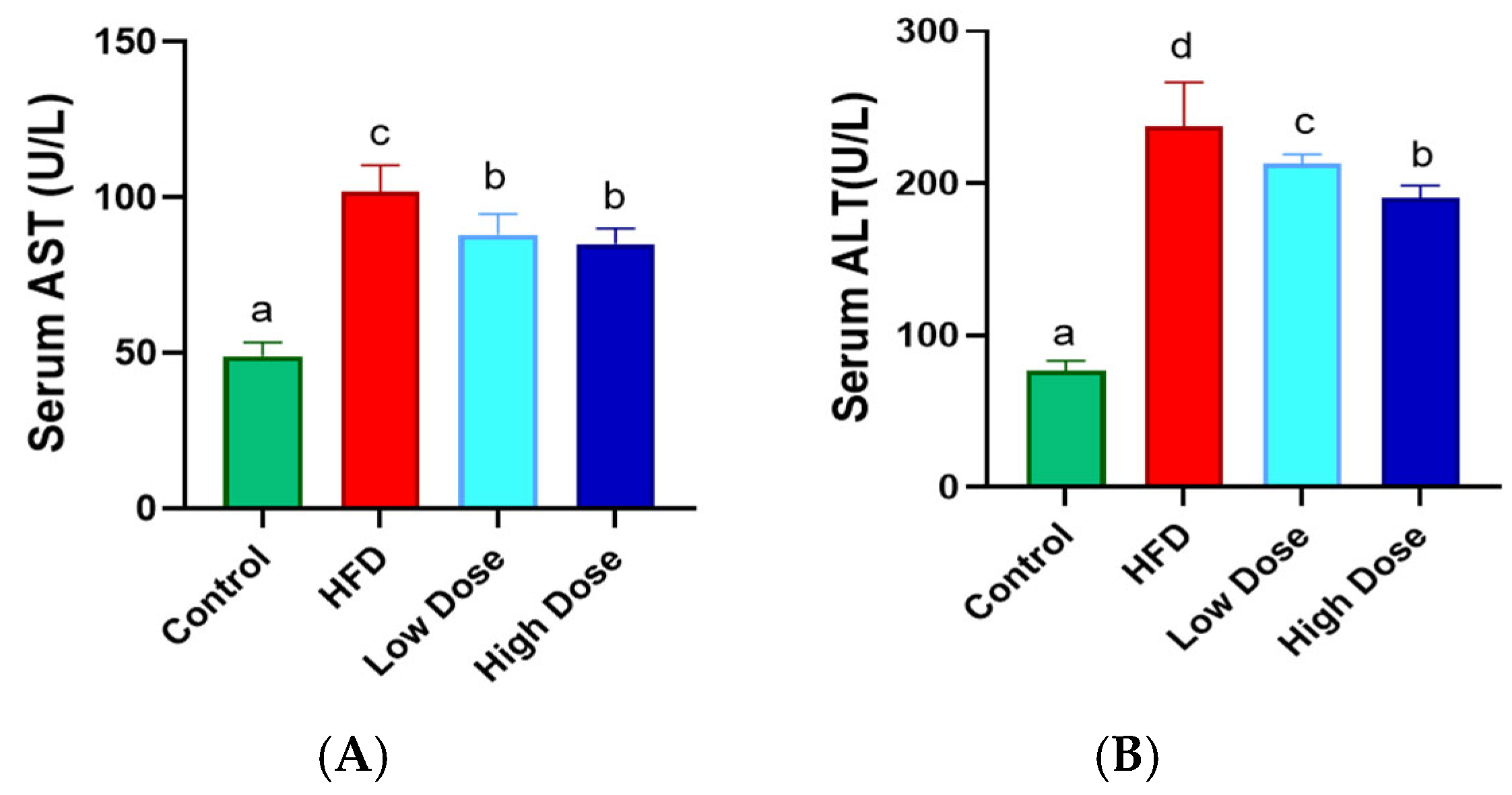
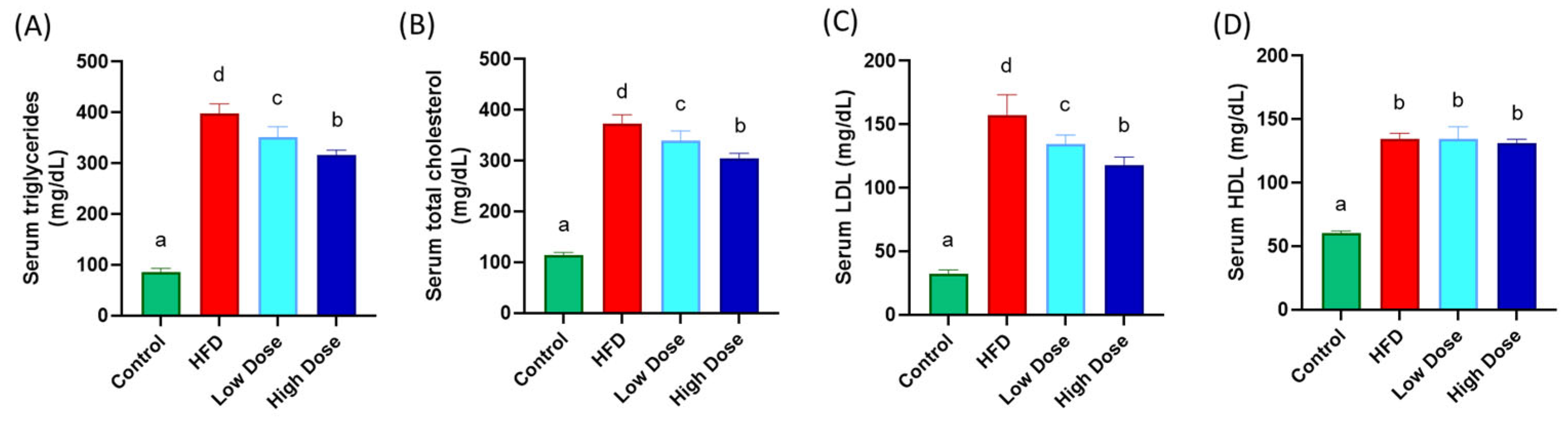
Serum aspartate aminotransferase (AST) activity was measured using an AST Activity Assay Kit (E-BC-K236-S, Elabscience, Houston, TX, USA), and serum alanine aminotransferase (ALT) activity was measured using an ALT Activity Assay Kit (E-BC-K235-M, Elabscience, Houston, TX, USA), according to the manufacturer’s instructions. AST and ALT activities were expressed as U/L and used as biochemical indicators of hepatic injury. Serum triglycerides (TG), total cholesterol (TC), high-density lipoprotein cholesterol (HDL-C), and low-density lipoprotein cholesterol (LDL-C) were measured using commercially available enzymatic colorimetric assay kits and analyzed with an automated biochemical analyzer (Hitachi 7060, Hitachi, Tokyo, Japan). The kits used were DiaSys Triglycerides FS, DiaSys Cholesterol FS, HDL-C Direct FS, and LDL-C Direct FS kits (DiaSys Diagnostic Systems GmbH, Holzheim, Germany). The analyzer was calibrated according to the manufacturer’s instructions before analysis. Low- and high-level quality control sera were included in each analytical batch to ensure assay reliability. The intra- and inter-assay coefficients of variation were both below 5%, according to the manufacturer’s specifications.
2.4. Hepatic and Fecal Triglyceride and Cholesterol Analysis
2.4.1. Hepatic Lipid Extraction and Analysis
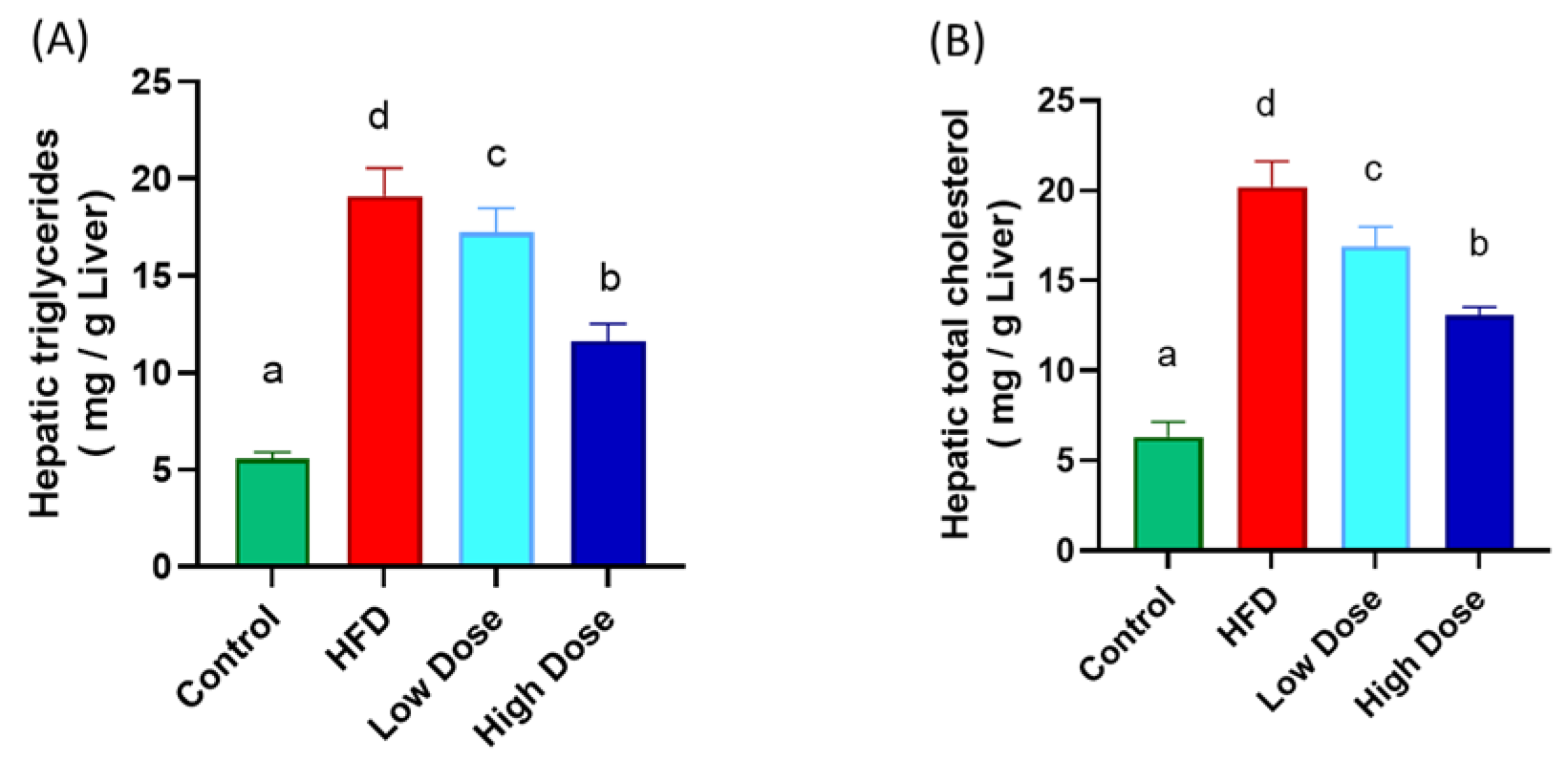
Liver tissue (100 mg) was homogenized in 1 mL of mixed solvent (chloroform:isopropanol:NP40 = 7:11:0.1, v/v/v) and centrifuged at 15,000× g for 10 min at room temperature. The supernatant (400 μL) was collected and dried in a vacuum concentrator at 50 °C for 30 min. The lipid residue was reconstituted with buffer solution. The hepatic lipid extract was homogenized using an ultrasonic cleaner (Branson 5800, Branson Ultrasonics, Brookfield, CT, USA) and mixed thoroughly with a vortex mixer (Vortex-Genie II, Scientific Industries, Bohemia, NY, USA) before lipid measurement. Hepatic triglyceride (TG) and total cholesterol (TC) levels were measured using commercially available enzymatic colorimetric assay kits, including the GPO-PAP method kit (TR1697, Randox Laboratories Ltd., Crumlin, Antrim, UK) and the CHOD-PAP method kit (CH3810, Randox Laboratories Ltd., Crumlin, Antrim, UK), according to the manufacturers’ instructions.
2.4.2. Fecal Lipid Extraction and Analysis
Dried and ground fecal samples (100 mg) were extracted with 1 mL of chloroform:methanol (2:1, v/v). The mixture was filtered through filter paper, and the filtrate was collected and dried using a vacuum concentrator. The dried lipid residue was reconstituted in dimethyl sulfoxide (DMSO). The fecal lipid extract was homogenized using an ultrasonic cleaner (Branson 5800, Branson Ultrasonics, Brookfield, CT, USA) and mixed thoroughly with a vortex mixer (Vortex-Genie II, Scientific Industries, Bohemia, NY, USA) before lipid determination. Fecal triglyceride (TG) and total cholesterol (TC) levels were measured using the GPO-PAP method kit (TR1697, Randox Laboratories Ltd., Crumlin, Antrim, UK) and the CHOD-PAP method kit (CH3810, Randox Laboratories Ltd., Crumlin, Antrim, UK), according to the manufacturers’ instructions.
2.5. Hepatic Gene Expression Analysis by RT-qPCR
Total RNA was isolated from liver tissues using TRIzol reagent (Thermo Fisher Scientific, Cat. No. 15596018, Waltham, MA, USA) and reverse-transcribed into complementary DNA (cDNA) using the RevertAid First Strand cDNA Synthesis Kit (Thermo Fisher Scientific, Cat. No. K1621, Waltham, MA, USA). Quantitative real-time PCR (RT-qPCR) was carried out using Maxima SYBR Green/ROX qPCR Master Mix (2×) (Thermo Fisher Scientific, Cat. No. K0221, Waltham, MA, USA) on a QuantStudio™ 1 Real-Time PCR System (Applied Biosystems, Waltham, MA, USA).
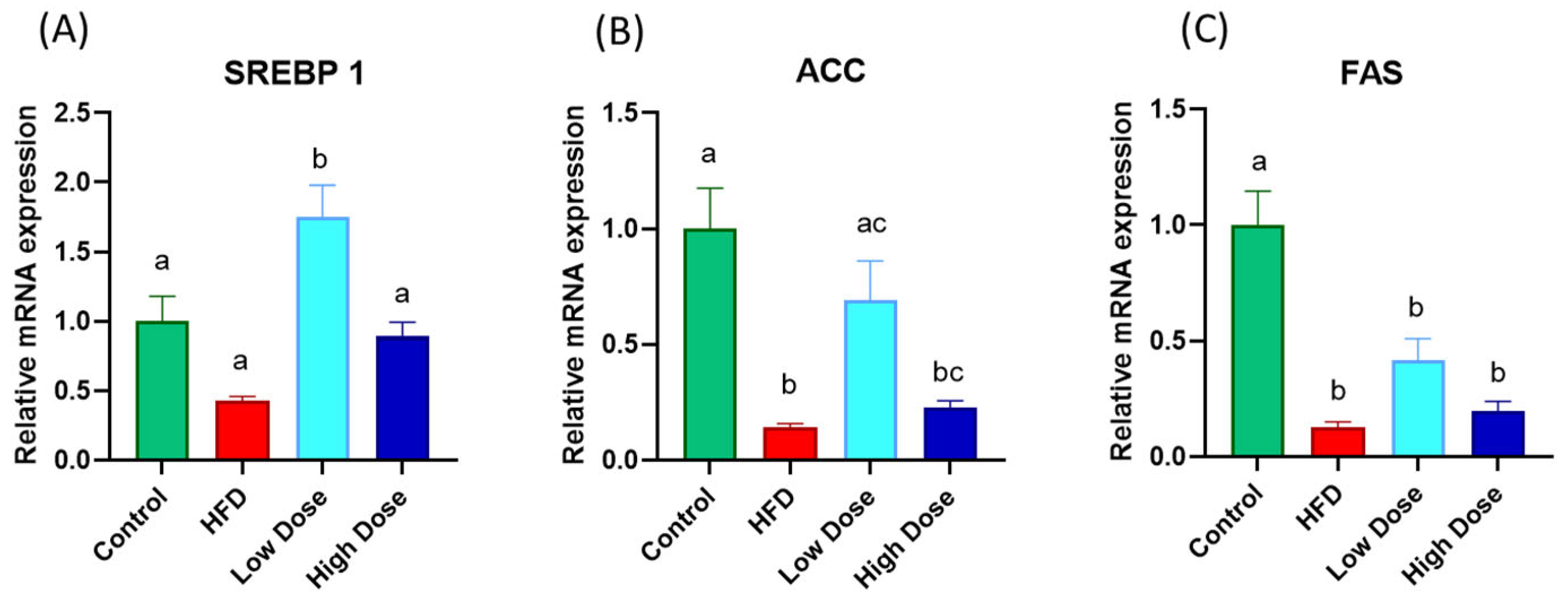
The relative mRNA expression levels of SREBP-1c, ACC, and FAS were determined using gene-specific primers and normalized to β-actin (ACTB) (
Table 2). Relative expression was calculated using the 2
−ΔΔCt method and presented as fold changes compared with the control group.
2.6. Lipidomics Analysis
2.6.1. Lipid Extraction and Internal Standards
Lipids from serum or liver tissues were extracted following the Folch method [
19]. To improve the reliability and reproducibility of the lipidomics procedure, two exogenous lipid standards were added to each sample to assess lipid recovery during sample preparation and to monitor the stability and variability of instrumental signals. The internal standards used were C17 ceramide (d18:1/17:0) (#860517, Avanti Polar Lipids, Alabaster, AL, USA) and glucosylsphingosine (#HY-N7745, MedChemExpress, Monmouth Junction, NJ, USA).
2.6.2. UPLC-Q-TOF/MS Analysis
After extraction, lipid samples were subjected to untargeted lipidomics analysis using an ultra-high-performance liquid chromatography system (ACQUITY UPLC, Waters, Milford, MA, USA) coupled with a hybrid quadrupole orthogonal time-of-flight mass spectrometer (SYNAPT G2 HDMS, Waters, Milford, MA, USA) with a CSH C18 column operated at 65 °C and a flow rate of 400 μL/min.
2.6.3. Data Processing and Lipid Annotation
The raw UPLC-MS/MS data were processed with the support of bioinformatics software and databases to identify lipid species and their potential functions. Progenesis QI software 3.0 (Waters, Milford, MA, USA) was used for data calibration, peak alignment, and feature screening. The mass tolerance for precursor and fragment ions was set at 15 ppm. Lipid molecules were annotated using the Human Metabolome Database (HMDB). Only features with a score > 30, relative abundance > 60%, and no missing values were included in the subsequent statistical analysis.
2.7. Statistical Analysis
Statistical analyses were performed using GraphPad Prism 9.0 software (GraphPad Software, San Diego, CA, USA). Data are presented as mean ± standard deviation (SD). Data normality was assessed using the Shapiro–Wilk test, and homogeneity of variance was evaluated using the Brown–Forsythe test before parametric analysis. For normally distributed data with acceptable variance homogeneity, one-way ANOVA followed by Tukey’s post hoc multiple comparison test was performed. A p-value < 0.05 was considered statistically significant.
Lipidomics data were processed and analyzed using the MetaboAnalyst 6.0 platform. Lipid species with more than 20% missing values were excluded, and the remaining missing values were imputed using the k-nearest neighbor (KNN) method at the feature-wise level. Group differences were evaluated by one-way ANOVA with false discovery rate (FDR) correction for multiple testing, and an adjusted p value (FDR) < 0.05 was considered statistically significant.
Multivariate analysis using partial least squares discriminant analysis (PLS-DA) and univariate fold change analysis were performed to evaluate differences in relative lipid abundance among the experimental groups. PLS-DA was used to visualize global lipidomic patterns and group separation based on hepatic and serum TG and DG profiles. Model performance was assessed by 5-fold cross-validation using R
2, Q
2, and classification accuracy, and potential overfitting was evaluated using 1000-time permutation tests (
Figures S1–S4). Differential lipid species were further interpreted together with lipid species–level statistical analyses (
Table S1).
4. Discussion
Our findings demonstrate that a curcumin–flaxseed oil complex effectively mitigates dyslipidemia in Syrian hamsters subjected to a high-fat, high-cholesterol challenge. This intervention significantly attenuated hepatic steatosis—marked by reduced triglyceride and total cholesterol sequestration—while simultaneously enhancing fecal lipid clearance. Furthermore, the observed shifts in hepatic and serum lipidomic signatures underscore a systemic restoration of lipid homeostasis. Syrian hamsters were selected for this study due to their human-like lipoprotein profiles and low basal rates of endogenous cholesterol synthesis, providing a clinically relevant framework for diet-induced metabolic stress [
12].
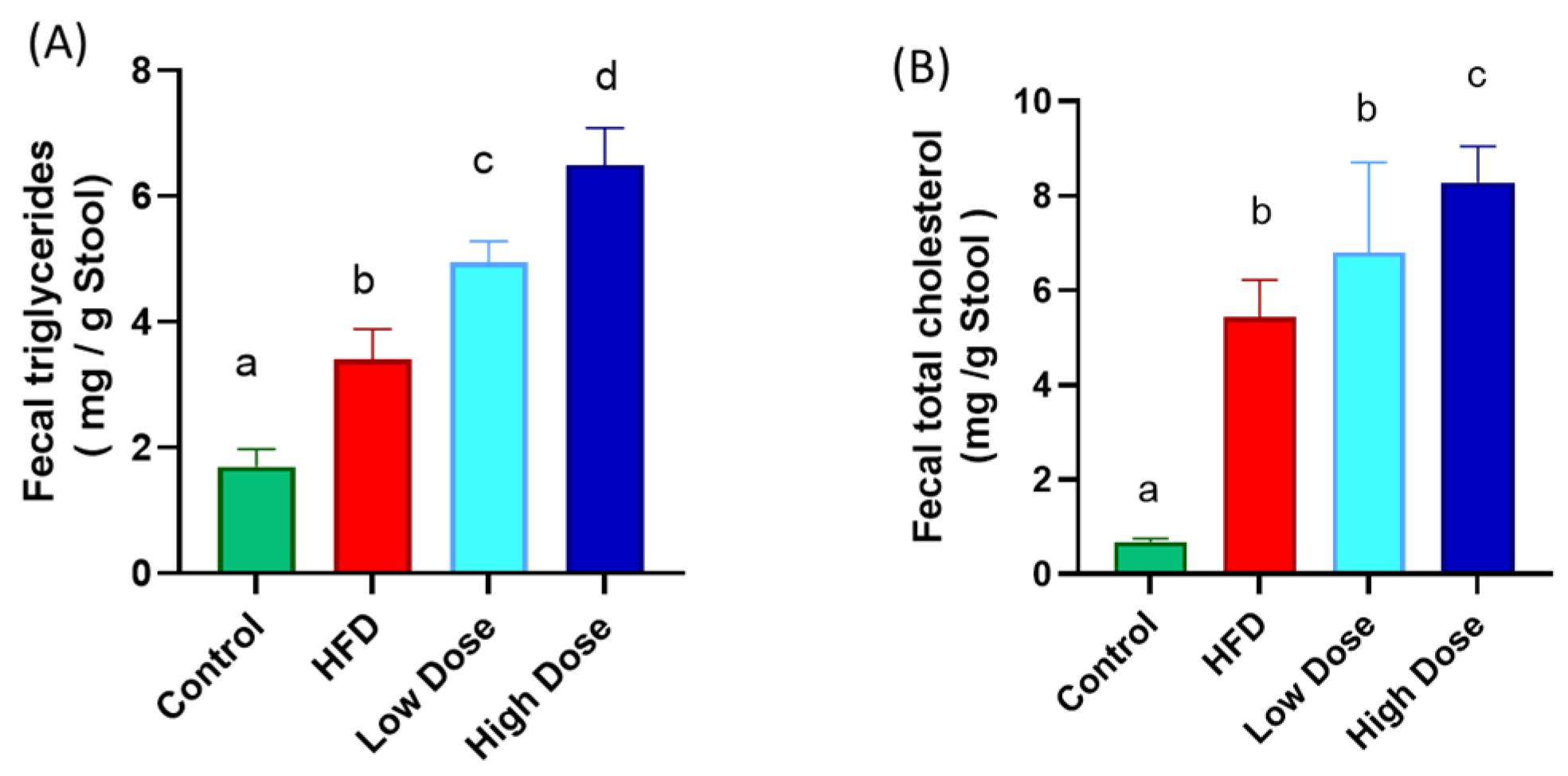
The reduction in hepatic TG and TC contents, together with the increase in fecal TG and TC excretion, suggests that the curcumin–flaxseed oil mixture may alleviate hepatic lipid burden partly through enhanced lipid elimination. This inverse pattern between hepatic lipid accumulation and fecal lipid output indicates that the intervention may influence whole-body lipid handling rather than simply lowering circulating lipid levels. Curcumin has been reported to improve hepatic steatosis by suppressing pathways involved in de novo lipogenesis and cholesterol synthesis while attenuating hepatic inflammatory signaling [
7,
20]. Flaxseed oil, which is rich in α-linolenic acid, has also been shown to improve lipid homeostasis and hepatic cholesterol metabolism in high-fat-fed animals [
21]. Therefore, the lipid-lowering effect observed in the present study may reflect complementary actions of curcumin and flaxseed oil on hepatic lipid metabolism.
A major strength of this study is the application of lipidomics to complement conventional biochemical measurements. Mass spectrometry-based lipidomics provides a broader view of lipid remodeling than traditional indices such as TG and TC alone [
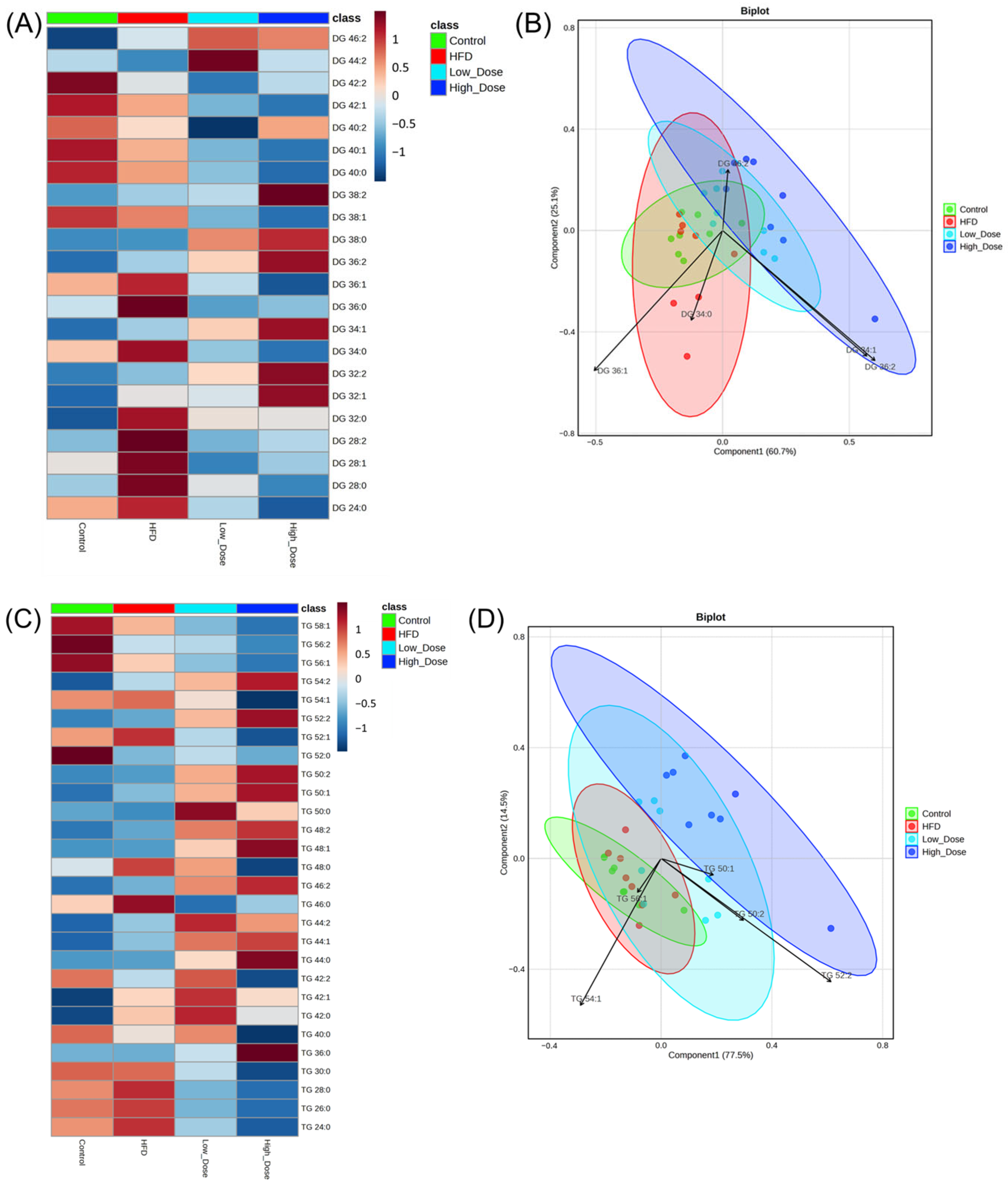
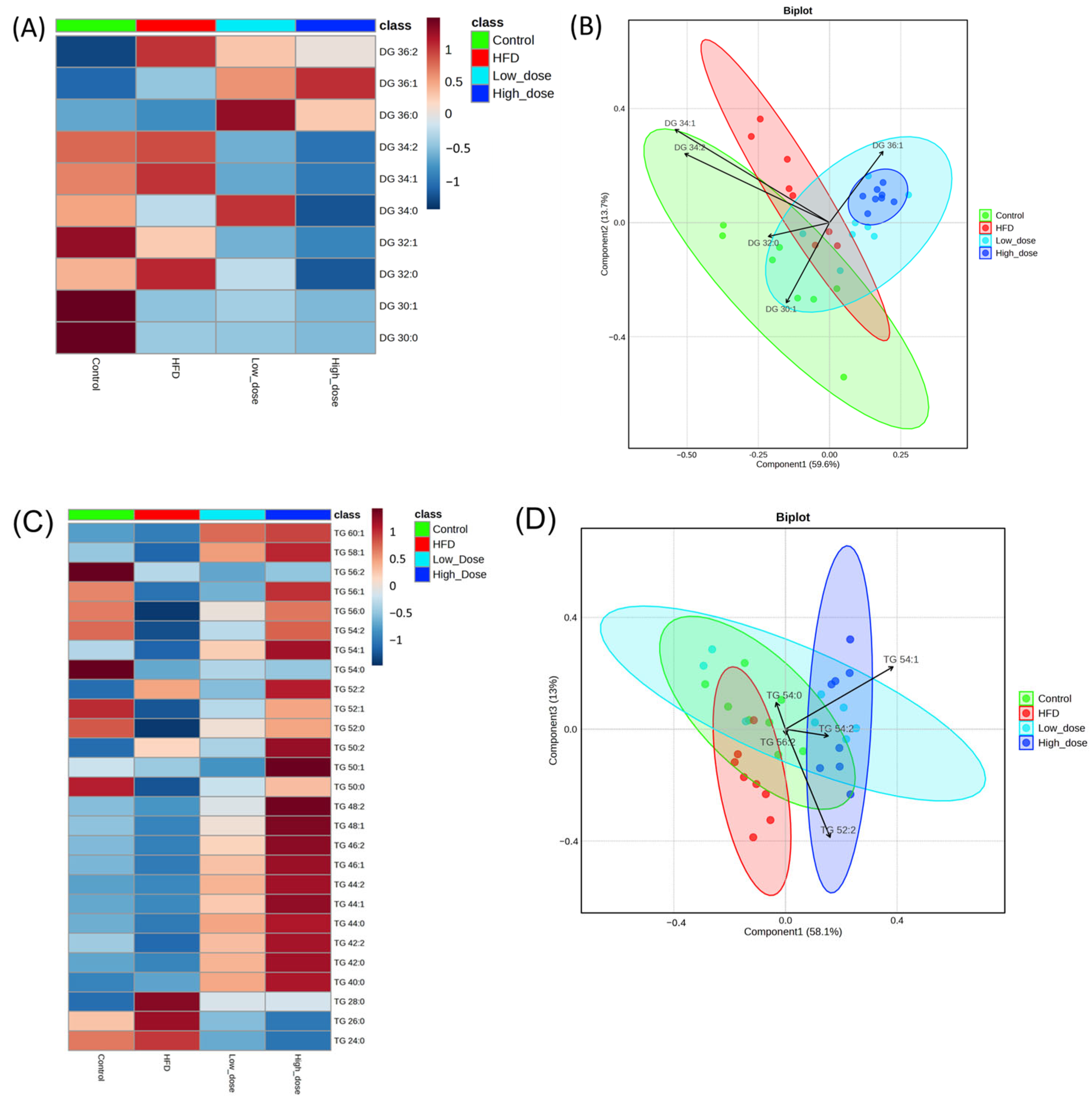
22]. In the present study, hepatic lipidomics revealed marked remodeling of diacylglycerol (DG) species after curcumin–flaxseed oil supplementation. The heatmap showed distinct abundance patterns across DG species, and the biplot demonstrated separation between the intervention groups and the HFD group, particularly in the high-dose group. These findings suggest that the intervention altered not only bulk hepatic lipid content but also DG composition at the molecular level. This observation is biologically meaningful because DGs are central intermediates linking fatty acid esterification, triglyceride synthesis, and lipid signaling, and hepatic DG accumulation has been closely associated with steatosis and metabolic dysfunction [
23,
24,
25]. Thus, the DG remodeling observed here may reflect altered hepatic lipid turnover and storage, which is consistent with the reductions in hepatic TG and TC levels.
Lipidomic profiling revealed distinct alterations in DG and TG species in hamsters fed a high-fat, high-cholesterol diet, supporting the potential involvement of these lipid classes in diet-induced metabolic dysregulation. The PLS-DA analysis showed clear separation between the Control and HFD groups, whereas low-dose and high-dose curcumin–flaxseed oil supplementation shifted lipidomic signatures toward a pattern more distinct from the HFD group. These findings suggest that the curcumin–flaxseed oil mixture modulated lipidomic profiles associated with hepatic lipid accumulation and systemic lipid handling. In the liver, high-dose supplementation reduced several DG species, including DG 34:2, DG 34:1, DG 32:1, and DG 32:0, suggesting partial attenuation of HFD-associated hepatic DG accumulation or remodeling. Serum lipidomic analysis further showed that curcumin–flaxseed oil supplementation remodeled circulating DG species in hamsters fed a high-fat, high-cholesterol diet. The serum heatmap demonstrated differential abundance patterns of multiple DG species among groups, and the biplot showed that the high-dose group was more clearly separated from the HFD group, whereas the low-dose group exhibited an intermediate distribution. In particular, serum DG 34:1 and DG 36:2 were more closely associated with the high-dose group, whereas DG 36:1 and DG 34:0 were more aligned with the HFD-related pattern. Notably, changes in DG molecular species observed in lipidomic may reflect alterations in sum-composition lipid profiles rather than definitive changes in specific fatty acyl chain composition. Therefore, the higher abundance of serum DG 34:1 and DG 36:2 in the high-dose group is more appropriately interpreted as selective remodeling of circulating DG composition rather than direct evidence of either beneficial or adverse metabolic effects, because the biological significance of individual DG species is highly species-specific and context-dependent [
26]. Since DGs are key intermediates linking fatty acid esterification, triglyceride synthesis, and lipid signaling, the remodeling of both hepatic and circulating DG species may reflect changes in lipid turnover, storage, and systemic lipid handling [
26,
27]. Taken together with the reductions in hepatic TG and TC contents observed in the intervention groups, these findings support the view that the curcumin–flaxseed oil mixture modulated lipid homeostasis at both hepatic and systemic levels. However, complete normalization of hepatic lipid metabolic flux cannot be inferred from the current lipidomic data alone.
Although we originally expected the intervention to suppress lipogenic signaling, hepatic SREBP-1 and ACC mRNA expression were increased in the low-dose group, whereas FAS expression was not significantly altered. This pattern suggests that regulation of the de novo lipogenesis pathway was not uniformly changed and that individual lipogenic genes may respond differently to dietary intervention. SREBP-1 is a key upstream transcription factor involved in hepatic lipogenesis, ACC is an early rate-limiting enzyme in fatty acid synthesis, and FAS is a downstream enzyme responsible for long-chain fatty acid synthesis [
28]. Therefore, the increase in SREBP-1 and ACC in the absence of a significant change in FAS may reflect differential regulation within the lipogenic pathway rather than generalized activation of hepatic lipid synthesis. Interestingly, SREBP-1 expression in the high-dose group was lower than that in the low-dose group. This finding may be associated with the higher intake of
n-3 fatty acids, particularly ALA, in the high-dose treatment. Previous studies have demonstrated that
n-3 polyunsaturated fatty acids suppress hepatic SREBP-1 activity and inhibit de novo lipogenesis, thereby reducing hepatic lipid accumulation [
29]. Therefore, the lower SREBP-1 expression observed in the high-dose group may reflect a stronger inhibitory effect of
n-3 fatty acids on hepatic lipogenic signaling. In addition, the biological activity of SREBP-1 is regulated not only at the transcriptional level but also through precursor cleavage, maturation, and nuclear translocation; thus, increased SREBP-1 mRNA expression does not necessarily indicate enhanced lipogenic flux [
30]. Similarly, ACC activity can be regulated post-translationally, suggesting that mRNA expression alone may not directly reflect functional lipid synthesis. Curcumin and flaxseed oil have been reported to reduce hepatic lipid accumulation, enhance fatty acid β-oxidation, suppress hepatic lipogenic enzyme activities, and increase fecal neutral sterol excretion in high-fat-fed hamsters or rats [
14,
15,
31], supporting the possibility that the low-dose response reflects partial metabolic adaptation and improved lipid handling rather than true activation of hepatic lipid deposition. Given that hepatic TG and TC contents were reduced despite the elevation of SREBP-1 and ACC, these changes may represent a compensatory or adaptive response to altered hepatic lipid handling rather than a direct signal promoting lipid accumulation. Overall, these findings suggest that the regulation of de novo lipogenesis may be influenced by multiple factors, including dietary composition, cholesterol load, feeding duration, and metabolic status.
Our findings revealed that curcumin–flaxseed oil supplementation reversed obesity-associated MASLD and related metabolic derangements. Curcumin–flaxseed oil supplementation leads to rapid metabolic improvements through alterations in lipid profiles and selected hormonal adaptations. Curcumin–flaxseed oil supplementation sustains and amplifies these improvements by promoting metabolic flexibility and reducing hepatic lipid overload, and attenuating inflammation [
15,
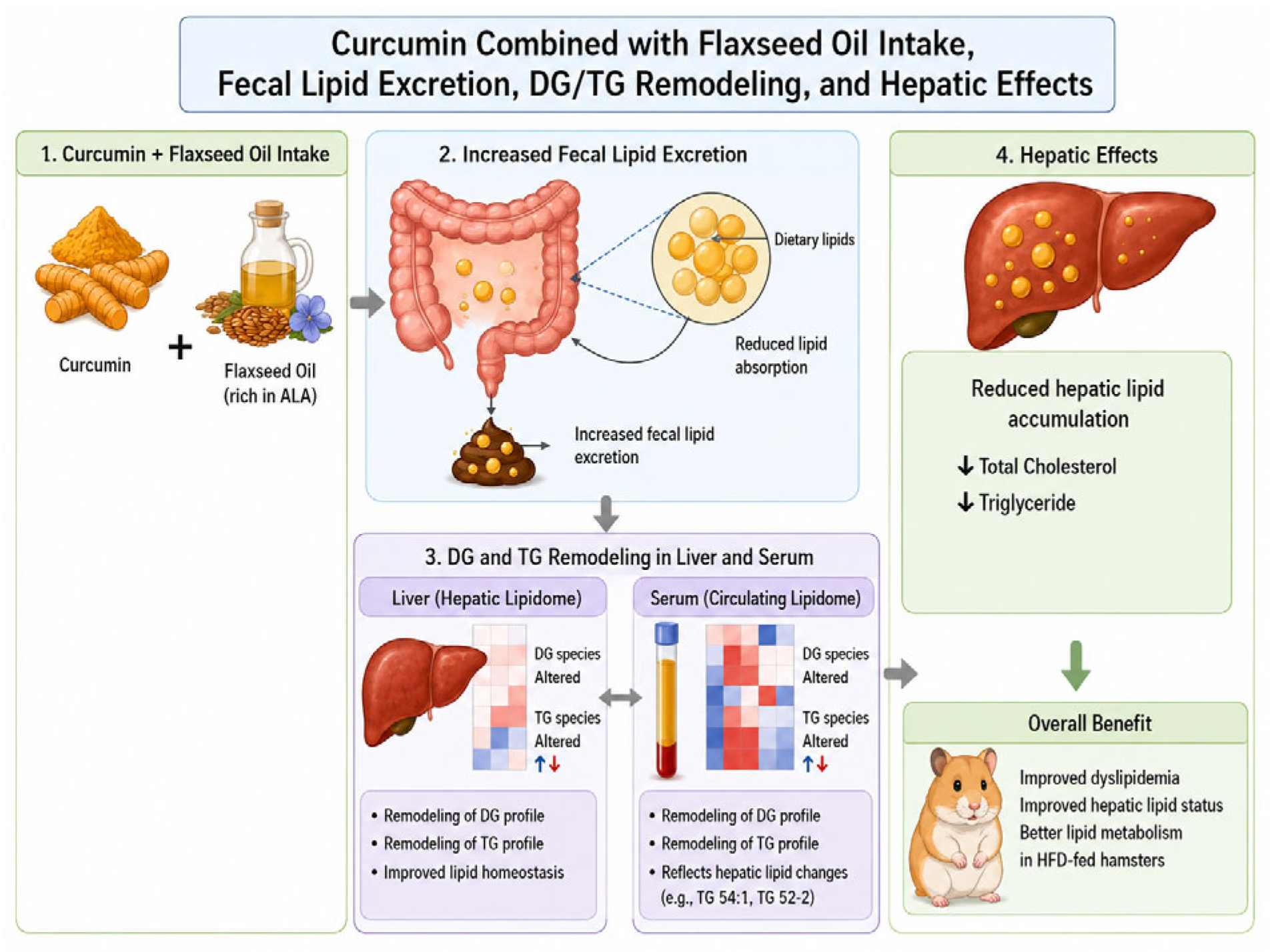
32]. Lipidomic profiling supported the aforementioned findings. Low-dose curcumin–flaxseed oil supplementation partially remodeled lipid metabolism, whereas high-dose supplementation induced lipidomic changes that differed from those observed in the low-dose group. In the circulating DG profile, DG 34:1 and DG 36:2 was more closely associated with the high-dose group, suggesting remodeling of circulating DG species after curcumin–flaxseed oil supplementation. High-dose supplementation was also associated with shifts in serum and hepatic lipid profiles, accompanied by reduced lipid accumulation. These results suggest that curcumin–flaxseed oil supplementation modulates hepatic and circulating lipid metabolism in a dose-related manner (
Figure 10).
Furthermore, nutritional evidence suggests that a reduced linoleic acid to α-linolenic acid ratio mitigates weight gain and metabolic dysfunction in obese cohorts [
33]. The therapeutic potential of
n-3 PUFAs is particularly salient, as they optimize lipid metabolism and systemic inflammatory status [
34]. Mechanistically,
n-3 PUFAs antagonize pro-inflammatory pathways, such as NF-κB, while modulating PPARγ signaling to enhance insulin sensitivity and resolve chronic low-grade inflammation [
35]. Collectively, optimizing the
n-6/
n-3 fatty acid balance represents a pivotal nutritional strategy for the management of metabolic disease.
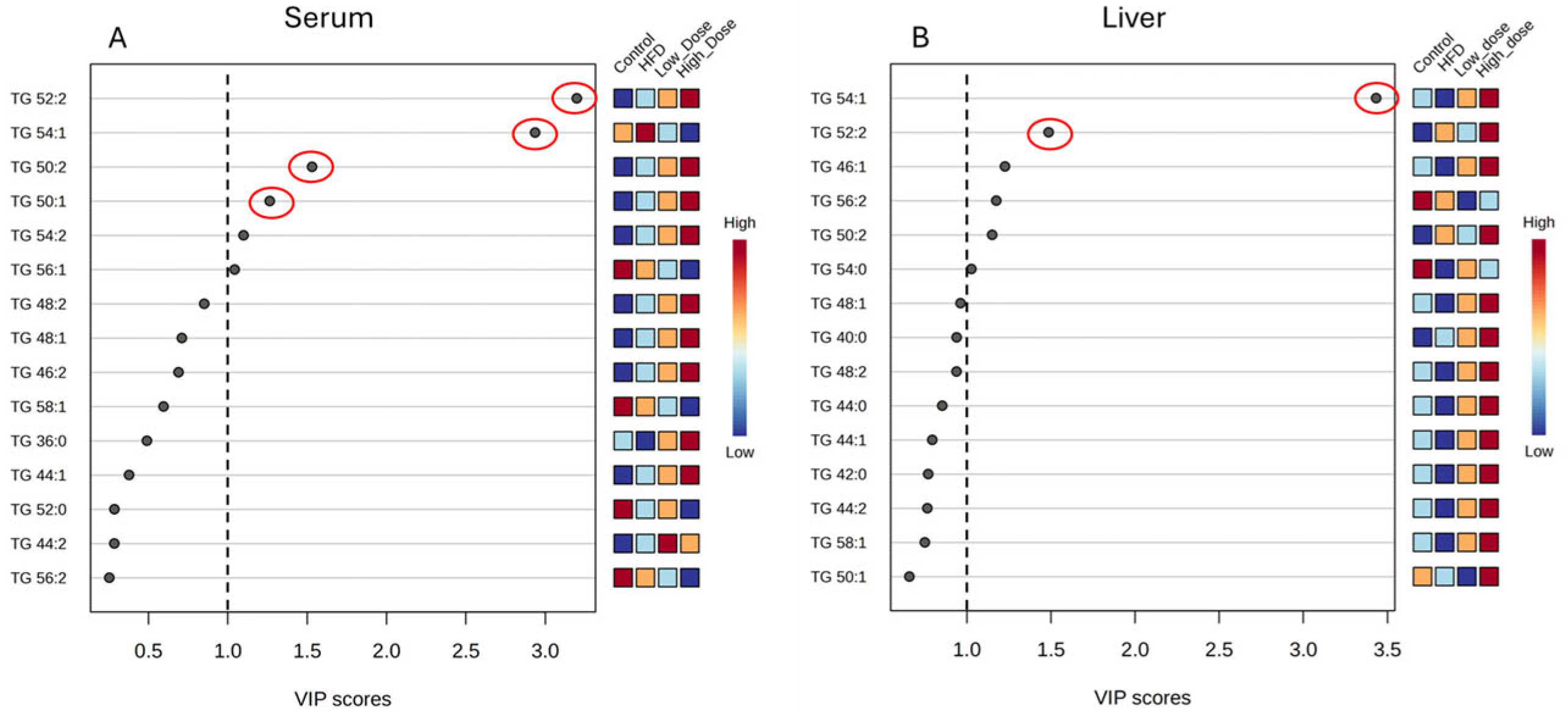
In the present study, hepatic FFA signatures—characterized by mass spectrometry—revealed a profound metabolic adaptation after a specific dietary intervention. The observed normalization of TG profiles not only reflects the re-establishment of lipid homeostasis but also identifies specific lipid species as key biomarkers of the adaptive metabolic response following dietary intervention. These findings suggest that monitoring circulating TG levels could enable more precise assessments of postoperative health and therapeutic success, providing a minimally invasive window into the resolution of MASLD [
36].
Several limitations should be acknowledged. First, this study lacked curcumin-only and flaxseed oil-only groups, which prevents us from distinguishing the individual contribution and optimal dose of each component; therefore, the findings should be interpreted as the effects of the combined curcumin and flaxseed oil formulation. Future studies with separate and combined intervention groups are needed to clarify their individual and combined effects. Second, the apparent lipogenesis paradox may reflect the limitation of using lipogenic mRNA expression as a direct indicator of lipid synthesis. Although SREBP-1 and ACC mRNA levels were increased after intervention, hepatic TG and TC contents were reduced, suggesting adaptive regulation of hepatic lipid metabolism rather than enhanced lipid accumulation. Because SREBP-1 and ACC are also regulated post-transcriptionally and post-translationally, mRNA expression alone cannot confirm increased lipogenic flux. The reduced hepatic lipid content, together with increased fecal lipid excretion, may partially support reduced net hepatic lipid retention after intervention. Third, the interpretation of cholesteryl ester (CE) species is limited in the present lipidomic analysis because CE species showed a high proportion of missing values, possibly due to low abundance or limited detection sensitivity under the current analytical conditions; therefore, we focused mainly on TAG and DAG species, which were more consistently detected and showed clearer intervention-related changes. Although lipidomic profiling provided a broader view of lipid remodeling, it did not establish direct causal relationships between individual DG species and the observed metabolic improvements. Finally, the underlying mechanisms were inferred mainly from biochemical and lipidomic findings and were not fully validated at the protein or enzyme-activity level. Nevertheless, the present results suggest that combined supplementation with curcumin and flaxseed oil may be associated with favorable modulation of hepatic and circulating lipid metabolism under high-fat, high-cholesterol dietary conditions.




 ,
,