Reshaping the Gut: Symptoms, Nutrition and Microbiota After Bariatric and Endoscopic Procedures in Obesity

 , ,
, ,  , ,
, ,  and
and
Abstract
1. Introduction
2. Methods
3. Bariatric and Endoscopic Procedures
3.1. Bariatric Procedures
- “Malabsorptive procedures” (biliopancreatic diversion (BPD) with or without duodenal switch (BPD-DS), or a combination of both (Roux-en-Y gastric bypass (RYGB): they bypass part of the small intestine
- “Restrictive procedures”: laparoscopic adjustable gastric banding (LAGB) and laparoscopic sleeve gastrectomy (LSG): they are based on decreasing the size of the stomach
3.2. Endoscopic Procedures
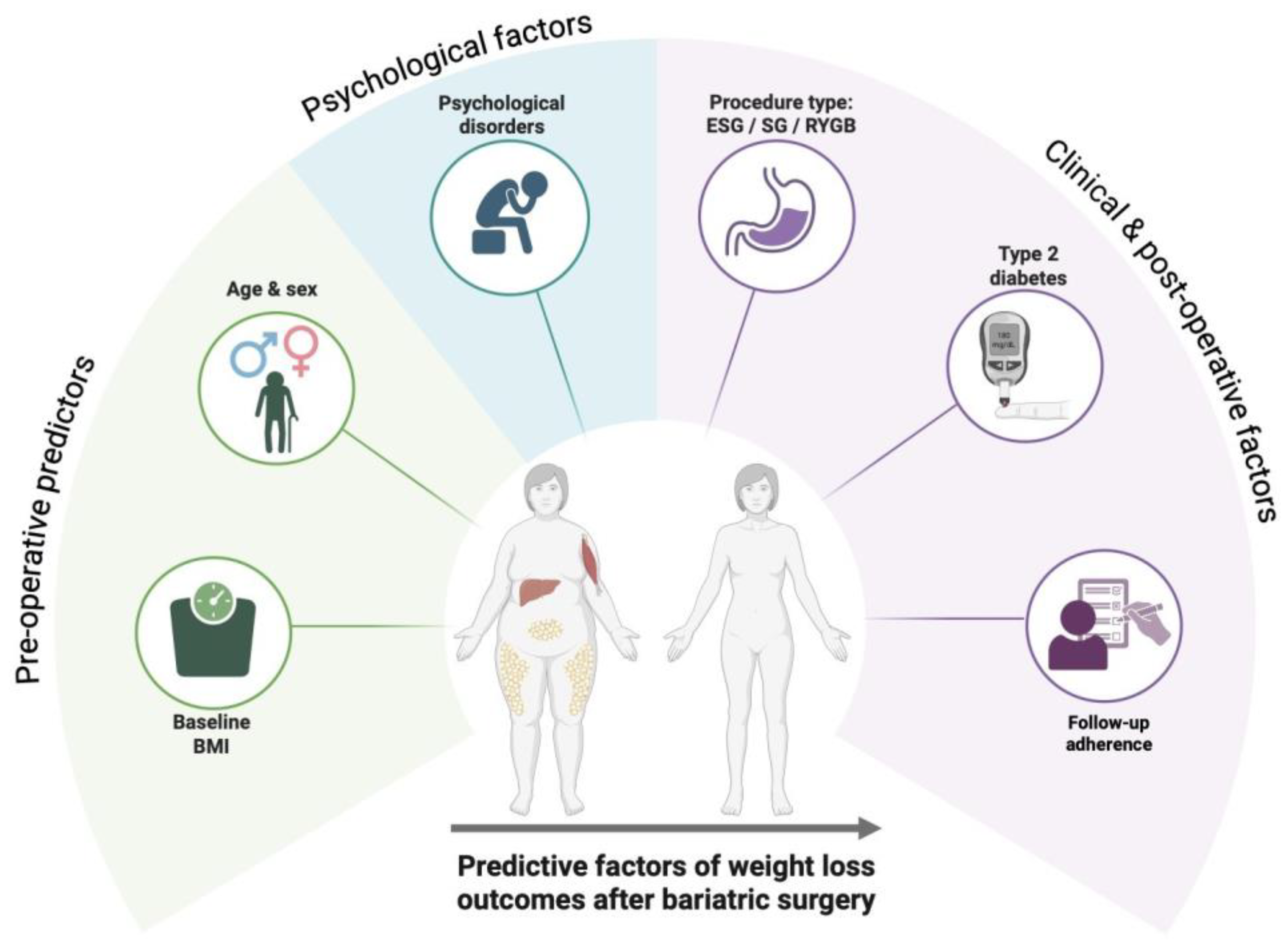
4. Predictive Factors of Weight Loss Outcomes After Bariatric Surgery
4.1. Baseline Body Mass Index (BMI)
4.2. Age and Gender
4.3. Presence of Type 2 Diabetes
4.4. Psychological Disorders
4.5. Type of Procedure
4.6. Adherence to Follow-Up
5. Gastrointestinal Side-Effects
5.1. Dumping Syndrome
5.2. GERD and Dyspepsia
5.3. Nausea, Vomiting, and Pain
5.4. Nutritional Deficiencies
5.5. Long-Term Effects
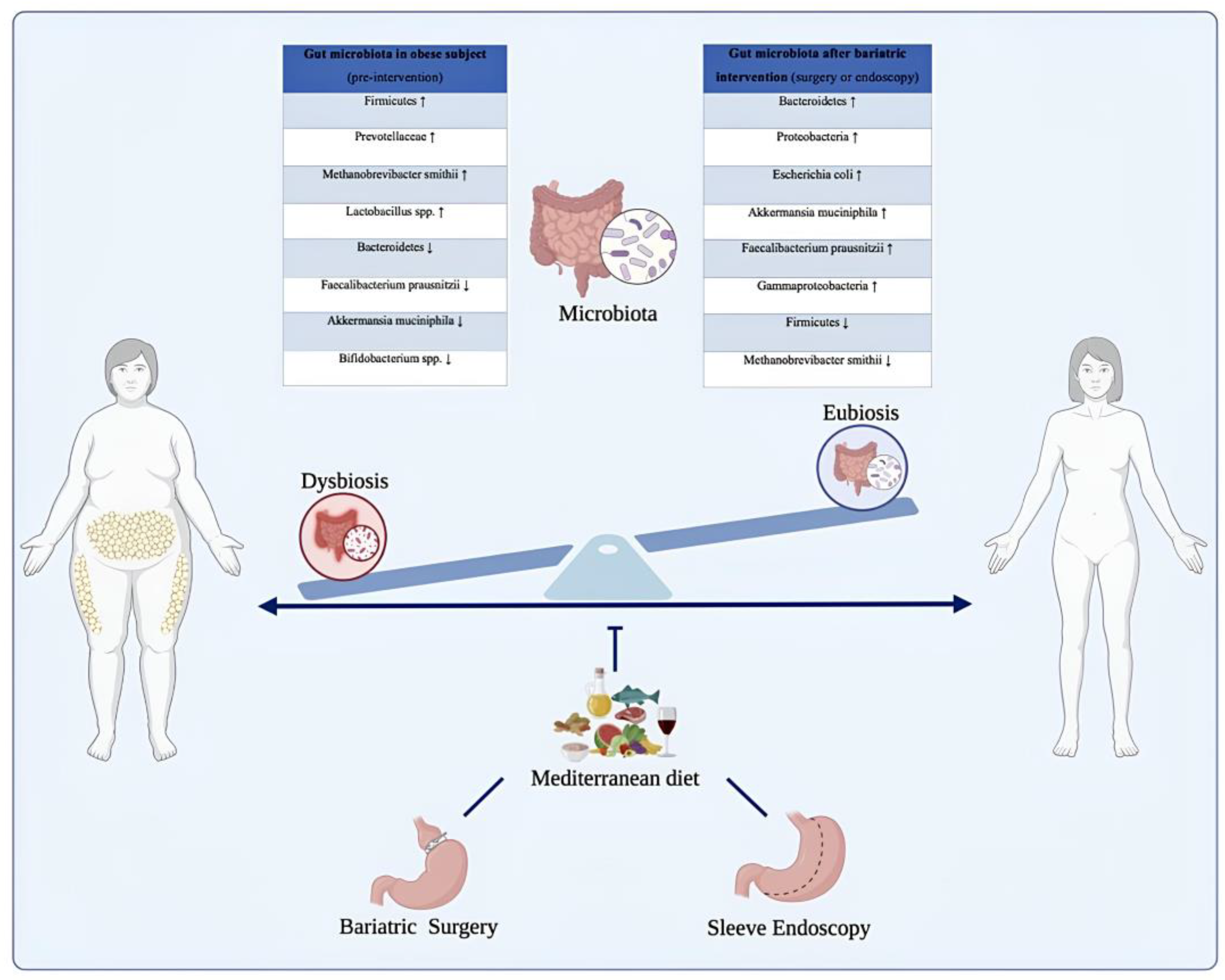
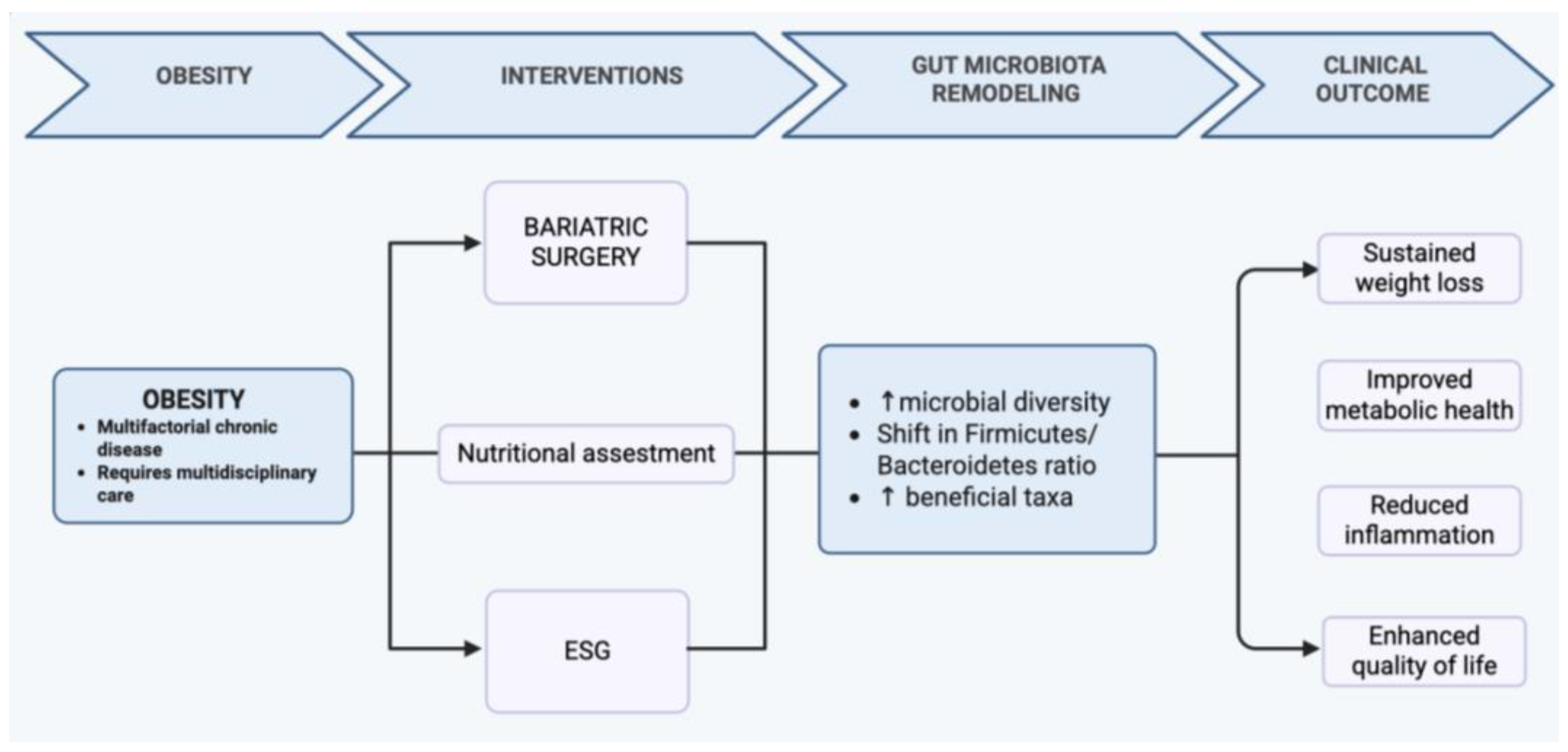
6. Gut Microbiota Alterations
7. Nutritional Approaches
7.1. Before Bariatric Surgery/ESG Interventions
7.2. After Bariatric Surgery/ESG Interventions
- Phase 1 (first week after procedure): A liquid-based diet with an estimated daily intake of approximately 400 kcal, favoring the consumption of fruit juices without added sugars, puréed vegetable soups, liquid yogurt, and sugar-free isotonic drinks. During this phase, it is crucial to consume small volumes at frequent intervals to avoid rapid gastric distention and minimize potential intolerance. Additionally, great attention should be given to hydration status, and the intake of water should be strongly encouraged.
- Phase 2 (second week): A diet ranging from 400 to 600 kcal per day is recommended. This phase begins when symptoms of gastric distress have improved, and the patient is better able to tolerate liquids. The volume of the diet is increased by introducing protein shakes, vegetable purees, and egg whites. Frequent meals in small volumes should be encouraged.
- Phase 3 (third week): The liquid diet should have facilitated postoperative healing and tissue repair, so the food’s consistency is gradually increased. Caloric intake reaches 800 kcal per day following a “soft” diet, which involves the gradual reintroduction of mechanically altered foods (e.g., ground meat, pureed, mashed) such as fruit compote, olive oil, and cooked egg whites.
- Phase 4 (fourth week): A transition toward the normal consistency of foods begins. Caloric intake is increased to 800–1200 kcal, and it is recommended to replace protein shakes with semi-solid or solid protein sources, such as chicken, fish, and fresh cheese.
7.3. Long Term Maintenance
8. Conclusions
Author Contributions
Funding
Data Availability Statement
Conflicts of Interest
References
- Dayyeh, A.B.K.; Bazerbachi, F.; Vargas, E.J.; Sharaiha, R.Z.; Thompson, C.C.; Thaemert, B.C.; Teixeira, A.F.; Chapman, C.G.; Kumbhari, V.; Ujiki, M.B.; et al. Endoscopic sleeve gastroplasty for treatment of class 1 and 2 obesity (MERIT): A prospective, multicentre, randomised trial. Lancet 2022, 400, 441–451. [Google Scholar] [CrossRef] [PubMed]
- Sharaiha, R.Z.; Kumta, N.A.; Saumoy, M.; Desai, A.P.; Sarkisian, A.M.; Benevenuto, A.; Tyberg, A.; Kumar, R.; Igel, L.; Verna, E.C.; et al. Endoscopic Sleeve Gastroplasty Significantly Reduces Body Mass Index and Metabolic Complications in Obese Patients. Clin. Gastroenterol. Hepatol. 2017, 15, 504–510. [Google Scholar] [CrossRef] [PubMed]
- Wagner, N.R.F.; Rizzon Zaparolli, M.; Ramos Cruz, M.R.; Madalozzo Schieferdecker, M.E.; Ligocki Campos, A.C. Post-operative changes in intestinal microbiota and use of probiotics in Roux-En-Y gastric bypass and sleeve vertical gastrectomy: An integrative review. Arq. Bras. Cir. Dig. 2018, 31, e1400. [Google Scholar] [CrossRef] [PubMed] [PubMed Central]
- Xia, Y.; Ren, M.; Yang, J.; Cai, C.; Cheng, W.; Zhou, X.; Lu, D.; Ji, F. Gut microbiome and microbial metabolites in NAFLD and after bariatric surgery: Correlation and causality. Front. Microbiol. 2022, 13, 1003755. [Google Scholar] [CrossRef] [PubMed] [PubMed Central]
- Perdomo, C.M.; Cohen, R.V.; Sumithran, P.; Clément, K.; Frühbeck, G. Contemporary medical, device, and surgical therapies for obesity in adults. Lancet 2023, 401, 1116–1130. [Google Scholar] [CrossRef] [PubMed]
- Bazerbachi, F.; Vargas Valls, E.J.; Abu Dayyeh, B.K. Recent Clinical Results of Endoscopic Bariatric Therapies as an Obesity Intervention. Clin. Endosc. 2017, 50, 42–50. [Google Scholar] [CrossRef] [PubMed] [PubMed Central]
- No Authors listed. Gastrointestinal surgery for severe obesity. Consens. Statement 1991, 9, 1–20. [PubMed]
- Eisenberg, D.; Shikora, S.A.; Aarts, E.; Aminian, A.; Angrisani, L.; Cohen, R.V.; de Luca, M.; Faria, S.L.; Goodpaster, K.P.S.; Haddad, A.; et al. 2022 American Society of Metabolic and Bariatric Surgery (ASMBS) and International Federation for the Surgery of Obesity and Metabolic Disorders (IFSO) Indications for Metabolic and Bariatric Surgery. Obes. Surg. 2023, 33, 3–14, Erratum in Obes. Surg. 2023, 33, 15–16. https://doi.org/10.1007/s11695-022-06369-2. PMID: 36336720; PMCID: PMC9834364. [Google Scholar] [CrossRef]
- Lopez-Nava, G.; Sharaiha, R.Z.; Vargas, E.J.; Bazerbachi, F.; Manoel, G.N.; Bautista-Castano, I.; Acosta, A.; Topazian, M.D.; Mundi, M.S.; Kumta, N.; et al. Endoscopic sleeve gastroplasty for obesity: A multicenter study of 248 patients with 24 months follow-up. Obes. Surg. 2017, 27, 2649–2655. [Google Scholar] [CrossRef] [PubMed]
- Le Chatelier, E.; Nielsen, T.; Qin, J.; Prifti, E.; Hildebrand, F.; Falony, G.; Almeida, M.; Arumugam, M.; Batto, J.M.; Kennedy, S.; et al. Richness of human gut microbiome correlates with metabolic markers. Nature 2013, 500, 541–546. [Google Scholar] [CrossRef] [PubMed]
- Karlsson, F.H.; Tremaroli, V.; Nookaew, I.; Bergström, G.; Behre, C.J.; Fagerberg, B.; Nielsen, J.; Bäckhed, F. Gut metagenome in European women with normal, impaired and diabetic glucose control. Nature 2013, 498, 99–103. [Google Scholar] [CrossRef] [PubMed]
- Tremaroli, V.; Bäckhed, F. Functional interactions between the gut microbiota and host metabolism. Nature 2012, 489, 242–249. [Google Scholar] [CrossRef] [PubMed]
- Turnbaugh, P.J.; Ley, R.E.; Mahowald, M.A.; Magrini, V.; Mardis, E.R.; Gordon, J.I. An obesity-associated gut microbiome with increased capacity for energy harvest. Nature 2006, 444, 1027–1031. [Google Scholar] [CrossRef] [PubMed]
- Cani, P.D.; Amar, J.; Iglesias, M.A.; Poggi, M.; Knauf, C.; Bastelica, D.; Neyrinck, A.M.; Fava, F.; Tuohy, K.M.; Chabo, C.; et al. Metabolic Endotoxemia Initiates Obesity and Insulin Resistance. Diabetes 2007, 56, 1761–1772. [Google Scholar] [CrossRef] [PubMed]
- Tilg, H.; Moschen, A.R. Microbiota and Diabetes: An Evolving Relationship. Gut 2014, 63, 1513–1521. [Google Scholar] [CrossRef] [PubMed]
- Bäckhed, F.; Ding, H.; Wang, T.; Hooper, L.V.; Koh, G.Y.; Nagy, A.; Semenkovich, C.F.; Gordon, J.I. The Gut Microbiota as an Environmental Factor That Regulates Fat Storage. Proc. Natl. Acad. Sci. USA 2004, 101, 15718–15723. [Google Scholar] [CrossRef] [PubMed] [PubMed Central]
- Lin, H.V.; Frassetto, A.; Kowalik, E.J.; Nawrocki, A.R.; Lu, M.M.; Kosinski, J.R.; Hubert, J.A.; Szeto, D.; Yao, X.; Forrest, G.; et al. Butyrate and propionate protect against diet-induced obesity and regulate gut hormones via free fatty acid receptor 3-independent mechanisms. PLoS ONE 2012, 7, e35240. [Google Scholar] [CrossRef] [PubMed] [PubMed Central]
- den Besten, G.; van Eunen, K.; Groen, A.K.; Venema, K.; Reijngoud, D.J.; Bakker, B.M. The Role of Short-Chain Fatty Acids in the Interplay Between Diet, Gut Microbiota, and Host Energy Metabolism. J. Lipid Res. 2013, 54, 2325–2340. [Google Scholar] [CrossRef] [PubMed] [PubMed Central]
- Jirapinyo, P.; Thompson, C.C. Endoscopic Bariatric and Metabolic Therapies: Surgical Analogues and Mechanisms of Action. Clin. Gastroenterol. Hepatol. 2017, 15, 619–630. [Google Scholar] [CrossRef] [PubMed] [PubMed Central]
- Scopinaro, N.; Adami, G.F.; Marinari, G.M.; Gianetta, E.; Traverso, E.; Friedman, D.; Camerini, G.; Baschieri, G.; Simonelli, A. Biliopancreatic diversion. World J. Surg. 1998, 22, 936–946. [Google Scholar] [CrossRef] [PubMed]
- Angrisani, L.; Santonicola, A.; Iovino, P.; Vitiello, A.; Zundel, N.; Buchwald, H.; Scopinaro, N. Erratum to: Bariatric Surgery and Endoluminal Procedures: IFSO Worldwide Survey 2014. Obes. Surg. 2017, 27, 2290–2292, Erratum in Obes. Surg. 2017, 27, 2279–2289. https://doi.org/10.1007/s11695-017-2666-x. PMID: 28681258; PMCID: PMC6829693. [Google Scholar] [CrossRef]
- Gumbs, A.A.; Gagner, M.; Dakin, G.; Pomp, A. Sleeve gastrectomy for morbid obesity. Obes. Surg. 2007, 17, 962–969. [Google Scholar] [CrossRef] [PubMed]
- Shi, X.; Karmali, S.; Sharma, A.M.; Birch, D.W. A review of laparoscopic sleeve gastrectomy for morbid obesity. Obes. Surg. 2010, 20, 1171–1177. [Google Scholar] [CrossRef] [PubMed]
- Avidan, R.; Abu-Abeid, A.; Keidar, A.; Lahat, G.; Eldar, S.M. Ten-Year Results of Laparoscopic Sleeve Gastrectomy: A Retrospectively Designed Study of a Single Tertiary Center. Obes. Surg. 2023, 33, 173–178. [Google Scholar] [CrossRef] [PubMed] [PubMed Central]
- DeMaria, E.J.; Pate, V.; Warthen, M.; Winegar, D.A. Baseline data from American Society for metabolic and bariatric surgery-designated bariatric surgery centers of excellence using the bariatric outcomes longitudinal database. Surg. Obes. Relat. Dis. 2010, 6, 347–355. [Google Scholar] [CrossRef] [PubMed]
- Silva, L.B.; Neto, M.G. Intragastric balloon. Minim. Invasive Ther. Allied Technol. 2022, 31, 505–514. [Google Scholar] [CrossRef] [PubMed]
- Fernandes, M.; Atallah, A.N.; Soares, B.G.O.; Humberto, S.; Guimarães, S.; Matos, D.; Monteiro, L.; Richter, B. Intragastric balloon for obesity. Cochrane Database Syst. Rev. 2007, 2007, CD004931. [Google Scholar] [CrossRef] [PubMed] [PubMed Central]
- Benjamin, S.B.; Boyle, T.M.; Agus, S.G.; Kozarek, R.A.; Silverstein, M.E. Small bowel obstruction and the Garren-Edwards gastric bubble: An iatrogenic bezoar. Gastrointest. Endosc. 1988, 34, 463–467. [Google Scholar] [CrossRef] [PubMed]
- Hogan, R.B.; Johnston, J.H.; Long, B.W.; Sones, J.Q.; Hinton, L.A.; Bunge, J.; Corrigan, S.A. A double-blind, randomized, sham-controlled trial of the gastric bubble for obesity. Gastrointest. Endosc. 1989, 35, 381–385. [Google Scholar] [CrossRef] [PubMed]
- Gkolfakis, P.; van Ouytsel, P.; Mourabit, Y.; Fernandez, M.; Yared r Deviere, J.; Huberty, V. Weight loss after endoscopic sleeve gastroplasty is independent of suture pattern: Results from a randomized controlled trial. Endosc. Int. Open 2022, 10, E1245–E1253. [Google Scholar] [CrossRef] [PubMed] [PubMed Central]
- Ahishali, E. Endoscopic sleeve gastroplasty for obesity: A multicenter study of 248 patients with 24 months follow-up. Turk. J. Gastroenterol. 2018, 29, 373–374. [Google Scholar] [CrossRef] [PubMed] [PubMed Central]
- Look AHEAD Research Group; Wadden, T.A.; West, D.S.; Delahanty, L.; Jakicic, J.; Rejeski, J.; Williamson, D.; Berkowitz, R.I.; Kelley, D.E.; Tomchee, C.; et al. The Look AHEAD study: A description of the lifestyle intervention and the evidence supporting it. Obesity 2006, 14, 737–752, Erratum in Obesity 2007, 15, 1339. PMID: 16855180. [Google Scholar] [CrossRef]
- Debédat, J.; Clément, K.; Aron-Wisnewsky, J. Gut Microbiota Dysbiosis in Human Obesity: Impact of Bariatric Surgery. Curr. Obes. Rep. 2019, 8, 229–242. [Google Scholar] [CrossRef] [PubMed]
- Livhits, M.; Mercado, C.; Yermilov, I.; Parikh, J.A.; Dutson, E.; Mehran, A.; Ko, C.Y.; Maggard Gibbons, M. Preoperative predictors of weight loss following bariatric surgery: Systematic review. Obes. Surg. 2012, 22, 70–89. [Google Scholar] [CrossRef] [PubMed]
- Baltasar, A.; Perez, N.; Serra, C.; Bou, R.; Bengochea, M.; Borràs, F. Weight loss reporting: Predicted body mass index after bariatric surgery. Obes. Surg. 2011, 21, 367–372. [Google Scholar] [CrossRef]
- Scozzari, G.; Passera, R.; Benvenga, R.; Toppino, M.; Morino, M. Age as a long-term prognostic factor in bariatric surgery. Ann. Surg. 2012, 256, 724–728; discussion 728–729. [Google Scholar] [CrossRef] [PubMed]
- Dreber, H.; Thorell, A.; Reynisdottir, S.; Hemmingsson, E. Health-Related Quality of Life 5 Years After Roux-en-Y Gastric Bypass in Young (18–25 Years) Versus Older (≥26 Years) Adults: A Scandinavian Obesity Surgery Registry Study. Obes. Surg. 2019, 29, 434–443. [Google Scholar] [CrossRef] [PubMed]
- Risi, R.; Rossini, G.; Tozzi, R.; Pieralice, S.; Monte, L.; Masi, D.; Castagneto Gissey, L.; Gallo, I.F.; Strigari, L.; Casella, G.; et al. Sex difference in the safety and efficacy of bariatric procedures: A systematic review and meta analysis. Surg. Obes. Relat. Dis. 2022, 18, 983–996. [Google Scholar] [CrossRef] [PubMed]
- Kolb, H.; Stumvoll, M.; Kramer, W.; Kempf, K.; Martin, S. Insulin translates unfavourable lifestyle into obesity. BMC Med. 2018, 16, 232. [Google Scholar] [CrossRef] [PubMed] [PubMed Central]
- Kerver, G.A.; Murray, M.F.; Dougherty, E.N. Eating Disorders in the Context of Metabolic and Bariatric Surgery: Current Status and Future Directions. Curr. Obes. Rep. 2025, 14, 31. [Google Scholar] [CrossRef] [PubMed] [PubMed Central]
- Wölnerhanssen, B.K.; Peterli, R.; Hurme, S.; Bueter, M.; Helmio, M.; Juuti, A.; Meyer-Gerspach, A.C.; Slawik, M.; Peromaa-Haavisto, P.; Nuutila, P.; et al. Laparoscopic Roux-en-Y gastric bypass versus laparoscopic sleeve gastrectomy: 5-year outcomes of merged data from two randomized clinical trials (SLEEVEPASS and SM-BOSS). Br. J. Surg. 2021, 108, 49–57. [Google Scholar] [CrossRef] [PubMed]
- Yoon, J.Y.; Arau, R.T. Study Group for Endoscopic Bariatric and Metabolic Therapies of the Korean Society of Gastrointestinal Endoscopy. The Efficacy and Safety of Endoscopic Sleeve Gastroplasty as an Alternative to Laparoscopic Sleeve Gastrectomy. Clin. Endosc. 2021, 54, 17–24. [Google Scholar] [CrossRef] [PubMed] [PubMed Central]
- Sharaiha, R.Z.; Hajifathalian, K.; Kumar, R.; Saunders, K.; Mehta, A.; Ang, B.; Skaf, D.; Shah, S.; Herr, A.; Igel, L.; et al. Five-Year Outcomes of Endoscopic Sleeve Gastroplasty for the Treatment of Obesity. Clin. Gastroenterol. Hepatol. 2021, 19, 1051–1057.e2. [Google Scholar] [CrossRef] [PubMed]
- D’hoedt, A.; Vanuytsel, T. Dumping syndrome after bariatric surgery: Prevalence, pathophysiology and role in weight reduction—A systematic review. Acta Gastroenterol. Belg. 2023, 86, 417–427. [Google Scholar] [CrossRef] [PubMed]
- van Beek, A.P.; Emous, M.; Laville, M.; Tack, J. Dumping syndrome after esophageal, gastric or bariatric surgery: Pathophysiology, diagnosis, and management. Obes. Rev. 2017, 18, 68–85. [Google Scholar] [CrossRef] [PubMed]
- Melissas, J.; Braghetto, I.; Molina, J.C.; Silecchia, G.; Iossa, A.; Iannelli, A.; Foletto, M. Gastroesophageal Reflux Disease and Sleeve Gastrectomy. Obes. Surg. 2015, 25, 2430–2435. [Google Scholar] [CrossRef] [PubMed]
- Kaplan, L.M. Gastrointestinal management of the bariatric surgery patient. Gastroenterol. Clin. N. Am. 2005, 34, 105–125. [Google Scholar] [CrossRef] [PubMed]
- Docimo, S., Jr.; Aylward, L.; Albaugh, V.L.; Afaneh, C.; El Djouzi, S.; Ali, M.; Altieri, M.S.; Carter, J.; American Society for Metabolic and Bariatric Surgery Clinical Issues Committee. Endoscopic sleeve gastroplasty and its role in the treatment of obesity: A systematic review. Surg. Obes. Relat. Dis. 2023, 19, 1205–1218. [Google Scholar] [CrossRef] [PubMed]
- Alqahtani, A.; Al-Darwish, A.; Mahmoud, A.E.; Alqahtani, Y.A.; Elahmedi, M. Short-term outcomes of endoscopic sleeve gastroplasty in 1000 consecutive patients. Gastrointest Endosc. 2019, 89, 1132–1138. [Google Scholar] [CrossRef] [PubMed]
- Huseini, M.; Wood, G.C.; Seiler, J.; Argyropoulos, G.; Irving, B.A.; Gerhard, G.S.; Benotti, P.; Still, C.; Rolston, D.D.K. Gastrointestinal symptoms in morbid obesity. Front. Med. 2014, 1, 49. [Google Scholar] [CrossRef] [PubMed] [PubMed Central]
- Delgado-Aros, S.; Camilleri, M.; Garcia, M.A.; Burton, D.; Busciglio, I. High body mass alters colonic sensory-motor function and transit in humans. Am. J. Physiol. Gastrointest. Liver Physiol. 2008, 295, G382–G388. [Google Scholar] [CrossRef] [PubMed] [PubMed Central]
- Mechanick, J.I.; Apovian, C.; Brethauer, S.; Garvey, W.T.; Joffe, A.M.; Kim, J.; Kushner, R.F.; Lindquist, R.; Pessah-Pollack, R.; Seger, J.; et al. Clinical Practice Guidelines for the Perioperative Nutrition, Metabolic, and Nonsurgical Support of Patients Undergoing Bariatric Procedures—2019 Update cosponsored by american association of clinical endocrinologists/american college of endocrinology, the obesity society, american society for metabolic & bariatric surgery, obesity medicine association, and american society of anesthesiologists—Executive summary. Endocr. Pract. 2019, 25, 1–75. [Google Scholar] [CrossRef] [PubMed]
- Mohapatra, S.; Gangadharan, K.; Pitchumoni, C.S. Malnutrition in obesity before and after bariatric surgery. Dis. Mon. 2020, 66, 100866. [Google Scholar] [CrossRef] [PubMed]
- Chang, P.; Friedenberg, F. Obesity and GERD. Gastroenterol. Clin. N. Am. 2014, 43, 161–173. [Google Scholar] [CrossRef] [PubMed] [PubMed Central]
- Negi, A.; Asokkumar, R.; Ravi, R.; Lopez-Nava, G.; Bautista-Castaño, I. Nutritional Management and Role of Multidisciplinary Follow-Up after Endoscopic Bariatric Treatment for Obesity. Nutrients 2022, 14, 3450. [Google Scholar] [CrossRef] [PubMed] [PubMed Central]
- Suter, M.; Dorta, G.; Giusti, V.; Calmes, J.M. Gastro-esophageal reflux and esophageal motility disorders in morbidly obese patients. Obes. Surg. 2004, 14, 959–966. [Google Scholar] [CrossRef] [PubMed]
- Talley, N.J.; Quan, C.; Jones, M.P.; Horowitz, M. Association of upper and lower gastrointestinal tract symptoms with body mass index in an Australian cohort. Neurogastroenterol. Motil. 2004, 16, 413–419. [Google Scholar] [CrossRef] [PubMed]
- Stefura, T.; Zapala, B.; Gosiewski, T.; Skomarovska, O.; Pedziwiatr, M.; Major, P. Changes in the composition of oral and intestinal microbiota after sleeve gastrectomy and Roux-en-Y gastric bypass and their impact on outcomes of bariatric surgery. Obes. Surg. 2022, 32, 1439–1450. [Google Scholar] [CrossRef] [PubMed] [PubMed Central]
- Grosse, C.S.; Cope, V.C. Dietary Fibre Intake and Bowel Habits After Bariatric Surgery: A Structured Literature Review. Obes. Surg. 2019, 29, 2247–2254. [Google Scholar] [CrossRef] [PubMed]
- Ley, R.E.; Turnbaugh, P.J.; Klein, S.; Gordon, J.I. Microbial ecology: Human gut microbes associated with obesity. Nature 2006, 444, 1022–1023. [Google Scholar] [CrossRef] [PubMed]
- Ramos-Lopez, O.; Aranaz, P.; Riezu-Boj, J.I.; Milagro, F.I. Application of Gut Bacterial Profiling Information in Precision Nutrition for Obesity and Weight Loss Management. Lifestyle Genom. 2024, 17, 22–30. [Google Scholar] [CrossRef] [PubMed]
- Coimbra, V.O.R.; Crovesy, L.; Ribeiro-Alves, M.; Faller, A.L.K.; Mattos, F.; Rosado, E.L. Gut Microbiota Profile in Adults Undergoing Bariatric Surgery: A Systematic Review. Nutrients 2022, 14, 4979. [Google Scholar] [CrossRef] [PubMed] [PubMed Central]
- Aron-Wisnewsky, J.; Doré, J.; Clement, K. The importance of the gut microbiota after bariatric surgery. Nat. Rev. Gastroenterol. Hepatol. 2012, 9, 590–598. [Google Scholar] [CrossRef] [PubMed]
- Yu, D.; Shu, X.O.; Howard, E.F.; Long, J.; English, W.J.; Flynn, C.R. Fecal metagenomics and metabolomics reveal gut microbial changes after bariatric surgery. Surg. Obes. Relat. Dis. 2020, 16, 1772–1782. [Google Scholar] [CrossRef] [PubMed] [PubMed Central]
- Shen, N.; Caixàs, A.; Ahlers, M.; Patel, K.; Gao, Z.; Dutia, R.; Blaser, M.J.; Clemente, J.C.; Laferrère, B. Longitudinal Changes of Microbiome Composition and Microbial Metabolomics after Surgical Weight Loss in Individuals with Obesity. Surg. Obes. Relat. Dis. 2019, 15, 1367–1373. [Google Scholar] [CrossRef] [PubMed] [PubMed Central]
- Juárez-Fernández, M.; Román-Sagüillo, S.; Porras, D.; García-Mediavilla, M.V.; Linares, P.; Ballesteros-Pomar, M.D.; Urioste-Fondo, A.; Álvarez-Cuenllas, B.; González-Gallego, J.; Sánchez-Campos, S.; et al. Long-Term Effects of Bariatric Surgery on Gut Microbiota Composition and Faecal Metabolome Related to Obesity Remission. Nutrients 2021, 13, 2519. [Google Scholar] [CrossRef] [PubMed] [PubMed Central]
- Voermans, B.; Gerdes, V.; Nieuwdorp, M. Gut microbiota alterations and their role in the pathophysiology of obesity following bariatric surgery. Expert Rev. Endocrinol. Metab. 2025, 20, 291–305. [Google Scholar] [CrossRef] [PubMed]
- Zhang, H.; DiBaise, J.K.; Zuccolo, A.; Kudrna, D.; Braidotti, M.; Yu, Y.; Parameswaran, P.; Crowell, M.D.; Wing, R.; Rittmann, B.E.; et al. Human gut microbiota in obesity and after gastric bypass. Proc. Natl. Acad. Sci. USA 2009, 106, 2365–2370. [Google Scholar] [CrossRef] [PubMed] [PubMed Central]
- Furet, J.P.; Kong, L.-C.; Tap, J.; Poitou, C.; Basdevant, A.; Bouillot, J.-L.; Mariat, D.; Corthier, G.; Doré, J.; Henegar, C.; et al. Differential adaptation of human gut microbiota to bariatric surgery-induced weight loss: Links with metabolic and low-grade inflammation markers. Diabetes 2010, 59, 3049–3057. [Google Scholar] [CrossRef]
- Medina, D.A.; Pedreros, J.P.; Turiel, D.; Quezada, N.; Pimentel, F.; Escalona, A.; Garrido, D. Distinct patterns in the gut microbiota after surgical or medical therapy in obese patients. PeerJ 2017, 5, e3443. [Google Scholar] [CrossRef] [PubMed] [PubMed Central]
- Liou, A.P.; Paziuk, M.; Luevano, J.-M., Jr.; Machineni, S.; Turnbaugh, P.J.; Kaplan, L.M. Conserved shifts in the gut microbiota due to gastric bypass reduce host weight and adiposity. Sci. Transl. Med. 2013, 5, 178ra41. [Google Scholar] [CrossRef] [PubMed] [PubMed Central]
- Yang, J.; Chen, L.; Shang, X.-Y.; Chen, Y.-L.; Zhao, S.-S.; Jin, S.; Yang, J.; Liu, H.-X.; Du, J. Roux-en-Y gastric bypass-induced perturbative changes in microbial communities and metabolic pathways in rats. Front. Microbiol. 2022, 13, 1034839. [Google Scholar] [CrossRef] [PubMed] [PubMed Central]
- Shao, Y.; Ding, R.; Xu, B.; Hua, R.; Shen, Q.; He, K.; Yao, Q. Alterations of Gut Microbiota After Roux-en-Y Gastric Bypass and Sleeve Gastrectomy in Sprague-Dawley Rats. Obes. Surg. 2017, 27, 295–302. [Google Scholar] [CrossRef] [PubMed]
- Hamamah, S.; Hajnal, A.; Covasa, M. Influence of Bariatric Surgery on Gut Microbiota Composition and Its Implication on Brain and Peripheral Targets. Nutrients 2024, 16, 1071. [Google Scholar] [CrossRef] [PubMed] [PubMed Central]
- Di Rosa, C.; Lattanzi, G.; Spiezia, C.; Imperia, E.; Piccirilli, S.; Beato, I.; Gaspa, G.; Micheli, V.; De Joannon, F.; Vallecorsa, N.; et al. Mediterranean Diet versus Very Low-Calorie Ketogenic Diet: Effects of Reaching 5% Body Weight Loss on Body Composition in Subjects with Overweight and with Obesity—A Cohort Study. Int. J. Environ. Res. Public Health 2022, 19, 13040. [Google Scholar] [CrossRef] [PubMed] [PubMed Central]
- Kotzampassi, K.; Grosomanidis, V.; Papakostas, P.; Penna, S.; Eleftheriadis, E. 500 intragastric balloons: What happens 5 years thereafter? Obes. Surg. 2012, 22, 896–903. [Google Scholar] [CrossRef] [PubMed]
- Lopez-Nava, G.; Rubio, M.A.; Prados, S.; Pastor, G.; Cruz, M.R.; Companioni, E.; Lopez, A. BioEnterics® Intragastric Balloon (BIB®). Single Ambulatory Center Spanish Experience with 714 Consecutive Patients Treated with One or Two Consecutive Balloons. Obes. Surg. 2010, 21, 5–9. [Google Scholar] [CrossRef] [PubMed]
- Bettini, S.; Belligoli, A.; Fabris, R.; Busetto, L. Correction to: Diet approach before and after bariatric surgery. Rev. Endocr. Metab. Disord. 2020, 21, 449, Erratum in Rev. Endocr. Metab. Disord. 2020, 21, 297–306. https://doi.org/10.1007/s11154-020-09571-8. PMID: 32803692; PMCID: PMC7853030. [Google Scholar] [CrossRef]
- Dagan, S.S.; Goldenshluger, A.; Globus, I.; Schweiger, C.; Kessler, Y.; Kowen Sandbank, G.; Ben-Porat, T.; Sinai, T. Nutritional Recommendations for Adult Bariatric Surgery Patients: Clinical Practice. Adv. Nutr. 2017, 8, 382–394. [Google Scholar] [CrossRef] [PubMed] [PubMed Central]
- Moizè, V.; Andreu, A.; Rodriguez, L.; Flores, L.; Ibarzabal, A.; Lacy, A.; JImenez, A.; Vidal, J. Protein intake and lean tissue mass retention following bariatric surgery. Clin. Nutr. 2013, 32, 550–555. [Google Scholar] [CrossRef] [PubMed]
- Cambi, M.P.C.; Baretta, G.A.P.; Spagnol, M.; Zilio, R.; Rossoni, C. Systematization of Nutritional Care in Endoscopic Treatment for Obesity. Obes. Surg. 2019, 29, 1074–1080. [Google Scholar] [CrossRef] [PubMed]
- Rueda-Galindo, L.; Zerón-Rugerio, M.F.; Egea, A.J.S.; Serrancolí, G.; Izquierdo-Pulido, M. A Mediterranean-Style Diet Plan Is Associated with Greater Effectiveness and Sustainability in Weight Loss in Patients with Obesity after Endoscopic Bariatric Therapy. Medicina 2022, 58, 168. [Google Scholar] [CrossRef] [PubMed] [PubMed Central]



| Reference | Number of Patients | Type of Procedure | Time Span | Results |
|---|---|---|---|---|
| Zhang et al. [68] | n = 9 (3 normal-weight, 3 morbidly obese and 3 post gastric -bypass surgery) | Gastric—bypass surgery | 18 months | Normal-weight: Firmicutes, ↑ Subjects with obesity: Firmicutes, Prevotellaceae, H2-utilizing methanogenic Archaea ↑ Post surgery: Gammaproteobacteria, ↑ Firmicutes and Methanogens ↓ |
| Furet et al. [69] | n = 43 (13 lean and 30 with obesity—7 of them also with T2D) | RYGB | 6 months | (1) Bacteroides/Prevotella group was lower in subjects with obesity than in control subjects at baseline and increased after 3 months. (2) Escherichia coli increased at 3 months and inversely correlated with fat mass and leptin levels independently of changes in food intake; (3) Lactic acid bacteria and Bifidobacterium decreased at 3 months; and (4) Faecalibacterium prausnitzii was lower in subjects with diabetes and associated negatively with inflammatory markers at baseline and throughout the follow-up (3 and 6 months) after surgery independently of changes in food intake. |
| Medina et al. [70] | 19 subjects | RYGB, SG or diet | 12 months | In comparison to dietary treatment, changes in intestinal microbiota were more pronounced in patients underwent to surgery, with an increase in Proteobacteria. Bacteroidetes were different after six months of each surgical procedure. |
| Yu et al. [64] | 20 subjects with obesity | Roux-en-Y gastric bypass (n = 10), sleeve gastrectomy (n = 10) | 6 months | Bariatric surgery induced marked shifts in gut microbiota composition and fecal metabolomic profiles. Significant changes were observed in microbial diversity and in key metabolic pathways, including reductions in short-chain fatty acids and bile acid metabolites. These microbiota and metabolite alterations correlated with postoperative weight loss and improvements in metabolic parameters. |
| Shen et al. [65] | 26 subjects with severe obesity | Gastric bypass or SG | 12 months | Bariatric surgery tended to increase alpha diversity, and significantly altered beta diversity, microbiota composition, and function up to 6 months after surgery, but these changes tend to regress to presurgery levels by 12 months. |
| Juárez-Fernández et al. [66] | 9 subjects | Vertical sleeve gastrectomy (VSG) (n = 6), biliopancreatic diversion (BPD) (n = 2) and gastric bypass (n = 1), | 4 years | The phyla enriched in patients with obesity before surgery came predominantly from the phylum Cyanobacteria and the class Clostridia, whereas most of those in patients with obesity after surgery were enriched mainly from the class Choriobacteria. Bariatric surgery transformed the composition of the gut microbiota, showing a significant reduction in the phylum Firmicutes compared to the same patients before surgery, while the relative abundance of the phyla Proteobacteria and Lentisphaerae increased significantly in response to the bariatric procedure. |
Disclaimer/Publisher’s Note: The statements, opinions and data contained in all publications are solely those of the individual author(s) and contributor(s) and not of MDPI and/or the editor(s). MDPI and/or the editor(s) disclaim responsibility for any injury to people or property resulting from any ideas, methods, instructions or products referred to in the content. |
© 2025 by the authors. Licensee MDPI, Basel, Switzerland. This article is an open access article distributed under the terms and conditions of the Creative Commons Attribution (CC BY) license.
Share and Cite
Mancuso, T.; Di Rosa, C.; Falcone, A.; Restaneo, L.; Citterio, N.; Biasutto, D.; Carotti, S.; Ribolsi, M.; Altomare, A.; Cicala, M.; et al. Reshaping the Gut: Symptoms, Nutrition and Microbiota After Bariatric and Endoscopic Procedures in Obesity. Nutrients 2026, 18, 108. https://doi.org/10.3390/nu18010108
Mancuso T, Di Rosa C, Falcone A, Restaneo L, Citterio N, Biasutto D, Carotti S, Ribolsi M, Altomare A, Cicala M, et al. Reshaping the Gut: Symptoms, Nutrition and Microbiota After Bariatric and Endoscopic Procedures in Obesity. Nutrients. 2026; 18(1):108. https://doi.org/10.3390/nu18010108
Chicago/Turabian StyleMancuso, Tommaso, Claudia Di Rosa, Alessia Falcone, Laura Restaneo, Nicolò Citterio, Dario Biasutto, Simone Carotti, Mentore Ribolsi, Annamaria Altomare, Michele Cicala, and et al. 2026. "Reshaping the Gut: Symptoms, Nutrition and Microbiota After Bariatric and Endoscopic Procedures in Obesity" Nutrients 18, no. 1: 108. https://doi.org/10.3390/nu18010108
APA StyleMancuso, T., Di Rosa, C., Falcone, A., Restaneo, L., Citterio, N., Biasutto, D., Carotti, S., Ribolsi, M., Altomare, A., Cicala, M., & Guarino, M. P. L. (2026). Reshaping the Gut: Symptoms, Nutrition and Microbiota After Bariatric and Endoscopic Procedures in Obesity. Nutrients, 18(1), 108. https://doi.org/10.3390/nu18010108