Article

#WhatIEatinaDay: The Quality, Accuracy, and Engagement of Nutrition Content on TikTok

1
Nutrition and Dietetics, Susan Wakil School of Nursing and Midwifery, Faculty of Medicine and Health, The University of Sydney, Sydney, NSW 2050, Australia
2
Charles Perkins Centre, The University of Sydney, Sydney, NSW 2050, Australia
*
Author to whom correspondence should be addressed.
Nutrients 2025, 17(5), 781; https://doi.org/10.3390/nu17050781
Submission received: 10 February 2025 / Revised: 21 February 2025 / Accepted: 21 February 2025 / Published: 24 February 2025
(This article belongs to the Special Issue The Impact of Social Media on Eating Behavior)

Abstract

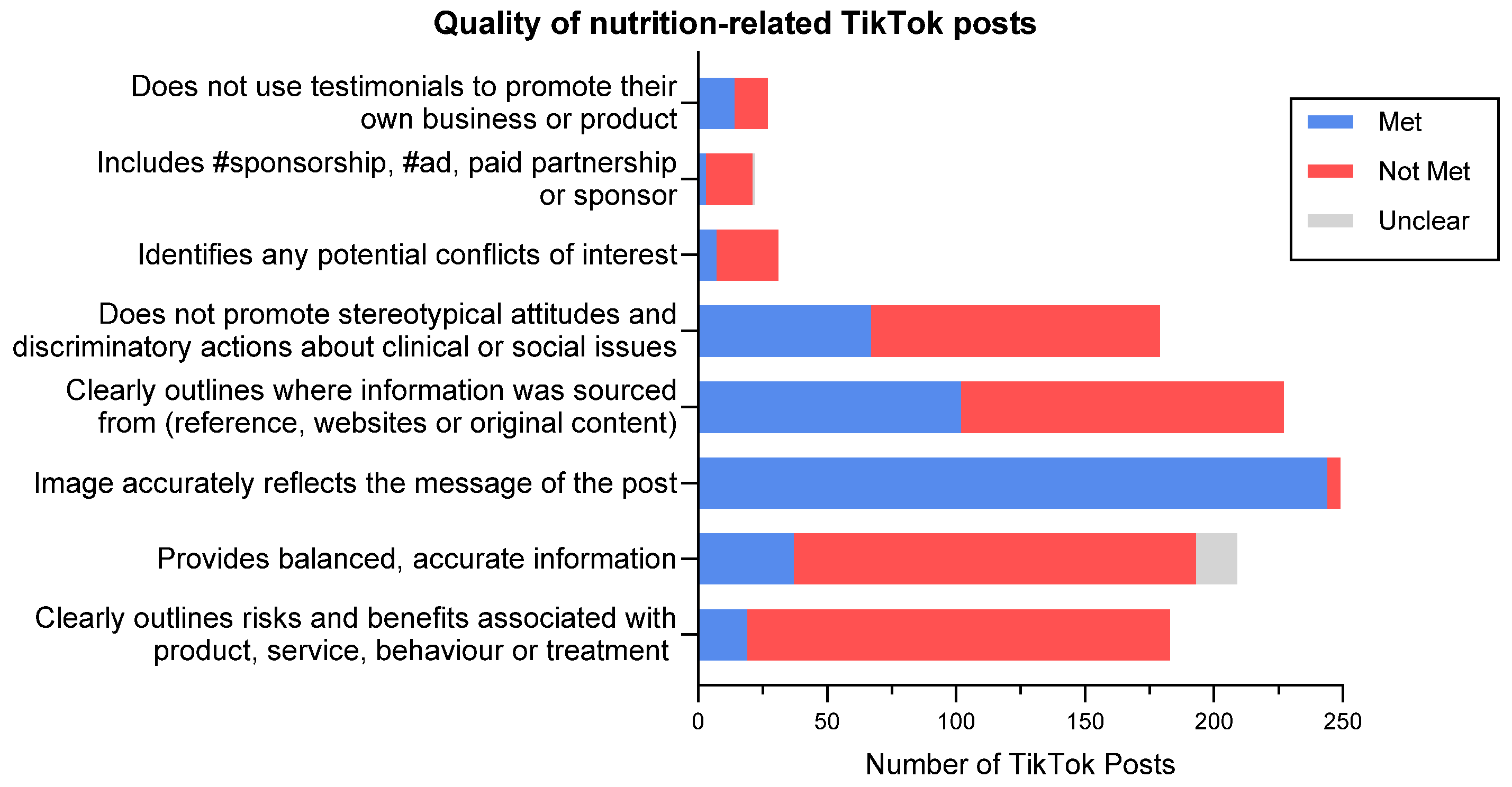
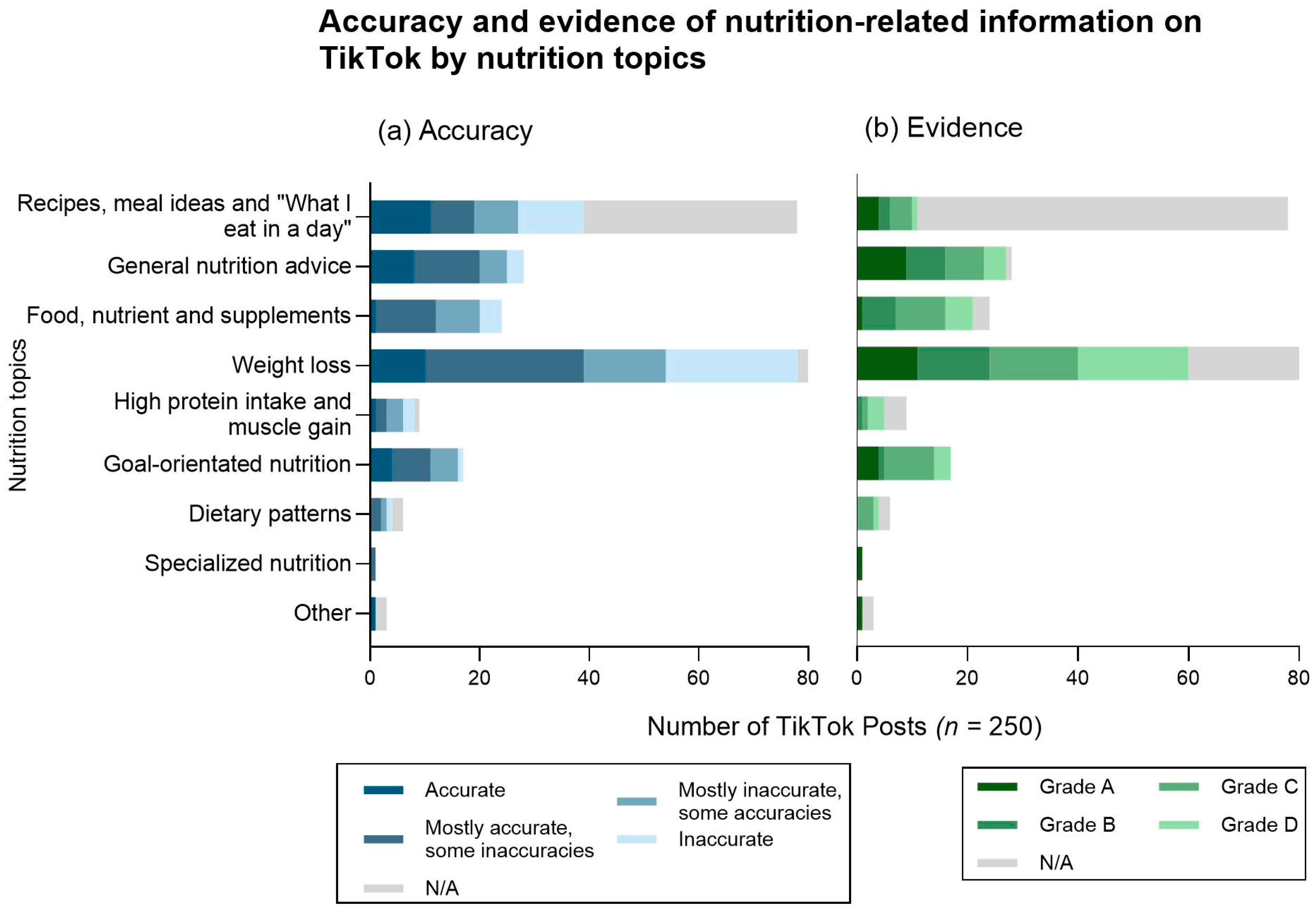
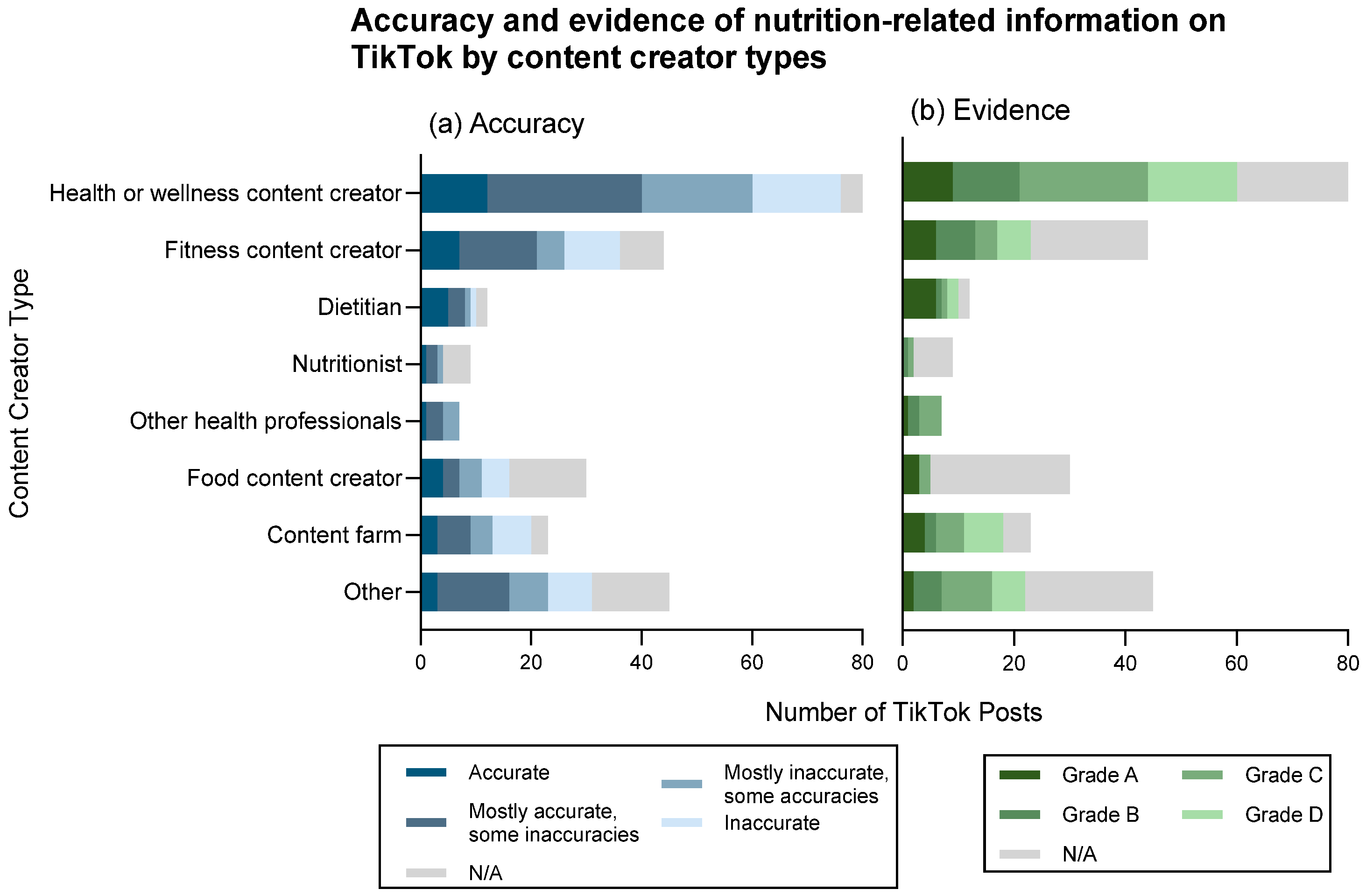
Background: Social media platforms such as TikTok are significant sources of nutrition information for adolescents and young adults, who are vulnerable to unregulated, algorithm-driven content. This often spreads nutrition misinformation, impacting adolescent and young adult health and dietary behaviors. Objectives: While previous research has explored misinformation on other platforms, TikTok remains underexamined, so this study aimed at evaluating the landscape of nutrition-related content on TikTok. Methods: This study evaluated TikTok nutrition-related content by (1) identifying common nutrition topics and content creator types; (2) assessing the quality and accuracy of content using evidence-based frameworks, and (3) analyzing engagement metrics such as likes, comments, and shares. Results: The most common creators were health and wellness influencers (32%) and fitness creators (18%). Recipes (31%) and weight loss (34%) dominated the list of topics. When evaluating TikTok posts for quality, 82% of applicable posts lacked transparent advertising, 77% failed to disclose conflicts of interest, 63% promoted stereotypical attitudes, 55% did not provide evidence-based information, 75% lacked balanced and accurate content, and 90% failed to point out the risk and benefits of the advice presented. A total of 36% of posts were considered completely accurate, while 24% were mostly inaccurate, and 18% completely inaccurate. No statistical significance was associated between the level of accuracy or evidence and engagement metrics (p > 0.05). Conclusions: TikTok prioritizes engagement over accuracy, exposing adolescents to harmful nutrition misinformation. Stricter moderation and evidence-based nutrition content are essential to protect adolescent and young adult health. Future research should explore interventions to reduce the impact of misinformation on adolescent dietary behaviors and mental well-being.
Keywords: nutrition; misinformation; social media; engagement metrics; adolescents; young adults nutrition; misinformation; social media; engagement metrics; adolescents; young adults