Effects of Strength Training on Body Composition, Physical Performance, and Protein or Calcium Intake in Older People with Osteosarcopenia: A Meta-Analysis

 , ,
, ,  ,
,  ,
,  ,
,  ,
,  and
and 
Abstract
1. Introduction
2. Methods
2.1. Protocol and Registration
2.2. Eligibility Criteria
2.3. Information Search Process and Databases
2.4. Studies Selection and Data Collection Process
2.5. Methodological Quality Assessment
2.6. Data Synthesis
2.7. Risk of Bias in Individual Studies
2.8. Summary Measures for Meta-Analysis
2.9. Sensitivity Analysis
2.10. Moderator Analysis
2.11. Subgroup Analysis
2.12. Certainty of Evidence
3. Results
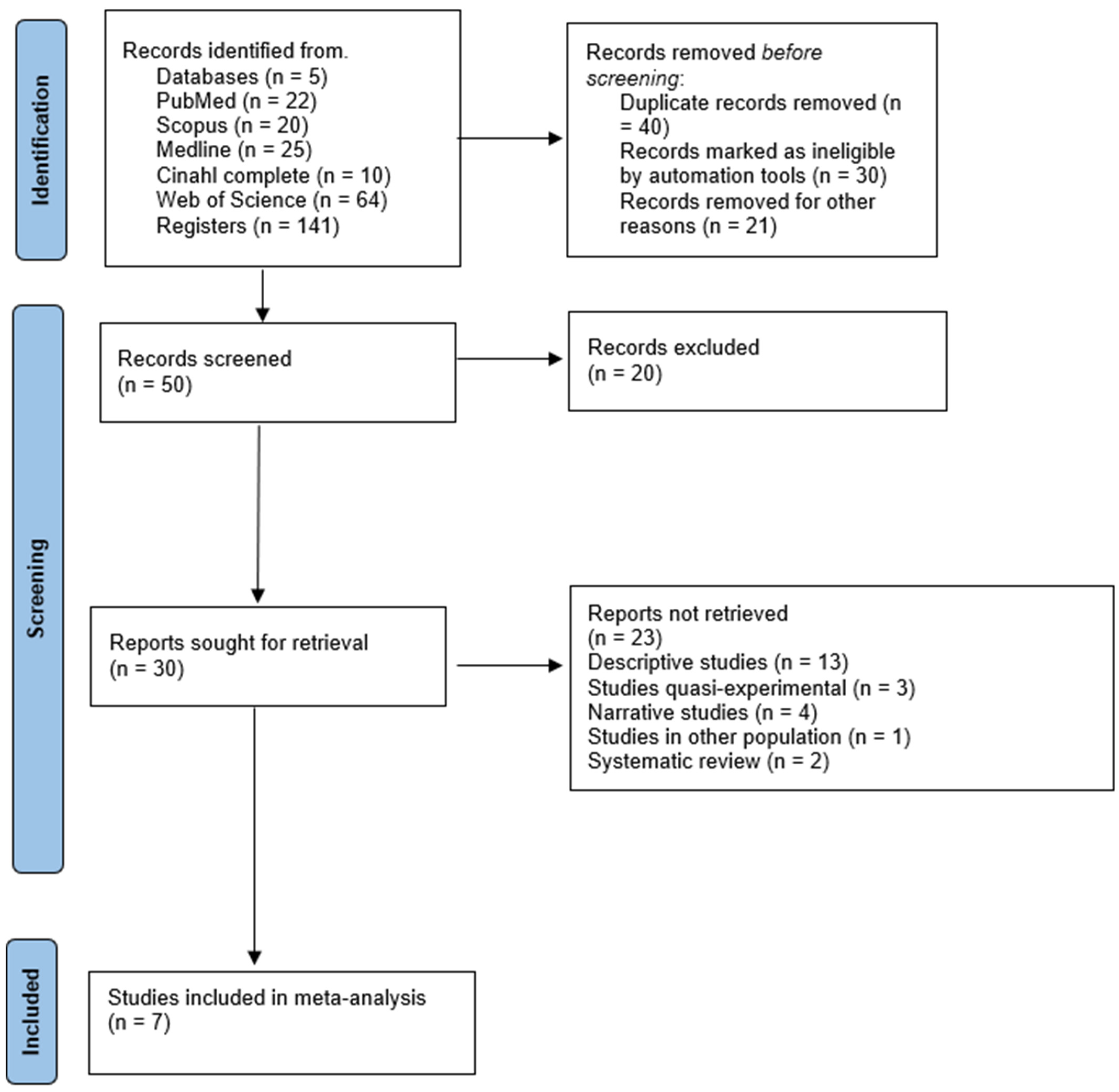
3.1. Study Selection
3.2. Methodological Quality
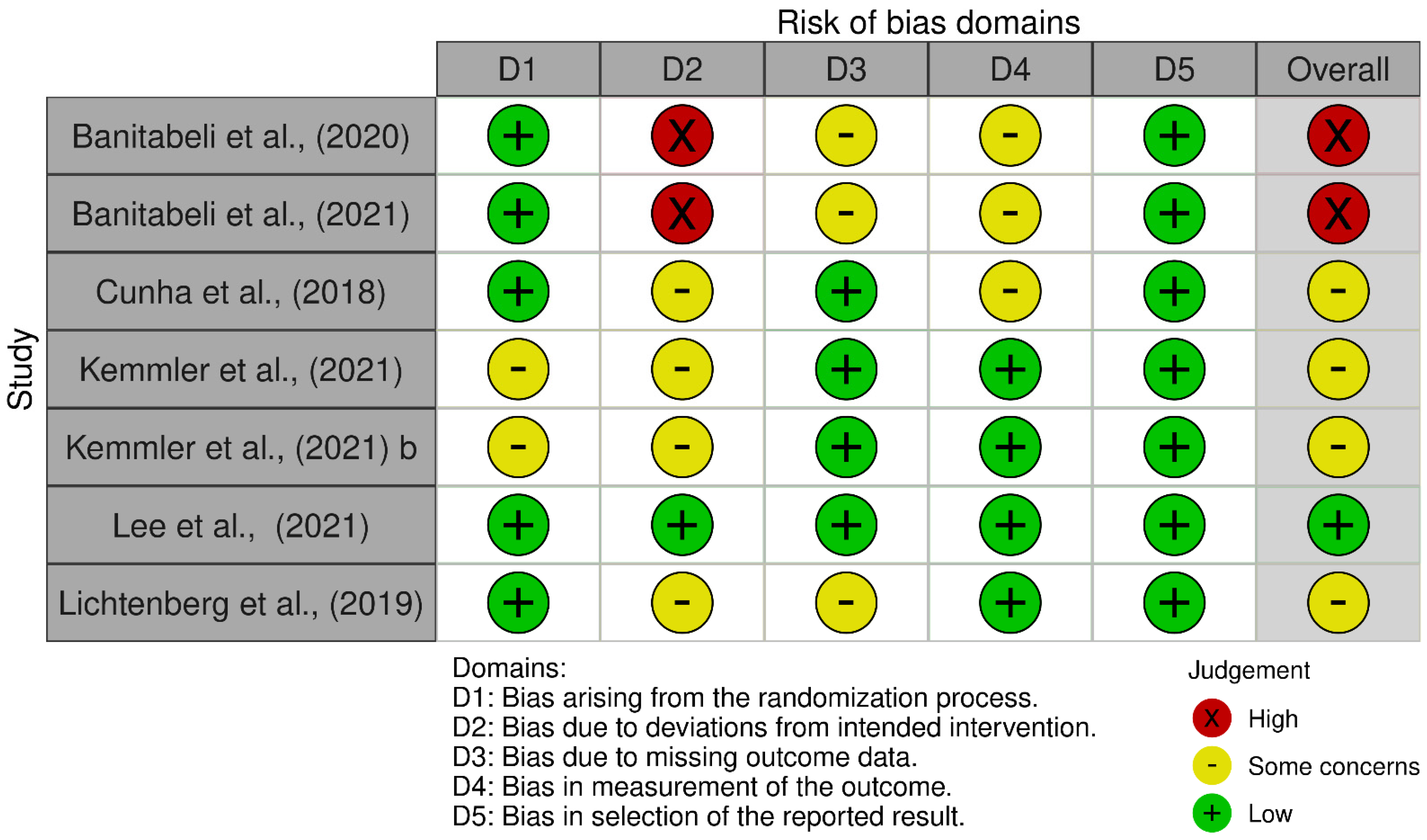
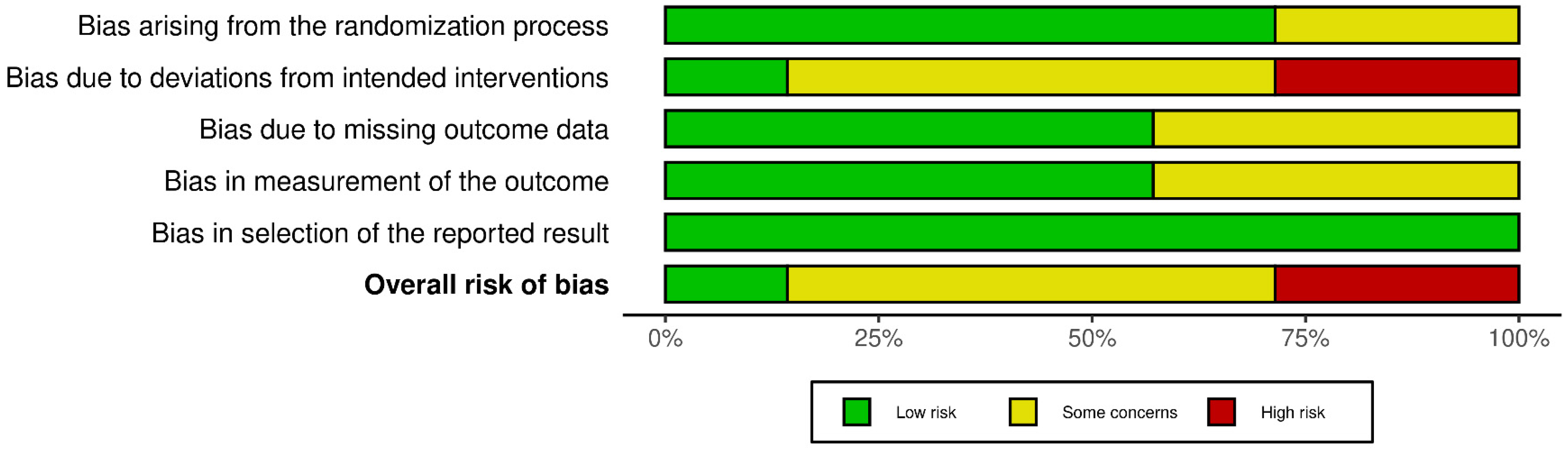
3.3. Risk of Bias
3.4. Studies and Sample Characteristics
3.5. Meta-Analysis Results
3.6. Meta-Analysis Results with Sensitivity Analysis
3.7. Meta-Analysis Subgroup
Subgroup Analysis by Type ST
3.8. Certainty of Evidence
4. Discussion
4.1. Body Composition
4.1.1. Body Fat Percentage
4.1.2. Skeletal Muscle Mass Index
4.1.3. Bone Mineral Density
4.2. Physical Performance
4.2.1. Maximum Isometric Handgrip Strength
4.2.2. Gait Speed
4.3. Macro- and Micronutrient Intake
4.3.1. Protein Intake
4.3.2. Calcium Intake
4.4. Subgroup Analysis by Type ST
4.4.1. Bone Mineral Density
4.4.2. Body Fat Percentage
4.5. Limitations
4.6. Strengths
4.7. Practical Applications
4.8. Clinical Applications
4.9. Epidemiological Applications
5. Conclusions
Supplementary Materials
Author Contributions
Funding
Institutional Review Board Statement
Informed Consent Statement
Data Availability Statement
Acknowledgments
Conflicts of Interest
References
- Cruz-Jentoft, A.J.; Bahat, G.; Bauer, J.; Boirie, Y.; Bruyère, O.; Cederholm, T.; Cooper, C.; Landi, F.; Rolland, Y.; Sayer, A.A.; et al. Sarcopenia: Revised European consensus on definition and diagnosis. Age Ageing 2019, 48, 16–31. [Google Scholar] [CrossRef]
- Straub, R.H.; Cutolo, M.; Pacifici, R. Evolutionary medicine and bone loss in chronic inflammatory diseases—A theory of inflammation-related osteopenia. Semin. Arthritis Rheum. 2015, 45, 220–228. [Google Scholar] [CrossRef]
- Kim, Y.; Beom, J.; Lee, S.Y.; Jang, H.C.; Kim, K.; Kim, M.; Shim, G.Y.; Won, C.W.; Lim, J.Y. Comparison of bioelectrical impedance analysis and dual-energy X-ray absorptiometry for the diagnosis of sarcopenia in the older adults with metabolic syndrome: Equipment-specific equation development. Aging Clin. Exp. Res. 2024, 37, 12. [Google Scholar] [CrossRef]
- Daly, R.M.; Rosengren, B.E.; Alwis, G.; Ahlborg, H.G.; Sernbo, I.; Karlsson, M.K. Gender specific age-related changes in bone density, muscle strength and functional performance in the elderly: A-10 year prospective population-based study. BMC Geriatr. 2013, 13, 71. [Google Scholar] [CrossRef]
- Cedeno-Veloz, B.; López-Dóriga Bonnardeauxa, P.; Duque, G. Osteosarcopenia: Una revisión narrativa. Rev. Española De Geriatría Y Gerontol. 2019, 54, 103–108. [Google Scholar] [CrossRef] [PubMed]
- Kirk, B.; Zanker, J.; Duque, G. Osteosarcopenia: Epidemiology, diagnosis, and treatment-facts and numbers. J. Cachexia Sarcopenia Muscle 2020, 11, 609–618. [Google Scholar] [CrossRef] [PubMed]
- Bonnet, N.; Bourgoin, L.; Biver, E.; Douni, E.; Ferrari, S. RANKL inhibition improves muscle strength and insulin sensitivity and restores bone mass. J. Clin. Investig. 2019, 129, 3214–3223. [Google Scholar] [CrossRef] [PubMed]
- Jyväkorpi, S.K.; Urtamo, A.; Kivimäki, M.; Strandberg, T.E. Macronutrient composition and sarcopenia in the oldest-old men: The Helsinki Businessmen Study (HBS). Clin. Nutr. 2020, 39, 3839–3841. [Google Scholar] [CrossRef]
- Han, M.; Woo, K.; Kim, K. Association of Protein Intake with Sarcopenia and Related Indicators Among Korean Older Adults: A Systematic Review and Meta-Analysis. Nutrients 2024, 16, 4350. [Google Scholar] [CrossRef]
- Tai, V.; Leung, W.; Grey, A.; Reid, I.R.; Bolland, M.J. Calcium intake and bone mineral density: Systematic review and meta-analysis. BMJ 2015, 351, h4183. [Google Scholar] [CrossRef]
- Yao, X.; Hu, J.; Kong, X.; Zhu, Z. Association between Dietary Calcium Intake and Bone Mineral Density in Older Adults. Ecol. Food Nutr. 2021, 60, 89–100. [Google Scholar] [CrossRef]
- Putra, C.; Konow, N.; Gage, M.; York, C.G.; Mangano, K.M. Protein Source and Muscle Health in Older Adults: A Literature Review. Nutrients 2021, 13, 743. [Google Scholar] [CrossRef]
- Kim, H.; Kim, J.; Lee, C.; Kim, S. Nutrition and exercise for sarcopenia treatment. Osteoporos. Sarcopenia 2025, 11, 54–64. [Google Scholar] [CrossRef] [PubMed]
- Wolf, J.V.E.; Schoene, D.; Kohl, M.; Kemmler, W.; Kiesswetter, E. Effects of combined protein and exercise interventions on bone health in middle-aged and older adults—A systematic literature review and meta-analysis of randomized controlled trials. Osteoporos. Int. 2025, 36, 609–625. [Google Scholar] [CrossRef] [PubMed]
- Fatima, M.; Brennan-Olsen, S.L.; Duque, G. Therapeutic approaches to osteosarcopenia: Insights for the clinician. Ther. Adv. Musculoskelet. Dis. 2019, 11, 1759720X19867009. [Google Scholar] [CrossRef]
- Liu, H.-W.; Lee, O.K.-S. Effects of resistance training with elastic bands on bone mineral density, body composition, and osteosarcopenic obesity in elderly women: A meta-analysis. J. Orthop. 2024, 53, 168–175. [Google Scholar] [CrossRef]
- Yang, J.M.; Ye, H.; Zhu, Q.; Zhang, J.H.; Liu, Q.Q.; Xie, H.Y.; Long, Y.; Huang, H.; Niu, Y.L.; Luo, Y.; et al. Effects of resistance training on body composition and physical function in elderly patients with osteosarcopenic obesity: A systematic review and meta-analysis. Arch. Osteoporos. 2022, 17, 82. [Google Scholar] [CrossRef]
- Gao, Y.; Yang, K.; Cai, Y.; Shi, S.; Liu, M.; Zhang, J.; Wu, J.; Tian, J.; Song, F. Updating systematic reviews can improve the precision of outcomes: A comparative study. J. Clin. Epidemiol. 2020, 125, 108–119. [Google Scholar] [CrossRef]
- Vernooij, R.W.M.; Sanabria, A.J.; Solà, I.; Alonso-Coello, P.; Martínez García, L. Guidance for updating clinical practice guidelines: A systematic review of methodological handbooks. Implement. Sci. 2014, 9, 3. [Google Scholar] [CrossRef] [PubMed]
- Page, M.J.; McKenzie, J.E.; Bossuyt, P.M.; Boutron, I.; Hoffmann, T.C.; Mulrow, C.D.; Shamseer, L.; Tetzlaff, J.M.; Akl, E.A.; Brennan, S.E.; et al. The PRISMA 2020 statement: An updated guideline for reporting systematic reviews. BMJ 2021, 372, n71. [Google Scholar] [CrossRef]
- Smart, N.A.; Waldron, M.; Ismail, H.; Giallauria, F.; Vigorito, C.; Cornelissen, V.; Dieberg, G. Validation of a new tool for the assessment of study quality and reporting in exercise training studies: TESTEX. Int. J. Evid. Based Healthc. 2015, 13, 9–18. [Google Scholar] [CrossRef]
- Sterne, J.A.C.; Savović, J.; Page, M.J.; Elbers, R.G.; Blencowe, N.S.; Boutron, I.; Cates, C.J.; Cheng, H.Y.; Corbett, M.S.; Eldridge, S.M.; et al. RoB 2: A revised tool for assessing risk of bias in randomised trials. BMJ 2019, 366, l4898. [Google Scholar] [CrossRef]
- Valentine, J.C.; Pigott, T.D.; Rothstein, H.R. How Many Studies Do You Need?: A Primer on Statistical Power for Meta-Analysis. J. Educ. Behav. Stat. 2010, 35, 215–247. [Google Scholar] [CrossRef]
- Hopkins, W.G.; Marshall, S.W.; Batterham, A.M.; Hanin, J. Progressive statistics for studies in sports medicine and exercise science. Med. Sci. Sports Exerc. 2009, 41, 3–13. [Google Scholar] [CrossRef]
- Verhagen, A.P.; de Vet, H.C.; de Bie, R.A.; Kessels, A.G.; Boers, M.; Bouter, L.M.; Knipschild, P.G. The Delphi list: A criteria list for quality assessment of randomized clinical trials for conducting systematic reviews developed by Delphi consensus. J. Clin. Epidemiol. 1998, 51, 1235–1241. [Google Scholar] [CrossRef]
- Davey, J.; Turner, R.M.; Clarke, M.J.; Higgins, J.P. Characteristics of meta-analyses and their component studies in the Cochrane Database of Systematic Reviews: A cross-sectional, descriptive analysis. BMC Med. Res. Methodol. 2011, 11, 160. [Google Scholar] [CrossRef] [PubMed]
- Morris, S. Estimating Effect Size from the Pretest-Posttest-Control Design. Organ. Res. Methods 2008, 11, 364–386. [Google Scholar] [CrossRef]
- Higgins, J.P.; Thompson, S.G.; Deeks, J.J.; Altman, D.G. Measuring inconsistency in meta-analyses. BMJ 2003, 327, 557–560. [Google Scholar] [CrossRef] [PubMed]
- Higgins, J.P.; Thompson, S.G. Quantifying heterogeneity in a meta-analysis. Stat. Med. 2002, 21, 1539–1558. [Google Scholar] [CrossRef]
- Viechtbauer, W.; Cheung, M.W. Outlier and influence diagnostics for meta-analysis. Res. Synth. Methods 2010, 1, 112–125. [Google Scholar] [CrossRef]
- Rocha, J.N.d.S.; Pereira-Monteiro, M.R.; Vasconcelos, A.B.S.; Pantoja-Cardoso, A.; Aragão-Santos, J.C.; Da Silva-Grigoletto, M.E. Different resistance training volumes on strength, functional fitness, and body composition of older people: A systematic review with meta-analysis. Arch. Gerontol. Geriatr. 2024, 119, 105303. [Google Scholar] [CrossRef] [PubMed]
- Guyatt, G.; Oxman, A.D.; Akl, E.A.; Kunz, R.; Vist, G.; Brozek, J.; Norris, S.; Falck-Ytter, Y.; Glasziou, P.; DeBeer, H.; et al. GRADE guidelines: 1. Introduction-GRADE evidence profiles and summary of findings tables. J. Clin. Epidemiol. 2011, 64, 383–394. [Google Scholar] [CrossRef]
- Banitalebi, E.; Faramarzi, M.; Ghahfarokhi, M.M.; SavariNikoo, F.; Soltani, N.; Bahramzadeh, A. Osteosarcopenic obesity markers following elastic band resistance training: A randomized controlled trial. Exp. Gerontol. 2020, 135, 110884. [Google Scholar] [CrossRef] [PubMed]
- Banitalebi, E.; Ghahfarrokhi, M.M.; Dehghan, M. Effect of 12-weeks elastic band resistance training on MyomiRs and osteoporosis markers in elderly women with Osteosarcopenic obesity: A randomized controlled trial. BMC Geriatr. 2021, 21, 433. [Google Scholar] [CrossRef] [PubMed]
- Cunha, P.M.; Ribeiro, A.S.; Tomeleri, C.M.; Schoenfeld, B.J.; Silva, A.M.; Souza, M.F.; Nascimento, M.A.; Sardinha, L.B.; Cyrino, E.S. The effects of resistance training volume on osteosarcopenic obesity in older women. J. Sports Sci. 2018, 36, 1564–1571. [Google Scholar] [CrossRef]
- Kemmler, W.; Kohl, M.; Fröhlich, M.; Schoene, D.; von Stengel, S. Detraining effects after 18 months of high intensity resistance training on osteosarcopenia in older men-Six-month follow-up of the randomized controlled Franconian Osteopenia and Sarcopenia Trial (FrOST). Bone 2021, 142, 115772. [Google Scholar] [CrossRef]
- Kemmler, W.; Schoene, D.; Kohl, M.; von Stengel, S. Changes in Body Composition and Cardiometabolic Health After Detraining in Older Men with Osteosarcopenia: 6-Month Follow-Up of the Randomized Controlled Franconian Osteopenia and Sarcopenia Trial (FrOST) Study. Clin. Interv. Aging 2021, 16, 571–582. [Google Scholar] [CrossRef]
- Lee, Y.H.; Lee, P.H.; Lin, L.F.; Liao, C.D.; Liou, T.H.; Huang, S.W. Effects of progressive elastic band resistance exercise for aged osteosarcopenic adiposity women. Exp. Gerontol. 2021, 147, 111272. [Google Scholar] [CrossRef]
- Lichtenberg, T.; von Stengel, S.; Sieber, C.; Kemmler, W. The Favorable Effects of a High-Intensity Resistance Training on Sarcopenia in Older Community-Dwelling Men with Osteosarcopenia: The Randomized Controlled FrOST Study. Clin. Interv. Aging 2019, 14, 2173–2186. [Google Scholar] [CrossRef]
- Hughes, C.J.; Hurd, K.; Jones, A.; Sprigle, S. Resistance properties of Thera-Band tubing during shoulder abduction exercise. J. Orthop. Sports Phys. Ther. 1999, 29, 413–420. [Google Scholar] [CrossRef]
- Uchida, M.C.; Nishida, M.M.; Sampaio, R.A.; Moritani, T.; Arai, H. Thera-band® elastic band tension: Reference values for physical activity. J. Phys. Ther. Sci. 2016, 28, 1266–1271. [Google Scholar] [CrossRef]
- Buskard, A.N.L.; Petrella, R.J. Resistance Training and Weight Loss in Older Adults: A Scoping Review. Sports Med.-Open 2023, 9, 67. [Google Scholar] [CrossRef]
- Chen, H.T.; Chung, Y.C.; Chen, Y.J.; Ho, S.Y.; Wu, H.J. Effects of Different Types of Exercise on Body Composition, Muscle Strength, and IGF-1 in the Elderly with Sarcopenic Obesity. J. Am. Geriatr. Soc. 2017, 65, 827–832. [Google Scholar] [CrossRef]
- Voulgaridou, G.; Papadopoulou, S.D.; Spanoudaki, M.; Kondyli, F.S.; Alexandropoulou, I.; Michailidou, S.; Zarogoulidis, P.; Matthaios, D.; Giannakidis, D.; Romanidou, M.; et al. Increasing Muscle Mass in Elders through Diet and Exercise: A Literature Review of Recent RCTs. Foods 2023, 12, 1218. [Google Scholar] [CrossRef] [PubMed]
- Gielen, E.; Beckwée, D.; Delaere, A.; De Breucker, S.; Vandewoude, M.; Bautmans, I.; The Sarcopenia Guidelines Development Group of the Belgian Society of Gerontology and Geriatrics (BSGG). Nutritional interventions to improve muscle mass, muscle strength, and physical performance in older people: An umbrella review of systematic reviews and meta-analyses. Nutr. Rev. 2021, 79, 121–147. [Google Scholar] [CrossRef]
- Gomarasca, M.; Banfi, G.; Lombardi, G. Myokines: The endocrine coupling of skeletal muscle and bone. Adv. Clin. Chem. 2020, 94, 155–218. [Google Scholar] [CrossRef] [PubMed]
- Tagliaferri, C.; Wittrant, Y.; Davicco, M.J.; Walrand, S.; Coxam, V. Muscle and bone, two interconnected tissues. Ageing Res. Rev. 2015, 21, 55–70. [Google Scholar] [CrossRef]
- O’Bryan, S.J.; Giuliano, C.; Woessner, M.N.; Vogrin, S.; Smith, C.; Duque, G.; Levinger, I. Progressive Resistance Training for Concomitant Increases in Muscle Strength and Bone Mineral Density in Older Adults: A Systematic Review and Meta-Analysis. Sports Med. 2022, 52, 1939–1960. [Google Scholar] [CrossRef]
- Clarke, B.L.; Khosla, S. Physiology of bone loss. Radiol. Clin. N. Am. 2010, 48, 483–495. [Google Scholar] [CrossRef]
- Karinkanta, S.; Heinonen, A.; Sievänen, H.; Uusi-Rasi, K.; Pasanen, M.; Ojala, K.; Fogelholm, M.; Kannus, P. A multi-component exercise regimen to prevent functional decline and bone fragility in home-dwelling elderly women: Randomized, controlled trial. Osteoporos. Int. 2007, 18, 453–462. [Google Scholar] [CrossRef] [PubMed]
- Taaffe, D.R.; Duret, C.; Wheeler, S.; Marcus, R. Once-weekly resistance exercise improves muscle strength and neuromuscular performance in older adults. J. Am. Geriatr. Soc. 1999, 47, 1208–1214. [Google Scholar] [CrossRef]
- Uusi-Rasi, K.; Patil, R.; Karinkanta, S.; Kannus, P.; Tokola, K.; Lamberg-Allardt, C.; Sievänen, H. Exercise and vitamin D in fall prevention among older women: A randomized clinical trial. JAMA Intern. Med. 2015, 175, 703–711. [Google Scholar] [CrossRef] [PubMed]
- Atlihan, R.; Kirk, B.; Duque, G. Non-Pharmacological Interventions in Osteosarcopenia: A Systematic Review. J. Nutr. Health Aging 2021, 25, 25–32. [Google Scholar] [CrossRef]
- Tsai, Y.-T.; Su, H.-H.; Chou, C.-H.; Chen, Y.-H.; Chiang, M.-H.; Kuo, Y.-J.; Chen, Y.-P. Impact of Elastic Band Training on Functional Outcomes and Muscle Mass in the Elderly with Sarcopenia: A Meta-Analysis. Int. J. Gerontol. 2022, 16, 224–230. [Google Scholar] [CrossRef]
- Zhao, W.; Hu, P.; Sun, W.; Wu, W.; Zhang, J.; Deng, H.; Huang, J.; Ukawa, S.; Lu, J.; Tamakoshi, A.; et al. Effect of physical activity on the risk of frailty: A systematic review and meta-analysis. PLoS ONE 2022, 17, e0278226. [Google Scholar] [CrossRef] [PubMed]
- Park, H.J.; Han, B.; Chang, S.Y.; Kang, S.H.; Lee, D.W.; Kang, S. Hand Grip Strength, Osteoporosis, and Quality of Life in Middle-Aged and Older Adults. Medicina 2023, 59, 2148. [Google Scholar] [CrossRef]
- Cheung, C.-L.; Tan, K.C.B.; Bow, C.H.; Soong, C.S.S.; Loong, C.H.N.; Kung, A.W.-C. Low handgrip strength is a predictor of osteoporotic fractures: Cross-sectional and prospective evidence from the Hong Kong Osteoporosis Study. AGE 2012, 34, 1239–1248. [Google Scholar] [CrossRef]
- Luo, Y.; Jiang, K.; He, M. Association between grip strength and bone mineral density in general US population of NHANES 2013-2014. Arch. Osteoporos. 2020, 15, 47. [Google Scholar] [CrossRef]
- Lopes, J.S.S.; Machado, A.F.; Micheletti, J.K.; de Almeida, A.C.; Cavina, A.P.; Pastre, C.M. Effects of training with elastic resistance versus conventional resistance on muscular strength: A systematic review and meta-analysis. SAGE Open Med. 2019, 7, 2050312119831116. [Google Scholar] [CrossRef]
- Hernandez-Martinez, J.; Guzmán-Muñoz, E.; Cid-Calfucura, I.; Villalobos-Fuentes, F.; Diaz-Saldaña, D.; Alvarez-Martinez, I.; Castillo-Cerda, M.; Herrera-Valenzuela, T.; Branco, B.H.M.; Valdés-Badilla, P. Elastic Band Training Versus Multicomponent Training and Group-Based Dance on Morphological Variables and Physical Performance in Older Women: A Randomized Controlled Trial. Life 2024, 14, 1362. [Google Scholar] [CrossRef]
- Yoo, J.I.; Lee, K.H.; Choi, Y.; Lee, J.; Park, Y.G. Poor Dietary Protein Intake in Elderly Population with Sarcopenia and Osteosarcopenia: A Nationwide Population-Based Study. J. Bone Metab. 2020, 27, 301–310. [Google Scholar] [CrossRef]
- Shams-White, M.M.; Chung, M.; Du, M.; Fu, Z.; Insogna, K.L.; Karlsen, M.C.; LeBoff, M.S.; Shapses, S.A.; Sackey, J.; Wallace, T.C.; et al. Dietary protein and bone health: A systematic review and meta-analysis from the National Osteoporosis Foundation1,2. Am. J. Clin. Nutr. 2017, 105, 1528–1543. [Google Scholar] [CrossRef]
- Witard, O.C.; Wardle, S.L.; Macnaughton, L.S.; Hodgson, A.B.; Tipton, K.D. Protein Considerations for Optimising Skeletal Muscle Mass in Healthy Young and Older Adults. Nutrients 2016, 8, 181. [Google Scholar] [CrossRef]
- De Rui, M.; Inelmen, E.M.; Pigozzo, S.; Trevisan, C.; Manzato, E.; Sergi, G. Dietary strategies for mitigating osteosarcopenia in older adults: A narrative review. Aging Clin. Exp. Res. 2019, 31, 897–903. [Google Scholar] [CrossRef] [PubMed]
- Papadopoulou, S.K.; Papadimitriou, K.; Voulgaridou, G.; Georgaki, E.; Tsotidou, E.; Zantidou, O.; Papandreou, D. Exercise and Nutrition Impact on Osteoporosis and Sarcopenia-The Incidence of Osteosarcopenia: A Narrative Review. Nutrients 2021, 13, 4499. [Google Scholar] [CrossRef]
- Dawson-Hughes, B.; Harris, S.S.; Krall, E.A.; Dallal, G.E. Effect of withdrawal of calcium and vitamin D supplements on bone mass in elderly men and women1234. Am. J. Clin. Nutr. 2000, 72, 745–750. [Google Scholar] [CrossRef] [PubMed]
- Shen, Y.; Shi, Q.; Nong, K.; Li, S.; Yue, J.; Huang, J.; Dong, B.; Beauchamp, M.; Hao, Q. Exercise for sarcopenia in older people: A systematic review and network meta-analysis. J. Cachexia Sarcopenia Muscle 2023, 14, 1199–1211. [Google Scholar] [CrossRef] [PubMed]



| Category | Inclusion Criteria | Exclusion Criteria |
|---|---|---|
| Population | Participants were required to have a combination of osteopenia and sarcopenia and no other diseases, such as fractures, heart failure, or diabetes. People were mean ≥60 years and over, but there were no restrictions by sex or setting (such as hospitals, communities, or nursing homes). | Population under 60 years of age with osteoporosis or sarcopenic obesity. |
| Intervention | Interventions included ST, such as EBT and progressive ST, for 4 weeks or more. | Interventions that do not use ST. There are no details of the intervention procedure. |
| Comparator | Interventions with or without an active/inactive control group or placebo. | Lack of baseline and/or follow-up data. Absence of control group. |
| Outcome | Primary outcomes: body composition (e.g., BFP, SMMI, BMD). Secondary outcomes: physical performance (e.g., MIHS and gait speed) and intake of protein and/or calcium. | Lack of baseline data and/or follow-ups. |
| Study design | Experimental design studies (randomized controlled trials) with pre- and post-assessments. | Non-randomized controlled trials, cross-sectional, retrospective, and prospective studies. |
| Study | Eligibility Criteria Specified | Randomly Allocated Participants | Allocation Concealed | Groups Similar at Baseline | Assessors Blinded | Outcome Measures Assessed >85% of Participants * | Intention to Treat Analysis | Reporting of between Group Statistical Comparisons | Point Measures and Measures of Variability Reported ** | Activity Monitoring in Control Group | Relative Exercise Intensity Reviewed | Exercise Volume and Energy Expended | Overall TESTEX # |
|---|---|---|---|---|---|---|---|---|---|---|---|---|---|
| Banitalebi, Faramarzi, Ghahfarokhi, SavariNikoo, Soltani and Bahramzadeh [33] | Yes | Yes | Yes | Yes | Yes | Yes (2) | Yes | Yes | Yes (1) | Yes | Yes | Yes | 15/15 |
| Banitalebi, Ghahfarrokhi and Dehghan [34] | Yes | Yes | Yes | Yes | No | Yes (2) | Yes | Yes | Yes (1) | Yes | Yes | Yes | 14/15 |
| Cunha, Ribeiro, Tomeleri, Schoenfeld, Silva, Souza, Nascimento, Sardinha and Cyrino [35] | Yes | Yes | Yes | Yes | Yes | Yes (1) | No | Yes | Yes (1) | Yes | Yes | Yes | 13/15 |
| Kemmler, Kohl, Fröhlich, Schoene and von Stengel [36] | Yes | Yes | Yes | Yes | Yes | Yes (1) | Yes | Yes | Yes (1) | Yes | Yes | Yes | 14/15 |
| Kemmler, Schoene, Kohl and von Stengel [37] | Yes | Yes | Yes | Yes | Yes | Yes (1) | Yes | Yes | Yes (1) | Yes | Yes | Yes | 14/15 |
| Lee, Lee, Lin, Liao, Liou and Huang [38] | Yes | Yes | Yes | Yes | Yes | Yes (1) | Yes | Yes | Yes (1) | Yes | Yes | Yes | 14/15 |
| Lichtenberg, von Stengel, Sieber and Kemmler [39] | Yes | Yes | Yes | Yes | Yes | Yes (1) | Yes | Yes | Yes (1) | Yes | Yes | Yes | 14/15 |
| Authors | Study Design | Country | Sex and Age | Groups (Sample Size) | Body Composition Assessment Tool | Diagnostic Criteria for Osteosarcopenia | Training | Intensity and Color Band | Primary Outcome | Secondary Outcome | Adverse Events | Adherence | ||
|---|---|---|---|---|---|---|---|---|---|---|---|---|---|---|
| Weeks | Frequency (Sessions/ Weeks) | Minutes | ||||||||||||
| Banitalebi, Faramarzi, Ghahfarokhi, SavariNikoo, Soltani and Bahramzadeh [33] | RCT | Iran | 100% Female ST: 64.11 ± 3.81 CG: 64.05 ± 3.35 | ST (32): elastic band training CG (31): continued with their daily life activities | DXA | −2.5 ≤ T-score ≤ −1.0 of L1–L4, and/or total femur or femoral neck, BFP > 32%, body mass index (BMI) > 30 kg/m2, −2.5 ≤ T-score ≤ −1.0 of L1–L4, and/or total femur (TF) or femoral neck (FN), gait speed (10 m walk test (10 MWT)) ≤ 1 (m/s), and skeletal muscle mass index (SMI) ≤ 28% or ≤7.76 kg/m2 | 12 | 3 | 60 | OMNI-RES (10–13) (Thera-Band®, The Hygienic Corporation, Akron, OH, USA; yellow color progressing to red and ending in black). | Body fat (%) BMD (gr/cm2) | MIHS (kg) TUG (s) Gait speed (m/s) 30-second chair stand (rep) Protein intake (g/kg/d) Calcium intake (g/kg/d) | Not observed | >85% |
| Banitalebi, Ghahfarrokhi and Dehghan [34] | RCT | Iran | 100% Female ST: 64.11 ± 3.81 CG: 64.05 ± 3.35 | ST (32): elastic band training CG (31): continued with their daily life activities | DXA | −2.5 ≤ T-score ≤ −1.0 of L1–L4, and/or total femur or femoral neck, BFP > 32%, body mass index (BMI) > 30 kg/m2, −2.5 ≤ T-score ≤ −1.0 of L1–L4, and/or total femur (TF) or femoral neck (FN), gait speed (10 m walk test (10 MWT)) ≤ 1 (m/s), and skeletal muscle mass index (SMI) ≤ 28% or ≤7.76 kg/m2 | 12 | 3 | 60 | OMNI-RES (10–13) (Thera-Band®, The Hygienic Corporation, Akron, OH, USA; yellow color progressing to red and ending in black). | Body fat (%) BMD (gr/cm2) Bone mass content (gr) | Not observed | >85% | |
| Cunha, Ribeiro, Tomeleri, Schoenfeld, Silva, Souza, Nascimento, Sardinha and Cyrino [35] | RCT | Brazil | 100% Female ST1: 66.6 ± 5.1 ST2: 68.3 ± 4.2 CG: 67.3 ± 3.6 | ST1 (23): Resistance training ST2 (23): Resistance training CG (23): continued with their daily life activities | DXA | Z-score, derived from the average of the components, was calculated using the following formula: (muscular strength Z-core) + (SMM Z-score) + (−1 x body fat Z-score) + (BMD Z-score)/4 | 12 | ST1: 1 ST2: 3 | 60 | 50% 1 RM | Body fat (%) BMD (gr/cm2) SMMI (kg/m2) | No reported | No reported | >85% |
| Kemmler, Kohl, Fröhlich, Schoene and von Stengel [36] | RCT | Germany | 100% Male ST: 77.8 ± 3.6 CG: 79.2 ± 4.7 | ST (21): Hit Resistance training CG (21): continued with their daily life activities | DXA, BIA | −2.5 ≤ T-score ≤ −1.0 of L1–L4, and/or total femur or femoral neck, BFP > 32%, body mass index (BMI) > 30 kg/m2, −2.5 ≤ T-score ≤ −1.0 of L1–L4, and/or total femur (TF) or femoral neck (FN), gait speed (10 m walk test (10 MWT)) ≤ 1 (m/s), and skeletal muscle mass index (SMI) ≤ 28% or ≤7.76 kg/m2 | 18 months | 3 | 60 | 85% 1 RM | SMMI (kg/m2) | Protein intake (g/kg/d) Calcium intake (g/kg/d) | No reported | >85% |
| Kemmler, Schoene, Kohl and von Stengel [37] | RCT | Germany | 100% Male ST: 77.8 ± 3.6 CG: 79.2 ± 4.7 | ST (21): Hit Resistance training CG (21): continued with their daily life activities | DXA, BIA | −2.5 ≤ T-score ≤ −1.0 of L1–L4, and/or total femur or femoral neck, BFP > 32%, body mass index (BMI) > 30 kg/m2, −2.5 ≤ T-score ≤ −1.0 of L1–L4, and/or total femur (TF) or femoral neck (FN), gait speed (10 m walk test (10 MWT)) ≤ 1 (m/s), and skeletal muscle mass index (SMI) ≤ 28% or ≤7.76 kg/m2 | 18 months | 3 | 60 | 60% to 85% | Body fat (%) | Protein intake (g/kg/d) Calcium intake (g/kg/d) | No reported | >85% |
| Lee, Lee, Lin, Liao, Liou and Huang [38] | RCT | Taiwan, China | 100% Female ST: 70.13 ± 4.41 CG: 71.82 ± 5.23 | ST (15): elastic band training CG (12): continued with their daily life activities | DXA, BIA | European Working Group on Sarcopenia in Older People (EWGSOP) of low muscle mass (less than 5.67 kg/m2 based on DXA) and a grip strength of <20 kg or gait speed (GS) of <0.8 m/s was diagnosed with sarcopenia. Osteopenia was diagnosed according to the aforementioned WHO criteria (T-score < 1.0). We measured BMD by using the standard protocol. Lumbar spine BMD was determined through the imaging of lumbar vertebra one through four (L1–L4), which included the body of the vertebra, the pedicles, lamina, spinous process, and transverse processes. | 12 | 3 | NR | 13 RPE Borg (Thera-Band®, The Hygienic Corporation, Akron, OH, USA; yellow color progressing to red, green, and blue and ending in black or silver). | Body fat (%) BMD (gr/cm2) SMMI (kg/m2) | MIHS (kg) TUG (s) Gait speed (m/s) 30-second chair stand (rep) | Not observed | >85% |
| Lichtenberg, von Stengel, Sieber and Kemmler [39] | RCT | Italy | 100% Male ST: 77.8 ± 3.6 CG: 79.2 ± 4.7 | ST (21): Hit Resistance training CG (22): continued with their daily life activities | DXA | (a) SMI, as assessed by DXA, was below 7.26 kg/m2 (≤−2 standard deviations (SD) T-score, i.e., sarcopenia), (b) bone mineral density at the region of interest (ROI), i.e., either the lumbar spine or the proximal femur (total hip or femoral neck) was ≤−1 SD T-score (i.e., osteopenia), | 12 | NR | NR | 70% to 85% 1 RM | SMMI (kg/m2) | MIHS (kg) TUG (s) Gait speed (m/s) Protein intake (g/kg/d) | Not observed | >85% |
| n a | Model of Effect | ES (95%CI) | p | I2 (%) | Egger’s Test (p) | RW (%) | |
|---|---|---|---|---|---|---|---|
| Body composition | |||||||
| Body fat percentage | 5,6,5, | Random | 0.64 (−0.12 to 1.41) | 0.10 | 89.5 | 0.00 | 4.18–7.61 |
| SMMI (kg/m2) | 4,5,4, | Random | 1.48 (0.61 to 2.35) | 0.001 | 85.2 | 0.00 | 2.51–6.37 |
| BMD (gr/cm2) | 5,6,5, | Fixed | 0.22 (−0.01 to 0.46) | 0.06 | 0.00 | 0.84 | 4.92–12.6 |
| Physical performance | |||||||
| MIHS both hands (kg) | 3,3,3 | Random | 1.38 (0.10 to 2.65) | 0.03 | 89.9 | 0.00 | 3.26–6.52 |
| Gait speed (m/s) | 3,3,3 | Fixed | 0.33 (−0.01 to 0.67) | 0.06 | 0.00 | 0.86 | 2.51–4.11 |
| Macro- and micronutrient intake | |||||||
| Protein intake (g/kg/d) | 4,4,4 | Random | 0.91 (0.05 to 1.78) | 0.03 | 87.8 | 0.00 | 4.68–7.33 |
| Calcium intake (g/kg/d) | 3,3,3 | Random | 0.20 (−0.10 to 0.52) | 0.19 | 83.1 | 0.00 | 3.67–6.61 |
| Outcome | EBT–Effect (p) | RT–Effect (p) | Comparative Interpretation |
|---|---|---|---|
| Body fat percentage (BFP) | ↓ Significant (p = 0.01) | NS (p = 0.76) | EBT more effective in reducing BFP |
| Skeletal muscle mass index (SMMI) | ↑ Significant (p < 0.01) | ↑ Significant (p < 0.01) | Both modalities effective |
| Bone mineral density (BMD) | NS (p = 0.16) | NS (p = 0.11) | No significant differences |
| Maximal isometric handgrip strength (MIHS) | ↑ Significant (p < 0.05) | ↑ Significant (p < 0.05) | Both modalities effective |
| Gait speed | NS | NS | No differences |
| Protein intake | ↑ Significant (p < 0.05) | ↑ Significant (p < 0.05) | Both modalities effective |
| Calcium intake | NS | NS | No differences |
| Assessment of Certainty | Number of Patients | Effect | Certainty | Importance | ||||||||
|---|---|---|---|---|---|---|---|---|---|---|---|---|
| Number of Studies | Study Design | Risk of Bias | Inconsistency | Indirect Evidence | Vagueness | Other Considerations | Strength Training | Active Control Group | Relative (95% CI) | Absolute (95% CI) | ||
| Osteosarcopenic obesity markers following elastic band resistance training: TA randomized controlled trial | ||||||||||||
| 1 | randomized trials | very serious a | not serious | not serious | not serious | none | 32/63 (50.8%) | 31/63 (49.2%) | not estimable | ⨁⨁ ◯◯ Go down a | IMPORTANT | |
| Effect of 12-week elastic band resistance training on MyomiRs and osteoporosis markers in elderly women with Osteosarcopenic obesity: a randomized controlled trial | ||||||||||||
| 1 | randomized trials | very serious a | not serious | not serious | not serious | none | 32/63 (50.8%) | 31/63 (49.2%) | not estimable | ⨁⨁ ◯◯ Go down a | IMPORTANT | |
| The effects of resistance training volume on osteosarcopenic obesity in older women | ||||||||||||
| 1 | randomized trials | serious b | not serious | not serious | not serious | none | 41/62 (66.1%) | 21/62 (33.9%) | not estimable | ⨁⨁⨁ ◯ Moderate b | IMPORTANT | |
| Detraining effects after 18 months of high-intensity resistance training on osteosarcopenia in older men—Six-month follow-up of the randomized controlled Franconian Osteopenia and Sarcopenia Trial (FrOST) | ||||||||||||
| 1 | randomized trials | serious b | not serious | not serious | not serious | none | 21/43 (48.8%) | 22/43 (51.2%) | not estimable | ⨁⨁⨁ ◯ Moderate b | IMPORTANT | |
| Changes in Body Composition and Cardiometabolic Health After Detraining in Older Men with Osteosarcopenia: 6-Month Follow-Up of the Randomized Controlled Franconian Osteopenia and Sarcopenia Trial (FrOST) Study | ||||||||||||
| 1 | randomized trials | serious b | not serious | not serious | not serious | none | 21/43 (48.8%) | 22/43 (51.2%) | not estimable | ⨁⨁⨁ ◯ Moderate b | IMPORTANT | |
| Effects of progressive elastic band resistance exercise for aged osteosarcopenic adipose women | ||||||||||||
| 1 | randomized trials | not serious | not serious | not serious | not serious | none | 15/27 (55.6%) | 12/27 (44.4%) | not estimable | ⨁⨁⨁⨁ High | IMPORTANT | |
| The Favorable Effects of a High-Intensity Resistance Training on Sarcopenia in Older Community-Dwelling Men with Osteosarcopenia: The Randomized Controlled FrOST Study | ||||||||||||
| 1 | randomized trials | serious b | not serious | not serious | not serious | none | 19/40 (47.5%) | 21/40 (52.5%) | not estimable | ⨁⨁⨁ ◯ Moderate b | IMPORTANT | |
Disclaimer/Publisher’s Note: The statements, opinions and data contained in all publications are solely those of the individual author(s) and contributor(s) and not of MDPI and/or the editor(s). MDPI and/or the editor(s) disclaim responsibility for any injury to people or property resulting from any ideas, methods, instructions or products referred to in the content. |
© 2025 by the authors. Licensee MDPI, Basel, Switzerland. This article is an open access article distributed under the terms and conditions of the Creative Commons Attribution (CC BY) license (https://creativecommons.org/licenses/by/4.0/).
Share and Cite
Hernandez-Martinez, J.; Branco, B.H.M.; Vasquez-Carrasco, E.; Cid-Calfucura, I.; Herrera-Valenzuela, T.; Guzmán-Muñoz, E.; Delgado-Floody, P.; Concha-Cisternas, Y.; Valdés-Badilla, P. Effects of Strength Training on Body Composition, Physical Performance, and Protein or Calcium Intake in Older People with Osteosarcopenia: A Meta-Analysis. Nutrients 2025, 17, 2852. https://doi.org/10.3390/nu17172852
Hernandez-Martinez J, Branco BHM, Vasquez-Carrasco E, Cid-Calfucura I, Herrera-Valenzuela T, Guzmán-Muñoz E, Delgado-Floody P, Concha-Cisternas Y, Valdés-Badilla P. Effects of Strength Training on Body Composition, Physical Performance, and Protein or Calcium Intake in Older People with Osteosarcopenia: A Meta-Analysis. Nutrients. 2025; 17(17):2852. https://doi.org/10.3390/nu17172852
Chicago/Turabian StyleHernandez-Martinez, Jordan, Braulio Henrique Magnani Branco, Edgar Vasquez-Carrasco, Izham Cid-Calfucura, Tomás Herrera-Valenzuela, Eduardo Guzmán-Muñoz, Pedro Delgado-Floody, Yeny Concha-Cisternas, and Pablo Valdés-Badilla. 2025. "Effects of Strength Training on Body Composition, Physical Performance, and Protein or Calcium Intake in Older People with Osteosarcopenia: A Meta-Analysis" Nutrients 17, no. 17: 2852. https://doi.org/10.3390/nu17172852
APA StyleHernandez-Martinez, J., Branco, B. H. M., Vasquez-Carrasco, E., Cid-Calfucura, I., Herrera-Valenzuela, T., Guzmán-Muñoz, E., Delgado-Floody, P., Concha-Cisternas, Y., & Valdés-Badilla, P. (2025). Effects of Strength Training on Body Composition, Physical Performance, and Protein or Calcium Intake in Older People with Osteosarcopenia: A Meta-Analysis. Nutrients, 17(17), 2852. https://doi.org/10.3390/nu17172852