Unraveling the Role of Foods on Chronic Anti- and Pro-Inflammatory Cytokines: A Systematic Review of Chronic Dietary Intervention Trials in Humans

 , , and
Abstract
1. Introduction
2. Materials and Methods
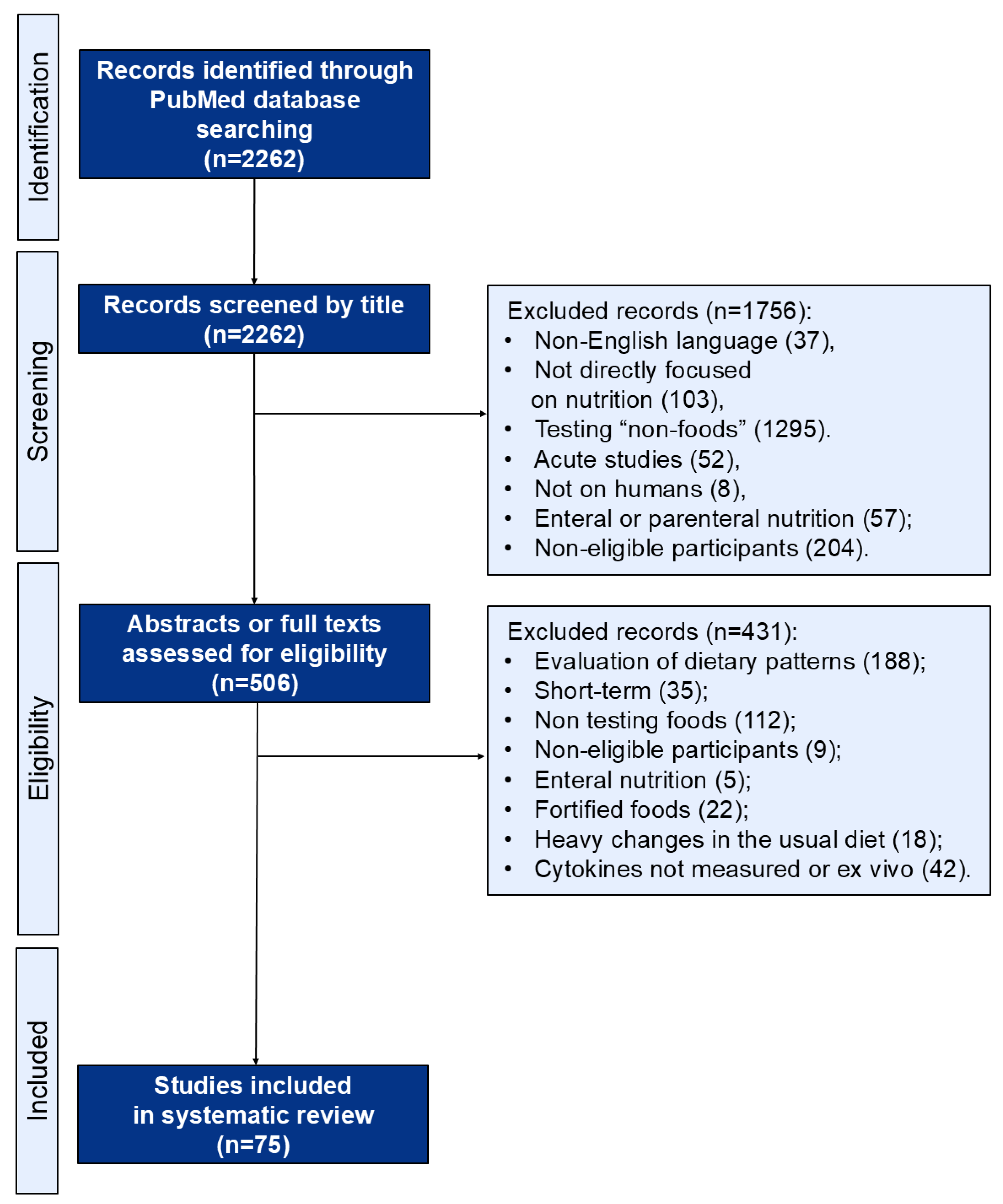
2.1. Search Strategy and Study Selection
2.2. Risk of Bias
3. Results
3.1. Foods
3.1.1. Cereals

| Study Design (Duration) | Treatment | Serving Size | Study Population | Population Number (F) | Results Within Groups | Results Between Groups | Reference |
|---|---|---|---|---|---|---|---|
| Randomized, controlled, crossover, (6 wk × 2) | T: whole grain products C: refined grain products | T: whole grain products > 80 g/d C: whole grain products < 16 g/d | Normal weight, overweight, obese, | 33 (31) | T: IL-1β, IL-6, IL-8, IL-10, TNF-α ↔ C: IL-1β, IL-6, IL-8, IL-10, TNF-α ↔ | (n.d.) | [22] |
| Randomized, controlled, crossover, open label (6 wk × 2) | T: whole grains C: refined cereal | 112 g/d | Overweight/obese + risk factors (↑ plasma insulin levels, ↑ fasting glucose concentration, ↑ serum triglycerides, ↓ HDL cholesterol, or borderline hypertension) | 30 (22) | T: IL-6 ↔ C: IL-6 ↔ | T vs. C: IL-6 ↔ | [25] |
| Randomized, crossover, double-blind (4 wk × 2) | T: whole grain products C: refined grain products | 30 g/d breakfast cereals, puffed rice/barley, rusks or biscuits 80 g/d pasta | Post menopausal women; healthy. | 13 (13) | T: IL-6, IL-1β, TNF-α ↔ C: IL-6, IL-1β, TNF-α ↔ | T vs. C: IL-6, IL-1β, TNF-α ↔ | [23] |
| Randomized, parallel, controlled (6 wk) | T: whole grains C: refined grains | 3 servings/d | Overweight, obese Low intakes of fruit, vegetables, and whole grains | 31 (18) | T1: TNF-α ↓; IL-6 ↔ C: TNF-α ↔; IL-6 ↔ | (n.d.) | [26] |
| Randomized, crossover (4 wk × 3) | T1: barley (18.7 g total dietary fiber) T2: barley + brown rice (11.5 g total dietary fiber) T3: brown rice (4.4 g total dietary fiber) | T1: 60 g T2: 30 + 30 g T3: 60 g | Healthy | 28 (17) | T1: IL-6 ↔ (women ↓) T2: IL-6 ↓ (women ↓) T3: IL-6 ↔ (women ↓) | (n.d.) | [27] |
| Randomized, controlled, crossover, single-blind (8 wk × 2) | T: whole grain products C: refined grain products | Whole grain products: T: >75 g/d C: <10 g/d | Overweight/obese; at risk of metabolic syndrome | 50 (32) | (n.d.) | T vs. C: IL-6, IL1β ↓ TNF-α ↔ | [28] |
| Randomized, controlled, crossover, double-blind (6 wk × 2) | T: ancient wheat products C: modern wheat products | 500 g/wk of pasta, 150 g/d of bread , 500 g/month of crackers, 1 kg/month of biscuits | Moderate IBS | 20 (13) | T: IL-4, IL-6, IL-17, IFN-γ, MCP-1, ↓ IL-8, IL-10, IL-12, IP-10, MIP-1β, TNF-α ↔ C: IL-4, IL-6, IL-8, IL-10, IL-12, IL-17, IFN-γ, IP-10, MIP-1β, MCP-1, TNF-α ↔ | (n.d.) | [20] |
| Randomized, controlled, crossover, single-blind (8 wk × 2) | T: Kamut C: semi-whole-grain wheat | 500 g/wk of pasta 150 g/d of bread 500 g/month of crackers 1 kg/month of biscuits | Normal weight/overweight; healthy | 22 (14) | T: IL-6, IL-12, MCP-1, MIP-1β, TNF-α ↓ IL-1ra, IL-4, IL-8, IL-10, IL-17, IP-10 ↔ C: MCP-1, MIP-1β ↓ IL-1ra, IL-4, IL-6, IL-8, IL-10, IL-12, IL-17, IP-10, TNF-α ↔ | (n.d.) | [21] |
| Randomized, controlled, parallel (12 wk) | T: whole-grain products C: refined products | 60–80% of the daily carbohydrate intake from cereal products | Overweight/obese; metabolic syndrome | 40 (23) | (n.d.) | T vs. C: TNF-α, IL-6, IL-1ra ↔ | [24] |
| Randomized, controlled, parallel, single blind (investigators) (8 wk) | T: whole-grain wheat products C: refined wheat products | T: 70 g/d (3 biscuits/d) of whole grain wheat C: 33 g of crackers and 27 g toasted bread | Overweight/obese; healthy; low intake of wholegrain, fruits and vegetables and sedentary lifestyle | 68 (45) | T: TNF-α (8 wk) ↓, IL-10 (4 wk) ↑, IL-6 ↔ C: TNF-α, IL-10, IL-6 ↔ | T vs. C: TNF-α (8 wk) ↓, IL-10 (4 wk) ↑, IL-6 ↔ | [29] |
3.1.2. Fruits and Vegetables
| Study Design (Duration) | Treatment | Serving Size | Study Population | Population Number (F) | Results Within Groups | Results Between Groups | Reference |
|---|---|---|---|---|---|---|---|
| Randomized, controlled, crossover, double-blind (4 wk × 2) | T: freeze-dried grape powder C: macronutrient and caloric matched powder | 46 g/d | Men; overweight/obese; metabolic syndrome. With dyslipidemia vs. no dyslipidemia | 24 (0) | (n.d.) | T—Dyslipidemic vs. non-dyslipidemic: IL-10, adiponectin ↓; TNF-α, IL-6, IL-8 ↔ | [32] |
| Randomized, controlled, crossover, double-blind (12 wk × 2) | T: freeze-dried strawberries C: macronutrient and caloric matched powder | 50 g twice/d | Obese; knee osteoarthritis | 17 (13) | - | T vs. C: TNF-α ↓, IL-19 ↔ | [33] |
| Randomized, controlled, parallel, double-blind (6 wk) | T1: fermented cabbage and cucumber T2: pickled cabbage and cucumber C: usual diet | 0.5 cups/d, equivalent to 100 g cabbage or 80 g cucumbers | Women, healthy | 31 (31) | T1: TNF-α ↔ T2: TNF-α ↔ C: TNF-α ↔ | T1 vs. T2 vs. C: TNF-α ↔ | [31] |
| Self-controlled (28 d) | T: cherries | 280 g/d | Normal weight/overweight; generally healthy with modestly elevated C-reactive protein | 18 (16) | T: TNF-α ↔, IL-18 ↓ IL-1ra ↑ | (n.d.) | [34] |
| Randomized, controlled, parallel (8 wk) | T: puree and dried bilberries C: usual diet | T: 200 g of bilberry puree and 40 g of dried bilberries | Overweight/obese; metabolic syndrome | 34 (n.d.) | T: IL-6, IL-12 ↓ adiponectin ↔ (12th wk vs. 8th wk) | T vs. C: IL-6, IL-12 adiponectin ↔ (8th wk) | [35] |
| Randomized, controlled, parallel (6 wk) | T: fruits and vegetables C: refined grains | 3 servings/d | Overweight, obese, Low intakes of fruit, vegetables, and whole grains | 32 (19) | T: TNF-α ↔; IL-6 ↓ C: TNF-α, IL-6 ↔ | (n.d.) | [26] |
| Self-controlled with follow-up (70 d) + follow-up at 90 and 160 d (=20 and 90 d no broccoli) | T: raw broccoli sprouts | 30 g/d | Overweight; healthy | 40 (19) | 70 d: IL-6 ↓ 90 d: IL-6 ↓ 160 d: IL-6 ↓ | (n.d.) | [30] |
| Randomized, controlled, parallel, open label (6 wk × 3) | T1: high flavonoid fruits and vegetables T2: low flavonoid fruits and vegetables C: usual diet | 80 g/d × 2 (1st wk), ×4 (2nd wk), ×6 (3rd wk) | Risk of CVD, <4.4 servings of fruits and vegetables/d | 154 (94) | (n.d.) | T1 vs. T2 vs. C: IL-6, TNF-α ↔ | [36] |
| Randomized, controlled, parallel (16 wk) | T: fruits and vegetables/day C: usual diet | 5 servings/d | Older adults (65–70 years); <5 fruits and vegetables servings/d | 66 (36) | T: TRAIL, TRANCE, CX3CL1 ↓ IL-6, TNF-α, MIP-1α, MIP-1β, IL-18 ↔ C: TRAIL, TRANCE, CX3CL1, IL-6, TNF-α, MIP-1α, MIP-1β, IL-18 ↔ | (n.d.) | [37] |
3.1.3. Oils and Fats
| Study Design (Duration) | Treatment | Serving Size | Study Population | Population Number (F) | Results Within Groups | Results Between Groups | Reference |
|---|---|---|---|---|---|---|---|
| Randomized, crossover, placebo-controlled, double-blind (3 wk × 2) | T: virgin olive oil C: refined olive oil | 50 mL/d | Coronary heart disease | 28 | (n.d.) | T vs. C: IL-6 ↓ | [38] |
| Randomized, controlled, crossover, double-blind (4 wk × 3) | T1: margarine with sterols from rapeseed T2: margarine with sterols from tall C: non-sterol margarine | 25 g/d | Normal weight/overweight; hypercholesterolemia | 51 (n.d.) | (n.d.) | T1 vs. T2 vs. C: TNF-α ↔ | [44] |
| Randomized, controlled, parallel, double blind (12 wk) | T: flaxseed oil C: high-oleic sunflower oil | 10 g/d | Older adults (60 ± 8 y.o.); overweight/obese; healthy with high-normal blood pressure or mild (stage I) hypertension | 59 (19) | T: TNF-α ↓ IL-6, IL-8, MCP-1 ↔ C: TNF-α, IL-6, IL-8, MCP-1 ↔ | T vs. C: TNF-α, IL-6, IL-8, MCP-1 ↔ | [43] |
| Randomized, controlled, parallel, open label (6 wk) | T1: refined olive oil T2: canola oil | 25 mL/d | Men and post-menopausal women with at least one cardiovascular risk factor (hypertension, dyslipidemia, diabetes) | 42 (4) | -(n.d.) | T1 vs. T2: IL-6 ↓ | [40] |
| Randomized, two arm, parallel (4 wk) | T1: rapeseed/canola oil T2: olive oil | 50 g/d | Men; overweight/obese | 18 (0) | T1: IL-6, MCP-1 ↔ T2: IL-6, MCP-1 ↔ | T1 vs. T2: IL-6, MCP-1 ↔ | [41] |
| Randomized, two arm, parallel (12 wk) | T1: linseed oil (ALA) T2: safflower oil (LA) | 15 mL/d | Men; dyslipidemia | 76 (0) | T1: IL-6 ↓ T2: IL-6 ↔ | T1 vs. T2: IL-6 ↓ | [42] |
| Randomized, controlled, parallel double blind (3 wk) | T1: extra virgin olive oil T2: refined olive oil | 50 mL/d | Women, fibromyalgia | 30 (30) | T1: IL-6, IL-10 ↔ T2: IL-6, IL-10 ↔ | T1 vs. T2: IL-6, IL-10 ↔ | [39] |
3.1.4. Seeds and Nuts
| Study Design (Duration) | Treatment | Serving Size | Study Population | Population Number (F) | Results Within Groups | Results Between Groups | Reference |
|---|---|---|---|---|---|---|---|
| Randomized, controlled, crossover, single-blind (4 wk × 3) | T: walnuts C: usual diet—avoid nuts or fish | Walnuts: 6 d/wk | Adults; normal to mildly hyperlipidemic | 25 (n.d.) | (n.d.) | T1 vs. T2 vs. C: IL-1β, IL-6, TNF-α ↔ | [50] |
| Randomized, controlled, parallel (2 months) | T: sesame seeds powder C: placebo powder | 40 g/d | Knee osteoarthritis | 45 (n.d.) | T: IL-6 ↓ C: IL-6 ↓ | T vs. C: IL-6 ↓ | [45] |
| Randomized, controlled, crossover, open label (12 wk × 3) | T1: lower portion of ground flaxseed T2: higher portion of ground flaxseed C: usual diet—no flaxseed | T1: 13 g/d T2: 26 g/d | Men: overweight/obese. Women: post-menopausal, pre-diabetic. | 25 (14) | (n.d.) | T1 vs. T2 vs. C: IL-6, adiponectin ↔ | [48] |
| Randomized, controlled, parallel (12 wk) | T: dietary recommendations + flaxseed C: dietary recommendation | 30 g/d | Coronary heart disease. Non-obese men and post-menopausal women who have been planned for percutaneous coronary intervention. | 44 (7) | (n.d.) | T vs. C: IL-6, TNF-α ↓ | [46] |
| Randomized, controlled, crossover (12 wk × 2) | T: flaxseed C: wheat bran | 40 g/d | Overweight/obese, glucose intolerant, hypertensive, with a family history of diabetes | 9 (5) | T: TNF-α, IL-6 ↔ C: TNF-α, IL-6 ↔ | T vs. C: TNF-α, IL-6 ↔ | [47] |
| Randomized, controlled, parallel, single-blind (12 wk) | Hazelnuts: T1: lower serving size T2: higher serving size C: usual diet—avoid nuts | T1: 30 g/d T2: 60 g/d | Adults; overweight/obese; healthy | 107 (61) | T1: IL-6 ↔ T2: IL-6 ↔ C: IL-6 ↔ | T1 vs. T2 vs. C: IL-6 ↔ | [51] |
| Randomized, controlled, parallel, single-blind (12 wk) | T: lifestyle counseling + bread with flaxseed C: lifestyle counseling + bread | 30 g flaxseed/d in 100 g bread | Participants with at least 2 Metabolic syndrome components | 173 (76) | (n.d.) | T vs. C: IL-6, IL-18, TNF-α, MCP-1 ↔ | [49] |
3.1.5. Fish
| Study Design (Duration) | Treatment | Serving Size | Study Population | Population Number (F) | Results Within Groups | Results Between Groups | Reference |
|---|---|---|---|---|---|---|---|
| Randomized, controlled, crossover, single-blind (4 wk × 3) | T: fish C: usual diet—avoid nuts or fish | Fish: two servings/twice wk | Adults; normal to mildly hyperlipidemic | 25 (n.d.) | (n.d.) | T1 vs. T2 vs. C: IL-1β, IL-6, TNF-α ↔ | [50] |
| Randomized, crossover (4 wk × 3) | Salmon filets serving size: T1: lower T2: intermediate T3: higher | T1: 90 g twice/wk. T2: 180 g twice/wk. T3: 270 g twice/wk. | Overweight/obese; healthy; low fish intake | 19 (11) | T1: IL-6 ↔ T2: IL-6 ↔ T3: IL-6 ↔ | T1 vs. T2 vs. T3: IL-6 ↔ | [56] |
| Randomized, parallel, double-blind (6 wk) | Atlantic salmon: T1: fed on 100% fish oil; containing higher n-3 PUFAs T2: fed on 50% fish oil and 50% rapeseed oil; containing intermediate n-3 PUFAs T3: fed on 100% rapeseed oil low n-3 PUFAs | 700 g per wk | Coronary heart disease | 58 (8) | T1: TNF-α, IL-6, IL-10 ↔ T2: TNF-α ↓ IL-6 ↔ IL-10 ↑ T3: TNF-α, IL-6, IL-10 ↔ | T1 vs. T2: IL-6 ↓; TNF-α, IL-10 ↔ T1 vs. T3 IL-6 ↓; TNF-α, IL-10 ↔ | [54] |
| Self-controlled (10 wk) | Sea bass filets | 800 g/wk | Dyslipidemia | 9 (5) | IL-6, IL-8 ↓ | (n.d.) | [57] |
| Randomized, crossover, single-blind (10 wk × 2) | Group A: T1: gilthead sea bream filets, fed with 100% fishmeal T2: gilthead sea bream filets, fed with fishmeal + plant protein | 630 g/wk | Normal weight, overweight; healthy | 20 (8) | Group A—T1: IL-6, IL-8 ↓; TNF-α, IL-10 ↔ Group A—T2: IL-6, IL-8, TNF-α, IL-10 ↔ | - | [55] |
| Group B: T1: Gilthead sea bream filets, fed with fishmeal + plant protein T2: Gilthead sea bream filets, fed with 100% fishmeal | Group B—T1: IL-6 ↓; IL-8, TNF-α, IL-10 ↔ Group B—T2: IL-6, IL-8, TNF-α, IL-10 ↔ | - | |||||
| Randomized, controlled, parallel (8 wk) | T1: oily fish T2: freshwater fish C: pork/chicken/beef | T1:100 g salmon/lunch, 5 times/wk T2: 100 g fish/lunch; hairtail (2 times/wk), carp (1 time/wk), or grass carp (1 time/wk) T3: 100 g meat/lunch; pork (3 times/wk), chicken (1 time/wk), or beef (1 time/wk) | Male; overweight/obese, dyslipidemia | 92 (0) | T1: IL-6 ↓ T2: IL-6 ↔ T3: IL-6 ↔ | T1 vs. T2 vs. T3: IL-6 ↔ | [52] |
| Randomized, parallel, controlled (8 wk) | T1: Norwegian salmon T2: herring T3: pompano C: pork/chicken/beef/lean fish | T1, T2, T3: lunch meal with 80 g/d filet of fish, 5 d/wk C: 80 g/d of pork (2 d/wk), beef (1 d/wk), chicken (1 d/wk) or lean fish meals (1 d/wk) | Middle-aged and elderly women, dyslipidemia | 126 (126) | T1: TNF-α, IL-6 ↓; adiponectin ↑ T2: TNF-α ↓, IL-6 ↔; adiponectin ↑ T3: TNF-α, IL-6, adiponectin ↔ C: TNF-α, IL-6, adiponectin ↔ | TNF-α, IL-6, adiponectin ↔ | [53] |
3.1.6. Dairy
| Study Design (Duration) | Treatment | Serving Size | Study Population | Population Number (F) | Results Within Groups | Results Between Groups | Reference |
|---|---|---|---|---|---|---|---|
| Randomized, controlled, parallel, single-blind (60 d) | T: yogurt C: usual diet | 12 ounces/d | Non-alcoholic minimal hepatic encephalopathy cirrhosis | 22 (n.d.) | T: TNF-α, IL-6 ↔ C: TNF-α, IL-6 ↔ | (n.d.) | [60] |
| Randomized, controlled, crossover (6 wk × 2) | T: low-fat dairy products C: carb-based products | T: 283 g 1% fat milk, 170 g nonfat yogurt, 113 g 2% fat cheese C: 43 g granola bar, 340 g 100% juice | Metabolic syndrome; Low intake of dairy | 33 (21) | (n.d.) | T vs. C (women): TNF-α, MCP-1 ↓; leptin, adiponectin ↔ T vs. C (men): TNF-α, MCP-1, leptin, adiponectin ↔ T vs. C (all): TNF-α, MCP-1, leptin, adiponectin ↔ | [62] |
| Randomized, controlled, parallel, open label (12 wk) | T: yogurt C: milk | 120 mL/d | Older adults (>60 y.o.); non-diabetic, healthy | 152 (107) | T: TNF-α, IFN-γ ↔ IL-12 ↑ C: T: TNF-α, IFN-γ, IL-12 ↔ | T vs. C: TNF-α, IL-12 ↔ IFN-γ ↑ | [59] |
| Randomized, controlled, parallel, open label (9 wk) | T: low-fat yogurt C: soy pudding | T: 339 g/d C: 324 g/d | Pre-menopausal women; non-obese vs. obese. | 120 (120) | T—non-obese: TNF-α ↓; IL-6 ↔ T—obese: TNF-α ↓; IL-6 ↔ C—non-obese: TNF-α, IL-6 ↔ C—obese: TNF-α, IL-6 ↔ | TNF-α, IL-6 ↔ | [58] |
| Controlled, crossover (one sequence) (10 wk × 2) | T: Pecorino Toscano cheese C: cow cheese | 200 g/wk, to be divided into three portions (3 times/wk) | Healthy | 10 (6) | T: TNF-α, Il-6, IL-8 ↓; IL-10, IL-12 ↔ C: TNF-α, Il-6, Il-8, IL-10, IL-12 ↔ | T vs. C: TNF-α, Il-6, Il-8 ↓; IL-10, IL-12 ↔ | [61] |
| Randomized, controlled, crossover (4 wk × 3) | T: low-fat dairy (milk, yogurt, custard and cheese) C: avoid red meat + eat < 1 servings of dairy/day | T: 4–6 servings/day of 250 g milk, 200 g yogurt, 40 g hard cheese, or 120 g ricotta cheese | Overweight and obese | 47 (29) | (n.d.) | T1 vs. T2 vs. C: TNF-α ↔ | [63] |
3.1.7. Miscellaneous Solid Foods
| Study Design (Duration) | Treatment | Serving Size | Study Population | Population Number (F) | Results Within Groups | Results Between Groups | Reference |
|---|---|---|---|---|---|---|---|
| Randomized, parallel, controlled, open label (12 wk) | T: honey C: usual diet | 20 g/d | Chronic smokers | 62 (n.d.) | T: TNF-α ↑ IL-6 ↔ C: TNF-α, IL-6 ↔ | (n.d.) | [66] |
| Randomized, controlled, parallel, double-blind (7 d) | T: soup containing functional foods C: barley soup | T: 30 g of mixed functional foods C: barley soup | COVID-19 | 60 (32) | T: IL-1β, IL-6, IL-17, TNF-α, IFN-γ ↓ IL-10 ↑ C: IL-1β, IL-6, IL-17, TNF-α, IFN-γ ↓ IL-10 ↑ | T vs. C: IL-1β, IL-6, IL-17, TNF-α ↓ IFN-γ ↔ IL-10 ↑ | [67] |
| Randomized, controlled, parallel, open label (30 months) | T: dietary recommendations + flaxseed + olive oil C: dietary recommendations | 30 g flaxseed/d 25 mL olive oil/d | Non-obese, CHD-1 month after coronary angioplasty | 50 (11) | T: IL-6, TNF-α, MCP-1 ↓; IL-10 ↔ C: IL-6, TNF-α, MCP-1, IL-10 ↔ | T vs. C: TNF-α, IL-6, MCP-1↓; IL-10 ↔ | [68] |
| Randomized, crossover, two arm, double-blind (7 wk × 2) | T1: bison meat T2: beef | 340 g/d, 6 d/wk | Male; healthy | 10 (0) | T: IL-10, IL-6, TNF-α ↔ C: IL-10, IL-6, TNF-α ↔ | T vs. C: IL-6 ↓, IL-10, TNF-α ↔ | [65] |
| Randomized, controlled, crossover, open label (6 wk × 2). | T: legumes (pinto beans and brown lentils) C: usual diet | 65 g (raw), 4 times/wk | Overweight/centrally obese At risk for diabetes | 26 (14) | T: TNF-α, IL-6, adiponectin ↔ C: TNF-α, IL-6, adiponectin ↔ | T vs. C: TNF-α, IL-6, adiponectin ↔ | [64] |
| Randomized, controlled, crossover (4 wk × 3) | T: red meat + eat <1 servings of dairy/d C: avoid red meat + eat < 1 servings of dairy/d | >200 g, 6 times/wk | Overweight and obese | 47 (29) | (n.d.) | T1 vs. T2 vs. C: TNF-α ↔ | [63] |
3.2. Beverages
3.2.1. Fruit Juices
| Study Design (Duration) | Treatment | Dose | Study Population | Study Population Number (F) | Results Within Groups | Results Between Groups | References |
|---|---|---|---|---|---|---|---|
| Randomized, controlled, parallel, double-blind (30 d) | T: goji berry juice C: placebo | 60 mL, twice/d | Older adults (55–72 y.o.) | 60 (n.d.) | T: IL-2 ↑; IL-4 ↔ C IL-2, IL-4 ↔ | T vs. C: IL-2 ↑; IL-4 ↔ | [74] |
| Randomized, controlled, parallel (30 d) | T: dark sweet cherry juice supplemented with dark sweet cherry powder C: placebo juice | 200 mL twice/d | Obese | 40 (24) | T: IL-1ra, IL-18, TNF-α, RANTES/CCL5, IL-6, IL-10, MCP-1, IFN-γ, IL-1β ↔ C: IL-18, TNF-α, RANTES/CCL5, IL-6, MCP-1, IFN-γ, IL-1β ↔; IL-1ra ↓; IL-10↑ | T vs. C: IL-1ra, IL-18, TNF-α, RANTES/CCL5, IL-6, MCP-1 ↔; IL-10, IFN-γ, IL-1β ↓ | [77] |
| Randomized, controlled, parallel, blinded (4 wk) | T: polyphenol-rich apple juice C: placebo | 750 mL/d | Men; overweight/obese | 68 (0) | T: TNF-α, IL-6 ↔ C: TNF-α, IL-6 ↔ | T vs. C: TNF-α, IL-6 ↔ | [81] |
| Randomized, controlled, parallel, double-blind (8 wk) | T: low energy cranberry juice C: placebo | 480 mL/d | Women; 3/5 criteria for metabolic syndrome | 31 (31) | (n.d.) | T vs. C: IL-6 ↔ | [70] |
| Randomized, controlled, crossover 2 × 2, single-blind (1 wk × 2) | T: red orange juice C: placebo | 250 mL, twice/d | Nondiabetic, increased cardiovascular risk, >2 criteria for metabolic syndrome; overweight/obese. Control: Healthy, non-obese | Cardiovascular risk: 19 Healthy control: 12 (7) TOT 31 (16) | T—Cardiovascular risk: TNF-α, IL-6 ↓ C—Cardiovascular risk: TNF-α, IL-6 ↔ | (n.d.) | [85] |
| Randomized, controlled, parallel, double-blind (8 wk) | T1: plum juice with high dose anthocyanins (201 mg) T2: plum juice with low dose anthocyanins (47 mg) C: apricot juice | 250 mL/d | Mild Cognitive Impairment of amnesic type | 31 (19) | (n.d.) | T1 vs. C: TNF-α ↓ T1 vs. T2: TNF-α ↓ T1 vs. T2 vs. C: IL-6, IL-1β ↔ | [86] |
| Randomized, controlled, parallel, double-blind (4 months) | T: cranberry juice C: placebo | 230 mL, twice/d | Peripheral endothelial dysfunction and cardiovascular risk factors | 69 (n.d.) | (n.d.) | T vs. C: TNF-α, IL-6 ↔ | [69] |
| Randomized, controlled, crossover, blinded (5 d × 2) | T: Jerte Valley cherry-based product C: soft drink | 125 mL twice/d | Young (20–30 y.o.) vs. middle-aged (35–55 y.o.) vs. elderly (65–85 y.o.); normal weight/overweight; healthy | 30 (15) | All age groups: T: IL-1β, TNF-α and IL-8 ↑ C: IL-1β, TNF-α and IL-8 ↔ | (n.d.) | [80] |
| Randomized, controlled, parallel (20 d) | T: tomato juice C: water | 330 mL/d | Women; overweight/obese | 104 (104) | T: TNF-α, IL-8 ↓; IL-6 ↔ C: TNF-α, IL-8 ↑; IL-6 ↔ T (overweight): TNF-α, IL-8 ↓; IL-6 ↔ T (obese): IL-6, IL-8, TNF-α ↔ | T vs. C: TNF-α, IL-8 ↓; IL-6 ↔ T (overweight) vs. C: TNF-α, IL-8 ↓; IL-6 ↔ vs. T (obese) vs. C: IL-6, IL-8, TNF-α ↔ | [83] |
| Randomized, controlled, crossover, double-blind (4 wk × 2) | T: bayberry juice C: placebo | 250 mL twice/d | Young adults (18–25 y.o.); overweight/obese; 2/3 diagnostic criteria of fatty liver disease | 44 (32) | T: TNF-α, IL-8 ↓ C: TNF-α ↑; IL-8 ↔ | T vs. C: IL-8, TNF-α ↓ | [75] |
| Randomized, controlled, parallel (7 d) |
T: camu-camu juice, corresponding to 1050 mg of vitamin C
C: 1050 mg of vitamin C | 70 mL/d (T) | Male, habitual smokers, healthy | 20 (0) |
T: IL-6, IL-8 ↓
C: IL-6, IL-8 ↔ | (n.d.) | [76] |
| Randomized, controlled, parallel (4 wk) | T: bilberry juice C: water | 330 mL/d | High risk of cardiovascular disease | 32 (n.d.) | (n.d.) | T vs. C: IL-6, IL-15, MIG ↓; TNF-α ↑; IL-1β, IL-1α, IL-1ra, IL-2, IL-2R, IL-4, IL-5, IL-7, IL-8, IL-10, IL-12, IL-13, IL-17, IFN-α, IFN-γ, GM-CSF, MIP-1α, MIP-1β, IP-10, MCP-1, Eotaxin, RANTES ↔ | [72] |
| Randomized, controlled, parallel (12 wk) | T: cherry juice C: apple juice | 200 mL/d | Normal weight/overweight; mild-to-moderate Alzheimer’s type dementia | 42 (n.d.) | (n.d.) | T vs. C: IL-6 ↔ | [79] |
| Randomized, controlled, crossover, single blind (8 wk × 2) | T: chokeberry (juice and oven-dried powder) C: placebo | 300 mL/d juice and 3 g/d powder | Adults; mild hypertension | 37 (n.d.) | (n.d.) | T vs. C: IL-10, TNF-α ↓ IL-4, IL-5, IL-6, IL-7, IL-8, IL-13, GM-CSF ↔; | [73] |
| Randomized, controlled crossover (4 wk × 2) | T: tart cherry juice C: anthocyanin-free fruit punch | 240 mL/d | Overweight/obese | 10 (8) | (n.d.) | T vs. C: TNF-α, IL-6, IL-10 ↔; MCP-1 ↓ | [78] |
| Randomized, controlled, parallel, unblinded (5 d) | T: pomegranate juice C: water | 220 mL/d | Unstable angina or myocardial infarction | T: 25 unstable angina + 25 myocardial infarctions C: 25 unstable anginas+ 25 myocardial infarctions TOT 100 (46) | (n.d.) | T vs. C: IL-6, TNF-α ↔ | [87] |
| Randomized, crossover (4 wk × 2) | T1: vitamin C-rich apple juice T2: polyphenol-rich apple juice | 250 mL, twice/d | Young adults (21–29 y.o.); normal weight/overweight; healthy | 20 (12) | T1: IL-6, IL-8, IL-10, MCP-1 ↔ T2: IL-6, IL-8, IL-10, MCP-1 ↔ | T1 vs. T2: IL-6, IL-8, IL-10, MCP-1 ↔ | [82] |
| Comparative (8 wk) | T: tomato juice C: usual diet | 1 serving/d, 4 times/wk | Metabolic syndrome | 27 (3) | T: IL-6 ↔, TNF-α ↓ C: IL-6, TNF-α ↔ | (n.d.) | [84] |
| Randomized, controlled, parallel (8 wk) | T: cranberry beverage C: water | 750 mL/d | Gingivitis | 45 (38) | T: IL-1β ↔ C: IL-1β ↔ | (n.d.) | [71] |
3.2.2. Hot Beverages
| Study Design (Duration) | Treatment | Dose | Study Population | Study Population Number (F) | Results Within Groups | Results Between Groups | References |
|---|---|---|---|---|---|---|---|
| Randomized; controlled; parallel, single blind (8 wk) | T1: green tea T2: green tea extract capsules in water C: water | Tea or water: 4 cups/d Extract: 2 capsules | Obese; metabolic syndrome | 29 15 trios in two years. | (n.d.) |
T1 vs. C: adiponectin, IL-6, IL-1β ↔
T2 vs. C: adiponectin, IL-6, IL-1β ↔ | [91] |
| Randomized, controlled, parallel, double blind (4 wk) | T: fruit concentrates in the herbal beverages of chamomile, meadowsweet, and willow bark C: fruit concentrates in water | 250 mL/d | Healthy | 20 (n.d.) | (n.d.) | T vs. C: TNF-α, IL-1β, IL-6 ↔ | [92] |
| Single arm, 3-stages, single-blind (4 wk × 3) | Moka coffee | C: no coffee T1: 150 mL × 4/d T2: 150 mL × 8/d | Elevated risk of type 2 diabetes | 47 (36) | (n.d.) | T1 vs. C: IL-6, MIF, IL-1ra, IL-18, adiponectin ↔ T2 vs. C: IL-6, MIF, IL-1ra ↔; IL-18 ↓; adiponectin ↑ | [88] |
| Self-controlled (8 d) | T: soluble mate tea C: water | 200 mL × 3/d | Men (25.0 ± 3.0 y.o.), healthy | 9 (0) | (n.d.) | T vs. C: IL-1β ↔; TNF-α, IL-6 ↓ | [90] |
| Randomized, controlled, parallel (8 wk) | T1: caffeinated coffee T2: decaffeinated coffee C: water | T1, T2: 2 g in 177 mL water, 5 times/d C: 177 mL water, 5 times/d | Overweight/obese; healthy | 45 (29) | (n.d.) | T1 vs. C: IL-6 ↑ T2 vs. C: IL-6 ↑ T1 vs. T2: IL-6 ↔ | [89] |
| Randomized, controlled, cross-over (4 wk × 2) | T: fiber-rich cocoa product in semi-skimmed milk C: semi-skimmed milk | T: 15 g in 200 mL twice/d C: 200 mL twice/d | Healthy vs. moderately hypercholesterolemic (non-obese) | 44 (24) | T: TNF-α, IL-1β, IL-6, IL-8, MCP-1 ↔; IL-10 ↓ C: TNF-α, IL-1β, IL-6, IL-8, MCP-1, IL-10 ↔ | (n.d.) | [94] |
| Self-controlled (1 wk) | Chicory coffee | 300 mL/d | Healthy | 27 (13) | MIF ↓ | (n.d.) | [93] |
3.3. Summary of Cytokine Modulation Across Food Groups and Typology of Subjects
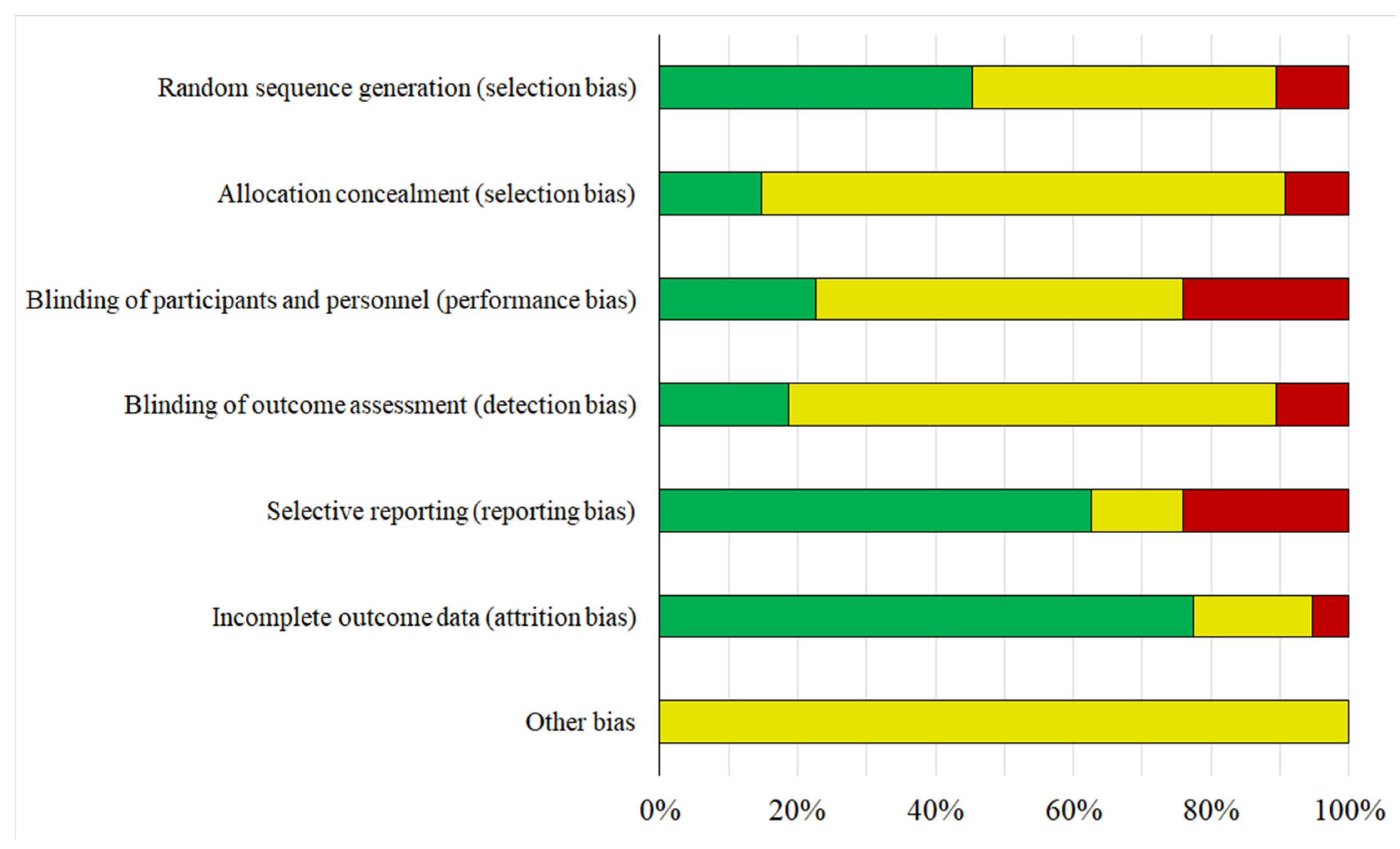
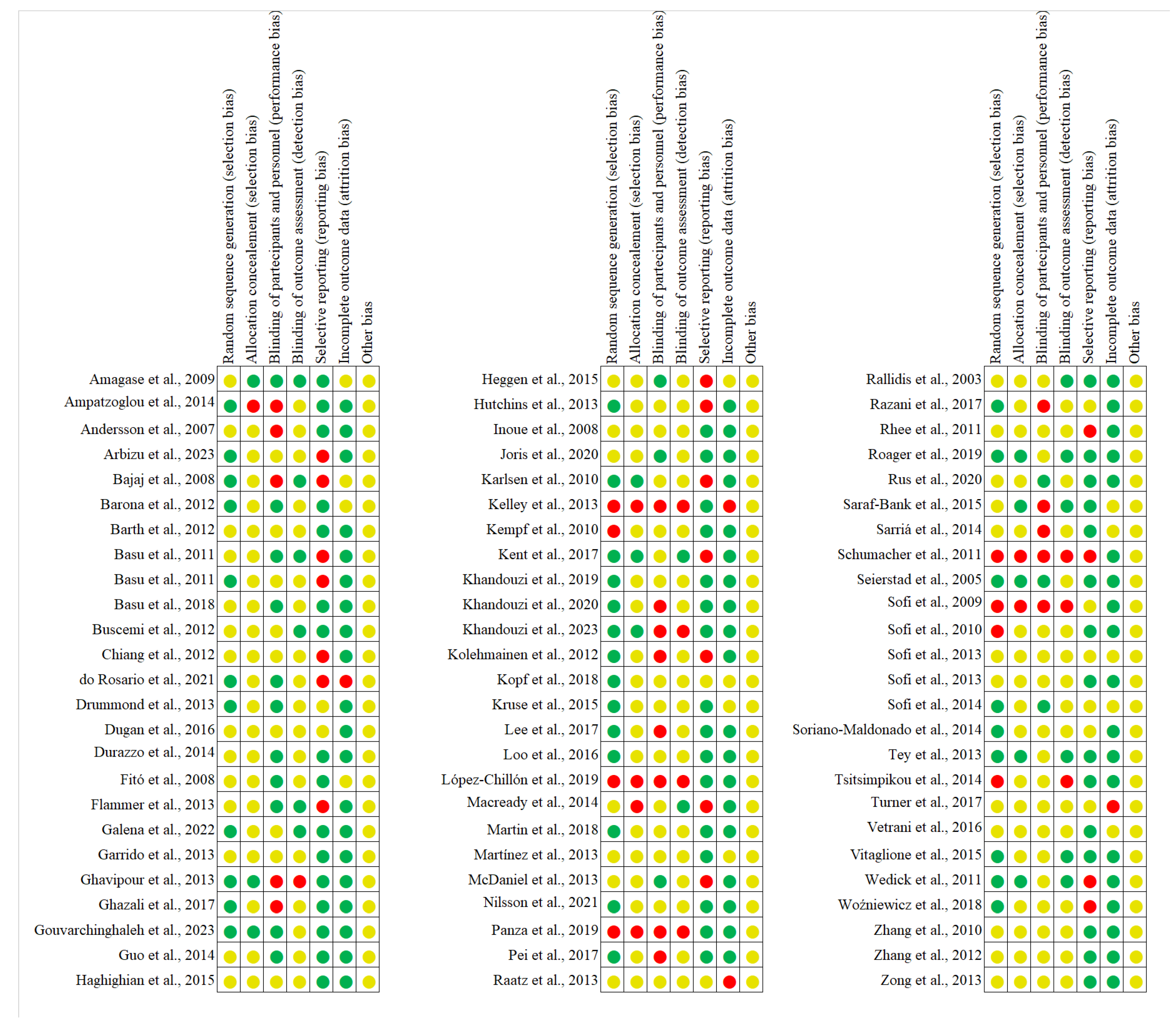
3.4. Risk of Bias
4. Discussion
5. Conclusions
Author Contributions
Funding
Data Availability Statement
Conflicts of Interest
Abbreviations
| CVDs | Cardiovascular diseases |
| NCDs | Non-communicable diseases |
| T2D | Type 2 diabetes |
| TNFs | Tumor necrosis factors |
| ILs | Interleukins |
| IFNs | Interferons |
| TGF-β | Tumor growth factor β |
| HFM | High fat meal |
| MCP-1 | Monocyte chemoattractant protein 1 |
| GM-CSF | Granulocyte/monocyte-colony stimulating factor |
| MIF | Macrophage migration inhibitory factor |
| HS | Healthy subjects |
| SPRF | Subjects with pathologies or risk factors |
References
- Abbafati, C.; Abbas, K.M.; Abbasi-Kangevari, M.; Abd-Allah, F.; Abdelalim, A.; Abdollahi, M.; Abdollahpour, I.; Abegaz, K.H.; Abolhassani, H.; Aboyans, V.; et al. Global Burden of 87 Risk Factors in 204 Countries and Territories, 1990–2019: A Systematic Analysis for the Global Burden of Disease Study 2019. Lancet 2020, 396, 1223–1249. [Google Scholar] [CrossRef] [PubMed]
- Afshin, A.; Sur, P.J.; Fay, K.A.; Cornaby, L.; Ferrara, G.; Salama, J.S.; Mullany, E.C.; Abate, K.H.; Abbafati, C.; Abebe, Z.; et al. Health Effects of Dietary Risks in 195 Countries, 1990–2017: A Systematic Analysis for the Global Burden of Disease Study 2017. Lancet 2019, 393, 1958–1972. [Google Scholar] [CrossRef]
- Furman, D.; Campisi, J.; Verdin, E.; Carrera-Bastos, P.; Targ, S.; Franceschi, C.; Ferrucci, L.; Gilroy, D.W.; Fasano, A.; Miller, G.W.; et al. Chronic Inflammation in the Etiology of Disease across the Life Span. Nat. Med. 2019, 25, 1822–1832. [Google Scholar] [CrossRef] [PubMed]
- Libby, P. Inflammation in Atherosclerosis. Nature 2002, 420, 868–874. [Google Scholar] [CrossRef] [PubMed]
- Gerhardt, T.; Haghikia, A.; Stapmanns, P.; Leistner, D.M. Immune Mechanisms of Plaque Instability. Front. Cardiovasc. Med. 2022, 8, 797046. [Google Scholar] [CrossRef]
- Rehman, K.; Akash, M.S.H. Mechanisms of Inflammatory Responses and Development of Insulin Resistance: How Are They Interlinked? J. Biomed. Sci. 2016, 23, 87. [Google Scholar] [CrossRef]
- Phillips, C.M.; Chen, L.W.; Heude, B.; Bernard, J.Y.; Harvey, N.C.; Duijts, L.; Mensink-Bout, S.M.; Polanska, K.; Mancano, G.; Suderman, M.; et al. Dietary Inflammatory Index and Non-Communicable Disease Risk: A Narrative Review. Nutrients 2019, 11, 1873. [Google Scholar] [CrossRef]
- Estruch, R.; Ros, E.; Salas-Salvadó, J.; Covas, M.-I.; Corella, D.; Arós, F.; Gómez-Gracia, E.; Ruiz-Gutiérrez, V.; Fiol, M.; Lapetra, J.; et al. Primary Prevention of Cardiovascular Disease with a Mediterranean Diet. N. Engl. J. Med. 2014, 370, 9. [Google Scholar] [CrossRef]
- Hart, M.J.; Torres, S.J.; McNaughton, S.A.; Milte, C.M. Dietary Patterns and Associations with Biomarkers of Inflammation in Adults: A Systematic Review of Observational Studies. Nutr. J. 2021, 20, 24. [Google Scholar] [CrossRef]
- Borish, L.C.; Steinke, J.W. Cytokines and Chemokines. J. Allergy Clin. Immunol. 2003, 111, 460–475. [Google Scholar] [CrossRef]
- Moudgil, K.D.; Choubey, D. Cytokines in Autoimmunity: Role in Induction, Regulation, and Treatment. J. Interferon Cytokine Res. 2011, 31, 695–703. [Google Scholar] [CrossRef] [PubMed]
- Boshtam, M.; Asgary, S.; Kouhpayeh, S.; Shariati, L.; Khanahmad, H. Aptamers Against Pro- and Anti-Inflammatory Cytokines: A Review. Inflammation 2017, 40, 340–349. [Google Scholar] [CrossRef]
- Scheller, J.; Chalaris, A.; Schmidt-Arras, D.; Rose-John, S. The Pro- and Anti-Inflammatory Properties of the Cytokine Interleukin-6. Biochim. Biophys. Acta Mol. Cell Res. 2011, 1813, 878–888. [Google Scholar] [CrossRef]
- Malesza, I.J.; Malesza, M.; Walkowiak, J.; Mussin, N.; Walkowiak, D.; Aringazina, R.; Bartkowiak-Wieczorek, J.; Mądry, E. High-Fat, Western-Style Diet, Systemic Inflammation, and Gut Microbiota: A Narrative Review. Cells 2021, 10, 3164. [Google Scholar] [CrossRef] [PubMed]
- Emerson, S.R.; Kurti, S.P.; Harms, C.A.; Haub, M.D.; Melgarejo, T.; Logan, C.; Rosenkranz, S.K. Magnitude and Timing of the Postprandial Inflammatory Response to a High-Fat Meal in Healthy Adults: A Systematic Review. Adv. Nutr. 2017, 8, 213–225. [Google Scholar] [CrossRef]
- Peluso, I.; Raguzzini, A.; Villano, D.V.; Cesqui, E.; Toti, E.; Catasta, G.; Serafini, M. High Fat Meal Increase of IL-17 Is Prevented by Ingestion of Fruit Juice Drink in Healthy Overweight Subjects. Curr. Pharm. Des. 2012, 18, 85–90. [Google Scholar] [CrossRef]
- Malinska, H.; Klementová, M.; Kudlackova, M.; Veleba, J.; Hoskova, E.; Oliyarnyk, O.; Markova, I.; Thieme, L.; Hill, M.; Pelikanova, T.; et al. A Plant-Based Meal Reduces Postprandial Oxidative and Dicarbonyl Stress in Men with Diabetes or Obesity Compared with an Energy- and Macronutrient-Matched Conventional Meal in a Randomized Crossover Study. Nutr. Metab. 2021, 18, 84. [Google Scholar] [CrossRef]
- D’Esposito, V.; Di Tolla, M.F.; Lecce, M.; Cavalli, F.; Libutti, M.; Misso, S.; Cabaro, S.; Ambrosio, M.R.; Parascandolo, A.; Covelli, B.; et al. Lifestyle and Dietary Habits Affect Plasma Levels of Specific Cytokines in Healthy Subjects. Front. Nutr. 2022, 9, 913176. [Google Scholar] [CrossRef]
- Higgins, J.P.T.; Thomas, J.; Chandler, J.; Cumpston, M.; Li, T.; Page, M.J.; Welch, V.A. (Eds.) Cochrane Handbook for Systematic Reviews of Interventions, Version 6.5 (Updated August 2024). Cochrane, 2024. 20 August 2024. Available online: www.cochrane.org/handbook (accessed on 27 August 2025).
- Sofi, F.; Whittaker, A.; Gori, A.M.; Cesari, F.; Surrenti, E.; Abbate, R.; Gensini, G.F.; Benedettelli, S.; Casini, A. Effect of Triticum Turgidum Subsp. Turanicum Wheat on Irritable Bowel Syndrome: A Double-Blinded Randomised Dietary Intervention Trial. Br. J. Nutr. 2014, 111, 1992–1999. [Google Scholar] [CrossRef] [PubMed]
- Sofi, F.; Whittaker, A.; Cesari, F.; Gori, A.M.; Fiorillo, C.; Becatti, M.; Marotti, I.; Dinelli, G.; Casini, A.; Abbate, R.; et al. Characterization of Khorasan Wheat (Kamut) and Impact of a Replacement Diet on Cardiovascular Risk Factors: Cross-over Dietary Intervention Study. Eur. J. Clin. Nutr. 2013, 67, 190–195. [Google Scholar] [CrossRef]
- Ampatzoglou, A.; Williams, C.L.; Atwal, K.K.; Maidens, C.M.; Ross, A.B.; Thielecke, F.; Jonnalagadda, S.S.; Kennedy, O.B.; Yaqoob, P. Effects of Increased Wholegrain Consumption on Immune and Inflammatory Markers in Healthy Low Habitual Wholegrain Consumers. Eur. J. Nutr. 2016, 55, 183–195. [Google Scholar] [CrossRef]
- Durazzo, A.; Carcea, M.; Adlercreutz, H.; Azzini, E.; Polito, A.; Olivieri, L.; Zaccaria, M.; Meneghini, C.; Maiani, F.; Bausano, G.; et al. Effects of Consumption of Whole Grain Foods Rich in Lignans in Healthy Postmenopausal Women with Moderate Serum Cholesterol: A Pilot Study. Int. J. Food Sci. Nutr. 2014, 65, 637–645. [Google Scholar] [CrossRef]
- Vetrani, C.; Costabile, G.; Luongo, D.; Naviglio, D.; Rivellese, A.A.; Riccardi, G.; Giacco, R. Effects of Whole-Grain Cereal Foods on Plasma Short Chain Fatty Acid Concentrations in Individuals with the Metabolic Syndrome. Nutrition 2016, 32, 217–221. [Google Scholar] [CrossRef]
- Andersson, A.; Tengblad, S.; Karlström, B.; Kamal-Eldin, A.; Landberg, R.; Basu, S.; Åman, P.; Vessby, B. Whole-Grain Foods Do Not Affect Insulin Sensitivity or Markers of Lipid Peroxidation and Inflammation in Healthy, Moderately Overweight Subjects. J. Nutr. 2007, 137, 1401–1407. [Google Scholar] [CrossRef]
- Kopf, J.C.; Suhr, M.J.; Clarke, J.; Eyun, S.-I.; Riethoven, J.J.M.; Ramer-Tait, A.E.; Rose, D.J. Role of Whole Grains versus Fruits and Vegetables in Reducing Subclinical Inflammation and Promoting Gastrointestinal Health in Individuals Affected by Overweight and Obesity: A Randomized Controlled Trial. Nutr. J. 2018, 17, 72. [Google Scholar] [CrossRef]
- Martínez, I.; Lattimer, J.M.; Hubach, K.L.; Case, J.A.; Yang, J.; Weber, C.G.; Louk, J.A.; Rose, D.J.; Kyureghian, G.; Peterson, D.A.; et al. Gut Microbiome Composition Is Linked to Whole Grain-Induced Immunological Improvements. ISME J. 2013, 7, 269–280. [Google Scholar] [CrossRef]
- Munch Roager, H.; Vogt, J.K.; Kristensen, M.; Hansen, L.B.S.; Ibrügger, S.; Maerkedahl, R.B.; Bahl, M.I.; Lind, M.V.; Nielsen, R.L.; Frøkiaer, H.; et al. Whole Grain-Rich Diet Reduces Body Weight and Systemic Low-Grade Inflammation without Inducing Major Changes of the Gut Microbiome: A Randomised Cross-over Trial. Gut 2019, 68, 83–93. [Google Scholar] [CrossRef] [PubMed]
- Vitaglione, P.; Mennella, I.; Ferracane, R.; Rivellese, A.A.; Giacco, R.; Ercolini, D.; Gibbons, S.M.; La Storia, A.; Gilbert, J.A.; Jonnalagadda, S.; et al. Whole-Grain Wheat Consumption Reduces Inflammation in a Randomized Controlled Trial on Overweight and Obese Subjects with Unhealthy Dietary and Lifestyle Behaviors: Role of Polyphenols Bound to Cereal Dietary Fiber. Am. J. Clin. Nutr. 2015, 101, 251–261. [Google Scholar] [CrossRef] [PubMed]
- López-Chillón, M.T.; Carazo-Díaz, C.; Prieto-Merino, D.; Zafrilla, P.; Moreno, D.A.; Villaño, D. Effects of Long-Term Consumption of Broccoli Sprouts on Inflammatory Markers in Overweight Subjects. Clin. Nutr. 2019, 38, 745–752. [Google Scholar] [CrossRef] [PubMed]
- Galena, A.E.; Chai, J.; Zhang, J.; Bednarzyk, M.; Perez, D.; Ochrietor, J.D.; Jahan-Mihan, A.; Arikawa, A.Y. The Effects of Fermented Vegetable Consumption on the Composition of the Intestinal Microbiota and Levels of Inflammatory Markers in Women: A Pilot and Feasibility Study. PLoS ONE 2022, 17, e0275275. [Google Scholar] [CrossRef]
- Barona, J.; Blesso, C.N.; Andersen, C.J.; Park, Y.; Lee, J.; Fernandez, M.L. Grape Consumption Increases Anti-Inflammatory Markers and Upregulates Peripheral Nitric Oxide Synthase in the Absence of Dyslipidemias in Men with Metabolic Syndrome. Nutrients 2012, 4, 1945–1957. [Google Scholar] [CrossRef]
- Basu, A.; Kurien, B.T.; Tran, H.; Byrd, B.; Maher, J.; Schell, J.; Masek, E.; Barrett, J.R.; Lyons, T.J.; Betts, N.M.; et al. Strawberries Decrease Circulating Levels of Tumor Necrosis Factor and Lipid Peroxides in Obese Adults with Knee Osteoarthritis. Food Funct. 2018, 9, 6218–6226. [Google Scholar] [CrossRef]
- Kelley, D.S.; Adkins, Y.; Reddy, A.; Woodhouse, L.R.; Mackey, B.E.; Erickson, K.L. Sweet Bing Cherries Lower Circulating Concentrations of Markers for Chronic Inflammatory Diseases in Healthy Humans1-4. J. Nutr. 2013, 143, 340–344. [Google Scholar] [CrossRef]
- Kolehmainen, M.; Mykkänen, O.; Kirjavainen, P.V.; Leppänen, T.; Moilanen, E.; Adriaens, M.; Laaksonen, D.E.; Hallikainen, M.; Puupponen-Pimiä, R.; Pulkkinen, L.; et al. Bilberries Reduce Low-Grade Inflammation in Individuals with Features of Metabolic Syndrome. Mol. Nutr. Food Res. 2012, 56, 1501–1510. [Google Scholar] [CrossRef]
- Macready, A.L.; George, T.W.; Chong, M.F.; Alimbetov, D.S.; Jin, Y.; Vidal, A.; Spencer, J.P.E.; Kennedy, O.B.; Tuohy, K.M.; Minihane, A.M.; et al. Flavonoid-Rich Fruit and Vegetables Improve Microvascular Reactivity and Inflammatory Status in Men at Risk of Cardiovascular Disease-FLAVURS: A Randomized Controlled Trial. Am. J. Clin. Nutr. 2014, 99, 479–489. [Google Scholar] [CrossRef] [PubMed]
- Nilsson, A.; Cano, A.; Bergens, O.; Kadi, F. Randomized Controlled Trial for Promotion of Healthy Eating in Older Adults by Increasing Consumption of Plant-Based Foods: Effect on Inflammatory Biomarkers. Nutrients 2021, 13, 3753. [Google Scholar] [CrossRef]
- Fitó, M.; Cladellas, M.; de la Torre, R.; Martí, J.; Muñoz, D.; Schröder, H.; Alcántara, M.; Pujadas-Bastardes, M.; Marrugat, J.; Ló-Sabater, M.C.; et al. Anti-Inflammatory Effect of Virgin Olive Oil in Stable Coronary Disease Patients: A Randomized, Crossover, Controlled Trial. Eur. J. Clin. Nutr. 2008, 62, 570–574. [Google Scholar] [CrossRef]
- Rus, A.; Molina, F.; Martínez-Ramírez, M.J.; Aguilar-Ferrándiz, M.E.; Carmona, R.; Moral, M.L. Del Effects of Olive Oil Consumption on Cardiovascular Risk Factors in Patients with Fibromyalgia. Nutrients 2020, 12, 918. [Google Scholar] [CrossRef] [PubMed]
- Khandouzi, N.; Zahedmehr, A.; Nasrollahzadeh, J. Effects of Canola or Olive Oil on Plasma Lipids, Lipoprotein-Associated Phospholipase A2and Inflammatory Cytokines in Patients Referred for Coronary Angiography. Lipids Health Dis. 2020, 19, 183. [Google Scholar] [CrossRef] [PubMed]
- Kruse, M.; von Loeffelholz, C.; Hoffmann, D.; Pohlmann, A.; Seltmann, A.C.; Osterhoff, M.; Hornemann, S.; Pivovarova, O.; Rohn, S.; Jahreis, G.; et al. Dietary Rapeseed/Canola-Oil Supplementation Reduces Serum Lipids and Liver Enzymes and Alters Postprandial Inflammatory Responses in Adipose Tissue Compared to Olive-Oil Supplementation in Obese Men. Mol. Nutr. Food Res. 2015, 59, 507–519. [Google Scholar] [CrossRef]
- Rallidis, L.S.; Paschos, G.; Liakos, G.K.; Velissaridou, A.H.; Anastasiadis, G.; Zampelas, A. Dietary α-Linolenic Acid Decreases C-Reactive Protein, Serum Amyloid A and Interleukin-6 in Dyslipidaemic Patients. Atherosclerosis 2003, 167, 237–242. [Google Scholar] [CrossRef]
- Joris, P.J.; Draijer, R.; Fuchs, D.; Mensink, R.P. Effect of α-Linolenic Acid on Vascular Function and Metabolic Risk Markers during the Fasting and Postprandial Phase: A Randomized Placebo-Controlled Trial in Untreated (Pre-)Hypertensive Individuals. Clin. Nutr. 2020, 39, 2413–2419. [Google Scholar] [CrossRef] [PubMed]
- Heggen, E.; Kirkhus, B.; Pedersen, J.I.; Tonstad, S. Effects of Margarine Enriched with Plant Sterol Esters from Rapeseed and Tall Oils on Markers of Endothelial Function, Inflammation and Hemostasis. Scand. J. Clin. Lab. Investig. 2015, 75, 189–192. [Google Scholar] [CrossRef]
- Haghighian, M.K.; Alipoor, B.; Mahdavi, A.M.; Sadat, B.E.; Jafarabadi, M.A.; Moghaddam, A. Effects of Sesame Seed Supplementation on Inflammatory Factors and Oxidative Stress Biomarkers in Patients with Knee Osteoarthritis. Acta Med. Iran. 2015, 53, 207–213. [Google Scholar]
- Khandouzi, N.; Zahedmehr, A.; Mohammadzadeh, A.; Sanati, H.R.; Nasrollahzadeh, J. Effect of Flaxseed Consumption on Flow-Mediated Dilation and Inflammatory Biomarkers in Patients with Coronary Artery Disease: A Randomized Controlled Trial. Eur. J. Clin. Nutr. 2019, 73, 258–265. [Google Scholar] [CrossRef]
- Rhee, Y.; Brunt, A. Flaxseed Supplementation Improved Insulin Resistance in Obese Glucose Intolerant People: A Randomized Crossover Design. Nutr. J. 2011, 10, 44. [Google Scholar] [CrossRef]
- Hutchins, A.M.; Brown, B.D.; Cunnane, S.C.; Domitrovich, S.G.; Adams, E.R.; Bobowiec, C.E. Daily Flaxseed Consumption Improves Glycemic Control in Obese Men and Women with Pre-Diabetes: A Randomized Study. Nutr. Res. 2013, 33, 367–375. [Google Scholar] [CrossRef]
- Zong, G.; Demark-Wahnefried, W.; Wu, H.; Lin, X. Effects of Flaxseed Supplementation on Erythrocyte Fatty Acids and Multiple Cardiometabolic Biomarkers among Chinese with Risk Factors of Metabolic Syndrome. Eur. J. Nutr. 2013, 52, 1547–1551. [Google Scholar] [CrossRef]
- Chiang, Y.L.; Haddad, E.; Rajaram, S.; Shavlik, D.; Sabaté, J. The Effect of Dietary Walnuts Compared to Fatty Fish on Eicosanoids, Cytokines, Soluble Endothelial Adhesion Molecules and Lymphocyte Subsets: A Randomized, Controlled Crossover Trial. Prostaglandins Leukot. Essent. Fat. Acids 2012, 87, 111–117. [Google Scholar] [CrossRef] [PubMed]
- Tey, S.L.; Gray, A.A.; Chisholm, A.A.; Delahunty, C.C.; Brown, R.R. The Dose of Hazelnuts Influences Acceptance and Diet Quality but Not Inflammatory Markers and Body Composition in Overweight and Obese Individuals. J. Nutr. 2013, 143, 1254–1262. [Google Scholar] [CrossRef]
- Zhang, J.; Wang, C.; Li, L.; Man, Q.; Song, P.; Meng, L.; Du, Z.Y.; Frøyland, L. Inclusion of Atlantic Salmon in the Chinese Diet Reduces Cardiovascular Disease Risk Markers in Dyslipidemic Adult Men. Nutr. Res. 2010, 30, 447–454. [Google Scholar] [CrossRef]
- Zhang, J.; Wang, C.; Li, L.; Man, Q.; Meng, L.; Song, P.; Frøyland, L.; Du, Z.Y. Dietary Inclusion of Salmon, Herring and Pompano as Oily Fish Reduces CVD Risk Markers in Dyslipidaemic Middle-Aged and Elderly Chinese Women. Br. J. Nutr. 2012, 108, 1455–1465. [Google Scholar] [CrossRef] [PubMed]
- Seierstad, S.L.; Seljeflot, I.; Johansen, O.; Hansen, R.; Haugen, M.; Rosenlund, G.; Frøyland, L.; Arnesen, H. Dietary Intake of Differently Fed Salmon; the Influence on Markers of Human Atherosclerosis. Eur. J. Clin. Investig. 2005, 35, 52–59. [Google Scholar] [CrossRef] [PubMed]
- Sofi, F.; Giorgi, G.; Cesari, F.; Gori, A.M.; Mannini, L.; Parisi, G.; Casini, A.; Abbate, R.; Gensini, G.F.; Poli, B.M. The Atherosclerotic Risk Profile Is Affected Differently by Fish Flesh with a Similar EPA and DHA Content but Different N-6/n-3 Ratio. Asia Pac. J. Clin. Nutr. 2013, 22, 32–40. [Google Scholar] [CrossRef] [PubMed]
- Raatz, S.K.; Rosenberger, T.A.; Johnson, L.A.K.; Wolters, W.W.; Burr, G.S.; Picklo, M.J. Dose-Dependent Consumption of Farmed Atlantic Salmon (Salmo Salar) Increases Plasma Phospholipid n-3 Fatty Acids Differentially. J. Acad. Nutr. Diet. 2013, 113, 282–287. [Google Scholar] [CrossRef]
- Sofi, F.; Gori, A.M.; Cesari, F.; Paniccia, R.; Mannini, L.; Giorgi, G.; Parisi, G.; Casini, A.; Poli, B.M.; Gensini, G.F.; et al. Lipid, Inflammatory and Haemorheological Profiles Are Significantly Affected by Farmed Fish Eating: An Intervention Study. Int. J. Food Sci. Nutr. 2009, 60, 50–59. [Google Scholar] [CrossRef]
- Pei, R.; Dimarco, D.M.; Putt, K.K.; Martin, D.A.; Gu, Q.; Chitchumroonchokchai, C.; White, H.M.; Scarlett, C.O.; Bruno, R.S.; Bolling, B.W. Low-Fat Yogurt Consumption Reduces Biomarkers of Chronic Inflammation and Inhibits Markers of Endotoxin Exposure in Healthy Premenopausal Women: A Randomised Controlled Trial. Br. J. Nutr. 2017, 118, 1043–1051. [Google Scholar] [CrossRef]
- Lee, A.; Lee, Y.J.; Yoo, H.J.; Kim, M.; Chang, Y.; Lee, D.S.; Lee, J.H. Consumption of Dairy Yogurt Containing Lactobacillus Paracasei Ssp. Paracasei, Bifidobacterium Animalis Ssp. Lactis and Heat-Treated Lactobacillus Plantarum Improves Immune Function Including Natural Killer Cell Activity. Nutrients 2017, 9, 558. [Google Scholar] [CrossRef]
- Bajaj, J.S.; Saeian, K.; Christensen, K.M.; Hafeezullah, M.; Varma, R.R.; Franco, J.; Pleuss, J.A.; Krakower, G.; Hoffmann, R.G.; Binion, D.G. Probiotic Yogurt for the Treatment of Minimal Hepatic Encephalopathy. Am. J. Gastroenterol. 2008, 103, 1707–1715. [Google Scholar] [CrossRef]
- Sofi, F.; Buccioni, A.; Cesari, F.; Gori, A.M.; Minieri, S.; Mannini, L.; Casini, A.; Gensini, G.F.; Abbate, R.; Antongiovanni, M. Effects of a Dairy Product (Pecorino Cheese) Naturally Rich in Cis-9, Trans-11 Conjugated Linoleic Acid on Lipid, Inflammatory and Haemorheological Variables: A Dietary Intervention Study. Nutr. Metab. Cardiovasc. Dis. 2010, 20, 117–124. [Google Scholar] [CrossRef]
- Dugan, C.E.; Aguilar, D.; Park, Y.K.; Lee, J.Y.; Fernandez, M.L. Dairy Consumption Lowers Systemic Inflammation and Liver Enzymes in Typically Low-Dairy Consumers with Clinical Characteristics of Metabolic Syndrome. J. Am. Coll. Nutr. 2016, 35, 255–261. [Google Scholar] [CrossRef]
- Turner, K.M.; Keogh, J.B.; Meikle, P.J.; Clifton, P.M. Changes in Lipids and Inflammatory Markers after Consuming Diets High in Red Meat or Dairy for Four Weeks. Nutrients 2017, 9, 886. [Google Scholar] [CrossRef] [PubMed]
- Saraf-Bank, S.; Esmaillzadeh, A.; Faghihimani, E.; Azadbakht, L. Effect of Non-Soy Legume Consumption on Inflammation and Serum Adiponectin Levels among First-Degree Relatives of Patients with Diabetes: A Randomized, Crossover Study. Nutrition 2015, 31, 459–465. [Google Scholar] [CrossRef]
- McDaniel, J.; Askew, W.; Bennett, D.; Mihalopoulos, J.; Anantharaman, S.; Fjeldstad, A.S.; Rule, D.C.; Nanjee, N.M.; Harris, R.A.; Richardson, R.S. Bison Meat Has a Lower Atherogenic Risk than Beef in Healthy Men. Nutr. Res. 2013, 33, 293–302. [Google Scholar] [CrossRef]
- Ghazali, W.S.W.; Romli, A.C.; Mohamed, M. Effects of Honey Supplementation on Inflammatory Markers among Chronic Smokers: A Randomized Controlled Trial. BMC Complement. Med. Ther. 2017, 17, 175. [Google Scholar] [CrossRef]
- Gouvarchinghaleh, H.E.; Kiany, F.; Parastouei, K.; Alishiri, G.; Jafari, N.J.; Fooladi, A.A.I.; Pargar, A.; Ghazvini, A.; Mirnejad, R.; Raei, M.; et al. The Effects of Functional Foods Mixture on Inflammatory Cytokines and Biochemical Findings in Hospitalized Patients with COVID-19: A Randomized Double-Blind Controlled Trial. Trials 2023, 24, 442. [Google Scholar] [CrossRef]
- Khandouzi, N.; Zahedmehr, A.; Asadian, S.; Nasrollahzadeh, J. Effects of Olive Oil and Flaxseed Consumption in a Healthy Diet on Endothelial Function, Plasma Lipids and Inflammatory Factors of Patients with Coronary Heart Disease: A Randomized Clinical Trial. Coron. Artery Dis. 2023, 34, 332–340. [Google Scholar] [CrossRef] [PubMed]
- Flammer, A.J.; Martin, E.A.; Gössl, M.; Widmer, R.J.; Lennon, R.J.; Sexton, J.A.; Loeffler, D.; Khosla, S.; Lerman, L.O.; Lerman, A. Polyphenol-Rich Cranberry Juice Has a Neutral Effect on Endothelial Function but Decreases the Fraction of Osteocalcin-Expressing Endothelial Progenitor Cells. Eur. J. Nutr. 2013, 52, 289–296. [Google Scholar] [CrossRef] [PubMed]
- Basu, A.; Betts, N.M.; Ortiz, J.; Simmons, B.; Wu, M.; Lyons, T.J. Low-Energy Cranberry Juice Decreases Lipid Oxidation and Increases Plasma Antioxidant Capacity in Women with Metabolic Syndrome. Nutr. Res. 2011, 31, 190–196. [Google Scholar] [CrossRef]
- Woźniewicz, M.; Nowaczyk, P.M.; Kurhańska-Flisykowska, A.; Wyganowska-Świątkowska, M.; Lasik-Kurdyś, M.; Walkowiak, J.; Bajerska, J. Consumption of Cranberry Functional Beverage Reduces Gingival Index and Plaque Index in Patients with Gingivitis. Nutr. Res. 2018, 58, 36–45. [Google Scholar] [CrossRef]
- Karlsen, A.; Paur, I.; Bøhn, S.K.; Sakhi, A.K.; Borge, G.I.; Serafini, M.; Erlund, I.; Laake, P.; Tonstad, S.; Blomhoff, R. Bilberry Juice Modulates Plasma Concentration of NF-ΚB Related Inflammatory Markers in Subjects at Increased Risk of CVD. Eur. J. Nutr. 2010, 49, 345–355. [Google Scholar] [CrossRef]
- Loo, B.M.; Erlund, I.; Koli, R.; Puukka, P.; Hellström, J.; Wähälä, K.; Mattila, P.; Jula, A. Consumption of Chokeberry (Aronia Mitschurinii) Products Modestly Lowered Blood Pressure and Reduced Low-Grade Inflammation in Patients with Mildly Elevated Blood Pressure. Nutr. Res. 2016, 36, 1222–1230. [Google Scholar] [CrossRef] [PubMed]
- Amagase, H.; Sun, B.; Nance, D.M. Immunomodulatory Effects of a Standardized Lycium barbarum Fruit Juice in Chinese Older Healthy Human Subjects. J. Med. Food 2009, 12, 1159–1165. [Google Scholar] [CrossRef]
- Guo, H.; Zhong, R.; Liu, Y.; Jiang, X.; Tang, X.; Li, Z.; Xia, M.; Ling, W. Effects of Bayberry Juice on Inflammatory and Apoptotic Markers in Young Adults with Features of Non-Alcoholic Fatty Liver Disease. Nutrition 2014, 30, 198–203. [Google Scholar] [CrossRef]
- Inoue, T.; Komoda, H.; Uchida, T.; Node, K. Tropical Fruit Camu-Camu (Myrciaria Dubia) Has Anti-Oxidative and Anti-Inflammatory Properties. J. Cardiol. 2008, 52, 127–132. [Google Scholar] [CrossRef] [PubMed]
- Arbizu, S.; Mertens-Talcott, S.U.; Talcott, S.; Noratto, G.D. Dark Sweet Cherry (Prunus Avium) Supplementation Reduced Blood Pressure and Pro-Inflammatory Interferon Gamma (IFNγ) in Obese Adults without Affecting Lipid Profile, Glucose Levels and Liver Enzymes. Nutrients 2023, 15, 681. [Google Scholar] [CrossRef]
- Martin, K.R.; Burrell, L.; Bopp, J. Authentic Tart Cherry Juice Reduces Markers of Inflammation in Overweight and Obese Subjects: A Randomized, Crossover Pilot Study. Food Funct. 2018, 9, 5290–5300. [Google Scholar] [CrossRef]
- Kent, K.; Charlton, K.; Roodenrys, S.; Batterham, M.; Potter, J.; Traynor, V.; Gilbert, H.; Morgan, O.; Richards, R. Consumption of Anthocyanin-Rich Cherry Juice for 12 Weeks Improves Memory and Cognition in Older Adults with Mild-to-Moderate Dementia. Eur. J. Nutr. 2017, 56, 333–341. [Google Scholar] [CrossRef]
- Garrido, M.; Gonzalez-Gomez, D.; Lozano, M.; Barriga, C.; Paredes, S.D.; Rodriguez, A.B. A Jerte Valley Cherry Product Provides Beneficial Effects on Sleep Quality. Influence on Aging. J. Nutr. Health Aging 2012, 17, 553–560. [Google Scholar] [CrossRef]
- Barth, S.W.; Koch, T.C.L.; Watzl, B.; Dietrich, H.; Will, F.; Bub, A. Moderate Effects of Apple Juice Consumption on Obesity-Related Markers in Obese Men: Impact of Diet-Gene Interaction on Body Fat Content. Eur. J. Nutr. 2012, 51, 841–850. [Google Scholar] [CrossRef] [PubMed]
- Soriano-Maldonado, A.; Hidalgo, M.; Arteaga, P.; de Pascual-Teresa, S.; Nova, E. Effects of Regular Consumption of Vitamin C-Rich or Polyphenol-Rich Apple Juice on Cardiometabolic Markers in Healthy Adults: A Randomized Crossover Trial. Eur. J. Nutr. 2014, 53, 1645–1657. [Google Scholar] [CrossRef]
- Ghavipour, M.; Saedisomeolia, A.; Djalali, M.; Sotoudeh, G.; Eshraghyan, M.R.; Moghadam, A.M.; Wood, L.G. Tomato Juice Consumption Reduces Systemic Inflammation in Overweight and Obese Females. Br. J. Nutr. 2013, 109, 2031–2035. [Google Scholar] [CrossRef]
- Tsitsimpikou, C.; Tsarouhas, K.; Kioukia-Fougia, N.; Skondra, C.; Fragkiadaki, P.; Papalexis, P.; Stamatopoulos, P.; Kaplanis, I.; Hayes, A.W.; Tsatsakis, A.; et al. Dietary Supplementation with Tomato-Juice in Patients with Metabolic Syndrome: A Suggestion to Alleviate Detrimental Clinical Factors. Food Chem. Toxicol. 2014, 74, 9–13. [Google Scholar] [CrossRef]
- Buscemi, S.; Rosafio, G.; Arcoleo, G.; Mattina, A.; Canino, B.; Montana, M.; Verga, S.; Rini, G. Effects of Red Orange Juice Intake on Endothelial Function and Inflammatory Markers in Adult Subjects with Increased Cardiovascular Risk. Am. J. Clin. Nutr. 2012, 95, 1089–1095. [Google Scholar] [CrossRef] [PubMed]
- do Rosario, V.A.; Fitzgerald, Z.; Broyd, S.; Paterson, A.; Roodenrys, S.; Thomas, S.; Bliokas, V.; Potter, J.; Walton, K.; Weston–Green, K.; et al. Food Anthocyanins Decrease Concentrations of TNF-α in Older Adults with Mild Cognitive Impairment: A Randomized, Controlled, Double Blind Clinical Trial. Nutr. Metab. Cardiovasc. Dis. 2021, 31, 950–960. [Google Scholar] [CrossRef]
- Razani, Z.; Dastani, M.; Kazerani, H.R. Cardioprotective Effects of Pomegranate (Punica Granatum) Juice in Patients with Ischemic Heart Disease. Phytother. Res. 2017, 31, 1731–1738. [Google Scholar] [CrossRef]
- Kempf, K.; Herder, C.; Erlund, I.; Kolb, H.; Martin, S.; Carstensen, M.; Koenig, W.; Sundvall, J.; Bidel, S.; Kuha, S.; et al. Effects of Coffee Consumption on Subclinical Inflammation and Other Risk Factors for Type 2 Diabetes: A Clinical Trial. Am. J. Clin. Nutr. 2010, 91, 950–957. [Google Scholar] [CrossRef]
- Wedick, N.M.; Brennan, A.M.; Sun, Q.; Hu, F.B.; Mantzoros, C.S.; Van Dam, R.M. Effects of Caffeinated and Decaffeinated Coffee on Biological Risk Factors for Type 2 Diabetes: A Randomized Controlled Trial. Nutr. J. 2011, 10, 93. [Google Scholar] [CrossRef] [PubMed]
- Panza, V.P.; Brunetta, H.S.; de Oliveira, M.V.; Nunes, E.A.; da Silva, E.L. Effect of Mate Tea (Ilex Paraguariensis) on the Expression of the Leukocyte NADPH Oxidase Subunit P47 Phox and on Circulating Inflammatory Cytokines in Healthy Men: A Pilot Study. Int. J. Food Sci. Nutr. 2019, 70, 212–221. [Google Scholar] [CrossRef] [PubMed]
- Basu, A.; Du, M.; Sanchez, K.; Leyva, M.J.; Betts, N.M.; Blevins, S.; Wu, M.; Aston, C.E.; Lyons, T.J. Green Tea Minimally Affects Biomarkers of Inflammation in Obese Subjects with Metabolic Syndrome. Nutrition 2011, 27, 206–213. [Google Scholar] [CrossRef]
- Drummond, E.M.; Harbourne, N.; Marete, E.; Jacquier, J.C.; O’Riordan, D.; Gibney, E.R. An in Vivo Study Examining the Antiinflammatory Effects of Chamomile, Meadowsweet, and Willow Bark in a Novel Functional Beverage. J. Diet. Suppl. 2013, 10, 370–380. [Google Scholar] [CrossRef]
- Schumacher, E.; Vigh, É.; Molnár, V.; Kenyeres, P.; Fehér, G.; Késmárky, G.; Tõth, K.; Garai, J. Thrombosis Preventive Potential of Chicory Coffee Consumption: A Clinical Study. Phytother. Res. 2011, 25, 744–748. [Google Scholar] [CrossRef] [PubMed]
- Sarriá, B.; Martínez-López, S.; Sierra-Cinos, J.L.; García-Diz, L.; Mateos, R.; Bravo, L. Regular Consumption of a Cocoa Product Improves the Cardiometabolic Profile in Healthy and Moderately Hypercholesterolaemic Adults. Br. J. Nutr. 2014, 111, 122–134. [Google Scholar] [CrossRef] [PubMed]
- Peluso, I.; Miglio, C.; Morabito, G.; Ioannone, F.; Serafini, M. Flavonoids and Immune Function in Human: A Systematic Review. Crit. Rev. Food Sci. Nutr. 2015, 55, 383–395. [Google Scholar] [CrossRef]
- Lettieri-Barbato, D.; Tomei, F.; Sancini, A.; Morabito, G.; Serafini, M. Effect of Plant Foods and Beverages on Plasma Non-Enzymatic Antioxidant Capacity in Human Subjects: A Meta-Analysis. Br. J. Nutr. 2013, 109, 1544–1556. [Google Scholar] [CrossRef]
- Zamora-Ros, R.; Serafini, M.; Estruch, R.; Lamuela-Raventós, R.M.; Martínez-González, M.A.; Salas-Salvadó, J.; Fiol, M.; Lapetra, J.; Arós, F.; Covas, M.I.; et al. Mediterranean Diet and Non Enzymatic Antioxidant Capacity in the PREDIMED Study: Evidence for a Mechanism of Antioxidant Tuning. Nutr. Metab. Cardiovasc. Dis. 2013, 23, 1167–1174. [Google Scholar] [CrossRef]
- Serafini, M.; Jakszyn, P.; Luján-Barroso, L.; Agudo, A.; Bueno-De-Mesquita, B.; Van Duijnhoven, F.J.B.; Jenab, M.; Navarro, C.; Palli, D.; Boeing, H.; et al. Dietary Total Antioxidant Capacity and Gastric Cancer Risk in the European Prospective Investigation into Cancer and Nutrition Study. Int. J. Cancer 2012, 131, 544–554. [Google Scholar] [CrossRef]
- Miglio, C.; Peluso, I.; Raguzzini, A.; Villaño, D.V.; Cesqui, E.; Catasta, G.; Toti, E.; Serafini, M. Antioxidant and Inflammatory Response Following High-Fat Meal Consumption in Overweight Subjects. Eur. J. Nutr. 2013, 52, 1107–1114. [Google Scholar] [CrossRef]
- Wang, P.; Song, M.; Eliassen, A.H.; Wang, M.; Fung, T.T.; Clinton, S.K.; Rimm, E.B.; Hu, F.B.; Willett, W.C.; Tabung, F.K.; et al. Optimal Dietary Patterns for Prevention of Chronic Disease. Nat. Med. 2023, 29, 719–728. [Google Scholar] [CrossRef] [PubMed]
- Aljada, A.; Mohanty, P.; Ghanim, H.; Abdo, T.; Tripathy, D.; Chaudhuri, A.; Dandona, P. Increase in Intranuclear Nuclear Factor B and Decrease in Inhibitor B in Mononuclear Cells after a Mixed Meal: Evidence for a Proinflammatory Effect 1-3. Am. J. Clin. Nutr. 2004, 79, 682–690. [Google Scholar] [CrossRef]
- Nappo, F.; Esposito, K.; Cioffi, M.; Giugliano, G.; Molinari, A.M.; Paolisso, G.; Marfella, R.; Giugliano, D. Postprandial Endothelial Activation in Healthy Subjects and in Type 2 Diabetic Patients: Role of Fat and Carbohydrate Meals. J. Am. Coll. Cardiol. 2002, 39, 1145–1150. [Google Scholar] [CrossRef] [PubMed]
- Morabito, G.; Miglio, C.; Peluso, I.; Serafini, M. Fruit Polyphenols and Postprandial Inflammatory Stress. In Polyphenols in Human Health and Disease; Elsevier Inc.: Amsterdam, The Netherlands, 2013; Volume 2, pp. 1107–1126. ISBN 978-0-12-398456-2. [Google Scholar]
- Angelino, D.; Godos, J.; Ghelfi, F.; Tieri, M.; Titta, L.; Lafranconi, A.; Marventano, S.; Alonzo, E.; Gambera, A.; Sciacca, S.; et al. Fruit and Vegetable Consumption and Health Outcomes: An Umbrella Review of Observational Studies. Int. J. Food Sci. Nutr. 2019, 70, 652–667. [Google Scholar] [CrossRef] [PubMed]
- Dimina, L.; Mariotti, F. The Postprandial Appearance of Features of Cardiometabolic Risk: Acute Induction and Prevention by Nutrients and Other Dietary Substances. Nutrients 2019, 11, 1963. [Google Scholar] [CrossRef]
- Burton-Freeman, B. Postprandial Metabolic Events and Fruit-Derived Phenolics: A Review of the Science. Br. J. Nutr. 2010, 104, S1–S14. [Google Scholar] [CrossRef]
- Calle, M.C.; Andersen, C.J. Assessment of Dietary Patterns Represents a Potential, yet Variable, Measure of Inflammatory Status: A Review and Update. Dis. Markers 2019, 2019, 3102870. [Google Scholar] [CrossRef]
- Zhu, F.; Du, B.; Xu, B. Anti-Inflammatory Effects of Phytochemicals from Fruits, Vegetables, and Food Legumes: A Review. Crit. Rev. Food Sci. Nutr. 2018, 58, 1260–1270. [Google Scholar] [CrossRef]
- Gonzalez, J.T. Are All Sugars Equal? Role of the Food Source in Physiological Responses to Sugars with an Emphasis on Fruit and Fruit Juice. Eur. J. Nutr. 2024, 63, 1435–1451. [Google Scholar] [CrossRef]
- Martínez-González, M.A.; Sayón-Orea, C.; Bullón-Vela, V.; Bes-Rastrollo, M.; Rodríguez-Artalejo, F.; Yusta-Boyo, M.J.; García-Solano, M. Effect of Olive Oil Consumption on Cardiovascular Disease, Cancer, Type 2 Diabetes, and All-Cause Mortality: A Systematic Review and Meta-Analysis. Clin. Nutr. 2022, 41, 2659–2682. [Google Scholar] [CrossRef]
- Tortosa-Caparrós, E.; Navas-Carrillo, D.; Marín, F.; Orenes-Piñero, E. Anti-Inflammatory Effects of Omega 3 and Omega 6 Polyunsaturated Fatty Acids in Cardiovascular Disease and Metabolic Syndrome. Crit. Rev. Food Sci. Nutr. 2017, 57, 3421–3429. [Google Scholar] [CrossRef]
- van der Kamp, J.W.; Jones, J.M.; Miller, K.B.; Ross, A.B.; Seal, C.J.; Tan, B.; Beck, E.J. Consensus, Global Definitions of Whole Grain as a Food Ingredient and of Whole-Grain Foods Presented on Behalf of the Whole Grain Initiative. Nutrients 2022, 14, 138. [Google Scholar] [CrossRef] [PubMed]
- Leidy, H.J.; Gooding, R.; Hicks-Roof, K. Perspective: Key Considerations When Developing and Publishing Dietary Interventions for Human Clinical Trials. J. Nutr. 2024, 154, 2904–2908. [Google Scholar] [CrossRef] [PubMed]
- Khodarahmi, M.; Foroumandi, E.; Asghari Jafarabadi, M. Effects of Soy Intake on Circulating Levels of TNF-α and Interleukin-6: A Systematic Review and Meta-Analysis of Randomized Controlled Trials. Eur. J. Nutr. 2021, 60, 581–601. [Google Scholar] [CrossRef] [PubMed]
- Wang, M.; Liu, J.; Zhang, Z.; Zhang, H.; Wang, N.; Chen, X.; Han, X.; Lu, Q.; Chi, S. Effects of Dietary Intervention on Inflammatory Markers in Metabolic Syndrome: A Systematic Review and Meta-Analysis. Front. Nutr. 2022, 9, 846591. [Google Scholar] [CrossRef]
- Gholizadeh, M.; Basafa Roodi, P.; Abaj, F.; Shab-Bidar, S.; Saedisomeolia, A.; Asbaghi, O.; Lak, M. Influence of Vitamin A Supplementation on Inflammatory Biomarkers in Adults: A Systematic Review and Meta-Analysis of Randomized Clinical Trials. Sci. Rep. 2022, 12, 21384. [Google Scholar] [CrossRef]
- Prokopidis, K.; Therdyothin, A.; Giannos, P.; Morwani-Mangnani, J.; Ferentinos, P.; Mitropoulos, A.; Isanejad, M. Does Omega-3 Supplementation Improve the Inflammatory Profile of Patients with Heart Failure? A Systematic Review and Meta-Analysis. Heart Fail. Rev. 2023, 28, 1417–1425. [Google Scholar] [CrossRef] [PubMed]


| All | Healthy Subjects (HS) * | Subjects with Pathologies or Risk Factors (SPRF) * | |||||||
|---|---|---|---|---|---|---|---|---|---|
| No Changes | Higher Cytokine Levels | Lower Cytokine Levels | No Changes | Higher Cytokine Levels | Lower Cytokine Levels | No Changes | Higher Cytokine Levels | Lower Cytokine Levels | |
| Cereals | 4/11 (36%) | 1/11 (9%) | 6/11 (55%) | 1/3 (33%) | (n.p) | 2/3 (67%) | 3/8 (38%) | 1/8 (13%) | 4/8 (50%) |
| Fruits and Vegetables | 2/10 (20%) | 1/10 (10%) | 7/10 (70%) | 1/2 (50%) | (n.p) | 1/2 (50%) | 1/8 (13%) | 1/8 (13%) | 6/8 (75%) |
| Oils and Fats | 3/7 (43%) | (n.p) | 4/7 (57%) | (n.p) | (n.p) | (n.p) | 3/7 (43%) | (n.p) | 4/7 (57%) |
| Seeds and Nuts | 5/7 (71%) | (n.p) | 2/7 (29%) | (n.p) | (n.p) | (n.p) | 5/7 (71%) | (n.p) | 2/7 (29%) |
| Fish | 2/9 (22%) | 2/9 (22%) | 5/9 (56%) | (n.p) | (n.p) | 1/1 (100%) | 2/8 (25%) | 2/8 (25%) | 4/8 (50%) |
| Dairy | 2/6 (33%) | 1/6 (17%) | 3/6 (50%) | (n.p) | (n.p) | 1/1 (100%) | 2/5 (40%) | 1/5 (20%) | 2/5 (40%) |
| Miscellaneous | 2/7 (29%) | 2/7 (29%) | 3/7 (43%) | (n.p) | (n.p) | 1/1 (100%) | 2/6 (33%) | 2/6 (33%) | 2/6 (33%) |
| Foods (total) | 20/57 (35%) | 7/57 (12%) | 30/57 (53%) | 2/8 (25%) | 0/8 (0%) | 6/8 (75%) | 18/49 (37%) | 7/49 (14%) | 24/49 (49%) |
| Frut and Vegetable Juices | 7/20 (35%) | 3/20 (15%) | 10/20 (50%) | 1/2 (50%) | 1/2 (50%) | (n.p) | 6/18 (33%) | 2/18 (11%) | 10/18 (56%) |
| Hot beverages | 2/8 (25%) | 2/8 (25%) | 4/8 (50%) | 1/3 (33%) | (n.p) | 2/3 (67%) | 1/5 (25%) | 2/5 (50%) | 2/5 (50%) |
| Beverages (total) | 9/28 (32%) | 5/28 (18%) | 14/28 (50%) | 2/5 (40%) | 1/5 (20%) | 2/5 (40%) | 7/23 (30%) | 4/23 (17%) | 12/23 (52%) |
| Total | 29/85 (34%) | 12/85 (14%) | 44/85 (52%) | 4/13 (31%) | 1/13 (8%) | 8/13 (62%) | 25/72 (35%) | 11/72 (15%) | 36/72 (50%) |
Disclaimer/Publisher’s Note: The statements, opinions and data contained in all publications are solely those of the individual author(s) and contributor(s) and not of MDPI and/or the editor(s). MDPI and/or the editor(s) disclaim responsibility for any injury to people or property resulting from any ideas, methods, instructions or products referred to in the content. |
© 2025 by the authors. Licensee MDPI, Basel, Switzerland. This article is an open access article distributed under the terms and conditions of the Creative Commons Attribution (CC BY) license (https://creativecommons.org/licenses/by/4.0/).
Share and Cite
D’Antonio, V.; Ramal-Sanchez, M.; Bravo-Trippetta, C.; Corvaglia, E.; Serafini, M.; Angelino, D. Unraveling the Role of Foods on Chronic Anti- and Pro-Inflammatory Cytokines: A Systematic Review of Chronic Dietary Intervention Trials in Humans. Nutrients 2025, 17, 2834. https://doi.org/10.3390/nu17172834
D’Antonio V, Ramal-Sanchez M, Bravo-Trippetta C, Corvaglia E, Serafini M, Angelino D. Unraveling the Role of Foods on Chronic Anti- and Pro-Inflammatory Cytokines: A Systematic Review of Chronic Dietary Intervention Trials in Humans. Nutrients. 2025; 17(17):2834. https://doi.org/10.3390/nu17172834
Chicago/Turabian StyleD’Antonio, Veronica, Marina Ramal-Sanchez, Chiara Bravo-Trippetta, Elena Corvaglia, Mauro Serafini, and Donato Angelino. 2025. "Unraveling the Role of Foods on Chronic Anti- and Pro-Inflammatory Cytokines: A Systematic Review of Chronic Dietary Intervention Trials in Humans" Nutrients 17, no. 17: 2834. https://doi.org/10.3390/nu17172834
APA StyleD’Antonio, V., Ramal-Sanchez, M., Bravo-Trippetta, C., Corvaglia, E., Serafini, M., & Angelino, D. (2025). Unraveling the Role of Foods on Chronic Anti- and Pro-Inflammatory Cytokines: A Systematic Review of Chronic Dietary Intervention Trials in Humans. Nutrients, 17(17), 2834. https://doi.org/10.3390/nu17172834