Dietary Tart Cherry and Fructooligosaccharides Promote Bone Health via the Gut Microbiota and Increased Bone Formation

 ,
,  , and
, and
Abstract
1. Introduction
2. Materials and Methods
2.1. Animal Care and Experimental Design
2.2. Whole Body Composition and Bone Densitometry Assessment
2.3. Micro-Computed Tomography (µCT) Analyses
2.4. Serum Bone Biomarkers
2.5. Gut Microbiota Analyses
2.6. Fecal SCFA Analyses
2.7. Intestinal Bacterial Load
2.8. Dynamic and Static Bone Histomorphometry
2.9. Flow Cytometry
2.10. Statistical Analysis
3. Results
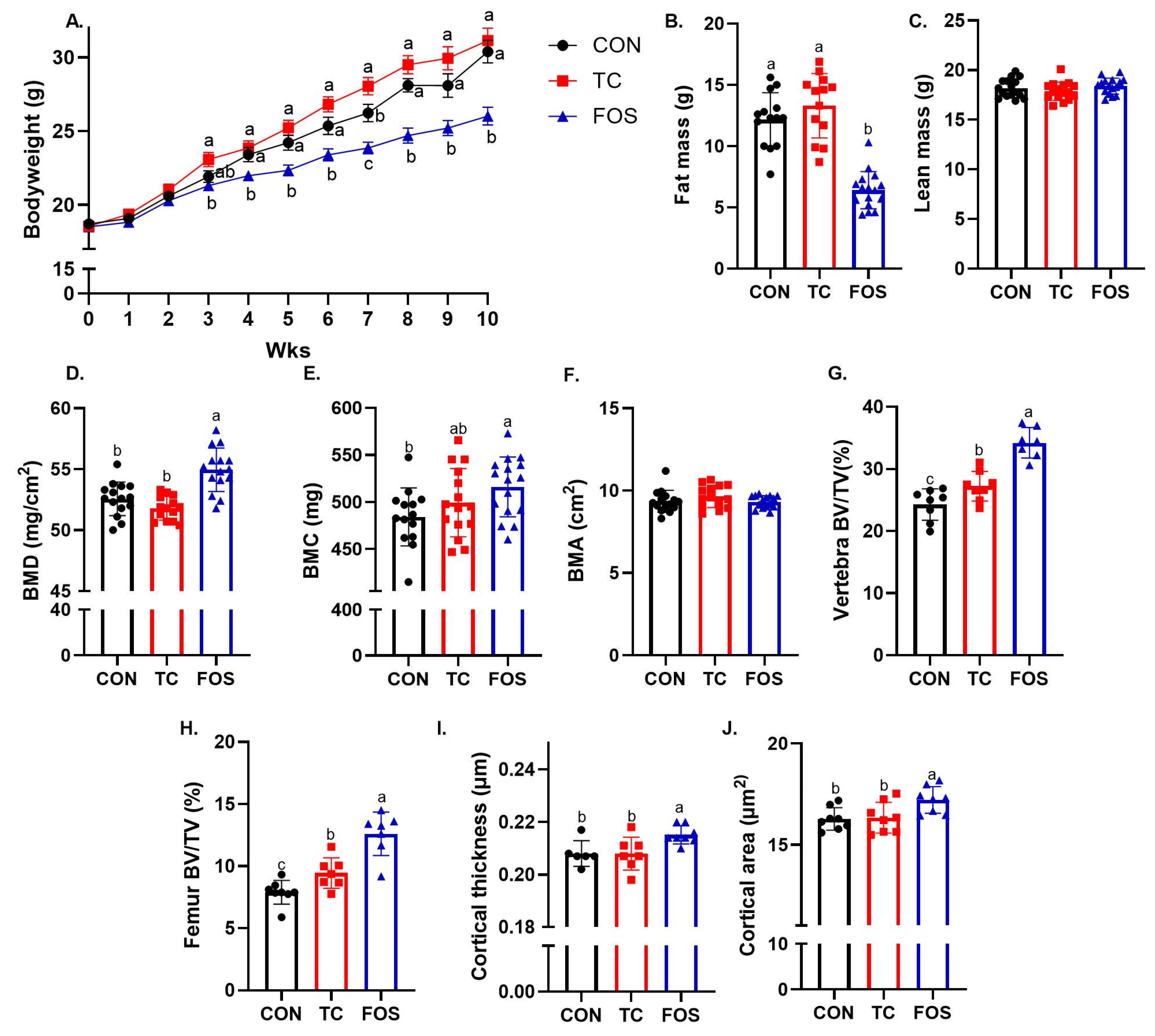
3.1. FOS and TC Alter Body Composition and Bone Phenotype
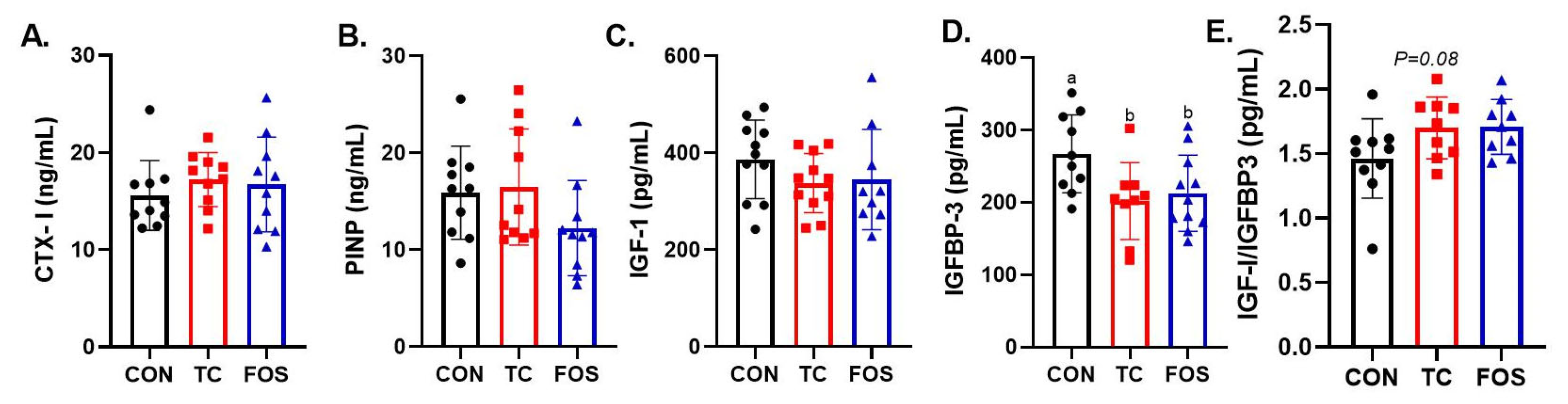
3.2. FOS and TC Effects on IGF-1 and Bone Biomarkers
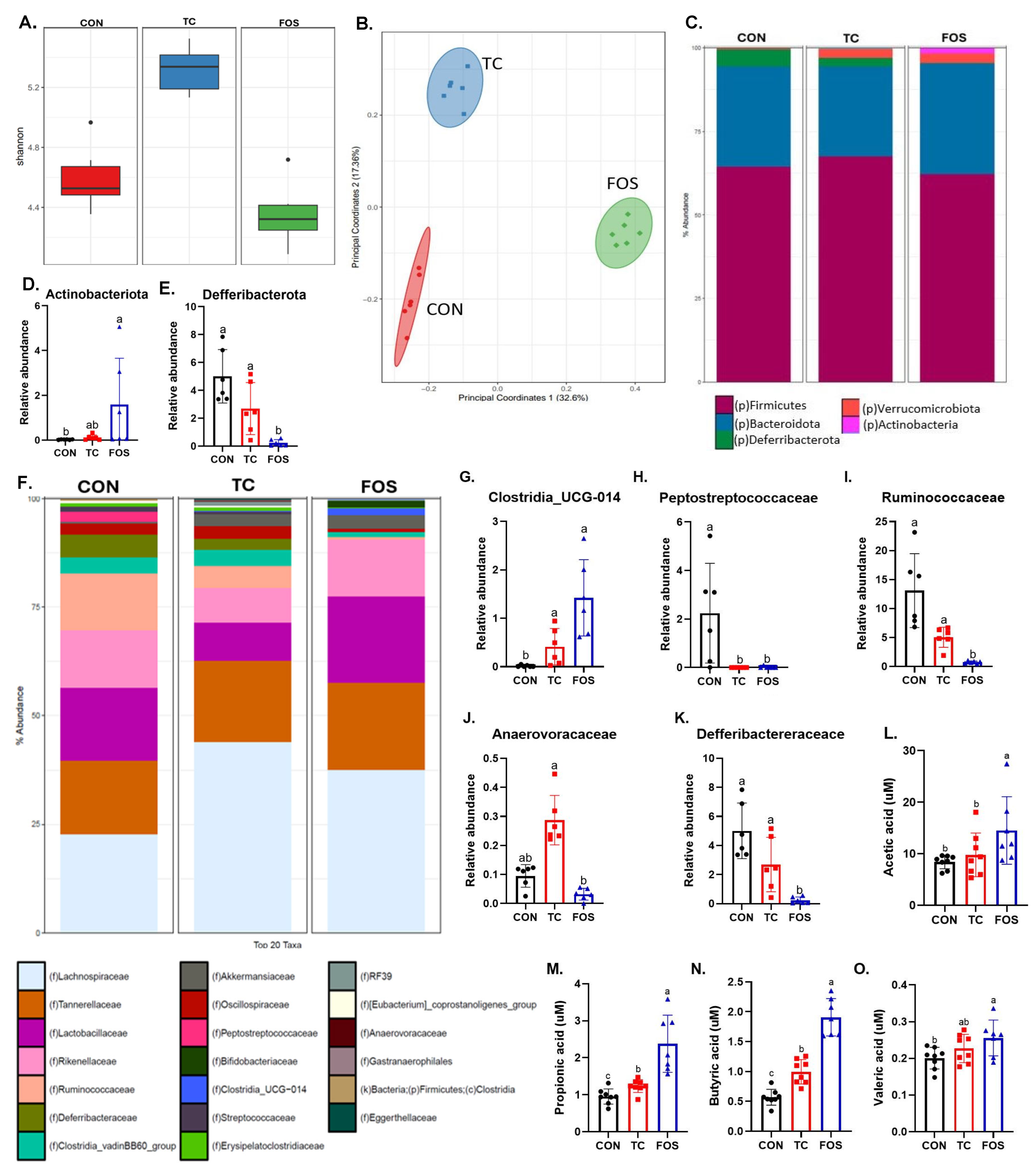
3.3. FOS and TC Shift Gut Microbiota Composition and Increase SCFAs
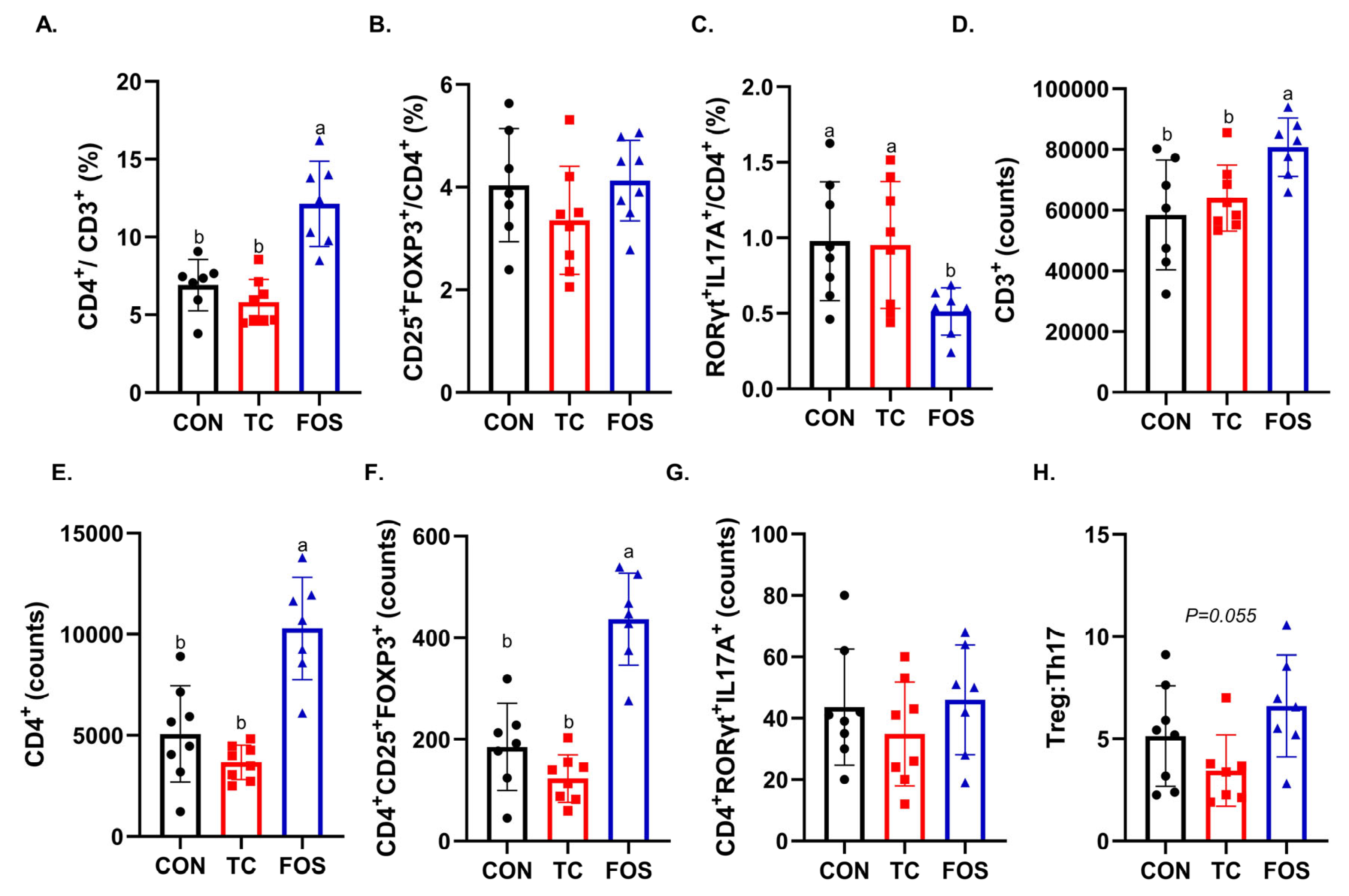
3.4. FOS Enhances Treg Counts in the Ileum
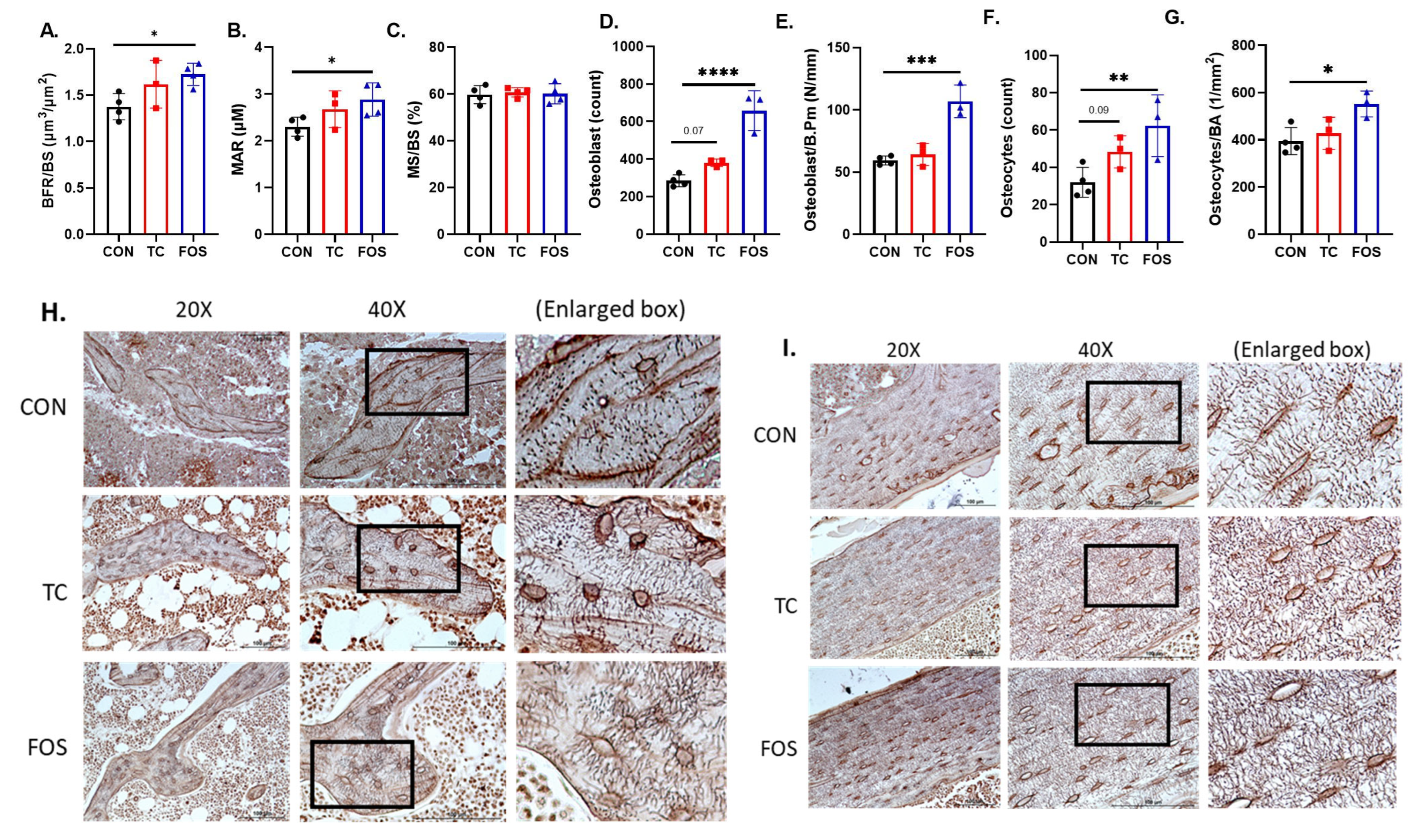
3.5. FOS Enhance Bone Formation and Bone Cell Density
3.6. ABX Treatment Alters Bone Phenotype and Influences Gut Production of SCFAs
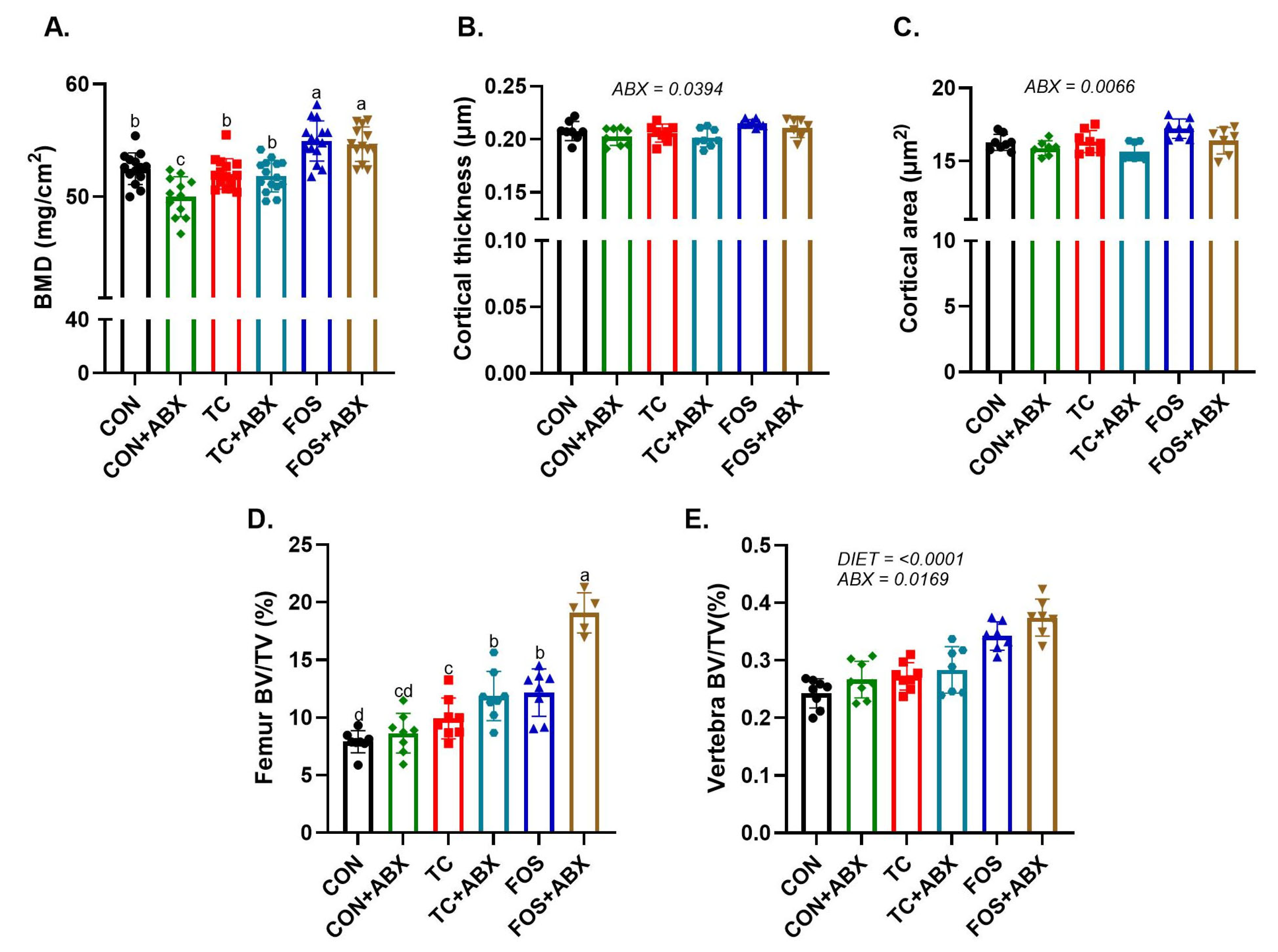
3.7. ABX Alters the Effect of Dietary Treatment of TC and FOS
4. Discussion
5. Conclusions
Supplementary Materials
Author Contributions
Funding
Institutional Review Board Statement
Data Availability Statement
Conflicts of Interest
References
- Sjögren, K.; Engdahl, C.; Henning, P.; Lerner, U.H.; Tremaroli, V.; Lagerquist, M.K.; Bäckhed, F.; Ohlsson, C. The gut microbiota regulates bone mass in mice. J. Bone Miner. Res. 2012, 27, 1357–1367. [Google Scholar] [CrossRef] [PubMed]
- Yan, J.; Herzog, J.W.; Tsang, K.; Brennan, C.A.; Bower, M.A.; Garrett, W.S.; Sartor, B.R.; Aliprantis, A.O.; Charles, J.F. Gut microbiota induce IGF-1 and promote bone formation and growth. Proc. Natl. Acad. Sci. USA 2016, 113, E7554–E7563. [Google Scholar] [CrossRef] [PubMed]
- D’Amelio, P.; Sassi, F. Gut microbiota, immune system, and bone. Calcif. Tissue Int. 2018, 102, 415–425. [Google Scholar] [CrossRef] [PubMed]
- Behera, J.; Ison, J.; Tyagi, S.C.; Tyagi, N. The role of gut microbiota in bone homeostasis. Bone 2020, 135, 115317. [Google Scholar] [CrossRef]
- Zaiss, M.M.; Jones, R.M.; Schett, G.; Pacifici, R. The gut-bone axis: How bacterial metabolites bridge the distance. J. Clin. Investig. 2019, 129, 3018–3028. [Google Scholar] [CrossRef]
- Guss, J.D.; Horsfield, M.W.; Fontenele, F.F.; Sandoval, T.N.; Luna, M.; Apoorva, F.; Lima, S.F.; Bicalho, R.C.; Singh, A.; Ley, R.E. Alterations to the gut microbiome impair bone strength and tissue material properties. J. Bone Miner. Res. 2017, 32, 1343–1353. [Google Scholar] [CrossRef]
- Li, J.-Y.; Yu, M.; Pal, S.; Tyagi, A.M.; Dar, H.; Adams, J.; Weitzmann, M.N.; Jones, R.M.; Pacifici, R. Parathyroid hormone–dependent bone formation requires butyrate production by intestinal microbiota. J. Clin. Investig. 2020, 130, 1767–1781. [Google Scholar] [CrossRef]
- Zhou, J.; Wang, R.; Zhao, R.; Guo, X.; Gou, P.; Bai, H.; Lei, P.; Xue, Y. Intermittent parathyroid hormone alters gut microbiota in ovariectomized osteoporotic rats. Orthop. Surg. 2022, 14, 2330–2338. [Google Scholar] [CrossRef]
- Chargo, N.J.; Neugebauer, K.; Guzior, D.V.; Quinn, R.A.; Parameswaran, N.; McCabe, L.R. Glucocorticoid-induced osteoporosis is prevented by dietary prune in female mice. Front. Cell Dev. Biol. 2024, 11, 1324649. [Google Scholar] [CrossRef]
- Schepper, J.D.; Collins, F.; Rios-Arce, N.D.; Kang, H.J.; Schaefer, L.; Gardinier, J.D.; Raghuvanshi, R.; Quinn, R.A.; Britton, R.; Parameswaran, N. Involvement of the gut microbiota and barrier function in glucocorticoid-induced osteoporosis. J. Bone Miner. Res. 2020, 35, 801–820. [Google Scholar] [CrossRef]
- Rettedal, E.A.; Ilesanmi Oyelere, B.L.; Roy, N.C.; Coad, J.; Kruger, M.C. The gut microbiome is altered in postmenopausal women with osteoporosis and osteopenia. J. Bone Miner. Res. Plus 2021, 5, e10452. [Google Scholar] [CrossRef]
- Ma, Z.; Liu, Y.; Shen, W.; Yang, J.; Wang, T.; Li, Y.; Ma, J.; Zhang, X.; Wang, H. Osteoporosis in postmenopausal women is associated with disturbances in gut microbiota and migration of peripheral immune cells. BMC Musculoskelet. Disord. 2024, 25, 791. [Google Scholar] [CrossRef] [PubMed]
- Wang, D.; Cai, J.; Pei, Q.; Yan, Z.; Zhu, F.; Zhao, Z.; Liu, R.; Guo, X.; Sun, T.; Liu, J. Gut microbial alterations in arginine metabolism determine bone mechanical adaptation. Cell Metab. 2024, 36, 1252–1268.e1258. [Google Scholar] [CrossRef] [PubMed]
- Gibson, G.R.; Hutkins, R.; Sanders, M.E.; Prescott, S.L.; Reimer, R.A.; Salminen, S.J.; Scott, K.; Stanton, C.; Swanson, K.S.; Cani, P.D. Expert consensus document: The International Scientific Association for Probiotics and Prebiotics (ISAPP) consensus statement on the definition and scope of prebiotics. Nat. Rev. Gastroenterol. Hepatol. 2017, 14, 491–502. [Google Scholar] [CrossRef]
- Davani-Davari, D.; Negahdaripour, M.; Karimzadeh, I.; Seifan, M.; Mohkam, M.; Masoumi, S.J.; Berenjian, A.; Ghasemi, Y. Prebiotics: Definition, types, sources, mechanisms, and clinical applications. Foods 2019, 8, 92. [Google Scholar] [CrossRef]
- Gibson, G.R.; Scott, K.P.; Rastall, R.A.; Tuohy, K.M.; Hotchkiss, A.; Dubert-Ferrandon, A.; Gareau, M.; Murphy, E.F.; Saulnier, D.; Loh, G. Dietary prebiotics: Current status and new definition. Food Sci. Technol. Bull. Funct. Foods 2010, 7, 1–19. [Google Scholar] [CrossRef]
- Ganaie, M.; Dehariya, K.; Gupta, U. Optimization of process parameters of biocatalyst for transformation of sucrose to fructooligosaccharides. Indo Am. J. Pharm. Res. 2013, 3, 4138–4148. [Google Scholar]
- Lobo, A.R.; Colli, C.; Filisetti, T.M. Fructooligosaccharides improve bone mass and biomechanical properties in rats. Nutr. Res. 2006, 26, 413–420. [Google Scholar] [CrossRef]
- Takahara, S.; Morohashi, T.; Sano, T.; Ohta, A.; Yamada, S.; Sasa, R. Fructooligosaccharide consumption enhances femoral bone volume and mineral concentrations in rats. J. Nutr. 2000, 130, 1792–1795. [Google Scholar] [CrossRef]
- Ohta, A.; Motohashi, Y.; Sakai, K.; Hirayama, M.; Adachi, T.; Sakuma, K. Dietary fructooligosaccharides increase calcium absorption and levels of mucosal calbindin-D9k in the large intestine of gastrectomized rats. Scand. J. Gastroenterol. 1998, 33, 1062–1068. [Google Scholar]
- Wastney, M.E.; Zafar, T.A.; Weaver, C.M.; Zhao, Y.; Martin, B.R. Nondigestible oligosaccharides increase calcium absorption and suppress bone resorption in ovariectomized rats. J. Nutr. 2004, 134, 399–402. [Google Scholar] [CrossRef] [PubMed]
- Abrams, S.A.; Griffin, I.J.; Hawthorne, K.M.; Liang, L.; Gunn, S.K.; Darlington, G.; Ellis, K.J. A combination of prebiotic short-and long-chain inulin-type fructans enhances calcium absorption and bone mineralization in young adolescents. Am. J. Clin. Nutr. 2005, 82, 471–476. [Google Scholar] [CrossRef]
- Slevin, M.M.; Allsopp, P.J.; Magee, P.J.; Bonham, M.P.; Naughton, V.R.; Strain, J.; Duffy, M.E.; Wallace, J.M.; Mc Sorley, E.M. Supplementation with calcium and short-chain fructo-oligosaccharides affects markers of bone turnover but not bone mineral density in postmenopausal women. J. Nutr. 2014, 144, 297–304. [Google Scholar] [CrossRef]
- Islam, P.; Ice, J.A.; Alake, S.E.; Adedigba, P.; Hatter, B.; Robinson, K.; Clarke, S.L.; Ford Versypt, A.N.; Ritchey, J.; Lucas, E.A. Fructooligosaccharides act on the gut–bone axis to improve bone independent of Tregs and alter osteocytes in young adult C57BL/6 female mice. JBMR Plus 2024, 8, ziae021. [Google Scholar] [CrossRef]
- Mao, B.; Gu, J.; Li, D.; Cui, S.; Zhao, J.; Zhang, H.; Chen, W. Effects of different doses of fructooligosaccharides (FOS) on the composition of mice fecal microbiota, especially the Bifidobacterium composition. Nutrients 2018, 10, 1105. [Google Scholar] [CrossRef] [PubMed]
- Mayta-Apaza, A.C.; Pottgen, E.; De Bodt, J.; Papp, N.; Marasini, D.; Howard, L.; Abranko, L.; Van de Wiele, T.; Lee, S.-O.; Carbonero, F. Impact of tart cherries polyphenols on the human gut microbiota and phenolic metabolites in vitro and in vivo. J. Nutr. Biochem. 2018, 59, 160–172. [Google Scholar] [CrossRef]
- Smith, B.J.; Crockett, E.K.; Chongwatpol, P.; Graef, J.L.; Clarke, S.L.; Rendina-Ruedy, E.; Lucas, E.A. Montmorency tart cherry protects against age-related bone loss in female C57BL/6 mice and demonstrates some anabolic effects. Eur. J. Nutr. 2019, 58, 3035–3046. [Google Scholar] [CrossRef]
- Ou, B.; Bosak, K.N.; Brickner, P.R.; Iezzoni, D.G.; Seymour, E.M. Processed Tart Cherry Products—Comparative Phytochemical Content, in vitro Antioxidant Capacity and in vitro Anti-inflammatory Activity. J. Food Sci. 2012, 77, H105–H112. [Google Scholar] [CrossRef]
- Chai, S.C.; Davis, K.; Zhang, Z.; Zha, L.; Kirschner, K.F. Effects of tart cherry juice on biomarkers of inflammation and oxidative stress in older adults. Nutrients 2019, 11, 228. [Google Scholar] [CrossRef]
- Blando, F.; Gerardi, C.; Nicoletti, I. Sour cherry (Prunus cerasus L) anthocyanins as ingredients for functional foods. BioMed Res. Int. 2004, 2004, 253–258. [Google Scholar] [CrossRef] [PubMed]
- Morais, C.A.; de Rosso, V.V.; Estadella, D.; Pisani, L.P. Anthocyanins as inflammatory modulators and the role of the gut microbiota. J. Nutr. Biochem. 2016, 33, 1–7. [Google Scholar] [CrossRef]
- Jovanovic-Malinovska, R.; Kuzmanova, S.; Winkelhausen, E. Oligosaccharide profile in fruits and vegetables as sources of prebiotics and functional foods. Int. J. Food Prop. 2014, 17, 949–965. [Google Scholar] [CrossRef]
- Kaur, A.; Ojo, B.A.; Wong, S.Y.; Alake, S.E.; Pastor, M.; Davila-El Rassi, G.; Lin, D.; Smith, B.J.; Lucas, E.A. Montmorencytart cherry supplementation improved markers of glucose homeostasis but has modest effects on indicators of gut health in mice fed a Western diet. Nutr. Res. 2022, 99, 66–77. [Google Scholar] [CrossRef]
- Verediano, T.A.; Stampini Duarte Martino, H.; Dias Paes, M.C.; Tako, E. Effects of anthocyanin on intestinal health: A systematic review. Nutrients 2021, 13, 1331. [Google Scholar] [CrossRef] [PubMed]
- Bell, P.; McHugh, M.; Stevenson, E.; Howatson, G. The role of cherries in exercise and health. Scand. J. Med. Sci. Sports 2014, 24, 477–490. [Google Scholar] [CrossRef] [PubMed]
- Howatson, G.; Bell, P.G.; Tallent, J.; Middleton, B.; McHugh, M.P.; Ellis, J. Effect of tart cherry juice (Prunus cerasus) on melatonin levels and enhanced sleep quality. Eur. J. Nutr. 2012, 51, 909–916. [Google Scholar] [CrossRef]
- Keane, K.M.; George, T.W.; Constantinou, C.L.; Brown, M.A.; Clifford, T.; Howatson, G. Effects of Montmorency tart cherry (Prunus cerasus L.) consumption on vascular function in men with early hypertension. Am. J. Clin. Nutr. 2016, 103, 1531–1539. [Google Scholar] [CrossRef]
- Schumacher, H.; Pullman-Mooar, S.; Gupta, S.; Dinnella, J.; Kim, R.; McHugh, M. Randomized double-blind crossover study of the efficacy of a tart cherry juice blend in treatment of osteoarthritis (OA) of the knee. Osteoarthr. Cartil. 2013, 21, 1035–1041. [Google Scholar] [CrossRef]
- Howatson, G.; McHugh, M.P.; Hill, J.; Brouner, J.; Jewell, A.; Van Someren, K.A.; Shave, R.; Howatson, S. Influence of tart cherry juice on indices of recovery following marathon running. Scand. J. Med. Sci. Sports 2010, 20, 843–852. [Google Scholar] [CrossRef]
- Dodier, T.; Anderson, K.L.; Bothwell, J.; Hermann, J.; Lucas, E.A.; Smith, B.J. US Montmorency tart cherry juice decreases bone resorption in women aged 65–80 years. Nutrients 2021, 13, 544. [Google Scholar] [CrossRef] [PubMed]
- Moon, N.; Effiong, L.; Song, L.; Gardner, T.R.; Soung, D.Y. Tart cherry prevents bone loss through inhibition of RANKL in TNF-overexpressing mice. Nutrients 2018, 11, 63. [Google Scholar] [CrossRef]
- Reeves, P.G.; Nielsen, F.H.; Fahey, G.C., Jr. AIN-93 purified diets for laboratory rodents: Final report of the American Institute of Nutrition ad hoc writing committee on the reformulation of the AIN-76A rodent diet. J. Nutr. 1993, 123, 1939–1951. [Google Scholar] [CrossRef]
- Yu, M.; Malik Tyagi, A.; Li, J.-Y.; Adams, J.; Denning, T.L.; Weitzmann, M.N.; Jones, R.M.; Pacifici, R. PTH induces bone loss via microbial-dependent expansion of intestinal TNF+ T cells and Th17 cells. Nat. Commun. 2020, 11, 468. [Google Scholar] [CrossRef]
- Rakoff-Nahoum, S.; Paglino, J.; Eslami-Varzaneh, F.; Edberg, S.; Medzhitov, R. Recognition of commensal microflora by toll-like receptors is required for intestinal homeostasis. Cell 2004, 118, 229–241. [Google Scholar] [CrossRef]
- Erdogan, A.; Rao, S.S. Small intestinal fungal overgrowth. Curr. Gastroenterol. Rep. 2015, 17, 16. [Google Scholar] [CrossRef]
- Scortichini, S.; Boarelli, M.C.; Silvi, S.; Fiorini, D. Development and validation of a GC-FID method for the analysis of short chain fatty acids in rat and human faeces and in fermentation fluids. J. Chromatogr. B 2020, 1143, 121972. [Google Scholar] [CrossRef]
- Ferrand, J.; Patron, K.; Legrand-Frossi, C.; Frippiat, J.-P.; Merlin, C.; Alauzet, C.; Lozniewski, A. Comparison of seven methods for extraction of bacterial DNA from fecal and cecal samples of mice. J. Microbiol. Methods 2014, 105, 180–185. [Google Scholar] [CrossRef] [PubMed]
- Dempster, D.W.; Compston, J.E.; Drezner, M.K.; Glorieux, F.H.; Kanis, J.A.; Malluche, H.; Meunier, P.J.; Ott, S.M.; Recker, R.R.; Parfitt, A.M. Standardized nomenclature, symbols, and units for bone histomorphometry: A 2012 update of the report of the ASBMR Histomorphometry Nomenclature Committee. J. Bone Miner. Res. 2013, 28, 2–17. [Google Scholar] [CrossRef] [PubMed]
- Wang, Y.; Zeng, T.; Wang, S.-e.; Wang, W.; Wang, Q.; Yu, H.-X. Fructo-oligosaccharides enhance the mineral absorption and counteract the adverse effects of phytic acid in mice. Nutrition 2010, 26, 305–311. [Google Scholar] [CrossRef]
- Priyadarshini, M.; Kotlo, K.U.; Dudeja, P.K.; Layden, B.T. Role of short chain fatty acid receptors in intestinal physiology and pathophysiology. Compr. Physiol. 2018, 8, 1091. [Google Scholar] [CrossRef] [PubMed]
- Lucas, S.; Omata, Y.; Hofmann, J.; Böttcher, M.; Iljazovic, A.; Sarter, K.; Albrecht, O.; Schulz, O.; Krishnacoumar, B.; Krönke, G. Short-chain fatty acids regulate systemic bone mass and protect from pathological bone loss. Nat. Commun. 2018, 9, 55. [Google Scholar] [CrossRef]
- Montalvany-Antonucci, C.; Duffles, L.; De Arruda, J.; Zicker, M.; De Oliveira, S.; Macari, S.; Garlet, G.P.; Madeira, M.; Fukada, S.Y.; Andrade, I., Jr. Short-chain fatty acids and FFAR2 as suppressors of bone resorption. Bone 2019, 125, 112–121. [Google Scholar] [CrossRef]
- Stewart, M.L.; Timm, D.A.; Slavin, J.L. Fructooligosaccharides exhibit more rapid fermentation than long-chain inulin in an in vitro fermentation system. Nutr. Res. 2008, 28, 329–334. [Google Scholar] [CrossRef] [PubMed]
- Porwal, K.; Pal, S.; Kulkarni, C.; Singh, P.; Sharma, S.; Singh, P.; Prajapati, G.; Gayen, J.R.; Ampapathi, R.S.; Mullick, A. A prebiotic, short-chain fructo-oligosaccharides promotes peak bone mass and maintains bone mass in ovariectomized rats by an osteogenic mechanism. Biomed. Pharmacother. 2020, 129, 110448. [Google Scholar] [CrossRef]
- Smith, B.J.; Bu, S.Y.; Wang, Y.; Rendina, E.; Lim, Y.F.; Marlow, D.; Clarke, S.L.; Cullen, D.M.; Lucas, E.A. A comparative study of the bone metabolic response to dried plum supplementation and PTH treatment in adult, osteopenic ovariectomized rat. Bone 2014, 58, 151–159. [Google Scholar] [CrossRef] [PubMed]
- Smith, B.J.; Hatter, B.; Washburn, K.; Graef-Downard, J.; Ojo, B.A.; El-Rassi, G.D.; Cichewicz, R.H.; Payton, M.; Lucas, E.A. Dried plum’s polyphenolic compounds and carbohydrates contribute to its osteoprotective effects and exhibit prebiotic activity in estrogen deficient C57bl/6 mice. Nutrients 2022, 14, 1685. [Google Scholar] [CrossRef]
- Halloran, B.P.; Wronski, T.J.; VonHerzen, D.C.; Chu, V.; Xia, X.; Pingel, J.E.; Williams, A.A.; Smith, B.J. Dietary dried plum increases bone mass in adult and aged male mice. J. Nutr. 2010, 140, 1781–1787. [Google Scholar] [CrossRef] [PubMed]
- Puhlmann, M.-L.; van de Rakt, E.; Kerezoudi, E.N.; Rangel, I.; Brummer, R.J.; Smidt, H.; Kaper, F.S.; de Vos, W.M. Analysis of the fermentation kinetics and gut microbiota modulatory effect of dried chicory root reveals the impact of the plant-cell matrix rationalizing its conversion in the distal colon. Microbiome Res. Rep. 2024, 3, 28. [Google Scholar] [CrossRef]
- Whisner, C.M.; Weaver, C.M. Prebiotics and bone. In Understanding the Gut-Bone Signaling Axis: Mechanisms and Therapeutic Implications; Springer: Berlin/Heidelberg, Germany, 2017; pp. 201–224. [Google Scholar]
- Chen, J.-R.; Zhao, H.; Wankhade, U.D.; Chintapalli, S.V.; Li, C.; Gai, D.; Shankar, K.; Zhan, F.; Lazarenko, O.P. GPR109A mediates the effects of hippuric acid on regulating osteoclastogenesis and bone resorption in mice. Commun. Biol. 2021, 4, 53. [Google Scholar] [CrossRef]
- Zhao, H.; Lazarenko, O.P.; Chen, J.R. Hippuric acid and 3-(3-hydroxyphenyl) propionic acid inhibit murine osteoclastogenesis through RANKL-RANK independent pathway. J. Cell. Physiol. 2020, 235, 599–610. [Google Scholar] [CrossRef]
- Parvaneh, K.; Ebrahimi, M.; Sabran, M.R.; Karimi, G.; Hwei, A.N.M.; Abdul-Majeed, S.; Ahmad, Z.; Ibrahim, Z.; Jamaluddin, R. Probiotics (Bifidobacterium longum) increase bone mass density and upregulate Sparc and Bmp-2 genes in rats with bone loss resulting from ovariectomy. BioMed Res. Int. 2015, 2015, 897639. [Google Scholar] [CrossRef]
- McCabe, L.R.; Irwin, R.; Tekalur, A.; Evans, C.; Schepper, J.D.; Parameswaran, N.; Ciancio, M. Exercise prevents high fat diet-induced bone loss, marrow adiposity and dysbiosis in male mice. Bone 2019, 118, 20–31. [Google Scholar] [CrossRef]
- Wallimann, A.; Hildebrand, M.; Groeger, D.; Stanic, B.; Akdis, C.A.; Zeiter, S.; Richards, R.G.; Moriarty, T.F.; O’Mahony, L.; Thompson, K. An exopolysaccharide produced by Bifidobacterium longum 35624® inhibits osteoclast formation via a TLR2-dependent mechanism. Calcif. Tissue Int. 2021, 108, 654–666. [Google Scholar] [CrossRef] [PubMed]
- Tyagi, A.M.; Yu, M.; Darby, T.M.; Vaccaro, C.; Li, J.-Y.; Owens, J.A.; Hsu, E.; Adams, J.; Weitzmann, M.N.; Jones, R.M. The microbial metabolite butyrate stimulates bone formation via T regulatory cell-mediated regulation of WNT10B expression. Immunity 2018, 49, 1116–1131.e7. [Google Scholar] [CrossRef]
- Chen, T.-H.; Chen, W.-M.; Hsu, K.-H.; Kuo, C.-D.; Hung, S.-C. Sodium butyrate activates ERK to regulate differentiation of mesenchymal stem cells. Biochem. Biophys. Res. Commun. 2007, 355, 913–918. [Google Scholar] [CrossRef] [PubMed]
- Lin, X.; Xiao, H.-M.; Liu, H.-M.; Lv, W.-Q.; Greenbaum, J.; Gong, R.; Zhang, Q.; Chen, Y.-C.; Peng, C.; Xu, X.-J. Gut microbiota impacts bone via Bacteroides vulgatus-valeric acid-related pathways. Nat. Commun. 2023, 14, 6853. [Google Scholar] [CrossRef]
- Kondo, T.; Chiba, T.; Tousen, Y. Short-chain fatty acids, acetate and propionate, directly upregulate osteoblastic differentiation. Int. J. Food Sci. Nutr. 2022, 73, 800–808. [Google Scholar] [CrossRef] [PubMed]
- Behler-Janbeck, F.; Baranowsky, A.; Yorgan, T.A.; Jaeckstein, M.Y.; Worthmann, A.; Fuh, M.M.; Gunasekaran, K.; Tiegs, G.; Amling, M.; Schinke, T. The short-chain fatty acid receptors Gpr41/43 regulate bone mass by promoting adipogenic differentiation of mesenchymal stem cells. Front. Endocrinol. 2024, 15, 1392418. [Google Scholar] [CrossRef]
- Modoux, M.; Rolhion, N.; Lefevre, J.H.; Oeuvray, C.; Nádvorník, P.; Illes, P.; Emond, P.; Parc, Y.; Mani, S.; Dvorak, Z. Butyrate acts through HDAC inhibition to enhance aryl hydrocarbon receptor activation by gut microbiota-derived ligands. Gut Microbes 2022, 14, 2105637. [Google Scholar] [CrossRef]
- Singh, N.; Gurav, A.; Sivaprakasam, S.; Brady, E.; Padia, R.; Shi, H.; Thangaraju, M.; Prasad, P.D.; Manicassamy, S.; Munn, D.H. Activation of Gpr109a, receptor for niacin and the commensal metabolite butyrate, suppresses colonic inflammation and carcinogenesis. Immunity 2014, 40, 128–139. [Google Scholar] [CrossRef]
- Huang, C.; Feng, S.; Huo, F.; Liu, H. Effects of four antibiotics on the diversity of the intestinal microbiota. Microbiol. Spectr. 2022, 10, e01904–e01921. [Google Scholar] [CrossRef] [PubMed]
- Hu, X.; Fu, Y.; Zhang, X.; Dai, L.; Zhu, J.; Bi, Z.; Ao, Y.; Zhou, C. Histone deacetylase inhibitor sodium butyrate promotes the osteogenic differentiation of rat adipose-derived stem cells. Dev. Growth Differ. 2014, 56, 206–213. [Google Scholar] [CrossRef] [PubMed]
- Pusceddu, M.M.; Stokes, P.J.; Wong, A.; Gareau, M.G.; Genetos, D.C. Sexually dimorphic influence of neonatal antibiotics on bone. J. Orthop. Res. 2019, 37, 2122–2129. [Google Scholar] [CrossRef]
- Mu, C.; Zhu, W. Antibiotic effects on gut microbiota, metabolism, and beyond. Appl. Microbiol. Biotechnol. 2019, 103, 9277–9285. [Google Scholar] [CrossRef] [PubMed]





| No ABX | ABX | p-Value | |
|---|---|---|---|
| Bone Densitometry | |||
| BMD (mg/cm2) | 52.48 ± 0.37 | 50.00 ± 0.51 | 0.0001 |
| BMC (mg) | 48.41 ± 0.82 | 44.67 ± 1.00 | 0.0043 |
| BMA (cm2) | 9.22 ± 0.12 | 8.54 ± 0.15 | 0.0012 |
| Vertebra Trabecular Bone | |||
| BV/TV (%) | 24.28 ± 0.89 | 26.67 ± 1.12 | 0.1193 |
| TbTh (µm) | 0.058 ± 0.0009 | 0.056 ± 0.001 | 0.2304 |
| TbN (1/mm2) | 4.32 ± 0.12 | 4.87 ± 0.12 | 0.0013 |
| TbSp (µm) | 0.23 ± 0.007 | 0.19 ± 0.006 | 0.0009 |
| Femur Trabecular Bone | |||
| BV/TV (%) | 7.9 ± 0.34 | 8.64 ± 0.61 | 0.3545 |
| TbTh (µm) | 0.049 ± 0.001 | 0.048 ± 0.001 | 0.4017 |
| TbN (1/mm2) | 3.36 ± 0.04 | 3.55 ± 0.06 | 0.0498 |
| TbSp (µm) | 0.29 ± 0.004 | 0.27 ± 0.004 | 0.0521 |
| Femur Cortical Bone | |||
| Cortical thickness (µm) | 0.21 ± 0.003 | 0.20 ±0.003 | 0.1349 |
| Cortical area (µm2) | 16.28 ± 0.19 | 15.03 ± 0.86 | 0.0343 |
| Cortical porosity (%) | 3.5 ± 0.06 | 3.6 ± 0.04 | 0.4486 |
| Serum Bone Biomarkers | |||
| CTX-I (ng/mL) | 14.51 ± 0.58 | 11.89 ± 0.78 | 0.0410 |
| P1NP (ng/mL) | 16.07 ± 1.39 | 15.25 ± 1.94 | 0.7427 |
| IGF-I (pg/mL) | 386,870 ± 24,488 | 307,533 ± 40,932 | 0.0629 |
| IGFBP-3 (pg/mL) | 280,663 ± 20,424 | 275,261 ± 30,444 | 0.9155 |
| IGF-I/IGFBP-3 (pg/mL) | 1.42 ± 0.09 | 1.03 ± 0.10 | 0.2558 |
| Fecal SCFAs (µmol/g) | |||
| Acetic acid | 8.43 ± 0.46 | 6.84 ± 0.97 | 0.1047 |
| Propionic acid | 0.95 ± 0.07 | 0.69 ± 0.05 | 0.0016 |
| Butyric acid | 0.57 ± 0.05 | 0.38 ± 0.03 | 0.0399 |
| Valeric acid | 0.20 ± 0.01 | 0.12 ± 0.03 | 0.0065 |
| CON | TC | FOS | p-Values | ||||||
|---|---|---|---|---|---|---|---|---|---|
| No ABX | ABX | No ABX | ABX | No ABX | ABX | DIET | ABX | Diet × ABX | |
| Fecal SCFAs (µmol/g) | |||||||||
| Acetic acid | 8.4 ± 0.5 b | 6.9 ± 1.0 bc | 8.6 ± 1.1 b | 3.6 ± 0.2 cd | 14.5 ± 2. 5 a | 3.1 ± 0.2 d | 0.0095 | <0.0001 | <0.0001 |
| Propionic acid | 1.0 ± 0.17 bc | 0.7 ± 0.1 cd | 1.2 ± 0.1 b | 0.5 ± 0.1 d | 2.2 ± 0.3 a | 0.6 ± 0.1 d | 0.0002 | <0.0001 | 0.0002 |
| Butyric acid | 0.6 ± 0.05 c | 0.4 ± 0.0 d | 1.0 ± 0.1 b | 0.3 ± 0.1 d | 1.9 ± 0.1 a | 0.3 ± 0.0 d | 0.0004 | <0.0001 | <0.0001 |
| Valeric acid | 0.2 ± 0.0 | 0.1 ± 0.0 | 0.2 ± 0.0 | 0.1 ± 0.0 | 0.3 ± 0.0 | 0.1 ± 0.0 | 0.7281 | <0.0001 | 0.0786 |
| gDNA Conc (ng/μL) | |||||||||
| Cecal | 142.7 ± 34.1 b | 13.5 ± 2.5 d | 150.1 ± 40.6 b | 7.8 ± 0.7 d | 237.0 ± 36.1 a | 48.4 ± 9.2 c | 0.0001 | <0.0001 | 0.0276 |
| Fecal | 144.1 ± 8.7 | 51.0 ± 2.3 | 174.4 ± 24.5 | 55.8 ± 21.7 | 191.3 ± 10.4 | 146.8 ± 18.0 | 0.0013 | <0.0001 | 0.1031 |
| CON | TC | FOS | p-Values | ||||||
|---|---|---|---|---|---|---|---|---|---|
| No ABX | ABX | No ABX | ABX | No ABX | ABX | DIET | ABX | Diet × ABX | |
| L5 Trabecular Bone | |||||||||
| BV/TV (%) | 24.29 ± 0.90 | 26.68 ± 1.12 | 27.24 ± 0.84 | 28.36 ± 1.53 | 34.23 ± 0.93 | 37.43 ± 1.21 | <0.0001 | 0.0169 | 0.6458 |
| TbN (1/mm2) | 4.32 ± 0.12 | 4.88 ± 0.12 | 4.56 ± 0.13 | 4.90 ± 0.07 | 4.64 ± 0.13 | 4.91 ± 0.11 | 0.3074 | 0.0002 | 0.4321 |
| TbTh (mm) | 0.06 ± 0.00 c | 0.06 ± 0.00 c | 0.06 ± 0.00c | 0.06 ± 0.00 c | 0.07 ± 0.00 b | 0.07 ± 0.00 a | <0.0001 | 0.5109 | 0.0035 |
| TbSp (mm) | 0.23 ± 0.01 | 0.20 ± 0.01 | 0.22 ± 0.01 | 0.20 ± 0.01 | 0.21 ± 0.01 | 0.19 ± 0.01 | 0.0765 | <0.0001 | 0.7162 |
| Femur Trabecular Bone | |||||||||
| BV/TV (%) | 7.90 ± 0.34 d | 8.64 ± 0.61 cd | 9.93 ± 0.62 c | 11.87 ± 0.75 b | 12.16 ± 0.72 b | 19.09 ± 0.78 a | <0.0001 | <0.0001 | 0.0150 |
| TbN (1/mm2) | 3.37 ± 0.05 d | 3.55 ± 0.07 cd | 3.63 ± 0.04 c | 4.00 ± 0.09 b | 3.98 ± 0.09 b | 4.65 ± 0.10 a | <0.0001 | <0.0001 | 0.0316 |
| TbTh (mm) | 0.05 ± 0.00 | 0.05 ± 0.00 | 0.05 ± 0.00 | 0.05 ± 0.00 | 0.05 ± 0.00 | 0.05 ± 0.00 | 0.0009 | 0.5483 | 0.7425 |
| TbSp (mm) | 0.29 ± 0.00 c | 0.28 ± 0.01 ab | 0.27 ± 0.00 b | 0.24 ± 0.01 c | 0.24 ± 0.01 c | 0.19 ± 0.01 d | <0.0001 | <0.0001 | 0.0091 |
Disclaimer/Publisher’s Note: The statements, opinions and data contained in all publications are solely those of the individual author(s) and contributor(s) and not of MDPI and/or the editor(s). MDPI and/or the editor(s) disclaim responsibility for any injury to people or property resulting from any ideas, methods, instructions or products referred to in the content. |
© 2025 by the authors. Licensee MDPI, Basel, Switzerland. This article is an open access article distributed under the terms and conditions of the Creative Commons Attribution (CC BY) license (https://creativecommons.org/licenses/by/4.0/).
Share and Cite
Adedigba, P.; Ice, J.A.; Alake, S.E.; Hatter, B.; Islam, P.; Ford Versypt, A.N.; Knotts, T.A.; Ritchey, J.; Lucas, E.A.; Smith, B.J. Dietary Tart Cherry and Fructooligosaccharides Promote Bone Health via the Gut Microbiota and Increased Bone Formation. Nutrients 2025, 17, 2829. https://doi.org/10.3390/nu17172829
Adedigba P, Ice JA, Alake SE, Hatter B, Islam P, Ford Versypt AN, Knotts TA, Ritchey J, Lucas EA, Smith BJ. Dietary Tart Cherry and Fructooligosaccharides Promote Bone Health via the Gut Microbiota and Increased Bone Formation. Nutrients. 2025; 17(17):2829. https://doi.org/10.3390/nu17172829
Chicago/Turabian StyleAdedigba, Pelumi, John A. Ice, Sanmi E. Alake, Bethany Hatter, Proapa Islam, Ashlee N. Ford Versypt, Trina A. Knotts, Jerry Ritchey, Edralin A. Lucas, and Brenda J. Smith. 2025. "Dietary Tart Cherry and Fructooligosaccharides Promote Bone Health via the Gut Microbiota and Increased Bone Formation" Nutrients 17, no. 17: 2829. https://doi.org/10.3390/nu17172829
APA StyleAdedigba, P., Ice, J. A., Alake, S. E., Hatter, B., Islam, P., Ford Versypt, A. N., Knotts, T. A., Ritchey, J., Lucas, E. A., & Smith, B. J. (2025). Dietary Tart Cherry and Fructooligosaccharides Promote Bone Health via the Gut Microbiota and Increased Bone Formation. Nutrients, 17(17), 2829. https://doi.org/10.3390/nu17172829