Article

Energy Costs of 37 Physical Activities in Chinese Children and Adolescents Aged 9–17 Years with Obesity


1
School of Sport and Health, Guangzhou Sport University, Guangzhou 510500, China
2
Guangdong Provincial Key Laboratory of Physical Activity and Health Promotion, Guangzhou Sport University, Guangzhou 510500, China
3
Key Laboratory for Exercise and Adolescent Physical Health, Guangzhou Sport University, Guangzhou 510500, China
4
School of Physical Education and Sports, Soochow University, Suzhou 215021, China
5
School of Physical Education, Nanjing Xiaozhuang University, Nanjing 211171, China
*
Author to whom correspondence should be addressed.
These authors contributed equally to this work.
Nutrients 2024, 16(22), 3966; https://doi.org/10.3390/nu16223966
Submission received: 31 October 2024 / Revised: 10 November 2024 / Accepted: 12 November 2024 / Published: 20 November 2024
(This article belongs to the Section Pediatric Nutrition)

Highlights

What are the main findings?
  1. REE and resting VO2 in children and adolescents with obesity are lower than those of their normal-weight peers but higher than in adults.
  2. The MET values of physical activities in the Youth Compendium of Physical Activities may not be applicable to children and adolescents with obesity.
  3. An increase in the severity of obesity is associated with further decreases in REE and PAE.
What are the implications of the main findings?
  1. The main findings highlight the unique characteristics of physical activity energy expenditure in children and adolescents with obesity, which should be differentiated from those of their normal-weight peers.
  2. The main findings provide a foundation for developing physical activity guidelines and a compendium specifically for children and adolescents with obesity.

Abstract

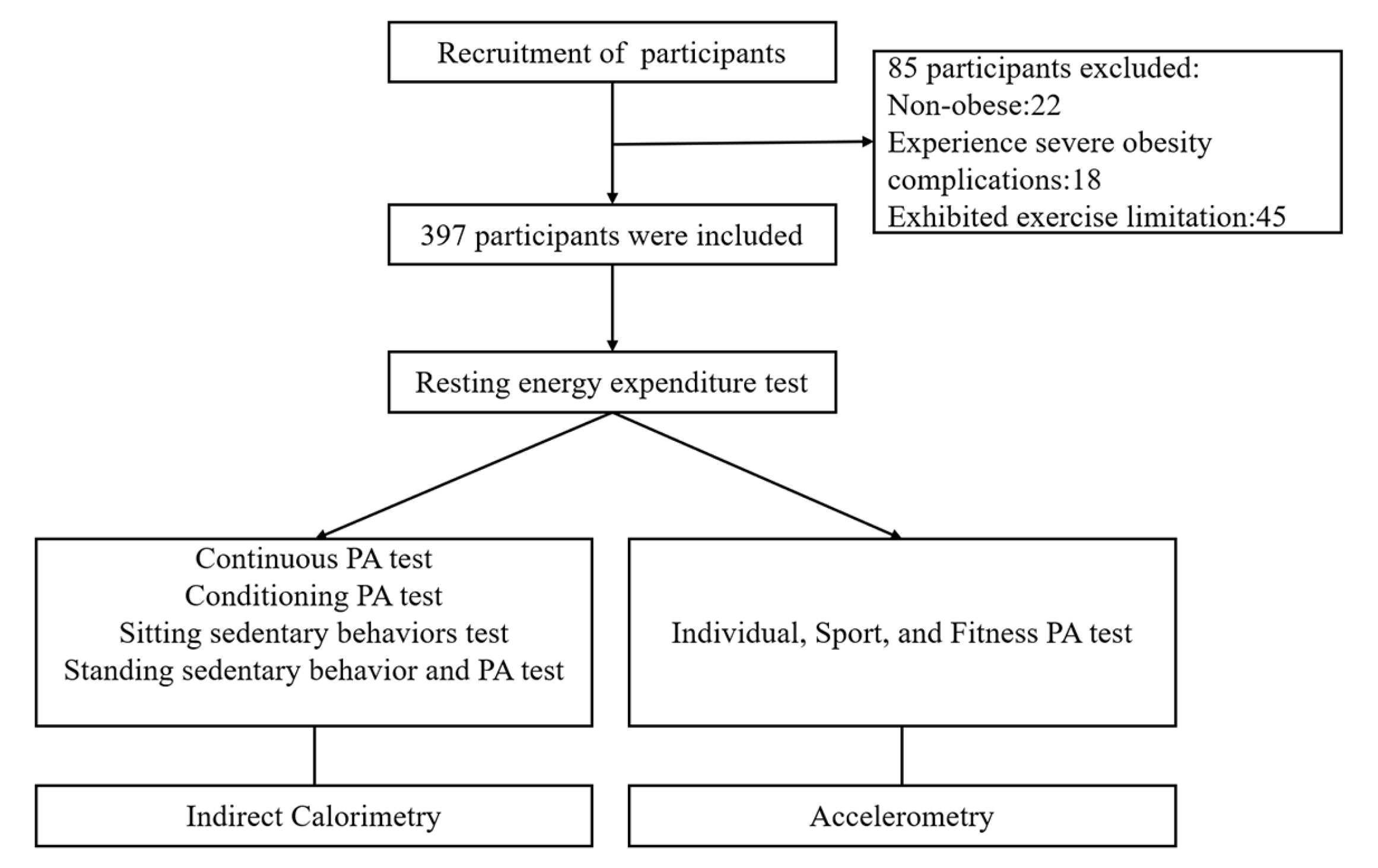
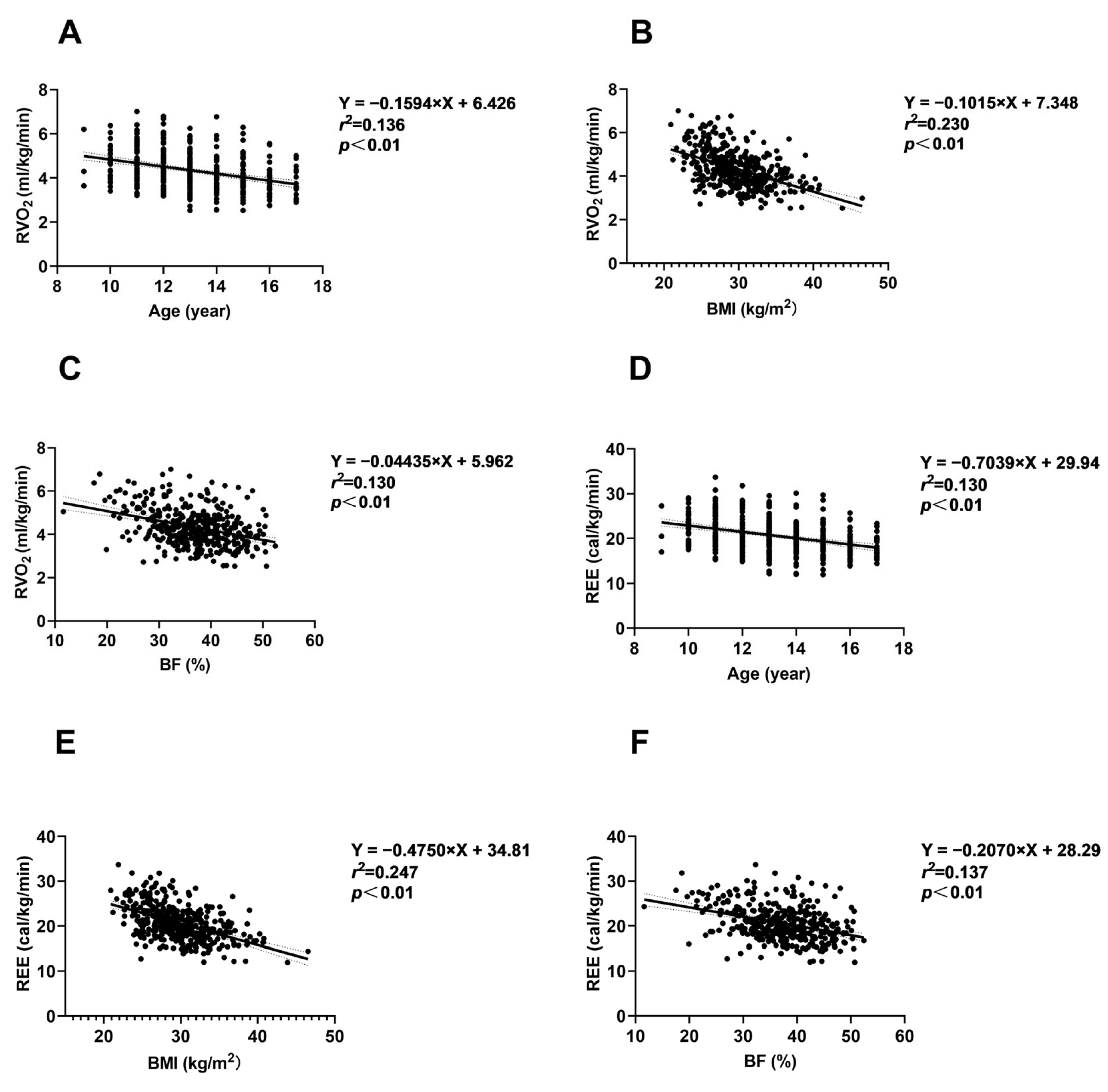
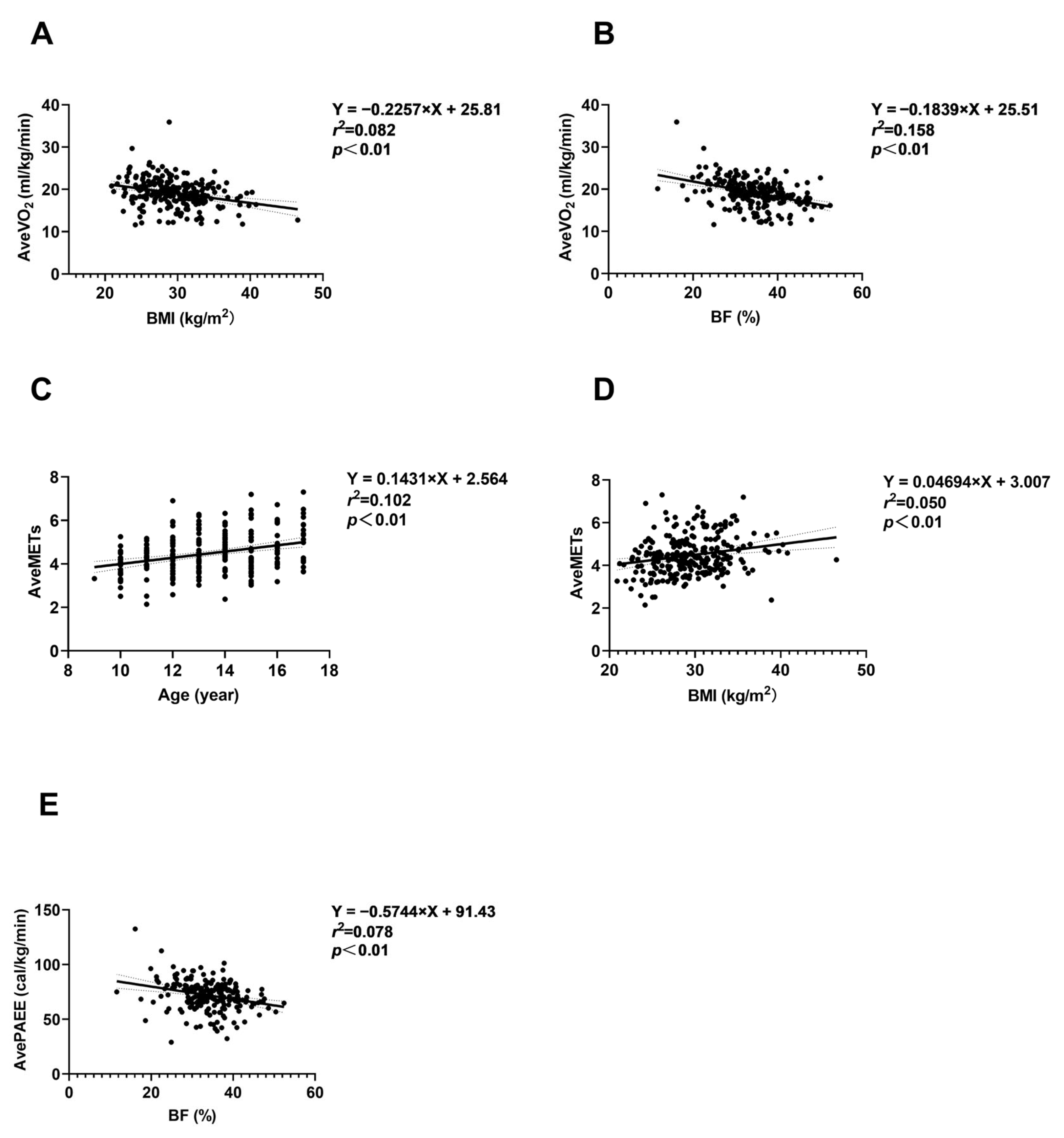
Background/Objective: Obtaining data on the energy expenditure of physical activity (PA) in children and adolescents with obesity is crucial for promoting health in this population through exercise. However, relevant research is limited. This study aimed to determine the energy expenditure characteristics of 37 diverse PAs in children and adolescents with obesity and examine the association between obesity and energy expenditure (EE) characteristics within this cohort. Methods: Three hundred and ninety-seven children and adolescents with obesity aged 9–17 performed various PAs. PA intensity, EE, and body fat (BF) percentage were measured. Results: The resting oxygen uptake (VO2) and resting energy expenditure (REE) of children and adolescents with obesity were 4.23 (3.72–4.84) ml/kg/min and 0.020 (0.018–0.023) kcal/kg/min, respectively, with significant differences between boys and girls (p < 0.05). The metabolic equivalent of task (MET) values for the PAs ranged from 1.12 to 8.14 METs. Regression analyses revealed an inverse association with age, BMI, and percentage BF increased, with resting VO2, REE, and average PA energy expenditure (PAEE) during PAs. Conclusions: (1) Resting VO2 was lower in children and adolescents with obesity than those with normal weight and higher than in adults. (2) Of the measured PA intensities, 8 were light, 17 were moderate, and 5 were vigorous intensity. (3) The increase in the degree of obesity and age further decreased VO2 and EE both at rest and during PA. Our results can provide precise guidance for the exercise of children and adolescents with obesity and serve as a reference for the development of physical activity guidelines and compendiums. Future research should further diversify the types of PAs measured.
Keywords: energy expenditure; MET; obesity; exercise; youth energy expenditure; MET; obesity; exercise; youth