

Nanoemulsion and Nanoliposome Based Strategies for Improving Anthocyanin Stability and Bioavailability



Abstract
1. Introduction
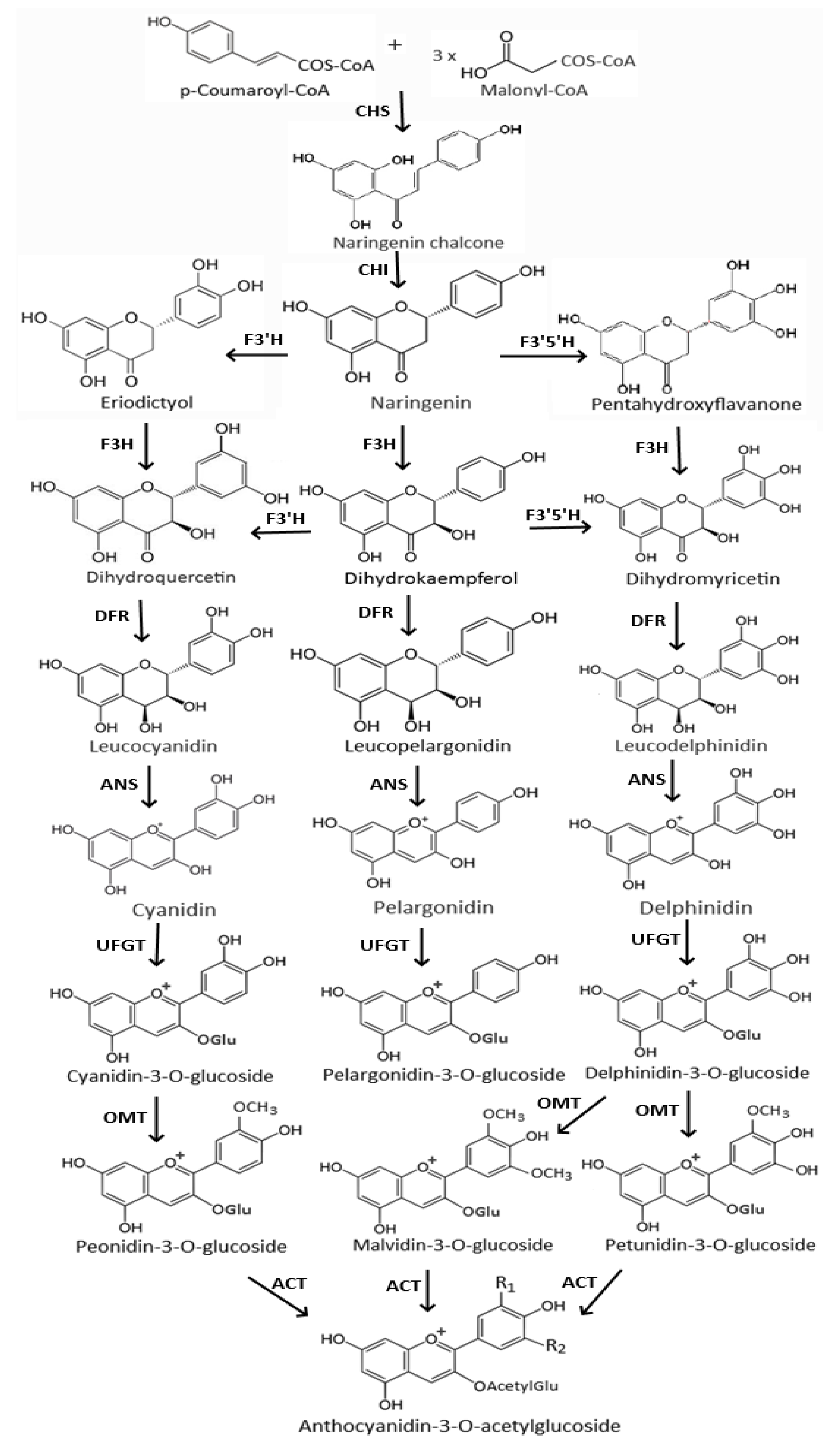
2. Biosynthesis of Anthocyanins
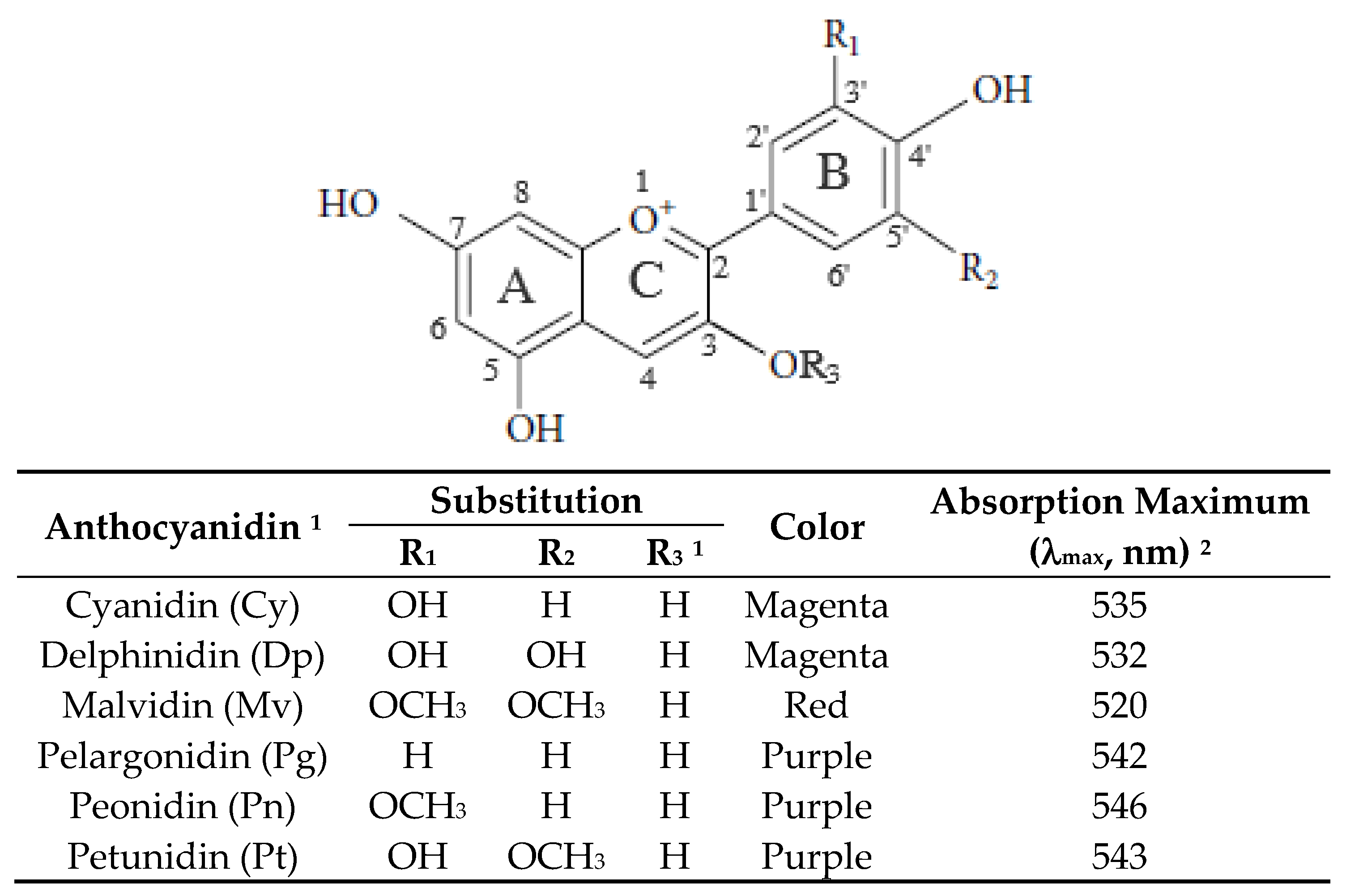
3. Chemical Structure and Distribution of Anthocyanins
4. Stability of Anthocyanins
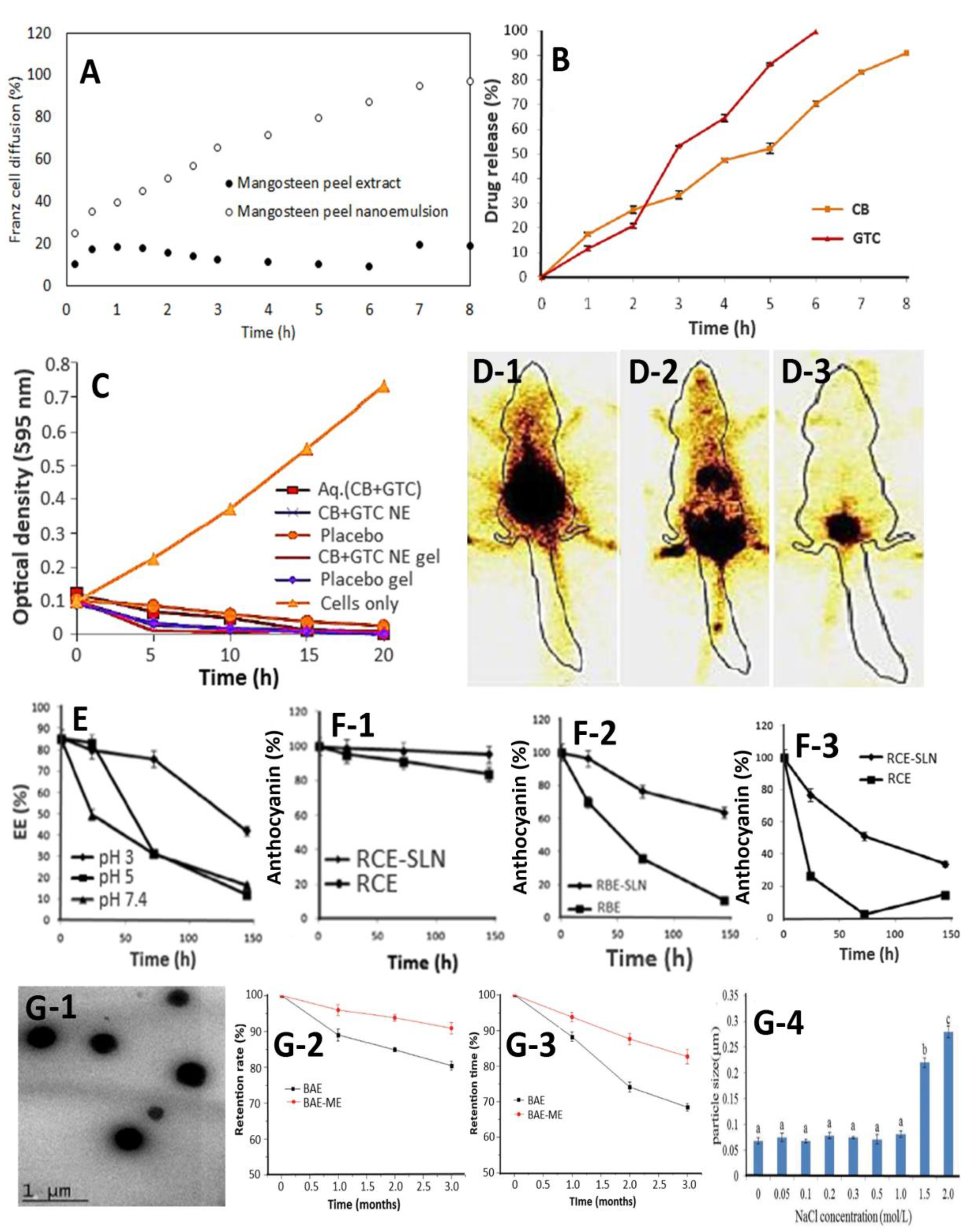
5. Nanoemulsion-Based Stability and Bioavailability of Anthocyanins
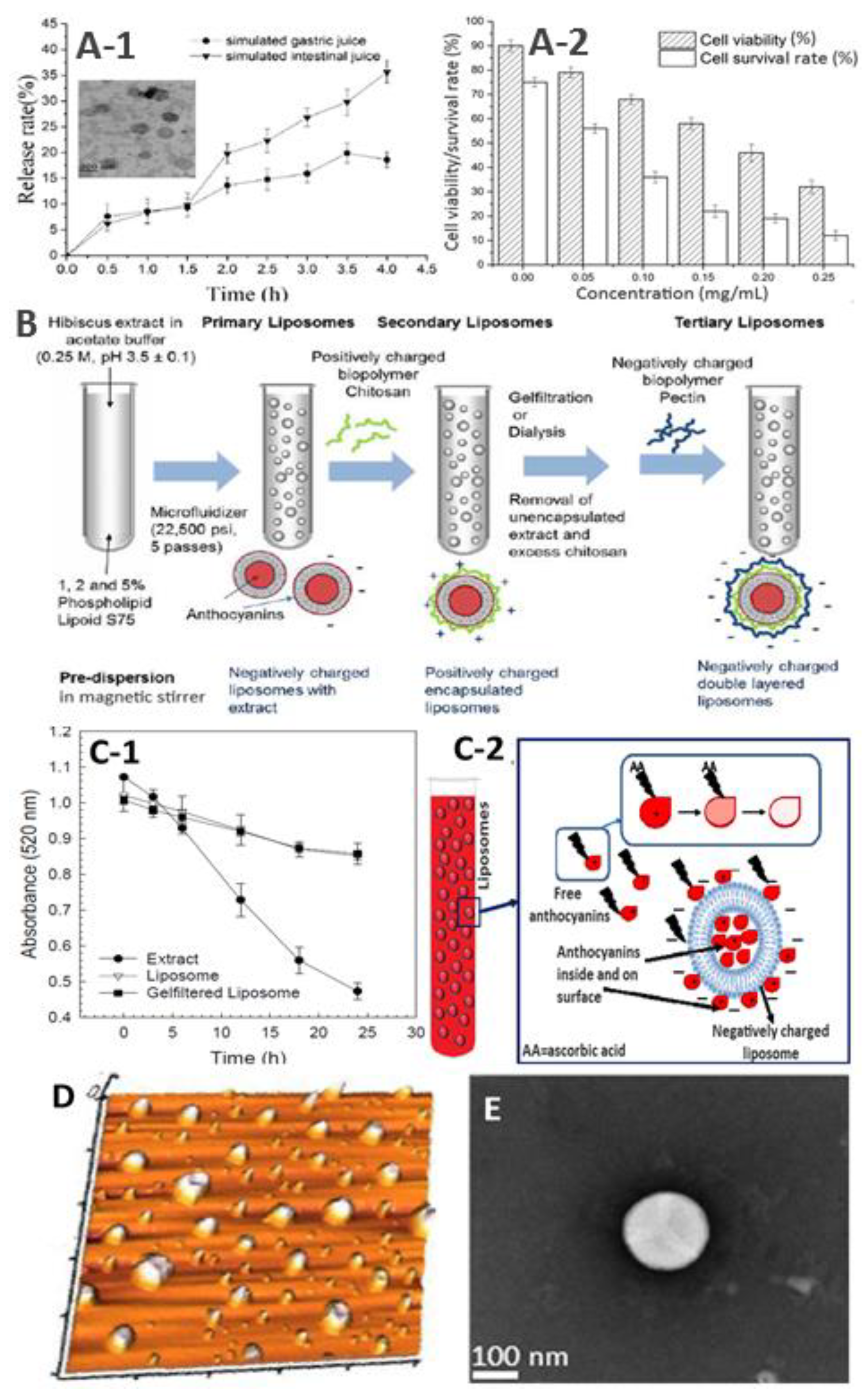
6. Nanoliposome-Based Stability and Bioavailability of Anthocyanins
6.1. Nanoliposome with Standards
6.2. Nanoliposome with Natural Extracts
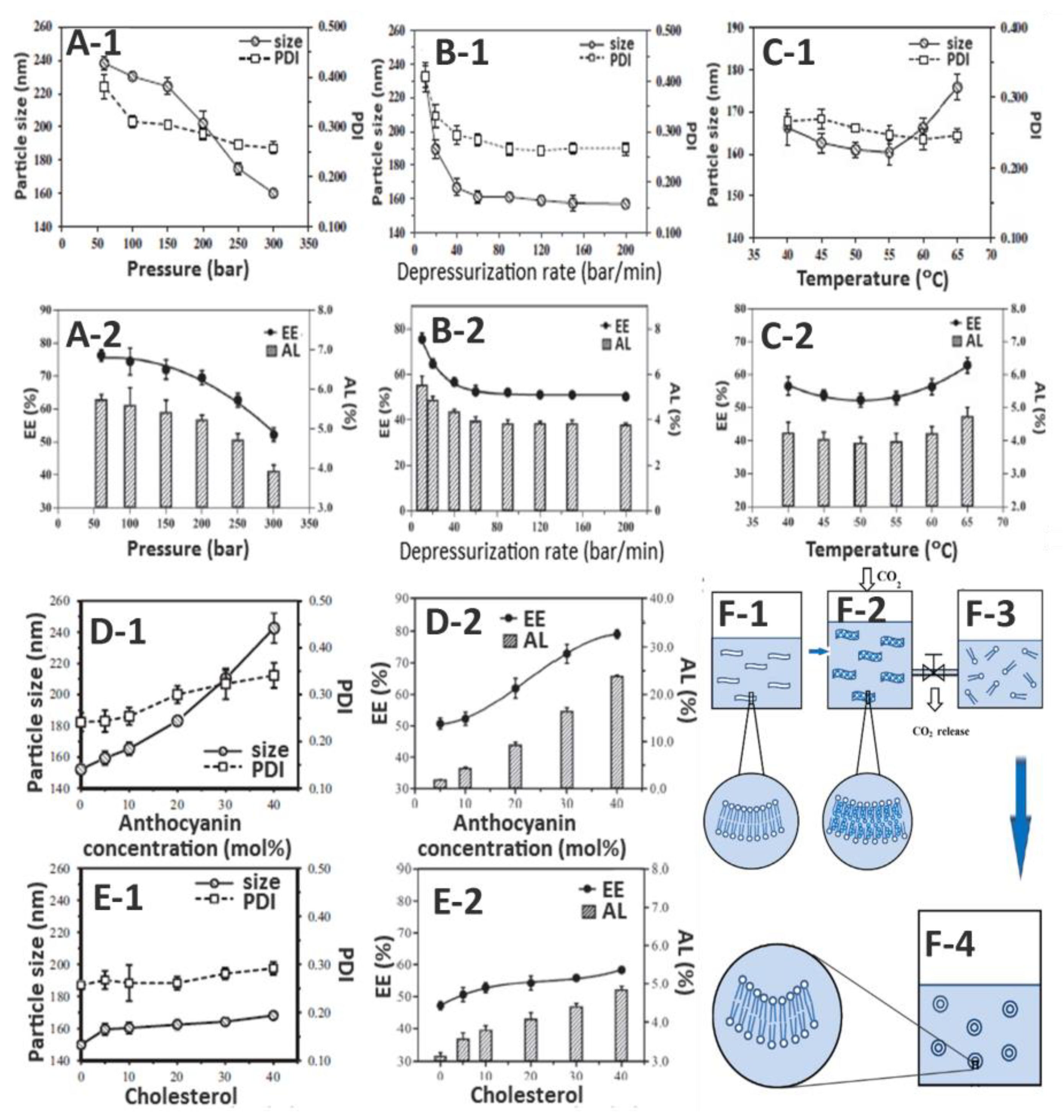
6.3. Nanoliposomes by Supercritical Carbon Dioxide Method
7. Conclusions and Future Perspectives
Author Contributions
Funding
Conflicts of Interest
Abbreviations
| AA | ascorbic acid |
| ABE | acai berry extract |
| ABE-NE | acai berry extract nanoemulsion |
| ACT | anthocyanin acyltransferase |
| AFM | atomic force microscopy |
| AL | anthocyanin loading |
| ANCs | anthocyanins |
| ANS | anthocyanidin synthase |
| BAE | blueberry anthocyanin extract |
| BAE-ME | blueberry anthocyanin extract microemulsion |
| BA-NL | bilberry anthocyanin extract nanoliposome |
| BCE | black carrot extract |
| BCE-NL | black carrot extract nanoliposome |
| BHT | butylated hydroxytoluene |
| BME | black mulberry extract |
| BME-NL | black mulberry extract nanoliposome |
| BPAE-NE | blueberry pomace anthocyanin extract nanoemulsion |
| CB | anthocyanin-rich cranberry |
| CB/GTC-NE | cranberry/green tea catechin extract nanoemulsion |
| CH-BME-NL | chitosan black mulberry extract nanoliposome |
| CHI | chalcone isomerase |
| CHS | chalcone synthase |
| Cy | cyanidin |
| Cy3G | cyanidin-3-glucoside |
| Cy3G-NL | cyanidin-3-glucoside nanoliposome |
| Cy-NL | cyanidin nanoliposome |
| DFR | dihydroflavonol-4-reductase |
| Dp | delphinidin |
| Dp-NL | delphinidin nanoliposome |
| DPPH | 1,1-diphenyl-2-picrylhydrazyl |
| DPR | depressurization rate |
| EE | encapsulation efficiency |
| F3′,5′H | flavonoid 3′,5′-hydroxylase |
| F3′H | flavonoid 3′-hydroxylase |
| F3H | flavonoid 3-hydroxylase |
| FW | fresh weight basis |
| GI | gastrointestinal |
| GTC | green tea catechin extract |
| HbA1c | hemoglobin A1c |
| HEM | high energy method |
| HLB | hydrophilic-lipophilic balance |
| HPLC-DAD-ESI-MS/MS | high-performance liquid chromatography-diode array detection-electrospray ionization-tandem mass spectrometry |
| HS-CNL | chitosan coated Hibiscus sabdariffa nanoliposome |
| HS-CPNL | chitosan/pectin coated Hibiscus sabdariffa nanoliposome |
| HS-NL | Hibiscus sabdariffa nanoliposome |
| IC50 | half-maximal inhibitory concentration |
| JPE-NE | jaboticaba peel extract nanoemulsion |
| LEM | low energy method |
| Malonyl-CoA | malonyl-coenzyme A |
| MCT | medium chain triglyceride |
| ME | microemulsion |
| MITF | melanocyte inducing transcription factor |
| MPE-NE | mangosteen peel extract nanoemulsion |
| Mv | malvidin |
| NE | nanoemulsion |
| O/W | oil-in-water |
| OMT | O-methyl transferase |
| OSC | Oregon strawberry commission |
| P | pressure |
| PC/CH | phosphatidylcholine/cholesterol |
| p-Coumaroyl-CoA | p-coumaroyl-coenzyme A |
| PDI | polydispersity index |
| PEG 400 | polyethylene glycol 400 |
| Pg | pelargonidin |
| PHE-NL | pistachio hull extract nanoliposome |
| Pn | peonidin |
| Pt | petunidin |
| RCE | red cabbage extract |
| RCE-SLNs | red cabbage extract solid lipid nanoparticles |
| SCD | supercritical carbon dioxide |
| SD | Sprague-Dawley rats |
| SGF | simulated gastric fluid |
| SIF | simulated intestinal fluid |
| SLNs | solid lipid nanoparticles |
| SNEDDS | self-nanoemulsifying drug delivery system |
| SPE-ME | purple sweet potato extract microemulsion |
| T | temperature |
| 99mTc-CB/GTC-NE | metastable Technetium-99 isomer radiolabeled Cranberry/green tea catechin extract nanoemulsion |
| TEM | transmission electron microscopy |
| TFH | thin film hydration |
| TMC | N-trimethyl chitosan |
| TMC-Cy3G-NL | N-trimethyl chitosan coated cyanidin-3-glucoside nanoliposome |
| UFGT | uridine diphosphate-sugar flavonoid 3-O-glycosyltransferase |
| UV | ultraviolet |
| W/O | water-in-oil |
| W/O/W, W1/O/W2 | water-in-oil-in-water double emulsion |
| w/w | weight per weight |
| WPI | whey protein isolate |
| ZP | zeta potential |
References
- Andersen, O.M.; Jordheim, M. The anthocyanins. In Flavonoids: Chemistry, Biochemistry and Applications; Andersen, O.M., Markham, K.R., Eds.; CRC Press: Boca Raton, FL, USA, 2006; pp. 471–552. [Google Scholar]
- Delgado-Vargas, F.; Paredes-Lopez, O. Anthocyanins and betalains. In Natural Colorants for Food and Nutraceutical Uses; Delgado-Vargas, F., Paredes-Lopez, O., Eds.; CRC Press: Boca raton, FL, USA, 2003; pp. 167–219. [Google Scholar]
- He, J.; Giusti, M.M. Anthocyanins: Natural colorants with health-promoting properties. Annu. Rev. Food Sci. Technol. 2010, 1, 63–87. [Google Scholar] [CrossRef] [Scilit] [PubMed]
- Prior, R.L. Absorption and metabolism of anthocyanins: Potential health effects. In Phytochemicals: Mechanisms of Action; Meskin, M., Bidlack, W.R., Davies, A.J., Lewis, D.S., Randolph, R.K., Eds.; CRC Press: Boca Raton, FL, USA, 2004; pp. 1–19. [Google Scholar]
- Pojer, E.; Mattivi, F.; Johnson, D.; Stockley, C.S. The case for anthocyanin consumption to promote human health: A review. Comp. Rev. Food Sci. Technol. 2013, 12, 483–508. [Google Scholar]
- Wu, X.; Beecher, G.R.; Holden, J.M.; Haytowitz, D.B.; Gebhardt, S.E.; Prior, R.L. Concentrations of anthocyanins in common foods in the United States and estimation of normal consumption. J. Agric. Food Chem. 2006, 54, 4069–4075. [Google Scholar] [CrossRef] [Scilit]
- Khoo, H.E.; Azlan, A.; Tang, S.T.; Lim, S.M. Anthocyanidins and anthocyanins: Colored pigments as food, pharmaceutical ingredients, and the potential health benefits. Food Nutr. Res. 2017, 61, 1361779. [Google Scholar] [CrossRef] [Scilit] [PubMed]
- Francis, F.J. Pigment and other colorants. In Food Chemistry; Fennema, O.R., Ed.; Mercel Dekker Inc.: New York, NY, USA, 1985; pp. 545–584. [Google Scholar]
- Nayak, B.; Liu, R.H.; Tang, J. Effect of processing on phenolic antioxidants of fruits, vegetables, and grains—A review. Crit. Rev. Food Sci. Nutr. 2015, 55, 887–918. [Google Scholar] [CrossRef] [Scilit]
- Fang, J. Bioavailability of anthocyanins. Drug Metab. Rev. 2014, 46, 508–520. [Google Scholar] [CrossRef] [Scilit] [PubMed]
- Lila, M.A.; Burton-Freeman, B.; Grace, M.; Kalt, W. Unraveling anthocyanin bioavailability for human health. Annu. Rev. Food Technol. 2016, 7, 375–393. [Google Scholar] [CrossRef] [Scilit] [PubMed]
- Kay, C.D.; Pereira-Caro, G.; Ludwig, I.A.; Clifford, M.N.; Crozier, A. Anthocyanins and flavanones are more bioavailable than previously perceived: A review of recent evidence. Annu. Rev. Food Sci. Technol. 2017, 8, 155–180. [Google Scholar] [CrossRef] [Scilit]
- Fang, Z.; Bhandari, B. Encapsulation of polyphenols—A review. Trands Food Sci. Technol. 2010, 21, 510–523. [Google Scholar] [CrossRef] [Scilit]
- Munin, A.; Edwards-Levy, F. Encapsulation of natural polyphenolic compounds: A review. Pharmaceutics 2011, 3, 793–829. [Google Scholar] [CrossRef] [Scilit]
- Ozkan, G.; Bilek, S.E. Microencapsulation of natural food colourants. Int. J. Nutr. Food Sci. 2014, 3, 145–156. [Google Scholar]
- Mahdavi, S.A.; Jafari, S.M.; Ghorbani, M.; Assadpoor, E. Spray-drying microencapsulation of anthocyanins by natural biopolymers: A review. Dry. Technol. 2014, 32, 509–518. [Google Scholar] [CrossRef] [Scilit]
- Arroyo-Maya, L.J.; McClements, D.J. Biopolymer nanoparticles as potential delivery systems for anthocyanins: Fabrication and properties. Food Res. Int. 2015, 69, 1–8. [Google Scholar] [CrossRef] [Scilit]
- Oidtmann, J.; Schantz, M.; Mader, K.; Baum, M.; Berg, S.; Betz, M.; Kulozik, U.; Leick, S.; Rehage, H.; Schwarz, K.; et al. Preparation and comparative release characteristics of three anthocyanin encapsulation systems. J. Agric. Food Chem. 2012, 60, 844–851. [Google Scholar] [CrossRef] [Scilit]
- McClements, D.J.; Decker, E.A. Encapsulation, protection, and release of hydrophilic active components: Potential and limitations of colloidal delivery systems. Adv. Coll. Interf. Sci. 2015, 219, 27–53. [Google Scholar] [CrossRef] [Scilit]
- Flores, G.; Del Castillo, M.L.R.; Costabile, A.; Klee, A.; Guergoletto, K.B.; Gibson, G.R. In vitro fermentation of anthocyanins encapsulated with cyclodextrins: Release, metabolism and influence on gut microbiota growth. J. Funct. Foods 2015, 16, 50–57. [Google Scholar] [CrossRef] [Scilit]
- Stanciuc, N.; Turturica, M.; Oancea, A.M.; Barbu, V.; Ionita, E.; Aprodu, I.; Rapeanu, G. Microencapsulation of anthocyanins from grape skins by whey protein isolates and different polymers. Food Bioprocess Technol. 2017, 10, 1715–1726. [Google Scholar] [CrossRef] [Scilit]
- Bilek, S.E.; Yilmaz, F.M.; Ozkan, G. The effects of industrial production on black carrot concentrate quality and encapsulation of anthocyanins in whey protein hydrogels. Food Bioprocess Process. 2017, 102, 72–80. [Google Scholar] [CrossRef] [Scilit]
- Mueller, D.; Jung, K.; Winter, M.; Rogoll, D.; Melcher, R.; Kulozik, S.; Richling, E. Encapsulation of anthocyanins from bilberries—Effects on bioavailability and intestinal accessibility in human. Food Chem. 2018, 248, 217–224. [Google Scholar] [CrossRef] [Scilit]
- Akhtar, M.; Murray, B.S.; Afeisume, E.I.; Khew, S.H. Encapsulation of flavonoid in multiple emulsion using spinning disc reactor technology. Food Hydrocoll. 2014, 34, 62–67. [Google Scholar] [CrossRef] [Scilit]
- Teixe-Roig, J.; Oms-Oliu, G.; Velderrain-Rodriguez, G.R.; Odriozola-Serrano, I.; Martin-Belloso, O. The effect of sodium carboxymethylcellulose on the stability and bioaccessibility of anthocyanin water-in-oil-in-water emulsions. Food Bioprocess Technol. 2018, 11, 2229–2241. [Google Scholar] [CrossRef] [Scilit]
- Lu, W.; Kelly, A.L.; Miao, S. Emulsion-based encapsulation and delivery systems for polyphenols. Trends Food Sci. Technol. 2016, 47, 1–9. [Google Scholar] [CrossRef] [Scilit]
- Gunasekaran, T.; Haile, T.; Nigusse, T.; Dhanaraju, M.D. Nanotechnology: An effective tool for enhancing bioavailability and bioactivity of phytomedicine. Asian Pac. J. Trop. Biomed. 2014, 4, S1–S7. [Google Scholar] [CrossRef] [Scilit] [PubMed]
- Joyce, I.J.; Davidov-Pardo, G.; McClements, D.J. Nanotechnology for increased micronutrient bioavailability. Trends Food Sci. Technol. 2014, 40, 168–182. [Google Scholar]
- Shin, G.H.; Kim, J.T.; Park, H.J. Recent developments in nanoformulation of lipophilic functional foods. Trends Food Sci. Technol. 2015, 46, 144–157. [Google Scholar] [CrossRef] [Scilit]
- Zorzi, G.K.; Carvalho, E.L.S.; Van Poser, G.L.; Teixeira, H.F. On the use of nanotechnology-based strategies for association of complex matrices from plant extracts. Rev. Bras. Farmacogn. 2015, 25, 426–436. [Google Scholar] [CrossRef] [Scilit]
- McClements, D.J. Emulsion design to improve the delivery of functional lipophilic components. Annu. Rev. Food Sci. Technol. 2010, 1, 241–269. [Google Scholar] [CrossRef] [Scilit] [PubMed]
- McClements, D.J. Edible nanoemulsions: Fabrication, properties, and functional performance. Soft Matter 2011, 7, 2297–2316. [Google Scholar] [CrossRef] [Scilit]
- McClements, D.J. Advances in fabrication of emulsions with enhanced functionality using structural design principles. Curr. Opin. Coll. Interf. Sci. 2012, 17, 235–245. [Google Scholar] [CrossRef] [Scilit]
- Dua, J.S.; Rana, A.C.; Bhandari, A.K. Liposome: Methods of preparation and applications. Int. J. Pharmceut. Stud. Res. 2012, 3, 14–20. [Google Scholar]
- Patil, Y.P.; Jadhav, S.S. Novel methods for liposome preparation. Chem. Phys. Lipids 2014, 177, 8–18. [Google Scholar] [CrossRef] [Scilit] [PubMed]
- Bozzuto, G.; Molinari, A. Liposomes as nanomedical devices. Int. J. Nanomed. 2015, 10, 975–999. [Google Scholar] [CrossRef] [Scilit] [PubMed]
- Tanaka, Y.; Ohmiya, A. Seeing is believing: Engineering anthocyanin and carotenoid biosynthetic pathways. Curr. Opin. Biotechnol. 2008, 19, 190–197. [Google Scholar] [CrossRef] [Scilit]
- He, F.; Mu, L.; Yan, G.L.; Liang, N.N.; Pan, Q.H.; Wang, J.; Reeves, M.J.; Duan, C.Q. Biosynthesis of anthocyanins and their regulation in colored grapes. Molecules 2010, 15, 9057–9091. [Google Scholar] [CrossRef] [Scilit]
- Liu, Y.; Tikunov, Y.; Schouten, R.E.; Marcelis, L.F.M.; Visser, R.G.F.; Bovy, A. Anthocyanin biosynthesis and degradation mechanisms in Solanaceous vegetables: A review. Front. Chem. 2018, 6, 52. [Google Scholar] [CrossRef] [Scilit]
- Tanaka, Y.; Brugliera, F. Flower colour and cytochromes P450. Philos. Trans. R. Soc. B Biol. Sci. 2013, 368, 20120432. [Google Scholar] [CrossRef] [Scilit]
- Eder, R. Pigments. In Food Analysis by HPLC; Nollet, L.M.L., Ed.; Marcel Dekker Inc.: Monticello, NY, USA, 2000; pp. 845–880. [Google Scholar]
- Bueno, J.M.; Saez-Plaza, P.; Ramos-Escudero, F.; Jimenez, A.M.; Fett, R.; Asuero, A.G. Analysis and antioxidant capacity of anthocyanin pigments. Part II: Chemical structure, color, and intake of anthocyanins. Crit. Rev. Anal. Chem. 2012, 42, 126–151. [Google Scholar] [CrossRef] [Scilit]
- Kammerer, D.R. Anthocyanins. In Handbook on Natural Pigments in Food and Beverage; Schweigger, R.C.R., Ed.; Woodhead Publishing: Boston, MA, USA, 2016; pp. 61–80. [Google Scholar]
- Castaneda-Ovando, A.; Pacheco-Hernandez, D.L.; Paez-Hernandez, E.M.; Rodriguez, J.A.; Galan-Vidal, C.A. Chemical studies of anthocyanins: A review. Food Chem. 2009, 113, 859–871. [Google Scholar] [CrossRef] [Scilit]
- Kong, J.M.; Chia, L.S.; Goh, N.K.; Chia, T.F.; Brouillard, R. Analysis and biological activities of anthocyanins. Phytochemistry 2003, 64, 923–933. [Google Scholar] [CrossRef] [Scilit]
- Ito, F.; Tanaka, N.; Katsuki, A.; Fujii, T. Why do flavylium salts show so various colors in solution?: Effect of concentration and water on the flavylium’s color changes. J. Photochem. Photobiol. A Chem. 2002, 150, 153–157. [Google Scholar] [CrossRef] [Scilit]
- Stintzing, F.C.; Carle, R. Functional properties of anthocyanins and betalains in plants, food, and in human nutrition. Trends Food Sci. Technol. 2004, 15, 19–38. [Google Scholar] [CrossRef] [Scilit]
- Stintzing, F.C.; Stintzing, A.S.; Carle, R.; Frei, B.; Wrolstad, R.E. Color and antioxidant properties of cyaniding-based anthocyanin pigments. J. Agric. Food Chem. 2004, 52, 3097–3099. [Google Scholar]
- Brouillard, R.; Chassaing, S.; Isorez, G.; Kueny-Stotz, M.; Figueiredo, P. The visible flavonoids or anthocyanins: From research to applications. Recent Adv. Polyphenol. Res. 2010, 2, 1–22. [Google Scholar]
- Schwarz, M.; Wray, V.; Winterhalter, P. Isolation and identification of novel pyranoanthocyanins from black carrot (Daucus carota L.) juice. J. Agric. Food Chem. 2004, 52, 5095–5101. [Google Scholar] [CrossRef] [Scilit]
- Hillebrand, S.; Schwarz, M.; Winterhalter, P. Characterization of anthocyanins and pyranoanthocyanins from blood orange [Citrus sinensis (L.) Osbeck] juice. J. Agric. Food Chem. 2004, 52, 7331–7338. [Google Scholar] [CrossRef] [Scilit]
- Buchweitz, M.; Carle, R.; Kammerer, D.R. Bathochromic and stabilizing effects of sugar beet pectin and an isolated pectic fraction on anthocyanins exhibiting pyrogallol and catechol moieties. Food Chem. 2012, 135, 3010–3019. [Google Scholar] [CrossRef] [Scilit]
- Buchweitz, M.; Speth, M.; Kammerer, D.R.; Carle, R. Impact of pectin type on the storage stability of black currant (Ribes nigrum L.) anthocyanins in pectic model solutions. Food Chem. 2013, 139, 1168–1178. [Google Scholar] [CrossRef] [Scilit]
- Pratiwi, L.; Fudholi, A.; Martein, R.; Pramono, S. Self-nanoemulsifying drug delivery system (SNEDDS) for topical delivery of Mangosteen peels (Garcinia Mangostana L.): Formulation design and in vitro studies. J. Young Pharm. 2017, 9, 341–346. [Google Scholar] [CrossRef] [Scilit]
- Mulia, K.; Putri, G.A.; Krisanti, E. Encapsulation of mangosteen extract in virgin coconut oil based nanoemulsions: Preparation and characterization for topical formulation. Mater. Sci. Forum 2018, 929, 234–242. [Google Scholar] [CrossRef] [Scilit]
- Desnita, R.; Veronika, M.; Wahdaningsih, S. Topical microemulsion’s formulation of purple sweet potato (Ipomoea batatas L.) ethanol extract as antioxidant by using various concentration of Span 80. Int. J. PharmTech Res. 2016, 9, 234–239. [Google Scholar]
- Desnita, R.; Wahdaningsih, S.; Hervianti, S. Span 60 as surfactant of topical microemulsion of purple sweet potato (Ipomoea batatas L.) ethanol extract and antioxidant activity test using DPPH method. Int. J. PharmTech Res. 2016, 9, 198–203. [Google Scholar]
- Kaur, A.; Gupta, S.; Tyagi, A.; Sharma, R.K.; Ali, J.; Gabrani, R.; Dang, S. Development of nanoemulsion based gel loaded with phytoconstituents for the treatment of urinary tract infection and in vivo biodistribution studies. Adv. Pharm. Bull. 2017, 7, 611–619. [Google Scholar] [CrossRef] [Scilit] [PubMed]
- Ravanfar, R.; Tamaddon, A.M.; Niakousari, M.; Moein, M.R. Preservation of anthocyanins in solid lipid nanoparticles: Optimization of a microemulsion dilution method using the Placket-Burman and Box-Behnken designs. Food Chem. 2016, 199, 573–580. [Google Scholar] [CrossRef] [Scilit] [PubMed]
- Chen, J.; Ma, X.H.; Yao, G.L.; Zhang, W.T.; Zhao, Y. Microemulsion-based anthocyanin systems: Effect of surfactant, cosurfactants, and its stability. Int. J. Food Prop. 2018, 21, 1152–1165. [Google Scholar] [CrossRef] [Scilit]
- Bamba, B.S.B.; Shi, J.; Tranchant, C.C.; Xue, S.J.; Forney, C.F.; Lim, L.T.; Xu, W.; Xu, G. Coencapsulation of polyphenols and anthocyanins from blueberry pomace by double emulsion stabilized by whey proteins: Effect of homogenization parameters. Molecules 2018, 23, 2525. [Google Scholar] [CrossRef] [Scilit] [PubMed]
- Garcia, N.O.S.; Fernandes, C.P.; da Conceicao, E.C. Is it possible to obtain nanodispersions with jabaticaba peel’s extract using low energy methods and absence of any high cost equipment? Food Chem. 2019, 276, 475–484. [Google Scholar] [CrossRef] [Scilit] [PubMed]
- Rabelo, C.A.S.; Taarji, N.; Khalid, N.; Kobayashi, I.; Nakajima, M.; Neves, M.A. Formulation and characterization of water-in-oil nanoemulsions loaded with acai berry anthocyanins: Insights of degradation kinetics and stability evaluation of anthocyanins and nanoemulsions. Food Res. Int. 2018, 106, 542–548. [Google Scholar] [CrossRef] [Scilit]
- Zhao, L.; Temelli, F. Preparation of liposomes using a modified supercritical process via depressurization of liquid phase. J. Supercrit. Fluids 2015, 100, 100–120. [Google Scholar] [CrossRef] [Scilit]
- Zhao, L.; Temelli, F. Preparation of anthocyanin-loaded liposomes using an improved supercritical carbon dioxide method. Innov. Food Sci. Emerg. Technol. 2017, 39, 119–128. [Google Scholar] [CrossRef] [Scilit]
- Gharib, A.; Faezizadeh, Z.; Godarzee, M. Treatment of diabetes in the mouse model by delphinidin and cyanidin hydrochloride in free and liposomal forms. Planta Med. 2013, 79, 1599–1604. [Google Scholar] [CrossRef] [Scilit]
- Zhang, J.; Liang, X.; Li, X.; Guan, Z.; Liao, Z.; Luo, Y.; Luo, Y. Ocular delivery of cyanidin-3-glycoside in liposomes and its prevention of selenite-induced oxidative stress. Drug Dev. Ind. Pharm. 2016, 42, 546–553. [Google Scholar] [CrossRef] [Scilit]
- Liang, T.; Guan, R.; Shen, H.; Xia, H.; Xia, Q.; Liu, M. Optimization of conditions for cyaniding-3-O-glucoside (C3G) nanoliposome production by response surface methodology and cellular uptake studies in Caco-2 cells. Molecules 2017, 22, 457. [Google Scholar] [CrossRef] [Scilit]
- Gibbs, M.; Zeeb, B.; Weiss, J. Formation, characterization, and stability of encapsulated hibiscus extract in multilayered liposomes. Food Hydrocoll. 2014, 38, 28–29. [Google Scholar] [CrossRef] [Scilit]
- Guldiken, B.; Gibis, M.; Boyacioglu, D.; Capanoglu, E.; Weiss, J. Impact of liposomal encapsulation on degradation of anthocyanins of black carrot extract by adding ascorbic acid. Food Funct. 2017, 8, 1085–1093. [Google Scholar] [CrossRef] [Scilit]
- Rafiee, Z.; Barzegar, M.; Sahari, M.A.; Maherani, B. Nanoliposomal carriers for improvement the bioavailability of high-valued phenolic compounds of pistachio green hull extract. Food Chem. 2017, 220, 115–122. [Google Scholar] [CrossRef] [Scilit] [PubMed]
- Hwang, J.M.; Kuo, H.C.; Lin, C.T.; Kao, E.S. Inhibitory effect of liposome-encapsulated anthocyanin on melanogenesis in human melanocytes. Pharmaceut. Biol. 2013, 51, 941–947. [Google Scholar] [CrossRef] [Scilit]
- Gultekin-Ozguven, M.; Karadag, A.; Duman, S.; Ozkal, B.; Ozcelik, B. Fortification of dark chocolate with spray dried black mulberry (Morus nigra) waste extract encapsulated in chitosan-coated liposomes and bioaccessability studies. Food Chem. 2016, 201, 205–212. [Google Scholar] [CrossRef] [Scilit] [PubMed]
- Bryla, A.; Lewandowicz, G.; Juzwa, W. Encapsulation of elderberry extract into phospholipid nanoparticles. J. Food Eng. 2015, 167, 189–195. [Google Scholar] [CrossRef] [Scilit]
- Guldiken, B.; Linke, A.; Capanoglu, E.; Boyacioglu, D.; Kohlus, R.; Weiss, J.; Gibis, M. Formation and characterization of spray dried coated and uncoated liposomes with encapsulated black carrot extract. J. Food Eng. 2019, 246, 42–50. [Google Scholar] [CrossRef] [Scilit]
- Zhao, L.; Temelli, F.; Chen, L. Encapsulation of anthocyanin in liposomes using supercritical carbon dioxide: Effects of anthocyanin and sterol concentrations. J. Funct. Foods 2017, 34, 159–167. [Google Scholar] [CrossRef] [Scilit]

| Food Variety | Total Anthocyanin (mg/100 g FW) 1 | Food Variety | Total Anthocyanin (mg/100 g FW) 1 |
|---|---|---|---|
Fruits
| 1.3 ± 0.7 2.3 ± 0.8 12.3 ± 1.9 245 ± 68 300.5 386.6 ± 77.7 486.5 122 ± 21.3 1480 140 ± 28.5 476 ± 115 12.8 1375 10.4 ± 0.1 2.2 0.7 | 10. Grape Red grape (n = 5) Concord grape (n = 1) 11. Nectarine (n = 7) 12. Peach (n = 8) 13. Plum Plum (n = 8) Black plum (n = 2) 14. Raspberry Black raspberry Red raspberry 15. Strawberry Strawberry (n = 8) Strawberry OSC 2 (n = 1) Vegetables
| 26.7 ± 10.9 120.1 6.8 ± 1.5 4.8 ± 1.2 19.0 ± 4.4 124.5 ± 21.6 687 92.1 ± 19.7 21.2 ± 3.3 41.7 44.5 85.7 322 ± 40.8 2.2 ± 1.5 48.5 100.1 ± 30.0 6.7 |
© 2019 by the authors. Licensee MDPI, Basel, Switzerland. This article is an open access article distributed under the terms and conditions of the Creative Commons Attribution (CC BY) license (http://creativecommons.org/licenses/by/4.0/).
Share and Cite
Chen, B.-H.; Stephen Inbaraj, B. Nanoemulsion and Nanoliposome Based Strategies for Improving Anthocyanin Stability and Bioavailability. Nutrients 2019, 11, 1052. https://doi.org/10.3390/nu11051052
Chen B-H, Stephen Inbaraj B. Nanoemulsion and Nanoliposome Based Strategies for Improving Anthocyanin Stability and Bioavailability. Nutrients. 2019; 11(5):1052. https://doi.org/10.3390/nu11051052
Chicago/Turabian StyleChen, Bing-Huei, and Baskaran Stephen Inbaraj. 2019. "Nanoemulsion and Nanoliposome Based Strategies for Improving Anthocyanin Stability and Bioavailability" Nutrients 11, no. 5: 1052. https://doi.org/10.3390/nu11051052
APA StyleChen, B.-H., & Stephen Inbaraj, B. (2019). Nanoemulsion and Nanoliposome Based Strategies for Improving Anthocyanin Stability and Bioavailability. Nutrients, 11(5), 1052. https://doi.org/10.3390/nu11051052

