A Multi-Dimensional Feature-Driven Method for Remote Sensing-Based Identification of Cereal and Oil Crops in the Tibetan Plateau


 ,
,  ,
,  , ,
, ,
Highlights
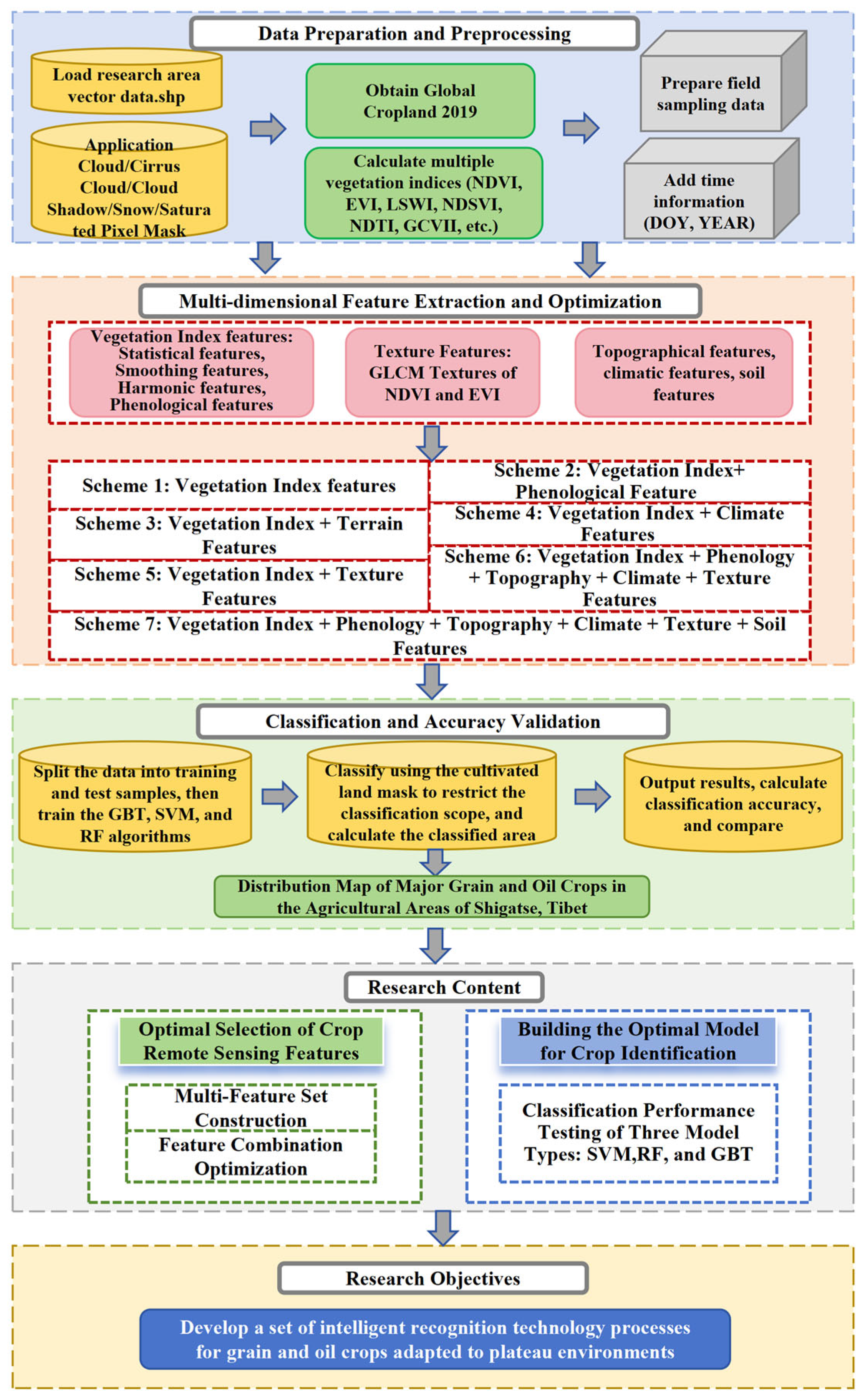
- A high-accuracy crop mapping framework was developed for the Shigatse region using GEE and Sentinel-2 data, with Random Forest achieving 84.77% accuracy.
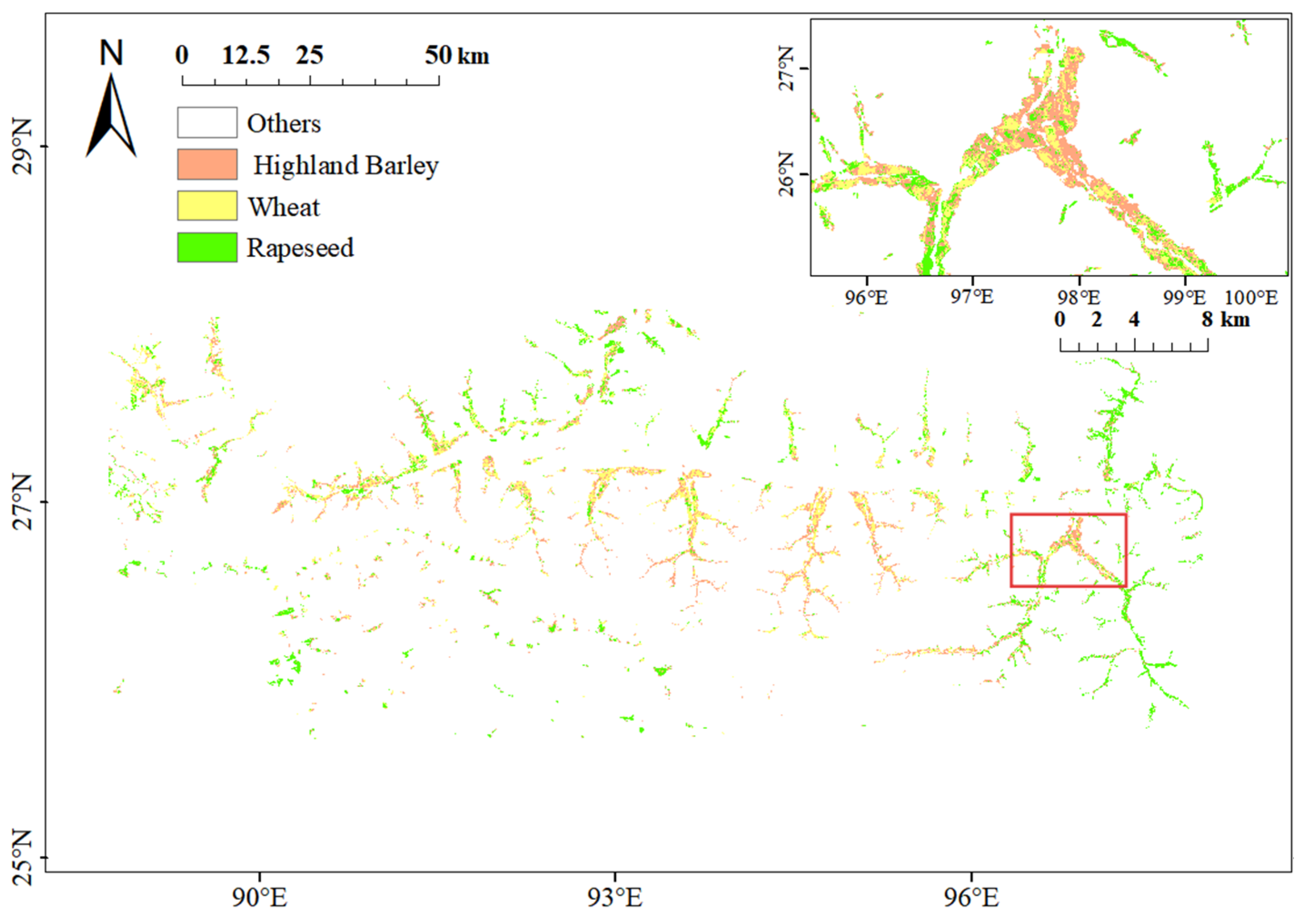
- The study identified the spatial distribution of highland barley, wheat, and rapeseed, with highland barley dominating the region.
- This framework provides an efficient solution for crop identification in complex, high-altitude environments, addressing challenges like cloud and snow interference.
- It offers valuable insights for precision agriculture and land use management in remote regions, with potential for broader application across similar ecological zones.
Abstract
1. Introduction
2. Materials and Methods
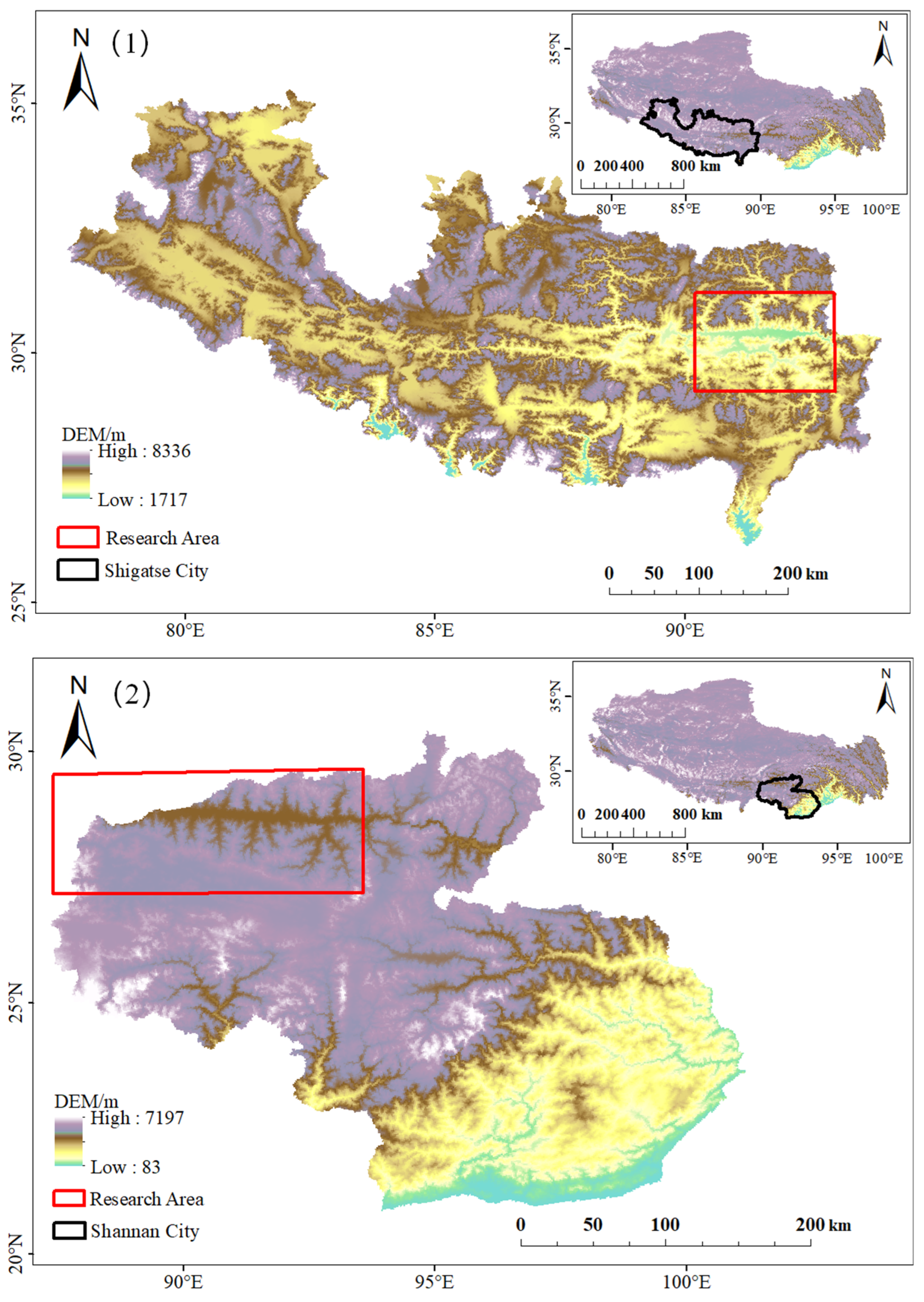
2.1. Study Area
2.2. Datasets
2.2.1. Remote Sensing Imagery
- (1)
- Sentinel-2 Data
- (2)
- Cropland Data
- (3)
- Administrative Boundary Data
- (4)
- Other Datasets
2.2.2. Field Survey Data
- (1)
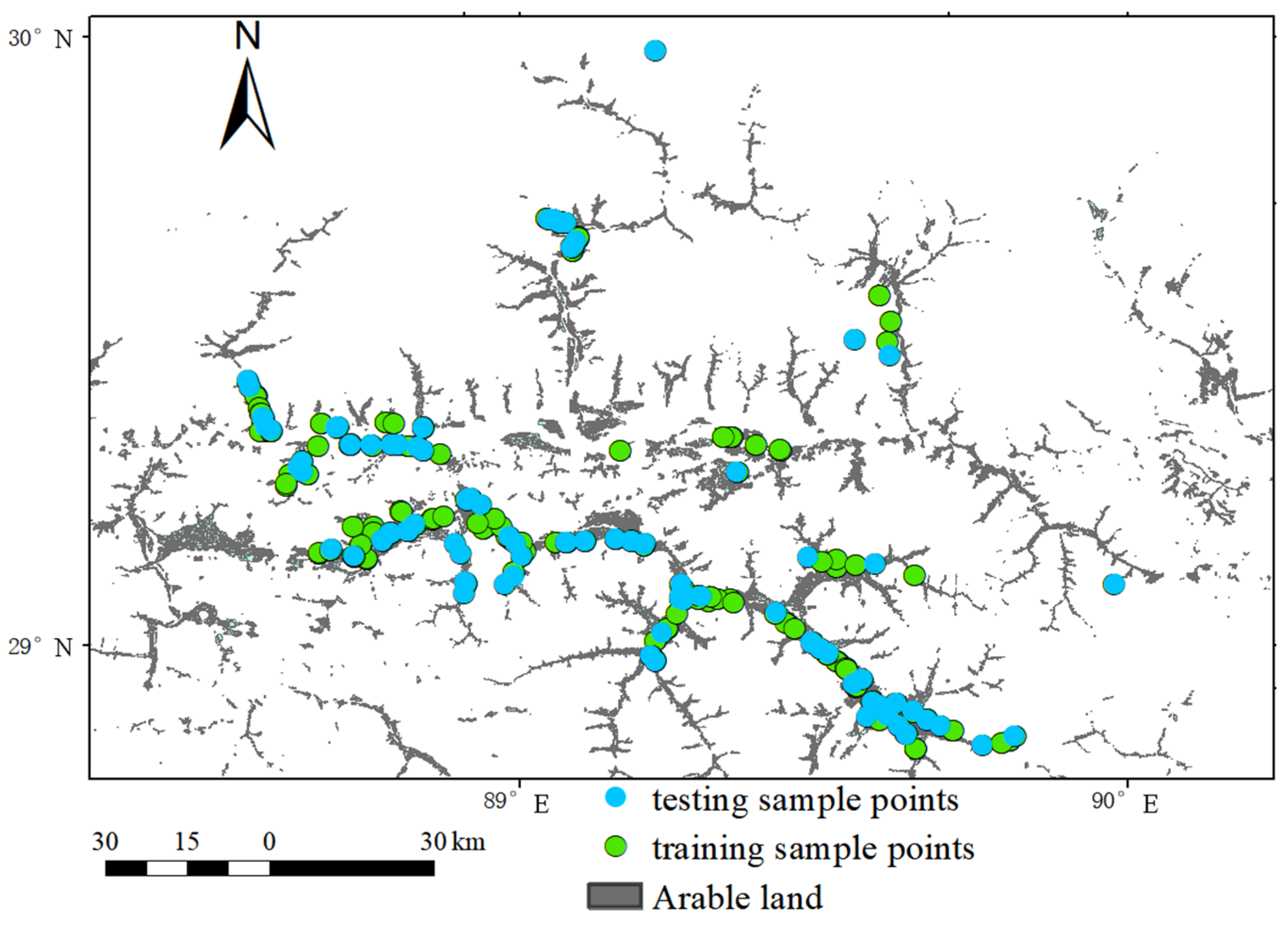
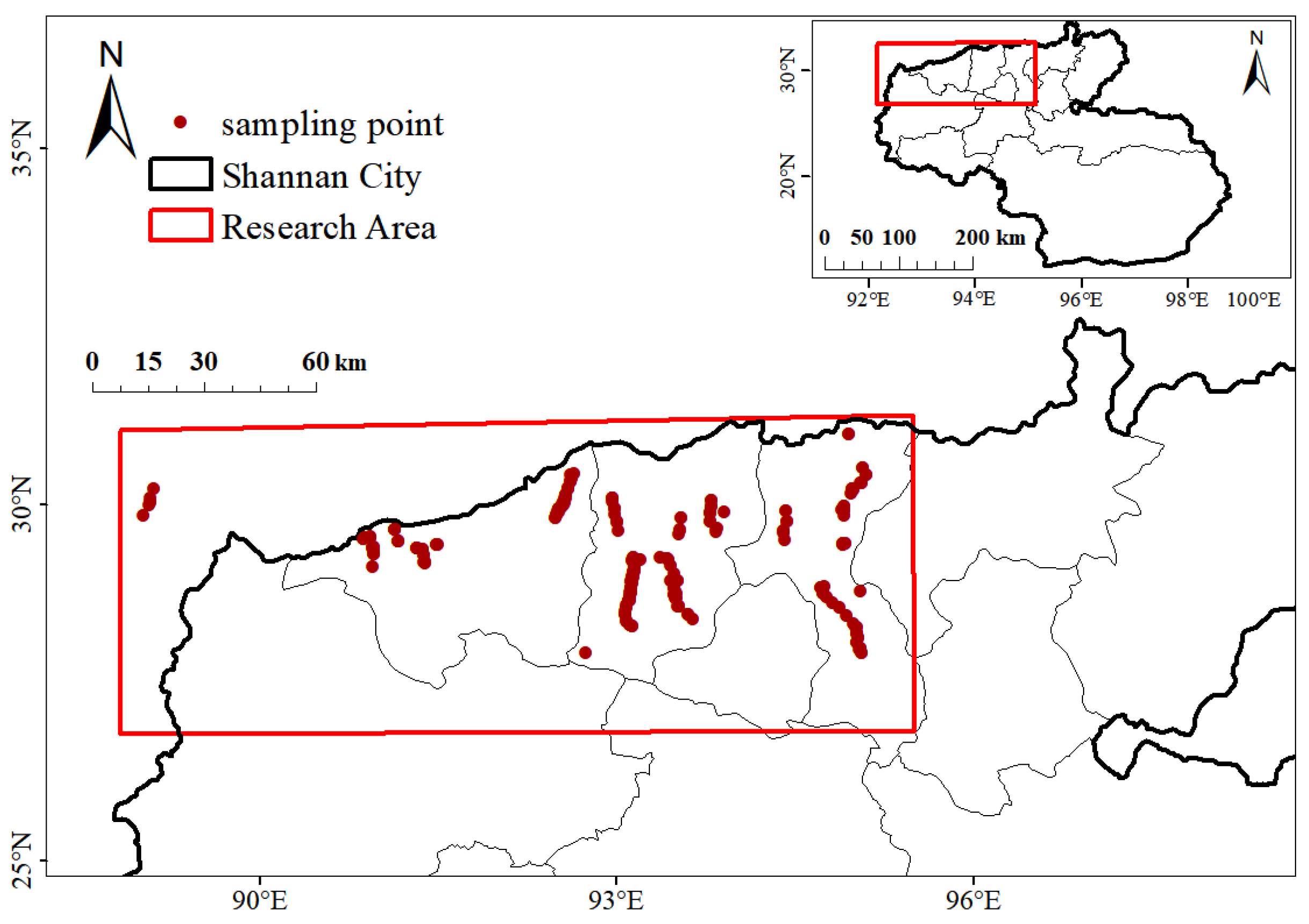
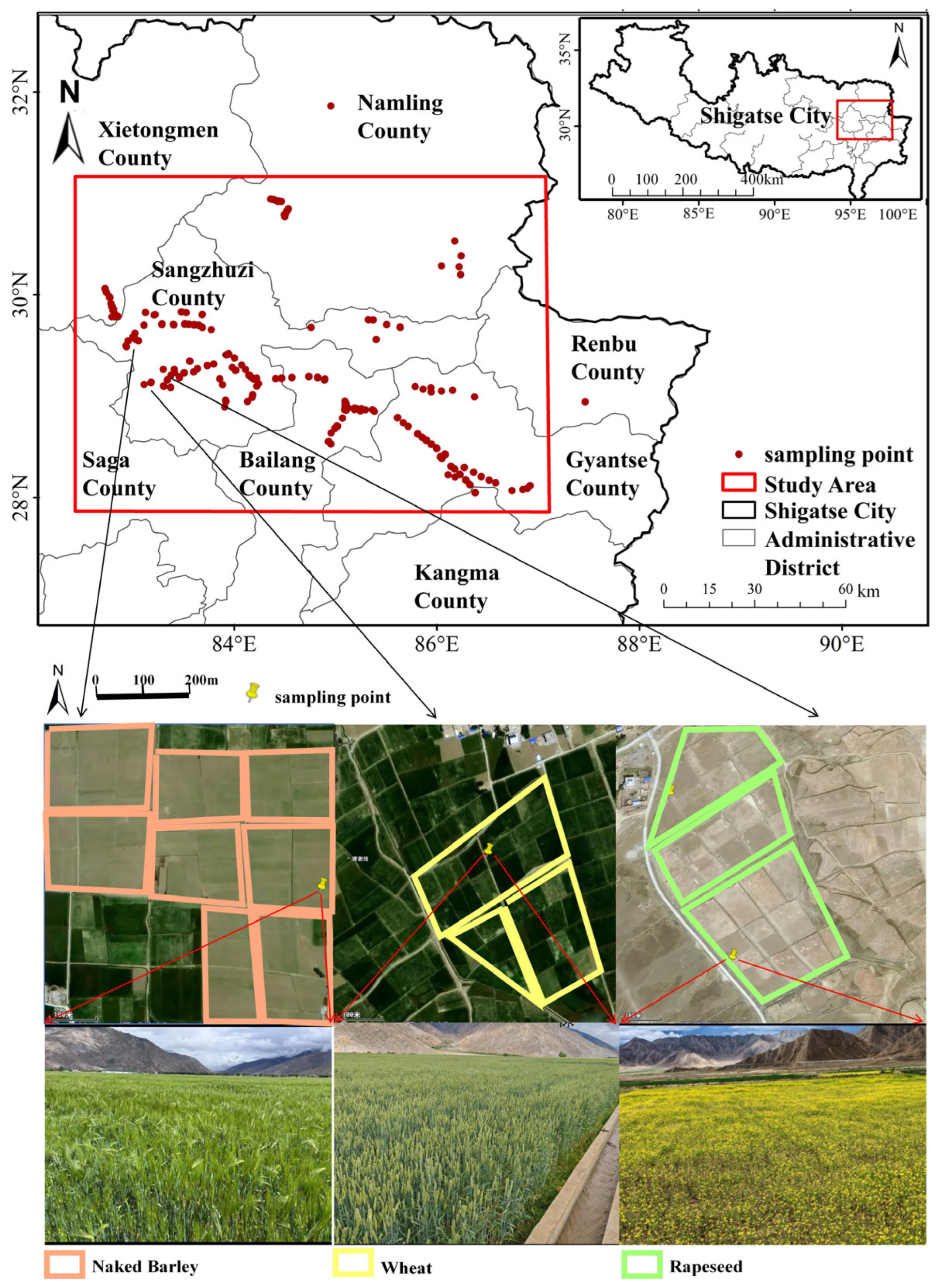
- Field Sampling Data
- (2)
- Drone Survey Data
2.3. Methods
2.3.1. Multi-Dimensional Feature Extraction and Band Optimization
- (1)
- Annual statistics and phenological characteristics
- (2)
- Temporal Patterns and Texture Information
- (3)
- Environmental Constraint Factors
- (4)
- Feature multicollinearity diagnosis
2.3.2. Classification Model Construction
- (1)
- RF Classification Model
- (2)
- GBT Classification Model
- (3)
- SVM Classification Model
2.3.3. Model Training, Accuracy Validation, and Generalization Capability Assessment
3. Results
3.1. Accuracy Evaluation of Three Machine-Learning Classifiers
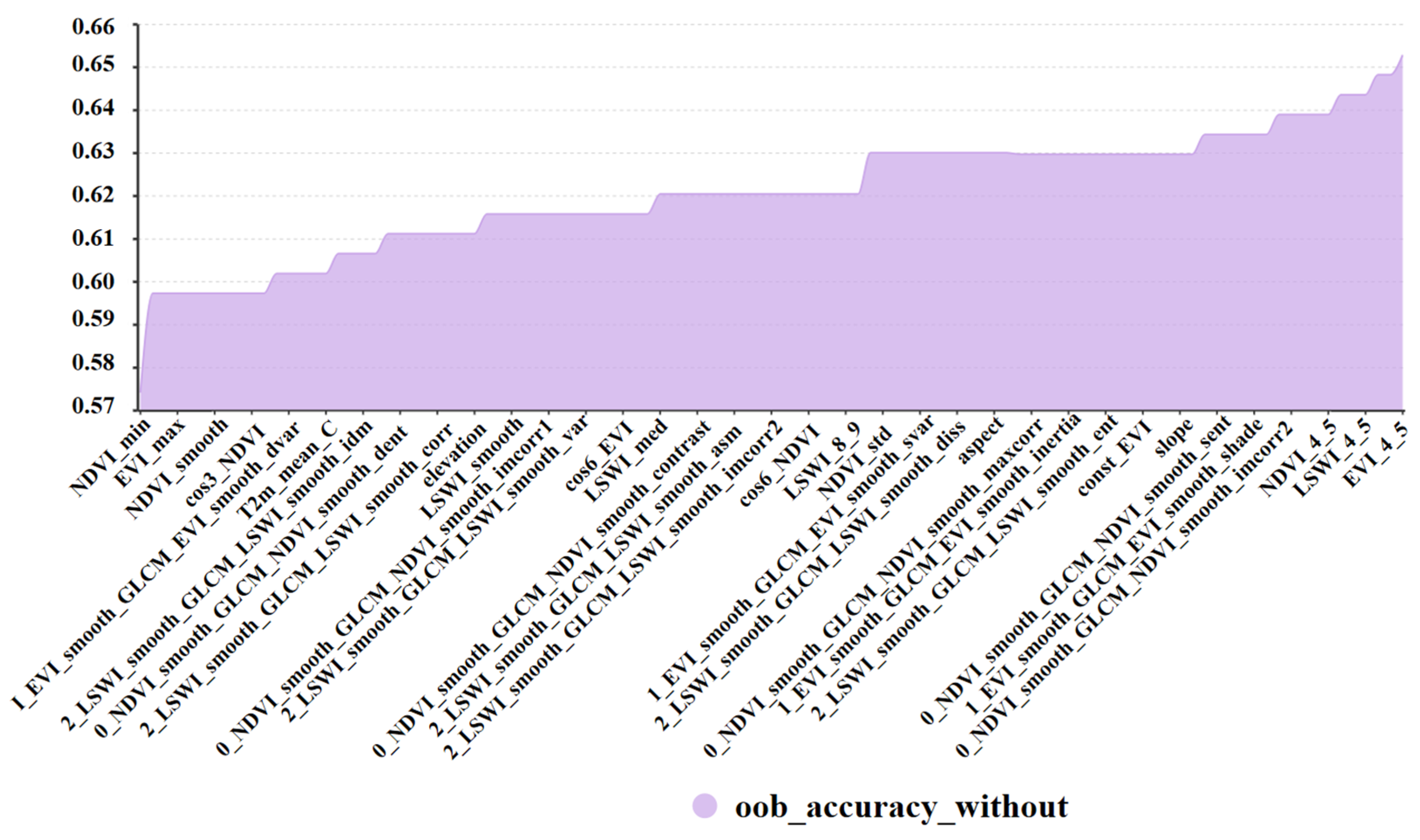
3.2. Feature Set Construction and Band Optimization
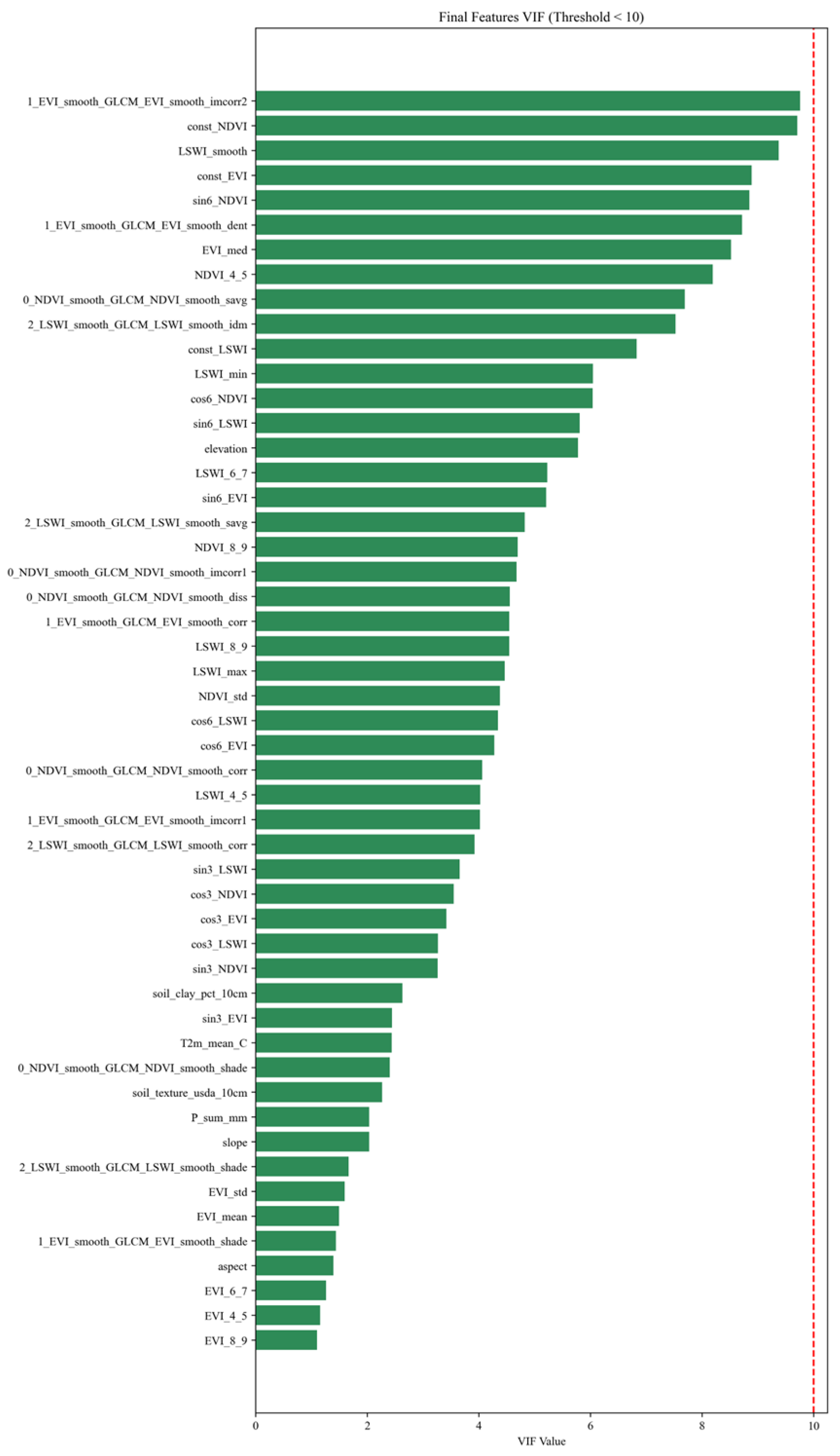
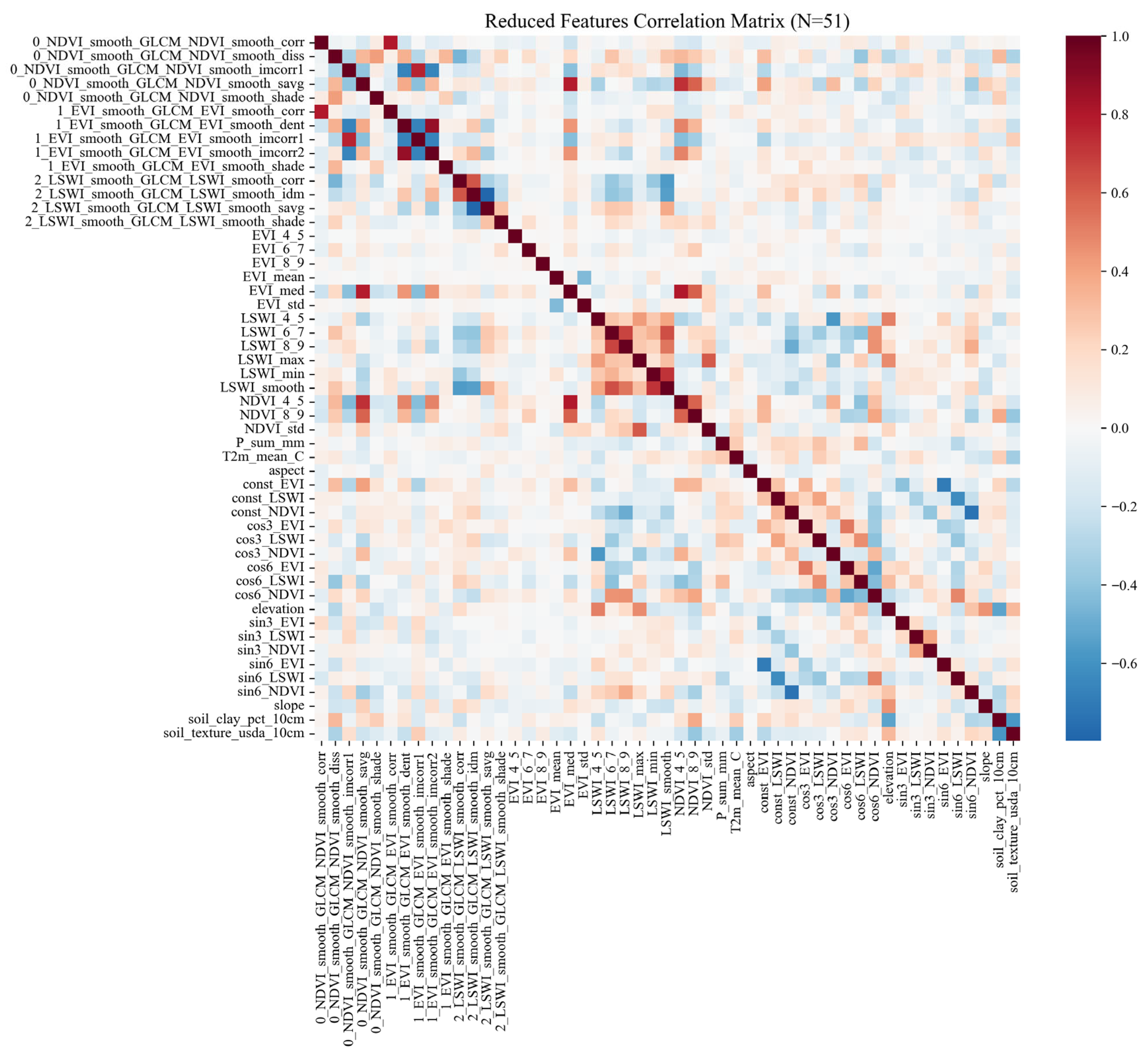
3.3. Effect of VIF-Based Feature Reduction on Classification Accuracy
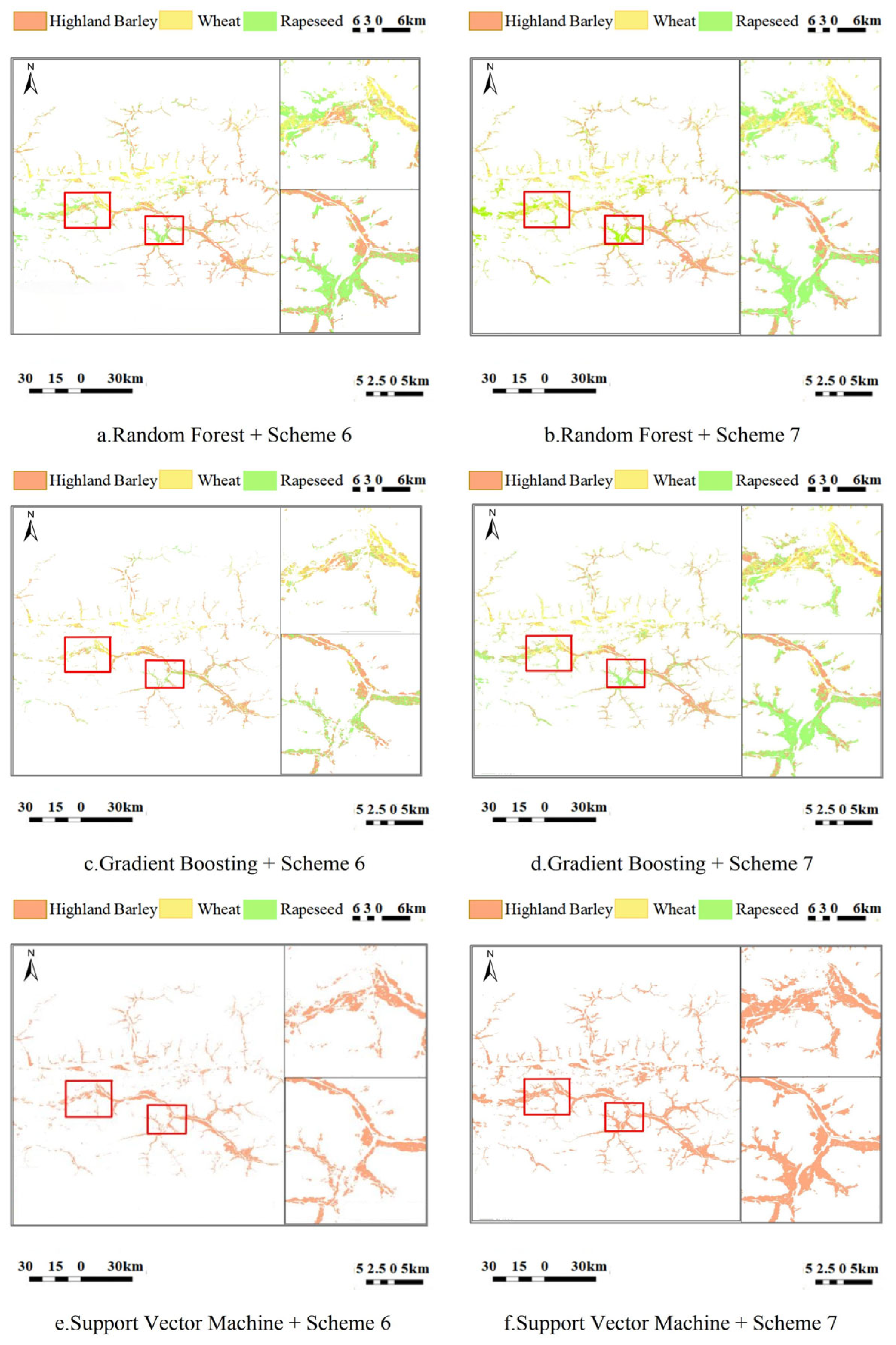
3.4. Spatial Distribution of Major Cereal and Oil Crops
- (1)
- RF Classification Results
- (2)
- GBT Classification Results
- (3)
- SVM Classification Results
4. Discussion
4.1. Machine Learning Model Performance and GEE-Based Workflow Feasibility for Highland Crop Classification in the Tibetan Plateau
4.2. Mechanistic Interpretation of Multi-Dimensional Feature Integration and Dimensionality Reduction Analysis
4.3. Analysis of Anomalous Results, Generalization Capability, and Future Directions
5. Conclusions
- (1)
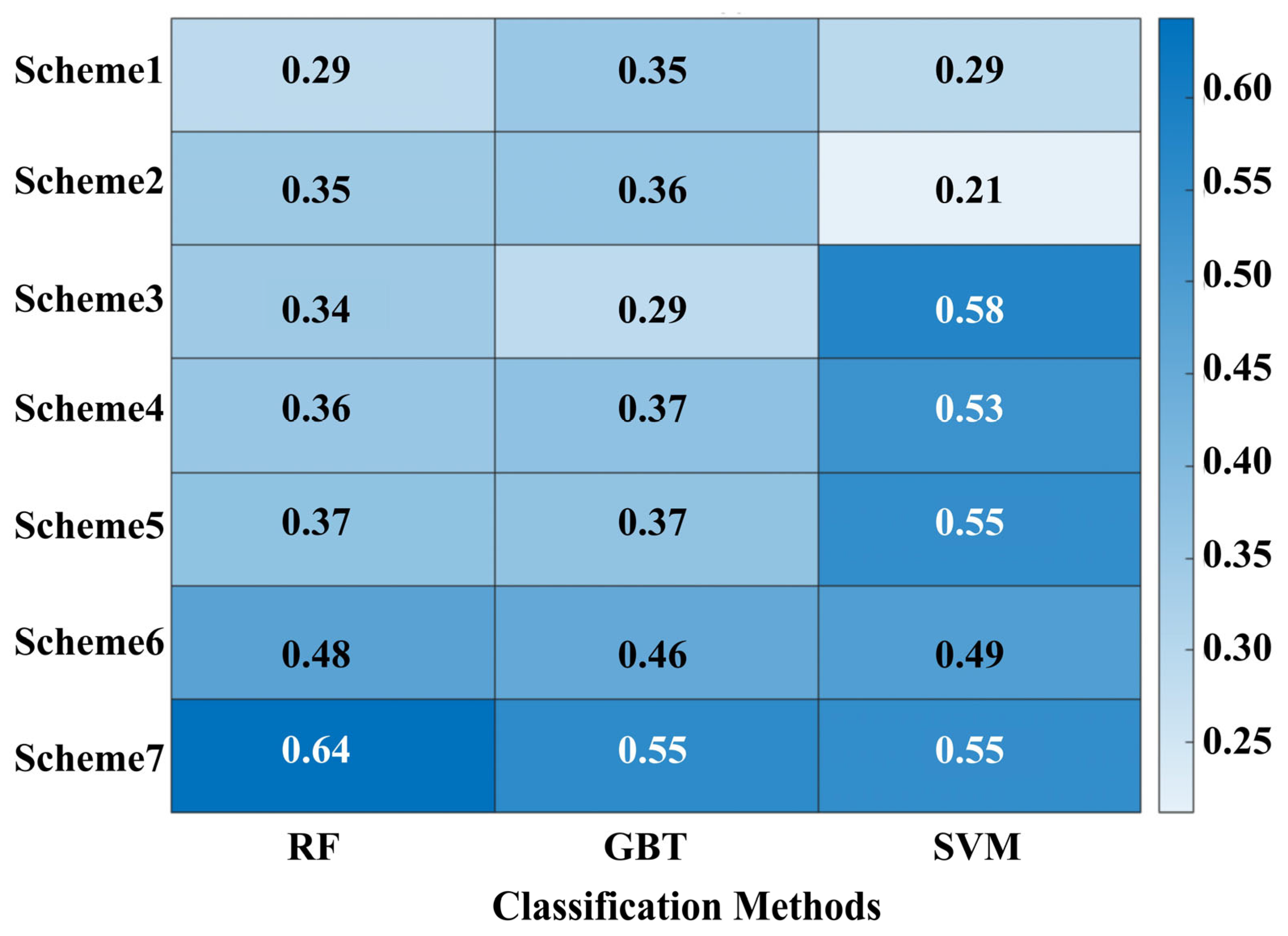
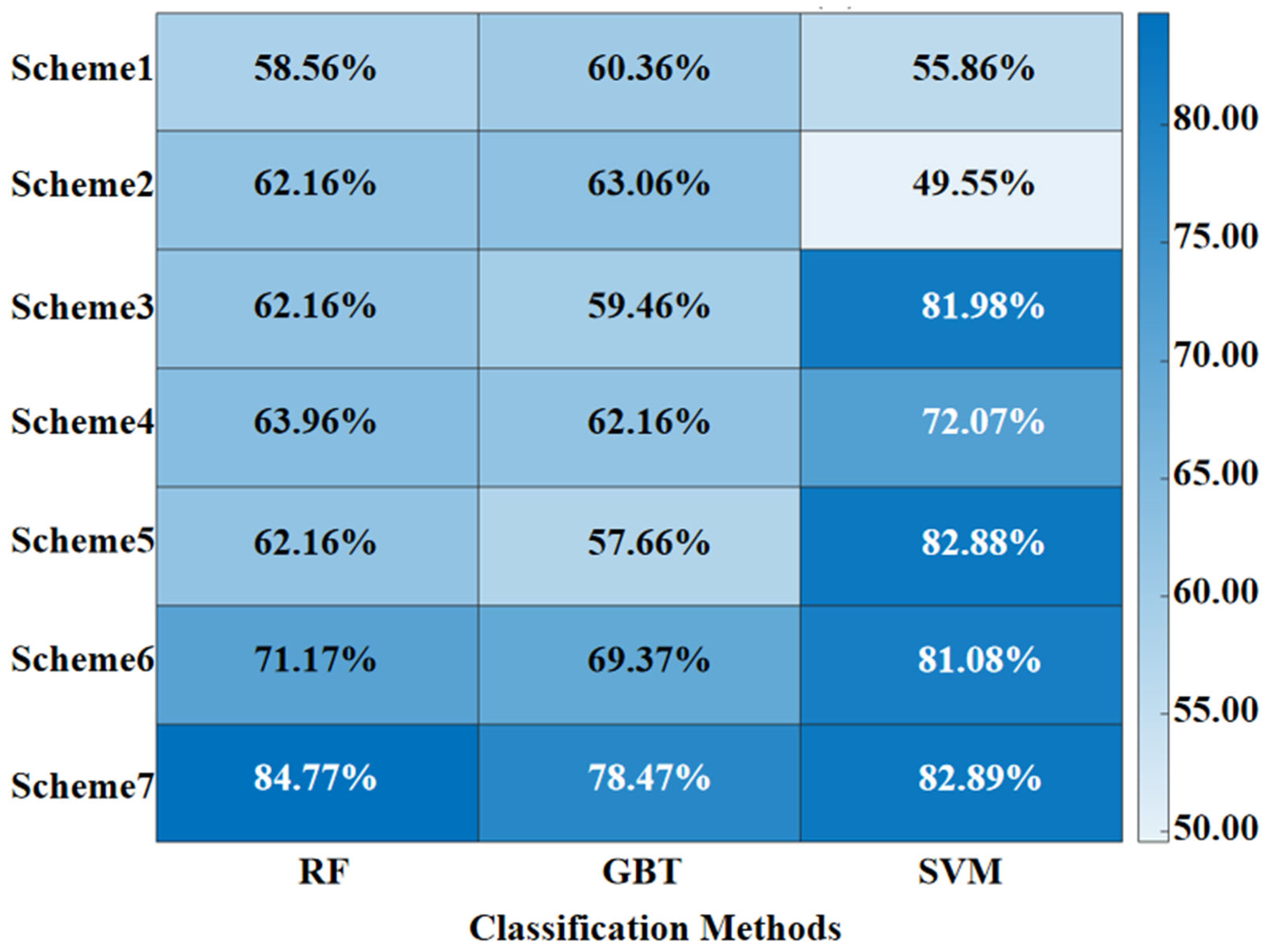
- From the perspective of classification performance, the RF classifier achieved an overall accuracy of 84.77% and a kappa coefficient of 0.64 on the validation samples, indicating strong agreement between classified results and actual crop distributions. RF outperformed both the SVM and GBT, with an overall accuracy of 2 and 5 percentage points higher, respectively.
- (2)
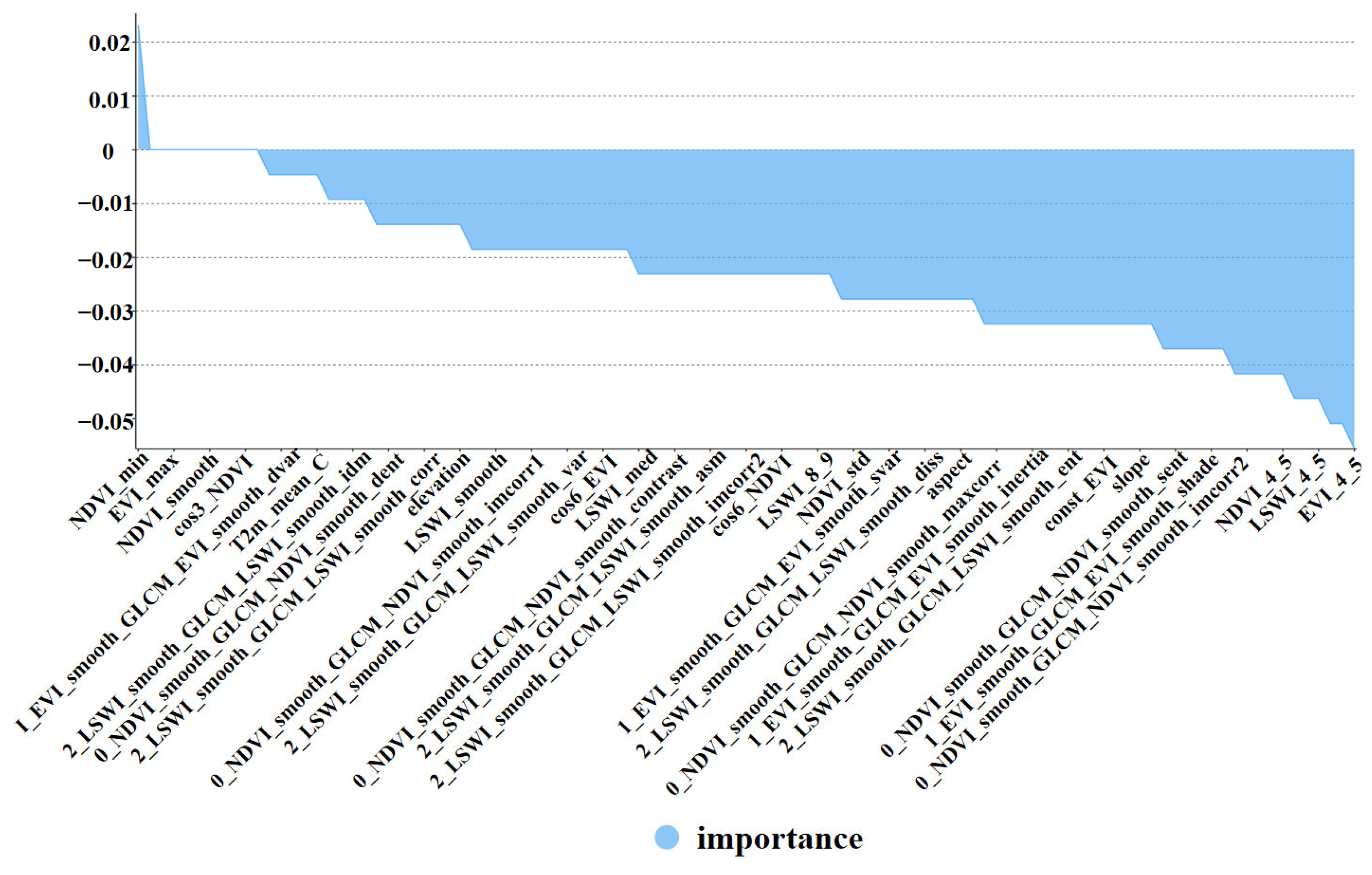
- In classifying cereal and oil crops in the Shigatse area, feature importance derived from the RF model ranked in the order: vegetation indices > climatic variables > textural features > soil attributes > topographic factors > phenological indicators. Incorporating climatic, topographic, and phenological features significantly enhanced classification performance under cold, high-altitude conditions, highlighting their greater relevance compared to feature sets typically applied in lowland regions.
- (3)
- Based on the optimal model estimation, cultivated areas in 2021 were 581.52 km2 for highland barley, 295.39 km2 for wheat, and 386.81 km2 for rapeseed. Their spatial patterns closely corresponded to valley-terrace topography and irrigation conditions. Highland barley predominated in the broad Yarlung Tsangpo River valley and alluvial fans (slope < 6°, elevation 3800–4050 m). Wheat occurred mainly in strips along gentle foothill slopes, and rapeseed was concentrated on low terraces adjacent to irrigation canals.
Author Contributions
Funding
Data Availability Statement
Acknowledgments
Conflicts of Interest
Appendix A
Appendix A.1

| Feature Set | Number of Features | Overall Accuracy (%) | Kappa |
|---|---|---|---|
| Full set | 100 | 84.80 | 0.64 |
| VIF-reduced (VIF < 10) | 51 | 65.00 | 0.44 |
Appendix A.2

| Area | Overall Accuracy% | Kappa |
|---|---|---|
| Shigatse | 84.80 | 0.64 |
| Shannan | 60.00 | 0.40 |


References
- Xu, Y.B.; Wang, J. Impact of the synergistic digital-green transformation on food security capacity. J. China Agric. Univ. 2025, 30, 316–328. [Google Scholar]
- Duan, X.M.; Zhou, H.T. Safeguarding national food security with new quality productive forces: Theoretical logic, practical challenges, and pathways. Rural Econ. 2025, 4, 22–31. [Google Scholar]
- Shi, J.Q.; Luo, Z.; Yi, X.Z.M.; Liu, S.; Li, J.H.; Dan Zeng, Y.G.; Gan, C.L. Trend analysis of seasonal changes in Xizang based on climate change and new seasonal division methods. Arid Land Geogr. 2025, 48, 1141–1152. [Google Scholar]
- Food and Agriculture Organization of the United Nations. The State of Food and Agriculture 2025: Addressing Land Degradation Across Landholding Scales; FAO: Rome, Italy, 2025. [Google Scholar]
- Jiang, Y.; Shu, H.T.; Dong, X.C.; Chen, J.; Wang, X.Y.; Wei, L.; Li, Z.C.; Long, Y.Q.; Huang, P.; Ding, M.Z. Analysis of spatial pattern of typical crops in main grain producing areas of Xizang. Southwest China J. Agric. Sci. 2025, 38, 1305–1316. [Google Scholar]
- Tian, M.; Tian, Y.C. A study on sustainable urbanization based on ecological protection and human wellbeing in Xizang Autonomous Region. Chin. Sustain. Dev. Rev. 2024, 3, 82–94. [Google Scholar] [CrossRef]
- Hu, J. Study on the current situation and promotion countermeasures of cultivated land quality grade in Tibet. Tibet J. Agric. Sci. 2021, 43, 75–78. [Google Scholar]
- Qin, J.W.; Sun, Q.P.; Yang, S.T.; Wang, Y.X.; Tashi, N. Preliminary study on current situation of farmland fragmentation in typical agricultural areas of Tibet: A case study of a township in Lazi County, Xigaze City. Tibet J. Agric. Sci. Technol. 2020, 42, 91–94. [Google Scholar]
- Yan, J.Z.; Zhang, M.; Zhang, S.Y. Information extraction of main crops in eastern Qinghai Province based on GEE platform and MODIS NDVI time series. J. Southwest Univ. (Nat. Sci. Ed.) 2023, 45, 55–64. [Google Scholar]
- Mou, X.L.; Li, H.; Huang, C.; Liu, Q.S.; Liu, G.H. Application progress of Google Earth Engine in land use and land cover remote sensing information extraction. Remote Sens. Land Resour. 2021, 33, 1–10. [Google Scholar]
- Cai, W.B.; Wang, W.; Zhu, Q.; Zhang, Z.D.; Peng, W.T.; Cai, Y.L. Research progress on the application of natural resource ecological security supported by Google Earth Engine big data. Acta Ecol. Sin. 2025, 45, 3544–3554. [Google Scholar]
- Hao, B.F.; Han, X.J.; Ma, M.G.; Liu, Y.T.; Li, S.W. Research progress on the application of Google Earth Engine in geoscience and environmental sciences. Remote Sens. Technol. Appl. 2018, 33, 600–611. [Google Scholar]
- Yin, L.; Han, Q.F.; Zhao, Y.; Liu, W.X. Identification of areas of Aconitum leucostomum incursion and monitoring of grassland degradation in the Tuohulasu grassland of Xinjiang based on multi-feature fusion. Acta Prataculturae Sin. 2025, 34, 73–84. [Google Scholar]
- Meng, J.H.; Lin, Z.X.; Gao, X.Y.; He, R.P.; Zuo, L.J. Ten years of progress in big Earth data for sustainable agriculture. J. Geo-Inf. Sci. 2025, 27, 2531–2551. [Google Scholar]
- Zhao, Y. Research progress and application of random forest in remote sensing information extraction. Geomat. Spat. Inf. Technol. 2021, 44, 133–136+139. [Google Scholar]
- Xiao, D.P.; Tao, F.L.; Shen, Y.J.; Liu, J.F.; Wang, R.D. Sensitivity of response of winter wheat to climate change in the North China Plain in the last three decades. Chin. J. Eco-Agric. 2014, 22, 430–438. [Google Scholar]
- Deng, C.; Bai, H.; Ma, X.; Huang, X.; Zhao, T. Variation characteristics and its north-south differences of the vegetation phenology by remote sensing monitoring in the Qinling Mountains during 2000–2017. Acta Ecol. Sin. 2021, 41, 1068–1080. [Google Scholar]
- Chen, J.; Liu, T.Y.; Shi, Q.; Dong, J.W.; Chen, Y. Early-season crop classification: Recent developments and prospects. Natl. Remote Sens. Bull. 2025, 29, 1890–1900. [Google Scholar]
- Han, Y.; Meng, J. A review of per-field crop classification using remote sensing. Remote Sens. Land Resour. 2019, 31, 1–9. [Google Scholar]
- Gao, R.N.; Shi, J.Z.; Fan, H.; Jia, Y.H. Study on crop classification in the Sanjiang Plain area based on random forest. J. Wuhan Univ. (Eng. Ed.) 2024, 57, 519–527. [Google Scholar]
- Song, Q. Extraction of Crop Planting Structure Based on GF-1/WFV Data and Object-Oriented Method. Master’s Thesis, Chinese Academy of Agricultural Sciences, Beijing, China, 2016. [Google Scholar]
- Shao, M.; An, J.; Liu, B.; Wu, J.; Zhang, Q.; Yao, X.; Cheng, T.; Jiang, C.; Cao, W.; Zheng, H.; et al. Comprehensive assessment of wheat seedling growth status based on multimodal data. Sci. Agric. Sin. 2025, 58, 3857–3871. [Google Scholar]
- Shi, J.Q.; Dou, Y.L.; Yang, F.Y.; Dai, R.; Hu, J. Spatiotemporal pattern characteristics of potential evapotranspiration and its influencing factors in the Tibet region. Arid Zone Res. 2021, 38, 724–732. [Google Scholar]
- Ci, W.; Du, J.; Zha, X.D.; Chen, X.Y.; Xiao, Z.J.; Liu, S. Climate response and operational impact of updated climatological normals on the Xizang Plateau. Arid Land Geogr. 2025, 1–12. [Google Scholar]
- Sun, J.; Lu, F.; Wang, K.M.; Zhou, Y.Y.; Yu, S.B.; Dai, Y.Y.; Zhu, C.Y. A study on the impact of climate change on the water requirement of highland barley in the Tibet Autonomous Region. China Rural Water Hydropower 2024, 6, 64–74+81. [Google Scholar]
- Chen, Y.; Yang, Q. Spatiotemporal evolution characteristics and driving factors of land use/cover change in Tibet Autonomous Region. J. Soil Water Conserv. 2022, 36, 173–180. [Google Scholar]
- Xiong, X. Changes in agricultural planting structure and influencing factors in Xigazê City, Tibet. Cultiv. Tillage 2020, 40, 39–43. [Google Scholar]
- Zhang, Y. Spatiotemporal variation analysis of chlorophyll-a concentration in the Sansha Bay based on Sentinel-2 data. Mod. Surv. Mapp. 2024, 47, 50–55+84. [Google Scholar]
- Zhao, D.; Wang, F.; Li, D. Analysis of spatiotemporal variation characteristics of sea ice in the Bohai Sea from 2017 to 2024 based on Google Earth Engine. J. Hebei Acad. Sci. 2025, 42, 74–79+90. [Google Scholar]
- Zhao, J.C.; Sun, X.F.; Wang, M.; Wang, J.B. Identification of farmland and grassland on the Tibetan Plateau based on optical and radar remote sensing data. Remote Sens. Technol. Appl. 2025, 40, 695–707. [Google Scholar] [CrossRef]
- Potapov, P.; Turubanova, S.; Hansen, M.C.; Tyukavina, A.; Zalles, V.; Khan, A.; Song, X.P.; Pickens, A.; Shen, Q.; Cortez, J. Global maps of cropland extent and change show accelerated cropland expansion in the twenty-first century. Nat. Food 2022, 3, 19–28. [Google Scholar] [CrossRef]
- Ministry of Civil Affairs of the People’s Republic of China. Code for the Administrative Divisions of the People’s Republic of China (2024) [Data Set]; Ministry of Civil Affairs of the People’s Republic of China: Beijing, China, 2024. [Google Scholar]
- Bing, F.F.; Jin, Y.T.; Zhang, W.H.; Xu, N.; Yu, T.; Zhang, L.L.; Pei, Y.Y. Research progress on cloud detection in remote sensing images based on machine learning. Remote Sens. Technol. Appl. 2023, 38, 129–142. [Google Scholar]
- NASA/USGSLPDAAC. Landsat 8–9 Collection 2 Level-2 Science Products [Data Set]; NASA EOSDIS Land Processes DAAC, USGS Earth Resources Observation and Science (EROS) Center: Sioux Falls, SD, USA, 2023. [Google Scholar]
- Copernicus Climate Change Service (C3S). ERA5-Land Hourly Data from 1950 to Present [Data Set]; Copernicus Climate Change Service (C3S) Climate Data Store (CDS): Bonn, Germany, 2019. [Google Scholar]
- Son, N.T.; Chen, C.F.; Chen, C.R.; Minh, V.Q.; Trung, N.H. A comparative analysis of multitemporal MODIS EVI and NDVI data for large-scale rice yield estimation. Agric. For. Meteorol. 2014, 197, 52–64. [Google Scholar] [CrossRef]
- Haralick, R.M.; Shanmugam, K.; Dinstein, I. Textural features for image classification. IEEE Trans. Syst. Man Cybern. 1973, 6, 610–621. [Google Scholar] [CrossRef]
- Ao, D.; Yang, J.H.; Ding, W.T.; An, S.S.; He, H.L. A review of research progress on 54 vegetation indices. J. Anhui Agric. Sci. 2023, 51, 13–21+28. [Google Scholar]
- Yang, G.; Liu, J.; Zhao, C.; Li, Z.; Huang, Y.; Yu, H.; Yang, X. Unmanned aerial vehicle remote sensing for field-based crop phenotyping: Current status and perspectives. Front. Plant Sci. 2017, 8, 1111. [Google Scholar] [CrossRef]
- Muñoz Sabater, J. ERA5-Land Hourly Data from 1981 to Present [Data Set]; Copernicus Climate Change Service (C3S) Climate Data Store (CDS): Reading, UK, 2019. [Google Scholar]
- Hengl, T.; Mendes de Jesus, J.; Heuvelink, G.B.; Gonzalez, M.R.; Kilibarda, M.; Blagotić, A.; Kempen, B. SoilGrids250m: Global gridded soil information based on machine learning. PLoS ONE 2017, 12, e0169748. [Google Scholar] [CrossRef]
- Breiman, L. Random forests. Mach. Learn. 2001, 45, 5–32. [Google Scholar] [CrossRef]
- Zhang, D. Remote Sensing Identification of Crop Planting Structure in the Chaohu Lake Basin. Master’s Thesis, Anhui Agricultural University, Hefei, China, 2024. [Google Scholar]
- Foody, G.M.; Mathur, A. A relative evaluation of multiclass image classification by support vector machines. IEEE Trans. Geosci. Remote Sens. 2004, 42, 1335–1343. [Google Scholar] [CrossRef]
- Yue, R. Land Cover Classification of the Mongolian Plateau Based on MODIS Data. Master’s Thesis, Inner Mongolia Normal University, Hohhot, China, 2010. [Google Scholar]
- Landis, J.R.; Koch, G.G. The measurement of observer agreement for categorical data. Biometrics 1977, 33, 159–174. [Google Scholar] [CrossRef]
- Huang, Z.L.; He, J.; Liu, G.; Li, Z. Research progress on remote sensing image analysis and application for the Google Earth Engine (GEE) platform. Remote Sens. Technol. Appl. 2023, 38, 527–534. [Google Scholar]
- Hoffman, A.L.; Kemanian, A.R.; Forest, C.E. Analysis of climate signals in the crop yield record of sub-Saharan Africa. Glob. Change Biol. 2018, 24, 143–157. [Google Scholar] [CrossRef] [PubMed]
- Zhao, Y. Spatiotemporal Characteristics of Winter Wheat Phenology and Its Response to Climate Change in Shandong Province. Master’s Thesis, Ludong University, Yantai, China, 2021. [Google Scholar]


| Data Name | Data Source/Sensor | Temporal Resolution | Spatial Resolution | Main Explanation |
|---|---|---|---|---|
| Global Cropland 2019 | University of Maryland Potapov Team | 30 m | Pixel Value 1 = Cropland, 0 = Non-Cropland | |
| Boundary of the Study Area | National Center for Basic Geographic Information https://www.ngcc.cn/xwzx/ywcg/202404/t20240426_2410.html (accessed on 15 August 2025) | - | Vector | Research Area Boundary |
| Sentinel-2 MSI (A/B) | ESA Copernicus Sentinel-2A/B Sensor: Sentinel-2 MSI | 5 days (equator), 2–3 days (mid-latitudes) | 10 m (Visible-Red Edge-Near-Infrared), 20 m (Shortwave Infrared) | Primary Image (Albedo, Index, Phenology, Harmonics) |
| Clouds/Cirrus clouds/Cloud shadows/Snow/Saturated pixel mask | ESA COPERNICUS S2_SR_HARMONIZED Assembly Sensor: Sentinel-2 MSI | Synchronized with the video | 60 m (QA60) 10 m (SCL) | QA60 + SCL Scene Classification |
| Terrain (Elevation/Slope/Slope Direction) | NASA/USGS LP DAAC https://doi.org/10.5066/F7PR7TFT (accessed on 28 August 2025) NASA SRTM C-band InSAR (SNR-C Radar) | - | 30 m | |
| Climate (annual average temperature, annual precipitation) | ERA5-Land Reanalysis (Copernicus) ECMWF/ERA5\_LAND/MONTHLY\_AGGR | Month by month | 0.1° (≈9 km) | |
| Soil Texture Classification | OpenLandMap | - | 250 m | |
| Soil clay content | OpenLandMap | - | 250 m |
| Crop Type | Number | Proportion/% |
|---|---|---|
| Highland Barley | 219 | 61.00 |
| Wheat | 79 | 22.01 |
| Rapeseed | 44 | 12.26 |
| Oat | 13 | 3.62 |
| Buckwheat | 2 | 0.56 |
| Corn | 1 | 0.28 |
| Barley | 1 | 0.28 |
| Crop Type | Number | Proportion/% |
|---|---|---|
| Highland Barley | 55 | 20.91 |
| Wheat | 147 | 55.89 |
| Rapeseed | 50 | 19.01 |
| Corn | 11 | 4.18 |
| Features | Indices | Description | Source/Method |
|---|---|---|---|
| Vegetation | (1) | Basic vegetation detection, distinguishing vegetation from non-vegetation | Sentinel-2 B8 and B4 Bands |
| (2) | Enhance the ability to distinguish dense crops and supplement NDVI | B8, B4, B2 Band Calculation | |
| (3) | Identify aquatic crops such as rice and monitor drought stress | B8 to B11 Band Difference | |
| (4) | Identify crop maturity stages, fallow land, and soil background | B11 to B4 Band Difference | |
| (5) | Differentiate field management practices | B12 to B11 Band Difference | |
| (6) | Sensitively captures the early growth stage and the green vitality of the canopy | B8 to B3 ratio | |
| NDVI_mean | NDVI monthly average | Calculate the monthly average of NDVI imagery | |
| EVI_mean | EVI monthly average | Calculate the monthly average of EVI imagery | |
| LSWI_mean | LSWI monthly average | Calculate the monthly average of LSWI imagery | |
| NDVI_std | NDVI monthly standard deviation | DevCalculate the standard deviation for the monthly NDVI image collection | |
| EVI_std | EVI monthly standard deviation | DevCalculate the standard deviation for the monthly EVI image collection | |
| LSWI_std | LSWI monthly standard deviation | DevCalculate the standard deviation for the monthly LSWI image collection | |
| NDVI_max | NDVI monthly maximum | Find the maximum value in the monthly NDVI image collection | |
| EVI_max | EVI monthly maximum | Find the maximum value in the monthly EVI image collection | |
| LSWI_max | LSWI monthly maximum | Find the maximum value in the monthly LSWI image collection | |
| NDVI_min | NDVI monthly minimum | Find the minimum value in the monthly NDVI image collection | |
| EVI_min | EVI monthly minimum | Find the minimum value in the monthly EVI image collection | |
| LSWI_min | LSWI monthly minimum | Find the minimum value in the monthly LSWI image collection | |
| NDVI_sin3 | sin(3πt) | Time-component coefficients obtained from harmonic regression | |
| NDVI_cos3 | cos(3πt) | ||
| NDVI_sin6 | sin(6πt) | ||
| NDVI_cos6 | cos(6πt) | ||
| EVI_sin3 | sin(3πt) | ||
| EVI_cos3 | cos(3πt) | ||
| EVI_sin6 | sin(6πt) | ||
| EVI_cos6 | cos(6πt) | ||
| LSWI_sin3 | sin(3πt) | ||
| LSWI_cos3 | cos(3πt) | ||
| LSWI_sin6 | sin(6πt) | ||
| LSWI_cos6 | cos(6πt) | ||
| NDVI_smooth | Annual NDVI median (smoothed) | NDVI annual median | |
| EVI_smooth | Annual EVI median (smoothed) | EVI annual median | |
| LSWI_smooth | Annual LSWI median (smoothed) | LSWI annual median | |
| Texture | GLCM | Effectively identifying patch variability and boundary structures among crop types | ERA5-Land Reanalysis (Copernicus) |
| const_NDVI | One of the key temporal structural characteristics for depicting variations in crop growth patterns | ERA5-Land Reanalysis (Copernicus) | |
| Topography | Slope | Enhancing the Spatial Adaptability of Models | NASA/USGS LP DAAC |
| Elevation | Enhancing the Spatial Adaptability of Models | NASA/USGS LP DAAC | |
| Climate | Annual precipitation (P_sum, mm) | Aids in distinguishing crop varieties with significantly different water requirements | ERA5-Land Reanalysis (Copernicus) |
| Annual average temperature (T2m_mean, °C) | Assists in analyzing crop suitability zones and seasonal development variations | ERA5-Land Reanalysis (Copernicus) | |
| Soil | USDA Texture Classification of Topsoil | Provide supplementary information for crop classification | OpenLandMap |
| 0–10 cm percentage of clay content | Provide supplementary information for crop classification | OpenLandMap | |
| Phenology | NDVI_4_5 | Average NDVI values for April-May | NDVI averaged over the April–May time window |
| EVI_4_5 | Average EVI values for April-May | EVI averaged over the April–May time window | |
| LSWI_4_5 | Average LSWI values for April-May | LSWI averaged over the April–May time window | |
| NDVI_6_7 | Average NDVI values for June-July | NDVI averaged over the June–July time window | |
| EVI_6_7 | Average EVI values for June-July | EVI averaged over the June–July time window | |
| LSWI_6_7 | Average LSWI values for June-July | LSWI averaged over the June–July time window | |
| NDVI_8_9 | Average NDVI values for August-September | Calculate the average NDVI value within the August–September time window. | |
| EVI_8_9 | Average EVI values for August-September | Calculate the average EVI value within the August–September time window. | |
| LSWI_8_9 | Average LSWI values for August-September | Calculate the average LSWI value within the August–September time window. |
| Method | Feature Combination |
|---|---|
| Scheme 1 | Vegetation Index Characteristics |
| Scheme 2 | Vegetation Index + Phenological Characteristics |
| Scheme 3 | Vegetation Index + Terrain Features |
| Scheme 4 | Vegetation Index + Climate Characteristics |
| Scheme 5 | Vegetation Index + Texture Features |
| Scheme 6 | Vegetation Index + Phenology + Topography + Climate + Texture Characteristics |
| Scheme 7 | Vegetation Index + Phenology + Topography + Climate + Texture + Soil Characteristics |
| Classification Algorithm | Optimal Overall Accuracy% | Optimal Kappa Coefficient | Average Overall Accuracy% | Average Kappa Coefficient |
|---|---|---|---|---|
| RF | 84.77 | 0.64 | 66.42 | 0.40 |
| SVM | 82.89 | 0.55 | 72.33 | 0.46 |
| GBT | 78.47 | 0.55 | 64.36 | 0.39 |
| Method | Algorithm | Overall Accuracy/% | Kappa Coefficient |
|---|---|---|---|
| Scheme 1 | RF | 58.56 | 0.29 |
| GBT | 60.36 | 0.35 | |
| SVM | 55.86 | 0.29 | |
| Scheme 2 | RF | 62.16 | 0.35 |
| GBT | 63.06 | 0.36 | |
| SVM | 49.55 | 0.21 | |
| Scheme 3 | RF | 62.16 | 0.34 |
| GBT | 59.46 | 0.29 | |
| SVM | 81.98 | 0.58 | |
| Scheme 4 | RF | 63.96 | 0.36 |
| GBT | 62.16 | 0.37 | |
| SVM | 72.07 | 0.53 | |
| Scheme 5 | RF | 62.16 | 0.37 |
| GBT | 57.66 | 0.37 | |
| SVM | 82.88 | 0.55 | |
| Scheme 6 | RF | 71.17 | 0.48 |
| GBT | 69.37 | 0.46 | |
| SVM | 81.08 | 0.49 | |
| Scheme 7 | RF | 84.77 | 0.64 |
| GBT | 78.47 | 0.55 | |
| SVM | 82.89 | 0.55 |
| Characteristic Band | Out-of-Bag Accuracy/% |
|---|---|
| EVI_4_5 | 65.28 |
| GLCM_NDVI_smooth_savg | 64.81 |
| NDVI_8_9 | 64.81 |
| GLCM_EVI_smooth_asm | 64.35 |
| LSWI_4_5 | 64.35 |
| sin3_NDVI | 64.35 |
| cos6_LSWI | 63.89 |
| GLCM_LSWI_smooth_dvar | 63.89 |
| GLCM_NDVI_smooth_imcorr2 | 63.89 |
| GLCM_NDVI_smooth_svar | 63.89 |
| NDVI_4_5 | 63.89 |
| GLCM_EVI_smooth_idm | 63.43 |
| GLCM_EVI_smooth_shade | 63.43 |
| GLCM_NDVI_smooth_idm | 63.43 |
| GLCM_NDVI_smooth_prom | 63.43 |
| GLCM_NDVI_smooth_sent | 63.43 |
| sin3_LSWI | 63.43 |
| Crop | RF (Classification Area, km2) | GBT (Classification Area, km2) | SVM (Classification Area, km2) |
|---|---|---|---|
| Highland Barley | 581.52 | 525.41 | 1267.07 |
| Wheat | 295.39 | 333.16 | 0.03 |
| Rapeseed | 386.81 | 404.53 | 0.03 |
| Others | 13,790.40 | 13,791.02 | 34.37 |
Disclaimer/Publisher’s Note: The statements, opinions and data contained in all publications are solely those of the individual author(s) and contributor(s) and not of MDPI and/or the editor(s). MDPI and/or the editor(s) disclaim responsibility for any injury to people or property resulting from any ideas, methods, instructions or products referred to in the content. |
© 2026 by the authors. Licensee MDPI, Basel, Switzerland. This article is an open access article distributed under the terms and conditions of the Creative Commons Attribution (CC BY) license.
Share and Cite
Li, A.; Shi, H.; Liu, Y.; Wen, Z.; Huete, A.R.; Zhang, H.; Zhao, G.; Wang, Y.; Yang, G.; Yang, X. A Multi-Dimensional Feature-Driven Method for Remote Sensing-Based Identification of Cereal and Oil Crops in the Tibetan Plateau. Remote Sens. 2026, 18, 1391. https://doi.org/10.3390/rs18091391
Li A, Shi H, Liu Y, Wen Z, Huete AR, Zhang H, Zhao G, Wang Y, Yang G, Yang X. A Multi-Dimensional Feature-Driven Method for Remote Sensing-Based Identification of Cereal and Oil Crops in the Tibetan Plateau. Remote Sensing. 2026; 18(9):1391. https://doi.org/10.3390/rs18091391
Chicago/Turabian StyleLi, Aoxue, Haijing Shi, Yangyang Liu, Zhongming Wen, Alfredo R. Huete, Hongming Zhang, Gang Zhao, Ye Wang, Guang Yang, and Xihua Yang. 2026. "A Multi-Dimensional Feature-Driven Method for Remote Sensing-Based Identification of Cereal and Oil Crops in the Tibetan Plateau" Remote Sensing 18, no. 9: 1391. https://doi.org/10.3390/rs18091391
APA StyleLi, A., Shi, H., Liu, Y., Wen, Z., Huete, A. R., Zhang, H., Zhao, G., Wang, Y., Yang, G., & Yang, X. (2026). A Multi-Dimensional Feature-Driven Method for Remote Sensing-Based Identification of Cereal and Oil Crops in the Tibetan Plateau. Remote Sensing, 18(9), 1391. https://doi.org/10.3390/rs18091391