Multi-Source Remote Sensing Investigation of Spatiotemporal Deformation and Mechanisms of the Pangcun Giant Accumulation Landslide, Southeastern Tibet




Highlights
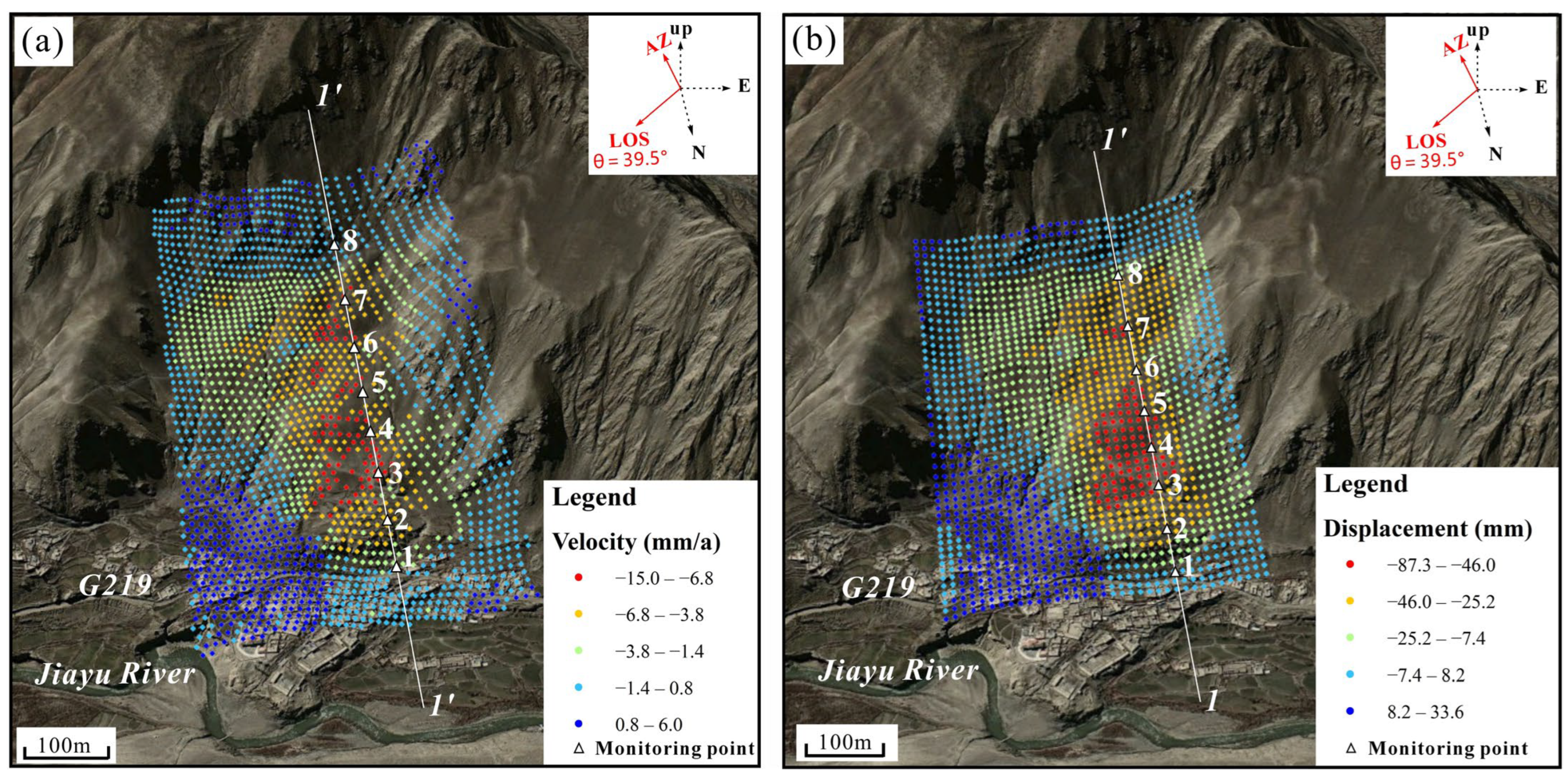
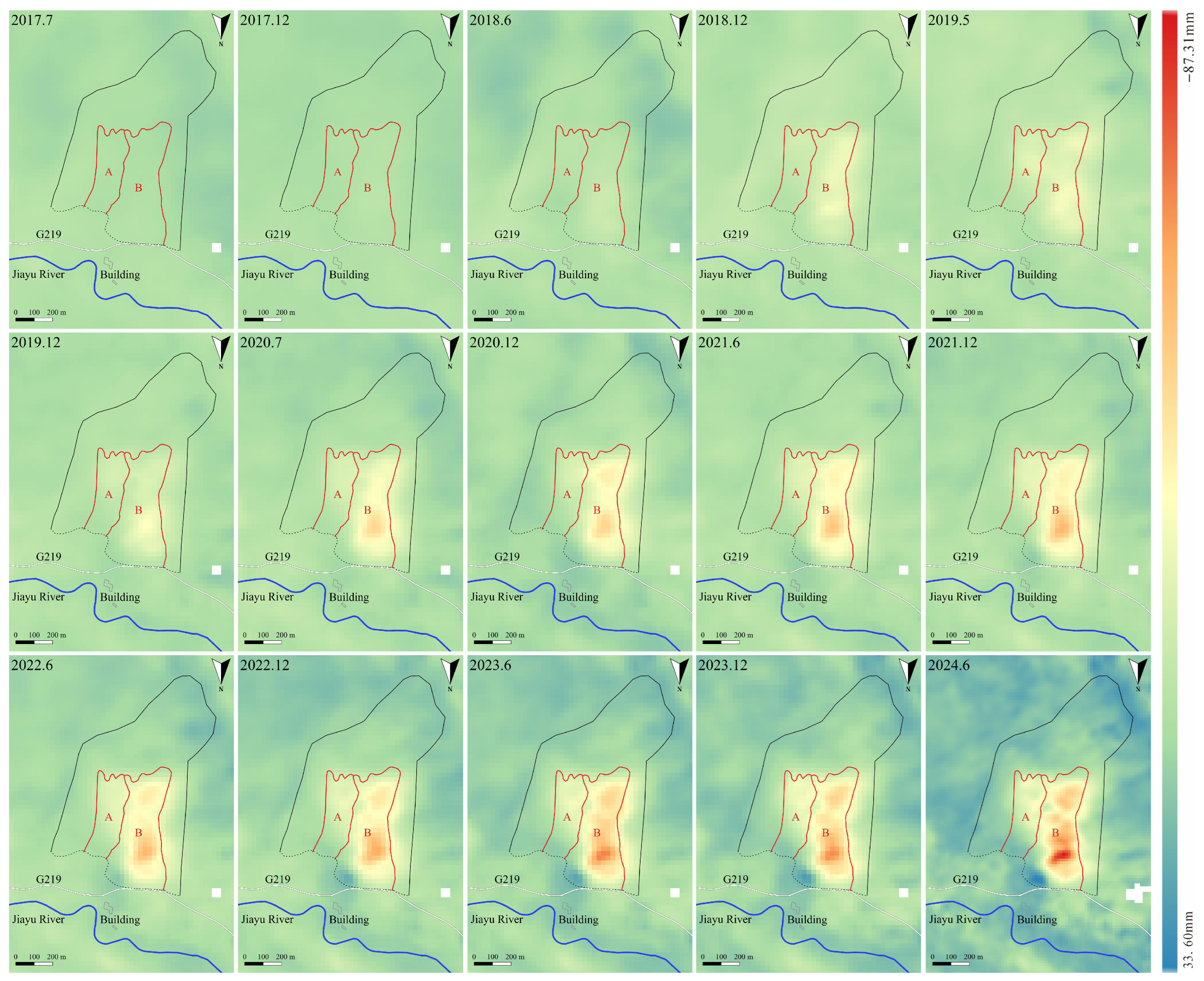
- The Pangcun giant accumulation landslide exhibits pronounced spatial heterogeneity, with deformation primarily concentrated in the central Zone B, as revealed by long-term SBAS-InSAR analysis and confirmed by UAV and field observations.
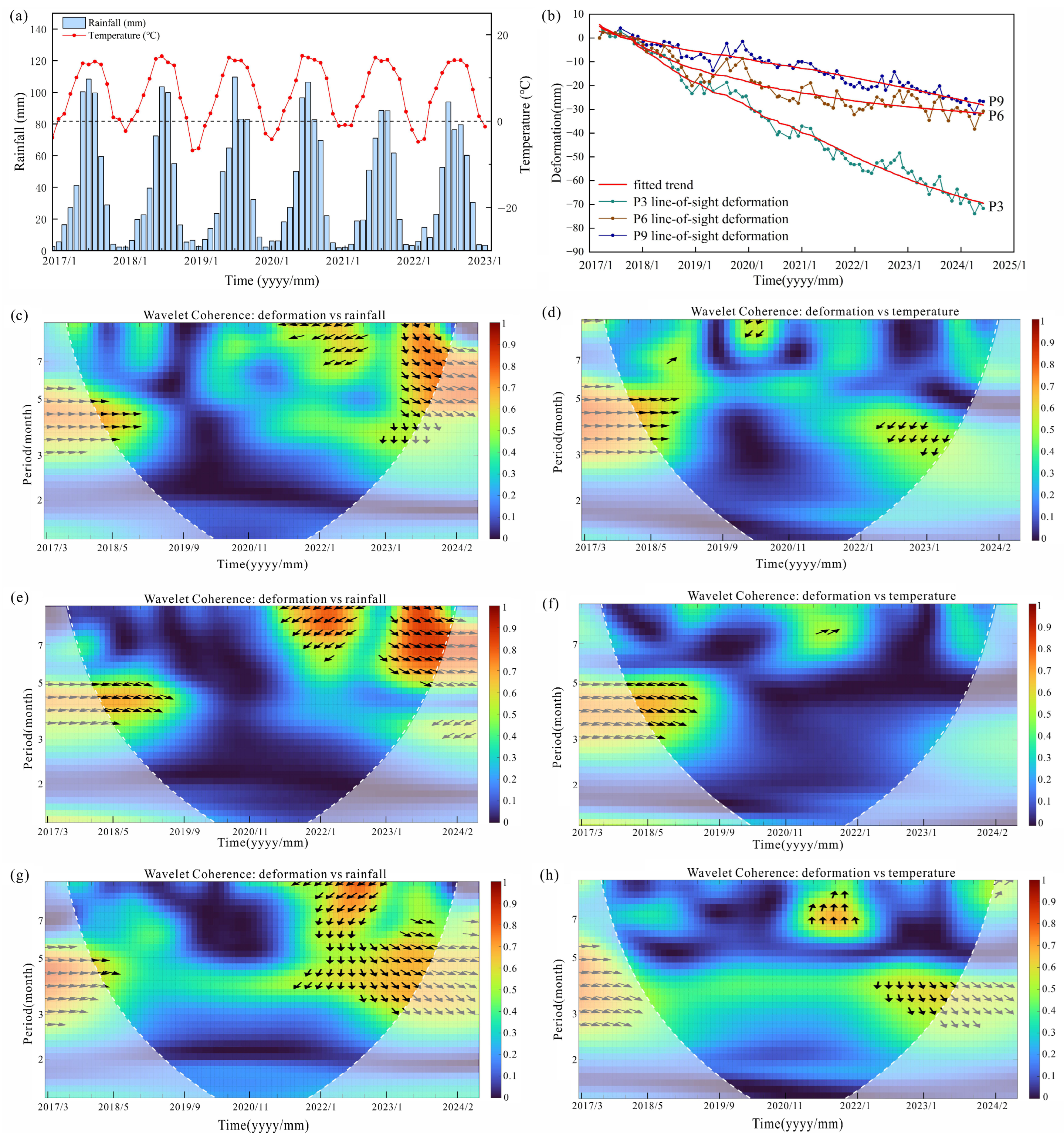
- Landslide displacement shows an approximate 3-month lagged response to precipitation, indicating that deformation is controlled by delayed hydrological processes rather than direct rainfall triggering, with additional modulation from irrigation and other anthropogenic activities.
- Multi-source evidence clarifies a multi-factor coupling mechanism in which unfavorable topography and fragmented accumulation materials provide internal preconditions, while hydrological recharge, irrigation, slope-toe unloading, and seismic disturbance jointly regulate episodic acceleration.
- The results enhance the mechanistic understanding of giant accumulation landslides in tectonically active alpine regions and support process-based hazard assessment and early warning strategies.
Abstract
1. Introduction
2. Overview of the Pangcun Landslide
3. Data and Methods
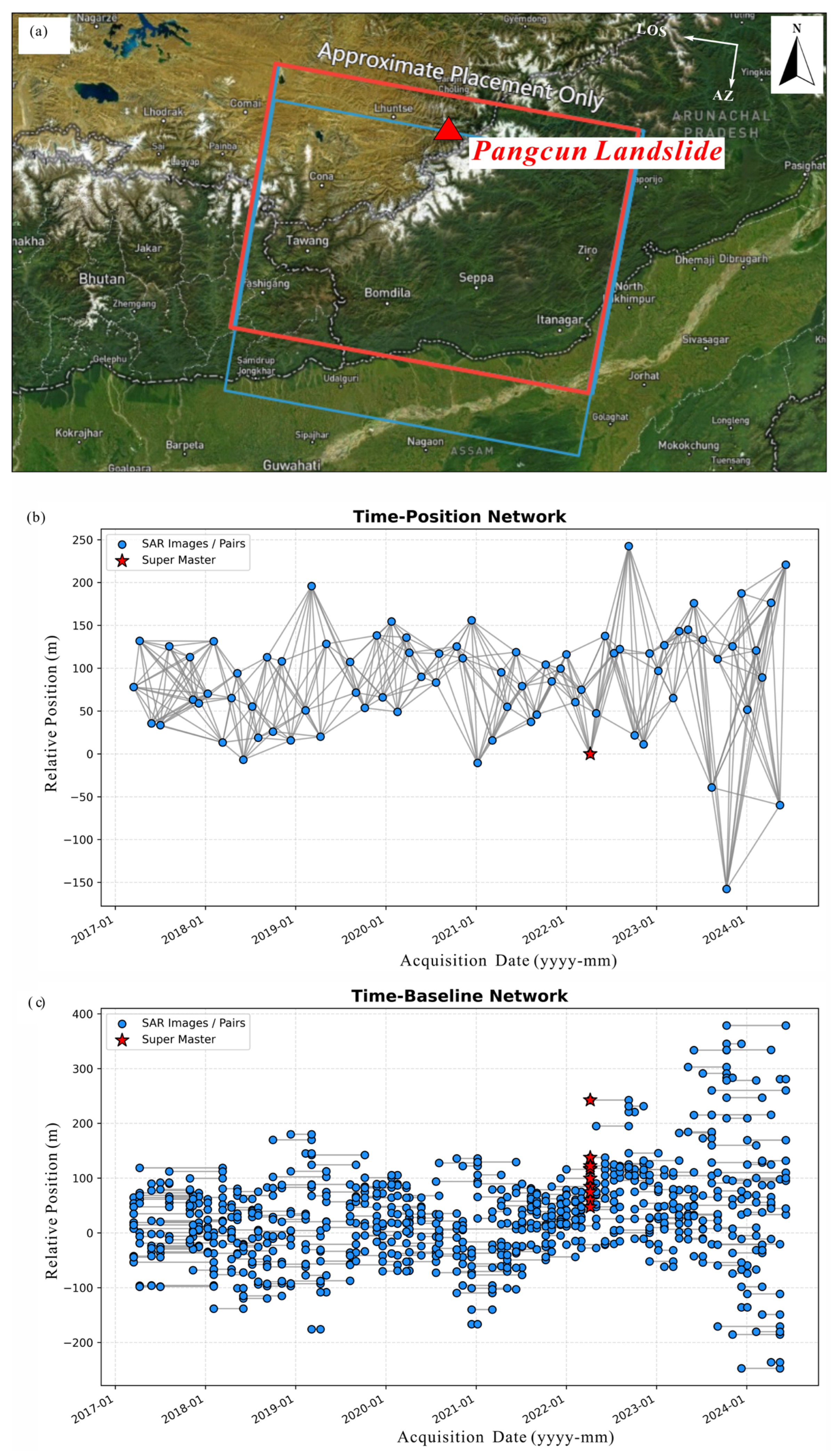
3.1. Remote Sensing and Ancillary Data
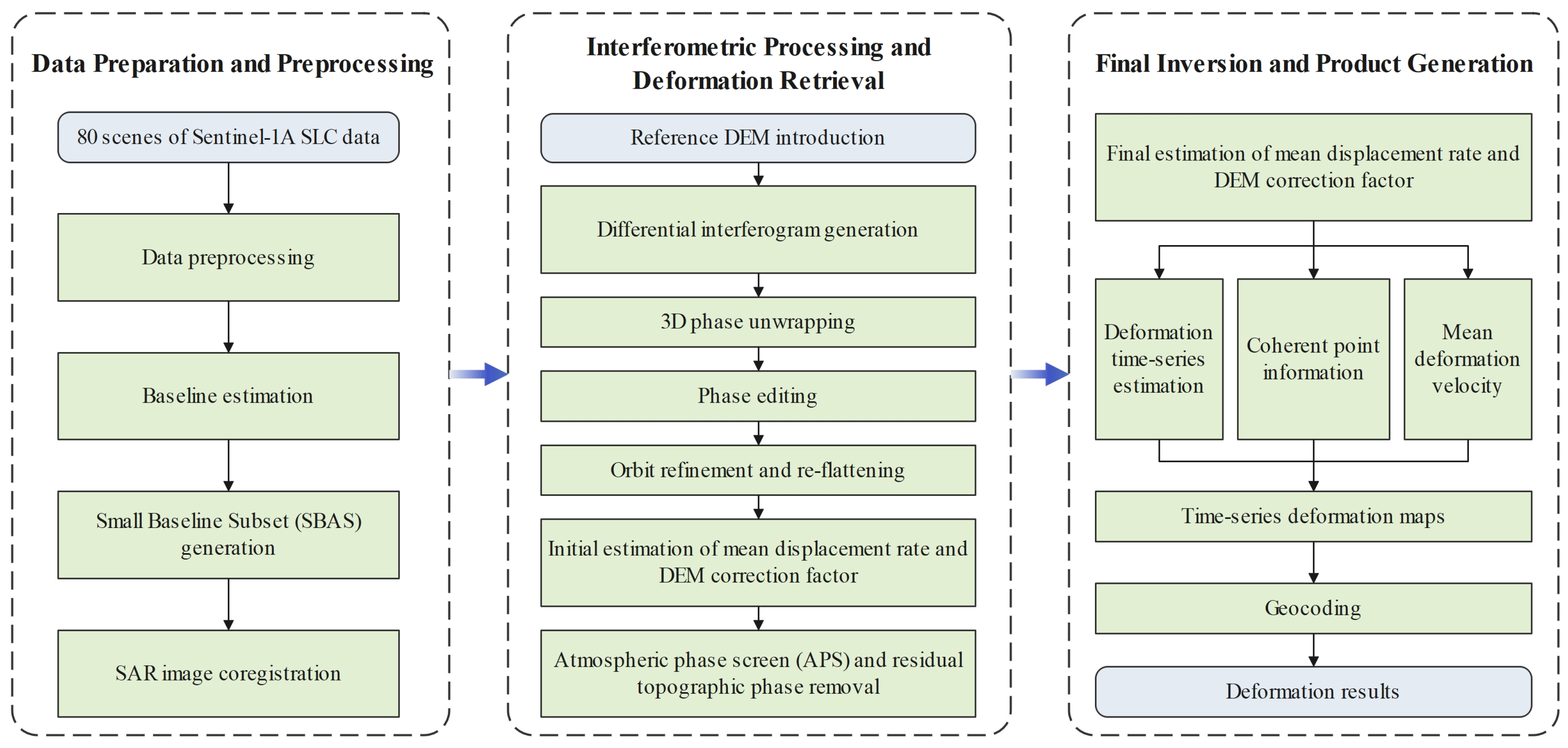
3.2. InSAR Processing and Time-Series Deformation Retrieval
3.3. UAV Survey and Field Investigation
3.4. Wavelet Coherence Analysis
4. Results
4.1. Field Deformation Characteristics
4.2. Spatiotemporal Deformation Characteristics
4.3. Deformation Response Characteristics to Meteorological Factors
5. Discussion
5.1. Influence of External Triggering Factors on Temporal Deformation
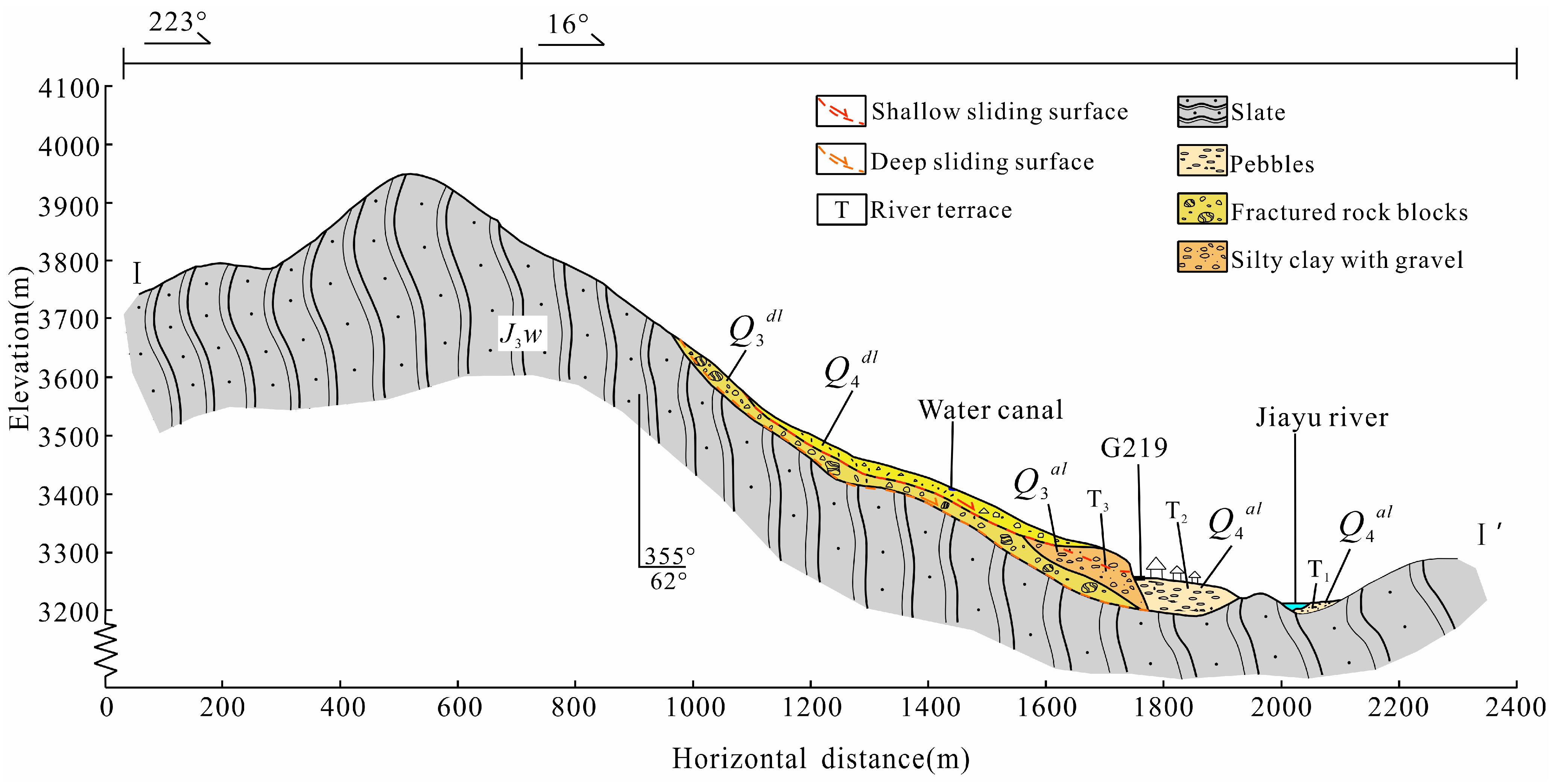
5.2. Mechanism Interpretation Based on Geological and Field Evidence
6. Conclusions
- (1)
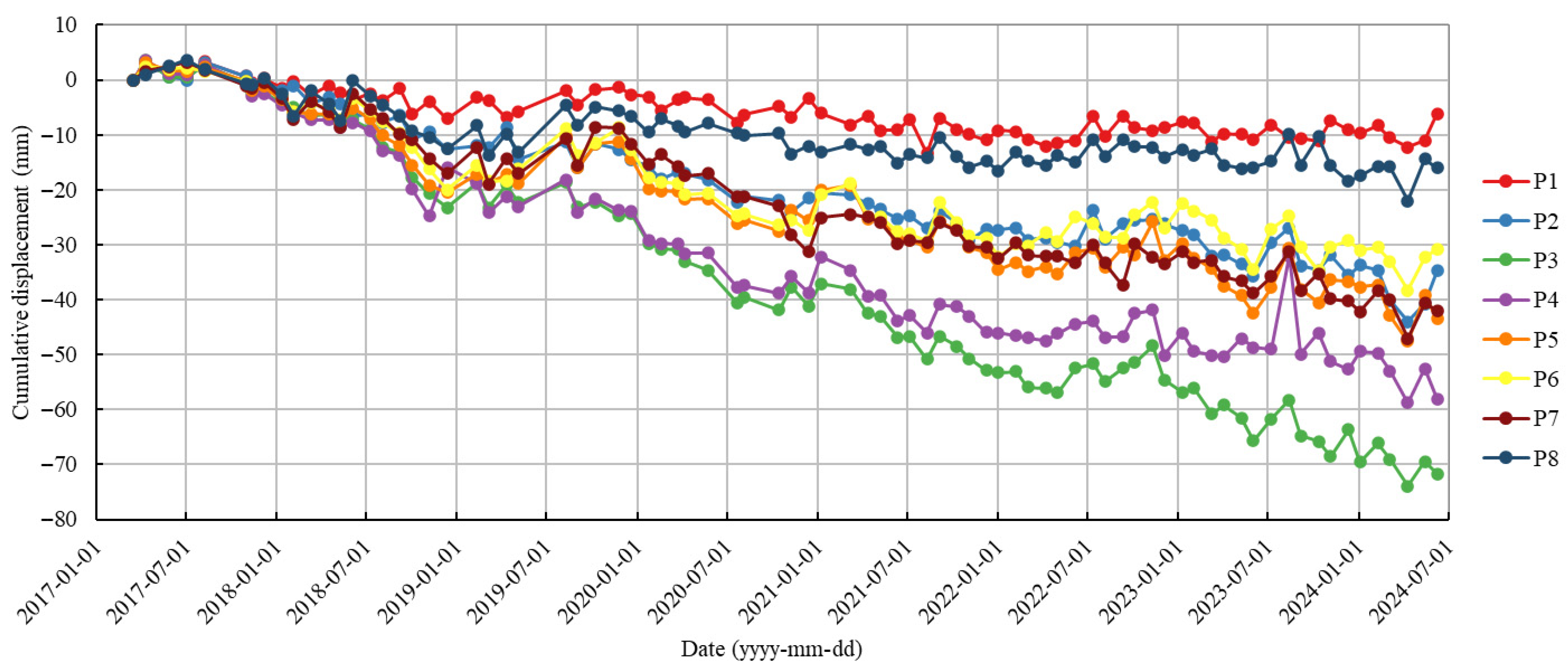
- SBAS-InSAR results from 2017 to 2024 show that the Pangcun giant accumulation landslide is undergoing long-term slow deformation with strong spatial heterogeneity, and the most active deformation is concentrated in Zone B, which represents the principal deformation zone.
- (2)
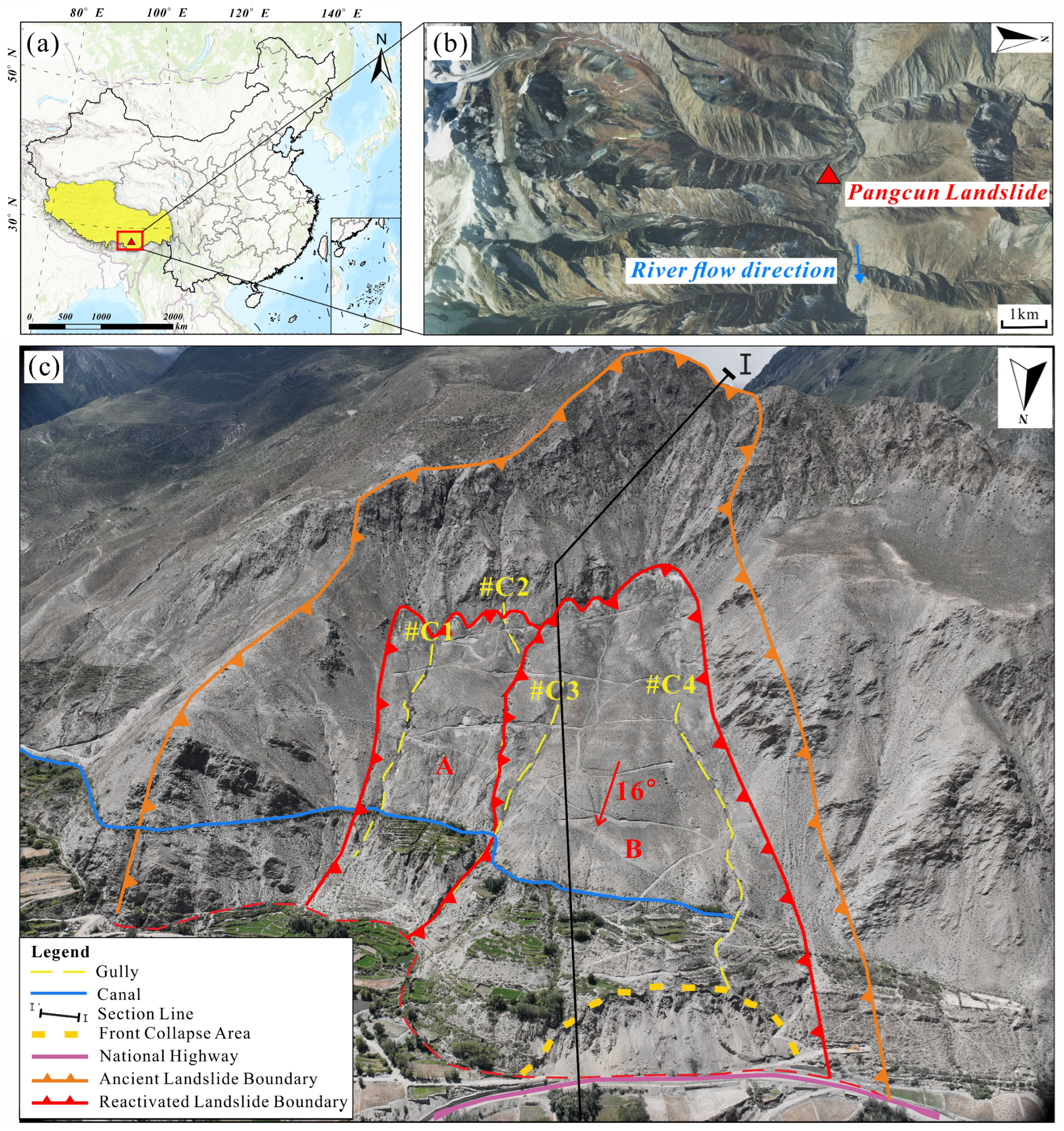
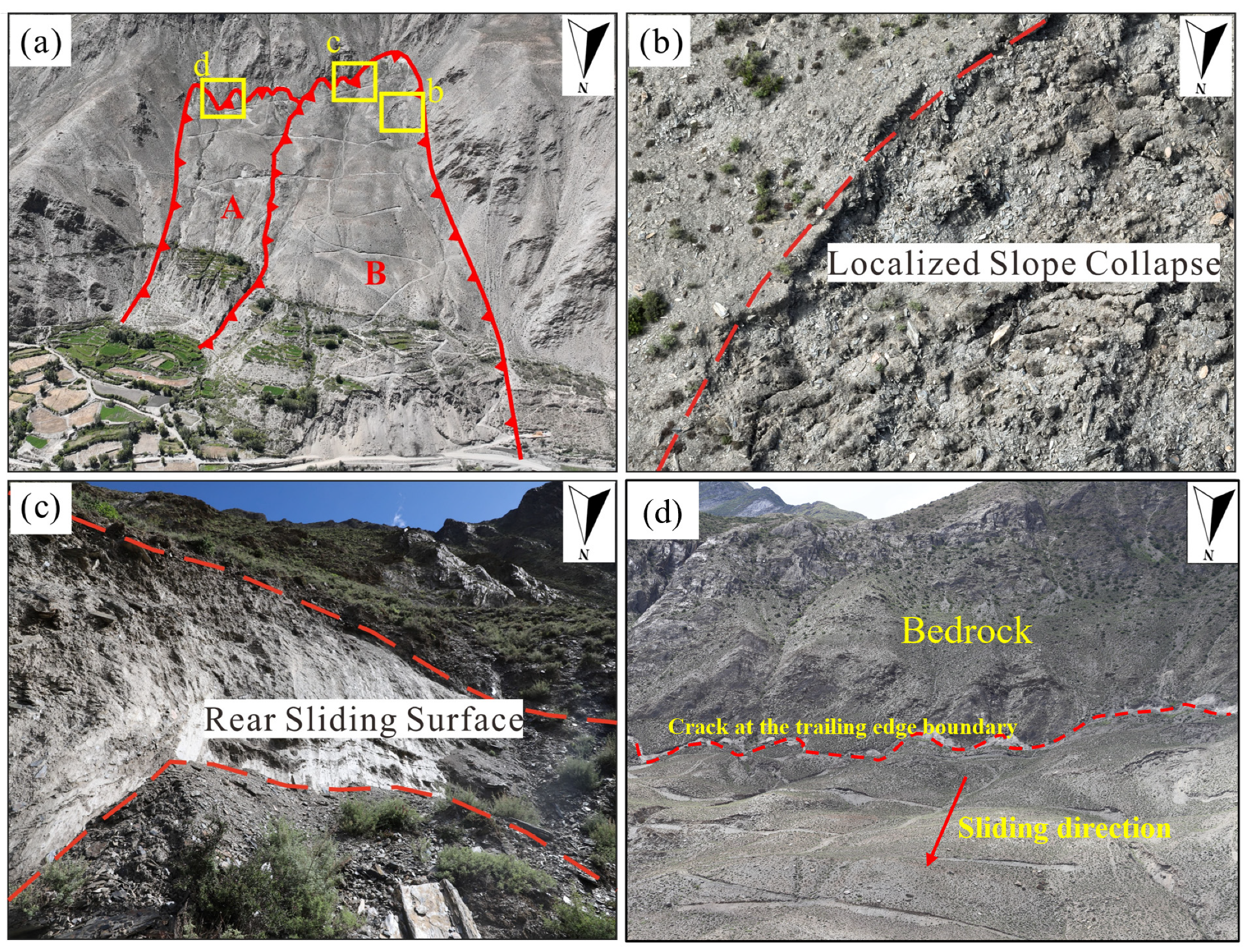
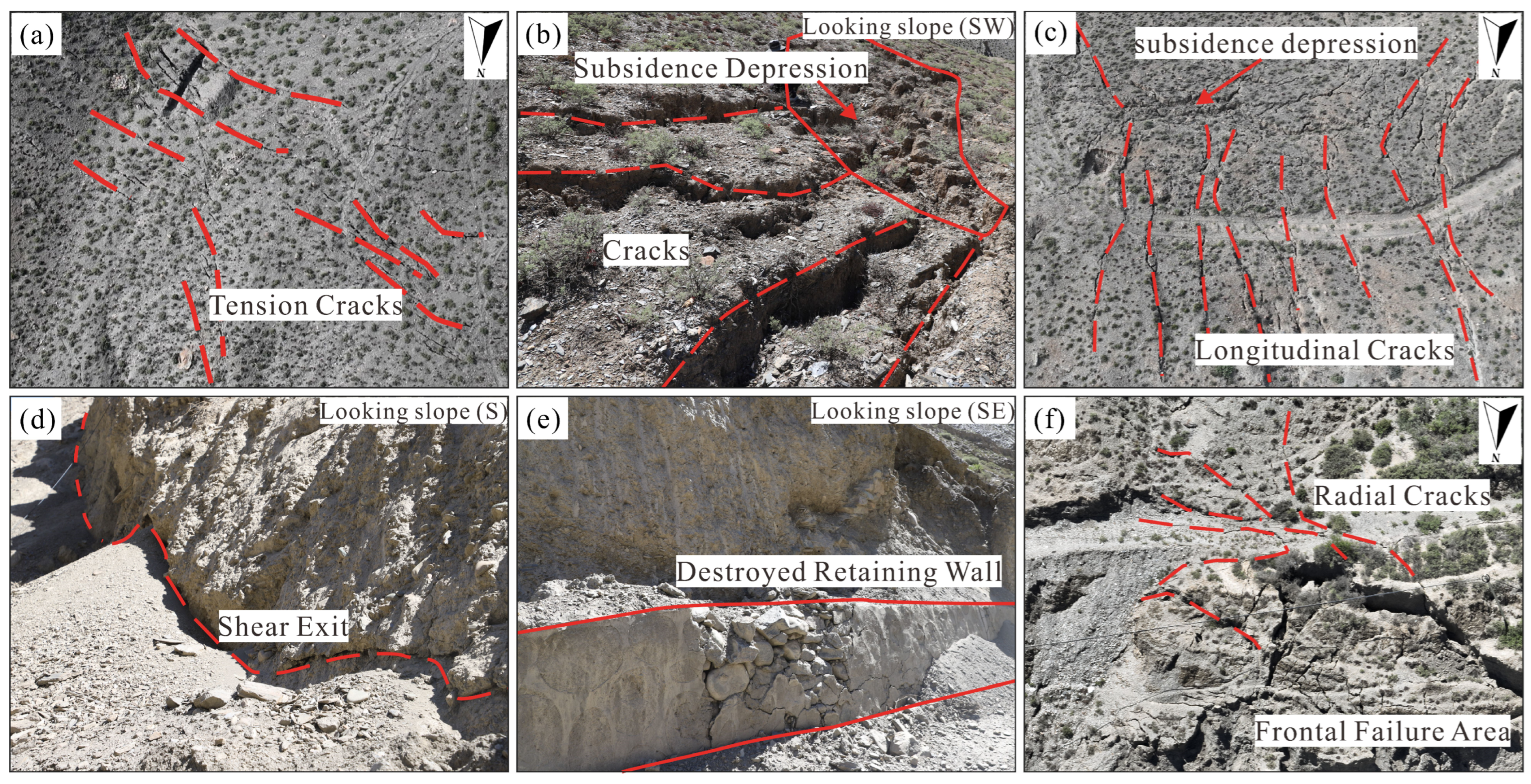
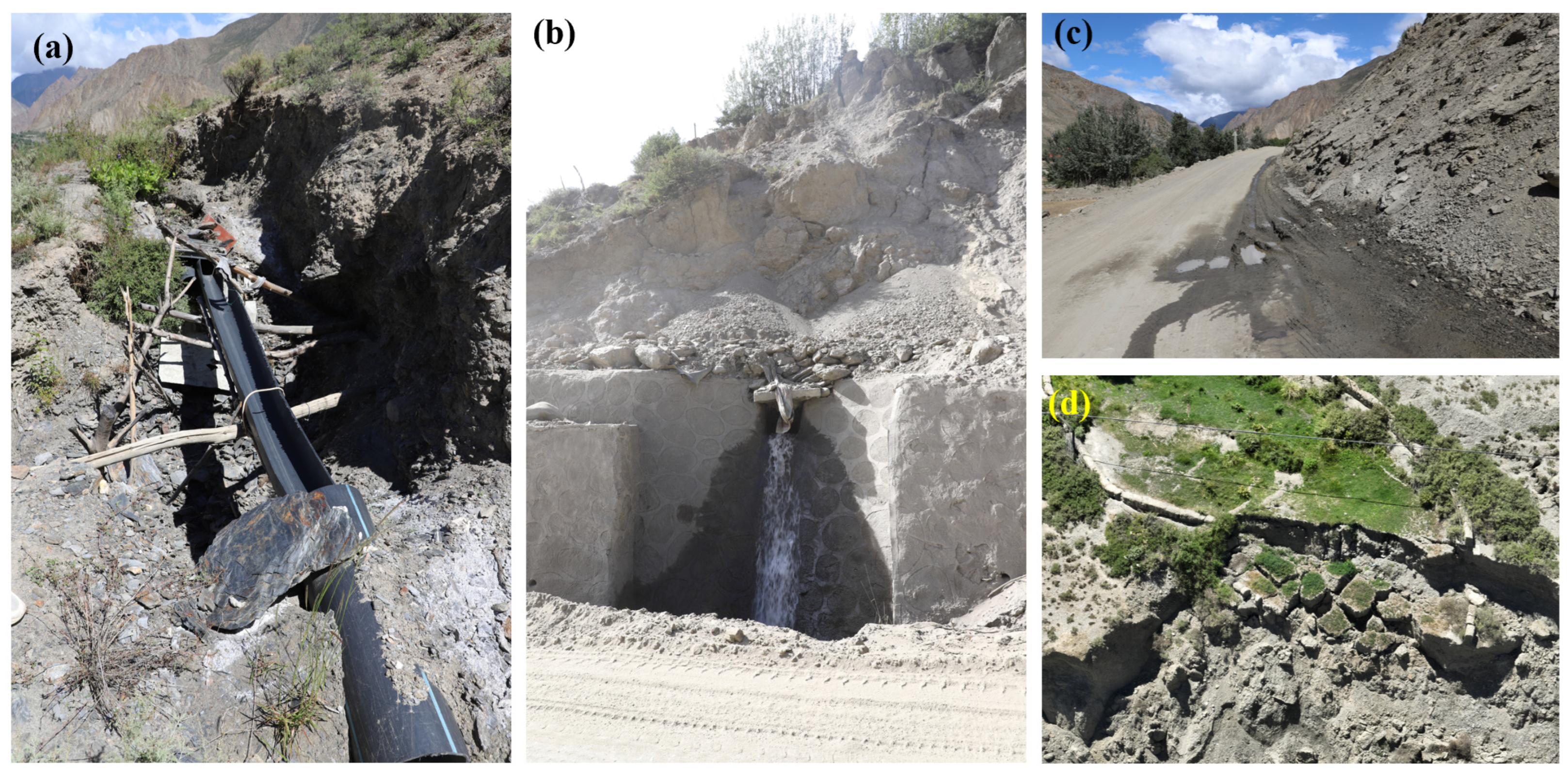
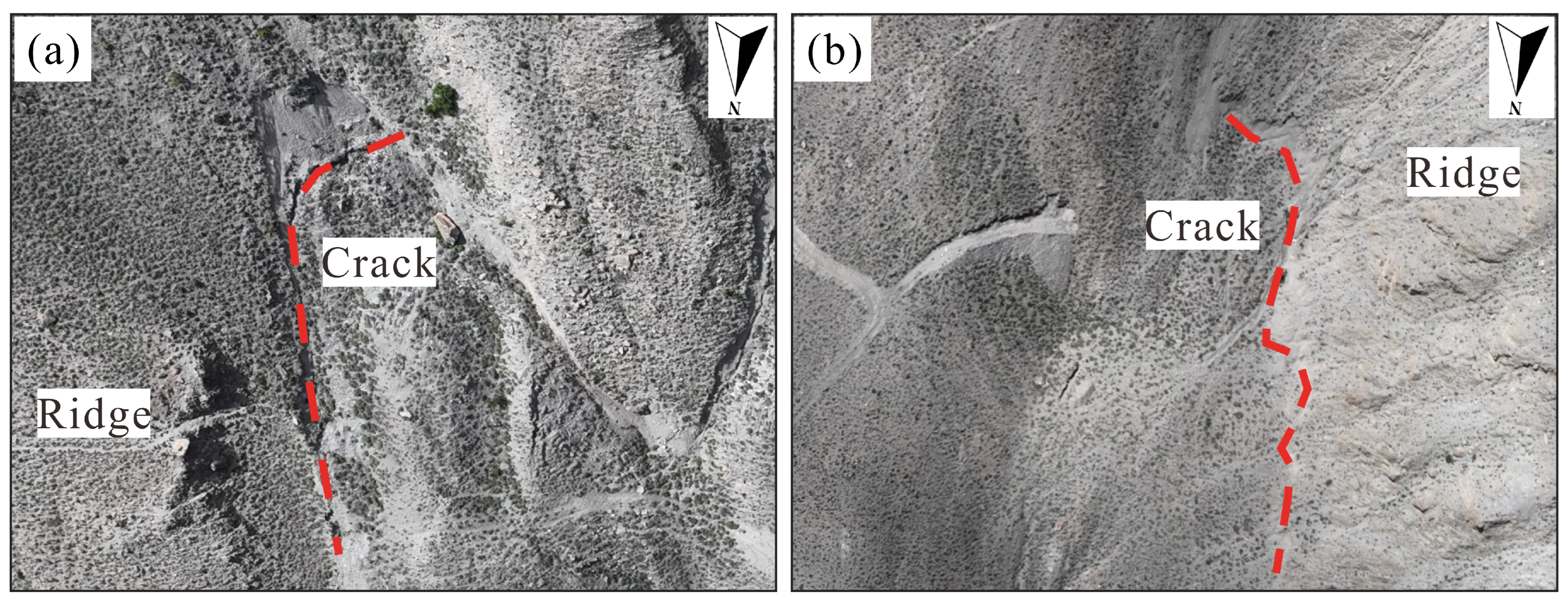
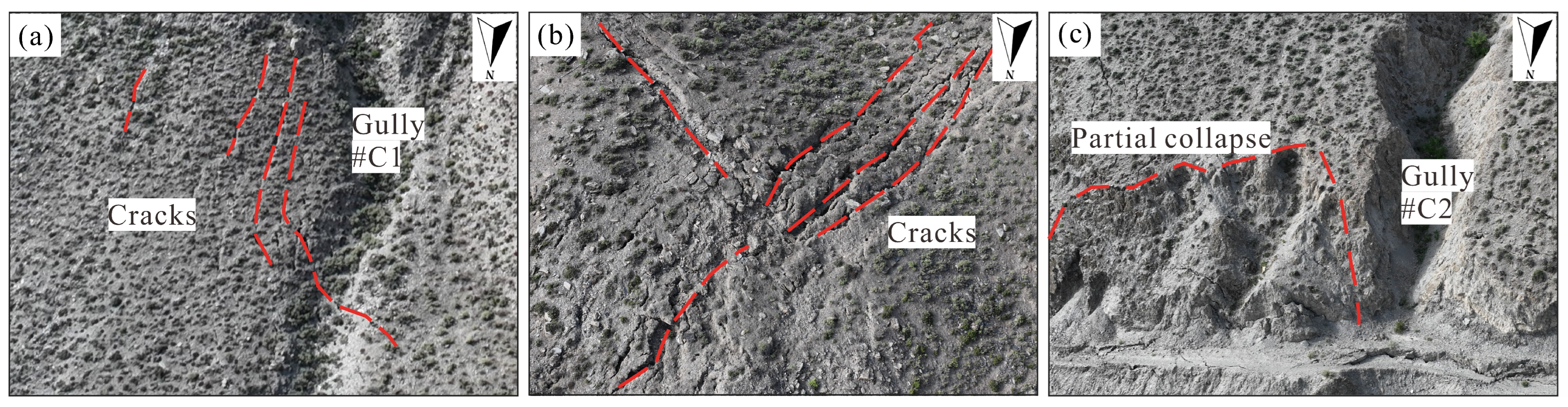
- UAV imagery and field investigations reveal typical deformation features, including rear-edge tension cracks, middle-section fissures and scarps, and frontal slumping. These features are consistent with the InSAR-derived deformation pattern, confirming the reliability of the monitoring results.
- (3)
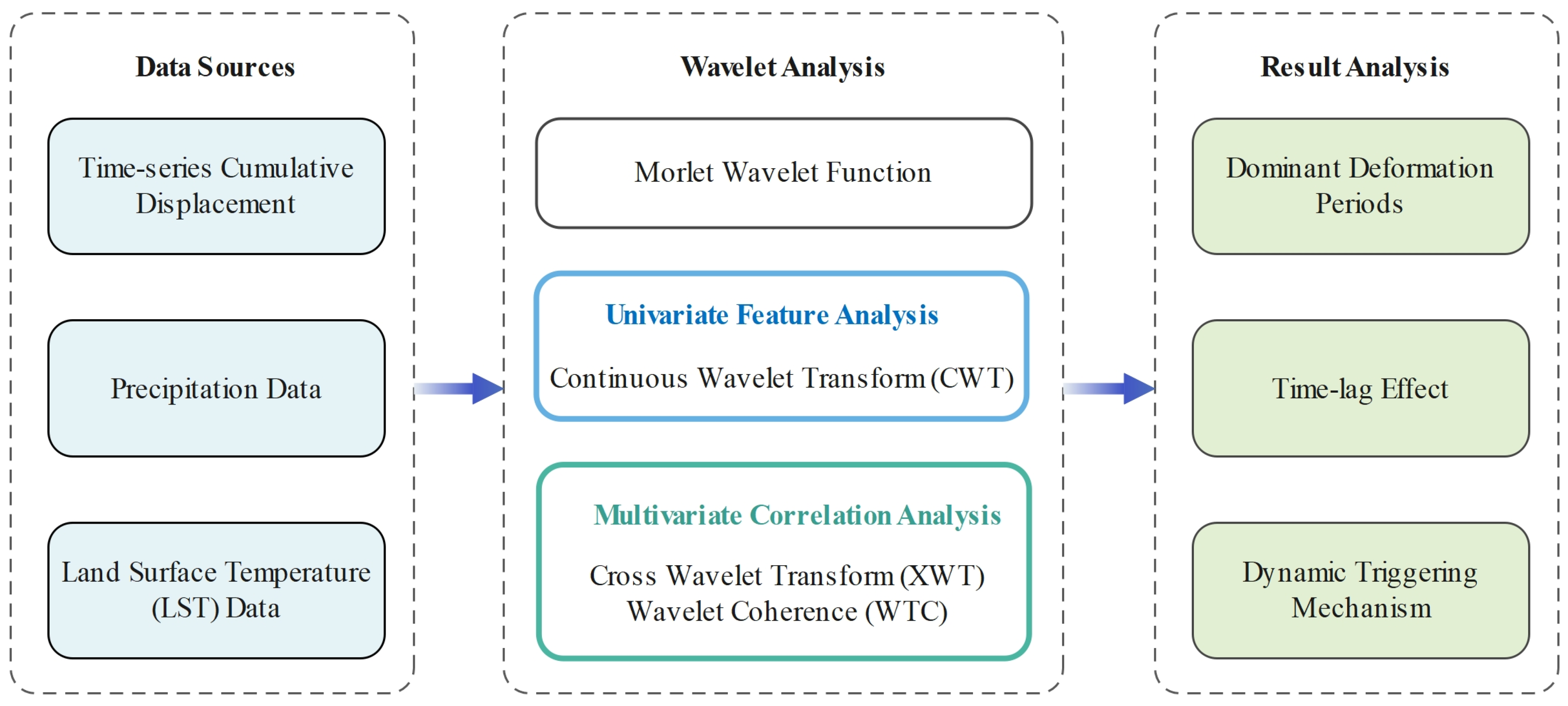
- Wavelet coherence analysis reveals a non-stationary and intermittent relationship between displacement and precipitation, with a characteristic lag of approximately 3 months, indicating that landslide deformation is governed by delayed hydrological processes rather than direct rainfall triggering.
- (4)
- The correlation between displacement and temperature is weak and unstable, suggesting that temperature does not directly control short-term deformation but may exert an indirect influence through long-term processes such as freeze–thaw effects.
- (5)
- A lagged hydrological mechanism under multi-source water recharge conditions controls the Pangcun landslide. In addition to precipitation, irrigation and canal-related water inputs play an important role in maintaining a high groundwater background. At the same time, road excavation, land-use change, and seismic disturbances further modify the mechanical and hydrological conditions. This coupling results in long-term creep with episodic acceleration and strong spatial variability.
Author Contributions
Funding
Data Availability Statement
Conflicts of Interest
References
- Wen, T.; Shi, X.; Wang, Y.; Yang, Y. Deformation Characteristics of Lumei Landslide in the Tibetan Plateau Combined with PS-InSAR and SBAS-InSAR. Remote Sens. 2026, 18, 1128. [Google Scholar] [CrossRef]
- Jia, W.; Wen, T.; Wang, Y.; Chen, N. Deformation and failure mechanisms of shallow landslides in the Qinghai-Tibet Plateau, China: A case study of Zhaxuecun landslide. Bull. Eng. Geol. Environ. 2026, 85, 133. [Google Scholar] [CrossRef]
- Wen, T.; Jia, W.; Quan, Z.; Guo, W.; Wang, Y.; Chen, N. Shear behavior of gravel-block soil of the Qinghai-Tibet Plateau based on large-scale direct shear test and numerical simulation. Bull. Eng. Geol. Environ. 2025, 84, 294. [Google Scholar] [CrossRef]
- Wang, Y.; Huang, J.; Tang, H. Global sensitivity analysis of the hydraulic parameters of the reservoir colluvial landslides in the Three Gorges Reservoir area, China. Landslides 2020, 17, 483–494. [Google Scholar] [CrossRef]
- Ren, S.; Zhang, Y.; Li, J.; Zhou, Z.; Liu, X.; Tao, C. Deformation Behavior and Reactivation Mechanism of the Dandu Ancient Landslide Triggered by Seasonal Rainfall: A Case Study from the East Tibetan Plateau, China. Remote Sens. 2023, 15, 5538. [Google Scholar] [CrossRef]
- Yao, J.; Yao, X.; Liu, X. Landslide Detection and Mapping Based on SBAS-InSAR and PS-InSAR: A Case Study in Gongjue County, Tibet, China. Remote Sens. 2022, 14, 4728. [Google Scholar] [CrossRef]
- Guo, R.; Li, S.; Chen, Y.N.; Li, X.; Yuan, L. Identification and monitoring landslides in Longitudinal Range-Gorge Region with InSAR fusion integrated visibility analysis. Landslides 2021, 18, 551–568. [Google Scholar] [CrossRef]
- Nardini, O.; Confuorto, P.; Intrieri, E.; Montalti, R.; Montanaro, T.; Robles, J.G.; Poggi, F.; Raspini, F. Integration of satellite SAR and optical acquisitions for the characterization of the Lake Sarez landslides in Tajikistan. Landslides 2024, 21, 1385–1401. [Google Scholar] [CrossRef]
- Guo, C.; Yan, Y.; Zhang, Y.; Zhang, X.; Zheng, Y.; Li, X.; Yang, Z.; Wu, R. Study on the creep-sliding mechanism of the giant Xiongba ancient landslide based on the SBAS-InSAR method, Tibetan Plateau, China. Remote Sens. 2021, 13, 3365. [Google Scholar] [CrossRef]
- Guo, C.; Qiu, Z.; Wu, R.; Zhang, Y.; Yan, Y.; Chen, W.; Wei, P.; Liu, J. High-altitude deformation and reactivation mechanism of large ancient landslides along the Shadingmai section of the upper Jinsha River, Tibetan Plateau. Environ. Earth Sci. 2025, 84, 44. [Google Scholar] [CrossRef]
- Narcisi, R.; Vagnon, F.; Gizzi, M.; Taddia, G. Spring trends in slow-moving landslide displacement: Is it a reliable way to predict their movements? Two case studies in the Susa Valley (NW Italy). Landslides 2026, 23, 1361–1376. [Google Scholar] [CrossRef]
- Wu, R.; Zhang, Y.; Qi, C.; Zhao, W.; Li, X.; Song, D.; Ma, H.; Zou, Q. Ancient landslide on the Tibet Plateau(China): Reactivation mechanism and post-failure behavior prediction. Eng. Geol. 2025, 361, 108515. [Google Scholar] [CrossRef]
- Wang, Y.; Tang, H.; Wen, T.; Ma, J. A hybrid intelligent approach for constructing landslide displacement prediction intervals. Appl. Soft Comput. 2019, 81, 105506. [Google Scholar] [CrossRef]
- Zhang, Y.; Ren, S.; Liu, X.; Guo, C.; Li, J.; Bi, J.; Ran, L. Reactivation mechanism of old landslide triggered by coupling of fault creep and water infiltration: A case study from the east Tibetan Plateau. Bull. Eng. Geol. Environ. 2023, 82, 291. [Google Scholar] [CrossRef]
- Du, G.; Zhang, Y.; Yao, X.; Yang, Z.; Yuan, Y. Field investigations and numerical modeling of a giant landslide in the region of Eastern Himalayan Syntaxis: Jiaobunong landslide. J. Mt. Sci. 2021, 18, 3230–3246. [Google Scholar] [CrossRef]
- Qi, T.; Meng, X.; Zhao, Y.; Li, Y. Ancient very large and giant landslides on the eastern margin of the Qinghai–Tibet Plateau, China. Eng. Geol. 2025, 346, 107889. [Google Scholar] [CrossRef]
- Wang, Y.; Li, Y.; Wen, T.; Xue, Y.; Chen, N.; Wang, L. A practical sequential method for simulating hydrodynamic pressure-driven landslides. Phys. Fluids 2026, 38, 024120. [Google Scholar] [CrossRef]
- Wang, Y.; Sun, X.; Wen, T.; Wang, L. Step-like displacement prediction of reservoir landslides based on a metaheuristic-optimized KELM: A comparative study. Bull. Eng. Geol. Environ. 2024, 83, 322. [Google Scholar] [CrossRef]
- Wang, Y.; Tang, H.; Huang, J.; Wen, T.; Ma, J.; Zhang, J. A comparative study of different machine learning methods for reservoir landslide displacement prediction. Eng. Geol. 2022, 298, 106544. [Google Scholar] [CrossRef]
- Qiu, H.; Li, Y.; Zhu, Y.; Ye, B.; Yang, D.; Liu, Y.; Wei, Y. Do post-failure landslides become stable? CATENA 2025, 249, 108699. [Google Scholar] [CrossRef]
- Xu, D.L.; Wang, T.; Dawa, S.J. Application of SBAS-InSAR technology in extra large landslide deformation monitoring: Taking Pangcun Landslide in Tibet Autonomous Region as an example. Sci. Technol. Eng. 2021, 21, 14927–14935. [Google Scholar]
- Jiang, K.; Yang, Y.; Xu, Q.; Li, L.; Li, P.; Li, H.; Chen, Q. Friction residual estimation and landslide risk assessment based on InSAR deformation. J. Eng. Geol. 2024, 32, 889–903. [Google Scholar]
- Liu, Y.; Qiu, H.; Yang, D.; Liu, Z.; Ma, S.; Pei, Y.; Zhang, J.; Tang, B. Deformation responses of landslides to seasonal rainfall based on InSAR and wavelet analysis. Landslides 2022, 19, 199–210. [Google Scholar] [CrossRef]
- Tomás, R.; Li, Z.; Lopez-Sanchez, J.M.; Liu, P.; Singleton, A. Using wavelet tools to analyse seasonal variations from InSAR time-series data: A case study of the Huangtupo landslide. Landslides 2016, 13, 437–450. [Google Scholar] [CrossRef]





| Parameter Category | Detailed Information |
|---|---|
| Satellite | Sentinel-1A |
| Orbit Direction | Descending |
| Band | C-band |
| Imaging Mode | IW (Interferometric Wide Swath) |
| Polarization | VV |
| Radar Wavelength | 5.6 cm |
| Spatial Resolution | 15 m |
| Look Angle | 39.5° |
| Revisit Cycle | 12 d |
| Number of Images | 80 scenes |
| External DEM | SRTM DEM (30 m) |
| Atmospheric Correction Data | GACOS (90 m) |
| Time Period of Atmospheric Correction Data | March 2017–June 2024 |
Disclaimer/Publisher’s Note: The statements, opinions and data contained in all publications are solely those of the individual author(s) and contributor(s) and not of MDPI and/or the editor(s). MDPI and/or the editor(s) disclaim responsibility for any injury to people or property resulting from any ideas, methods, instructions or products referred to in the content. |
© 2026 by the authors. Licensee MDPI, Basel, Switzerland. This article is an open access article distributed under the terms and conditions of the Creative Commons Attribution (CC BY) license.
Share and Cite
Wang, Y.; Wei, M.; Yue, L.; Shi, J.; Wen, T. Multi-Source Remote Sensing Investigation of Spatiotemporal Deformation and Mechanisms of the Pangcun Giant Accumulation Landslide, Southeastern Tibet. Remote Sens. 2026, 18, 1231. https://doi.org/10.3390/rs18081231
Wang Y, Wei M, Yue L, Shi J, Wen T. Multi-Source Remote Sensing Investigation of Spatiotemporal Deformation and Mechanisms of the Pangcun Giant Accumulation Landslide, Southeastern Tibet. Remote Sensing. 2026; 18(8):1231. https://doi.org/10.3390/rs18081231
Chicago/Turabian StyleWang, Yankun, Mengxue Wei, Li Yue, Jingjing Shi, and Tao Wen. 2026. "Multi-Source Remote Sensing Investigation of Spatiotemporal Deformation and Mechanisms of the Pangcun Giant Accumulation Landslide, Southeastern Tibet" Remote Sensing 18, no. 8: 1231. https://doi.org/10.3390/rs18081231
APA StyleWang, Y., Wei, M., Yue, L., Shi, J., & Wen, T. (2026). Multi-Source Remote Sensing Investigation of Spatiotemporal Deformation and Mechanisms of the Pangcun Giant Accumulation Landslide, Southeastern Tibet. Remote Sensing, 18(8), 1231. https://doi.org/10.3390/rs18081231