Technical Note

Understanding 20 Years of Vegetation Change in Deer-Impacted Grasslands

1
Faculty of Bioenvironmental Science, Kyoto University of Advanced Science, Kameoka 621-8555, Japan
2
Graduate School of Advanced Technology and Science, Tokushima University, Tokushima 770-8506, Japan
3
Graduate School of Technology, Industrial and Social Sciences, Tokushima University, Tokushima 770-8506, Japan
*
Author to whom correspondence should be addressed.
Remote Sens. 2025, 17(18), 3187; https://doi.org/10.3390/rs17183187
Submission received: 25 July 2025 / Revised: 11 September 2025 / Accepted: 11 September 2025 / Published: 15 September 2025

Abstract

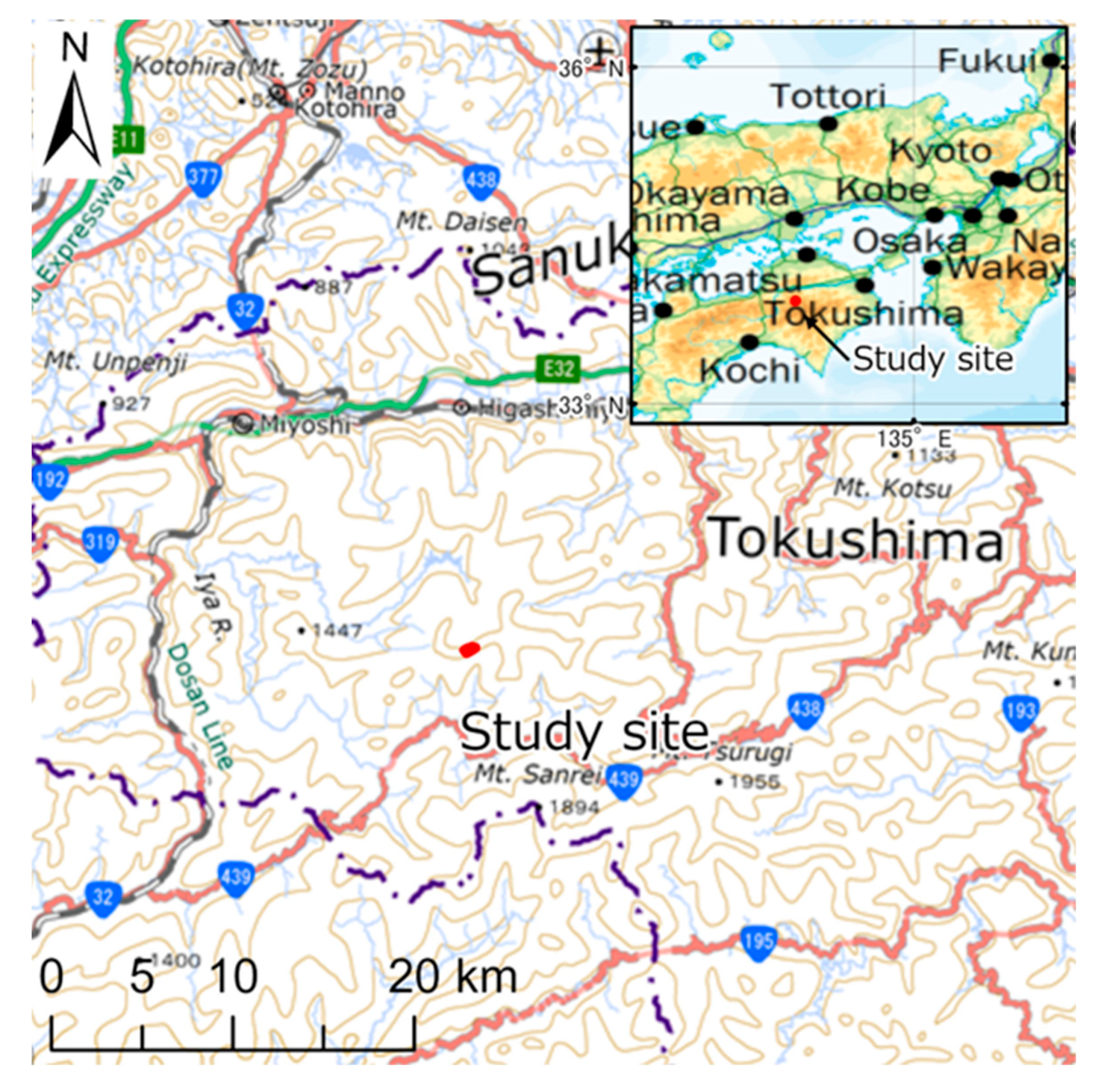
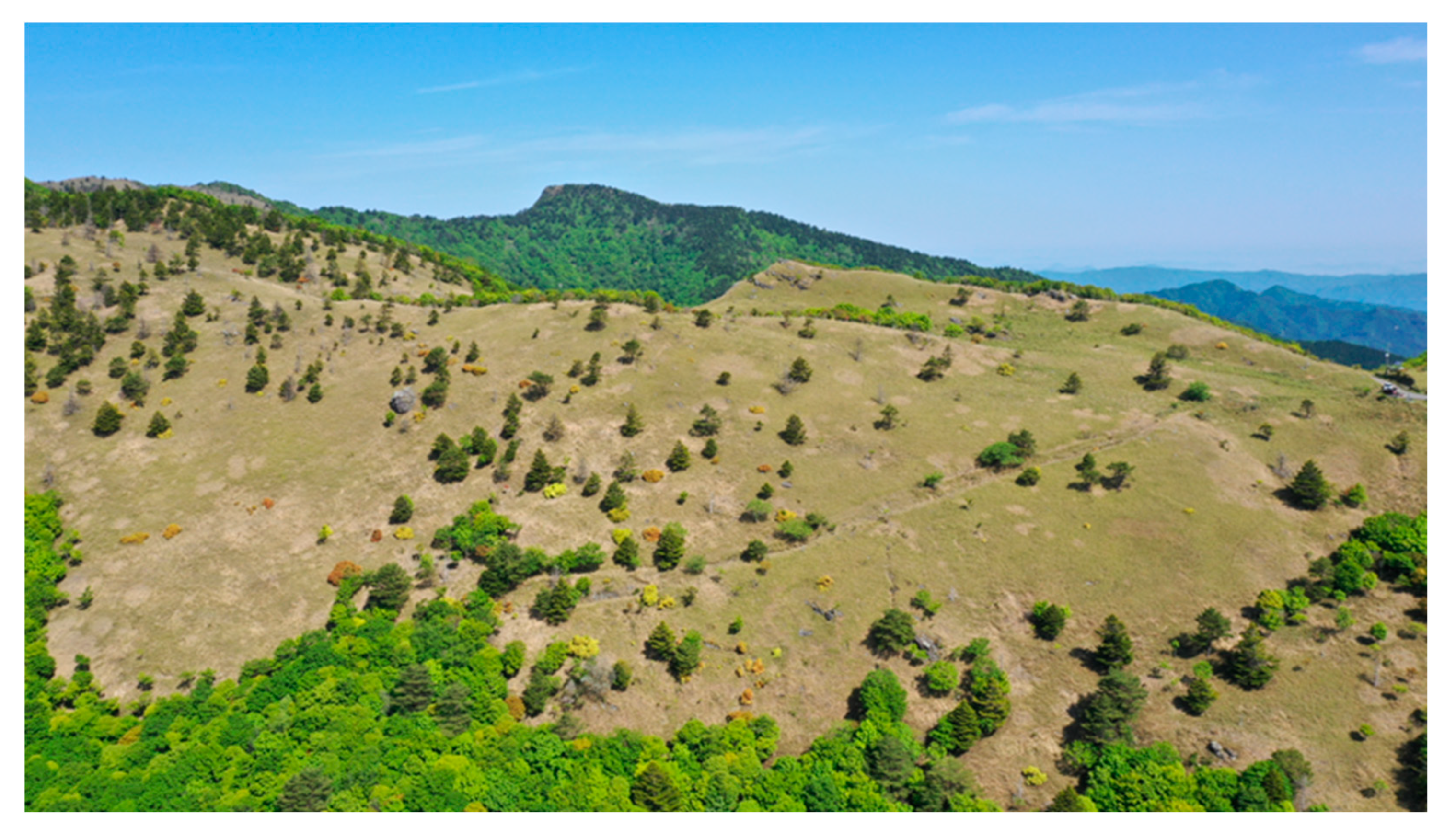
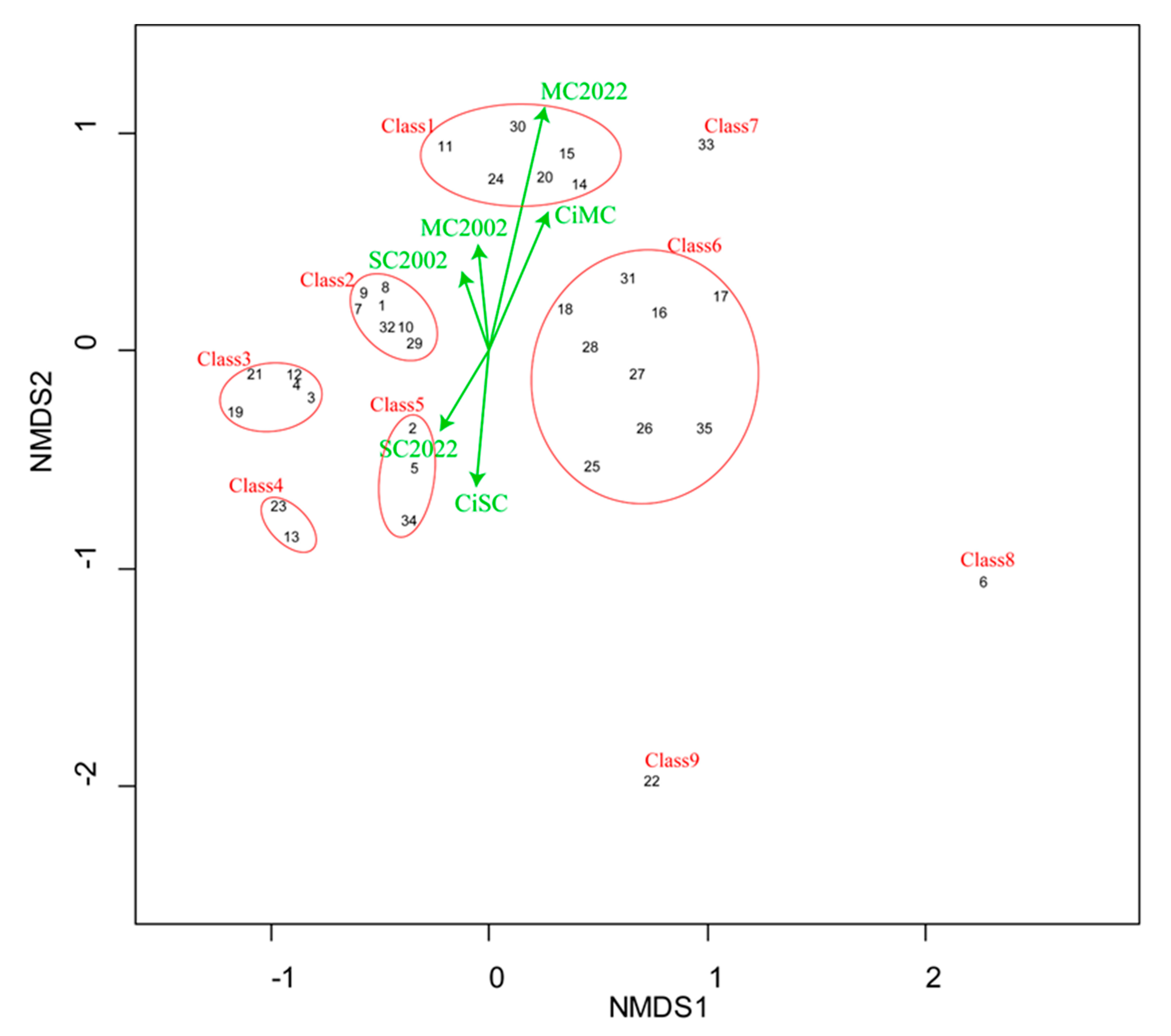
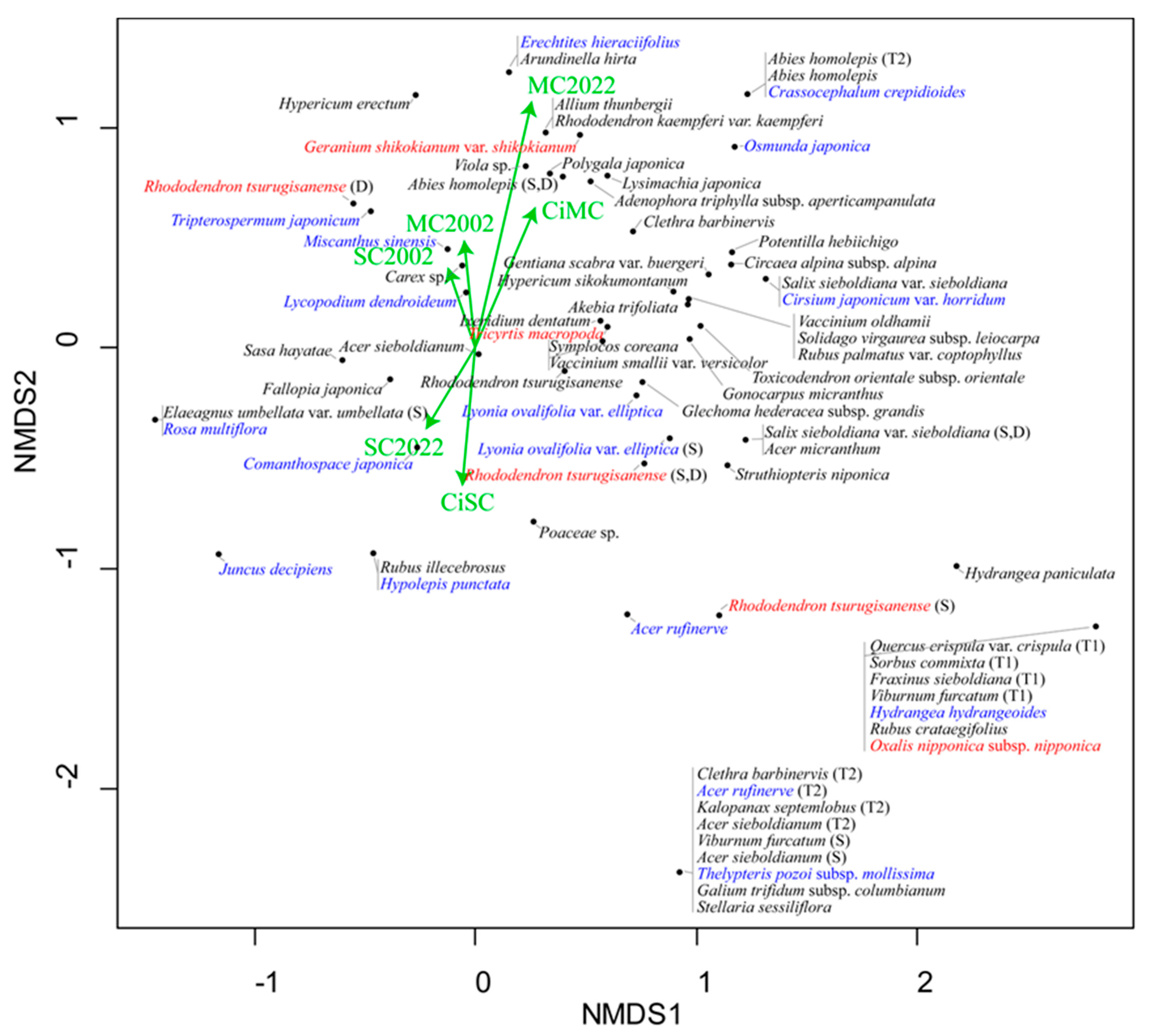
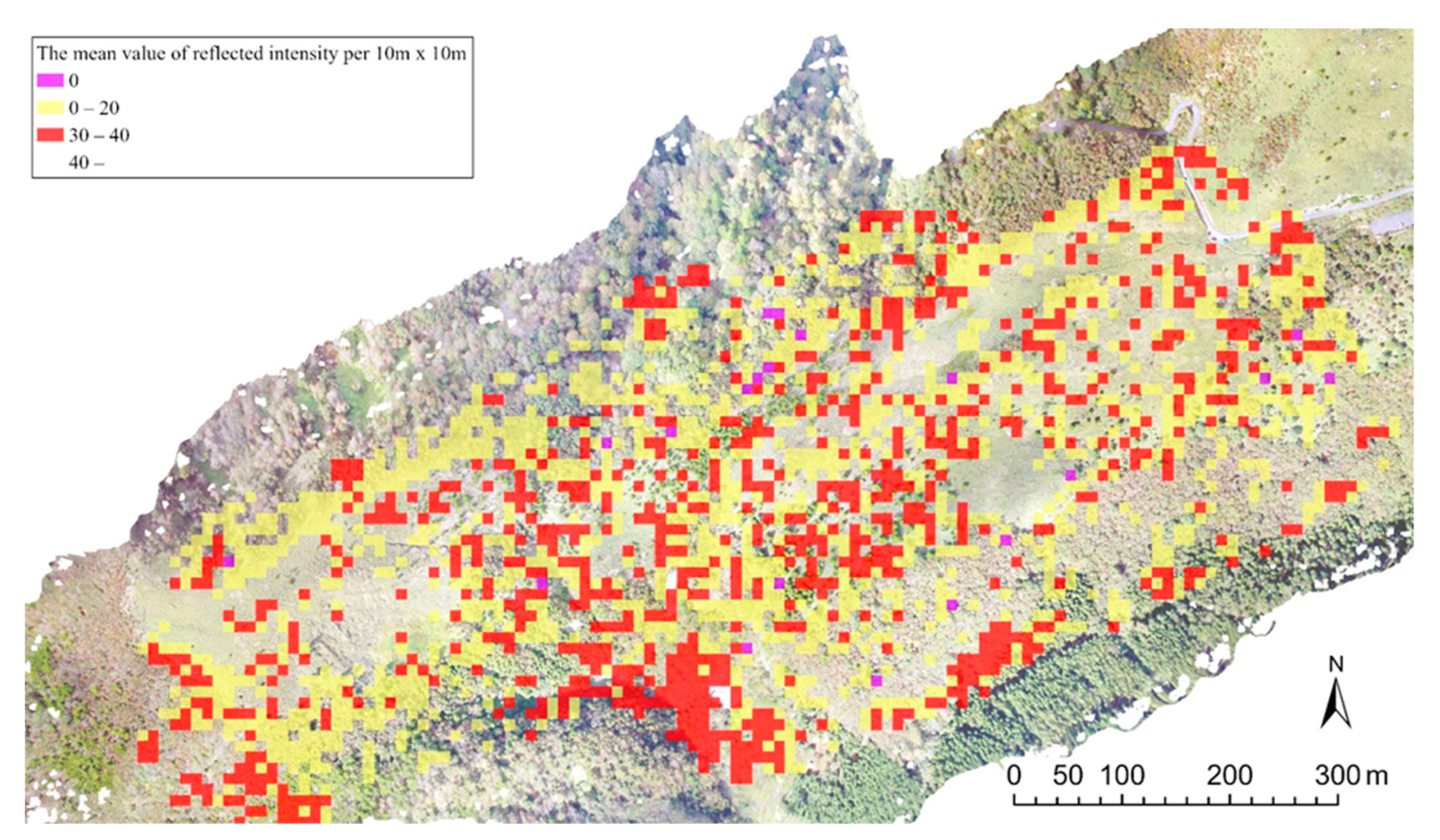
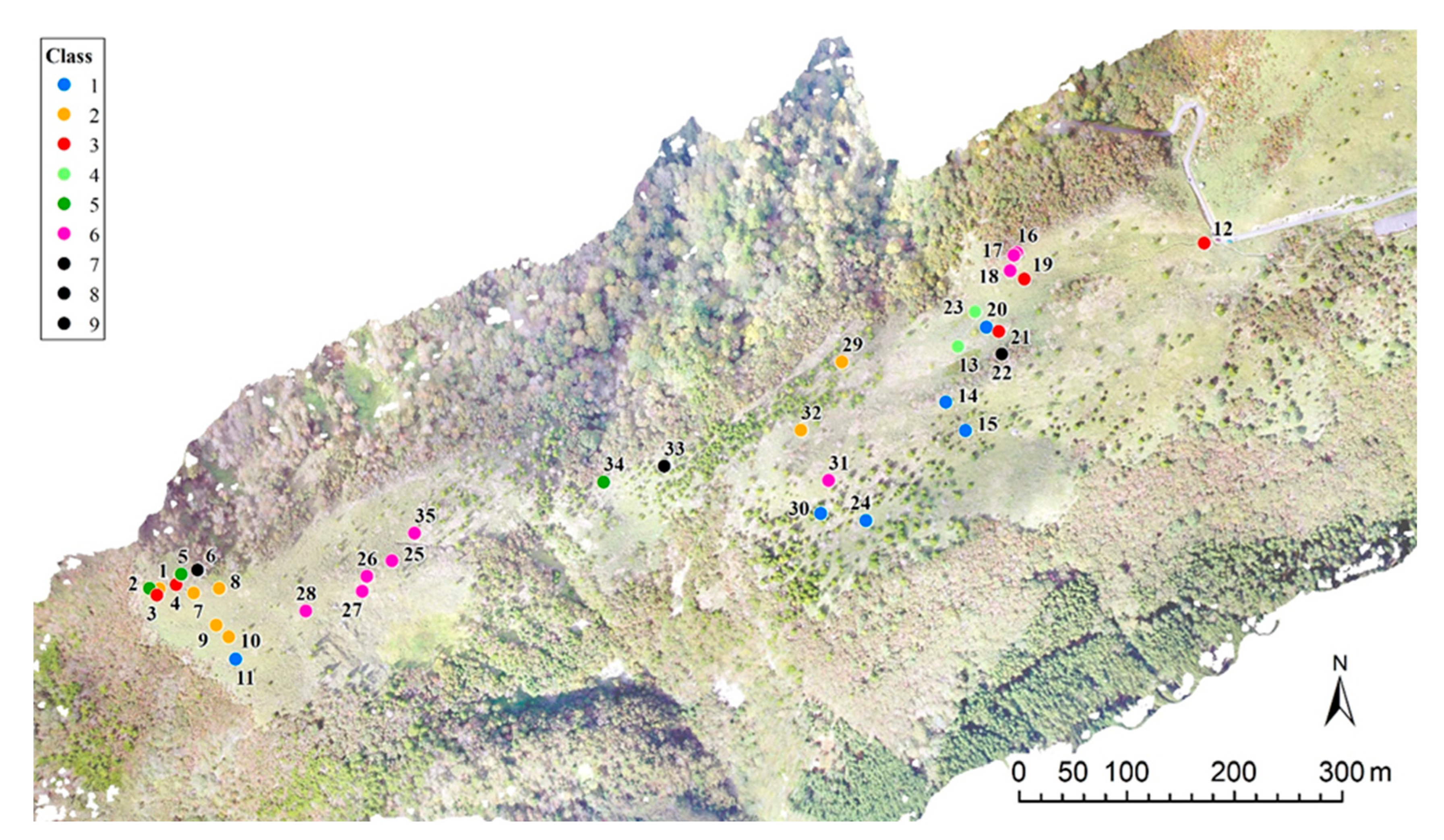
The impact of Cervus nippon browsing on vegetation in grasslands in Japan has become pronounced. In obtaining useful information for the management of grasslands affected by C. nippon browsing, we aimed to clarify the relationship between changes in the cover of Sasa hayatae and Miscanthus sinensis under the browsing impact of C. nippon and the distribution of grassland species based on vegetation survey data from two time periods and to use UAV-mounted LiDAR data to determine the distribution of S. hayatae and M. sinensis that have a significant impact on vegetation change on an areal basis. The study area was approximately 23 ha around the Ochiai Pass in Higashi Iya Ochiai, Miyoshi City, Tokushima Prefecture. A vegetation survey was conducted in 2022 at the same 35 sites as in 2002 to understand the changes in vegetation. The ordination using nonmetric multidimensional scaling (NMDS) revealed that the entire study site was not changing along the same directionality of succession, although C. nippon browsing likely returns the S. hayatae-dominated grassland to M. sinensis-dominated grassland at the study site. It was found that sites with high M. sinensis cover in 2022 exhibited higher diversity of grassland plants. The impact of deer browsing was suggested to increase M. sinensis coverage and contribute to the survival of grassland plants. Using UAV-mounted LiDAR, we estimated the densities of S. hayatae and M. sinensis, which are important for understanding vegetation changes in the study site. This allowed us to spatially identify areas critical for conserving grassland plant diversity and areas strongly affected by deer browsing.
Keywords: Sasa hayatae; Miscanthus sinensis; grassland; Cervus nippon; browsing; UAV; LiDAR; NMDS Sasa hayatae; Miscanthus sinensis; grassland; Cervus nippon; browsing; UAV; LiDAR; NMDS