Article

Global Prior-Guided Distortion Representation Learning Network for Remote Sensing Image Blind Super-Resolution
1
School of Instrument Science and Opto-Electronics Engineering, Beijing Information Science and Technology University, Beijing 100192, China
2
Laboratory of Intelligent Microsystems, Beijng Information Science and Technology University, Beijing 100192, China
*
Author to whom correspondence should be addressed.
Remote Sens. 2025, 17(16), 2830; https://doi.org/10.3390/rs17162830
Submission received: 28 June 2025 / Revised: 11 August 2025 / Accepted: 13 August 2025 / Published: 14 August 2025

Abstract

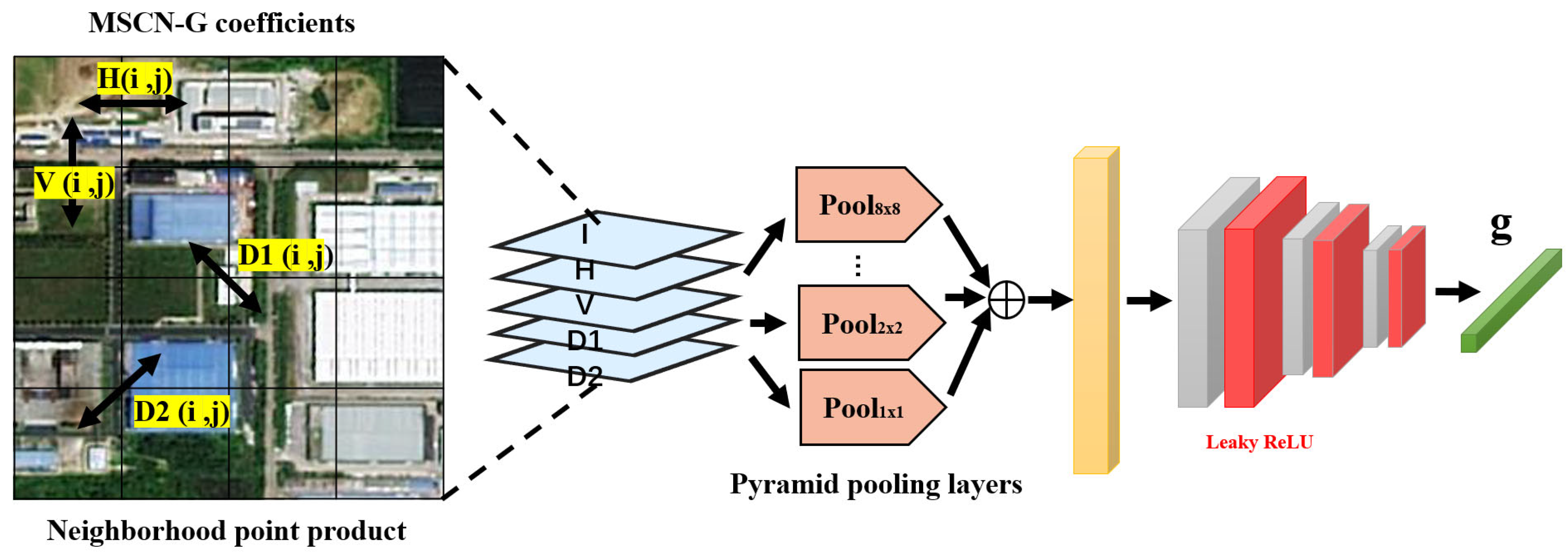
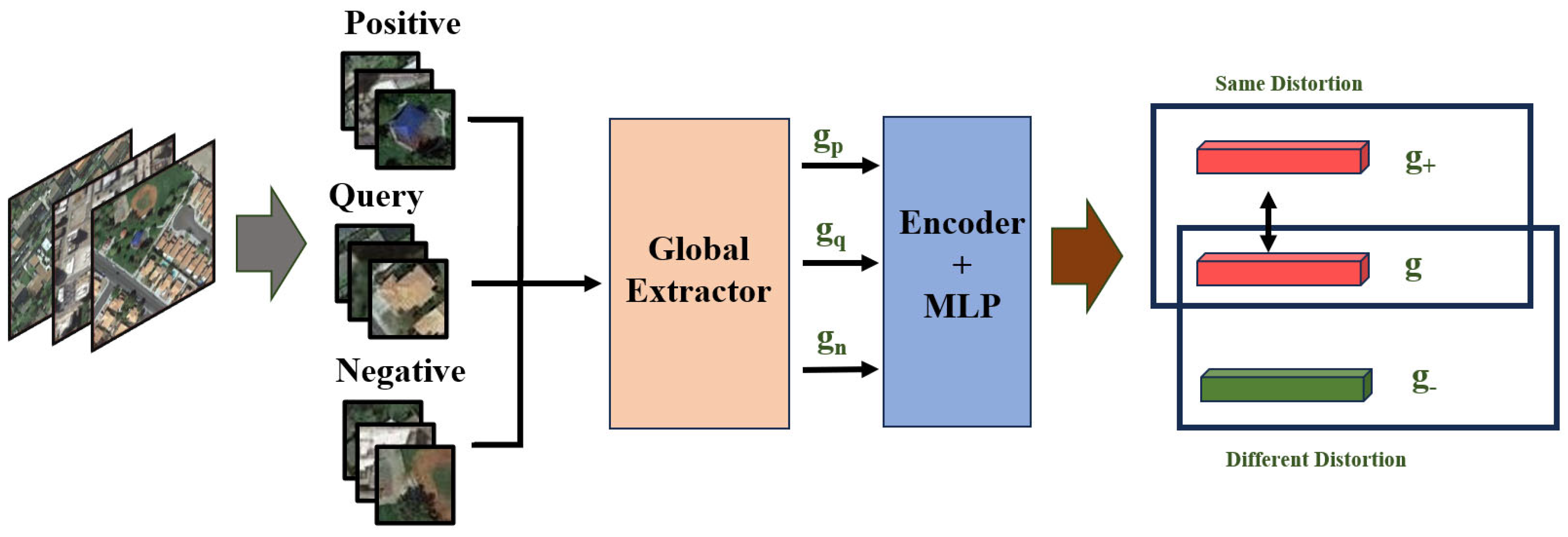
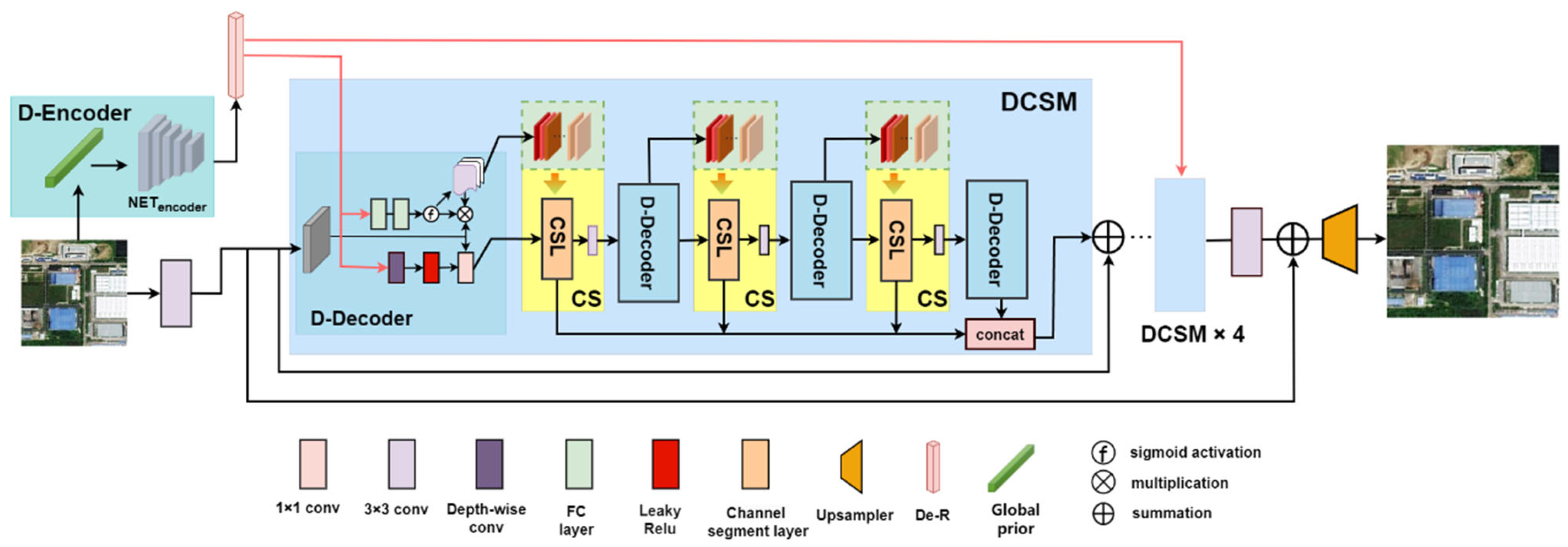
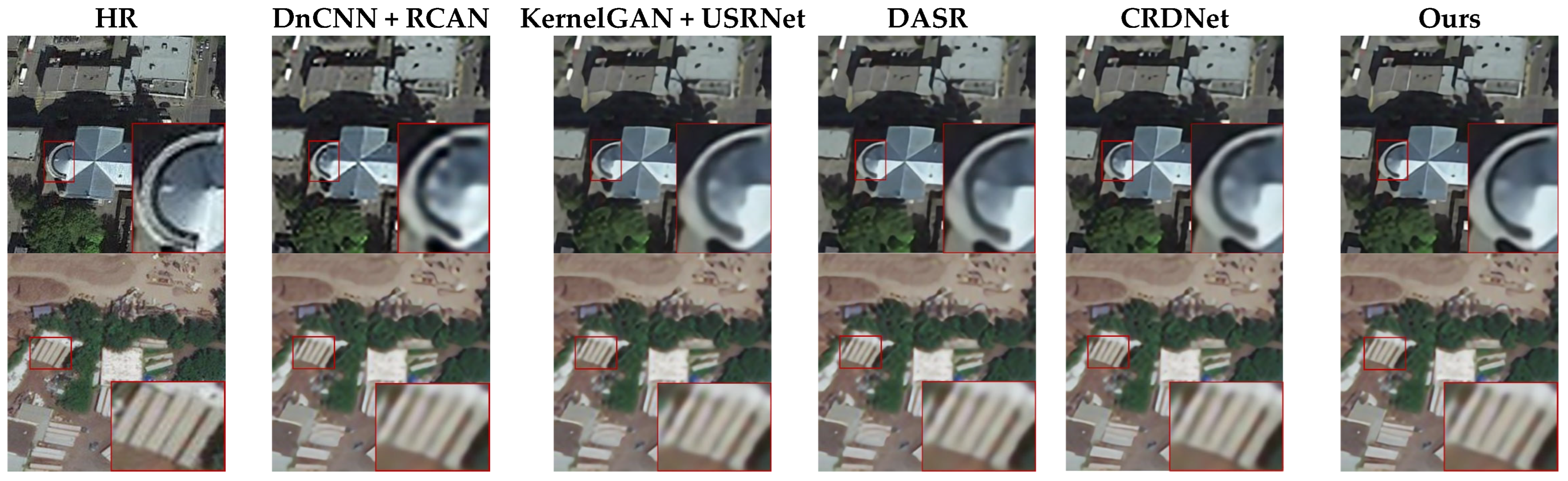
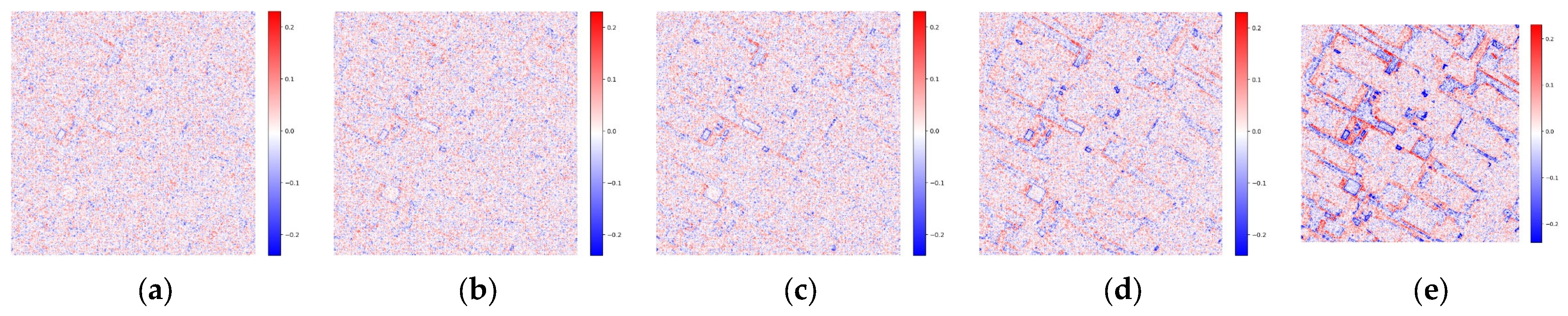
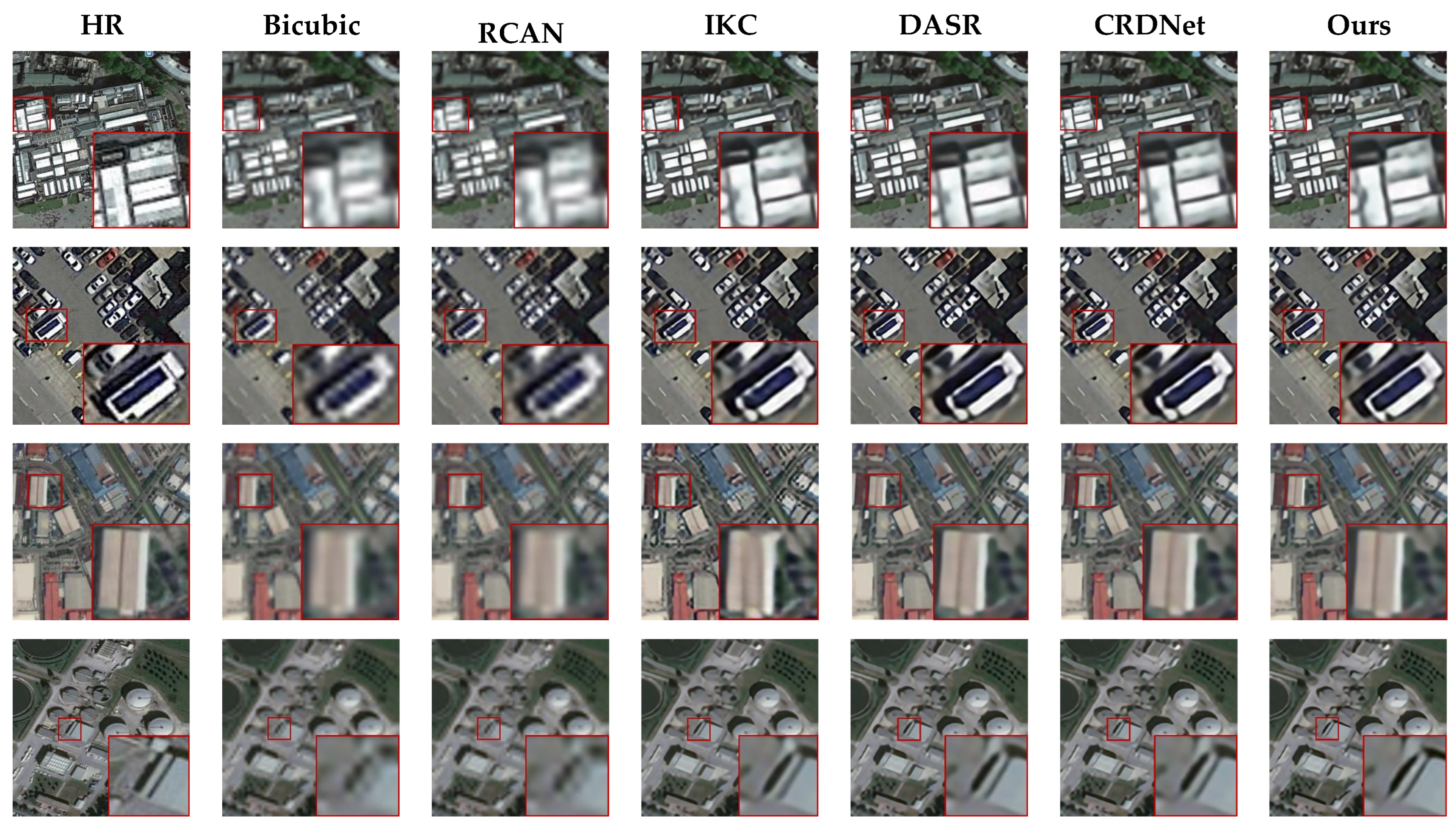
Most existing deep learning-based super-resolution (SR) methods for remote sensing images rely on predefined degradation assumptions (e.g., bicubic downsampling). However, when real-world degradations deviate from these assumptions, their performance deteriorates significantly. Moreover, explicit degradation estimation approaches based on iterative schemes inevitably lead to accumulated estimation errors and time-consuming processes. In this paper, instead of explicitly estimating degradation types, we first innovatively introduce an MSCN_G coefficient to capture global prior information corresponding to different distortions. Subsequently, distortion-enhanced representations are implicitly estimated through contrastive learning and embedded into a super-resolution network equipped with multiple distortion decoders (D-Decoder). Furthermore, we propose a distortion-related channel segmentation (DCS) strategy that reduces the network’s parameters and computation (FLOPs). We refer to this Global Prior-guided Distortion-enhanced Representation Learning Network as GDRNet. Experiments on both synthetic and real-world remote sensing images demonstrate that our GDRNet outperforms state-of-the-art blind SR methods for remote sensing images in terms of overall performance. Under the experimental condition of anisotropic Gaussian blurring without added noise, with a kernel width of 1.2 and an upscaling factor of 4, the super-resolution reconstruction of remote sensing images on the NWPU-RESISC45 dataset achieves a PSNR of 28.98 dB and SSIM of 0.7656.
Keywords: blind SR; remote sensing image; global prior; contrastive learning blind SR; remote sensing image; global prior; contrastive learning