Article

Noise Analysis for Unbiased Tree Diameter Estimation from Personal Laser Scanning Data

Faculty of Forestry and Wood Sciences, Czech University of Life Sciences Prague, Kamýcká 129, 165 00 Prague, Czech Republic
*
Author to whom correspondence should be addressed.
Remote Sens. 2024, 16(7), 1261; https://doi.org/10.3390/rs16071261
Submission received: 5 February 2024 / Revised: 22 March 2024 / Accepted: 29 March 2024 / Published: 2 April 2024
(This article belongs to the Special Issue Biomass Remote Sensing in Forest Landscapes II)

Abstract

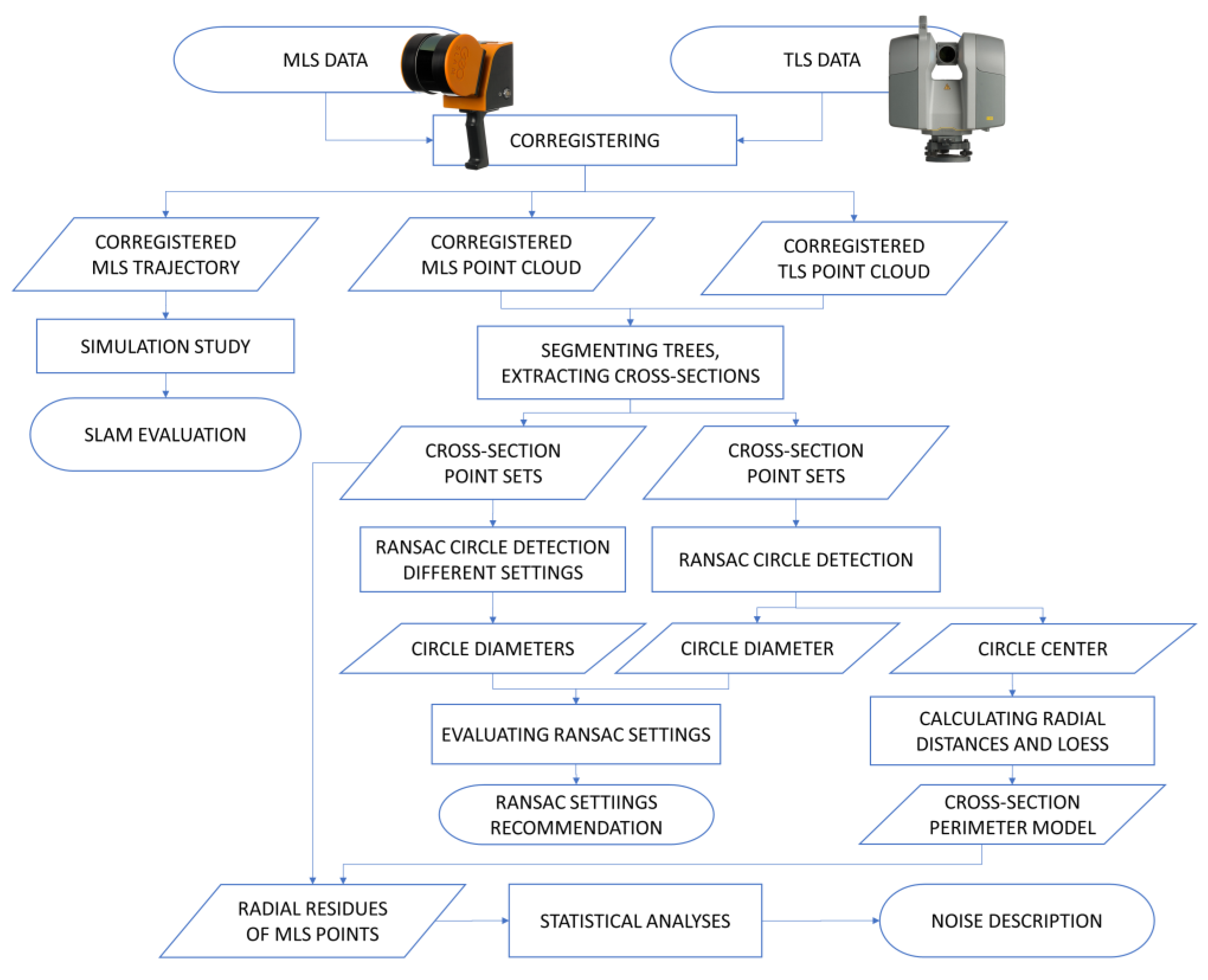
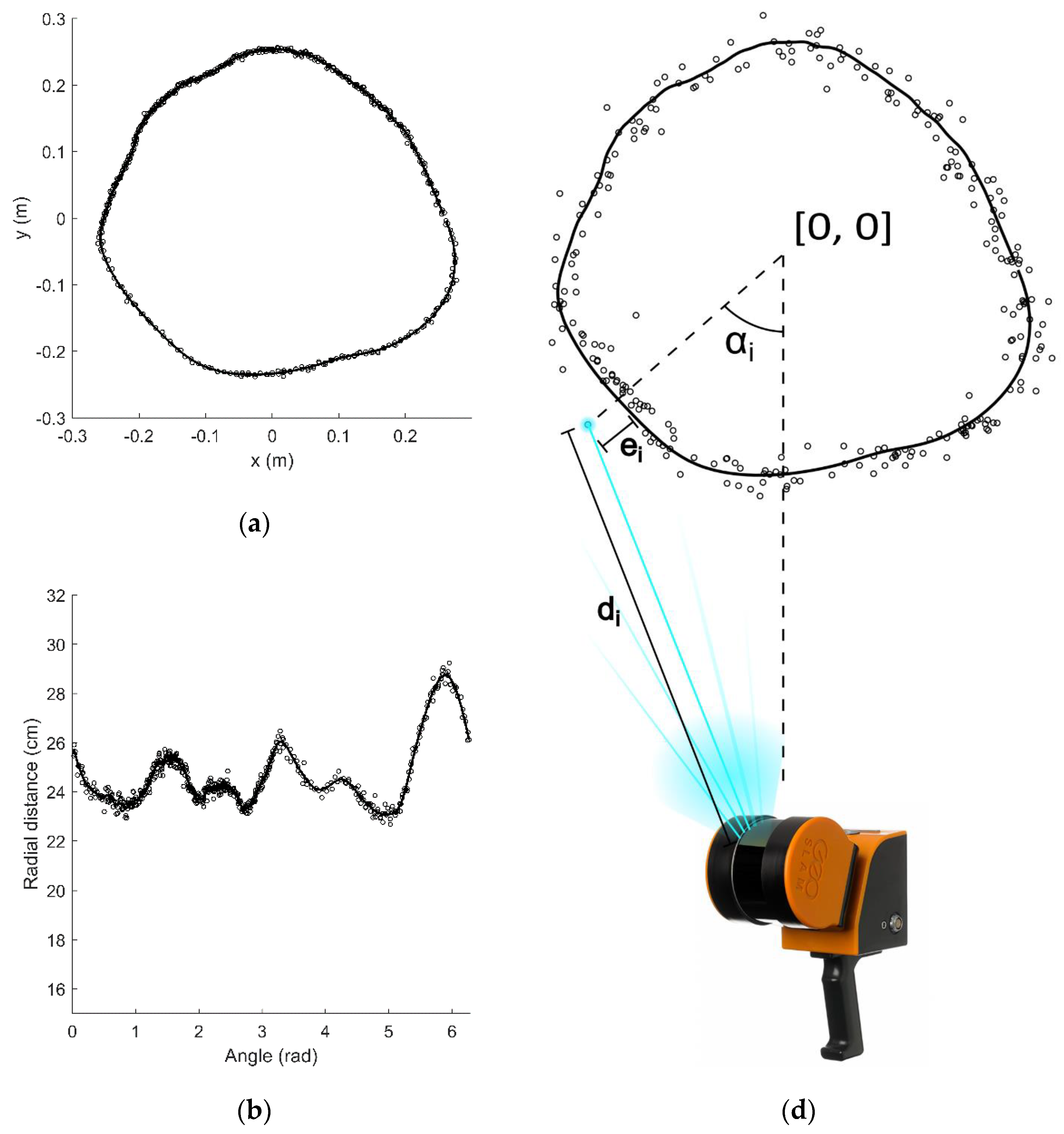
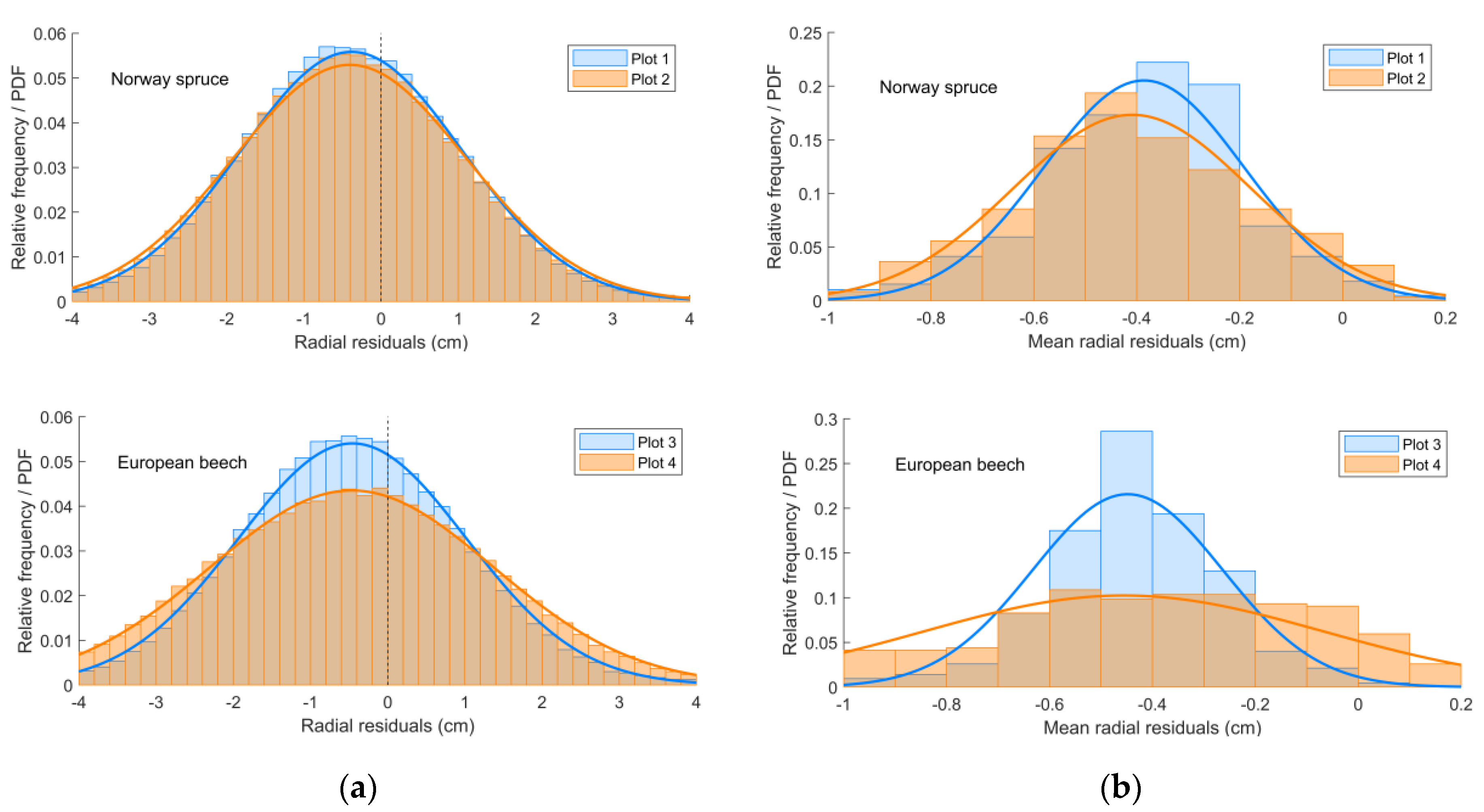
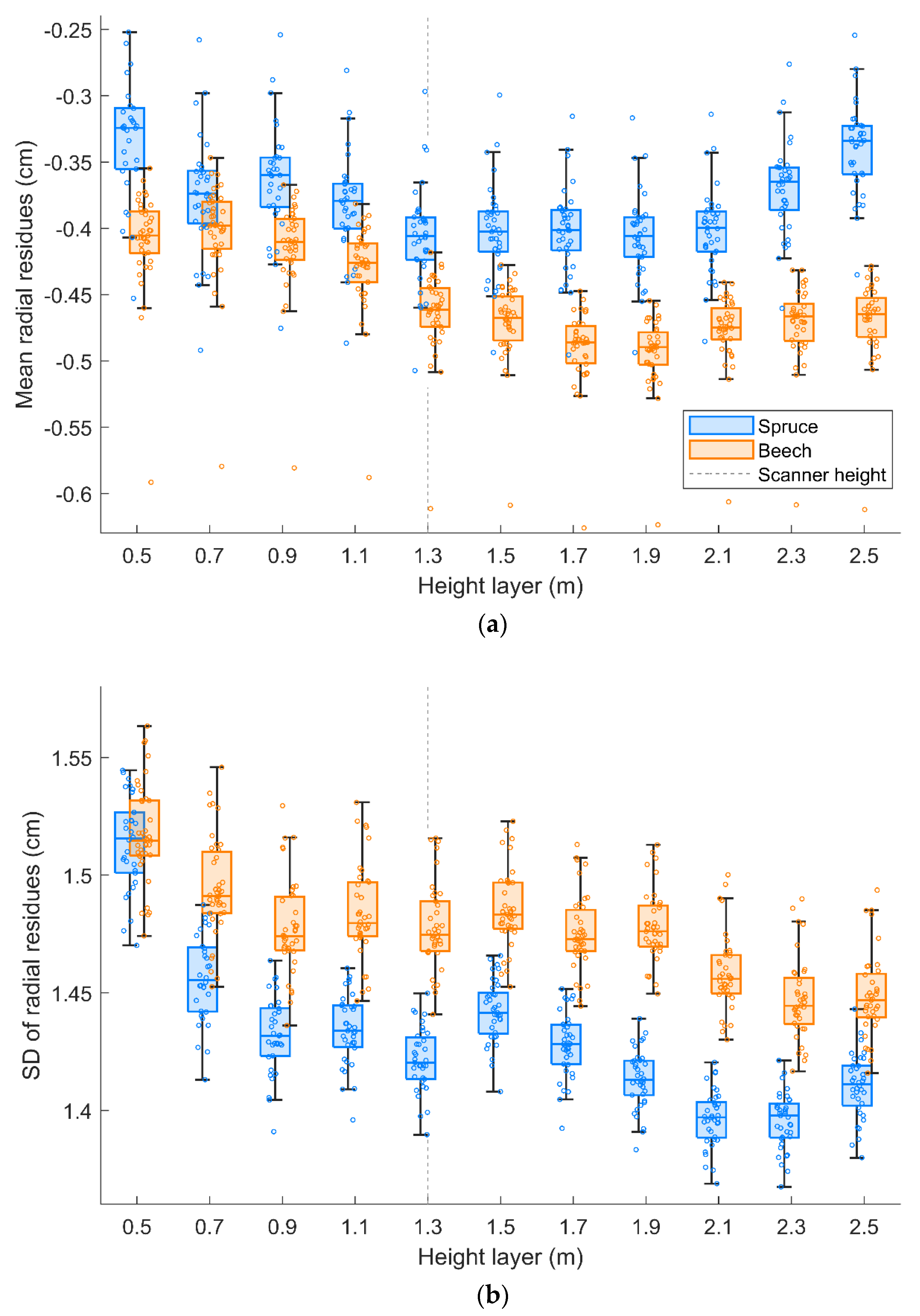
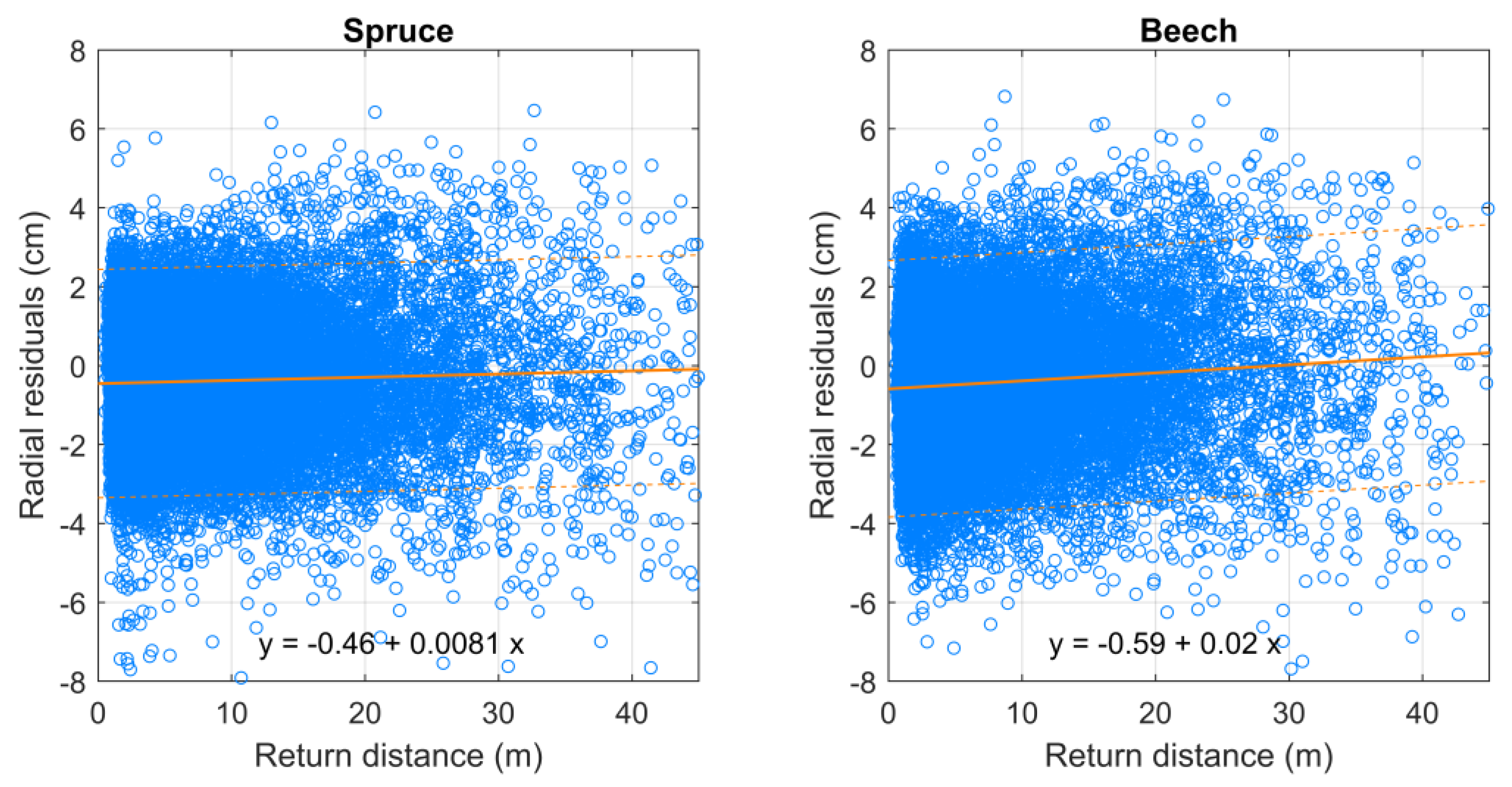
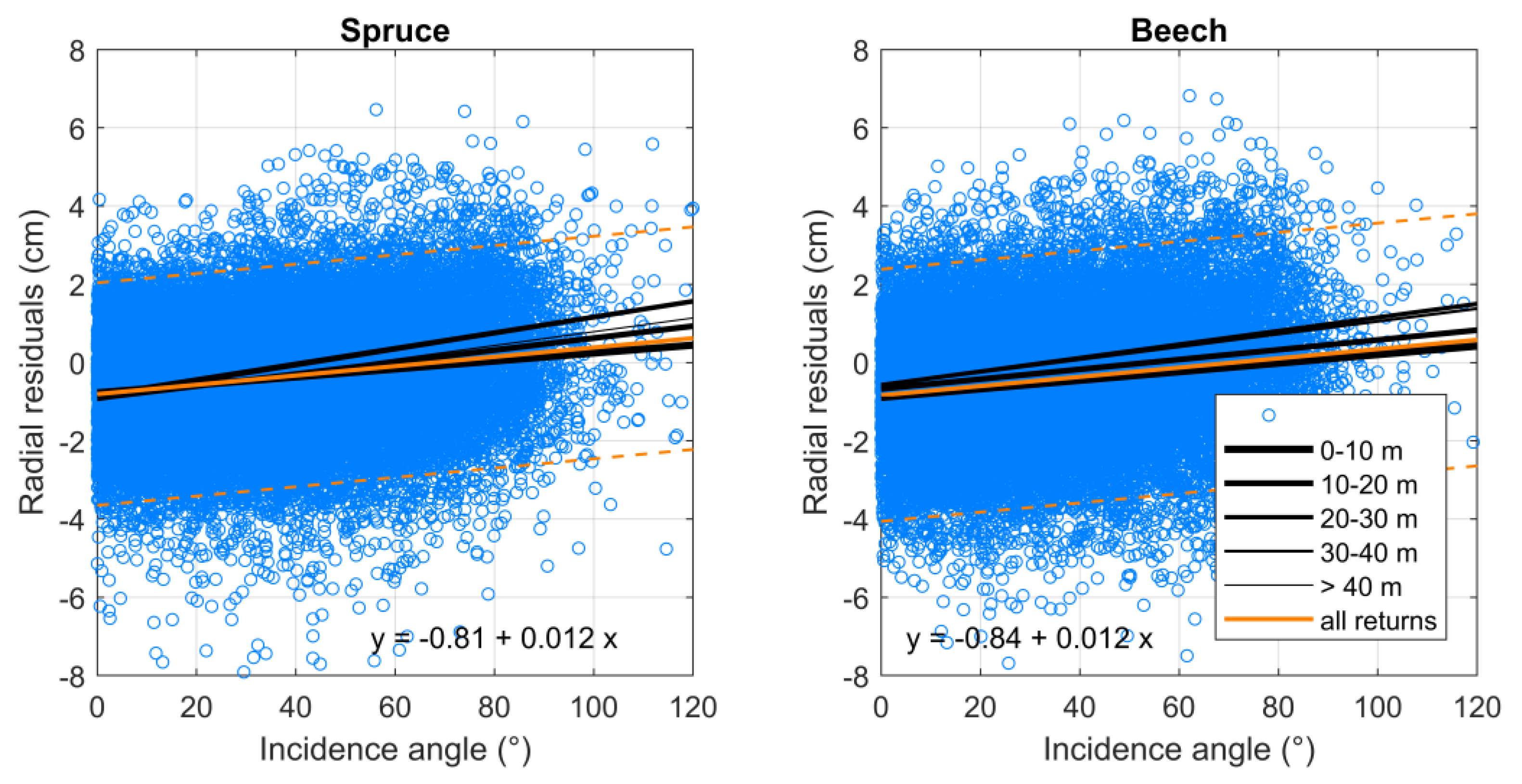
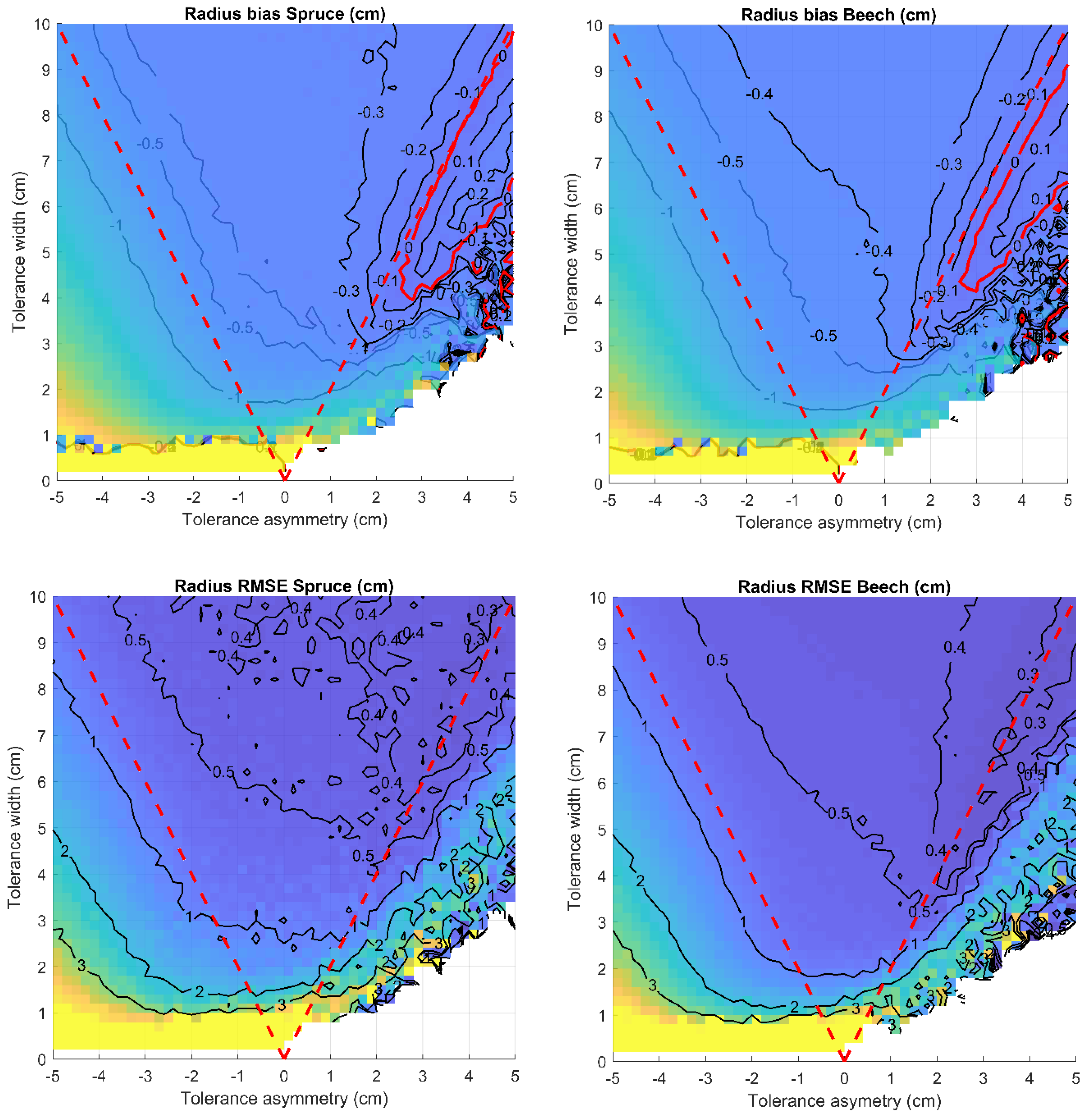
Personal laser scanning devices employing Simultaneous Localization and Mapping (SLAM) technology have rightfully gained traction in various applications, including forest mensuration and inventories. This study focuses the inherent stochastic noise in SLAM data. An analysis of noise distribution is performed in GeoSLAM ZEB Horizon for point clouds of trees of two species, Norway spruce and European beech, to mitigate bias in diameter estimates. The method involved evaluating residuals of individual 3D points concerning the real tree surface model based on TLS data. The results show that the noise is not symmetrical regarding the real surface, showing significant negative difference, and moreover, the difference from zero mean significantly differs between species, with an average of −0.40 cm for spruce and −0.44 cm for beech. Furthermore, the residuals show significant dependence on the return distance between the scanner and the target and the incidence angle. An experimental comparison of RANSAC circle fitting outcomes under various configurations showed unbiased diameter estimates with extending the inlier tolerance to 5 cm with 2.5 cm asymmetry. By showing the nonvalidity of the assumption of zero mean in diameter estimation methods, the results contribute to fill a gap in the methodology of data processing with the widely utilized instrument.
Keywords: forest inventory; DBH; LiDAR; SLAM; noise; RANSAC forest inventory; DBH; LiDAR; SLAM; noise; RANSAC