Article

A Dual-Polarization Information-Guided Network for SAR Ship Classification

School of Information and Communication Engineering, University of Electronic Science and Technology of China, Chengdu 611731, China
*
Author to whom correspondence should be addressed.
These authors contributed equally to this work.
Remote Sens. 2023, 15(8), 2138; https://doi.org/10.3390/rs15082138
Submission received: 23 February 2023 / Revised: 3 April 2023 / Accepted: 6 April 2023 / Published: 18 April 2023

Abstract

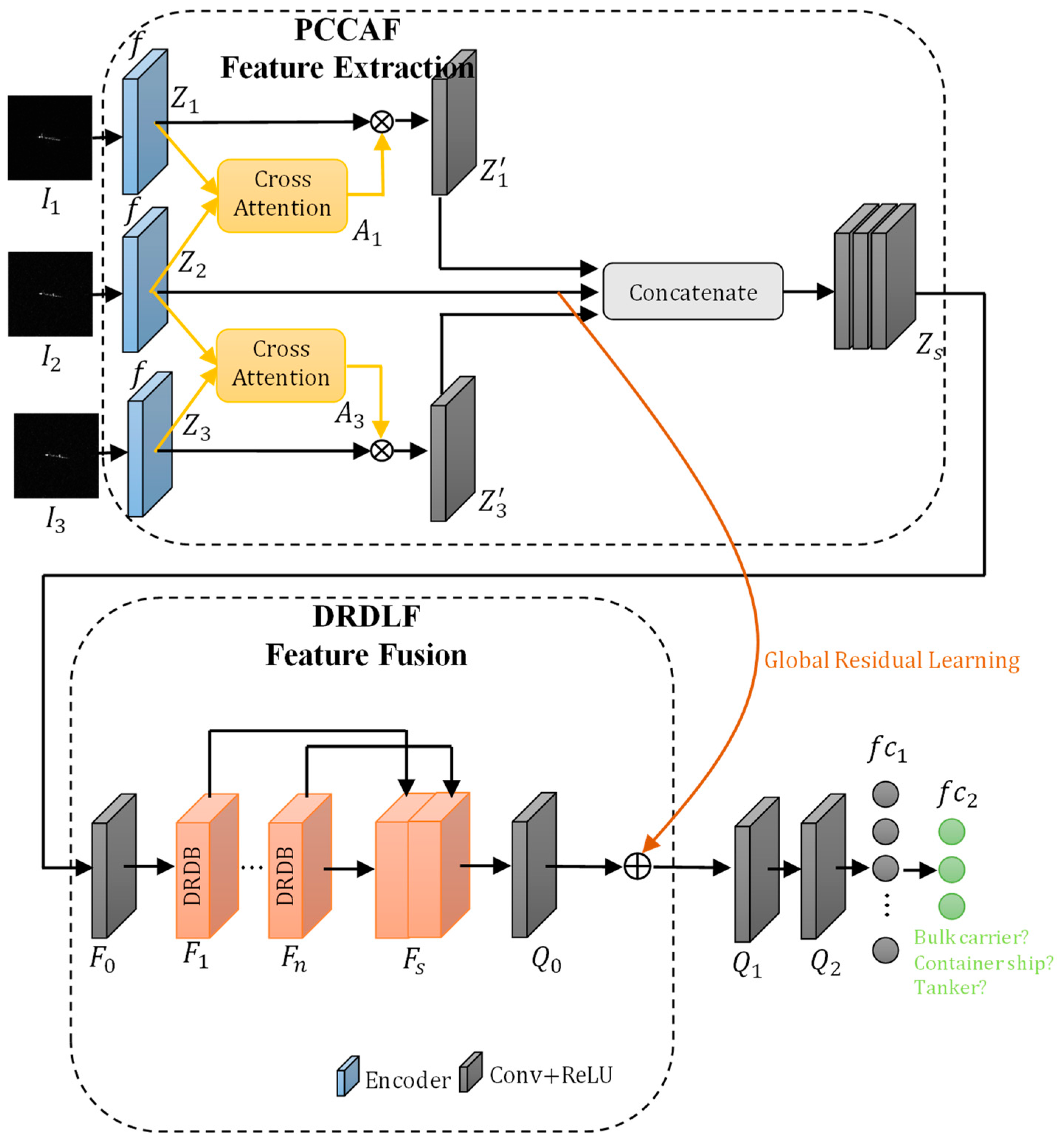
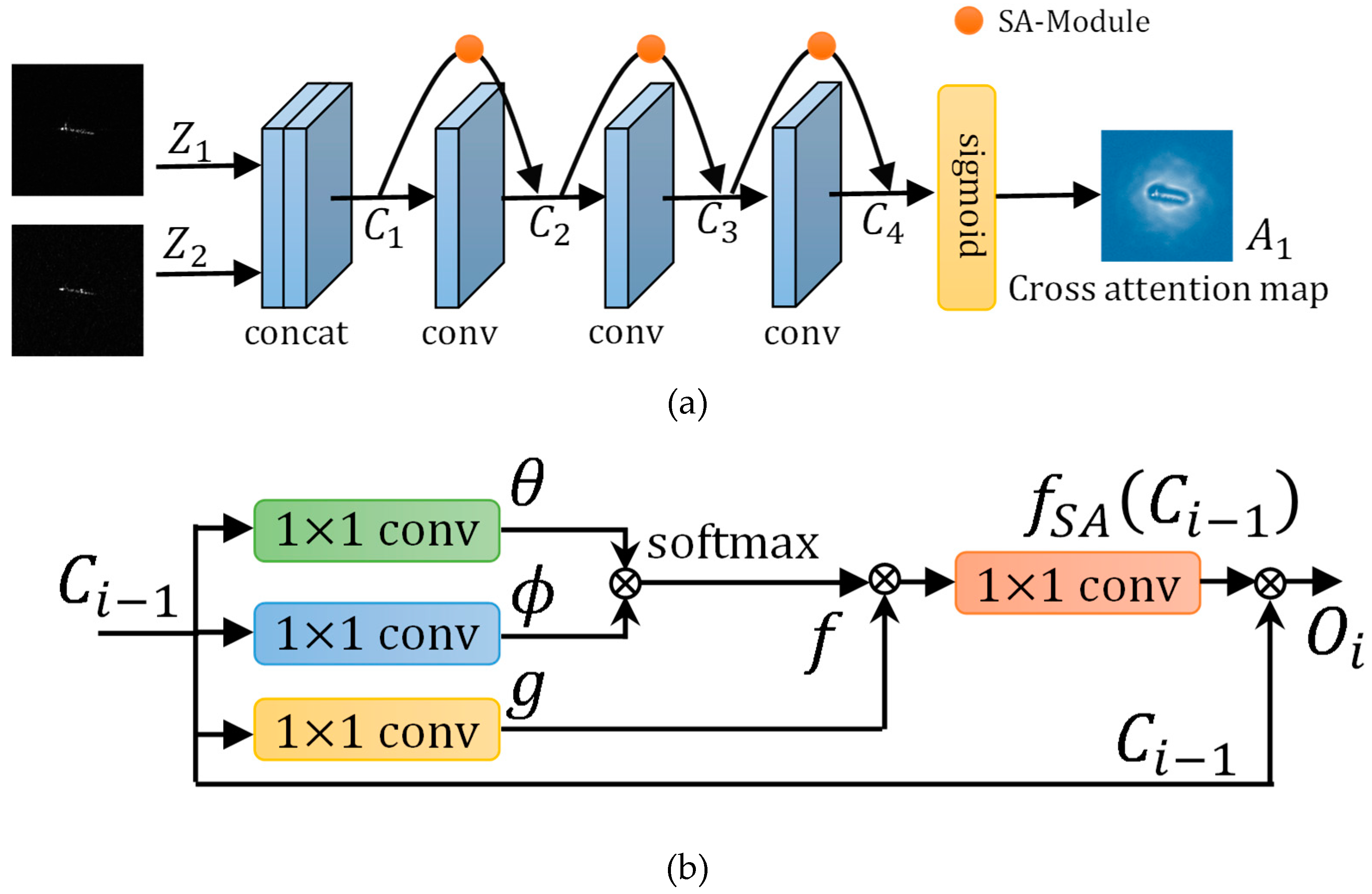
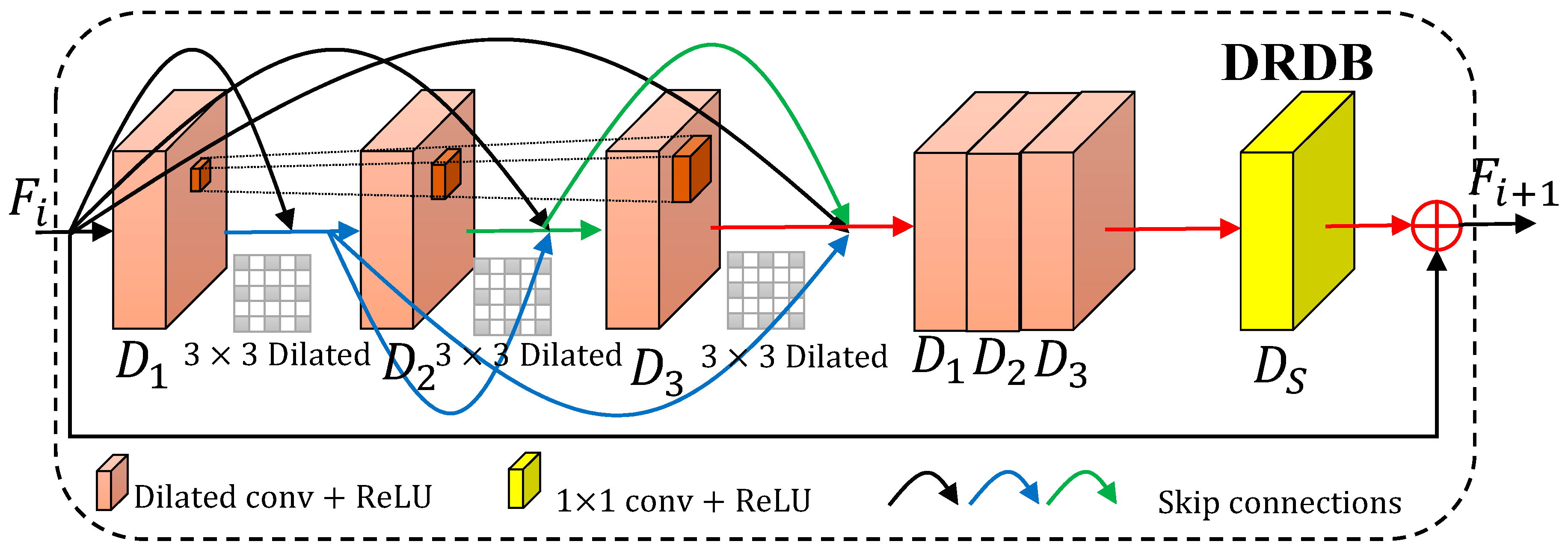
Synthetic aperture radar (SAR) is an advanced active microwave sensor widely used in marine surveillance. As part of typical marine surveillance missions, ship classification in synthetic aperture radar (SAR) images is a significant task for the remote sensing community. However, fully utilizing polarization information to enhance SAR ship classification remains an unresolved issue. Thus, we proposed a dual-polarization information-guided network (DPIG-Net) to solve it. DPIG-Net utilizes available dual-polarization information from the Sentinel-1 SAR satellite to adaptively guide feature extraction and feature fusion. We first designed a novel polarization channel cross-attention framework (PCCAF) to model the correlations of different polarization information for feature extraction. Then, we established a novel dilated residual dense learning framework (DRDLF) to refine the polarization characteristics for feature fusion. The results on the open OpenSARShip dataset indicated DPIG-Net’s state-of-the-art classification accuracy compared with eleven other competitive models, which showed the potential of DPIG-Net to promote effective and sufficient utilization of SAR polarization data in the future.
Keywords: synthetic aperture radar; ship classification; polarization-guided synthetic aperture radar; ship classification; polarization-guided