Article

EfficientUNet+: A Building Extraction Method for Emergency Shelters Based on Deep Learning
1
Aerospace Information Research Institute, Chinese Academy of Sciences, Beijing 100094, China
2
University of Chinese Academy of Sciences, Beijing 100049, China
3
Key Laboratory of Earth Observation of Hainan Province, Hainan Aerospace Information Research Institute, Sanya 572029, China
*
Author to whom correspondence should be addressed.
These authors contributed equally to this work.
Remote Sens. 2022, 14(9), 2207; https://doi.org/10.3390/rs14092207
Submission received: 8 April 2022 / Revised: 30 April 2022 / Accepted: 2 May 2022 / Published: 5 May 2022
(This article belongs to the Topic Computational Intelligence in Remote Sensing)

Abstract

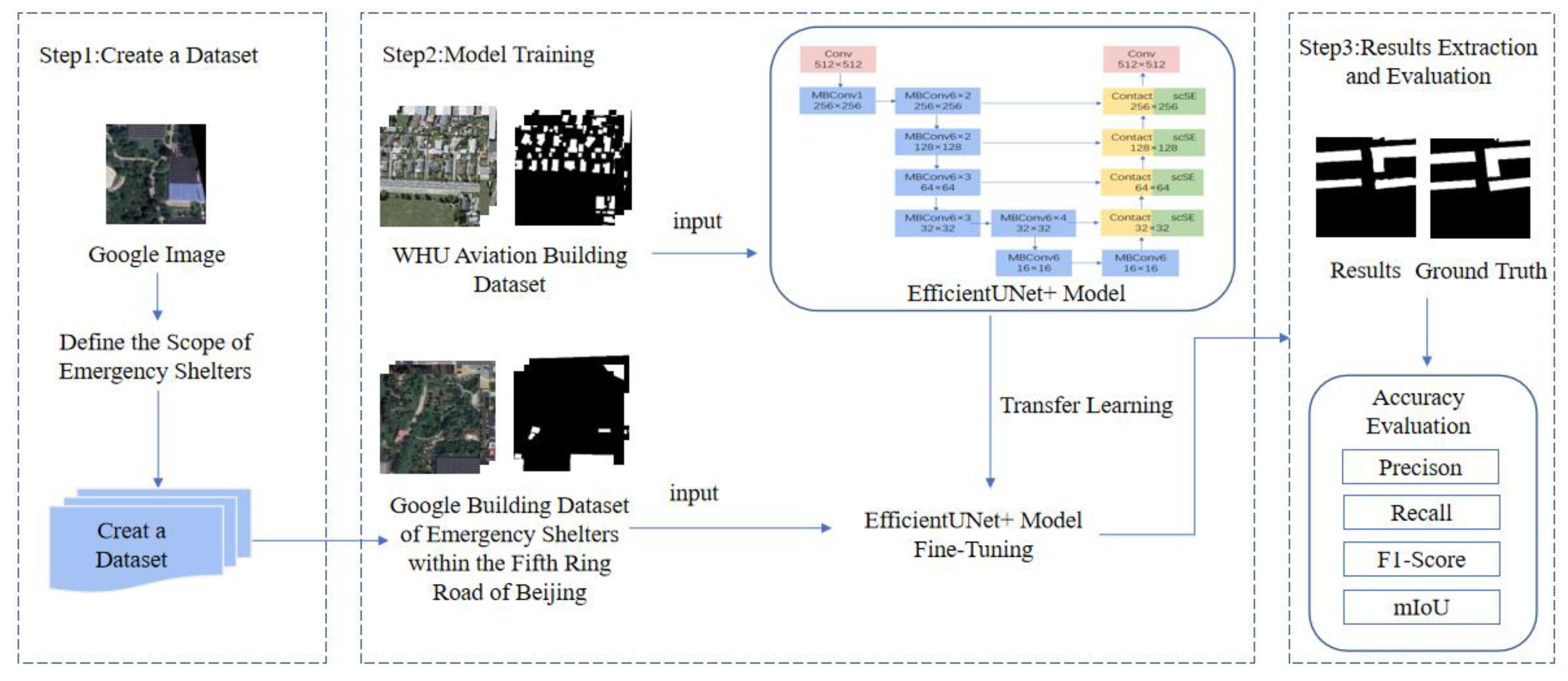
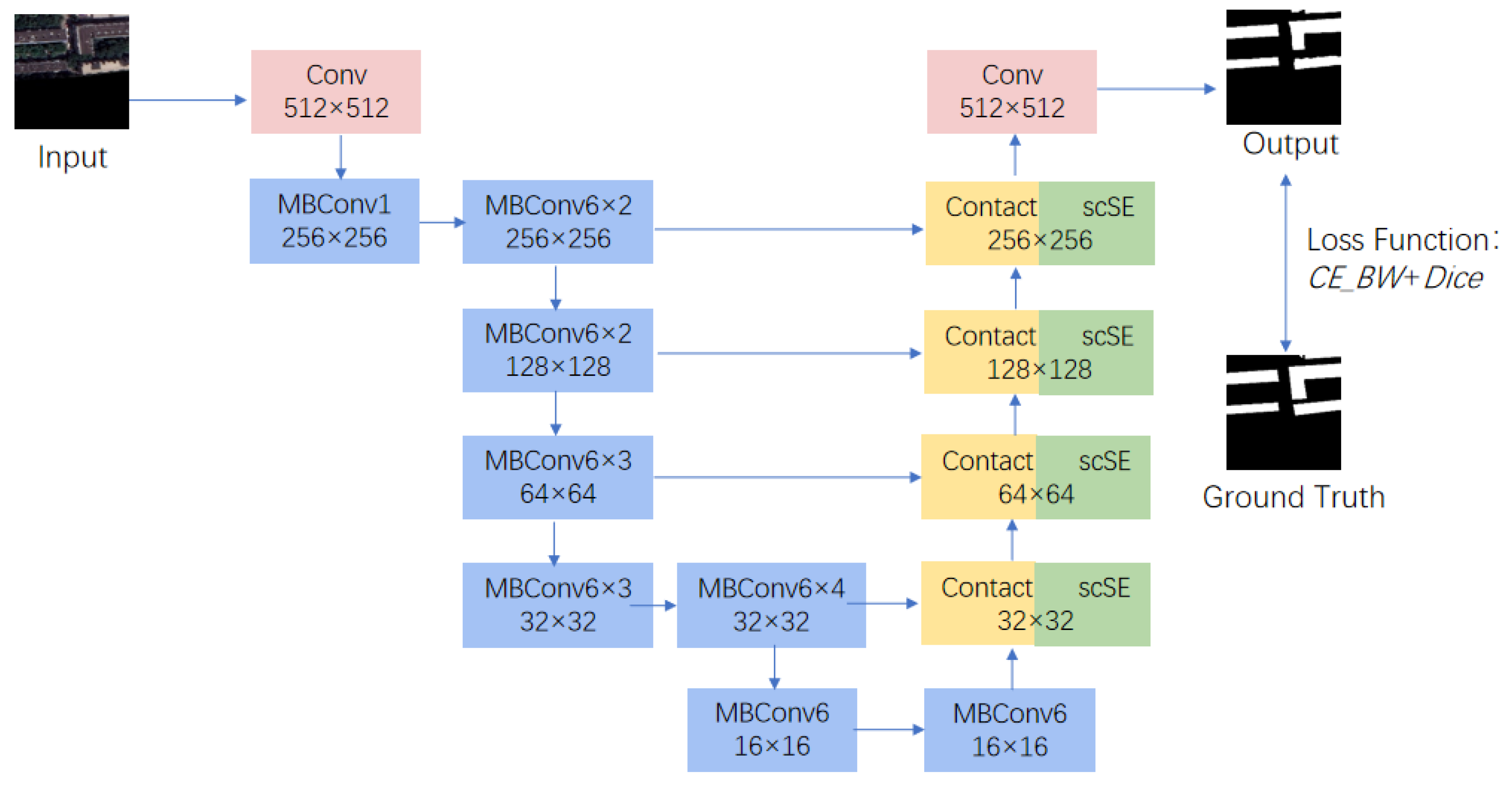
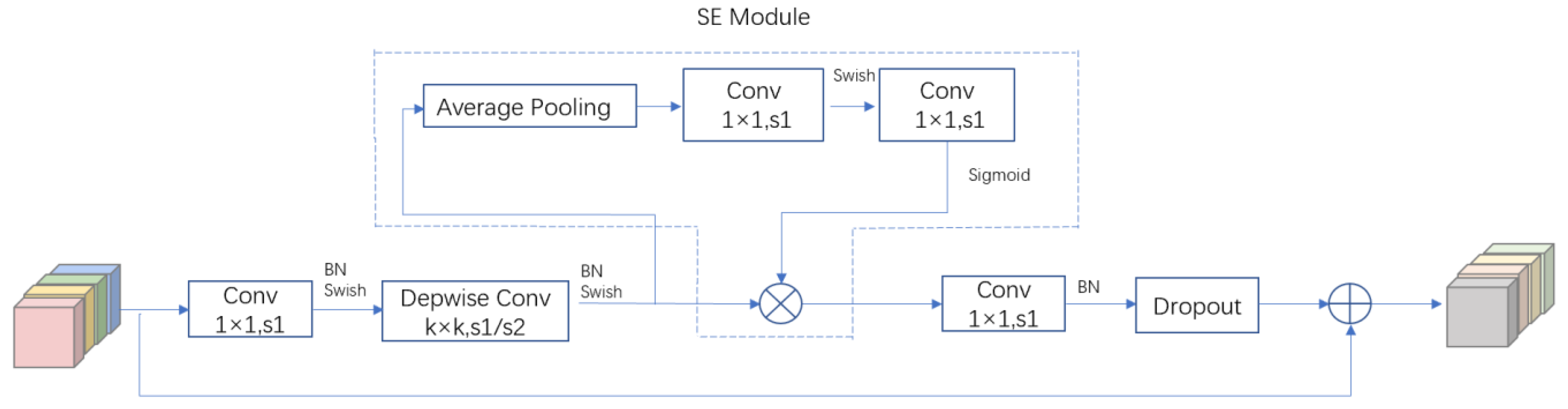
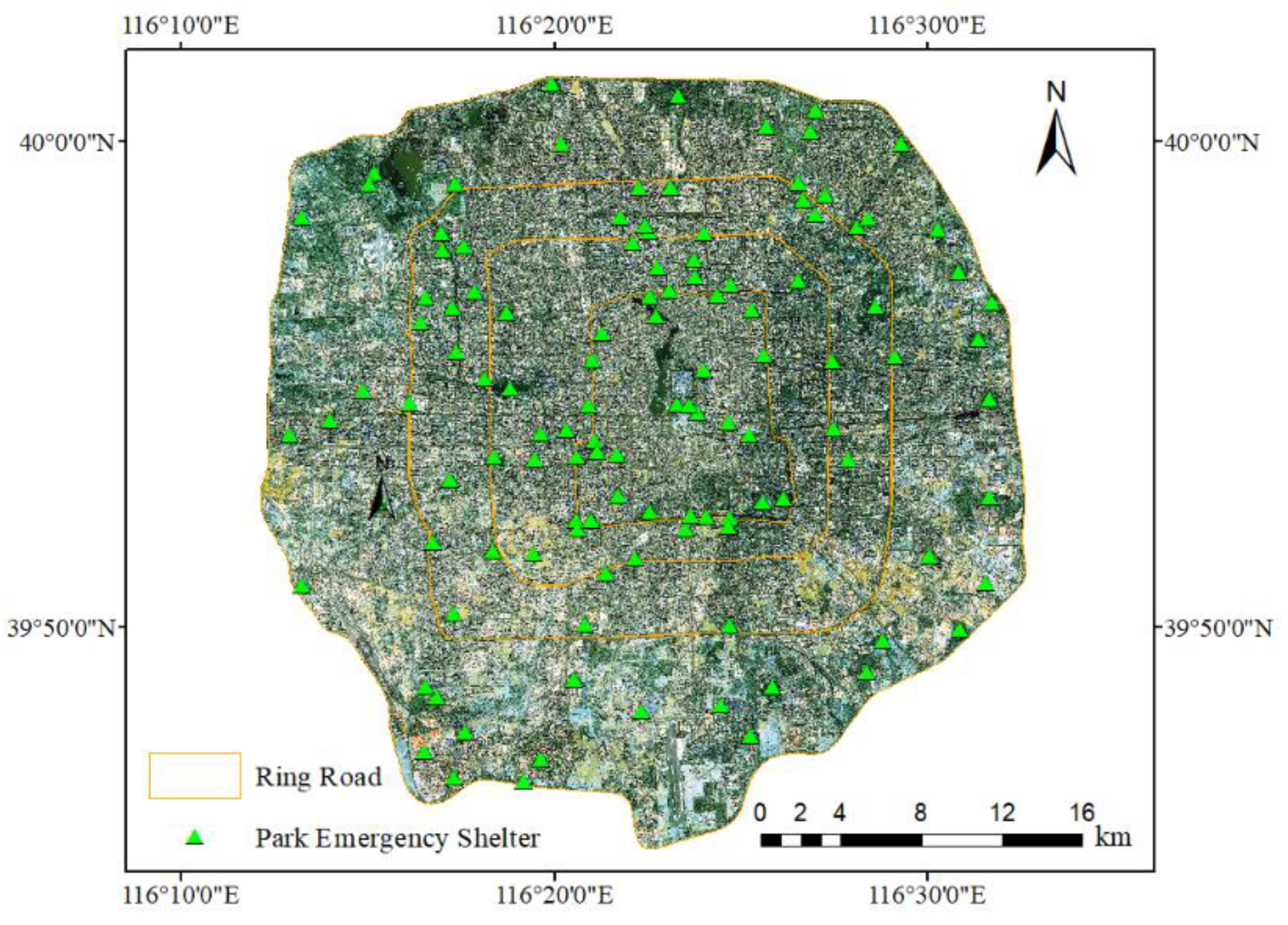
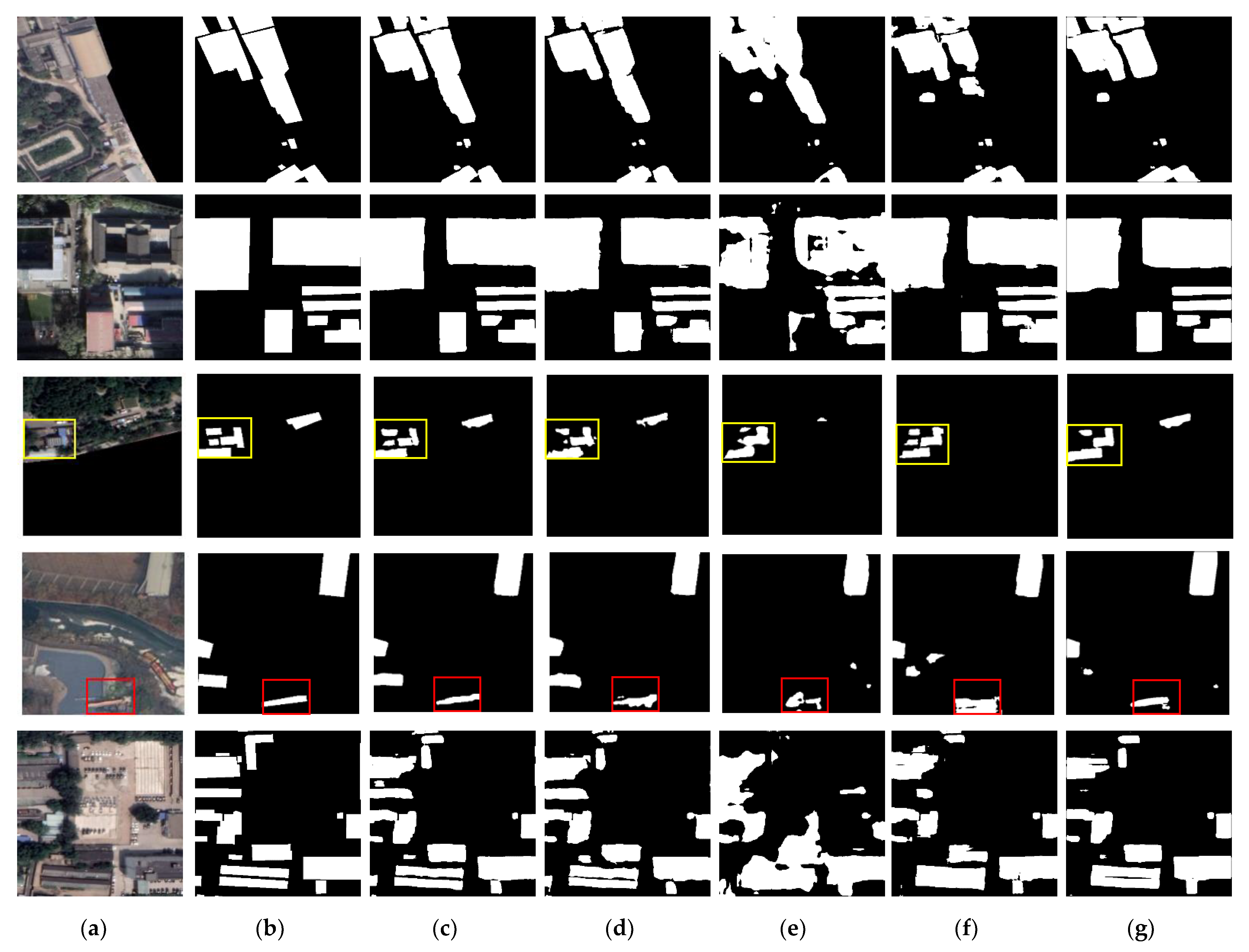
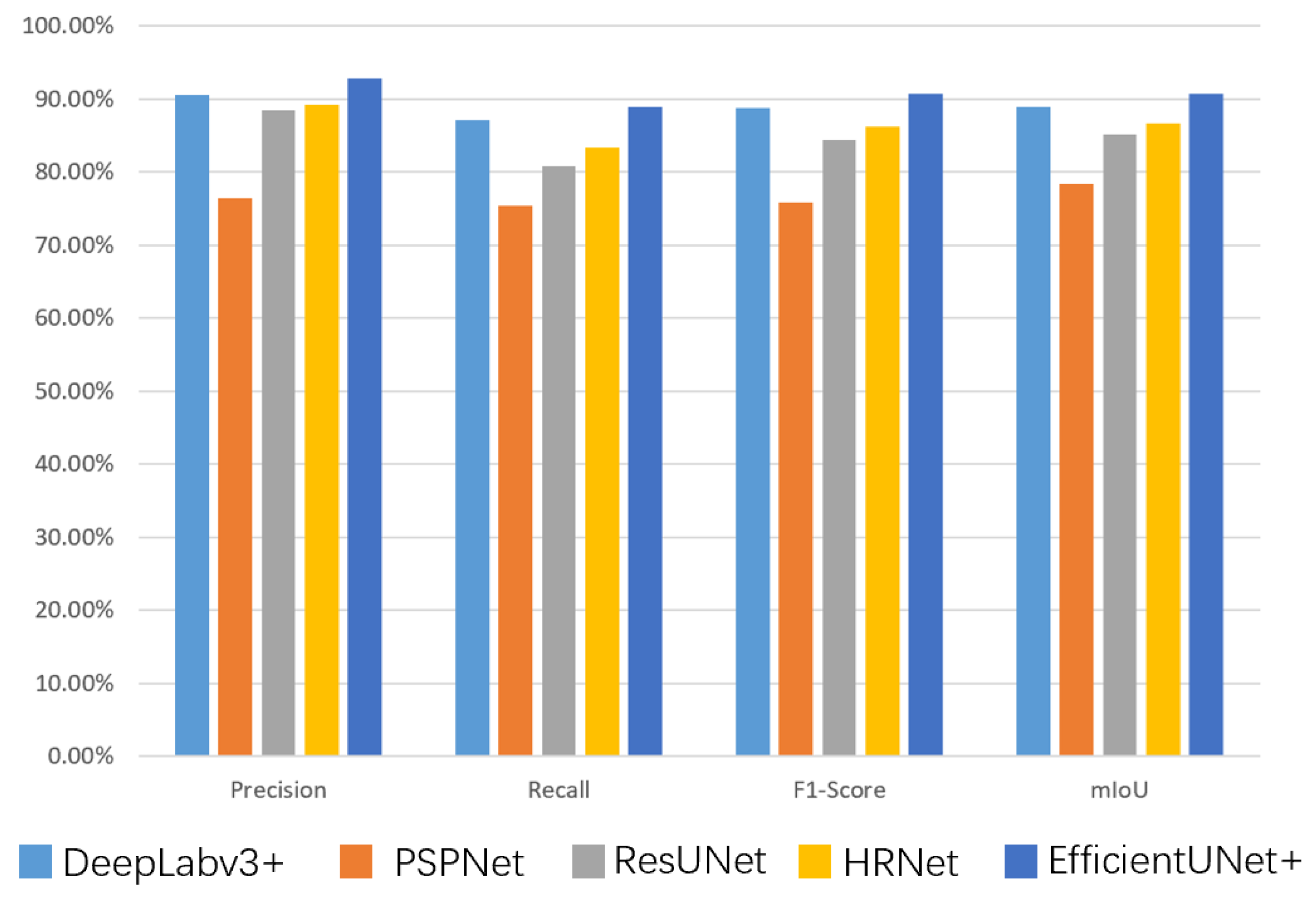
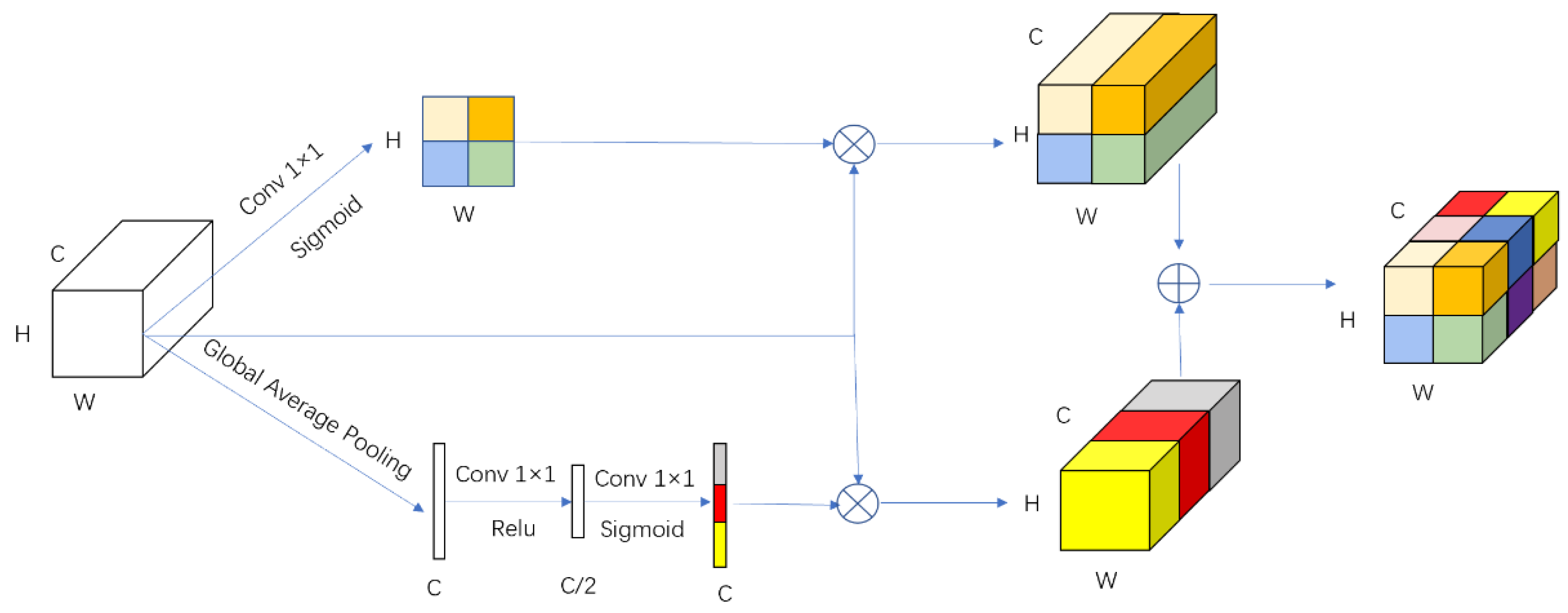
Quickly and accurately extracting buildings from remote sensing images is essential for urban planning, change detection, and disaster management applications. In particular, extracting buildings that cannot be sheltered in emergency shelters can help establish and improve a city’s overall disaster prevention system. However, small building extraction often involves problems, such as integrity, missed and false detection, and blurred boundaries. In this study, EfficientUNet+, an improved building extraction method from remote sensing images based on the UNet model, is proposed. This method uses EfficientNet-b0 as the encoder and embeds the spatial and channel squeeze and excitation (scSE) in the decoder to realize forward correction of features and improve the accuracy and speed of model extraction. Next, for the problem of blurred boundaries, we propose a joint loss function of building boundary-weighted cross-entropy and Dice loss to enforce constraints on building boundaries. Finally, model pretraining is performed using the WHU aerial building dataset with a large amount of data. The transfer learning method is used to complete the high-precision extraction of buildings with few training samples in specific scenarios. We created a Google building image dataset of emergency shelters within the Fifth Ring Road of Beijing and conducted experiments to verify the effectiveness of the method in this study. The proposed method is compared with the state-of-the-art methods, namely, DeepLabv3+, PSPNet, ResUNet, and HRNet. The results show that the EfficientUNet+ method is superior in terms of Precision, Recall, F1-Score, and mean intersection over union (mIoU). The accuracy of the EfficientUNet+ method for each index is the highest, reaching 93.01%, 89.17%, 91.05%, and 90.97%, respectively. This indicates that the method proposed in this study can effectively extract buildings in emergency shelters and has an important reference value for guiding urban emergency evacuation.
Keywords: deep learning; emergency shelter; building extraction; Google Image; transfer learning; EfficientUNet+ deep learning; emergency shelter; building extraction; Google Image; transfer learning; EfficientUNet+